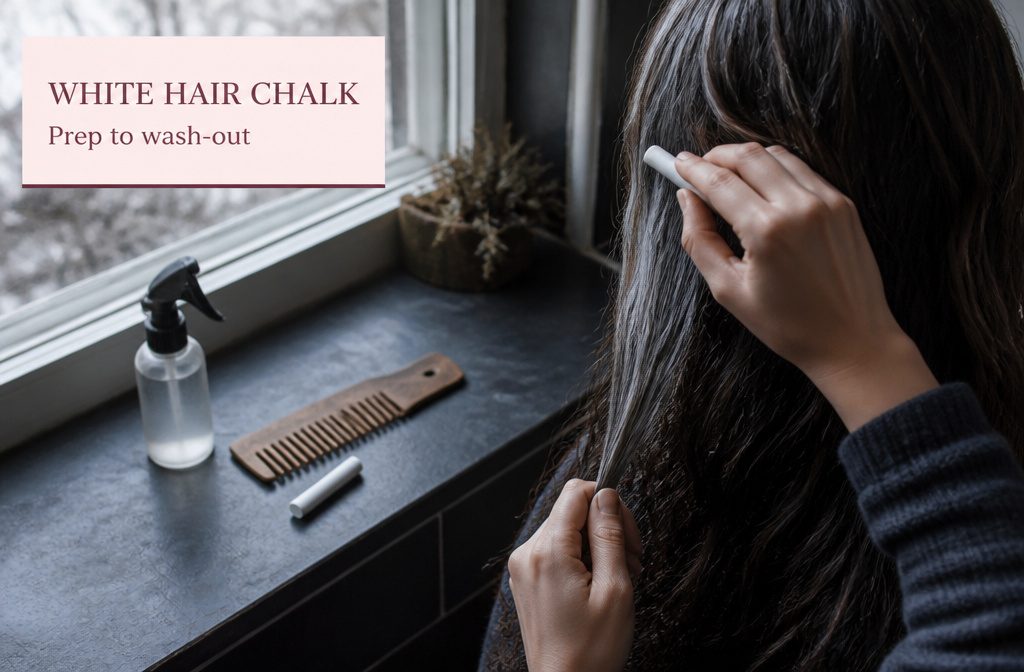
You end up with silvery white strands that last until your next wash, for the price of a chalk stick and a spray bottle.
Most people go wrong on moisture: hair should be damp, not dripping, or the color runs. On dark hair the result can come out muted, so test one small section first.
1. Choose the Chalk
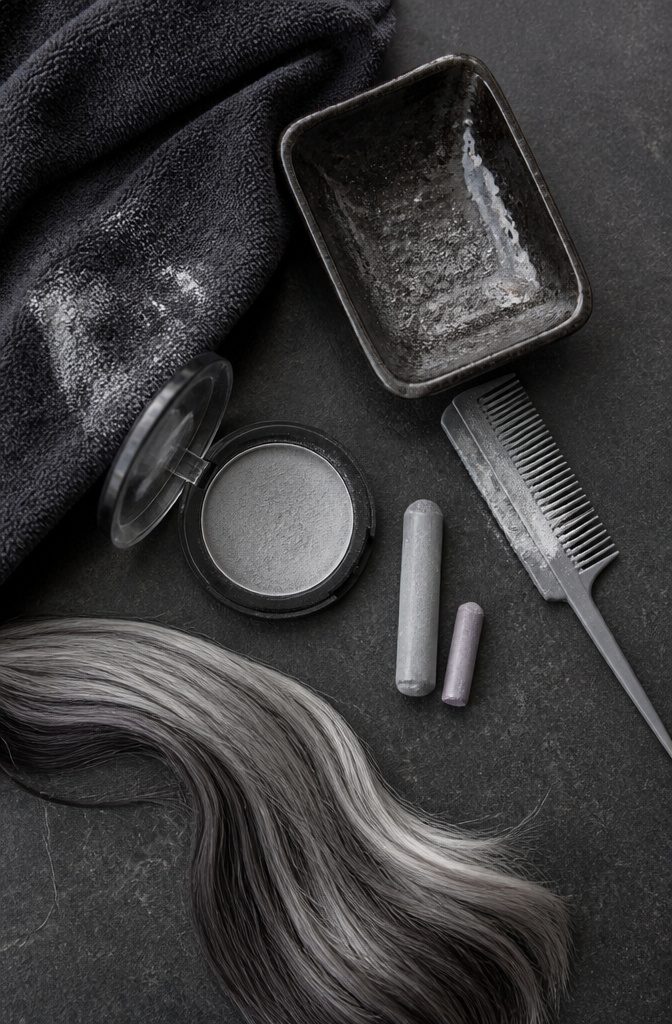
Gray or silver chalk is what gives a graying effect, so check the shade name before you buy.
Sticks are the classic format: dampen the tip, rub it down a section, and accept some mess. Compacts are small, solid and mess-free.
A comb like the Maydear Temporary Hair Chalk Comb runs through from roots to tips, and your fingers blend it. The Purple Ladybug Hair Chalk and Glitter Style Set is $12, down from $16, but confirm it includes a gray or silver.
Pens, sprays, pomade, cream and liquid chalk exist too. Directions differ by product, so read the label.
The DIY route is art supply pastels, and cheap student-quality sticks work fine. Real hair chalk is far more strongly pigmented, so expect softer color.
2. Prep Hair and Clothing
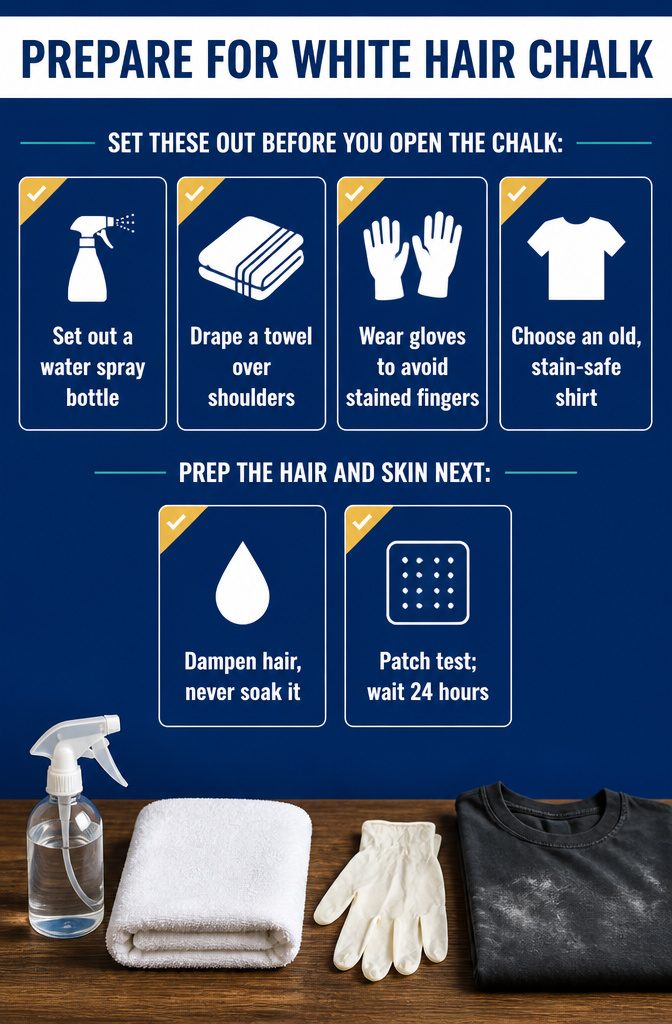
White hair chalk can stain clothes and skin, so set these out before you open the chalk:
- A spray bottle of water for dampening the hair.
- A towel over your shoulders. It gets messy.
- Rubber gloves, if you’d rather not wear the color on your fingers.
- An old shirt you don’t mind losing to white smudges.
Prep the hair and skin next:
- Mist your strands until they’re damp, not dripping wet. Damp hair helps the chalk stick, while soaked hair makes it run.
- If your skin is sensitive, patch test first. Rub a small amount on an inconspicuous spot and wait 24 hours.
- Any redness or itching in that window means I’d skip the full application.
3. Apply in Sections
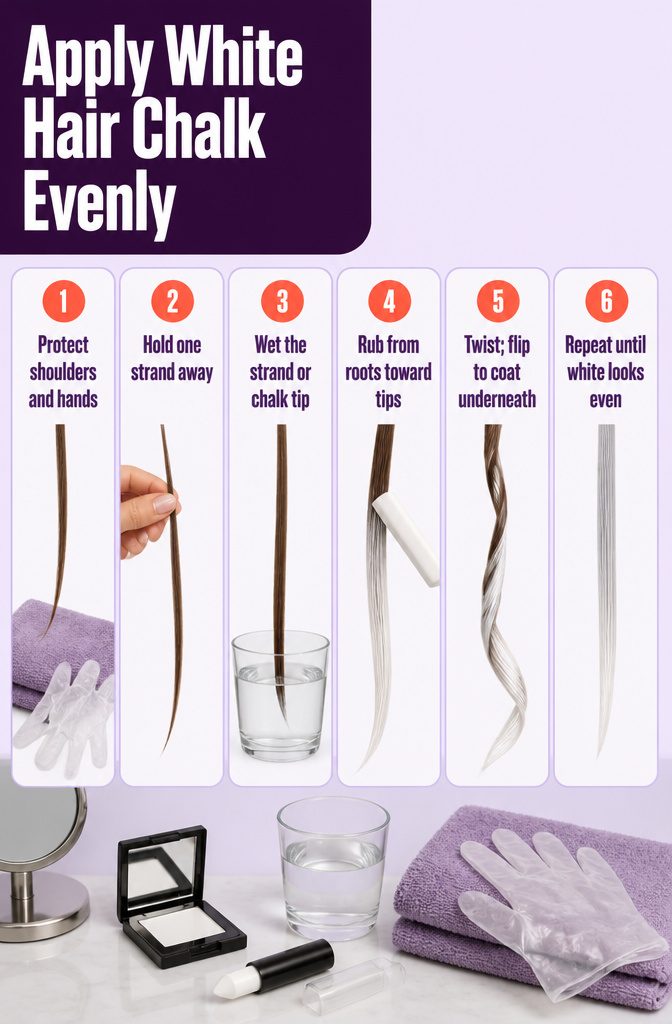
- Drape a towel over your shoulders, or wear a top that matches the color you’re using. If your chalk has no applicator, pull on plastic gloves so your hands don’t stain.
- Pick up one small strand and hold it away from your face and neck.
- Wet the strand, or dip the tip of the chalk in water. Either method works.
- Starting at the roots, rub the chalk down the strand toward the tips.
- Twist the strand as you go. Twisting covers more surface, and you should flip it to coat the underside too, or the color looks thin from the back.
- Repeat the rubbing on each section until the white reads the way you want. Compact and stick formats differ slightly: a compact is pressed against the hair, while a stick can be blended by hand afterward.
4. Dry and Set the Color
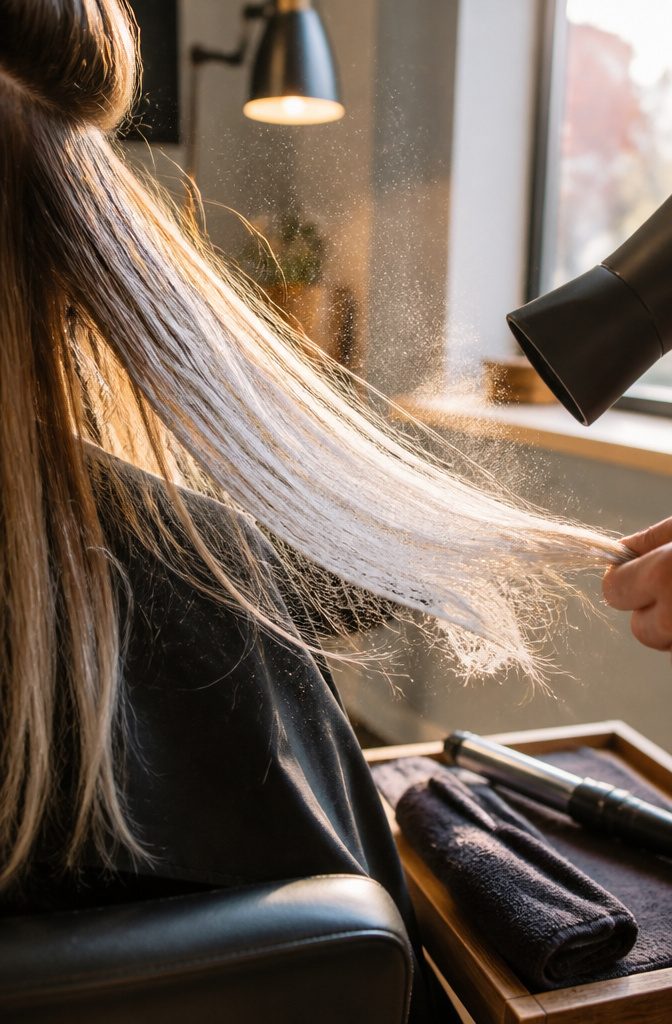
Wait about a minute after applying, then blow-dry on a low heat setting to set the color for the day.
High heat isn’t needed and risks damaging your hair. Heat opens the cuticle and locks the pigment in, so chalk that has been heated rubs off less than chalk left to dry on its own.
If you’d rather skip the dryer, let the hair air-dry, then run a flat iron or curling iron over the dry strands.
I lean toward this route for white chalk, because the color pops once the hair is dry and the iron brightens it further. Finish either way with a light mist of hairspray to seal it.
5. Limit Transfer and Wear
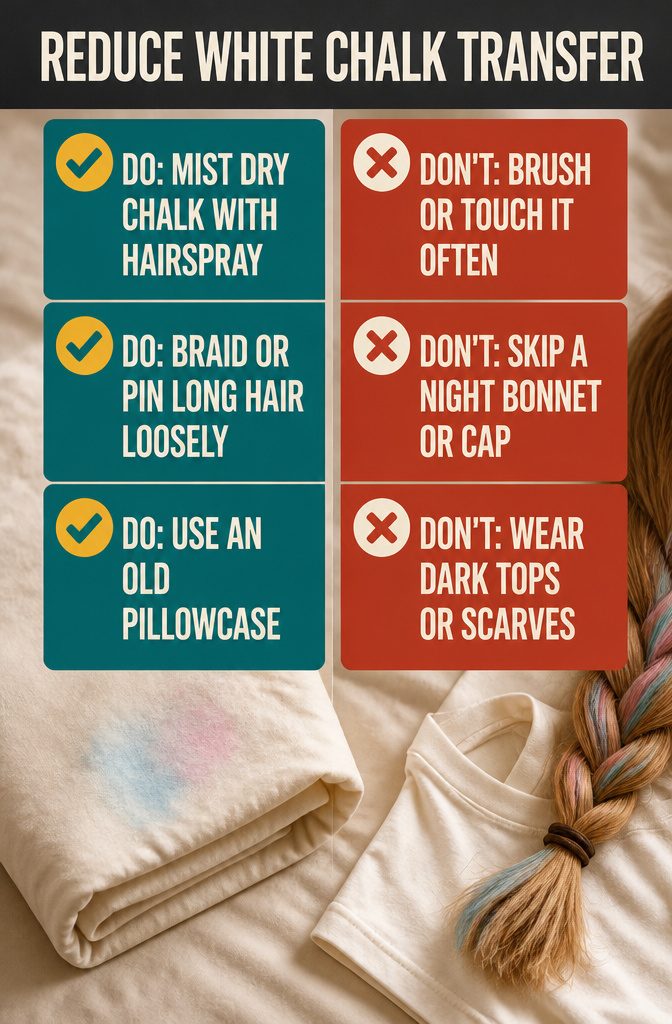
Sealed chalk still rubs off on clothes and skin, so focus on reducing transfer rather than eliminating it.
- Finish with a light mist of hairspray once the chalk is dry. It is the main defense against color coming off on collars and shoulders.
- Braid or pin long hair loosely so the chalked strands stay off your neck and clothing.
- Brush as little as possible and keep your fingers out of it. Every pass moves color.
- Put an old pillowcase on the bed, one you won’t mind marking.
- Wear a bonnet or cap at night, or wash the chalk out before bed. Otherwise it ends up on the pillow.
- I’d skip dark tops and scarves on chalk days, since a dusty collar shows up fast.
6. Wash It Out
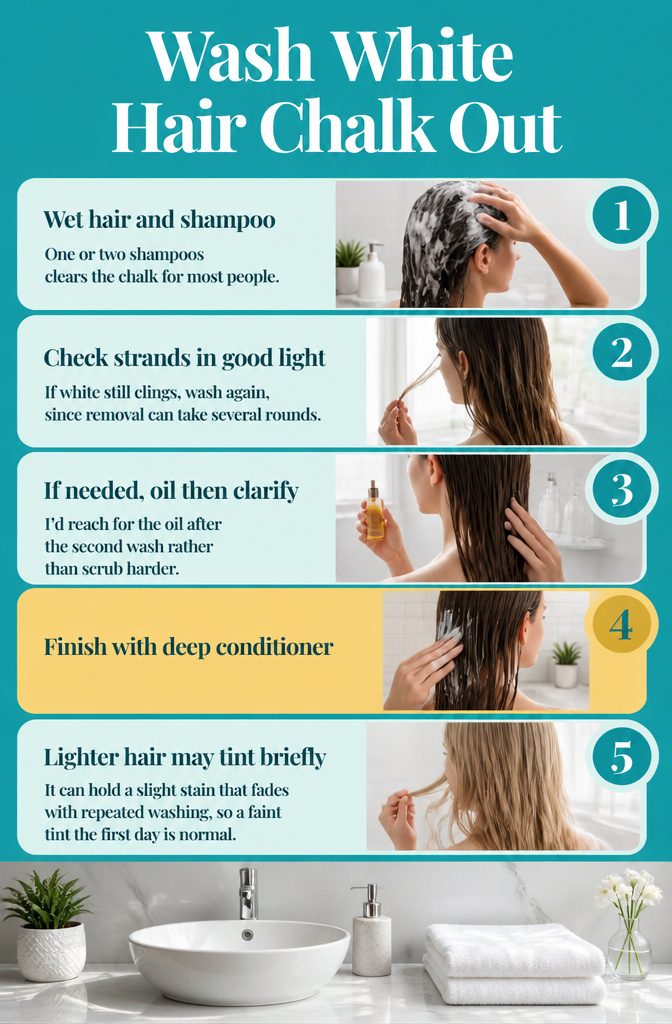
- Wet your hair and shampoo. One or two shampoos clears the chalk for most people.
- Look at the strands in good light. If white still clings, wash again, since removal can take several rounds.
- If it lingers, rub hair oil through the hair, then wash with a clarifying shampoo. I’d reach for the oil after the second wash rather than scrub harder.
- Finish with a deep conditioner.
- Check lighter hair last. It can hold a slight stain that fades with repeated washing, so a faint tint the first day is normal.
How Long It Lasts
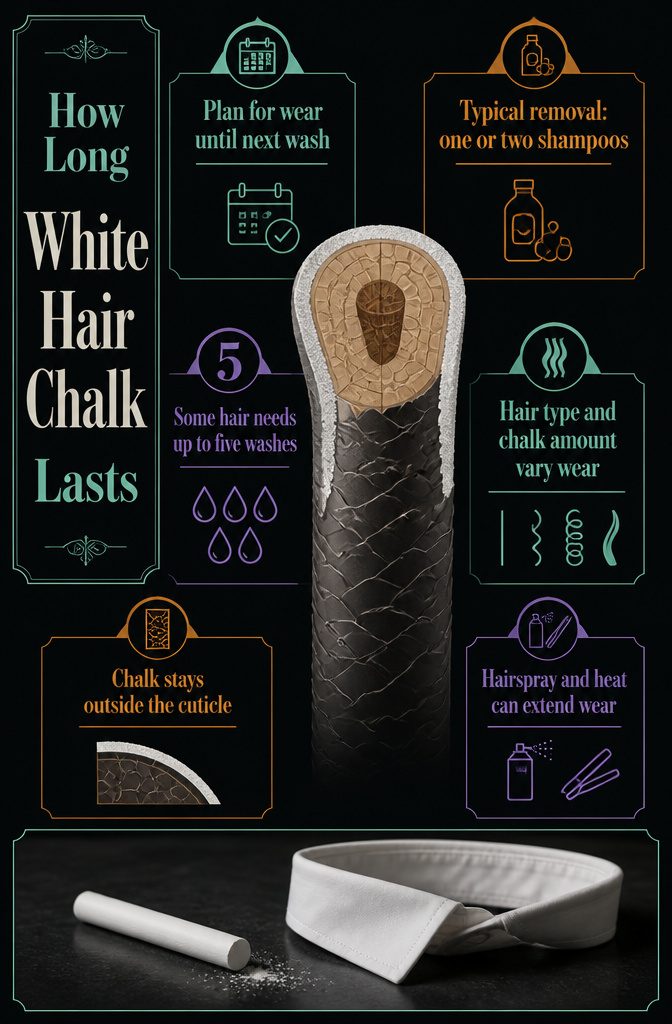
Claims run from one or two shampoos to as many as 5 washes, and the spread is real: hair type and how much chalk you put on both change the result.
Plan on the color lasting until your next wash, and treat anything beyond that as a bonus.
Chalk sits on the outside of the hair shaft and never gets past the cuticle.
That is why it washes out so easily, and why it rubs off on pillowcases and collars before the shampoo ever touches it. A heavier coat, a hairspray seal and a pass with a flat iron can stretch the wear.
Even so, the color fades as it holds, so I’d expect to touch up before a long event rather than count on the first application.
Dryness and Hair Care
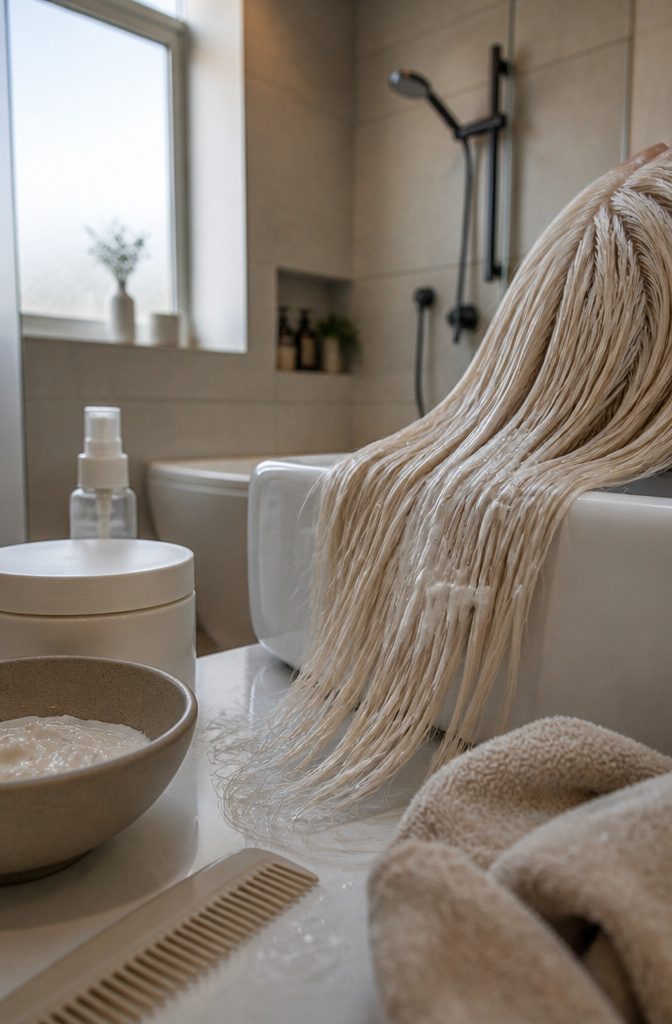
Bentonite clay is what dries hair out: it absorbs oil, and the calcium carbonate, mica and pigment in the same stick do nothing to replace it. Some formulas also add water, alcohol and fragrance.
Cosmopolitan sums up the risk and the fix in a single sentence:
Any chalk will dry out the hair by absorbing oils and other moisture from it, but as long as you care for your hair properly afterward, there should be no permanent damage.
The dryness is temporary if you follow through. Wash with a moisturizing shampoo and conditioner, then add a deep conditioner.
If hair still looks lifeless, I’d reach for a hair mask or moisturizing spray. Skip chalk if your hair is already very dry or damaged.
White Chalk on Dark Hair
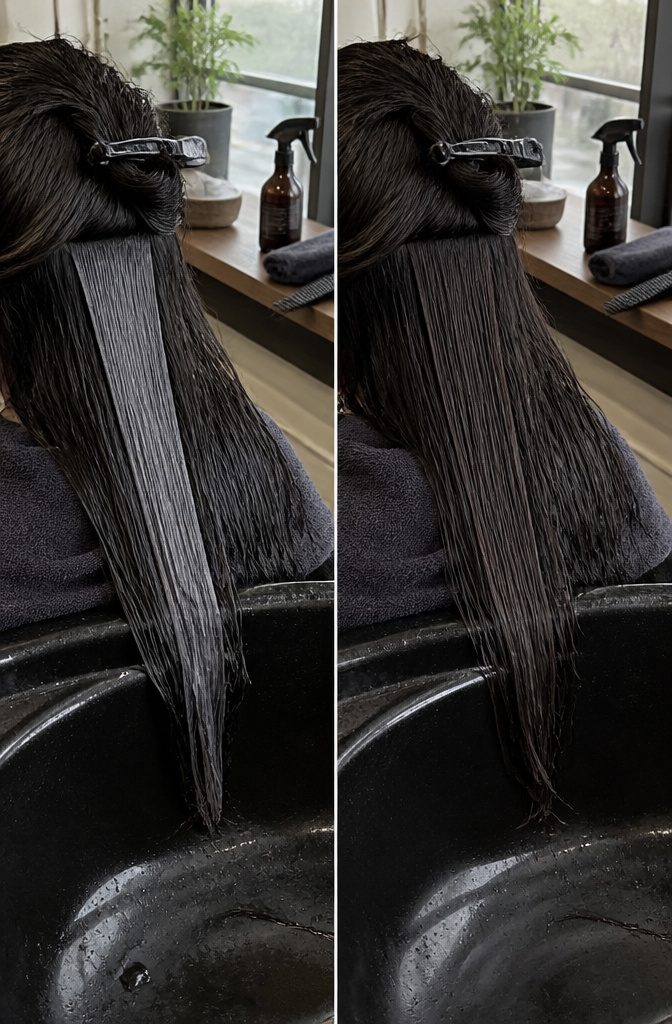
White chalk works on dark hair, but most shades look brighter on lighter hair, and on dark strands the color can come out muted or, with some products, barely show.
Some chalks are described as working on dark hair, though that is a claim to test rather than count on.
For dark brunettes and black hair, apply the chalk to damp hair instead of dry, since wet application can give better results.
Nothing I’ve found breaks white chalk out by hair color. I’d keep expectations tied to what chalk does in general: a softer, less bright look on dark hair, and a small test section before you commit to a full head.
Frequently Asked Questions
How long does hair chalk last?
Hair chalk typically lasts until your next wash. Some formulas may stretch to 2 or even 5 shampoos depending on how much you apply and your hair type, but treating it as a one-wash color is the safer bet.
Does hair chalk work on dark hair?
Yes, but white chalk shows less brightly on dark hair than on light hair. Applying it to damp strands instead of dry can make the color show up better on brunettes and black hair.
Is chalk good for your hair?
Chalk dries hair by absorbing oil, but the effect is temporary if you follow up with a moisturizing shampoo and conditioner. Skip it if your hair is already very dry or damaged.
How easy does hair chalk come out?
1 or 2 shampoos clear the chalk for most people. If white still clings after the second wash, rub hair oil through the strands and then use a clarifying shampoo.
What is hair chalk?
Hair chalk is a temporary color that sits on the outside of the hair shaft and washes out. It never penetrates the cuticle, which is why it rubs off easily and clears with shampoo.