The cuts here run from a cropped pixie to long waves past the shoulders, and which one is yours depends less on the photo than on how much time you’ll give your hair each morning.
A blowout with a round brush only holds its shape if you’ll repeat it, while loose waves set by braiding damp hair overnight ask for almost nothing once you’re up.
Grey also shows split ends more than darker colors do, so I’d weigh upkeep ahead of the look.
1. Grey Pixie
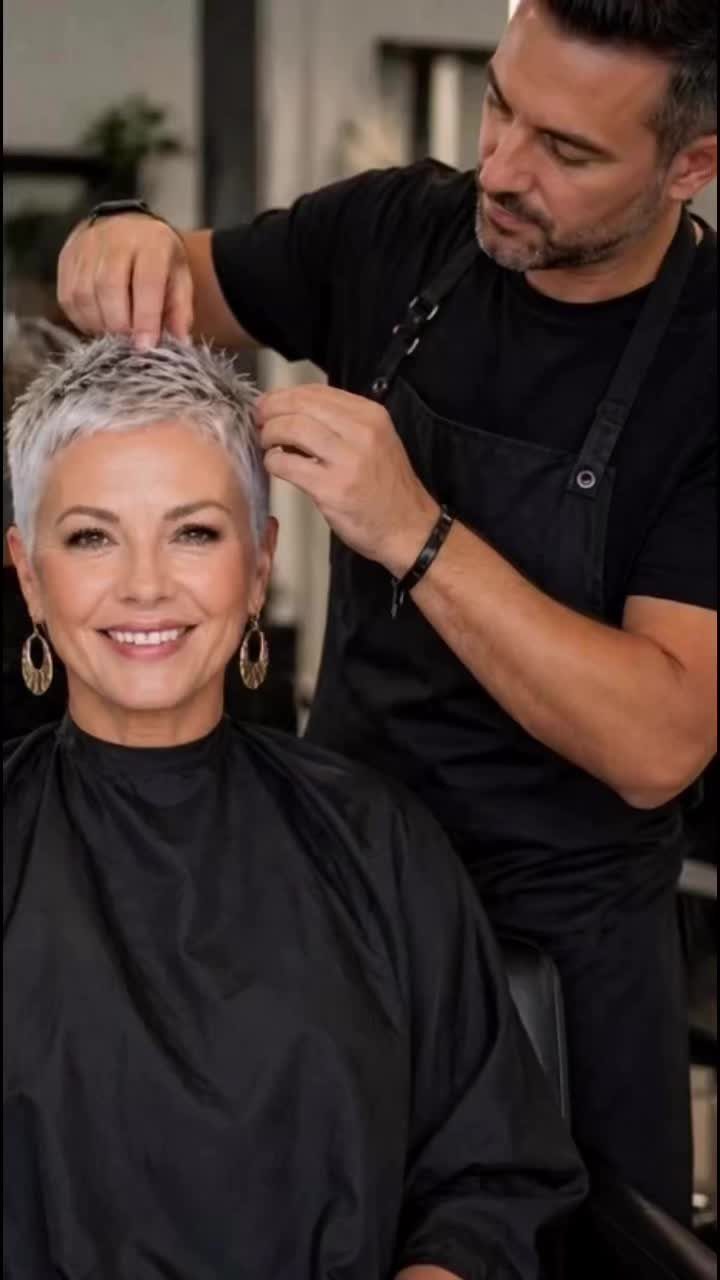
A cropped cut that works sleek or textured, worn smooth against the head or tousled with product. The visible photo shows it textured and layered, which adds volume and movement if your hair sits flat.
Grey shows every line and angle in a pixie, so the cut itself has to be right for your face shape. If you’re not sure, bring photos that match your face shape to your stylist rather than just the hair.
Pixies need regular trims or the shape collapses.
2. Side Swept
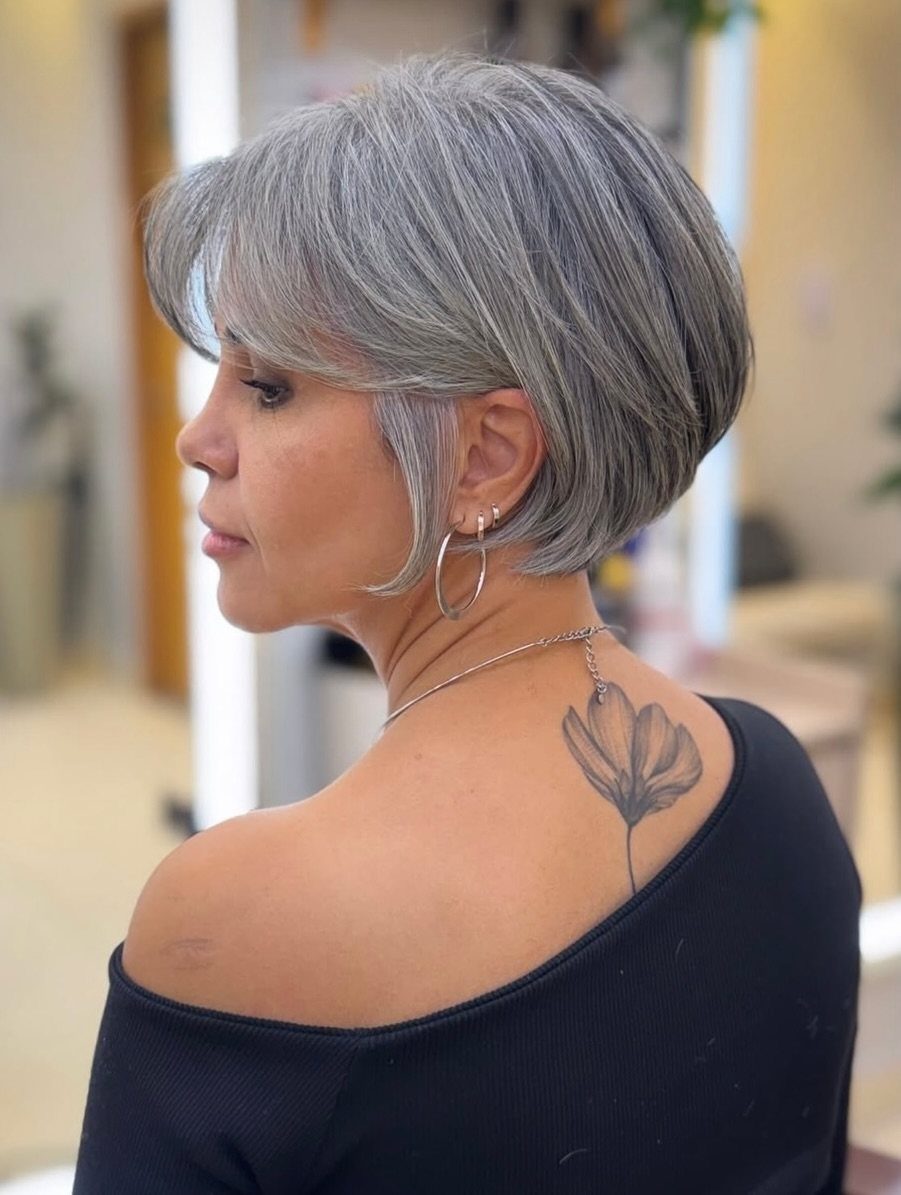
A bob worn with a deep side part or a long side-swept fringe that skims the cheekbone. The side sweep adds asymmetry and softens a square or angular face.
If you have a cowlick or a natural part that fights a side part, you’ll need to blow-dry it in place with a round brush or flat iron the front section so it stays put.
A setting spray helps it stay put.
The fringe can be cut into the bob or grown out from shorter bangs.
3. Grey Wavy Bob
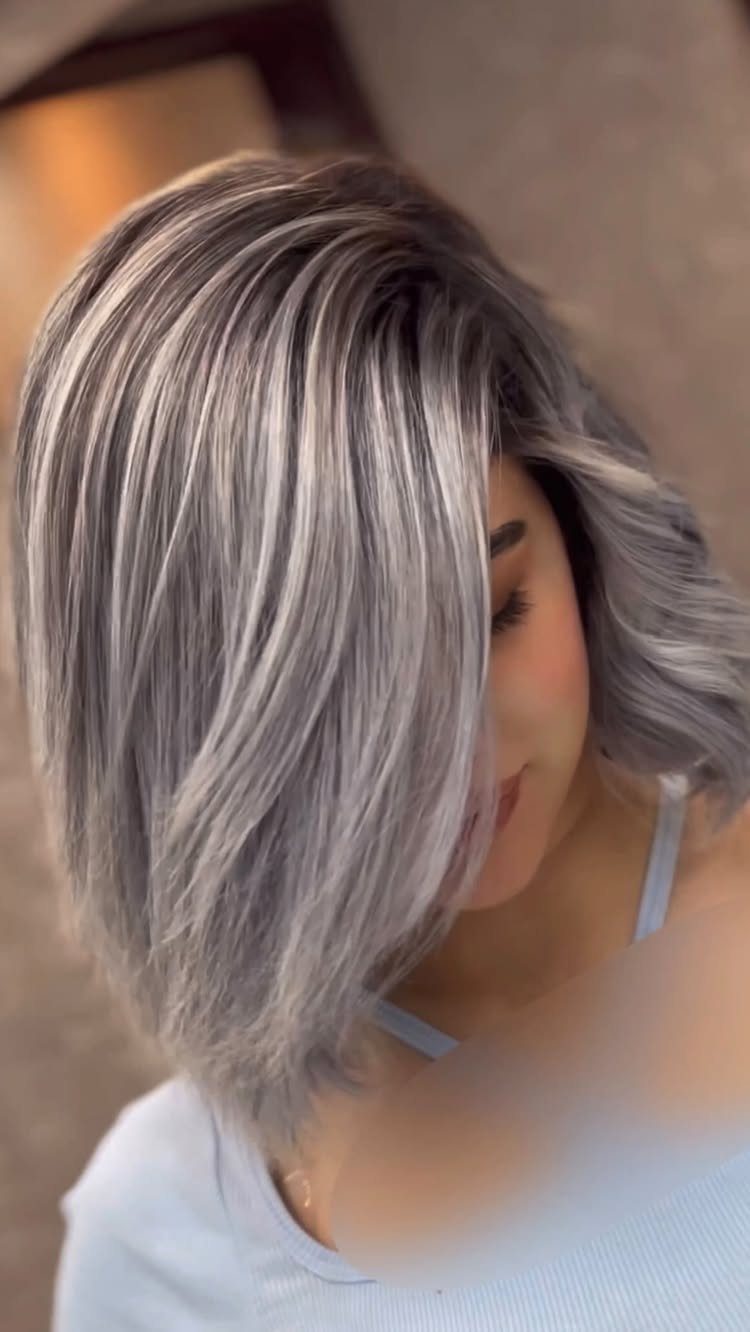
A chin-length or shoulder-length bob styled with loose waves to add body and texture. The waves lift the hair away from the scalp, so this works well if your hair is fine or tends to fall flat.
You can get the waves with a curling wand, a flat iron used at an angle, or heatless methods like braiding damp hair overnight. A texturizing spray before styling gives the waves more grip.
Grey hair can feel coarser or drier, so a leave-in conditioner or smoothing serum helps the waves look polished instead of frizzy.
4. Grey Curls
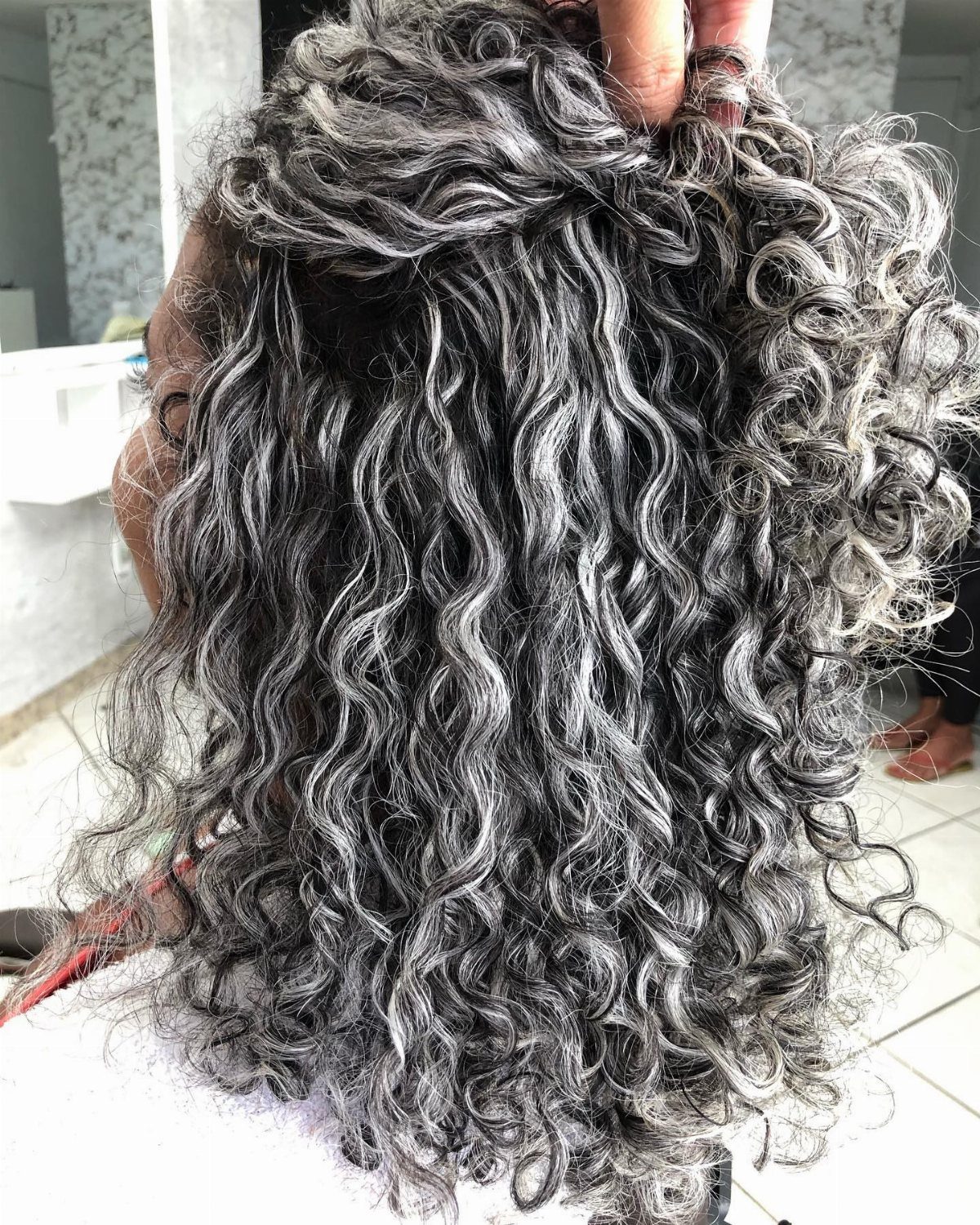
Natural curls worn with their full texture and definition, whether that’s loose spirals, tight coils, or ringlets. Grey brings out the individual curl pattern, so this look relies on keeping the curls hydrated and defined.
Curly grey hair tends to be drier than pigmented hair, so a curl cream or leave-in conditioner applied to damp hair before air-drying or diffusing keeps the curls soft and bouncy.
Avoid brushing dry curls, which breaks up the pattern and adds frizz.
If your curls have loosened with age, a diffuser on low heat helps bring back some of the spring.
5. Grey Bangs
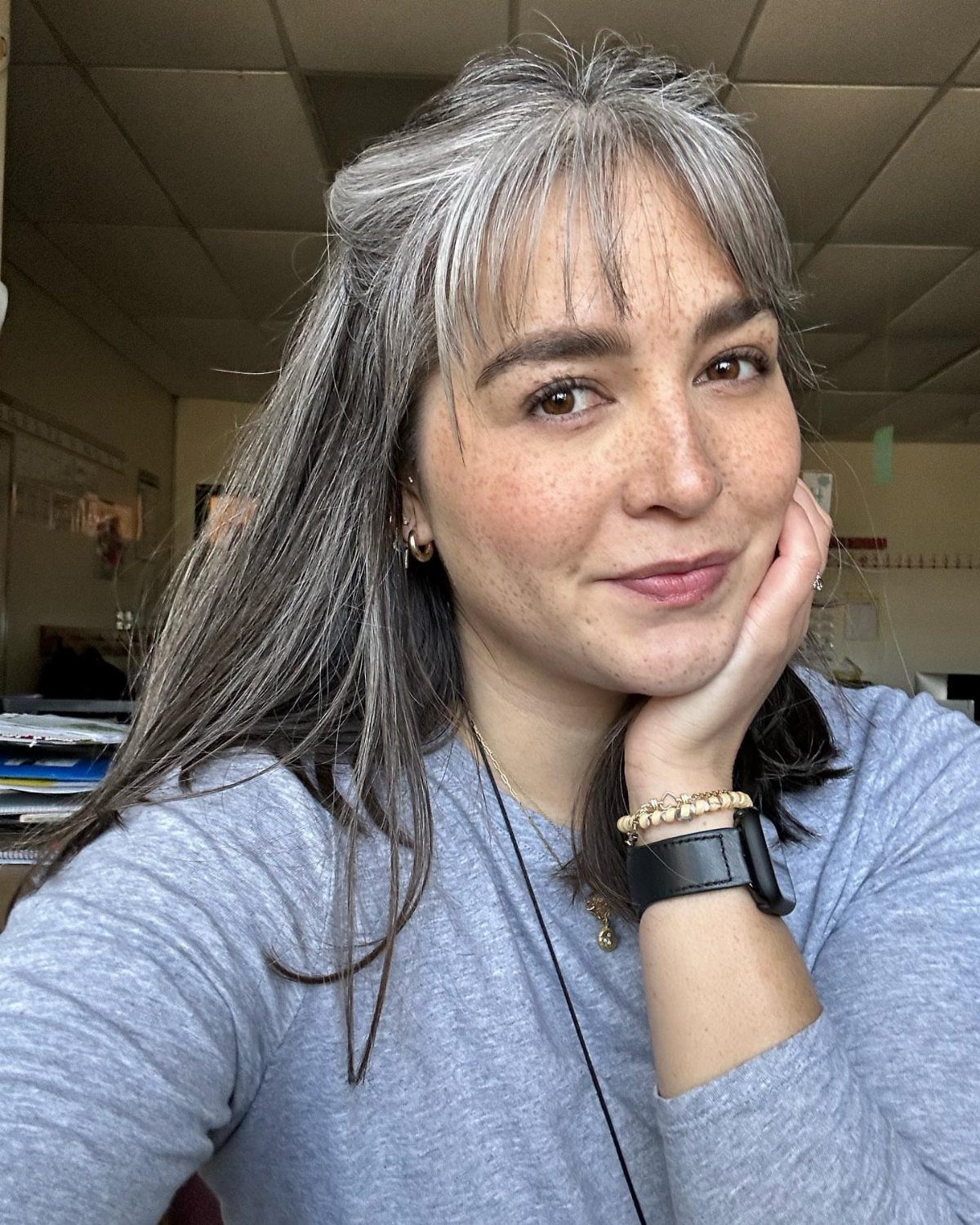
A fringe cut across the forehead and worn with any length of grey hair. Bangs can be blunt and heavy, wispy and textured, or side-swept, depending on what balances your face shape.
Wispy bangs soften a long or narrow face and need less daily styling than a blunt fringe. Blunt bangs suit a round or heart-shaped face but need a flat iron or round brush to sit smooth.
Bangs grow fast, so plan for regular trims or learn to trim them yourself at home.
6. Grey Locs
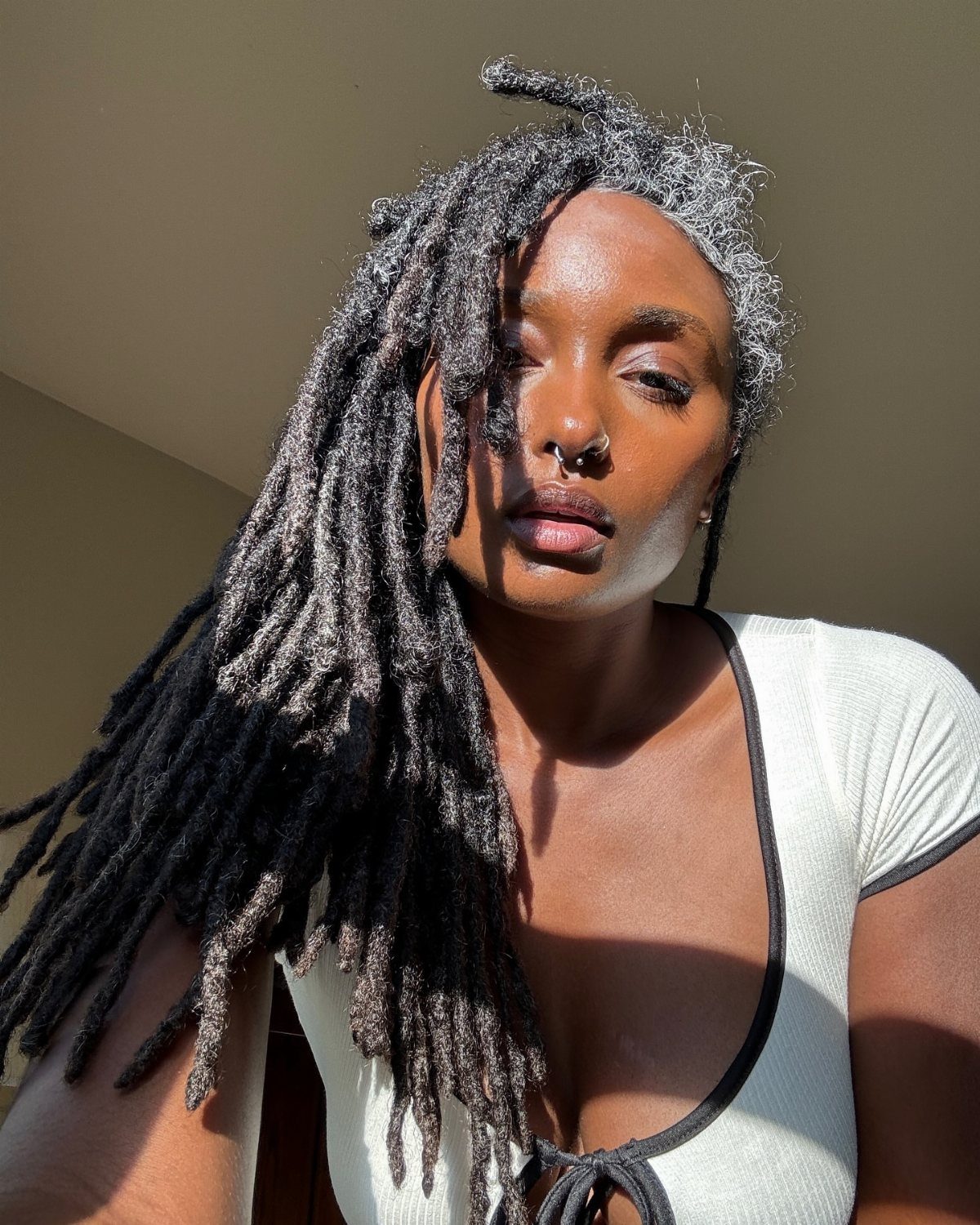
Locs worn with natural grey roots, a blended grey and dark color, or fully grey locs. The grey shows the length and maturity of the locs, and the texture of loc’d hair holds color differently than loose hair.
If you’re growing out grey roots, the contrast between grey and dyed locs fades gradually as the locs mature and the color grows down. Some people dye the grey to match the rest, others let it grow and blend naturally.
Locs need regular maintenance to keep them tight and neat, but the grey itself doesn’t change the routine.
7. Grey Braids
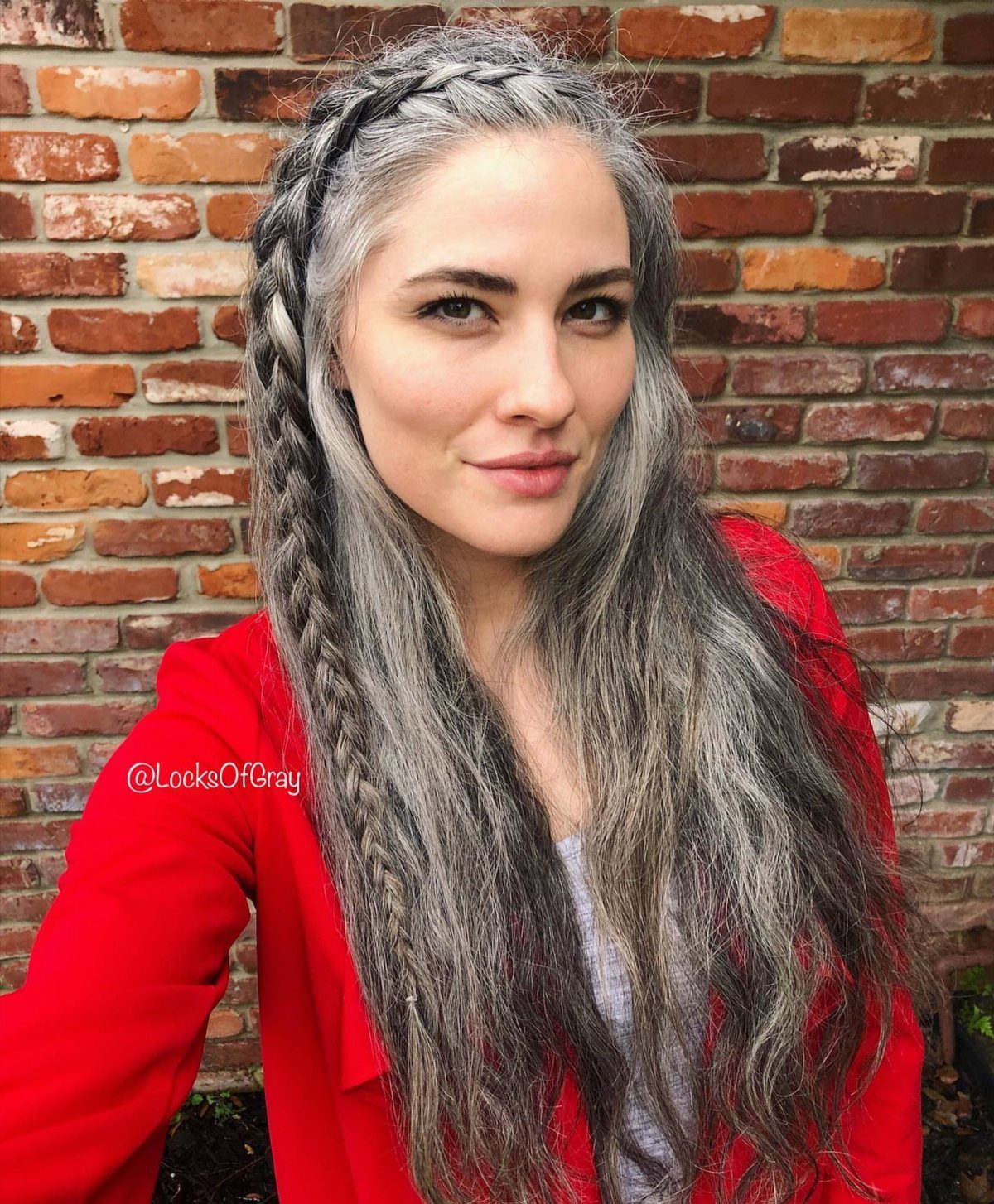
A single braid or a pair of braids worn down the back or over one shoulder, or a crown braid wrapped around the head.
Braids work with any length past your shoulders and hold grey hair in place all day without pins or heat.
If your hair is layered, shorter pieces near the face will slip out of the braid as the day goes on. A light gel or styling cream smoothed through damp hair before braiding keeps flyaways down.
French and Dutch braids lie flat against the scalp and suit structured looks. A loose side braid or fishtail braid reads more casual.
8. Easy Waves
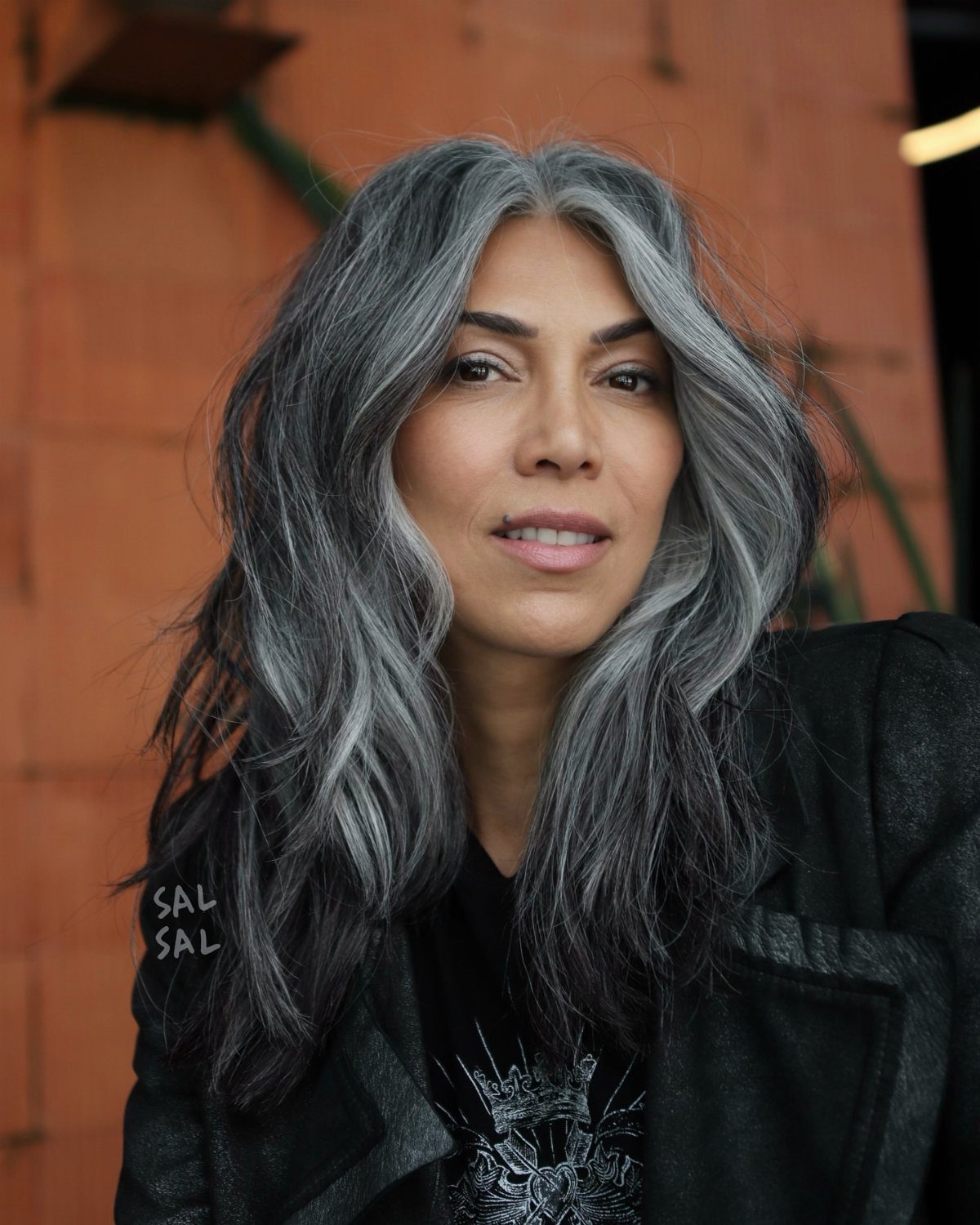
Loose, relaxed waves that add movement and volume without tight curls or a polished finish. This works when you’re after texture without the morning curling iron routine.
You can get the waves by braiding damp hair before bed, twisting sections and pinning them overnight, or running a flat iron through in a loose S-shape.
Silver and salt-and-pepper tones look more dimensional in waves than in straight hair.
9. Grey Hair Updo
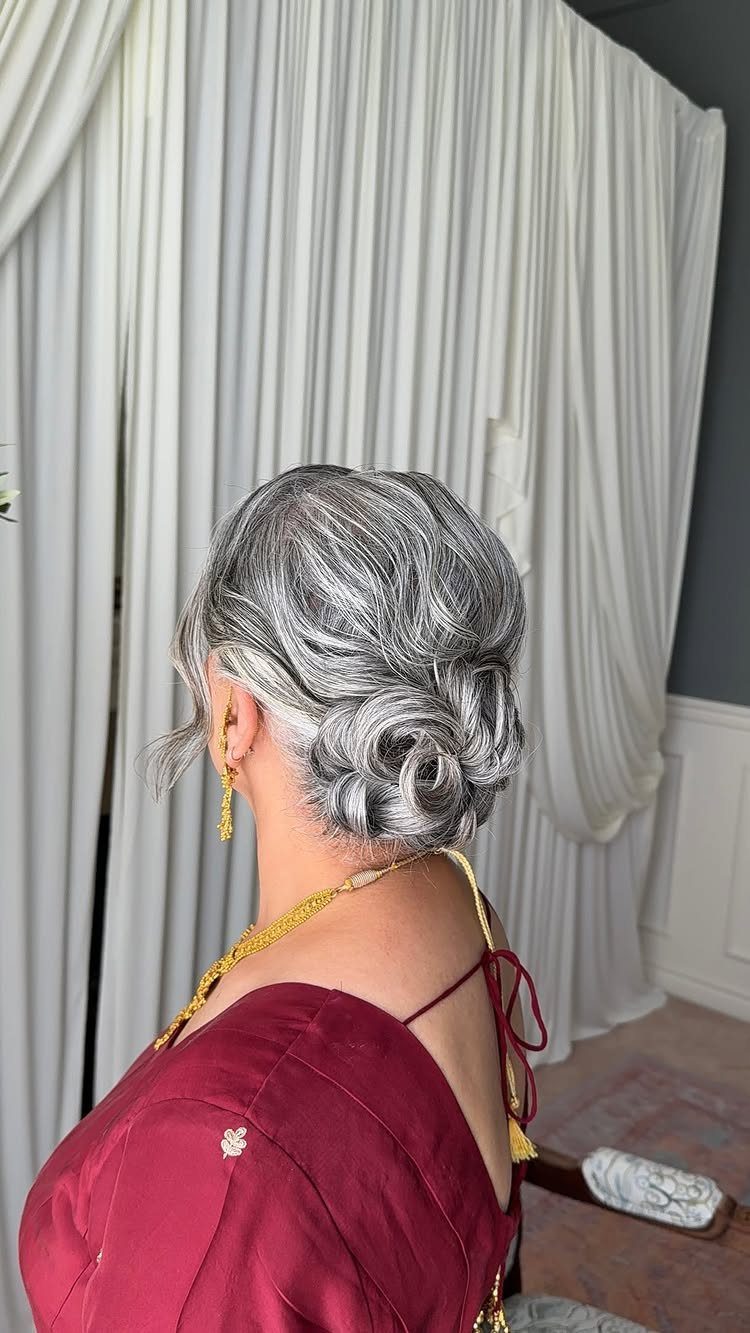
Hair twisted, pinned, or gathered into a bun, chignon, or knot at the back of the head. An updo keeps hair off your neck and works for formal events, work, or hot weather.
If your hair is fine or slippery, a texturizing spray or dry shampoo before you start gives the pins something to grip. Bobby pins that match your grey blend in better than black or brown ones.
Low updos suit most face shapes. High buns or top knots pull attention upward, which can lengthen a round face.
10. Grey Side Part
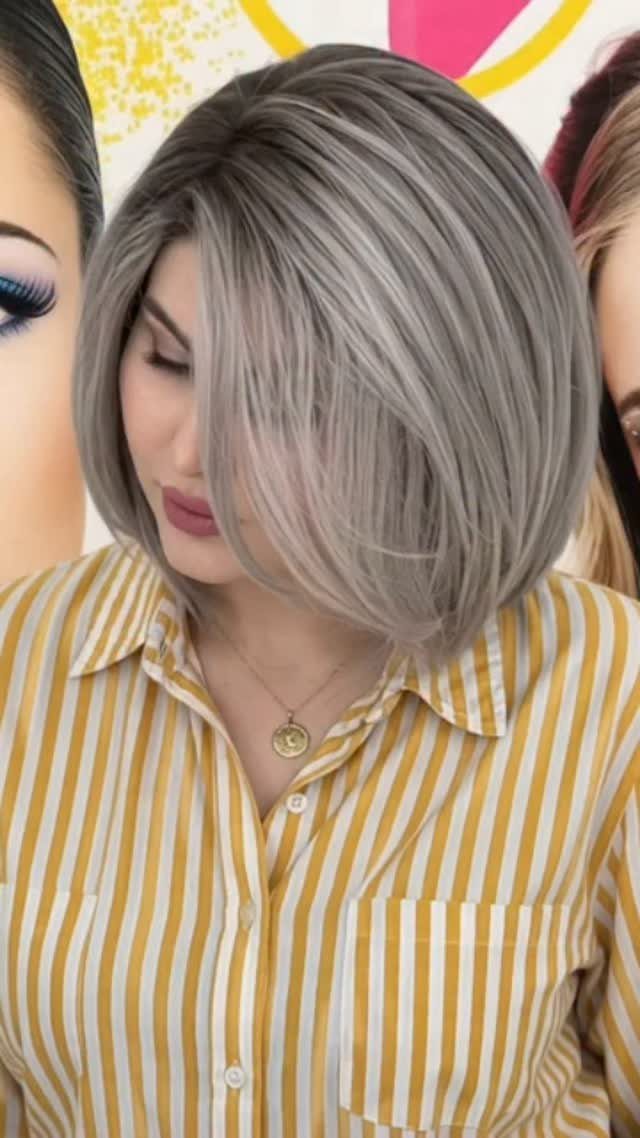
A part placed well off-center gives you volume and asymmetry. The side part adds volume on one side and creates a diagonal line across the scalp that draws the eye.
If you’ve worn a center part for years, a side part can feel like a big change without cutting anything. Blow-dry the part into place while your hair is still damp, or it will fall back to the old line.
A deep side part suits an oval or heart-shaped face. If your face is long, a less dramatic side part keeps the proportions balanced.
11. Straight Long Grey Hair
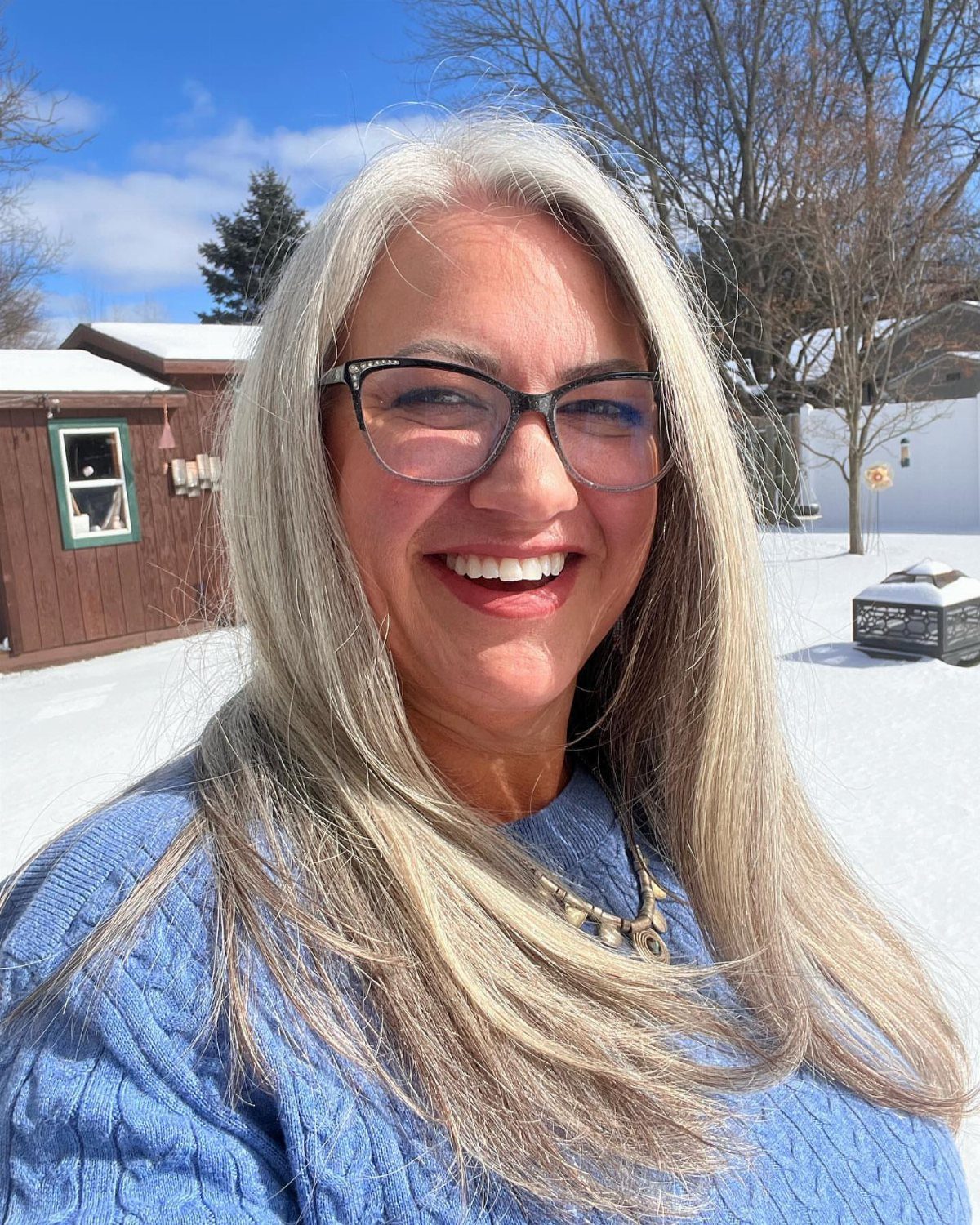
Hair grown past the shoulders and worn straight to show the full length and the silver tone. Long grey hair reads polished when it’s smooth and healthy, so this look depends on the condition of your hair.
A flat iron or blow-dry with a paddle brush gets it straight. If your hair is coarse or tends to frizz, a smoothing serum or oil on damp hair before drying keeps it sleek.
Long hair needs regular trims to prevent split ends, which show up more on grey hair than on darker colors.
12. High Ponytail

Hair gathered at the crown and secured with an elastic. A high ponytail lifts the hair away from the face and neck, and the height adds a few visual inches.
If your hair is fine, tease the crown lightly before pulling it back so the ponytail doesn’t sit flat. Wrap a small section of hair around the elastic to hide it, or use a fabric-covered elastic that matches your grey.
High ponytails can pull on the hairline if worn too tight or too often, so loosen the elastic slightly if it feels taut.
13. Grey Low Bun
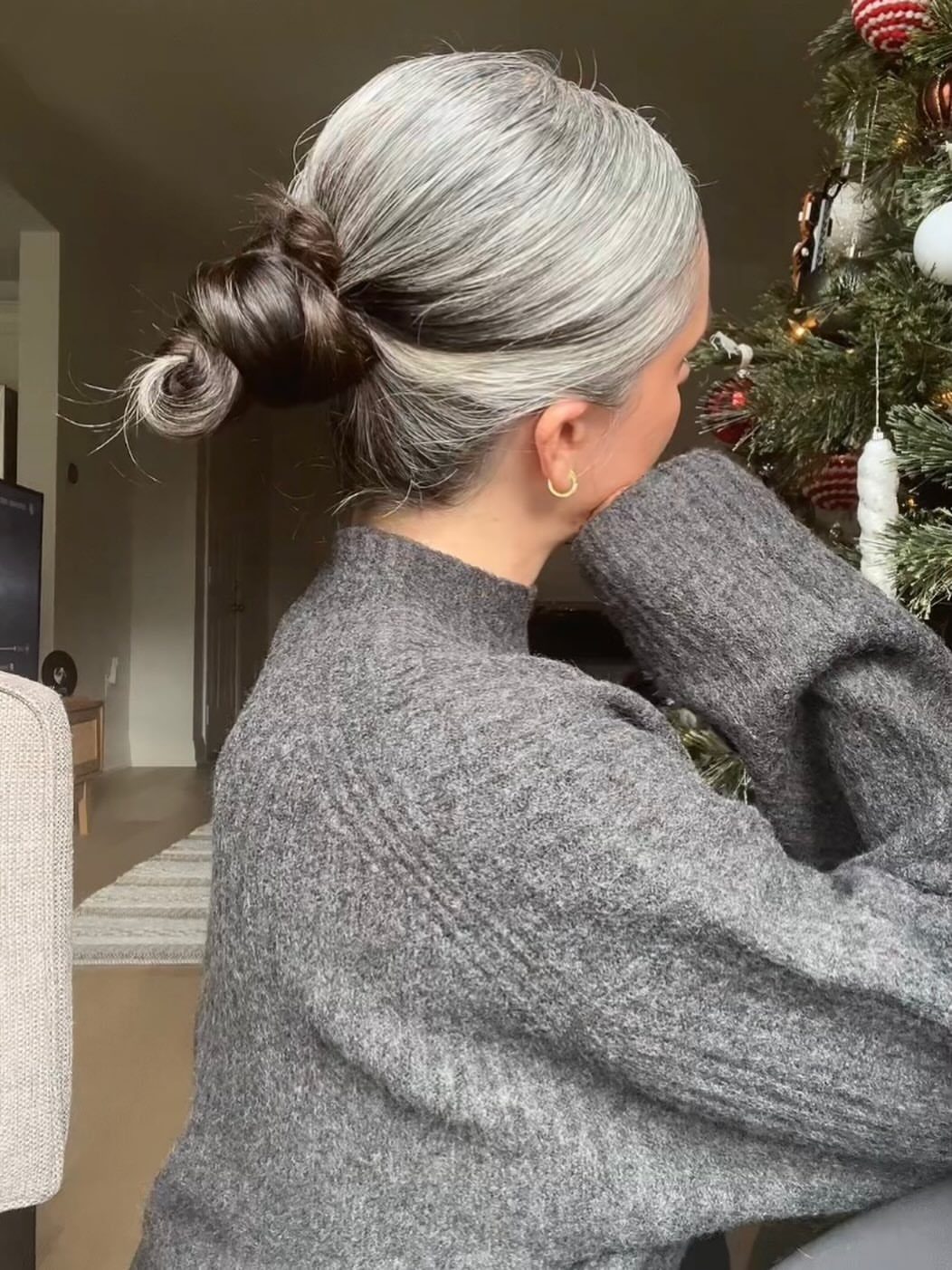
A bun gathered at the nape of the neck and pinned loosely so a few pieces can slip out. The low placement sits comfortably and works for day or evening without the tension of a high bun.
Leaving the bun slightly loose gives it a softer, less formal shape. If your hair is layered or shorter at the front, those pieces will fall out naturally and frame your face.
Grey bobby pins blend in better than dark ones, and a light hold hairspray keeps the shape without making it stiff.
14. Short Feathered Layers
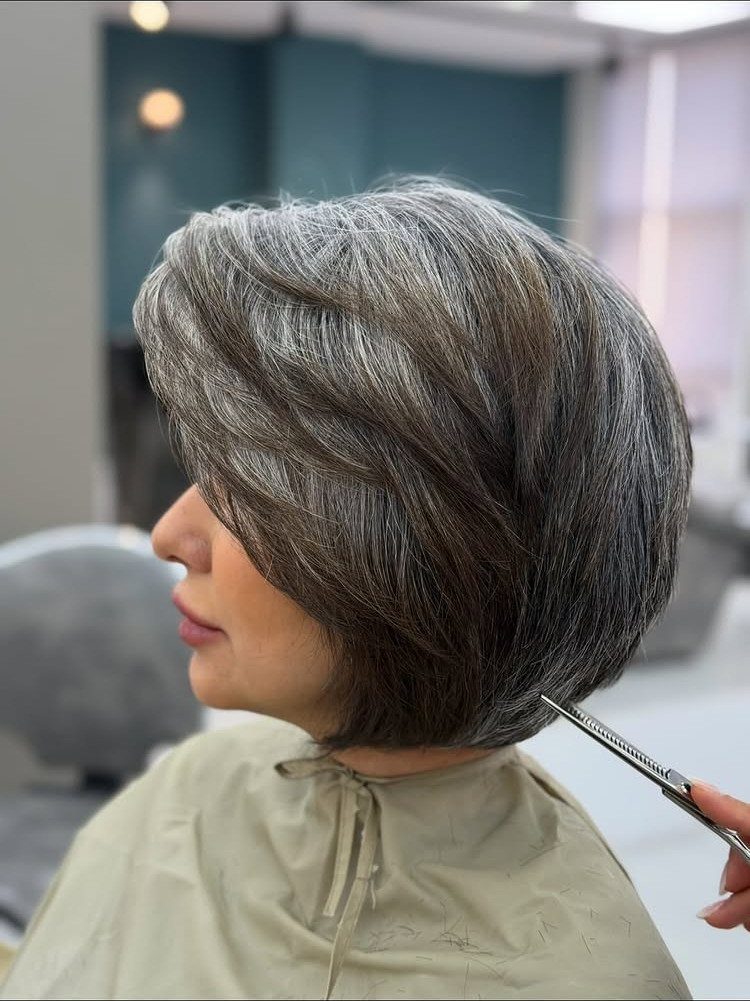
Short layers cut with a feathering technique so the ends taper and lift away from the head. The feathering adds volume at the crown and sides, which suits fine hair that sits flat.
A round brush while blow-drying lifts the roots and keeps the feathered ends from clumping together. If you skip the blow-dry, the layers can fall limp.
The cut needs regular trims to keep the feathered shape clean, or the ends get blunt and the volume drops.
15. Grey Hairstyle with Healthy Texture
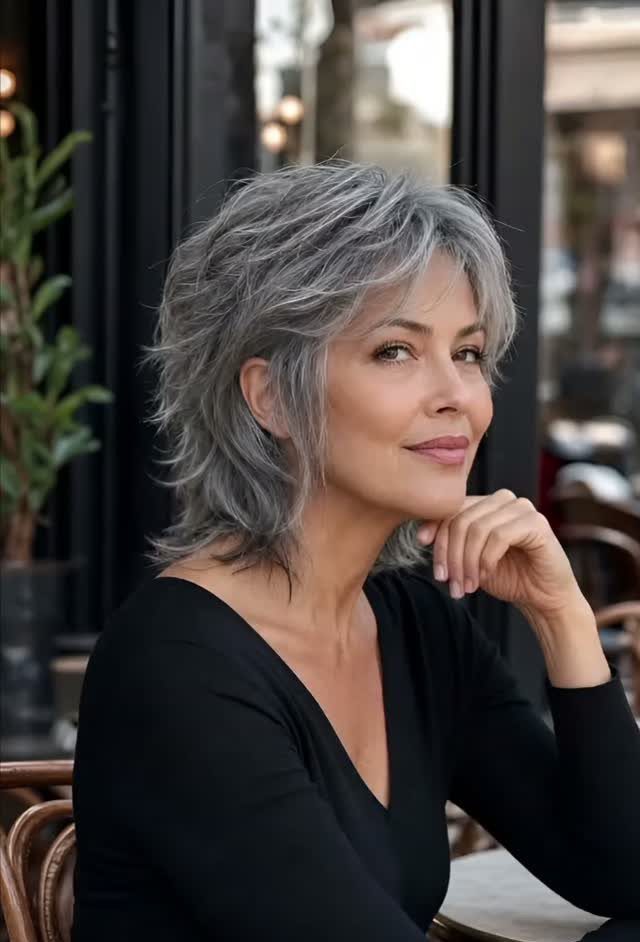
Layers cut to mid-length or shoulder-length and styled with soft waves or natural texture that looks healthy and full. The texture gives the hair dimension, and the grey reads brighter when the hair has body.
A leave-in conditioner or curl cream on damp hair helps the waves hold their shape without feeling dry or coarse. If your hair is naturally wavy, you can let it air-dry and scrunch it lightly as it dries.
Bangs cut into the layers soften the forehead and balance a longer face.
16. Salt and Pepper Mermaid Waves
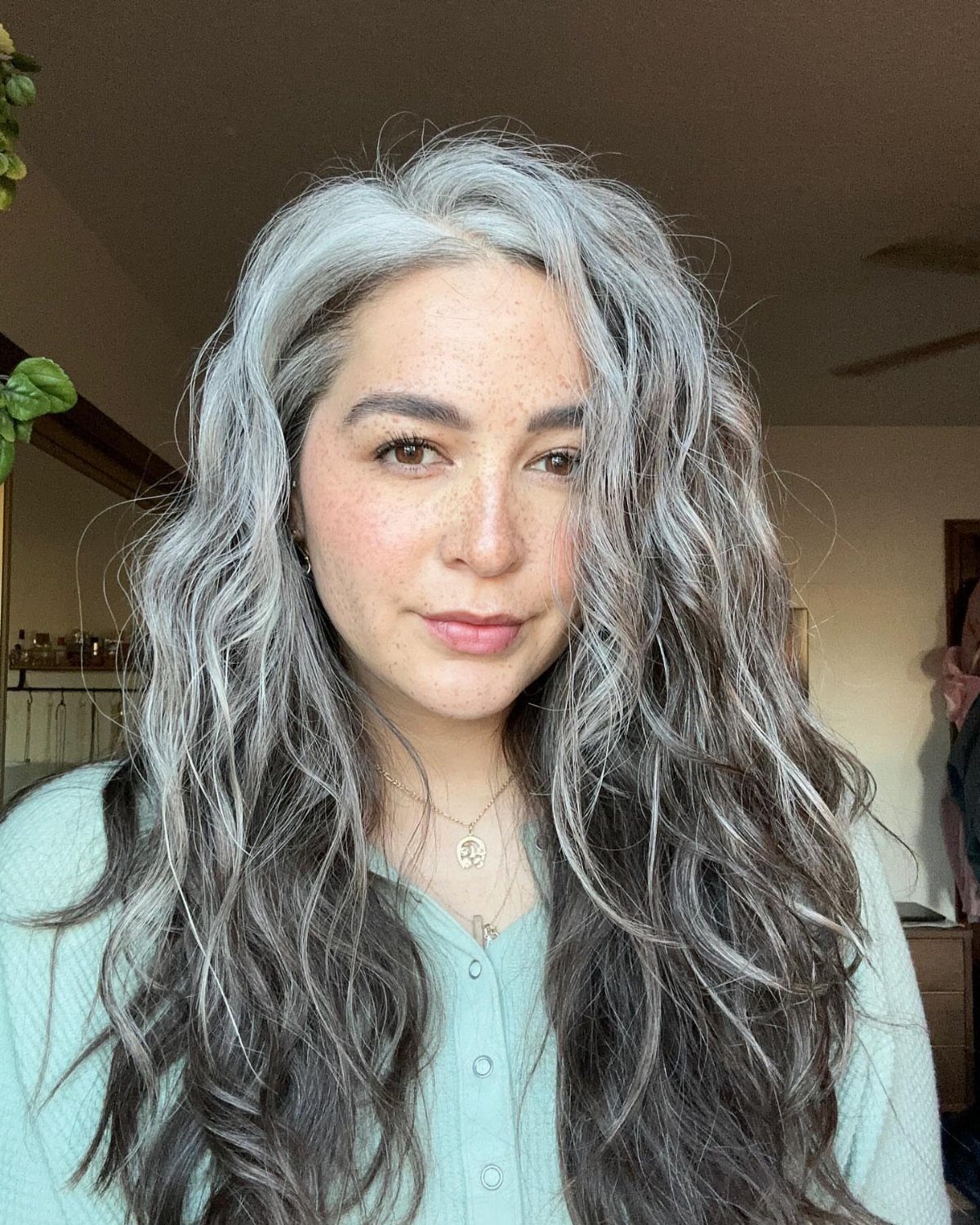
Long hair with a mix of silver and darker grey tones, styled in loose, tousled waves that fall past the shoulders.
The blend of tones gives the hair depth, and the waves add movement so the color shifts as you move.
You can get the waves with a curling wand used at different angles, or by braiding damp hair in sections and letting it dry overnight. A sea salt spray gives the waves grip and a matte finish.
The length and the wave pattern need regular moisture or the ends can look dry and frizzy.
17. Layered Grey Hair
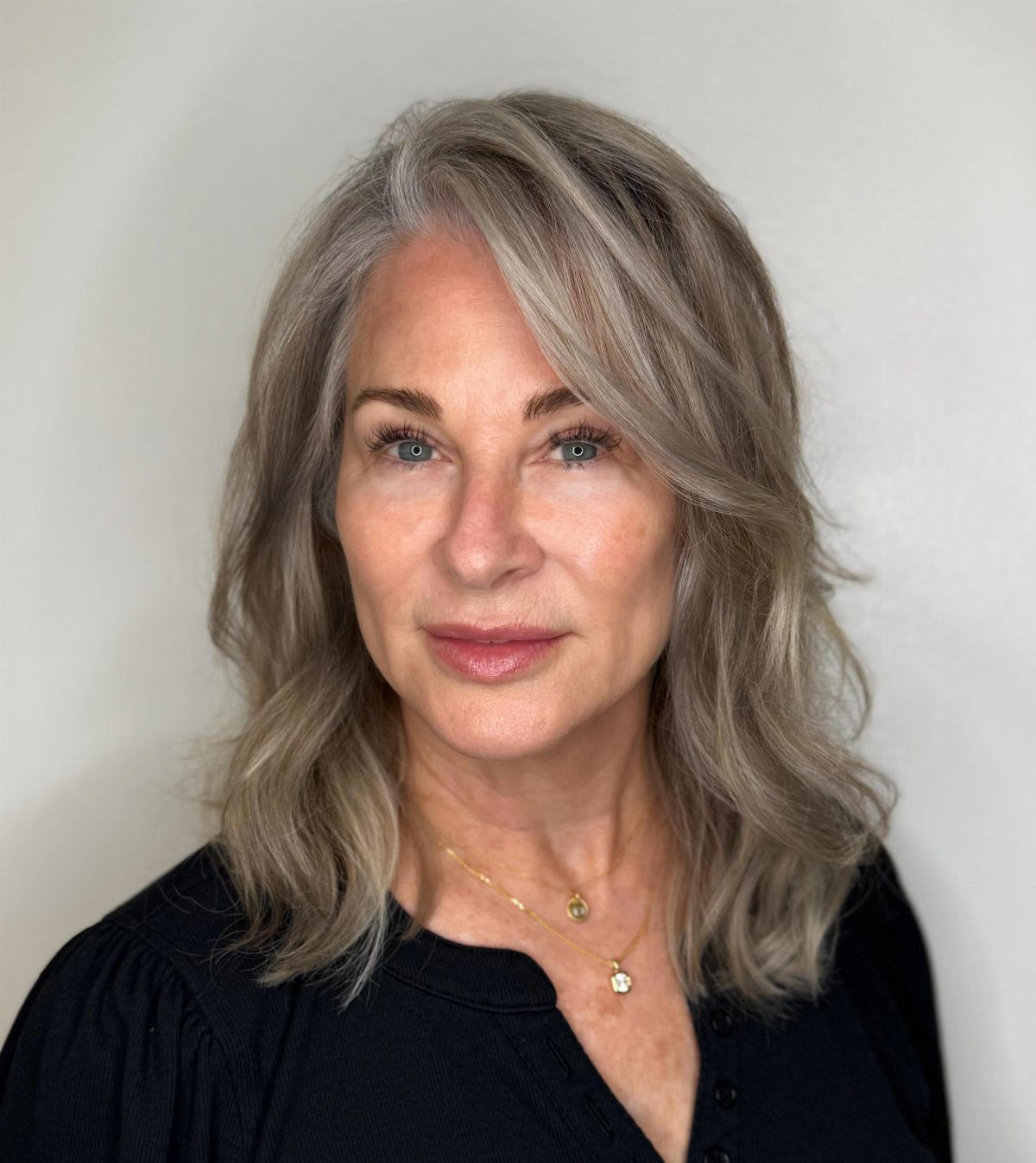
Layers cut at different lengths through the hair so it moves and doesn’t hang flat. The layers can start at the chin, the shoulders, or further down, depending on how much volume and movement you want.
Shorter layers around the face lift the hair away from the scalp and add fullness at the crown. Longer layers keep the weight at the bottom and add swing without much volume.
A center part shows the layers symmetrically. A side part gives more volume on one side and suits an oval or round face.
18. Grey Blowout
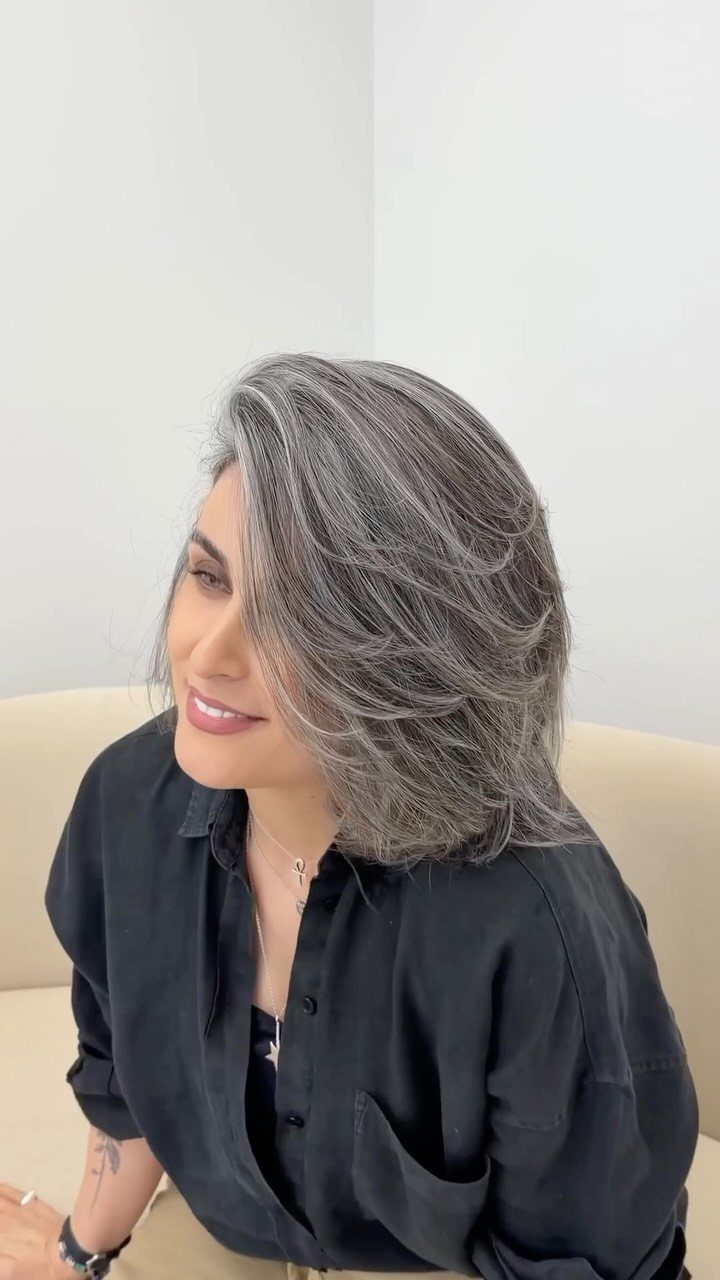
Hair blow-dried smooth with a round brush to add volume at the roots and a polished finish through the lengths.
The blowout lifts the hair away from the scalp, so this suits fine or medium hair that tends to fall flat.
A heat protectant before drying keeps the hair smooth, and a paddle brush or round brush pulled taut as you blow-dry stretches the hair straight. If you want more volume, flip your head upside down and dry the roots first.
A blowout lasts 2 to 3 days if you sleep on a silk pillowcase or wrap your hair at night. Grey hair holds a blowout well because the texture is often coarser and grips the shape.
19. Grey Hair with Glasses
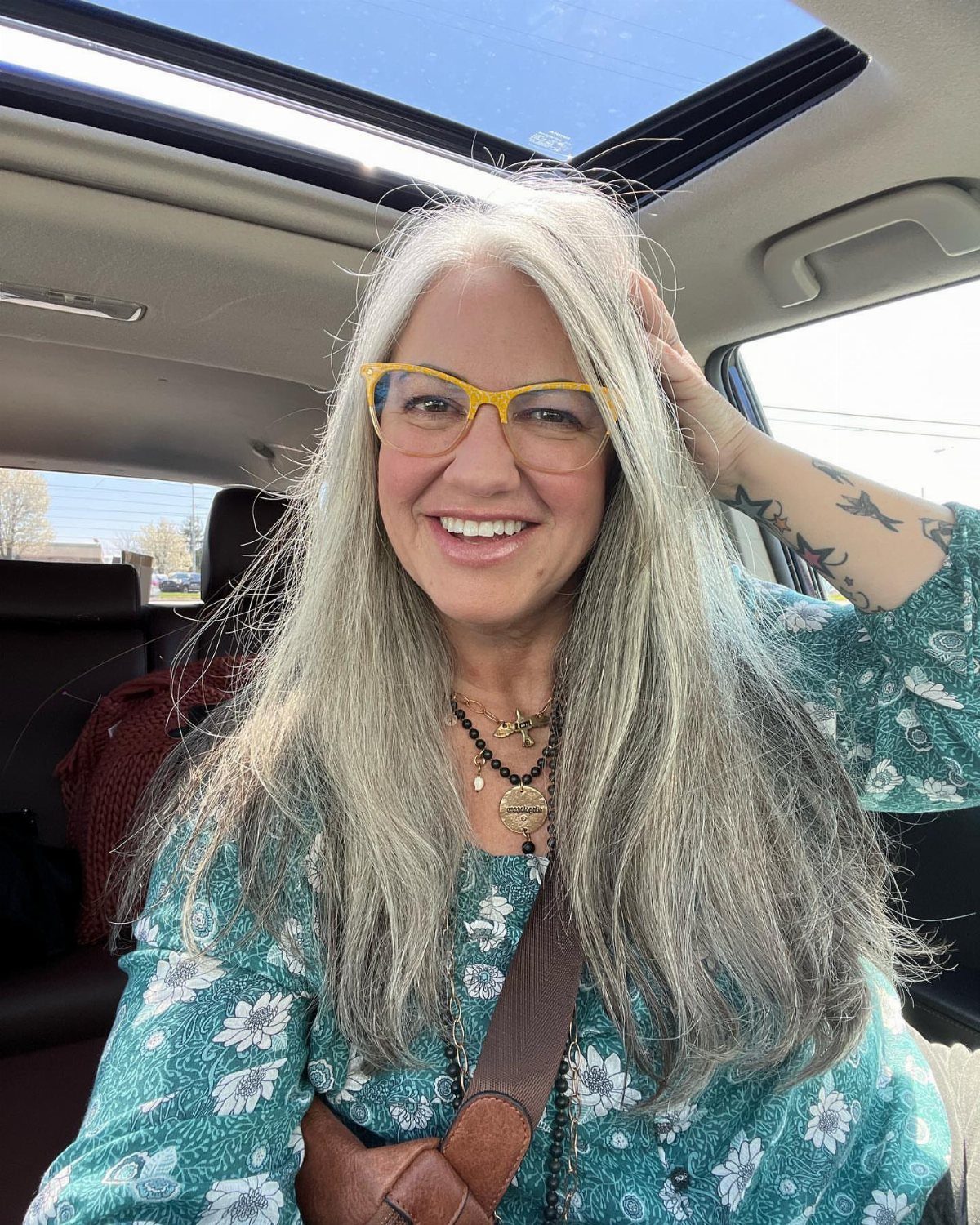
Long grey hair worn loose past the shoulders and paired with bold or colorful frames that sit between your eyes and your hair. The glasses become part of the look instead of hiding behind it.
If your hair is long enough to sit on your shoulders or fall forward, a side part or layers around the face keep the hair from covering the frames.
Grey reads neutral, so bright or patterned frames stand out more than they would against dark hair.
Pull your hair forward over one shoulder so the length is visible and the glasses stay in view.
20. Face-Framing Grey Hair
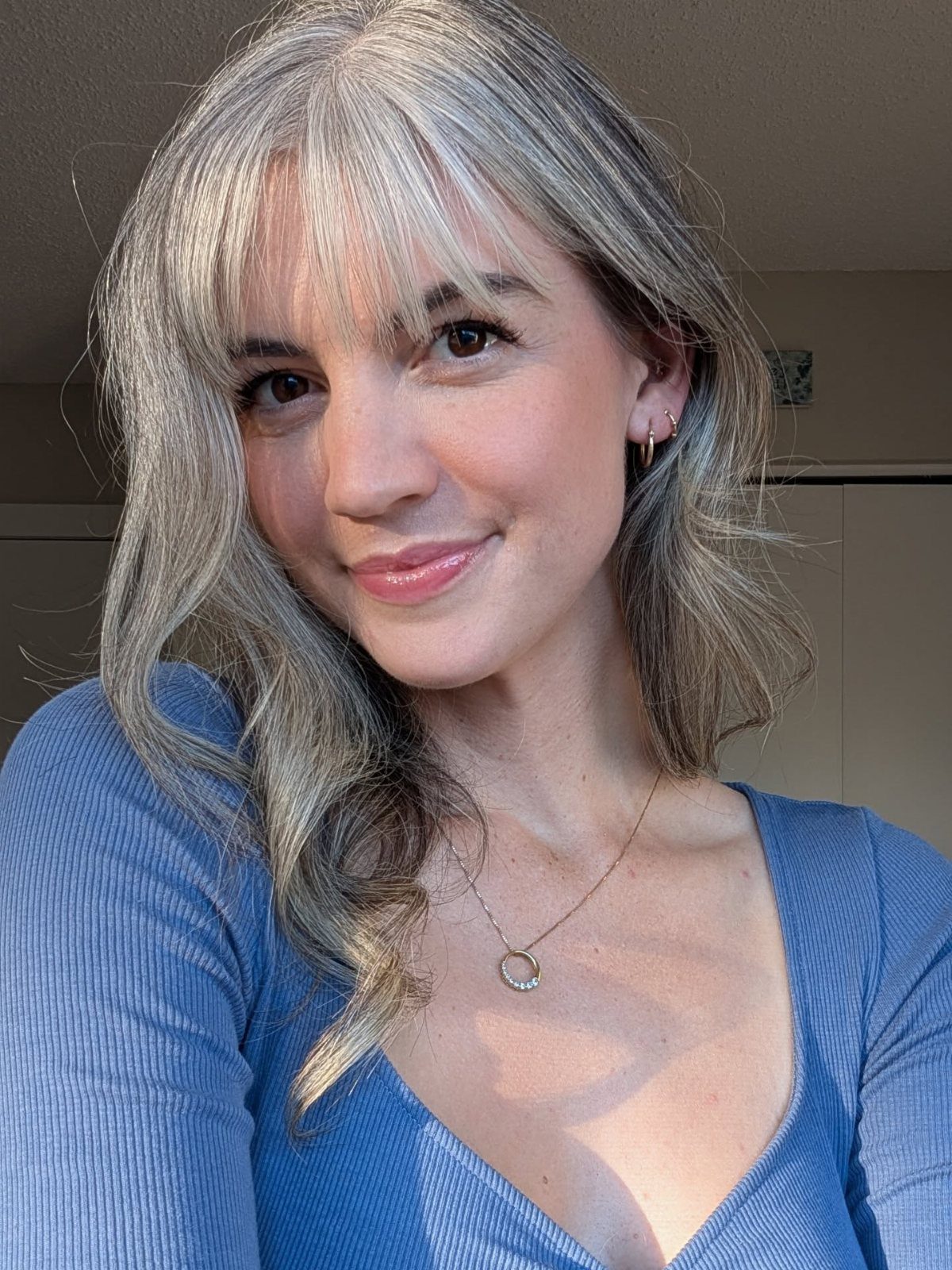
Loose strands left out around the face and worn with bangs or a fringe to soften the forehead and jawline. The face-framing pieces can be chin-length or slightly shorter, depending on where you want the attention to land.
If you’re cutting bangs into grey hair, wispy or textured bangs blend better with the framing pieces than a blunt fringe. The strands can be tucked behind your ears or left forward, depending on your face shape.
A round brush while blow-drying the framing pieces gives them a slight curve inward. Grey hair holds the shape well without much product.
21. Grey Lob
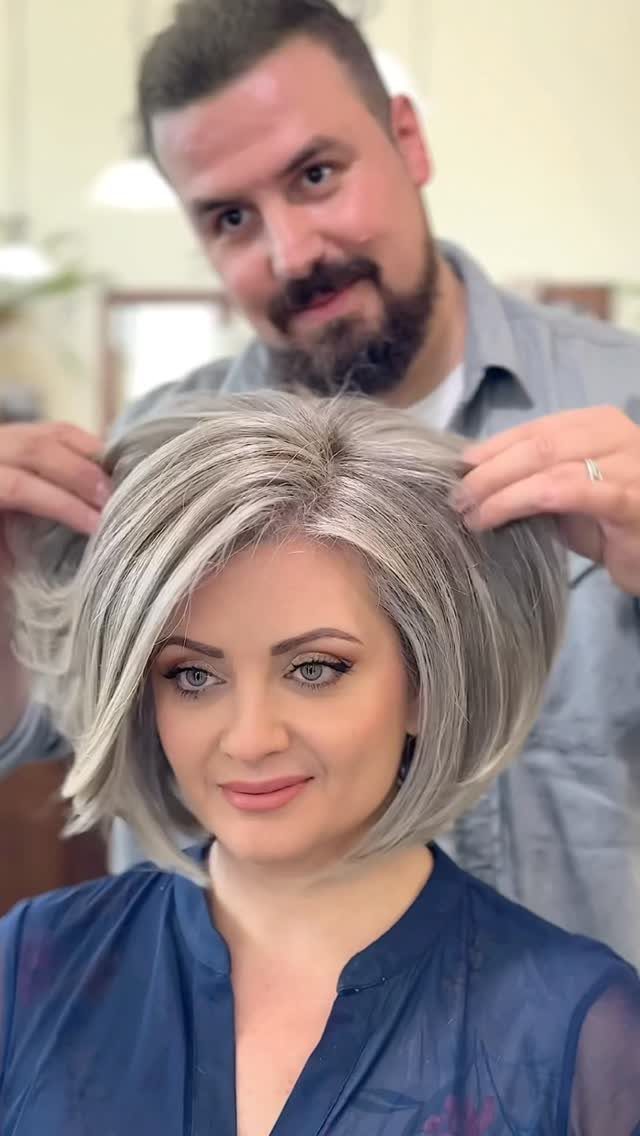
A lob is a bob cut long, with the ends landing somewhere between the chin and the collarbone, so it sits longer than a classic bob.
The lob works with straight, wavy, or textured hair and gives you enough length to tie it back or wear it down.
A side part adds volume and asymmetry. If your hair is fine, a texturizing spray at the roots before blow-drying keeps the lob from falling flat.
The cut grows out evenly, so you can let it get longer without losing the shape or needing frequent trims.
Grey Hair Changes and Care
Grey hair often feels drier and coarser than pigmented hair, and the texture or curl pattern can shift as more grey comes in.
A gentle shampoo keeps silver tones bright without stripping moisture, and regular trims prevent split ends that show up more on grey.
Yellowing happens when grey hair picks up cigarette smoke, pollution, or mineral buildup from hard water.
A shampoo formulated for silver or grey hair lifts those tones out and keeps the color clear. Look for formulas that use organic extracts instead of harsh detergents so the lather stays rich without drying the hair further.
Heat styling and sun exposure can weaken grey strands over time, so a heat protectant before blow-drying or flat ironing and a hat or scarf in strong sun help keep the hair from turning brittle or breaking.
Growing Out Grey Hair
A pixie cut shortens the grow-out period by blending grey roots with any remaining color, so the transition looks intentional instead of patchy.
The process usually takes 6 to 12 months if you keep trimming as the grey grows in, though growing dyed hair all the way to shoulder length can take over 2 years.
If you start with a pixie, you can adapt the cut as the grey grows longer.
Short layers work well in the early months when your roots are just coming in, and the shape grows into a longer style without losing the blend.
Some people prefer to let the color grow out without cutting much length, which means a longer timeline and more visible demarcation between grey roots and dyed ends until the color fully grows down.
Everyone is currently all about embracing their gray hair. But for those who have committed to dyeing their hair for years, it can be a challenge (both mentally and physically) to transition from colored hair to au natural.
— Vogue
Choosing a Cut for Your Hair
Hair texture, density, and how much time you’ll spend styling each morning all factor into which cut will actually work.
A lob handles texture changes well and adapts whether your grey hair sits flat and needs volume or turns coarse and needs smoothing.
A cut that relies on a round brush and blow-dryer every morning only works if you’ll do that, otherwise the shape collapses.
Lightweight volumizing products lift fine hair without weighing it down. A finishing serum applied to dry hair builds texture and control without stiffness or the feel of hairspray.
Frequently Asked Questions
What is the best haircut for gray hair?
No single cut wins. The right cut fits your texture, density and face shape, and it also fits the number of minutes you’ll really give it each morning.
For most people I’d pick a lob, because it works on gray that lies flat and wants lift just as well as gray that has gone wiry and wants smoothing.
How can I wear gray hair without looking old?
Choose a cut that suits your face shape and texture, then add movement or volume. Layers take weight off the scalp and build fullness at the crown, and loose waves or face-framing pieces get you to a similar place.
Gray also reads brighter when hair has body, so a full, healthy texture helps more than any one trend.
Not sure if bangs are right for you?
Pin in a set of clip-on bangs for a few days before anyone picks up scissors, so you know how they feel in real life.
Wispy bangs soften a long or narrow face and need less daily styling, while blunt bangs suit a round or heart-shaped face but need a flat iron or round brush to sit smooth.
Bangs grow past your eyebrows quickly, so trims become a regular appointment.
How can you approach your curly hair as it transitions to gray?
Keep the curls natural and ask for soft, descending layers that sweep around the cheeks and jaw. Curls that have relaxed with age often spring back under a diffuser set to low heat.
What do you do if you don’t have time to air-dry?
Towel-dry first, apply a heat protectant, and blow-dry on a low heat setting.
Gray hair often runs drier and coarser, and heat can weaken the strands over time, so protection matters. Hair that falls flat gets root lift when you dry it with a round brush.