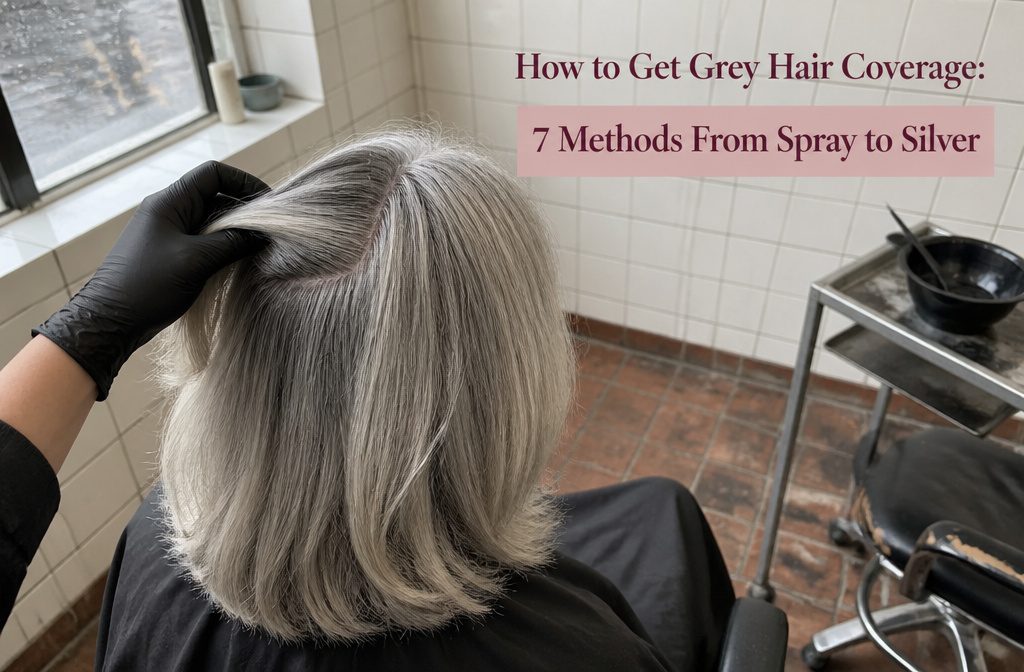
Full gray coverage means permanent color: up to 100% coverage, but a touch-up every 3–6 weeks once you’re past 50% gray. Demi-permanent hides only up to 70%, so strands show.
Gloss tints rather than covers. Most people go wrong at the prep stage, since gray’s tight cuticle resists dye.
1. Temporary Root Sprays and Powders
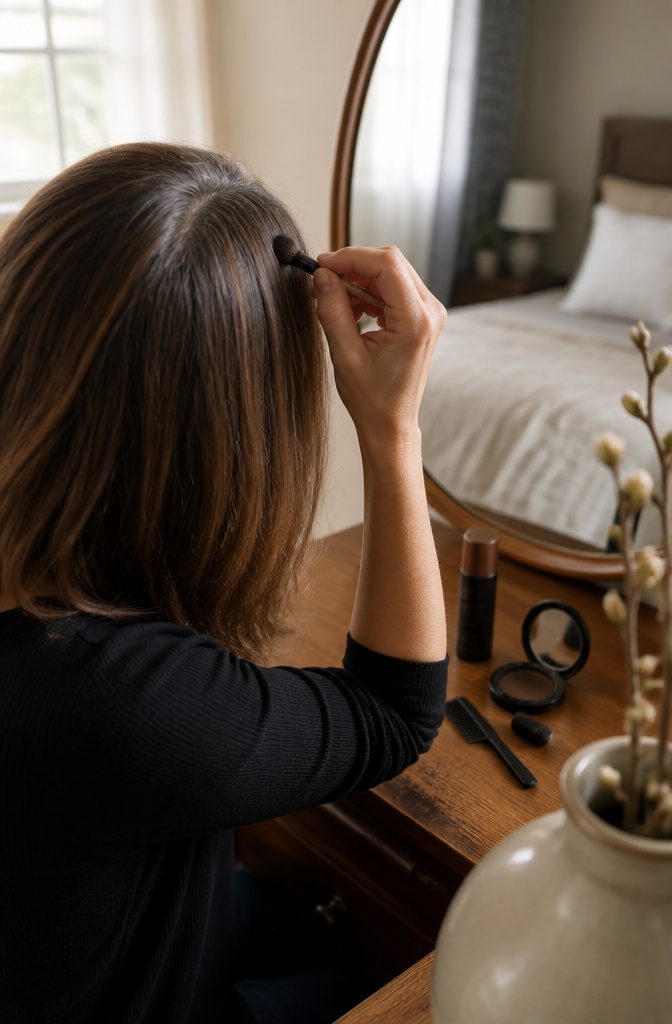
Root sprays and powders work like undereye concealer for your part line: match the shade to your natural color, apply it to the roots, and new gray growth fades from view.
The Great Cover Up, Magic Root Cover Up and Enhance Hairline Powder all follow that idea, in a range of shades and formulations.
They suit a thin line of new growth, or an event that lands a week before your next appointment.
The limit is permanence. Most wash out after a single shampoo, and application can get messy.
They do add fullness at the roots and soften the look of thinning, which is a real perk. I’d use one as a quick fix for a party, not as daily coverage.
2. Styling and Accessories
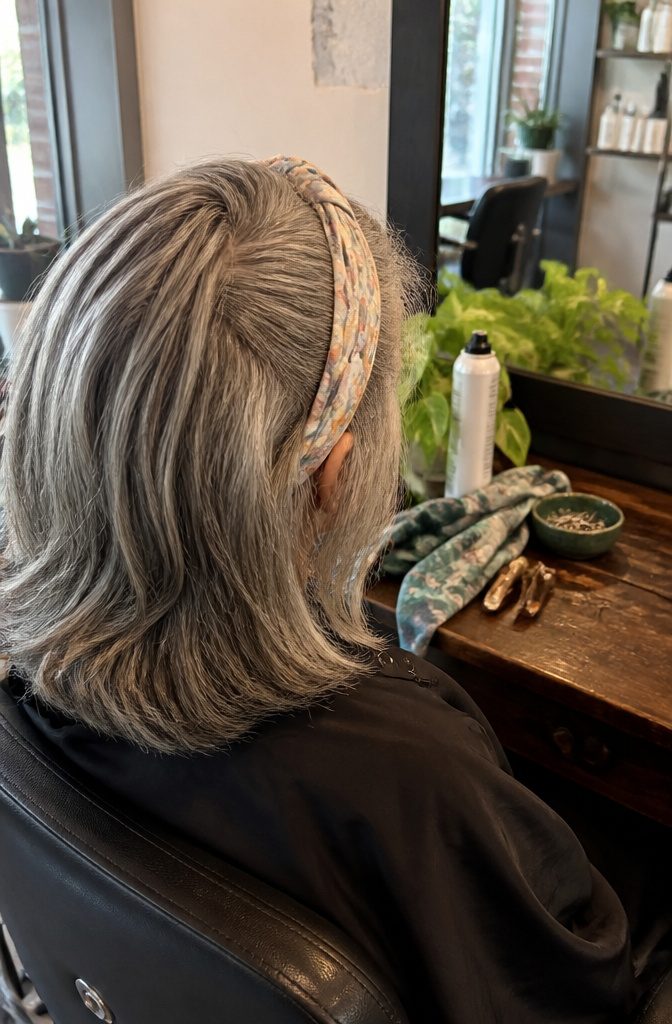
Styling hides roots and does not cover gray, so it works best for stretching the time between color appointments while regrowth is still light.
The easiest move is to change your part, and celebrity hairstylist Evanie Frausto points to the most reliable ones:
"Side parts or subtle zig-zag parts work really well."
— Vogue
Move the part away from wherever the gray shows most, since a part sitting in the same spot every day is where regrowth is easiest to see.
A texturizing or volumizing spray adds lift and natural movement, which helps disguise grays.
A headband, bandana, scarf or decorative clips can cover what’s left, and they’re one of the more scalp-friendly options. Once the gray spreads past what a part and a scarf can hide, move on to actual color.
3. Semipermanent Color and Gloss
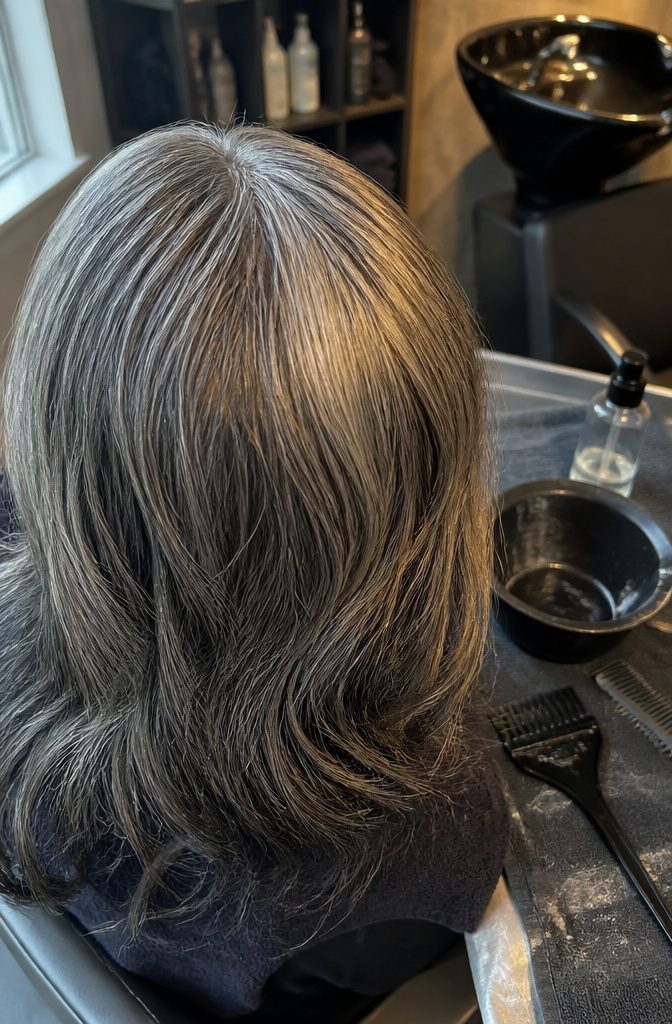
Semipermanent color tints gray instead of covering it.
It coats the outside of the strand like nail polish, with no bleach and no change to your natural pigment, so you get a soft, blurred blend that fades in 4–12 washes or up to six weeks.
Redken Shades EQ Gloss deposits a touch of pigment that makes gray read like natural highlights, and it adds shine along the way.
Redken Color Gels Lacquers and Color Fanatic Top Coat + Tone are also worth a look. I like this route for testing a new tone before committing to permanent color, since nothing sticks around.
Don’t expect solid grey hair coverage on resistant gray, though. If you want every strand hidden, skip the gloss.
4. Demi-Permanent Color
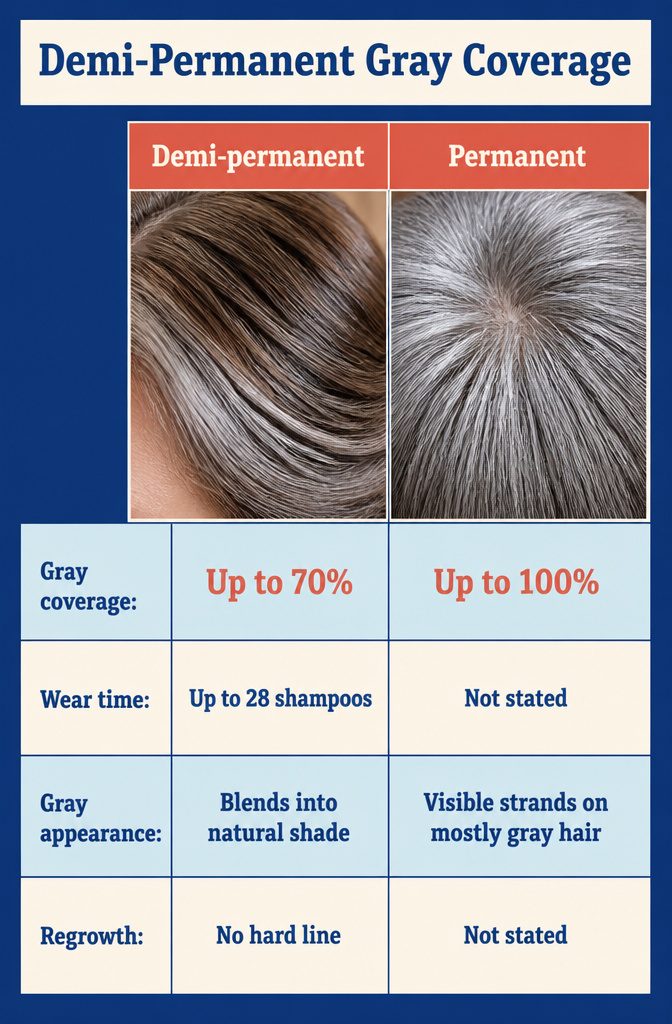
Demi-permanent color lasts longer than semipermanent, up to 28 shampoos or about six weeks, and it hides up to 70% of grays.
It blends silver into your natural shade instead of painting over it. For partial gray, I’d point readers to Wella Color Touch, which also offers up to 70% coverage and can add a soft root shadow or blend stray strands.
Because the color fades gradually, there’s no hard regrowth line to deal with at week four.
Coverage is the limit. Permanent formulas can reach up to 100%, so if most of your head is gray, demi-permanent will leave visible strands.
5. Permanent Color and Root Touch-Ups
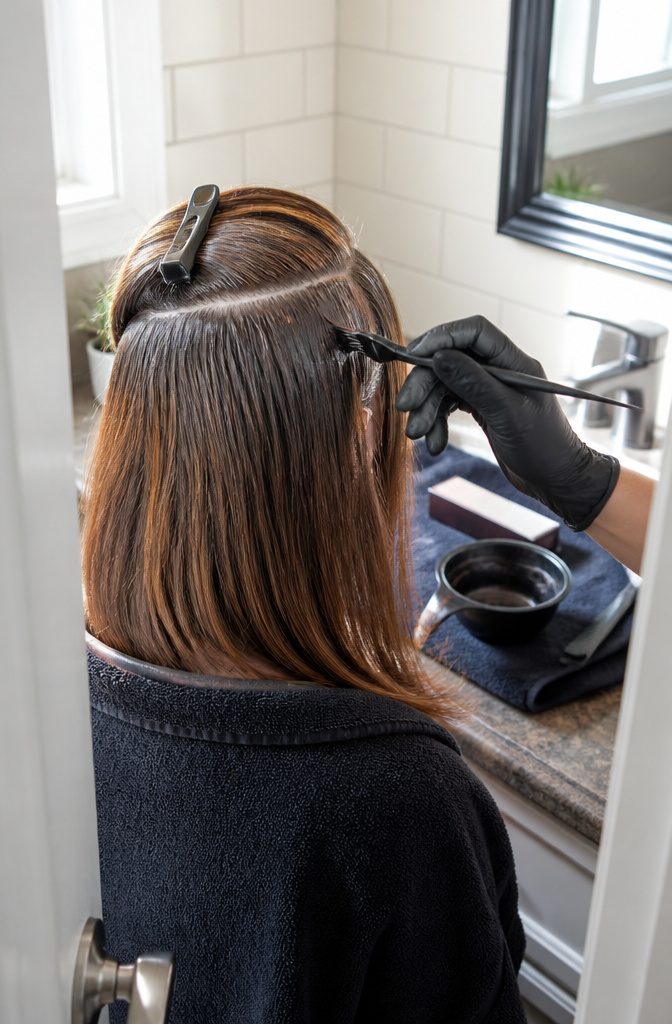
Permanent color is the one option that covers resistant gray fully and evenly, and it charges for that in upkeep.
New growth contrasts with the dyed length quickly, so if you’re more than 50% gray, expect a touch-up every 3–6 weeks. Fewer grays, or a shade close to your natural color, stretch that out.
Root-only kits make the schedule easier to live with. Wella’s Koleston Xpress is a 10-minute permanent formula with up to 100% gray coverage, and Root Retouch and Redken Express Root Touch Up belong to the same quick, roots-only category.
For all-over color, Garnier Nutrisse Ultra Crème promises 100% gray coverage at a $10.99 MSRP. If the lengths still look good, I’d reach for a root kit over a full box every time.
6. Highlights, Lowlights and Root Smudge
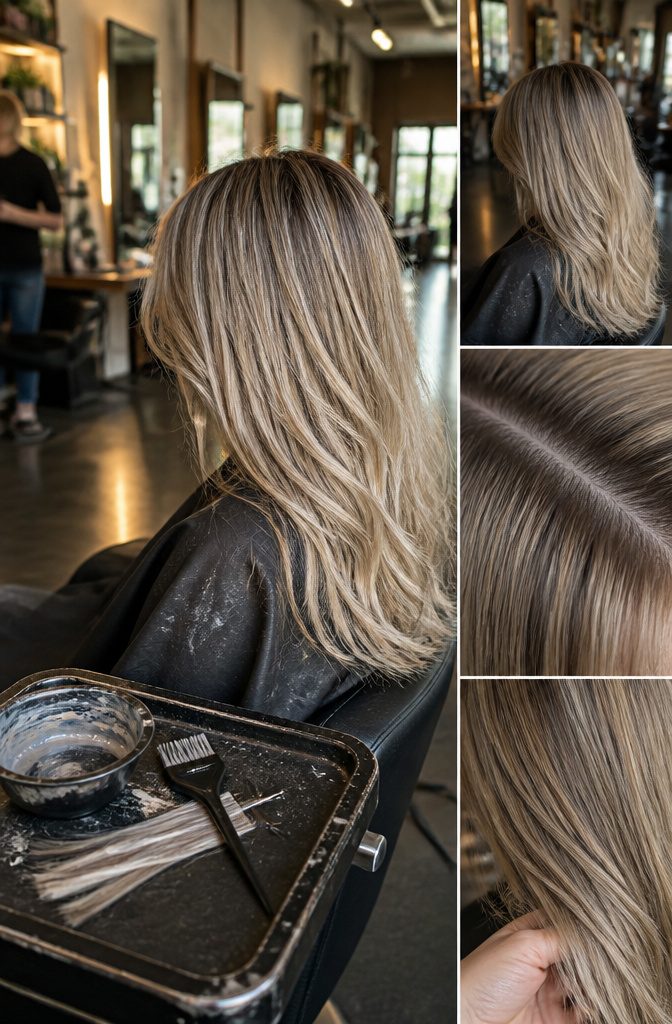
Highlights and lowlights blend gray instead of hiding it, which is why I rate them for anyone tired of a hard line at the part. Cool blonde highlights suit blonde or light bases and lower the contrast of regrowth.
Brown lowlights melt scattered gray into blonde or light brown. A brown root shadow camouflages roots on blondes, brunettes and auburns.
Between salon visits, the Root Smudge and Blending Brush diffuse dark regrowth and can even mimic highlights. On dyed or lightened lengths, put permanent color on the roots only and run gloss through the ends to refresh tone.
Upkeep drops because regrowth looks intentional, not like a mistake.
7. Embracing Silver or Platinum

Silver or platinum tones lower the contrast of new growth, which suits hair that is already mostly gray or white.
Going platinum from darker hair may take two or more appointments. BlondorPlex claims up to 97% less breakage and up to nine levels of lift; treat that as the brand’s promise, not a guarantee for your hair.
Yellow creeps into every one of these shades, so keep a purple shampoo in rotation. For a toning treatment, Color Fresh Mask in Pearl Blonde goes on clean, damp hair and develops for 10 minutes before a thorough rinse.
Cover or embrace is a choice of look and upkeep: covering gives the most uniform color, while silver swaps root touch-ups for toning.
Why Gray Resists Color
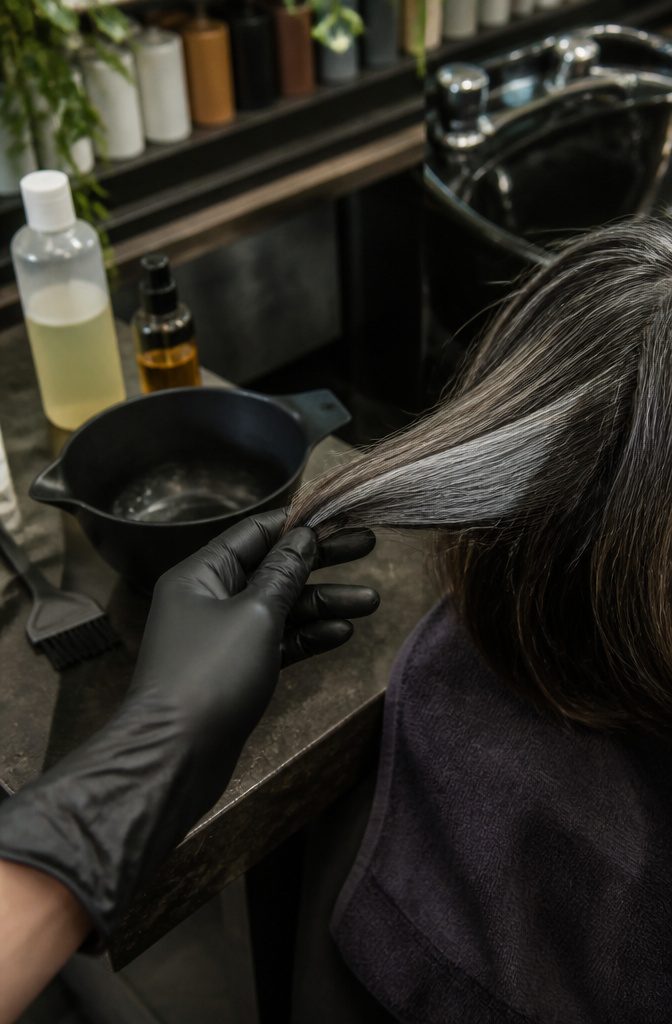
Gray strands have a thicker cuticle with more layers, packed down tightly, so color molecules struggle to get into the shaft. Product buildup, hard-water minerals and some medications add to the problem.
Colorists handle this with prep I’d leave in the salon. They check the true percentage of gray first, then often drop the formula a half to a full level for better pigment weight.
A clarifying shampoo such as Oway Htech Pre-Color removes residue, and pre-softening means painting on color with no developer for a few minutes before the full formula goes over it.
An accelerator oil like Oway Hypercolor can cut processing time by up to 75%.
Match Your Natural Root Shade
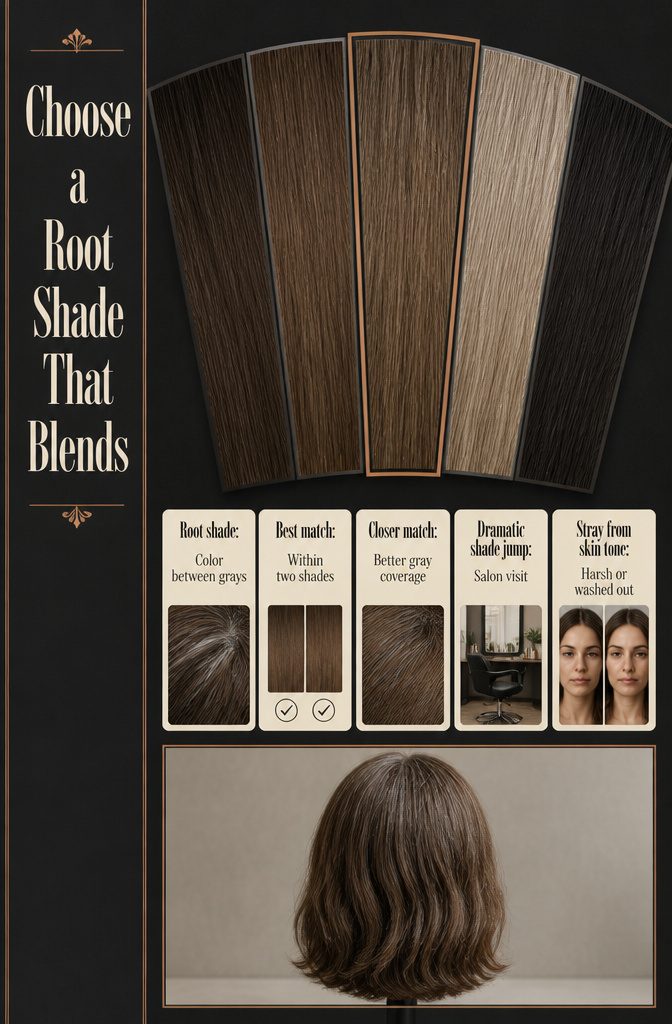
Your natural root shade is the color between the grays, and a good match stays within two shades of it. The closer you stay, the better the coverage, and the less obvious the regrowth line when roots return.
That matters most if you want to stretch the weeks between touch-ups. A dramatic jump lighter or darker belongs in a salon and means more frequent root work, so only make it if you’ll keep that schedule.
If gray is scattered and you’d rather not redo roots often, a medium or dark brown root shadow softens silver at the base without changing the rest of your color.
Stray too far from your skin tone and the result can look washed out or harsh.
At-Home or Salon Application
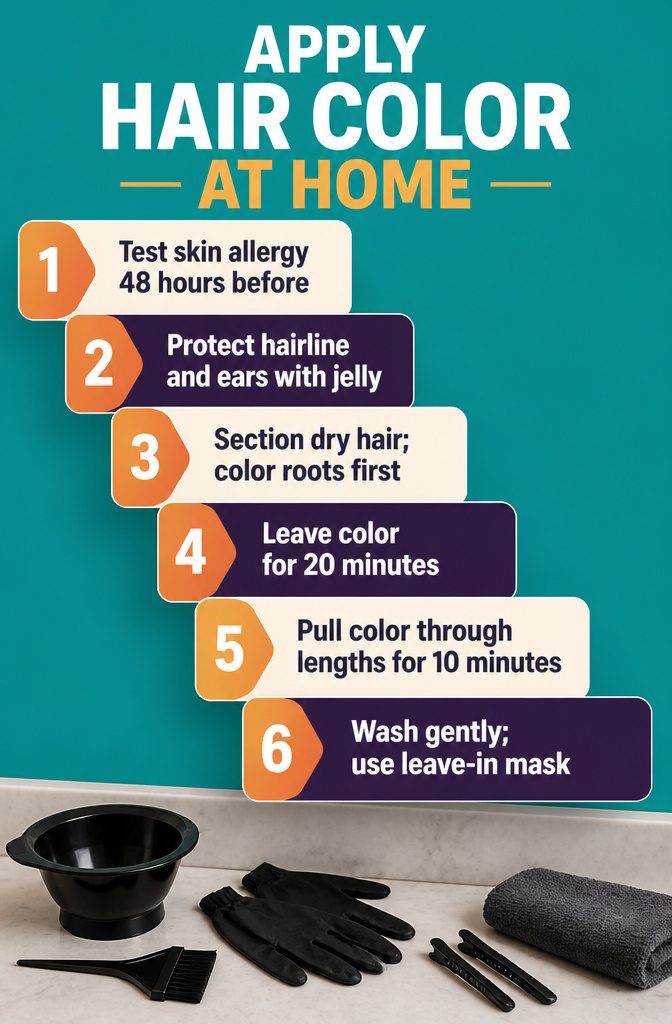
- Do a skin allergy test 48 hours before any color touches your head.
- Rub petroleum jelly along your hairline and ears so the dye stays off your skin.
- On dry hair, split your hair into sections and apply permanent color to the roots first.
- Leave it for 20 minutes. Rinsing early gives patchy coverage.
- Pull the color through your lengths for the last 10 minutes.
- Prefer the salon? Skip steps 1–5 and book a demi-permanent or permanent service, with a gloss on the lengths.
- Wash gently, then swap your rinse-out conditioner for Ultimate Color Miracle Leave-In Mask, which gives up to 10 weeks of color vibrancy.
Frequently Asked Questions
Why is gray hair hard to cover?
Gray strands have a thicker cuticle with more layers packed down tightly, so color molecules struggle to reach the inside of the shaft.
Product buildup, hard-water minerals and some medications can add to the resistance. Clarifying the hair before coloring helps clear that residue.
What is the best way to cover gray hair?
Permanent color is the best way to cover gray fully and evenly, with formulas reaching up to 100% coverage.
Demi-permanent color hides up to 70% and blends the gray into your natural shade instead of masking it, which gives a softer grow-out. Pick permanent for solid coverage and demi-permanent for fewer touch-ups.
What is the best hair color to cover gray, lighter or darker?
Choose a shade within two levels of your natural root color, which is the color between the grays.
A close match covers better and makes regrowth less obvious. A big jump lighter or darker belongs in a salon and means more frequent root work.
Can you cover 100% gray hair?
Yes, certain permanent formulas can cover up to 100% of gray. Demi-permanent color tops out around 70%, so strands will still show on a mostly gray head.
How often should you color gray hair?
If you’re more than 50% gray, plan on a touch-up every 3–6 weeks.
Fewer grays or a shade close to your natural color stretch that out. A root-only kit makes the schedule easier to keep.
Why do my gray roots show after 2 weeks?
New growth contrasts with the color on the rest of your hair, so the line appears fast.
A shade near your natural root color and regular touch-ups slow it down. Demi-permanent color also helps because it fades gradually and leaves no hard regrowth line.
How long should you leave hair dye on gray roots?
Leave permanent color on the roots for 20 minutes, since rinsing early gives patchy coverage.
Always let it develop for the full recommended time, and pull it through the lengths for the last 10 minutes. Pat the color on rather than massaging it in, and start with the most resistant areas.
What are the best ingredients for gray hair coverage?
Look for gentle, ammonia-free kits or formulas infused with oils such as shea, olive, argan, coconut or avocado. Gray hair needs extra care, and nourishing products protect it while still giving lasting color.
Is it better to cover or embrace gray hair?
It depends on the look you want and how much upkeep you’ll accept.
Covering gives the most uniform color. Going silver or platinum lowers the contrast of new growth and trades root touch-ups for regular toning, such as a purple shampoo.
How can I cover my gray hair without dyeing it?
Root sprays and powders hide new growth in minutes, but most wash out after one shampoo.
Changing your part and adding a headband, scarf or clips can stretch the time between color appointments while regrowth is still light. Once the gray spreads past what styling can hide, you’ll need actual color.
How do celebrities hide their gray hair?
Celebrity hairstylist Evanie Frausto points to side parts and subtle zig-zag parts as reliable ways to disguise regrowth.
Moving the part away from where the gray shows most helps. For more gray, colorists turn to gloss, demi-permanent color, highlights or a root shadow to blend it.