The looks ahead cover everything from rich brunettes to bright fashion colors, so there’s a direction here no matter where you’re starting.
Lifting dark hair to golden wheat blonde or neon pink means bleach first, then color, often across 2 sessions.
Chocolate cherry or blue-black can go straight over dark hair without lightening. Some of these colors lean warm, others cool, and I’ll call out which tone each one pulls so you can pick what flatters your skin.
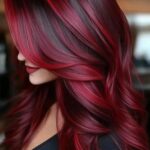
1. Chocolate Cherry
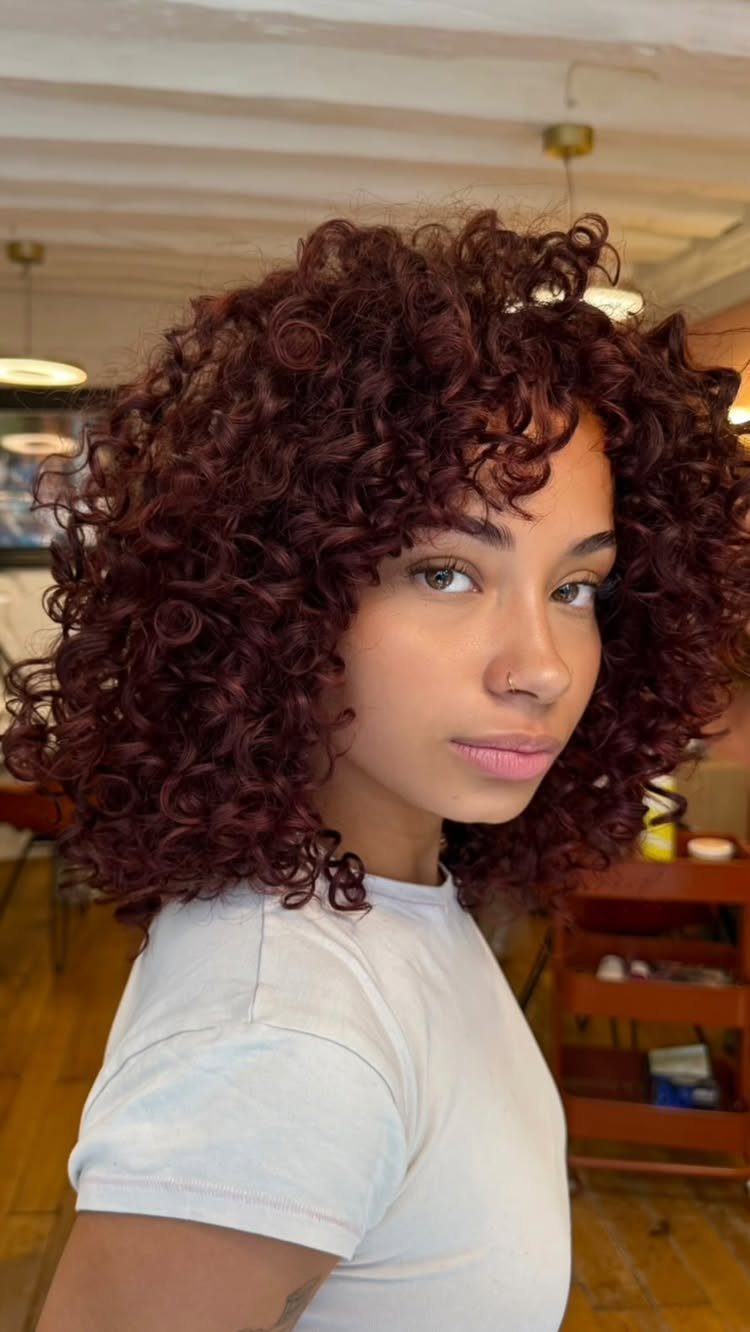
Chocolate cherry sits at the cool end of the brown scale, where deep violet undertones meet rich brown base color. The result looks dimensional and shifts in the light without reading as obviously purple.
This one works best on naturally dark hair.
Going for it on lighter starting color means pre-darkening the base, which adds time and risk of uneven fade. On brown or black hair, it’s a low-commitment way to try a fantasy shade that still reads professional from a distance.
The violet tones fade faster than the brown, so the cherry tone will soften between touch-ups.
2. Chestnut Brown
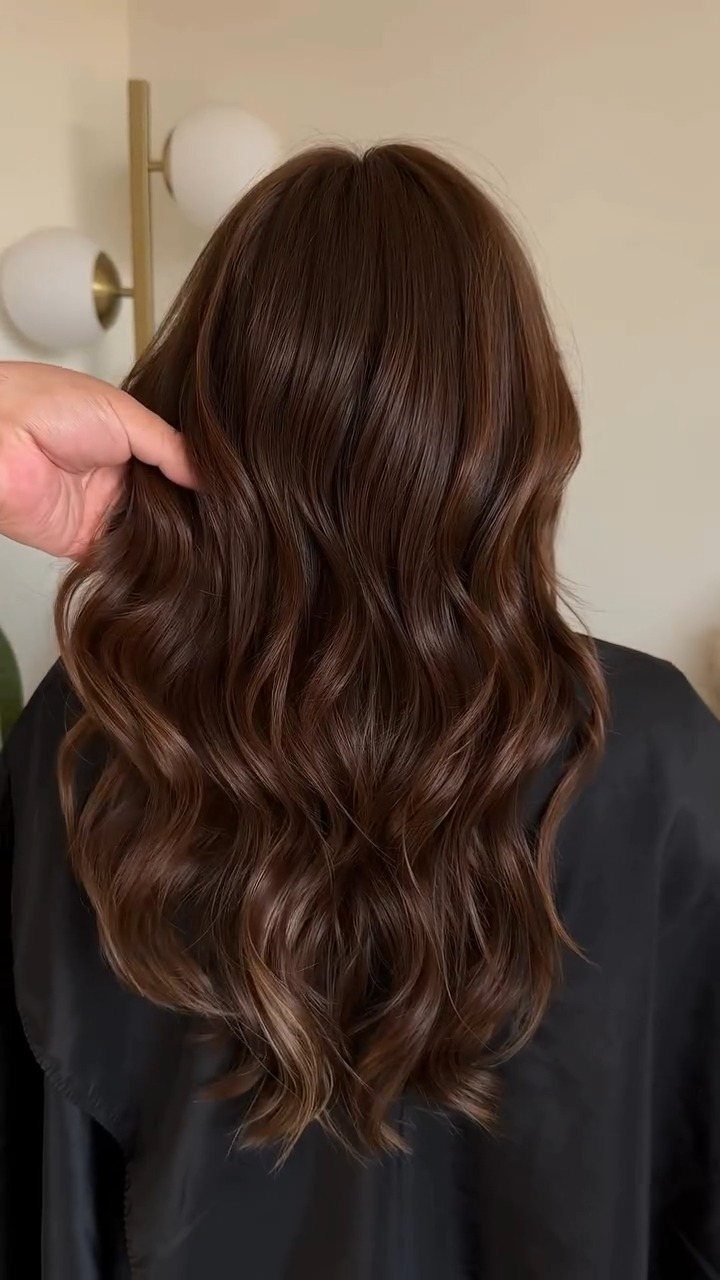
Chestnut brown is a warm, mid-to-deep brown with red or golden undertones, depending on where in the range you land. It suits a wide range of skin tones and looks good on straight, wavy, and curly hair.
The example here shows a glossy, dimensional finish. To get that kind of shine at home, use a demi-permanent dye instead of permanent if your hair is already close to the target shade.
Demi uses a low-volume developer to open the cuticle slightly, which is why it lasts longer than semi-permanent but still fades gradually. Permanent dye lifts the cuticle and can leave hair looking matte if you skip the conditioning step.
Chestnut holds color well and grows out soft, which makes it low-maintenance once you’re there.
3. Natural Brown
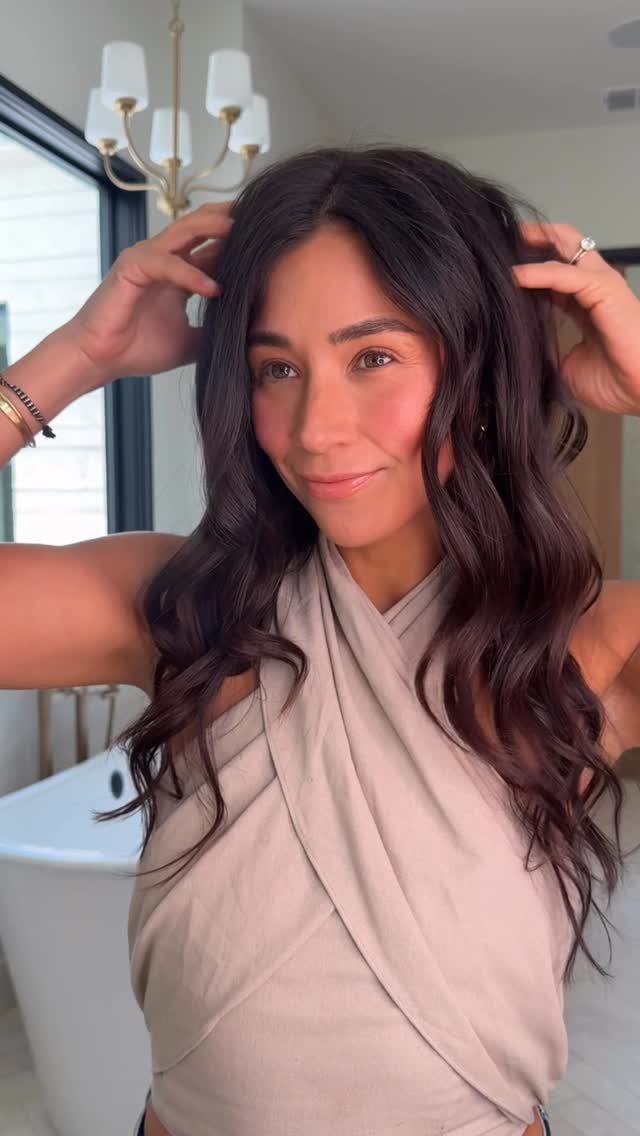
Natural brown is exactly what it sounds like: a single-tone brown that mimics uncolored hair. No highlights, no dimension, just one solid shade.
This is the easiest color to do at home.
Pick a shade that matches your natural root color or sits one level darker, and apply it evenly from roots to ends. Because there’s no gradient or placement to match, regrowth touch-ups stay simple.
It’s a good reset if you’ve been highlighting or balayaging and want to start over with a clean base.
4. Vintage Brown
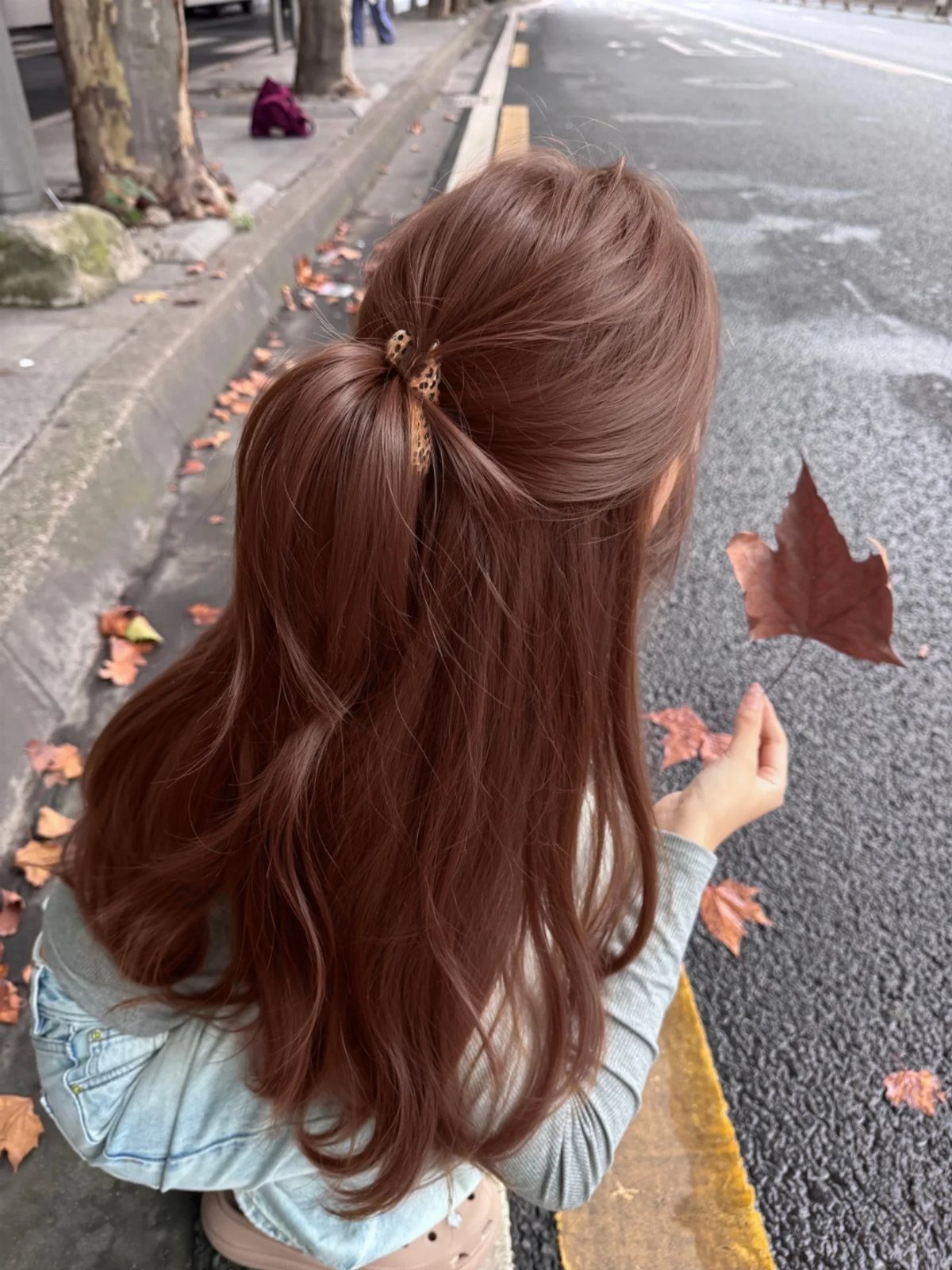
Vintage brown is a warm, reddish brown that leans slightly orange in direct sunlight. The tone feels retro without reading as unnatural.
This shade works best on warm or neutral skin tones.
If you’re cool-toned, the red can pull brassy and clash with pink undertones in your skin. Test it first with a semi-permanent version if you’re unsure.
The color shifts gradually toward copper as it fades, so you’ll need regular touch-ups to hold the deeper brown. Between touch-ups, a color-depositing conditioner in auburn or copper can stretch the vibrancy.
5. Balayage
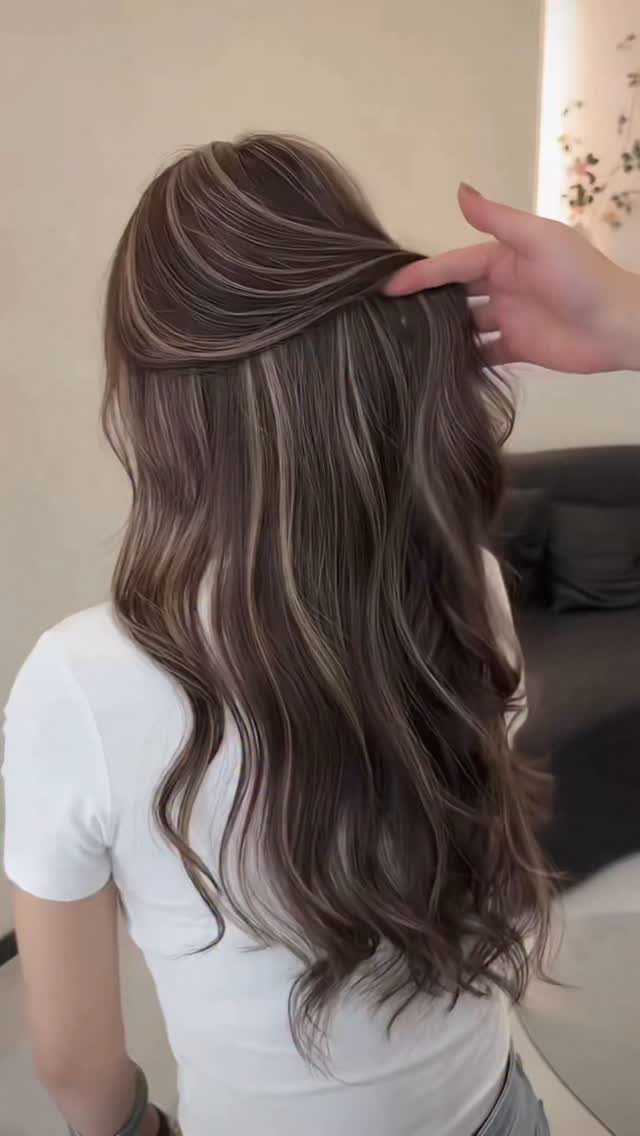
Balayage is a freehand highlighting technique where the colorist paints lightener onto the hair in a sweeping motion, concentrating it on the mid-lengths and ends. The placement looks softer and more lived-in than foil highlights because there’s no strict pattern.
It grows out better than traditional highlights. The soft root blend grows out forgivingly, so you can stretch appointments without a hard line showing.
Balayage works on any base color, but the contrast is most visible when you’re lifting brown hair to blonde or caramel. On very dark hair, expect at least 2 sessions to get a noticeable lift without over-processing.
6. Babylights
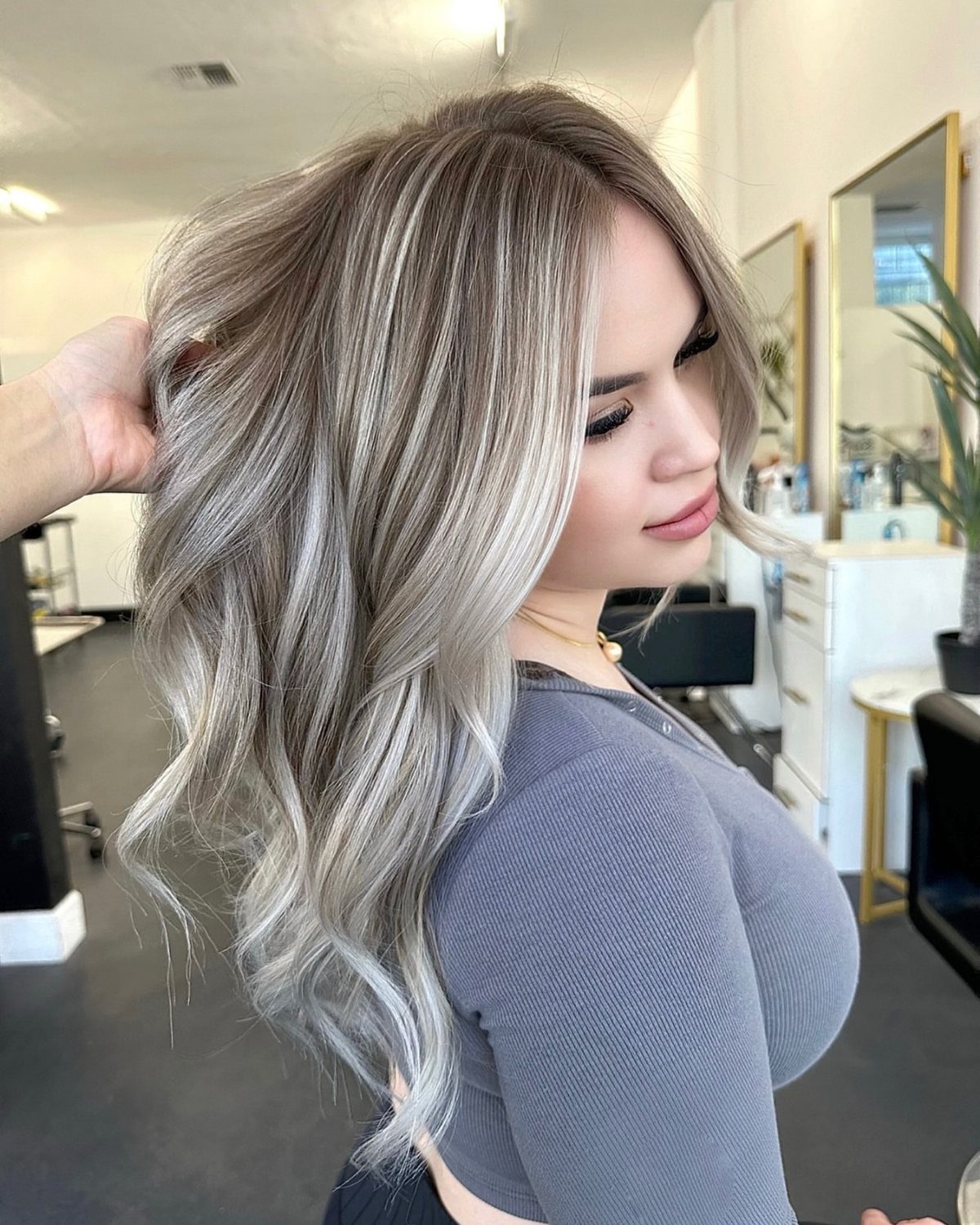
Babylights are hair-thin highlights woven through the top layers of hair, meant to mimic the way kids’ hair lightens in the sun. The pieces are finer than traditional highlights and placed closer together, which gives a softer, blended look.
This technique takes longer than standard foil highlights because the sections are so small.
Babylights suit anyone who wants a subtle lift without obvious streaks.
They’re especially good on fine hair, where thick highlights can look chunky. On thick or coarse hair, the effect is more diffused and may not show as much contrast.
7. Vibrant Copper
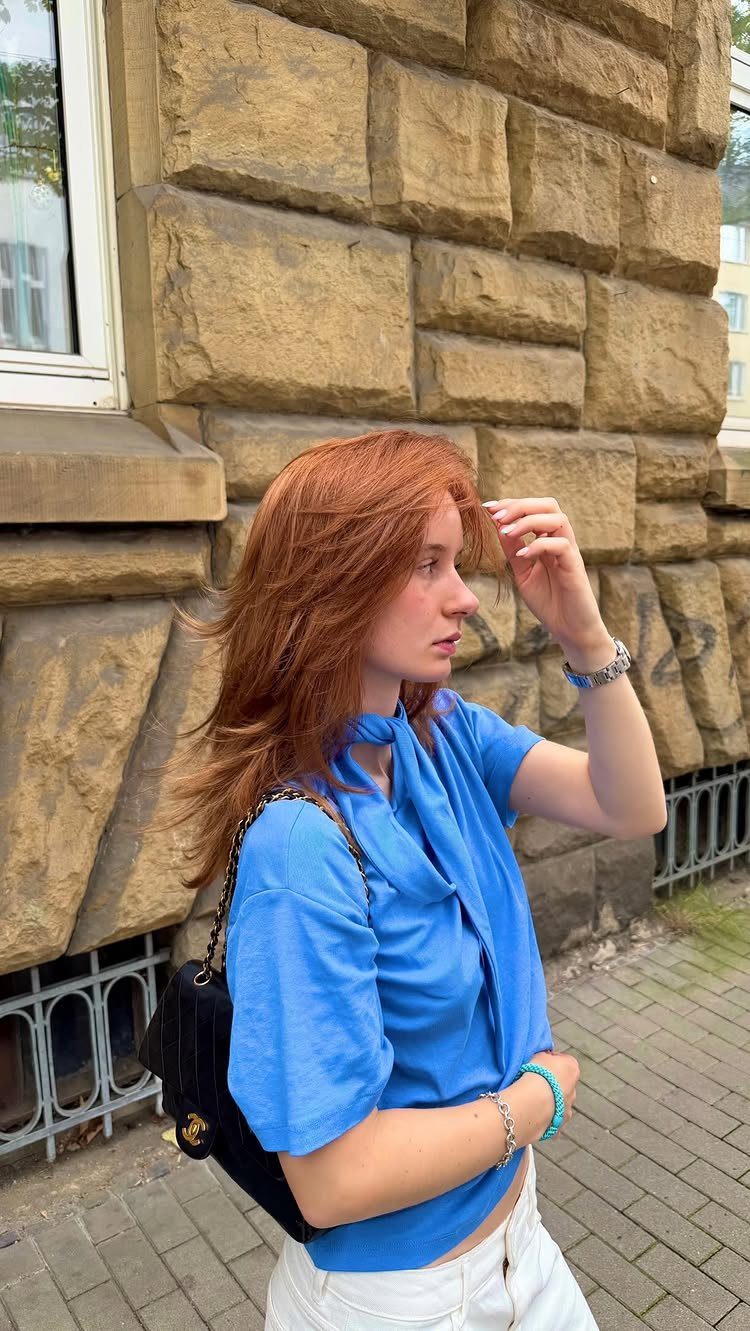
Copper reads as a true metallic orange-red, and it catches the light best outdoors. The color reads warm and dimensional without needing highlights or lowlights built in.
If you’re starting with natural red or light brown, this shade takes without fighting your base.
On darker hair, you’ll need to lift the base with bleach first to get the color bright enough to show. On very light or pre-lightened hair, the copper can take in one session with a semi-permanent or demi-permanent dye.
The color fades fast, so expect to see it soften sooner than most permanent shades. A copper-toned color-depositing conditioner between touch-ups helps hold the vibrancy longer.
8. Rose Gold
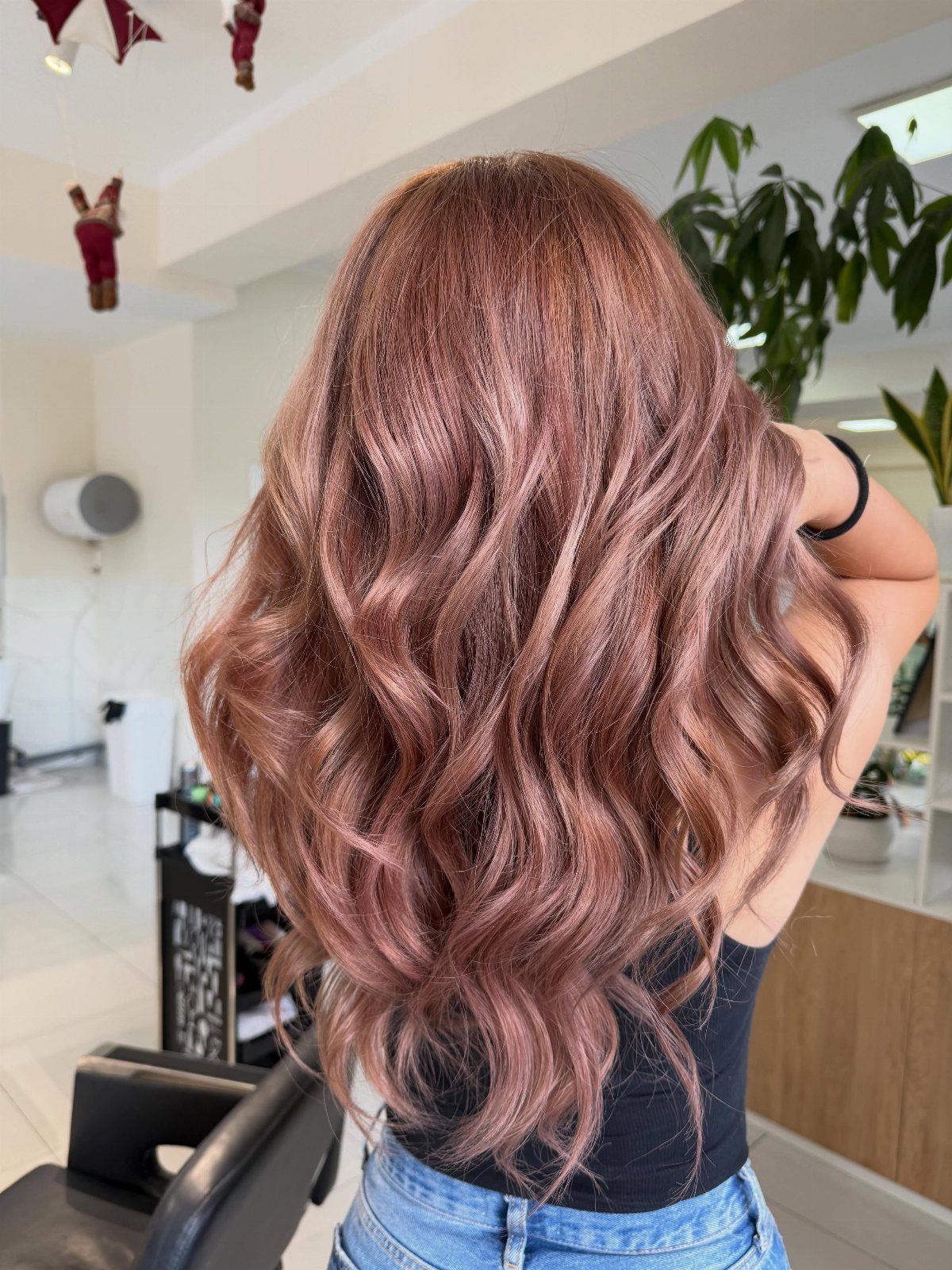
Rose gold is a pale pink shade applied over light blonde hair. The pink sits on the surface and gives the hair a soft, metallic-looking finish that shifts between blush and champagne depending on the light.
You need to be very blonde to start with.
If your hair is darker than pale yellow, the pink won’t show. Most people bleach first, then tone with a rose or pink demi-permanent dye.
Rose gold washes out quickly and shifts toward peachy blonde as it goes.
Purple shampoo won’t help here because it cancels yellow, not pink. Use a pink-tinted conditioner to stretch the tone between applications.
9. Golden Wheat Blonde
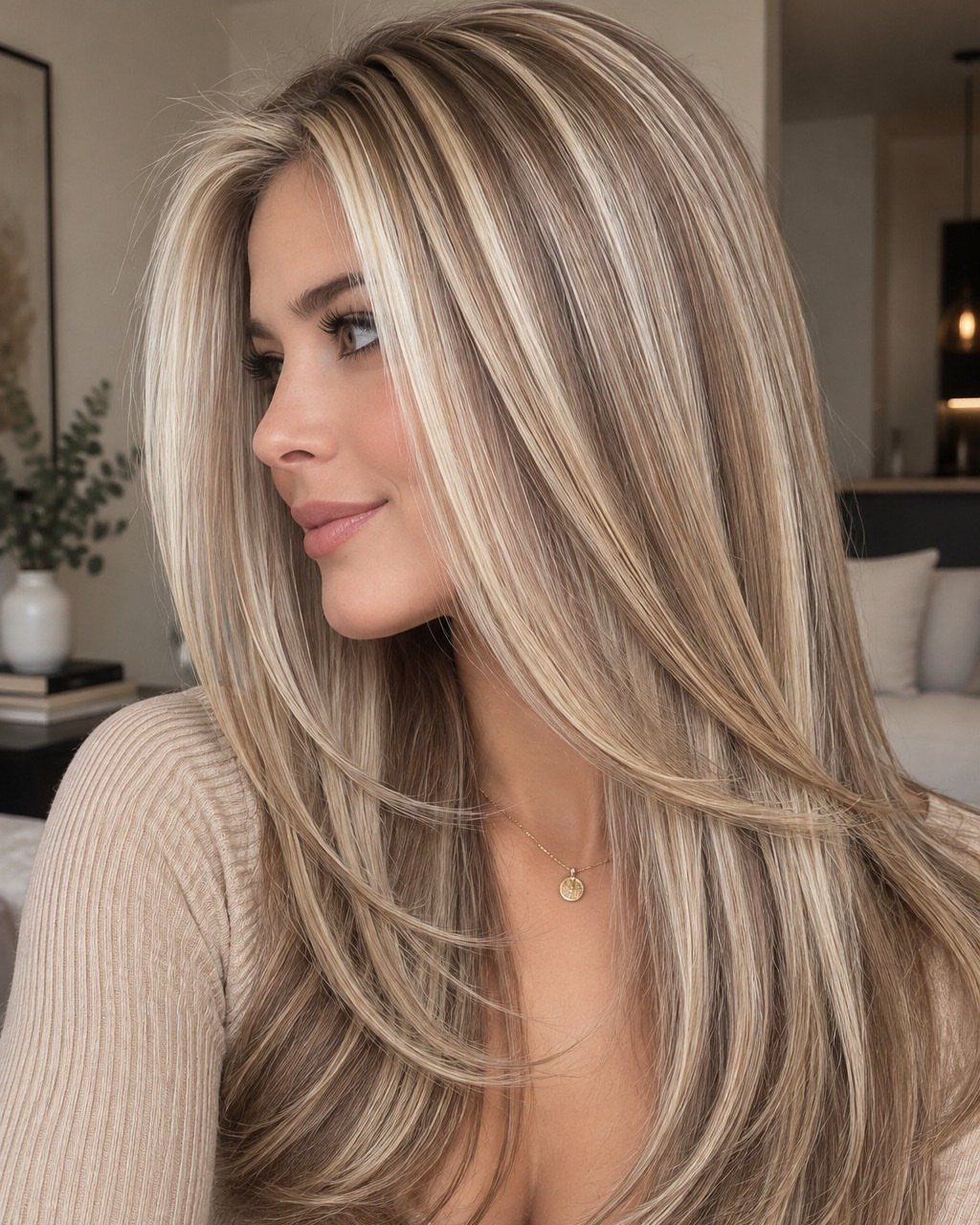
Golden wheat blonde is a warm, honey-toned blonde with enough depth to look natural on most skin tones. The color sits between dirty blonde and golden caramel, with soft yellow and beige undertones that keep it from looking brassy.
On cool-toned skin, the yellow can look muddy.
If you’re starting from dark blonde or light brown, you can reach this with a single-process dye. Darker hair needs lightening first.
The warmth holds up well between appointments. Use a purple shampoo sparingly, if at all, because it can strip the golden tone and leave the color looking flat.
“Wheat blonde can go 12 to 14 weeks between visits with a minimal line of demarcation.”
— Glamour
10. Rainbow Highlights
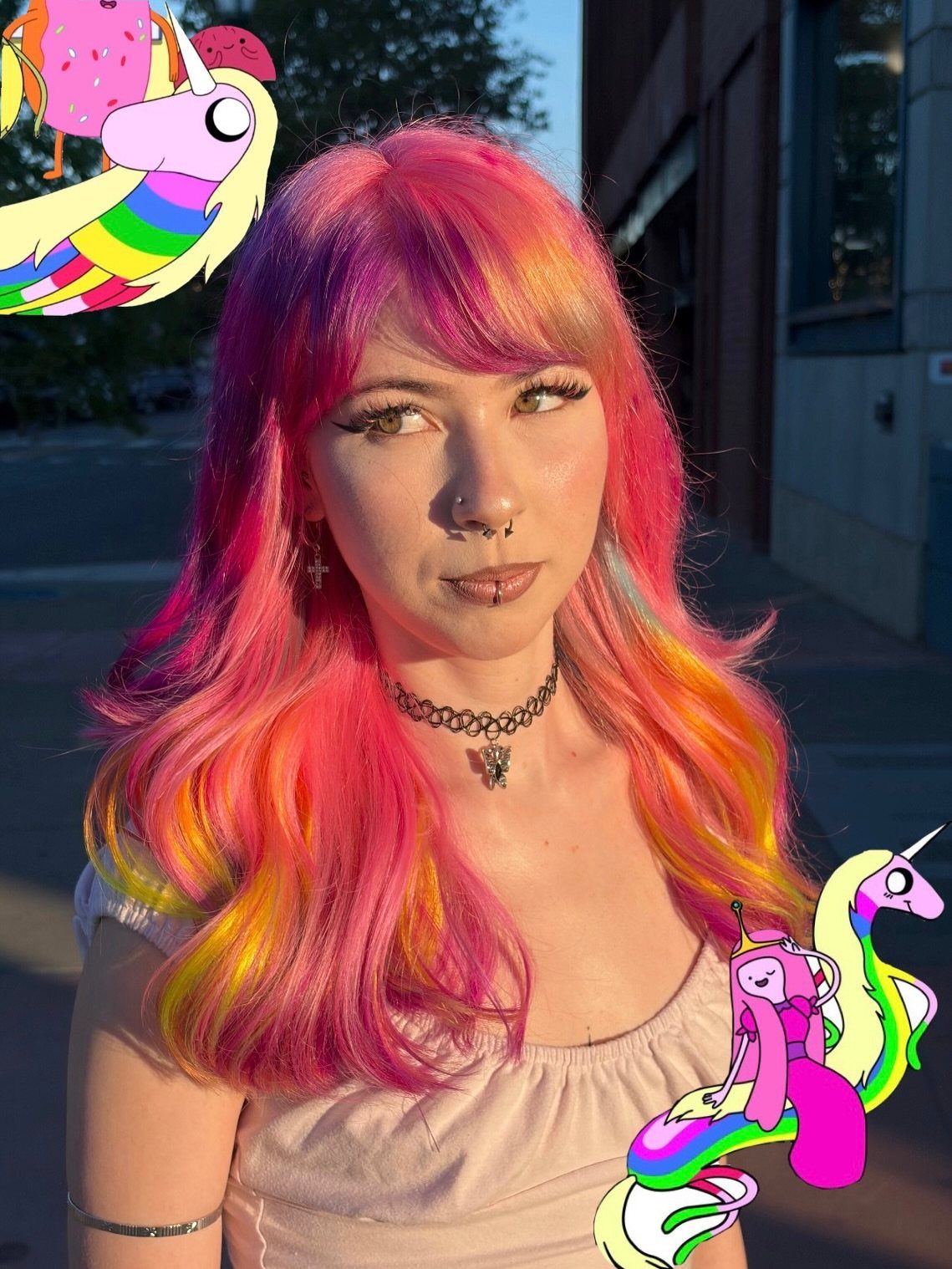
Rainbow highlights are individual strands dyed in different vivid colors, usually pink, orange, yellow, purple, and blue, scattered through the hair. The base stays one color, and the bright pieces read as accents rather than an all-over look.
The hair needs to be pre-lightened to pale blonde wherever the color will go.
Vivid dyes need a light canvas to show their true color. The more colors you want, the more sections you’re bleaching and dyeing separately, which adds time.
The colors fade at different rates.
Pink and blue tend to last longer than yellow and orange, so the rainbow effect shifts as it grows out. Touch-ups keep the full spectrum looking fresh, so plan to revisit the color regularly.
11. Highlights
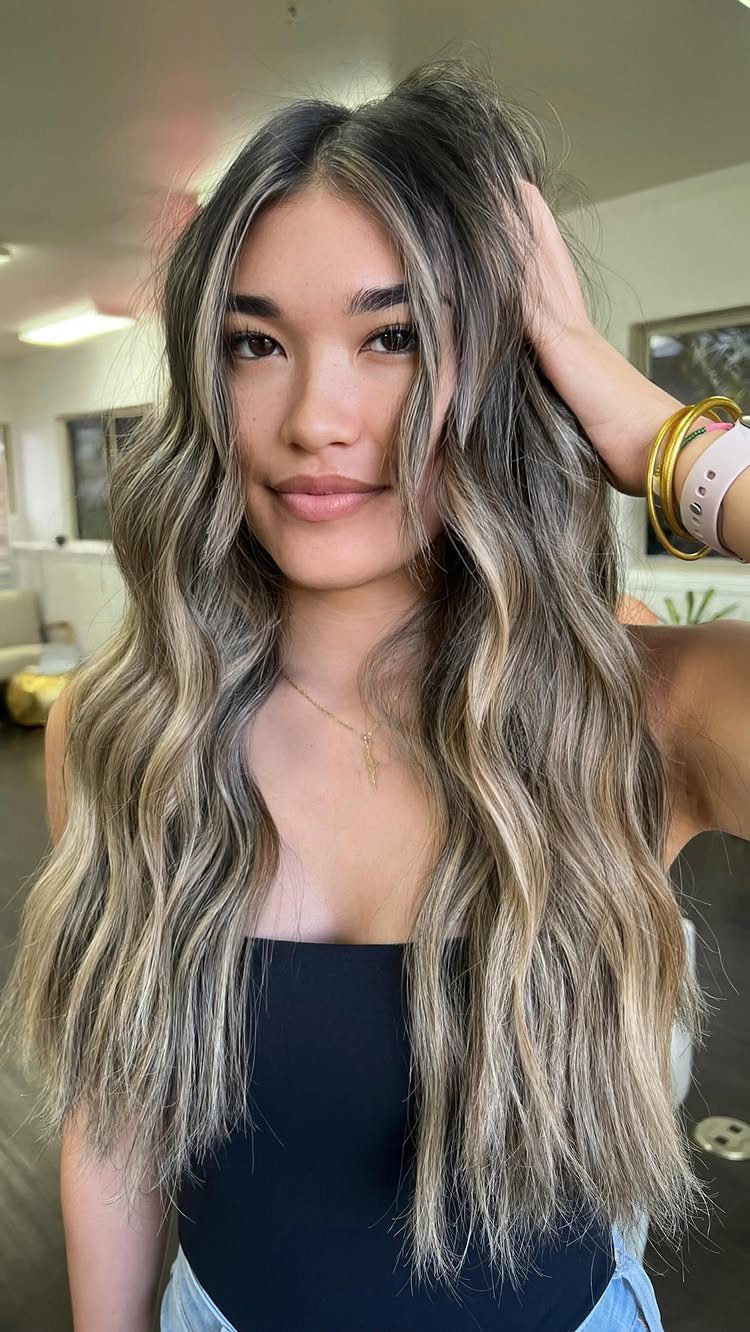
You’re lifting individual strands a shade or two brighter than the rest of your hair. The lightened pieces add contrast and dimension, and the overall effect looks brighter without coloring all the hair.
Traditional highlights are done with foils.
The colorist separates small sections, applies lightener, and wraps each piece in foil to process. The result is more structured than balayage, with a visible pattern of light and dark.
Regrowth becomes visible once your natural color starts coming through at the root, and higher contrast means you’ll notice it sooner.
Fine hair takes highlights well because the thinner sections blend easily. On thick or coarse hair, highlights can look stripy if the sections are too wide.
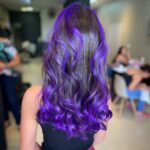
12. Deep Purple
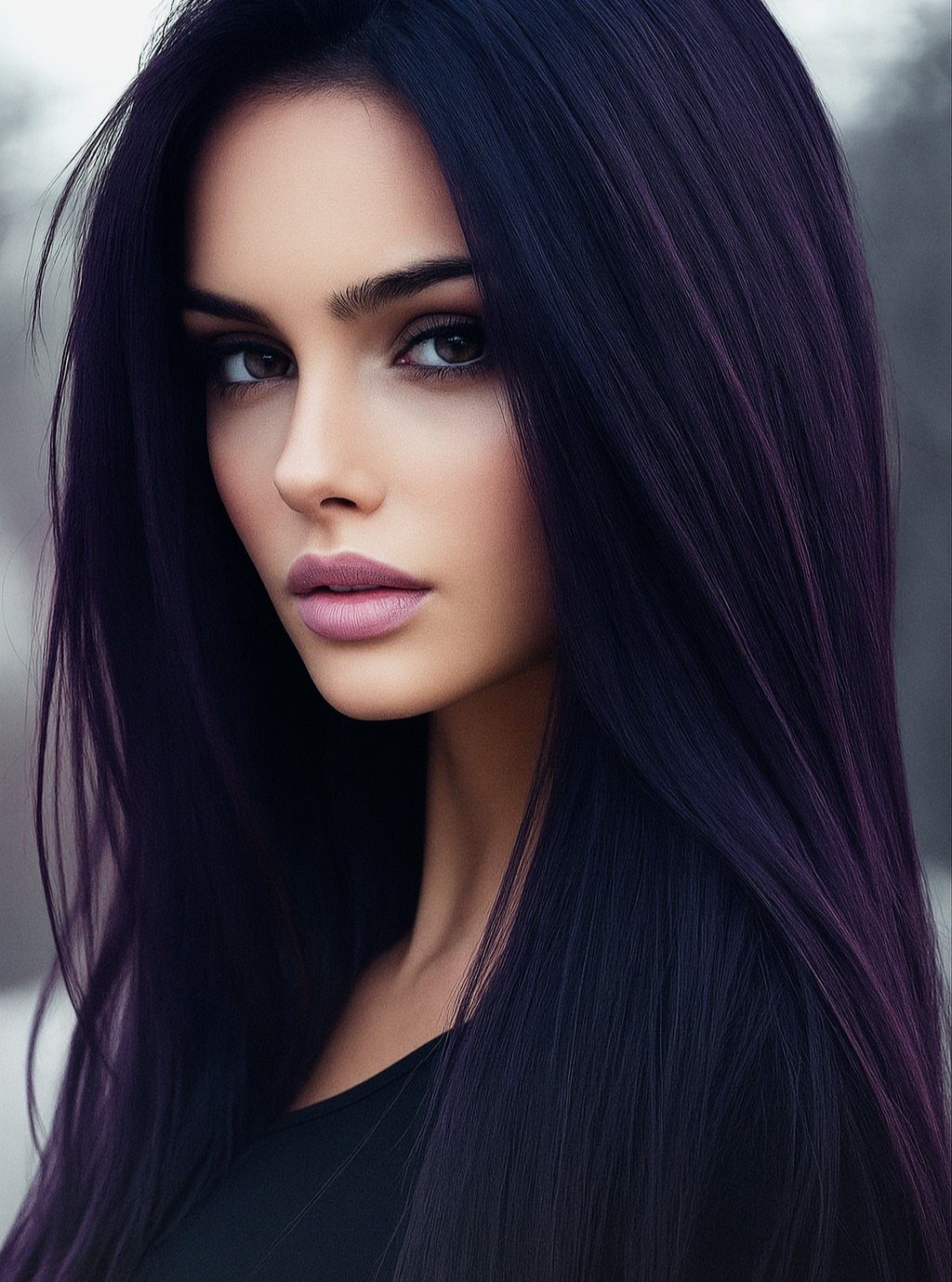
Deep purple is a rich, cool-toned violet that sits close to black and only shows its color in direct light.
On naturally dark hair, you can get this shade without bleaching by using a semi-permanent or demi-permanent purple dye over your natural base.
The color shows up best on medium to dark brown hair.
On black hair, the purple will be more subtle and may only be visible in sunlight. On lighter hair, the purple will read brighter and may need toning down if you want the moody, low-contrast version.
The purple fades to a cooler brown over time, not orange or brassy, which makes it a low-maintenance option if you don’t mind the shift.
13. Moody Magenta
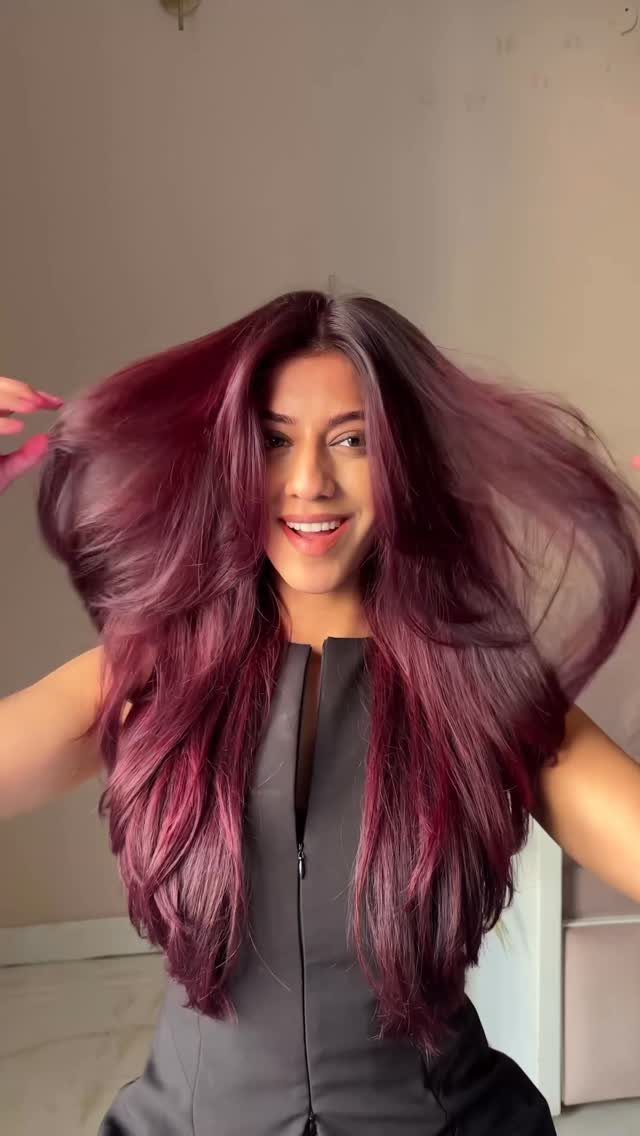
Moody magenta blends vivid pink with cool purple, creating a shade that shifts between the two depending on the light. The darker base keeps it from reading as pastel.
This color needs pre-lightened hair to show its full intensity.
On naturally dark hair, you’ll need to bleach first, then apply the magenta. The purple tones tend to last longer than the pink, so the color will lean cooler as it fades.
It pops against deeper skin tones and looks especially good on medium to long hair where the color has room to move.
14. Blue-Black
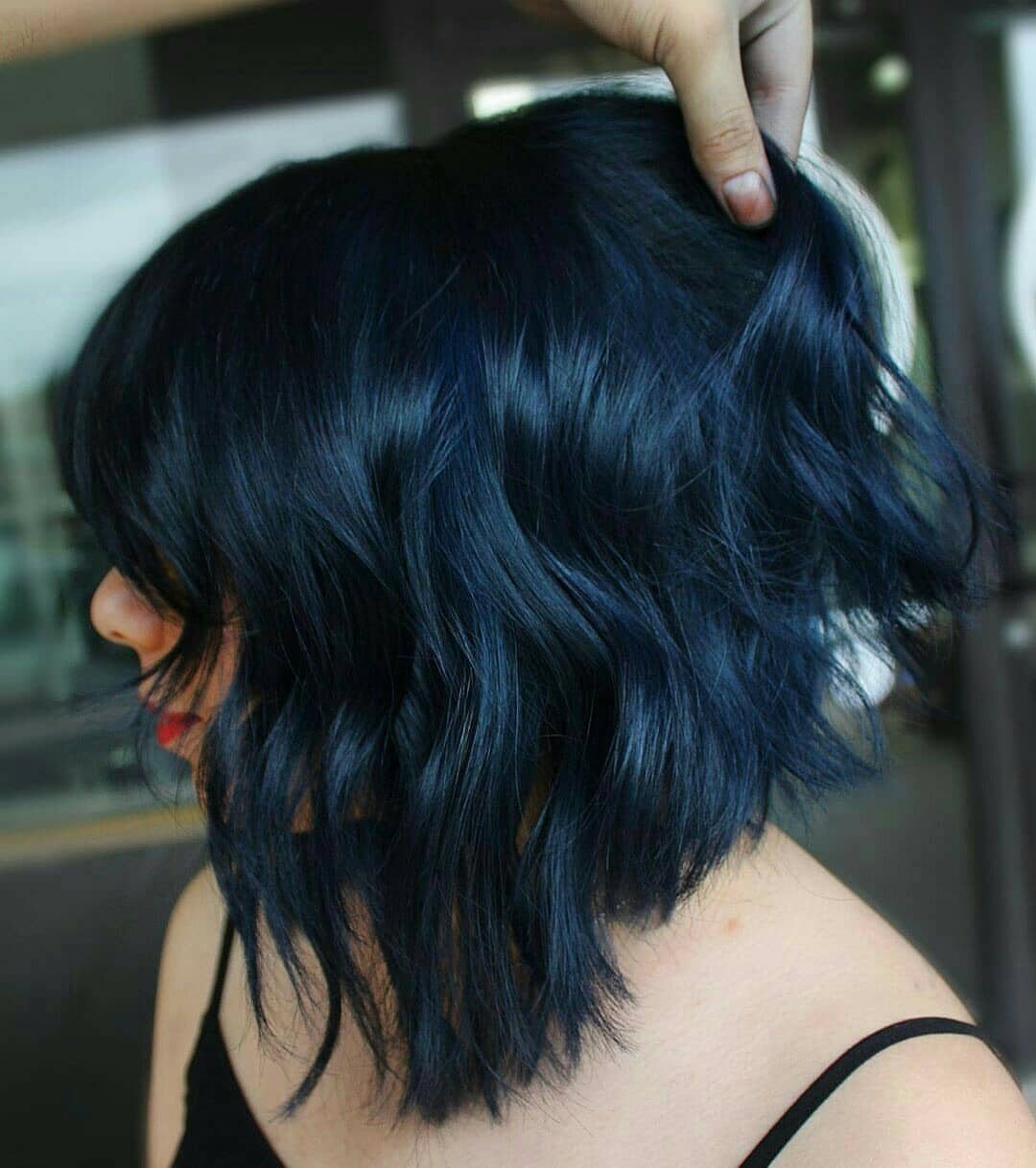
Blue-black is a dark base with navy undertones that show up in direct light. In low light, it reads as black, but outdoors the blue comes through.
If your base is naturally black or very dark brown, you can skip the bleach step entirely.
Use a blue-black permanent dye over your natural color. On lighter hair, the blue will show more obviously and may need a darker base first.
The blue fades to a softer, cooler black over time, which makes regrowth less noticeable than a straight black dye.
15. Neon Pink
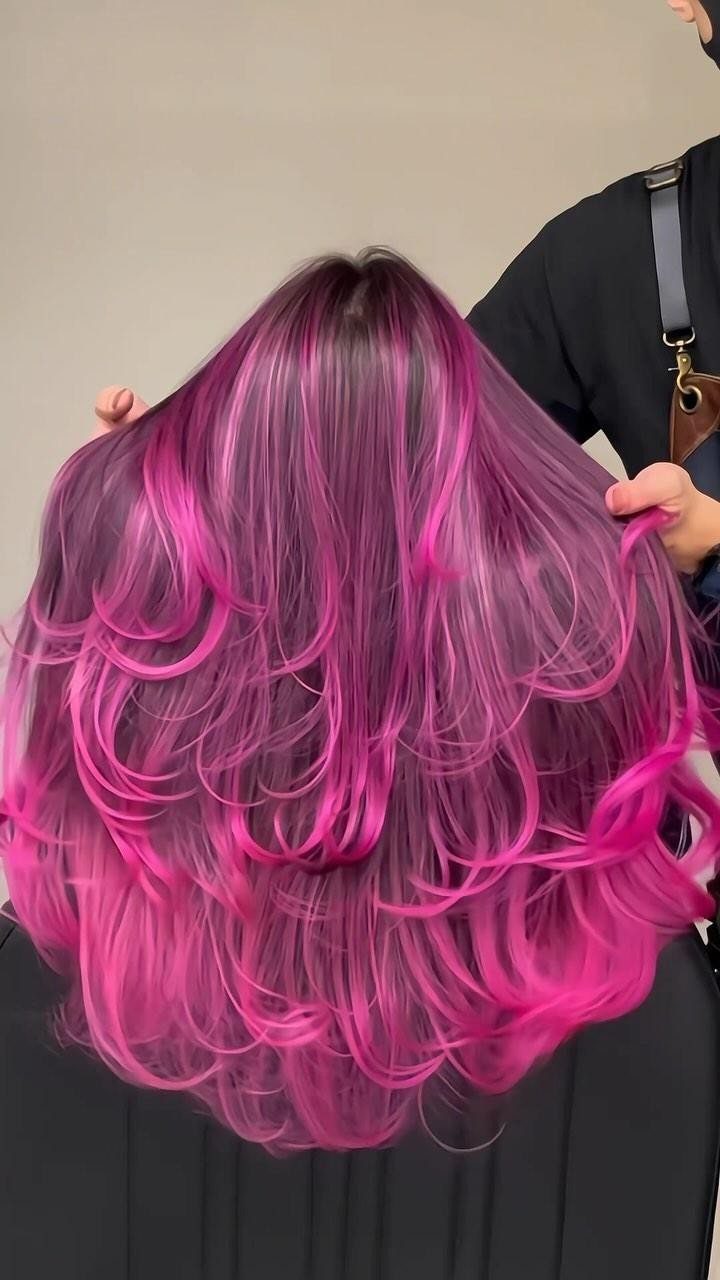
Neon pink is a bright, saturated pink that reads electric under any light. The color is bold and high-contrast, and it doesn’t try to blend in.
You need very light hair to start with.
The brighter the pink, the paler the base needs to be. The process usually starts with bleach to lift the hair to pale blonde, then the neon pink goes on top.
The color fades fast, often within a few washes, and shifts toward pastel pink as it goes. Plan to refresh it regularly if you want to hold the intensity.
16. Candlelit Brunette
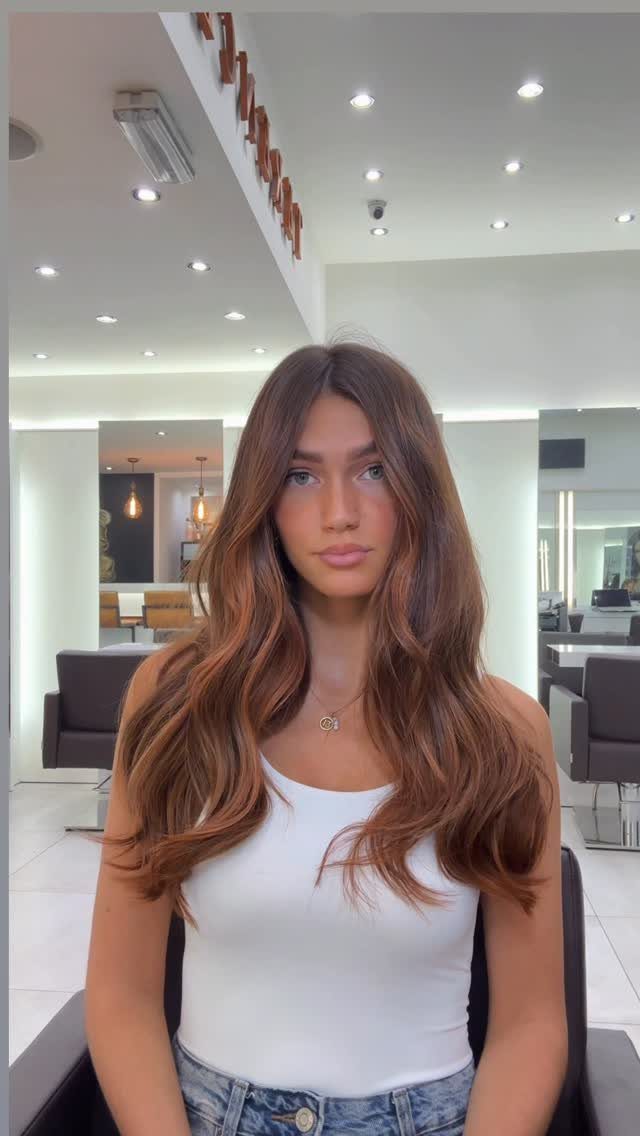
Candlelit brunette is a warm brown with soft, golden highlights that catch the light. The base stays rich and deep, and the lighter pieces add dimension without high contrast.
The highlights are subtle and blended, so regrowth is forgiving. Brown-haired readers with warm or neutral undertones tend to see the best results.
If you’re doing it at home, use a highlighting kit and place the lighter pieces around your face and through the mid-lengths. Keep the sections thin so they blend naturally.
17. Caramel Lowlights
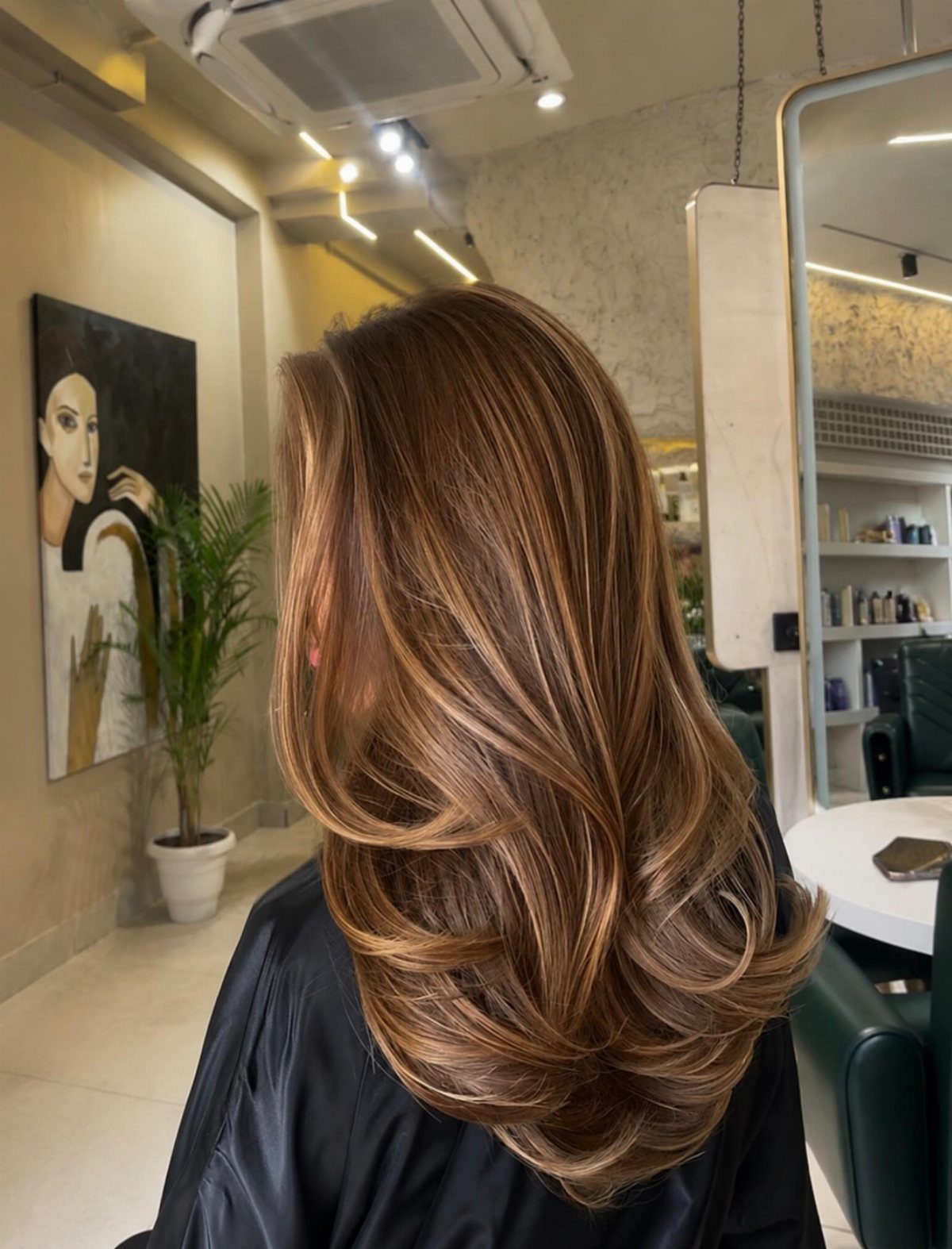
Lowlights are darker pieces added to lighter hair, and caramel lowlights bring warmth and depth to blonde or light brown bases. The caramel sits darker than your base color, so it builds depth instead of brightness.
This technique works best on hair that’s been highlighted or lightened and needs more depth. The darker pieces break up flat blonde and make the color look more lived-in.
Caramel lowlights grow out softly because they’re darker than the base, so there’s no hard root line to manage.
18. Charcoal Brunette
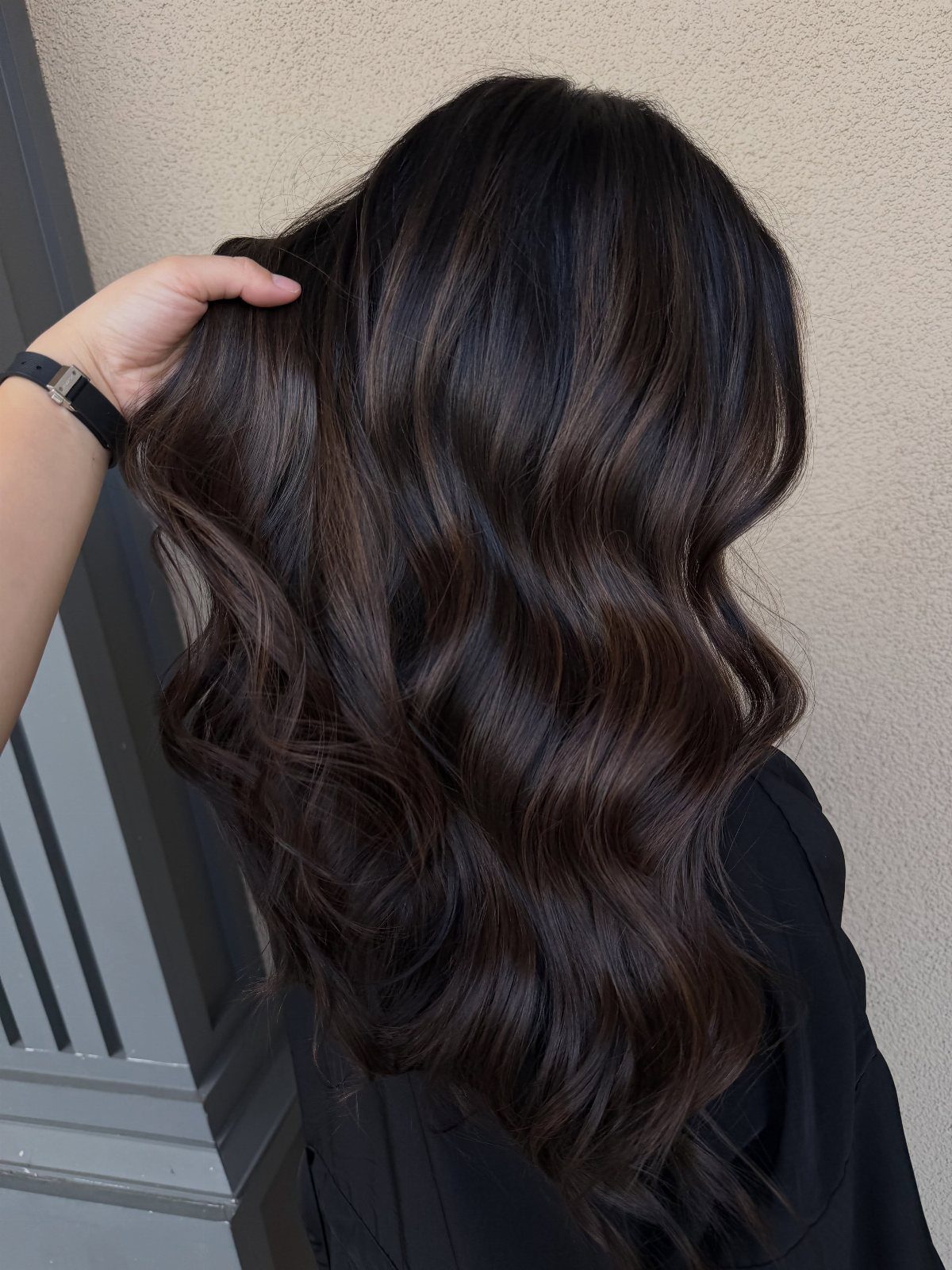
Charcoal brunette is a cool-toned, ashy brown that leans almost gray in certain light. The color sits somewhere between dark brown and graphite, with no red or gold undertones.
It suits cool or neutral skin tones best.
On warm skin, the ash can look flat or washed out. If you’re starting from warm brown, you’ll need a cool-toned dye to neutralize the warmth and get the charcoal effect.
The color holds well and fades to a softer, neutral brown rather than brassy, which makes it easy to maintain between touch-ups.
19. Dark Vanilla Blonde
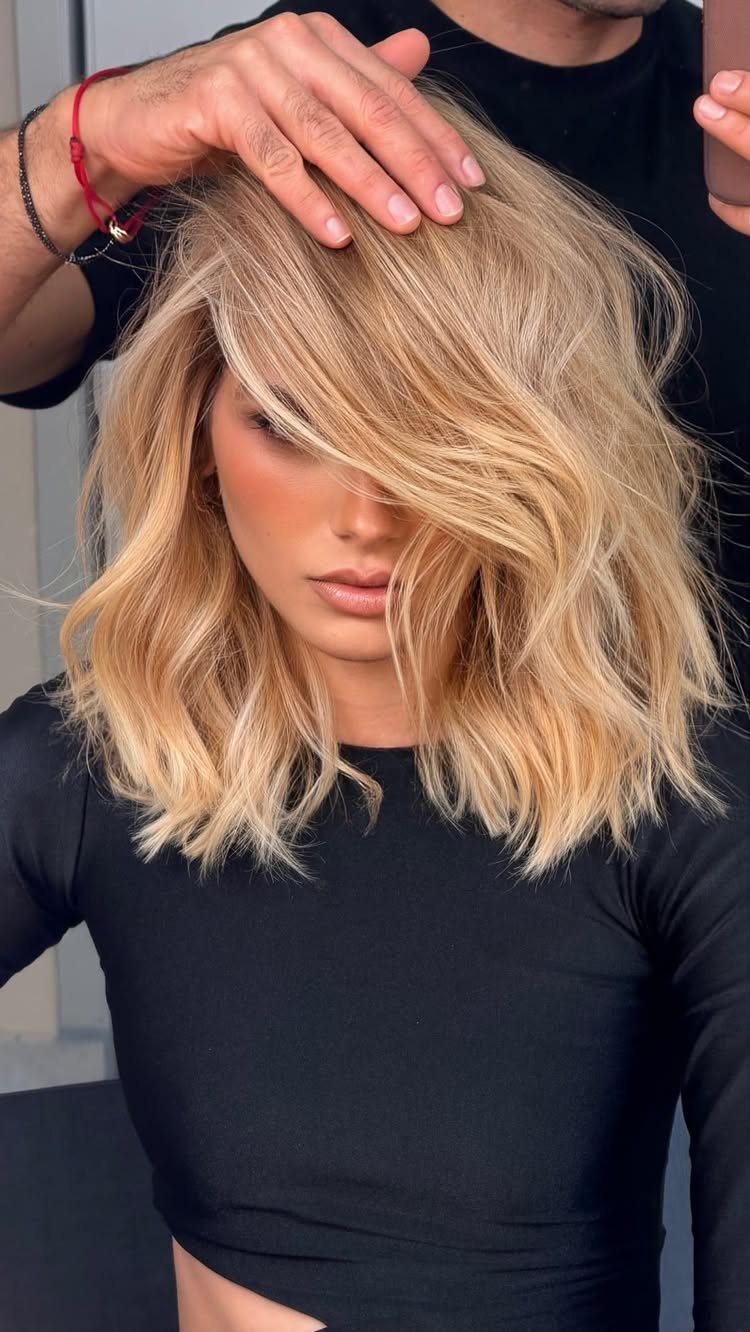
The beige and cream tones are what make it work: they sit right in the middle, dodging both the orange warmth of brassy blonde and the ashy flatness of cool beige.
The color reads natural and works on most skin tones.
Light brown or dark blonde hair can get there in one go with a permanent color. Black or deep brown starts with a bleach lift to strip enough pigment for the vanilla tones to show.
The beige tones hold well between touch-ups. Purple shampoo can be used lightly to keep any yellow from creeping in, but go easy or the warmth will flatten out.
Color Care and Fading
Color-safe shampoo and conditioner are the baseline. They skip the sulfates that strip dye molecules out of the hair shaft, which means your color holds longer between touch-ups.
Washing less often stretches the life of any dye job. Between wash days, dry shampoo handles greasy roots without running water through the color.
Heat styling fades color faster than anything else except sun exposure.
If you’re using hot tools, a heat protectant is non-negotiable. Many formulas also smooth frizz and add moisture, which colored hair needs since the dye process leaves it drier and more prone to damage.
Chlorine and abrasive shampoos both mess with dye. Skip them where you can.
A weekly hair mask keeps colored hair from looking dull.
The pigment-deposit kind gives a gentle refresh in between salon visits. Red shades fade the fastest, so an at-home gloss between salon visits helps hold the vibrancy.
Choosing and Planning Color
Take photos with you and walk your stylist through your hair texture and your skin tone before you settle on a color. The conversation catches issues before they show up in the mirror.
Virtual try-on tools preview color, but they don’t show highlight placement accurately. If you’re considering a dimensional look, the app won’t tell you where the light pieces will actually land.
Check dark shades in different lighting before you settle on one. A color that looks rich indoors can read flat in daylight, or vice versa.
Add more time if you’re also getting a deep conditioning treatment or a haircut.
Low-maintenance Color Choices
Leaving your natural root and adjusting only the midlengths and ends avoids a clear regrowth line. The color grows out softly because there’s no hard contrast at the scalp.
Solid root-to-end color shows a visible line as soon as your natural hair starts coming through, no matter whether your base is light or dark. All-over bleach and tone requires regular upkeep for the same reason.
All-over black is high maintenance if your natural color is lighter.