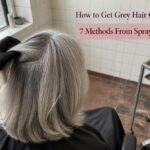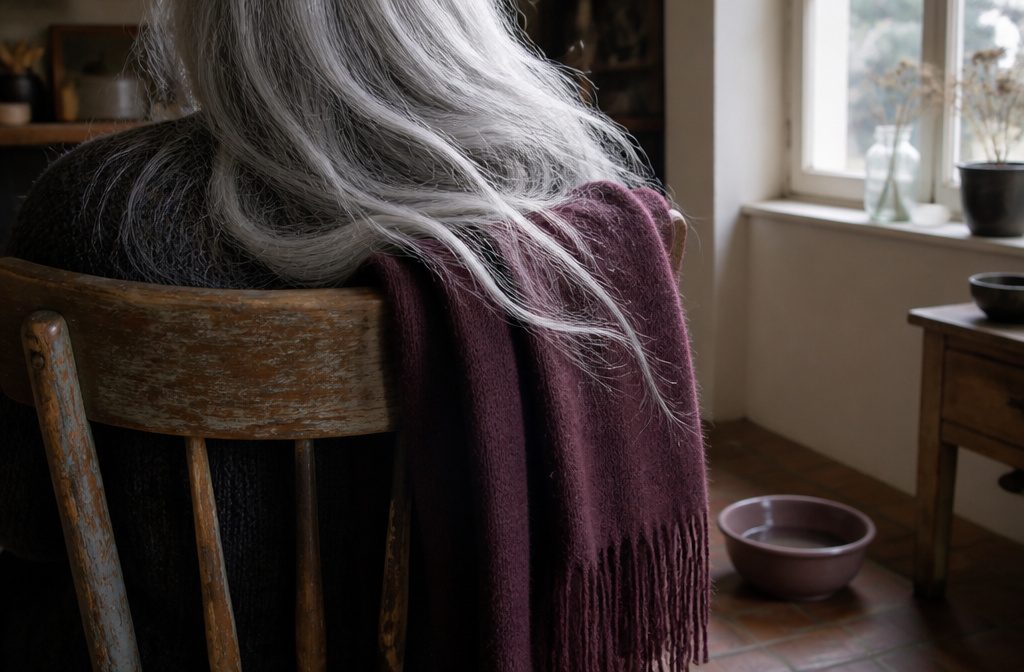
Silver is a styling name, not a scientific category, for hair that has lost its pigment and is worn that way deliberately.
With no pigment to mask anything, hard water, chlorine and sun push it toward yellow, so a purple shampoo weekly, or at least twice a month, belongs in the routine.
Gray, White, and Silver
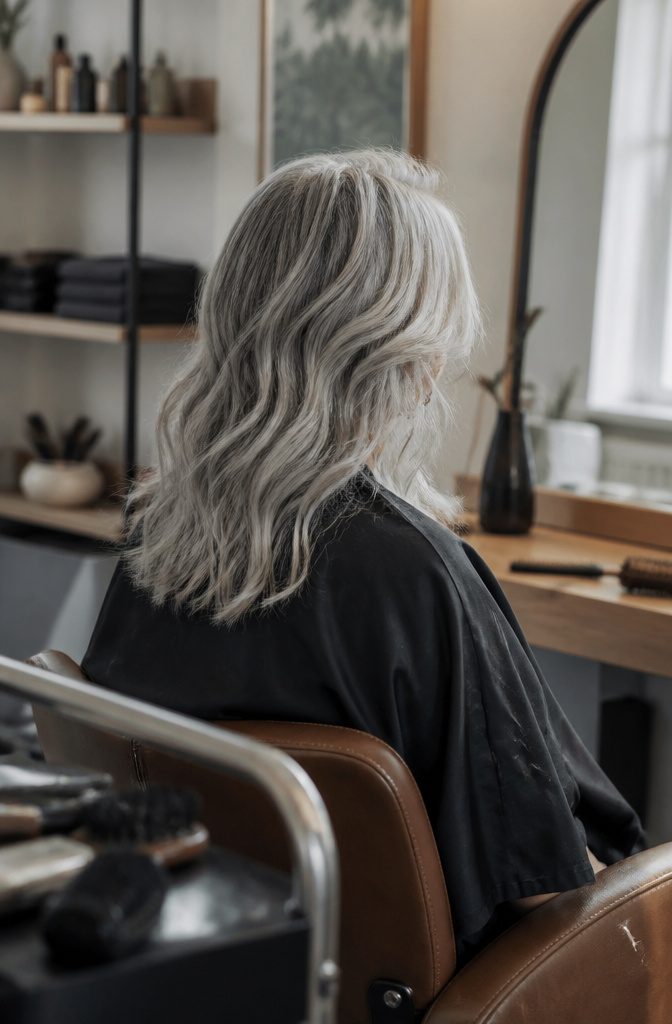
Gray is a blend of pigmented strands and white ones, which is why it reads as a shade rather than a single color. White hair has lost nearly all its pigment, so the strand itself is fully non-pigmented.
Silver is a different kind of word: it is not a separate scientific category, just the name people use when they style or treat that non-pigmented hair on purpose.
These states overlap on one head. Salt-and-pepper, a dark ash mixed with white, can sit beside strands that are pure white, and the balance keeps shifting over time.
A single head can be gray, white and silver at once. I call it silver the moment you start styling it that way.
Why Hair Turns Gray
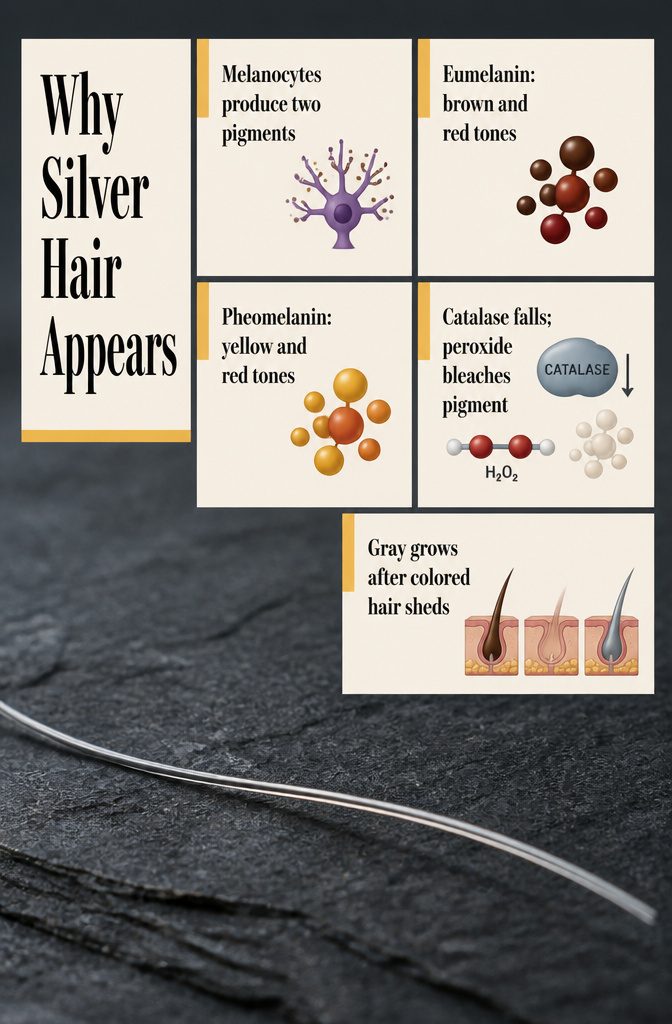
Melanocytes make melanin in two forms: eumelanin (brown and red tones) and pheomelanin (yellow and red). They die off with age, and catalase, which breaks down hydrogen peroxide, falls too, so peroxide bleaches the pigment.
Genetics drive the timing.
Some people start around 35, graying before 30 is premature, and most start before 50. Gray grows in after a colored hair sheds, not by fading.
I find the stress cases intriguing: at about 1 centimeter of growth a month, color changes can be dated, and one man’s strands regained color during a two-week vacation while a woman’s white segment matched a two-month separation.
Hair already gone gray won’t return to its old color without dye; nutrition only preserves what’s left.
The Natural Transition
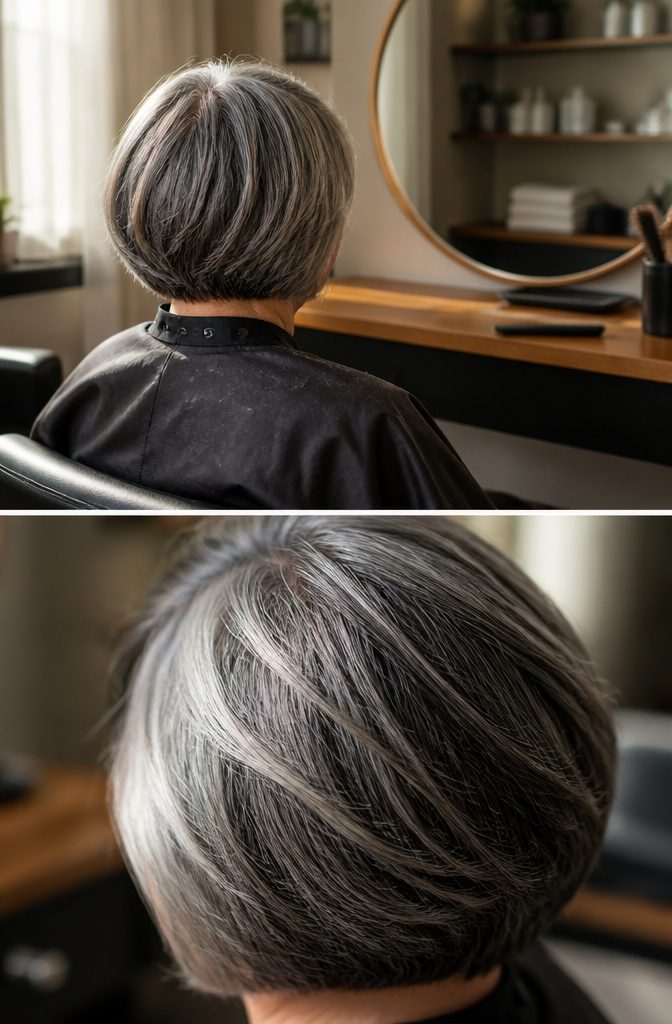
Grow-out arrives unevenly, with silver in patches, dark hair between them, and shades anywhere from salt-and-pepper to pure white.
The fastest way to cut that contrast is a TWA, bob or pixie, which removes the dark length. To keep your length, trim the ends gradually instead.
A colorist can add highlights where the silver is dense and lowlights, toners or demi-permanent color where hair runs darker. Lighter starting hair blends more easily:
"The blend is much better since the two colors do not have such a stark contrast."
— Allure
Dark hair can still blend; it just takes more planning up front. Timing is personal, so ignore anyone who promises a date.
Caring for Silver Hair
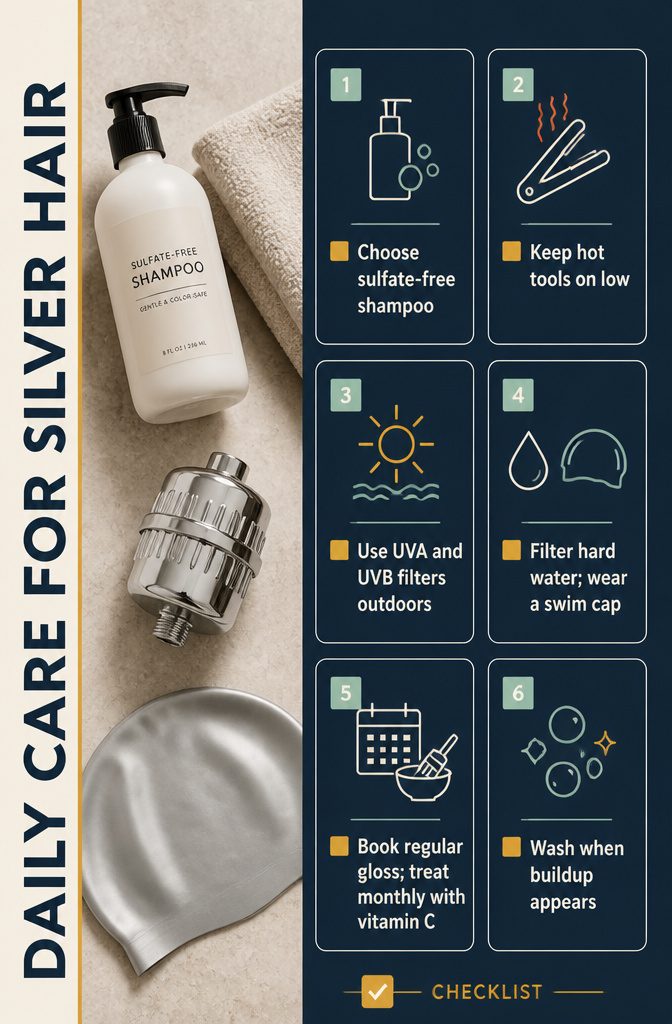
Silver hair shows every small habit, so a few steady routines do most of the work:
- Switch to a sulfate-free shampoo. Sulfates strip oils and leave silver looking dry and dull.
- Keep flat irons and curling wands on a low setting. High heat dulls and can yellow silver strands.
- Wear a hair or scalp product with both UVA and UVB filters outdoors, because sun warms silver toward yellow.
- Watch for the usual yellowing culprits: hard water, chlorine, medications, pollution and buildup. A shower filter and a swim cap cover two of them.
- Book a professional gloss on a regular salon schedule, and add a monthly vitamin C treatment. A vitamin C powder is the one I’d pick for hard water.
- Wash frequency is where advice splits: some say wash regularly to clear buildup, others warn against overwashing. I’d wash when buildup shows and not by the calendar.
Styling Silver Hair
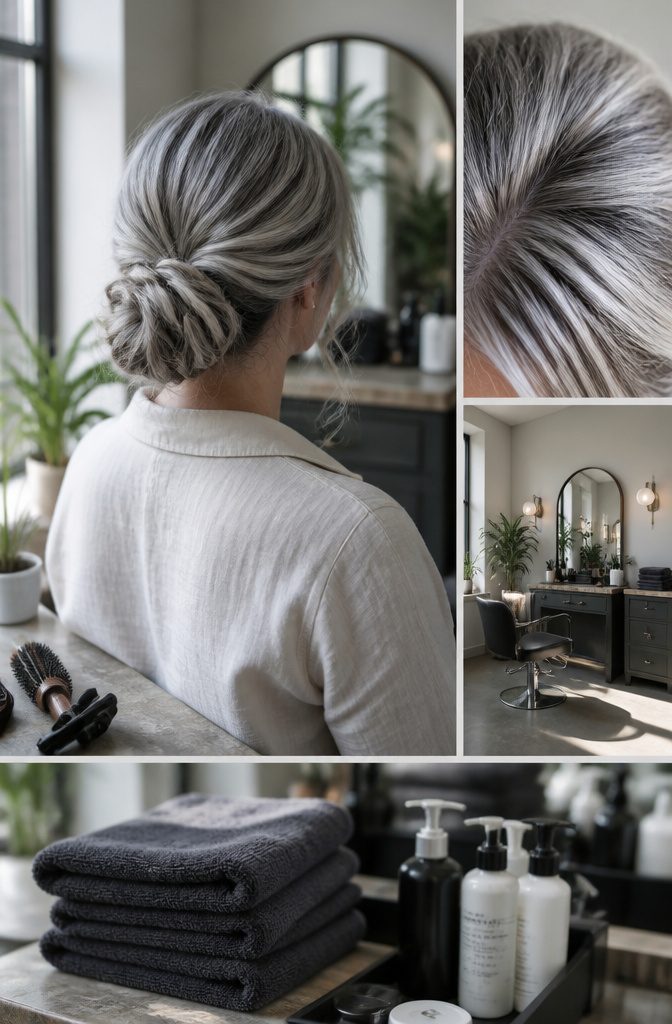
Cut, color placement and gloss decide whether gray looks intentional. Shorter hair shows silver as one clean shape, longer hair shows the gradient, layers add movement, and an updo pulls everything into a finished line.
Makeup and overall polish matter too, because silver reads best when the rest of the look is deliberate.
Quiet silver and French blending are the subtle routes.
French blending has three techniques: first blending, retouch blending and total blending. For more contrast, greige lights and the face-lift transition make the silver a feature rather than something to hide.
One salon route: a full head of baby highlights done twice, then a shadow root and silver toner. I’d choose that over a hard line at the part.
Salon or Home Care
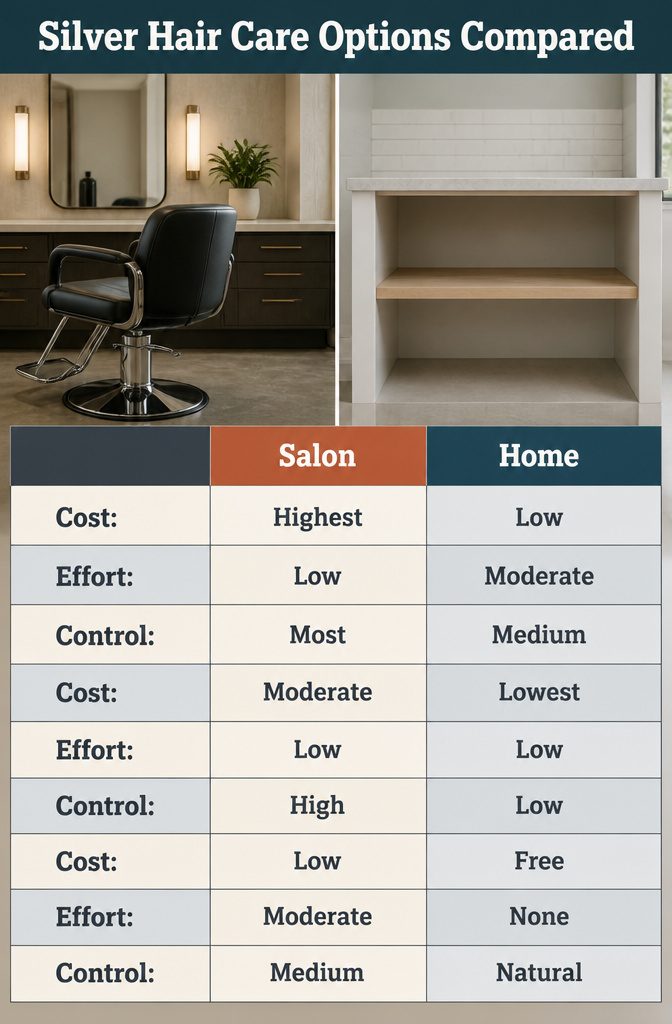
A stylist gives you control, and home products give you flexibility. Salon visits and home routines differ on cost, upkeep, and results:
| Option | Cost | Effort | Control |
|---|---|---|---|
| Salon blending and hairline highlights | Highest | Low | Most |
| Salon gloss | Moderate | Low | High |
| Home demi-permanent kit | Low | Moderate | Medium |
| Home toning mask | Lowest | Low | Low |
| No color | Free | None | Natural |
I’d send anyone with patchy silver or a sharp regrowth line to a salon consultation, since a stylist can blend color around your face.
Home kits and masks suit people who like their silver and only want to tone it. Skipping color entirely is a valid choice, and it costs nothing.
Texture and Moisture Needs
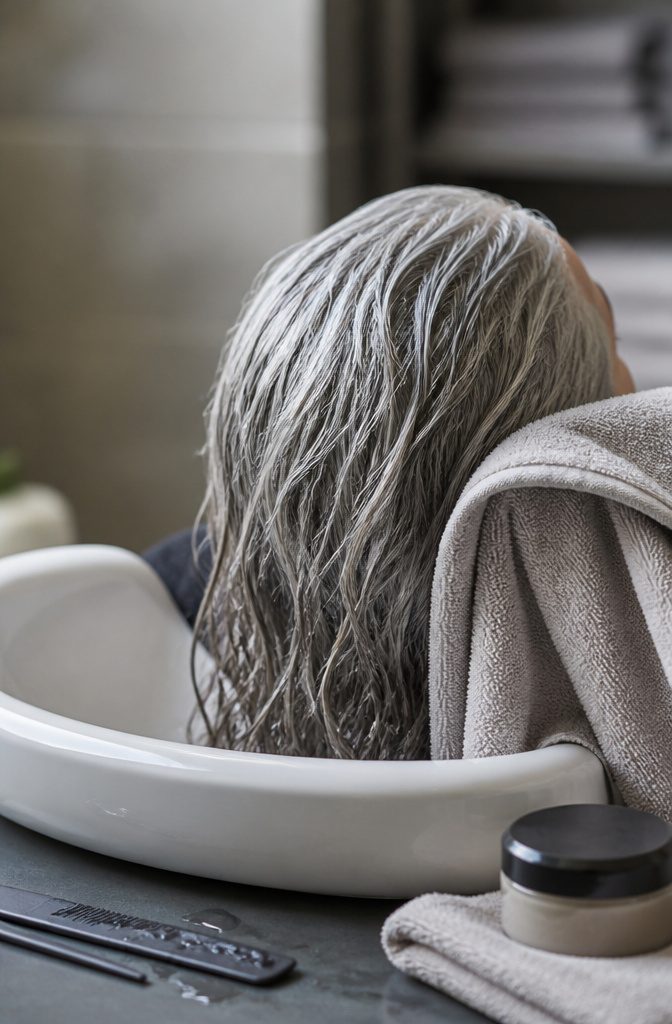
Aging follicles make less sebum, the oil that keeps strands hydrated, so natural silver hair often feels wiry, coarse or brittle. The strand is usually thirsty, not ruined.
Start with a hydrating shampoo and conditioner, then add a deep-conditioning mask once a week. Detangle gently and blot wet hair with a towel rather than rubbing it.
VEGAMOUR claims its HYDR-8 Shampoo and Conditioner Kit delivered 8x hydration and 2x stronger strands after one use in a swatch study.
It makes the same kind of claim for its Deep Moisture Repair Mask, at 15x hydration. Davines claims its NOUNOU Mask processes in 30 seconds.
I’d treat all of these as brand claims, a reason to try a product rather than a promise. The 30-second mask is the easiest weekly habit to keep.
Brassiness and Toning
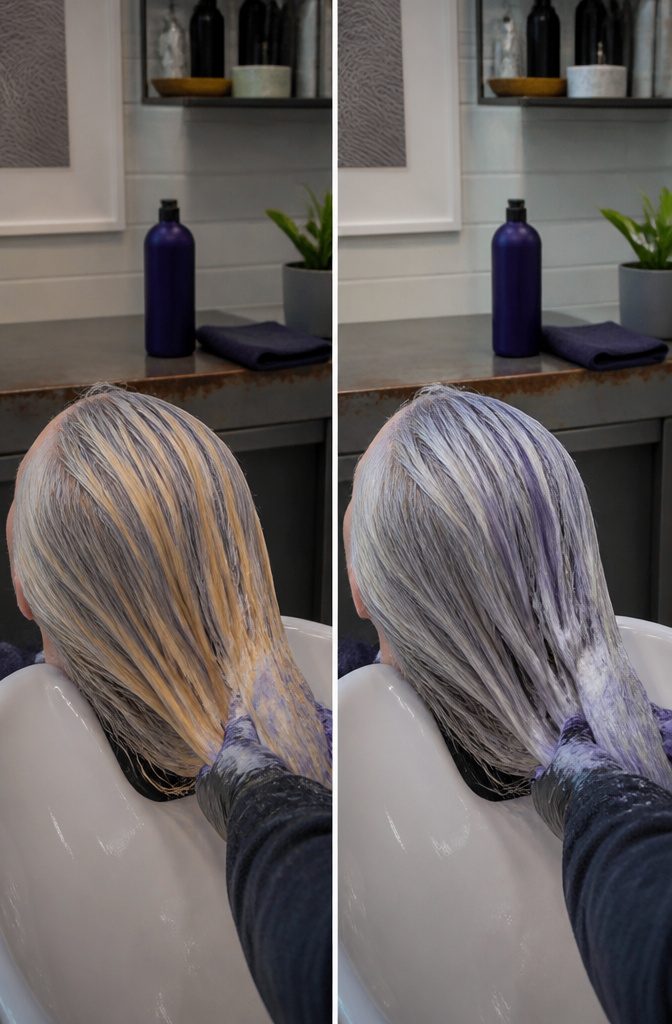
Silver hair has no pigment to hide anything, so sun, minerals, chlorine, heat, medications and pollution show up as a yellow cast.
A clarifying shampoo once a week clears buildup; SOLU Shampoo is made for that job, and an apple cider vinegar rinse now and then also knocks out brassiness. Add purple or blue shampoo weekly, or at least twice a month.
Davines Alchemic Shampoo Silver and Oribe Silverati both work, and a purple conditioner is the gentler option. Stubborn yellow calls for a salon toner: purple-based, mixed with 5 or 10 volume developer and left on for about half an hour.
Embracing Gray as a Choice
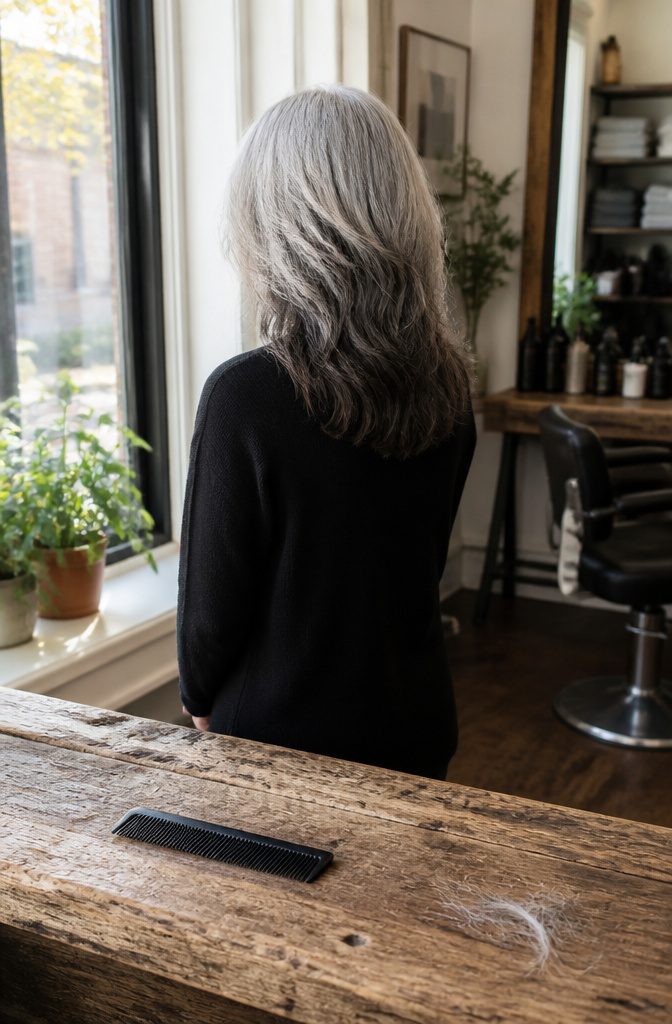
Nothing requires you to cover gray.
Decades of at-home color ads pushed "cover, cover, cover," yet some people skip the box and let natural silver hair shine, while others color, add highlights, or blend. None of those is the wrong call.
Growing out wins if you want no salon upkeep. Blending wins if you want the change gradual: a colorist adds highlights where silver is heavy and lowlights where hair runs darker, using toners and demi-permanent color.
If a harsh regrowth line bothers you, ask for retouch blending, which softens the "helmet effect" banding.
Total blending is the route for a fully visible embrace of gray. Whichever you pick, a cut shaped around the regrowth makes the in-between months look planned.
Frequently Asked Questions
Can silver hair occur naturally?
Yes.
The cells that make pigment die off with age, and hair that grows in afterward comes in without color. Timing is mostly genetic: most people start before 50, some around 35, and graying before 30 counts as premature.
Is there a difference between gray and silver hair?
In everyday use yes, in science no. Gray is a mix of pigmented and white strands, and white hair has lost nearly all its pigment.
Silver is not a separate scientific category; it is the name people use for non-pigmented hair that is styled or treated on purpose, and one head can show all three.
What makes gray hair feel different from pigmented hair?
Texture changes, mainly because aging follicles make less sebum, the oil that keeps strands hydrated.
That can leave gray hair feeling wiry, coarse or brittle. The strand is usually thirsty rather than damaged, so a hydrating shampoo and conditioner plus a weekly deep-conditioning mask is the usual fix.
Why does gray hair turn yellow?
Gray and white hair has almost no melanin, so it picks up color from its surroundings. The usual causes are sun exposure, hard water minerals, chlorine, heat styling, medications, pollution and product buildup.
How do I fix yellow or discolored gray strands?
Use a clarifying shampoo about once a week to clear buildup, and rinse with apple cider vinegar now and then.
Then add a purple or blue shampoo weekly, or at least twice a month. If the yellow stays, a salon toner is the stronger option.
Can vitamins, supplements or other remedies reverse gray hair?
No.
Hair that has already gone gray will not return to its former color without dye. Good nutrition and lifestyle habits may help preserve the pigment you still have, but they do not restore what is gone.
How do I get quiet silver hair?
Book a consultation with a colorist for personalized gray blending. They can add highlights where silver is dense and lowlights where hair runs darker.
Lighter starting hair blends more easily, though dark hair can get there too with more planning. At-home toning masks and demi-permanent kits are limited options best for people who already like their silver.
How can I make my hair silver without dye?
The dye-free route is natural graying, and its timing follows your genetics, so nobody can promise a date.
Once silver is growing in, you can keep it bright with sulfate-free shampoo, low heat, UV-filtering products and a weekly or twice-monthly purple shampoo.