Temporary hair color deposits pigment on the surface of each strand instead of penetrating it, so it rinses out in the shower or brushes out after a day or two.
The darker the shade and the lighter your hair, the longer it takes to fade completely, and ultra-light hair can hold deep tones longer than expected.
Formats include spray, chalk, mascara, wax, direct dyes and semi-permanent color, which lasts around 10 washes.
What Temporary Hair Color Is and How It Works
Permanent dye works by penetrating the hair strand.
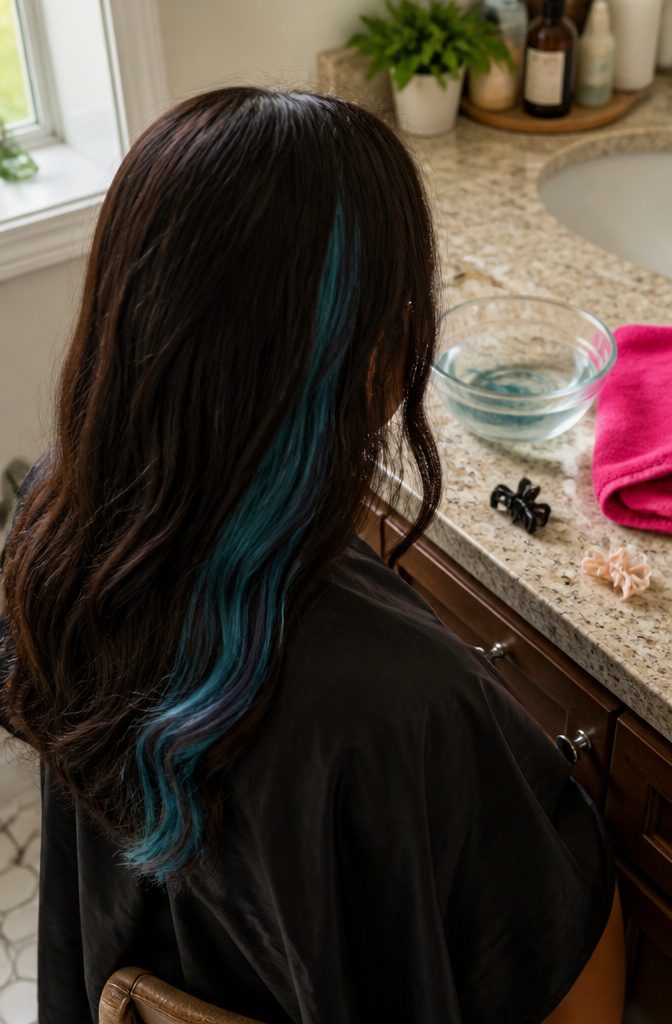
Temporary hair color only coats the outside of each strand in pigment. Because the color sits on the surface, it rinses out in the shower, and some products simply brush out.
That makes it a low-stakes way to try a bold shade, whether a single streak or a larger section, without living with it for weeks or months.
Natural tones come in the same formats. I’d pick one of those to cover roots before the next salon visit or to mask some gray for a few days, since a mismatched shade is easy to undo.
The brighter end of the range runs to every color imaginable, including shades that glow in the dark.
Spray
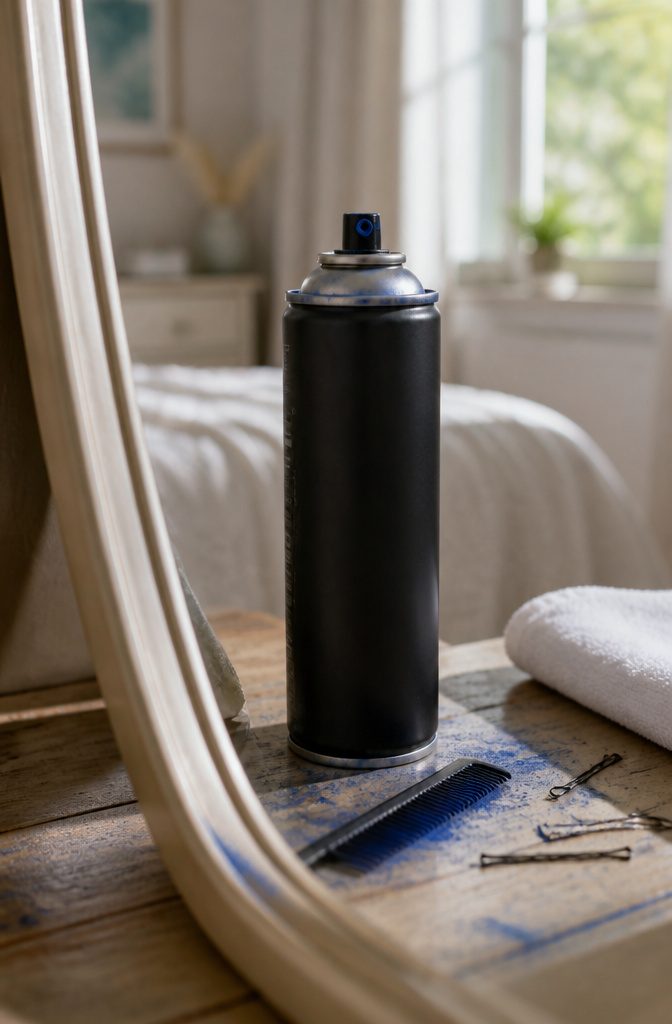
Shake the can, hold it 4–6 inches from clean, dry hair, mist lightly, and let the color dry before you touch it.
Damp hair makes spray look uneven, and holding the can closer gives you spots instead of an even wash. On dark hair, a thin white base coat helps brighter shades show.
The L’Oréal Paris Colorista Hair Makeup Temporary 1-Day Hair Color Spray is the one I’d start with. It’s ammonia-free and comes in six shades.
Expect it to last about a day, or until your next shampoo, though colored hairspray as a category is rated at 2–4 shampoos. Use it on single strands, wider sections, layered over a dried first coat, or all over.
Chalk
Chalk is one of the few temporary colors that shows up on darker hair.
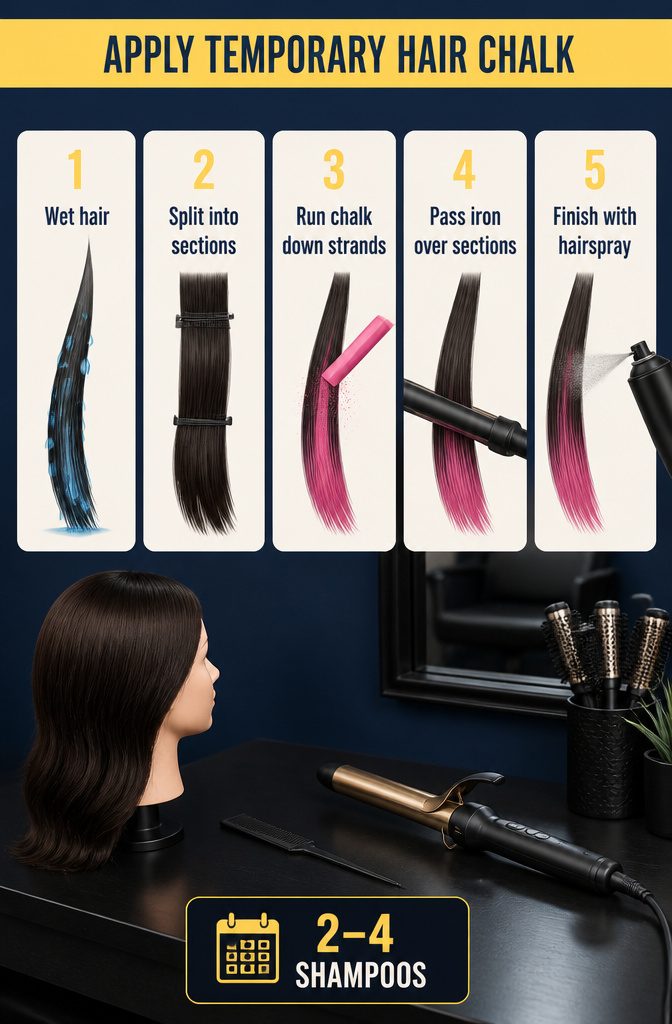
Wet the hair, split it into sections, and run the chalk down each strand. To set it, pass a curling iron or flat iron over the section, then finish with hairspray.
Pastel art chalk from a craft store works, but I’d pick a product made for hair, ideally one that includes a conditioner, because chalk dries hair out. Hair sets usually come in several shades you can mix and blend.
Expect the color to last 2–4 shampoos. Because chalk moves with the hair, it suits updos especially well.
Mascara and Color Sticks
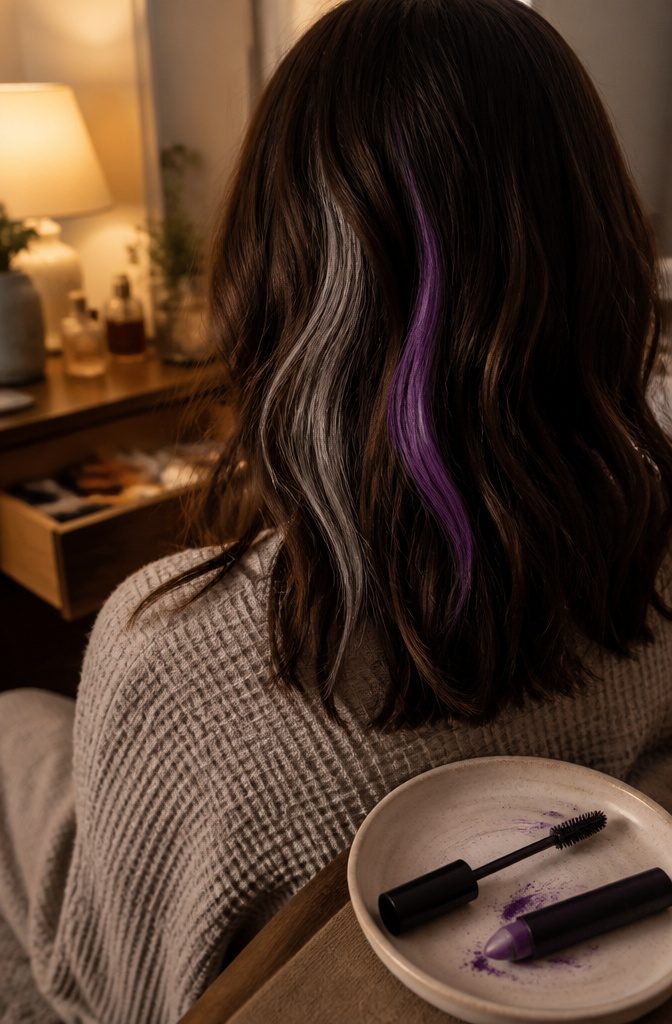
Hair mascara is the most temporary dye on the shelf.
You brush the wand straight through your hair, and the color lasts just 1–2 shampoos. That makes it a good fit for hiding a few grays or adding one bold streak for a single night.
Color sticks use the same brush-on logic, applied by dragging the stick down a section.
The Joyous Professional Hair Dye Temporary Hair Color Stick costs $10, and you control the intensity by how many passes you make. Layer it for a brighter, more vivid color, or keep to light, thin streaks for a subtler look.
It comes out with shampoo and hot water. I’d reach for the stick for streaks and the mascara for gray touch-ups, since a wand handles small spots better.
Wax
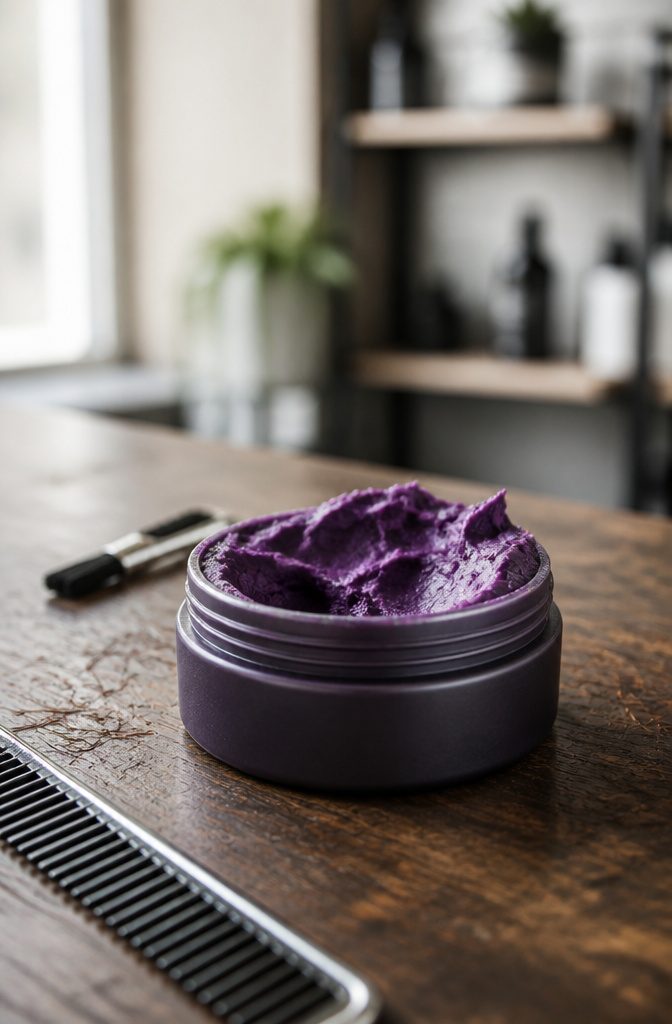
Hair wax is the one temporary format that colors and styles in a single step.
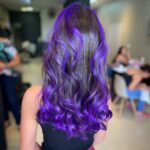
HailiCare Unicorn Purple Hair Wax costs $12 on Amazon, and it lets you sculpt and build texture while the purple goes on. A messy crop, a pushed-up front or loose waves can get color and hold from the same pot.
Application depends on how much hair you want colored. Use your fingers for full coverage, or pick up an eyebrow brush to hit smaller sections like a front streak or the ends.
I’d start with the brush: adding more purple is easy, but taking it back off a whole head is not.
Wax makes the most sense when the style needs shape as well as color. For sleek, smooth hair, a different format fits better.
Direct and Vegetable Dyes
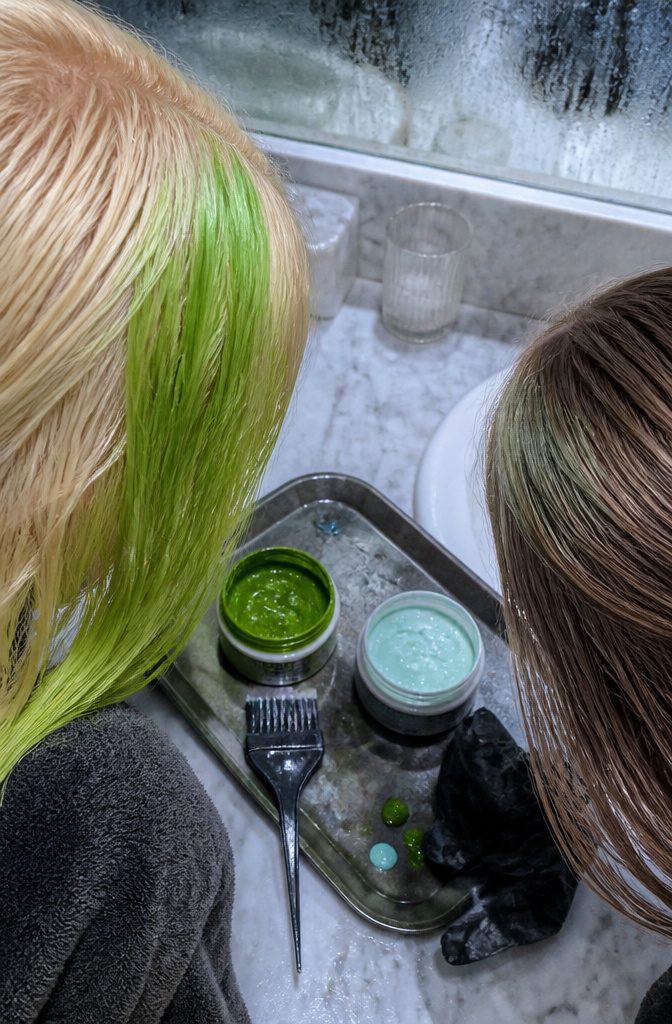
Direct dyes, also called vegetable dyes, come ready to apply with no mixing and no chemical action, so they deposit color on top of your natural shade without lifting it.
They last 1–30 shampoos, and the spread comes down to how dark or saturated the shade is. They show up best on lighter hair, but they carry no damage risk, so anyone can try one.
Pravana ChromaSilk Vivids Creme Hair Color ($13) is my pick for a bold, saturated shade. Lime Crime Unicorn Hair Star Mist ($16) suits anyone who prefers a mist to a cream.
Manic Panic Semi-Permanent Hair Color Cream works for translucent toning on blondes, reds and brunettes, or for some fashion colors. Because none of them lighten, expect dark hair to take only a faint tint.
Semi-Permanent Dye
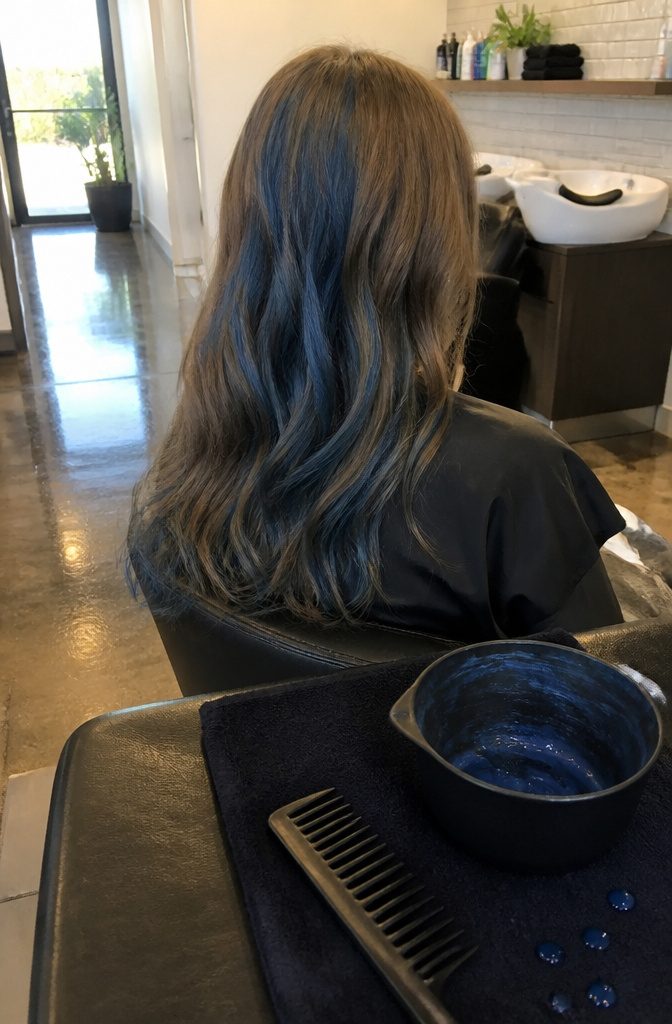
Wash-out color leaves with your next shampoo.
Semi-permanent dye is the step up for anyone who wants a shade to survive more than a day. Its molecules are larger, so they don’t penetrate the hair and instead stain the cuticle layer.
L’Oréal Paris Colorista Semi-Permanent typically lasts around 10 washes, fading gradually, and semi-permanent dye in general holds for at least a week. The formula is ammonia-free and peroxide-free, and the shades run from bright red to metallic blue.
Your starting color decides how bright the result looks: the lighter your hair, the more vivid the shade. Brunettes should go straight to the shades made for dark hair.
Tinted Gloss
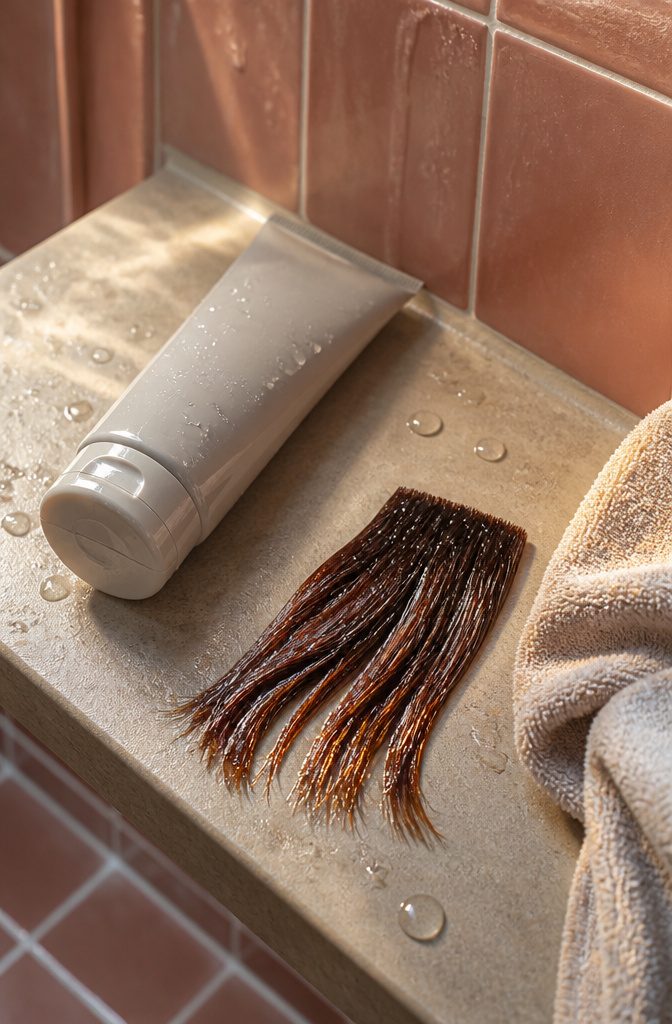
Tinted gloss lays a soft wash of color over your existing hair instead of covering it. Brunettes get a little more warmth, blondes get a softer or cooler cast, and nobody gets a dramatic jump.
L’Oréal Paris Le Color Gloss In-Shower Toning Gloss is the example I’d point to, and it lasts up to 10 days. It’s used in the shower, so there’s no separate setup.
I’d pick gloss over chalk or spray for a nudge, like deepening a shade or calming brassiness.
For pink, blue or anything bold, skip it; the wash is too sheer to show. Because it fades gently, a miss is easy to live with.
DIY Food Coloring Method
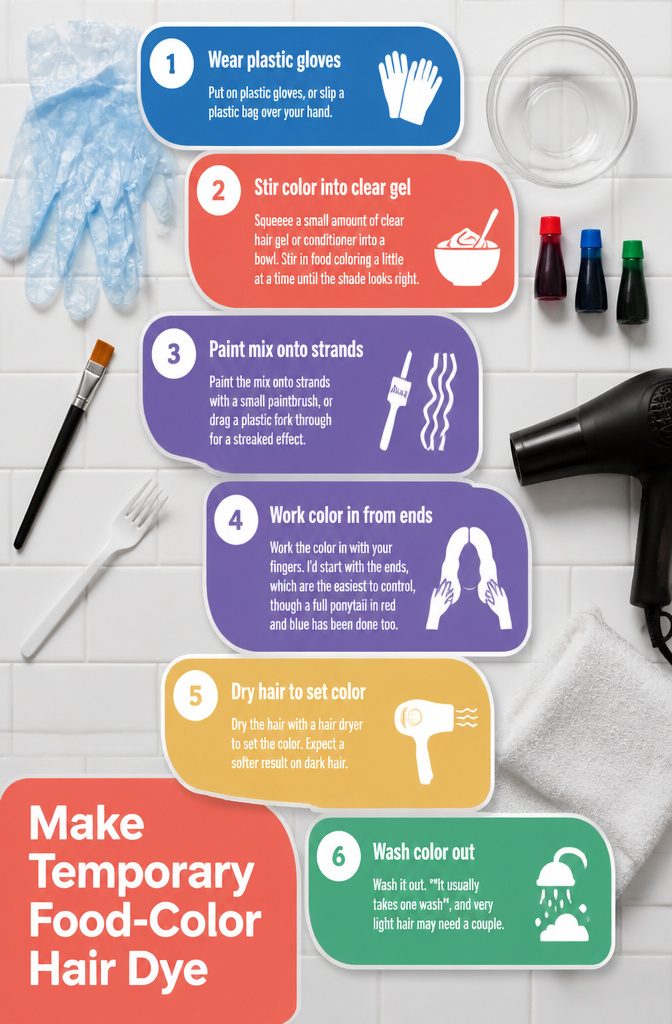
- Put on plastic gloves, or slip a plastic bag over your hand. Food coloring will turn bare skin red, purple or whatever shade you picked.
- Squeeze a small amount of clear hair gel or conditioner into a bowl. Stir in food coloring a little at a time until the shade looks right.
- Paint the mix onto strands with a small paintbrush, or drag a plastic fork through for a streaked effect.
- Work the color in with your fingers. I’d start with the ends, which are the easiest to control, though a full ponytail in red and blue has been done too.
- Dry the hair with a hair dryer to set the color. Expect a softer result on dark hair.
- Wash it out. It usually takes one wash, and very light hair may need a couple.
How Long Color Lasts and What Affects Washout
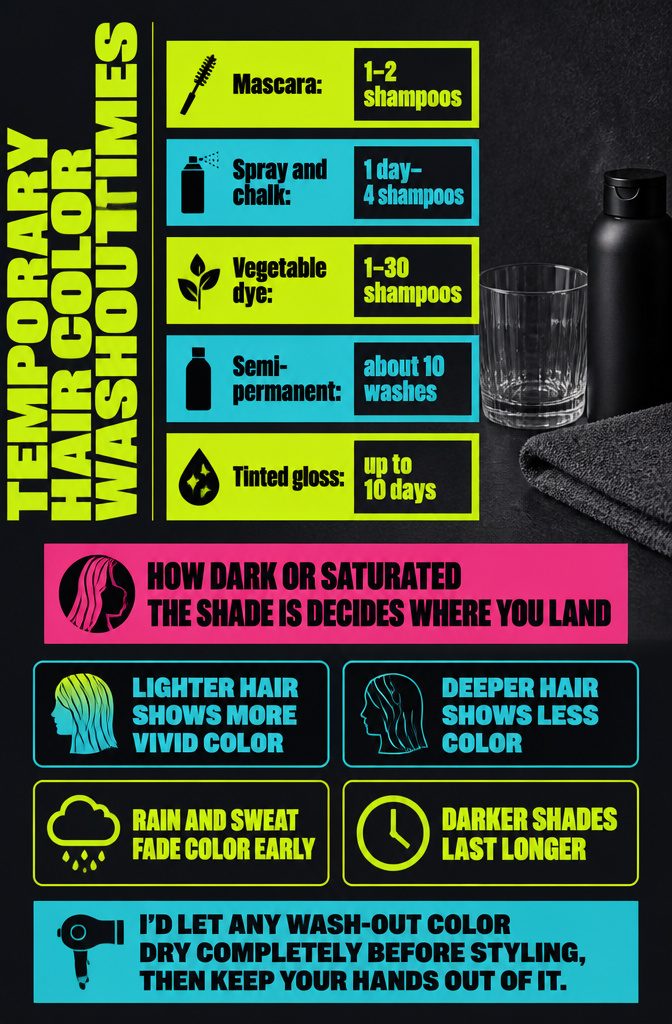
Format decides how long color lasts. Hair mascara is the shortest at 1–2 shampoos, while sprays and chalk hold for about a day to 2–4 shampoos.
Vegetable dye covers the widest range, 1–30 shampoos, and how dark or saturated the shade is decides where you land. Semi-permanent color fades gradually over about 10 washes, or at least a week, and a tinted gloss lasts up to 10 days.
Your hair and your day shift those numbers. Lighter hair shows more vivid color and deeper hair shows less.
Rain or heavy sweat can make color bleed and fade early. I’d let any wash-out color dry completely before styling, then keep your hands out of it.
Hair Condition and Visible Results
Temporary color coats the surface of the strand and doesn’t lift your natural pigment, so it skips the damage that bleach and permanent dye can cause. A color-safe shampoo helps it last.
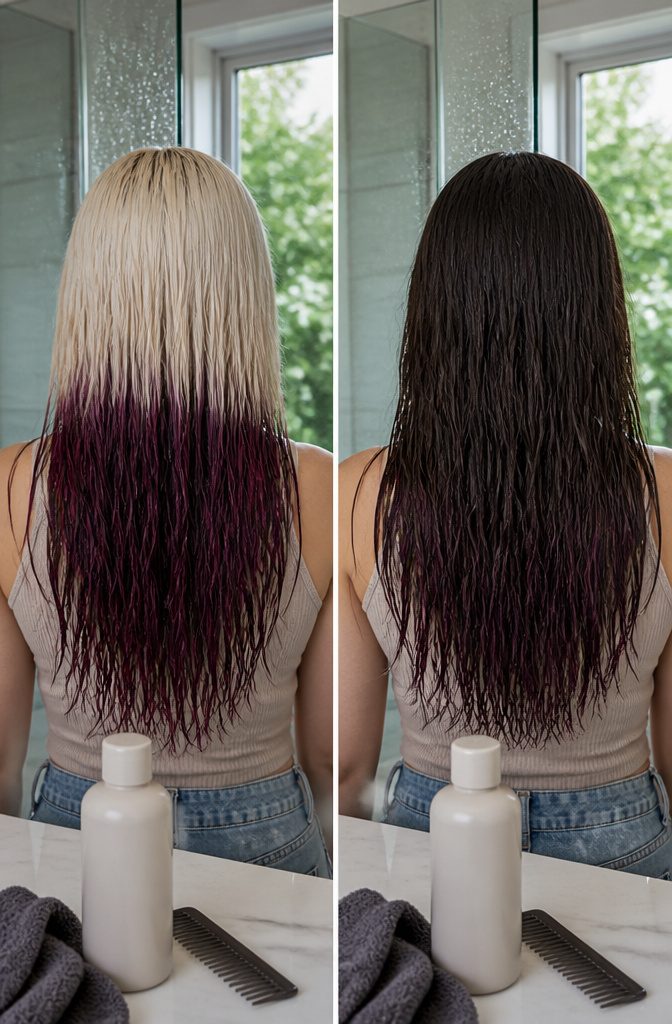
Pale hair is the exception worth knowing about, because it holds on to deep shades.
"The darker the temporary color and the lighter the hair, the longer it will take the color to wash out."
On ultra-light hair, a deep shade can linger longer than you planned, so start with a softer tone if you want an easy exit.
Dark hair has the opposite problem. Because this dye only deposits tone and can’t lighten, brunettes will see a subtler, more translucent tint than the color on the package suggests.
Choosing a Product for the Intended Result
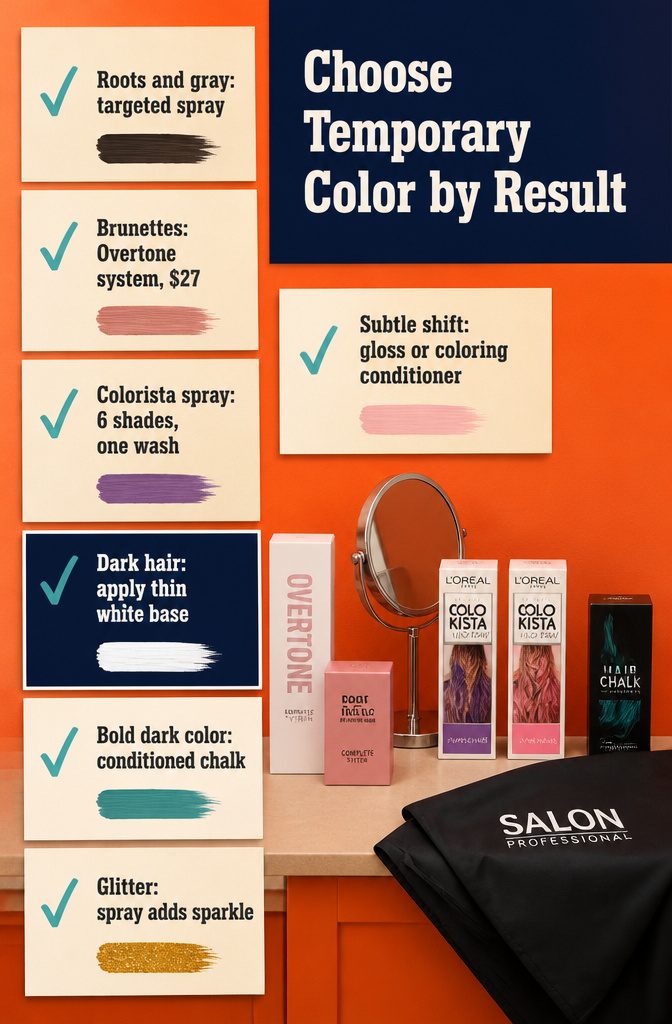
Match the format to the result you want:
- Roots and gray: dpHUE Color Touch-Up Spray has a targeted nozzle for precise application, and the brand says it dries quickly and won’t rub onto clothes.
- Brunettes: Overtone Rose Gold for Brown Hair Complete System ($47, now $27) pairs a coloring conditioner with a daily conditioner for a subtle change on dark strands.
- All-over color, highlights or ombré: spray wins. L’Oréal Paris Colorista’s 1-day spray comes in 6 shades and washes out with one shampoo. On dark hair, apply a thin white base coat first.
- Bold color on dark hair: chalk leaves a solid layer. I’d pick one that includes conditioner, since chalk can dry hair out.
- Glitter: spray-on glitter adds sparkle without much color.
- Subtle shifts: a gloss or coloring conditioner keeps the change soft.
Frequently Asked Questions
What is temporary hair color?
Temporary hair color coats the outside of each strand with pigment instead of penetrating it.
Because the color sits on the surface, it rinses out in the shower or brushes out after a short period. This makes it a low-risk way to try bold shades without committing to them for weeks.
How long does temporary hair color last?
Most temporary hair color lasts 1 day to 4 shampoos, depending on the format.
Hair mascara washes out in 1–2 shampoos, sprays and chalk last 2–4 shampoos, and vegetable dyes can hold for 1–30 shampoos depending on how dark the shade is. Semi-permanent dye fades gradually over about 10 washes.
Does temporary hair dye damage hair?
No, temporary hair color does not damage hair because it only coats the surface and does not lift your natural pigment.
It skips the damage that bleach and permanent dye can cause. Switching to a color-safe shampoo helps the color last longer without harming your strands.
What is the best temporary dye for dark hair?
Chalk is one of the few temporary colors that shows up well on dark hair because it leaves a solid, vibrant layer.
For all-over color or highlights, spray a thin white base coat first, then apply your chosen shade on top. Overtone Rose Gold for Brown Hair Complete System is another option made specifically for darker strands.
How to use hair color wax?
Use your fingers to work the wax through hair for full coverage, or pick up an eyebrow brush to color smaller sections like a front streak or the ends.
Hair wax colors and styles at the same time, so it makes the most sense when you want both shape and pigment. It washes out with shampoo.