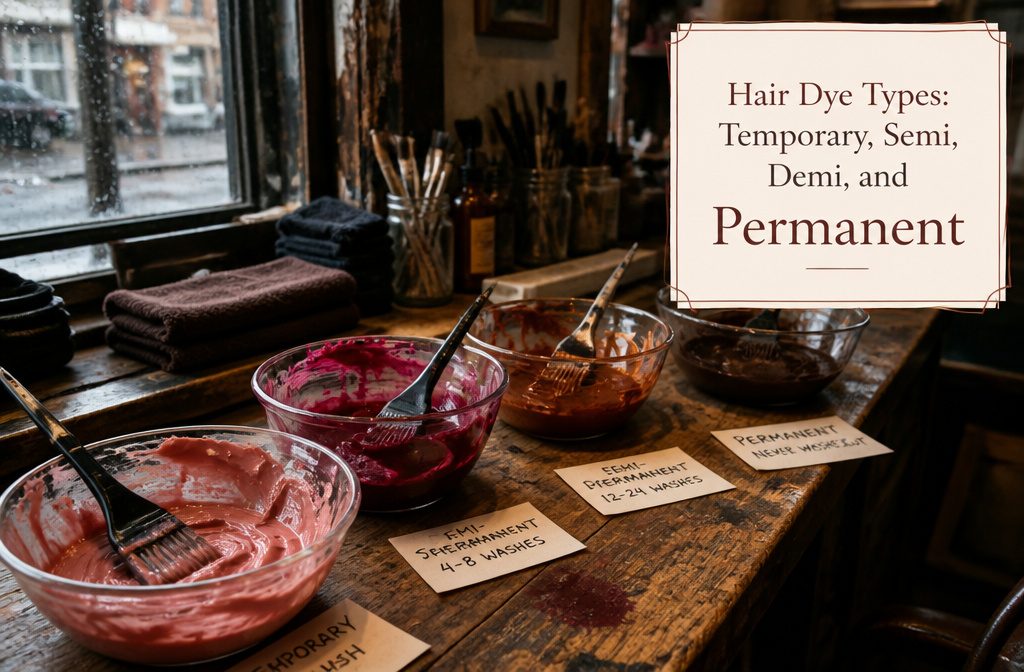
Hair dye types differ by how deeply they penetrate the hair shaft and how long the color lasts.
Temporary dye coats the surface and rinses out in one wash, semi-permanent fades over 4–8 shampoos, demi-permanent lasts 12–24 washes, and permanent dye opens the cuticle to lock pigment inside the cortex so it never washes out.
Only permanent dye can lighten hair or cover 100% gray.
Temporary Dye
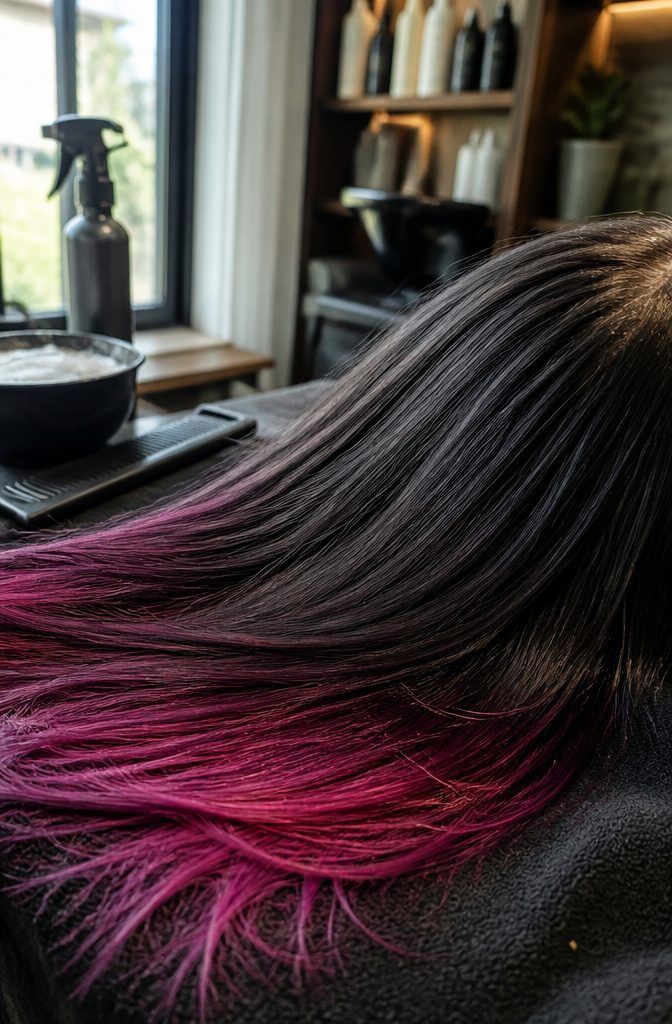
Temporary dye sits on the hair shaft without penetrating the cuticle, which makes it the gentlest option because nothing changes the structure underneath.
The color coats the surface with pigment molecules large enough that they can’t sink in, so it washes out in one shampoo or lasts a few days depending on the product and your hair type.
Root-concealer sprays and powders work the same way, covering grays or roots until the next wash.
The appeal is the flexibility. You can test a shade for an event, add a pop of color at the ends, or darken your hair temporarily without any commitment.
Temporary dye can’t lighten hair, only add tone or darken what’s already there. It’s cheap, usually applied at home via spray or foam on dry hair, and needs no professional help as long as you patch-test first.
One thing to watch: damaged or bleached hair can stain if you use temporary color repeatedly. The porous strands hold onto pigment longer than intact hair does, so what should wash out in one go sometimes lingers.
Semi-Permanent Dye
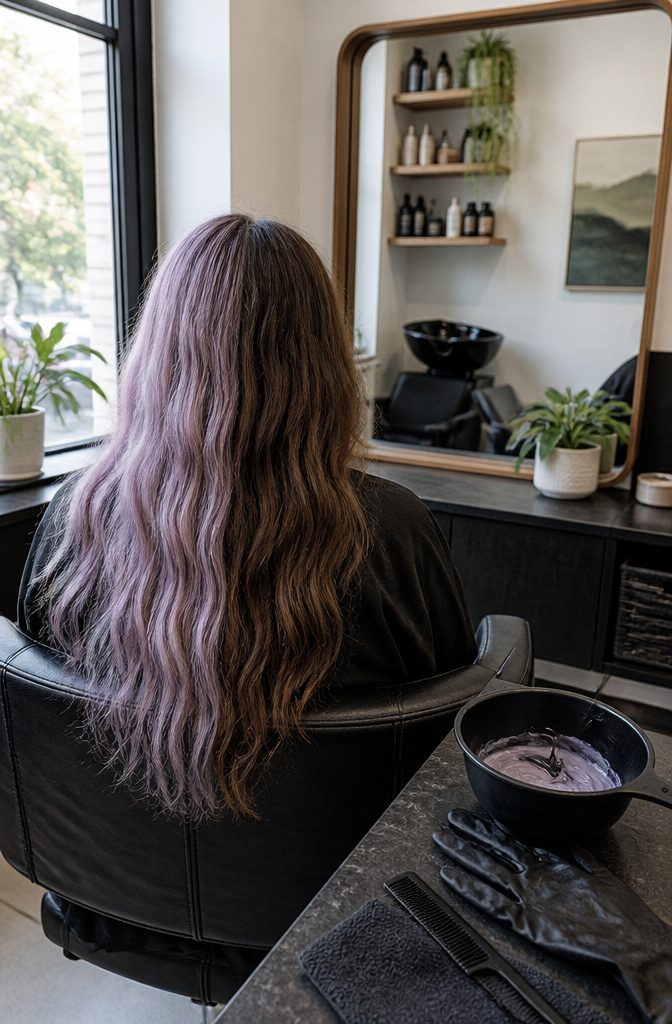
Semi-permanent dye needs no developer and leaves the hair’s structure alone, so it fades a little with every wash. Plan on 4–8 shampoos, or up to 12 on hair that holds color well, which usually works out to 4–6 weeks.
Gloss gets filed here by some brands (up to 8 shampoos) and treated as its own treatment by others, so I’d budget for the shorter number. Henna is reported separately at 4–6 weeks.
I’d pick this type for brightening a tone, trying a pastel, or testing a shade before I commit to it.
It can blend or conceal some gray but won’t fully cover it, so skip it if gray is the main job. A shade you hate takes 6–12 washes to clear.
Demi-Permanent Dye
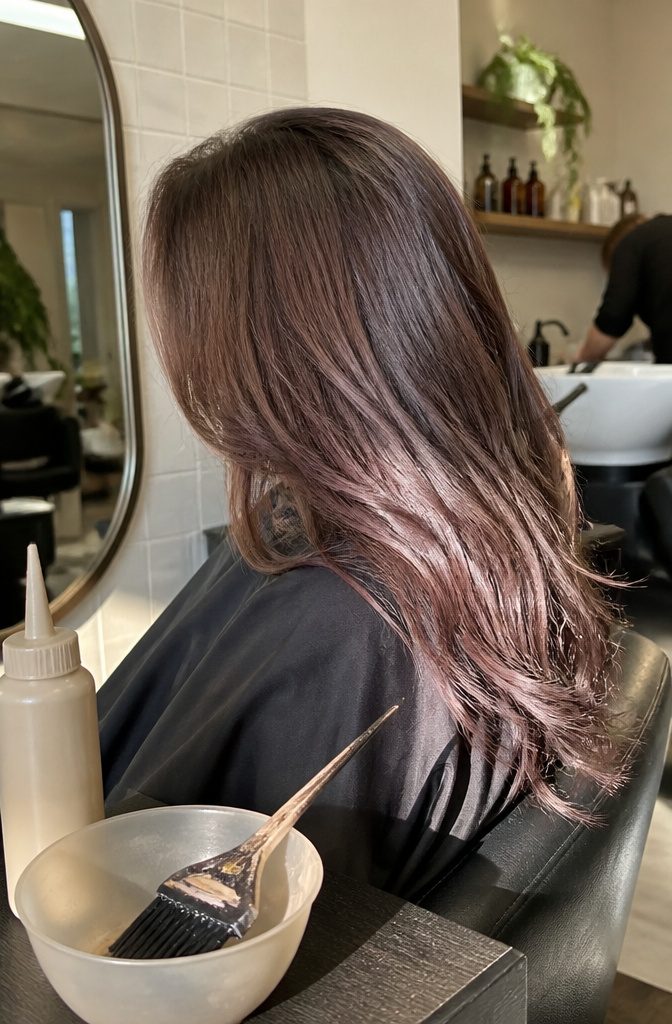
Demi-permanent dye deposits color deeper than semi-permanent by mixing with a low-volume developer. The formula opens the cuticle gently so pigment can settle into the shaft rather than just sitting on the surface.
It lasts 12–24 shampoos depending on hair porosity, which works out to several weeks or a few months before the color fades gradually.
The developer gives demi its staying power, but it cannot lighten your hair.
No ammonia means no lifting. If you want to go lighter, you need permanent dye first, then layer demi over it for tone.
Gray coverage is where the story splits. Some sources say demi blends gray well, others flatly state it will not cover it.
The practical version: tone-on-tone formulas can hide the first gray hairs, but once you pass 20% gray, demi starts to struggle. It blends scattered silver better than it covers a whole head of it.
I reach for demi when I want richer color than semi gives me without committing to root maintenance.
It fades softly, so regrowth looks less stark than permanent. Good for tone shifts, subtle darkening, and trying a trend like pink that you might want gone in two months.
Permanent Dye
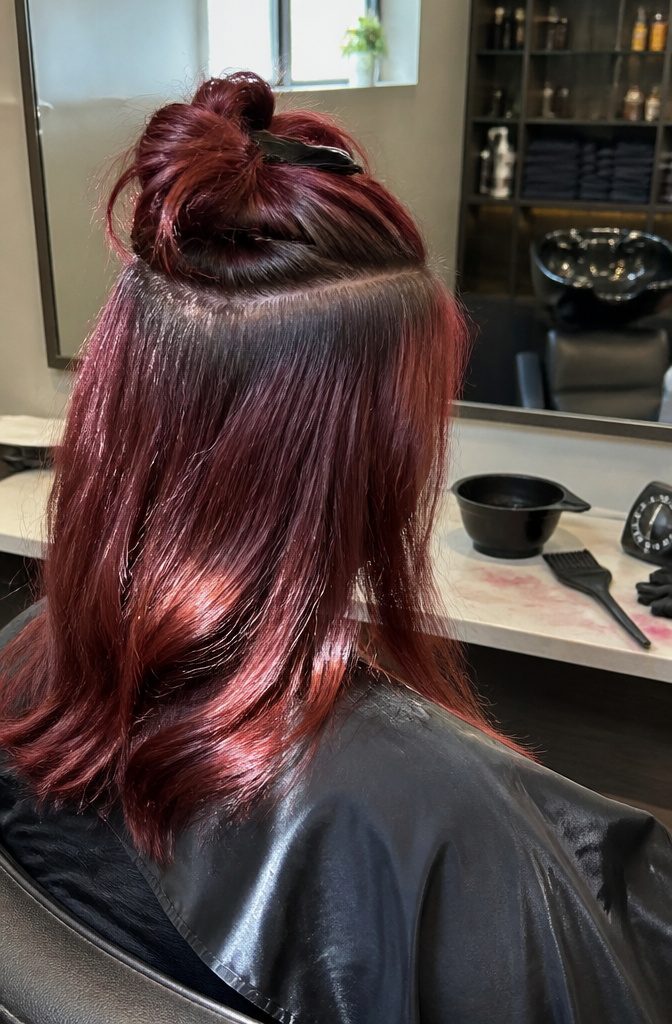
Permanent dye is oxidative color.
It opens the hair shaft, delivers pigment deep inside, and reseals the cuticle so the color change happens structurally. The color does not wash out.
What you notice over time is regrowth at the roots, which is why touch-ups land every four to six weeks for most people, though some stretch it to eight depending on how fast their hair grows and how much contrast they can live with.
This is the option that covers up to 100% gray, can lighten or darken your natural shade, and holds through repeated washing and heat styling. Processing time typically runs 30 or 45 minutes.
Permanent dye costs you in damage, since it has to open the cuticle to work. Permanent dye can leave hair brittle, and because the color doesn’t fade out cleanly, roots show as a hard line rather than a soft blur.
If you want out, reach for a color remover rather than layering another permanent shade right away. And after dyeing, wait at least 24 hours before the first wash so you don’t dull the result.
How Dye Works in Hair
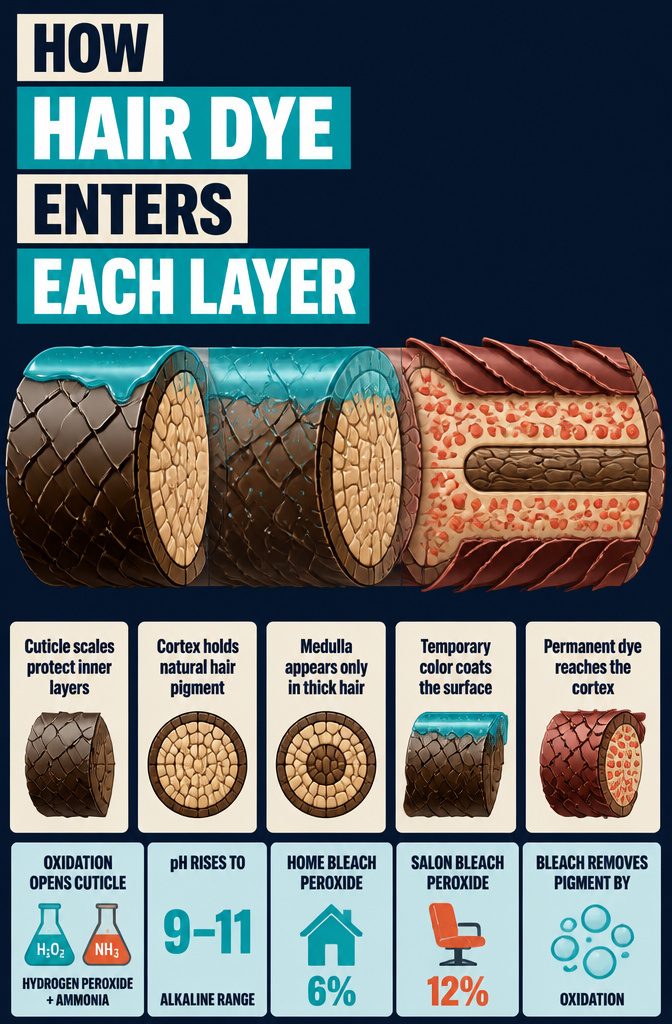
Each strand of hair has three layers. The cuticle is the outermost, made of overlapping scales that protect what sits beneath.
Under that is the cortex, which holds the pigment that gives hair its color. The medulla runs down the center, though only in thick hair.
How deep a dye goes into those layers decides how long it lasts.
Temporary color sits on the surface of the cuticle, coating the hair without changing its structure. Semi-permanent works the same way, though some formulas slip just inside the cuticle.
Permanent dye is different. It opens the cuticle to reach the cortex, where it deposits pigment that stays until new hair grows in.
That opening happens through oxidation. Permanent color uses hydrogen peroxide as the oxidant and ammonia to crack the cuticle scales apart.
The pH climbs to somewhere between 9 and 11, alkaline enough to let the dye move in. Once the cuticle reseals, the new color is locked inside.
Products for bleaching one’s hair at home usually contain a 6% solution of hydrogen peroxide, while products for use in a hair salon can contain up to 12%.
That difference matters if you are trying to lift dark hair at home.
Bleach strips pigment rather than adding dye, and the 6% peroxide in most home kits moves slower than the 12% a colorist can use. Either way, bleach removes melanin through oxidation, breaking it down and releasing oxygen gas.
Gray Coverage by Percentage
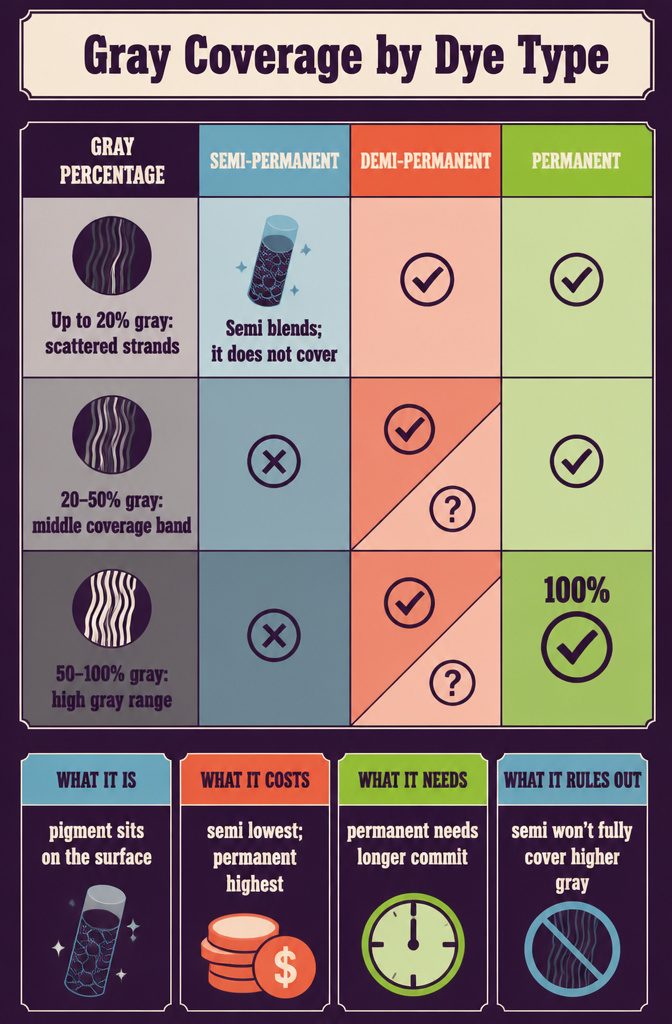
The question is what each dye type can actually do when you have gray. The coverage breaks into three bands: up to 20% gray (scattered strands), 20–50%, and 50–100%.
Semi-permanent blends a few grays but doesn’t cover them. The color sits on the surface, so it shifts tone and adds a sheer tint over what’s there rather than hiding it.
If you’re just seeing your first scattered silvers and want them to read less stark, semi will soften the line. Past that, it won’t do the job.
Permanent dye covers fully, even at 100% gray. The pigment gets inside the hair shaft and stays, which is why it’s the only real option once you’re working with more than half.
Demi sits somewhere in the middle, and the guidance splits. Some sources say it blends gray the way semi does.
Others say it covers well into the higher percentages if you leave it on longer. I can’t give you a single answer there because the formulas and the advice genuinely differ.
Choosing by Upkeep
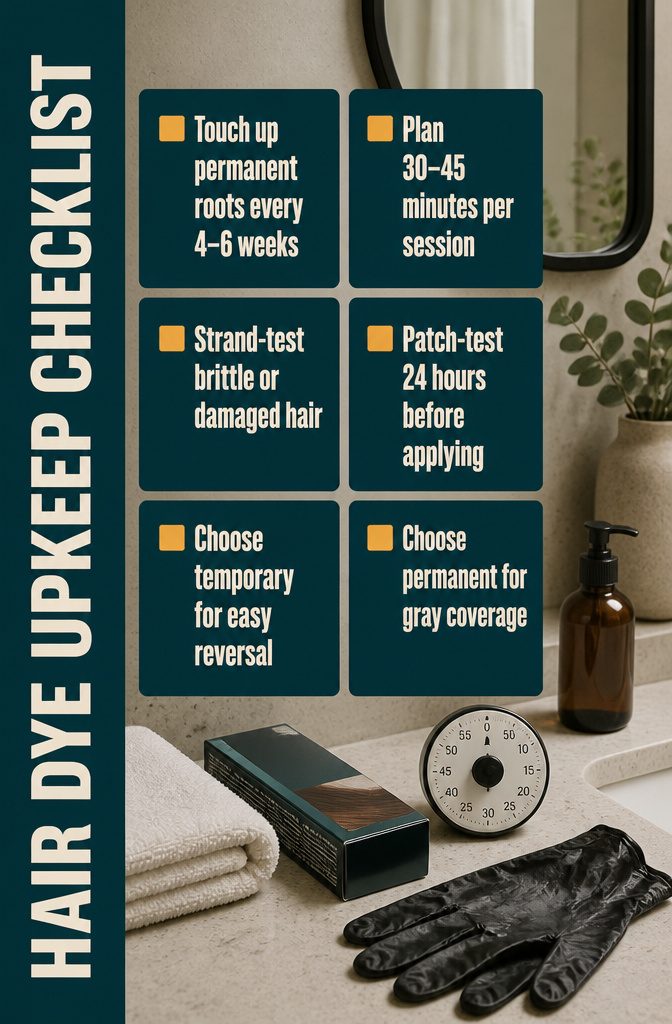
The type that fits depends on how far you want to go and how often you’re willing to come back for touch-ups.
Temporary and semi-permanent rinses work when commitment sounds worse than the color itself, and they let you reverse a choice without bleach or a corrective appointment.
Demi-permanent suits tone shifts that don’t need lifting pigment out of the hair shaft, so gray blending or glossing over brassy ends without opening the cuticle wide.
Permanent dye handles the big swings, lifting natural color and depositing new pigment in one pass, but that means root touch-ups every four to six weeks and a salon chair or bathroom sink session that runs thirty to forty-five minutes each time.
Brittle or damaged hair takes dye unevenly, so a strand test on a hidden section near the nape shows what the rest will do before the whole head is involved.
A patch test behind the ear catches allergic reactions twenty-four hours before full application.
If upkeep sounds unbearable, stay temporary. If gray coverage matters more than reversal, permanent wins.
Frequently Asked Questions
What is the least damaging type of hair dye?
Temporary dye is the gentlest option because it sits on the hair shaft without penetrating the cuticle or changing the structure underneath.
Semi-permanent comes next, depositing color without a developer, so it fades over 4–8 shampoos and leaves the hair shaft intact.
How long does permanent hair dye last?
Permanent dye does not wash out. The color stays until new hair grows in, which is why you see regrowth at the roots rather than fading through the lengths.
What hair dye should I use to cover gray hair?
Permanent dye is the only type that covers 50–100% gray, because it deposits pigment deep inside the hair shaft and stays. Demi-permanent can blend scattered gray or cover up to 20%, while semi-permanent only softens the tone of a few strands.
Can you remove permanent hair dye?
Yes, but you need a color remover rather than another layer of dye. Wait at least 24 hours after removal before applying a new shade, because stacking treatments right away can damage the hair.
Does permanent hair dye damage hair?
Yes, permanent dye opens the cuticle with ammonia and peroxide to reach the cortex, which can leave hair brittle. The oxidation process changes the structure, so aftercare matters if you want to keep strands healthy.
What are the four main types of hair coloring?
The 4 types are temporary, semi-permanent, demi-permanent, and permanent.
Temporary coats the surface and washes out in one shampoo, semi-permanent lasts 4–8 washes, demi-permanent deposits color deeper and fades over 12–24 washes, and permanent changes the hair structure and grows out rather than washing away.
How often should I touch up my roots?
Most people touch up every 4–6 weeks, though you can stretch it to 8 depending on how fast your hair grows and how much contrast you can tolerate.
Permanent dye shows a hard line at the roots, so regrowth becomes visible sooner than with demi or semi-permanent.
How long does it take to touch up hair roots?
A salon appointment typically takes 30–45 minutes. At home, expect longer if it is your first time, because sectioning and even application take practice.