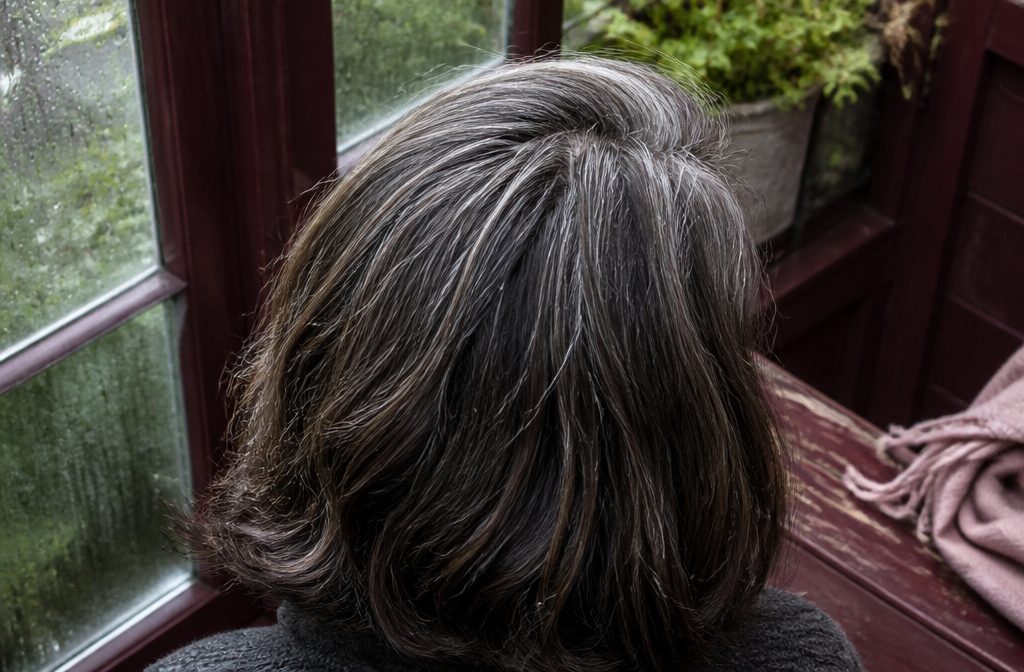
White hair has no pigment at all, while gray hair is just white strands blended with strands that still carry color, so gray is never its own pigment.
The mix decides how light you look: on brown or black hair it runs from salt-and-pepper to silver to white, and a follicle can stop making melanin after 7–15 hair cycles.
What White and Gray Mean
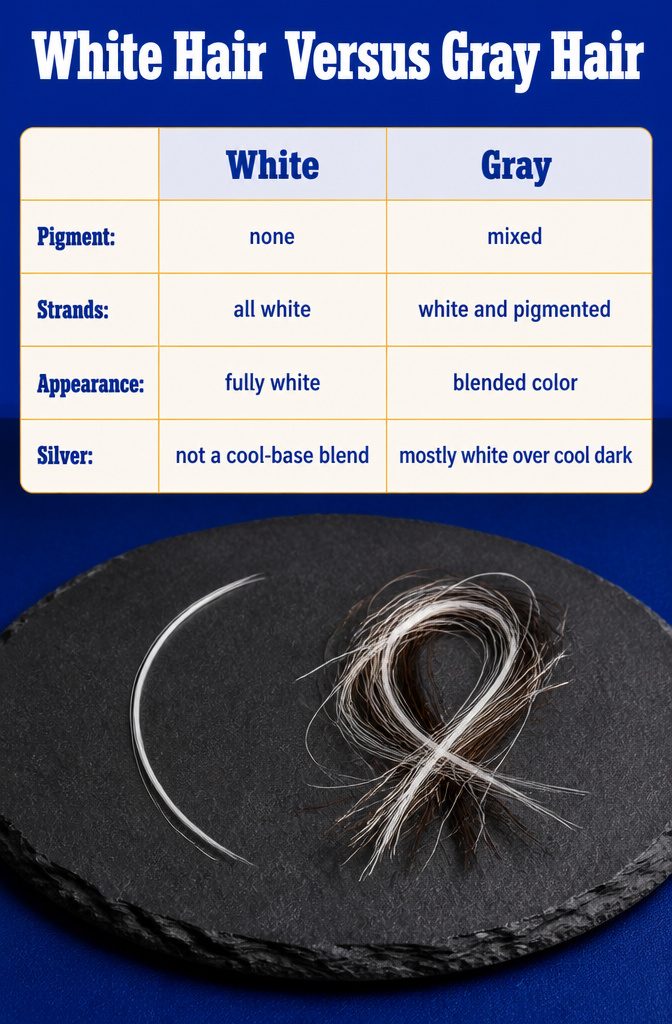
White hair has no pigment; gray hair is white strands mixed with strands that still carry color.
Every hair grows either pigmented or white, so gray is not a separate pigment, only the eye blending the two. A fully white head has lost all of its pigment.
Silver is that same blend on naturally cool, dark hair once it turns mostly white. A light drab brown base, by contrast, tends to look dull and grayish.
Writers use gray, silver and white loosely, so here I use them this way: white means no pigment, gray means a mix, and silver means a mostly white mix over a cool dark base.
How the Shades Look
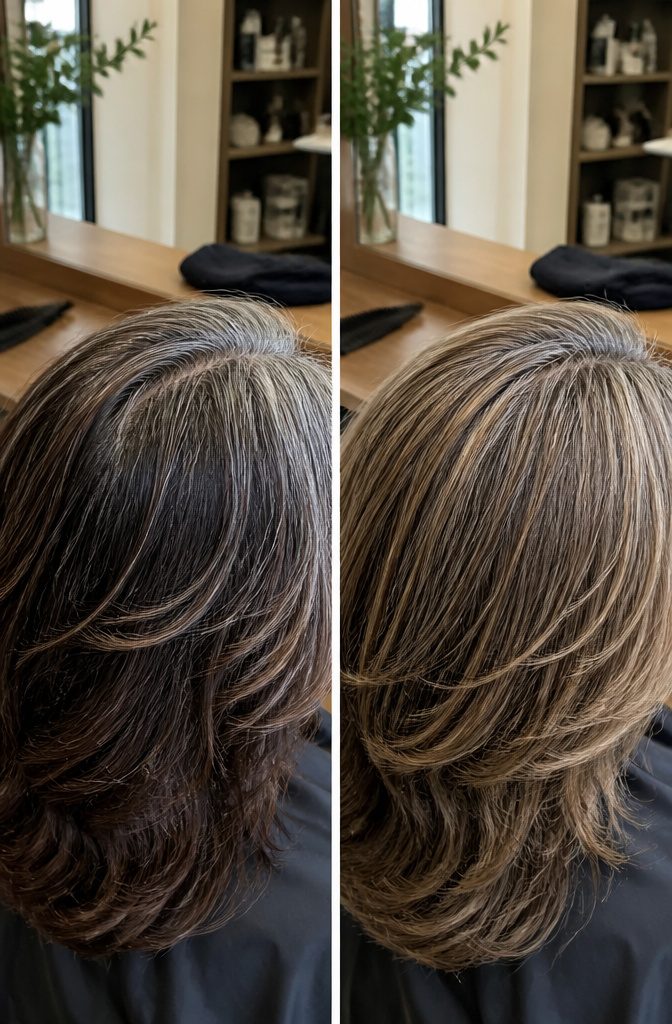
Silver, steel and pewter are not separate hair colors.
They are what you see when white strands mix with pigmented ones, and on brown, dark brown or black hair the blend moves from salt-and-pepper through shades of silver and finally to white.
Contrast does the rest. A few white hairs disappear into ash blonde and can even look pretty there, while the same few on darker hair read as salt-and-pepper.
Visibility depends on how far the white sits from your natural color. Thick white strands draw the eye more than scattered ones, so I’d judge your own head by where the white clusters, not by a strand count.
From Salt-and-Pepper to White
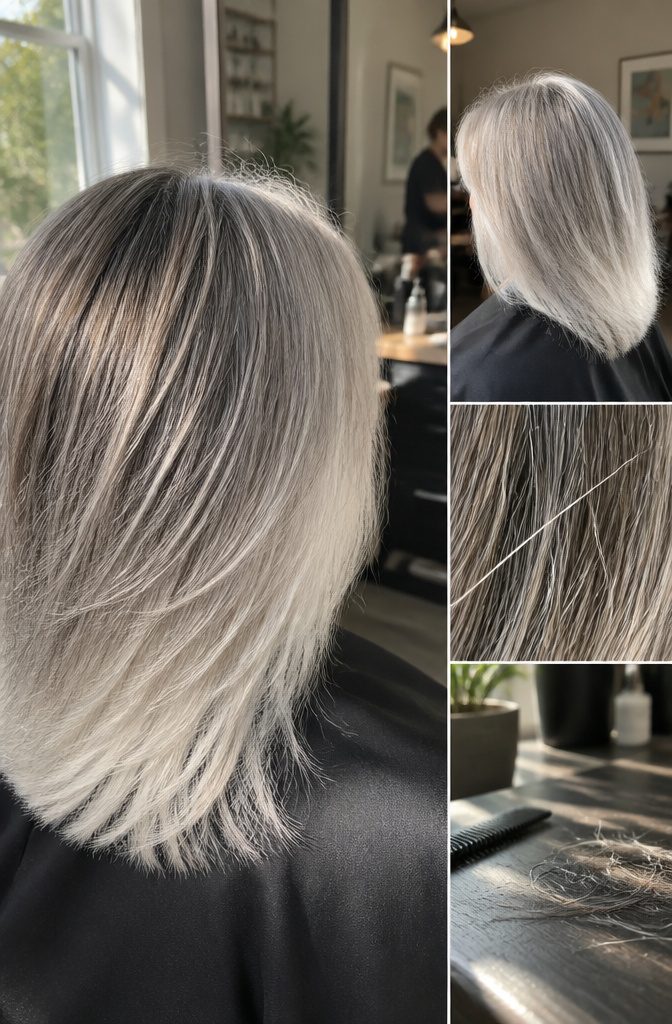
On a head of brown or black hair, the first white strands read as salt-and-pepper.
As the share of white climbs, the blend moves through steel, pewter and silver, then light gray, and finally white once few pigmented hairs are left.
The more white hairs in the mix, the lighter the overall shade looks, which is why two people with "gray hair" can look nothing alike.
Check a few individual strands in good light and you may find one that is pigmented at one end and white at the other.
Pigment production can change partway through the growth cycle, so part of the strand grows in with less color. I read those two-tone hairs as a sign the shift is underway.
What Speeds Up Graying
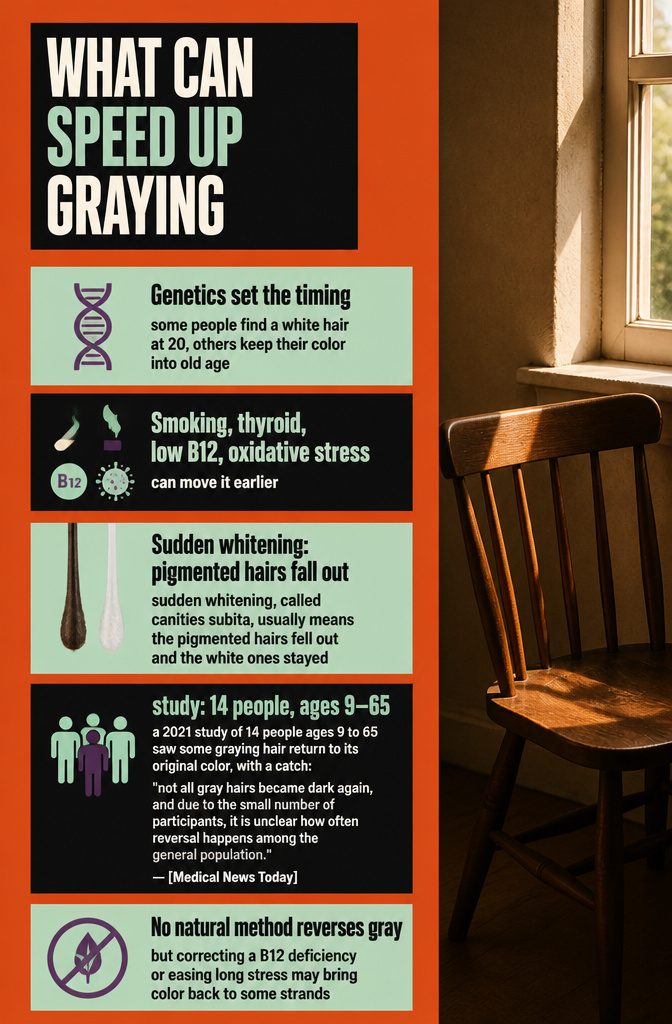
Genetics set the clock: some people find a white hair at 20, others keep their color into old age.
Smoking, thyroid problems, low B12 and oxidative stress can move it earlier. Sudden whitening, called canities subita, usually means the pigmented hairs fell out and the white ones stayed.
A 2021 study of 14 people ages 9 to 65 saw some graying hair return to its original color, with a catch:
not all gray hairs became dark again, and due to the small number of participants, it is unclear how often reversal happens among the general population.
Treat that as a maybe, not a plan. No natural method reverses gray, but correcting a B12 deficiency or easing long stress may bring color back to some strands.
Texture and Care
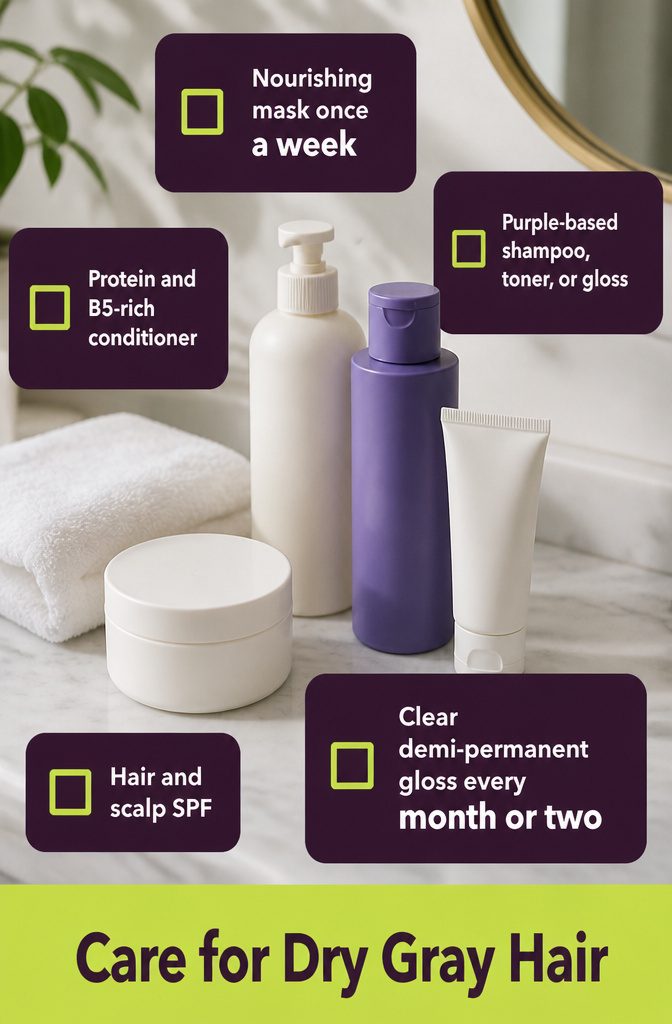
Gray and white strands lose elasticity, and the sebaceous glands slow down, so less natural moisture coats the hair.
That is why it so often feels dry, wiry or brittle. Here is what I’d put in the routine:
- Use a nourishing mask once a week to keep the fiber hydrated.
- Pick a protein and B5-rich conditioner for the coarse, springy feel.
- Switch in a purple-based shampoo, toner or gloss to cancel yellow, and run an anti-yellowing treatment on a regular schedule.
- Wear SPF on your hair and scalp. Sun exposure is the number one cause of yellowing, and gray hair is more prone to UV damage.
- Book a clear demi-permanent gloss every month or two for shine without changing your shade.
Cover Gray at 30% or 50% White
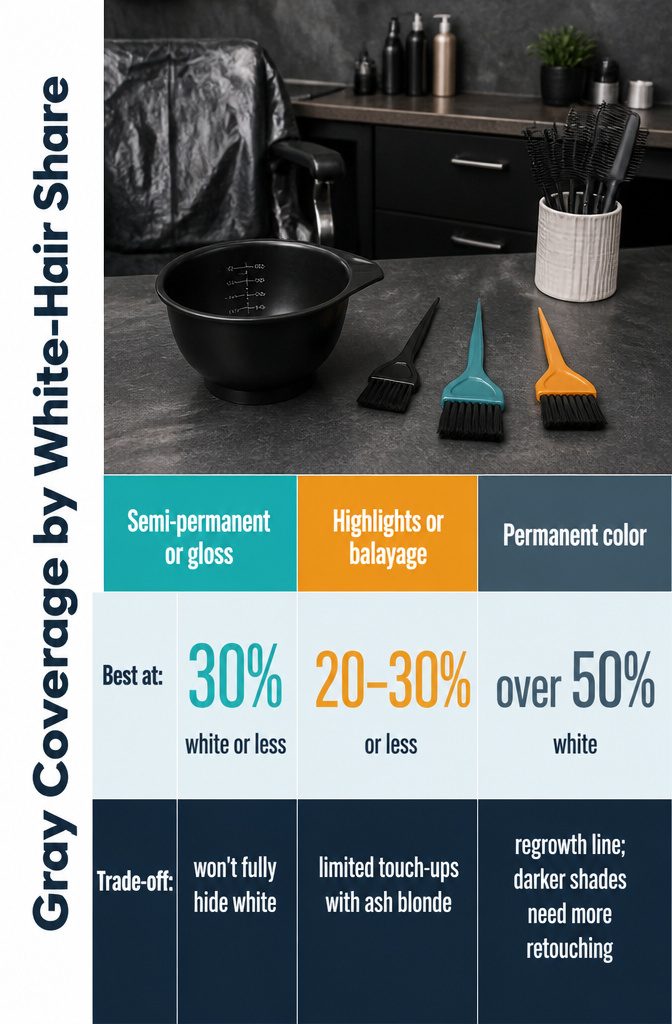
Semi-permanent color or a gloss suits a head that is 30% white or less.
It may blend the white in, but it won’t fully hide it, and a soft fade isn’t guaranteed. Highlights or balayage work at 20–30% or less, and ash blonde streaks blend best, with fewer touch-ups.
Intensive tinting covers up to half of gray hairs. Past 50% white, permanent color is the likely winner.
| Option | Best at | Upkeep trade-off |
|---|---|---|
| Semi-permanent or gloss | 30% white or less | Won’t fully hide white |
| Highlights or balayage | 20–30% or less | Limited touch-ups with ash blonde |
| Permanent color | Over 50% white | Distinct regrowth line; darker shades need more retouching |
To embrace the white instead, tone it, gloss it, or try a temporary rinse like Roux Fanciful in True Steel or Silver Lining.
How Pigment Works
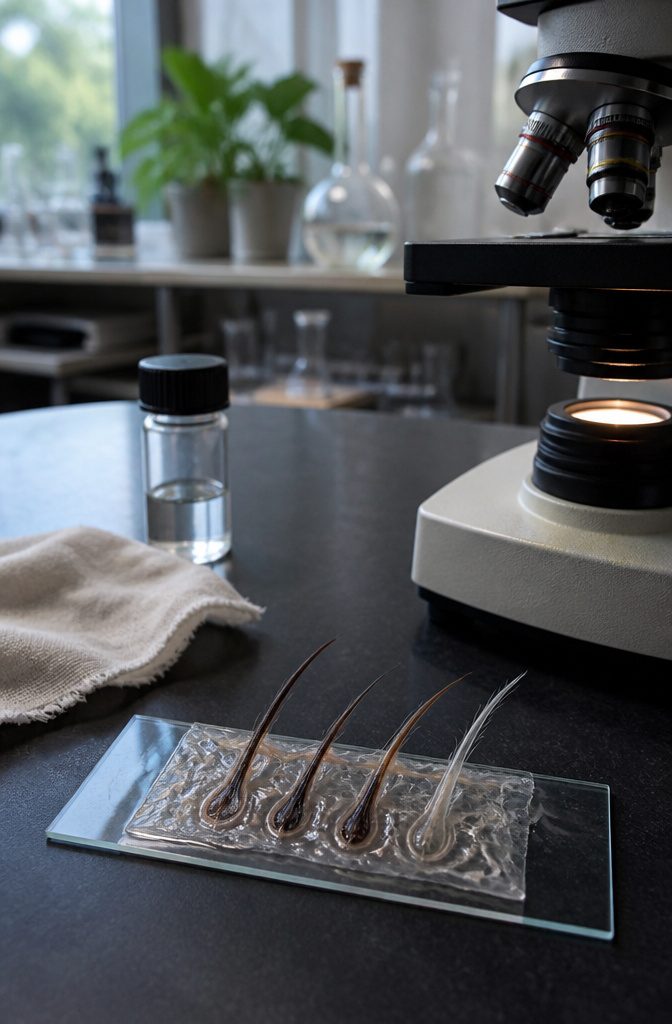
Every strand grows from a follicle, and inside that follicle sit melanocytes, cells that inject melanin into the keratin as the hair forms.
Melanin comes in two types. Eumelanin gives brown and black tones, pheomelanin gives red and yellow, and the balance between them sets your natural shade.
Pigment goes in only while the hair is actively growing.
That anagen phase lasts several years. Catagen is a short transition of a few weeks, and telogen is a rest that runs around 1 year before the hair falls out.
Melanocyte stem cells restock the pigment cells for each new cycle. Each strand grows either pigmented or white, and once a follicle stops making melanin, the hair it grows is white and stays that way.
Why Hair Loses Color
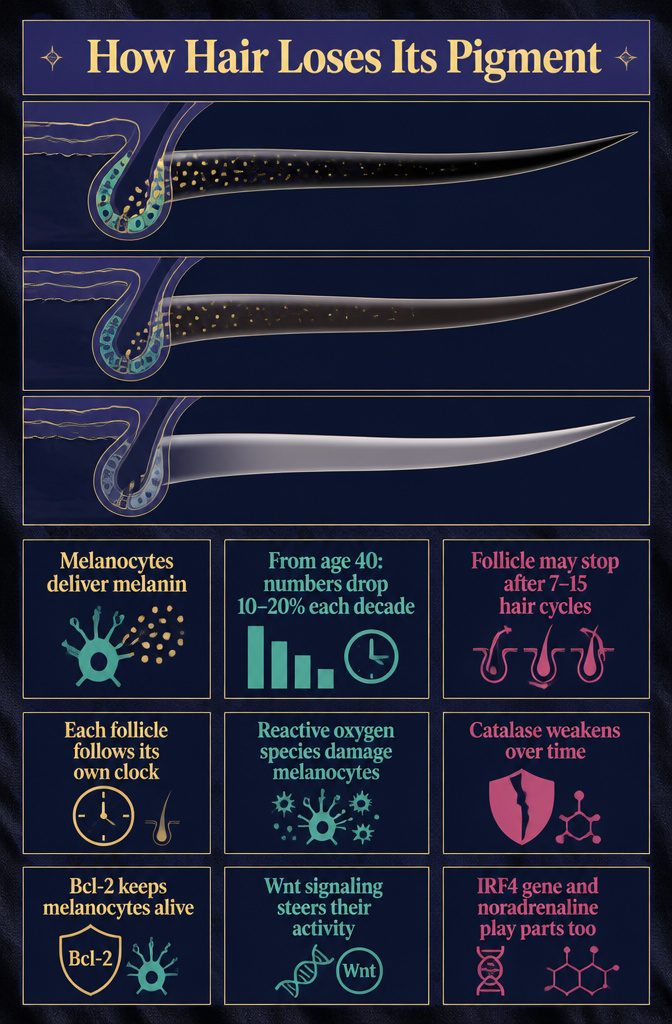
Melanocytes in the follicle inject pigment into each growing strand, and when they slow down, the strand comes in with less melanin or none. From age 40, melanocyte numbers drop 10–20% every 10 years.
A follicle can stop making melanin after 7–15 full hair cycles. Each follicle runs on its own clock, so pigment fades in some and carries on in others.
Cell damage drives much of it.
Reactive oxygen species harm melanocytes, and catalase, the enzyme that clears them, weakens over time. Bcl-2 keeps melanocytes alive, Wnt signaling steers their activity, and the IRF4 gene and the stress chemical noradrenaline play parts too.
When Graying Starts
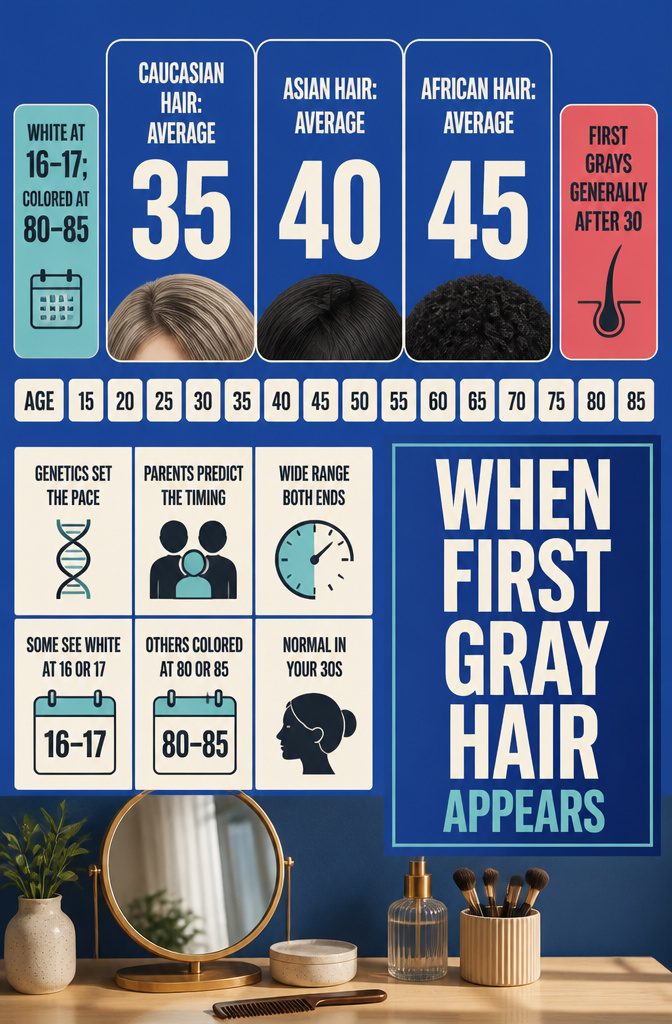
Yes, gray in your 30s is normal.
The first grays generally show up after 30, and they can arrive sooner. The average first white hair appears around 35 for Caucasian hair, 40 for Asian hair and 45 for African hair, so a strand at 33 or 36 is on schedule for many people.
Genetics set the pace.
Two people the same age can look nothing alike, one mostly white and the other barely touched, and their parents and grandparents usually predict which. If yours grayed before 30, I’d expect the same for you.
The range is wide at both ends. Some people see white at 16 or 17, and others are still largely colored at 80 or 85.
Frequently Asked Questions
What causes hair to turn gray?
Hair turns gray or white when the pigment cells in the follicle slow down or stop adding melanin to each new strand, mostly because of age and genetics. Gray is not a pigment of its own.
It is white strands mixed with pigmented ones, and your eye blends them. Cell damage from oxidative stress also wears down those pigment cells over time.
Can you reverse gray hair naturally?
Generally no, because no natural method reverses gray hair.
Color has returned to some strands when the cause could be fixed, such as a vitamin B12 deficiency or long-term stress. In a 2021 study of 14 people, some graying hair regained its color, but not every gray hair darkened again.
What age is normal for gray hair to start?
The first grays generally show up after 30, so gray hair in your 30s is normal. The average first white hair appears around 35 for Caucasian hair, 40 for Asian hair and 45 for African hair.
The range is wide: some people see white at 16 or 17, and others are still mostly colored at 80 or 85. If your parents grayed before 30, you will probably follow the same pattern.
Why is my hair strand half white?
Pigment production changed partway through that strand’s growth cycle, so one section grew in with less color than the other.
Each strand is either pigmented or white at any given point along its length. A two-tone hair usually means that follicle is in the middle of losing its color.
Why is gray hair wiry?
Gray and white strands lose elasticity with age, and the scalp’s oil glands slow down, so less oil coats the hair.
The result is hair that feels dry, coarse or brittle. A nourishing mask once a week helps keep it hydrated and softer.