Your natural texture decides which of these cuts is yours, and one test shows it: wash your hair, let it dry untouched, and see whether it stays straight or bends into waves or curls.
The list runs from a Blunt Bob to Tiny Silver Curls, with pixies, shags and afros in between, and plenty of these cuts hold their shape for 6–8 weeks between trims.
Pick a shape that works with your natural wave, curl or straightness, and styling shrinks to a few minutes; pick one that opposes it and every morning becomes a battle.
1. Asymmetrical Bob
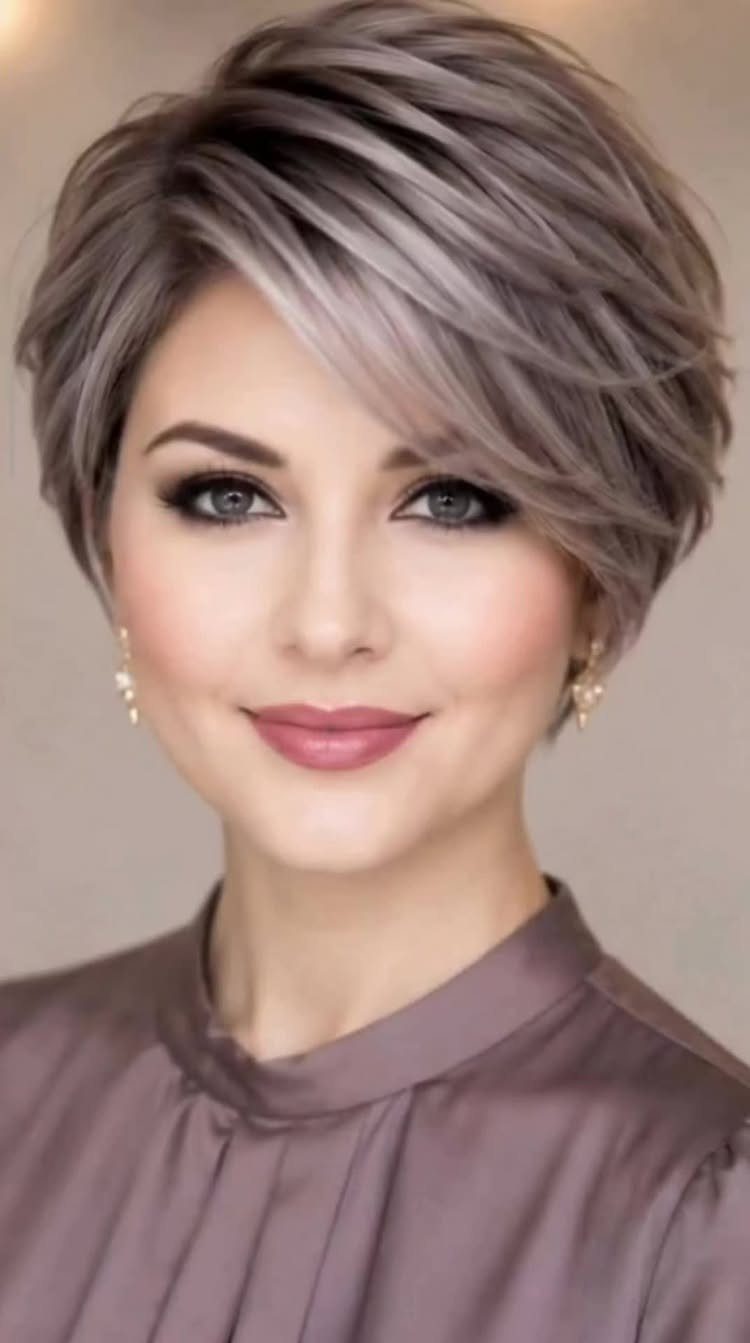
The angle comes from keeping one front side noticeably longer than the other, which gives the cut a deliberate lean rather than a straight frame.
Gray picks up the geometry better than most colors because natural silver has tonal contrast built in, so the line reads clearly.
Face-framing length on the longer side softens a square jaw or adds length to a round face. The short back keeps morning prep quick; most people smooth it with a flat iron or let it air-dry if the texture cooperates.
2. Side-Swept Pixie

A pixie that skips the severe crop and leaves enough length up front to sweep across the forehead.
The fringe lands somewhere between brow and temple, depending on where you part it, and the back stays short enough to clear the nape.
Gray makes the sweep more visible because there’s tonal contrast built into most natural silver, so the movement shows without needing product. Styling takes a minute with a round brush or your fingers and a dime-sized amount of cream.
Grows out gracefully if you decide to go longer; the fringe just gets heavier and you can pin it back.
3. Layered Bob
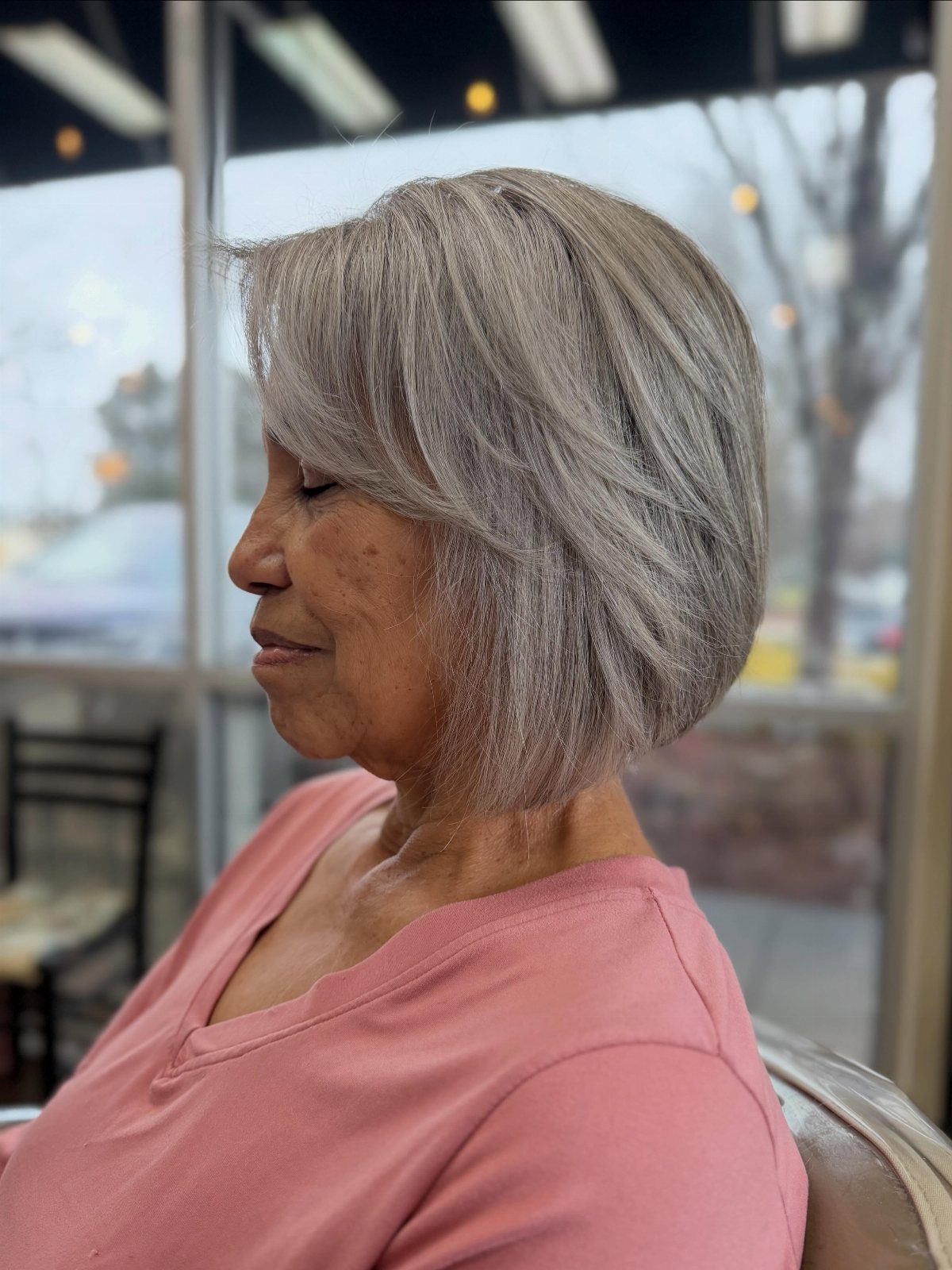
Layers carved through a bob give you lift at the crown and softer ends, which helps with thinned hair or when a blunt cut feels too flat. Layers can stay subtle or turn choppy, whichever suits the texture you’re after.
Gray hair often has a coarser texture that holds the layering well, so the cut keeps its shape between trims. A side part and a little mousse at the root add volume without much effort.
Once the layers grow past the original line, the shape flattens out, so book a trim before that happens.
4. Tiny Silver Curls
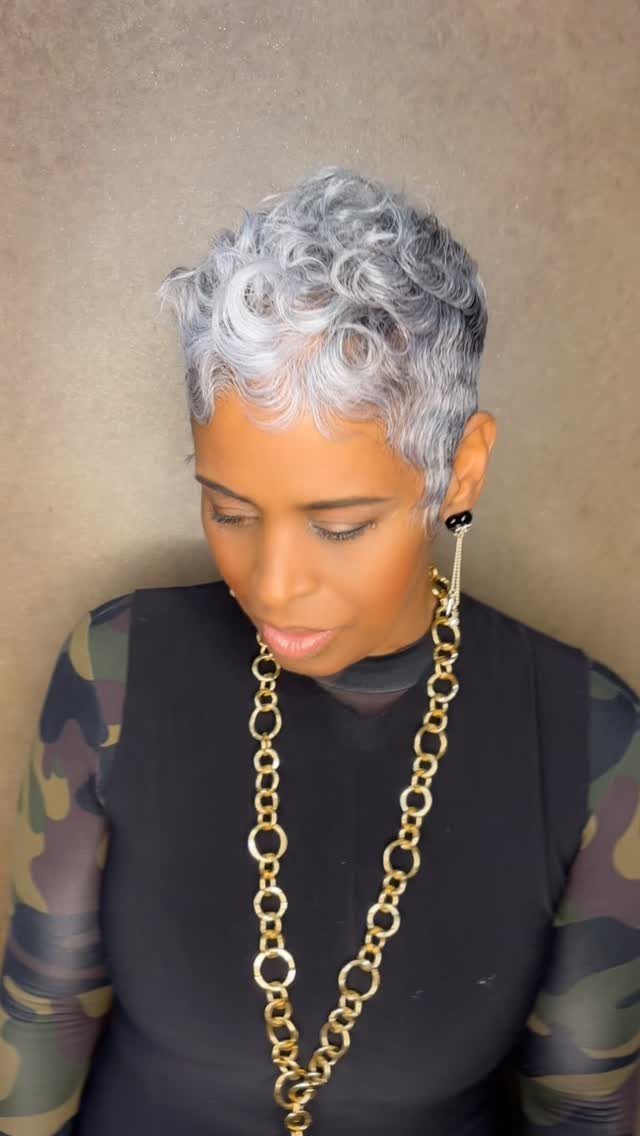
Natural silver curls worn short and tight, usually in a pixie length that shows off the curl pattern without weighing it down. The curls stay small and springy, which gives the cut a lot of texture and dimension.
Morning routine is minimal: most people refresh with water and a curl cream, then let it air-dry. Gray curls can be drier than pigmented hair, so a leave-in conditioner helps keep them soft.
Natural tight curl is the starting point here; a curling iron can’t fake the same density or bounce.
5. Bob
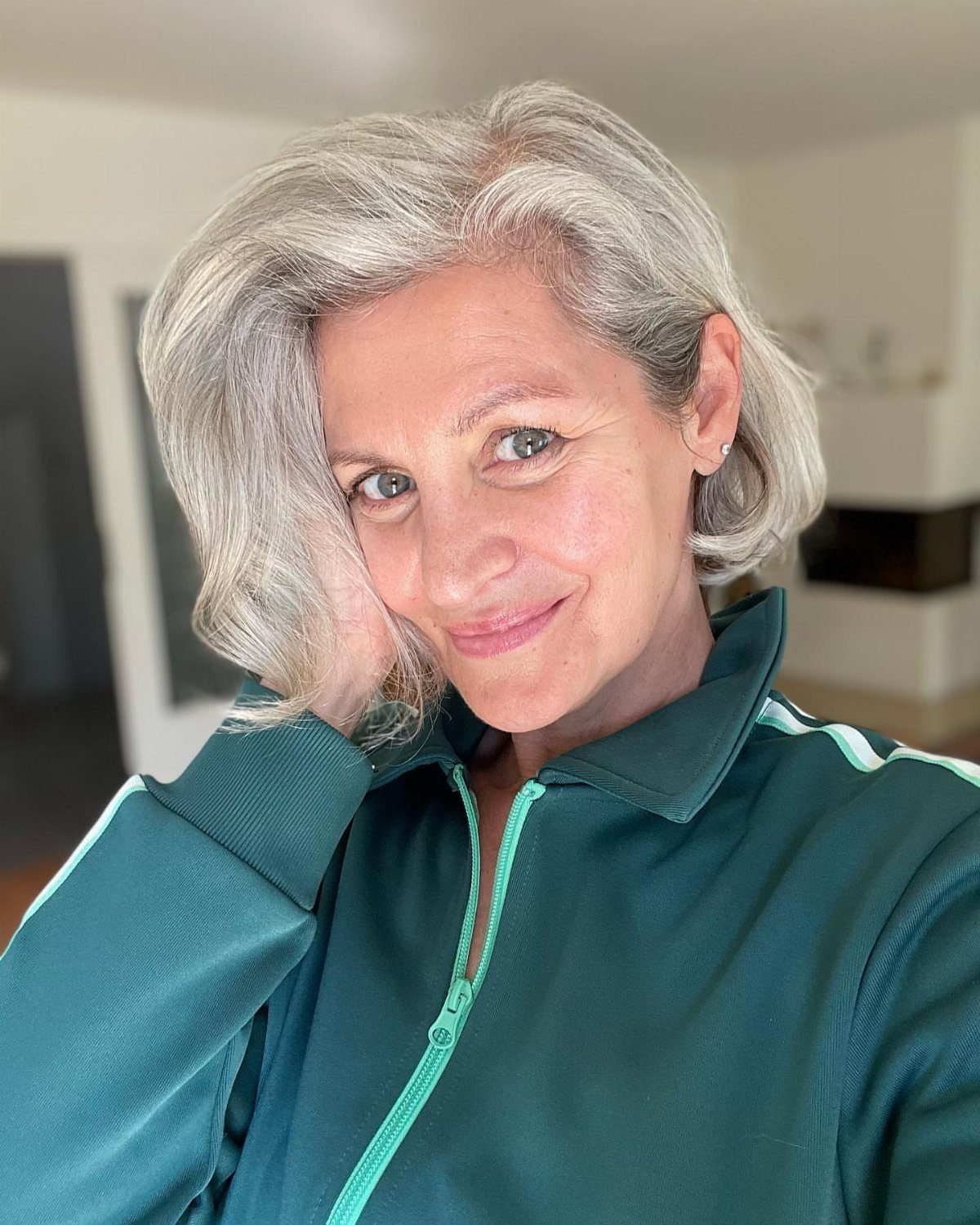
A short bob that ends anywhere from chin to just above the shoulder, worn with enough length to show off natural gray variation.
The cut works straight, wavy, or curly depending on your texture, and the silver tones give it more depth than a single flat color would.
Styling depends on what you’re working with: straight hair can be blown smooth or left to air-dry, waves take a diffuser or a quick scrunch with mousse, curls need a leave-in and a gentle shake.
The bob keeps enough length to tuck behind your ears or pin back when you’d rather have it off your face.
Ends go uneven as the bob grows, and a trim evens them out again.
6. Cropped Gray Cut
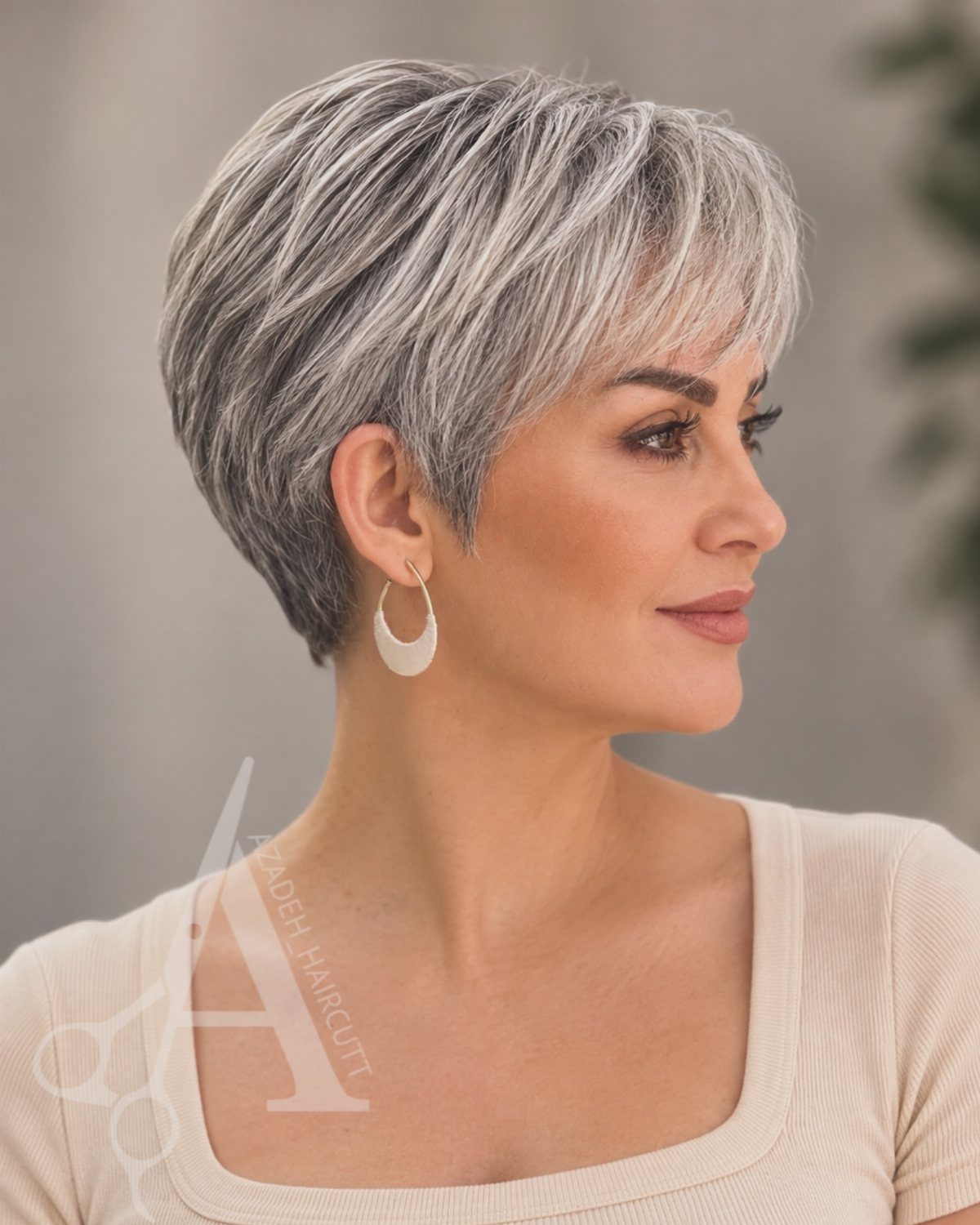
A short, slightly layered cut that puts gray front and center without asking much in return. The length hugs the head, with just enough on top to sweep to one side or let it fall where it wants.
Natural texture shows through, which means less time with a blow dryer and more reliance on how your hair dries on its own. A light styling cream smooths any frizz without flattening the shape.
This suits people who want a low-maintenance cut that still looks finished.
7. Salt-and-Pepper Curls
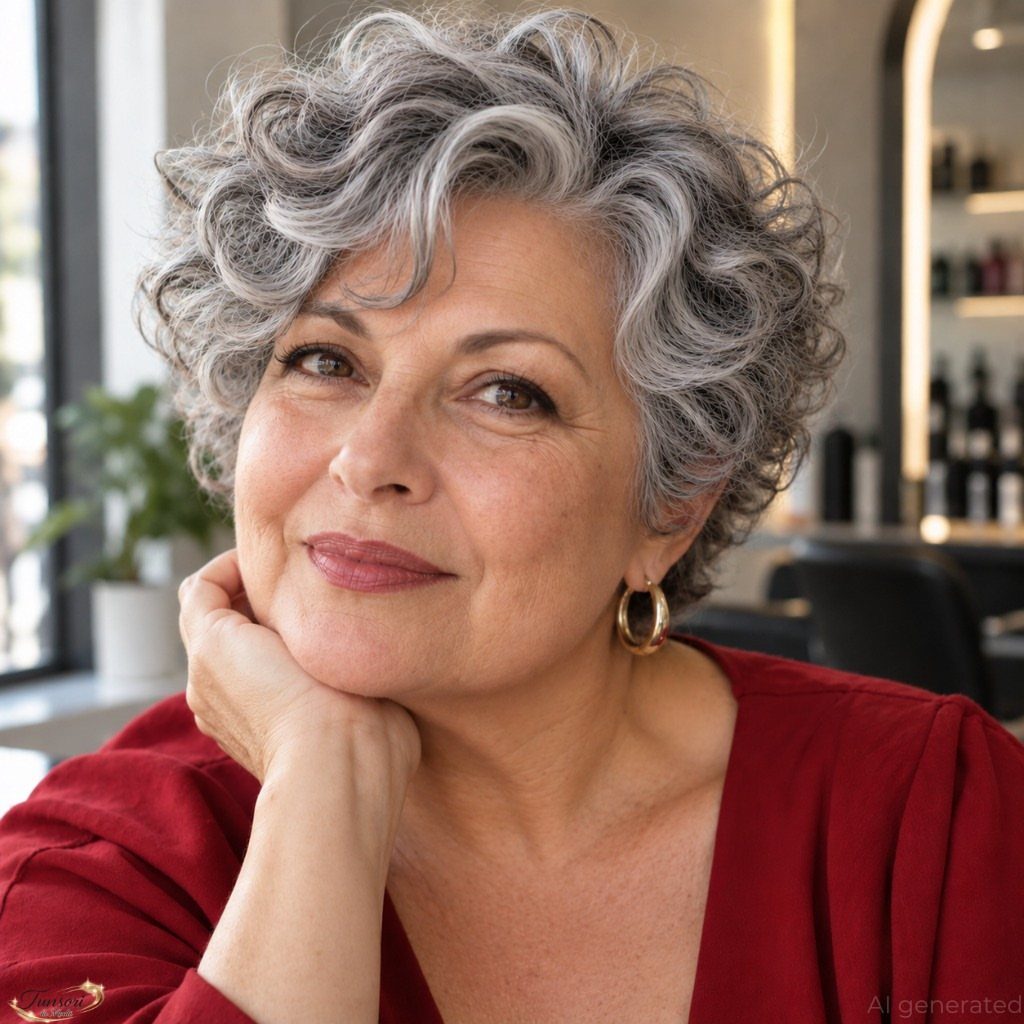
Dark and silver strands twisting together in the same small curls give this cut its depth. Short length keeps the pattern tight and lets the contrast between tones show at every angle.
Curly hair that carries gray tends to run dry, so a leave-in conditioner after washing is worth the extra minute. Scrunch it in, then let the curls dry without brushing.
I’d skip any dye that flattens the two tones into one; the mix is what makes this version work.
8. Blunt Bob
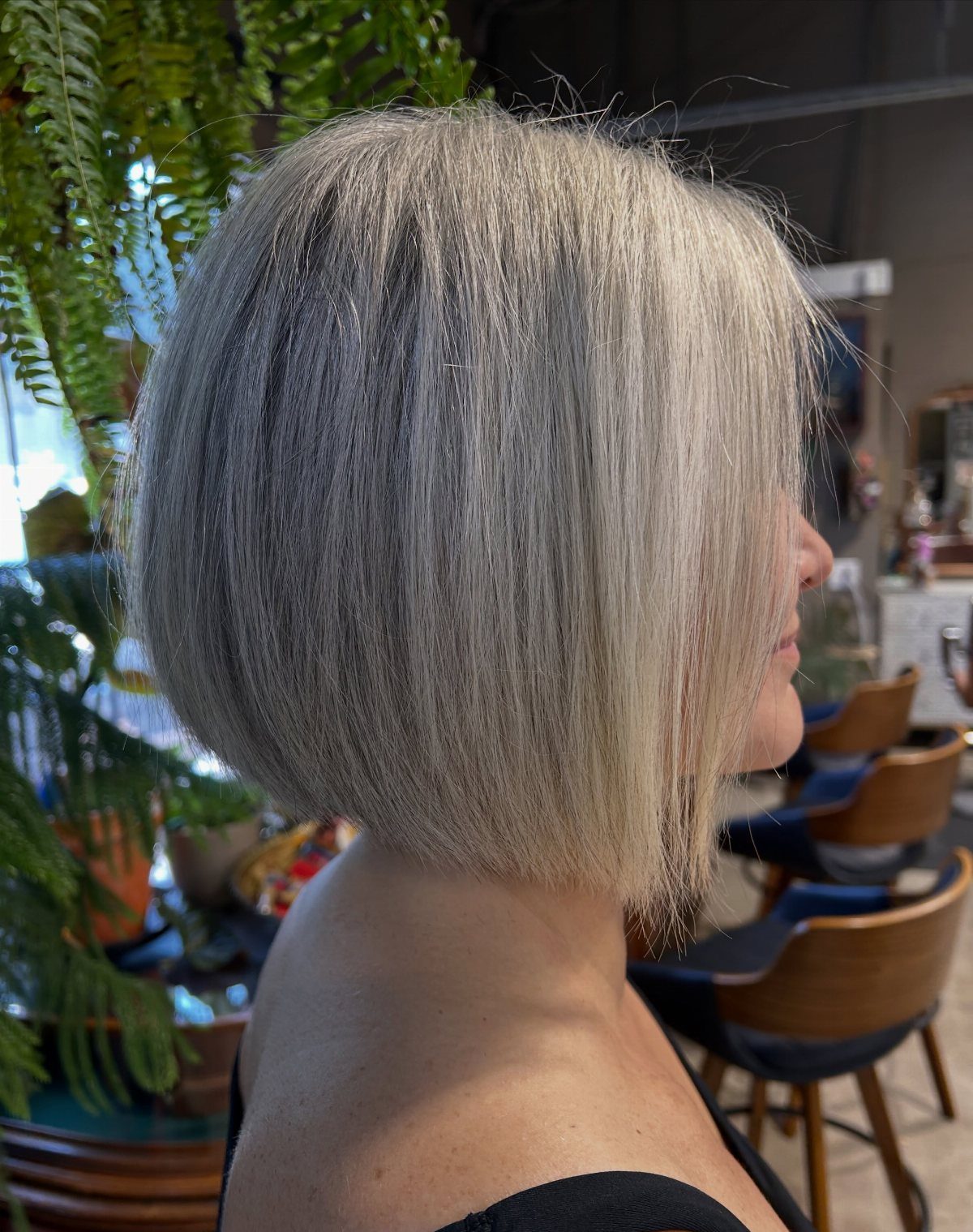
Precision is the whole appeal of a blunt bob: one straight, clean edge, with no layers to soften it. Gray hair adds quiet variation inside that sharp outline, so the cut never looks stiff.
Straight hair suits it best, and a flat iron or a quick blow-dry keeps the line crisp. If your jaw is strong, ask for the front pieces to be cut longer, since they frame the face and soften that line.
A blunt cut shows every split end, so trims matter more here than with a layered shape.
9. Afro
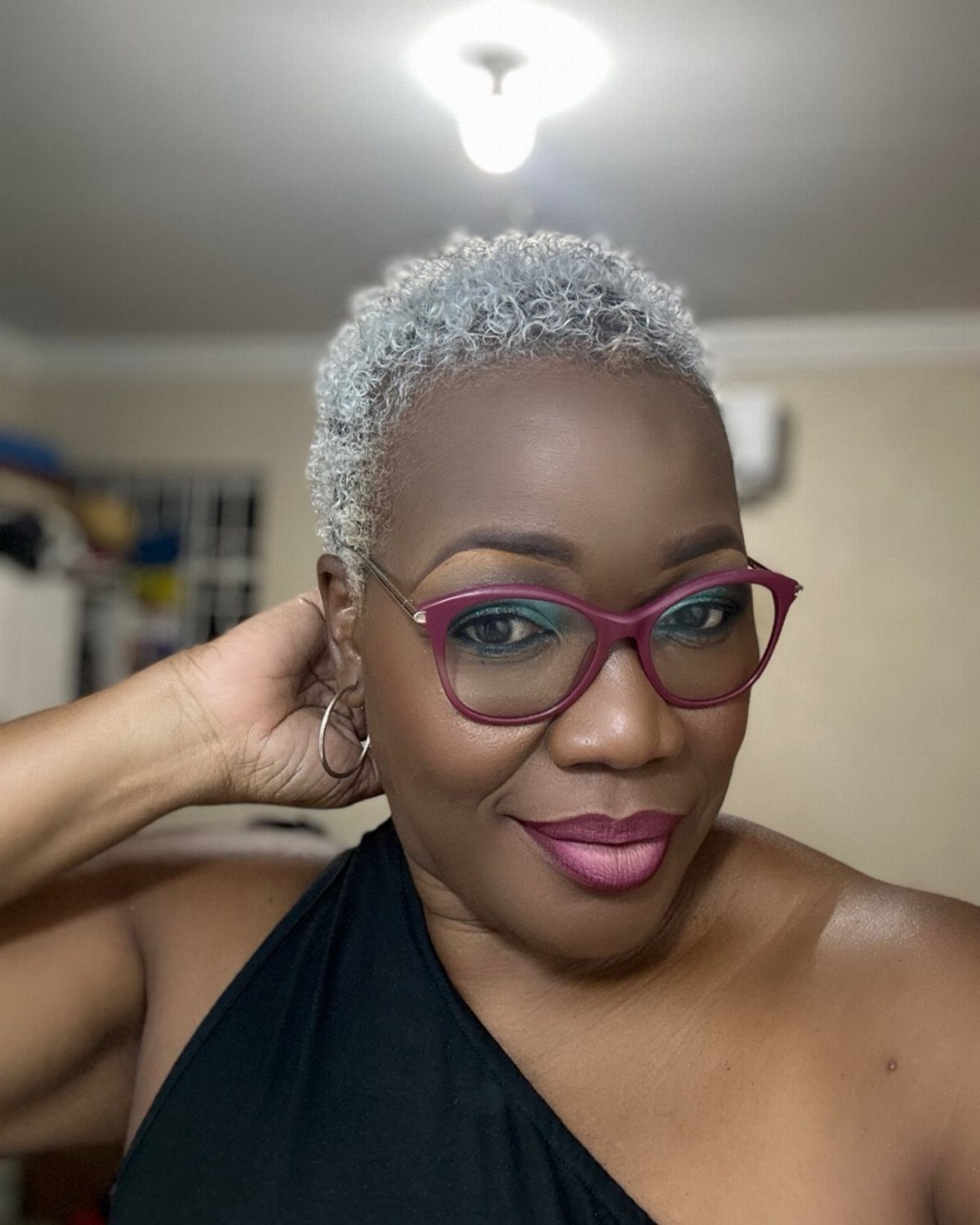
For silver, I think a short afro is hard to beat: pick the coils out into an even, rounded shape and the color does the rest.
Keep it close to the crown for a neat outline, or let it grow fuller for more presence around the face.
A wide-tooth pick lifts the shape without pulling the coils apart. Moisture matters, since gray texture can feel drier, so a light leave-in before picking helps.
Frames like bold glasses sit well against the round silhouette.
10. Gray Shag
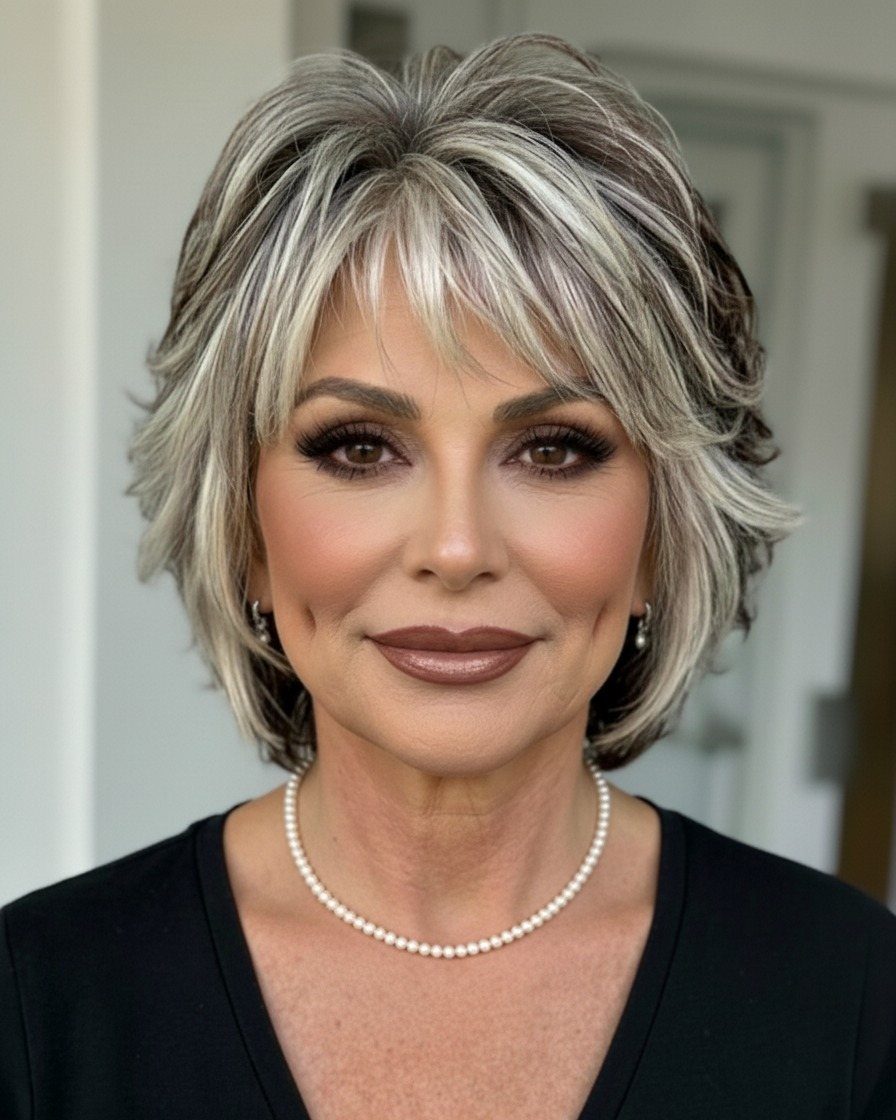
Layers do the work in a gray shag: choppy lengths through the crown and sides let silver and lighter strands catch the light at different depths. Wispy bangs finish the shape and soften the forehead.
Texture spray or a bit of mousse worked in with your fingers gives the layers lift. Air-drying with a scrunch works too if you have some natural wave.
I prefer it with the layers left slightly messy; a polished blowout works against the cut.
11. Short Pixie Bob
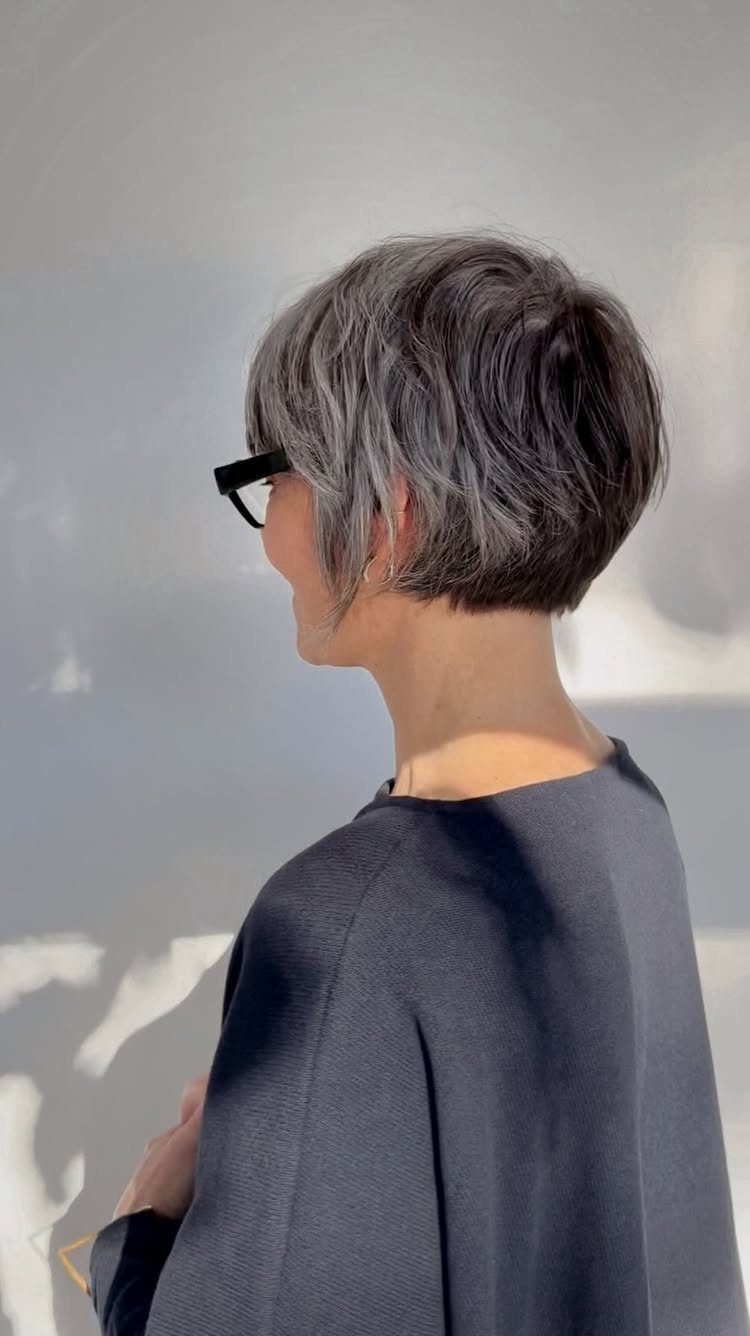
Part pixie, part bob: the back stays cropped close while the front keeps a fuller, longer length. That split gives you a short nape and a soft frame around the face in one cut.
A small amount of mousse at the roots builds body in the front, and a round brush shapes the ends under. The back needs almost nothing.
Ask your stylist to blend the 2 lengths with graduated layering, so the shift looks planned rather than abrupt.
12. Voluminous Pixie
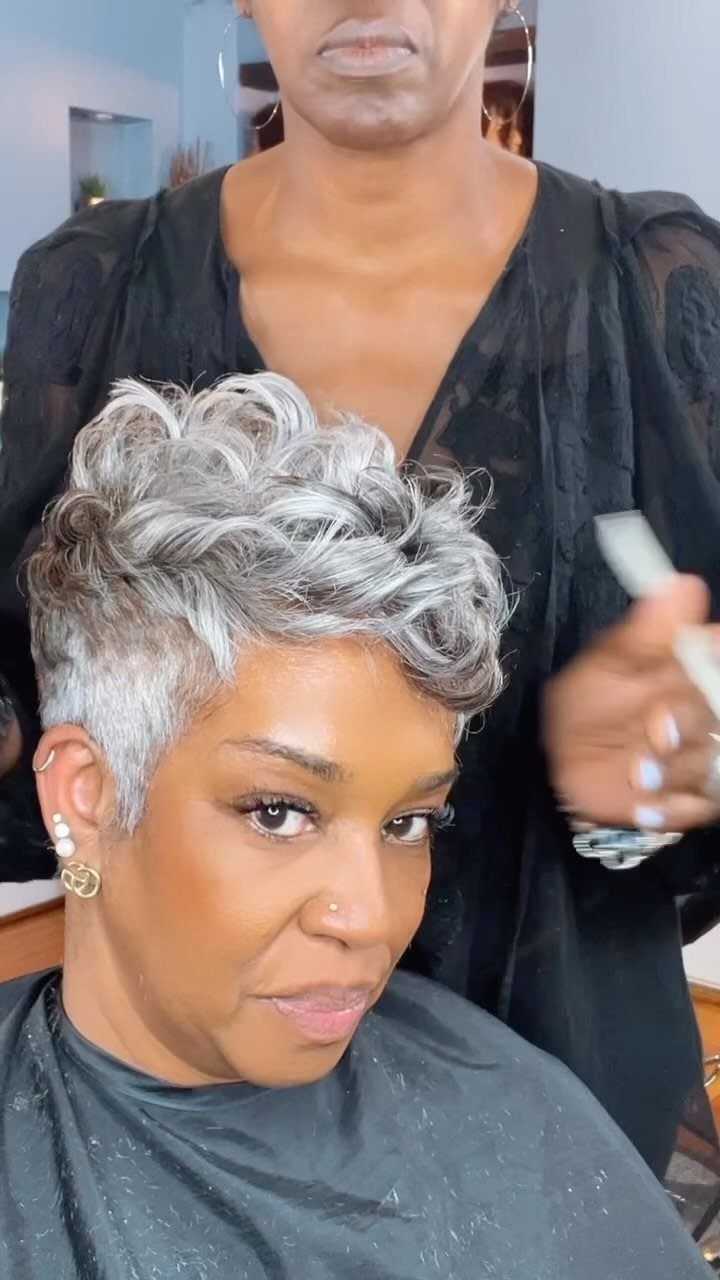
Longer pieces left on top are what give a voluminous pixie its fullness, while the sides and back stay short. The extra length lets curls or waves stack up into a rounded, lifted crown.
Dry it with your fingers lifting at the roots, and use a light cream to define the curls without weighing them down. Fine hair may need a volumizing mousse added at the root.
Trim every few weeks, because the top loses its shape quickly once it gets heavy.
13. Polished Short Gray Hair
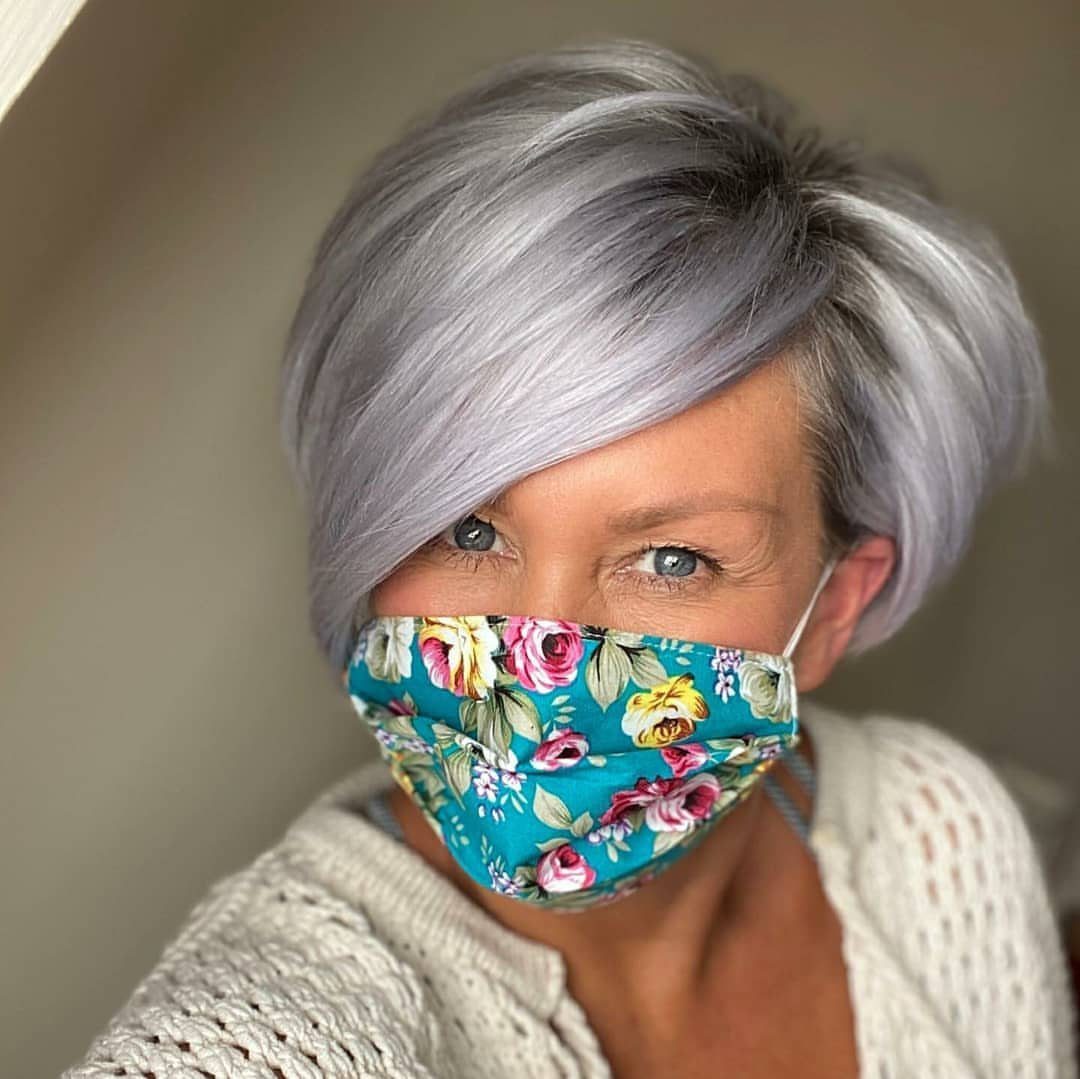
Smooth, side-swept and held in place: this is the short gray cut for anyone who wants it to look finished the second she walks out the door.
Silver reads best when the surface is sleek, because the shine does the work that color usually would.
A smoothing cream worked through damp hair, then a quick blow-dry with a paddle or round brush, sets the shape. A light hold product keeps the sweep from drifting by afternoon.
Straight to slightly wavy hair gets this look with the least effort. Very curly texture would need a flat iron every morning.
The cool girl “wet hair” look knows no bounds (read: no age or color limit). Sharon Stone shows off her short silver strands in a chic slicked back look.
— Vogue
14. Short Gray Afro
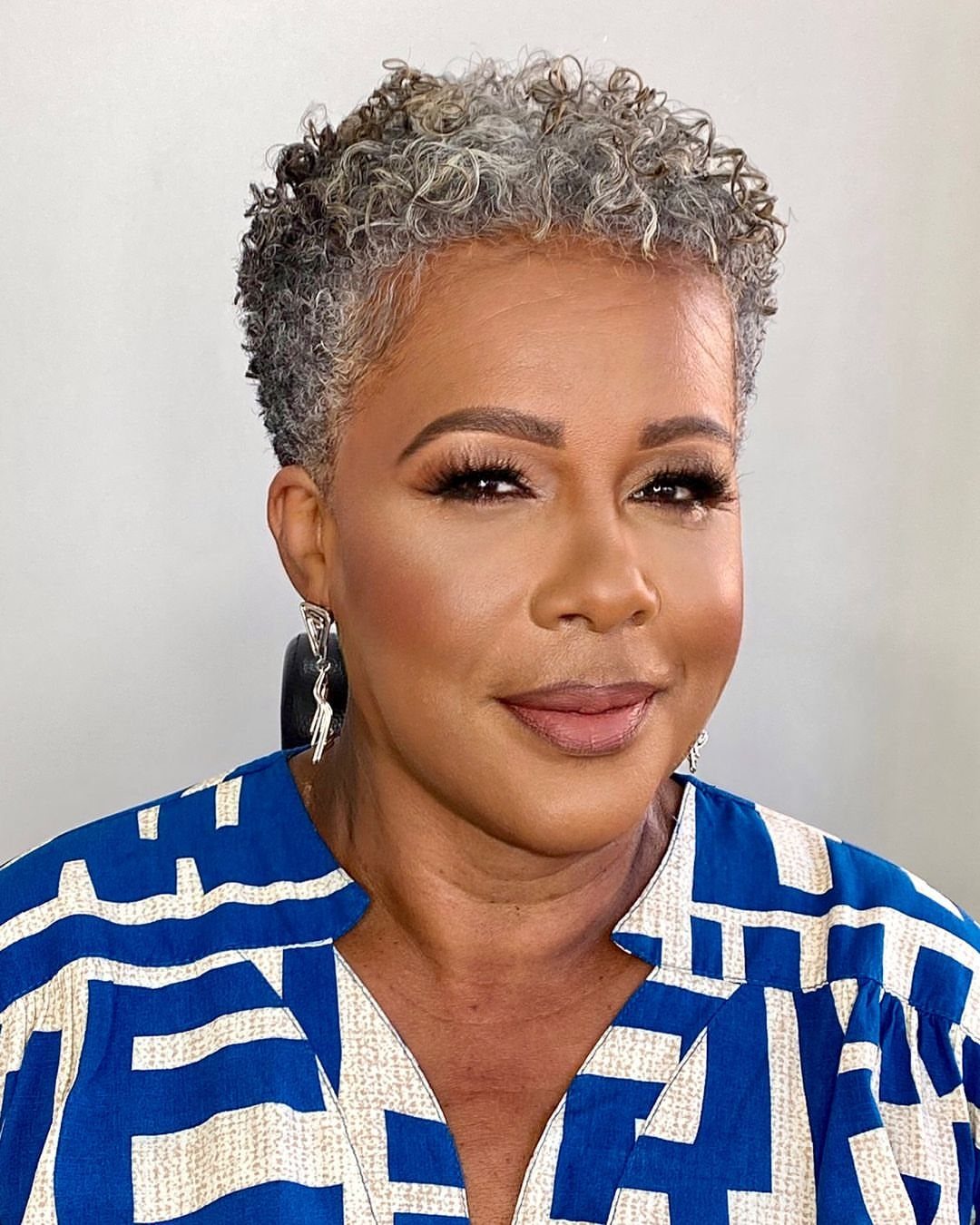
Short coils left to show their natural pattern, with gray running through them, make a cut that needs more trust in your texture than in any tool. Nothing about it is forced into shape.
Moisture is the main job.
Work a leave-in conditioner through damp hair, then lift the roots with a pick so the outline stays even and round. Gray strands can feel drier than pigmented ones, so I wouldn’t skip that step.
Ask your stylist to shape the perimeter and leave the length on top alone; that keeps the volume without a heavy cut.
15. Textured Gray Bob
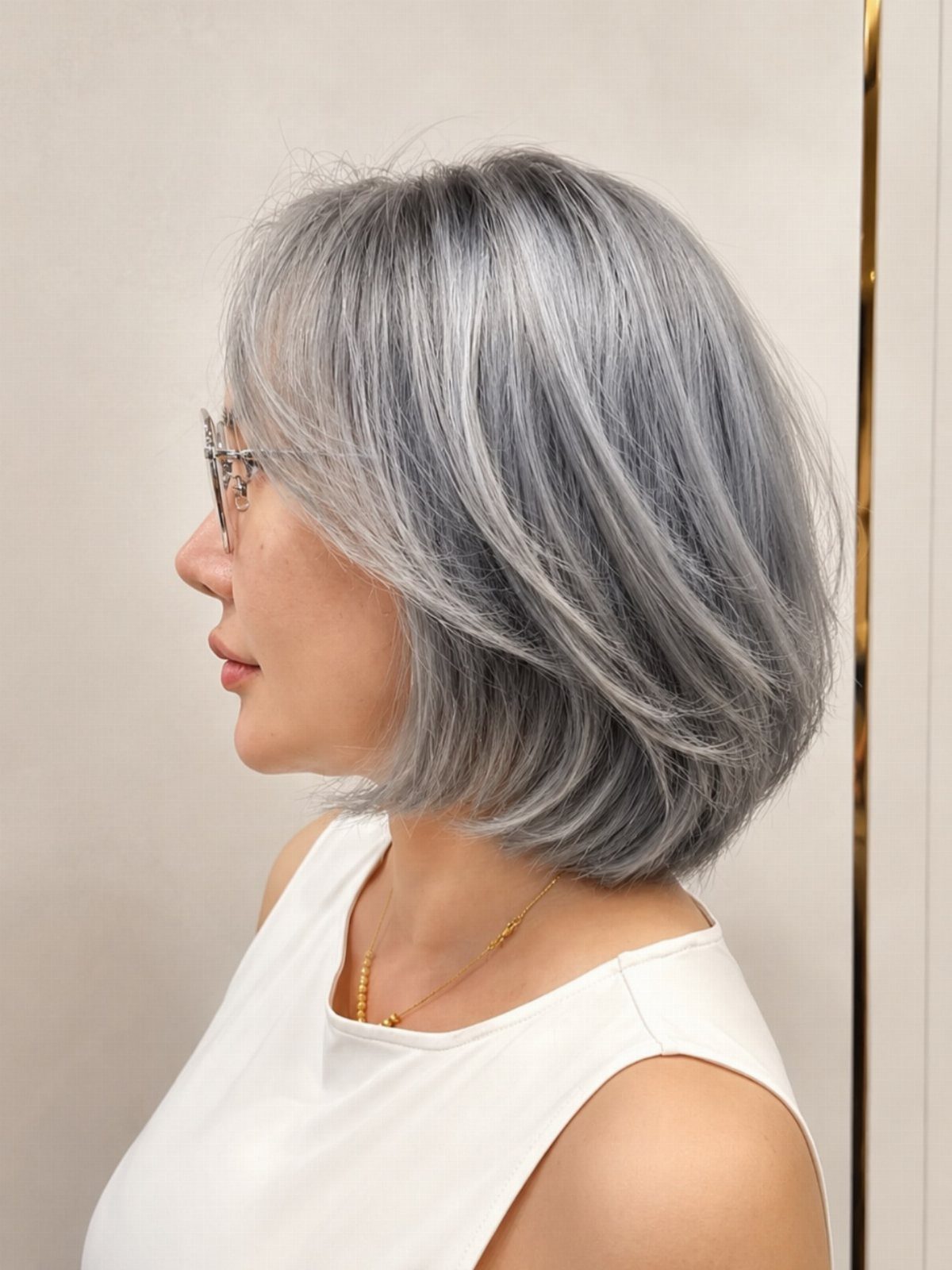
Feathered, texturized ends are what separate this bob from a plain one: the edges break up softly, so the cut moves instead of hanging in one solid line.
Silver sits well in that finish because the light catches the uneven tips.
Fine hair gains the most, since the texturizing adds body at the ends. Rough-dry it, then rake in a little texture spray with your fingers.
Glasses work with the shape too, as the longer sides tuck behind the frames without bulk. Trim before the ends lose their feathering.
16. Rounded Curly Cut
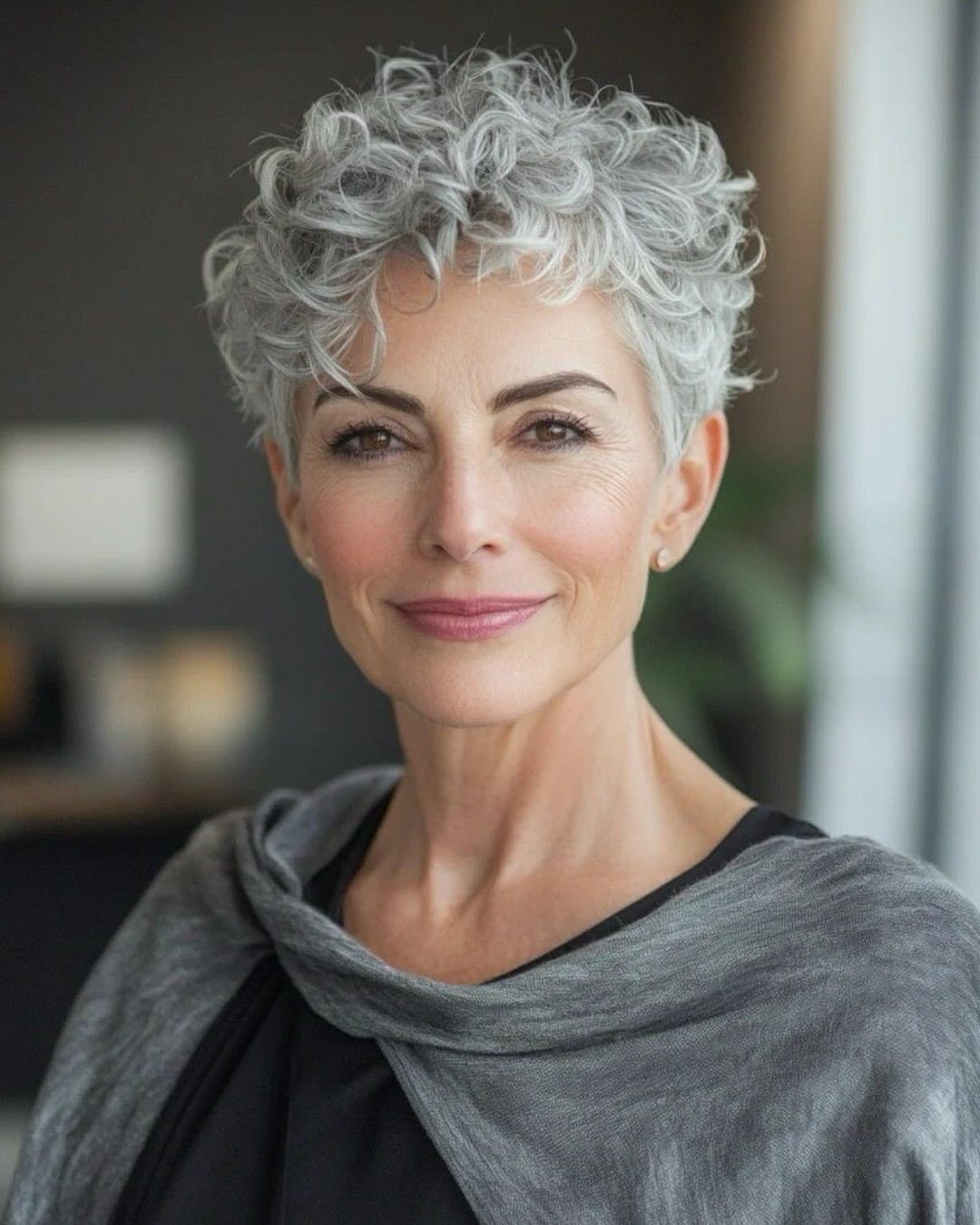
Ashy gray curls cut into a full, rounded dome: that’s the whole look, and it flatters because every curl sits at roughly the same length. The outline does the framing for you.
Ask for even length all over so the curls stack into a circle instead of falling in layers. Shape it curl by curl, since every curl in a head of hair falls a little differently.
Curl cream on wet hair and a gentle scrunch define the pattern. Skip brushing once it’s dry; it turns the dome into frizz.
17. Side-Parted Bixie
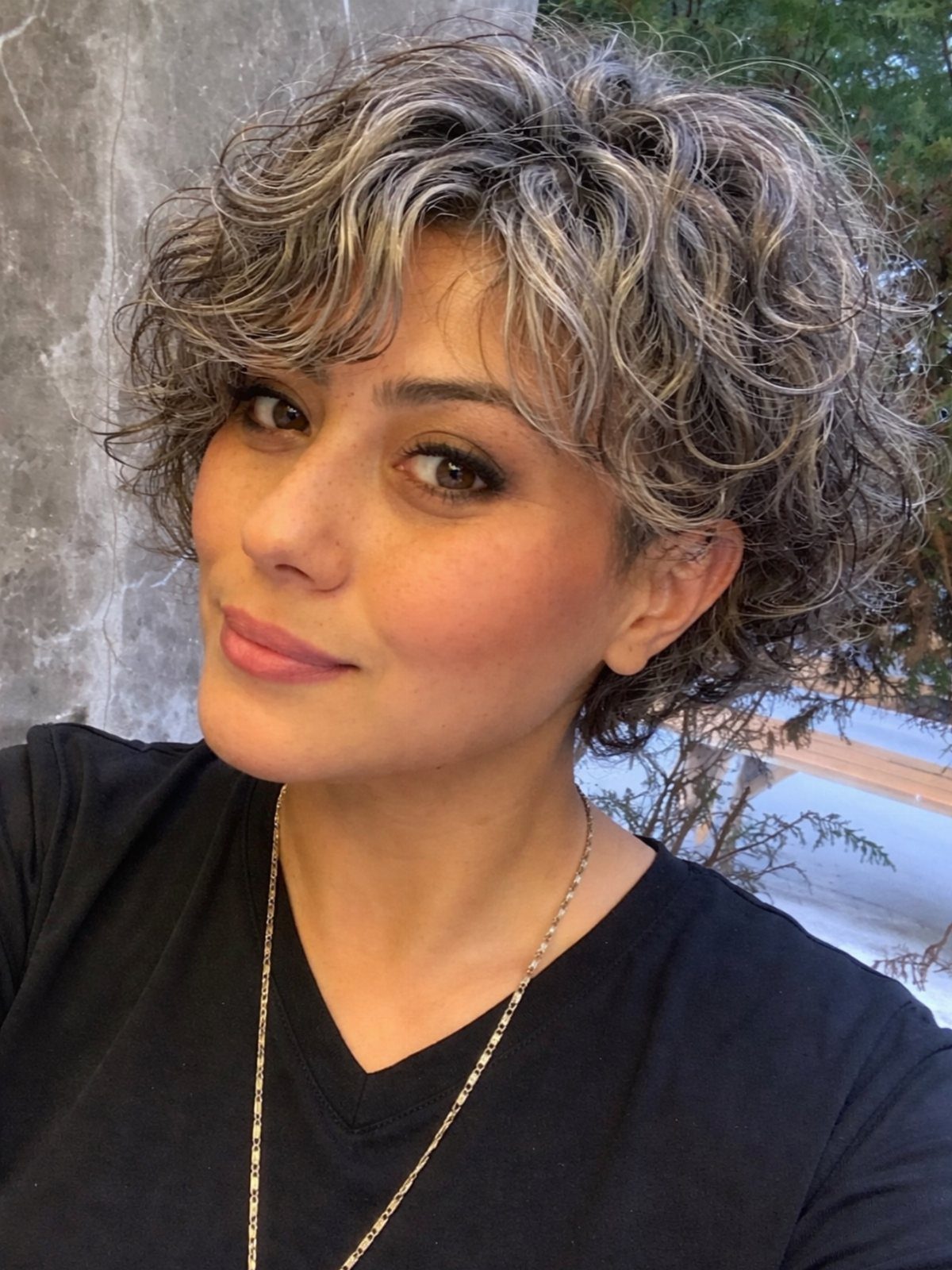
A bixie sits between a pixie and a bob, and the choppy version with a deep side part and side bangs is the one I’d bring to a stylist. The tousled ends keep curly gray hair looking intentional.
Part it on the side you naturally fall toward, then let the bangs sweep across. A small amount of curl cream and a scrunch is enough; diffusing on low heat adds lift if the roots lie flat.
Choppy layers hide uneven growth well, so trims can stretch a little longer than with a sharp cut.
18. Swept-Back Pixie
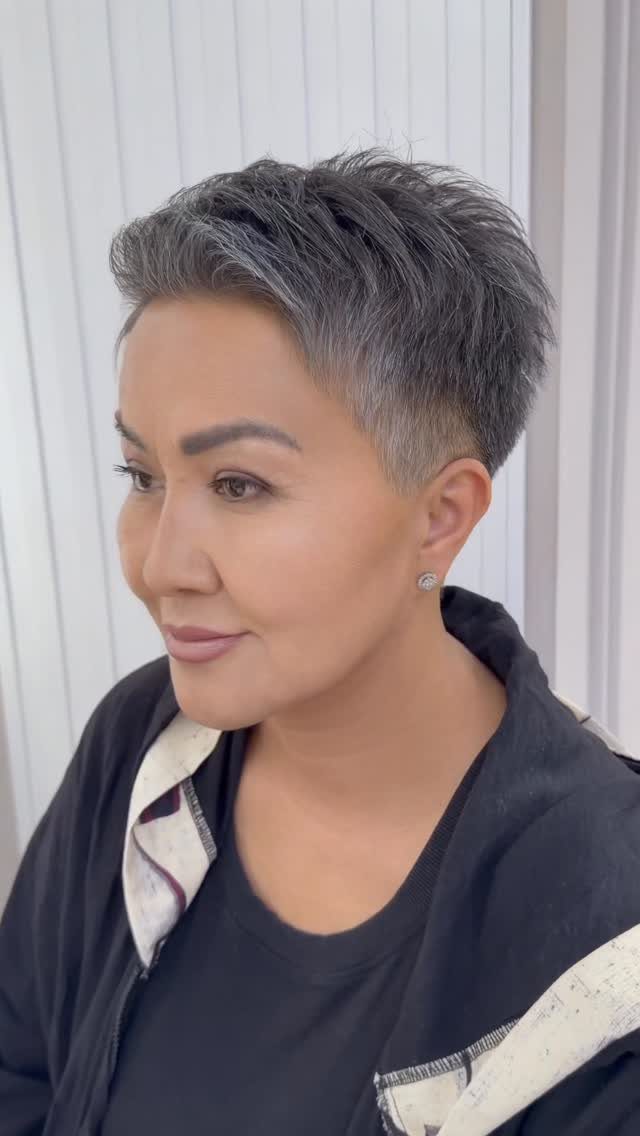
Swept straight back from the forehead, this pixie opens the face completely, so it suits anyone with strong cheekbones or who wants her eyes to lead. Lift at the crown keeps it from lying flat against the head.
Textured layers on top do the work. Blow-dry upward and back with your fingers or a small round brush, then press in a bit of paste or wax to hold the direction.
It takes about as long as brushing your teeth. On fine strands, a golf-ball-sized amount of volumizing mousse worked into damp roots before blow-drying helps the swept-back lift last past lunch.
19. Wavy Gray Crop
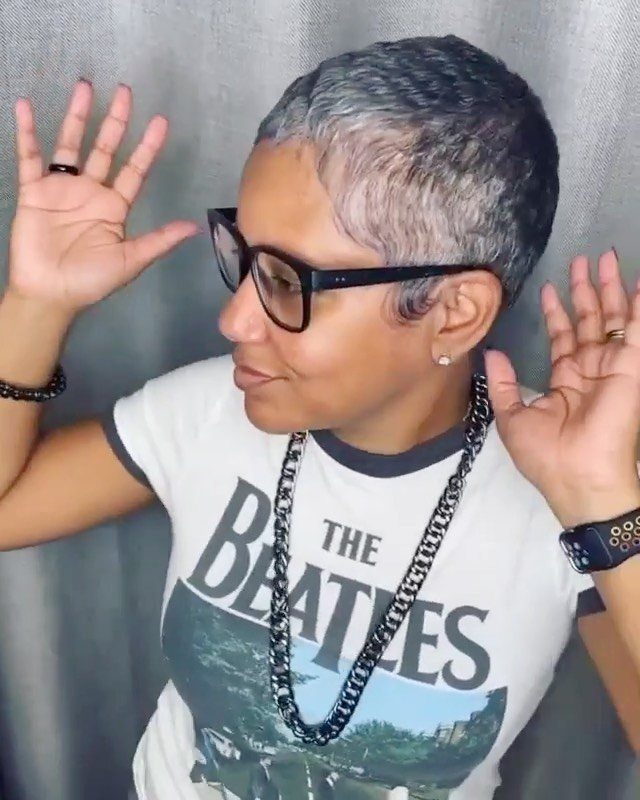
Loose waves on a cropped cut give short gray hair some movement without adding length. The waves do the styling, so the cut looks relaxed even on a day you barely touch it.
Work a light cream through damp hair and let it dry on its own, scrunching once or twice as it dries.
If the roots lie flat, a diffuser set to low heat will coax in some volume without disturbing the wave.
Ask your stylist to keep the sides and back close, since the wave shows most where the hair is short enough to bounce.
20. Gray Bob with Dark Streaks
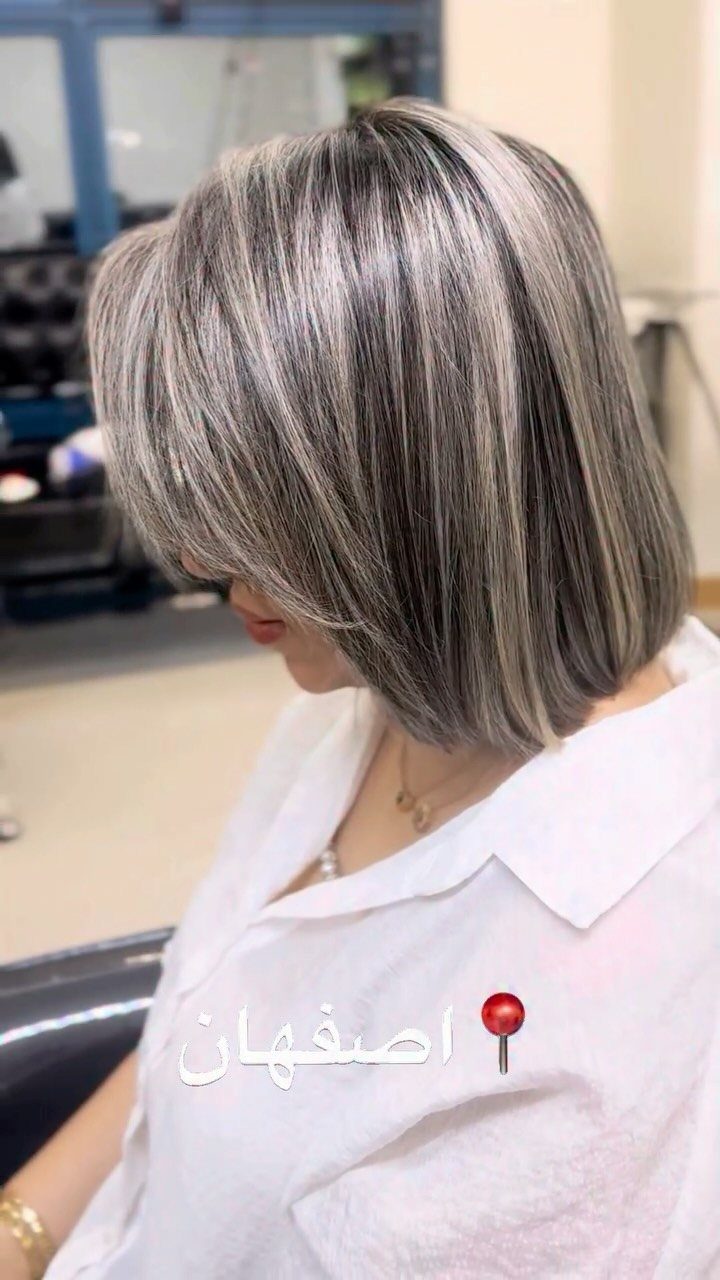
Dark streaks run through a sleek silver bob, which gives a straight cut contrast that plain gray can’t. Streaks that sit against the silver look intentional, and they stop the smooth surface from reading as flat.
Straight hair is what this one needs, so plan on a quick blow-dry or flat iron to keep the line smooth.
I’d ask the stylist to place the dark pieces first and tone around them, so the silver stays clean next to the color.
Touch-ups will be part of the deal, because the streaks are dyed in and regrowth shows against them.
Choosing Cut and Styling Effort
Start with your mornings, because they decide more than the photo does. Pick a number of minutes you’ll realistically spend on your hair, and choose a cut that fits inside it.
A shape that needs a blow-dry every day will wear on you faster than one that dries into place on its own.
Then choose your finish: polished or lived-in. Polished means smoothing and setting.
Lived-in means letting the hair do what it does. They call for different habits, so go with the one you’ll keep up.
Before you book, wash your hair and let it dry untouched. If it bends, waves, or curls, a cut that works with that pattern will take less effort than one that fights it.
Going short doesn’t automatically sign you up for a salon visit every 4 weeks; plenty of cuts keep their shape for 6–8.
Silver, white, charcoal and the leftover dark strands already give grey hair a built-in mix of tones, so even a plain shape looks layered and full of depth.
Keeping Silver from Yellowing
Purple shampoo is what I’d reach for to keep silver from turning yellow. The violet pigment cancels out yellow tones, so the gray stays cool and bright.
Leave it on only as long as the label says.
Too much can tint pale hair a dull lavender, and it can dry out strands that already run dry. Alternate it with a moisturizing shampoo rather than using it at every wash.
Gray Transition and Blending
You have 2 routes while the gray grows in: change the color around it, or cut away the line between old color and new growth.
Cutting very short is the quickest. It removes the dyed lengths and lets you stop coloring right away.
Blending keeps your length instead. Ask a colorist about gray blending, French blending, or herringbone highlights, all of which soften the line where roots meet dyed hair.
French blending is the low-maintenance pick for a brunette base, since the grays show through softly instead of being covered.
Choose the cut if you want the change done at once. Choose blending if length matters to you, and bring photos of your natural root color to the appointment.
Frequently Asked Questions
How to dress up grey hair?
Go for a sleek, polished finish. A glossy, smooth finish is what makes silver look dressed up, since the shine stands in for the color.
Hair that is straight or has a slight wave reaches this finish easily; tight curls would call for a flat iron every morning.
How to style short hair for women over 50?
Decide how many minutes you’ll realistically spend each morning, then pick a cut that fits inside that number.
Choose between a polished finish (smoothing and setting) and a lived-in one (letting the hair do its own thing), and go with the one you’ll actually keep up.
Wash and air-dry your hair with nothing added before the appointment, because any bend, wave or curl you see is the pattern to build the cut around, and that takes less daily effort than fighting it.
What are the best hairstyles for very thin hair?
A layered bob, a textured bob, or a voluminous pixie. A layered bob gives the crown some lift and softens the ends, which fixes the flat look a blunt cut can have.