No treatment has been proven to bring gray hair back to its original color, though pigment has returned on its own in some people. The color usually fades again, and it needs pigment cells that are still active.
In 2017, 14 lung cancer patients on immunotherapy saw their gray hair regain color. Fully white hair hasn’t responded.
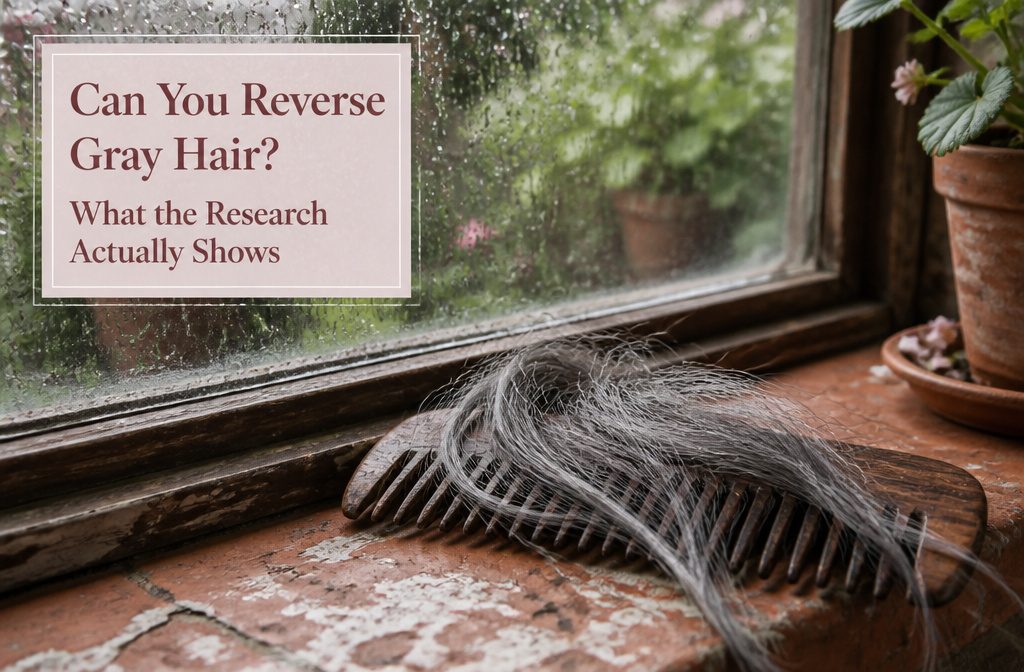
Can You Reverse Gray Hair?
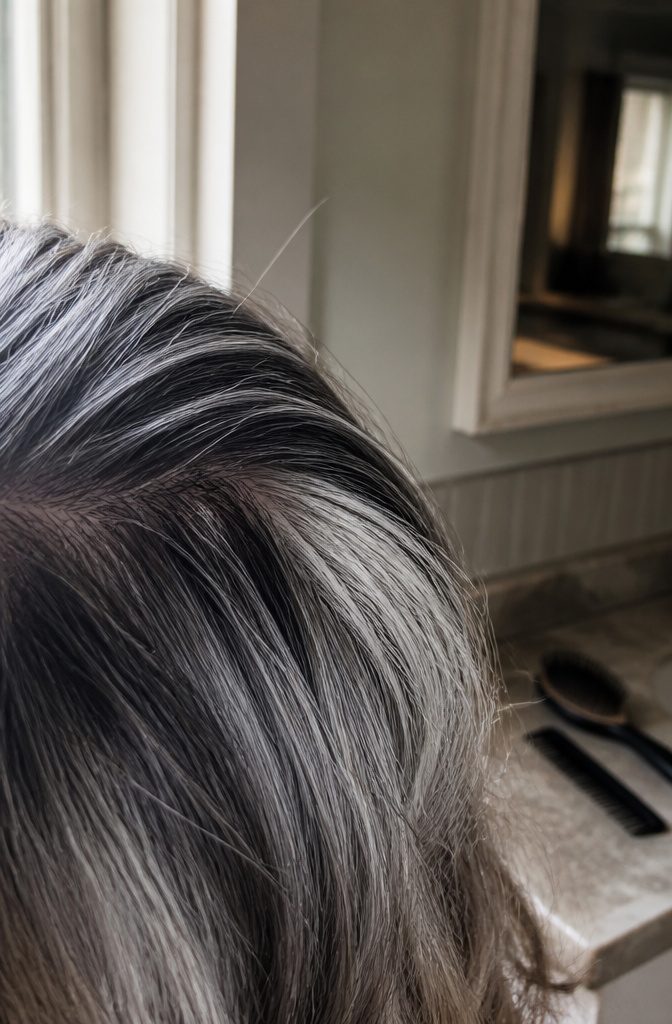
Gray hair sometimes regains pigment, but no treatment has been proven to reverse it reliably. Color has returned in cases where a stressful period ended or an underlying health condition was treated, and those reversals tend to be temporary.
They also seem limited to certain hairs or certain people, and they depend on melanocytes, the pigment-producing cells, still being active.
Fully white hair has shown no sign of re-pigmenting. Nobody has a validated way to predict who will respond, so I would not count on it.
The hair-care brand Arey claims hair that is 30% gray or less has the most potential. Treat that as a company claim, not a proven cutoff.
What Causes Gray Hair
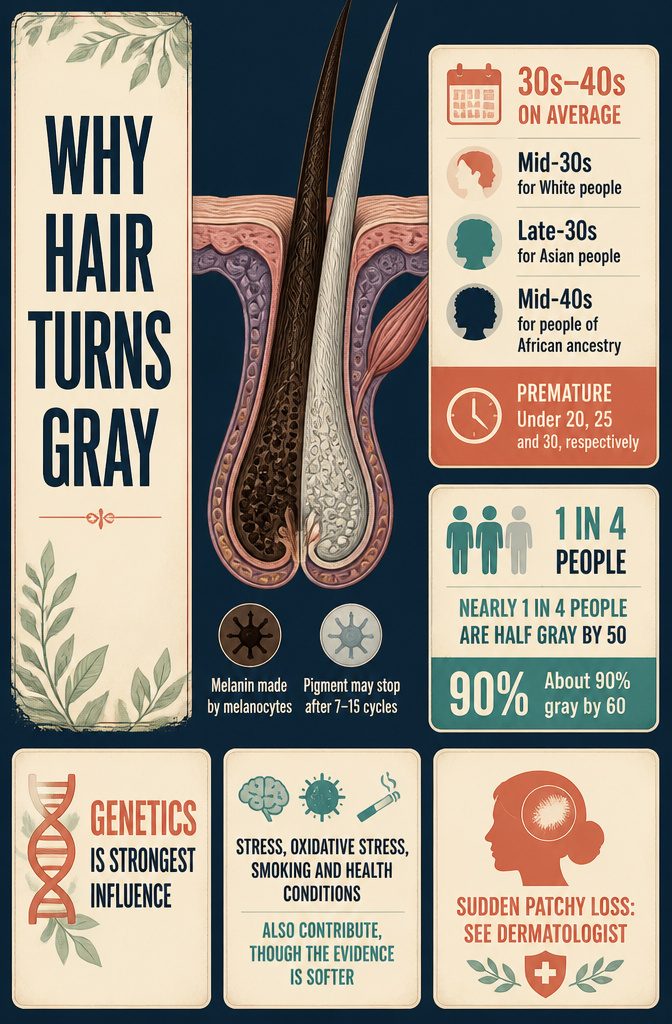
Hair color comes from melanin, made by melanocytes in the follicle, and graying (canities) follows when that pigment fades.
Melanocytes may stop producing after 7–15 hair cycles. Graying starts in the 30s–40s on average: mid-30s for White people, late-30s for Asian people and mid-40s for people of African ancestry.
Premature means under 20, 25 and 30, respectively. Nearly 1 in 4 people are half gray by 50, and about 90% are gray by 60.
Genetics is the strongest influence. Stress, oxidative stress, smoking and health conditions also contribute, though the evidence is softer.
True overnight graying is a myth; alopecia areata only mimics it by shedding colored hairs. See a dermatologist for sudden or patchy loss.
What the Evidence Shows

In 1972, a dermatologist described a 38-year-old man with three hairs that were white at the ends and black at the roots.
In 2017, 14 lung cancer patients on immunotherapy had their gray hair regain color, and at least 17 drugs have been reported to cause repigmentation as a side effect.
Luteolin, found in celery, broccoli, carrots, onions and peppers, reversed graying in mice at Nagoya University in 2025. Mice, not people.
Microneedling, lasers, exosomes and PRP all come with limited evidence. TODAY states the status plainly:
For now, there aren’t any approved treatments to reverse or stop hair from going gray.
— TODAY
Until human trials exist, I would not pay for a promise of reversal.
What You Can Do Now
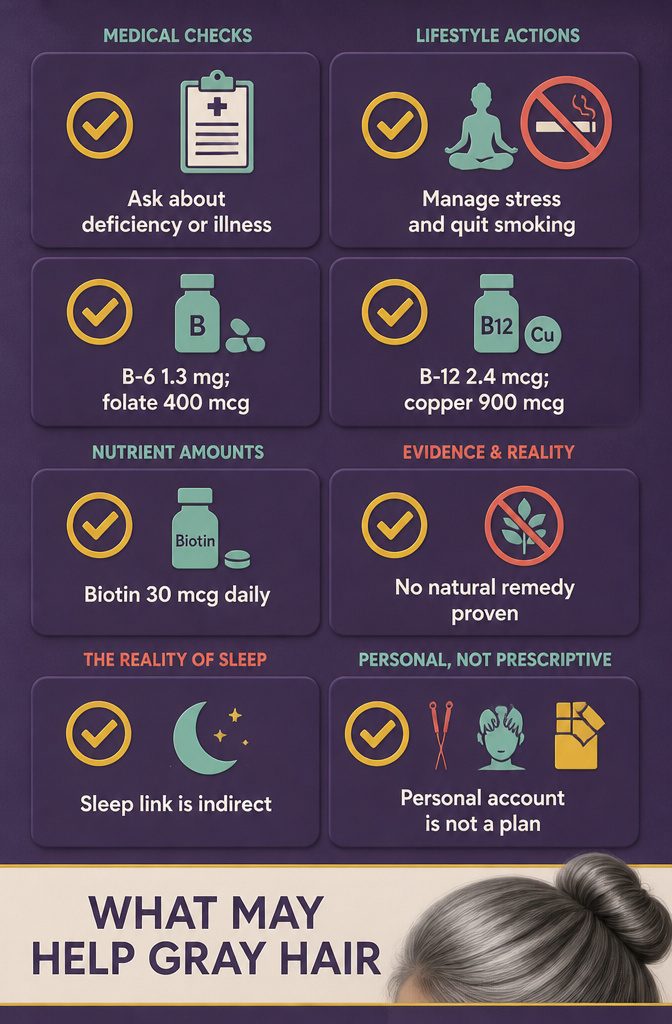
Medical guidance is short, and none of it reliably reverses ordinary age-related graying:
- Have your doctor check for a deficiency or an underlying condition.
- Manage stress and quit smoking. Both may help with premature graying.
- Adult daily amounts: B-6 1.3 mg, folate 400 mcg, B-12 2.4 mcg, copper 900 mcg, biotin 30 mcg.
- No natural remedy has been shown to slow graying.
- Sleep has no direct link to graying, only an indirect one through stress.
- One author’s personal account, not consensus: 10–20 minutes of scalp massage a day, acupuncture, heavy-metal testing, and 3 months without chocolate. I’d read it as one person’s experience, not a plan.
Serums and Supplements
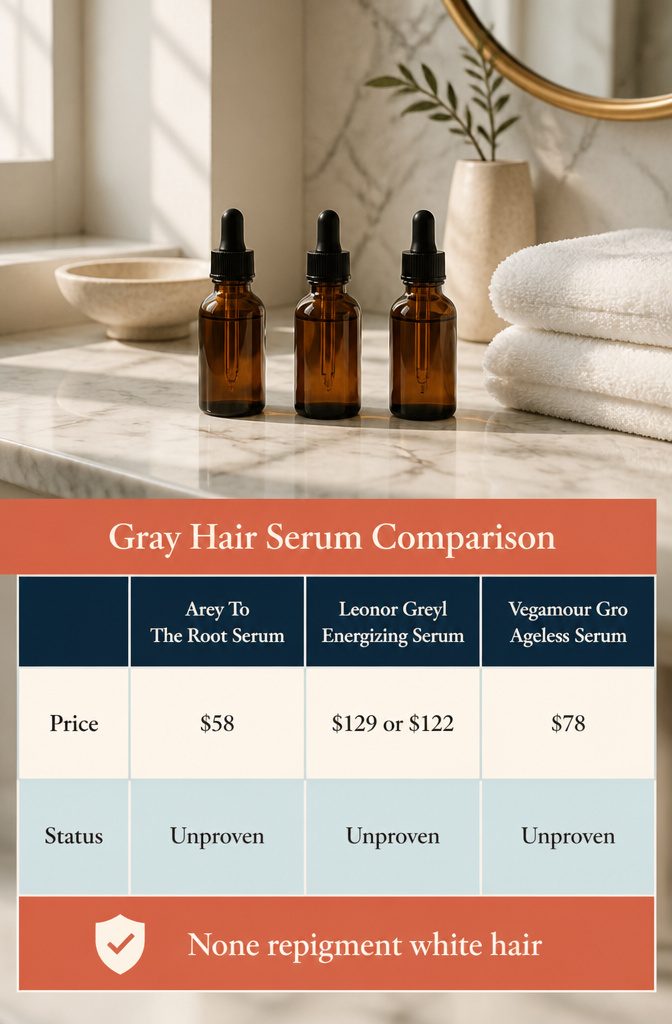
These are all commercial products, and none is an established treatment. Nothing has been shown to repigment completely white hair, and palmitoyl tetrapeptide-20, a peptide of interest here, is still early-stage.
| Product | Price | Status |
|---|---|---|
| Arey To The Root Serum | $58 | Commercial, unproven |
| Leonor Greyl Energizing Serum | $129 (Amazon), $122 (leonorgreyl-usa.com) | Commercial, unproven |
| Vegamour Gro Ageless Anti-Gray Hair Serum | $78 | Commercial, unproven |
One first-person account reports results after eight months with Not Today, Grey™ and To The Root®, but it appears on a page promoting them. That’s a single story, not a trial.
Cover Gray With Dye
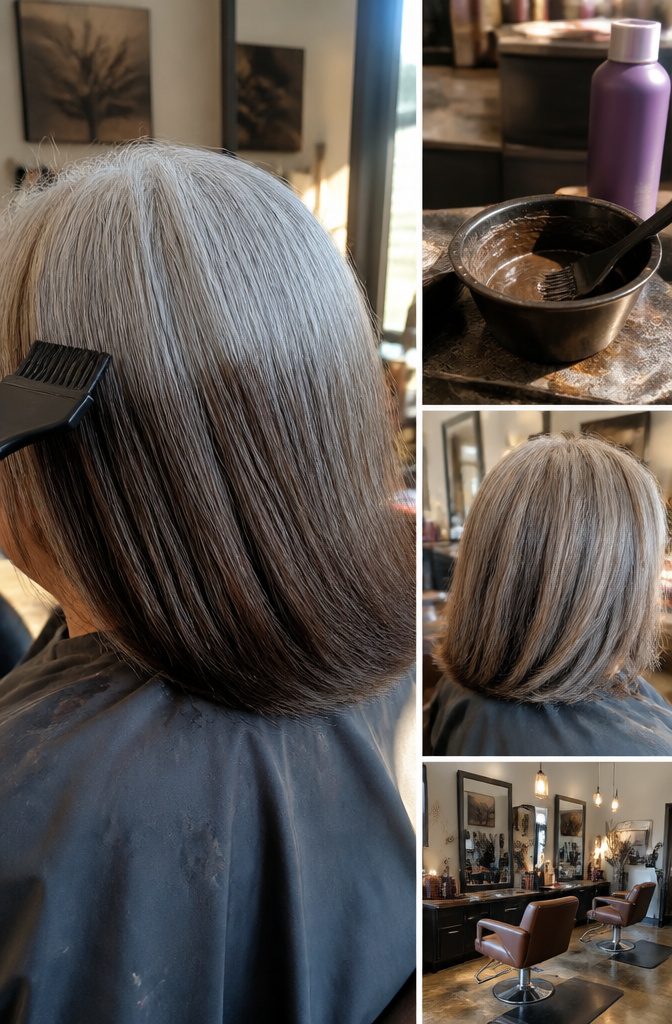
Dye works the day you use it, and nothing proven reverses gray, so coverage wins by default. Henna is gentlest on the scalp but fades quickly and needs frequent touch-ups.
Permanent and semi-permanent synthetic dyes last longest and are easier to apply than temporary ones, yet some ingredients can irritate your scalp or cause skin allergies, so read the ingredient list if your skin is sensitive.
I’d book a colorist for the first round, since gray hair’s texture and porosity make it harder to color.
Air touch coloring creates a soft gradient that blends and needs fewer touch-ups. Between visits, purple shampoo cancels the yellow tint that sun, saltwater and chlorine give gray.
Frequently Asked Questions
Can you reverse gray hair permanently?
Not reliably. Color has come back in some cases after a stressful period ended or an underlying health condition was treated, but those reversals tend to be temporary and no treatment is proven to do it.
Fully white hair has shown no sign of regaining color, since the hair still needs active pigment cells.
Can vitamins like B12 reverse gray hair?
No vitamin has been proven to reverse gray hair, so there is no reliable timeline for B12 to work.
Low B vitamins, calcium or iron may be linked to premature graying, so a doctor can check for a deficiency. The adult daily amount for B-12 is 2.4 mcg, and treating a true shortage is sensible but not a guaranteed fix.
What is the best product for reversing gray hair?
No product has been shown to reverse gray hair, and nothing has repigmented completely white hair.
Arey To The Root Serum ($58), Vegamour Gro Ageless Anti-Gray Hair Serum ($78) and Leonor Greyl Energizing Serum ($122–$129) are commercial products with no established results. If you want gray covered now, dye is the option that works the day you use it.
Can immunotherapy reverse gray hair?
Not yet. In 2017, 14 lung cancer patients on immunotherapy saw their gray hair regain color, but for graying itself the treatment has only been tested in cells and animal models.
Larger human studies are needed, and there are no approved treatments to reverse or stop graying.
Can you prevent or stop gray hair?
Age-related graying generally can’t be prevented, because genetics is the strongest influence.
Managing stress and quitting smoking may help with premature graying. Nothing clinically proven stops natural graying.
Can stress cause gray hair?
Stress is linked to graying, but the evidence is softer than it is for genetics. Some people have regained color after a stressful period ended, though that tends to be a temporary fix.
Does lack of sleep cause gray hair?
No direct link between sleep and graying has been established. Prolonged sleep loss could contribute indirectly by adding to stress.
What counts as premature gray hair?
Graying before age 20 in White people, 25 in Asian people and 30 in people of African ancestry.
Average onset runs from the mid-30s for White people to the late 30s for Asian people and the mid-40s for people of African ancestry.
Can hair turn gray overnight?
No, true overnight graying is a myth.
Alopecia areata can make it look that way by shedding colored hairs and leaving gray ones behind. See a dermatologist if you notice sudden or patchy hair loss.