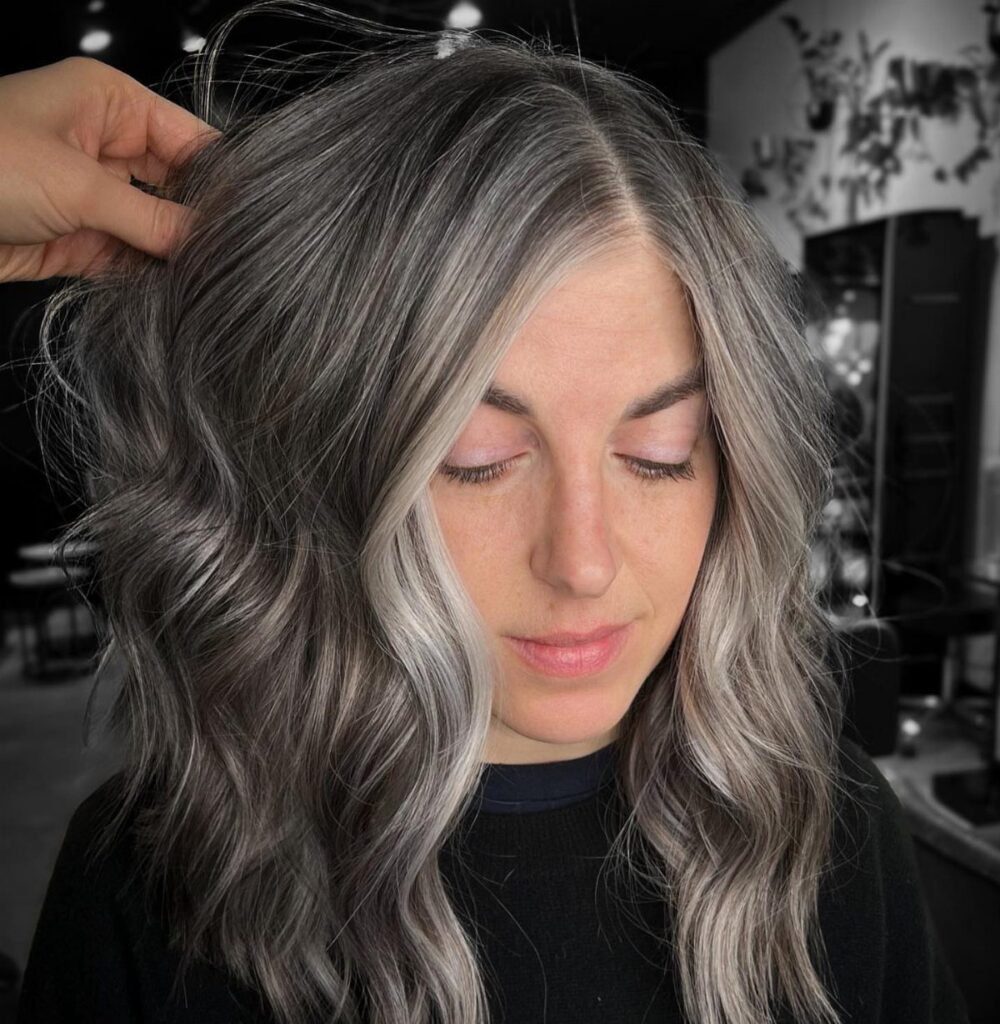
The ideas here run from ashy babylights and a pewter-toned mousy brown, which barely show, to chunky sterling silver strips on dark hair that take a full afternoon in the chair.
Where you land depends on how much gray is already there: a few scattered strands read best with fine Ashy Babylights, while a head that is mostly gray can carry a Sterling Silver Melt or bold Silver-White Money Pieces.
A blended gray look can go 8–12 weeks between salon visits, while full-coverage color needs a root touch-up every 4–6.
1. Ashy Babylights
Fine, ash-toned babylights blend gray strands with your base color in a way that reads natural from the start.
The technique works by placing dozens of delicate highlights close together, so the eye reads the overall tone rather than individual streaks.
If you’re working with scattered grays and want to soften the line between silver and your natural color, babylights give you that gradual shift.
The ashy tone keeps everything cool and cohesive, which matters when gray reads cooler than most starting colors.
Ask for babylights in ash blonde or silver, depending on how light your base is. Maintenance is lower than full color because regrowth blends instead of announcing itself.
2. Smoky Hair with Money Piece
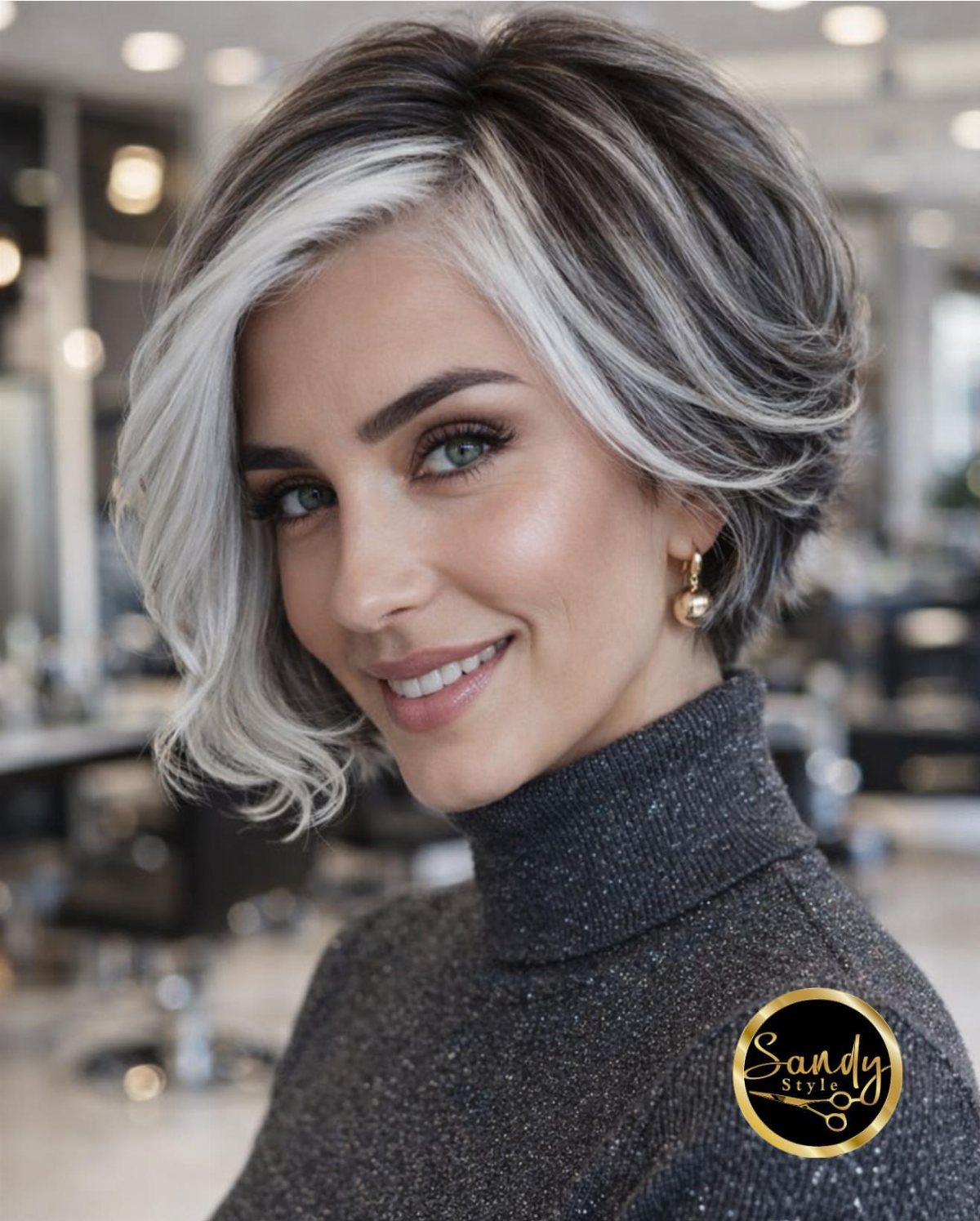
Money pieces frame the face with bright, contrasting color while the rest stays smoky and blended. The look suits short cuts especially well, where the face-framing pieces do most of the visual work.
The contrast between the silver money piece and the cooler gray base gives the style a deliberate, modern edge. It reads as intentional color rather than grow-out, which is half the point when you’re blending gray on your own terms.
One solid advantage: the money piece grows out along the hairline, so touch-ups are visible and easy to time. Smoky gray through the rest keeps upkeep low.
3. Icy Blonde Ombre
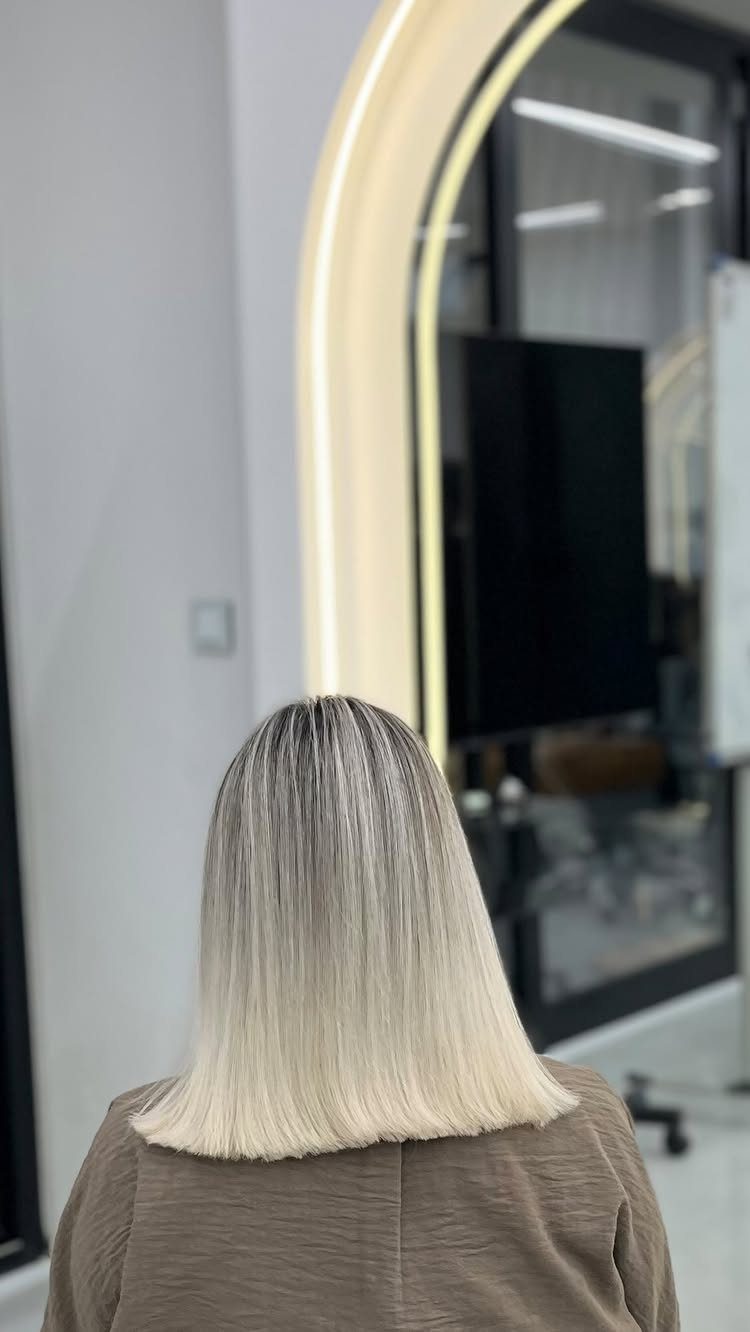
An icy blonde ombre transitions from darker roots to pale, silver-toned ends. The effect works especially well on straight hair, where the color shift stays clean and graphic.
Ombre grows out gracefully because the root is already dark by design.
That makes it a practical choice if you’re moving away from frequent color but still want a finished look. The pale, cool ends blend naturally with gray strands as they come in.
Plan for regular toning to keep the ends from warming up. Silver and ice tones shift quickly, and purple shampoo becomes part of the routine.
4. Metallic Silver Highlights
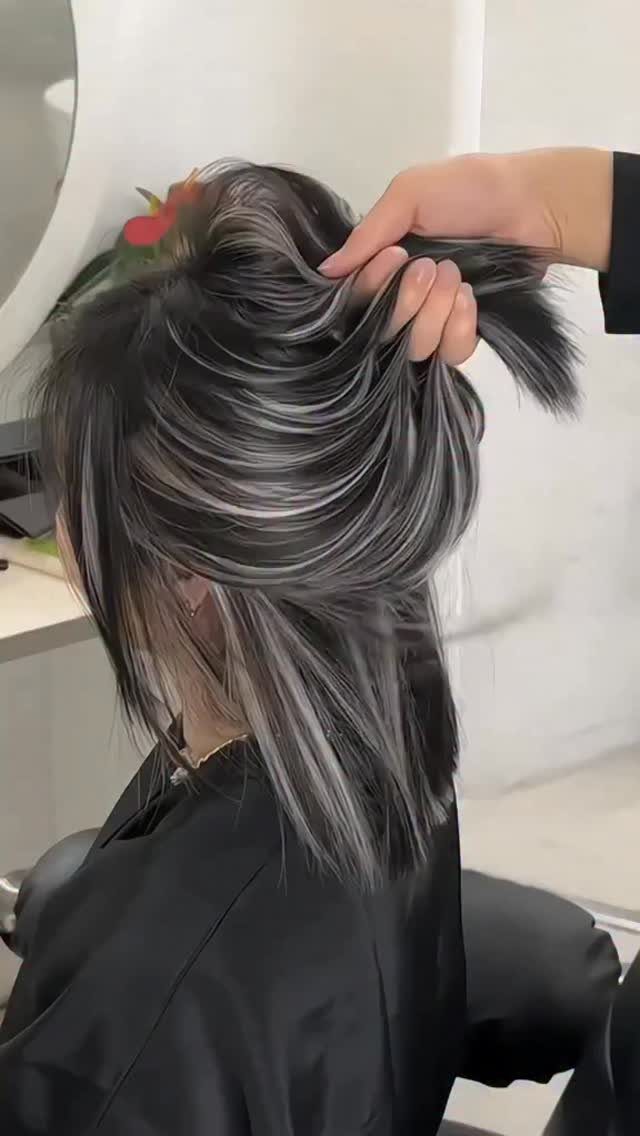
Silver highlights on jet-black hair give you contrast without softening the base. The look is bold and deliberate, and the metallic tone keeps it polished rather than stark.
This approach works well if you have long, dark hair and want to integrate gray strands by adding more silver intentionally. The highlights sit on the surface and catch light, so the overall effect stays dimensional.
Ask for silver foils or balayage, depending on how much blending you want.
Foils give sharper, more defined pieces; balayage softens the edges. Upkeep depends on how much of your base is already gray.
5. Frosted White Balayage Highlights
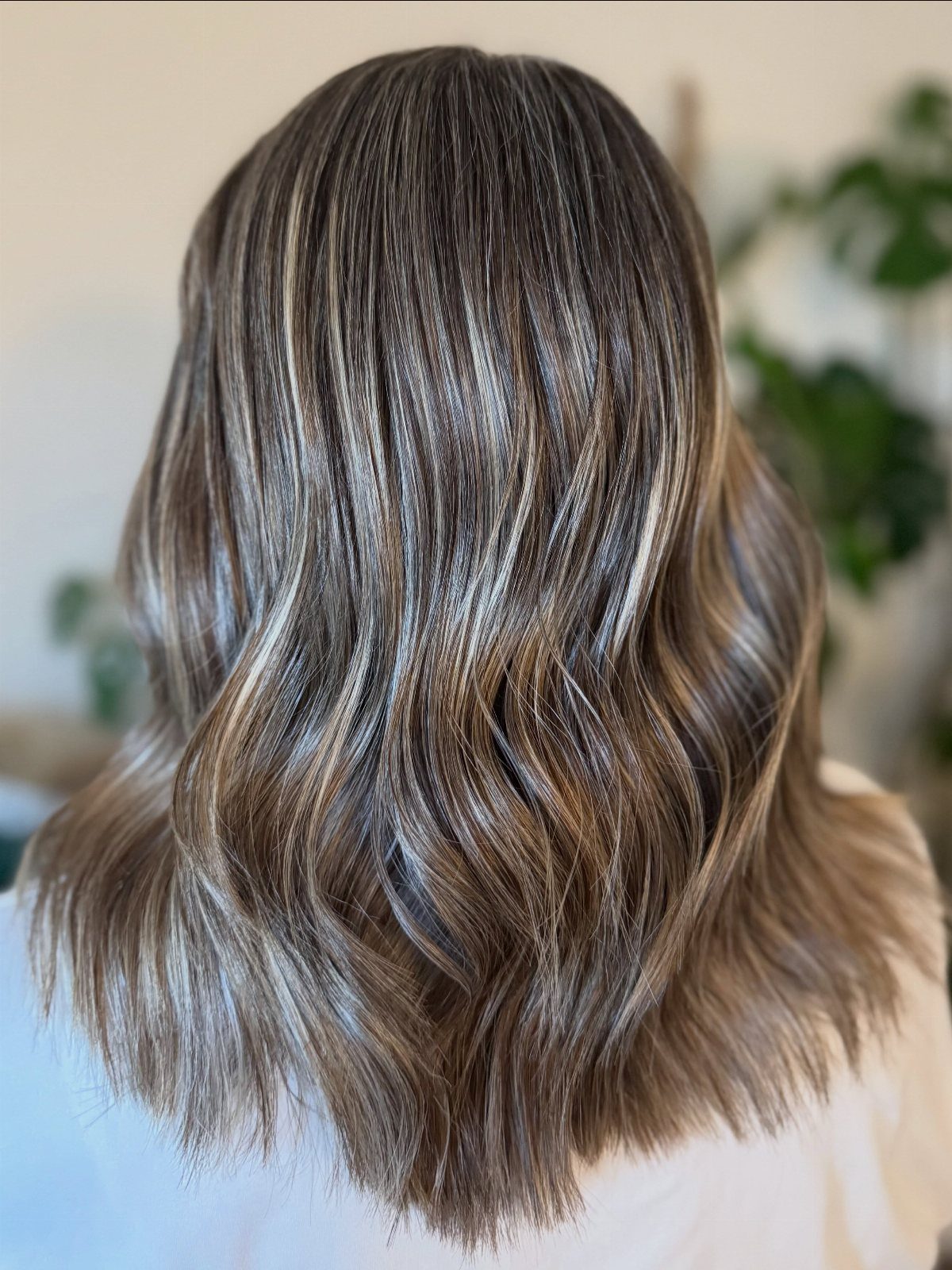
Balayage highlights in frosted white and pale silver tones blend early gray by adding more lightness throughout. The technique places color where it looks natural, concentrating lighter pieces around the face and through the ends.
Multiple shades work better than one flat tone because they mimic the way gray grows in: scattered, uneven, and varied in intensity. The result reads as lived-in color rather than fresh-from-the-salon uniformity.
Balayage grows out more forgivingly than traditional highlights because there’s no hard line at the root. Toning every 6 to 8 weeks keeps the white from turning brassy.
6. Misty Beige Blend
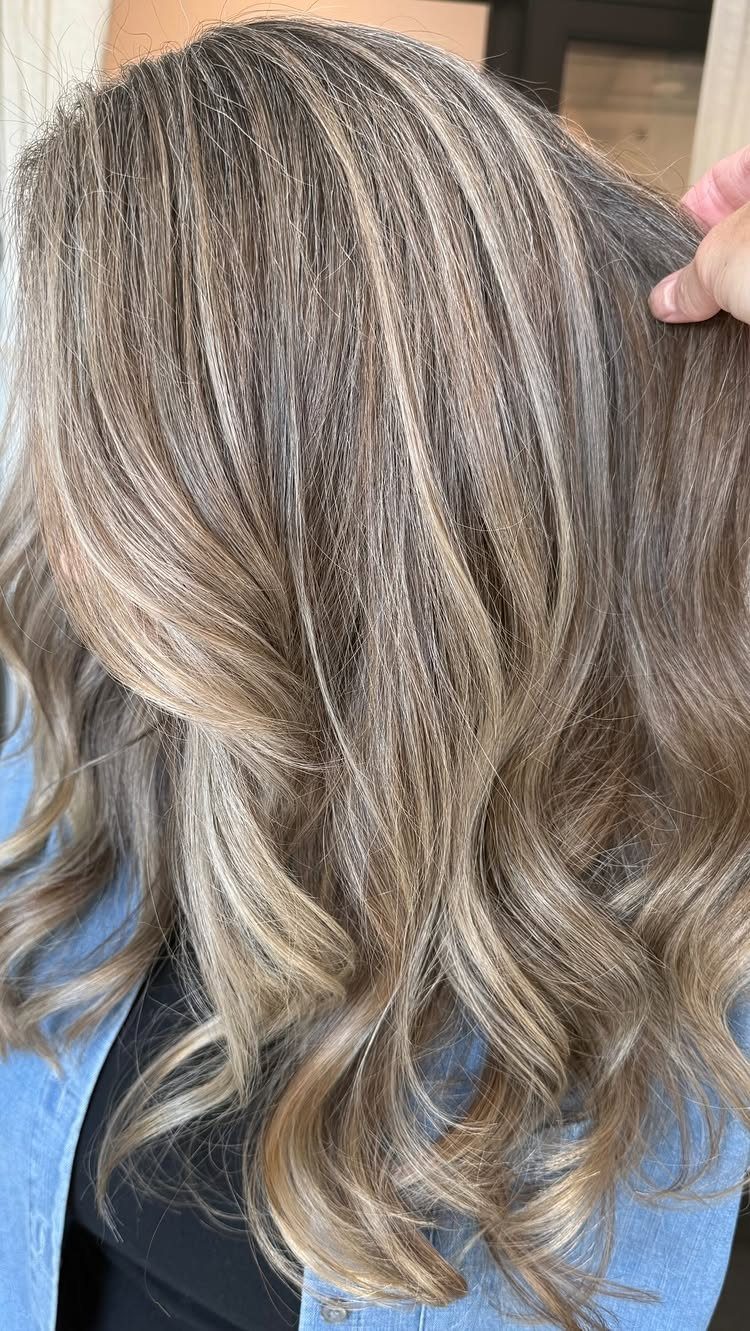
A root melt and airtouch balayage combine to give you soft, blended color from root to end. The root melt darkens the base so regrowth disappears, and airtouch balayage isolates finer strands for a more diffused highlight.
The beige tone sits warmer than pure gray, which works if your natural color leans warm or if you want to avoid the starkness of silver. The blend reads glam and intentional, not like color that’s halfway grown out.
Airtouch takes longer at the salon because the stylist blow-dries each section before applying color, isolating the finest hairs. The payoff is softer, more natural-looking highlights that blend beautifully with gray.
7. Cool-Blonde Highlights
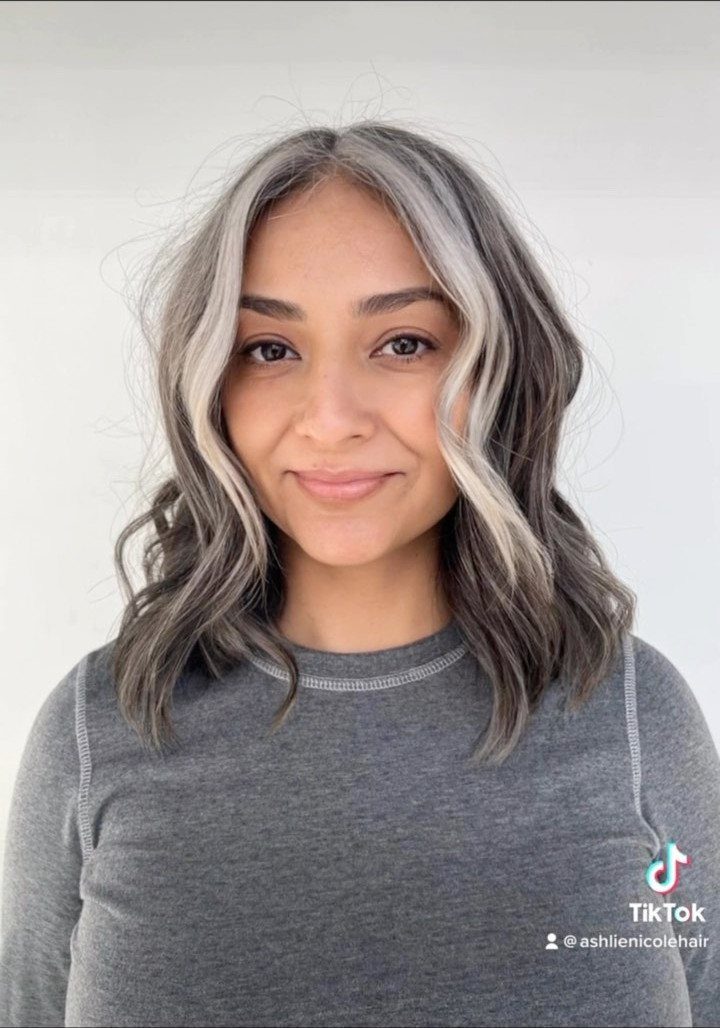
Cool-blonde highlights woven around the face give growing-out gray a softer landing. Wavy texture helps here, since the waves break up where blonde meets silver and keep the line from looking like a stripe.
Ask for cool-blonde highlights with the brightest pieces placed at the front. If you want a bolder frame, add a money piece on top of that.
Cool tones sit close to gray, so regrowth reads as part of the plan instead of a gap between appointments.
8. Silver-White Money Pieces
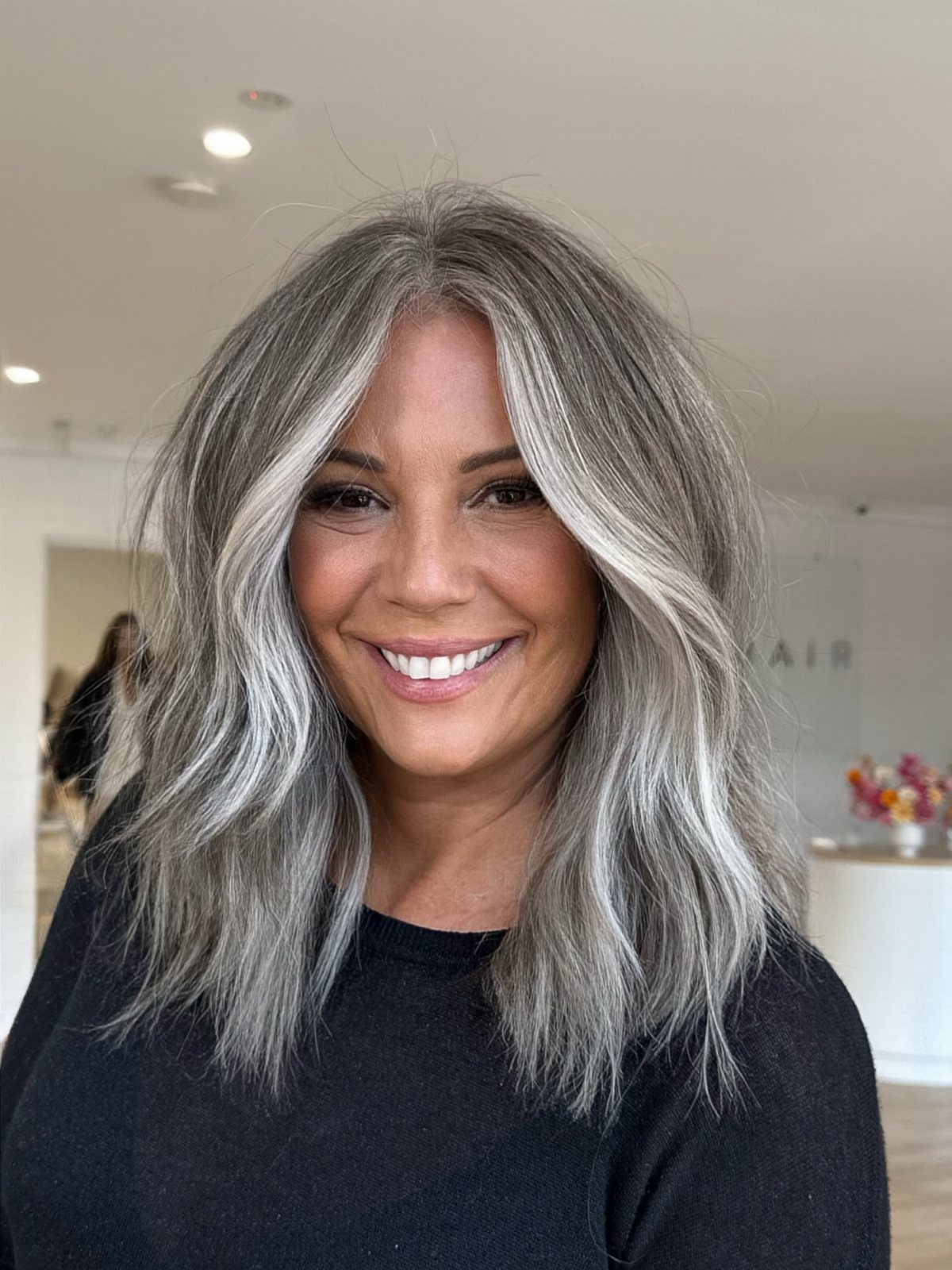
Bright silver-white money pieces make gray the feature. Instead of hiding the strands around your face, the color brightens them, and the rest of your gray stays as it is.
That suits a shoulder-length cut well, because the front sections sit where people look first. I like this one for anyone who is tired of covering gray but wants something that looks chosen.
Keep the lightening to the face-framing sections and let the back stay as it is. Fewer sections lightened means less to maintain.
9. Sterling Silver Melt
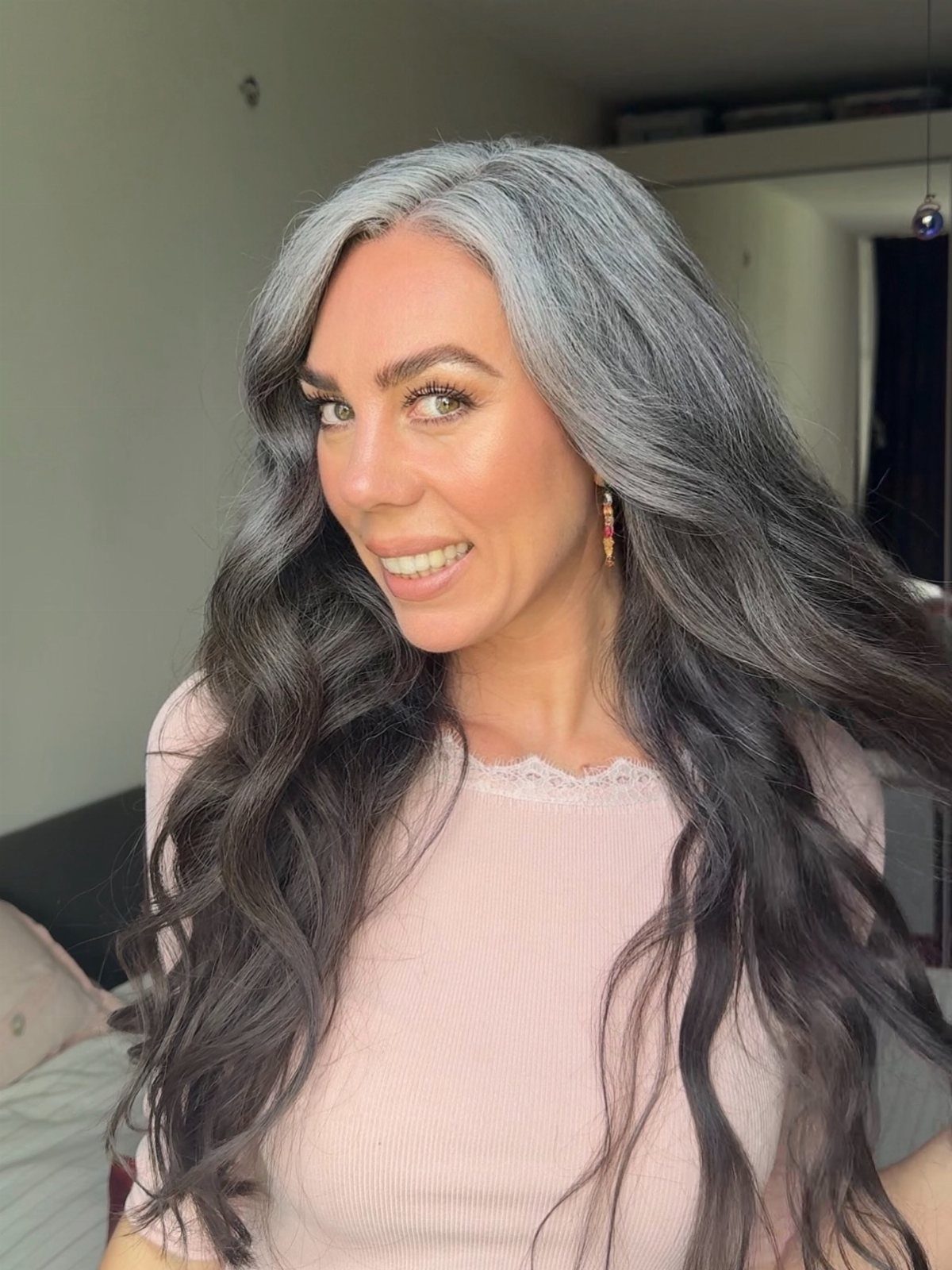
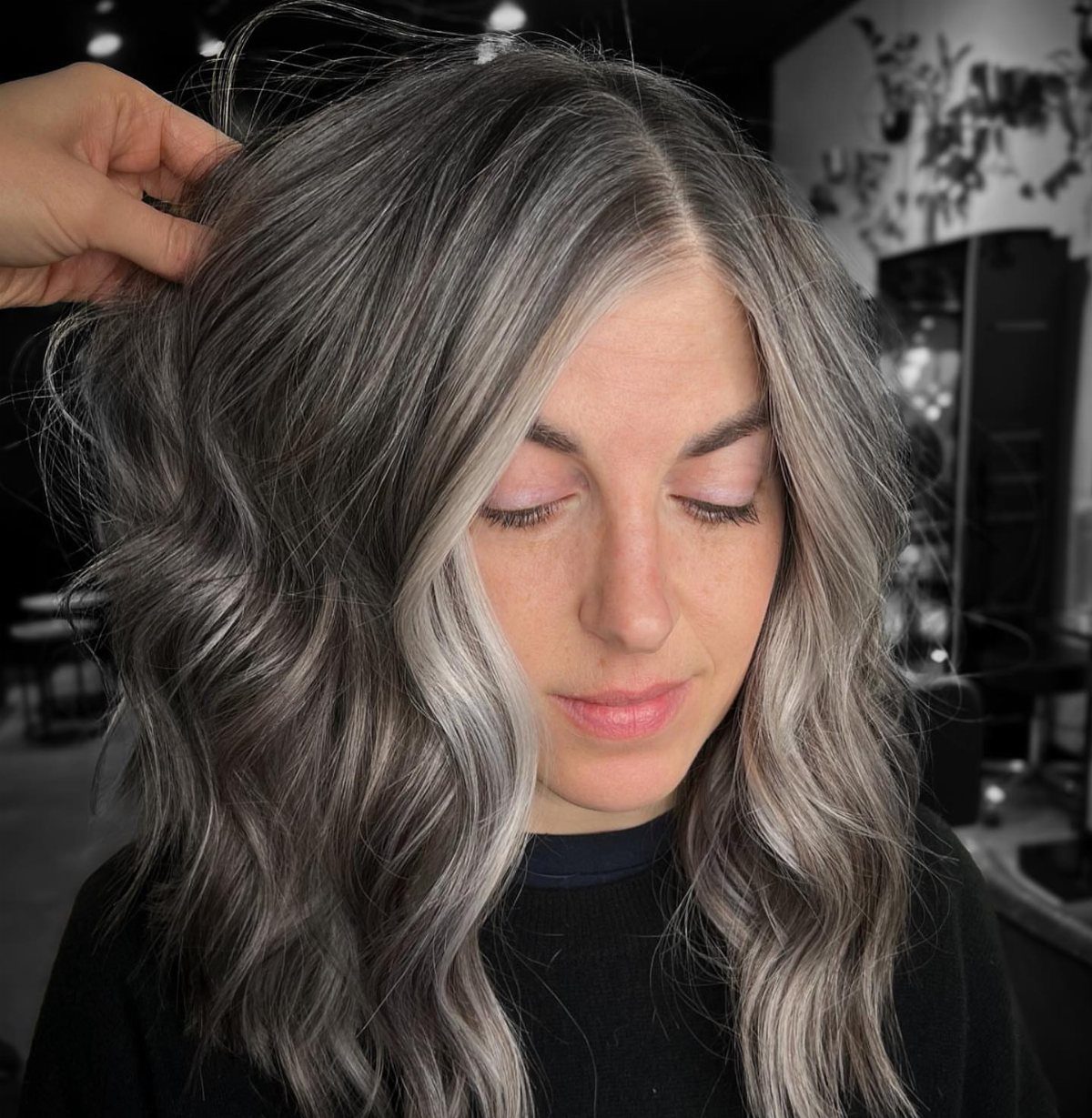
Chunky silver strips plus fine babylights give long dark hair 2 kinds of contrast. The bold sections frame the face, and the babylights fill in between so gray strands blend into the length instead of standing out.
This is the loudest option on dark hair that I’d still call blended. Long waves keep the silver pieces moving, which stops them from looking pasted on.
Tell your stylist you want both: wide silver sections at the front, fine babylights through the rest. Lightening dark hair to silver takes a long salon visit, so plan for a full afternoon.
10. Mousy Brown Pewter Style
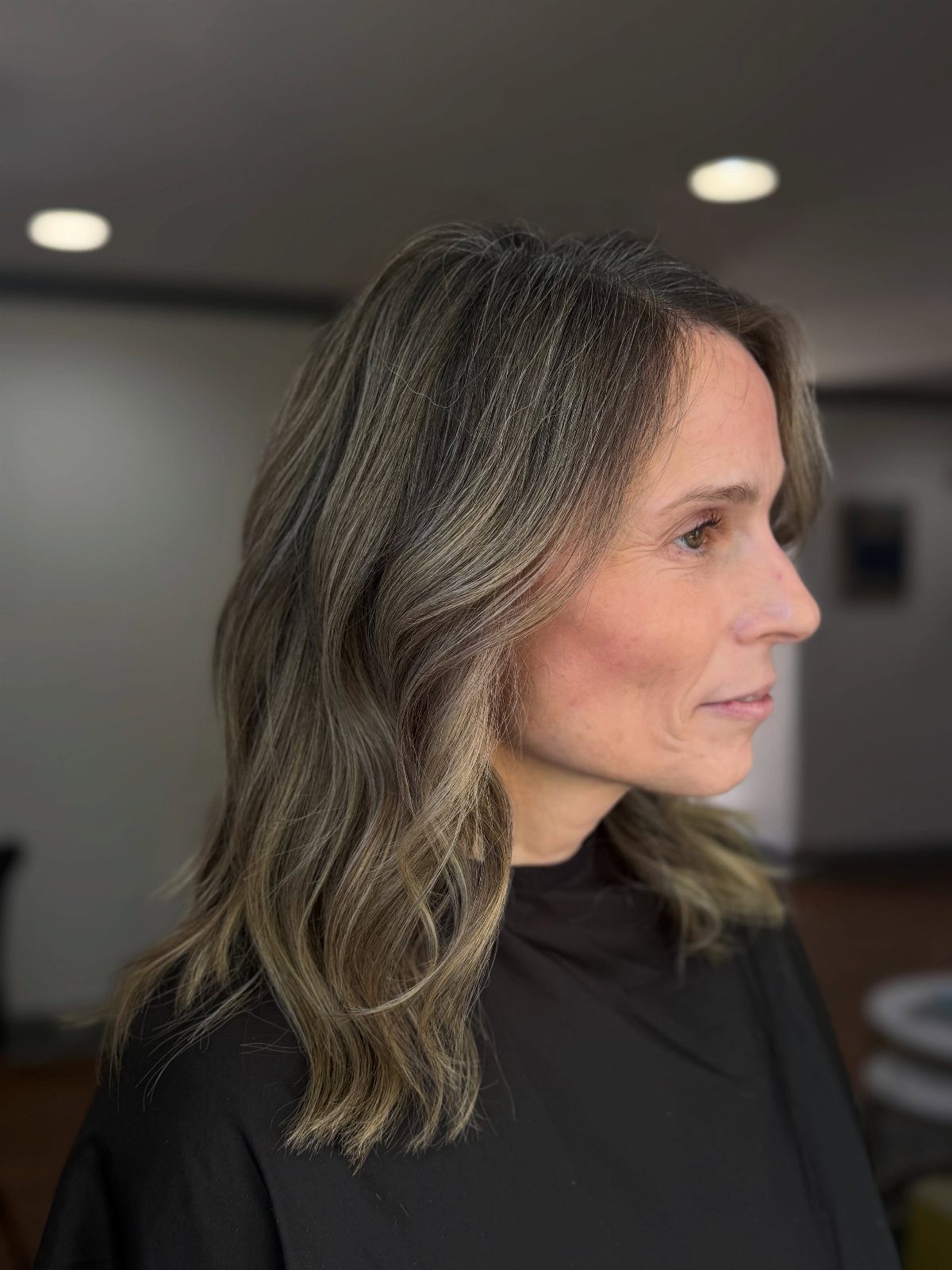
Pewter strands sit close to a mousy brown base, so this is the subtlest way to blend gray. The base stays a natural-looking brown, and the gray gets woven in so the two read as one muted, dimensional tone.
Wavy hair at shoulder length shows this off well, since the movement scatters the pewter instead of lining it up. Name it "mousy brown with pewter" when you book, and bring a photo so the stylist matches the depth.
Nothing here is bright, so there’s little to tone, and regrowth blends in easily.
11. Silver Gray Curls
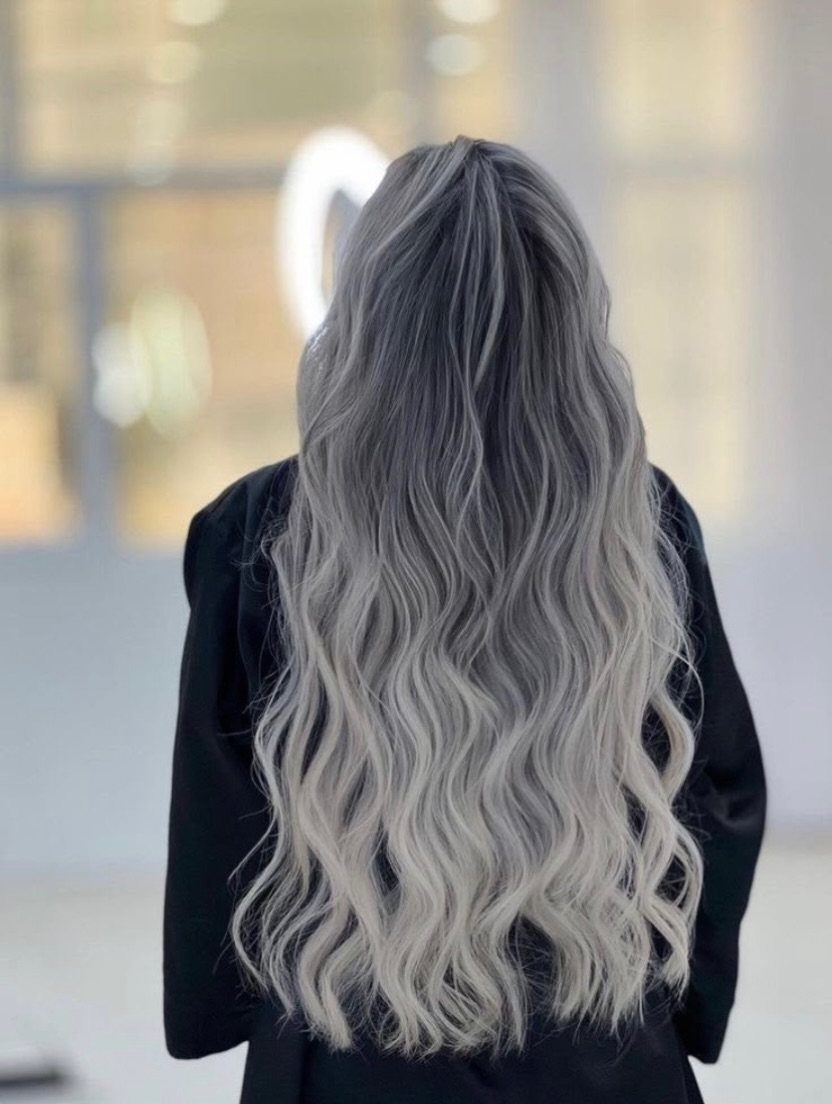
Ask for a root melt: dark roots that fade into icy silver-blonde ends give long, wavy hair a layered look and let new gray grow in without a harsh line.
Because the roots stay dark, grow-out never leaves a harsh line.
For curls and waves, I’d ask for a soft, diffused transition. Waves scatter the shift in tone, so a blurred blend looks better than a sharp one.
Icy ends need a cool toner to stay silver, so expect to use purple shampoo between salon visits. Ask for the ends to be toned to match the gray at your roots.
12. Silver Gray Streaks
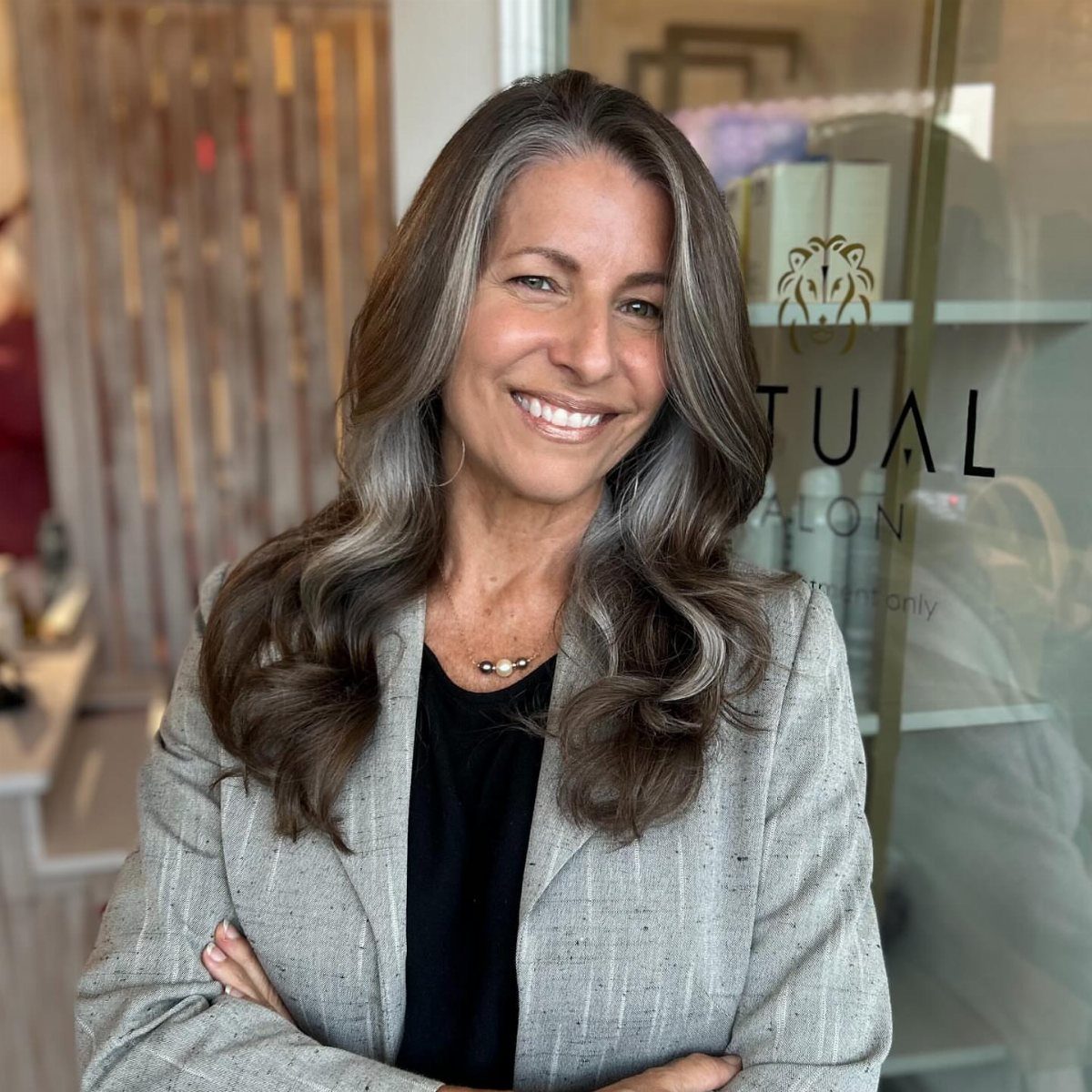
Long dark hair with silver-gray streaks and face-framing pieces lets gray show up as a highlight rather than as regrowth. The streaks soften the base without covering it, and the front pieces draw attention to your face.
If you have lots of dark length, this is a good middle step between full coverage and fully silver. Ask for visible streaks, not fine babylights, so the silver reads from a distance.
Keep the streaks near the face first. You can add more through the length at later appointments if you like how it grows out.
13. Silver Gray Waves
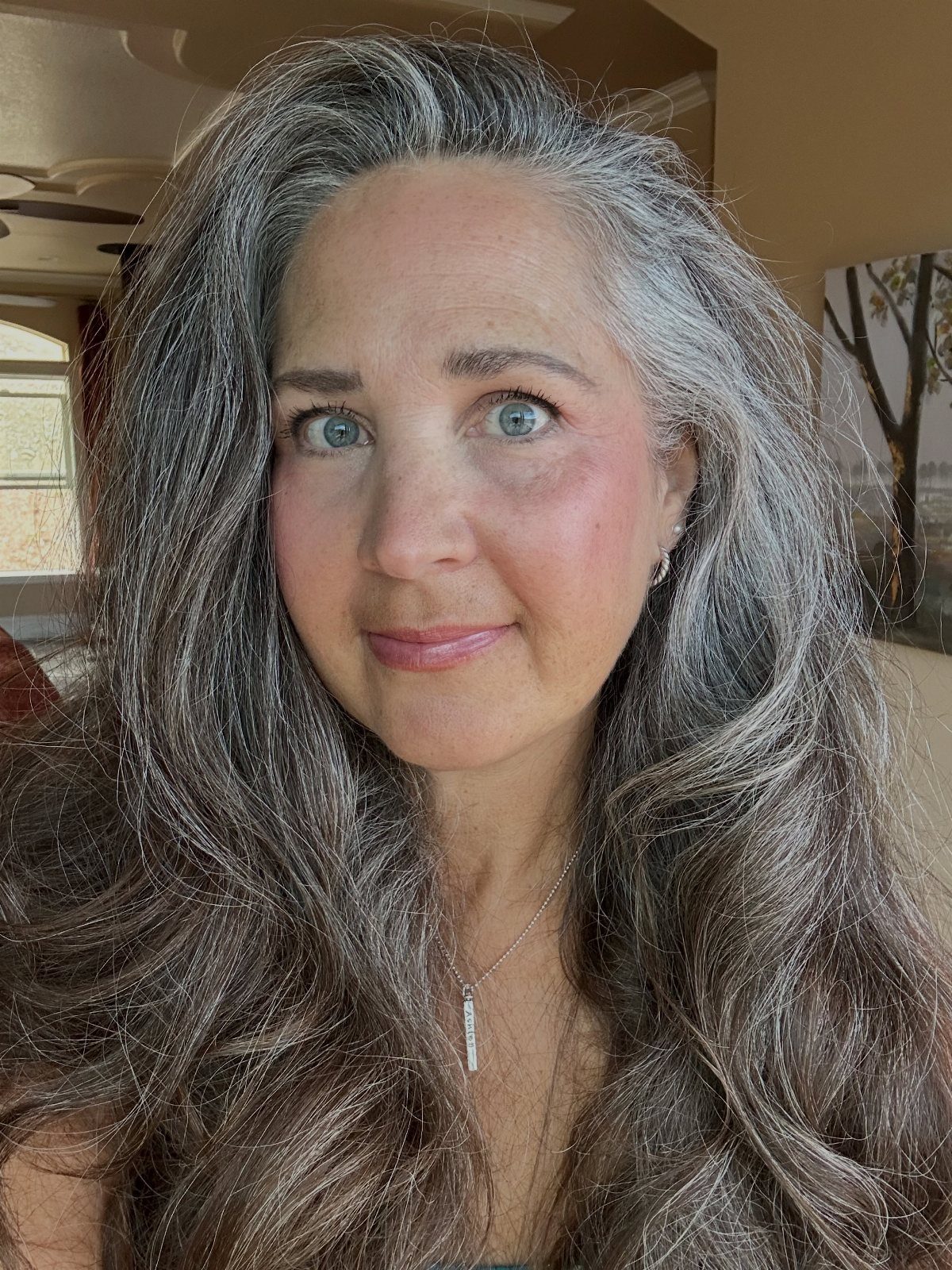
Waves do a lot of the blending work on silver-gray hair.
A dimensional mix of lighter and darker strands, with the darker tone kept near the roots, breaks up wherever the curl bends, so no single line shows where gray begins.
Ask for a soft silver-gray blend with some depth left in, and bring a photo so your stylist can see how much contrast you want.
I’d choose this over a flat, all-over silver if you want regrowth to look like part of the design.
Long lengths give the waves room to show off the tonal shifts.
Rather than waging war on every single silver strand, grey blending works with your natural tones, weaving them into highlights, lowlights and cleverly placed tones so that every colour marries together intentionally.
14. Silver Gray Lengths
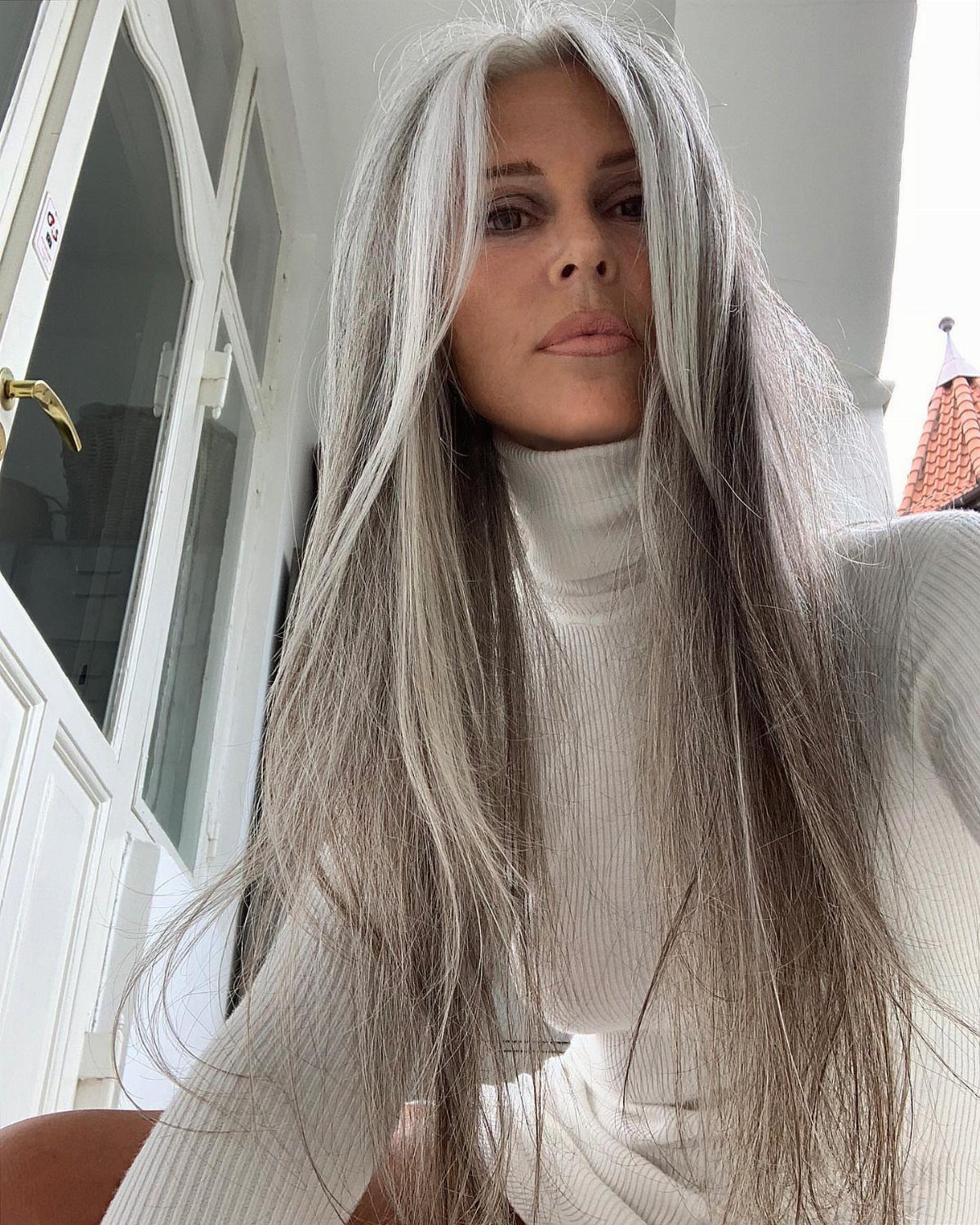
Long silver-gray hair with darker roots is the grow-out look most of us fear less once we see it done well. The roots stay deeper while the lengths read as silver, so the transition looks planned rather than overdue.
Ask your stylist to keep the root depth soft, not a sharp band, since a blurred edge hides new growth better. Long hair also lets the silver show off its full range of tone.
I’d pick this if you want to stop covering regrowth but aren’t ready for a fully gray head.
15. Gray Highlights on Brown
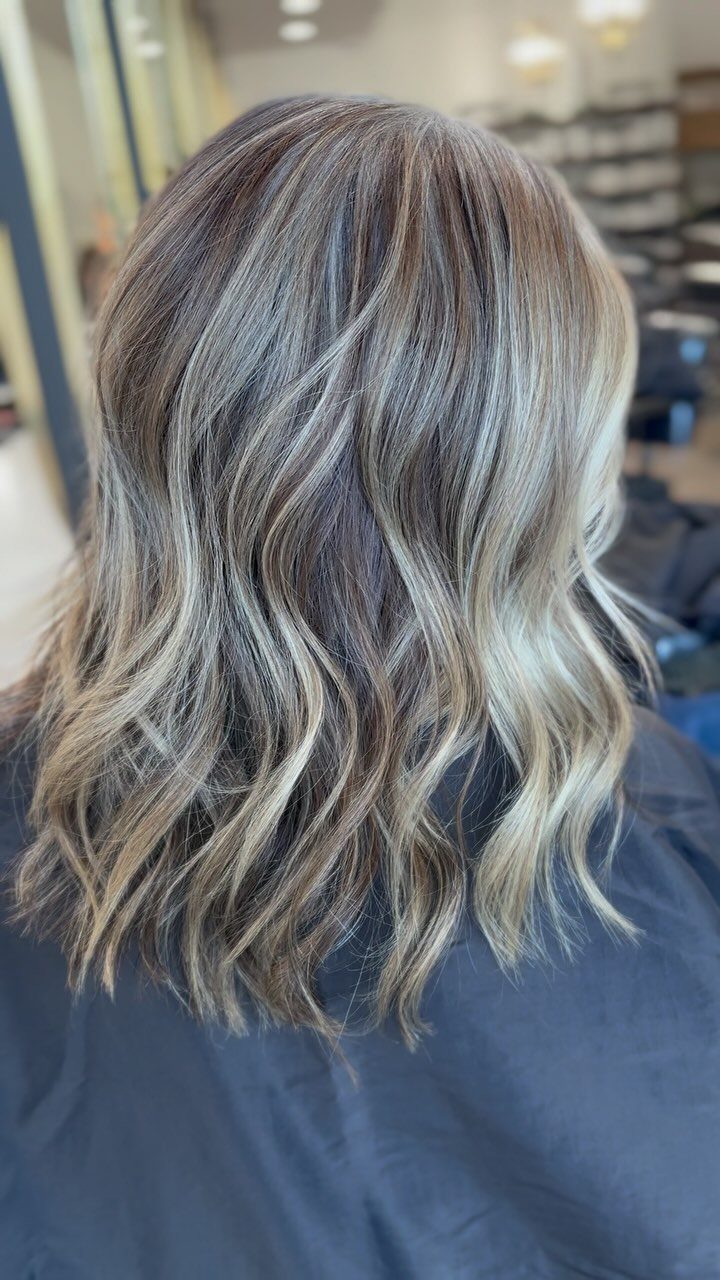
Fine silver-gray highlights woven through brown hair add lightness without turning the base into a different color. At shoulder length with loose waves, the thin pieces scatter, so the gray you already have disappears into the pattern.
Ask for fine, blended highlights in silver-gray rather than chunky foils. Fine pieces sit closer to real gray and soften the edge where new strands come in.
Brown stays the main color here, so this is a gentle first step if you’re easing away from full coverage.
16. Layered Gray with Lowlights
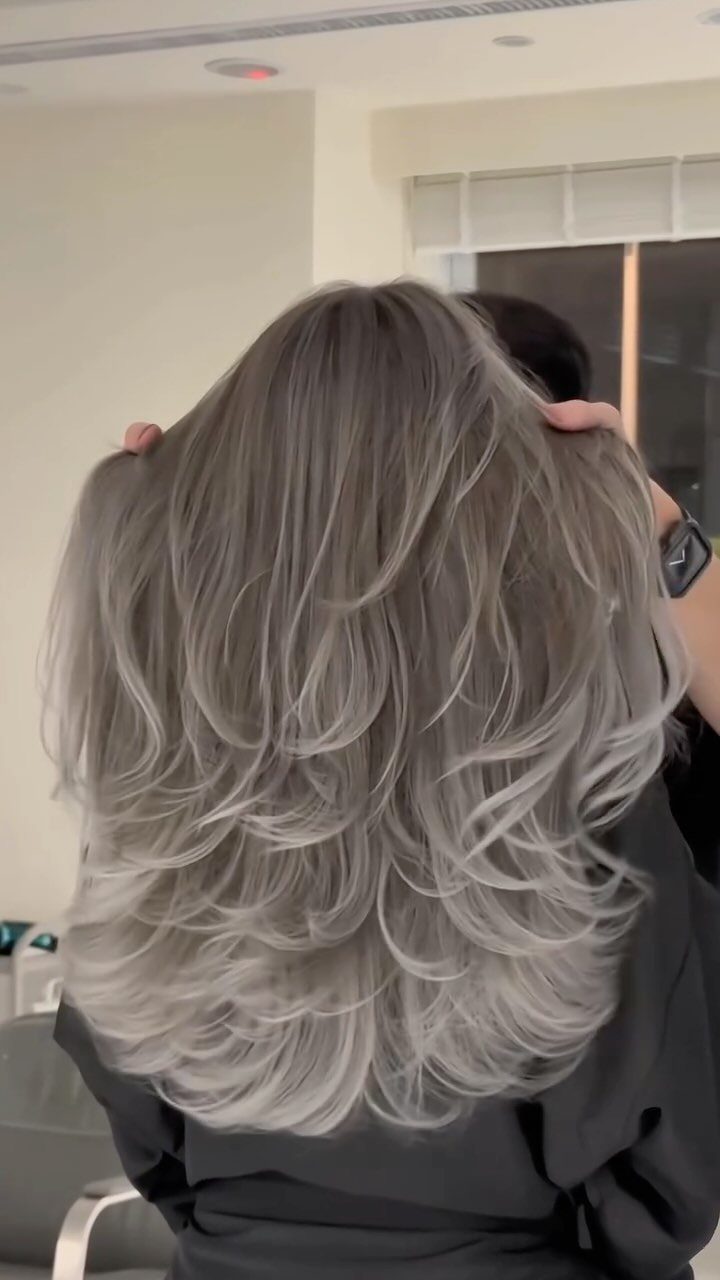
Darker lowlights threaded through layered silver-gray hair give the color depth, so the silver doesn’t read as one flat sheet.
Layers help too: each cut level catches the light differently, and the dark and light strands trade places as the hair moves.
Ask for lowlights placed between the silver sections, and tell your stylist how deep you want them. Request a shade close to your natural root color so the grow-out stays easy.
I like pairing the layers and lowlights, since each one adds the dimension the other needs.
What Blending Means
Blending leaves some gray visible on purpose, so it works differently from a dye that covers every strand.
Placement does the work. Because the result is tailored to your head, no two blends look alike, and you can’t order one by shade number the way you would a box of dye.
The finish is dimensional, and the contrast between gray and the rest of your hair softens. Regrowth stops looking like a hard stripe because the color was never one solid block to begin with.
When you book, describe the goal as "blending" rather than "covering." That one word changes what the stylist plans to do.
Salon Timing and Upkeep
Blending can stretch the time between appointments. One expert puts the range at every 8–12 weeks, compared with every 4–6 weeks for traditional full-coverage color.
Placement affects that number. To stretch the time between appointments, I’d have the stylist begin the first lightened pieces a bit below the roots.
Plan your calendar around the longer end of that range, then adjust once you see how your own regrowth behaves.
Hair grows at its own pace, and how much of your base is gray changes how fast a blend starts to look tired.
Transition Takes Gradual Work
Going from dyed hair to natural gray is a slow handoff. A hard line between old color and new growth, or a dull tone with no shine, is what makes gray look unnatural, so softening that line comes first.
Sometimes matching the gray means lightening the hair several levels. That is not always easy or advisable, so expect a stylist to suggest gradual steps over one big change.
Pale highlights, gentle lowlights and sheer gray tones layer in dimension, which keeps the result from reading as one flat block of color. Each visit lowers the contrast a little while your hair grows out.
Treat it as a plan of several appointments, not one. I’d rather see someone take three gentle visits than push the hair too far in one.
Frequently Asked Questions
What can I do to blend gray hair?
Ask your stylist for gray blending instead of coverage, then choose fine babylights, soft lowlights or a root melt so the gray sits inside the color rather than under it.
Using the word "blending" when you book changes how the stylist plans the work.
I’d also bring a photo to show how much contrast you want, and ask for a soft, blurred edge at the root, since a hard band is what makes new growth look obvious.
What is the new trend to cover gray hair?
Stylists are now being asked to soften gray into the color so it blends in, instead of painting over every strand.
Done as balayage, the lightening starts a few inches down from the scalp, gets brightest around the face and skips the ends, so regrowth barely shows between appointments.
Interest is climbing quickly: Pinterest searches for "going gray" jumped 879% over a single year.
Is it better to go lighter or darker to cover gray hair?
For blending, lighter usually wins: fine pale or silver-toned pieces sit close to gray, so the two read as one dimensional color.
Darker has a smaller job, either as lowlights for depth or as a root melt that keeps the roots deep so regrowth disappears.
One limit applies, because matching gray can mean lightening the hair several levels, which isn’t always easy or advisable. Expect a stylist to work in gradual steps over several visits.