Napoleon’s hair color was brown to chestnut, based on most firsthand accounts, though observers disagreed on the exact shade.
Lighting, age and individual perception filtered what each witness saw differently. Denis Davydov called it "dark reddish-blond" at Tilsit in 1807, while Captain Maitland saw "very dark brown" in 1815, and both Méneval and Marchand settled on "fine chestnut."
Napoleon’s Hair Color
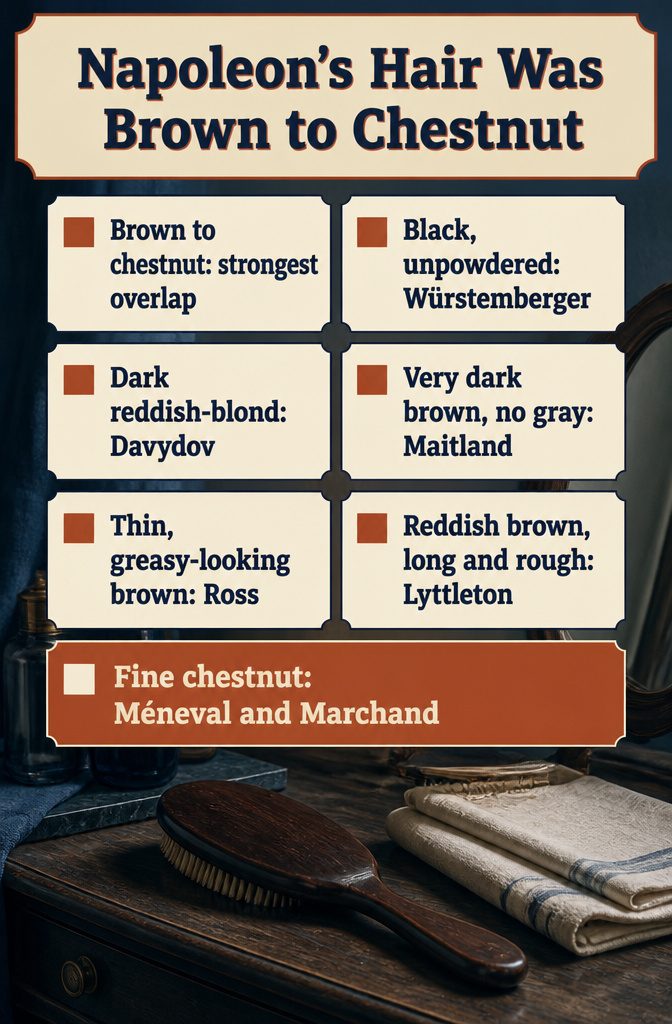
Brown or chestnut is the strongest overall description of Napoleon’s hair, though the eyewitnesses disagree:
- Black and unpowdered: the son of General Würstemberger, recalling Switzerland in 1797.
- Dark reddish-blond: Denis Davydov at Tilsit in 1807, who added that the eyebrows and eyelashes were much darker than the hair.
- Very dark brown with no gray: Captain Maitland of the Bellerophon.
- Thin, greasy-looking brown: Captain Ross of the Northumberland.
- Reddish brown, long and rough: William Henry Lyttleton.
- Fine chestnut: Méneval and Marchand.
Portraits are not fully reliable either, so I wouldn’t settle the question with a painting. Brown to chestnut is where most of these accounts overlap.
Napoleon’s Changing Hairstyle
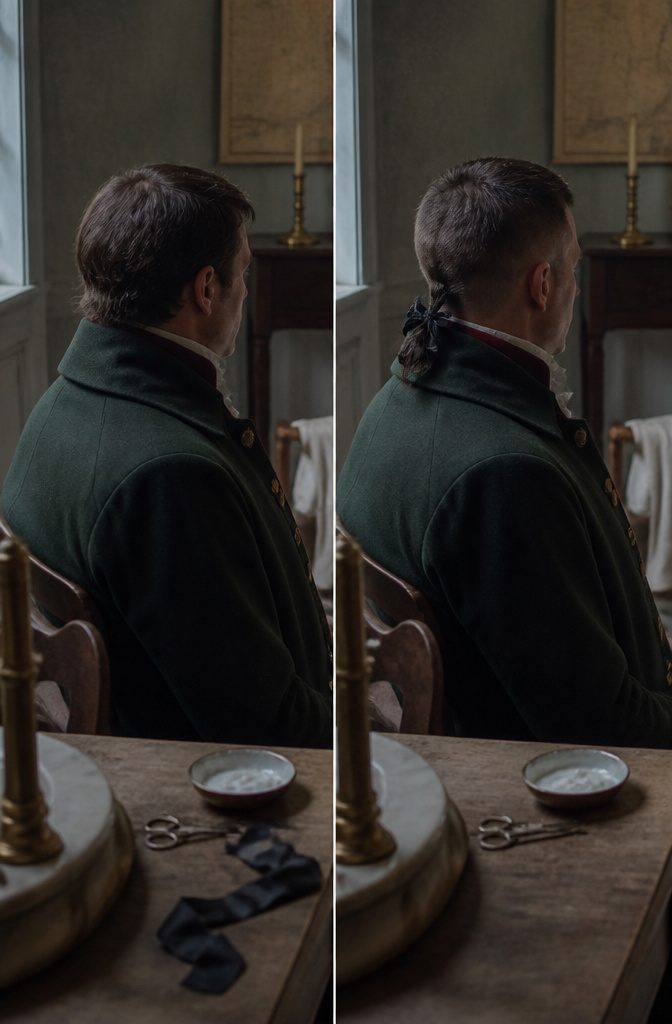
Napoleon’s hair went through more changes than most men’s over a single career, and the progression tracks both practicality and vanity.
In Italy he wore his hair quite long, flowing over his temples, with a few locks tied into a pigtail with a ribbon.
The whole head was lightly powdered at that time, the fashion of the 1790s. He gave up powder at Joséphine’s request after returning from Italy, but kept the length through the voyage to Egypt.
By Cairo, possibly even at the Pyramids, the hair was shorter. The light veil around his face disappeared, and except at the back, his hair was cut fairly close.
He became le Tondu, the shorn, as his soldiers called him. Later his forehead went bare, and in some late-Empire sketches you can see him bringing hair forward to cover it, a long lock drawn from farther back.
Scissors and straight razors were the only functional cutting tools of the period, which meant every adjustment was deliberate.
Neapolitan Hair Color
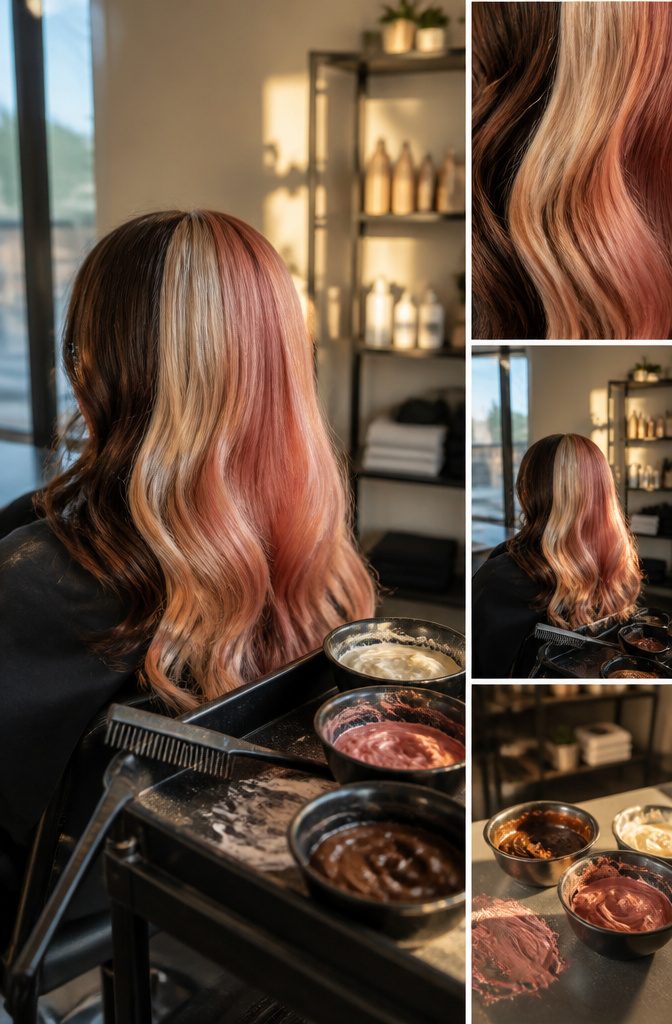
The modern Neapolitan trend pulls three colors straight from the ice cream carton: chocolate brown, vanilla blonde, and strawberry pink in one head of hair.
I find the name does more work than Napoleon ever did here, because the look is built on contrast and placement rather than historical accuracy.
Neapolitan hair is the perfect treat, blending chocolate hair, pink hair, and silver hair or blonde hair into a mouthwatering masterpiece! Whether you crave subtle swirls or eye-catching contrast–this look can be as striking or as soft-serve subtle as you like.
— PRAVANA
That flexibility matters. Color blocking gives you distinct sections of each shade, the boldest version of the three.
Chunky highlights keep the colors defined but soften the edge between them. Ribbons blend pink through brunette and blonde for something more subtle.
PRAVANA’s bold take pairs ChromaSilk 7.1 with VIVIDS Pink for high contrast, while their ribbon version uses VIVIDS Pink and Magenta, HydraGloss 10Nt and 10Abv, and ChromaSilk 6.8 and 6N for a softer effect.
The look adapts to different lengths and hair types without fighting the structure of your cut. Dark brown and golden blonde suit warmer skin tones, while the pink adds a cool touch for lighter skin.
Caring for Neapolitan Color
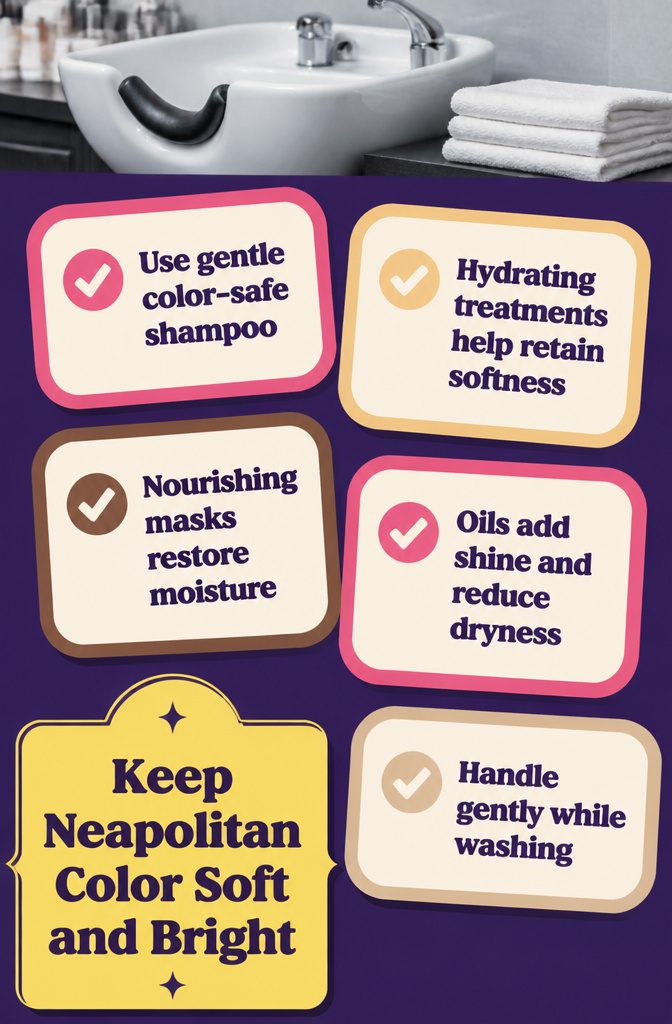
Bleaching and multiple colors mean this look needs a little more attention than single-process work. Done right, those bright pinks and blondes keep their color and stay soft instead of fading or turning dry.
After coloring, switch to gentle shampoos made for colored hair to hold onto the shine and keep the pink from washing out too fast.
Regular hydrating treatments help the hair stay soft and prevent the kind of damage that stacking bleach and dye can bring. A few other steps keep it looking healthy:
- Nourishing masks to rebuild moisture after bleaching
- Specific oils to add shine and cut down on dryness
- Gentle handling when washing to preserve the brightness of all three shades
The hair has been through a lot to get to brown, blonde and pink in one pass, so treat it like it.
What the Name Means
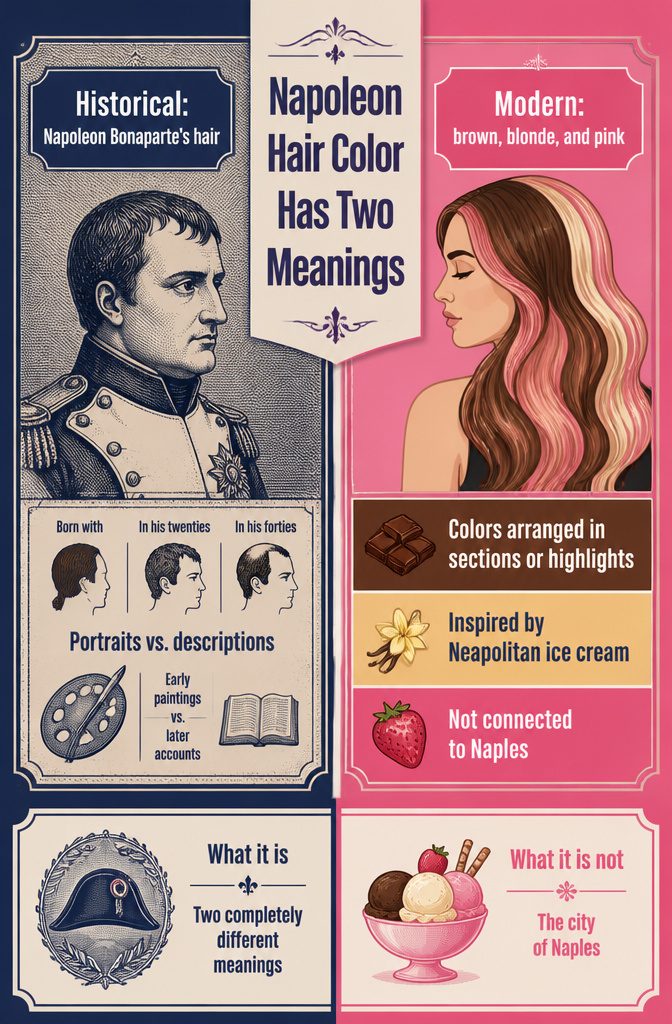
Napoleon hair color means two completely different things, and which one matters depends on whether you came here looking for history or hair trends.
The first is the literal color of Napoleon Bonaparte’s hair: the shade he was born with, how it looked in his twenties versus his forties, and why early paintings sometimes disagree with later descriptions.
The second is Neapolitan hair, a modern coloring technique that blends brown, blonde, and pink in sections or highlights, inspired by the three flavors of Neapolitan ice cream.
Despite the name, it has nothing to do with the city of Naples. The sections that follow cover both: the historical Napoleon’s actual hair color and changing style, then the ice-cream-inspired trend and how to care for it.
Brown as the Common Thread
Brown appears most often in firsthand accounts of Napoleon’s hair, with observers using shades from dark brown to reddish brown to chestnut.
Captain Frederick Maitland called it "very dark brown" in 1815, while Russian soldier Denis Davydov saw "dark reddish-blond" at Tilsit in 1807. Betsy Balcombe, who knew Napoleon well on St. Helena, settled on "dark brown."
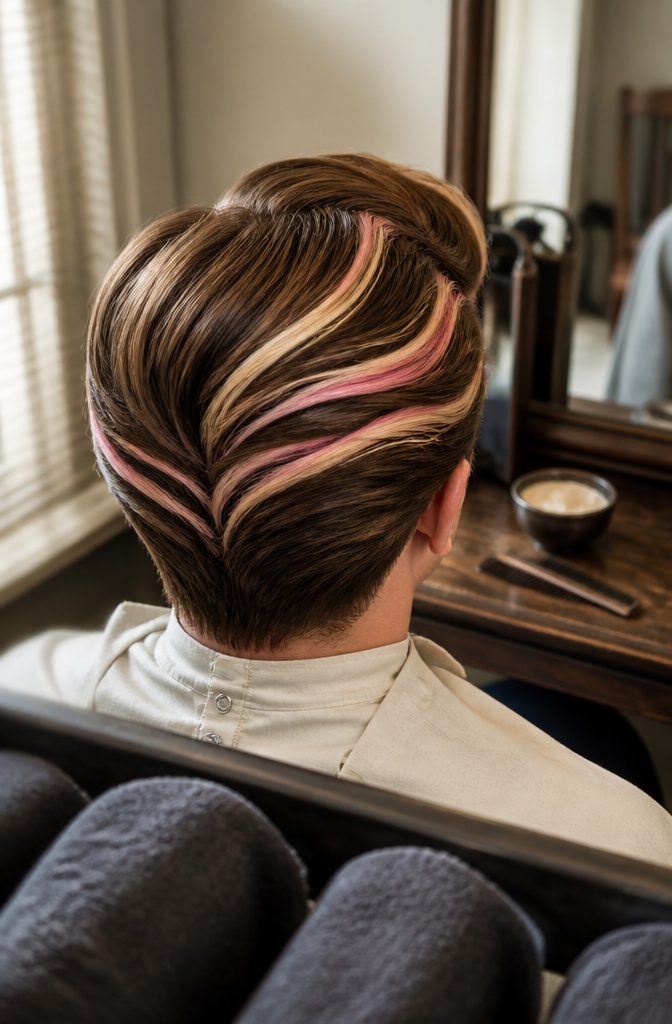
The modern Neapolitan hair trend borrows that chocolate starting point as its foundational shade, pairing it with blonde and pink in sharp sections or blended ribbons that mirror the ice cream trio.
Brown anchors both looks: the natural color observers kept returning to when describing Napoleon, and the rich base that makes the pink and blonde pop in the three-tone color blocking technique stylists use today.
Why Descriptions Disagree
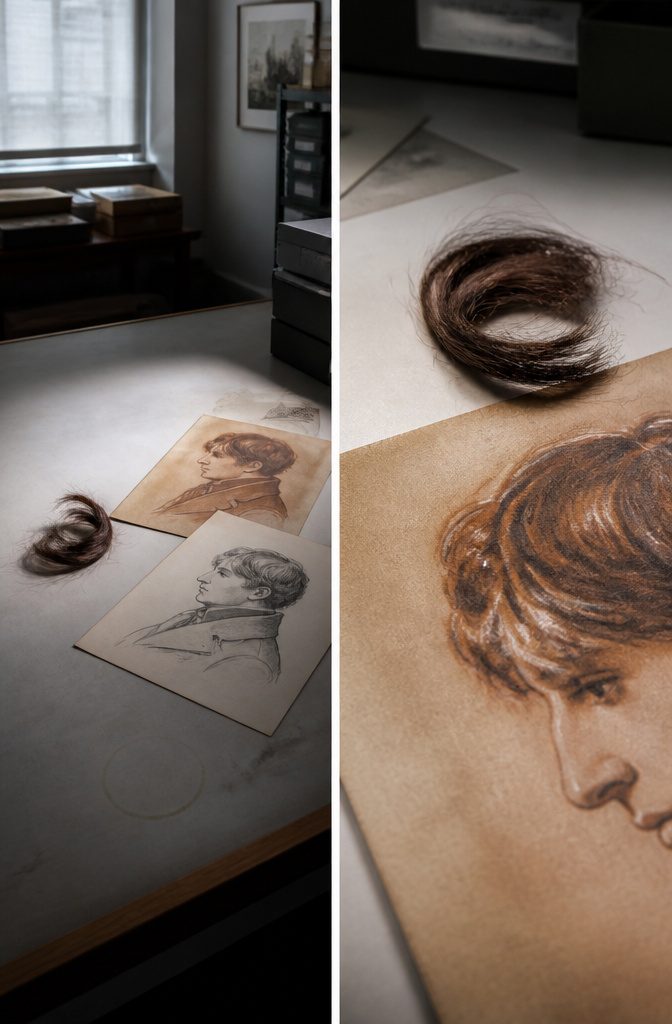
Accounts of Napoleon’s hair color split because lighting, aging and each observer’s own perception filtered what they saw differently.
A portrait commissioned early in his career might show warm chestnut tones, while a later sketch leans ashen. Very few authentic hair samples exist, and many of the locks in circulation are suspect or outright fake.
The Royal Collection Trust, National Army Museum, Royal Academy of Arts and Sir John Soane’s Museum each list Napoleon locks in their collections. A 2010 lock sold for over $13,000, and a 2015 strand went for about $200.
Arsenic testing on surviving hair confirmed it was not the cause of his death in 1821. Modern Neapolitan hair color varies from sharply separated bands to blended transitions, which adds its own layer of confusion when someone searches the name.
A Look Made on Purpose
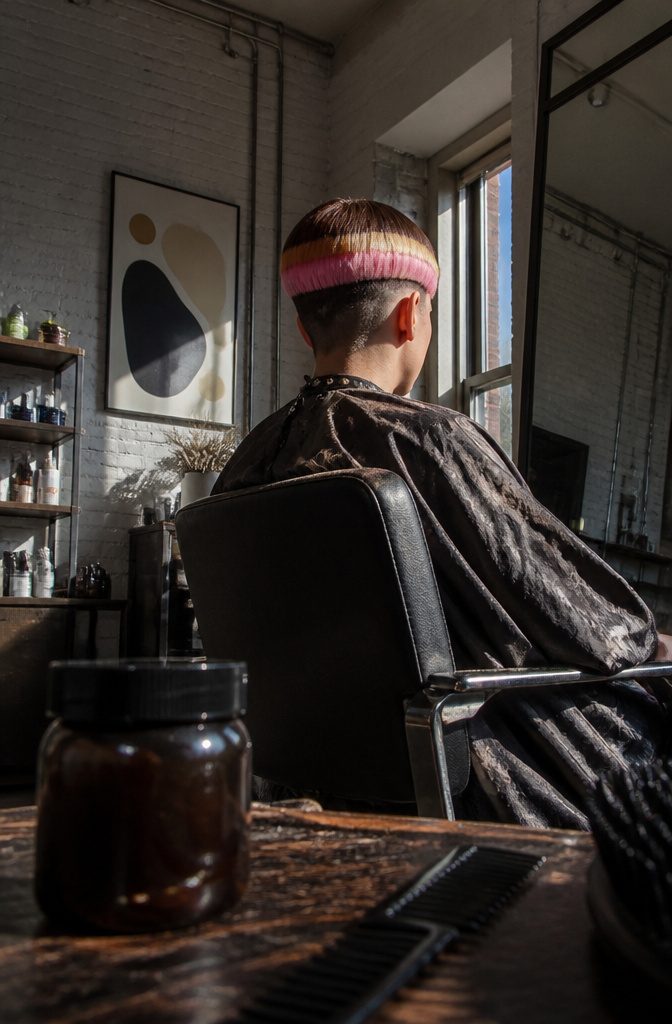
Napoleon’s structured cut and the tri-toned Neapolitan palette both ask you to commit.
The historical style required daily shaping and pomade to hold the cropped silhouette, and anyone wearing it signaled adherence to the republican mode of the 1790s and early 1800s.
The look rejected the powdered wigs and long queues of the ancien régime, so choosing it meant choosing a side.
Neapolitan color splits the hair into three horizontal bands and uses at least one shade that reads as unnatural, usually the pastel pink or lavender in the top section. The placement is visible from the front and meant to be.
Wearing it signals the same kind of intention: you want the look noticed, you accept the upkeep, and you’re fine with strangers reading creativity or rebellion into your appearance before you’ve said a word.
Frequently Asked Questions
What color was Napoleon’s hair?
Brown or chestnut appears most often in firsthand accounts, though observers described shades ranging from black to dark reddish-blond depending on lighting and perspective.
Captain Maitland called it very dark brown in 1815, while Denis Davydov saw dark reddish-blond at Tilsit in 1807. Most descriptions overlap in the brown-to-chestnut range.
What was Napoleon’s hairstyle?
His hair changed from long, flowing locks with a pigtail and light powder in the 1790s to a much shorter cut by the time he reached Egypt.
Later in his career he brought hair forward from the back to cover a receding hairline. His soldiers called him le Tondu, the shorn.
What is Neapolitan hair?
Neapolitan hair is a modern coloring technique that blends chocolate brown, vanilla blonde, and strawberry pink in one head of hair, inspired by the 3 flavors of Neapolitan ice cream.
The colors can be sharply blocked into distinct sections or blended as highlights and ribbons. Despite the name, it has nothing to do with Napoleon Bonaparte or the city of Naples.
How do you maintain Neapolitan hair?
Switch to gentle shampoos made for colored hair to hold the brightness and prevent the pink from washing out too fast.
Regular hydrating treatments, nourishing masks, and specific oils help the hair stay soft and reduce dryness after bleaching and multiple dye processes. Handle gently when washing to preserve all 3 shades.
Where can you see a sample of Napoleon’s hair?
The Royal Collection Trust, National Army Museum, Royal Academy of Arts, and Sir John Soane’s Museum each list Napoleon locks in their online collections.
A 2010 lock sold for over $13,000, and a 2015 strand went for about $200. Very few authentic samples exist, and many locks in circulation are suspect or outright fake.
Was Napoleon’s hair tested for arsenic?
Yes, arsenic testing on surviving hair samples confirmed that arsenic was not the cause of Napoleon’s death in 1821. The testing addressed long-standing speculation about poisoning during his final years on St. Helena.
Was Napoleon a redhead?
No, though one observer described his hair as dark reddish-blond at Tilsit in 1807.
Most accounts settle on brown or chestnut, with Captain Maitland calling it very dark brown and others using reddish brown or fine chestnut. The reddish tones some saw were likely highlights or lighting effects rather than true red hair.