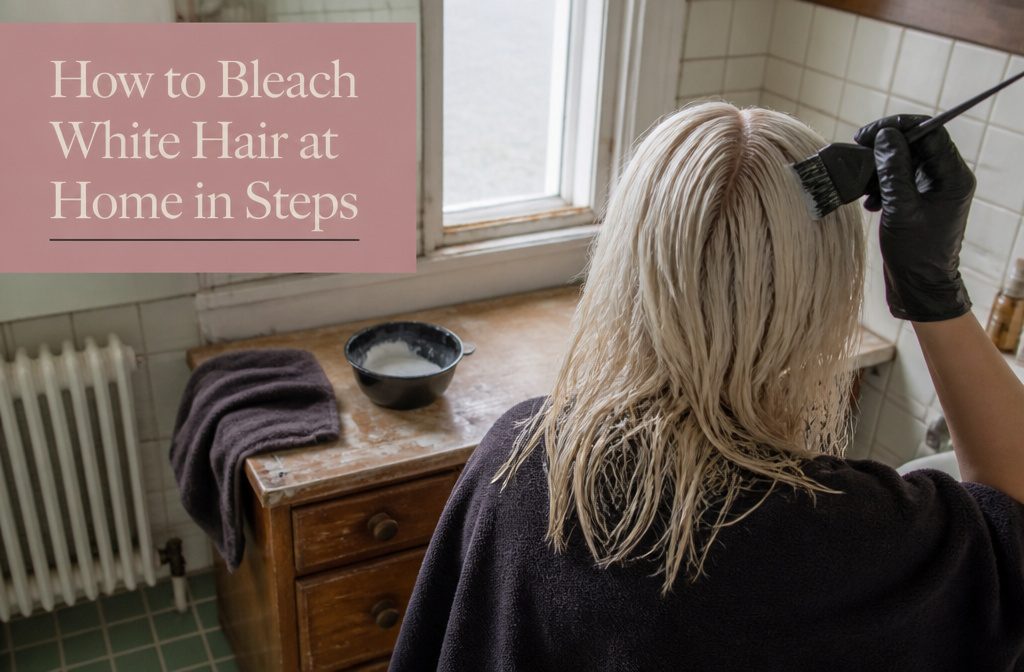
Light brown or lighter, never-colored hair can reach pale yellow in 35 minutes to an hour at home, for the price of a lightener, developer and toner.
People get the roots wrong: scalp heat lifts them faster, so bleach the lengths first, then apply 20 volume to the roots about 20 minutes later.
1. Prepare Hair and Assess Whether to Bleach
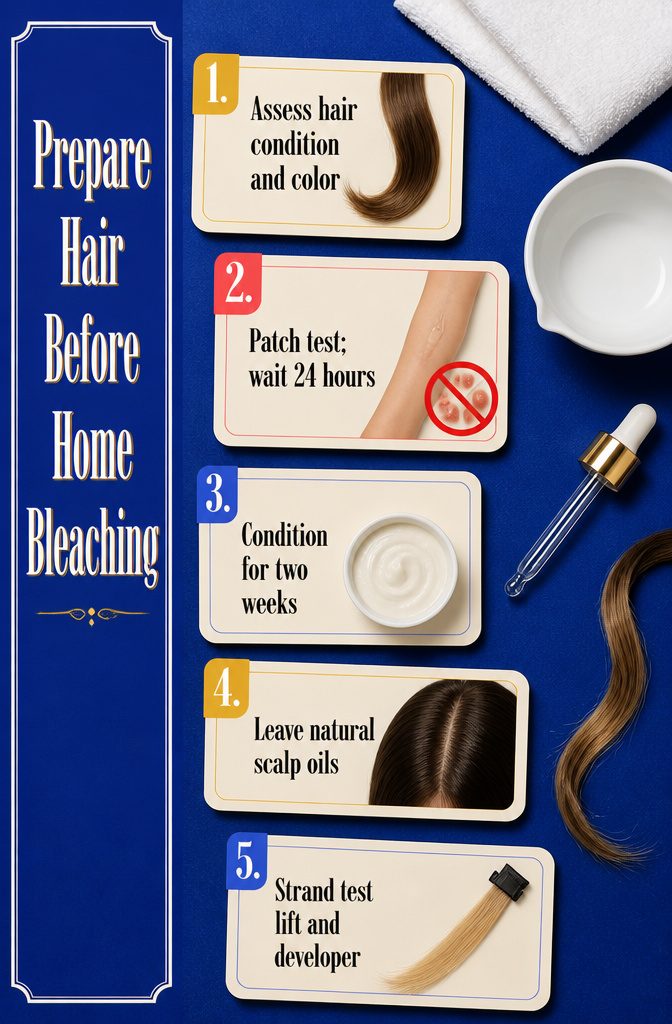
- Check your starting point. Hair that has never been colored and is light brown or lighter lifts best. Darker hair can reach white, but it takes more rounds and more damage. If your strands are already dry, brittle or chemically treated, I’d book a salon instead.
- Patch test your skin. Rub a couple of drops of the product on your inner forearm and wait 24 hours. Redness, itching, blistering or swelling means don’t use it.
- Use conditioning masks for two weeks beforehand, and skip retinol for a few days.
- Don’t wash right before. A few days of natural oil buildup protects your scalp.
- Strand test a small section to see how long your hair takes to lift and which developer volume suits it.
2. Gather Supplies and Mix Bleach
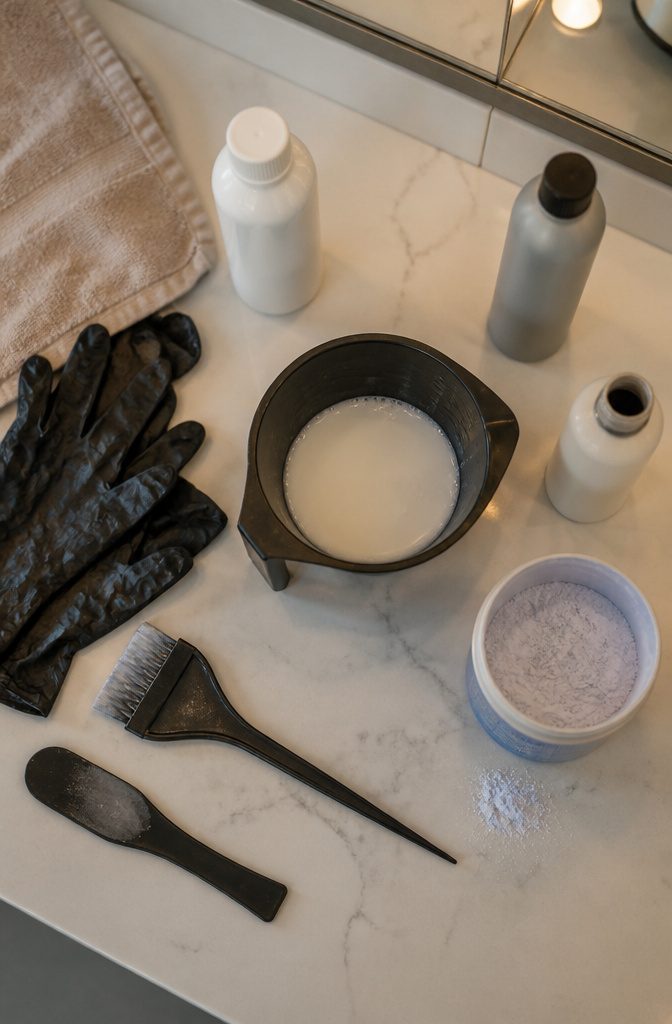
- Pick a lightener. Redken Flash Lift is a powder, Framesi Decolor B Cream Plus is a cream, and Ugly Duckling Brilliant Blonde Lightener is another powder-style option.
- Buy developer in the right volume. Use 20 volume for 1–2 levels of lift and for the roots, and 30 volume for 3 levels or more. A higher number lifts more.
- Set out disposable gloves, a bowl with graduated lines, a plastic spatula, a brush and a toner.
- Pour the developer in first, then add the powder, so you can read the measuring lines. Ratios vary by brand: Quick Blue uses 1 scoop of bleach to 1.5–2 oz of developer, while Ugly Duckling uses 1 part lightener to 2 parts developer. Follow your label.
- Stir until the mix saturates fast but doesn’t drip off the brush. Doubling the amounts covers a full head.
3. Section Hair and Apply Bleach
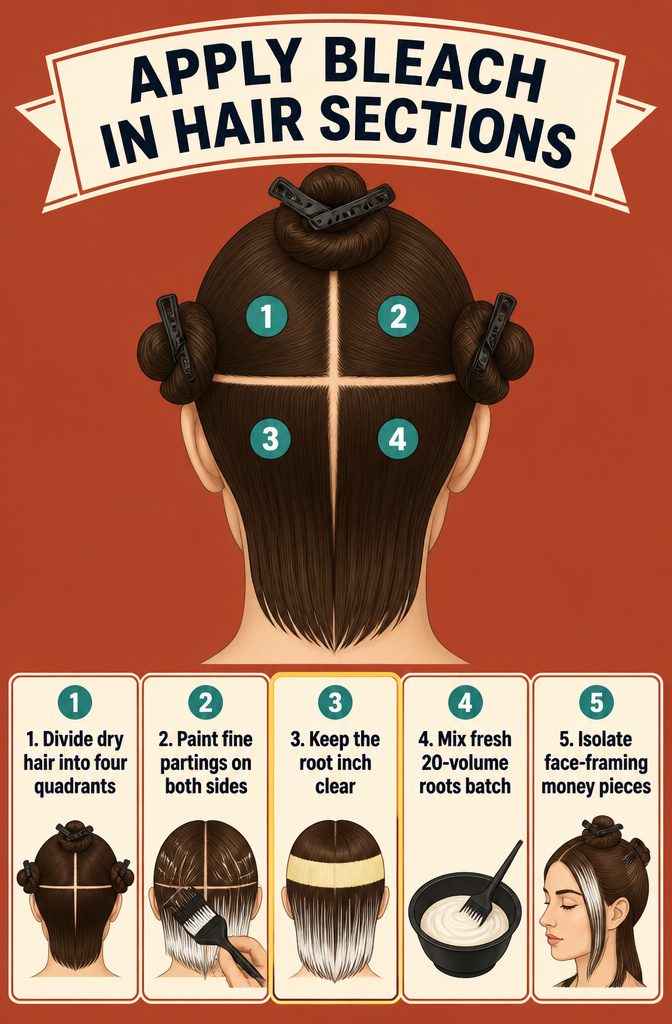
- Divide dry hair into 4 quadrants and pin back 3. Start in one back quadrant, since it’s the hardest to reach.
- Take very fine partings with the tip of the brush. Spread bleach on both sides, then part again directly behind it, like turning book pages.
- Stay on the mid-lengths and ends. Keep the last inch near the roots clear, because scalp heat makes roots lift faster.
- After about 20 minutes, mix a fresh batch with 20 vol developer and bleach the roots. Rinse as soon as they match the lengths.
- For money pieces, section off the face-framing strands, tie back the rest and bleach only those. It’s a low-commitment first run.
4. Process and Check Lift Every 15 Minutes
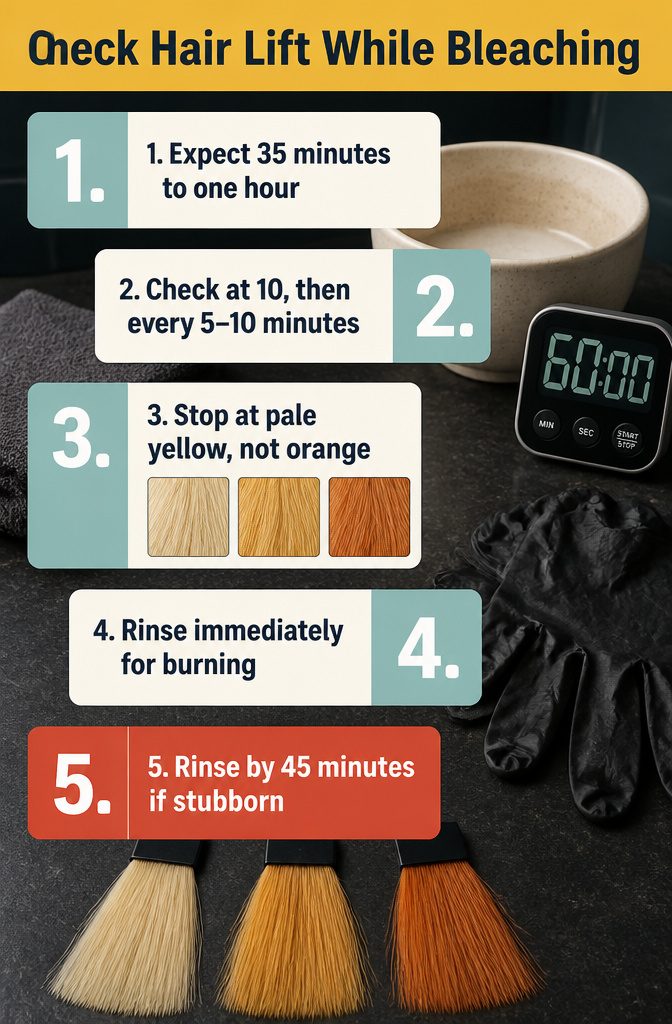
- Expect 35 minutes to an hour of total processing. Your starting shade and the developer volume decide where in that range you land.
- Check a strand at 10 minutes, then every 5–10 minutes. Every 15–20 minutes is the looser schedule, but on a first run I’d take the tighter one, because it costs nothing and catches over-lifting.
- Stop at pale yellow, the color of melted butter. Yellow is fine since toner comes next, but orange means the hair needs more lift.
- Rinse immediately if you feel burning or extreme discomfort. Tightness, itching or tingling is normal.
- Treat 45 minutes as the line for stubborn hair. If it’s still orange, rinse, deep condition, and wait several days before trying again. Never go past 1 hour.
5. Rinse and Tone
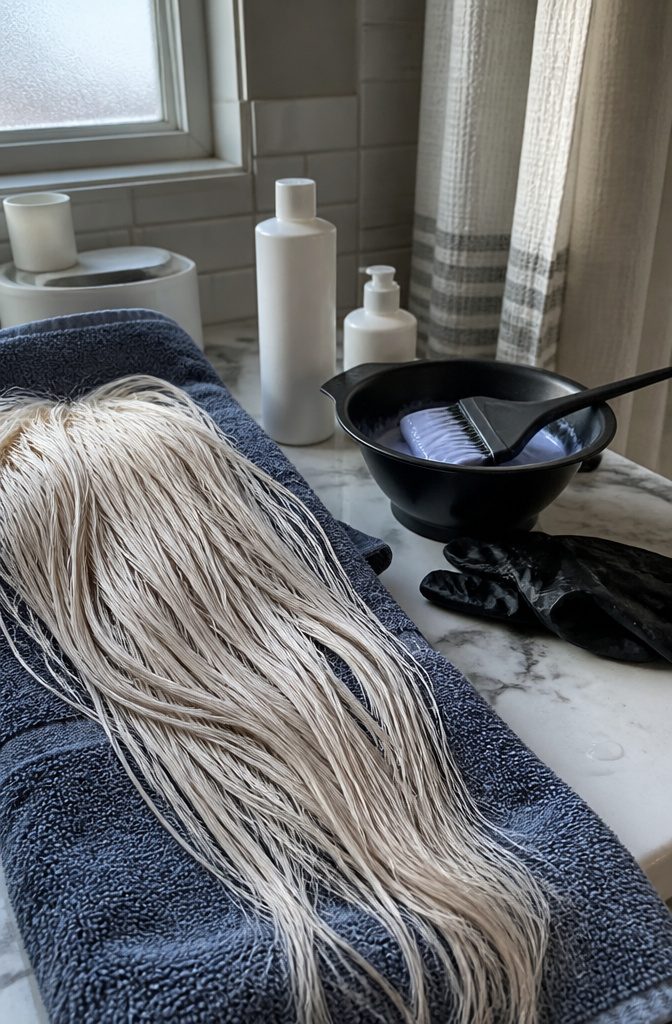
- Rinse the bleach out thoroughly with warm water, not hot, then towel dry.
- Choose a cool toner. For the icy finish white needs, I’d reach for Redken Shades EQ 09V, 09P or 09T, or Wella T-18. L’Oréal Paris Féria Power Toner Ice Blonde neutralizes orange in 5 minutes, and Color Gloss Platinum Pearl works in 15 or less.
- Mix Ugly Duckling Intense Pearl Blonde Toner 100V at 1 part toner to 2 parts 20 volume developer. Work fast, lengths first, then return to the roots.
- A few minutes softens yellow, while up to 20 minutes gives a silvery, icy tone. With Ugly Duckling, keep roots to about 10 minutes and the total under 20.
- Rinse. Toner fades, so reapply when brassiness creeps back.
6. Wash, Condition and Maintain
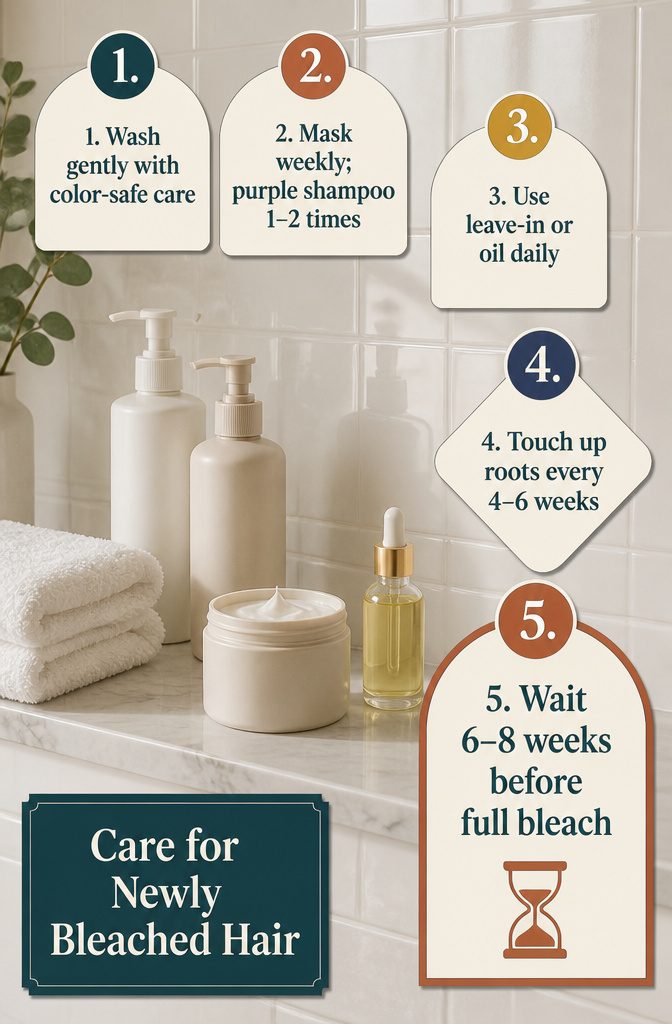
- Shampoo and condition with hydrating, color-safe products. Your scalp is tender after bleaching, so skip the hard scrubbing.
- Use a mask once a week, plus purple shampoo once or twice weekly to keep brassiness down.
- Add a lightweight leave-in conditioner or hair oil daily to head off brittleness.
- Touch up roots every 4–6 weeks.
- Wait 6–8 weeks before bleaching your whole head again. Never space any two sessions closer than 14 days.
Root timing is a two-sided problem:
"Retouching too soon runs the risk of overlapping the bleach, which can lead to breakage, but waiting too long between sessions can result in uneven lifting."
— GQ
Keep bleach on new growth only, so it never overlaps lengths that are already lifted.
Damage, Hair Condition and Safety
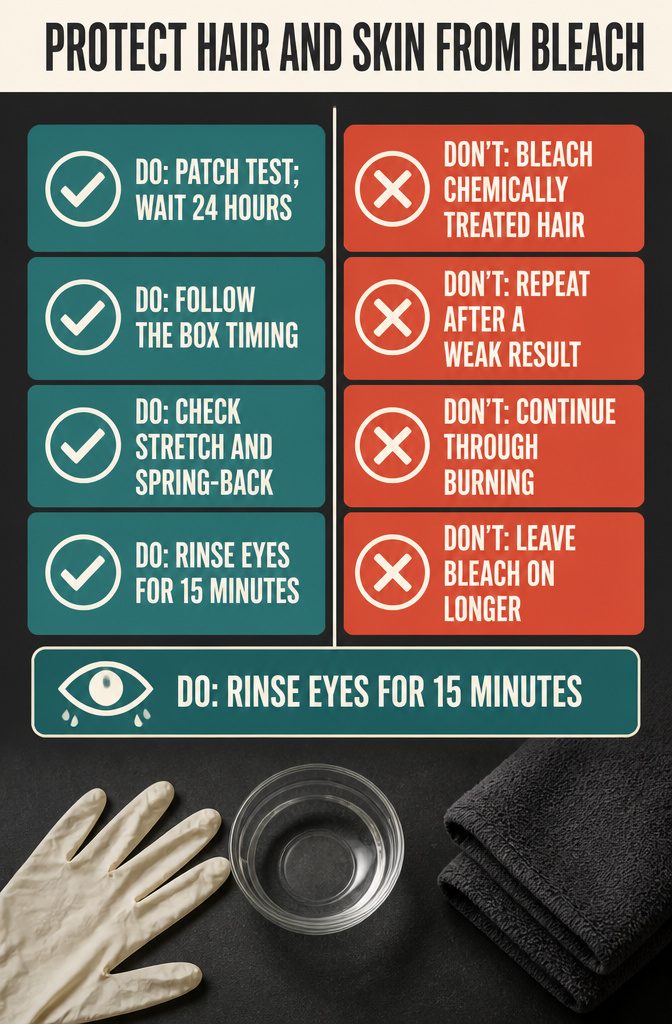
Bleach breaks 15% to 20% of the protein bands in a strand, and unlike regular color it penetrates the cuticle.
Hair can turn drier, rougher and thicker, and it can snap. Relaxed, straightened or other chemically treated hair shouldn’t be bleached at all, because it can literally crumble.
Before you start, check that your strands still stretch and spring back. Stick to the box timing, and never leave bleach on longer or repeat it right after a weak result.
Dab a couple drops on your inner forearm and wait 24 hours. Redness, itching, blistering or swelling means skip it.
If bleach reaches your eyes, rinse with water for at least 15 minutes. I’d book a salon for a big jump from dark hair, or if your scalp burns.
Lift, Starting Color and the Target Shade
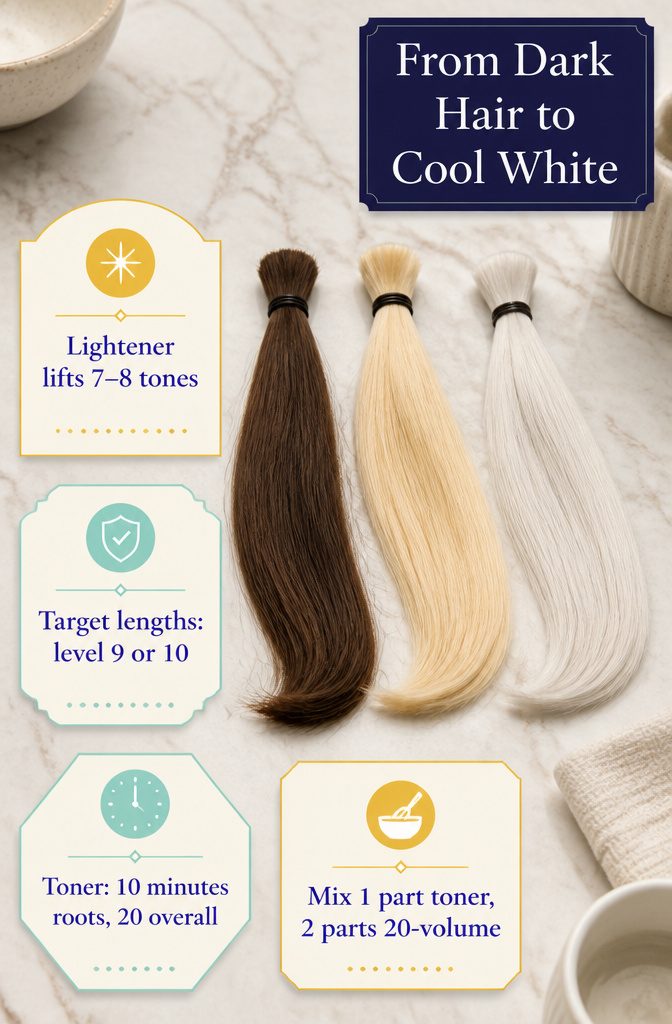
Lift, Starting Color and the Target Shade
How much lift you get depends on where you start. Darker hair needs longer processing time or multiple sessions spaced at least 14 days apart to reach white without unnecessary damage.
Ugly Duckling lighteners lift 7–8 tones, and the goal for lengths is level 9 or 10, a pale yellow like melted butter. That lightened base is not the final shade.
Toner comes after bleaching to reduce yellow and brassiness and push the color toward cool white. Intense Pearl Blonde Toner 100V is one of the fastest-acting toners on the market and processes in around 10 minutes on roots, 20 minutes overall.
The mix is one part toner to two parts 20-volume developer. Skip the toner and you get bright yellow; use it and you get pearl.
White-Blonde Style Choices
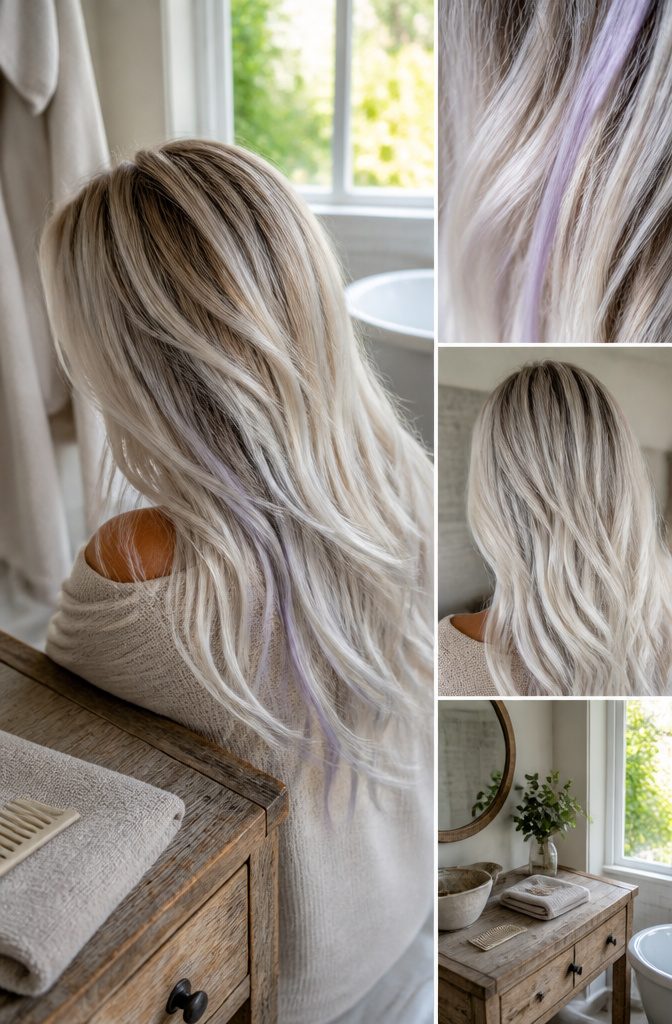
White is not one shade. The look changes with tone, placement and how much root you leave, and each one resets your bathroom schedule.
- Icy white blonde sits between pure white and pale blonde with a silvery finish—cooler and sharper than classic platinum.
- Platinum white leans the warmest of the group, closer to melted butter than frozen metal.
- Silver white pulls grey-toned rather than yellow, often paired with toners like Wella T-18 (called White Lady) or Redken Shades EQ 09V.
- Balayage keeps lightener off the root and paints it through mid-lengths and ends, so regrowth blends instead of announcing itself.
- Money pieces bleach just the face-framing sections in front for a low-commitment pop that takes one kit and thirty minutes.
- Highlights weave bleached pieces throughout for dimension without covering every strand.
- Lowlights drop darker sections into white blonde to add contrast and break up flatness.
- Rooted white blonde leaves an inch or two of natural color at the scalp, stretching time between touch-ups from three weeks to two months.
- Pastel combinations layer semi-permanent pinks, lavenders or blues over white blonde for an iridescent, multi-tonal effect.
Cooler finishes need purple shampoo when yellow creeps back. Warmer platinum fades faster but reads softer in natural light.
Bleach Bath for Removing Stubborn Color
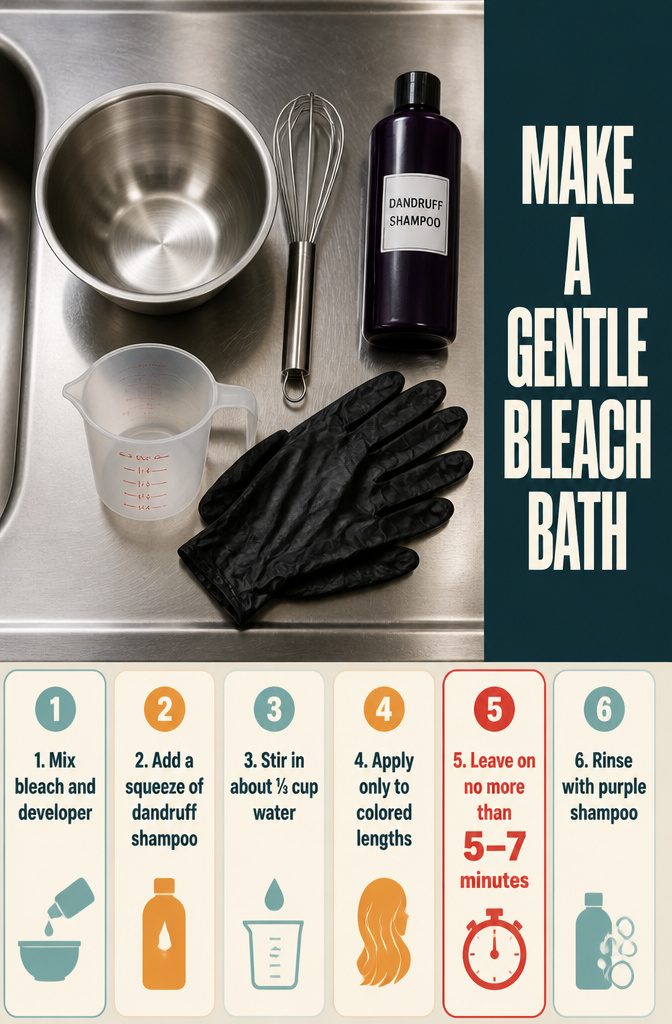
A bleach bath strips stubborn color from dyed hair so the next shade lands on a clean base. I’d try a color remover made for semi-permanent dye first, and only move on if color remains.
- Mix the bleach and developer.
- Add one good squeeze of dandruff shampoo. A cheap bottle works fine.
- Stir in about ⅓ cup of water, until the mixture looks smooth and not too runny.
- Apply to the mid-lengths and ends only, covering just the color-treated hair. Keep it off the scalp and roots completely.
- Leave it on for no more than 5–7 minutes.
- Rinse, using purple shampoo at the same time to tone and even out the result.
Home Versus Salon
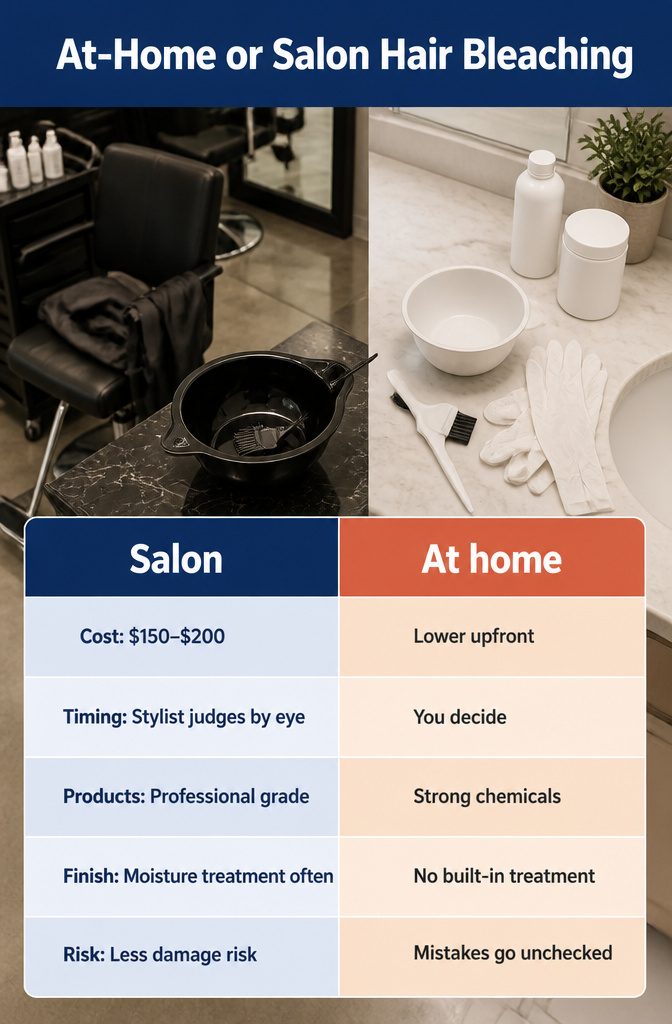
Salon bleaching runs $150–$200, and where you land in that range depends on hair length, thickness and your current color.
You’re paying for a stylist who judges processing by eye and a better shot at the shade you actually asked for, with less damage from professional-grade products.
The salon also finishes with an after-color treatment at the shampoo bowl, a burst of moisture, and often Olaplex, which keeps hair from overbleaching to the point of breakage.
At home, you handle strong chemicals yourself and decide when the lightener has done enough, with nobody to catch a mistake.
I’d pay for the salon if your hair is long, thick or already damaged, because a misjudged timing can’t be undone.
Frequently Asked Questions
How does bleaching work?
Bleach opens the hair cuticle and dissolves melanin, the natural pigment, so the strand turns lighter.
It also breaks down the protein in the hair, about 15% to 20% of the protein bands, which is why bleached hair can feel drier and rougher and may snap. Leaving it on longer destroys more keratin.
How can I bleach my hair white at home?
Lift the lengths to level 9 or 10, a pale yellow like melted butter, then tone it to white. Patch test 24 hours ahead, use 20 volume developer for 1–2 levels of lift and the roots, and 30 volume for 3 levels or more.
Expect 35 minutes to an hour of processing, and space sessions at least 14 days apart if your hair is dark and needs more than one round.
Can you tone white hair?
Yes, and toning is what turns bleached yellow into white. Cool toners such as Wella T-18 or Redken Shades EQ 09V neutralize the yellow, and a few minutes softens it while up to 20 minutes gives a silvery, icy finish.
Toner fades, so use purple shampoo once or twice a week to keep brassiness away.