Silver that looks deliberate takes a weekly clarifying shampoo followed by a violet one, plus a trim every 6–8 weeks.
The grow-out runs longer than most people expect: an 8-inch bob takes about 16 months from the last color appointment. And no supplement brings color back unless bloodwork shows a diagnosed deficiency.
1. Why Hair Turns Gray
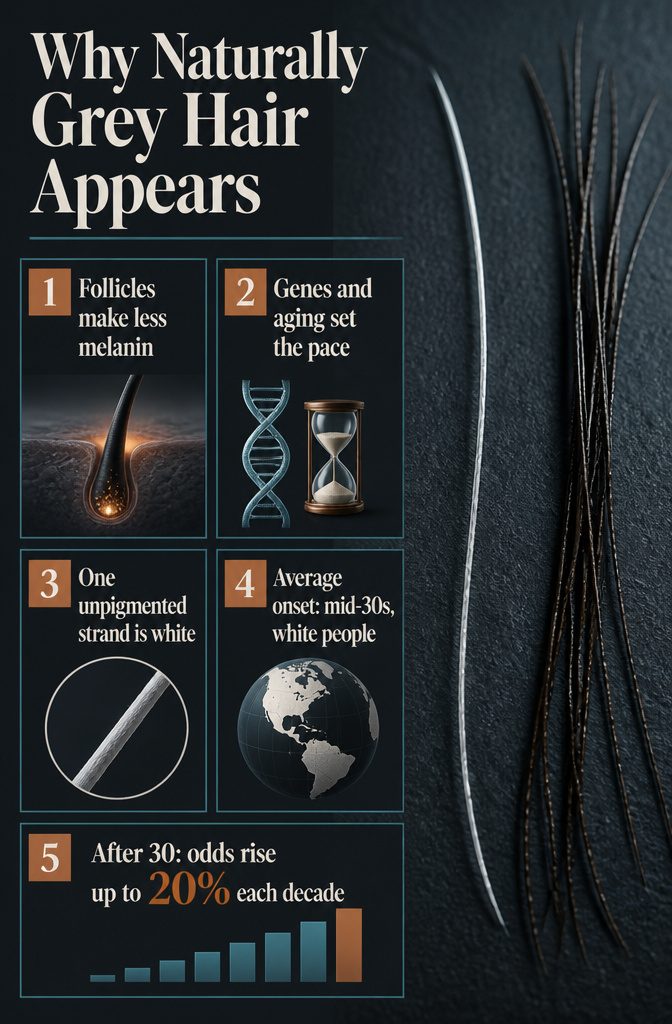
Hair color comes from melanin, and gray begins when follicles make less of it. Genes set the pace and aging does the rest, so if your parents grayed early, I’d expect the same for you.
A single gray strand, pulled and examined, is actually white.
Gray is an optical illusion: unpigmented hairs sitting beside pigmented ones. As the pigmented hairs thin out, the whole head reads whiter.
Average onset is the mid-30s for white people, the late 30s for Asians and the mid-40s for African Americans.
Gray counts as premature before 20, 25 and 30, in that order. After 30, the odds of naturally grey hair rise by up to 20 percent each decade.
2. Can Gray Hair Turn Back
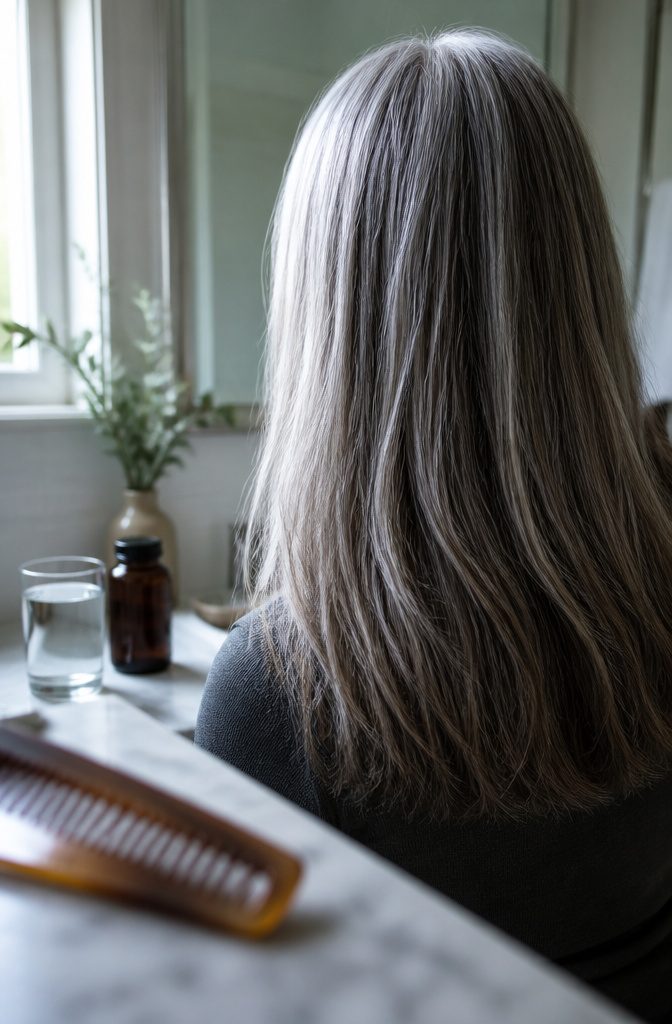
Gray from genetics or age does not reverse.
Follicles that stop making melanin do not restart, so a strand that grows in gray or white stays that way. Gray hair has minimal pigment, and white has none.
The exception is gray tied to a diagnosed deficiency or medical condition. Treat the cause and color may return in some cases, and correcting a deficiency can slow further graying.
Supplements are a different matter. Biotin, zinc, selenium, B-12 and D-3 are all marketed for gray hair, but unless a diagnosed deficiency is behind yours, they won’t restore color.
Before buying any bottle, I’d ask a doctor about bloodwork, since a test tells you whether a deficiency exists at all.
3. Cover or Embrace It
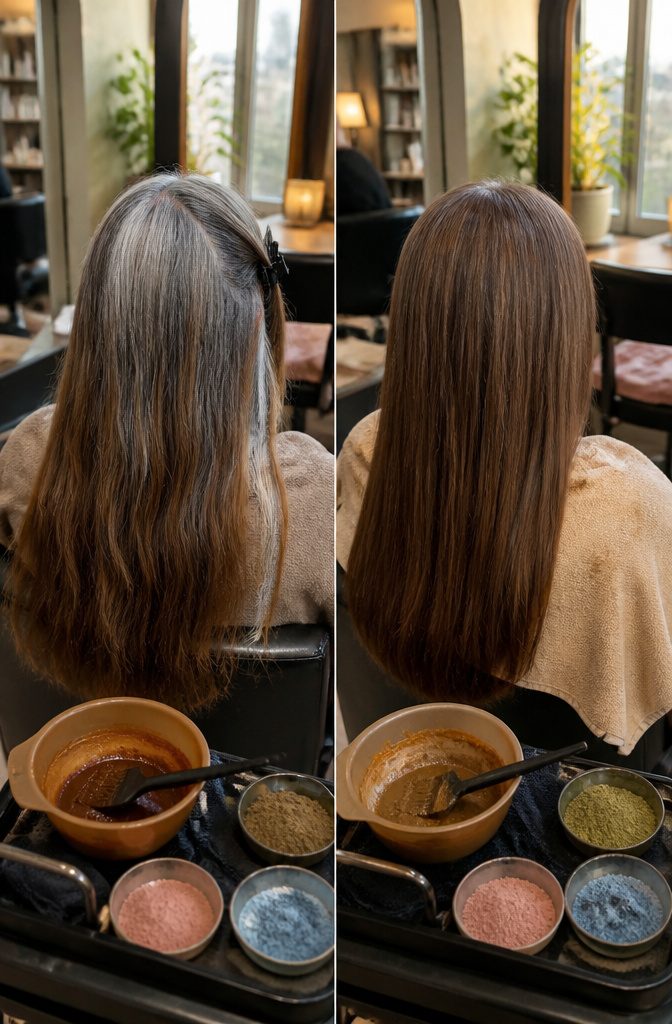
If you’re not ready to go fully gray, you have options that vary widely in commitment and upkeep.
- Permanent dye covers stubborn roots better than semi-permanent color and lasts until new growth appears. Products designed specifically for gray hair take better. Expect to recolor roots every four to six weeks. If some grays resist the dye, switching to a lighter shade can help them blend rather than stand out.
- Semi-permanent dyes last a week or two and fade gradually with each shampoo. They’re ammonia-free and give you a chance to try bold shades like pink, purple or blue without permanent commitment.
- Henna adds red, brown or black tones and works across hair textures. It’s a plant-based alternative if you want to avoid chemical dyes, though it takes longer to apply and the color builds over time.
- Highlights or lowlights soften the contrast as gray grows in. If you have a lot of gray already, going lighter through highlights minimizes visible regrowth. Switching from permanent to demi color makes gray strands read as highlights rather than roots.
- Root touch-up powders or creams mask a few scattered grays temporarily. They wash out with shampoo and work well between full color appointments.
4. Growing Out Dyed Hair
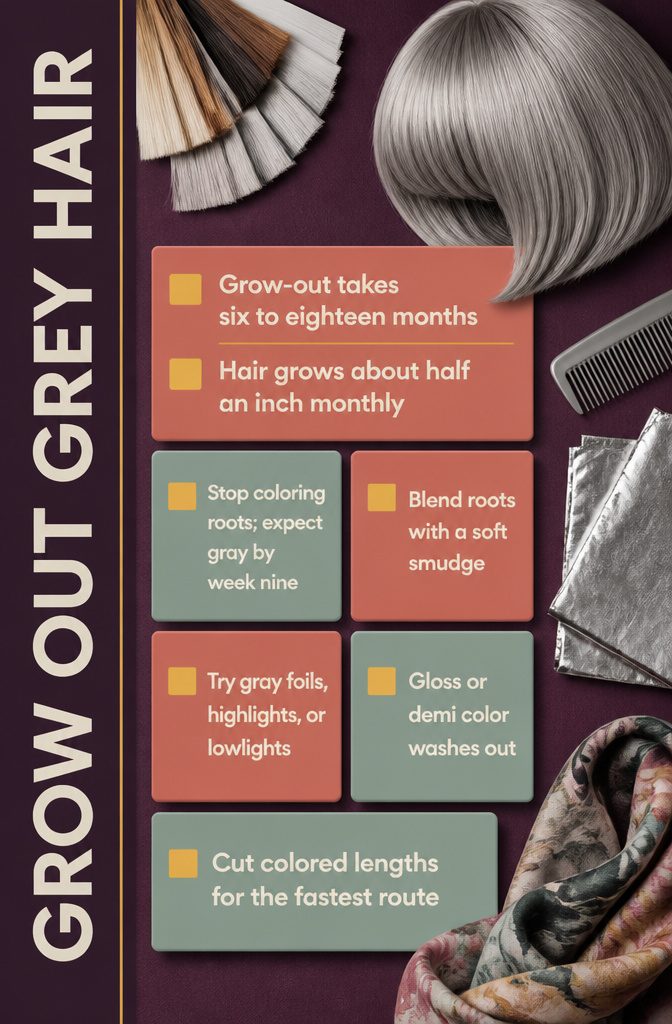
The timeline stretches longer than most people expect: six to eighteen months to grow out color completely, depending on how much length you want to keep.
Hair grows about half an inch per month, so an eight-inch silver bob takes roughly sixteen months from the last color appointment.
Most approaches center on blending rather than waiting out a hard line:
- Stop coloring the roots. The simplest path, though you’ll have about an inch of gray growth visible by week nine.
- Root smudging. A colorist blends a softer shadow at the root line so the demarcation fades rather than cutting sharply.
- Foils with gray color. Instead of lightening, the colorist applies gray dye through foils to transition between the two tones more gradually.
- Highlights or lowlights. Breaking up solid color with lighter or darker pieces makes regrowth less obvious.
- A gloss or demi color. Temporary tone that washes out over weeks rather than leaving a root line.
- Hairstyles and accessories. Headbands, scarves, and partings that minimize the contrast.
- Cutting the colored hair away. The fastest route if you’re willing to go short.
5. Caring for Gray Texture
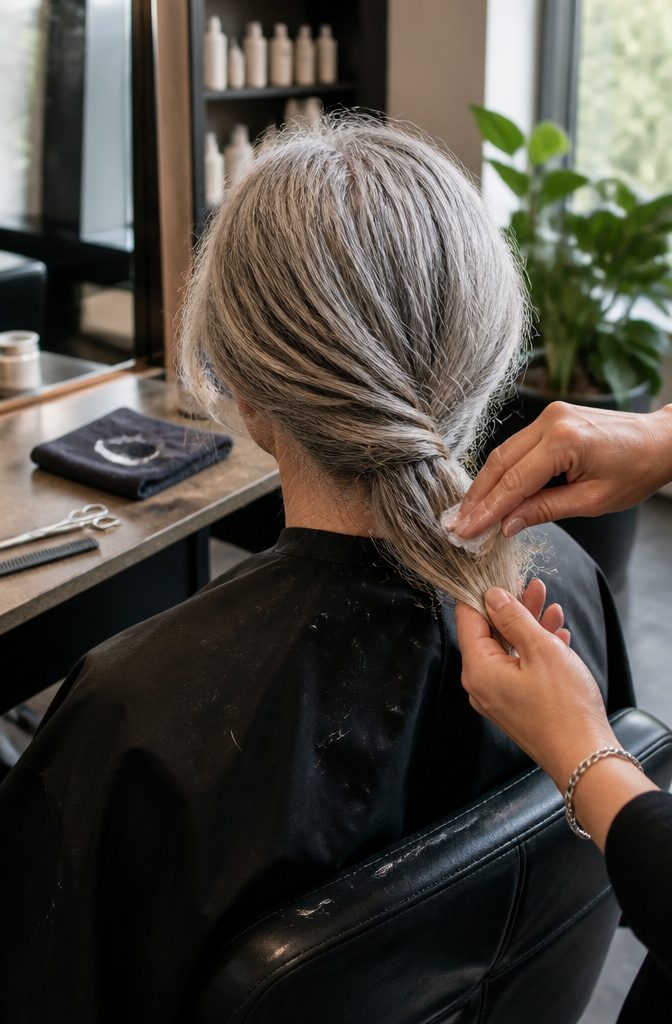
Gray hair changes texture because it has less pigment and a thinner cuticle than pigmented strands. Without that pigment to soften it, the hair can feel coarse, wiry or fragile.
Dryness becomes more obvious because the thinner cuticle does not hold moisture as well, and many people notice their gray feels rougher or more unruly than the hair they had before.
Moisture is the fix. Hair oils and serums help smooth the cuticle and add weight without heaviness, and they make a real difference on texture that wants to stand up or frizz.
I also find that gentle handling matters more now: less heat, less tugging when wet, and a trim every 6–8 weeks to keep ends from splitting and making the whole thing look dry.
Some stylists suggest mild keratin treatments for clients whose gray texture fights back; those last three to four months and soften coarseness while adding shine.
6. Styling Gray Hair
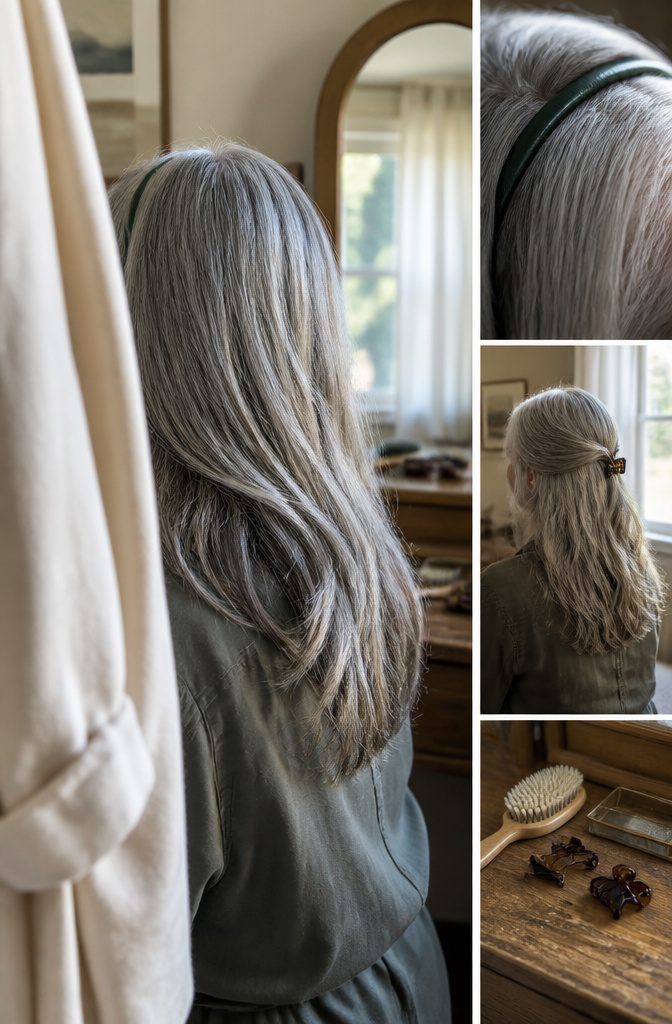
A few gray hairs can be hidden with styling alone, and these moves cover most situations:
- Updo: on long hair, pulling it up keeps gray roots out of sight.
- Part: switch to the side with less gray, so less of it frames your face.
- Headband: a pretty one covers the hairline, where gray tends to show first.
- Short cut: women who are fully gray often go short, and it’s an easy look to maintain.
- Long layers: they add movement to healthy, bouncy hair. I’d pick them over one blunt length if you’re keeping the length.
- Texture: a cut with plenty of style and texture looks deliberate. Trim every 6–8 weeks to keep it that way.
- Products: the right ones help with the dullness that gives gray its "granny" look.
7. Health Causes to Rule Out
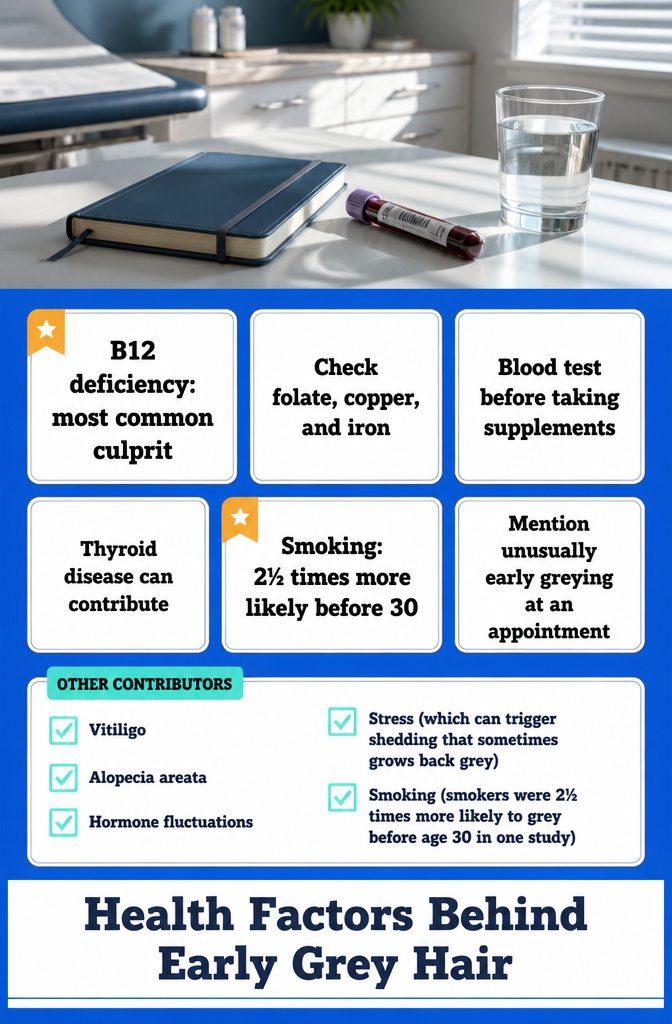
If your hair greyed early and you’ve ruled out family history, a few health factors are worth checking before you decide whether to embrace the silver or reach for dye.
Vitamin B12 deficiency is the most common culprit, but folate, copper, and iron shortages can all affect melanin production in your hair follicles.
A blood test will show whether you actually need supplements; taking them without a diagnosed deficiency won’t bring back your natural colour.
Other contributors to premature greying include:
- Thyroid disease
- Vitiligo
- Alopecia areata
- Hormone fluctuations
- Stress (which can trigger shedding that sometimes grows back grey)
- Smoking (smokers were 2½ times more likely to grey before age 30 in one study)
Managing an underlying condition could, in theory, restore melanin over time. If you greyed unusually early and nothing else explains it, mention it at your next appointment.
8. The Emotional Side
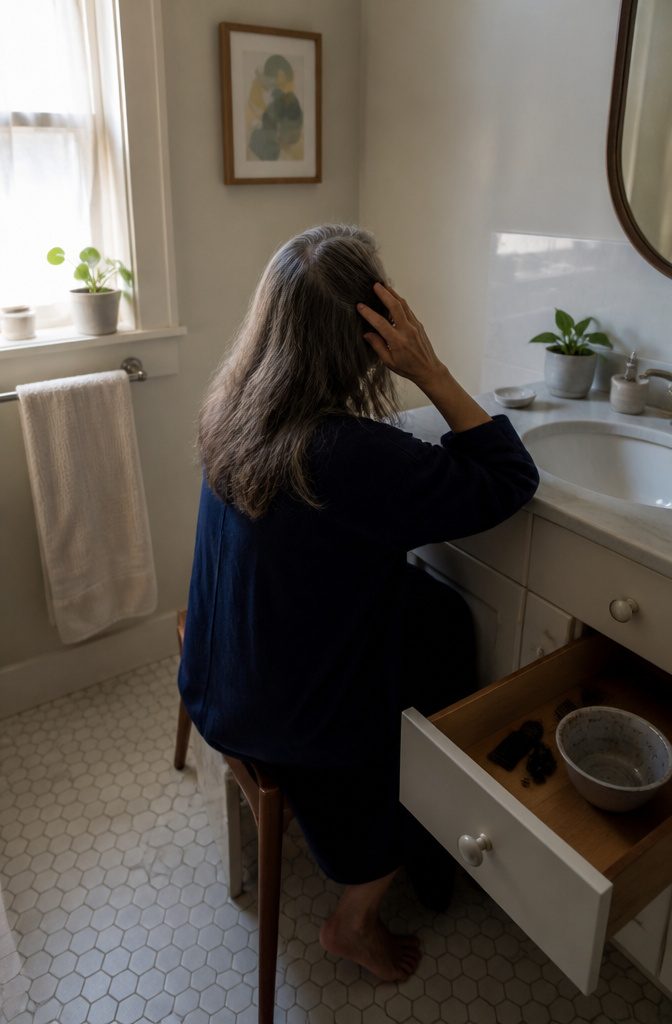
Deciding to grow out grey is easier to picture in theory than to sit with in practice.
The streak that felt empowering when you imagined it can feel like aging written across your forehead when you catch it in the bathroom mirror each morning.
Family members make comments, workplace culture leans harder on women to keep up appearances, and the pressure to dye builds even when you thought you were done with it.
One woman calculated what sixteen years of coloring had cost her: 151 dye jobs, 226 hours in the chair, and $16,380 spent chasing her original shade. White roots appeared within a week each time, which meant the math never stopped.
That pressure is shifting, slowly. Grombre, the grey-transition community on Instagram, has 220,000 followers.
One wig stylist in Ontario reported that silver requests now account for 20 percent of her clients, up from under 5 percent three years earlier. Acceptance takes time, and the decision tends to revisit itself every few weeks until it sticks.
Color Options by Lifespan
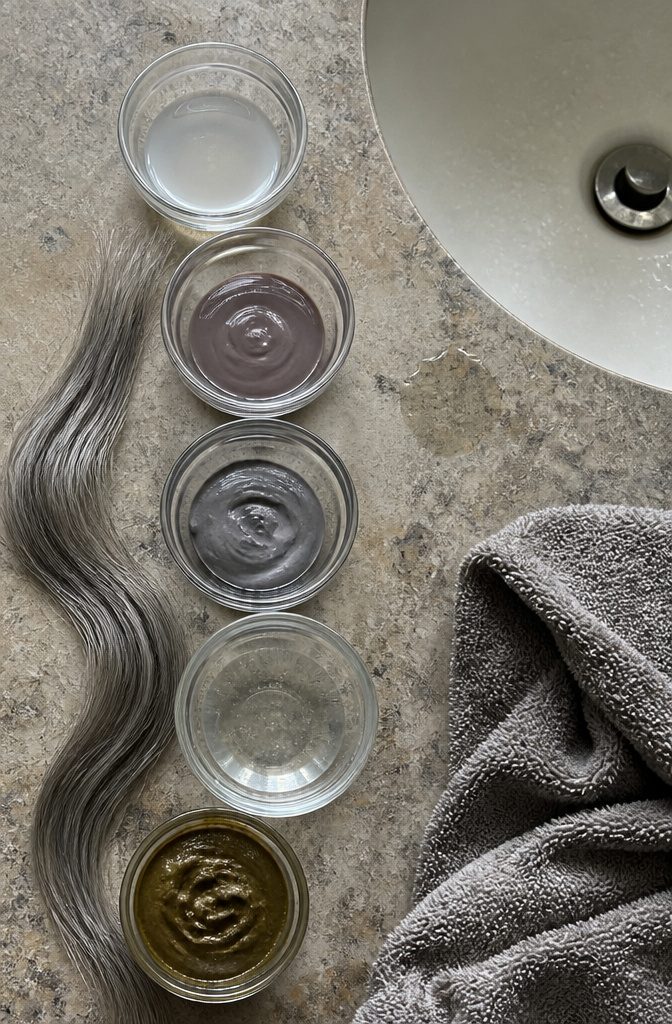
The lifespan of each option decides whether you touch up next week or next season.
Temporary rinses wash out in one or two shampoos, semi-permanent color fades gradually over one to two weeks, and permanent dye holds for six to eight weeks before roots or fade pull you back to the mirror.
| Option | Type | Lasts | Application Time |
|---|---|---|---|
| Silver rinse | Temporary | 1–2 washes | 5–10 minutes |
| Semi-permanent dye | Demi | 1–2 weeks | 20–30 minutes |
| Permanent silver blonde | Permanent | 6–8 weeks | 30–45 minutes |
| Gloss treatment | Toning | 3–4 washes | 5 minutes |
| Henna | Natural permanent | 4–6 weeks | 2–4 hours |
Glosses sit between temporary and semi-permanent: they deposit tone without opening the cuticle much, so they rinse away faster than dye but refresh silver without committing to a full color session.
Henna and Natural Dyes
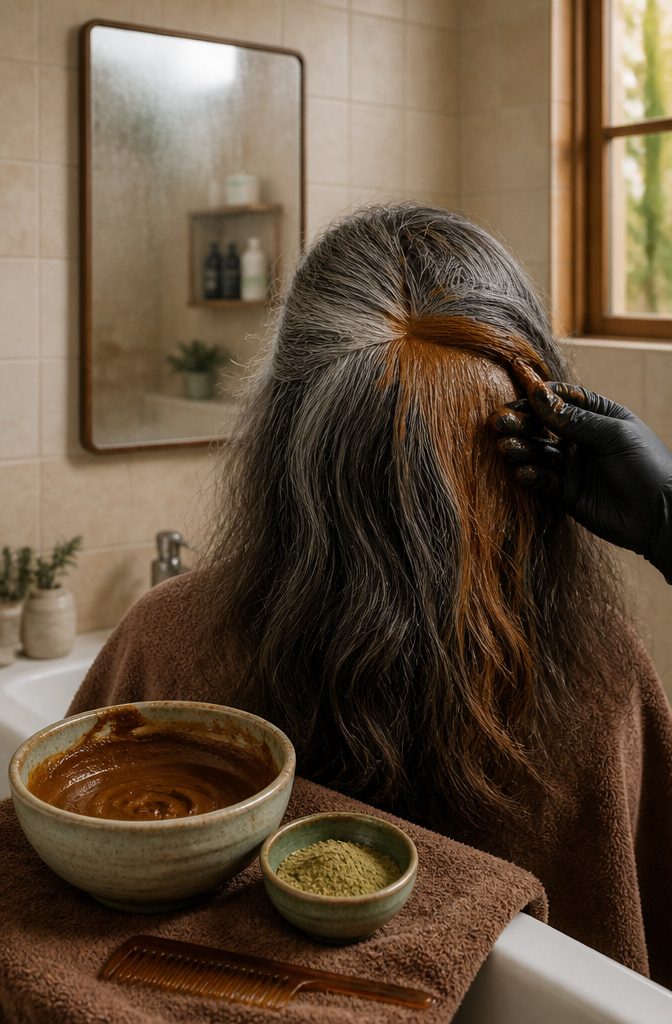
Henna sits apart from synthetic dyes because it coats the hair shaft rather than lifting and depositing pigment inside it.
That means it can deepen naturally grey hair into auburn, copper or mahogany tones without the oxidative damage that comes with ammonia and peroxide.
The colour builds with each application, so the first round may look subtle and the fifth distinctly red.
It will not lighten grey hair, only stain it, and the result depends entirely on what percentage of your hair is grey to begin with.
Indian gooseberry, also called amla, shows up in traditional formulas as a conditioning treatment that may darken grey over time, though the mechanism is gentler and slower than henna.
Some people use it as a standalone rinse, others mix it with henna to tone down the red.
Expect gradual shifts rather than coverage in one session, and know that natural options fade differently than box dye. They do not strip out cleanly, so switching back to chemical colour later can be unpredictable.
Keeping Gray Bright
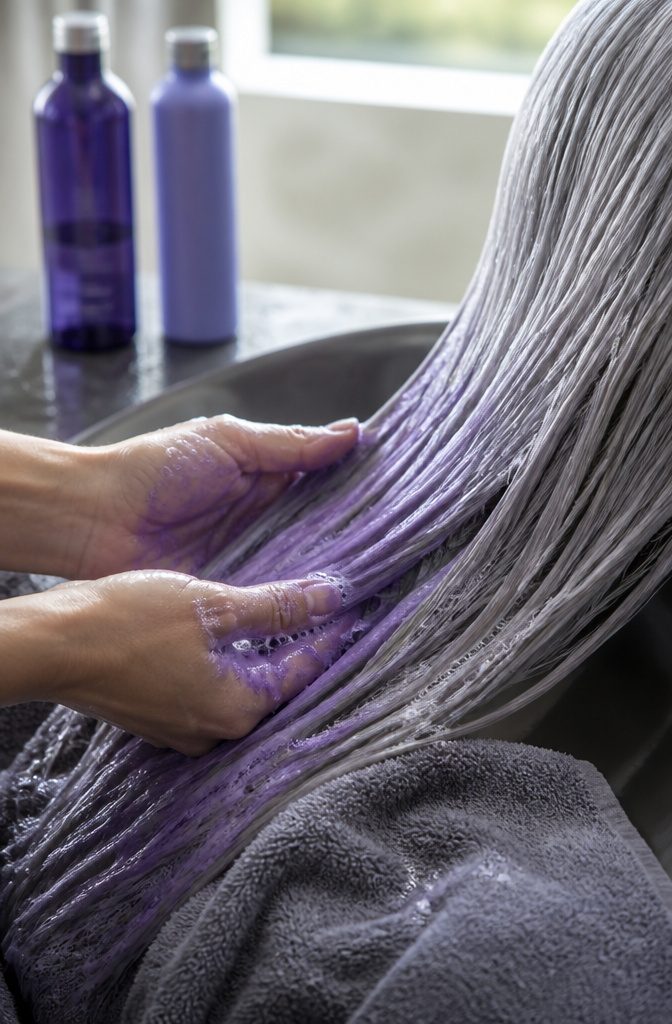
Gray hair has no pigment to mask anything, so the faintest yellow reads as yellow.
Sun, heat from lamps and cigarette smoke can all push silver toward brass, and a thinner cuticle leaves gray strands with less protection from each of them.
My pick is a two-step routine. Once a week, use a clarifying shampoo such as Living Proof Triple Detox to strip the surface buildup that dulls tone.
Follow it right away with a violet shampoo, and Sachajuan’s Silver Shampoo is the one I’d start with. The violet cancels yellow, so use it as the toning step after clarifying, not as a daily wash.
If you’d rather swap your whole routine, L’Oréal Paris EverPure Silver Care Shampoo and Conditioner add hydration, which gray hair tends to need.
A Shine Routine
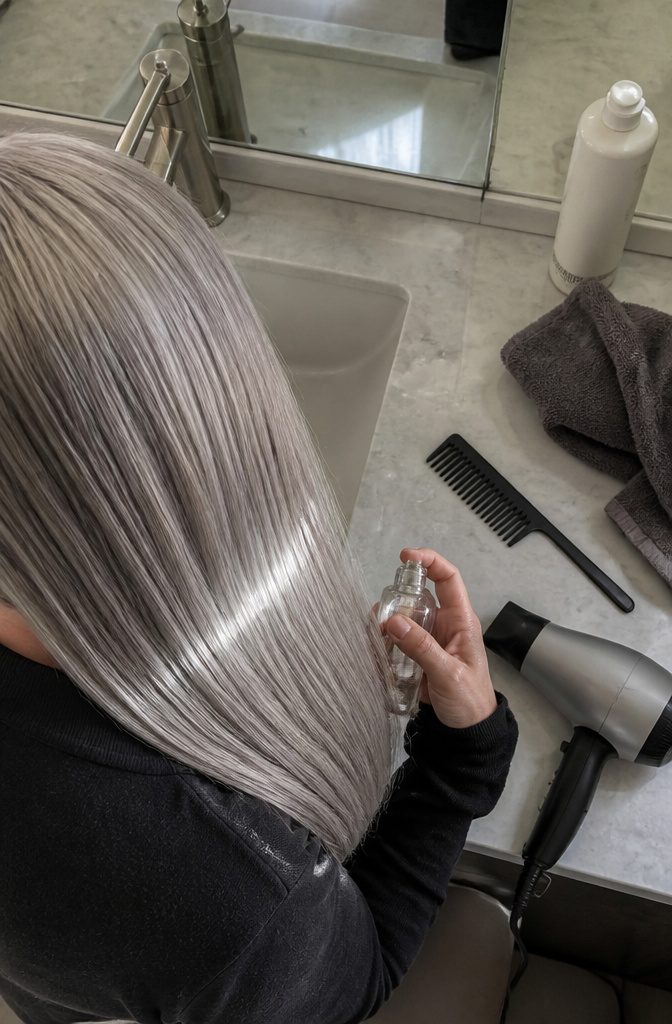
Gray hair shines when the cuticle lies flat and light bounces off it, so every step here is about smoothing and removing buildup.
- Use a clarifying shampoo such as Living Proof Triple Detox once a week to strip the residue that dulls tone. Follow it with a violet shampoo or conditioner like Sachajuan Silver to cancel yellow.
- Choose a clear, colorless serum like Number 4 Restore & Repair Oil. I’d skip amber-colored ones, which can change how the gray reads.
- Work a light amount into damp hair along with a heat protectant such as Phytologie Phytokeratine Heat-Protecting Repair Spray. Once dry, add a touch more oil to the edges for polish.
- L’Oréal Paris EverPure Bond Repair Hair Oil-in-Serum protects against temperatures up to 450 degrees Fahrenheit.
- If your texture isn’t naturally smooth, a Dyson Supersonic dryer or Airwrap makes the smoothing far easier.
Frequently Asked Questions
How long does it take to grow out gray hair?
Plan on 6–18 months, depending on how much length you keep and whether you cut or color along the way.
Hair grows about half an inch per month, so an eight-inch silver bob takes roughly 16 months. Cutting off the colored lengths is the fastest route.
Why does hair turn gray?
Follicles make less melanin over time, and genes set how fast that happens.
Each strand is really white, and gray is the look of unpigmented hairs mixed with pigmented ones. After 30, the odds of naturally grey hair rise by up to 20 percent each decade.
Can gray or white hair turn back to its original color?
Not if genetics or age caused it, because follicles that stop making melanin don’t restart.
The exception is graying tied to a diagnosed deficiency or medical condition, where treating the cause may bring color back in some cases. Supplements won’t restore color without a confirmed deficiency, so ask a doctor about bloodwork first.
How do you enhance naturally grey hair?
Use a clarifying shampoo once a week, then follow it with a violet shampoo to cancel yellow tones.
Add a clear, colorless serum and a heat protectant for shine, since gray hair has less pigment and a thinner cuticle and tends to run dry. Trimming every 6–8 weeks keeps the ends from looking frayed.
How do brunettes transition to gray?
Brunettes have the same options as anyone else: stop coloring the roots, or ask a colorist for root smudging, gray-toned foils, or highlights and lowlights to soften the line.
Expect about an inch of visible gray growth by week nine. A gloss or demi color can also blur the regrowth while it fades over a few weeks.
Are there any benefits to having gray hair?
The biggest one is freedom from the dye cycle, since permanent color needs root touch-ups every 4–6 weeks.
One woman added up 16 years of coloring and counted 151 dye jobs, 226 hours in the chair and $16,380. Going gray also means no ammonia or peroxide on your hair.
What is it like to grow out gray hair?
It’s often uncomfortable before it feels good. The first weeks can feel like aging in the mirror, and comments from family or coworkers add pressure to go back to dye.
Many people find the decision comes up again every few weeks until it sticks, and a growing community of people going gray makes it easier to stay the course.