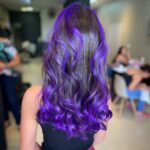
How much purple you want people to see decides which of these looks is yours. The range runs from a violet sheen that only shows up close to bold rope twists and vivid highlights.
Deeper shades like plum and midnight purple pass for natural at a glance and fade slower, while bright violets usually fade faster.
Box braids sit apart from the rest, since the color lives in the braiding hair and your own stays untouched.
1. Deep Purple Waves
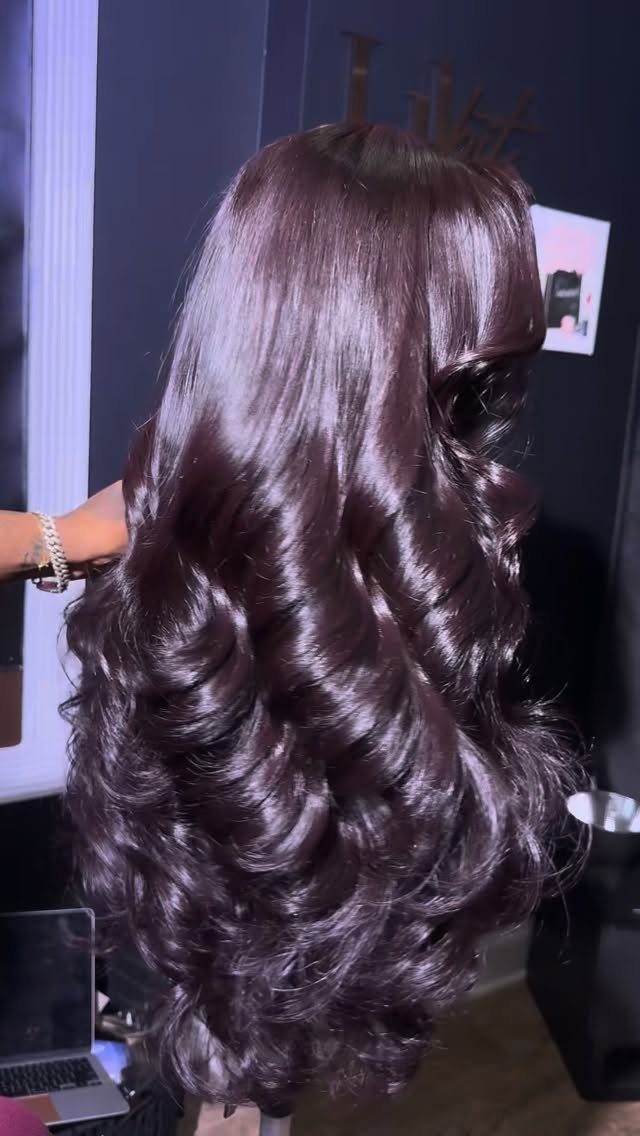
Loose waves are the easiest way to make a deep purple look rich instead of flat, since every bend in the hair catches light and shows a different depth of the shade.
Long lengths suit this best, because the weight lets the waves fall in soft cascades rather than springing up.
A big-barrel curl, brushed out once it cools, gives the voluminous finish. For a shade that’s wearable every day, ask your stylist for a deep purple that only shows up in good light.
2. Purple Curls
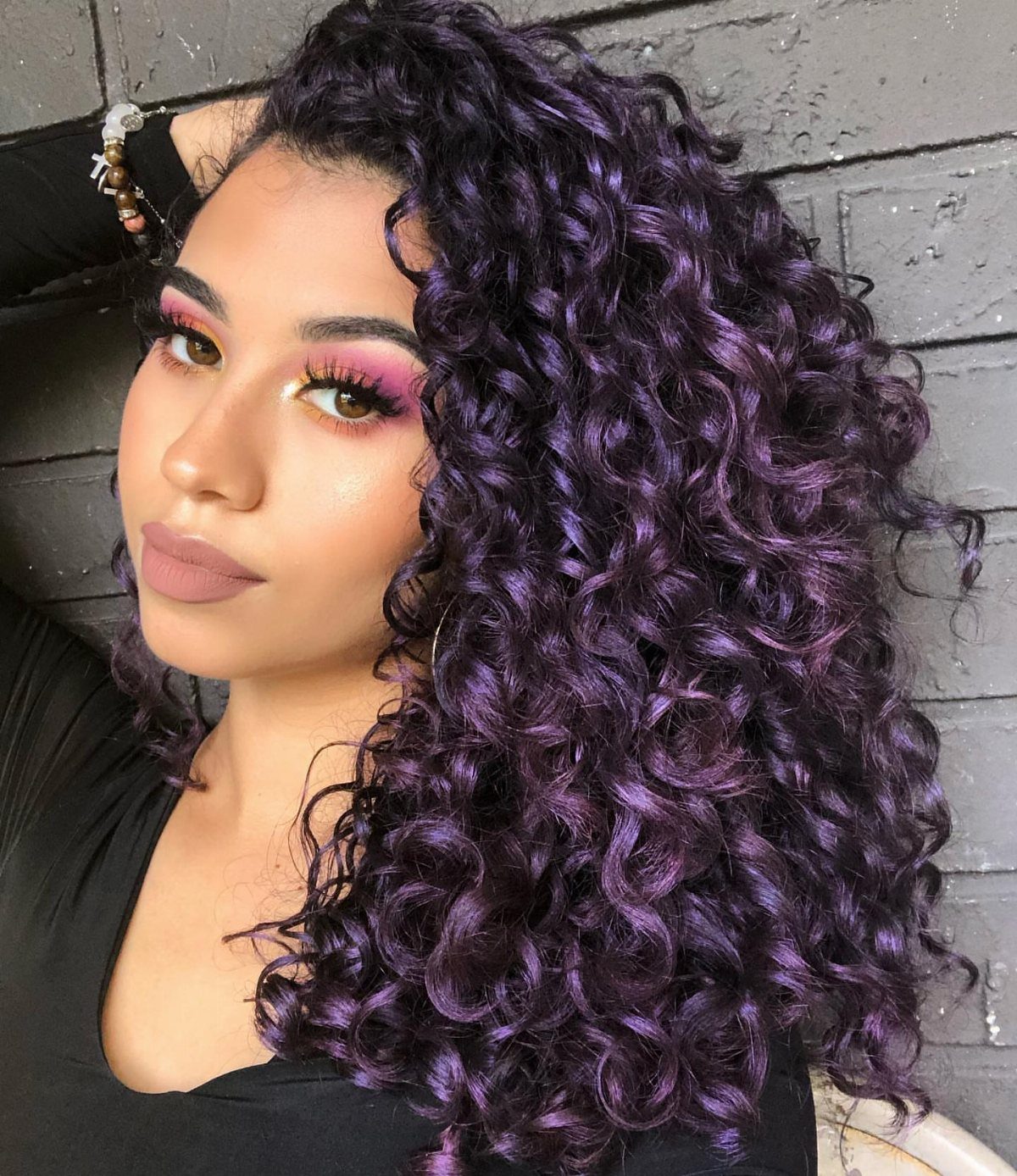
Curls and deep purple make a strong pair: the spiral shape breaks the color into darker and lighter patches, so it never looks like one solid block.
Voluminous, defined curls like these also give the shade a lot of surface to show off.
Purple-toned eyeshadow makes a matched look, while neutral makeup lets the hair carry everything. Curly hair tends to run dry, so I would pick a shade that looks glossy rather than matte.
3. Purple Side-Part Waves
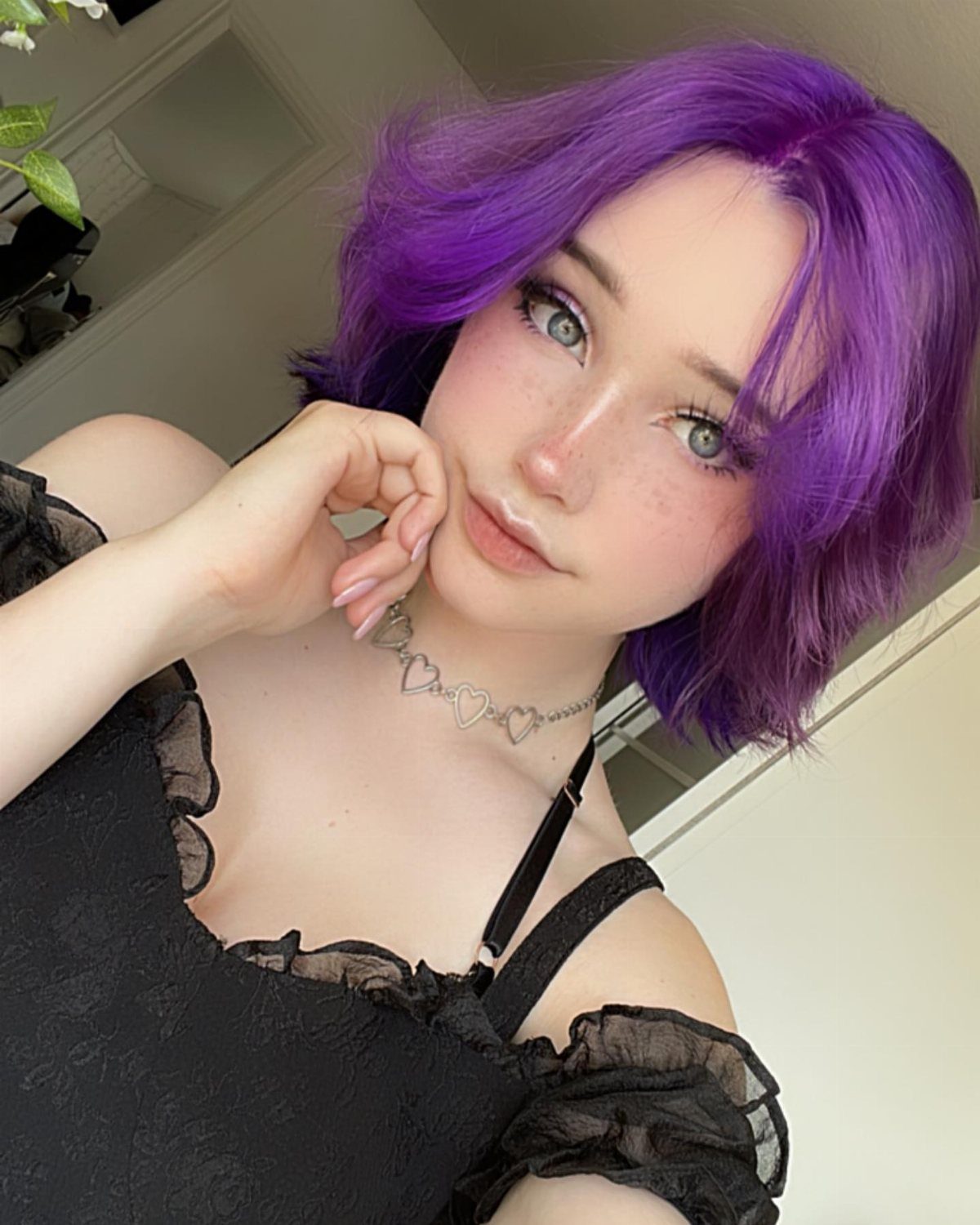
A side part throws the weight of the hair to one side, and with glossy purple that makes a clean, deliberate shape. Add loose waves and the part looks soft instead of strict.
This works well for a look that comes across polished with very little effort.
Part it deeper on one side for more drama, or closer to center for something gentler. A dark top and simple jewelry keep the focus on the color.
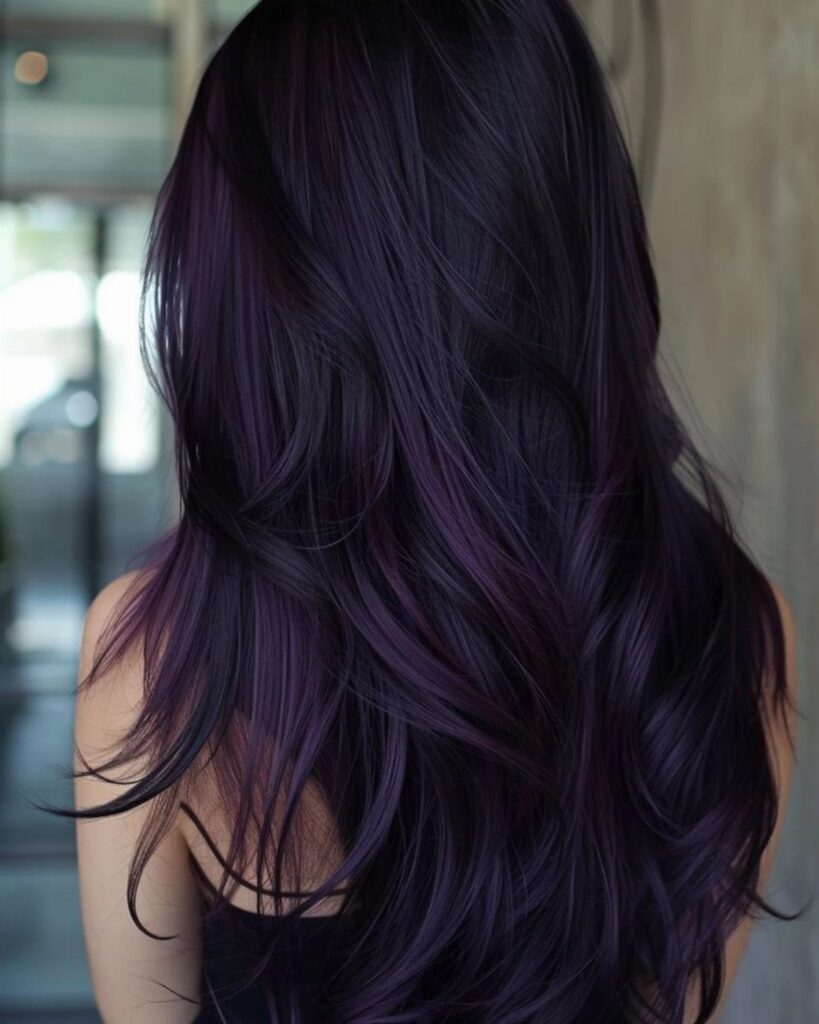
4. Dark Purple Straight Hair
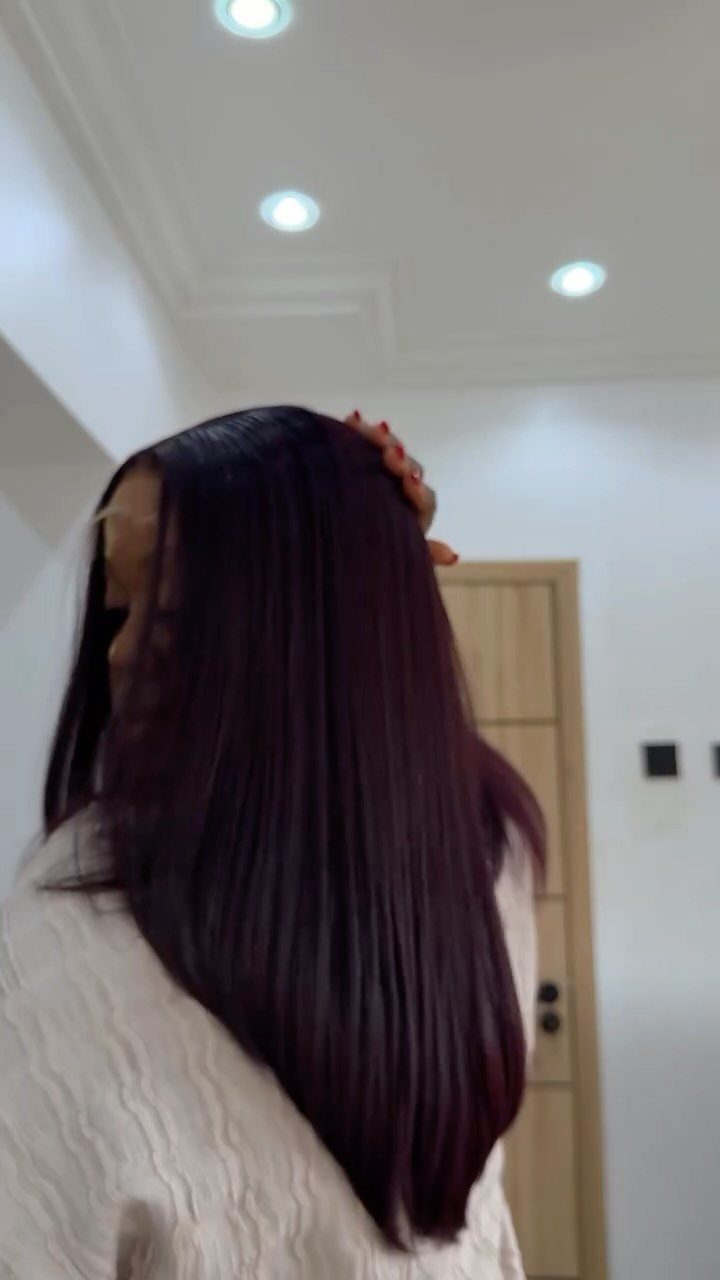
Straight hair shows off dark purple better than any other texture, because the smooth surface reflects light in one unbroken sheen. Long, straight lengths with slightly curved ends look neat without being stiff.
For more dimension, ask for subtle highlights or layered ends so the color moves a little.
A flat iron or a smoothing blow-dry is all the styling this needs each morning, which makes it a good pick for anyone short on time.
5. Purple Ombre
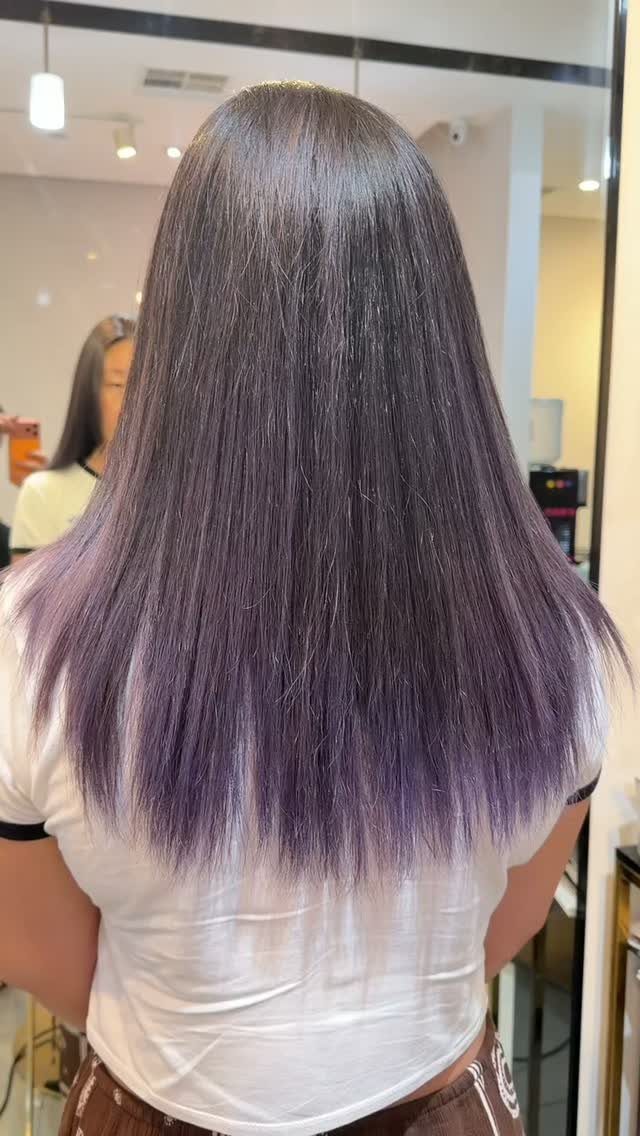
Ombre keeps the top of your head dark and saves the purple for the ends, so regrowth barely shows. That makes it the lowest-pressure way to try the color on long, straight hair.
The photo’s muted purple ends sit softly against the dark lengths; ask for a blended transition rather than a hard line.
For brighter ends, say so at the consultation, since the shade you see in a photo depends on your starting color.
6. Purple Highlights
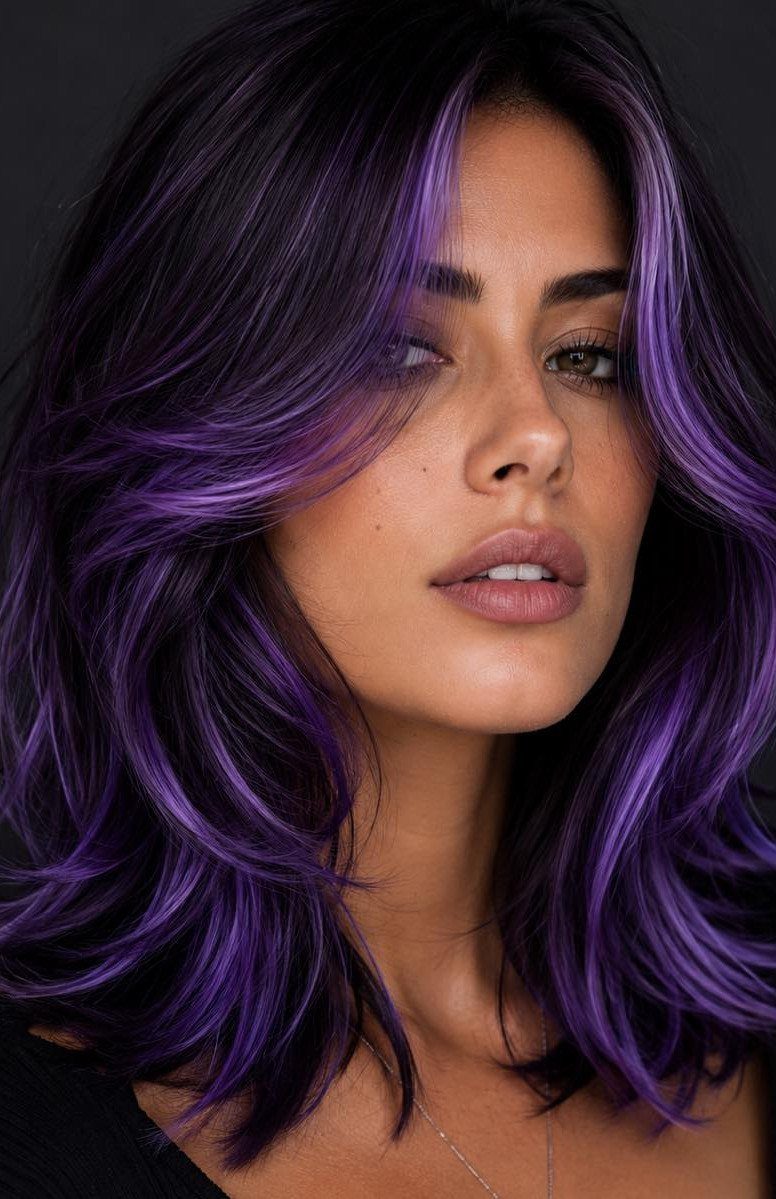
Purple highlights let you wear the color in streaks while the rest of your hair keeps its dark shade.
Pieces of vivid violet against dark wavy hair give more contrast than an all-over shade, and waves help by moving the highlights around.
I like this when the color should be visible without taking over all of the hair. Ask for the highlights placed around the face and through the top layers, where they show most.
7. Purple Face-Framing Layers
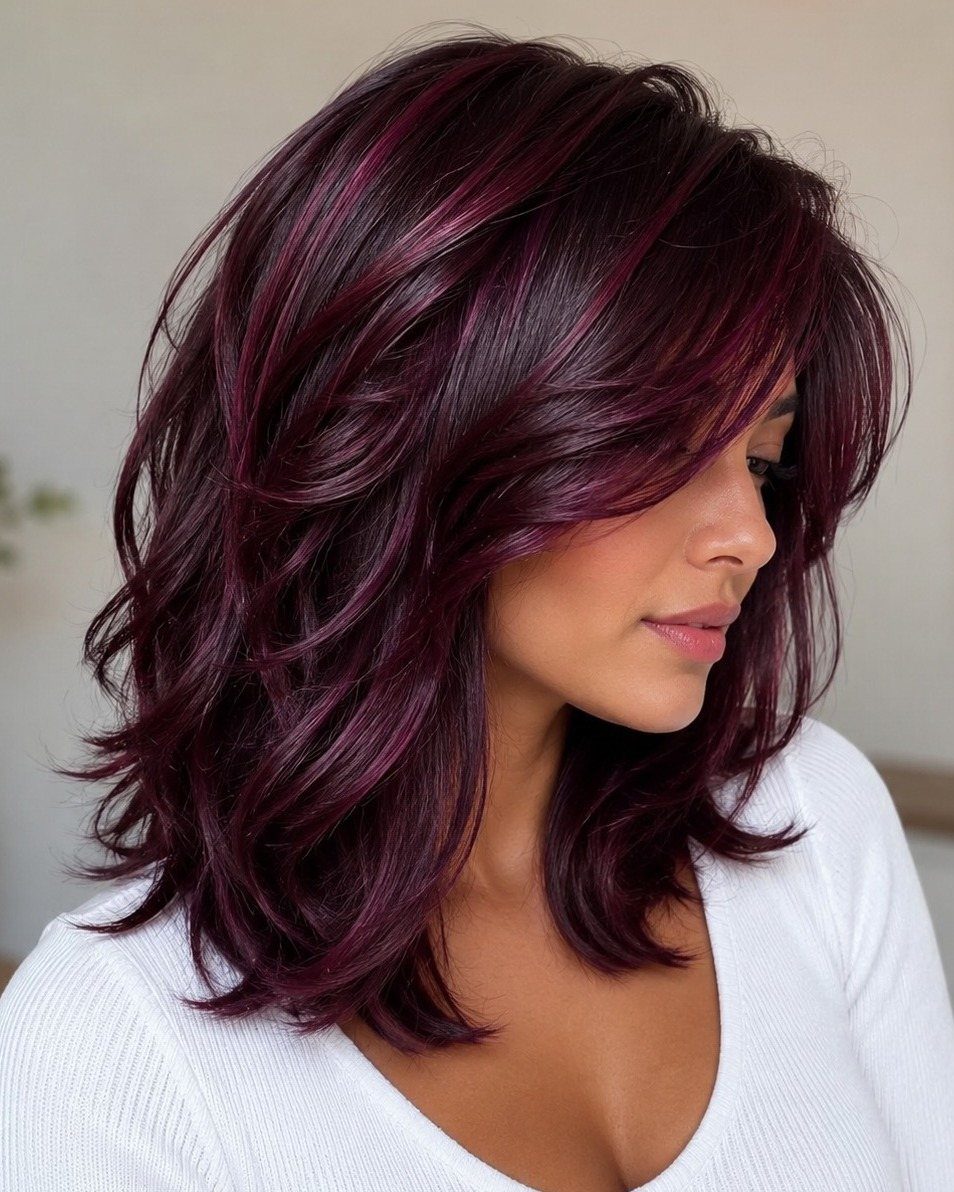
Face-framing layers start short at the front and blend into the length, so the deep purple gets its movement right where people look first.
Ask for the shortest layer to land around the cheekbones or chin, and bring a photo so the cut and color get matched in one conversation. Fresh layers are easy to keep neat with a round brush and a blow-dryer.
8. Shoulder-Length Violet Layers
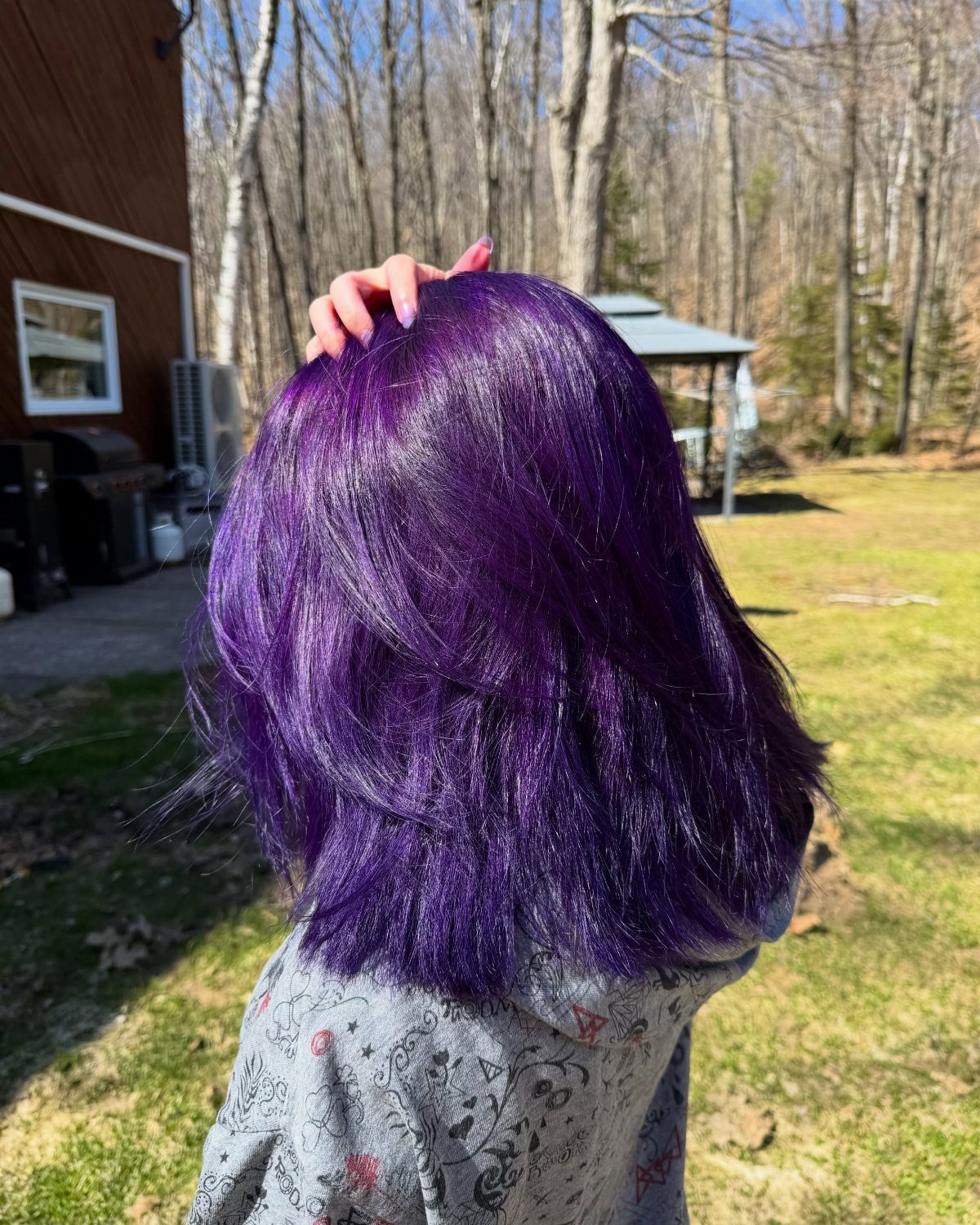
Shoulder-length hair with feathered or choppy layers turns deep violet into something with texture instead of one flat block.
Each layer ends at a slightly different point, so the color breaks up along the edges and looks lighter where the ends separate.
Shorter lengths like this suit anyone who finds long purple hair heavy to style.
A bit of texturizing spray and a quick scrunch is enough for a messy finish, and a trim keeps the layers from growing into one blunt line.
9. Plum Purple Hair
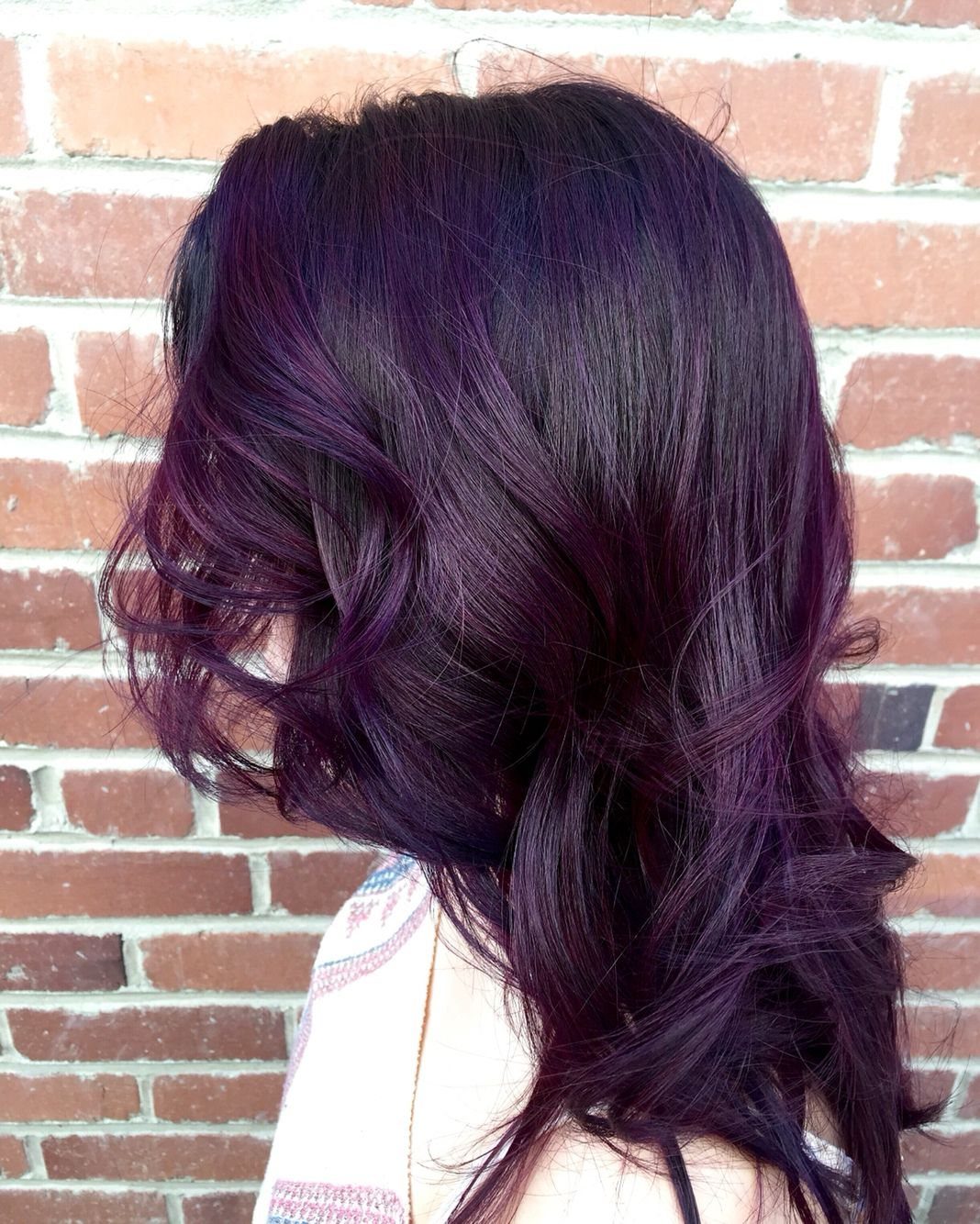
Plum sits between purple and burgundy, with enough red in it to look warm rather than cool.
On long, wavy hair that glossy finish is the whole appeal: the waves catch light along their curves and the plum shifts from near-brown in shadow to rich purple in the highlights.
Of all the dark purples here, this is the one I would pick for a first-timer, since it passes for a natural deep shade at a glance.
Ask for a gloss finish, and style with loose waves to keep the shine moving.
10. Purple Hair with Bangs
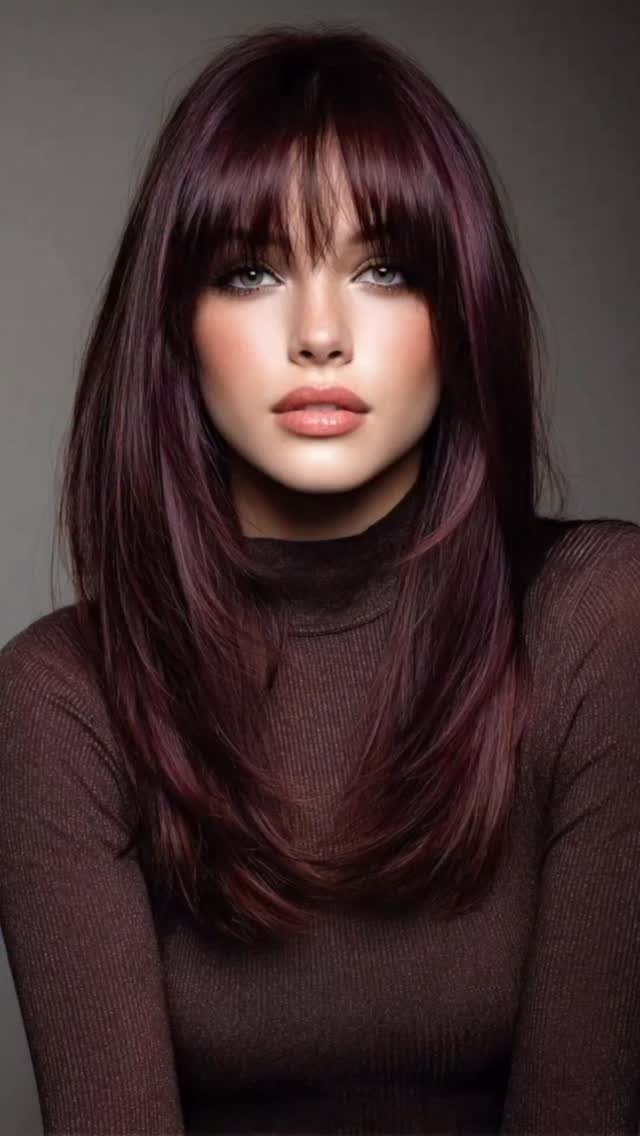
Bangs give plum-purple hair a frame, and straight, full ones like these make the color look sleek and intentional. Long hair behind a blunt fringe has a clean, graphic shape, with the color doing the talking.
If a straight fringe feels too severe, a curled fringe is the softer option: set it with a small round brush or a curling iron and let it sit slightly off the forehead.
Either way, bangs mean a trim every few weeks to keep them from drifting into your eyes.
11. Purple Hair with Curled Ends
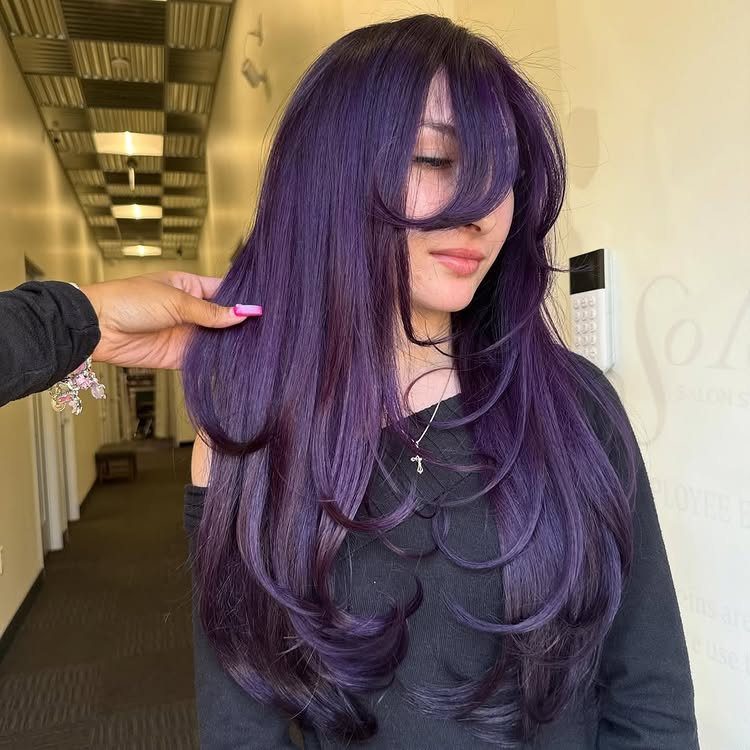
Ends curled under take the edge off long violet hair, and when the layers are cut into the length, the curl rolls inward in stacked, rounded steps. Heavy bangs balance that softness with a strong top line.
For this finish, ask the stylist to cut visible layers before coloring, then curl the ends with a medium iron, turning each section toward the face or under.
Let the hair cool before you touch it, and the curl holds its bounce longer.
12. Purple Hair with Flipped Ends
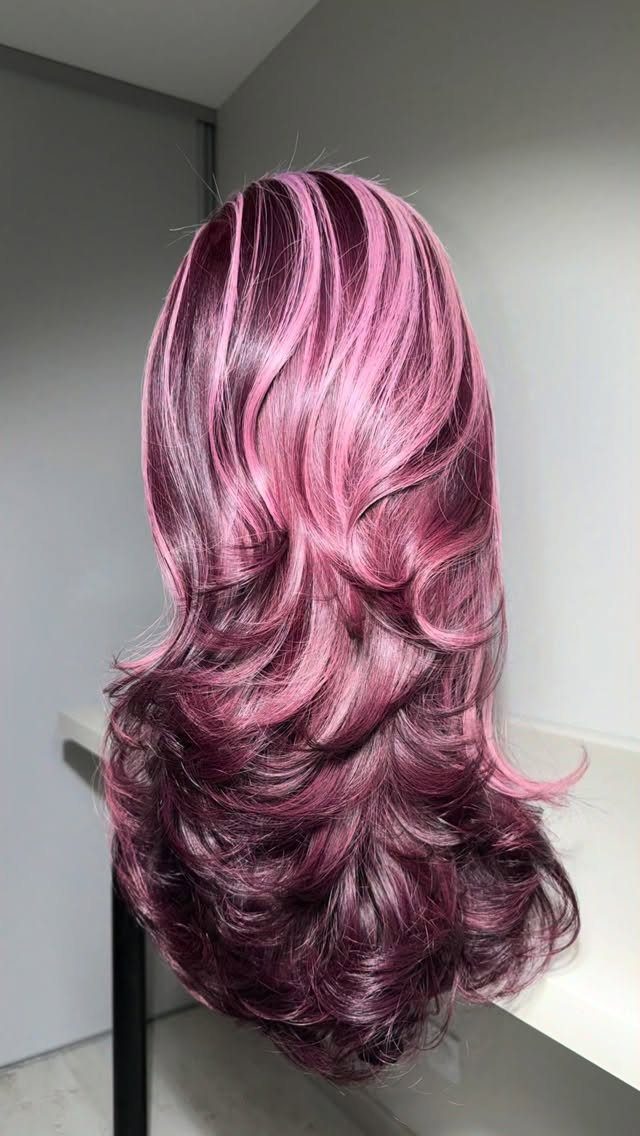
Flipped ends are the playful cousin of the curled-under finish: the feathered layers kick outward, which gives burgundy-purple hair a retro, bouncy outline.
Brighter streaks in the mix, like the ones visible here, catch the eye every time the ends move.
Ask for feathered layers so each strand flips at a different point, then curl the ends away from the face with a round brush or an iron.
This one is high-effort for mornings, so pick it for days when the styling is part of the fun.
13. Midnight Purple Hair
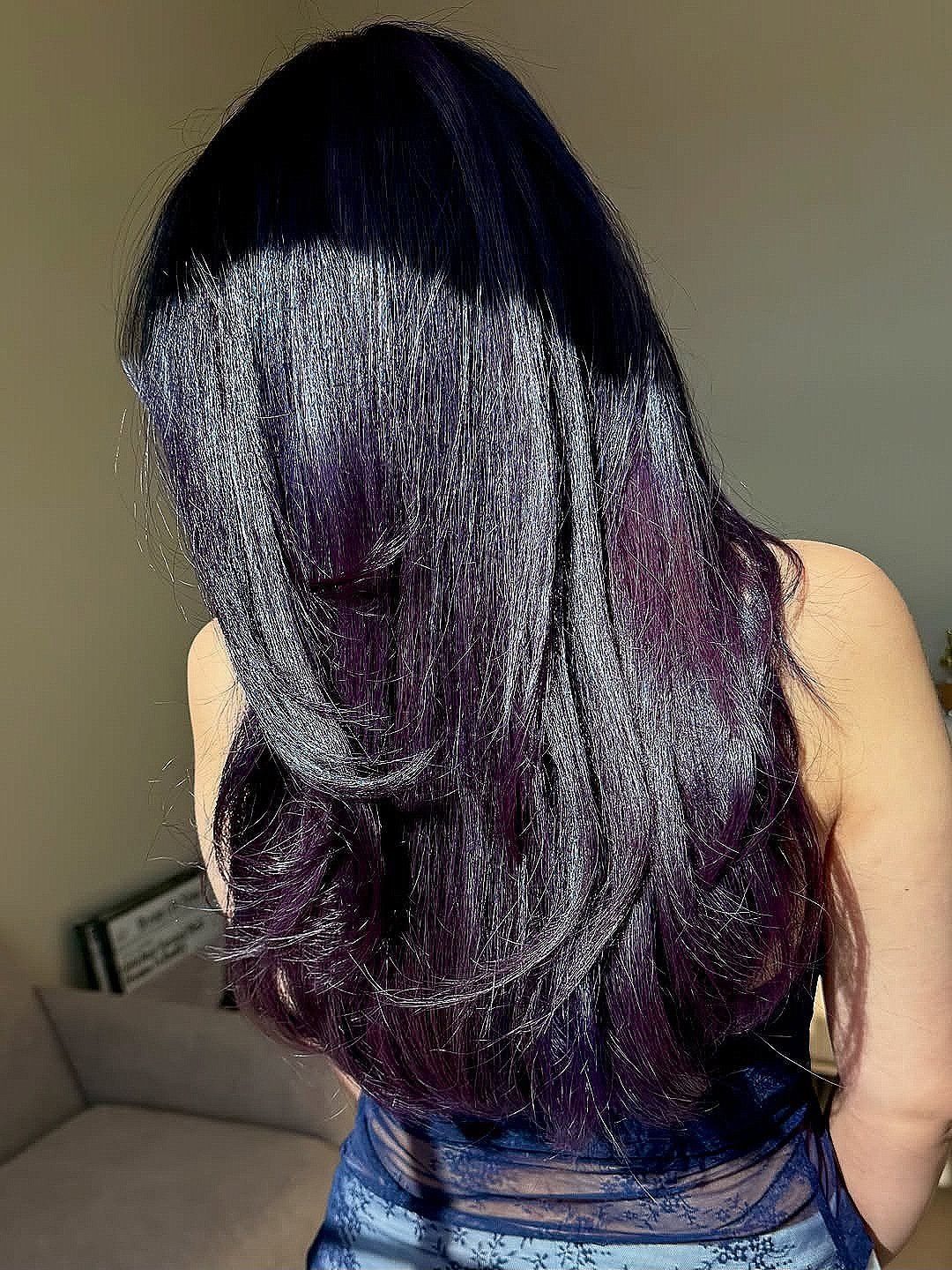
Midnight purple reads as black until light hits it, then the violet comes up through the layers. On long hair, the glossy layers are what carry that effect, so a smooth finish matters more than any styling trick.
This is the quietest way to wear the color, and I would pick it for anyone who wants purple that doesn’t announce itself.
A gloss finish and fresh trims keep the ends from going dull, which matters because dark purple shows every split end.
14. Purple Low Braid
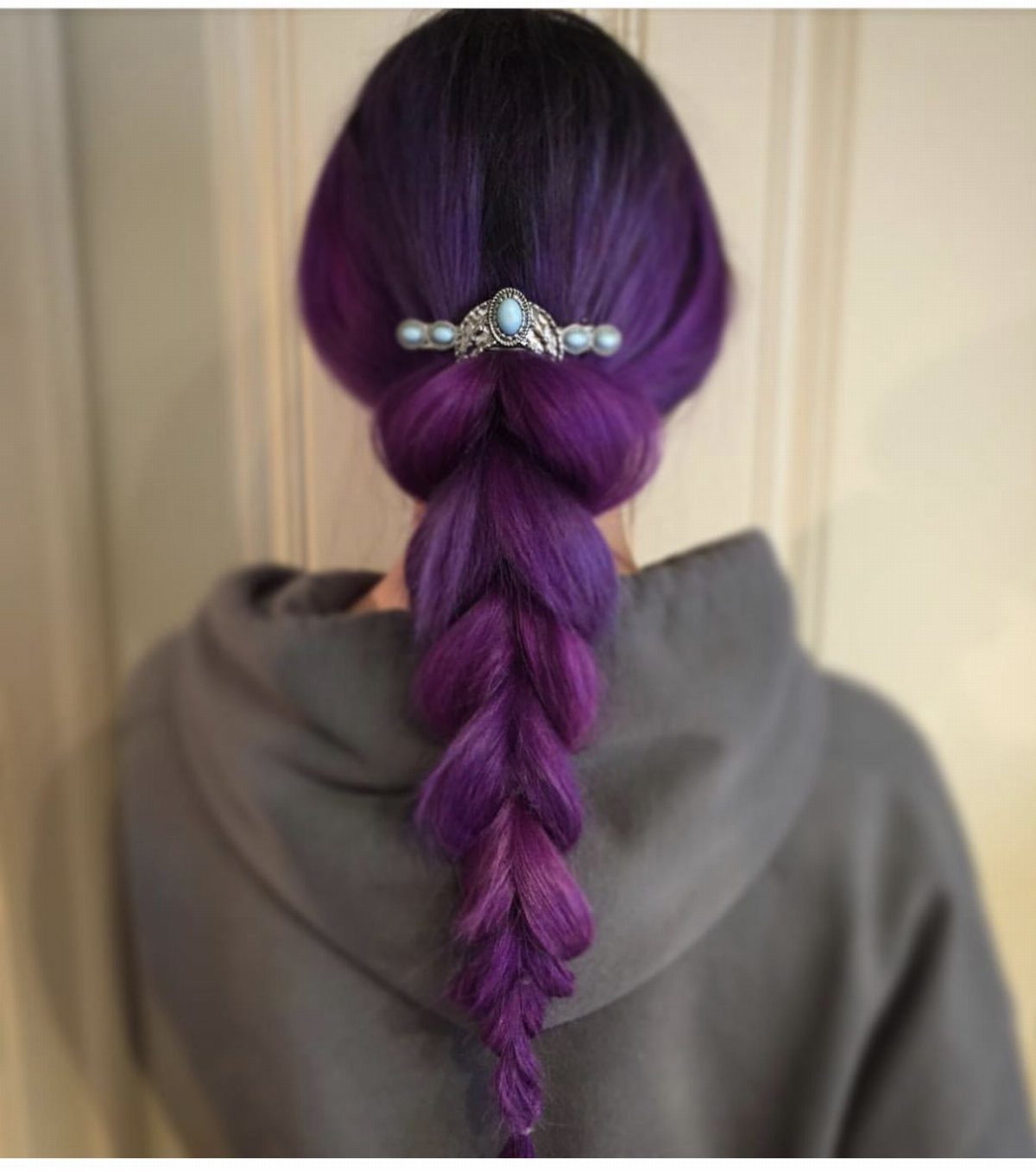
A loose low braid is the easiest way to wear deep purple when you have no time to style. The braid keeps the length tidy, and the thick plait shows the color in a single rope.
Leave it relaxed instead of pulling it tight; a loose weave looks softer and sits more comfortably.
A jeweled clip at the base adds a bit of sparkle against the dark shade. I like this for days when the hair should look finished but the morning is short.
15. Tightly Coiled Purple Hair
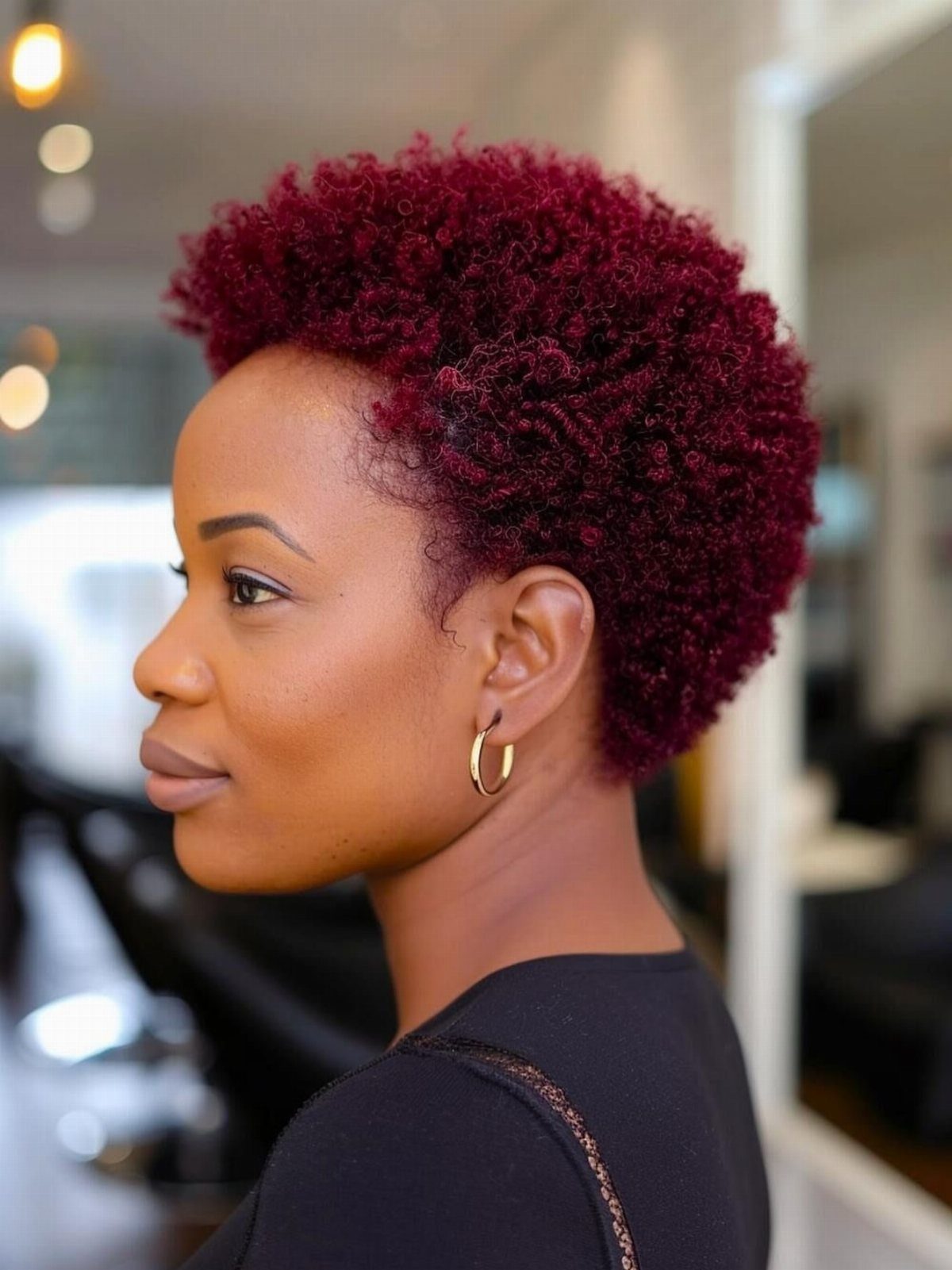
Short, tightly coiled hair gives deep purple a lot of surface, and every coil catches the color a little differently. The shape is voluminous, so the shade reads as rich and dimensional rather than flat.
Coily texture runs dry, so I would ask for a glossy, deep shade over a harsh bright one, and keep moisture in the routine.
Simple styling keeps the focus on the color: small gold hoops and a plain black top work well with a deep violet.
16. Dark Purple Box Braids
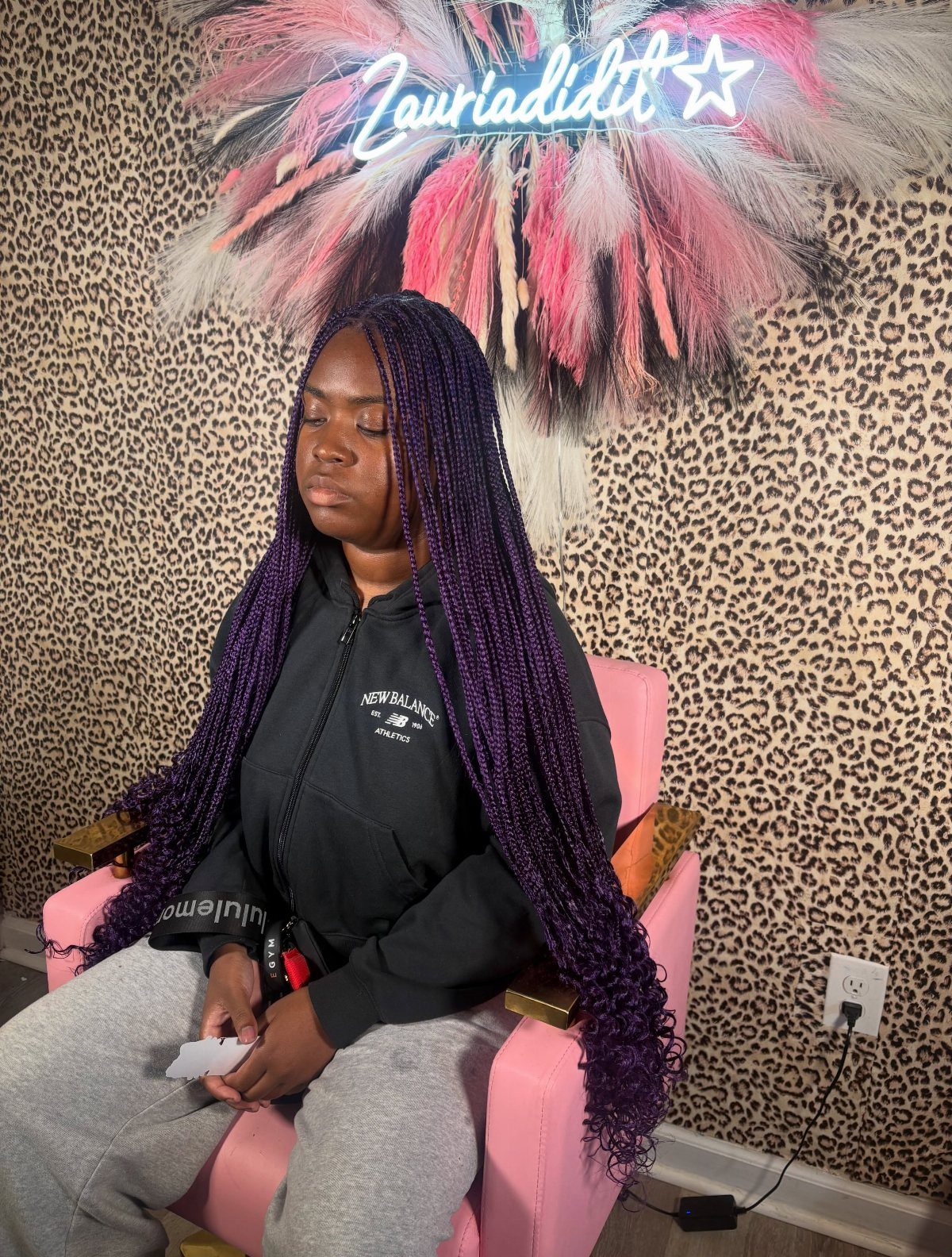
Long box braids in dark purple give you a color change without coloring your own hair, since the shade lives in the braiding hair.
Dark purple stays close to black indoors and shows violet in daylight, which keeps it easy to wear.
Curled ends add a softer finish, so ask your braider for them if you like movement at the bottom. Decide on the shade before you book, because it sets the whole look.
17. Purple Rope Twists
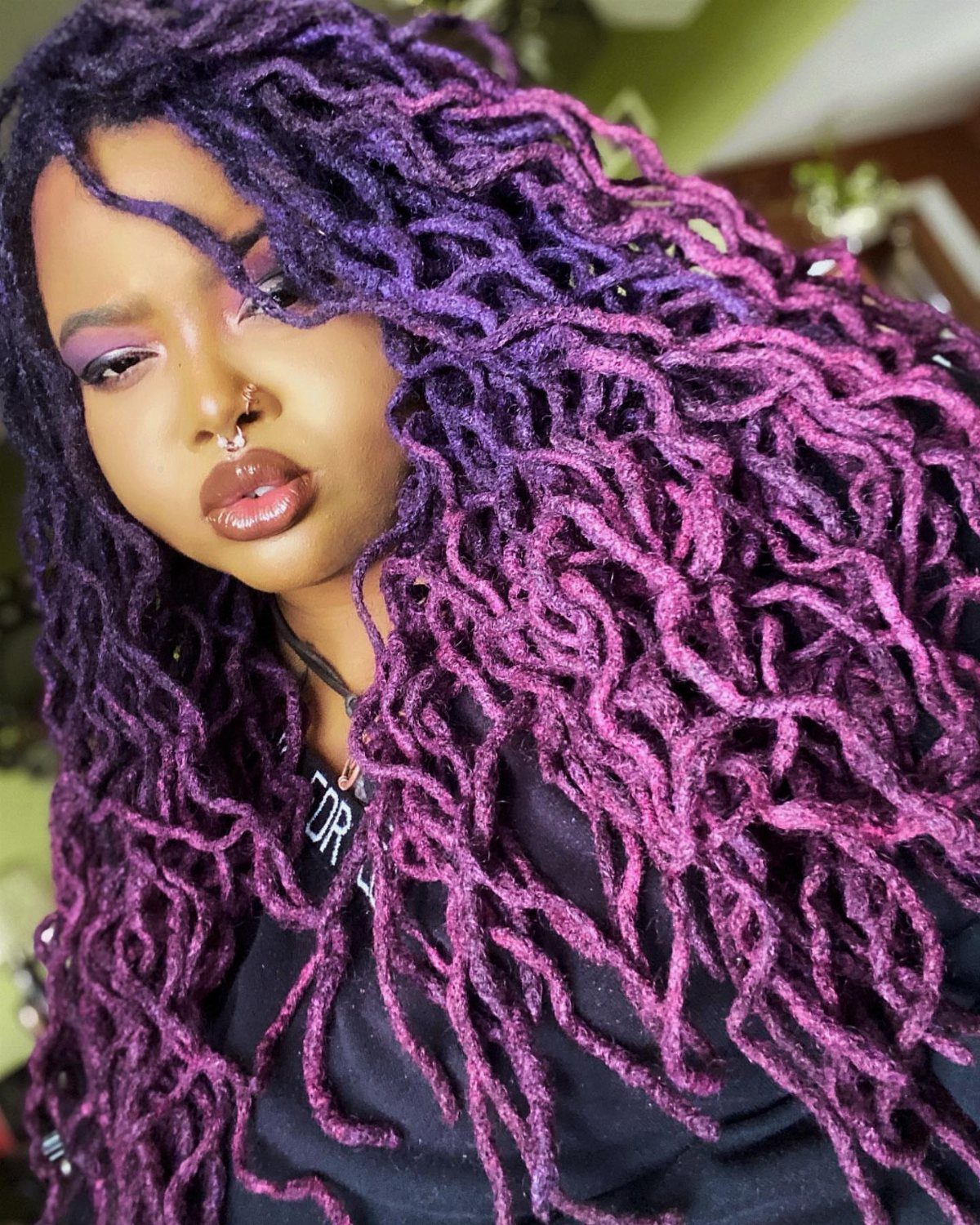
Rope twists wrap 2 strands around each other into thick, rounded ropes, and in purple that makes a bold shape with plenty of volume at the shoulders. Dark purple keeps the length looking rich rather than loud.
If you want the color to stand out, wear it with a black top and minimal jewelry. For a bold statement, I pick these over thinner twists: thicker ropes show the shade more clearly and look fuller.
18. Purple Braids with Curly Ends
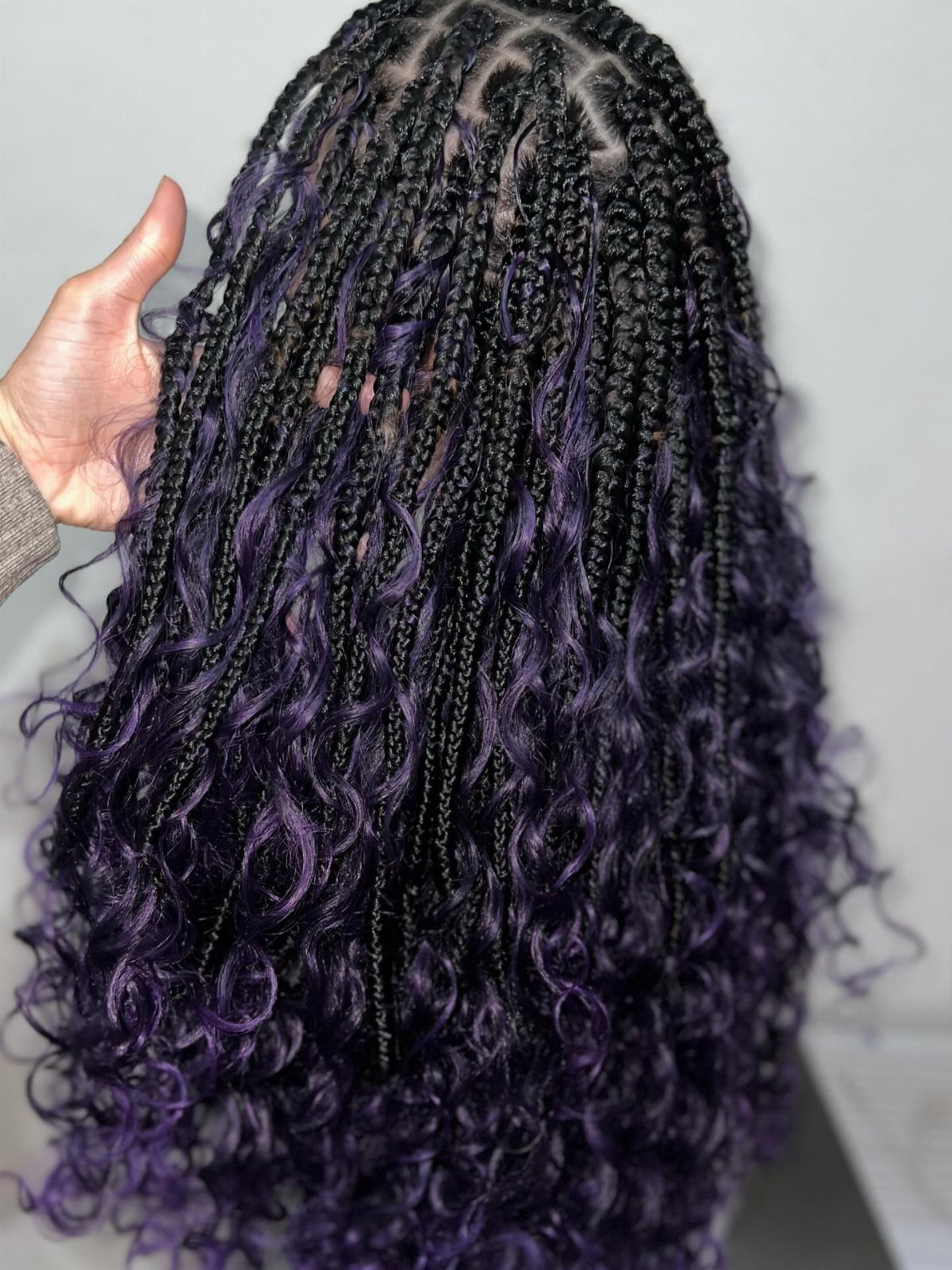
Black and deep purple braided together keep the color subtle at the roots and let it flash through as the braids move.
The loose, tightly curled ends are the best part, since they turn a neat braid into something soft at the bottom.
Ask for thin braids with the purple mixed in with the black rather than placed in one block. For the curled ends, tell your braider early so the length is planned for them.
19. Subtle Violet Sheen
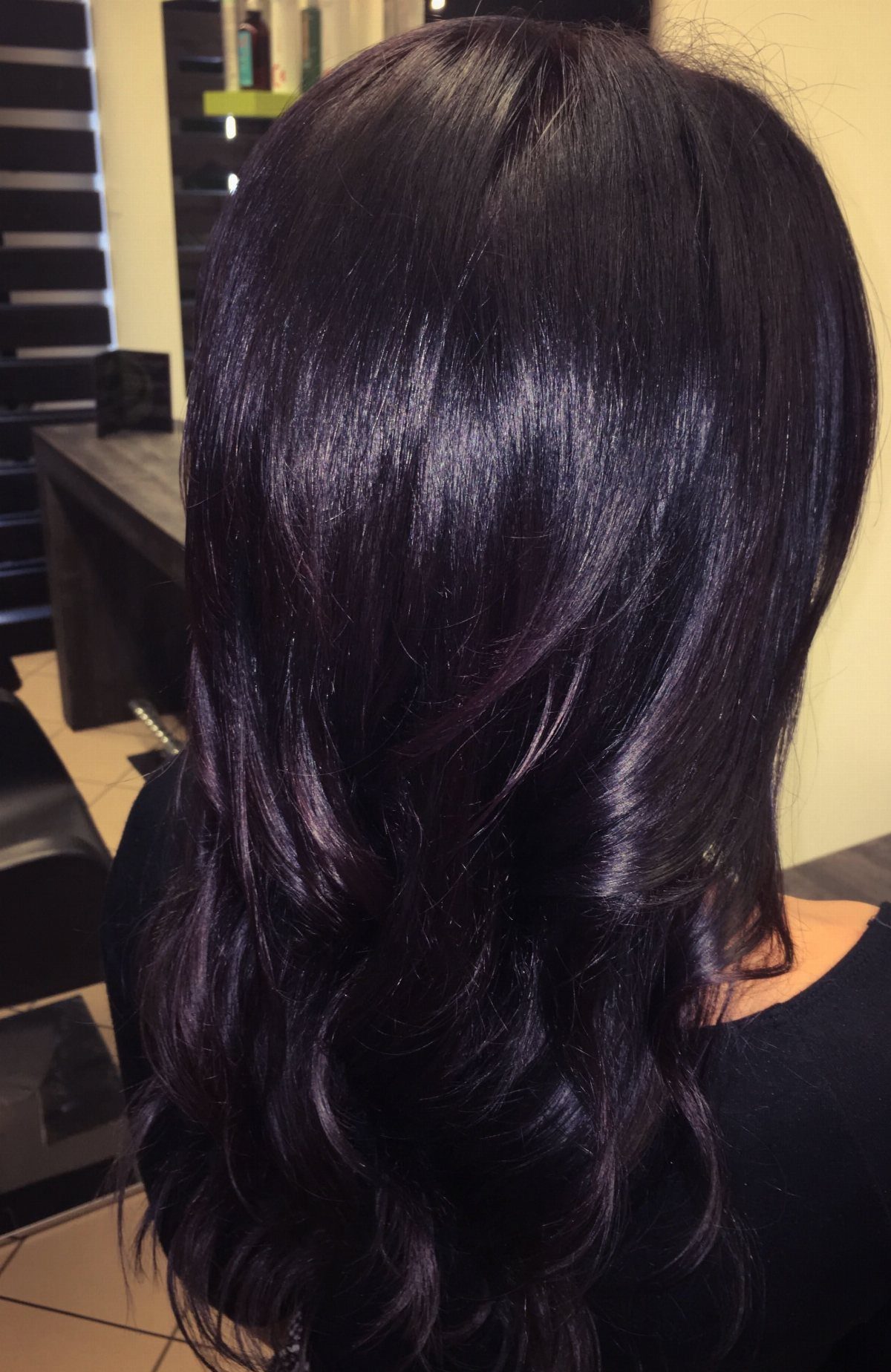
Dark hair with a violet sheen is the version of purple that only a close look gives away.
Across long, loose waves, the color sits in the gloss, so each bend picks up a hint of violet while the rest reads as near-black.
Ask your stylist for a deep purple-black and a glossy finish, and bring the photo so the level of color is clear. Loose waves do most of the work here, since they spread the light along the length.
This suits anyone who wants the color mostly to themselves.
Purple Dye Product Claims
Vegan and cruelty-free on a label describe the formula and how it was tested. They say nothing about how the shade will look on your hair, so judge a dye on color, finish and fade.
"Bright" and "long-lasting" also tend to work against each other with purple. Vivid violets usually fade faster than deep ones, so test any dye on a small hidden section first, and do a skin patch test before coloring.
For at-home color with those ingredient standards, Purple AF by Arctic Fox is the one I would look at.
Goldwell Elumen VV is the name to know if shine is your priority, and I would take it to a stylist and ask whether it suits your starting color.
Whichever you choose, wash with cool water and a color-safe shampoo. That does more for fade than the product claim does.