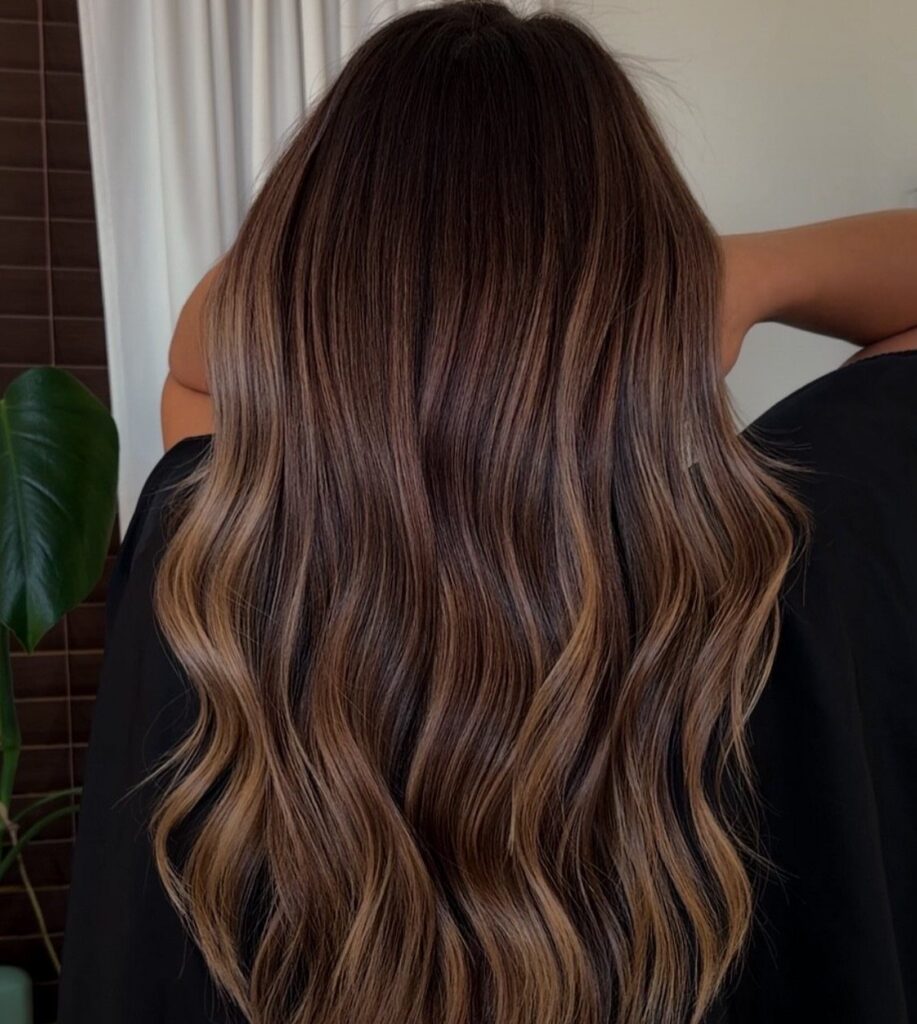
Some techniques blend so gradually that you can skip the salon for months, while others show a hard line of regrowth within weeks.
Balayage and color melts soften the contrast at the root better than highlights or single-process on straight hair, where every color change shows.
Teal and red streaks need pre-lightening and lose intensity with each shampoo, so sulfate-free formulas and touch-ups keep them from washing out to pale shadows.
1. Balayage
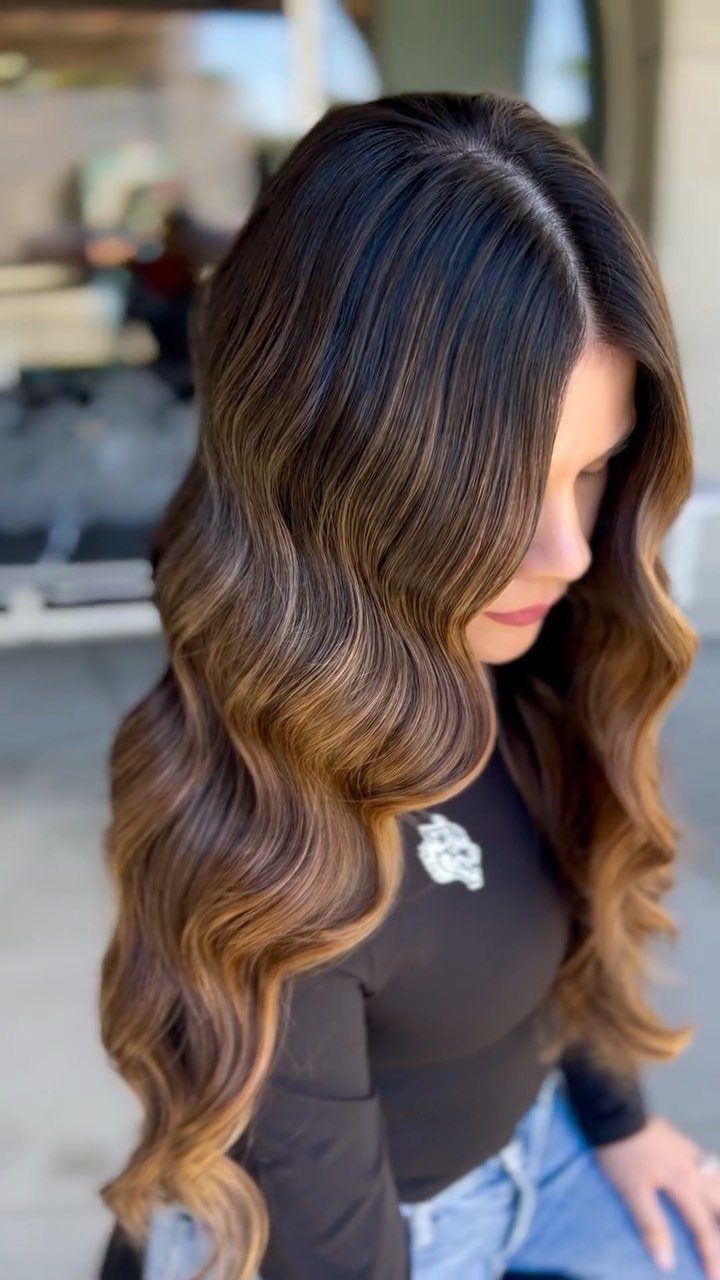
Color is painted on freehand rather than applied with foil, so the placement looks less uniform and the contrast softer.
That hand-painted method lets a colorist place lighter pieces where they would naturally catch light, which usually means more around the face and through the top layers.
It grows out more subtly than foil highlights because there is no clear line where color starts. Regrowth blends in rather than sitting at a hard line, so balayage grows out better than foils.
The blended effect works well on wavy or curly hair, where the texture shows off the dimension.
2. Highlights
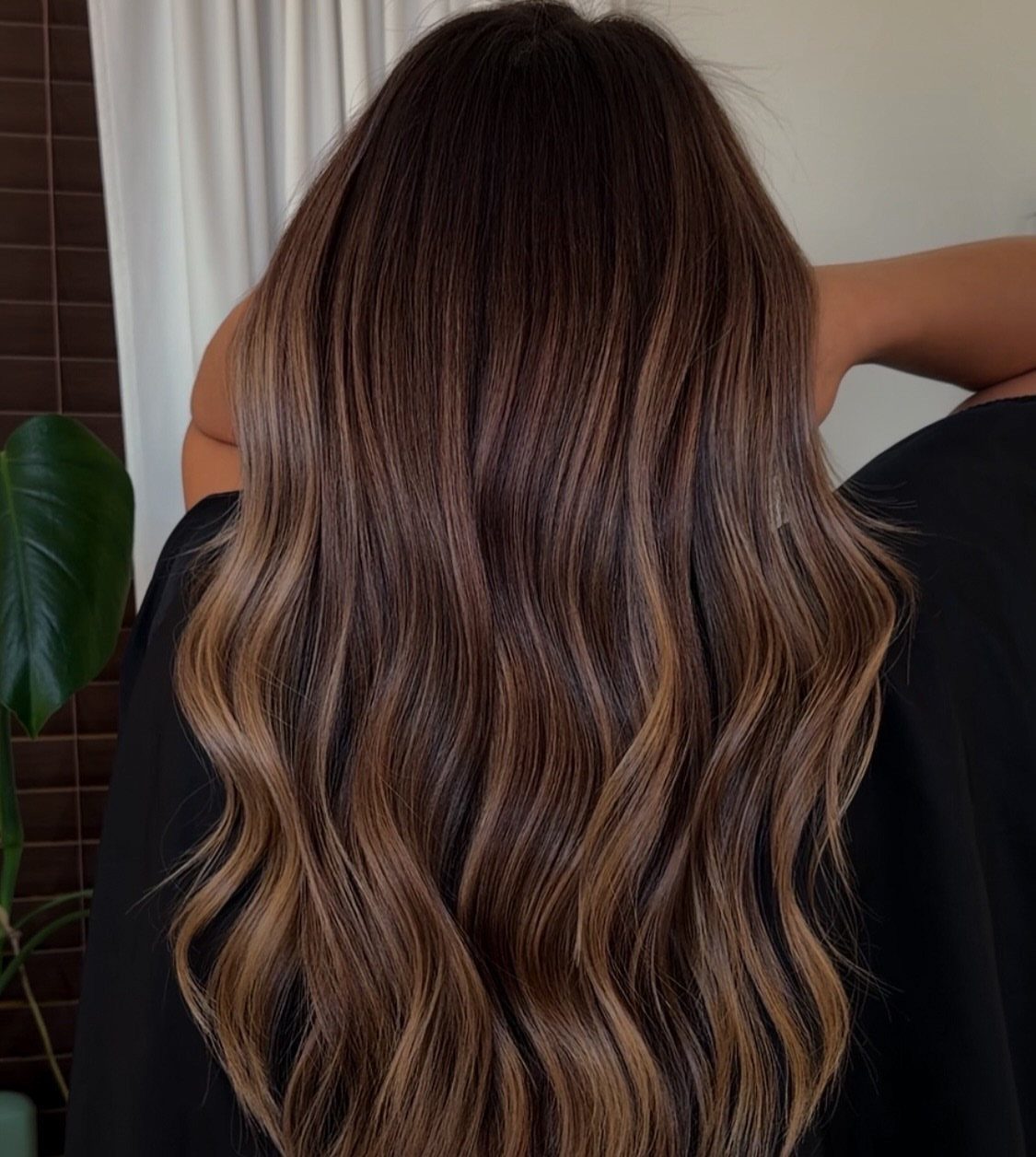
Lighter strands are woven through the hair, usually with foil, to add contrast and lift the overall tone without changing the base.
The placement can be fine and scattered for a natural effect, or more concentrated if you want noticeable brightness.
Highlights add dimension to flat color and can make fine hair look fuller. They also let you go lighter without bleaching all of your hair, which keeps more of the length in better condition.
Upkeep depends on how much contrast you start with.
High contrast means more obvious regrowth, so plan on salon visits to keep the line clean. Lower contrast buys you more time.
3. Ribbon Highlights
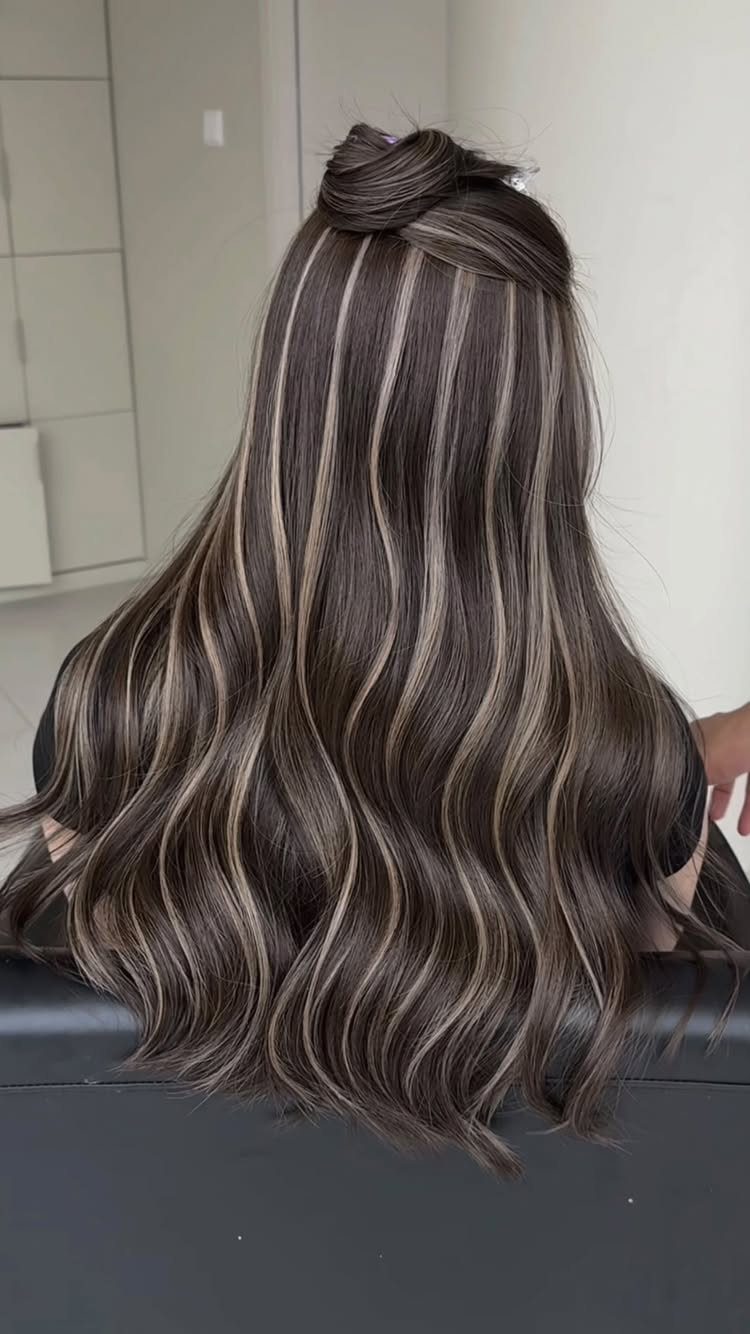
These are wider than standard highlights but softer than chunky ones, so the lighter sections read as ribbons running through darker hair. The edges are blended, not sharp, which keeps the look from reading too blocky.
Ribbon highlights suit long hair especially well because the length gives the ribbons room to show. They add noticeable brightness without the high contrast of chunky pieces, so the grow-out phase looks more intentional.
If you are working at home, sectioning is straightforward: lift a section about half an inch wide, apply lightener, and wrap it in foil. Space them evenly or cluster them where you want more lift.
4. Chunky Highlights
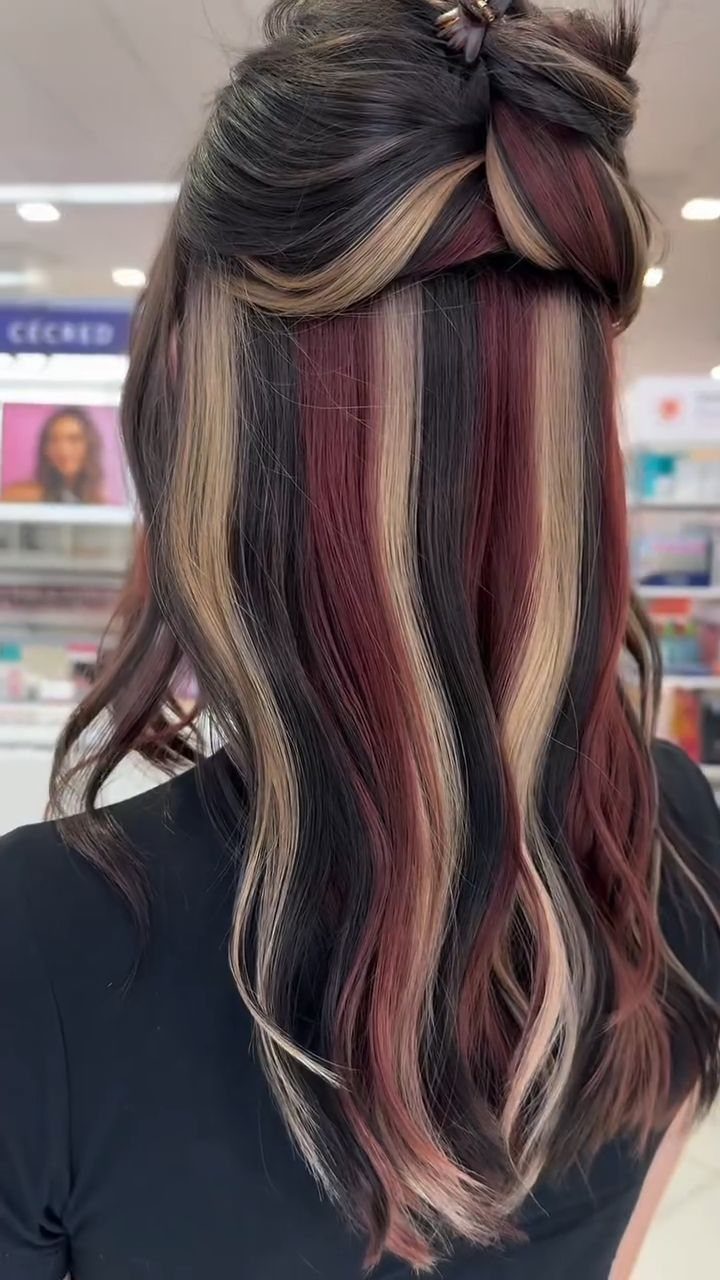
Thick sections of hair are lightened so the contrast is obvious, not blended. The effect is bold and reads as deliberate color blocking rather than natural dimension.
Chunky highlights suit someone who wants a statement look and does not mind high-contrast regrowth.
They can be done in one color or several, which gives you flexibility if you want to mix blonde with a fashion shade like burgundy or copper.
The bold placement means grow-out is visible, so this is not a low-maintenance choice. Retouching roots keeps the color fresh, or you can let the contrast become part of the look.
5. Single-Process Color
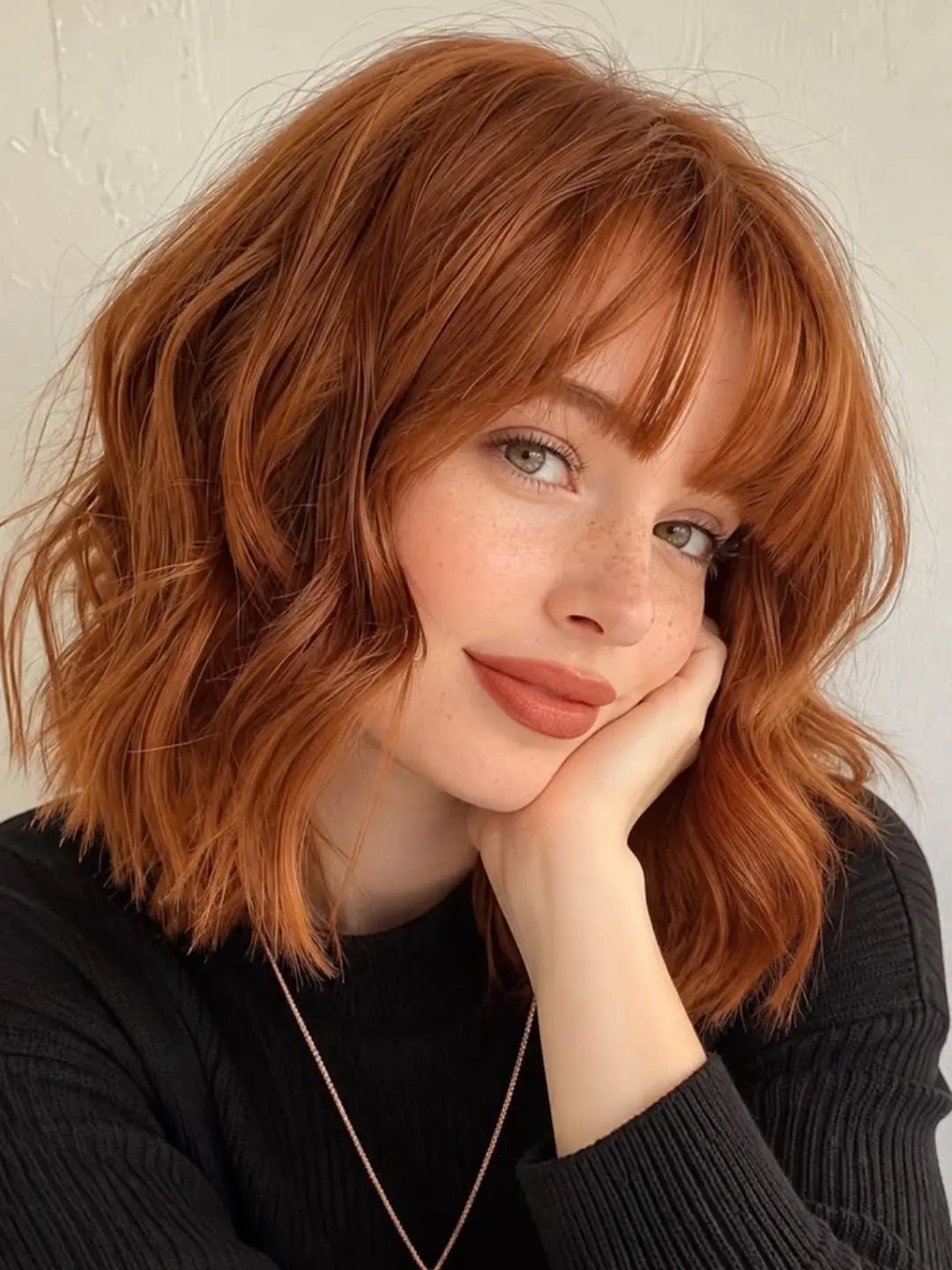
One color is applied evenly from root to end, so the result is uniform rather than dimensional. Single-process color is the simplest technique, and it covers grey completely if the formula is designed to do that.
It works well if you want a total color change or need full grey coverage. The application takes less time than highlights or balayage, which makes it faster in a salon and easier at home.
You will be back in the chair more often. Root regrowth shows clearly, especially if you go several shades lighter or darker than your natural color, so you will need regular touch-ups to keep the line from showing.
6. Color Melt
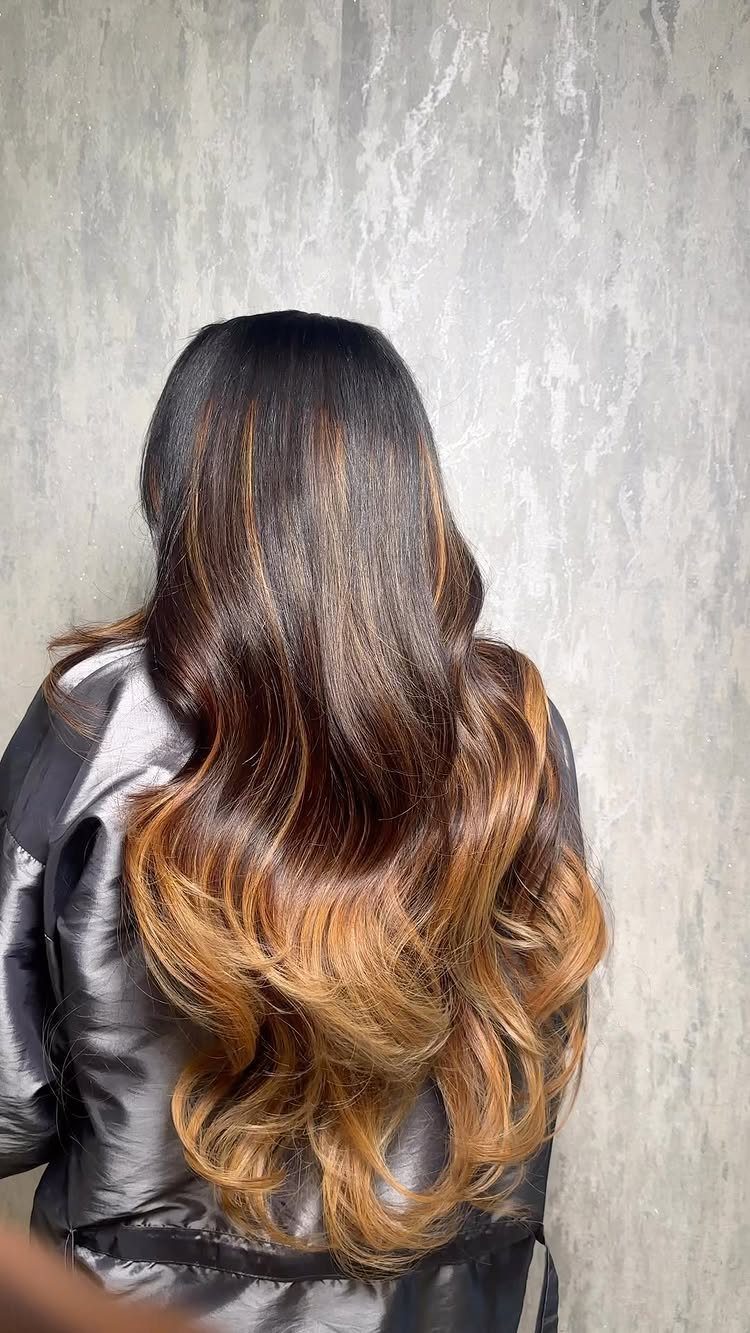
The root color gradually shifts into lighter tones at the ends, with no visible line where one shade stops and another starts.
The blend is done by overlapping colors where they meet, which softens the transition and makes the gradient look continuous.
Color melt gives you a lighter look without root maintenance, because the dark section at the top grows out naturally.
The technique works on long hair where the gradient has room to develop, and it suits someone who wants noticeable color change but not constant touch-ups.
Upkeep is mostly about refreshing the lighter ends as they fade. Roots can grow several inches before the look needs adjusting.
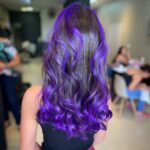
7. Fashion Rainbow Color
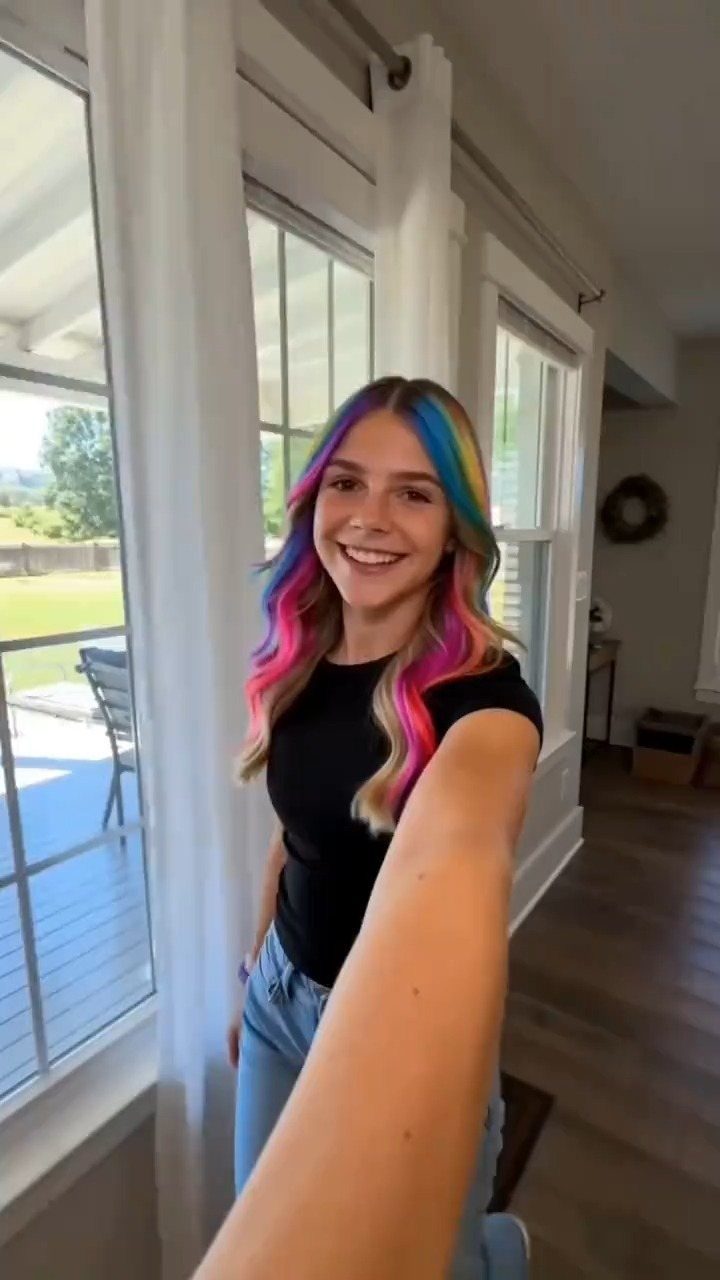
Sections of hair are each colored a different vivid shade, so the overall effect reads as multiple bright panels rather than one blended tone. Blue, pink, purple and orange are common choices, but any combination of fashion colors works.
The technique suits someone who wants a bold look and accepts that vivid colors fade faster than natural shades.
Most fashion colors need bleaching first to lift the base light enough for the color to show true, which means more damage to the hair and more upkeep to keep the brightness.
Faded fashion color often turns pastel before it washes out completely, so you get a secondary look as it fades.
8. Burgundy Hair Color
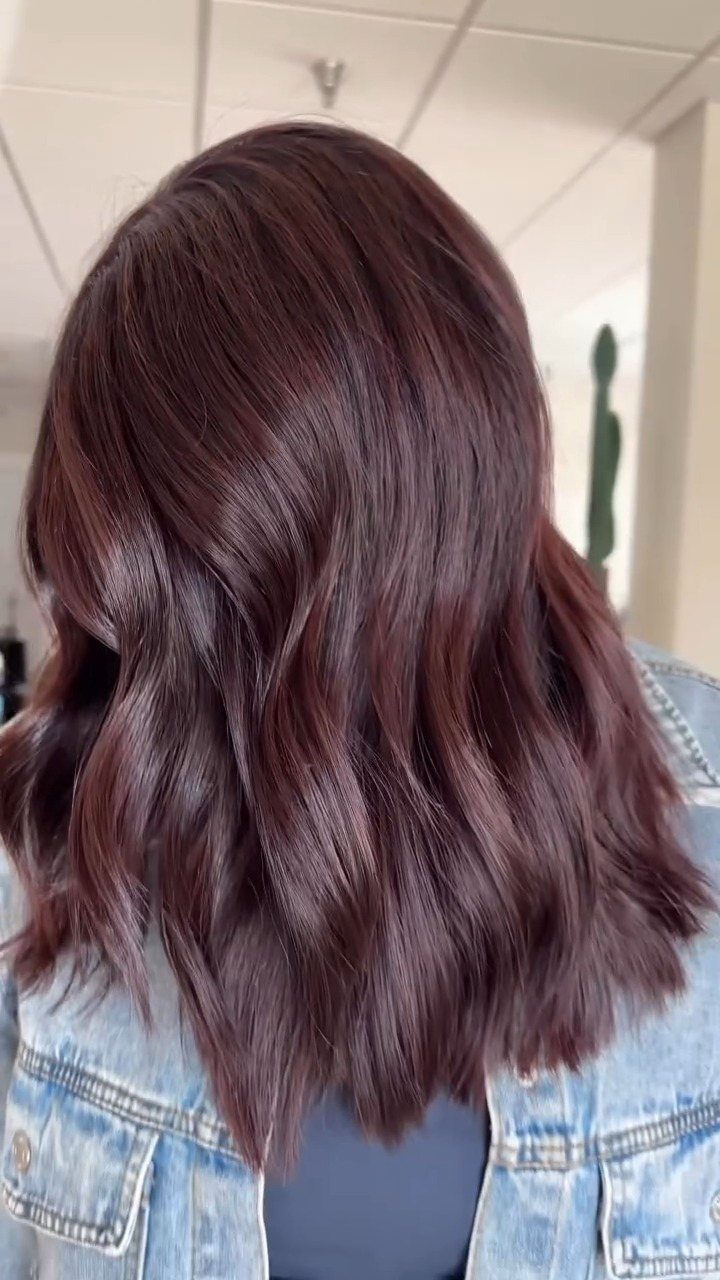
A single deep red tone is applied from root to end, landing somewhere between plum and wine.
The color reads as one shade rather than a mix, and it suits someone who wants red without the brightness of copper or the orange pull of auburn.
Burgundy works on dark hair without heavy bleaching, which keeps the hair in better condition than lifting to blonde first.
The depth holds longer than lighter reds, though it still fades with washing, so sulfate-free shampoo and cool water help it last.
The color suits warm and cool skin tones because the balance of red and purple sits between them.
9. Copper Hair Color
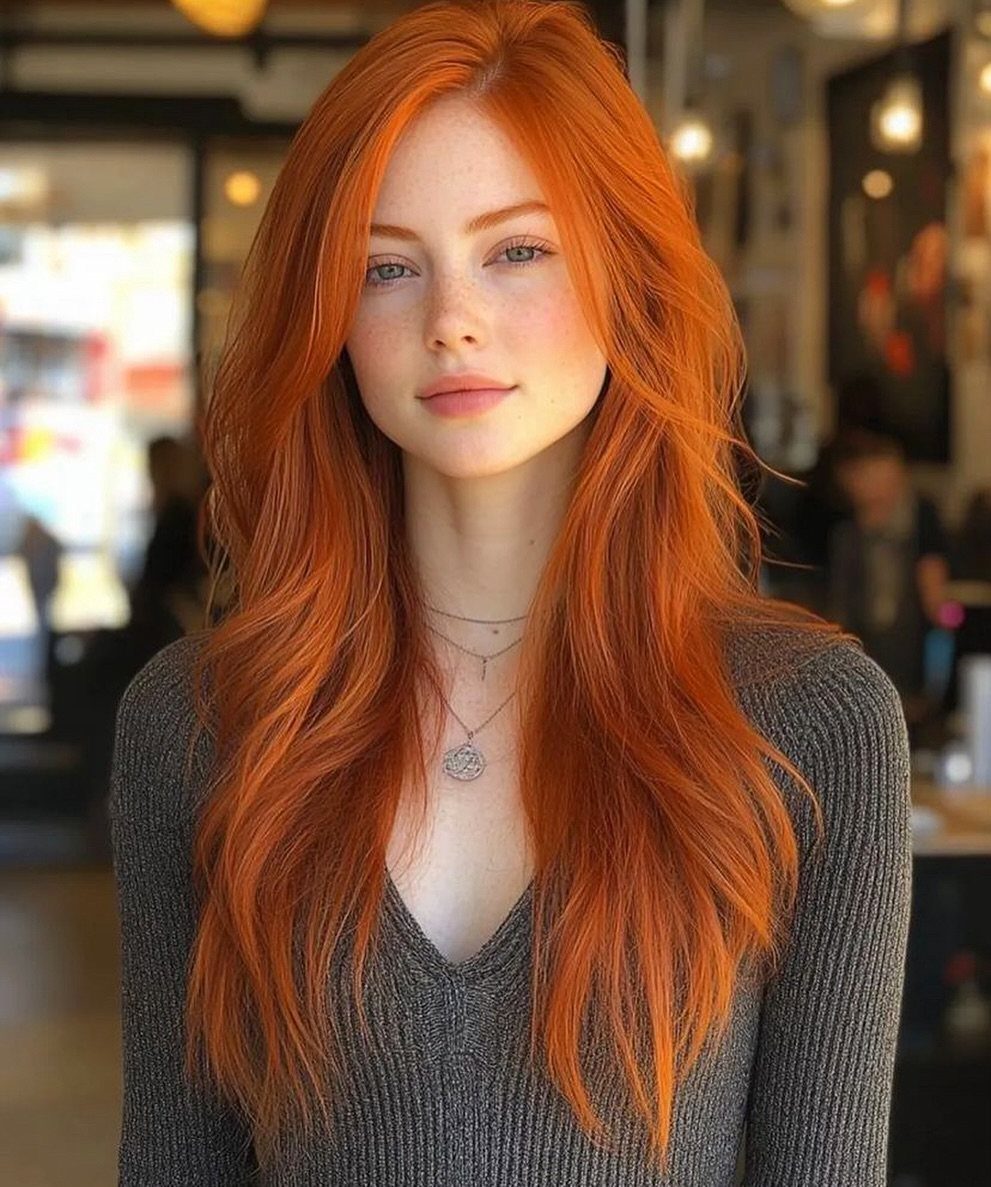
Copper is warmer than burgundy and brighter than auburn, and it catches light in a way that makes it look more orange in some settings and more red in others.
The color suits warm skin tones especially well, and works on a range of lifted bases depending on how bright or subtle you want the result.
Copper fades quickly, especially in the first few weeks, so plan on color-depositing shampoo between salon visits to keep the tone from washing out to peach.
10. Teal Hair Streaks
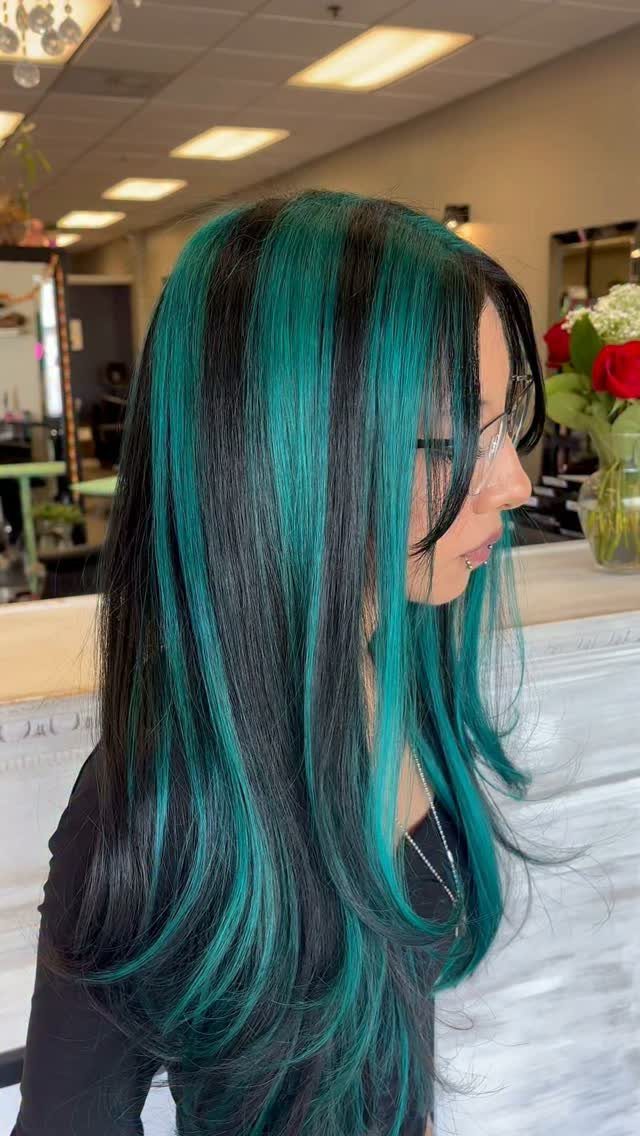
Bright teal sections are placed through dark hair, so the contrast between the base and the streaks is sharp and obvious.
The teal reads as a cool blue-green, and the placement can be scattered or concentrated depending on how much color you want showing.
Teal needs a lifted base to show true, so the streaks are bleached before the color goes on. The lift damages those sections more than the untouched hair, so conditioning treatments help keep the texture from turning dry and rough.
The color fades to a pale green or silver before it washes out, and most people refresh it regularly to keep the brightness.
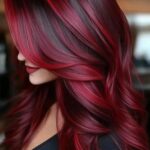
11. Red Hair Streaks
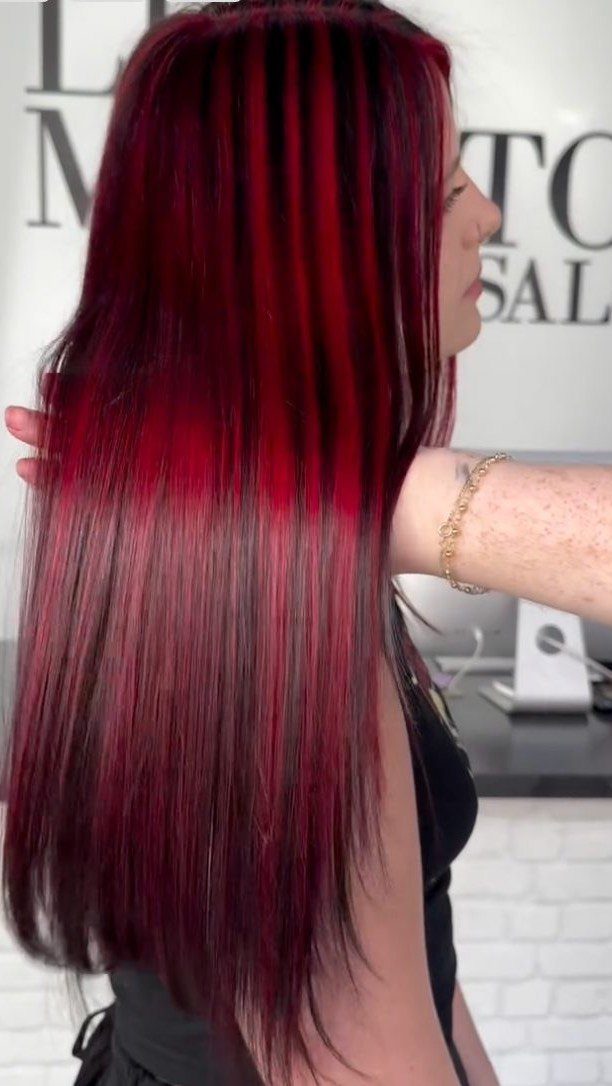
Vivid red sections are placed through dark hair, with the streaks reading as a warm, bright contrast rather than a blended tone.
The red can lean more orange or more burgundy depending on the formula, and the placement is usually concentrated enough that the color shows clearly even when the hair is down.
Red fades faster than most fashion colors, so the streaks lose intensity with every wash. Color-depositing conditioner between salon visits keeps the brightness from dropping too far, and washing in cool water slows the fade.
The streaks need lifting before the red goes on, so the hair in those sections will be more porous and need more conditioning than the untouched base.
Choosing by Hair and Lifestyle
Straight hair shows every line of demarcation, so techniques that blend well during grow-out save you salon visits.
Wavy and curly hair hides transitions better and gives dimensional color more movement, which makes balayage and color melts read as more natural on textured hair.
If your hair is already damaged or very porous, single-process color or techniques that need less bleaching cause less breakage than anything requiring a pale lifted base.
Match your tolerance for upkeep to the technique. Lower contrast or rooted techniques let you stretch appointments longer, which fits a tighter budget or a schedule that does not allow frequent salon time.
Consult a stylist for placement that accounts for your skin undertone, your haircut, and any previous color still in the hair.
Color Care and Fading
Pick a shampoo and conditioner made for dyed hair, the sulphate-free ones hold colour longer. Sulfate-free formulas strip less pigment, which keeps vivid and fashion shades from fading as quickly.
Wash two or three times weekly instead of daily. Color sits in the cuticle, and every wash pulls some of it out, so limiting water exposure makes the color last longer between appointments.
Deep condition regularly. Colored hair, especially anything bleached first, turns drier and more porous than untreated hair, so conditioning treatments keep the texture from feeling rough.
Limit heat styling, and use a heat protectant when you do style with hot tools. UV exposure fades color too, so a leave-in product with UV filters helps if you spend time outside.
DIY or Salon Decision
Single-process color at home works if you follow the timing on the box and test the shade first on a small section. The application is straightforward, and box dyes now cover grey reliably if the formula is designed for that.
Anything that needs placement skill or custom blending is better done in a salon.
Balayage, color melts, and multitonal highlighting depend on knowing where to place color and how long to process it, and mistakes turn into uneven tones or brassiness that costs more to fix than the original appointment would have.
A stylist factors in your hair health, any previous color still in the hair, and how your features and skin tone interact with the shade. Professionals also have access to bond-protecting treatments that reduce breakage during bleaching.
A whopping 82% of Good Housekeeping readers who color their hair do it themselves at home.
Frequently Asked Questions
What are highlights?
Foil-wrapped sections lifted several shades above your starting color, placed to frame the face or scattered through for overall brightness.
Fine scattered placement looks more natural, while concentrated placement gives noticeable brightness. The lighter pieces catch light and break up solid color, so you get movement and a brighter effect without processing every inch of hair.
What are lowlights in hair?
Sections taken a few shades darker than where you started, tucked in to create shadow and make the whole thing look less one-note.
They work well for adding richness back into overly light or previously highlighted hair, and people often combine them with highlights to create multiple dimensions.
What is the difference between highlights and lowlights?
One lifts selected pieces lighter, the other takes them darker, and you can use both in the same head of hair. Highlights add brightness and lift, lowlights add depth and contrast, and combining both creates more dimensional color.
Are highlights better than balayage?
Each does something different, so the winner depends on the look you want.
Foiled sections give you even, predictable lift and clear contrast, painted color gives you a softer blend that sits lower at the root and doesn’t announce itself as it grows.
Pick based on whether you want structured brightness or natural dimension.
What are the best types of highlights for brown hair?
Highlights one or two shades lighter than your natural brown create beautiful contrast without harsh lines. Balayage works especially well on dark hair because the hand-painted placement looks natural and grows out softly, letting you stretch appointments longer.
Why should I see a professional colorist for highlights?
Placement skill matters more than you think. A colorist reads your undertones, the shape of your cut, and whatever you did last time, and can pull in bond builders and lower-damage formulas that box kits don’t offer.
A patchy or brassy result at home costs more to correct than you saved, and sometimes takes multiple sessions to get back to a clean slate.
How do I choose the right hair coloring technique for my hair type?
Hair with no wave shows every placement line, so methods that fade softly into regrowth mean fewer touch-ups.
Texture scatters light and hides lines, so painted or melted color moves with the curl pattern and reads as though it grew that way.
Are hair coloring techniques damaging?
Anything that needs bleaching damages the hair more than techniques that stay close to your natural level.
If your hair is already fragile or soaks up product too fast, stick to deposit-only color or gentler lightening so you don’t end up with breakage. Deep conditioning and limiting heat styling keep colored hair from turning rough.
How long do modern hair coloring techniques last?
Soft-edged or rooted placement grows out without a obvious line, so you can go 4 or 5 months instead of 8 weeks.
Solid color and high-contrast foils put a visible line at the scalp as soon as new growth comes in, so plan on seeing your colorist every 6 to 8 weeks.
Can I combine multiple hair coloring techniques?
Yes, and it is done regularly.
Highlights and lowlights together create more dimensional color, and ribbon highlights can be placed alongside balayage for added brightness. A stylist can layer techniques to get the exact contrast and placement you want.