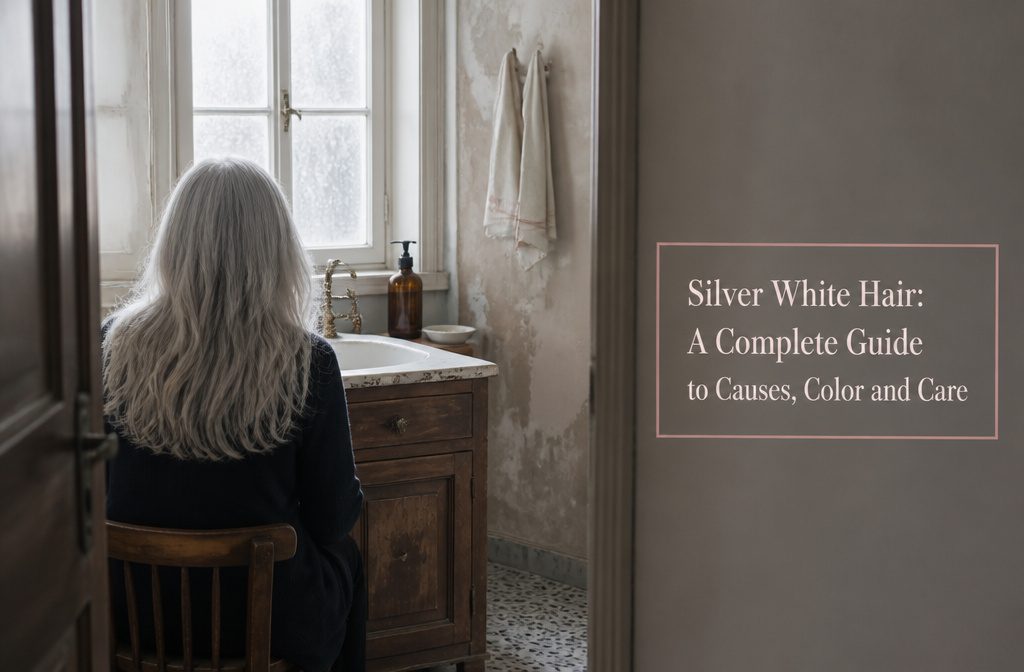
Silver white hair is hair with little or no pigment, which scatters light in every direction and reads as neutral silver.
Dyed silver is a different job: you must lift hair to nearly white first, then tone it, and upkeep runs about every 4 weeks. Natural silver costs only patience, and onset averages the mid-30s for white people.
Silver, White, and Gray
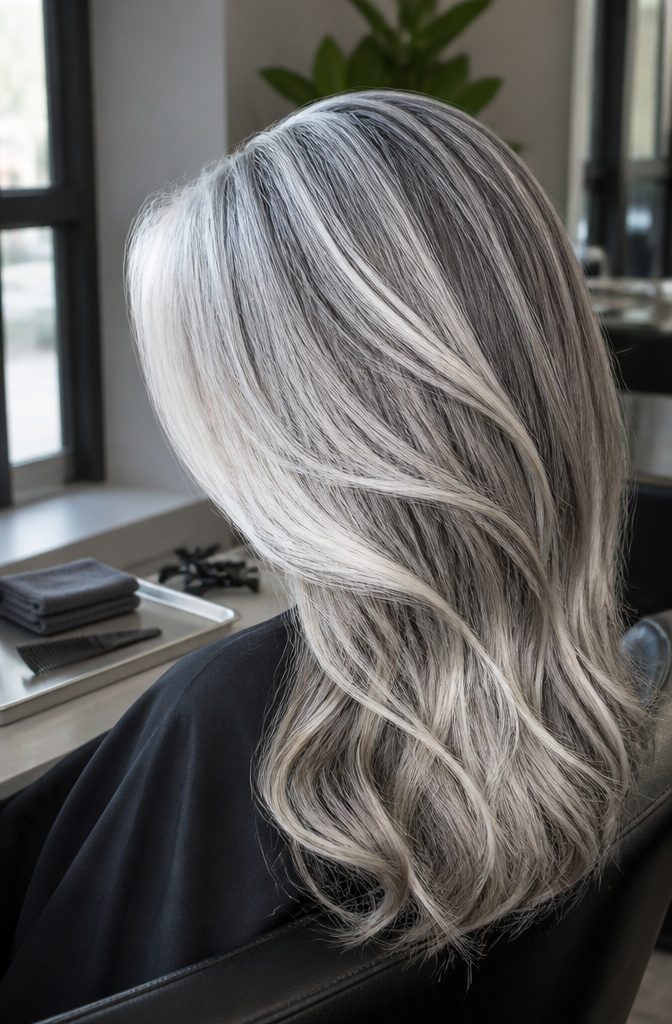
Gray is a blend of pigmented and non-pigmented strands, and the more white in the mix, the more silver it looks. White is hair with little or no pigment.
Silver is the slippery one: it can be an aesthetic label for hair you tone or style on purpose, or a word that shifts with each person’s interpretation, so there is no single fixed definition.
Are silver and gray the same? Often it’s the same hair described differently.
I use "gray" for the color and "silver" for the look you’re choosing. Dyed silver is its own job:
"Whether [you’re] brunette, black, or blonde, you have to lift the hair to nearly white in order to achieve this look."
— Vogue
If you’re coloring toward silver, the starting line is nearly white, not gray.
How Hair Loses Pigment
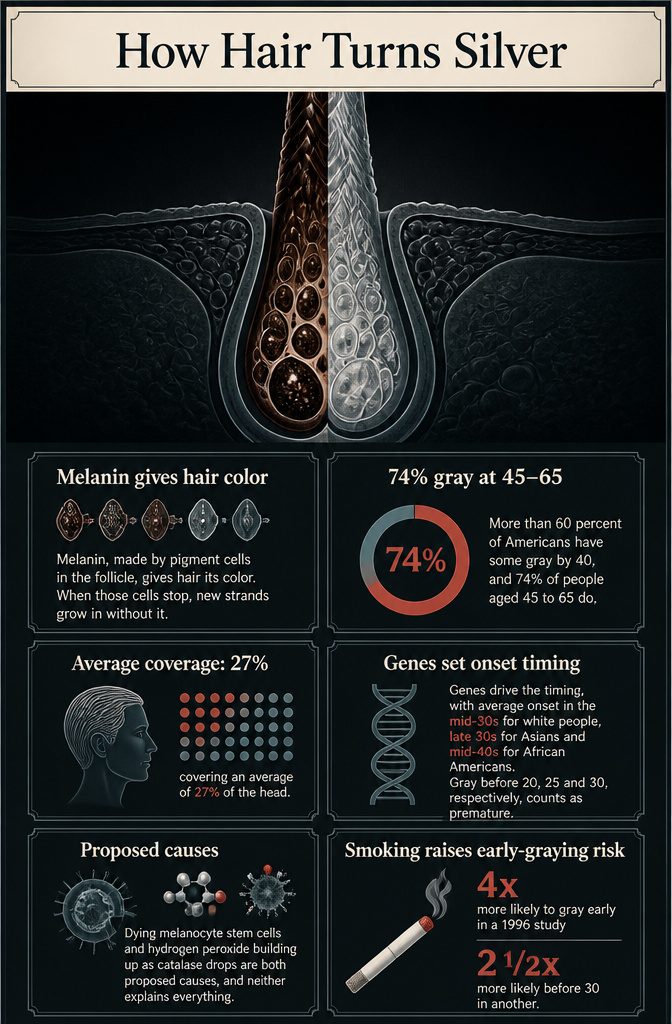
Melanin, made by pigment cells in the follicle, gives hair its color.
When those cells stop, new strands grow in without it. More than 60 percent of Americans have some gray by 40, and 74% of people aged 45 to 65 do, covering an average of 27% of the head.
Genes drive the timing, with average onset in the mid-30s for white people, late 30s for Asians and mid-40s for African Americans. Gray before 20, 25 and 30, respectively, counts as premature.
Dying melanocyte stem cells and hydrogen peroxide building up as catalase drops are both proposed causes, and neither explains everything. Smokers were 4 times more likely to gray early in a 1996 study, and 2 1/2 times more likely before 30 in another.
Why Bare Strands Look Silver
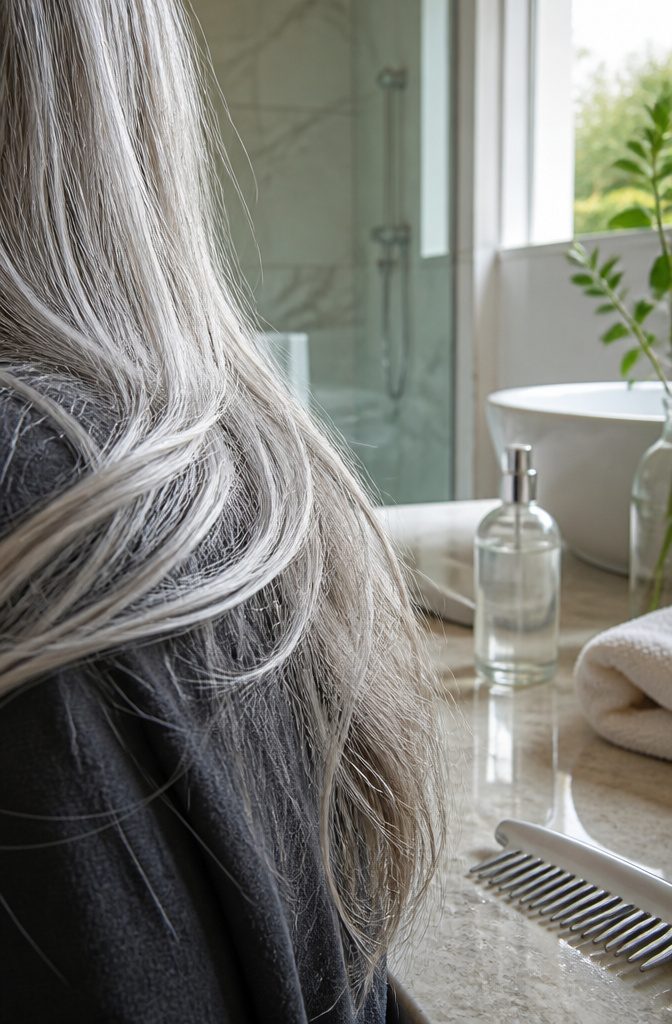
Hair without pigment isn’t clear, because keratin bends light. Its refractive index is about 1.54–1.59 against air’s 1.0, so light entering a strand slows, bounces around inside, and exits in every direction.
Dark hair absorbs much of that light first, while hair with little pigment scatters roughly 4 to 5 times more light than black hair. With no melanin favoring any wavelength, the result reads as neutral silver or white.
Surrounding hair and lighting change the look. Unpigmented strands take on the shade of the hair around them, and coarser texture or warm light can push them toward creamy, yellowish-white, or pale blonde.
A serum made for silver hair earns its place, I think, since a sealed cuticle reflects light more cleanly.
How Silver-White Changes Over Time
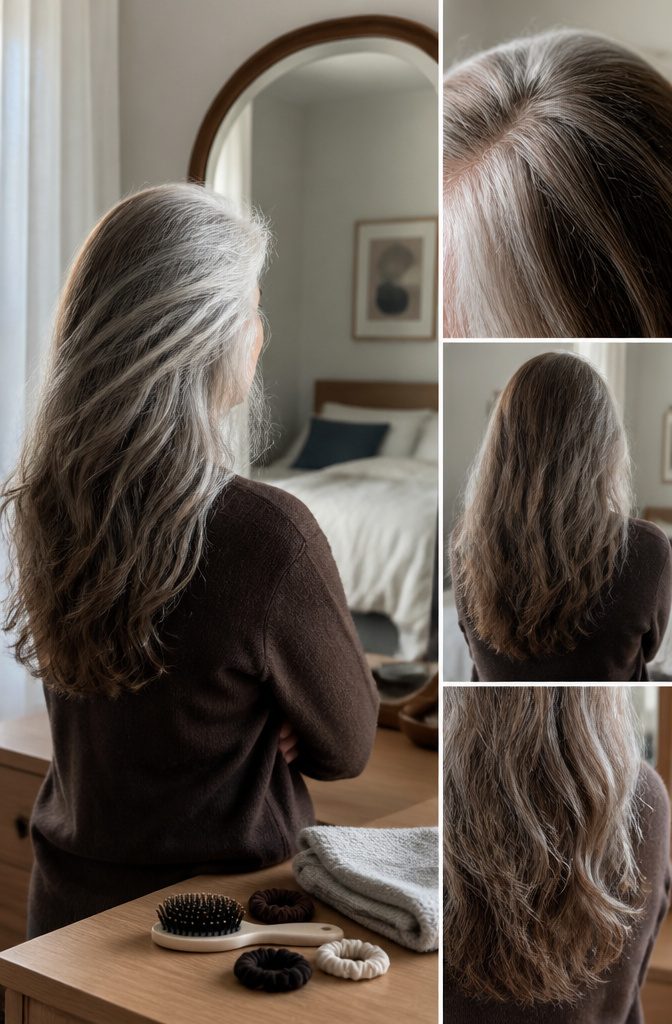
Gray is a blend: some follicles still make pigment, others have stopped, and the strands sit side by side.
On dark brown hair, 30 percent of follicles going quiet reads as brownish-gray. Gray-percentage charts run from 5 percent to 90 percent, and finding your own number on that scale beats comparing yourself to a stranger’s photo.
The mix is uneven. Your hairline can be fully white while the crown holds pigment, and new growth may come in whiter than the mid-lengths.
Very dark hair can show visible gray for years, while light hair slides toward white fast because the contrast is low. Natural redheads don’t really go gray at all: they fade to strawberry blonde, then silvery-white.
If you’re growing out dye, I’d plan on 18 months, with the percentage still shifting along the way.
Natural or Dyed Silver
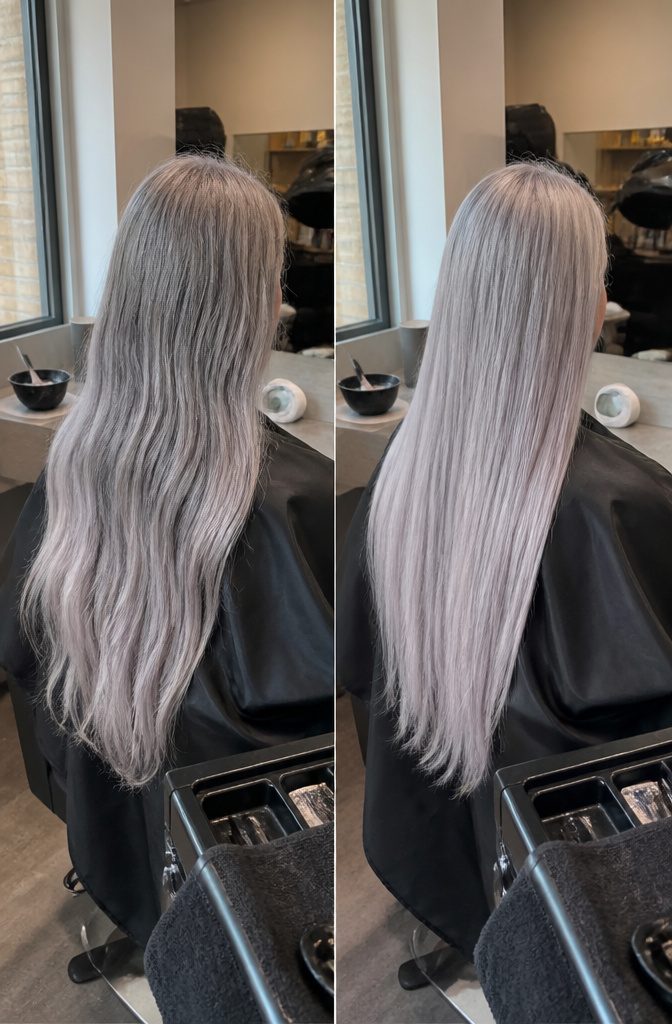
Dyed silver means lifting hair to nearly white, then toning. A purple-based toner with 5- or 10-volume developer, left on for about 30 minutes, cancels the yellow that bleach leaves behind.
Bleach can damage hair and skin if misused, so I’d send anyone starting from brunette or black to a colorist. How many lightening sessions you need depends on your natural color, and upkeep runs about every four weeks.
Natural silver asks for none of that.
Growing it out costs patience, and silver need not mean short; long hair carries it well. Want the shade now and can keep the four-week salon schedule?
Dye. If gray is already coming in, grow it.
Care and Styling
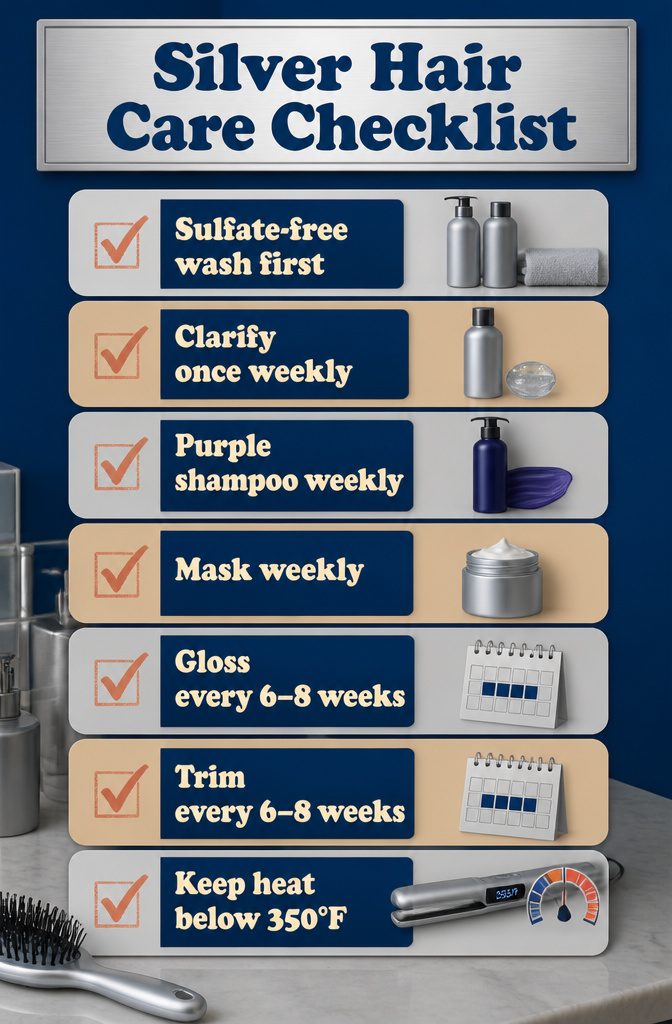
Silver holds tone and shine when the routine stays short and regular.
- Wash dyed silver with a sulfate-free shampoo, then use a clarifying shampoo once a week to clear buildup.
- Use a purple or blue pigment shampoo, such as Shu Uemura Anti-Brass Purple Shampoo, weekly, or at the very least twice a month. Purple conditioner has a subtler effect.
- Apply a mask weekly. Deep Hydration Mask puts moisture back into brittle strands, and NOUNOU Mask needs only 30 seconds.
- Book a professional gloss every 6–8 weeks to refresh tone and shine.
- Trim every 6–8 weeks to keep ends from splitting.
- Keep heat tools below 350 degrees. Gray strands burn more easily, so buy a tool with temperature control.
Stopping Yellow Tones
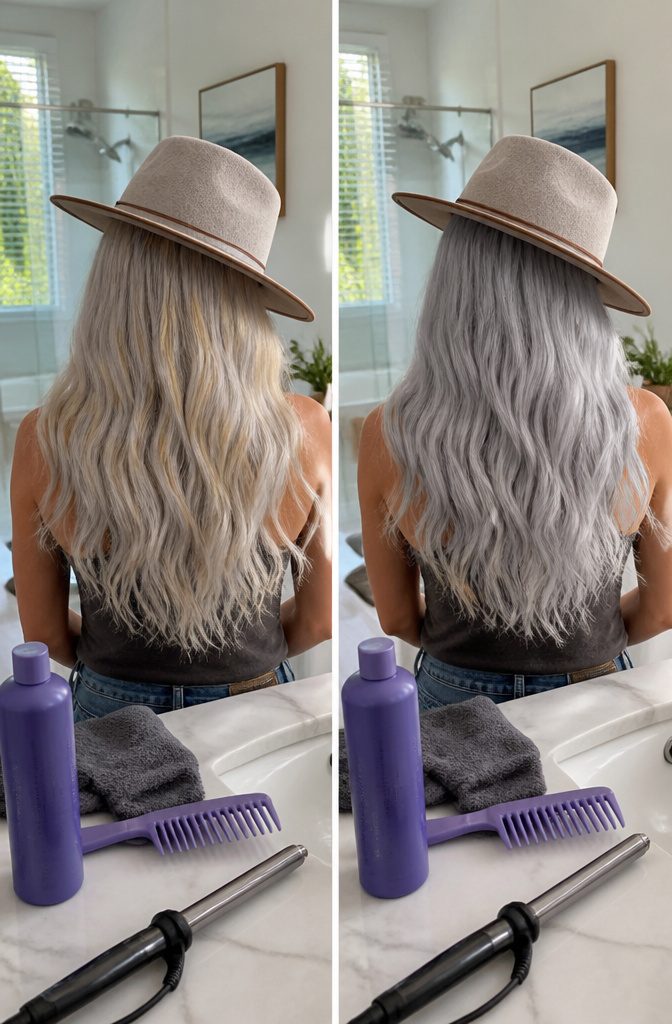
Yellow silver hair usually traces back to product buildup, sunlight or heat tools.
Buildup and recent mineral deposits are the fixable kind: purple sits opposite yellow on the color wheel, so a purple shampoo cancels brassy tones, though it takes some diligence.
Sun and heat damage cannot be reversed, and neither can minerals left on the hair long enough to embed in the shaft. White hair has little to no melanin, so nothing shields it from UV.
I’d wear a hat or use a UV-protectant hair product; scalp melanomas are more lethal than those elsewhere on the body. If purple products stall, a hairdresser can build a custom plan.
Texture, Dryness, and Damage
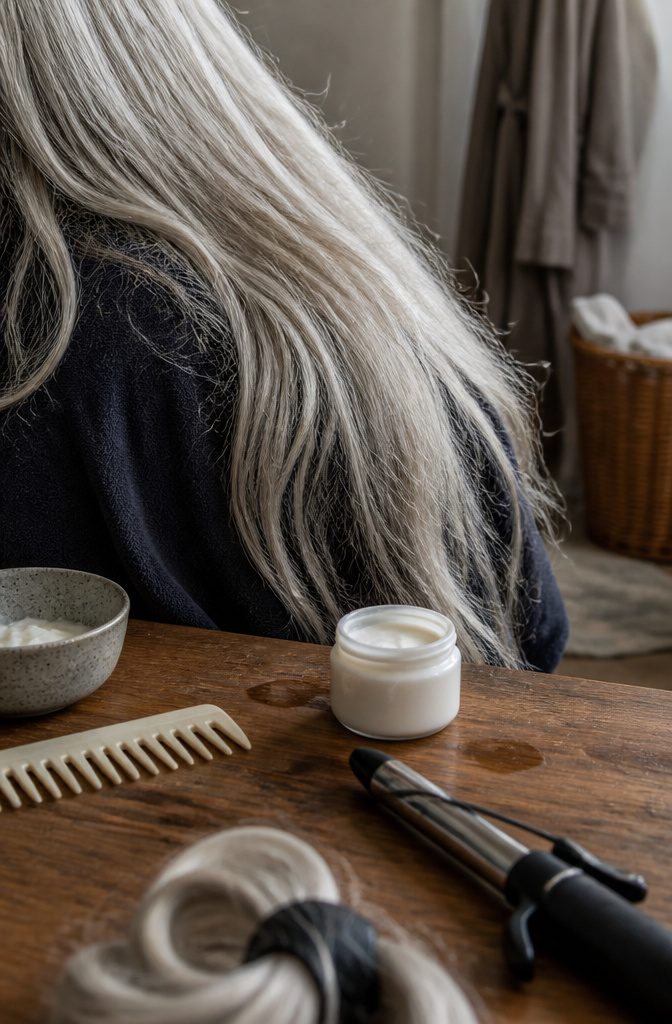
Gray and white hair is often described as dry, wiry, and hard to manage, but the texture isn’t the same on every head.
Hair tends to get finer after about 40, and in one small study white hairs were thicker on average than pigmented ones on the same heads.
Some strands may feel coarse while others stay soft, even baby fine. Judge your own hair by touch, not by the stereotype.
Dryness is the more common complaint, and less oil reaching the strands is one reason.
I’d start with a hydrating mask once a week, since it does the most for the least effort. Detangle gently, keep hot tools below 350 degrees, and book regular trims to cut off frayed ends.
Stress and Graying

Stress may speed up graying, but no definite link has been established in people. In mice, a 2020 Harvard study found that acute stress activated the fight-or-flight nerves, which released norepinephrine and used up the stem cells that make pigment.
A small 2021 Columbia study matched individual hairs to stress diaries. Graying tracked stressful stretches, and some hairs regained color when stress eased.
That shows an association, not cause. I read it as a nudge: stress may tip hair that is already close to graying, and lowering it is unlikely to darken strands that have been gray for years.
Going silver overnight is also unlikely, since hair that has already grown out of the follicle does not change color.
Blending the Transition
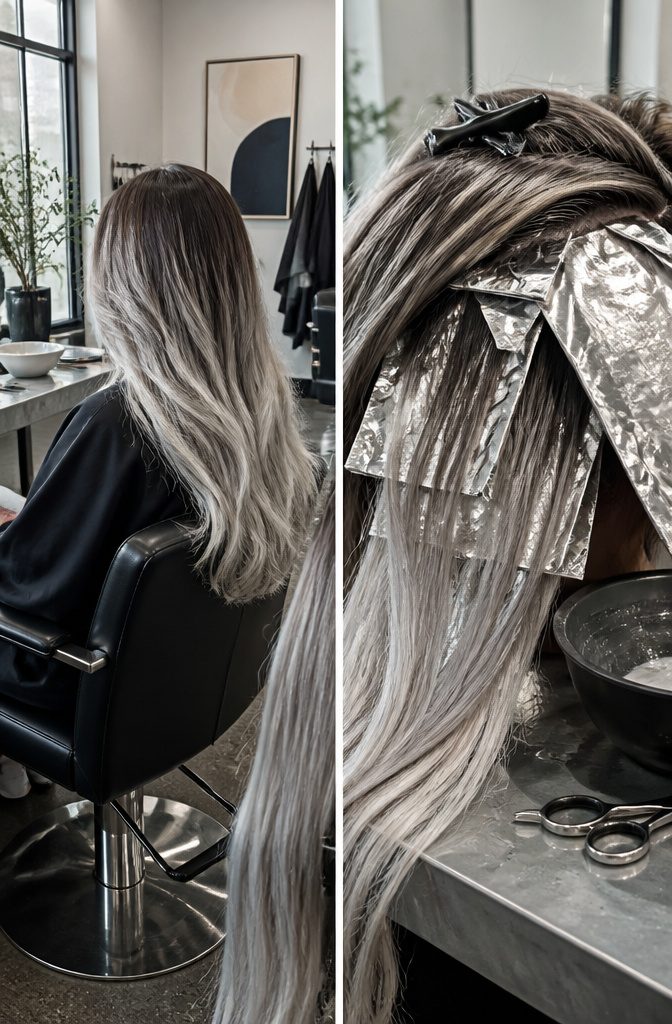
Before picking a route, I’d ask a stylist how much gray is actually there. If it’s a lot, highlights lighten the strands around it and soften the line at the roots as they grow out.
Switching from permanent color to a less opaque demi color makes gray strands read like highlights. Ombré eases dark hair toward silver: it melts into deep gray at the ends, so you can stop partway.
If you keep coloring in the meantime, permanent dye covers stubborn roots better than semipermanent color, and a lighter shade blends with grays that refuse to take.
Length is open.
Short cuts are common on fully gray heads, but long layers add movement. Trim every 6–8 weeks.
Frequently Asked Questions
Is silver white hair the same as gray hair?
Often it is the same hair under different names. Gray is a mix of pigmented and non-pigmented strands, white is hair with little or no pigment, and silver is more of a styling label than a fixed term.
Most people use whichever word fits how they see their own hair.
What causes silver white hair?
The pigment cells in the follicle stop making melanin, so new strands grow in without color.
Genes mostly set the timing, with average onset in the mid-30s for white people, late 30s for Asians and mid-40s for African Americans.
Smoking has been linked to earlier graying, and stress may play a part, though no definite link has been shown in people.
What shampoo is best for silver white hair?
It depends on what your hair is doing. If there’s no yellowing, a regular shampoo can be enough; if it’s turning brassy, use a purple shampoo weekly, or at least twice a month.
Dull, dingy hair may respond to a clarifying shampoo, and very white hair with little dimension can use a silver toning shampoo, which adds back some darker gray tones. Dyed silver does better with a sulfate-free formula.
Will silver hair dye cover yellow tones?
Usually a purple shampoo or toner fixes yellow, not a new round of dye.
Purple sits opposite yellow on the color wheel, so it cancels brassy tones caused by buildup or recent mineral deposits. Sun and heat damage can’t be reversed, and if purple products stall, a hairdresser can build a custom plan.
Why does gray hair look shiny silver?
Hair without pigment isn’t clear, because keratin bends light and scatters it in every direction.
Unpigmented hair scatters roughly 4 to 5 times more light than black hair. With no melanin favoring any color, the result reads as neutral silver or white, and a sealed cuticle reflects it more cleanly.
How do I keep silver hair from looking aged?
Aim for clean tone, shine and a good shape. Use purple shampoo weekly, a hydrating mask weekly, a professional gloss every 6–8 weeks and a trim on the same schedule.
Keep heat tools below 350 degrees, since gray strands burn more easily. Length is open: short cuts are common, and long layers add movement.
Is there a silver white hair dye?
Getting dyed silver is a process rather than a single box of color. The hair is lifted to nearly white, then toned with a purple-based toner and 5- or 10-volume developer for about 30 minutes.
Starting from brunette or black can take multiple sessions, so see a colorist, and expect salon upkeep about every 4 weeks.