Semi-permanent color can come out with a clarifying shampoo, a vitamin C paste, or a remover, in about 20 minutes to an hour at home.
Bleached hair can’t be undone, because a remover only lifts dye darker than your natural shade. Rinse the second the timer goes off: extra time darkens hair rather than lifting more color.
1. Identify the Dye and Goal
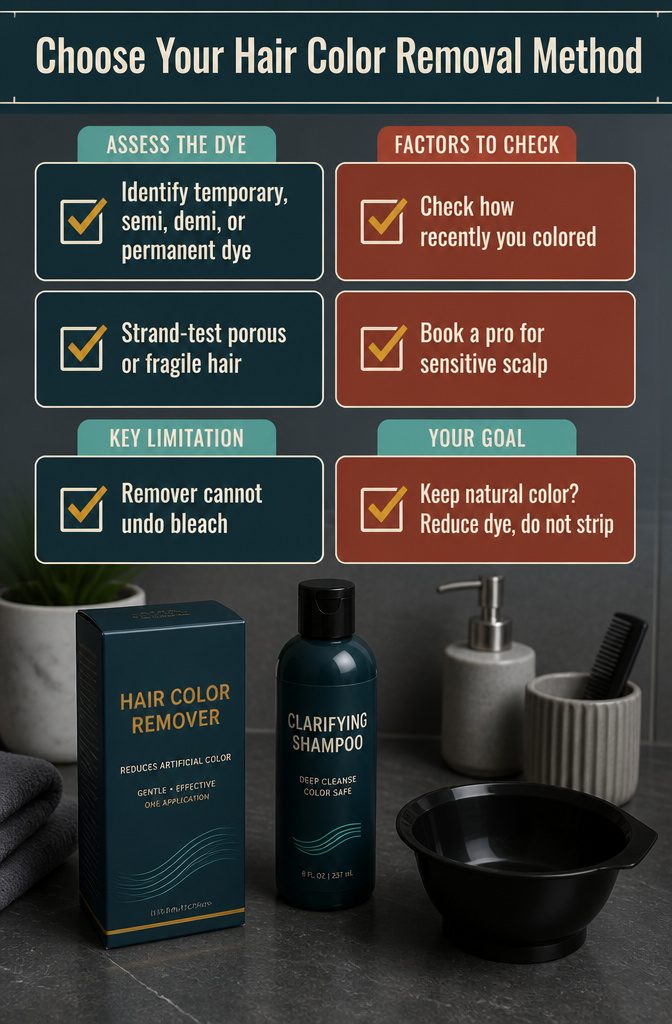
Five factors decide the method before anything touches your hair:
- Dye category: temporary, semi- or demi-permanent, or permanent. Semi-permanent color gets the gentlest options first: a clarifying or chelating shampoo, then a hair color remover, then time.
- Recency: how recently you colored affects how long removal takes.
- Condition and porosity: on porous hair I’d go slowest, strand-testing first and moisturizing between steps.
- Scalp sensitivity: a sensitive scalp is a good reason to book a pro correction instead of trying it at home.
- Distance to travel: a remover only lifts color darker than your natural shade, so it cannot undo bleach. Lightened hair may have no natural pigment left to reveal.
If you want to keep your natural color, reduce the dye rather than strip it. Match the method to the dye: permanent color needs a stronger plan than semi-permanent.
2. Start With Gentle Options
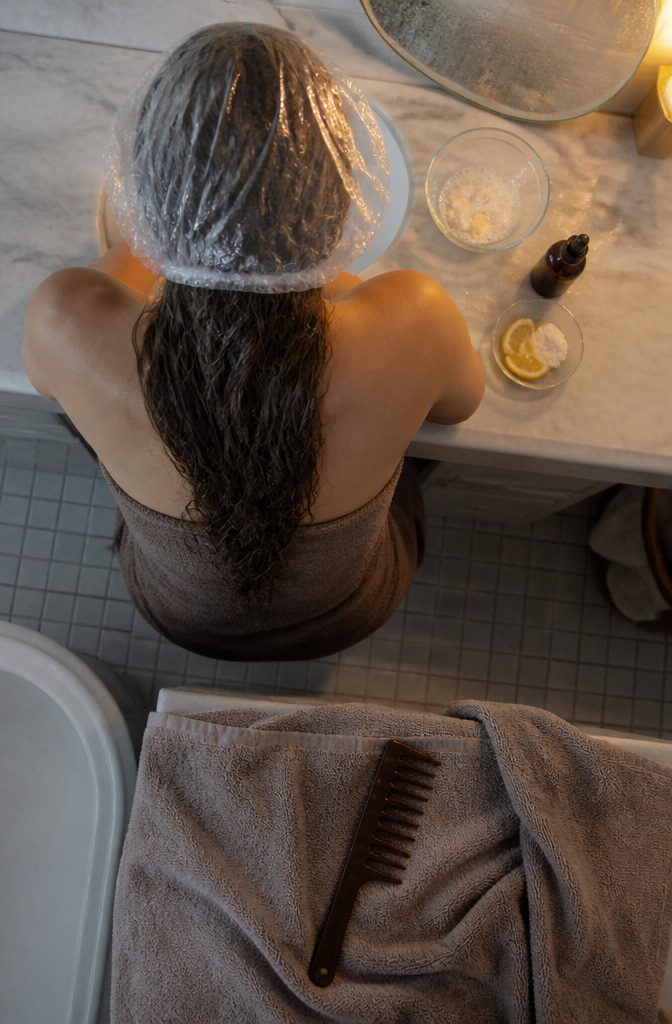
For semi-permanent or temporary color, start with the mildest tools: time, a clarifying or chelating shampoo, or an at-home remover. If those fall short, I’d try vitamin C first, since it needs just two ingredients.
- Vitamin C: crush at least 2 effervescent tablets into enough shampoo to cover the hair, then leave it on 20 minutes to 1 hour.
- Dish soap: use it in place of the shampoo in that mix, or on its own.
- Anti-dandruff shampoo: good for pastels and small shade changes, and it works best before the color sets. It does little for permanent color.
- Lemon and baking soda: mix 2 teaspoons of each and rinse after only a few minutes, because the lemon dries hair.
- Hot oil: leave it under a shower cap for about an hour. It conditions while the color loosens.
- Epsom salts and baking soda: semi-permanent color only.
3. Reduce Permanent Color
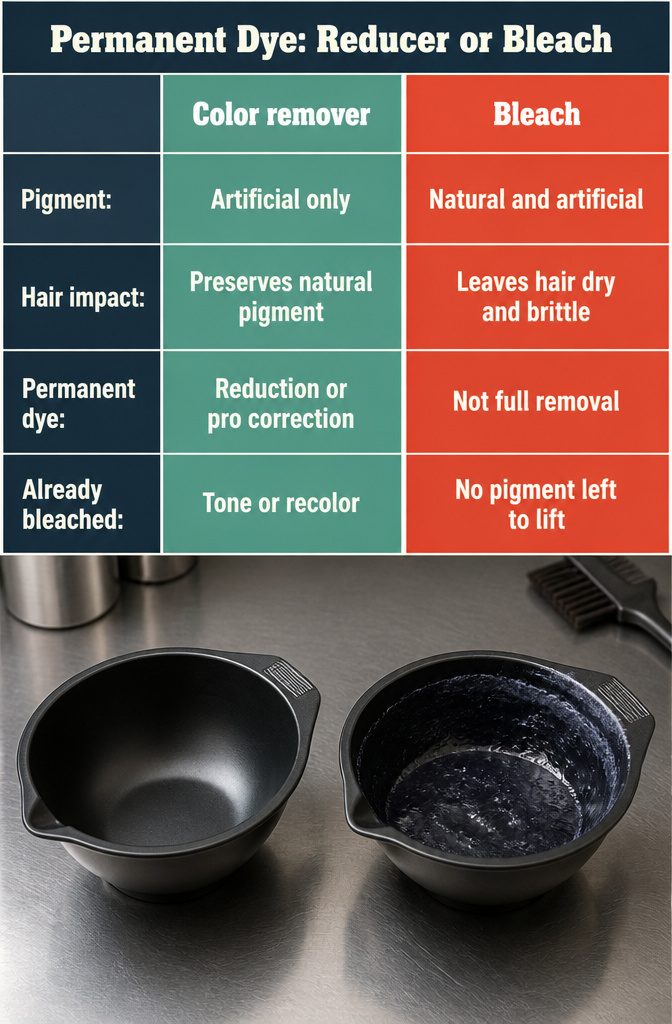
Permanent dye calls for color reduction or a professional correction. Shampoo alone will not fully remove permanent pigment.
A hair color remover targets the artificial pigment and leaves your natural pigment alone. Bleach lifts both, and that is what leaves hair dry and brittle.
I would skip at-home bleach. If you are still tempted, test a single strand first and see how it holds up before you touch the rest.
Stubborn shades like black and vivid reds can take multiple sessions. Hair that was already bleached has no pigment left to lift, so you tone or recolor it instead.
4. Apply the Remover and Rinse
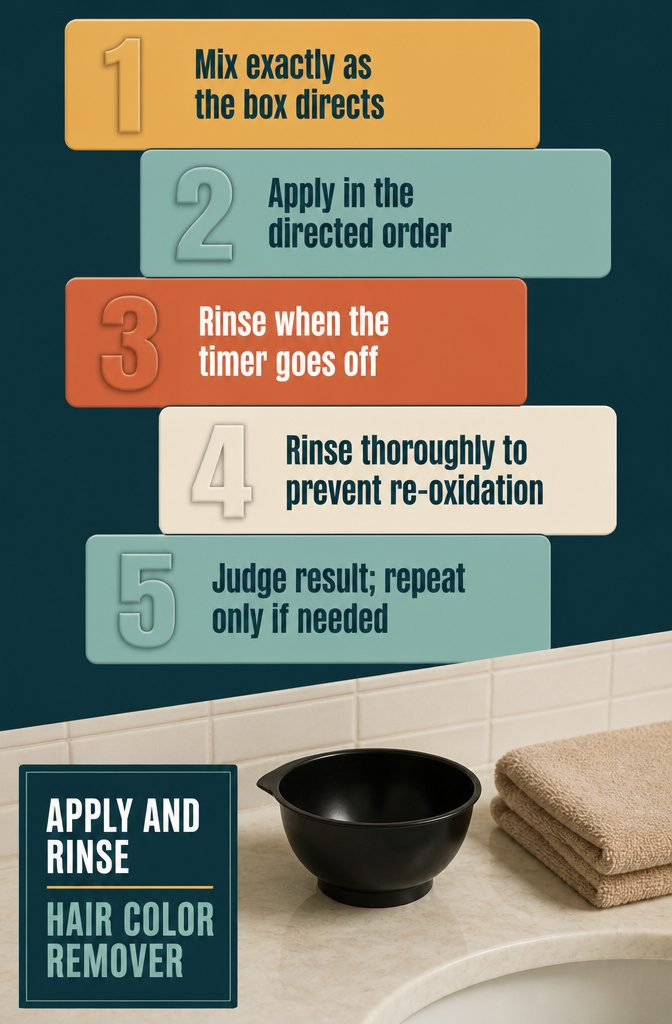
- Mix the remover exactly as the box directs. Ratios and timing differ from brand to brand, so the label outranks any general advice.
- Apply it to the colored hair following the directions’ order of steps.
- Set a timer and rinse the moment it goes off. Extra time does not pull out more color, and it can darken your hair.
- Rinse longer than feels necessary. Product left behind lets re-oxidation bring the old color back, and I would rather over-rinse than redo the whole thing.
- Judge the result before reaching for round two. A recent mistake or month-old color may need just 1 application. Repeat only if needed, up to the usual maximum of 3, and see a specialist if color remains after that.
5. Fix Brassy or Orange Results
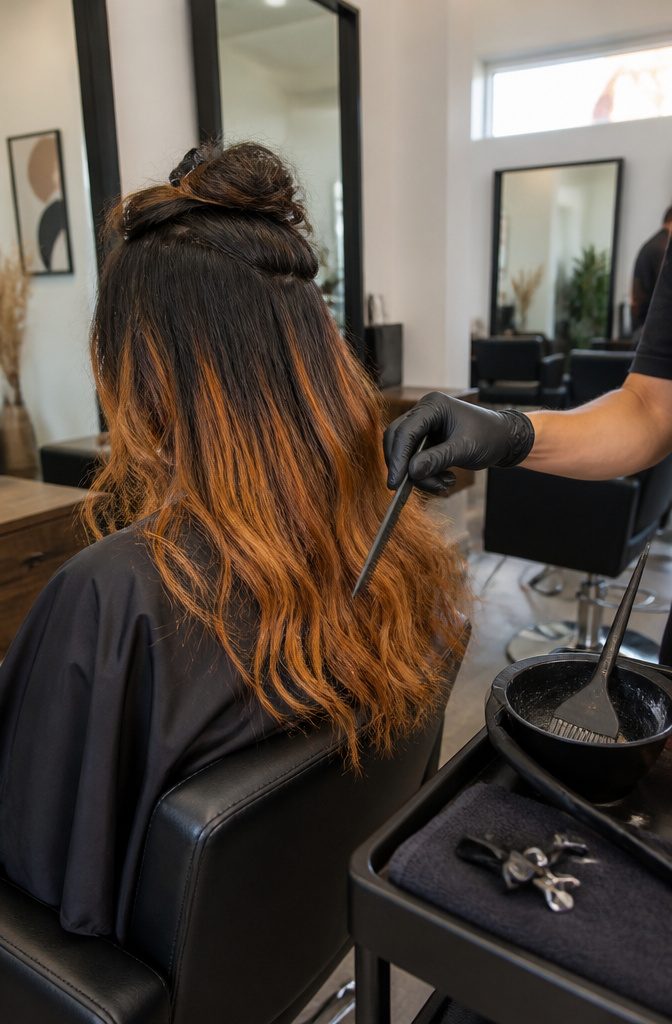
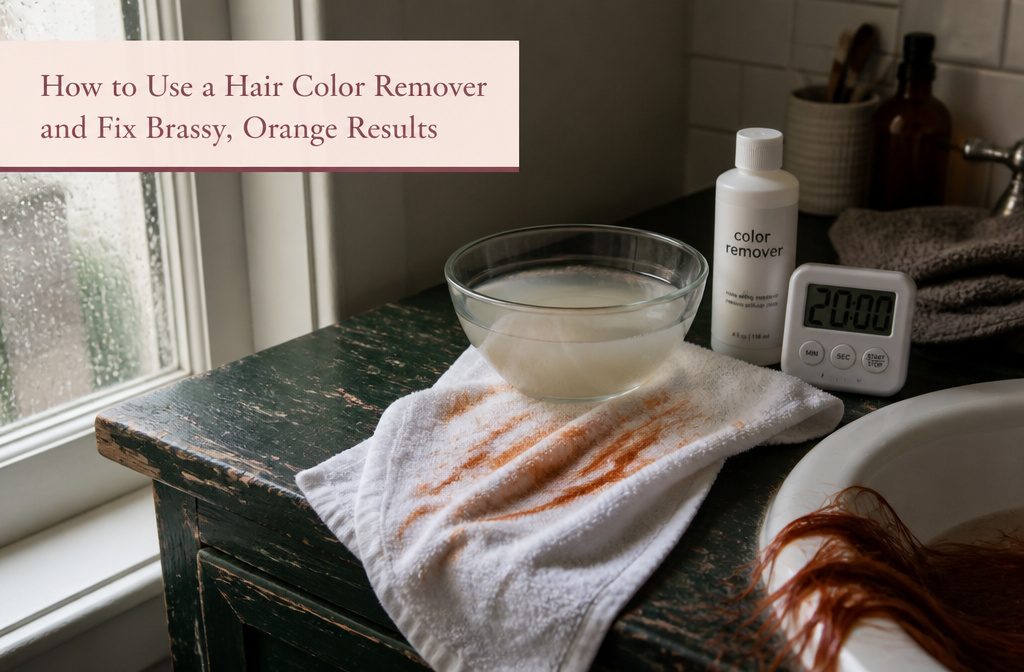
Yellow or orange after a hair color remover means the product worked.
The warmth comes from your lightened natural shade showing through, or from developer left over from the earlier dye. Toner cancels it if you like the lighter level; recoloring to your target shade covers it if you don’t.
A remover cannot restore your exact virgin shade or undo prior lightening.
Peroxide-based dye lightens natural pigment, and repeated coloring makes that change permanent. Bleached hair has no pigment left to lift, so tone or recolor instead.
Black and vivid reds may take multiple sessions. I’d book a professional for those rather than stacking rounds at home.
6. Wait Before Re-Dyeing
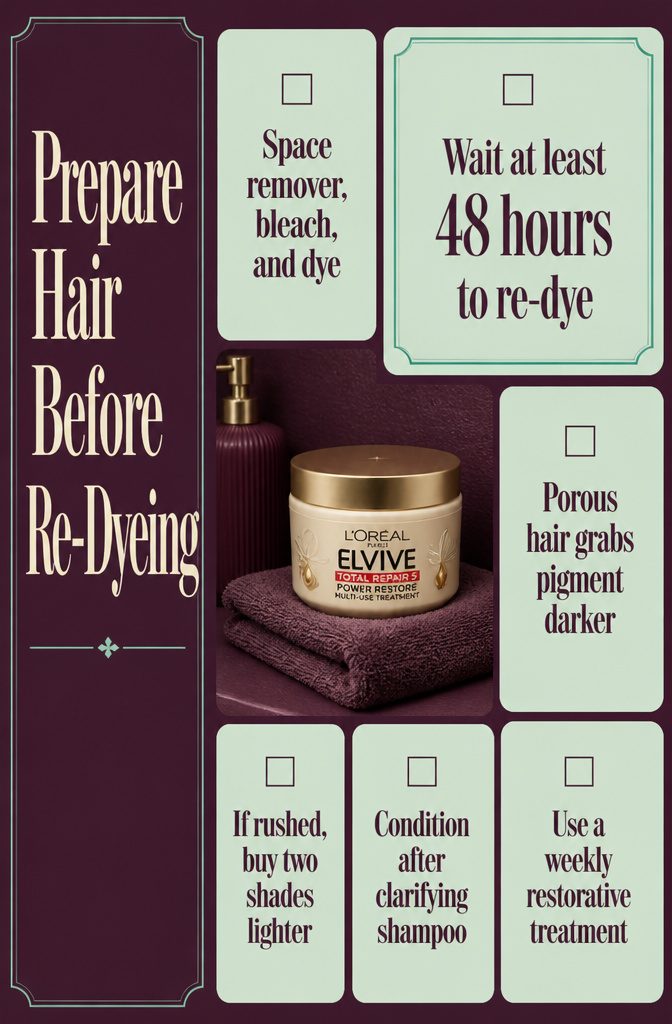
Hair that has just been stripped takes color differently, so give it a pause before the next step.
- Remover, bleach and dye are too much for one day. Space them out.
- Wait at least 48 hours before re-dyeing. Stripped hair is very porous with an open cuticle, so it grabs pigment and any shade lands darker than the box shows.
- If you can’t wait, buy two shades lighter than your target. Aiming for a 7.1 gray blonde means picking a 9.1. I’d still take the wait over guessing.
- After clarifying shampoo, follow with a restoring conditioner or mask to keep hair soft.
- Add a weekly treatment such as L’Oréal Paris Elvive Total Repair 5 Power Restore Multi-Use Treatment.
7. Grow It Out Instead
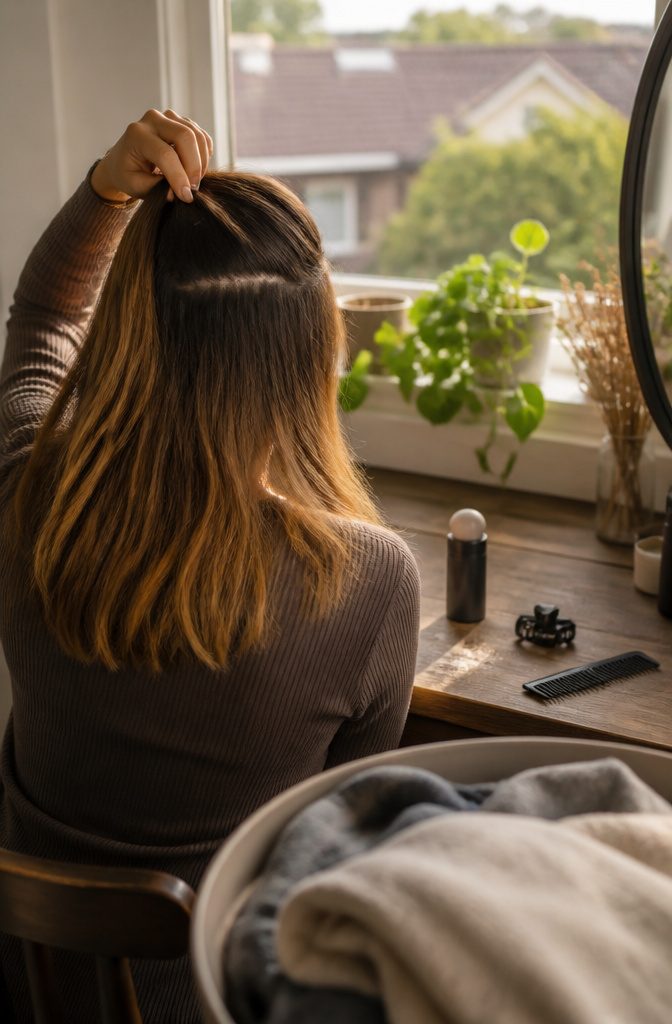
Growing out is the least damaging route back to your natural color, and also the slowest.
Nothing touches the hair, so nothing can go wrong. The hard part is the line where new growth meets old dye, and L’Oréal Paris Magic Root Cover Up blurs it until your next trim.
For anyone who can live with a few months of in-between, I’d pick that over another round of remover.
If the hair has had enough processing, recoloring near your natural shade is the gentler middle path.
The Excellence Crème range has 30 shades, which gives you room to land close to your real color instead of settling for the nearest guess.
Cutting off the dyed lengths is the fastest clean exit. A little at each trim gets you there without a dramatic chop.
Choosing a Remover
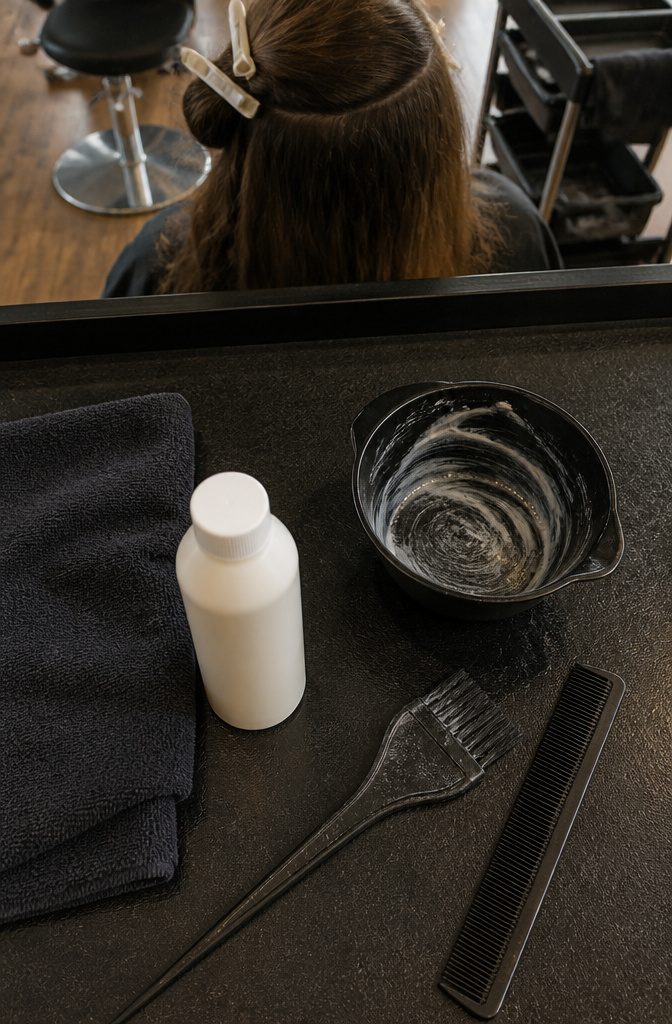
A hair color remover works inside the hair shaft, dissolving artificial pigment so the dye has nothing to hold onto and rinses out after a few minutes.
Natural pigment stays put, unlike with bleach, which strips both and leaves hair dry and brittle.
One Color Correcting & Removers category lists 28 results, including Wella Color Renew, Goldwell Elumen Play Color Eraser, Schwarzkopf Professional Bond Enforcing Color Remover, Danger Jones Color Remover for Semi-Permanent and Direct Dye Colors, Colour Undo, Matrix SoColor Cult Color Eraser and Framar Kolor Killer Wipes.
Nothing compares them head to head, so I won’t crown one. Check that the label covers your dye type, then follow the manufacturer’s directions.
Dye Type and Removal Limits
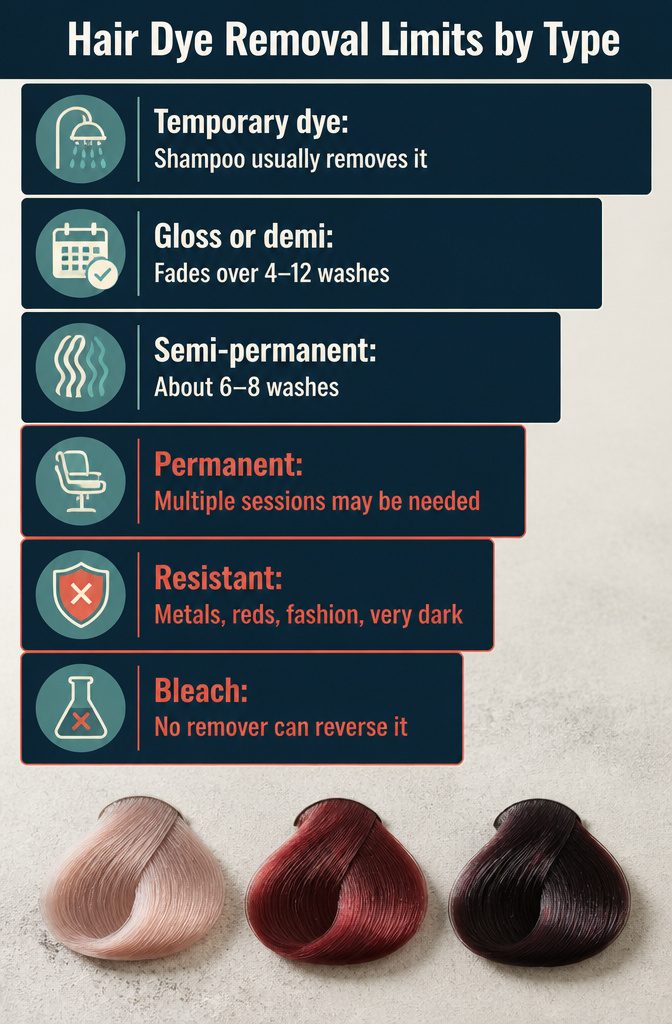
Removal difficulty depends on how deep the pigment sits.
| Dye type | Removal outlook |
|---|---|
| Temporary (sprays, root touch-ups) | Washes out with shampoo |
| Gloss, semi-/demi-permanent | Often fades over 4–12 washes |
| Permanent | Can take multiple sessions; black and red hardest |
Semi-permanent is the type to wait out.
Semi-permanent color typically lasts several weeks, about six to eight washes, and fades gradually. If you can, let it fade naturally to avoid additional processing.
Waiting costs nothing, while a remover adds processing to hair that is already tinted. No remover can reverse bleaching, and metal dyes, reds, fashion shades and very dark colors resist it most.
Limiting Damage
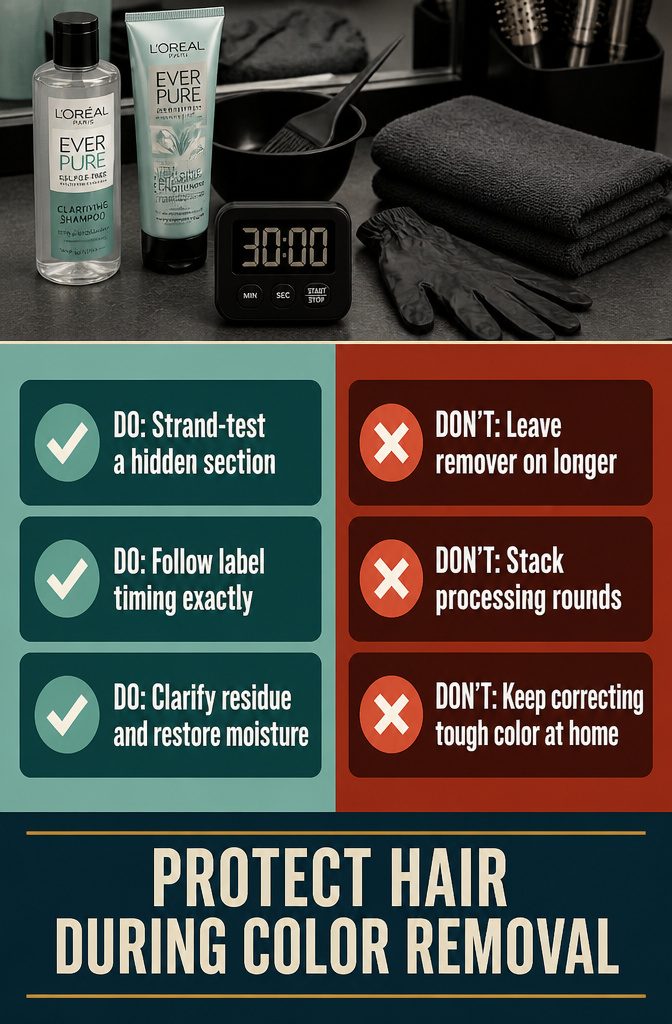
Remover is hard on hair, so a few habits keep the damage down:
- Strand-test on a small hidden section first, so you see the result before it hits your whole head.
- Follow the label’s timing exactly. Leaving remover on longer won’t lift more color, and your hair may darken.
- Avoid stacking rounds of processing back to back.
- Use a clarifier like L’Oréal Paris EverPure Sulfate-Free Clarifying Shampoo with Antioxidants to lift residue and buildup and help leftover color fade.
- Follow with EverPure Restoring Conditioner or a mask to replace moisture. The Bond Repair line suits hair that feels worn out.
- Hand a tough correction to a professional rather than adding more product at home.
Frequently Asked Questions
What is a hair color remover and when should I use it?
A hair color remover dissolves artificial pigment inside the hair shaft so the dye rinses out after a few minutes.
Use it when you want to lift permanent or semi-permanent color without the damage bleach causes, since it leaves your natural pigment intact.
How does a hair color remover work?
It breaks down the artificial color molecules deposited by dye so they shrink and rinse away. Your natural pigment stays in place, which is why remover is gentler than bleach.
What is the difference between color remover and bleach?
A remover targets only artificial pigment and leaves natural color alone, so hair stays healthier. Bleach strips both artificial and natural pigment, which is what leaves hair dry and brittle.
Will my hair return to its original color after using a remover?
Not always.
If you used permanent dye or bleach before, the peroxide lightened your natural pigment and repeated coloring can make that change permanent. A remover cannot restore pigment that has already been lifted.
Why is my hair brassy or orange after using a color remover?
The warmth you see is your lightened natural shade showing through, or leftover developer from the earlier dye. Toner cancels the brass if you like the level; recoloring to your target shade covers it if you don’t.
Can a color remover remove bleached hair or lightening?
No.
A remover only lifts color darker than your natural shade, so it has nothing to work with on bleached hair. Tone or recolor instead.
Can all types of hair color be removed?
It depends on the dye type and shade.
Temporary color washes out with shampoo, semi-permanent fades in 4 to 12 washes, and permanent color can take multiple sessions. Metal dyes, reds, fashion shades and very dark colors resist removal most.
How many times can I use a hair color remover?
A recent dye or month-old color may need just 1 application. You can repeat if needed, up to a usual maximum of 3, and see a specialist if color remains after that.
Will leaving color remover on longer remove more color?
No.
Extra time does not pull out more pigment, and your hair may darken instead. Set a timer and rinse the moment it goes off.
Why did my hair darken after using a color remover?
Product left behind lets re-oxidation bring the old color back. Rinse longer than feels necessary to wash out every trace.
Can I dye my hair immediately after using a color remover?
Wait at least 48 hours.
Stripped hair has an open cuticle and grabs pigment fast, so any shade lands darker than the box shows. If you cannot wait, buy 2 shades lighter than your target.
How can I remove hair dye at home?
For semi-permanent or temporary color, start with clarifying shampoo, a hair color remover, or vitamin C. Permanent dye needs color reduction or a professional correction, since shampoo alone will not fully remove it.
What is the fastest way to remove hair color?
A salon color correction is fastest. At home, clarifying shampoo and an at-home remover can speed fading for semi-permanent dye, but space treatments out to avoid stacking damage.
What removes permanent hair color?
Color reduction with a remover, or a professional correction. Shampoo alone will not fully remove permanent pigment.
What is the hardest hair color to remove?
Black and vivid reds are hardest and may take multiple sessions. Book a professional for those rather than stacking rounds at home.
Does clarifying shampoo remove hair dye?
It can help fade temporary and semi-permanent color by lifting residue and buildup. Follow with a restoring conditioner or mask to replace moisture.
Should I use bleach to remove hair dye?
Skip at-home bleach.
If you are still tempted, test a single strand first and see how it holds up before you touch the rest. Bleach lifts both artificial and natural pigment, which is what leaves hair dry and brittle.
How damaging is color remover for hair?
Remover is hard on hair but less damaging than bleach, since it leaves natural pigment in place. Strand-test first, follow the label’s timing exactly, and use a restoring conditioner or mask afterward to replace moisture.