Match the hair to the dress: with a strapless or off-the-shoulder bodice, a low bun or ponytail leaves the neck and shoulders bare, and a high-neck lace gown pairs best with a classic bun sitting right at the nape.
The ideas run from sleek buns and a short wavy bob to loose waves and a long braid set with jeweled florals.
Hair length and humidity narrow the field after the dress does, since down styles are the riskier choice for frizz.
1. Low Ponytail
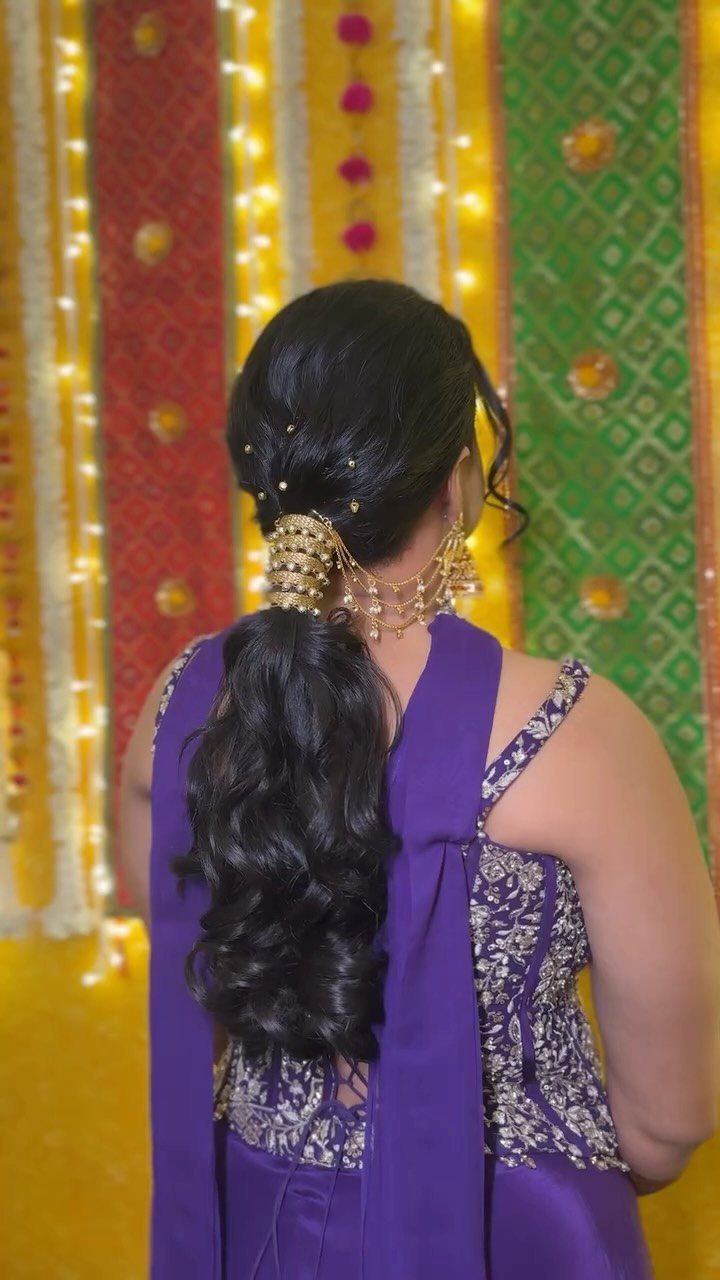
A ponytail tied at the nape sits low enough that attention stays on the back of the head, which makes it a good spot for an ornament.
I like the wavy version with a gold piece at the tie, which picks up gold jewelry without adding anything else.
Twists or a few loose face-framing strands are easy variations for a softer or more detailed finish.
2. Loose Ponytail
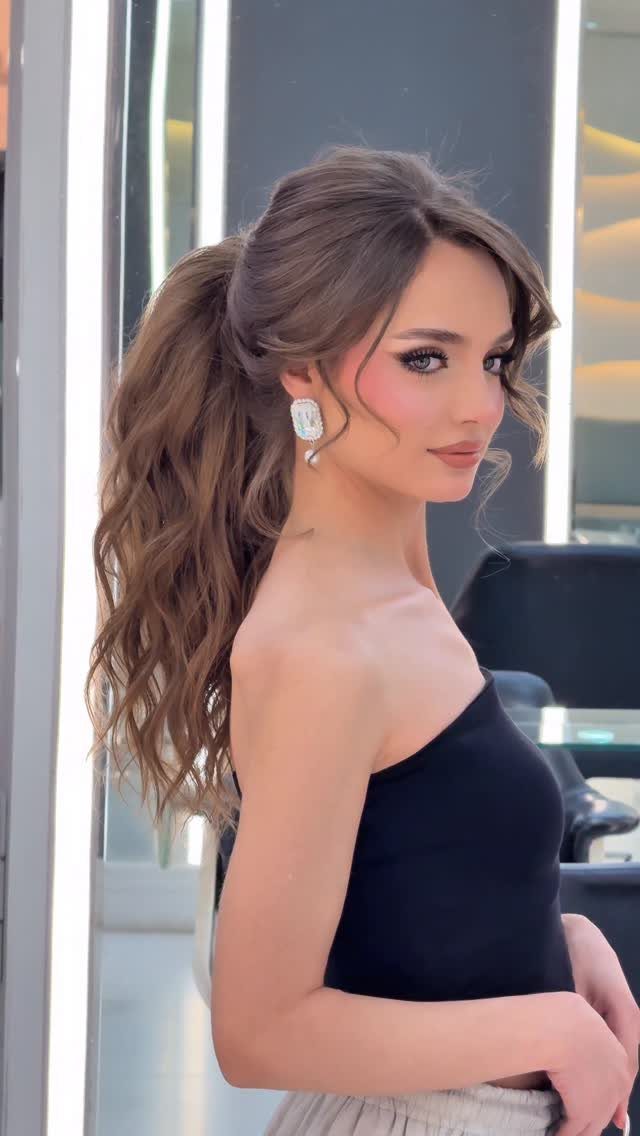
Curled strands pulled free at the front do most of the work in a loose ponytail. Left relaxed and wavy, the style reads as easy rather than polished, which suits a simple neckline and bigger earrings.
If you prefer a neater look, tighten the tie and leave out fewer strands. I would keep the texture, though.
3. Half-Up, Half-Down
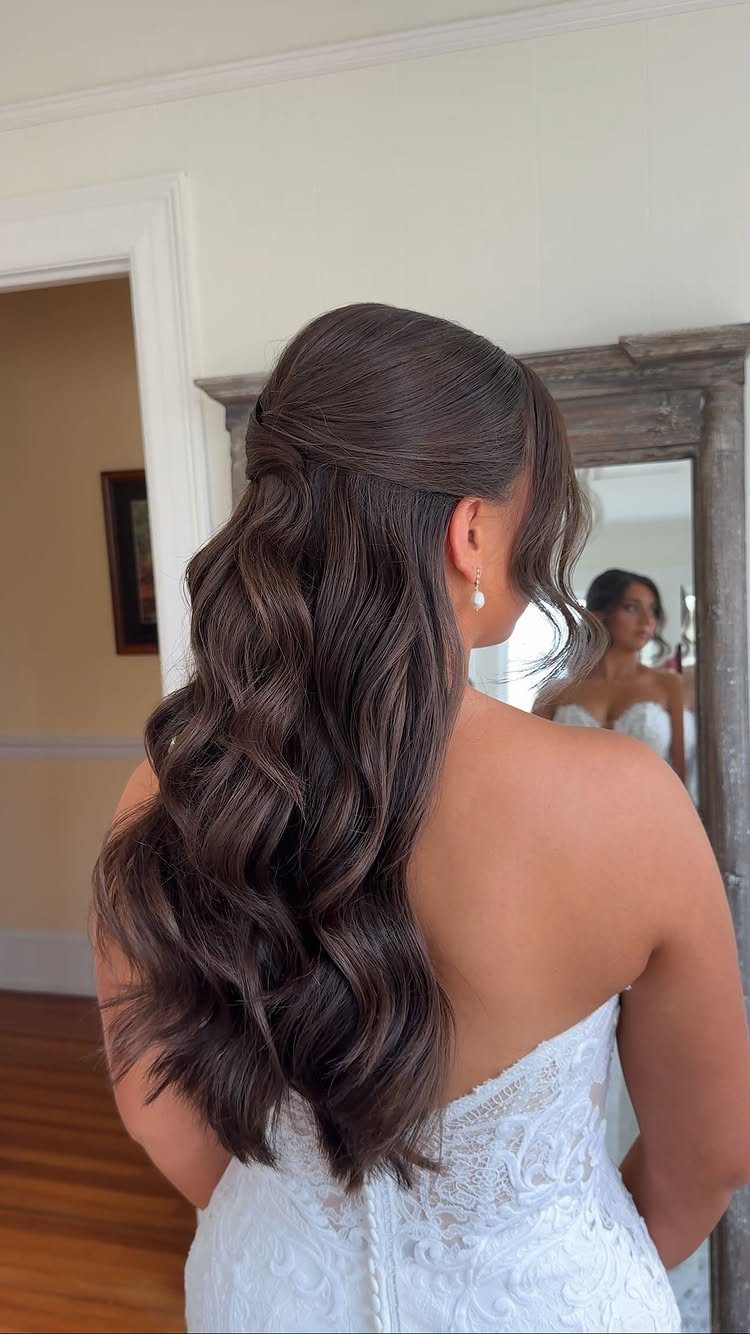
Half the hair is pinned and half hangs loose, so you get length and a bit of structure at once. Pinning at the crown, as on this bride, adds lift on top while the waves fall down the back.
Braids, twists, curls or a raised crown all fit the same format. For a lace dress, I would choose the crown lift with soft waves and keep the rest simple.
4. Braided Updo
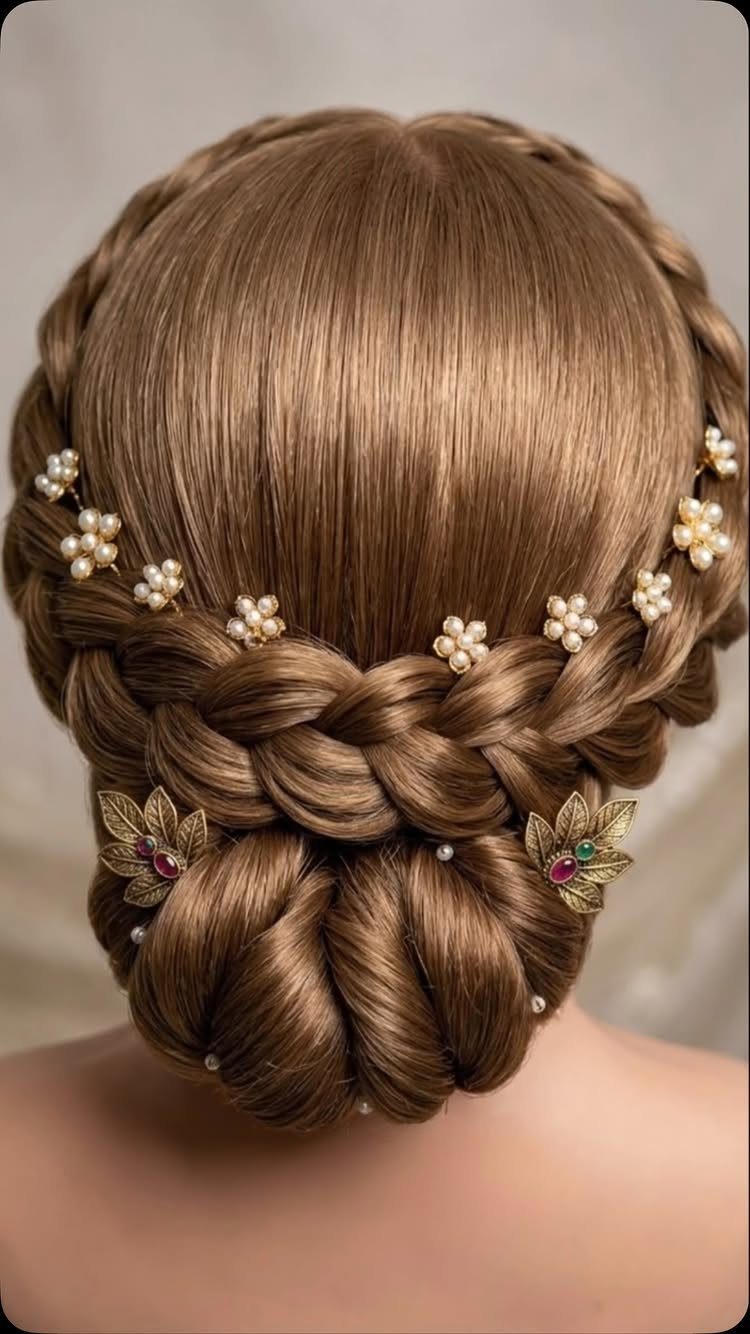
Braids give an updo shape and texture that a plain twist can’t. They can be worked into a bun, an updo or a crown, and the low woven bun here is my favorite way to do it.
Small pins with pearls or gold florals sit well against the braiding and add detail without much effort. Choose pins that match your jewelry so the whole look stays consistent.
5. Soft Waves
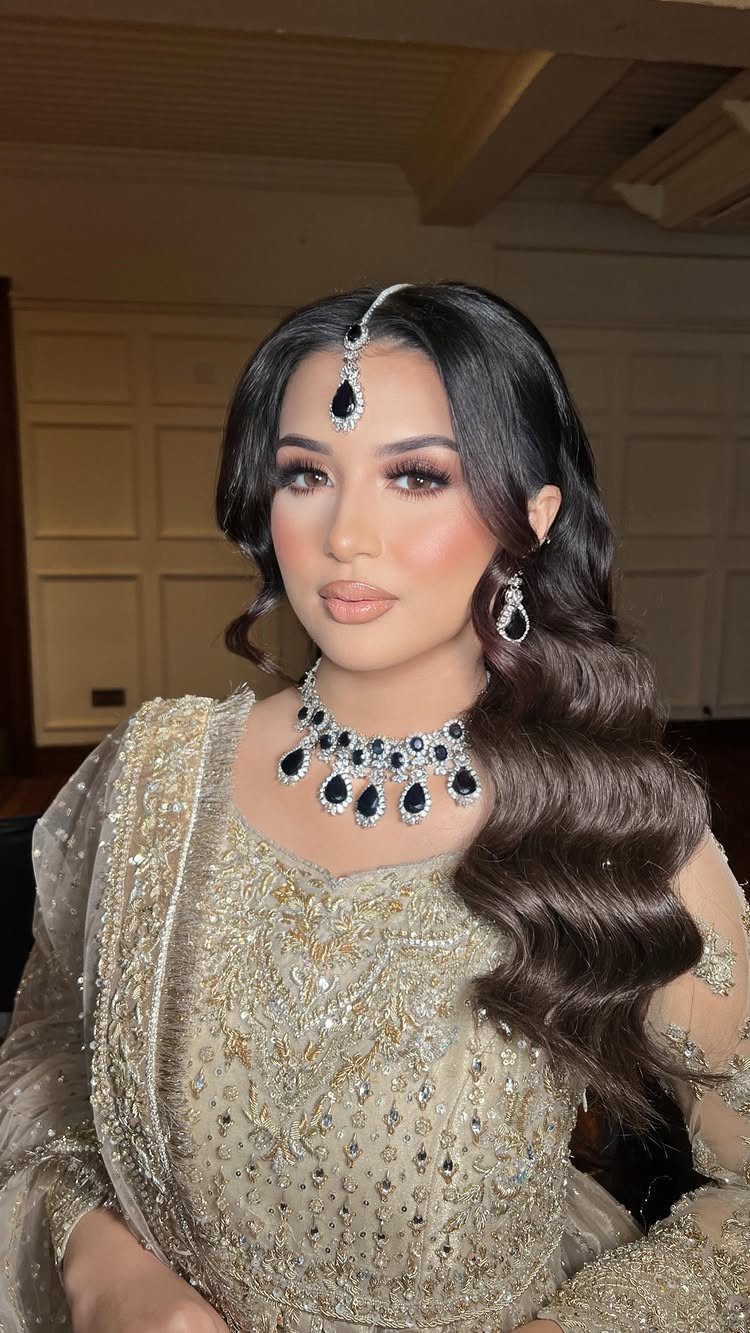
Nothing is pinned up here, so the waves carry the whole look. Loose, gentle waves worn down move as you do, and they give a romantic finish that suits formal outfits.
Draping the waves over one shoulder leaves the other side open for earrings and a necklace. If your outfit is heavily embroidered or jeweled, soft waves are a calm choice that won’t compete with it.
6. Textured Bun
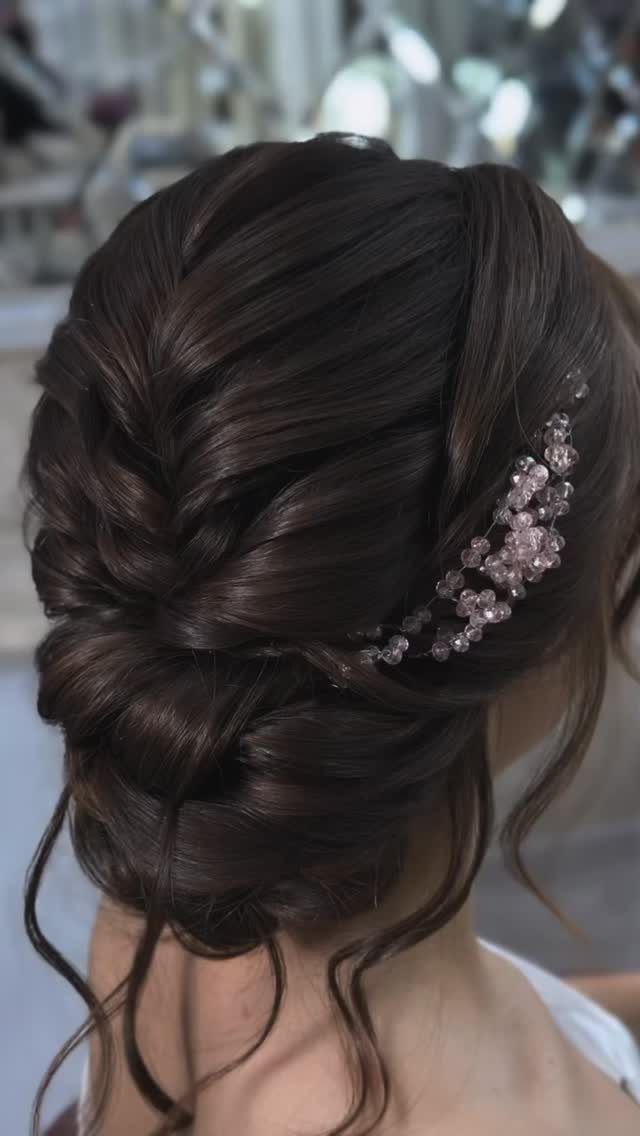
Most buns aim for smooth. This one goes the other way, with deliberately loose, dimensional texture and a few curls pulled out near the cheeks and temples.
I prefer this to a slicked-back bun when the outfit is already formal and I want the hair to feel softer.
7. Curly Updo
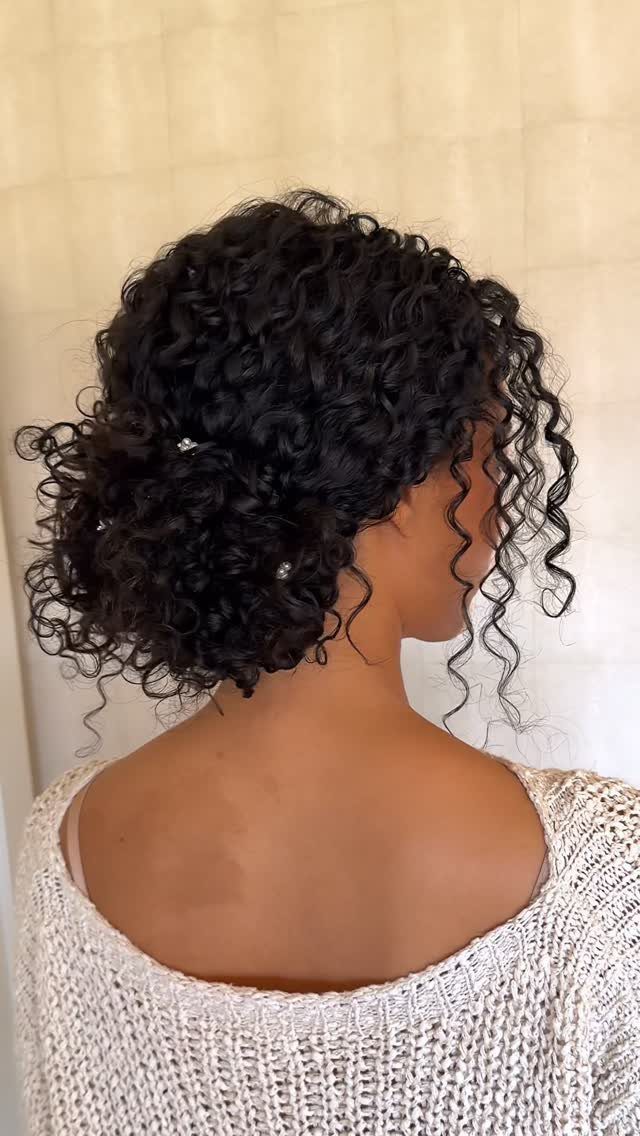
Pinning curls up without brushing them out keeps the full texture of the hair, and that is what I like most here. Each curl stays defined, so the updo has shape on its own.
A couple of loose curls pulled free around the face soften the shape and keep the updo from looking stiff.
Pin the curls high on the crown, and pick pins that blend with your hair color so the curls stay the focus.
8. High Ponytail
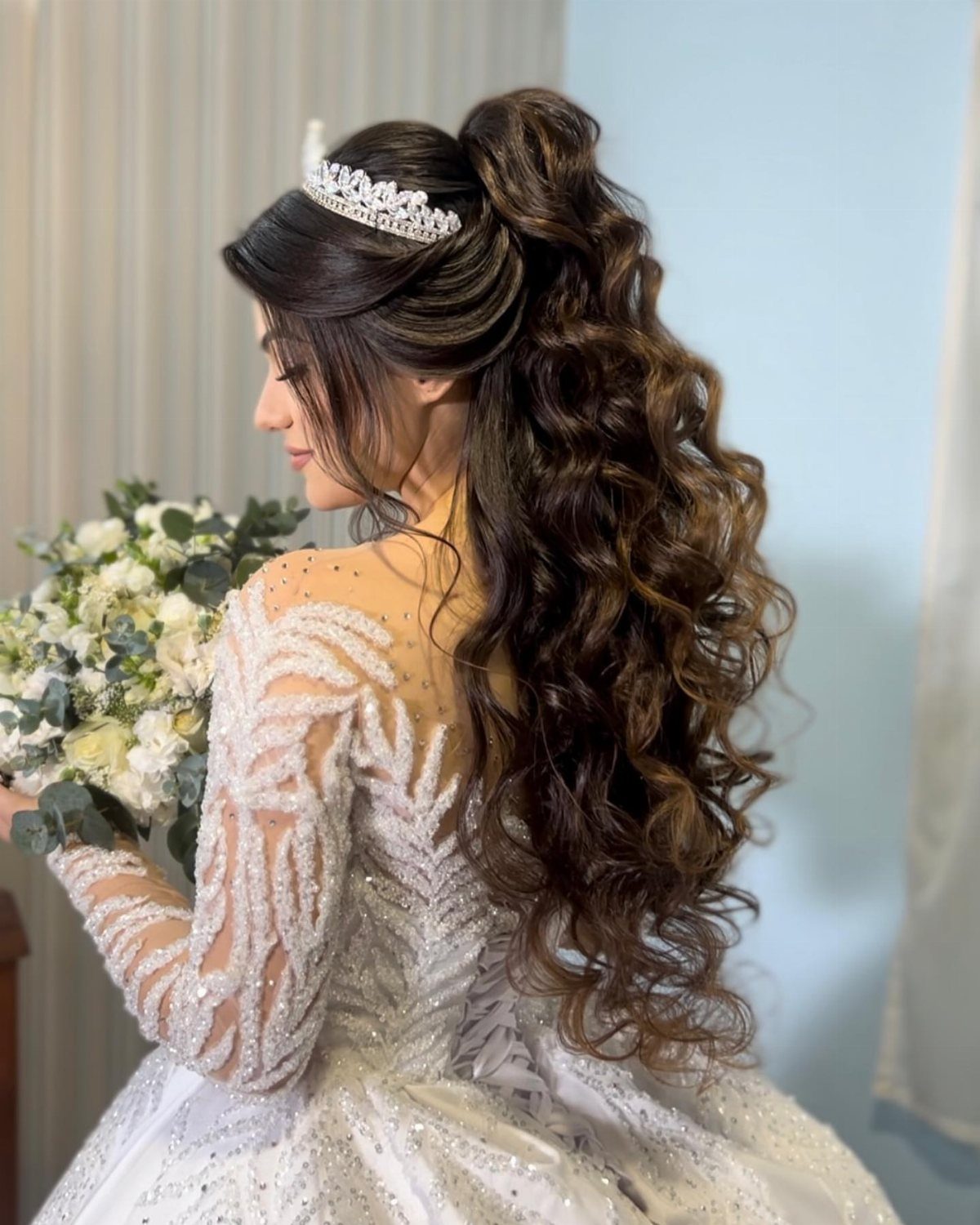
Lifting the hair to the crown gives a ponytail more polish than a low tie, and curling the length makes it feel festive.
A jeweled hairpiece set near the tie works well, since the high placement keeps it in view from the front and the back.
Fit matters more than curl size here: tie it snugly so the weight doesn’t drag the ponytail down. For a dressier version, I would add the ornament and skip the face-framing strands.
9. Low Updo
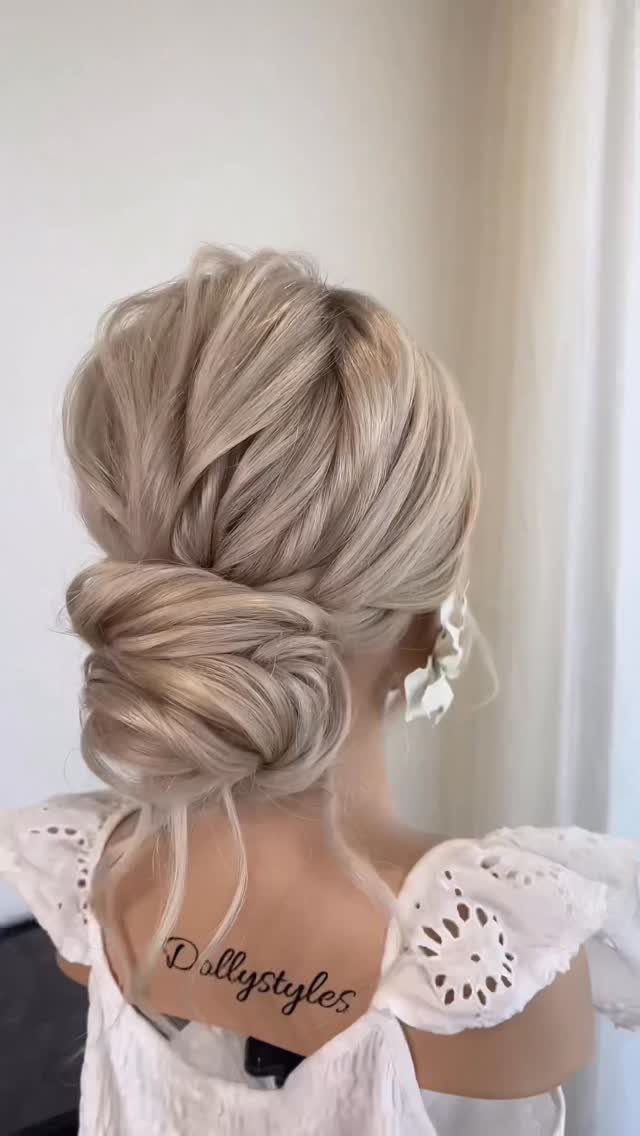
Low updos suit a group because the same shape works on different hair lengths.
A twisted, voluminous version at the nape looks relaxed from the side and neat from the back, and it pairs well with an open or square neckline.
Stylists often make five or six low buns in a single morning, so this look is quick for a stylist to repeat across a whole party. If you’re doing your own, practice it once before the day.
10. Loose Curls
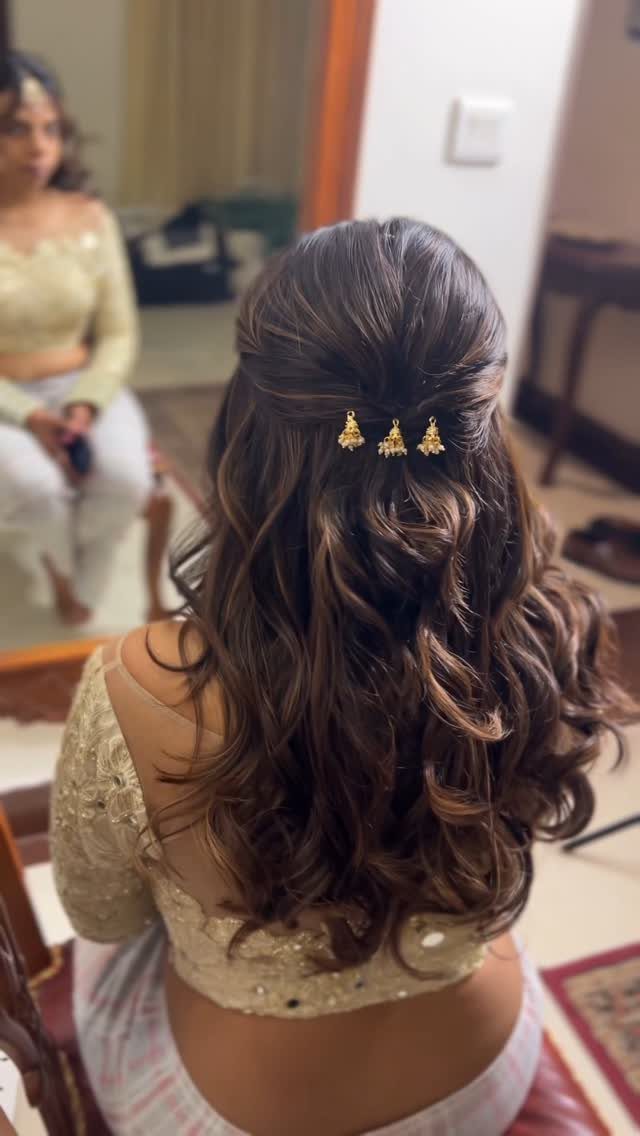
Loose curls pinned to nothing are about bounce, so let them fall down the back and keep the extras small. A single gold accessory is enough, and it echoes a gold blouse or jewelry without crowding the curls.
Skip heavy brushing once the curls are set, since it pulls them out into frizz. I would pick this when you want movement more than structure.
11. Chignon
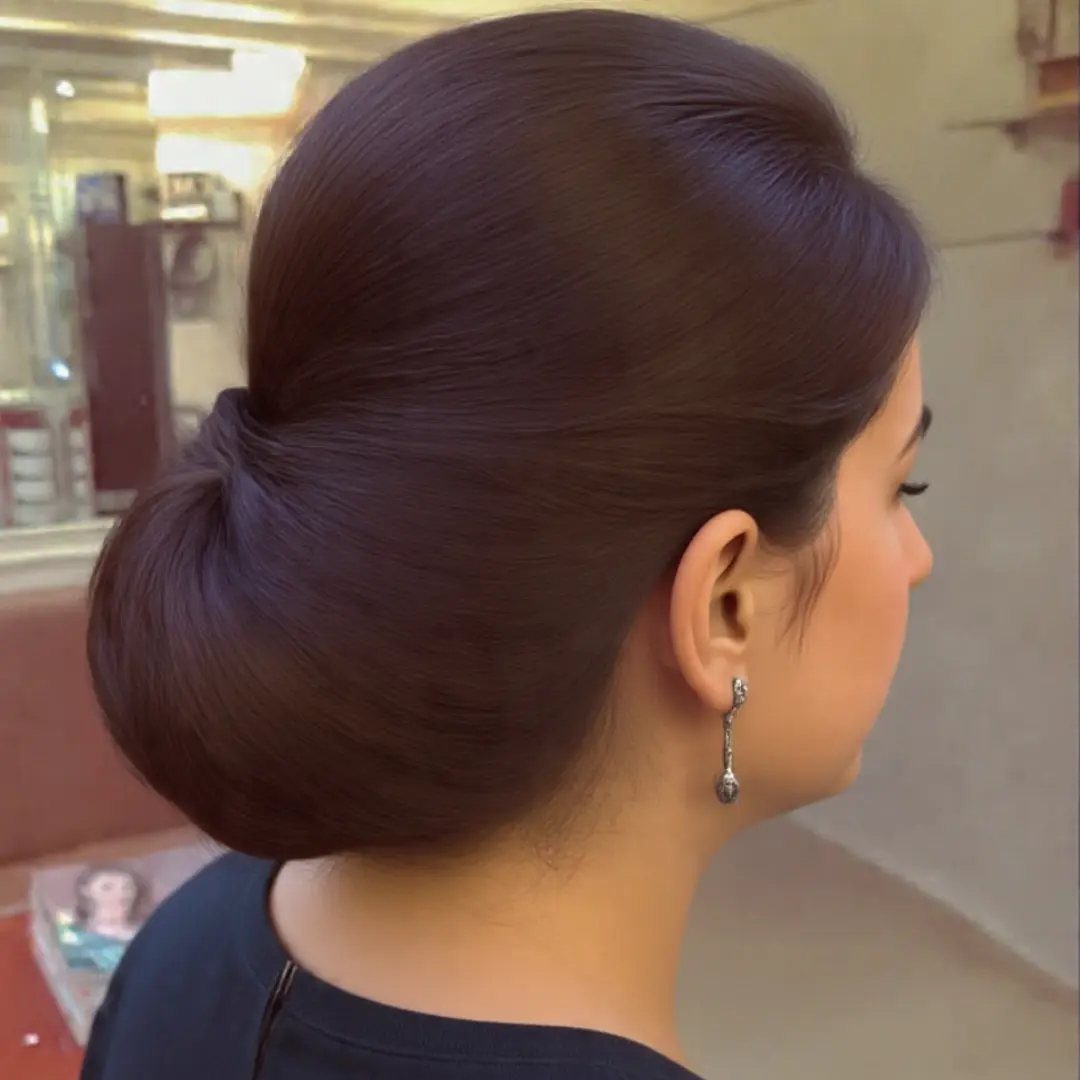
A chignon is a knot worn low at the nape, and the smooth, full version here is the one I would pick for a bridesmaid in a plain top or a dress with a high back.
The shape frames a drop earring beautifully because the ears and neck stay open.
Smooth the hair first, then twist and pin it at the base of the skull. Fullness comes from how loosely you wrap the knot, not from teasing.
12. Sleek Bun
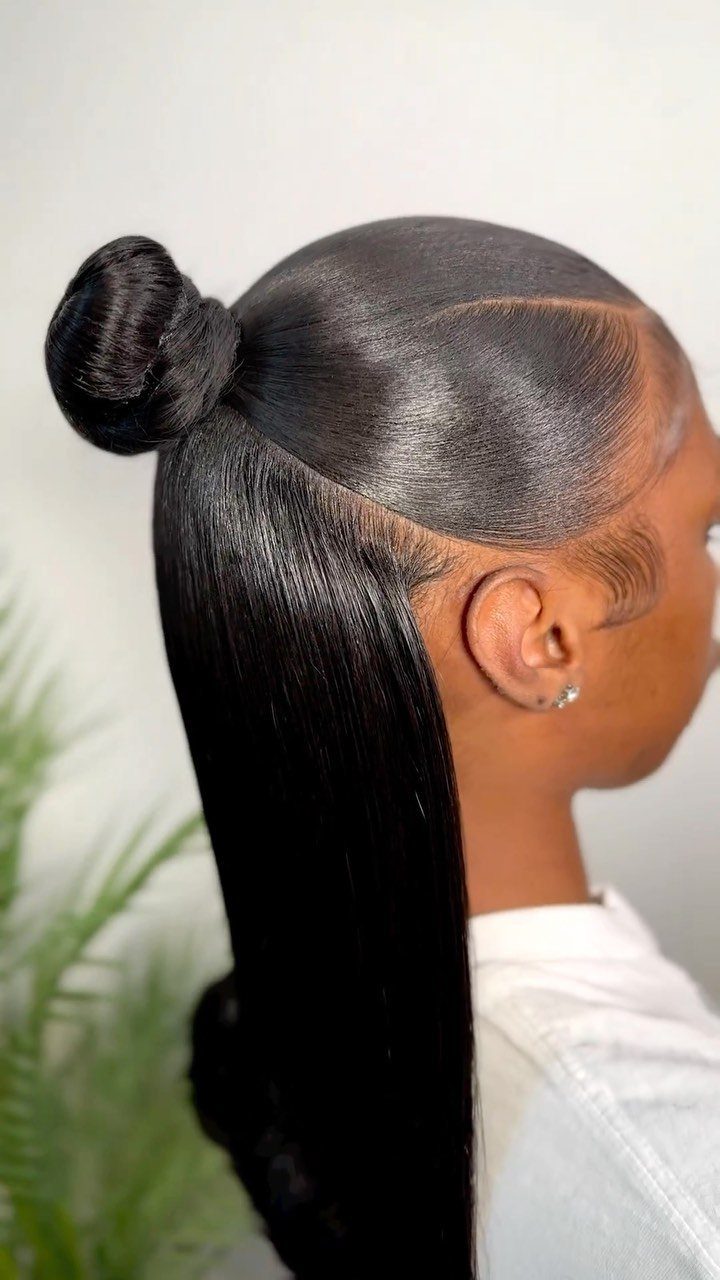
Gloss is what makes a sleek bun look expensive, so smooth the hair flat from the hairline before you wrap it.
The bun sits high and neat here, and a long straight section left out of it takes away any severity.
Straight, fine hair shows the finish best. I would choose this over a textured bun when the dress is simple and you want clean lines.
13. Loose Updo
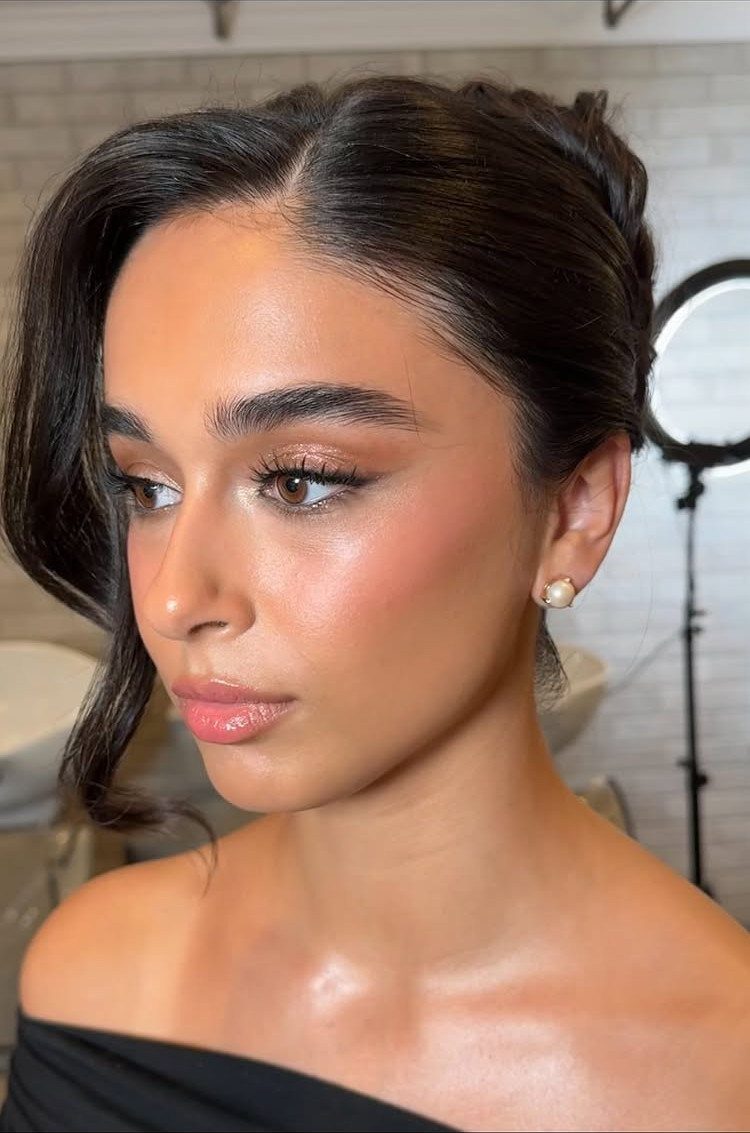
Pins set loosely, with a few strands left to fall at the face and neck, are what separate this from a formal updo.
A face-framing piece softens the profile, and a pair of pearl earrings has room to show against the exposed neck.
I would pick it for an off-the-shoulder neckline, since the open line of the hair matches the open line of the top. Keep the pins light so the shape stays relaxed.
14. Loose Braid
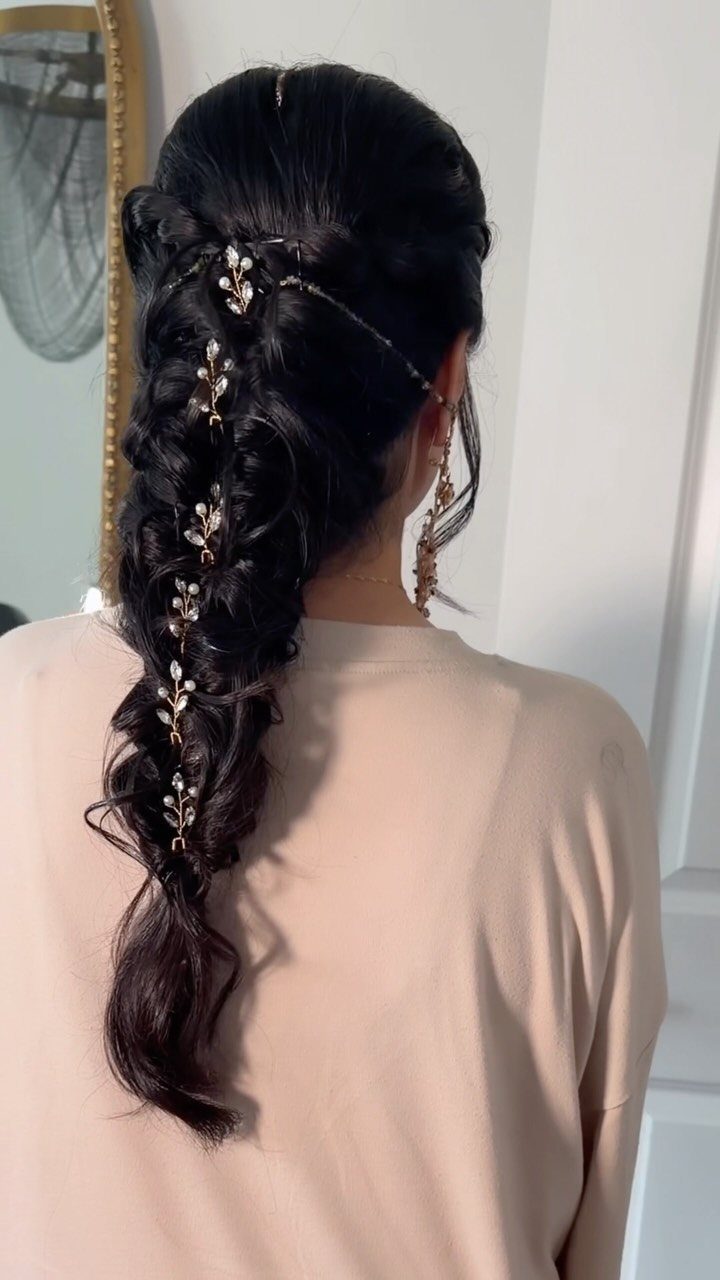
A braid worn loose reads as relaxed, and that is why it suits an ornament. Here a gold floral hairpiece set into the braid gives the back of the head something to look at, with no need for an updo.
Keep the plaits soft instead of pulling them tight, and let the braid rest down the back. For a plain shirt or a simple dress, I would choose this over anything pinned up.
15. Classic Bun
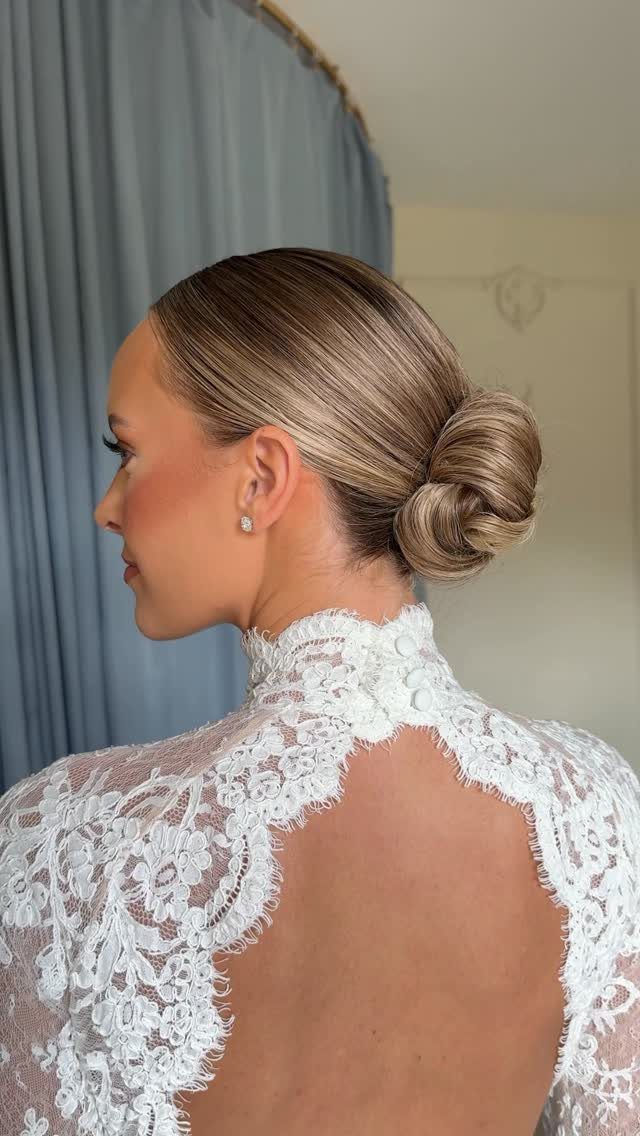
Smooth, low and tidy: a classic bun asks for no extras, and that restraint is its appeal. Worn at the nape, it sits well against a high-neck lace dress, because the collar and the bun stay in proportion.
I would choose this for a bridesmaid who wants a look that won’t date in photos. Brush the hair flat before you wrap it, then pin the bun tight against the head.
16. Pull-Through Braid
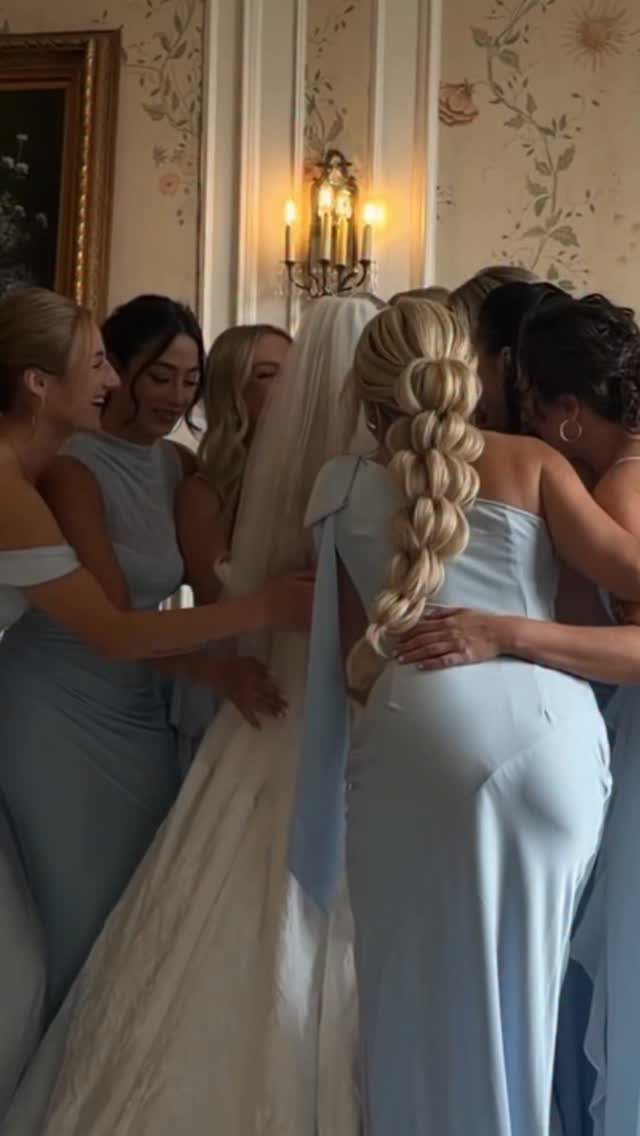
Sections pulled through one another give the braid a chunky, segmented shape, which looks more playful than a standard plait. On blonde hair, as in this bridal group, each loop catches light and stands out from the next.
Pull the loops out gently to add width. I like it for a daytime wedding with a relaxed dress code, and I would skip it for a polished, sleek finish.
17. Side Part
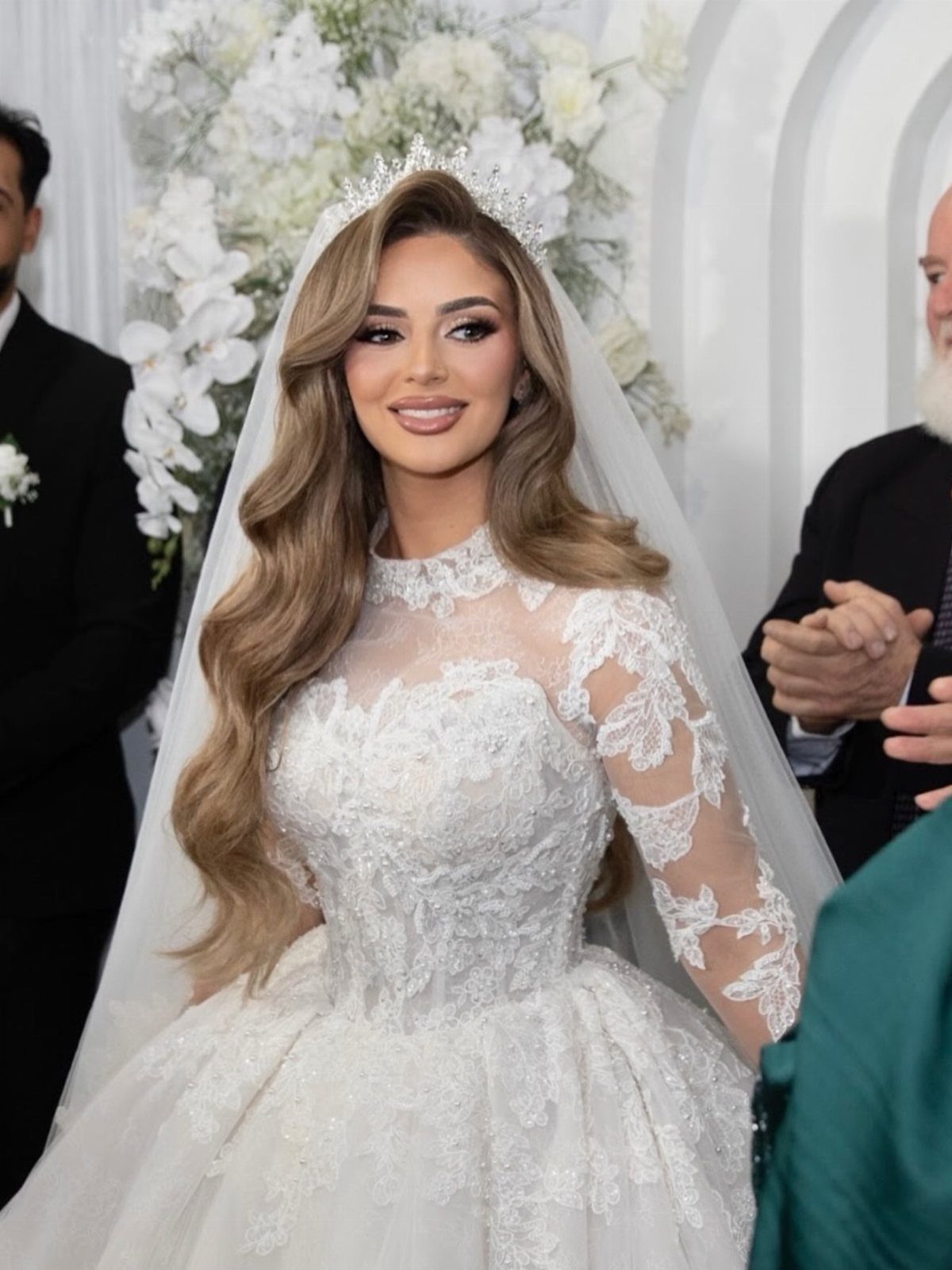
Moving the part off center changes the whole shape of a down style, and it sends the hair across the face on one side.
With long waves, as on this bride, the deeper side carries volume while the other side stays close.
It sits well under a veil or a tiara, since the asymmetry gives the hair its own line without extra pieces. I would part it where your hair falls naturally, so it lies flat all day.
18. Twisted Updo
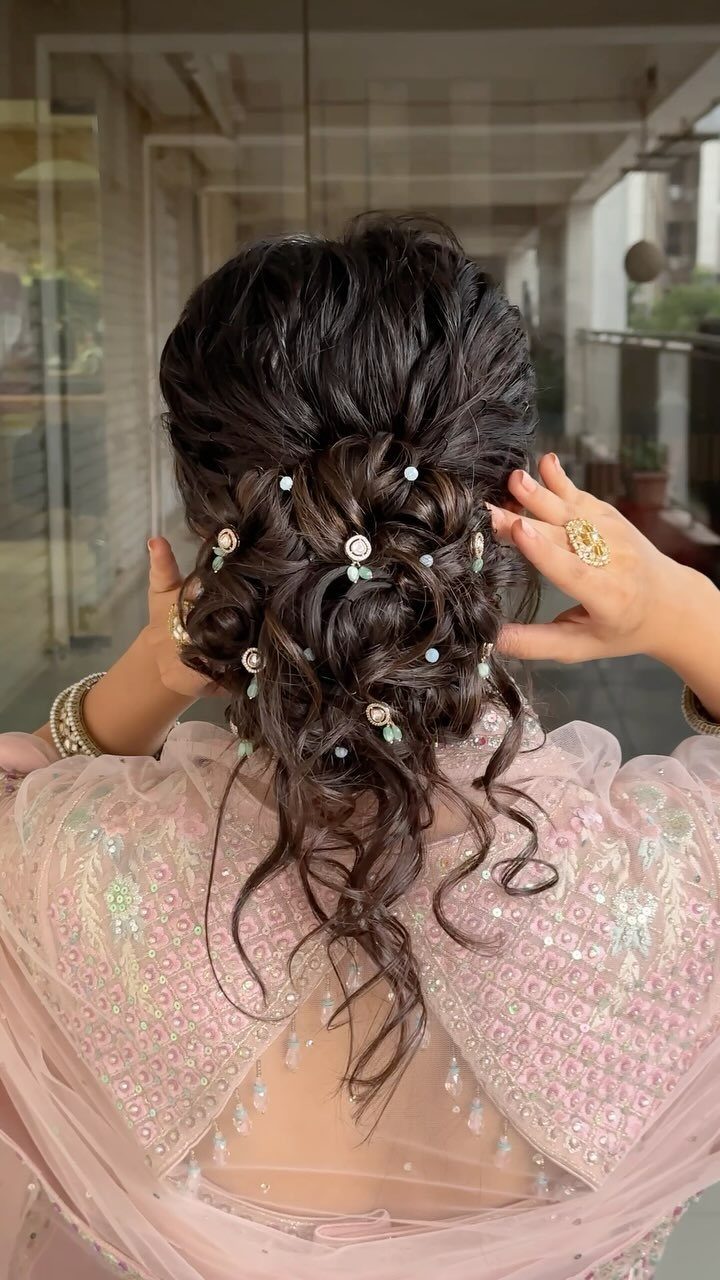
Twisting the hair before pinning gives an updo its shape without any plaiting. This version is loose, with curled tendrils left out and floral pins tucked in by hand, so it looks soft from behind.
Place the pins where the twist needs support, and keep the rest relaxed. With an embroidered garment, such as a pink one, floral pins beat anything bolder because the two details agree.
19. Top Knot
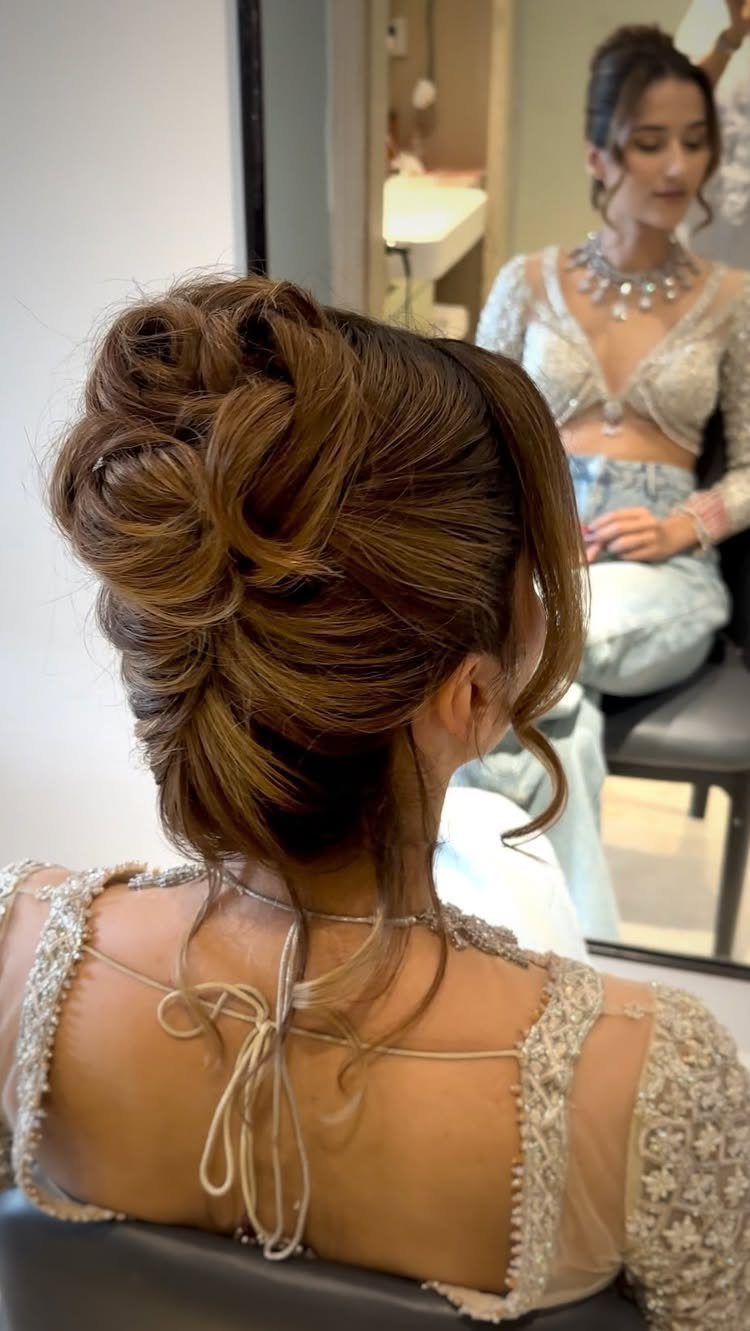
Gathering the hair into a twisted knot high on the head keeps the whole back of the dress on view, which suits a beaded bodice well.
I like it because the texture does the decorating, so you can skip extra pieces.
Twist the hair as you coil it, then pin it so the shape sits full rather than flat. Leave it slightly rough; a knot this high looks best a little undone.
20. Sleek Ponytail
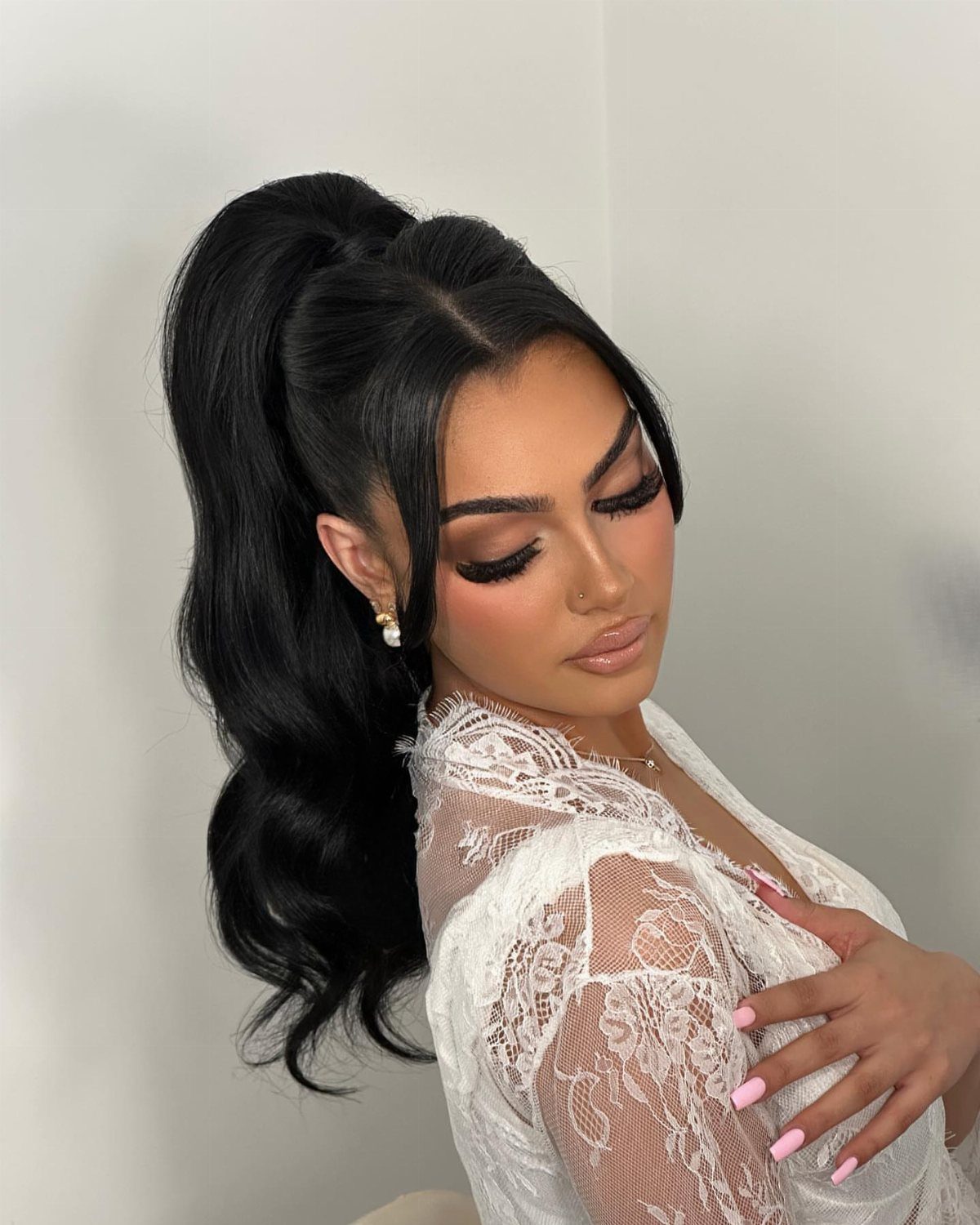
A sleek ponytail is all about the finish, and it can sit low, at mid-height or high. Placement changes the mood: higher reads sporty and bold, lower reads formal.
Brush the hair flat from the hairline, tie it, then wind a thin strand around the elastic and pin the end underneath so no band shows. Pin the wrap in place so it holds through the day.
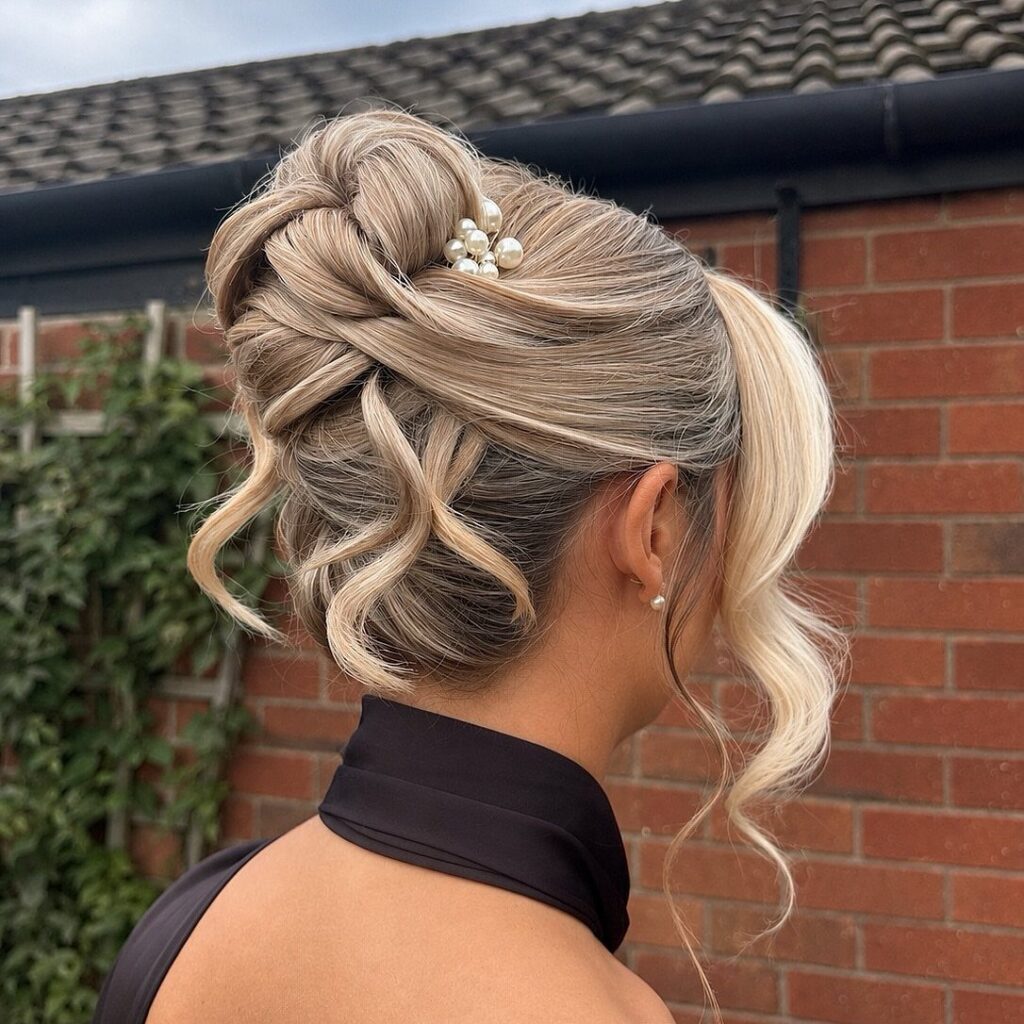
21. High Bun
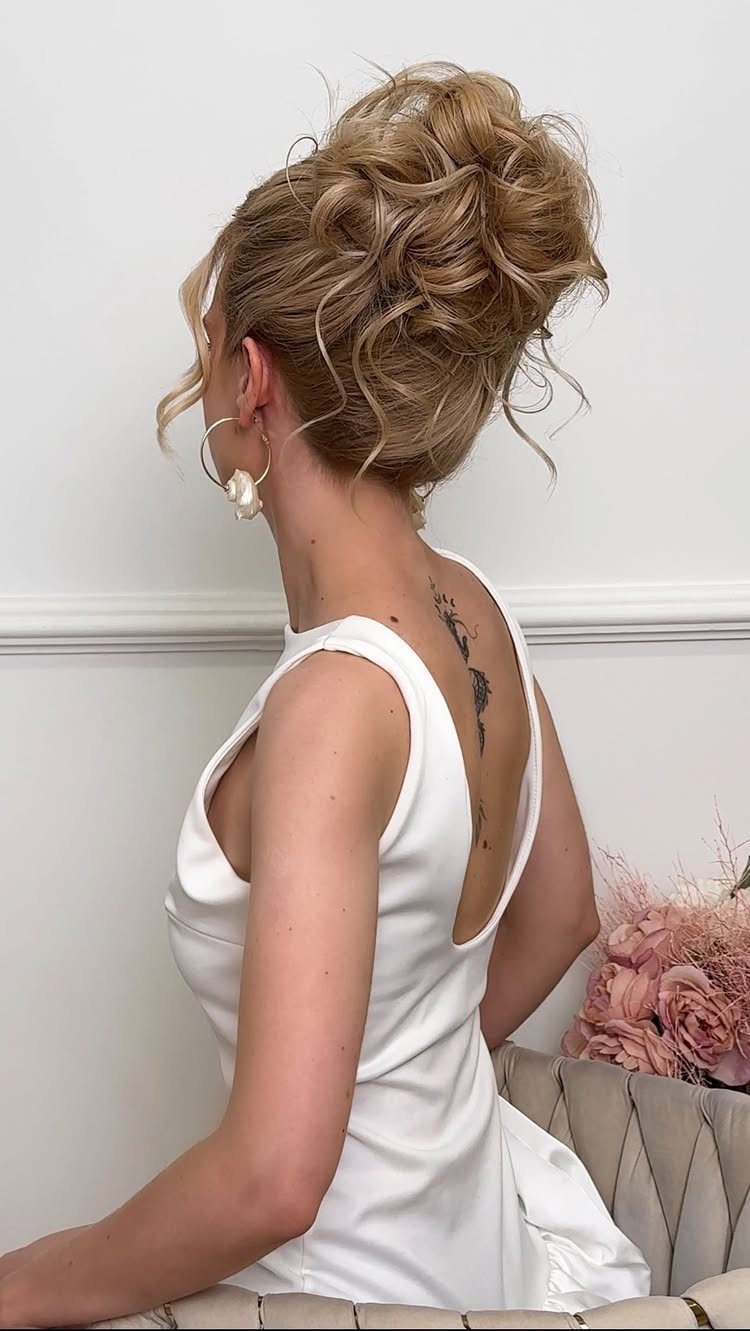
Curls are the secret to a high bun that looks full without being tight. The creator of this one built the texture with a 25mm curling iron, and that is a good size to copy for a messy, dimensional shape.
Curl first, then gather and pin the bun at the crown.
Pull a few tendrils free around the face. With pearl earrings and a sleeveless dress, I would leave the neck bare and let the bun carry the look.
22. Low Pony
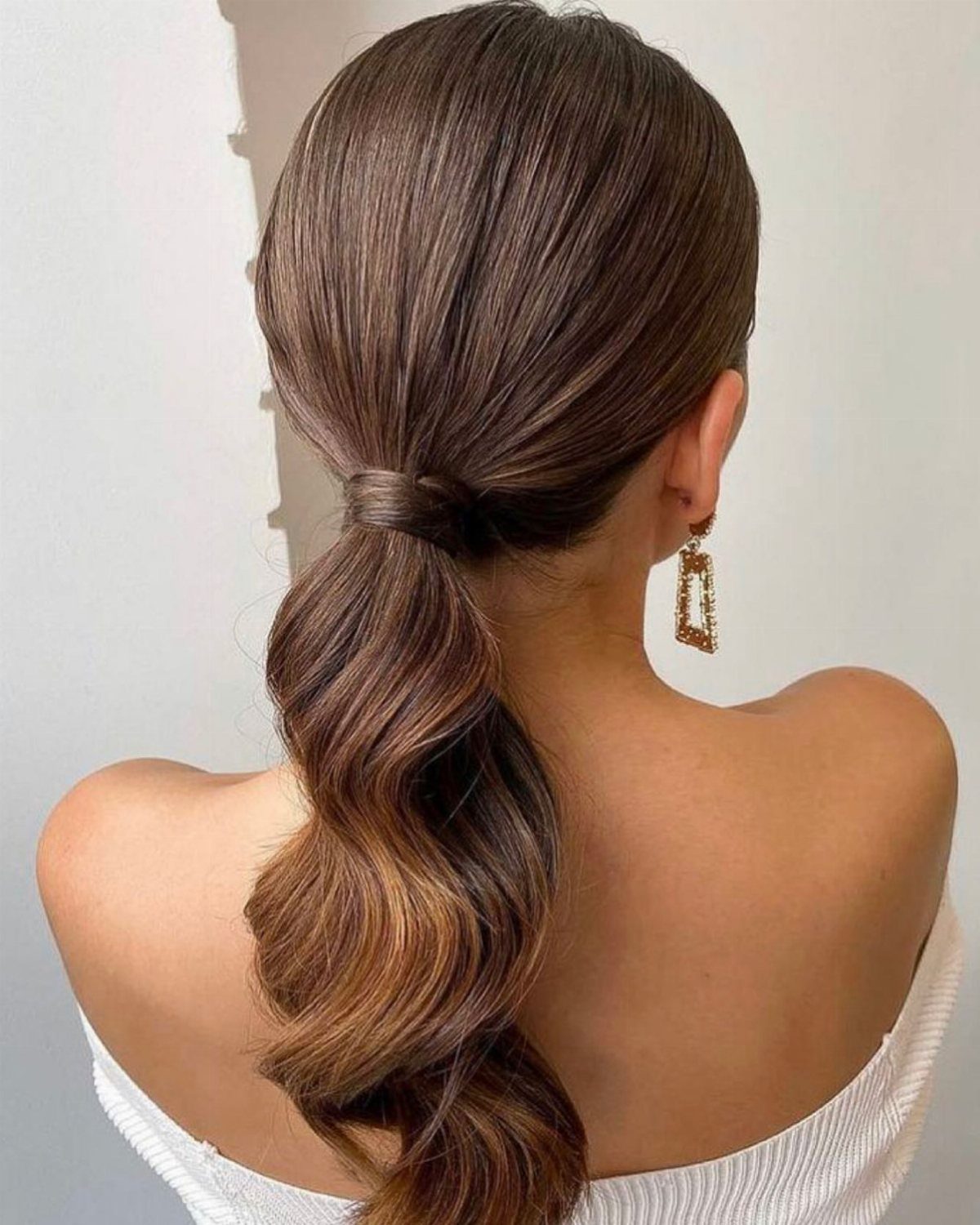
Soft texture is what keeps a low ponytail from looking plain.
With an off-the-shoulder top, the ponytail sits in full view against bare skin, so I wind a strand around the elastic to cover it and leave the back looking finished.
Gold earrings suit this shape, since the ears stay uncovered. Keep it simple and let the waves hang loose.
23. Wavy Bob
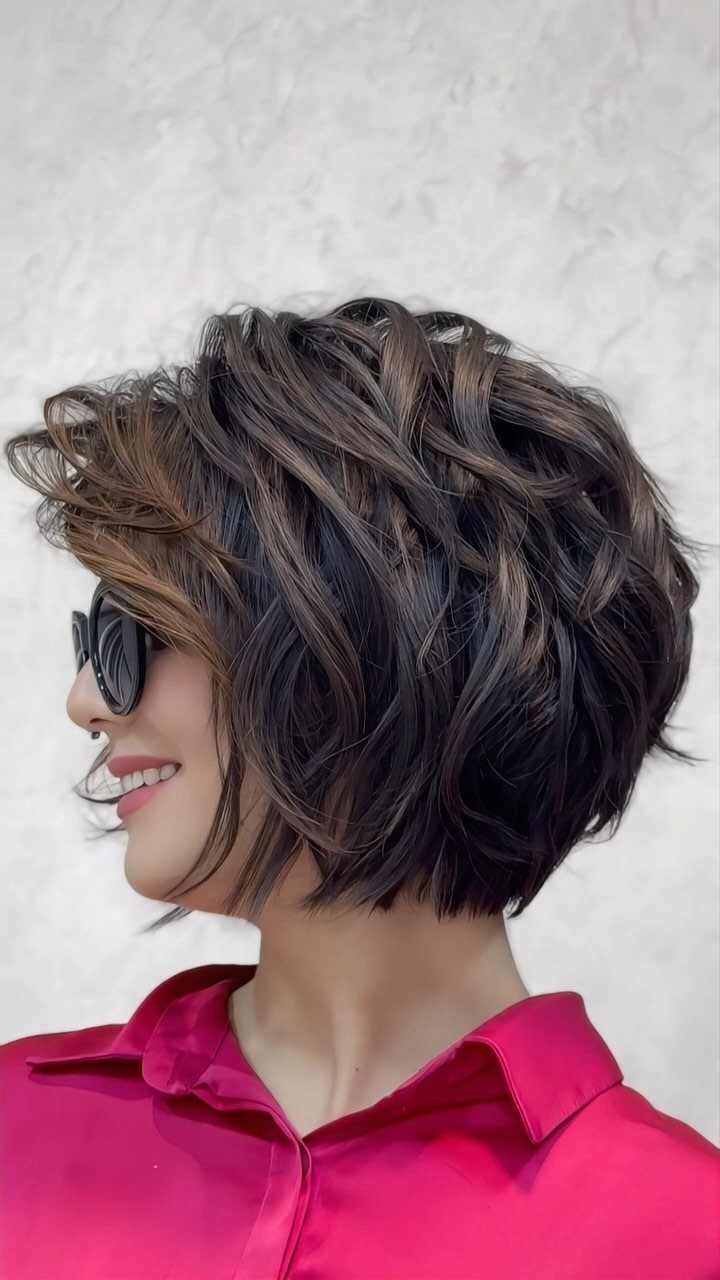
Short hair gets plenty of movement from waves, and a bob is the cut that shows them off best. Here the volume sits at the sides and the ends curve in, so the shape reads as full rather than flat.
Wavy bobs are an easy pick for a bridesmaid who doesn’t want to hide a short cut under pins. I would finish with a light hand, since brushing waves out leaves a bob looking puffy instead of defined.
24. Ponytail with Twists
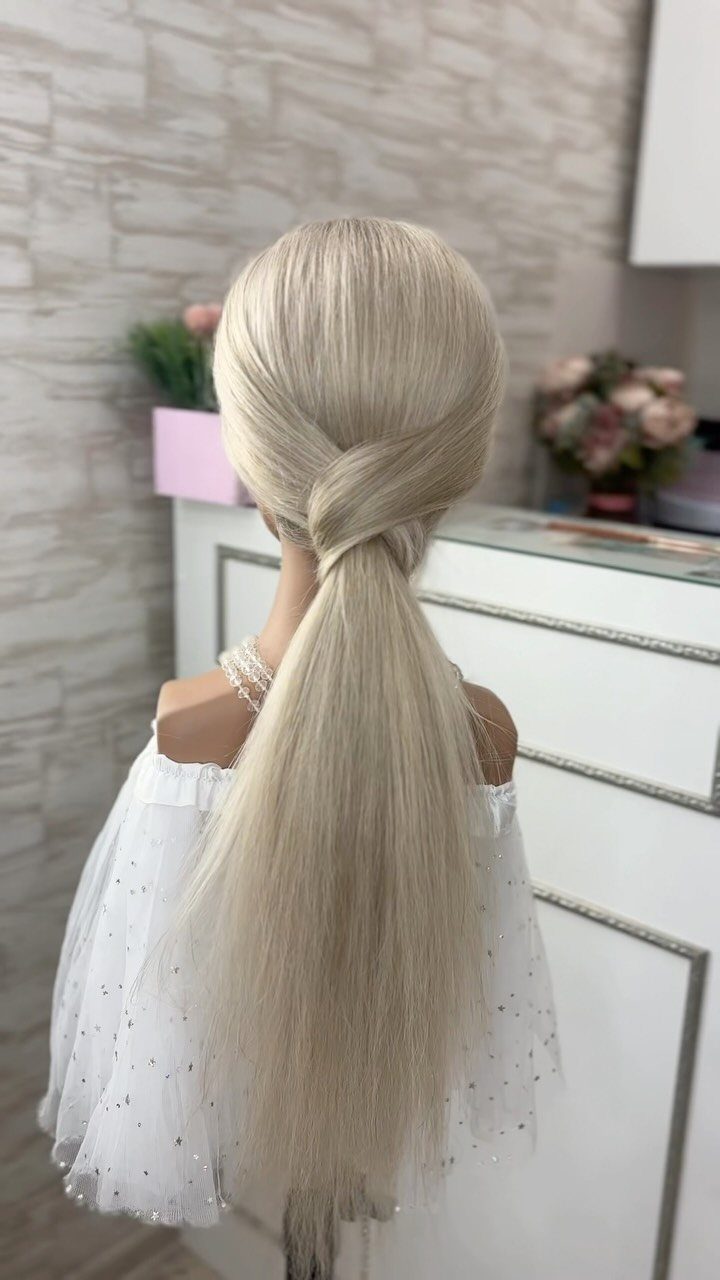
Twists along the sides give a ponytail detail without a single braid. A low, smooth ponytail with twists running back from the face to the tie suits an off-the-shoulder neckline well.
Twist each side section back, then secure both under the ponytail so the join stays hidden. I prefer this over a plain tie when the dress is simple and the hair needs a little more design.
25. Long Wavy Hair
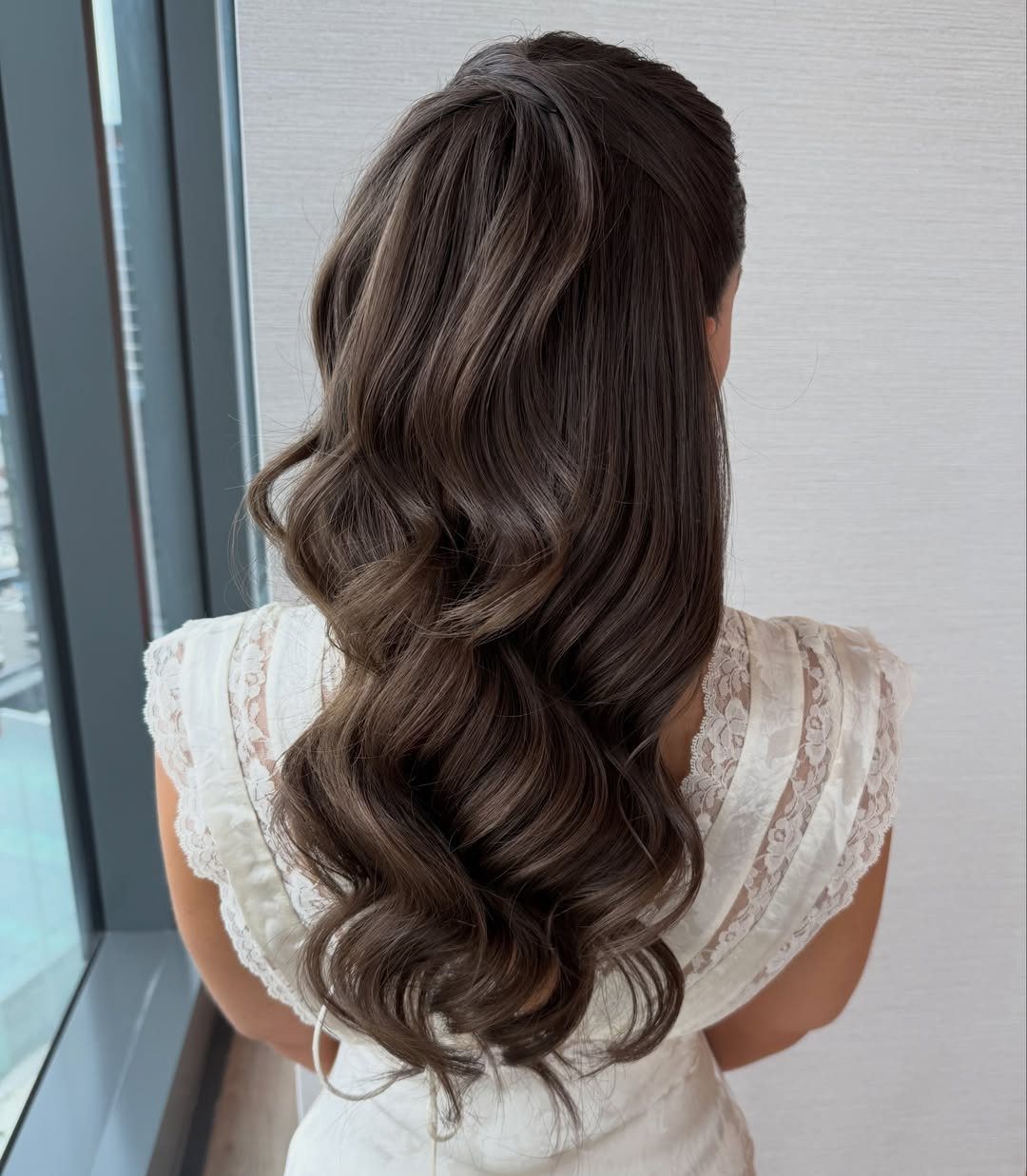
Long waves worn down ask for very little, and that is why I like them on a bridesmaid in lace.
Hair falling past the shoulder blades gives the back of the dress a soft frame instead of competing with the pattern.
A side part, a tucked side or one small accessory is enough to give the waves a point of view. I would pick a single choice, not all three.
26. Ornamented Long Braid
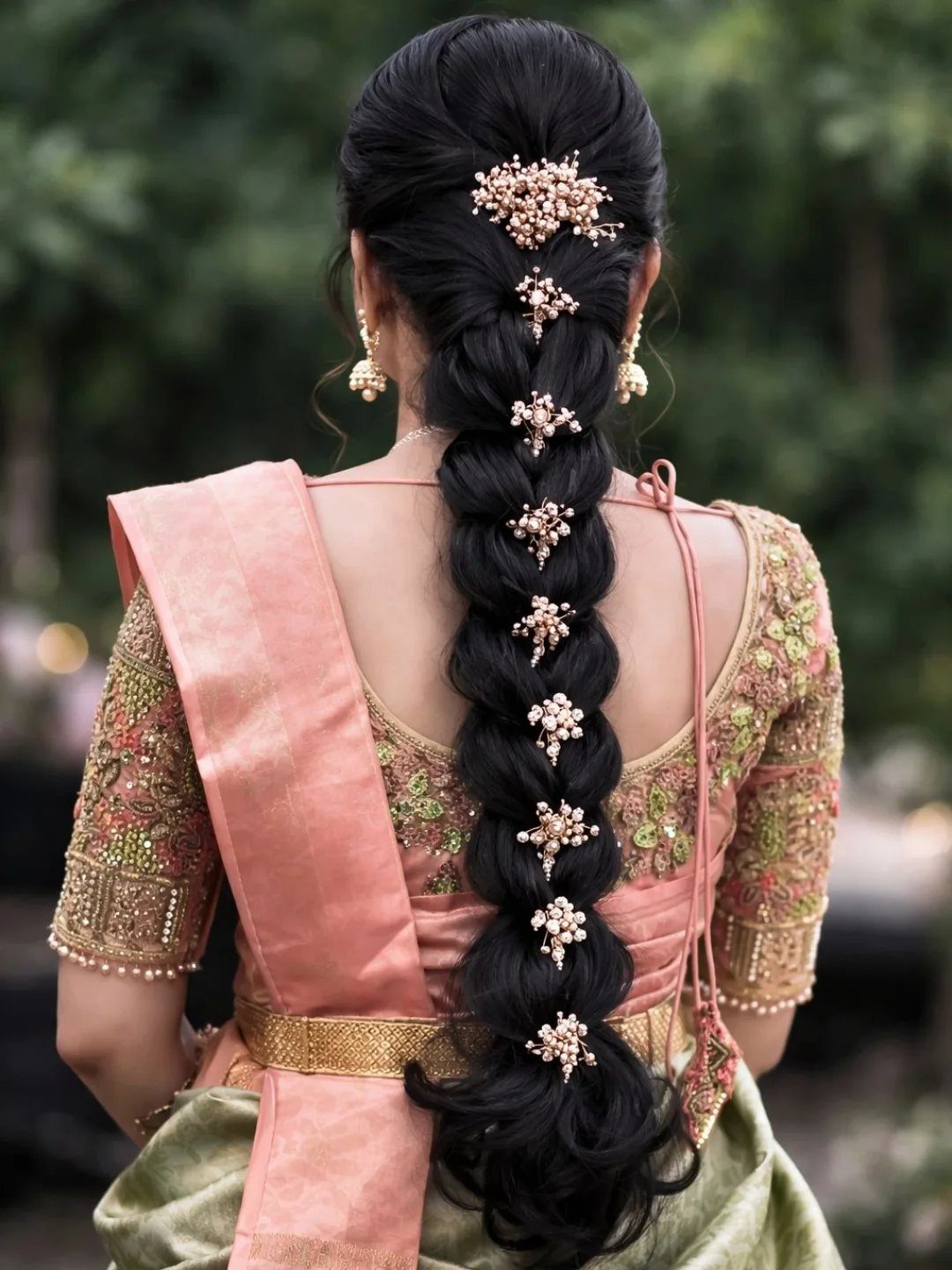
A long braid becomes formal once it carries ornaments, and jeweled florals set at intervals down its length do that job well.
With a rich silk saree, the braid works as part of the outfit rather than a plain tail behind it.
Space the pieces along the braid so the eye travels down the back. For a look this dressed, I would keep the braid itself smooth and let the ornaments supply the detail.
27. Voluminous Sculpted Waves
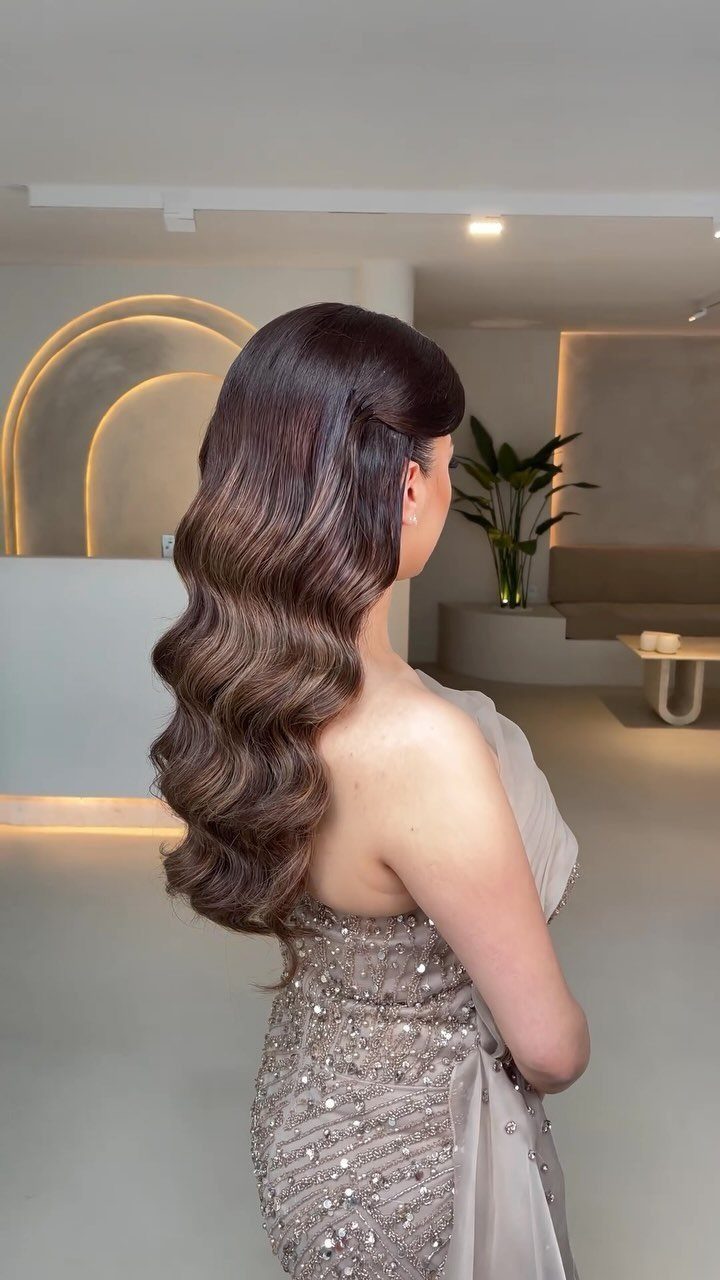
Big, sculpted waves on long, glossy hair give a bridal party the same formal weight as the gowns, and the volume is what sells it.
Against a beaded dress, I think the glossy finish is what keeps the volume from looking messy.
This suits a bridesmaid who wants drama without pinning anything up. Skip heavy accessories, since the shape already fills the frame.
28. Braided Low Bun
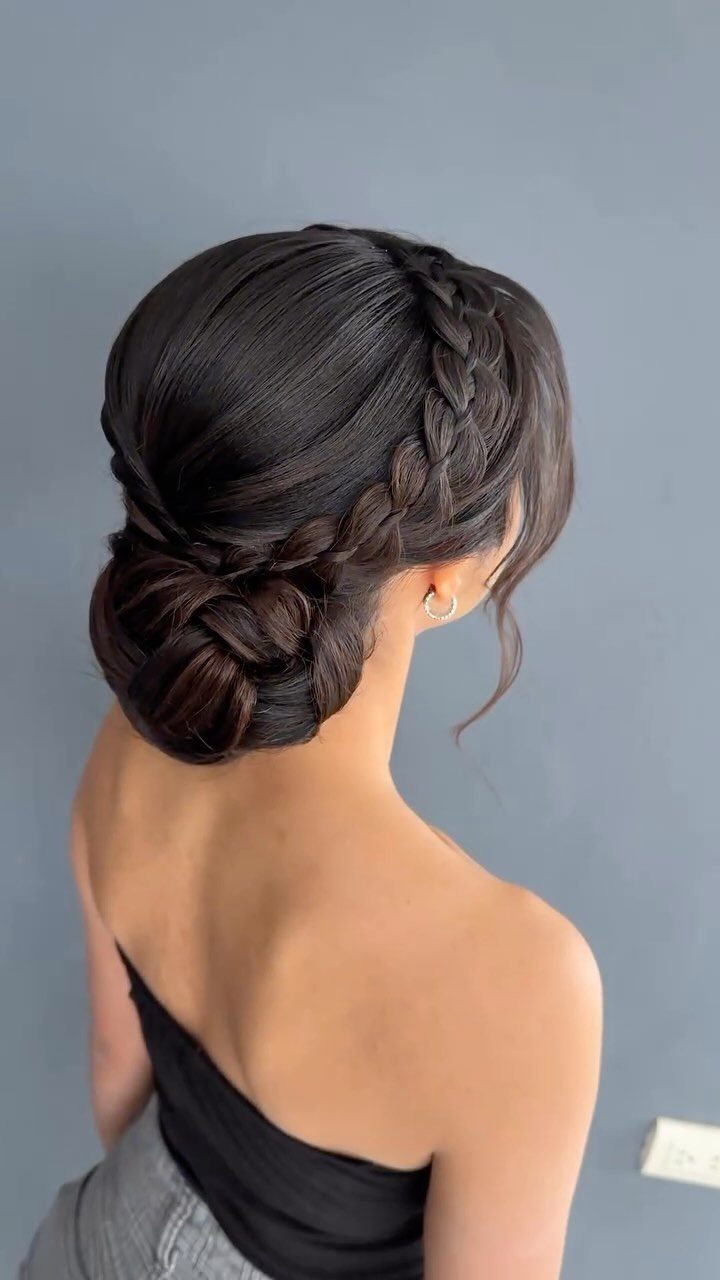
Weaving the hair into braids before gathering it low at the nape gives a bun more texture than a plain wrap, and the braiding stays visible from the side.
With a strapless top, the exposed shoulders and neck let that detail show.
Small pins can be tucked into the braiding for extra decoration. I would add them only if the bun looks too plain for the outfit.
29. Twisted Low Bun
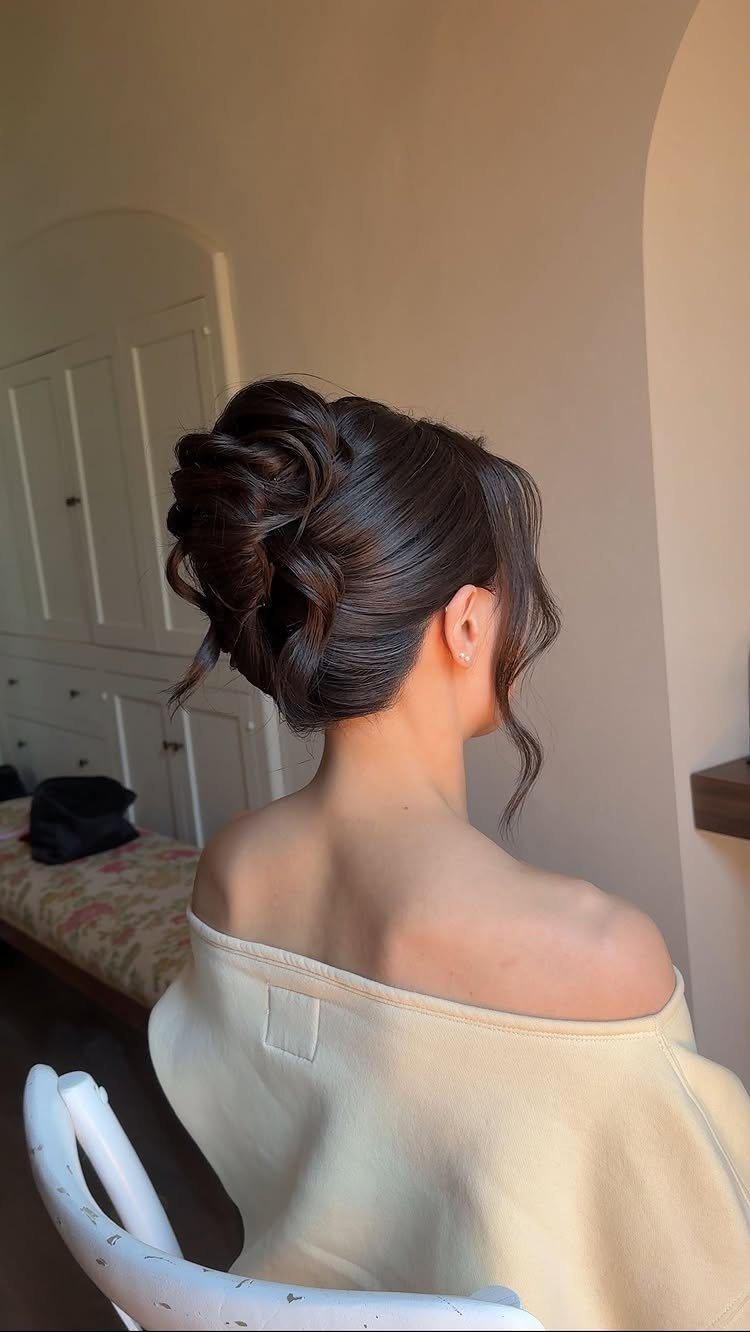
A twist wound into a low bun reads soft and romantic, especially with one loose curl left beside the face. The curl breaks up the neat shape so the updo doesn’t look rigid.
Against an off-the-shoulder neckline, the low placement keeps the neck and shoulders clear. I would leave just one curl out, since more than that turns a tidy look into a messy one.
30. Braided Half-Up Waves
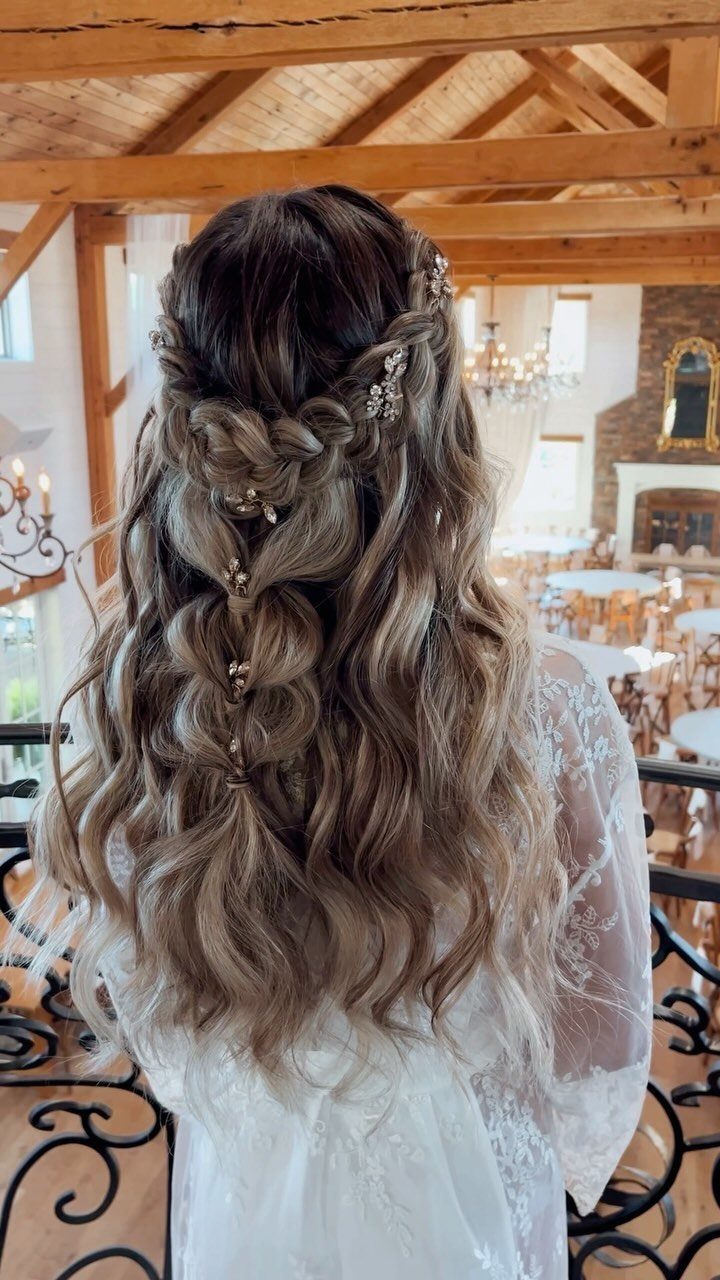
Half-up styles let long waves keep their length while a braided section or twist adds structure at the crown. Small jeweled pins slipped into the braiding catch light without weighing the hair down.
A rustic venue suits this better than a stark modern one, since the loose texture matches the setting.
31. Twisted Half-Up Waves
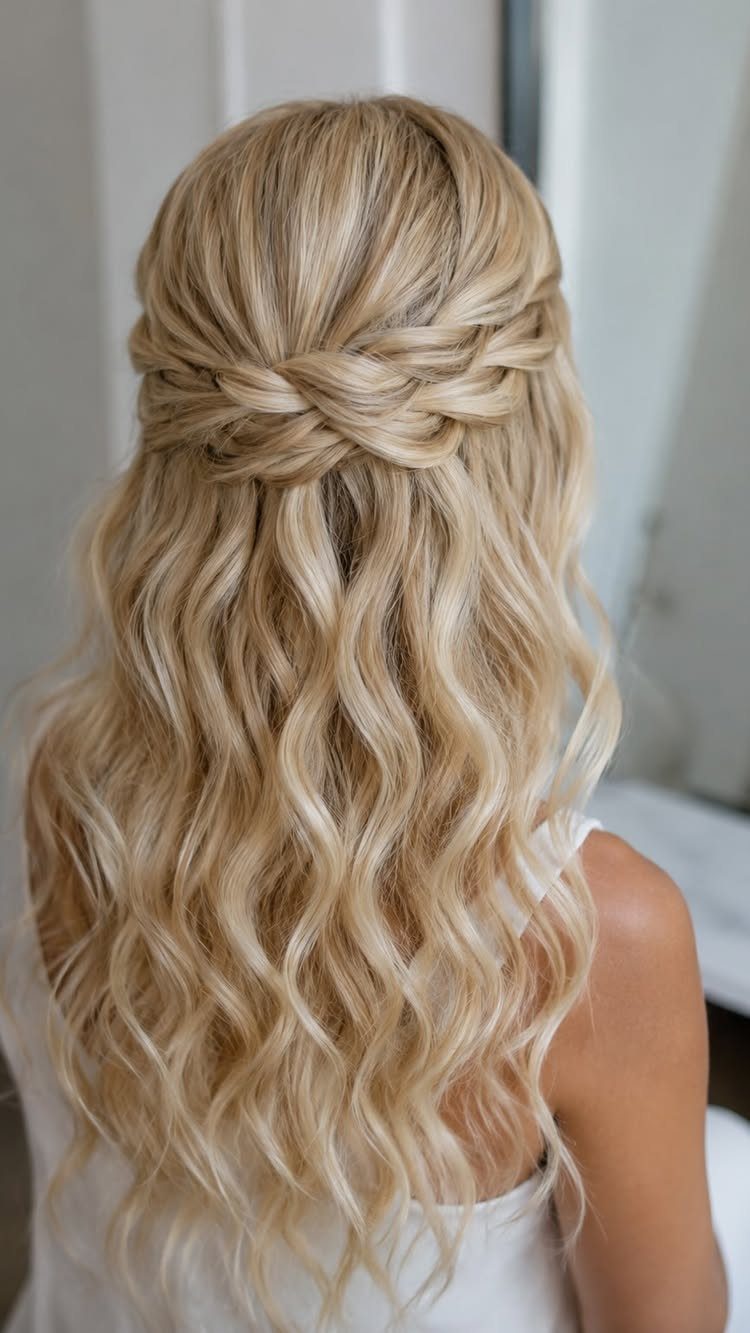
Twisted side sections pulled back and joined at the crown keep the face clear while the waves below fall loose to their full length.
On a plain white top, the twist is the only detail, so I like it left at that.
Twist each side back, pin the two together, and leave everything under them alone. Because the pinned part sits at the back, this is the look I would choose when the front of the outfit is simple.
32. Twisted Side Bun
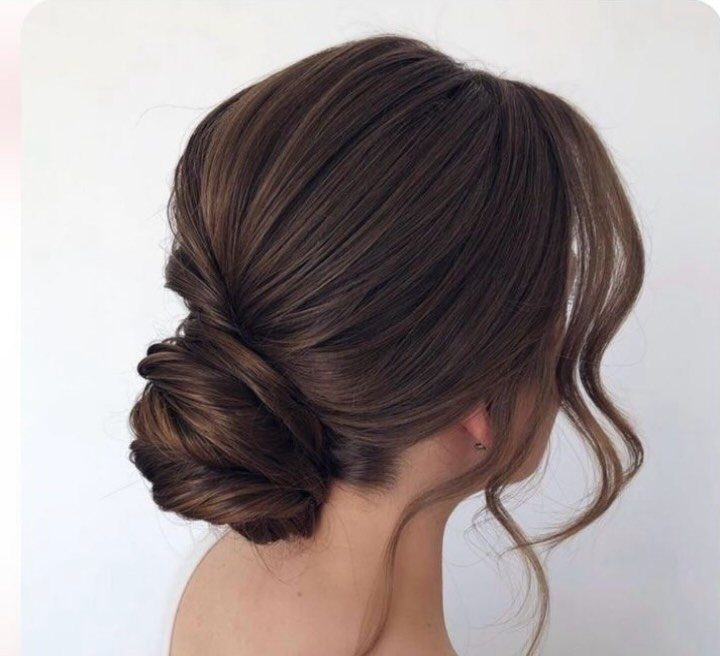
Moving a low bun off center gives an updo direction, and that is why this one feels softer than a bun worn straight at the nape.
Smooth sweeping keeps the line clean, so the bun reads as polished from every angle.
Sweep the sections back, twist them together and pin the bun low on one side.
Curl the tendrils separately and free them only at the face. If a center bun feels too severe on you, I would try this first.
33. Pearl-Pinned Low Updo
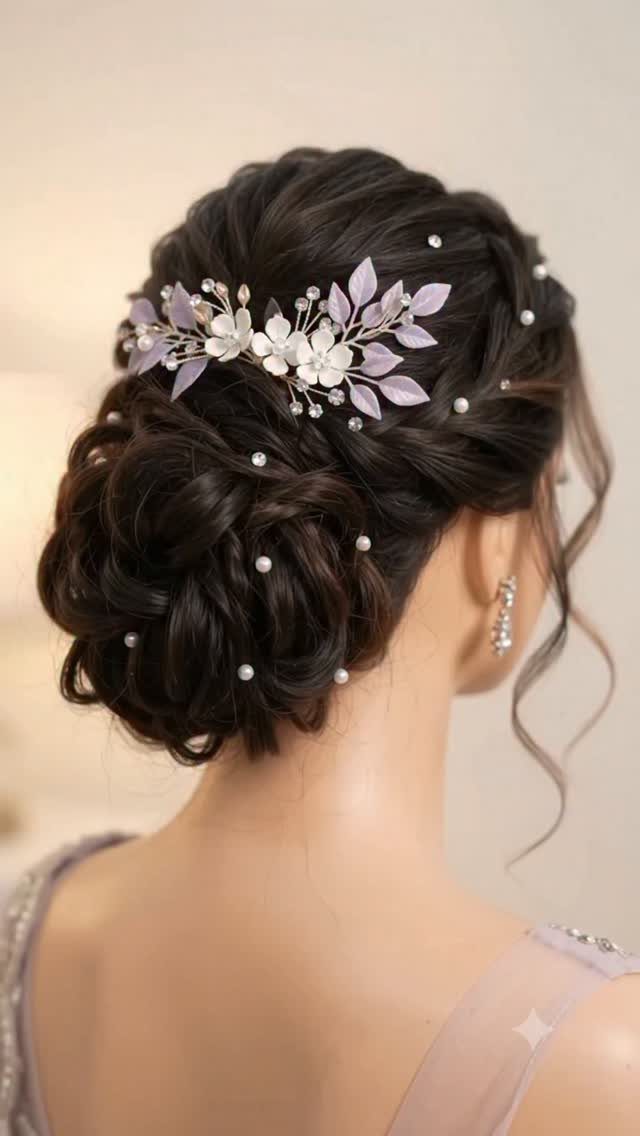
Small pearls and one pale floral piece are enough decoration for a loose low updo. Dark hair gives the light colors something to stand against, which is why I like the pairing.
Set the floral piece first, where you want the eye to land, then scatter the pearl pins around it. Keep the updo itself relaxed so the pins are the only fixed detail at the back.
34. Sculpted Wave Updo
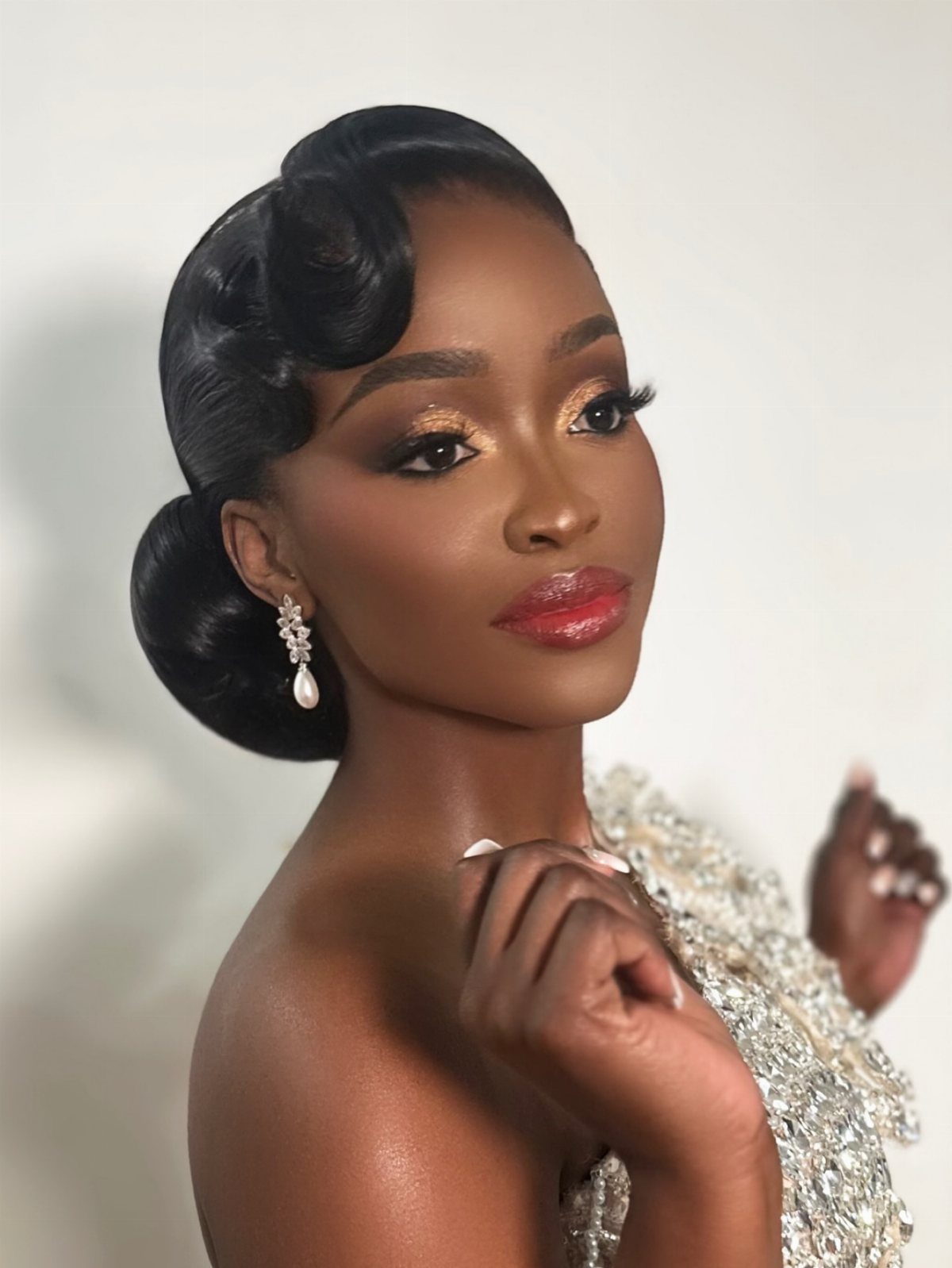
Large, glossy waves pinned into a sculpted shape read as formal, and the shine is what makes them look deliberate. Build the waves first, then pin them into ridges instead of brushing them out.
With a sparkling dress, keep jewelry to a pair of earrings, pearls being a good choice, so the hair stays the focus.
A bridesmaid who likes drama and doesn’t mind a fully bare neckline is the right fit for this one.
35. Straight Long Hair
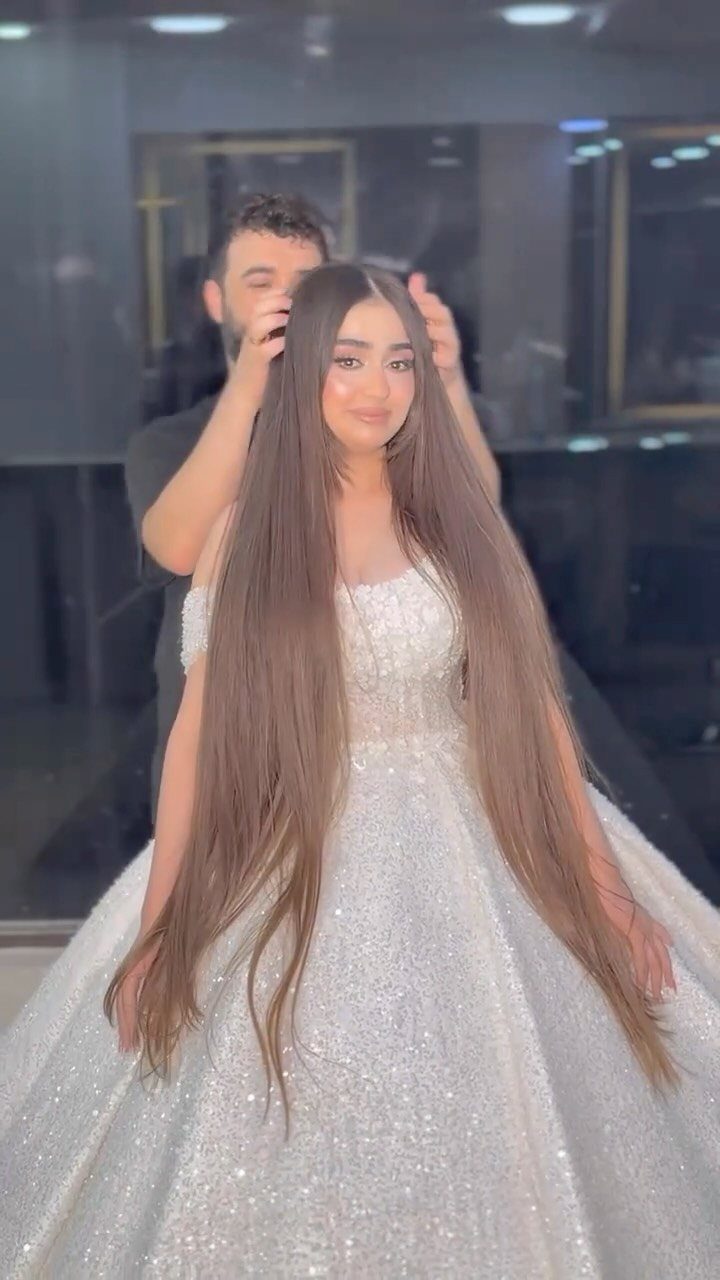
Very long hair worn sleek and straight has no braid or pin to lean on, so the finish does everything. Smooth, glossy and evenly cut ends are what separate it from hair that was simply left alone.
A sequined gown already supplies the sparkle, and I would let the hair stay plain beside it. Get the ends trimmed before the wedding, since straight hair shows every uneven edge.
Coordinate Without Matching
Matching every bridesmaid exactly is rarely the goal. A shared theme holds a group together better, and it leaves room for each woman to wear what suits her hair type and features.
Pick one element to repeat: a texture like soft waves or braided accents, or an accessory like pearl pins or gold combs. Everything else can vary from person to person.
Cohesion matters; uniformity doesn’t. A bridesmaid with fine, straight hair and one with thick curls will both look right if the repeated detail is the same and the style around it fits her.
Ask each bridesmaid which version she feels most confident in before you settle the theme.
Choose by Dress and Weather
Start with the neckline. With a strapless gown, the neckline already frames your shoulders, so a low twist or a soft side sweep over one shoulder keeps the whole line clean instead of crowding it.
Then check the forecast and the venue. Sleek buns, braided crowns and twisted updos hold up best through humidity and wind, and they stay off your face for the dance floor and the photos.
Down styles, such as defined curls, waves or twist-outs, look romantic and show off natural texture or length. In humid or unpredictable weather, they’re the riskier choice for frizz and movement.
If the day could turn windy or damp, I’d lean toward the structured updo.
Plan Trials and Hair Prep
Schedule the trial 4–6 weeks out, which leaves time to adjust the style or the color before the wedding. That timing leaves room to adjust if the dress changes and to tailor each bridesmaid’s style.
If you want to talk through the plan with a stylist earlier, you can raise the idea well ahead of that, up to 6 months out.
Doing a DIY style yourself? Try it before the day too, so you know how long it takes and how it holds.
In the weeks leading up, condition regularly, keep your hair hydrated, and go easy on heat styling. Healthy, well-moisturized hair takes a style better and holds it longer.
Bring photos of the looks you want to the trial, along with any accessories you plan to wear.
“Always make sure that you feel beautiful and confident but never take away from the bride,” says hairstylist Ricky Fraser. “A wedding guest should always follow the lead of the bride and the setting of the event.”
— Vogue
Frequently Asked Questions
What are the bridal hair trends for 2026?
Polished but relaxed hair leads: soft updos, loose waves, sleek ponytails with bounce and texture, and modern half-up styles.
Braided buns that leave a few loose strands around the face are showing up a lot for 2026, and so are textured top knots with a deliberately undone finish. What ties them together is hair that looks finished without looking stiff.
Should bridesmaids wear their hair up or down?
It depends on hair type, climate and the feel of the wedding. Neckline can break a tie: a loose low updo suits an off-the-shoulder top, and a smooth chignon suits a high back.
What is the best hairstyle for bridesmaids?
No single style wins. The best one fits the wedding, the bridesmaid’s own hair and her comfort, and it works with the bride’s vision.
Soft waves, a polished bun or chignon, a half-up style and a loose braid all work across hair types, and low updos are easy to repeat across a group because the shape suits different lengths.
What are the top bridal hairstyles?
Textured buns, half-up, half-down styles, high buns and top knots, pull-through braids, and sleek or low ponytails come up most.
Loose waves and curls are the easy choice for an outdoor wedding, and a classic bun or knotted updo is simple to copy at home.
A half-up style with lift at the crown gives you length and structure in one look.
Should bridesmaids match?
No, not exactly. Matching exactly isn’t required; one repeated detail, like soft waves, a few braids or the same pearl pins or gold combs, is enough to tie a lineup together.
With that single shared element in place, each bridesmaid can wear what flatters her own hair type and features, so curly, straight and braided styles can stand side by side.
Can I do my own bridal hair?
Yes, if you’re comfortable styling your hair. Practice the look once before the wedding so you know it works on your hair.
Simple shapes like a classic bun, a knotted updo or loose waves are the easiest to copy at home, while an intricate style is worth handing to a stylist so it stays put all day.