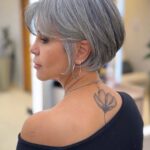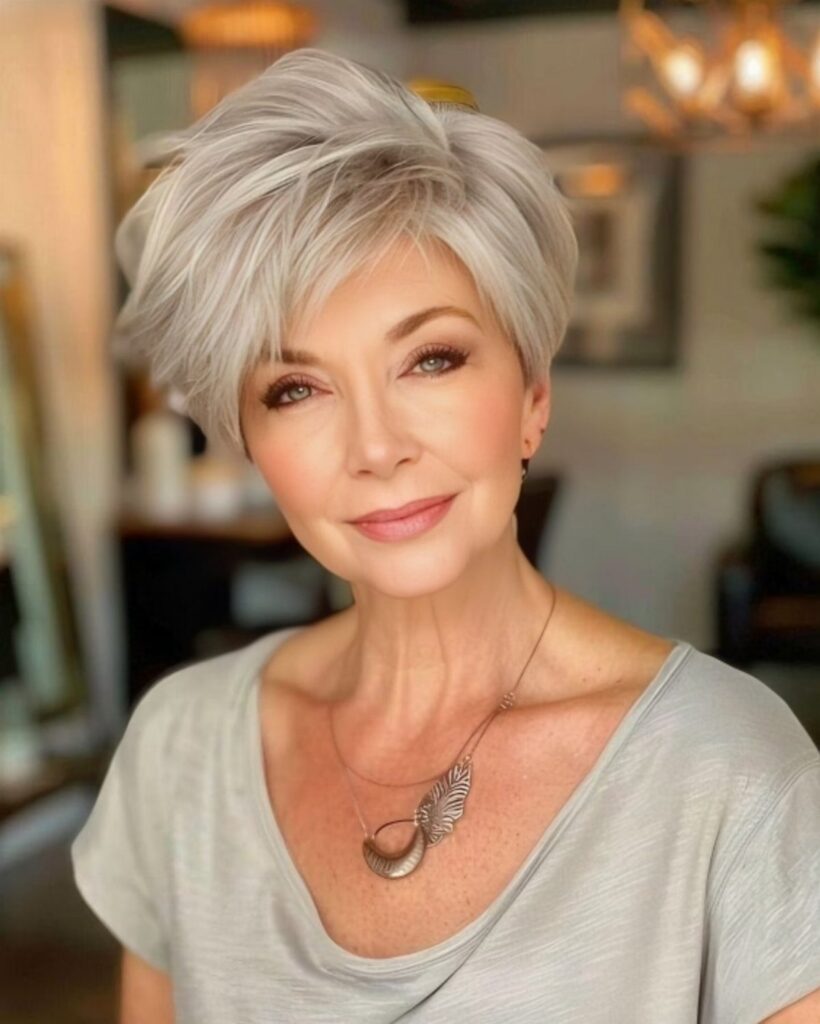
The cuts here range from a textured pixie to long layers, and from a shape that only needs air-drying to bangs that get dried into place most mornings.
Your hair today is the hair to plan around, since gray often arrives with a change in feel: coarser, drier, finer or limper strands, plus new growth directions that can surprise you.
Before you commit to bangs, let your hair air-dry and watch how the front hairline behaves, because a cowlick there will push a fringe off course.
1. Pixie Cut
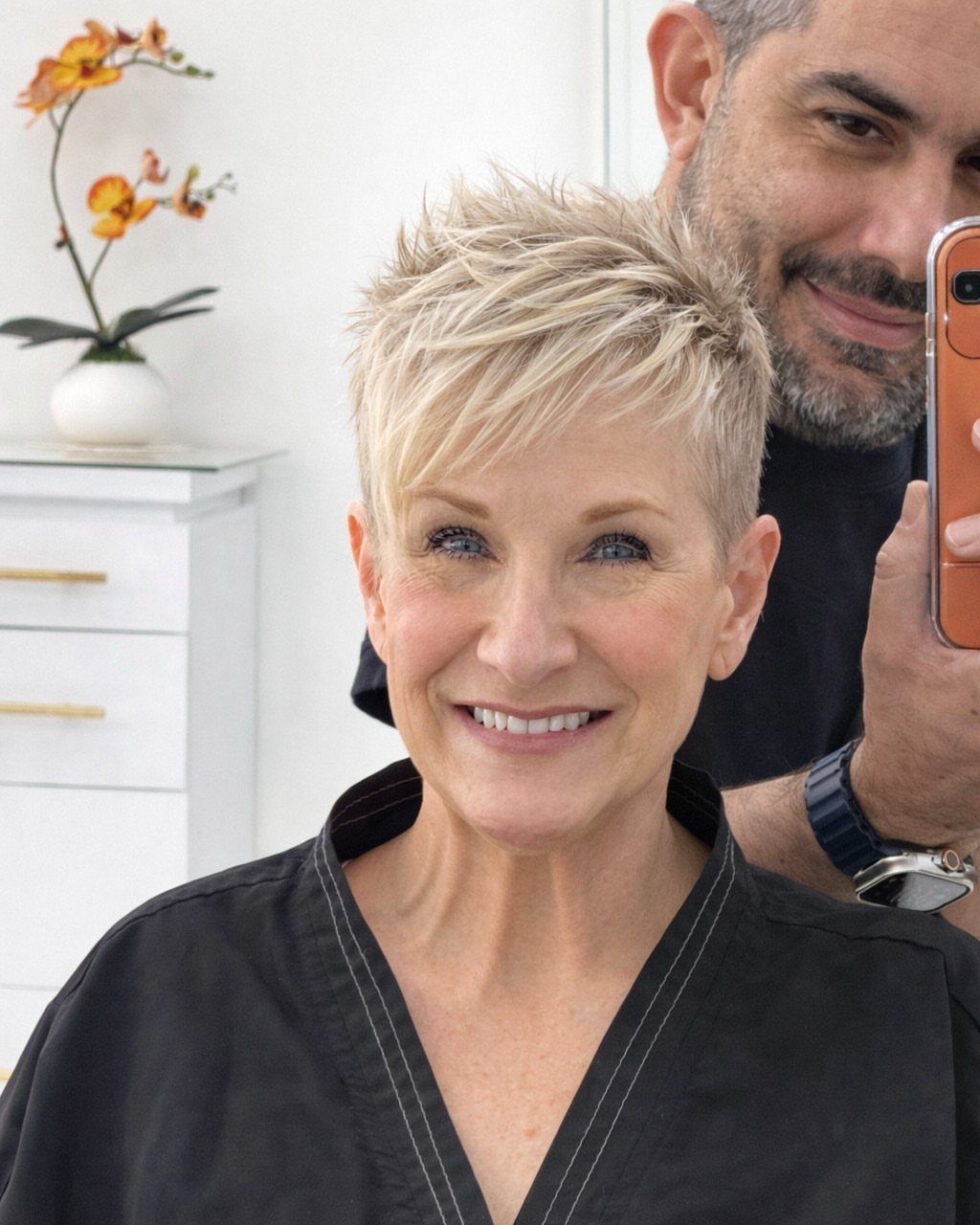
A pixie with the length kept on top frees up the face, so the eyes and cheekbones become the first thing anyone sees.
Texture softens the shape so it never turns harsh, and I would take the textured version over a smooth, sleek one every time.
Ask for layers on top cut at different lengths, so the blonde breaks into soft, piecey sections instead of lying flat.
Look for something that lifts the hair around the face and keeps everything light.
— Vogue
2. Layered Bob
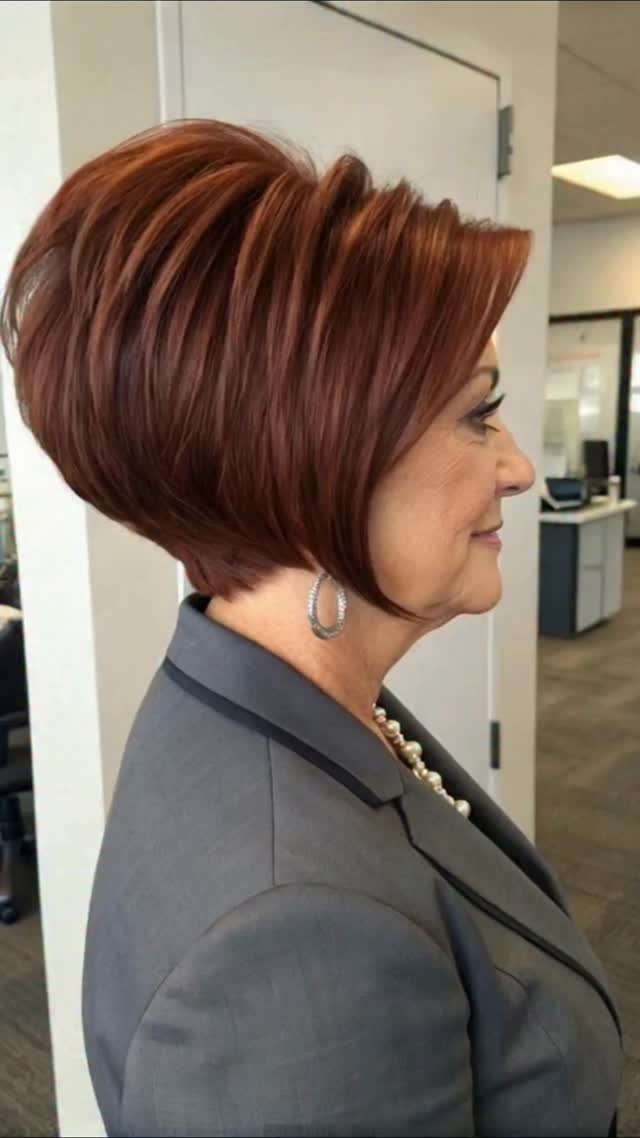
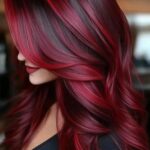
Layers are what separate this from a plain bob. Cut through the crown and the ends, they give the shape lift and movement, and the voluminous reddish-brown version here swings rather than hangs.
For a bob with real body, I would pick this layered version over a blunt cut. Ask for the layers to be blended into one another, so the volume looks natural and not stepped.
3. Curtain Fringe
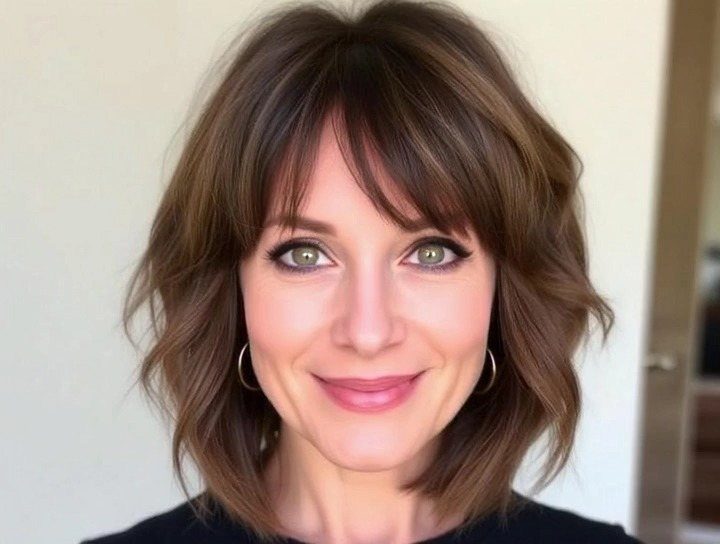
Parted in the middle and swept to each side, a curtain fringe frames the face the way its name suggests. It works well with shoulder-length wavy hair, where the fringe can run straight into face-framing layers.
Ask your stylist to blend the fringe into those layers so the whole front reads as one soft shape, not a separate piece stuck on top.
4. Shoulder-Length Layers
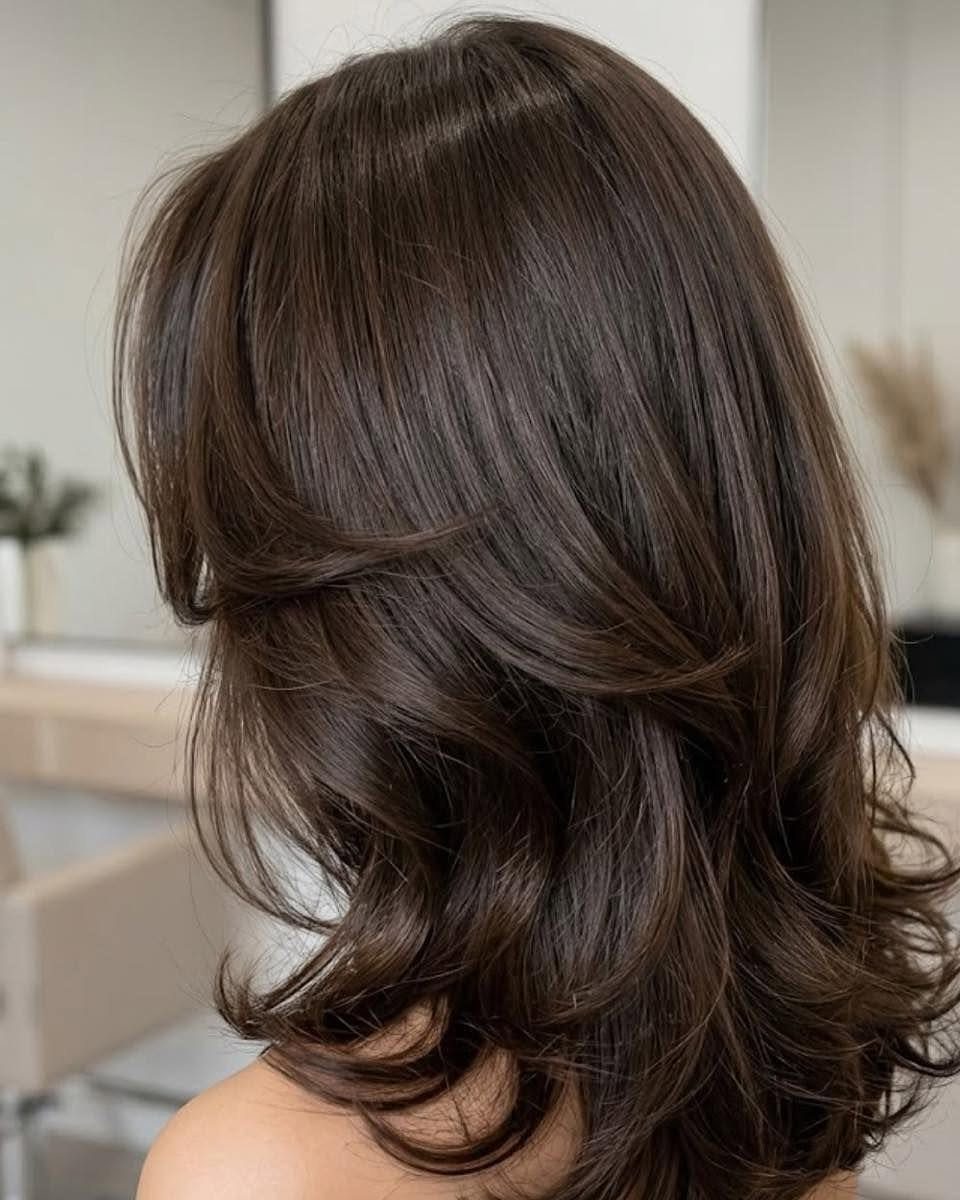
Shoulder length gets movement and volume from layers without giving up any more length than it has to.
I prefer a loose, bendy curl on the ends over a tight one, since it keeps the layers looking natural.
Ask for layers that blend from the crown down to the ends, not one shorter tier sitting apart from the rest.
5. Shaggy Bob
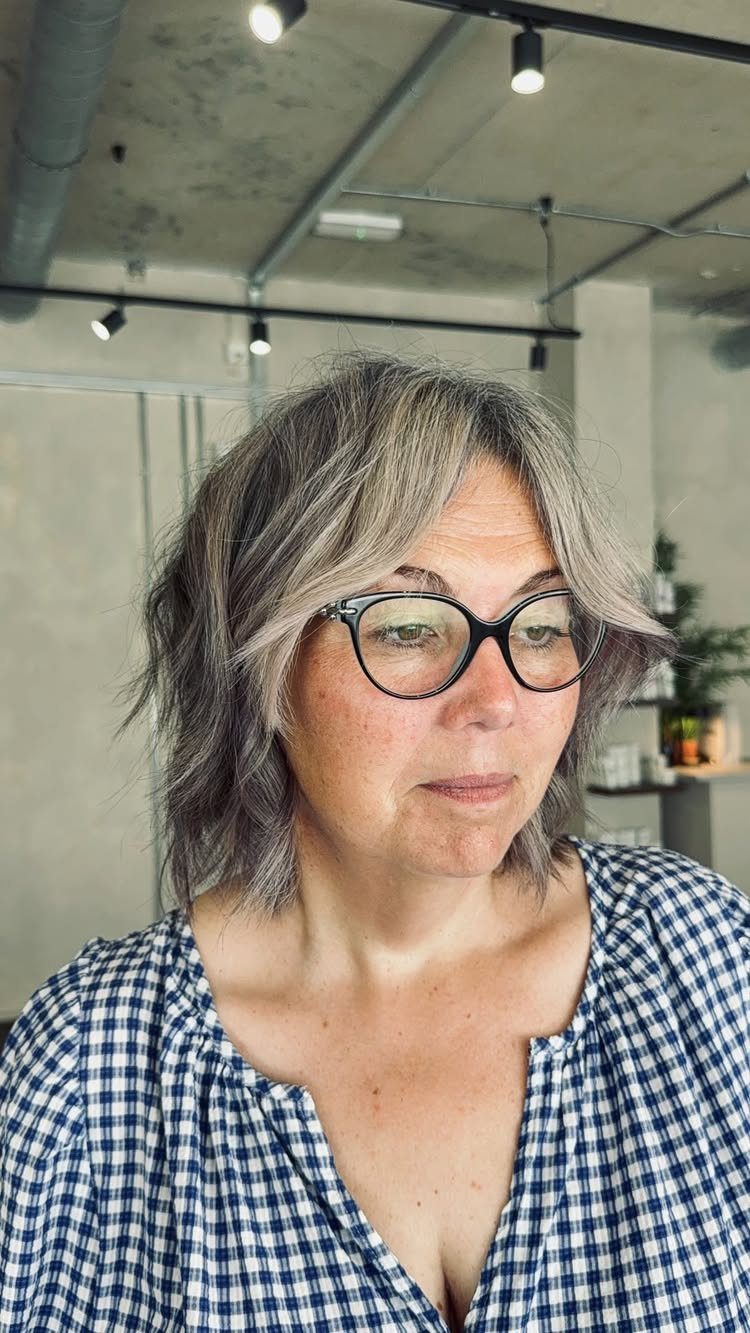
Choppy, tousled and a little grungy: that is the shaggy bob, and the mess is the point. Uneven, broken-up ends replace the clean line of a classic bob.
I love how gray looks in this much texture, since every ragged piece shows a different tone. Tell your stylist you want it undone and choppy, and bring a photo so "shaggy" means the same thing to both of you.
6. Long Bob
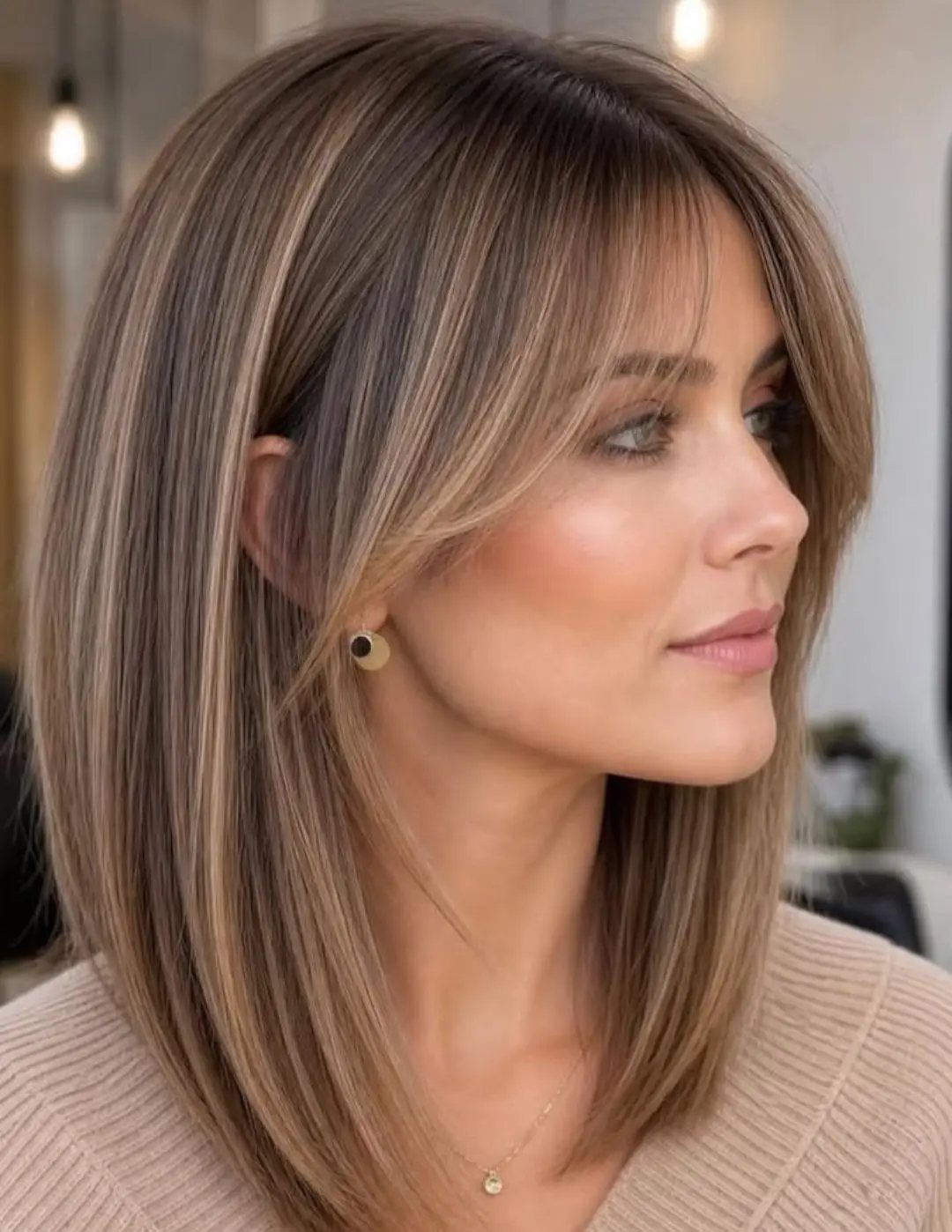
A long bob falls between the chin and collarbone, giving you the shape and swing of a bob without committing to short hair.
The length works with most textures and lets you pull it back when you want it off your face.
Ask for the back cut level with or slightly shorter than the front, and decide whether you want bangs or face-framing layers. Straight hair shows the cleanest line; wavy hair gives the cut more movement.
Styling is a quick blow-dry or air-dry, and the cut grows out gracefully.
7. Short Layered Haircut
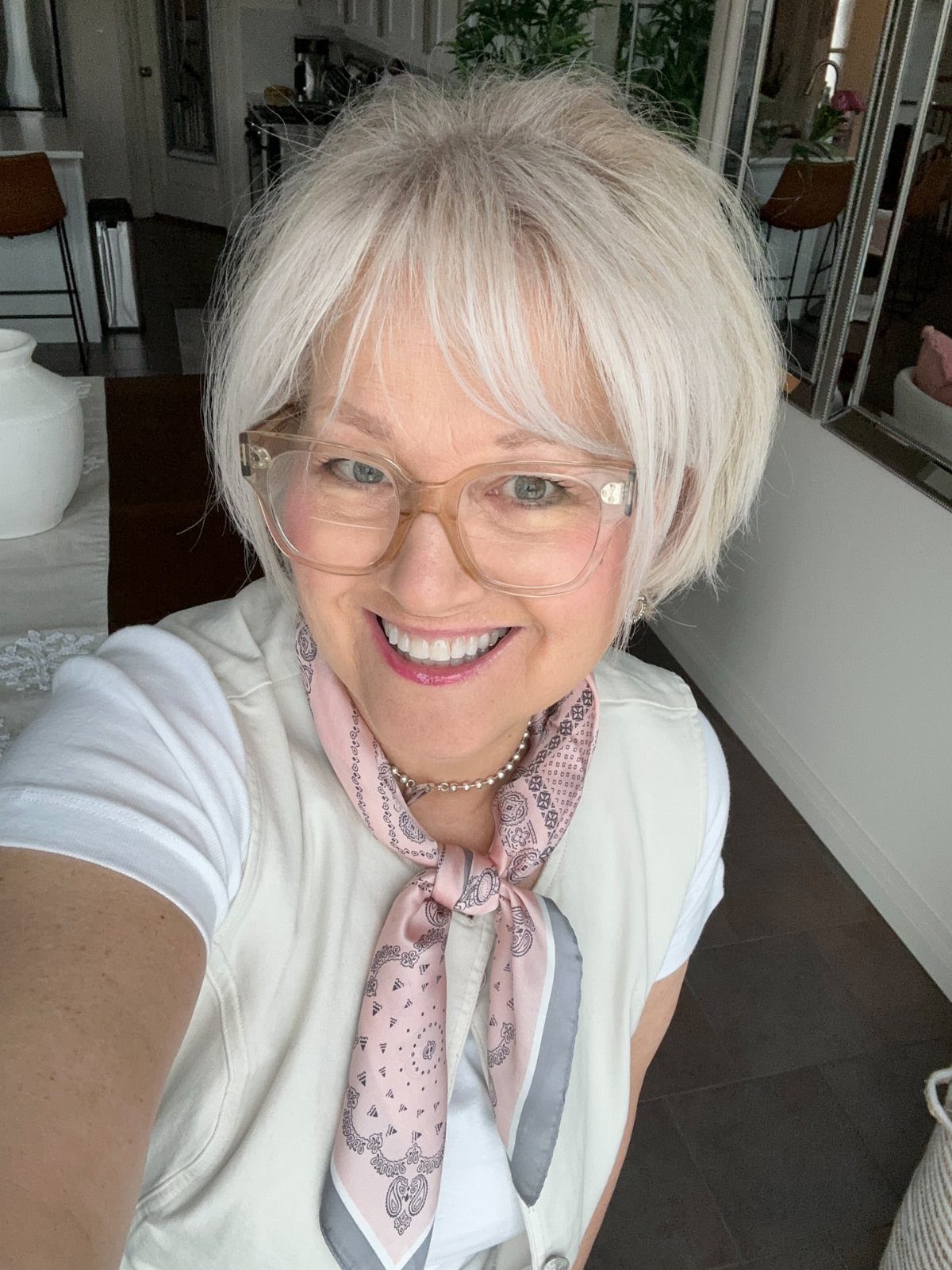
A short layered haircut cuts volume and weight while keeping enough length to soften angles around the face.
Layers through the crown and sides let fine hair move rather than flatten, and the same technique gives thicker hair room to breathe without the bulk that pushes a short cut wider than you want.
Ask for layers starting at the crown and graduated shorter toward the nape, with the fringe cut to sit just above the brow or swept to one side.
Silver, blonde and auburn all show the dimension layering creates, since each piece catches light on its own.
This cut grows out cleanly for 6 to 8 weeks before you need a trim to keep the shape.
8. Short Feathered Haircut
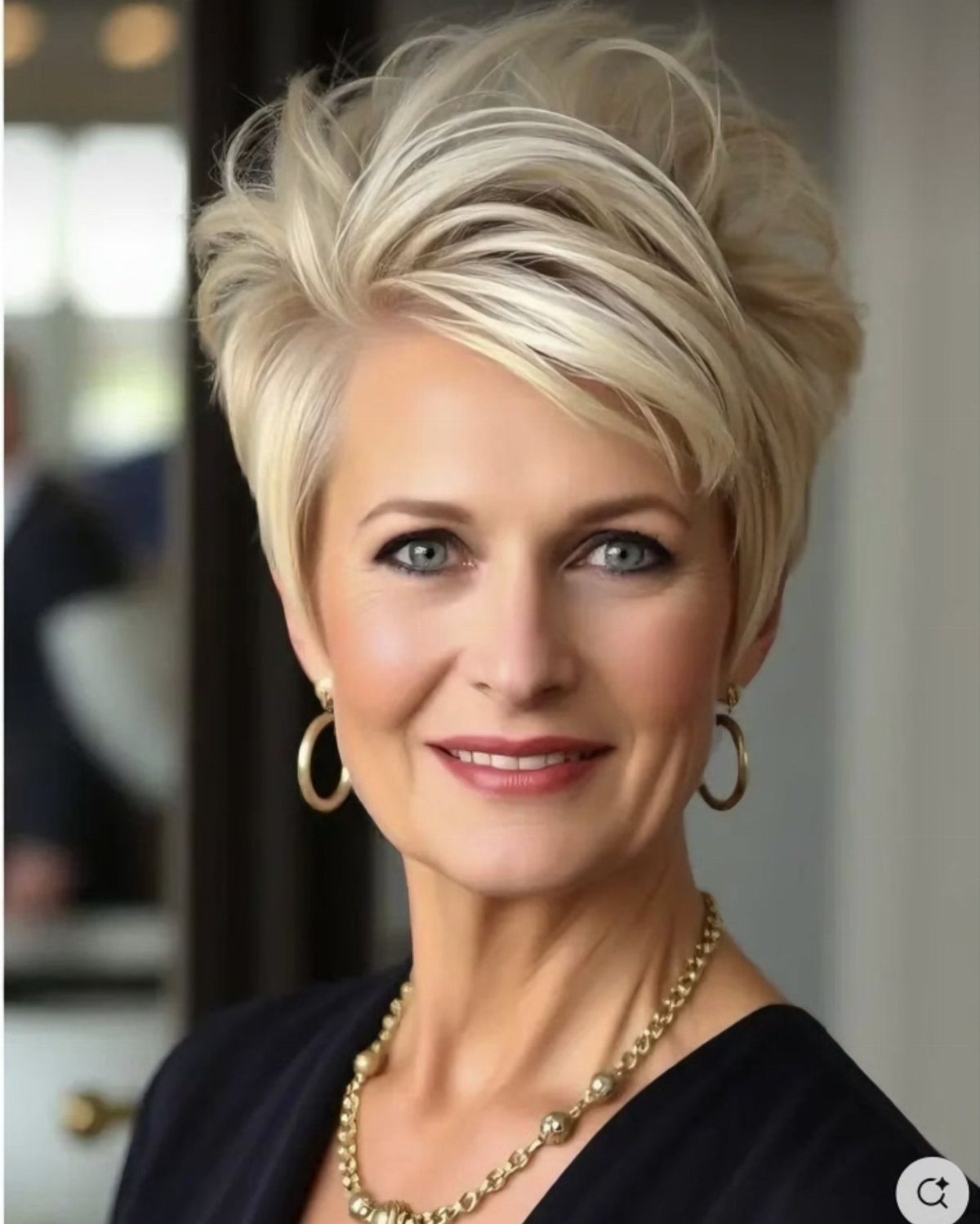
Feathering means cutting the ends at an angle so each layer tapers and lifts away from the head rather than sitting heavy.
The result is a short cut with built-in volume that holds its shape whether you blow-dry it smooth or rough-dry with your fingers.
The layers are cut shorter underneath and longer on top, so the crown has lift and the sides sweep back or to one side.
A round brush and a few seconds with the dryer gives the most polish, but the cut itself does most of the work.
I like this one for fine or thinning hair that needs help with volume without adding more product or time each morning.
9. Short Textured Crop
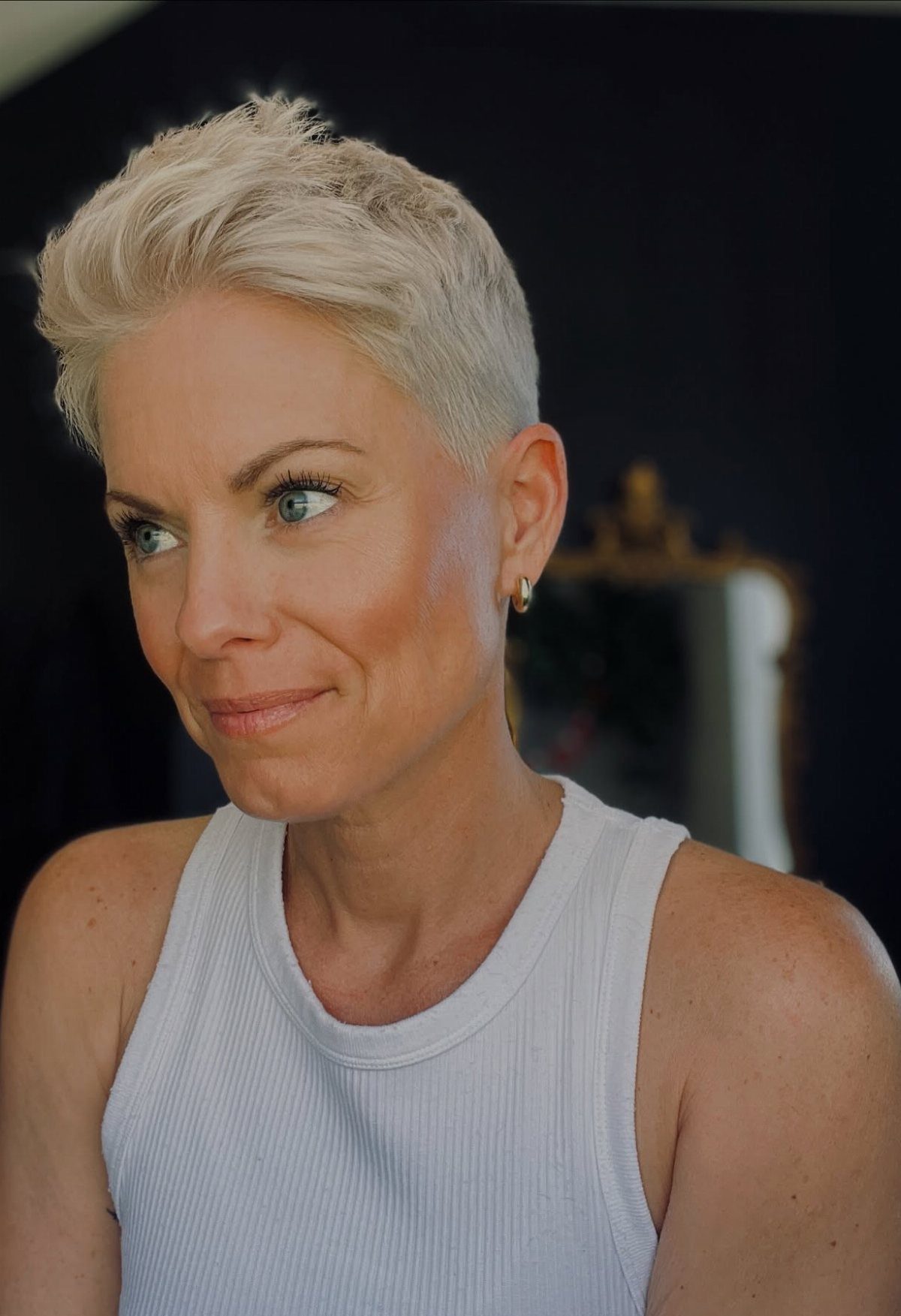
A textured crop is cut short all over, usually 1 to 2 inches at the crown and shorter at the sides and back, with the ends point-cut or razor-cut to create separation instead of a blunt edge.
The result is a piecey, modern shape that sits close to the head and sweeps back or up.
Styling takes a small amount of paste or wax worked through damp hair and pushed into place.
The cut is low-maintenance once it’s done, but it does need a trim every 4 to 5 weeks to keep the shape from growing out soft.
This one suits straight or wavy hair with enough density to hold texture without looking sparse.
10. Long Layered Hair
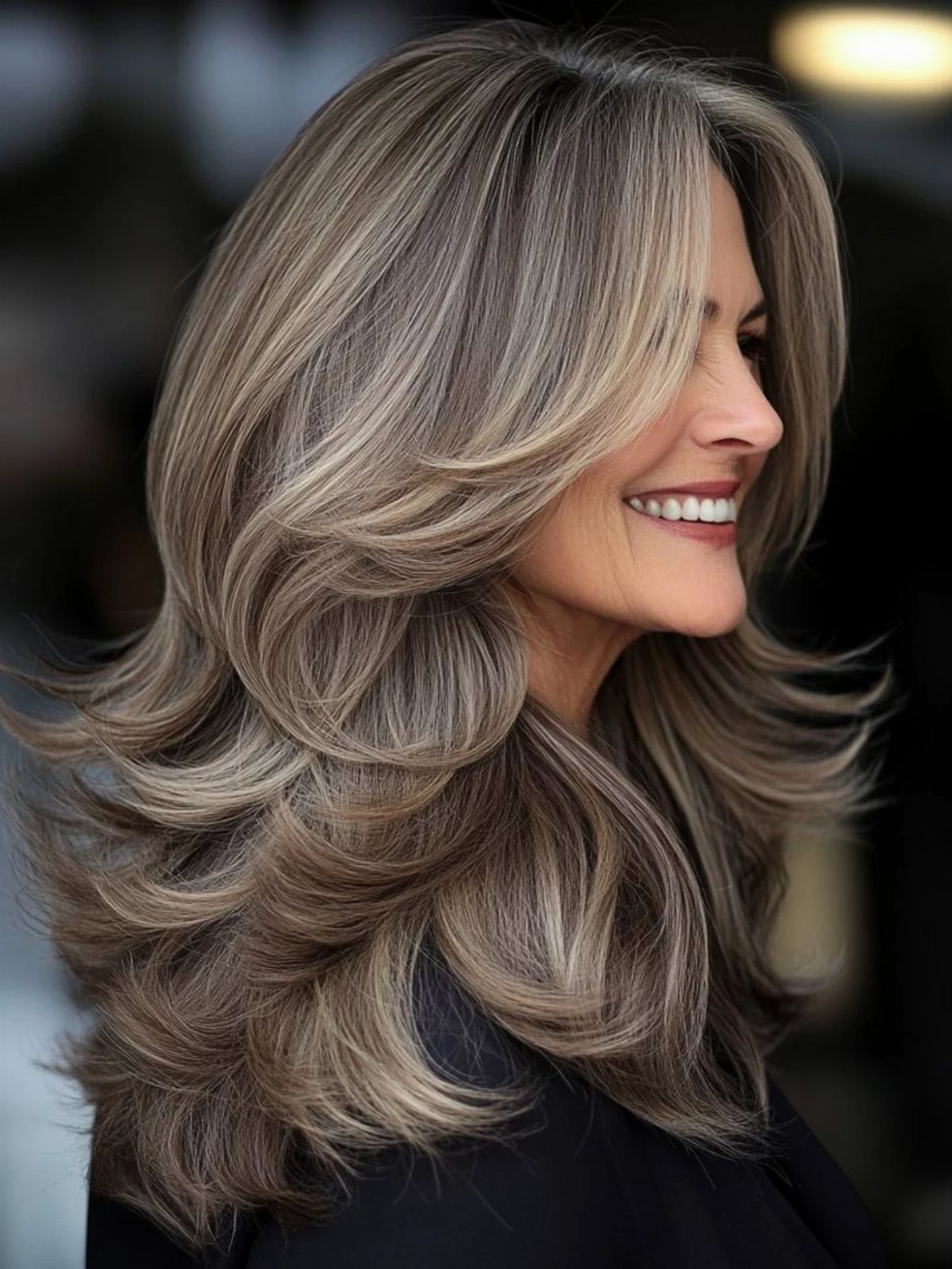
Long layered hair keeps length while adding movement through the ends and around the face.
Layers are blended through the mid-lengths and ends so the hair falls with dimension rather than sitting in one heavy line, and side-swept bangs or face-framing pieces soften the look without shortening the overall length.
Ask for long layers starting a few inches below the chin, with shorter pieces around the face if you want them.
The cut works best on hair with some natural wave or body, since straight, fine hair can lose shape if the layers are cut too short or too heavily.
Air-drying gives a soft, casual finish; a round brush and dryer adds polish and volume at the roots.
11. Layered Hair with Bangs
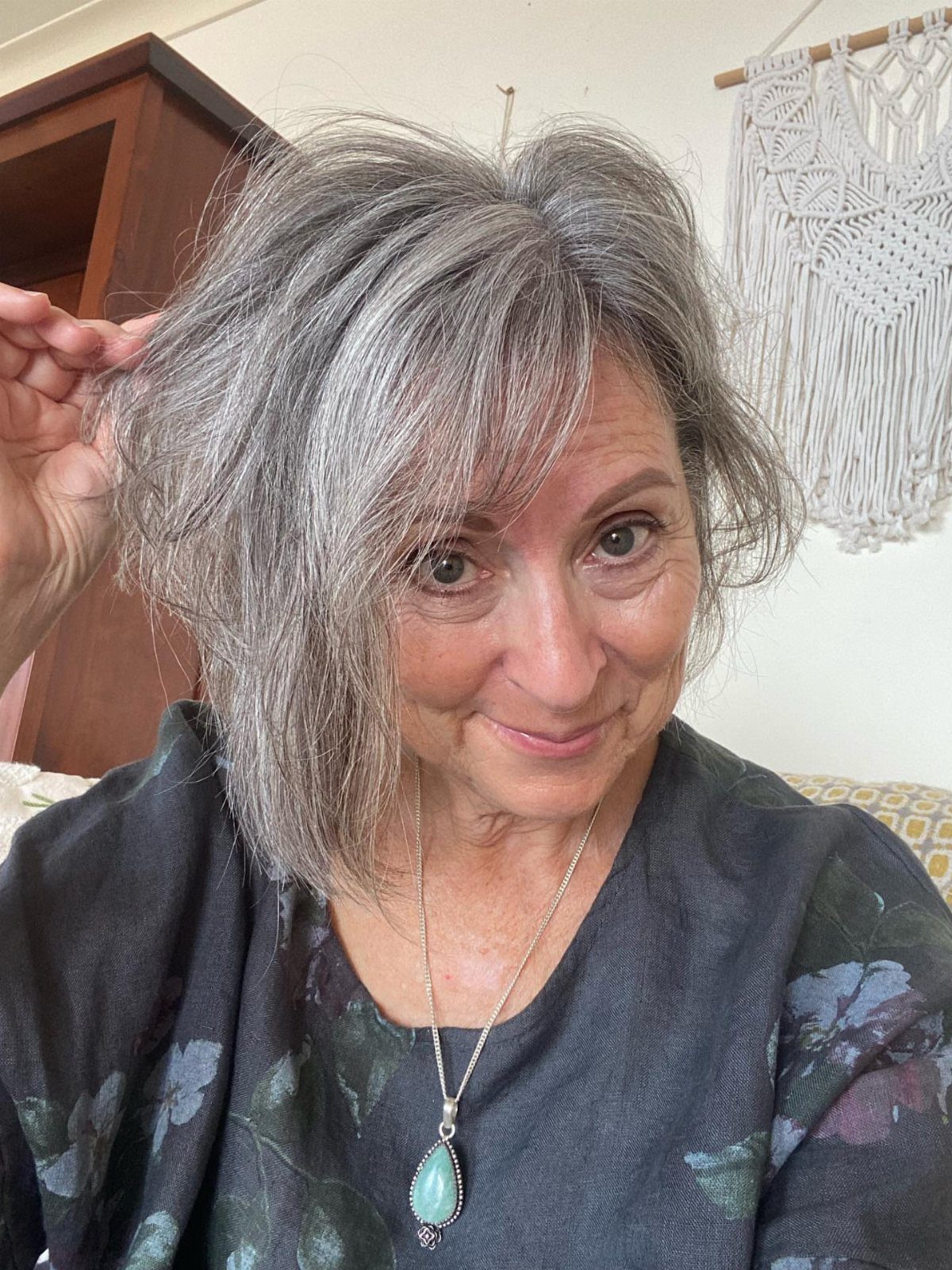
Layered hair with bangs combines movement through the lengths with a defined fringe that frames the face and draws attention to the eyes.
The layers can be subtle or choppy depending on how much texture you want, and the bangs can sit blunt across the forehead or be cut with softer, feathered ends.
Bangs add styling time since they need to be dried into place most mornings, and they grow out faster than the rest of the cut, so plan for a bang trim every 3 to 4 weeks.
If you’re trying bangs for the first time, start longer than you think and have your stylist take more off only if you want it shorter.
Changes in Mature Hair
Gray is only one of the changes.
Hair can also turn coarser, drier, thinner or flatter, and it can lose volume. Thickness, texture and even where the hair grows can shift, so a cut that fell one way a few years ago may fall differently now.
If your hair has felt stiffer or drier lately, it is not your imagination.
Hydrating treatments help, and a new cut is one of the most effective changes you can make. A shape cut for the hair you have today works better than one that fights it.
Choose for Hair and Lifestyle
Face shape comes first, because it decides how a cut falls around your features.
Texture, growth patterns and cowlicks come next, since they change how a style looks once it dries in its natural state. A cowlick at the front hairline, for example, can undo a fringe you planned around.
Then ask yourself how much time you want to give it.
If you are a wash-and-go person, pick a cut that looks right without help. If you enjoy styling, you have more room to play.
Hair health counts too. With split ends and damage, I would go for a bigger chop, because a shorter cut shows off healthy ends.
Hair Care and Maintenance
Mature hair tends to run drier, so a moisturizing wash-and-rinse-out pairing is a smart swap. Add a lightweight volume product for the crown, and use heat protectant every time a dryer or iron touches your hair.
Book a trim every 6–8 weeks. It keeps the shape from going soft and keeps ends from splitting.
Curls and coils need layers, because all that weight pulls the pattern straight and flattens the spring. Hydration at home does the rest, and Olaplex No. 3 and No. 8 are the formulas one stylist points to for coils.
Frequently Asked Questions
What are some examples of short to mid-length hairstyles for women over 50?
For short hair, a textured pixie, a short layered cut, a short feathered cut and a textured crop (usually 1 to 2 inches at the crown) all work.
For mid-length, a layered bob, a long bob that lands between the chin and collarbone, or shoulder-length layers are the picks.
Celebrity hairstylist Kim Kimble counts anything from lob length to just past the shoulder as medium. Layers run through most of these because they add lift and movement.
What are the benefits of a layered haircut?
Movement is the biggest one.
Layers bring bounce back to hair that has started to sit flat and heavy. Layers take weight off the ends and give the roots some lift, which matters because that area is where many women past 50 see the biggest shift.
On fine hair they keep strands from flattening, and thicker hair gets room to breathe without extra bulk.
Should a 50-year-old wear bangs or no bangs?
Bangs are a good choice if you keep them soft: wispy or side-swept versions soften features and can hide forehead lines.
First-timers should ask for the length to start a little long, since a stylist can always cut more but nobody can add it back.
Check your front hairline for a cowlick before committing, because one there can push a fringe off course.
What is the best hairstyle for a 50-year-old woman with thin hair?
For thin hair, I’d pick a pixie or a layered bob; the shorter layers build body and texture while the cut stays light on fine strands.
Short feathered layers underneath with extra length on top also help thin hair, since the crown lifts on its own with no added product or styling time.
Keep layers from being cut too short or too heavy on straight, fine hair, which can lose its shape.
Is short hair better for women over 50?
Short hair is a strong option, though not the only good one.
Short cuts look modern, are easier to manage on aging strands and make styling quicker. Face shape and hair texture should decide the length.