Genetics decides when you go gray more than anything else, so your parents’ graying ages are your best forecast.
Smoking is the main factor you can change: one study found smokers were 4 times more likely to gray early. Stress and diet play smaller roles, and low B12 is the deficiency most often tied to early gray.
Why Hair Turns Gray
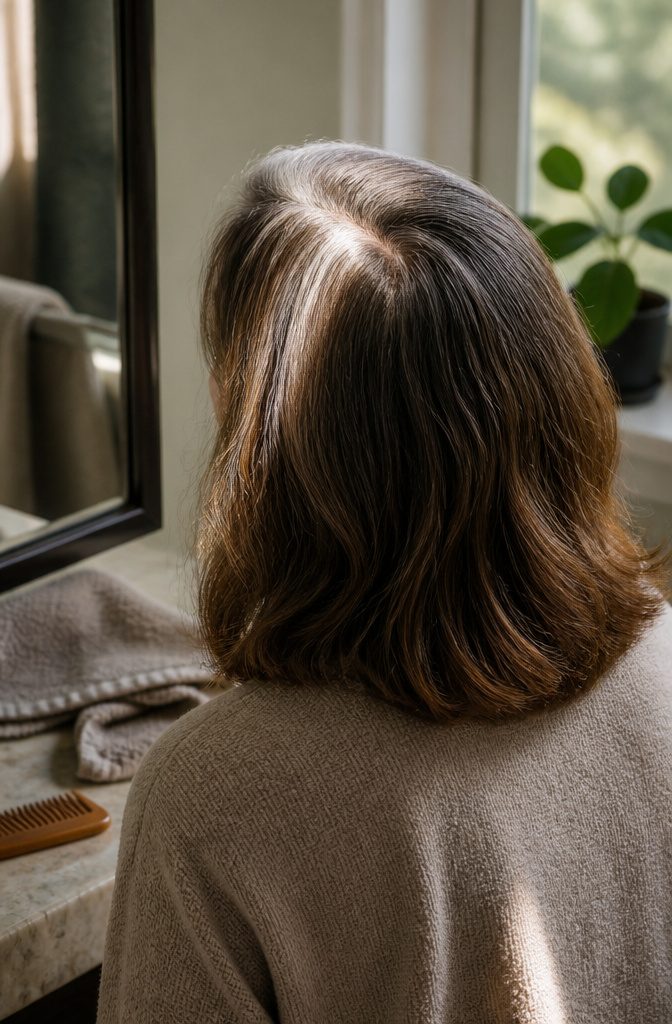
Hair color comes from melanin, a pigment made by melanocytes in each follicle.
With age those cells grow less active, dwindle in number, or stop making pigment, so the next hair grows in gray or white. The medical term is canities.
Every follicle runs through repeating growth cycles, and pigment is made fresh at the start of each one.
A cycle lasts several years, and after 7–15 cycles the melanin may stop regrowing. That timeline fits the average: hair starts to gray in the 30s–40s, earlier for some.
Only new growth from the root comes in unpigmented, so I read that first silver strand at the part as a clock running out, not as damage.
How Melanin and Pigment Cells Work
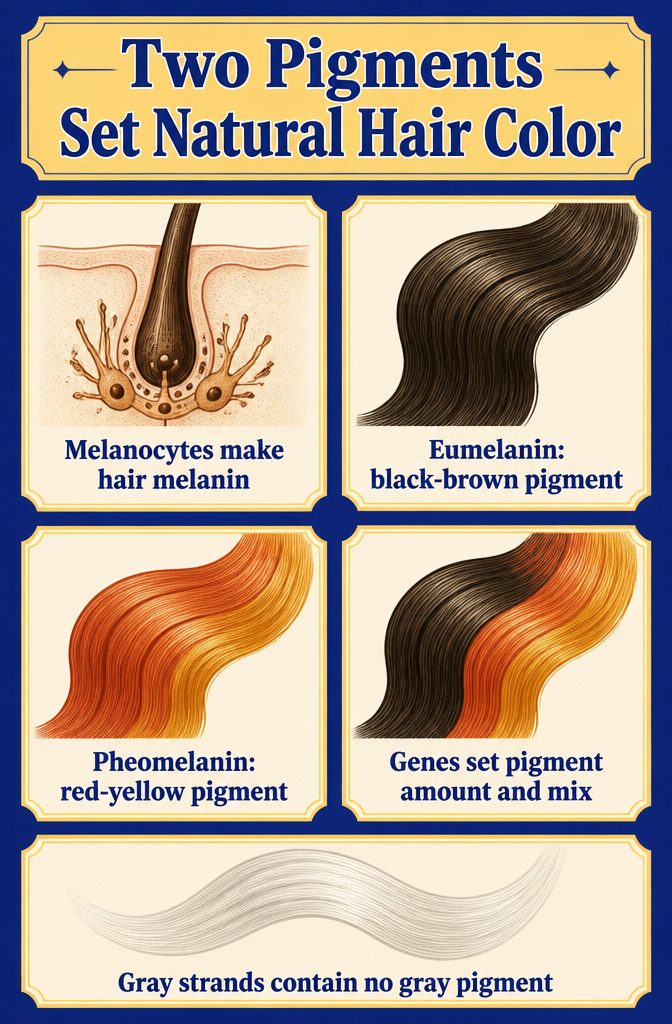
Every strand gets its color from melanin, made by cells called melanocytes inside the hair follicle. Two types matter: eumelanin, which is black-brown, and pheomelanin, which is red-yellow.
More eumelanin means darker hair, and pheomelanin drives red tones. Every natural shade, from black to red, comes down to the amount and mix of those two pigments, set mainly by genes.
The same pigment colors skin and eyes. It can shift over time, too: light hair in children often darkens with age, possibly because of hormonal changes.
Gray and white strands contain no gray pigment at all. They are clear, and light bouncing off them reads as gray or white.
Why Some People Gray Earlier Than Others

Genetics sets the schedule more than anything else. A family history of premature graying is linked to a 13 times higher risk of early white hair, so your parents’ graying ages are the best forecast you have.
Look at both sides of the family tree, because either one can pass it down.
Ancestry shifts the average start. White people typically see their first grays in the mid-30s, people of Asian ancestry in the late 30s, and people of African ancestry in the mid-40s.
By age 50, roughly half of all people have hair that is at least 50% gray.
Smoking, chronic stress, and diet can pull the date earlier, but I rank them well behind family history.
When Graying Counts as Premature
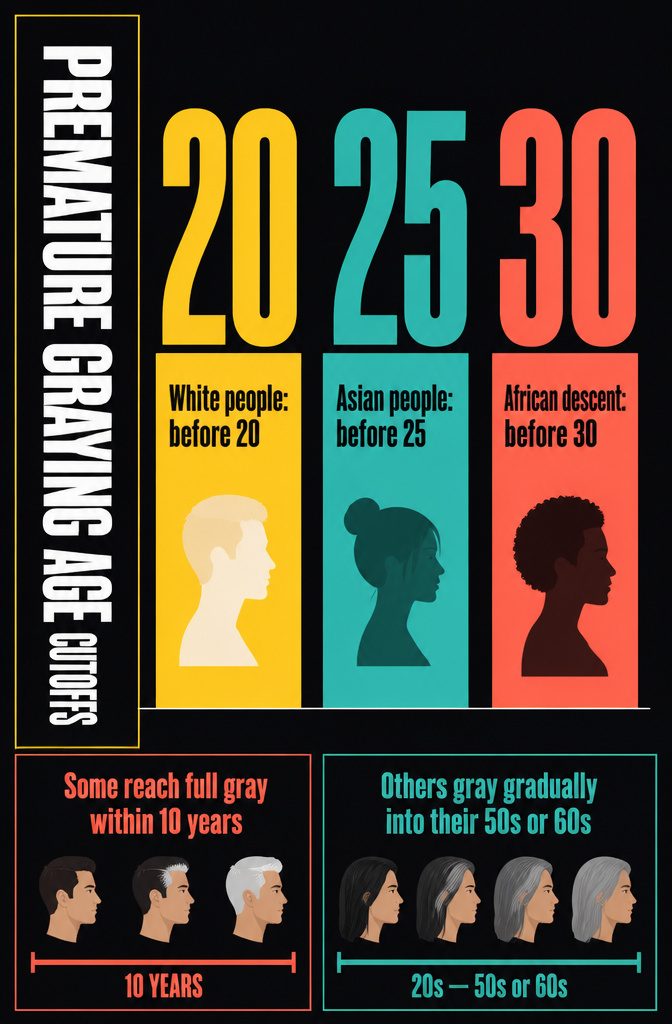
Premature graying is defined by age, and the cutoff moves with your background.
The simpler rule splits by skin tone: before 20 with a light skin tone, before 30 with a dark one. The finer rule uses three lines: before 20 for White people, before 25 for Asian people, before 30 for people of African descent.
I think the three-tier version is the better yardstick, since it follows the typical start of graying in each group: mid-30s, late 30s and mid-40s.
An early first strand says little about speed.
Some people go fully gray within 10 years of their first grays. Others see a few in their 20s, a few more in their 30s, and don’t reach full gray until their 50s or 60s.
What Stress Does to Hair Color
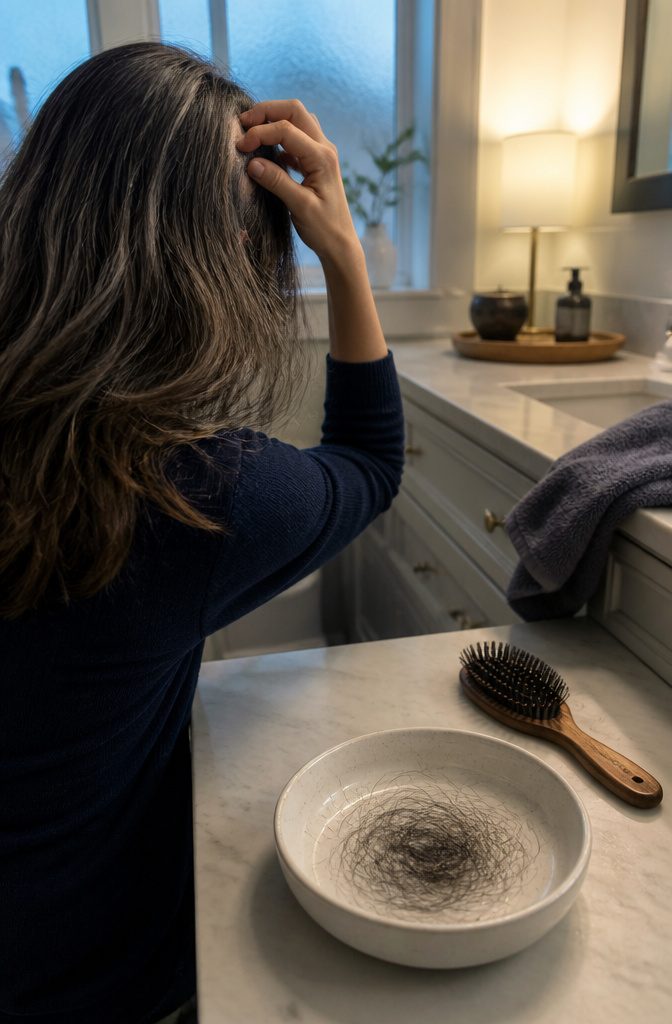
Stress does not recolor a strand that is already growing, since color is set once the follicle makes the hair. Harvard Health Publishing describes what it does instead:
While being under stress can’t change the color of individual strands of hair, stress can trigger a common condition called telogen effluvium, which causes hair to shed about three times faster than normal.
Faster turnover gives gray more chances to replace a pigmented hair, so stress can make gray more visible without changing any single strand.
Mice grayed under stress in a 2020 study, and a small human study found a link, but how often this happens in people is unclear. I’d call stress a nudge, not a main cause.
Smoking, Oxidative Stress, and Early Graying
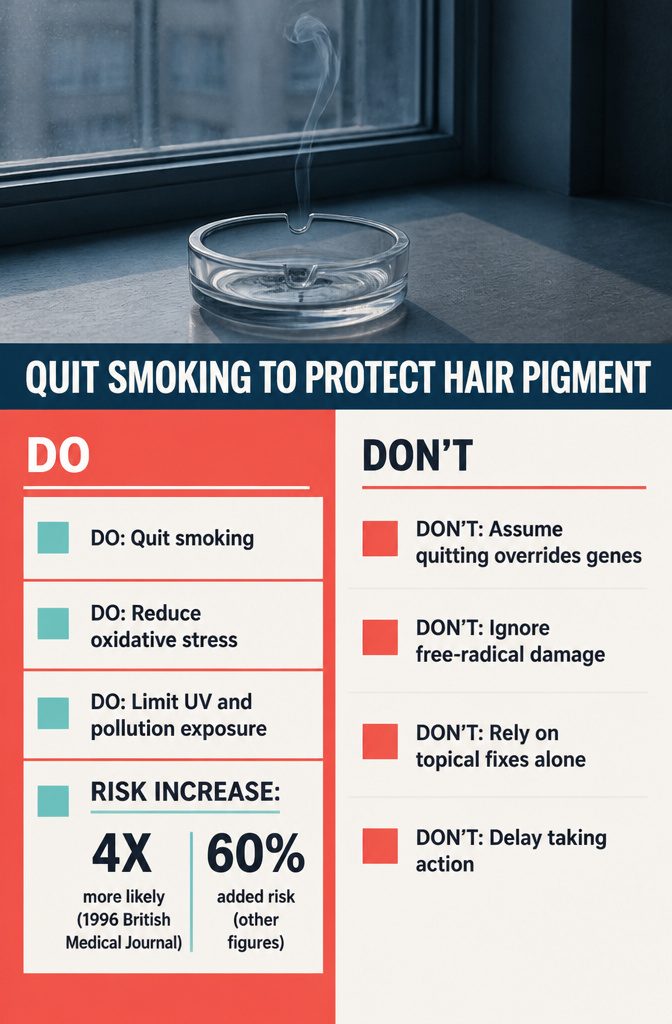
A 1996 British Medical Journal study found smokers were four times more likely than nonsmokers to start graying prematurely, while other figures put the added risk at 60%. The gap between those numbers is wide, but both point the same way.
Smoke creates free radicals, unstable molecules that damage cells and speed aging.
Oxidative stress is what follows when free radicals outpace the antioxidants that clear them, and it can wear down the melanocytes that color each strand. UV light and pollution add to the same load.
Smoking is one of the few triggers here you can change, so for anyone graying early I’d put quitting at the top of the list. It won’t override genes.
Nutrient Deficiencies That May Speed Graying
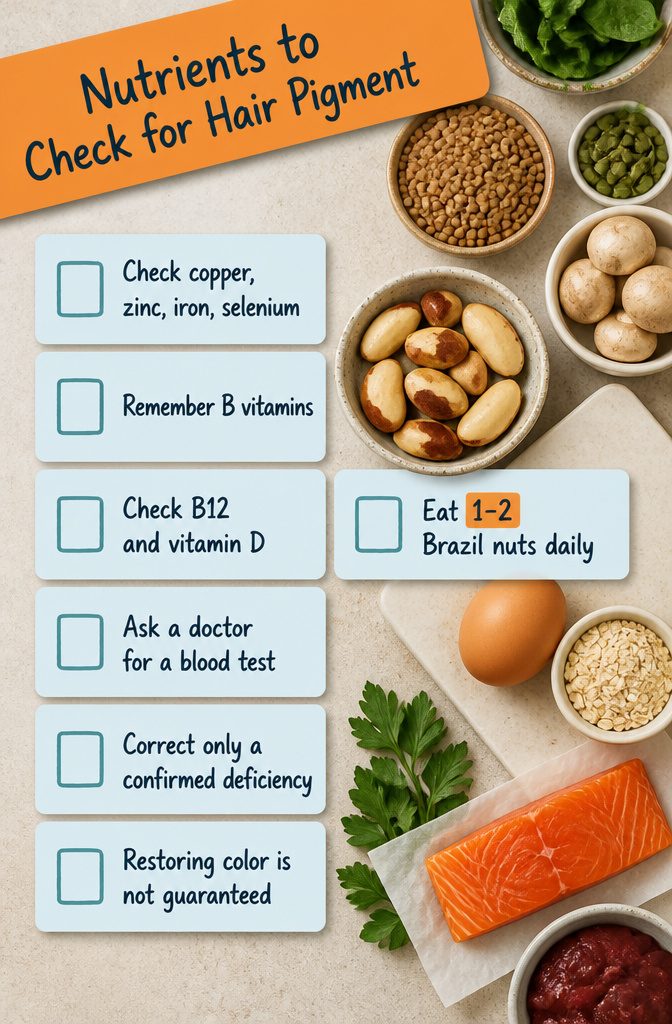
Pigment cells need raw materials, and the list includes copper, zinc, iron, selenium and the B vitamins.
When levels run low, pigment production can drop. B12 is the deficiency most often tied to early graying, and low vitamin D is linked to it too.
Selenium is the easiest to cover with food, since 1–2 Brazen nuts a day meet the daily need. Before buying supplements, I would ask a doctor for a blood test to see whether you are actually low on anything.
Correcting a true deficiency may help in specific cases, but the evidence is not definitive, and fixing a deficiency will not bring color back for everyone. If your levels come back normal, nutrition probably isn’t your cause.
Health Conditions and Medications Linked to Gray Hair
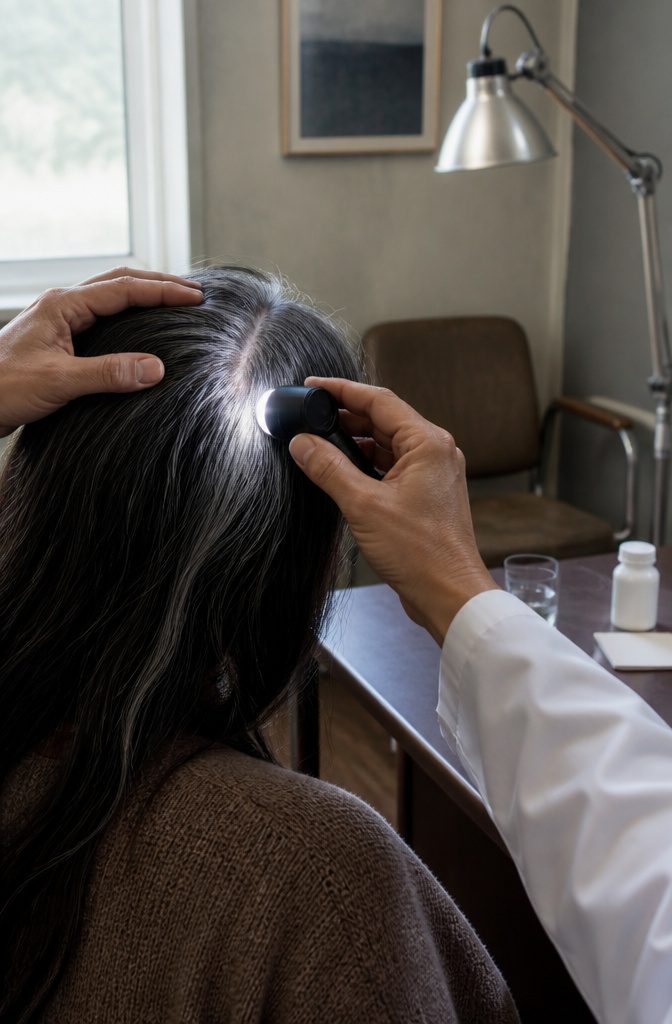
Thyroid disease is the first thing I would check in early graying: both overactive and underactive thyroid are linked to it. Vitiligo, where melanocytes are lost or destroyed, and alopecia areata are linked too.
Alopecia areata can look like overnight graying, because it takes the colored hairs first and leaves the gray or white ones suddenly obvious. Inherited conditions include neurofibromatosis, tuberous sclerosis, albinism, Waardenburg syndrome and piebaldism.
Some medications may also contribute: cancer treatments, oral retinoids for skin conditions, antimalarials and epilepsy medications. If graying starts young or after a new prescription, I would see a doctor before reaching for the box dye.
Whether You Can Stop or Reverse Graying
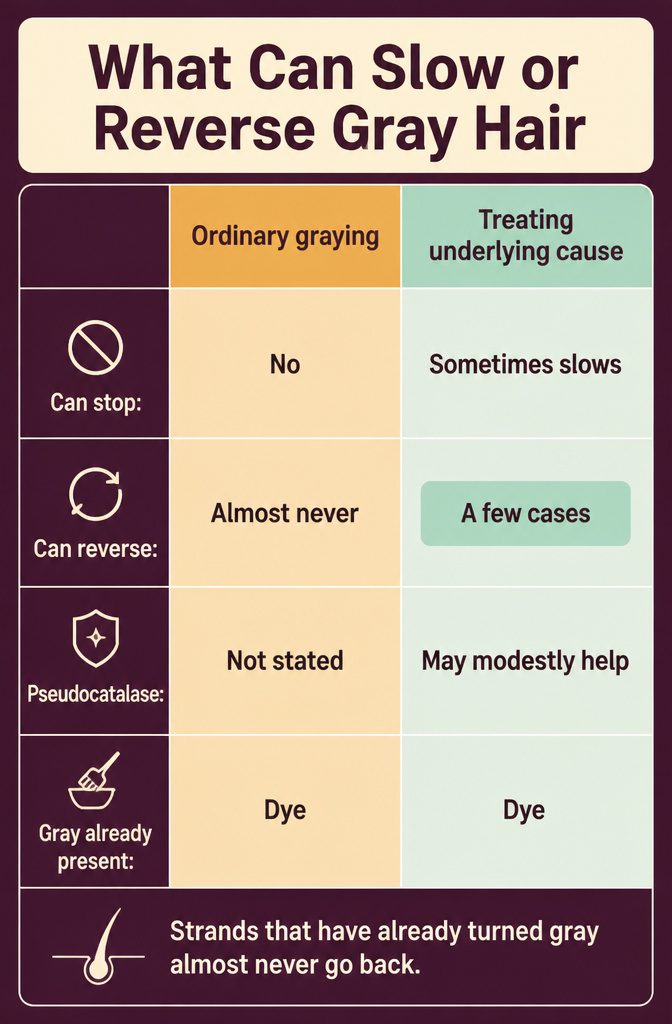
Ordinary age-related graying can’t be stopped, and strands that have already turned gray almost never go back. Treating an underlying cause is the one route with a real track record.
If a vitamin B12 deficiency or another condition is behind the color loss, correcting it may slow graying, and a few cases of regained pigment have been documented.
Ask a doctor for lab work before buying supplements, since a pill with no deficiency behind it has no proven benefit. Products containing pseudocatalase may slightly improve or prevent a little graying, which is modest but real.
Sun protection, not smoking, good sleep, and stress management support the hair you’re growing, though they only delay things. For gray already here, I’d go with dye.
How Gray Hair Texture Changes
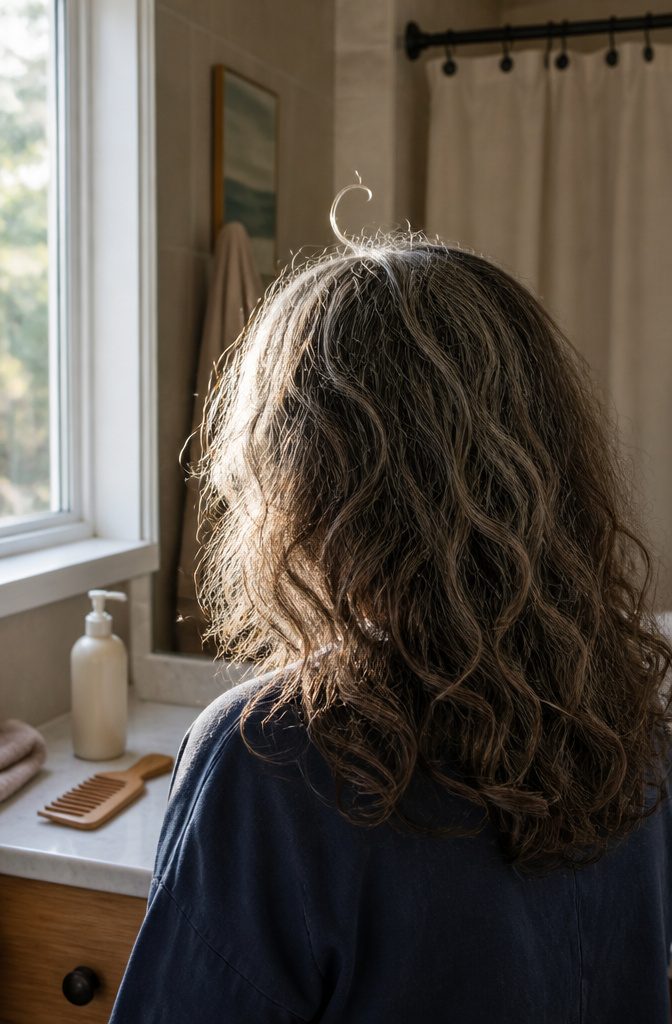
Gray strands often feel thicker, coarser and wirier than the pigmented hair around them, and they can turn brittle.
Others go the opposite way: finer, with a curl or kink that wasn’t there before. Two things drive this.
The structure of the hair shaft shifts as melanin fades, and oil glands slow down with age. Sebum is the scalp’s natural moisturizer, so less of it leaves gray hair dry and short on elasticity.
For wiry strands, I’d start with protein and B5-rich conditioning treatments, and I’d use a hydrating mask more often than you did on darker hair. Dyeing can dull shine further, so condition thoroughly after every color session.
Why Plucking Gray Hairs Is a Bad Idea
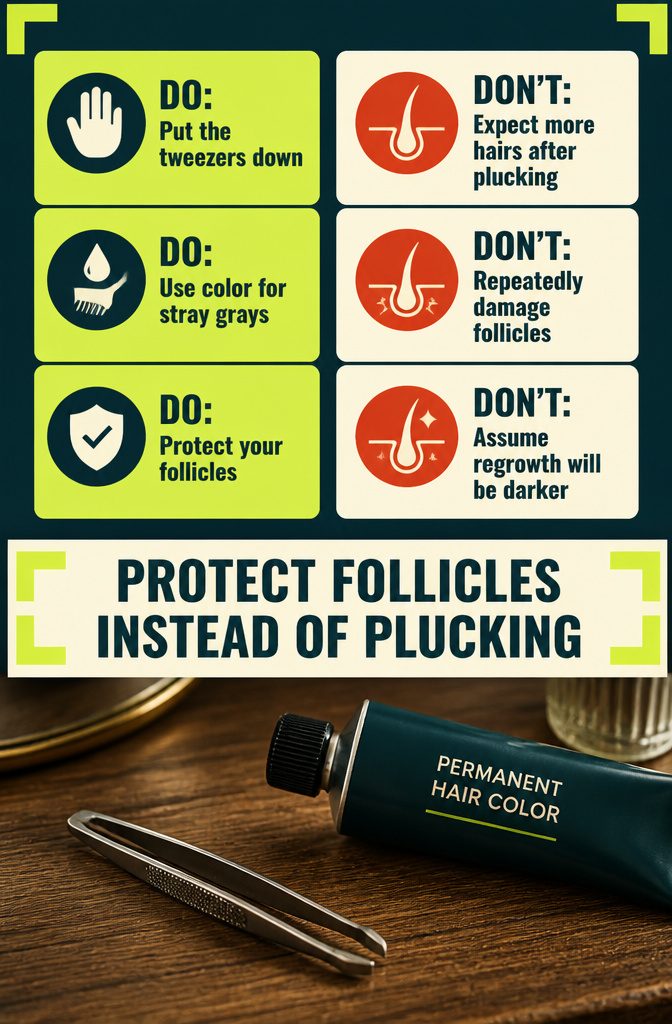
Pulling one gray does not bring in a crowd.
Each hair grows from its own follicle, so what happens to one strand has no effect on its neighbors, and the idea that plucking one makes more come back is a myth.
The real risk is to the follicle itself. Repeated plucking can damage it enough to cause thinning or permanent hair loss, and a follicle that stops producing leaves you with nothing at all, not a darker strand.
Any hair that does regrow from an undamaged follicle will still come in gray.
My advice is to put the tweezers down. If a stray gray at your part bothers you, color is the safer fix, and dyeing does not speed up graying.
Frequently Asked Questions
What causes gray hair?
Hair turns gray when the pigment cells in each follicle (melanocytes) make less melanin and eventually stop, so new growth comes in without color.
Genes set the timing more than anything else. Smoking, chronic stress, and low nutrient levels can bring it on earlier.
Does stress cause gray hair?
Not directly. Stress can’t recolor a strand that is already growing, but it can trigger telogen effluvium, which makes hair shed about 3 times faster than normal and gives gray more chances to replace pigmented hair.
A 2020 mouse study found graying under stress, but how often this happens in people is unclear.
Can you prevent or reverse gray hair?
Age-related graying can’t be stopped, and strands that have already turned gray almost never regain color.
The exception is graying driven by an underlying problem such as a vitamin B12 deficiency or another medical condition; treating it may slow graying, and a few cases of regained pigment have been documented.
Ask a doctor for lab work before buying supplements, and use dye to cover gray that is already there.
What counts as premature gray hair?
Graying before age 20 for White people, before 25 for Asian people, and before 30 for people of African descent.
These cutoffs follow the typical start of graying in each group: mid-30s, late 30s, and mid-40s. A simpler rule uses skin tone instead: before 20 with light skin, before 30 with dark skin.
Is it okay to pluck gray hairs?
No. A plucked gray comes back gray if the follicle survives, and repeated plucking can damage the follicle enough to cause thinning or permanent hair loss.
The idea that pulling one brings more is a myth, since each hair grows from its own follicle. Coloring is the safer way to hide a stray strand.
What is the average age to go gray?
Most people see their first grays in their 30s–40s. By ancestry, the typical start is the mid-30s for White people, late 30s for people of Asian ancestry, and mid-40s for people of African ancestry.
By age 50, roughly half of all people have hair that is at least 50% gray.
What vitamin are you lacking when you get gray hair?
Vitamin B12 is the deficiency most often tied to early graying, and low vitamin D is linked to it too.
Copper, zinc, iron, selenium, and other B vitamins also feed pigment production. Get a blood test before buying supplements; fixing a true deficiency may help in some cases, but it won’t bring color back for everyone.