Gray hair is hair that grows in with less melanin, because the pigment cells in the follicle slow down with age.
Vitamin and mineral deficiencies, including B12, iron and copper, are linked to early graying and can be corrected. Genetics-driven graying cannot, and no human trial shows any vitamin reverses it.
What Sets Hair Color
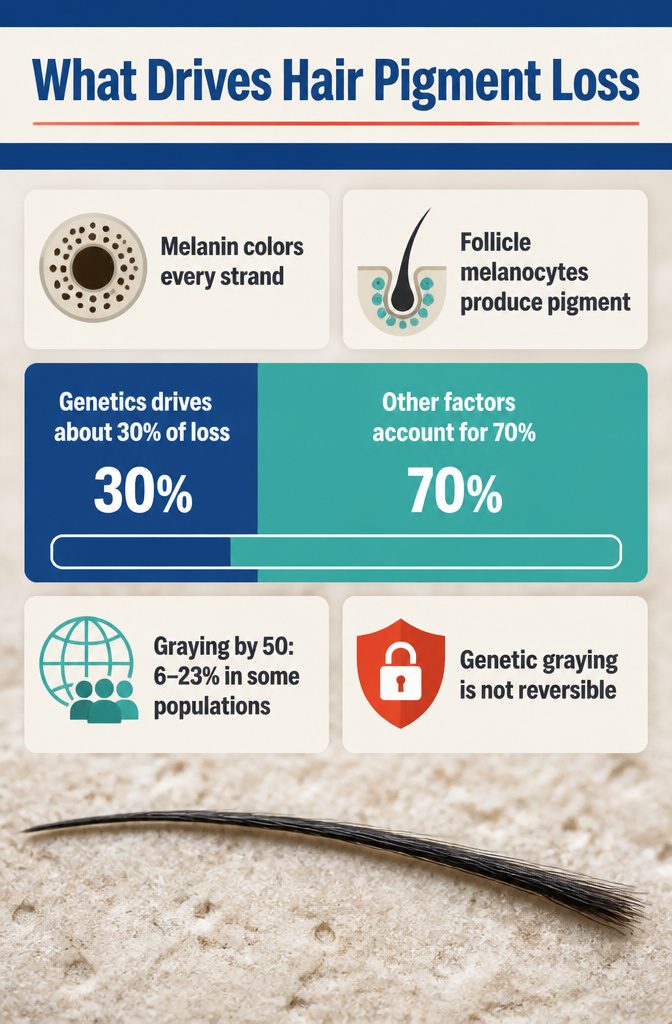
Every strand gets its color from melanin, which melanocytes in the follicle produce.
With age those cells slow down, and new hair grows in with less pigment until it looks gray or white. Genetics accounts for about 30% of pigment loss, and other factors account for the remaining 70%.
Timing still varies widely: a worldwide survey found that in certain populations, 6 to 23 percent of people are gray by 50. People who go gray early usually have parents or grandparents who did too.
That inherited pattern is the part nothing changes, because graying driven by genetics is not reversible. I’d put your attention on the 70%.
Oxidative Stress and Pigment
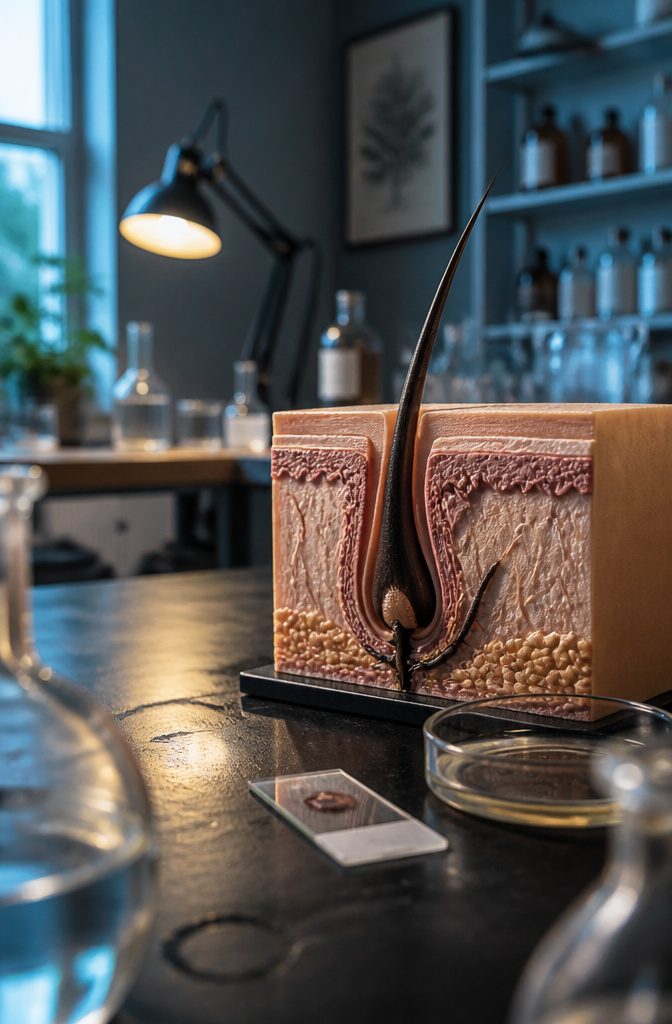
Graying follicles accumulate hydrogen peroxide, a normal byproduct of metabolism. Catalase, the enzyme that clears it, runs low there, so the peroxide builds up and interferes with the enzyme that makes melanin, bleaching hair from the inside.
Free radicals add to the damage: they cause pigment cells to die and take DNA damage, and the body’s ability to neutralize them weakens with age.
A test for 8-OHdG, a marker of oxidative DNA damage, is the one I’d ask about.
In a mouse model, high IGF-1 pushed follicle cells into senescence and the hair turned gray. Antioxidants are proposed to limit this damage, though that remains a proposal, not a proven fix in people.
Nutrients Linked to Graying
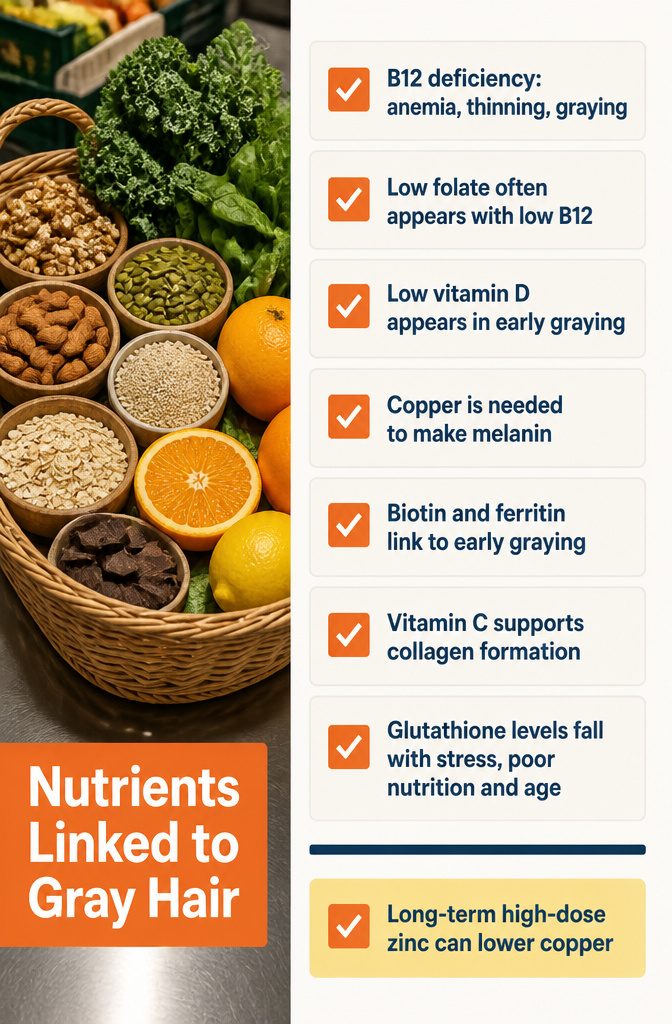
These nutrients are linked to early graying; the evidence varies by nutrient and shows links, not proof of prevention:
- B12 (cobalamin): deficiency can cause pernicious anemia, which comes with hair thinning and graying.
- Folate (B9): low levels turn up alongside low B12 in premature graying.
- Vitamin D: low levels appear in people who gray early.
- Copper: needed to make melanin. Find it in shellfish, liver, nuts, seeds, whole grains and dark chocolate.
- Biotin (B7) and ferritin (iron stores): both linked to early graying.
- Vitamin C: an antioxidant behind collagen formation.
- Glutathione: your body makes this tripeptide of glutamine, glycine and cysteine; levels fall with stress, poor nutrition and age.
I lean toward food over pills, since high-dose zinc taken long term can lower copper.
Fixing Deficiencies and Oxidative Stress
I’d start with a blood test for iron and B12, since a deficiency is the one cause you can correct. People with MTHFR variants may need active forms such as methylfolate, hydroxocobalamin and adenosylcobalamin.
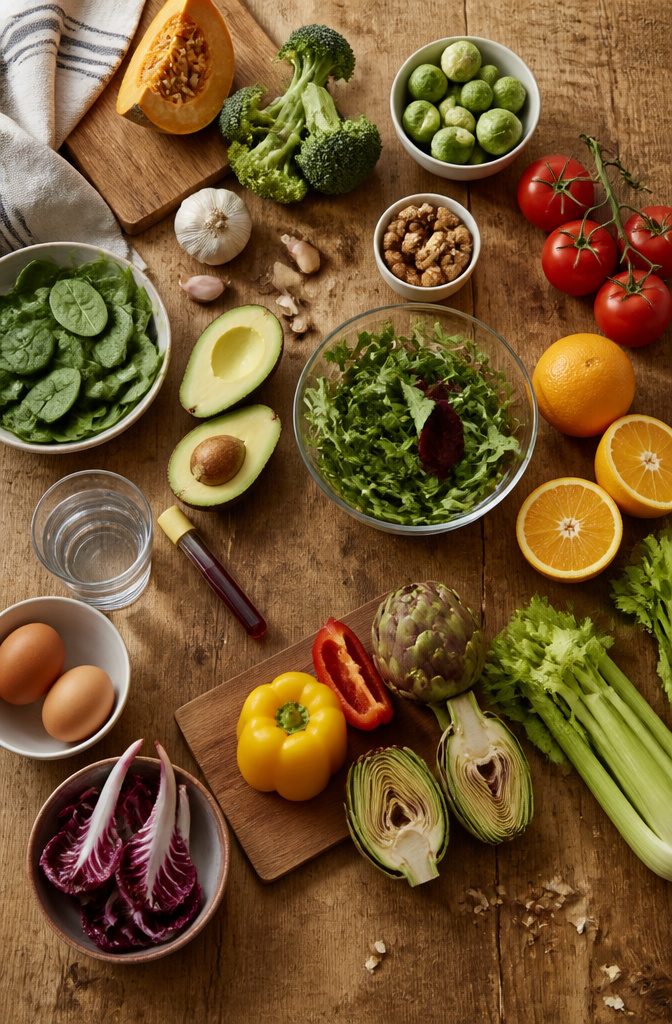
Food comes next: broccoli, Brussels sprouts, spinach, avocado, garlic, tomatoes, citrus, nuts and eggs for glutathione, plus radicchio, peppers, artichokes, pumpkin and celery for luteolin.
Sleep, exercise and stress management count, and smoking is the habit to drop. Genetics still set the pace:
"Genetics are often the primary driver of premature graying but environment and lifestyle factors also play a role and can accelerate it."
None of these measures is shown to reverse gray hair; at best they slow what lifestyle speeds up.
Where the Evidence Stops
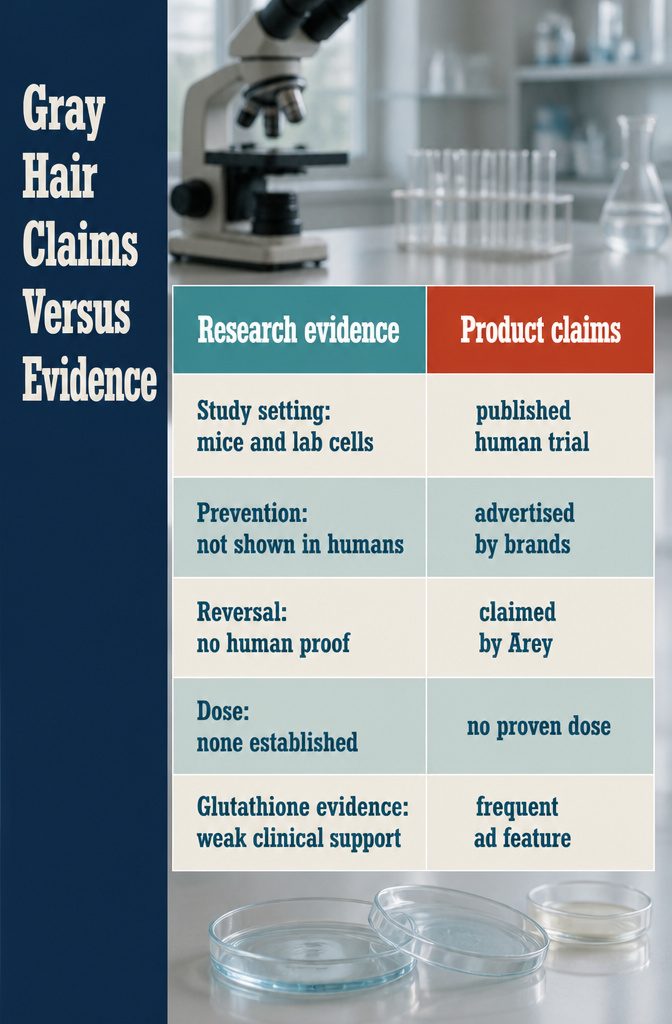
The strongest findings so far come from mice and human cells in a lab. No human trial shows that any vitamin or antioxidant prevents or reverses graying, and no supplement dose for this purpose has been established.
Glutathione is a good example: the clinical evidence behind it is weak, however often it shows up in ads.
Product pages are not evidence. Arey, Melaniq, Vegamour and Fully Vital all sell the idea.
Arey calls its system "clinically-proven" to slow, delay and even reverse grey hair, with the best results under 30% grey. Until a published human trial backs a claim like that, I’d treat it as marketing and skip anything that promises reversal.
The Luteolin Study in Mice
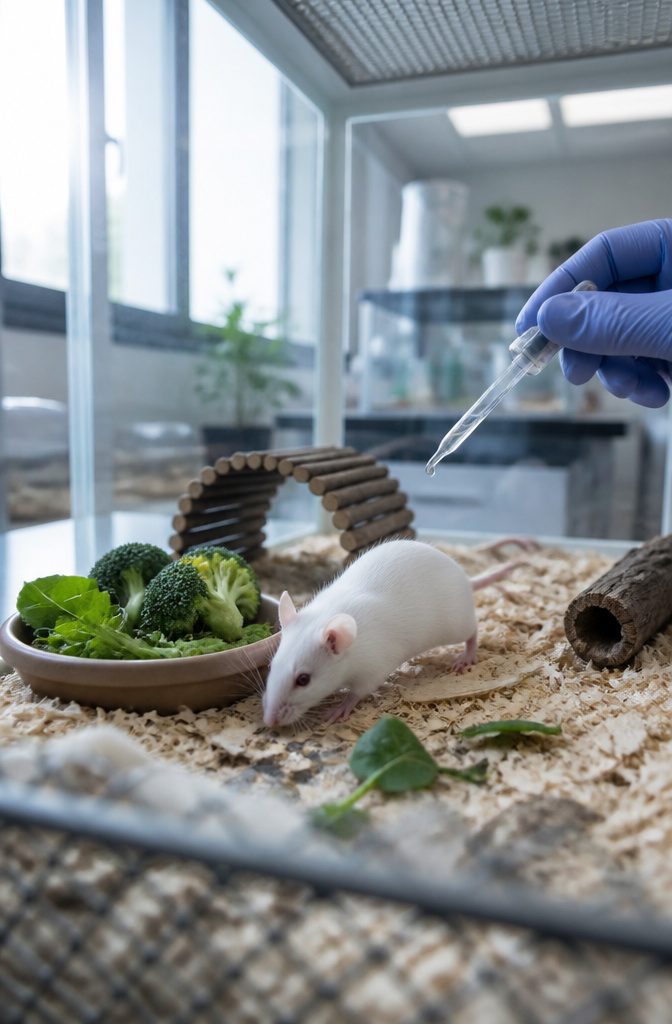
Mice given luteolin daily for 16 weeks, both internally and externally, showed less graying. External treatment had the stronger effect.
Luteolin is an antioxidant found in vegetables, and it was tested alongside two related compounds, hesperetin and diosmetin. Neither of those appeared to affect graying.
I would not rush to the supplement aisle on the strength of this.
A result in mice may not carry over to people, and nobody yet knows what effect luteolin has in humans, what amount is suitable, which route is best or what dose is safe.
Until that is settled, treat it as a lead worth watching, not a routine to start.
Senolytics and Dietary Restriction
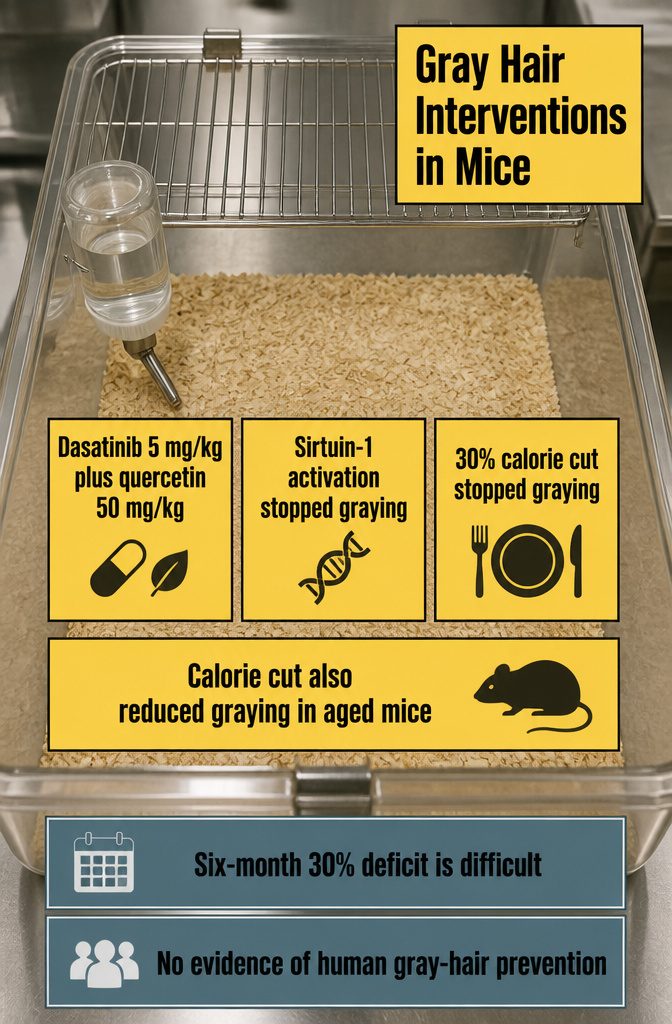
Mice engineered with high IGF-1 in their skin go gray early, and three interventions stopped it: dasatinib (5 mg/kg) plus quercetin (50 mg/kg) given orally, sirtuin-1 activation, and a 30% calorie cut.
Only the calorie cut was also tested in naturally aged mice, and it reduced graying there too.
Mouse results stop at the mouse, though. Holding a 30% deficit for 6 months would be hard for most people, and there is no evidence it prevents gray hair in humans.
I would not try it for hair alone. The dasatinib and quercetin pairing is a drug-and-supplement combination tested in a specific mouse model, so it is no substitute for anything in your cabinet.
When to See a Doctor

See a doctor if your grays show up suddenly or very early, and get tested before you spend money on supplements.
- Ask for iron and B12 levels to be checked. B12 deficiency is among the most common causes of premature graying.
- Plant-based eaters are most exposed, since plants contain no B12.
- Mention fatigue, numbness or tingling, or weight changes. With early graying, these can point to a thyroid issue, an autoimmune condition or a deficiency.
- Severe B12 deficiency can cause megaloblastic anemia, which may be linked with early white hair.
- A blood test finds deficiencies you can correct. It doesn’t guarantee your color comes back.
Frequently Asked Questions
Which vitamins are linked to gray hair?
Low B12, folate (B9), vitamin D, biotin, ferritin and copper have all been tied to early graying, and vitamin C is studied for its antioxidant role.
These are associations, not proof, and no human trial shows that taking any of them prevents graying. A blood test for iron and B12 is a sensible first step.
Can you stop gray hair or get the pigment back naturally?
Not when genetics is the cause, because gene-driven graying can’t be reversed and no human trial shows a vitamin or antioxidant restores color.
What you can do is correct a deficiency, the one cause that is fixable, and support your follicles with a produce-rich diet, sleep, exercise, stress management and no smoking. At best these slow graying that lifestyle is speeding up.
Could luteolin help with gray hair?
Possibly, but only in mice so far. Mice given luteolin daily for 16 weeks, by mouth and on the skin, showed less graying, and the skin treatment worked better.
Its effect, best route and safe dose in people are unknown, so it’s a lead to watch, not something to start taking.
Do the gray hair studies in mice apply to humans?
Not yet. The strongest findings come from mice and human cells in a lab, and no human trial shows that any vitamin or antioxidant prevents or reverses graying.
The 30% calorie cut that reduced graying in mice would be hard to hold for 6 months and has no human evidence behind it.
How can I get more glutathione?
Start with food: broccoli, Brussels sprouts, spinach, avocado, garlic, tomatoes, citrus, nuts and eggs.
Liposomal supplements are designed to absorb better, and IV delivery bypasses the gut but costs too much for most people. Evidence that raising glutathione prevents or reverses gray hair is weak.
Are there good melanin tablets for white hair?
No melanin tablet has human evidence showing it restores color to white hair.
Copper is needed to make melanin and is best taken from food such as shellfish, liver, nuts, seeds and whole grains, since high-dose zinc taken long term can lower copper.
Treat any "clinically proven" reversal claim as marketing until a published human trial backs it.