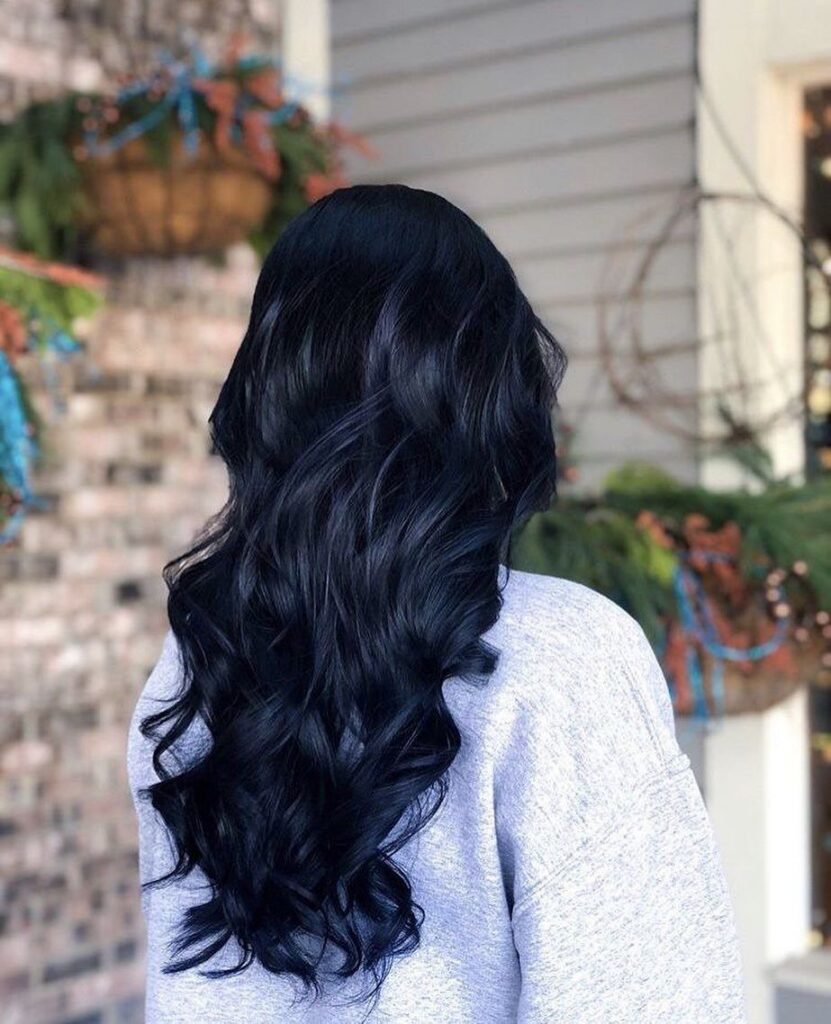
How much bleach your hair can take decides which of these blues is yours. Navy and ink blue sit closer to the gentle end, and I’d start with whichever shade asks the least of your hair.
1. Deep Indigo Blue
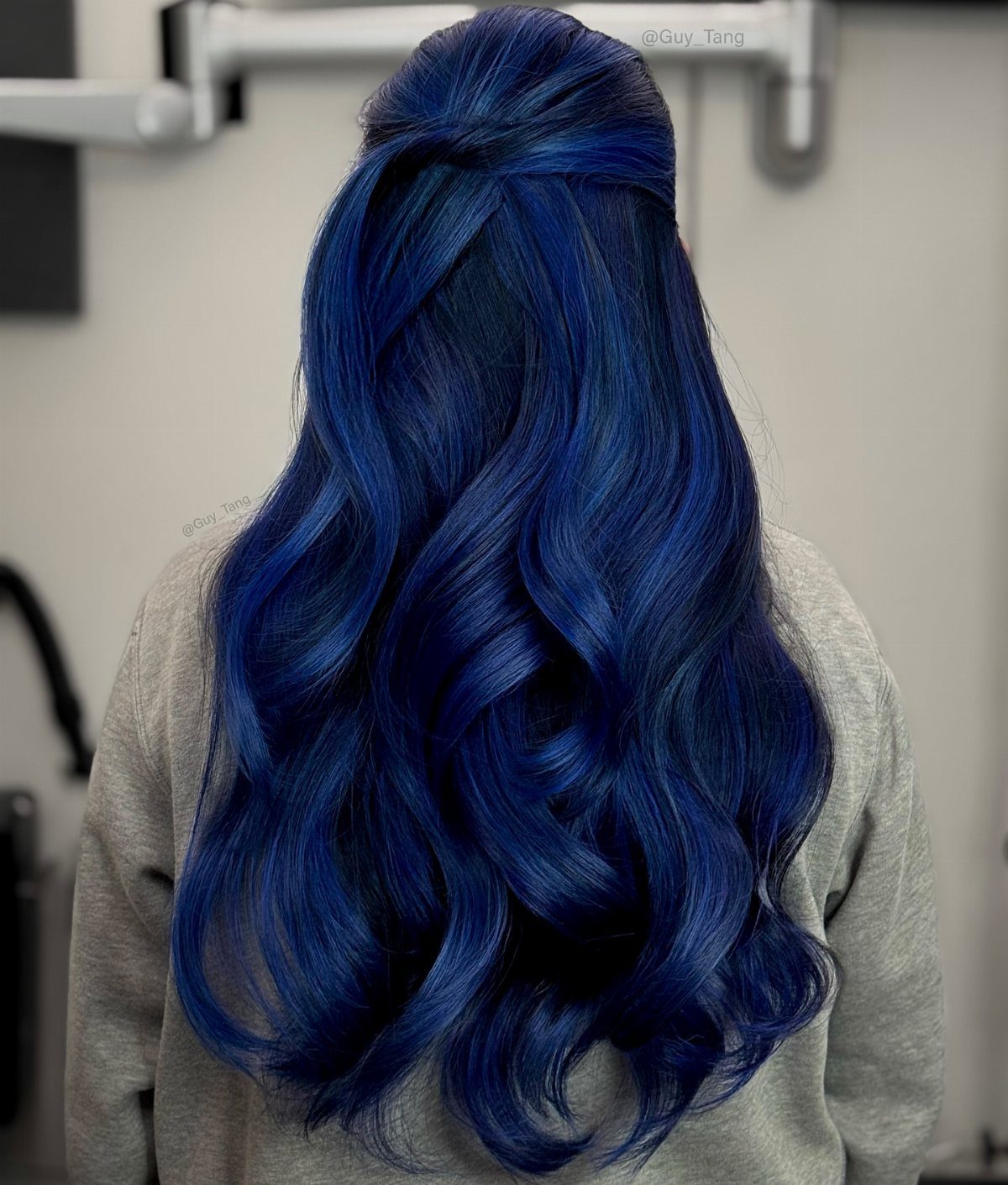
Indigo is blue with a purple pull, which gives dark hair a deeper, inkier cast than plain navy. On long waves like these, the violet undertone settles into the curves while the blue stays dominant.
When you book, say "indigo" and ask for a violet-leaning blue so the stylist doesn’t default to straight navy. I’d choose this over navy for a color that looks a little mysterious.
2. Dark Blue-black Hair
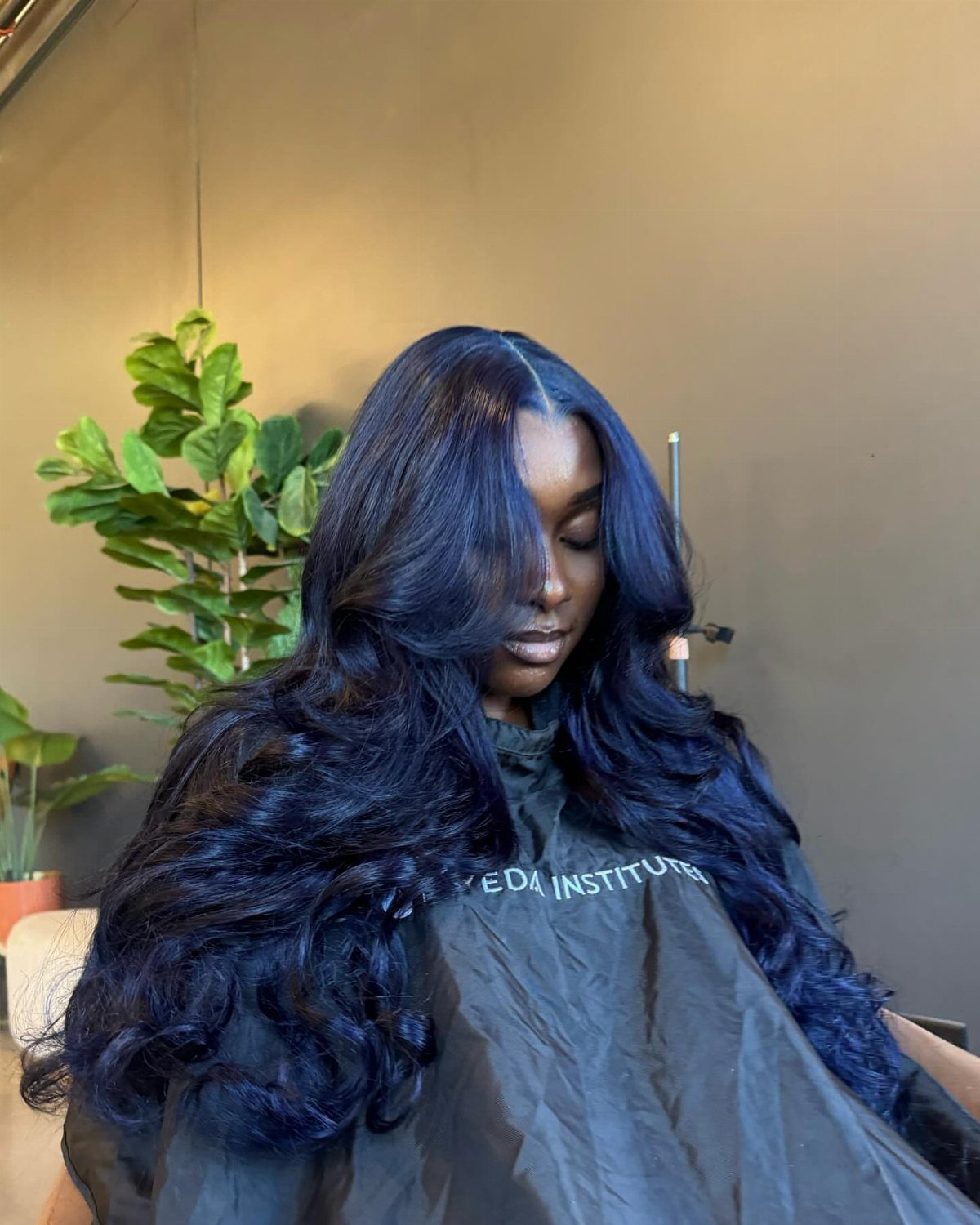
Blue-black is the quietest way into blue: it lands close to black, with the blue working as an undertone rather than a statement.
Loose curls give it the most to do, since the blue lives in the shine along each curl.
Ask for a blend rather than one flat shade; I like the depth a blend gives. Done at home over unbleached dark hair, a deposit-only blue dye leaves just a faint tint, which suits this look well.
3. Blue Highlights
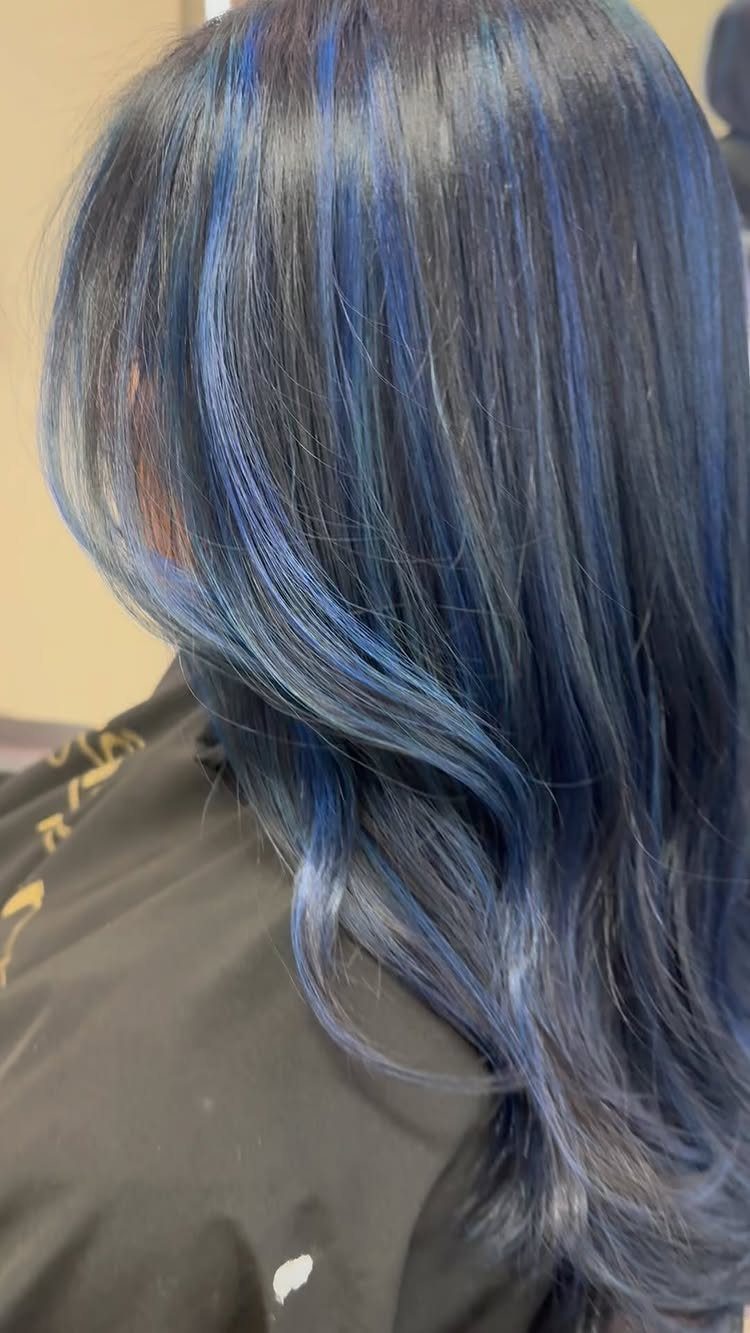
Blue highlights against a dark base give you contrast, and the wavy texture here spreads that contrast across the whole head.
Dark hair needs those sections lifted before the blue goes on, so book a salon visit for the first round.
I prefer fewer, wider pieces over a dense scatter. Wide pieces read as a deliberate color choice, while fine ones can blur back into the dark.
4. Dark Blue Balayage
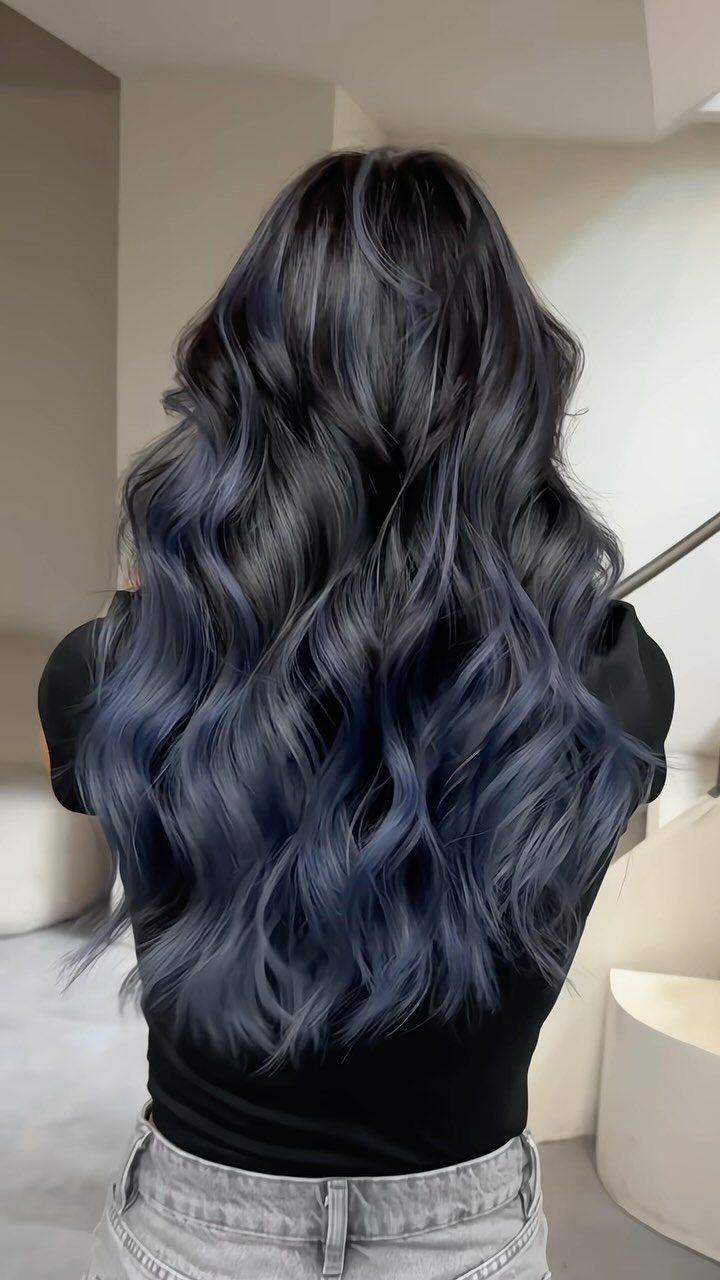
Balayage means the blue is painted on by hand, which is why this version melts into charcoal through the lengths instead of stopping at a visible line.
Ask for blue balayage over a charcoal or dark base, and bring a photo so the stylist can match how heavy the blue should be.
Soft blending is the draw here, and I’d pick it over highlights for a lived-in look rather than a graphic one.
5. Navy-blue Hair
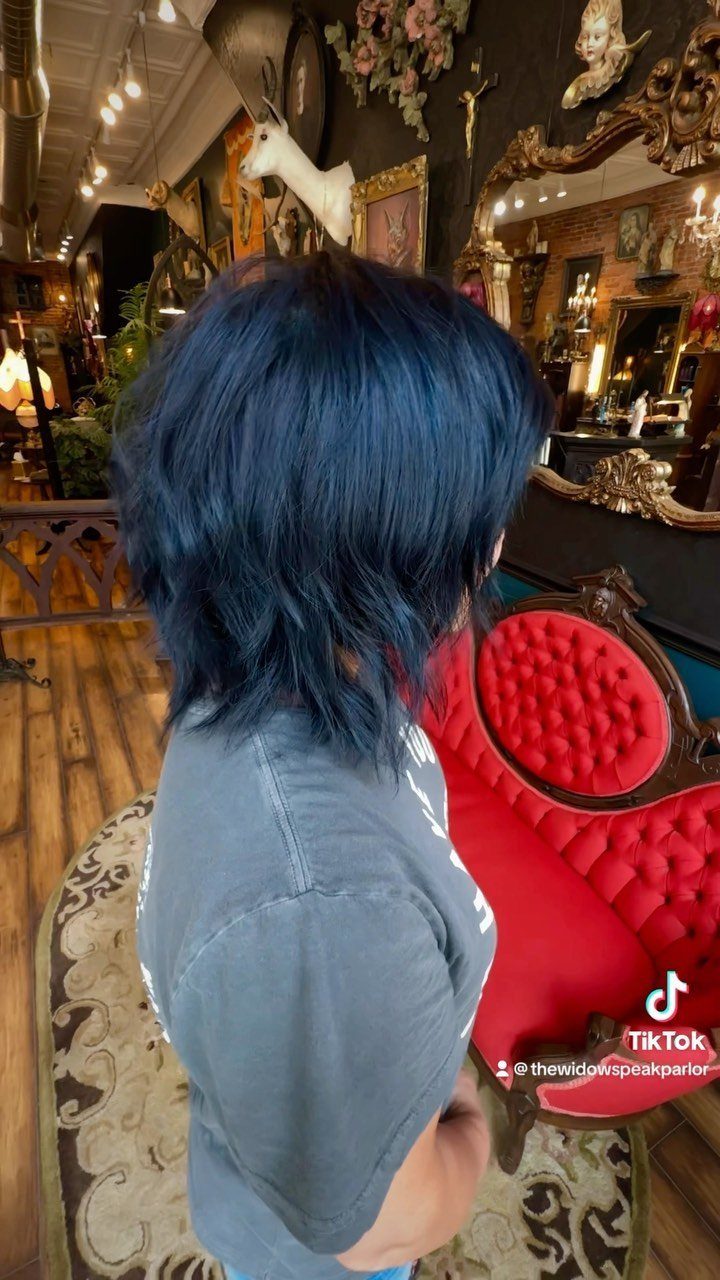
Short layers and deep navy suit each other. A shaggy cut breaks the color into texture, so the dark, moody blue picks up depth from the choppy ends rather than looking like a solid block.
Ask for navy by name. It reads bluer than a blue-black blend, and it’s the shade I’d choose for a cut with this much shape.
6. Midnight Blue Hair
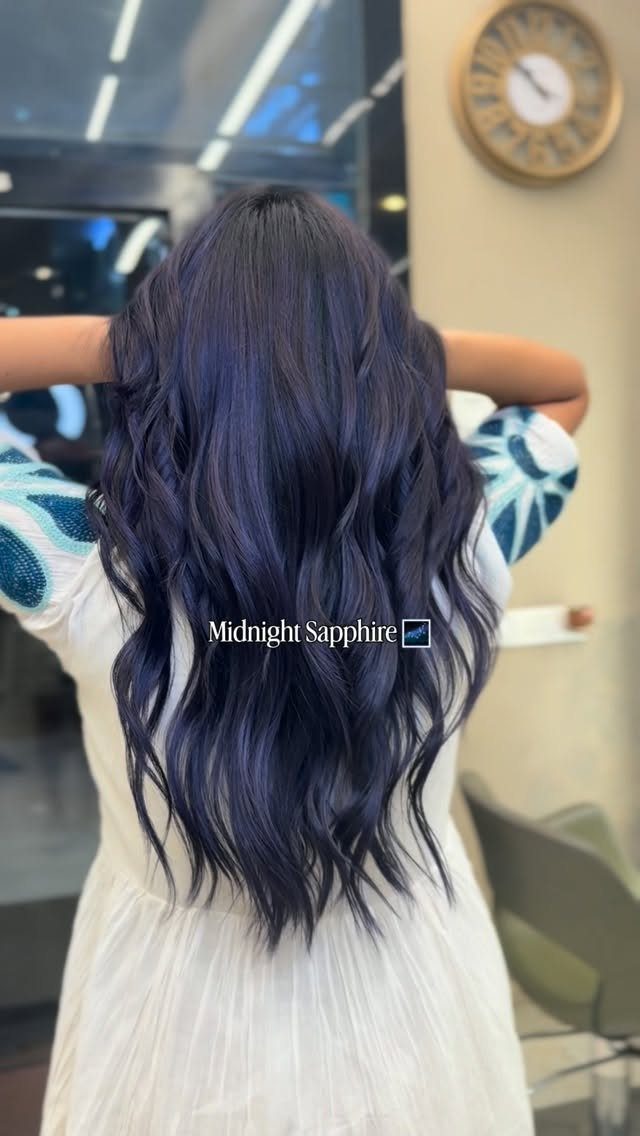
Midnight blue lives on shine and depth: a very dark blue that still reads as blue once the light catches it. The sapphire glint on these long waves is the whole appeal.
If you’re deciding between midnight and navy, I’d go midnight for the darker, richer finish. Ask your colorist for blue that shows up in the shine rather than in the base color.
7. Blue-green Hair
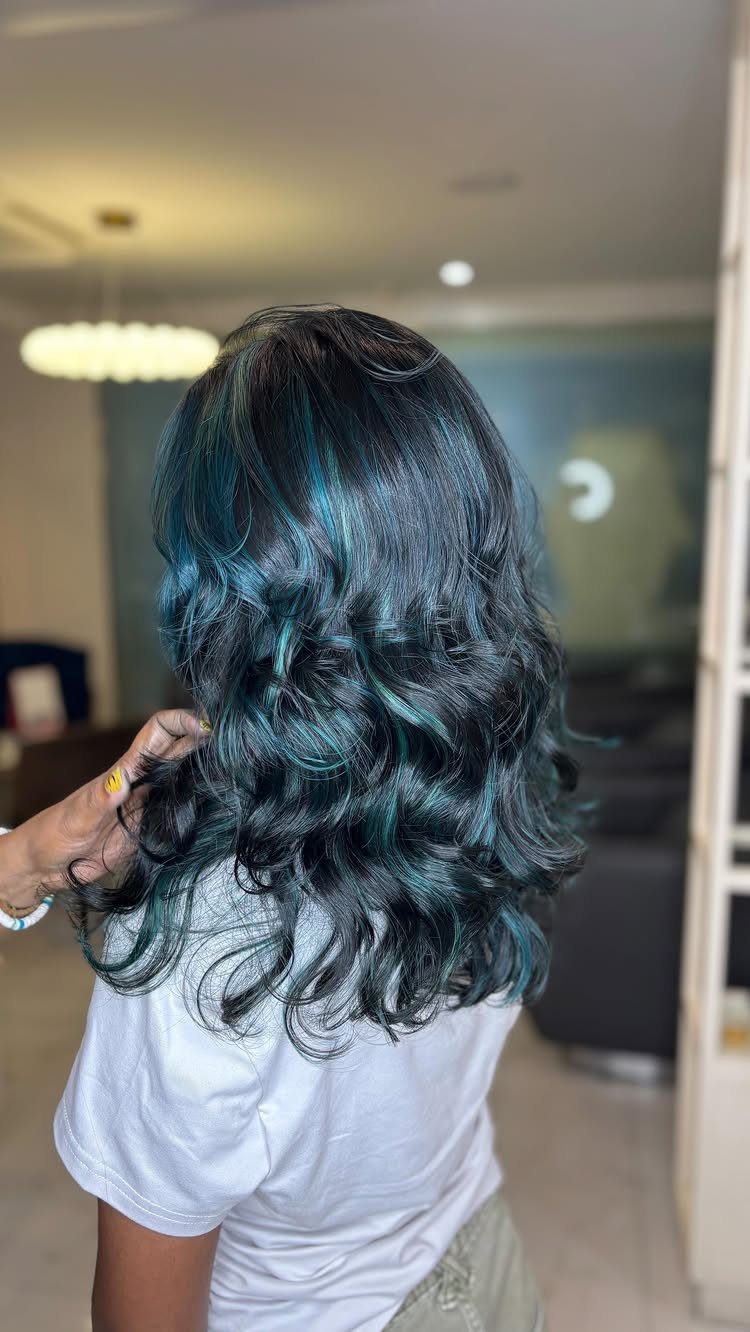
The shift toward teal, aqua or seafoam happens when green pigment mixes into the blue base.
If you already have dark hair and want this two-tone look, most colorists lift the strands to a pale blonde first so the teal reads true, then tone with a blue-green semi-permanent.
At home, brands like Arctic Fox and Manic Panic offer teal and turquoise shades that layer over bleached hair.
Expect touch-ups as the green drops out before the blue does and can leave you with a cooler tone than you started with.
8. Royal-blue Hair
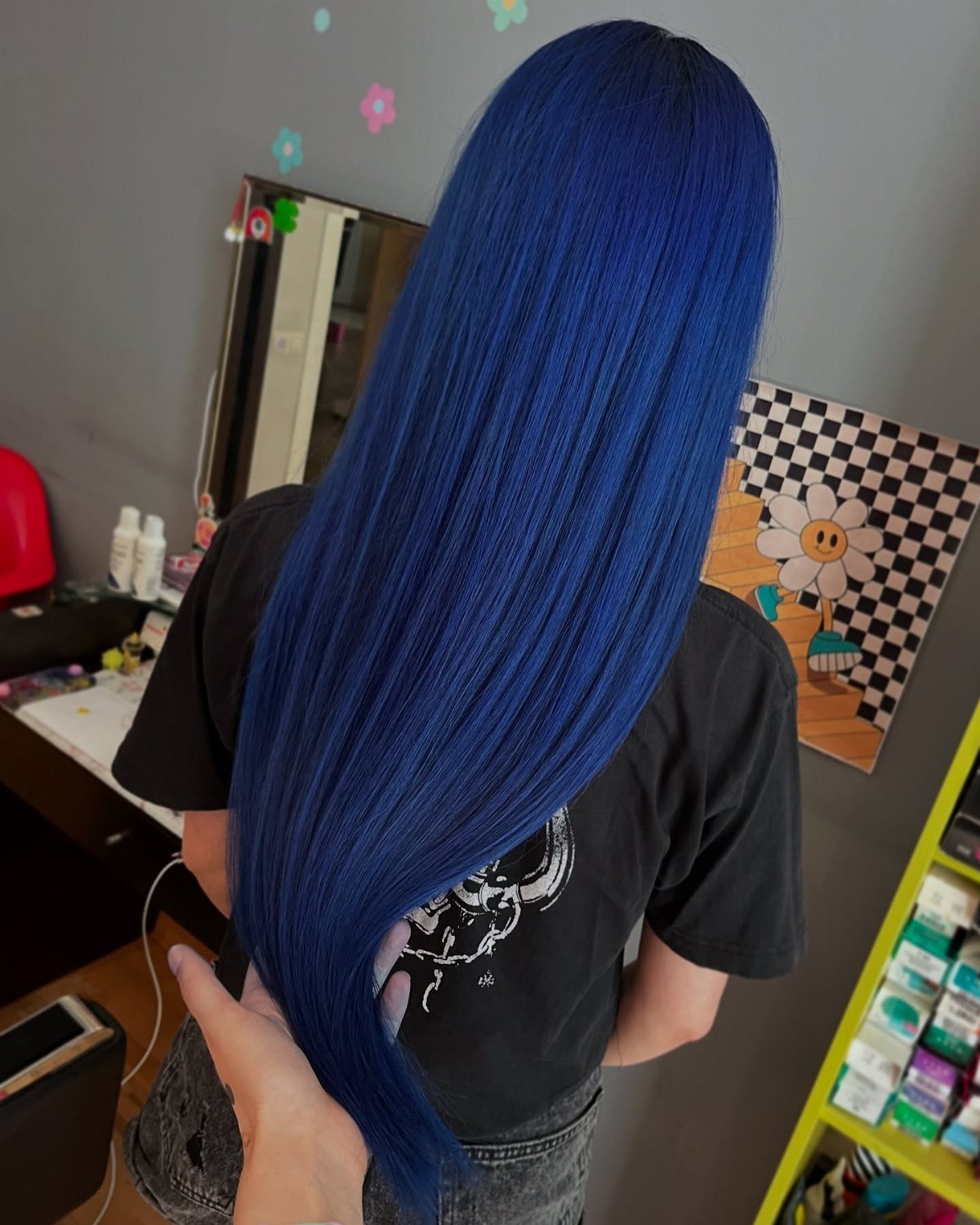
Royal blue sits brighter and more saturated than navy or midnight blue, reading vivid even on long straight hair without much texture or movement.
Getting there on dark natural hair means a full bleach lift until you hit the lightest blonde you can manage, then depositing the blue.
Punchy blues like this one show every bit of fade, so color-depositing shampoo keeps the tone from slipping into a washed-out denim. I refresh mine with a temporary dye to keep that electric look.
9. Dark Blue Waves
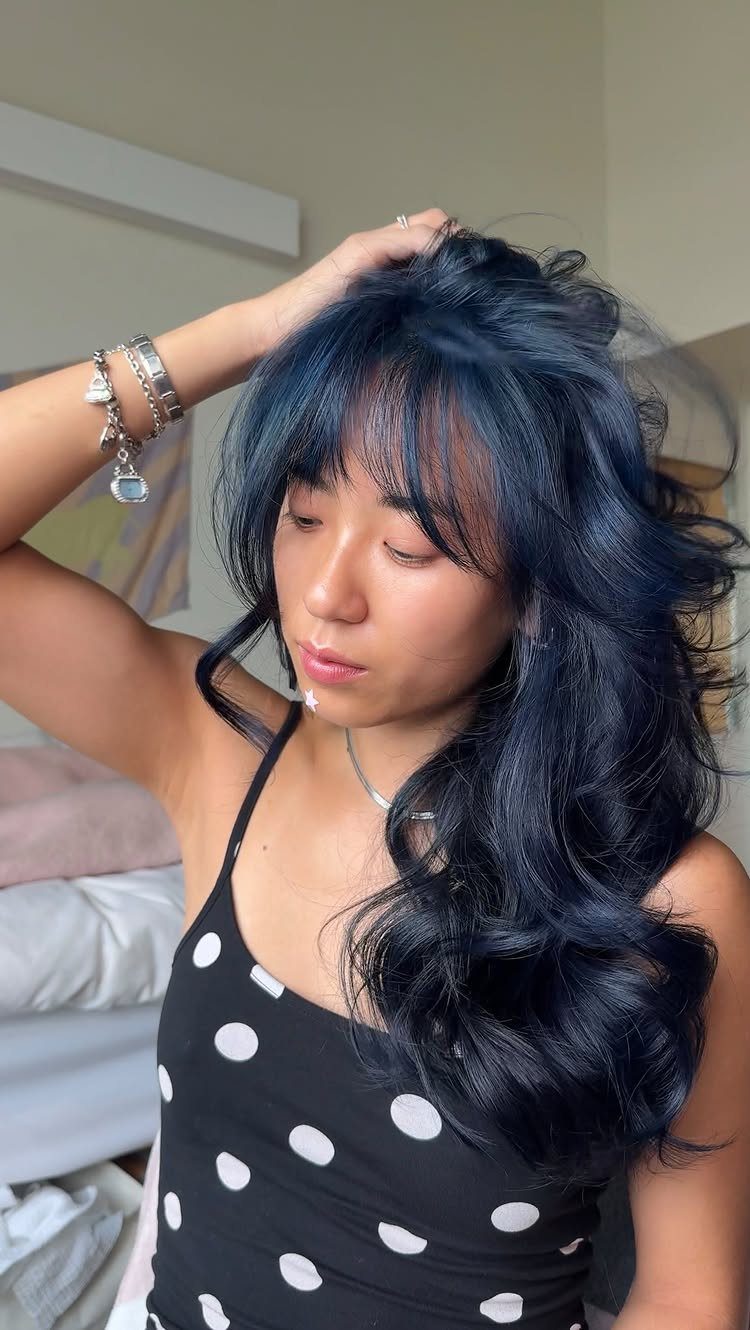
Waves give dark blue color something to reflect, so the shade reads glossy rather than flat. If your hair takes a curl well, a barrel iron or a flat-iron wave technique shows off the color with minimal product.
Midnight and navy blues look richest on hair that already holds shine, so a gloss treatment before you color helps.
On my own waves, I find that a light finishing oil on damp hair keeps the blue from looking matte as it dries.
10. Blue Micro Braids
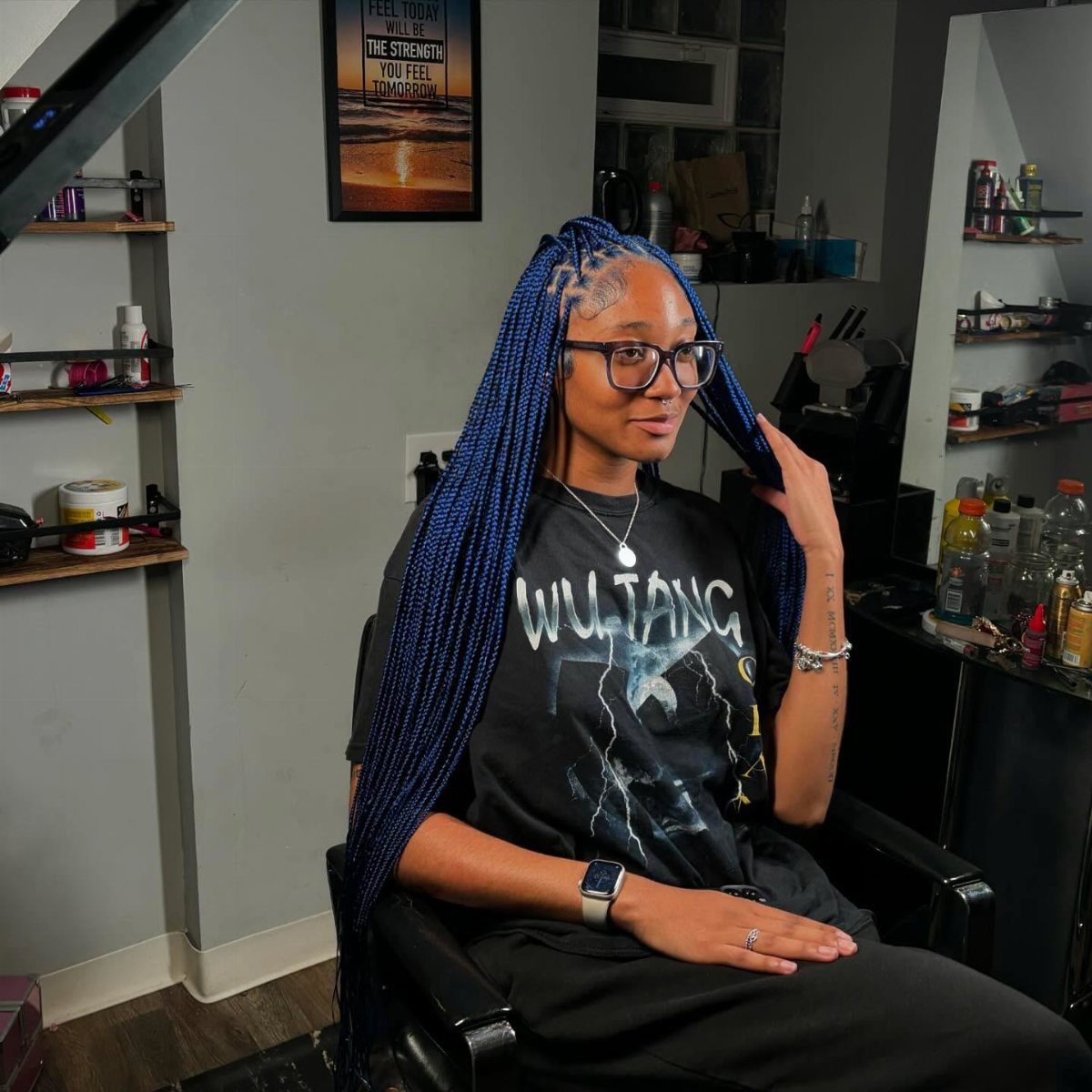
Micro braids get their color from the braiding hair you feed in, so you can go blue without lifting your natural hair at all. Most stylists use pre-colored synthetic fiber in shades from cobalt to navy.
The braids take time to install and hold for weeks. At home, you can buy blue braiding hair in packs for cheap, though installing your own micros takes patience and a mirror setup that lets you see the back.
11. Blue Dutch Braids
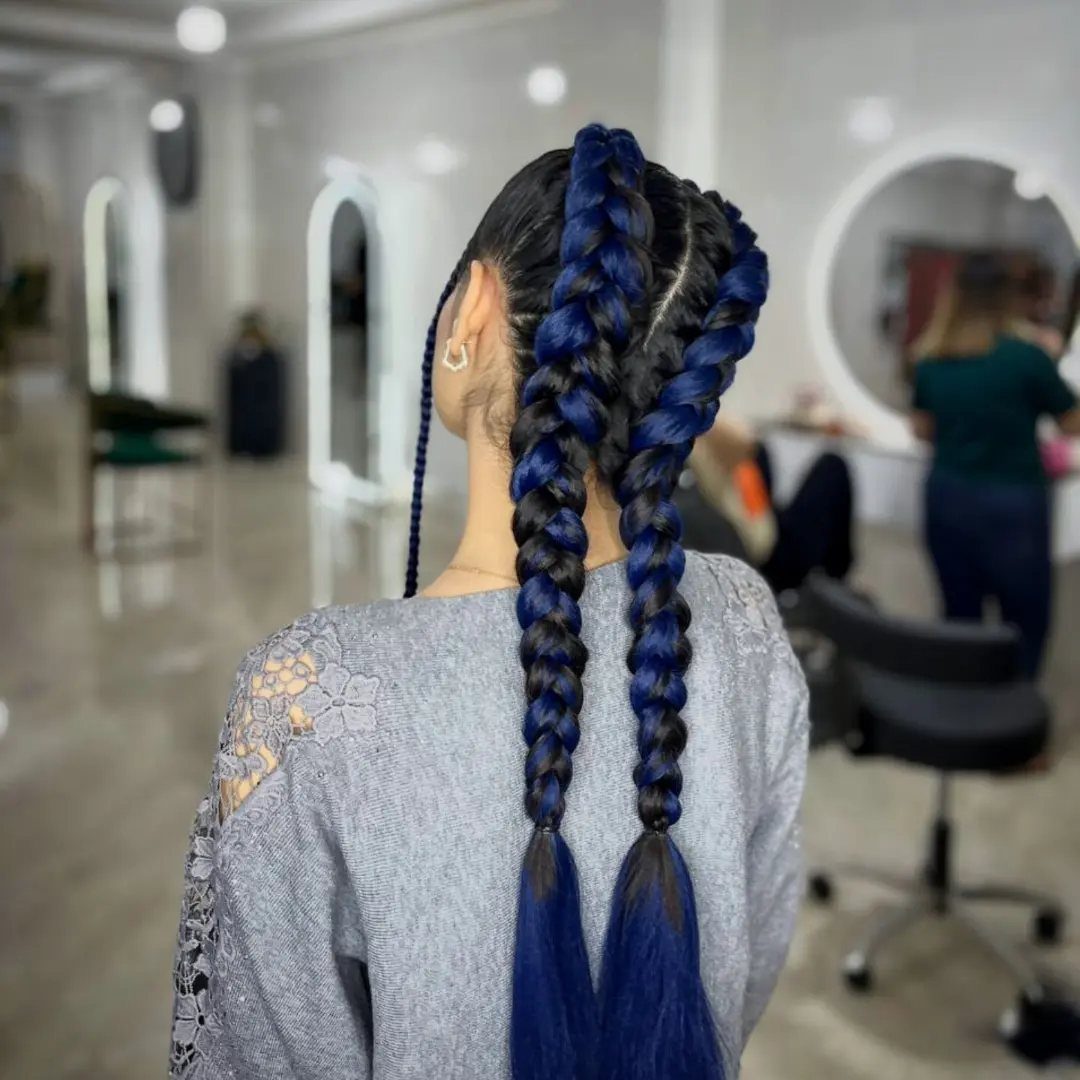
Dutch braids sit raised on top of the head, which makes vivid blue color easier to see than it would be in a flat three-strand braid.
If your hair is already colored blue, the braids are just a styling choice; if not, you can braid in blue extensions the same way you would with micro braids.
The style holds for a day or 2 and works on shoulder-length hair or longer. On shorter lengths, the braids either sit too high or run out of hair halfway down.
12. Dark Blue Bob
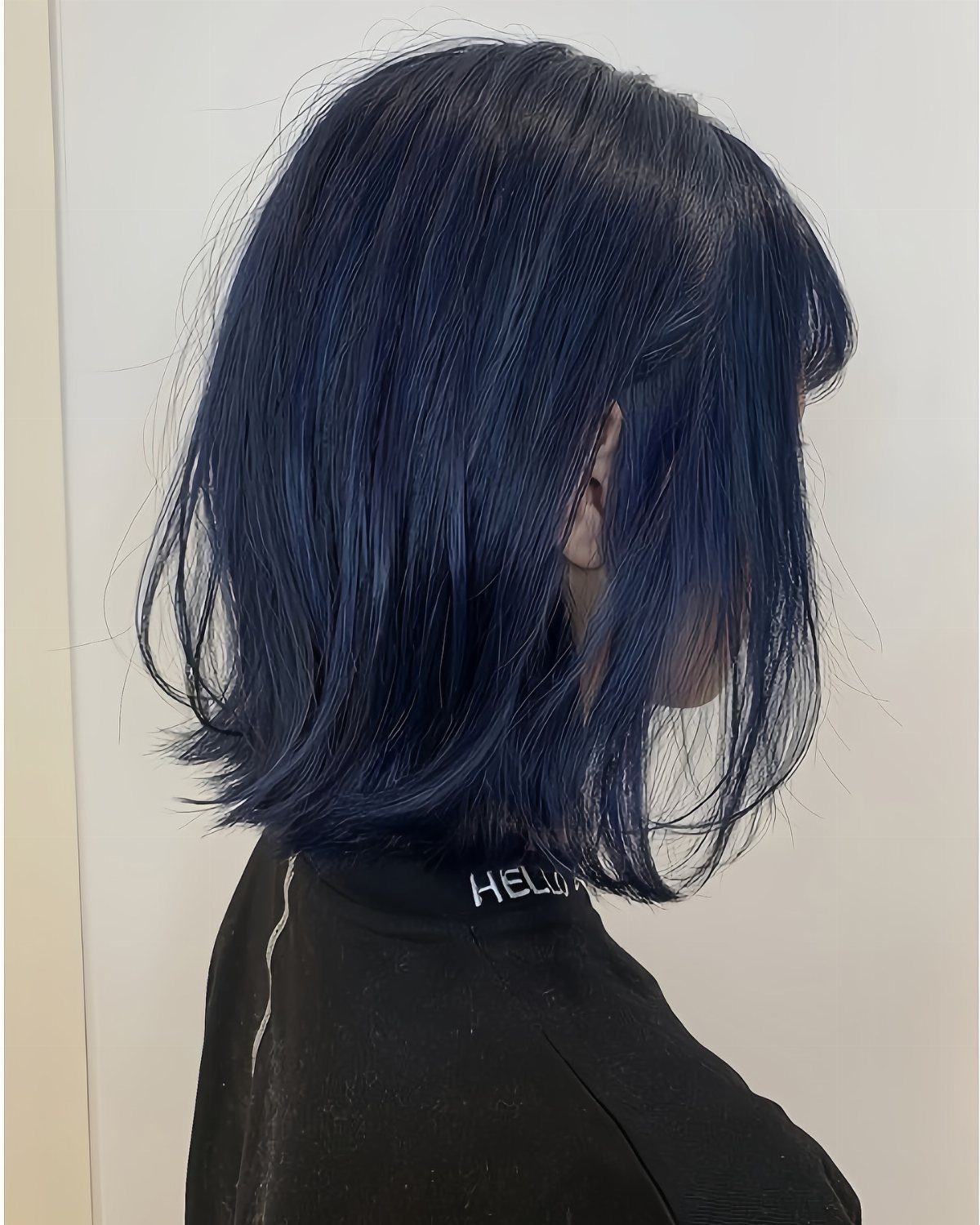
A bob paired with a faint blue sheen reads subtle enough for workplaces that frown on bright hair. The layered cut in this version adds movement, so the blue catches light at the ends and along the layers.
Dark blue on a bob looks better longer than it does on length, since you trim the ends regularly anyway.
If you want a stronger blue than what shows here, ask for a midnight or navy tone instead of a blue-black blend.
13. Dark Blue Thick Hair
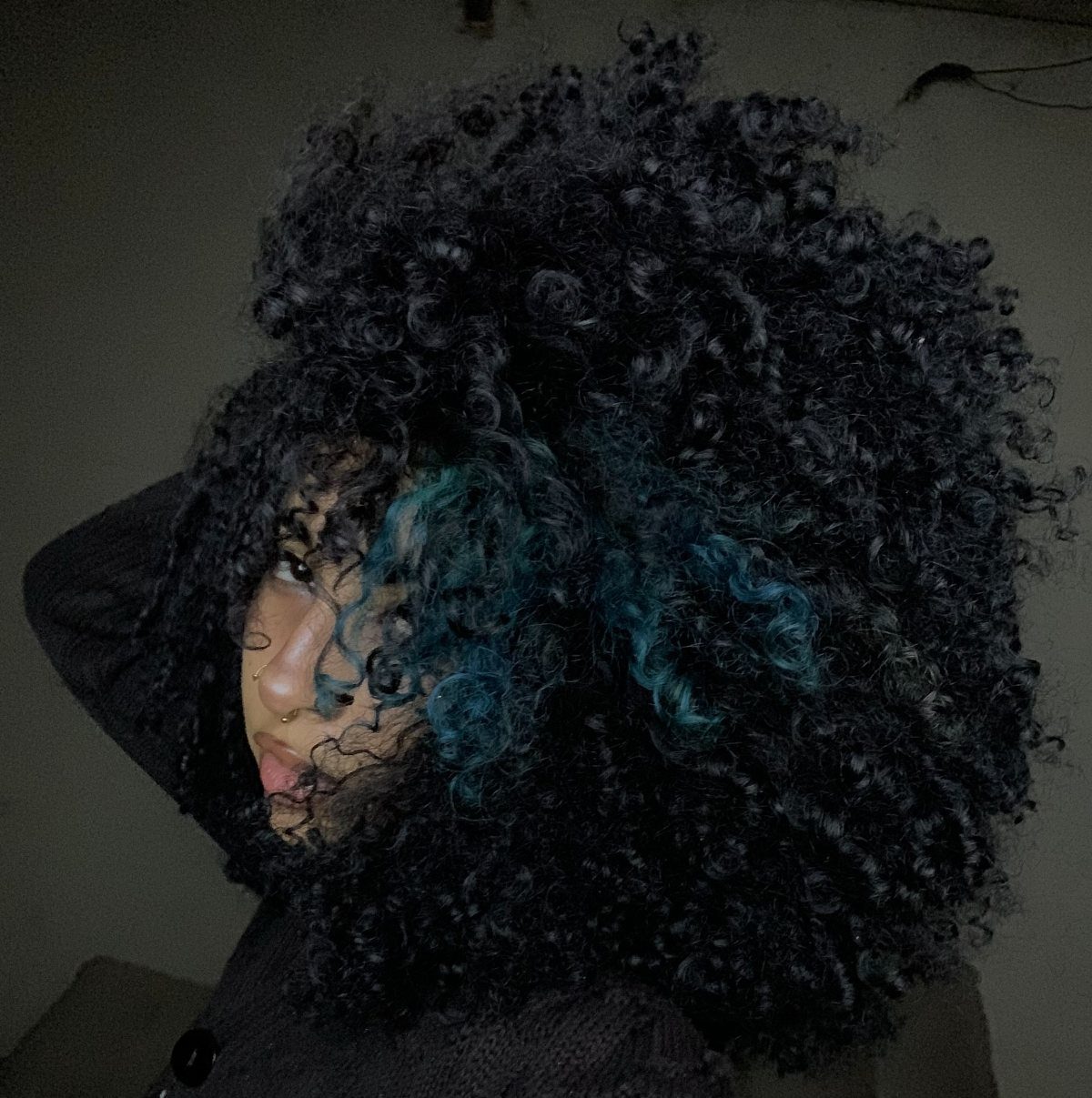
Thick hair holds dark blue color well, and the density makes subtle highlights read as dimension rather than streaks.
If your hair is already dark, the colorist lifts a few sections to mid-blonde, then deposits a navy or midnight blue that catches light when the hair moves.
At home, you can use a semi-permanent blue on unbleached hair for a faint tint that only shows in bright light.
Thick texture means more pigment uptake, so start with a shorter processing time than the box suggests and check the color before you rinse.
14. Smoky Grey-blue Balayage
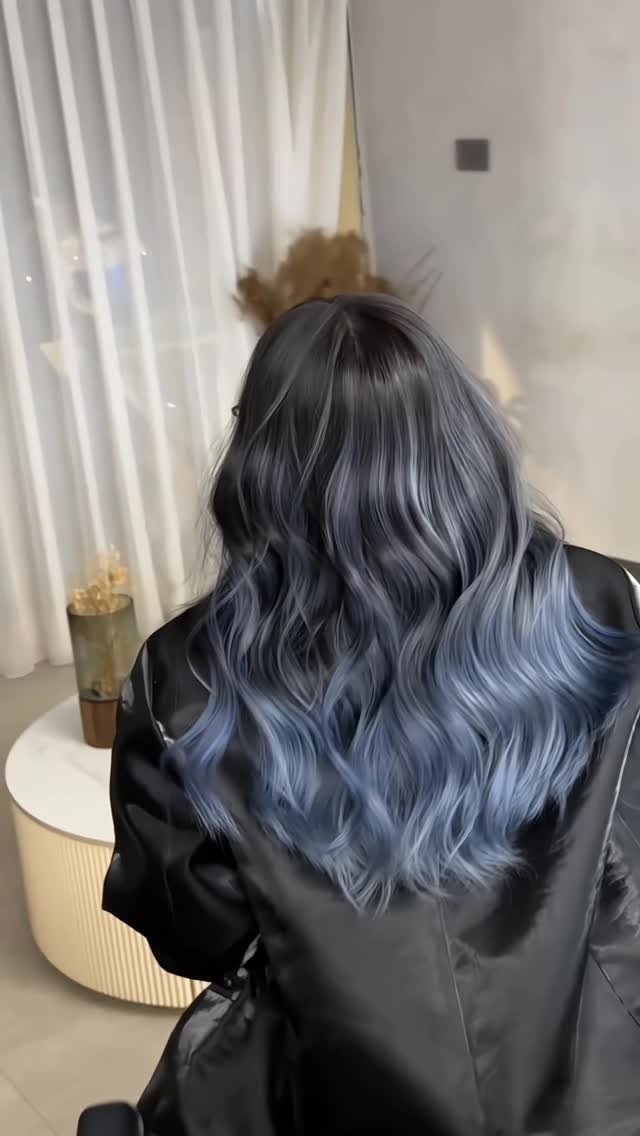
Smoky grey-blue balayage softens dark blue with a wash of grey, so the color lands as a hazy pastel hint instead of a bold stripe. On long waves, the pale tones show up where the hair bends.
Bring this photo to your colorist and ask for dark blue balayage with grey blended through it. For muted, quiet color, I’d pick this over a saturated blue.
15. Blue Ombré Hair
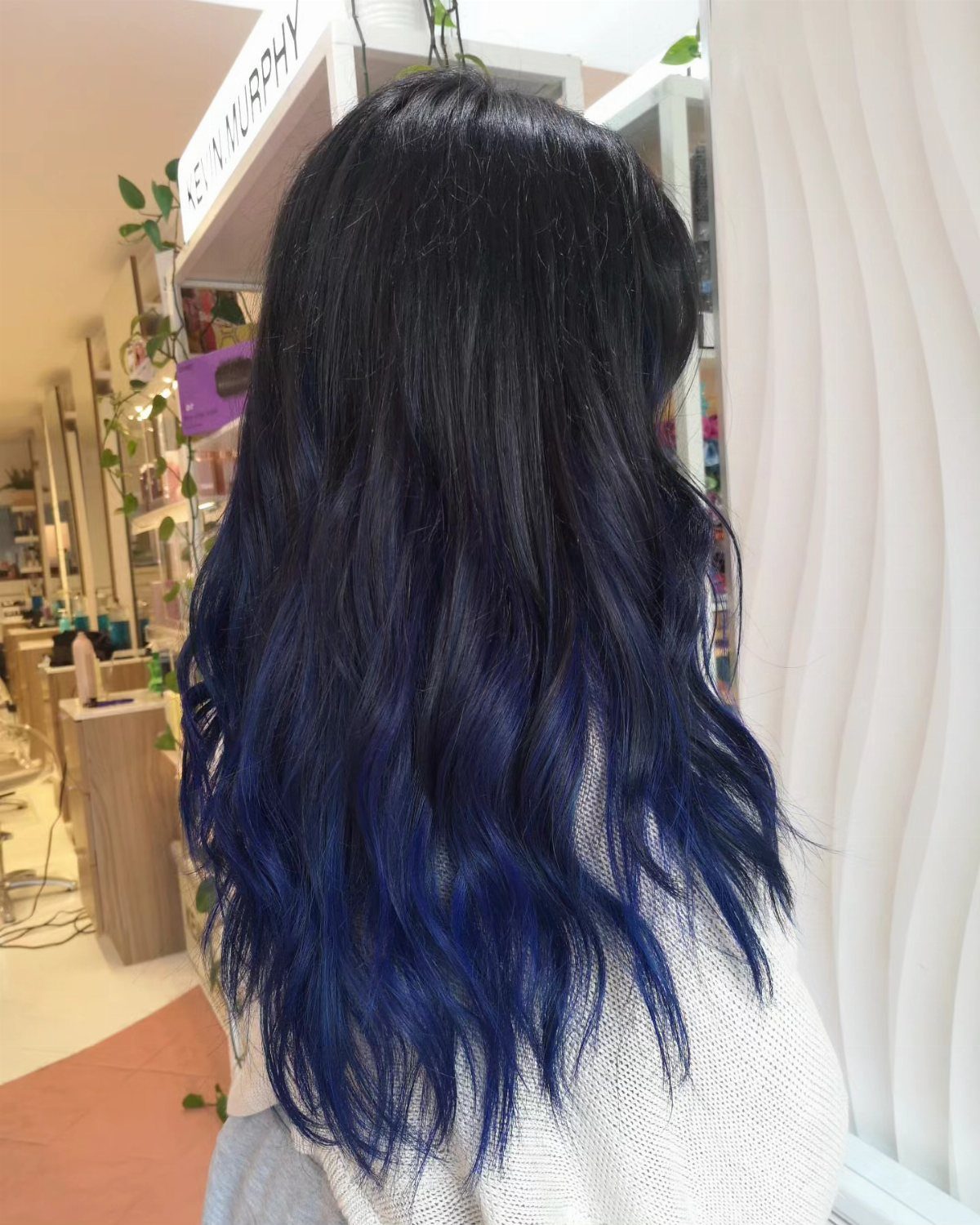
A black root that slides into deep blue at the ends is the easiest blue to live with, because the dark top half keeps the regrowth line soft.
Long hair gives the fade room to stretch, and loose waves spread the blue through the lengths.
Ask for a blue ombré with a black root and a gradual blend, not a hard line. I’d choose this if you want blue on the ends only.
16. Dark Blue Pixie
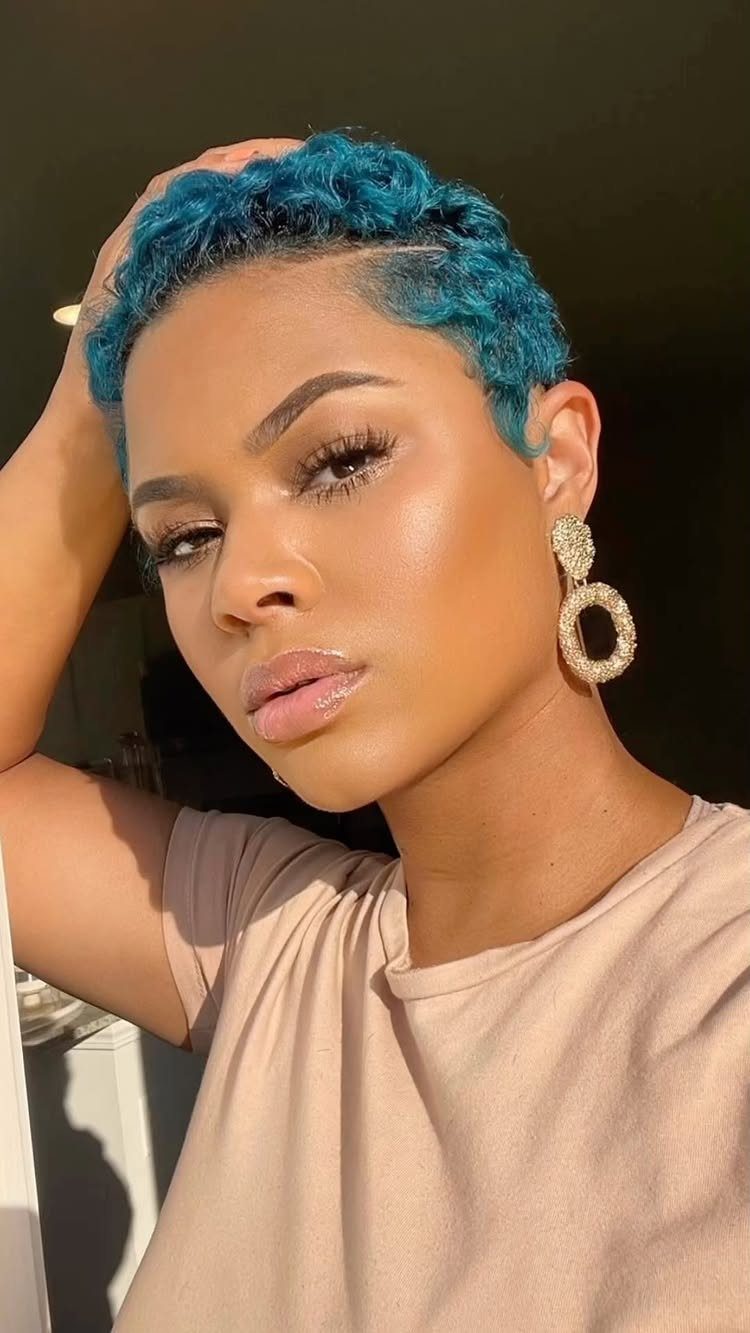
A pixie leaves very little hair to carry the color, so the shade does all the work. Tight curls make dark or vivid blue look dense and full, and the cut needs almost no styling in the morning.
Ask for a pixie that keeps some length on top so the blue has texture to sit in.
Short hair grows out fast, which means trims and color touch-ups come around often. I’d go vivid over dark here, since the cut is already a statement.
17. Bright-blue Money Pieces
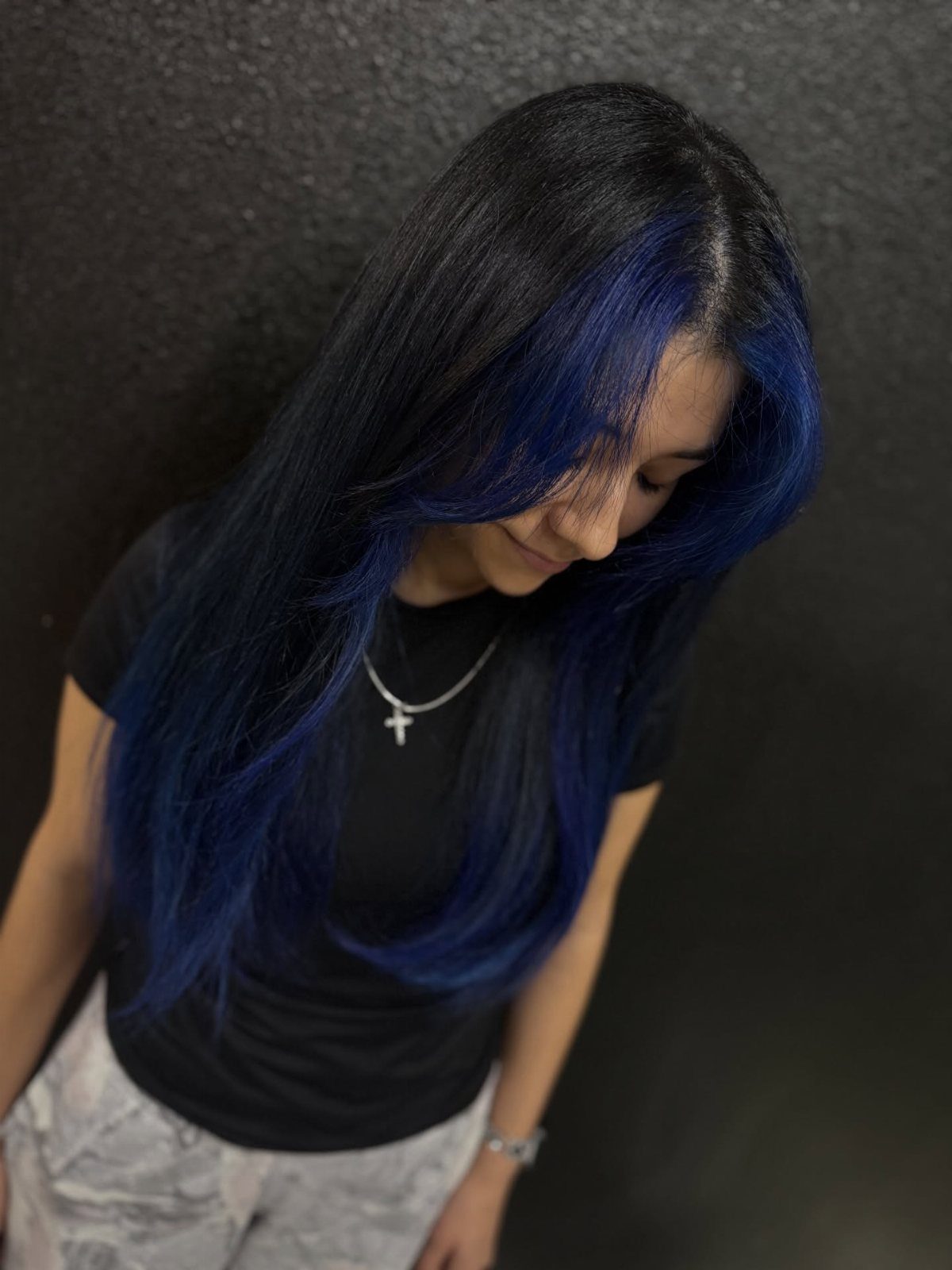
Money pieces are 2 bright sections right at the front, so only the hair around your face turns blue while the rest stays dark.
That makes the color easy to hide or show: tuck the pieces behind your ears for a quieter day.
Ask for vivid blue face-framing sections against your natural dark.
Those strands need bleach to lighten them before any bright blue will show, which makes the first appointment a job for a pro. I’d pick this for anyone who wants a small blue commitment.
18. Blue Short Hair
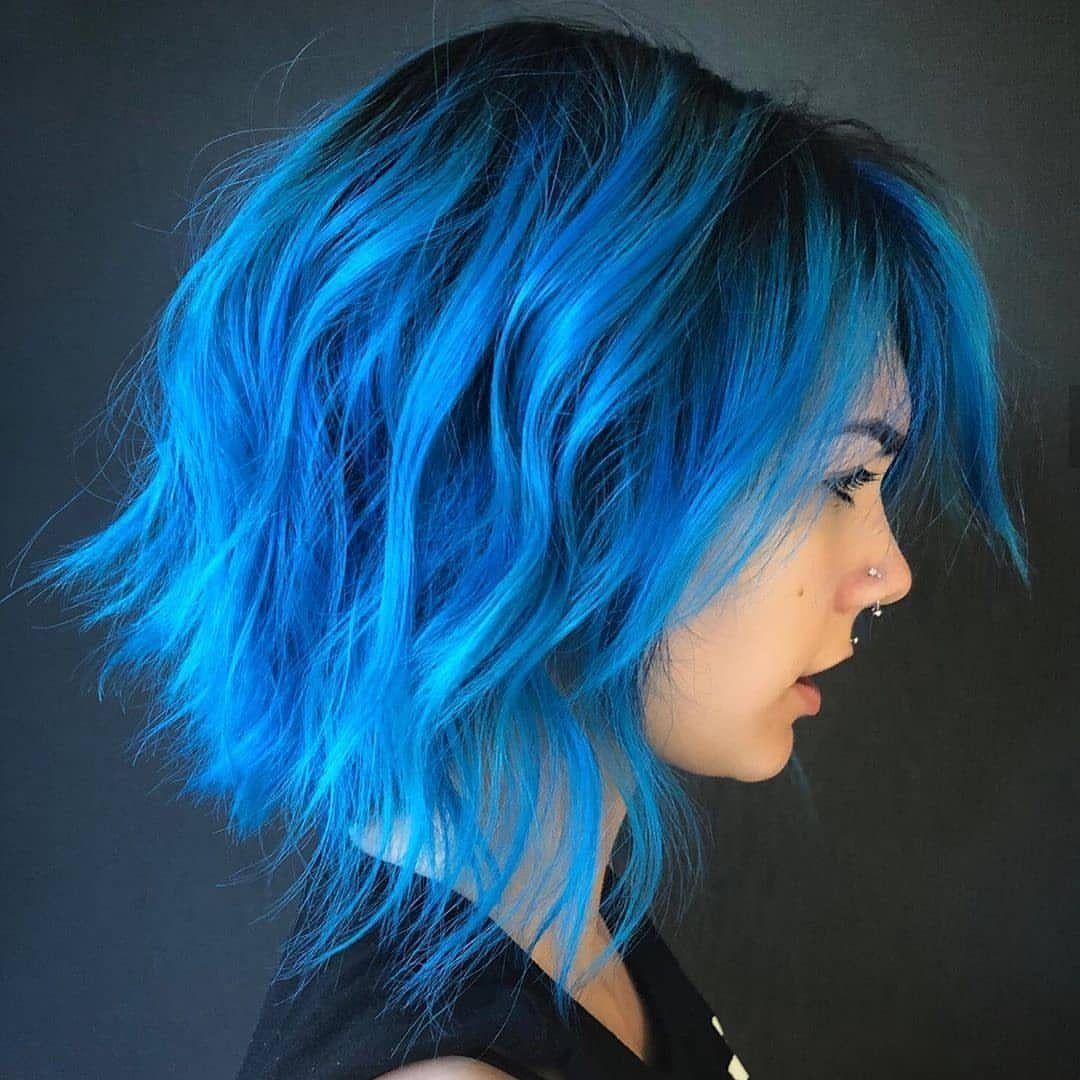
Short, layered hair in bold blue gets its character from the cut: the layers break the color into pieces, and dark roots keep it from looking flat.
Choose a dark blue or a berry-leaning blue, depending on how loud you want it.
Short hair shows regrowth fast, so a root your colorist leaves darker than the lengths keeps that line hidden for weeks.
Short lengths need trims often, and each trim takes some color with it. I’d go berry-blue if navy feels too safe.
19. Dark Blue Long Hair
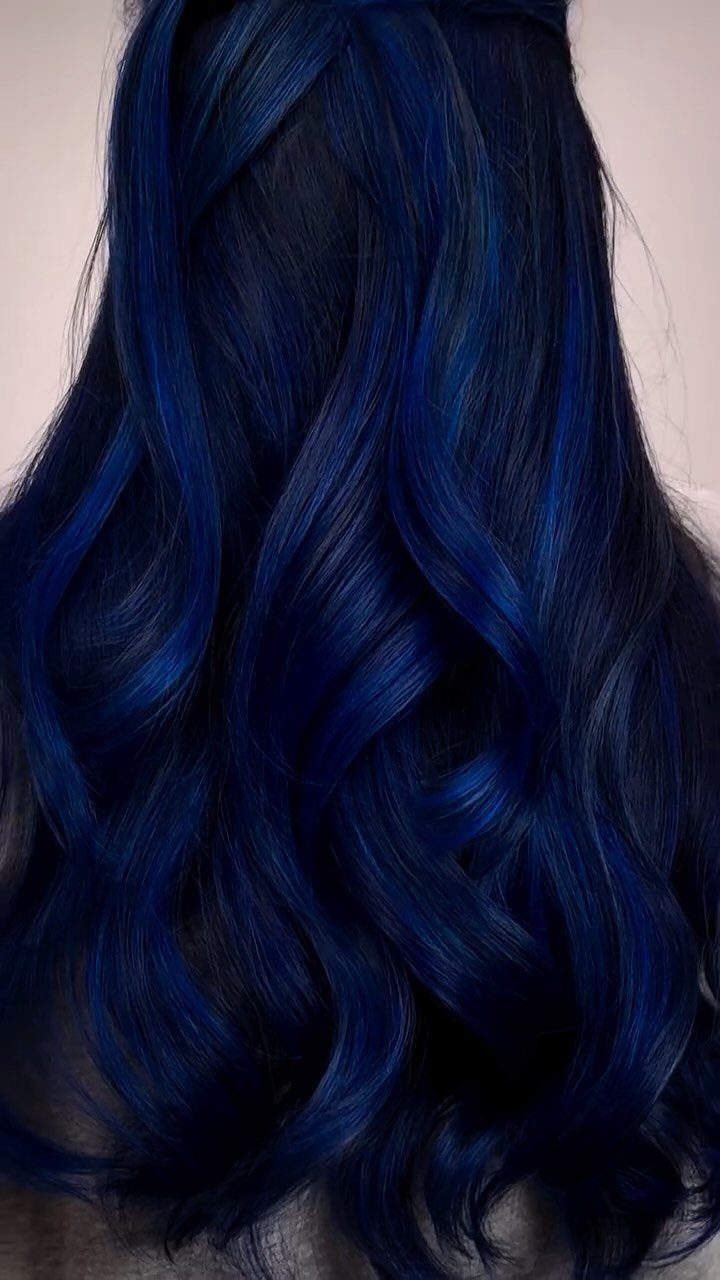
Long hair colored dark blue holds more color than shorter cuts, so the shade stays visible as the hair moves.
If you want waves, a large-barrel curling iron or a heatless overnight set gives you the volume this look needs without turning the blue matte.
Keeping the color this rich past the first month means swapping in a blue-depositing shampoo every few washes. I find that a gloss treatment before coloring makes the blue stick better and last longer on length.
20. Deep Ocean Blue
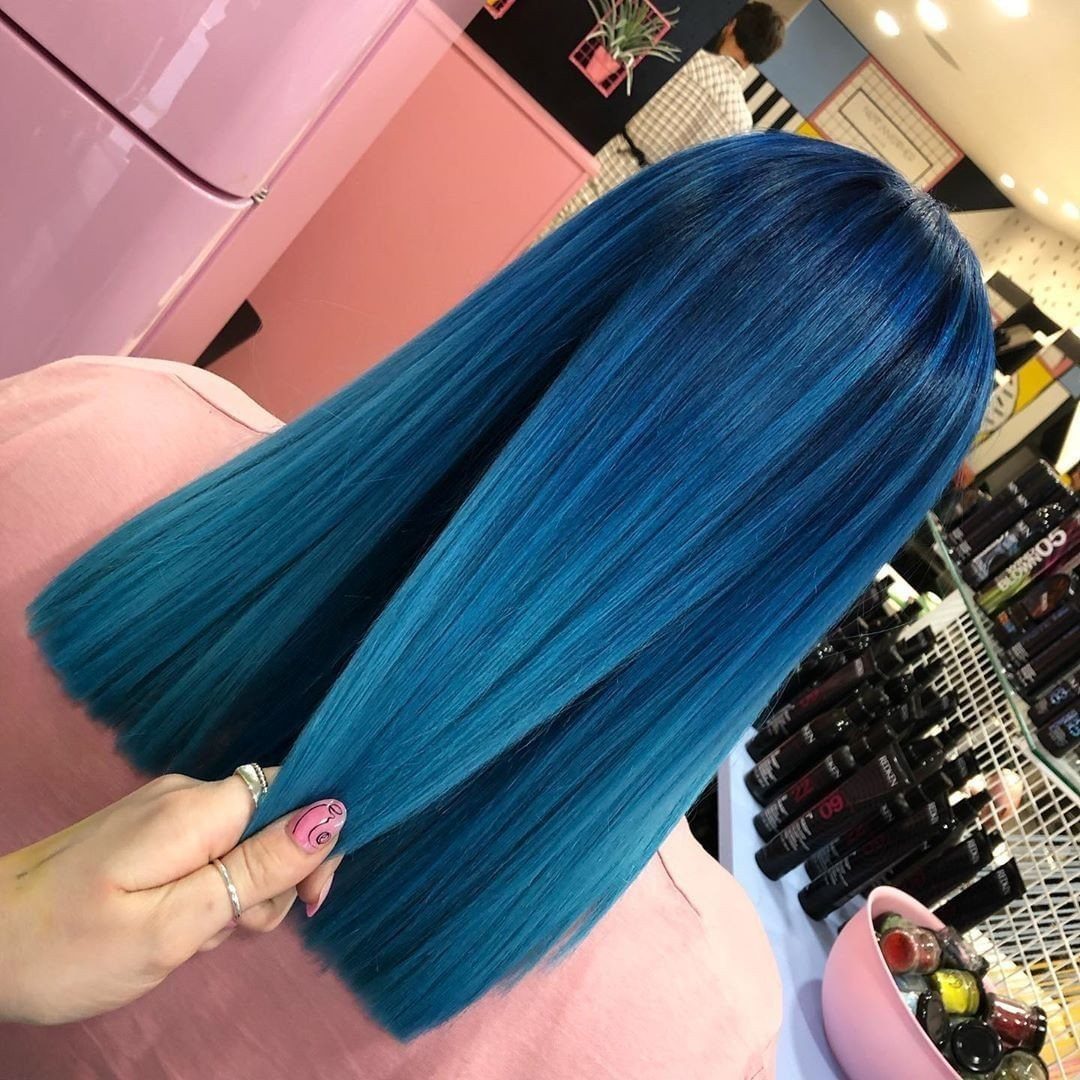
A black root with vivid blue through the midshaft and ends gives the color more dimension than a flat all-over blue. The root grows out cleaner than a lifted one, and the darker base makes the blue look more saturated.
Getting there means lifting the lengths to pale blonde, then depositing the blue.
The teal ends in this version come from layering a green-leaning blue over the base tone, though you can stop at a single shade if you want less upkeep.
21. Dark Glossy Blue
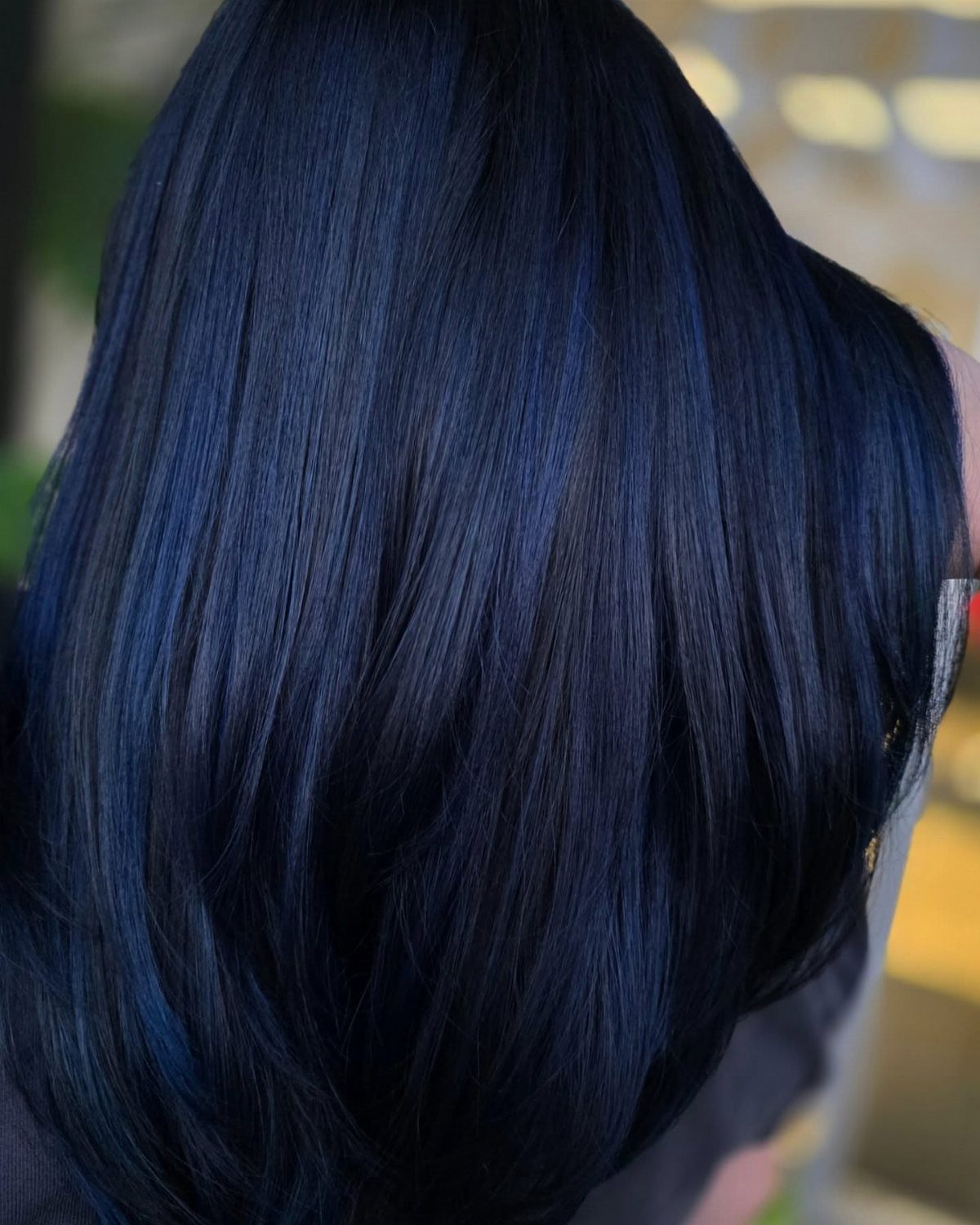
A glossy finish makes dark blue read as sapphire instead of black. The color itself sits close to navy, but the shine is what separates it from a flat dye job.
Getting that gloss means treating the hair before you color so it takes the pigment evenly, then sealing it with a glossing treatment after.
I use a lightweight oil on damp hair to keep the shine from going flat between washes.
Color Upkeep and Fading
Washing less often does more for blue than any product. Every wash pulls pigment, so stretch the days between shampoos and rinse with cool water instead of hot.
Pick a color-safe shampoo that is sulfate-free, since sulfates strip dye faster. Hot tools dull blue too, so apply a heat protectant before any flat iron or curling iron touches your hair.
If your hair was bleached to get the blue, give it a high-protein deep conditioner right after the appointment. Then add a bond-building treatment once a week to keep the lightened strands strong.
Bleached ends are the most fragile part of a blue look. If they start to feel brittle, trim them before they snap.
Choosing Blue for Skin Tone
Match the blue to your undertone and the color looks intentional instead of borrowed. Cool and neutral skin can pull off almost any cool-toned blue; warm skin tends to look more natural in blues with a purple or green lean.
Not sure which camp you’re in? Gold jewelry that flatters you points to warm, and silver points to cool.
A full head of blue isn’t the only option. Letting some of your natural color show through, as in a blue-on-black mix, gives the look a purposeful finish and softens the shade against your face.
Dark blue is the most forgiving place to start, because the hue can be adjusted toward cooler or warmer until it suits your complexion.
Bleaching and Professional Coloring
Skipping the lift is what leaves dark blue looking dull instead of vivid.
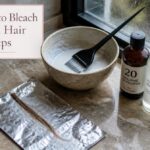
Bleach isn’t gentle, especially on ends, so ask your colorist how much lightening your hair can take before you commit. Highlights and ombré ends on non-light hair need that lift, and I’d leave both to a trained professional.
A deeper navy or ink blue needs less lift from bleach, so the result is softer and easier on your hair than a bright cobalt. That’s a fair trade for hair that’s already been through a lot.
Finish with a professional shampoo and conditioner, which helps hold the shine and color.
Just know that unless you have light-colored hair, you’ll need to bleach your ends first to get this baby-blue shade, which isn’t exactly gentle on your ends.
Frequently Asked Questions
What skin tone looks best with blue hair?
Cool and neutral skin tones suit most cool-toned blues.
Blues that lean violet or teal tend to sit better against warm undertones. Not sure?
Think about which metal looks better on you: gold suggests warm, silver suggests cool. Navy gives you room to adjust the tone, which makes it easier to find a version that suits you.
Is it possible to have dark blue hair?
Yes, and it works on dark hair. Navy and ink shades need less pre-lightening than bright blue, so they’re easier on your hair.
Lightening first gives the most vivid result, and skipping the lift leaves the blue looking dull. Semi-permanent blue over natural dark hair gives a subtle tint that catches the light without any bleach.