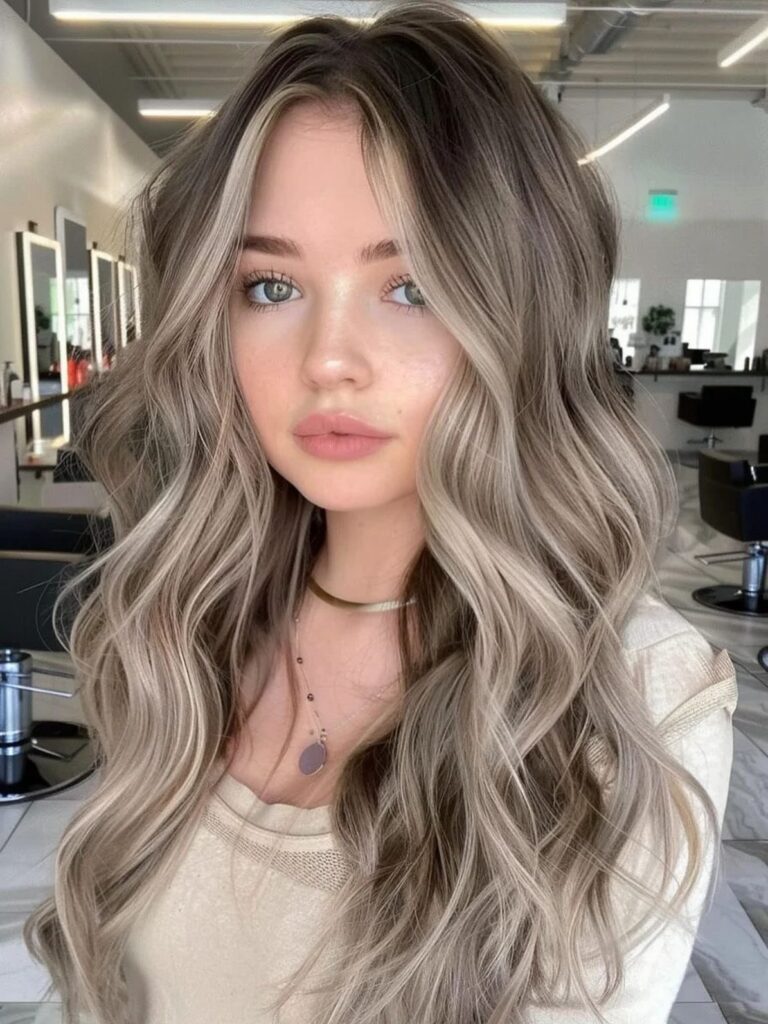
Most of these shades work on hair that’s already been colored, but the shift from black to mushroom blonde can take 3 sessions while espresso brunette lands in one.
Your skin undertone decides which direction suits you: warm undertones handle caramel and golden blonde naturally, cool undertones suit ash and soft black, and neutral undertones can go either way.
Balayage grows out more forgivingly than all-over color because the root already starts darker, which stretches the time between salon visits instead of booking one the moment regrowth shows.
1. Espresso Brunette
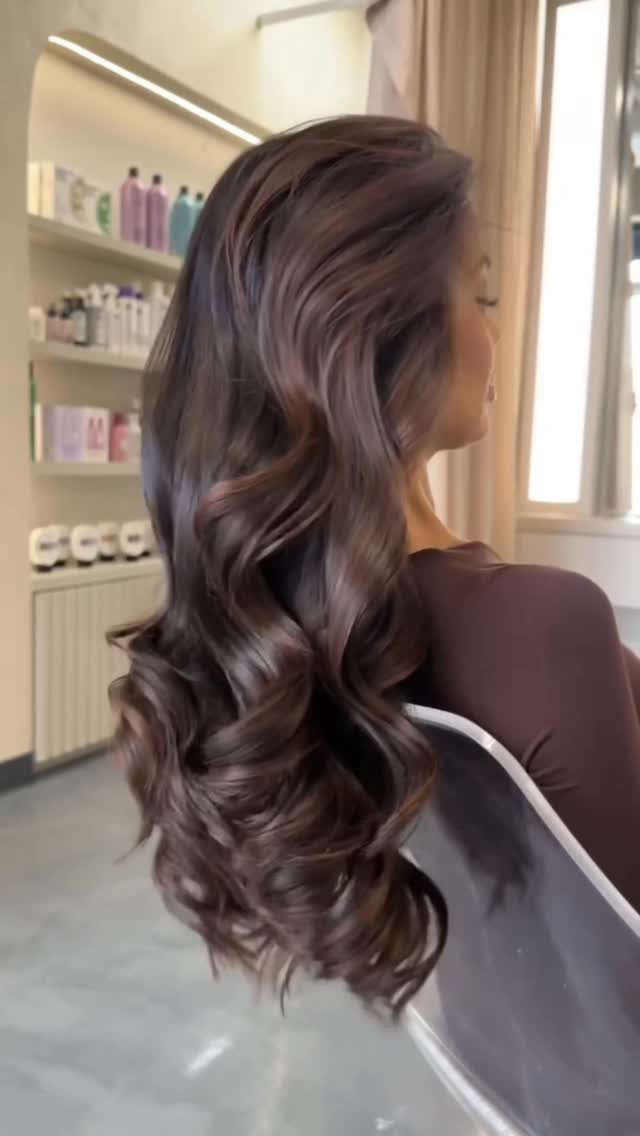
Espresso brunette sits a few shades deeper than chocolate or chestnut, close enough to black that the brown reads mainly in direct light. The depth gives natural dimension, especially on curly or textured hair where each layer catches light differently.
A demi-permanent formula holds the shine longer than permanent color, which can oxidize and turn flat after a few weeks.
Ask for a gloss treatment every 6 weeks if you’re keeping this at the salon, or pick up a color-depositing conditioner formulated for dark brown to stretch the reflective finish between appointments.
This shade suits most skin tones because the warmth stays subtle.
But be warned: If you have a light natural hair color, stopping into the salon for touch-ups every four to six weeks will be nonnegotiable, she says, because your roots will be especially noticeable in contrast to the wickedly dark brunette.
— Vogue
2. Buttercream Blonde
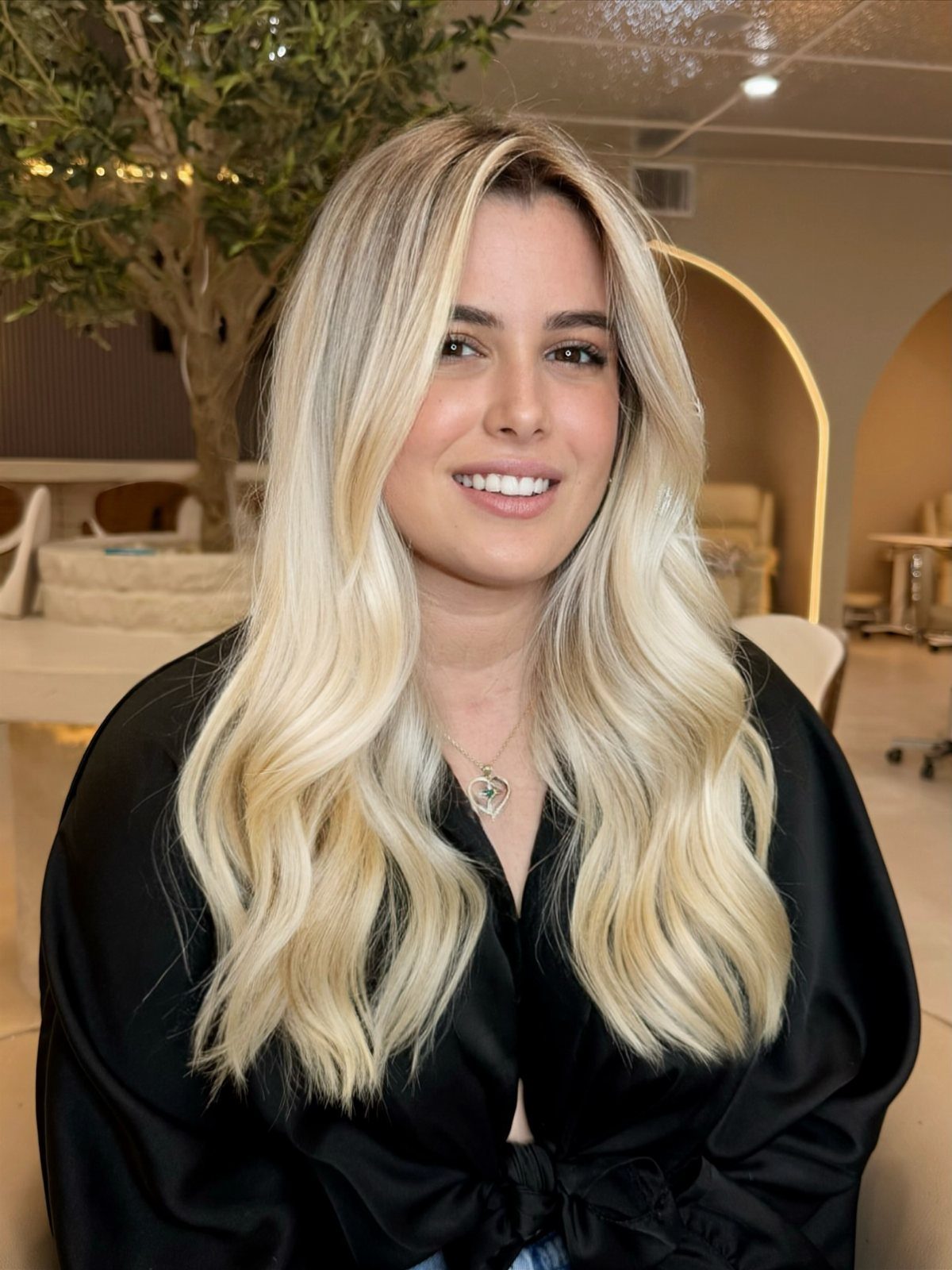
Buttercream blonde lands between golden and neutral, warm enough to read creamy rather than ashy but never brassy. The base usually stays a level 7 or 8, lifted just enough to soften natural brunette without the upkeep platinum demands.
Balayage keeps the root soft, so regrowth blends in instead of announcing itself at a fixed point.
If you’re starting from virgin dark hair, plan on 2 sessions to lift it without damage. A purple shampoo once a week keeps any yellow from creeping in, but you won’t need it as often as icy blondes do.
This shade grows out gracefully, which is why it stays popular.
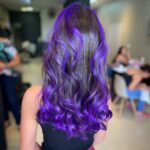
3. Jewel Tones
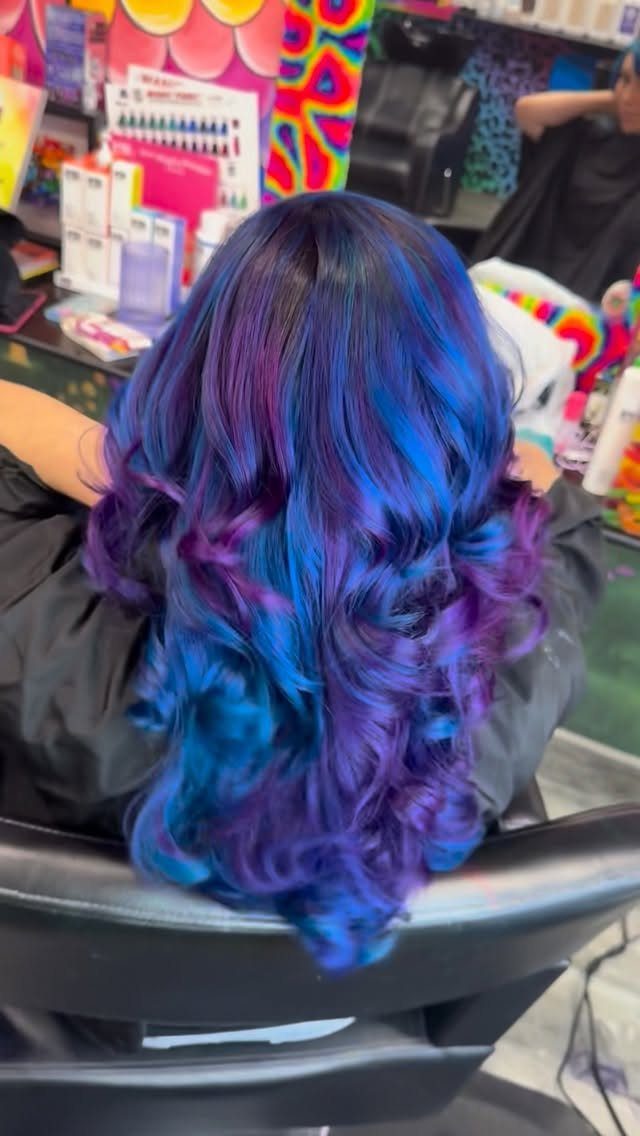
Jewel tones pull from sapphire, amethyst, emerald and ruby, saturated enough to hold their color rather than washing out pastel after a few shampoos.
They show best on pre-lightened hair, so if you’re starting dark you’ll need a bleach session first.
Semi-permanent formulas fade gradually, which means less damage than permanent dye but more frequent touch-ups if you want the color bold. Permanent versions last longer but lock you in until it grows out or you cut it off.
Cooler skin tones suit blue and purple; warmer tones handle red and copper jewel shades more naturally. Upkeep is weekly: color-safe shampoo only, sulfate-free, and cold water rinses.
4. Glossy Black
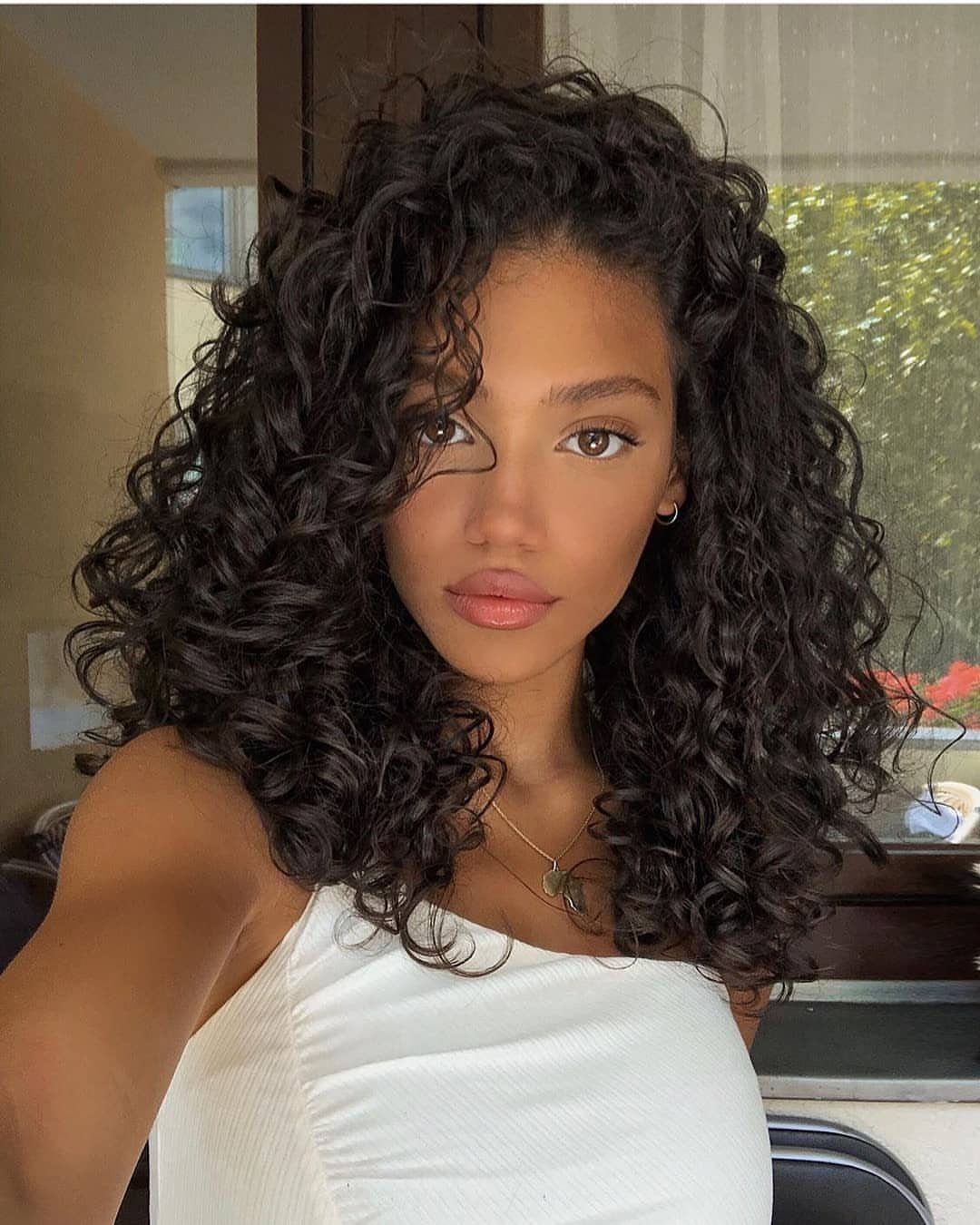
Glossy black is about shine as much as depth, and getting both takes a formula with good pigment and a finishing gloss.
Permanent black dye deposits the most color, but it can turn flat and dull after oxidizing in sunlight, so a gloss treatment every month keeps the mirror finish intact.
If your natural hair is already dark brown or black, a demi-permanent formula refreshes the tone without the commitment. Curly hair holds gloss longer because the texture reflects light at multiple angles.
Blue-toned black reads cooler and suits fair or cool-toned skin; neutral black works on most people. Box dyes labeled "blue black" or "soft black" lean cool, while "natural black" stays neutral.
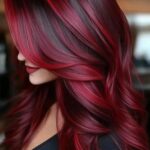
5. Cherry Cola
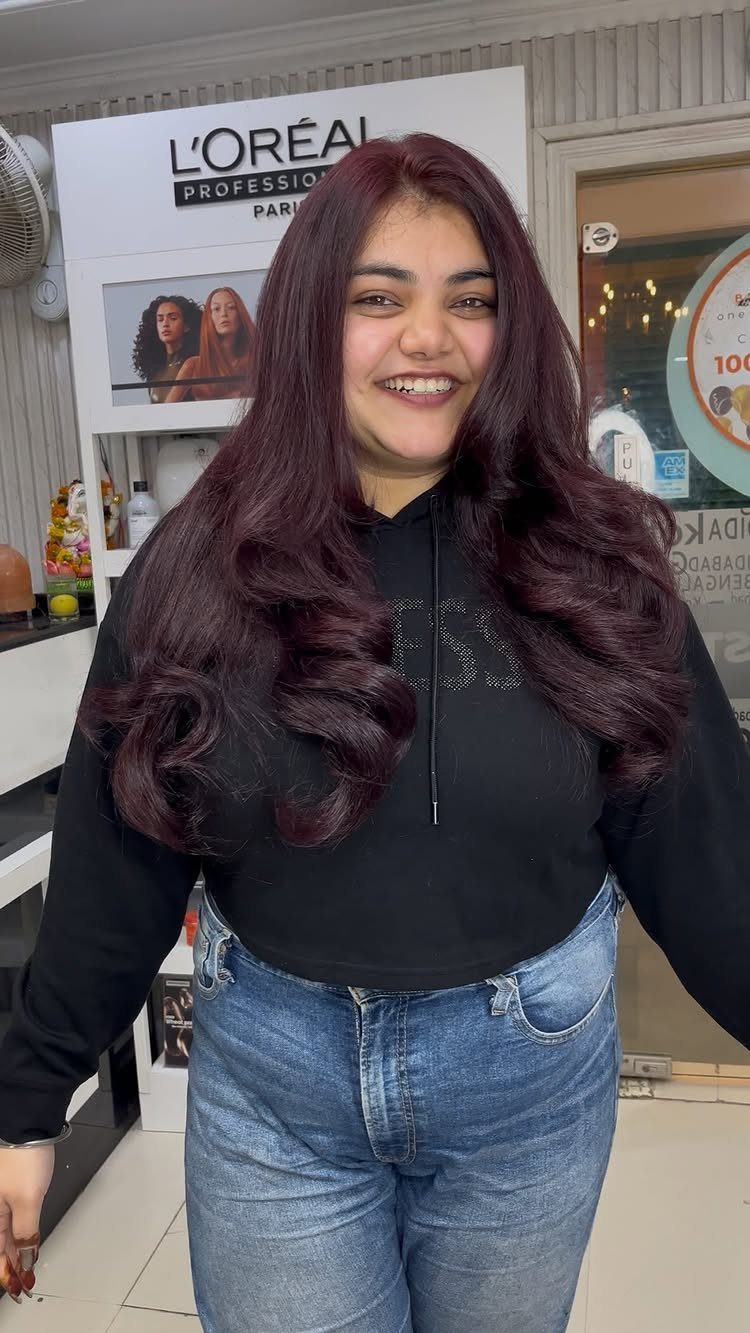
Cherry cola blends deep brown with burgundy or violet-red, glossy enough to catch light but dark enough to stay wearable outside a salon photo.
The red shows strongest in sunlight and fades to a softer plum as it oxidizes, so the color shifts slightly as it wears.
A demi-permanent formula gives the richest tone without the flat look permanent dye can leave behind.
If you’re starting from dark hair, you might need to lift a level or two first so the red tones show through. Warmer skin tones suit cherry-red; cooler tones handle the plum-burgundy versions better.
Color-depositing conditioner in red or burgundy stretches the vibrancy between salon visits.
6. Balayage
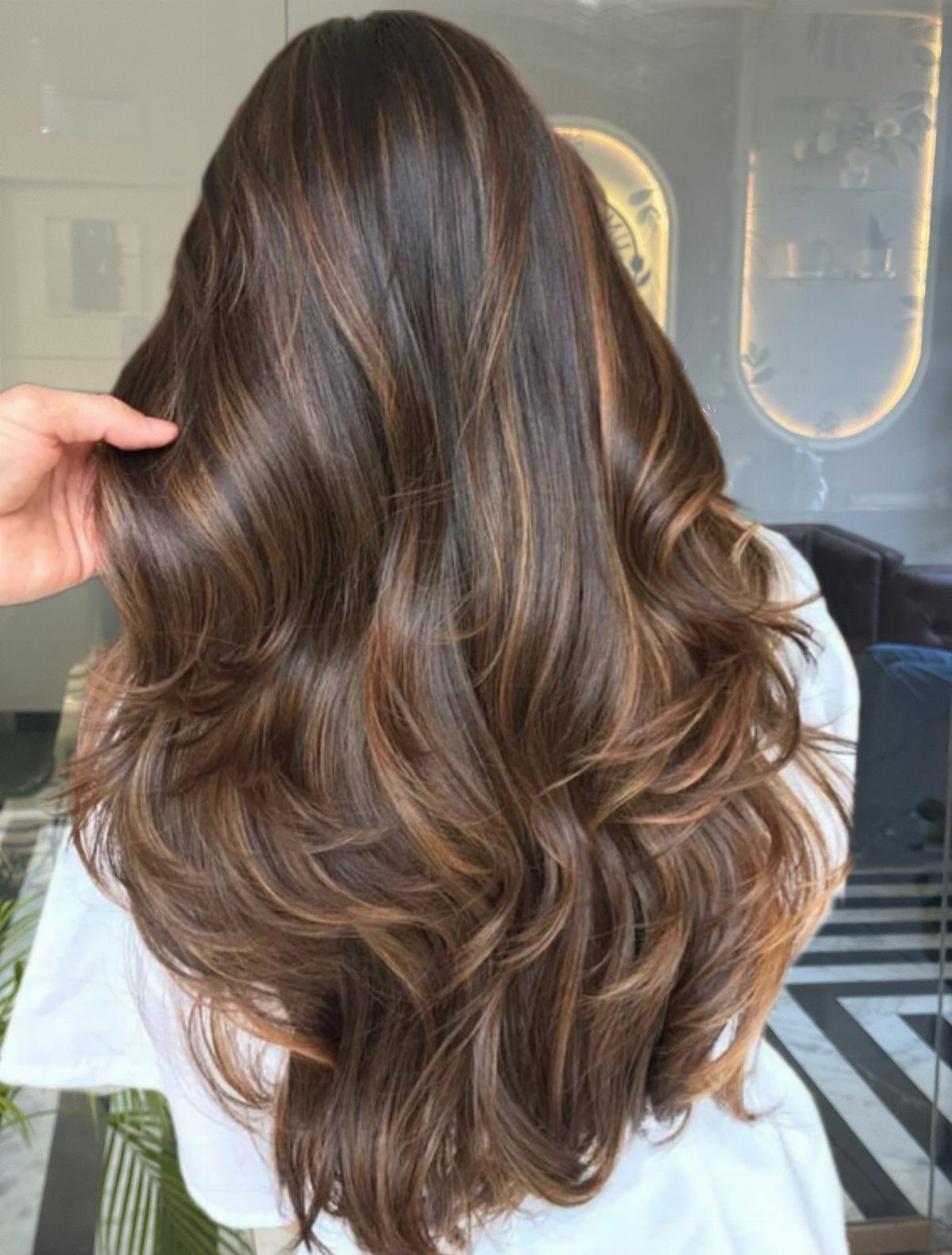
Balayage is hand-painted lightener swept through the mid-lengths and ends, heaviest around the face and tapering toward the root.
The grow-out stays soft because there’s no hard line where the color starts, so you can stretch the time between touch-ups instead of booking one the moment you see root.
Placement matters more than the shade itself: lighter pieces frame the face and catch light, while the root stays close to your natural color for dimension.
If you’re doing this at home, sectioning clips and a paddle brush give better control than foils, but salon results look more blended because a colorist can see the back of your head.
Ask for a toner after lifting to cancel any brass and land on the exact shade you want.
7. Chocolate Brown
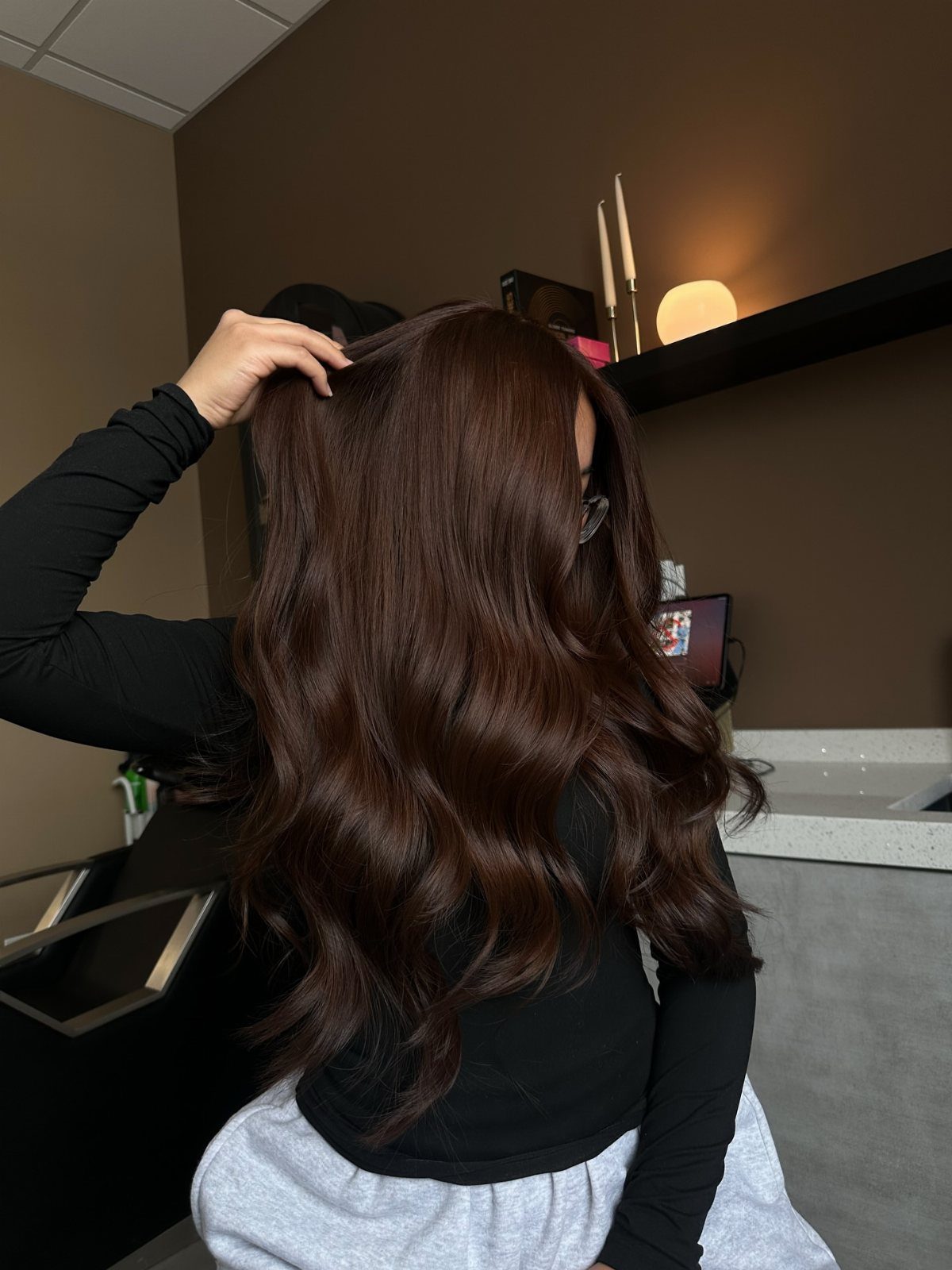
Chocolate brown sits at a level 4 or 5, warm enough to read rich instead of flat but deeper than caramel or chestnut.
Single-process color delivers the most even base, and a gloss treatment adds the polished finish that keeps it from looking one-dimensional.
Demi-permanent colour adds richness and shine when your starting point is close to the target shade. Starting from lighter hair takes a deposit-only color to build the depth back in.
8. Soft Black
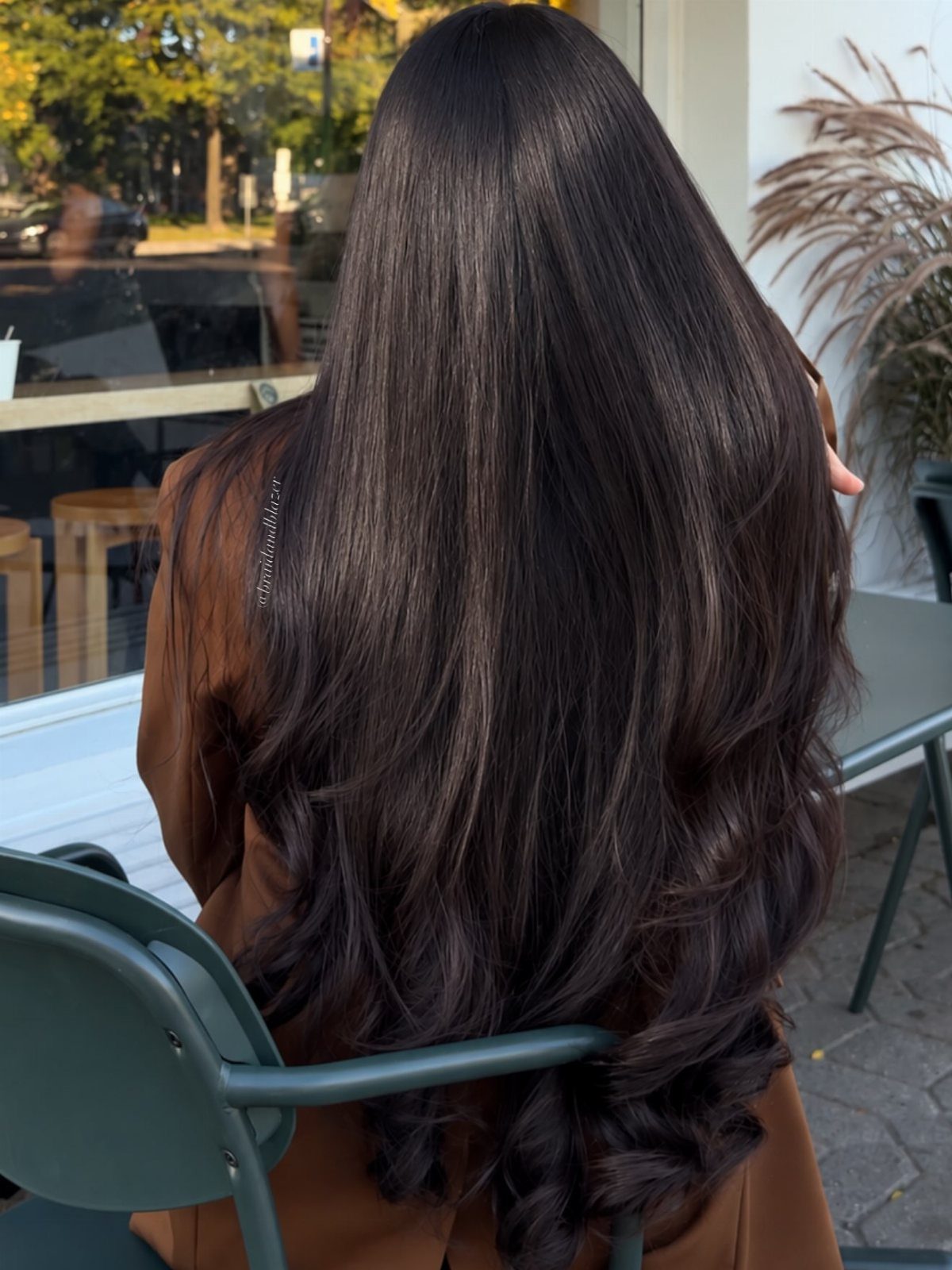
Soft black sits a shade or two below the deepest black, dark enough to look nearly black indoors but catching a hint of dimension in direct sun.
The difference shows in how it wears: soft black fades to a dark charcoal instead of the flat, oxidized look true black can leave behind.
Demi-permanent keeps the depth soft instead of flat.
If you’re starting from dark brown, soft black adds depth without the commitment of the darkest shade. It suits cooler and neutral skin tones especially well.
9. Bronde
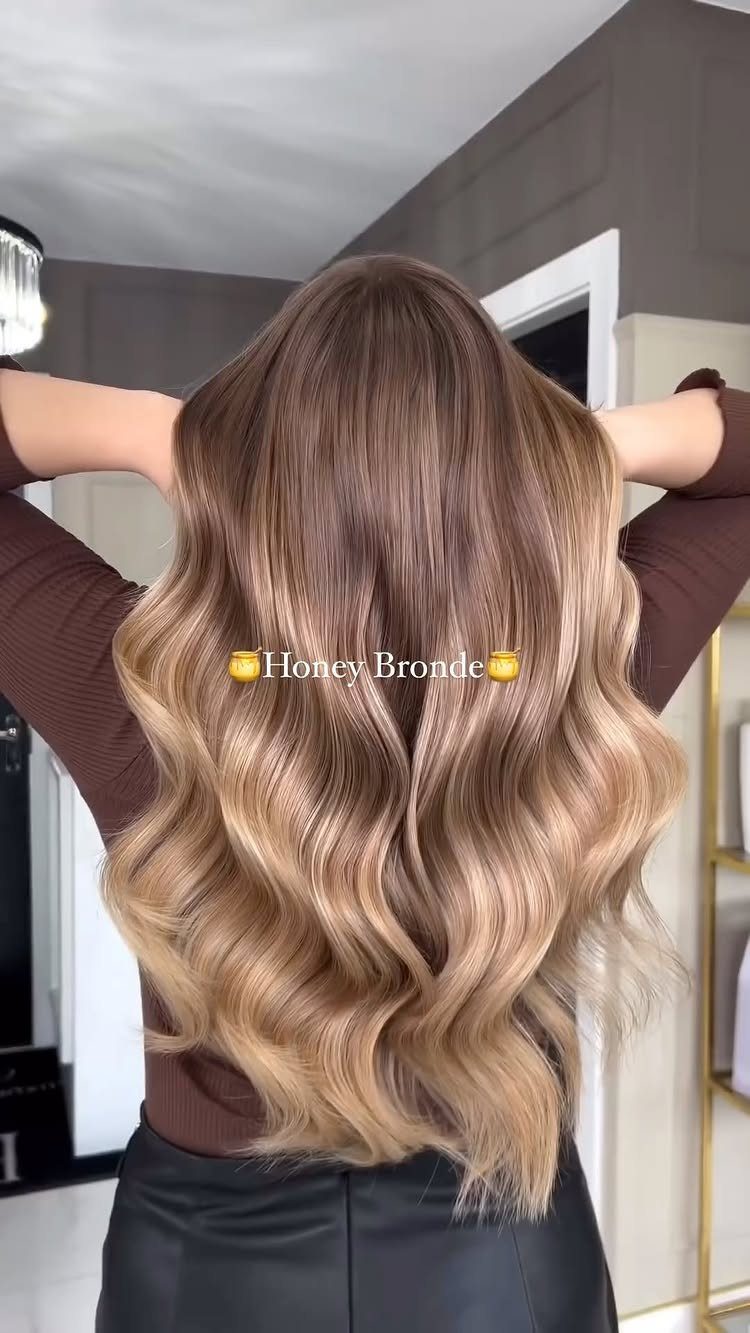
Bronde sits between blonde and brunette, with lighter pieces woven through a medium base. The root stays brunette while the lengths lighten to a soft honey or beige blonde, so the contrast reads gradual rather than striped.
Balayage or foil highlights build the blend, and the placement decides how blonde or brown it reads overall.
Starting from dark brown means lifting the lengths a few shades so the blend reads distinct without going all the way to blonde. The grow-out is forgiving because the root already starts dark.
10. Caramel Highlights
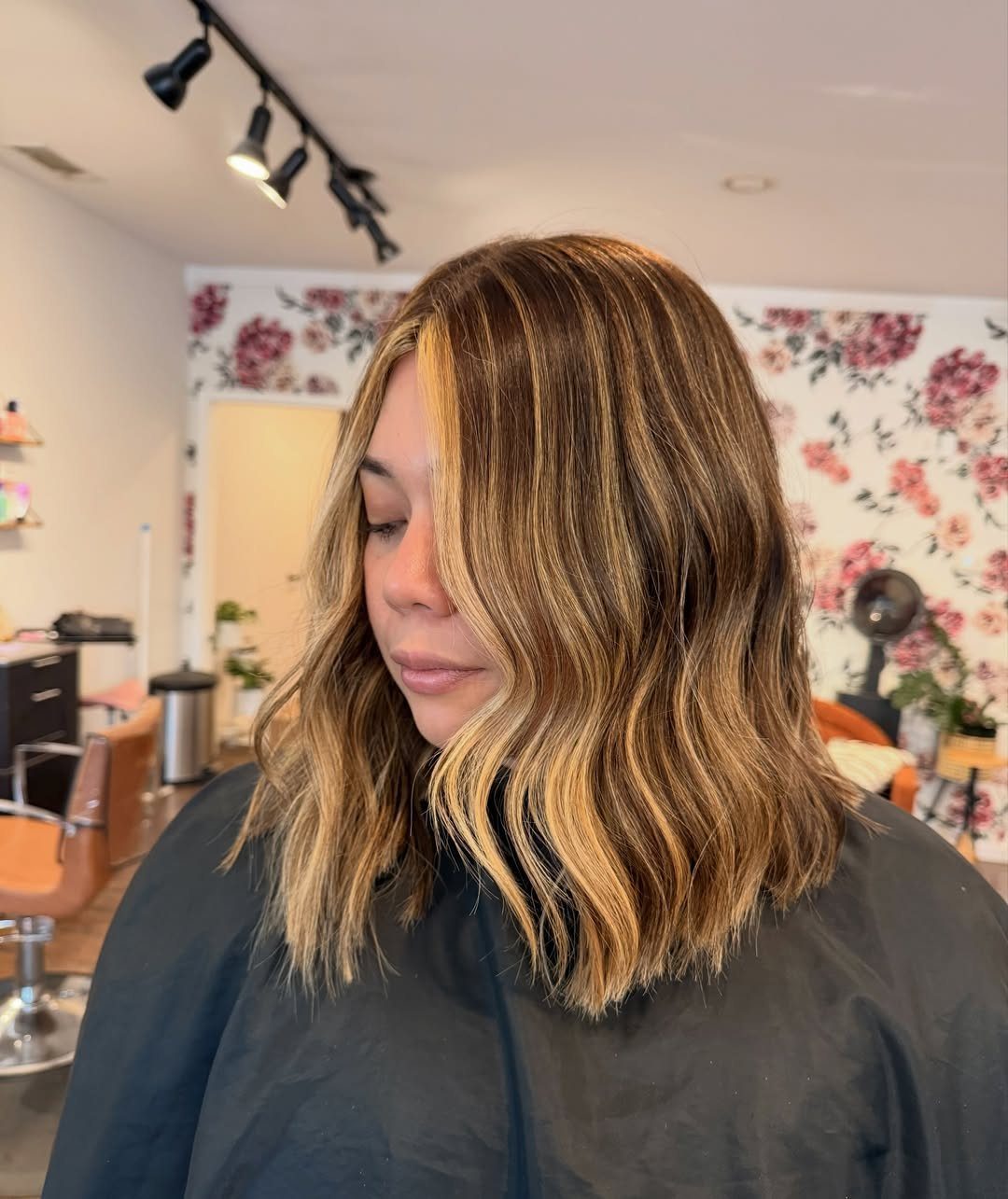
Caramel highlights lift brunette hair 2 or 3 levels into a warm golden-brown, placed through the mid-lengths and around the face for dimension.
Foils give the most control, and spacing them wider keeps the base color visible instead of blending into an overall lighter shade.
If your natural hair is dark brown, the colorist will need to lift it enough for the caramel to show through without turning brassy.
A toner afterward keeps the warmth from skewing orange. Purple shampoo keeps any yellow tones in check between appointments.
11. Lived-In Caramel Balayage
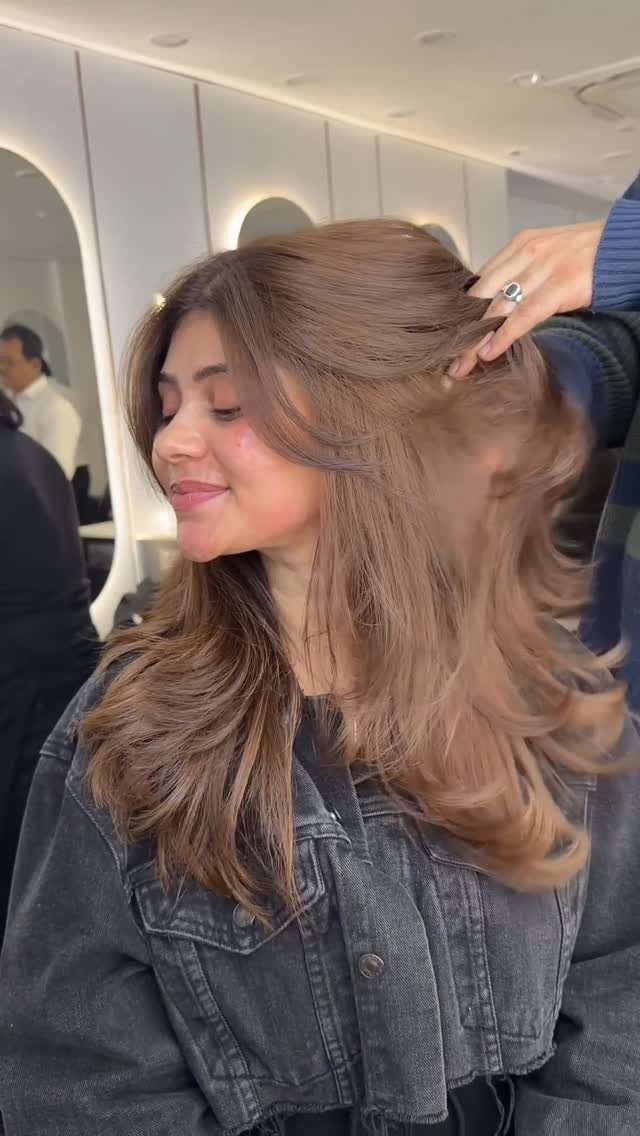
Lived-in caramel balayage starts with a deeper brunette root and sweeps caramel tones through the lengths, hand-painted so the transition reads gradual rather than placed at a fixed line.
This approach works best if you’re starting from medium to dark brown and want lighter pieces without committing to full blonde.
Toner keeps the caramel from going brassy, and the soft blend means you can stretch time between salon visits because the fade looks planned.
12. Caramel Ribbons
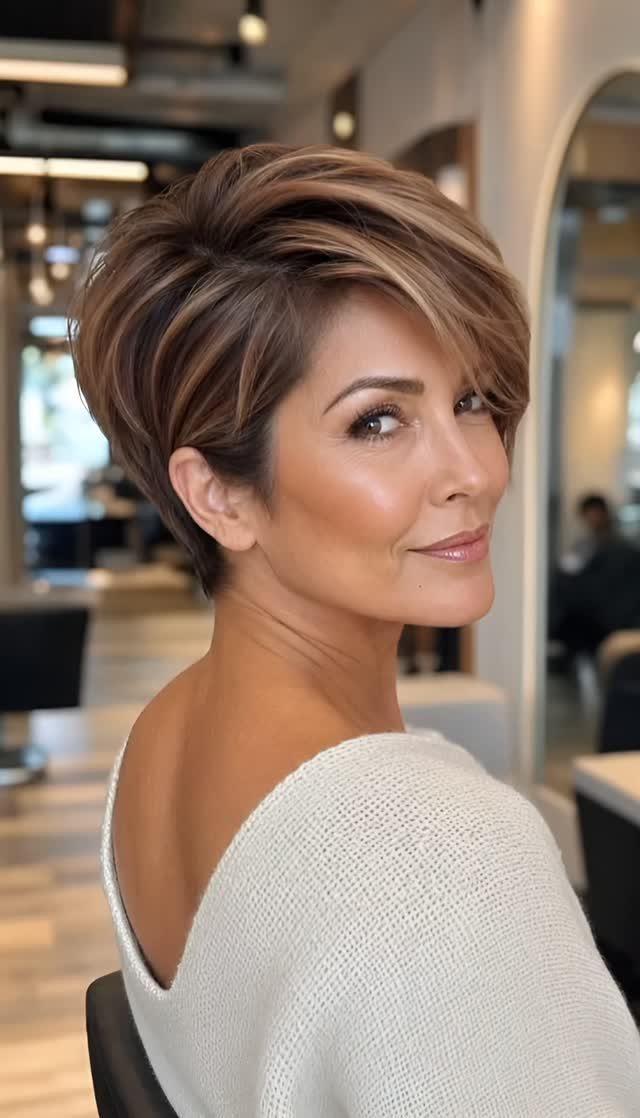
Caramel ribbons are thicker, more defined pieces of lightened color placed through brunette hair, heavier than scattered highlights but not so blended they disappear into the base.
The ribbons catch light and add movement without shifting the overall color too warm or too red.
Foils give the cleanest placement, and keeping them chunky rather than fine makes the ribbons stand out as individual pieces.
If your natural hair is cool-toned brown, the caramel adds warmth without tipping into copper. A gloss treatment maintains shine and keeps the brunette base looking rich between colour sessions.
13. Auburn
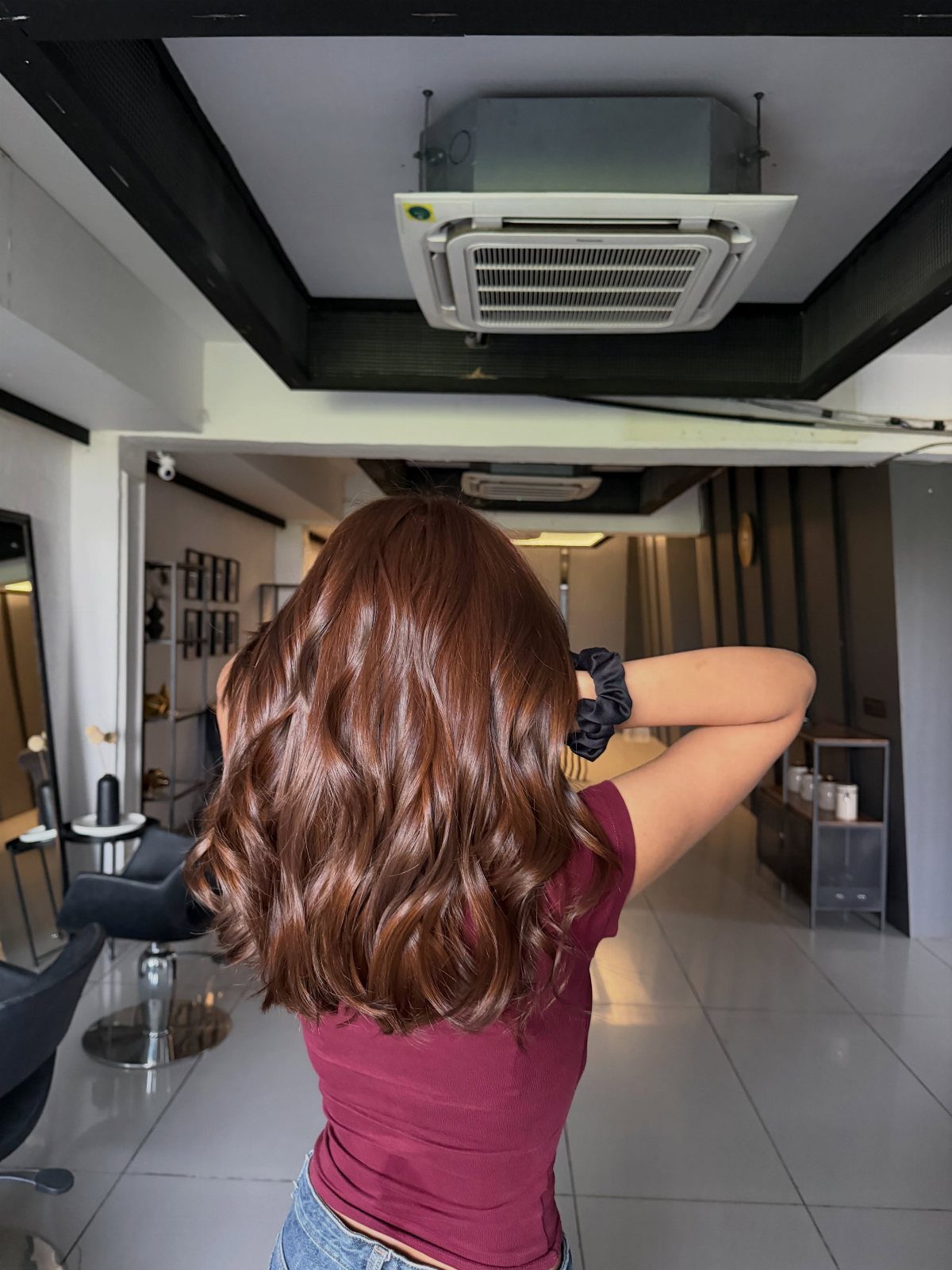
Auburn mixes brown with copper-red, warm enough to read as red in most light but grounded by the brunette base so it stays closer to a natural shade than bright red or copper blonde.
Starting from black hair means lightening first so the red shows through. The warmth suits most skin tones, especially warmer undertones.
Color-depositing shampoo in red or copper keeps the tone from fading to flat brown between appointments.
14. Sunkissed Blonde
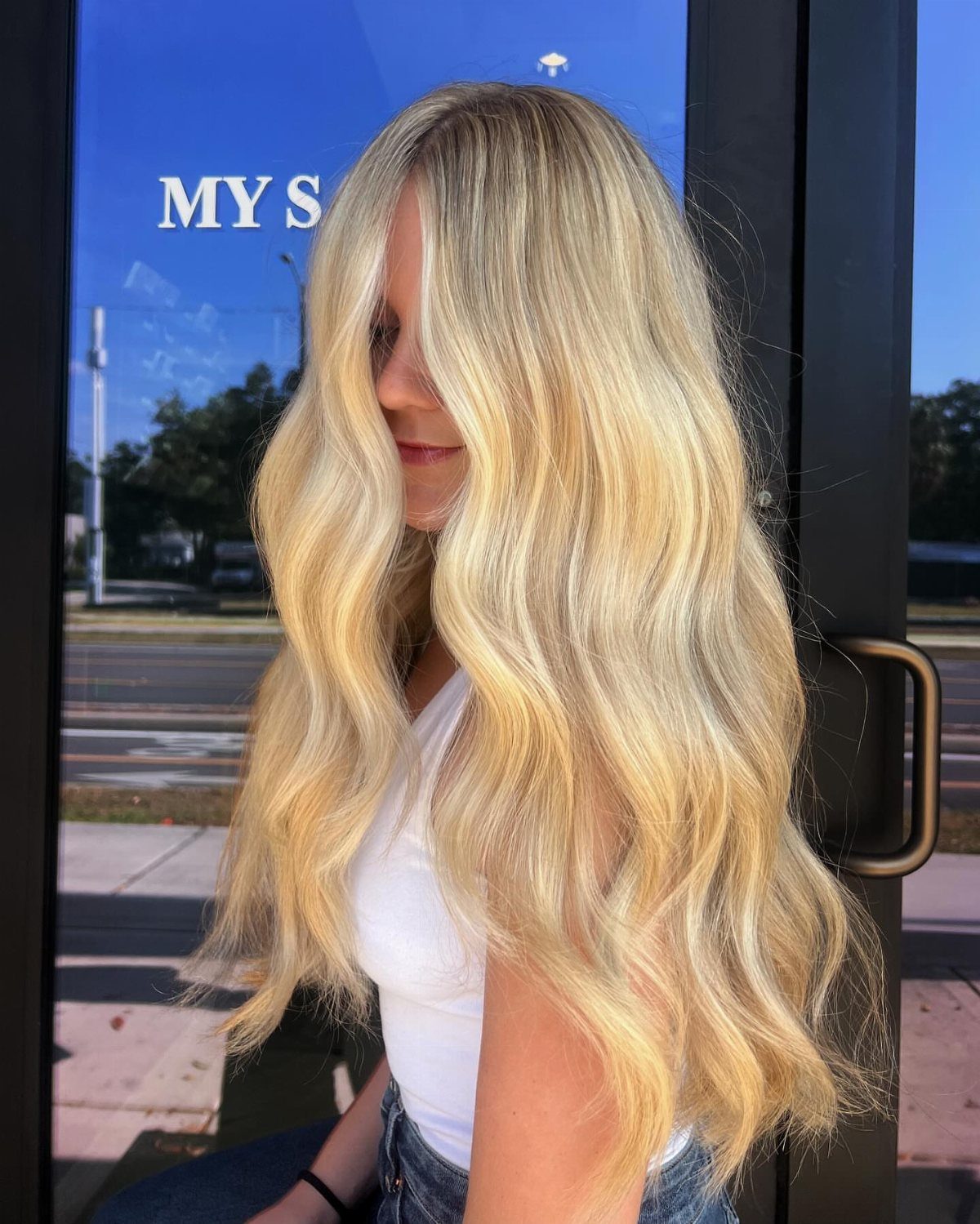
Sunkissed blonde places lighter pieces through the lengths and around the face, brightest where sun would naturally lighten hair. The blend reads gradual, with the root staying closer to the base color and the ends lifting 2 or 3 levels.
Balayage gives the softest result because the lightener is painted on rather than placed in foils at a fixed point.
If you’re starting from medium blonde, a gloss pulls the lifted pieces together; darker bases need a lift first so the highlights show.
This grows out better than all-over blonde because the root already starts darker.
15. Mushroom Blonde
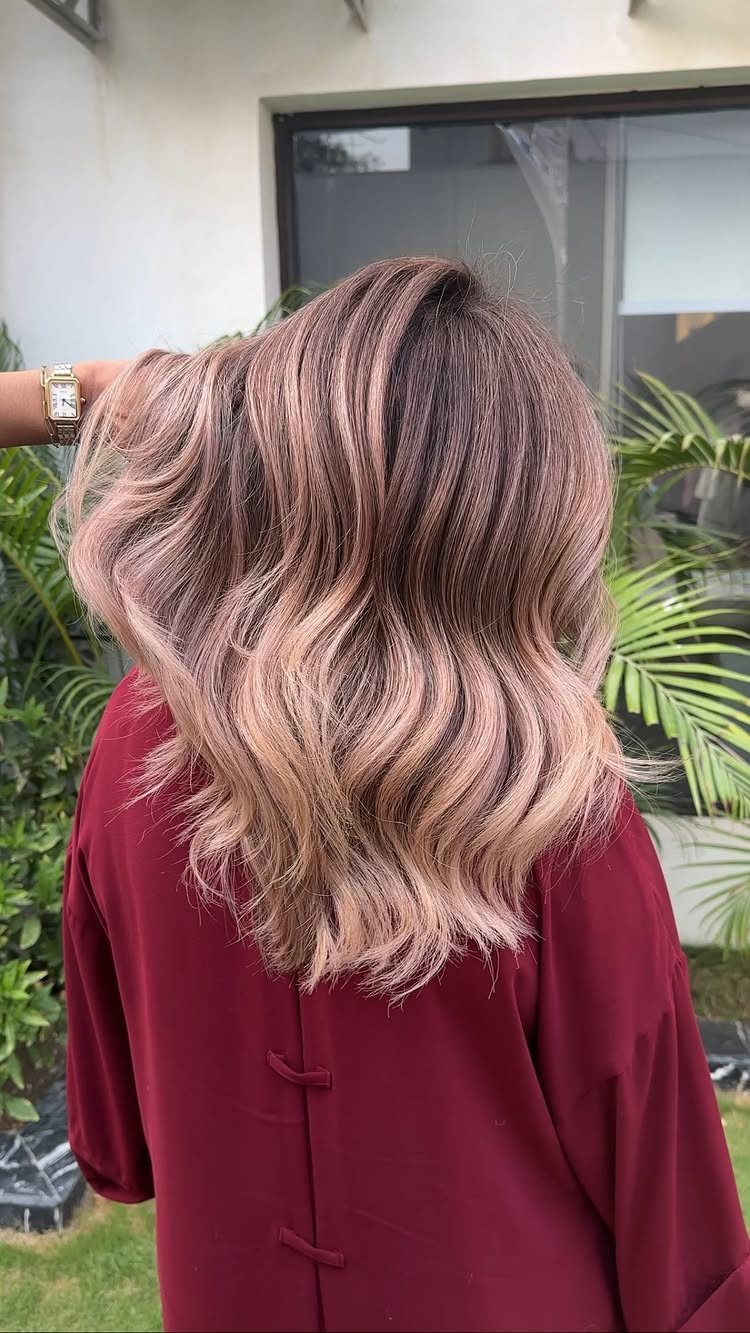
Mushroom blonde blends cool ash tones with soft beige or taupe, muted enough to read neutral rather than icy. The color sits between blonde and light brown, cooler than golden blonde but warmer than platinum.
This shade works best on naturally light brown or dirty blonde hair, where a toner can shift the warmth out without heavy lifting.
If you’re starting darker, you’ll need to lighten first and then tone to pull out any yellow or orange. Purple shampoo keeps it from turning brassy.
Cooler and neutral skin tones suit the ashy base better than warm undertones do.
16. Golden Blonde
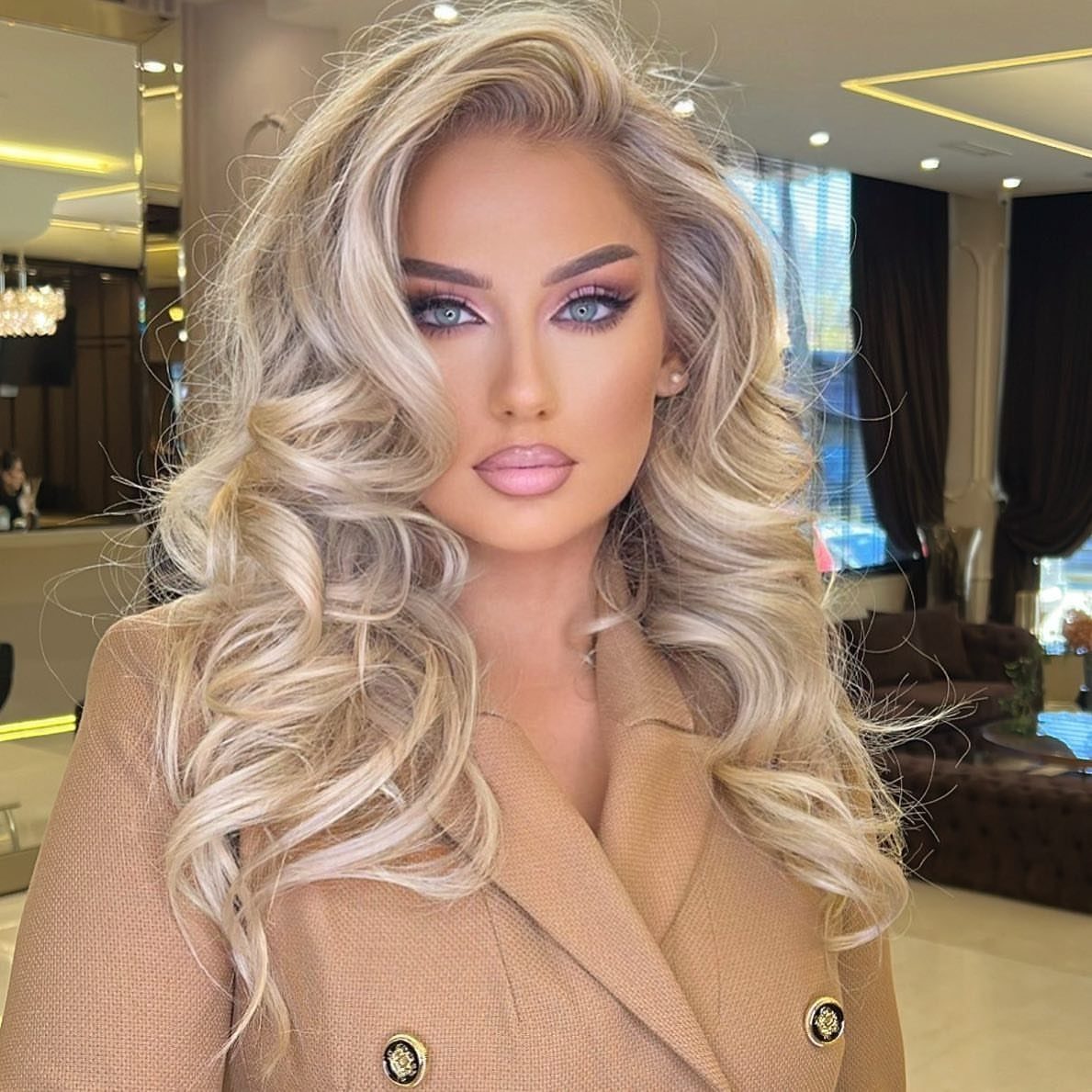
Golden blonde leans warm, with honey and buttery tones that catch light without going brassy. The base usually sits at a level 8 or 9, lifted enough to read distinctly blonde but still holding depth.
If you’re starting from medium brown, lifting takes 1 or 2 sessions depending on your natural pigment. Warmer skin tones suit the richness better than cooler tones, which can look washed out against the yellow-gold base.
This shade needs less purple shampoo than ash or platinum blonde because the warmth is already built in.
17. Red Hair
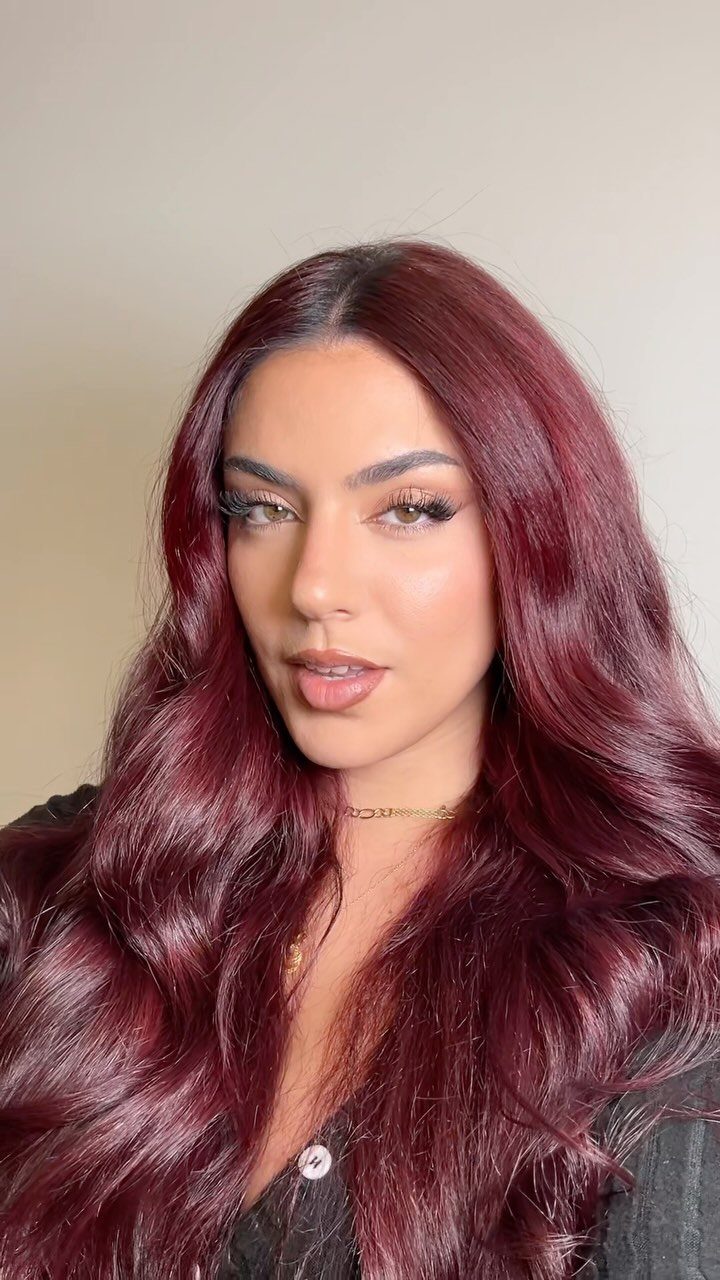
Red hair at this saturation is built on permanent or demi-permanent color, vivid enough to hold its tone rather than fading quickly to pink or copper.
The burgundy-red base reads deep indoors and catches light outside, glossy enough to look polished rather than flat.
Pre-lightening helps the red show true if you’re starting from dark brown or black. Cooler reds suit fair and cool-toned skin; warmer copper-reds work better on warm undertones.
This shade fades gradually.
18. Pink Hair
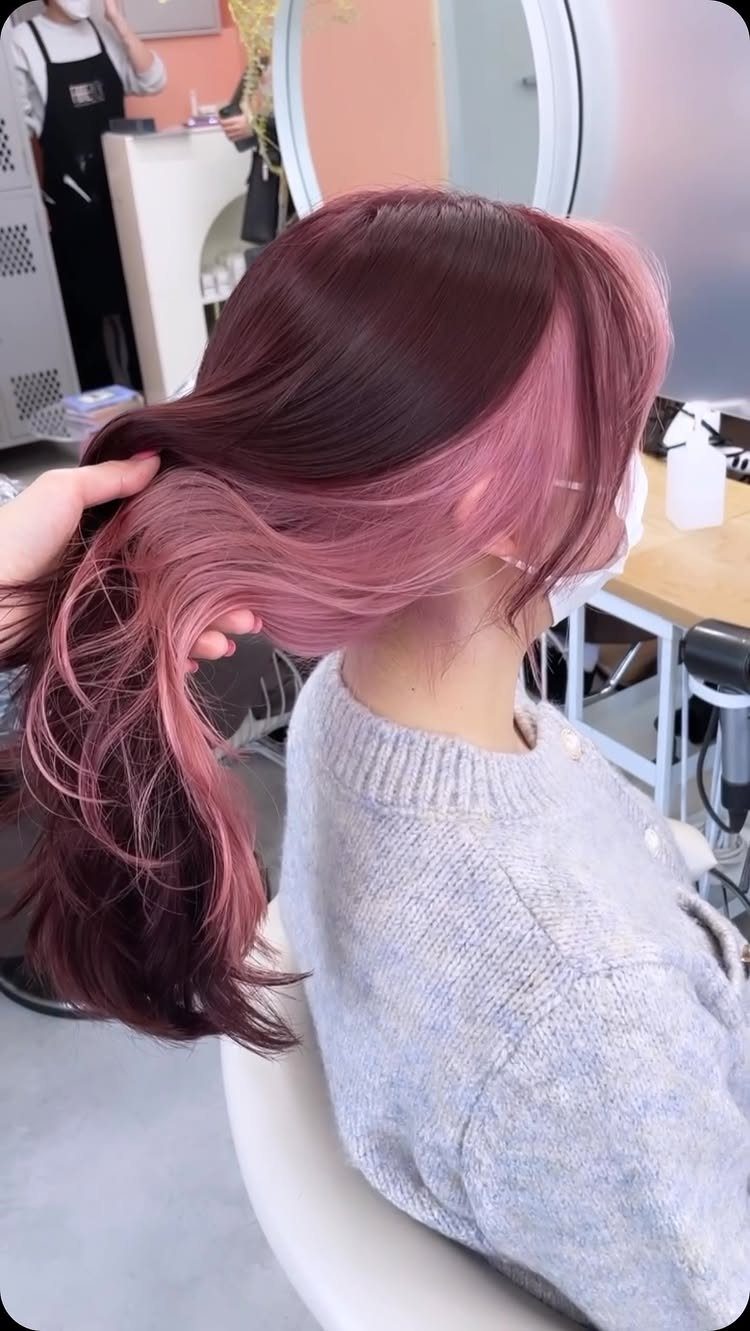
Pink hair ranges from soft dusty rose to bright pastel, and the saturation depends on how much pigment you start with and how often you refresh it. Semi-permanent formulas fade gradually, so the color shifts lighter as it wears.
Pre-lightening to pale blonde gives the truest pink; any yellow left in the base will muddy the tone. The color fades with every wash.
Cold water and sulfate-free shampoo slow the fade.
19. Rosy Beige
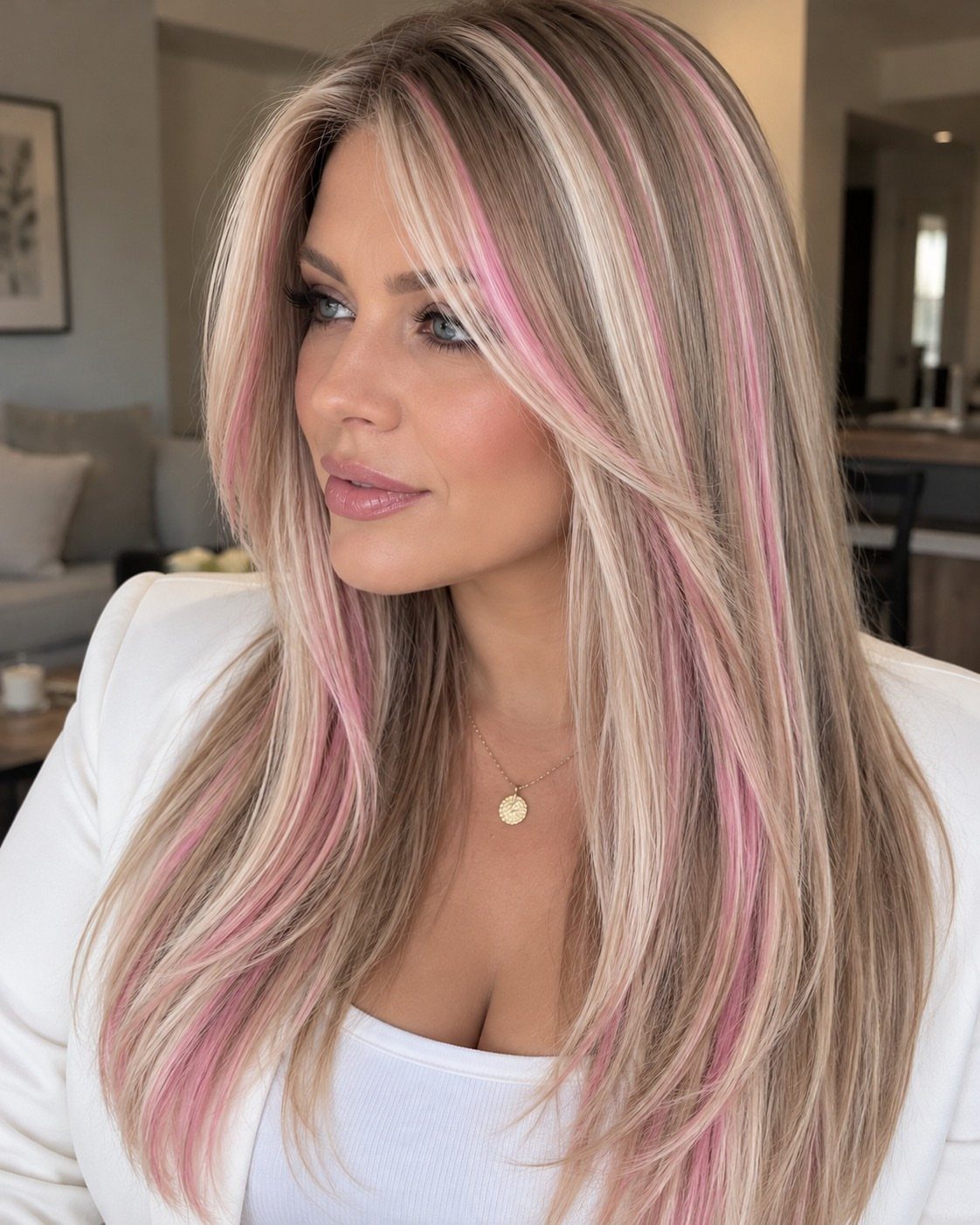
Rosy beige blends dusty pink through a beige-blonde base, warm enough to look lived-in but soft enough to stay wearable.
The pink reads as a tint rather than a statement color, muted by the brown and beige tones that keep it grounded.
Rosy beige hair color suits neutral and cool skin tones better than warm undertones, which can clash with the dusty rose.
20. Deep Auburn
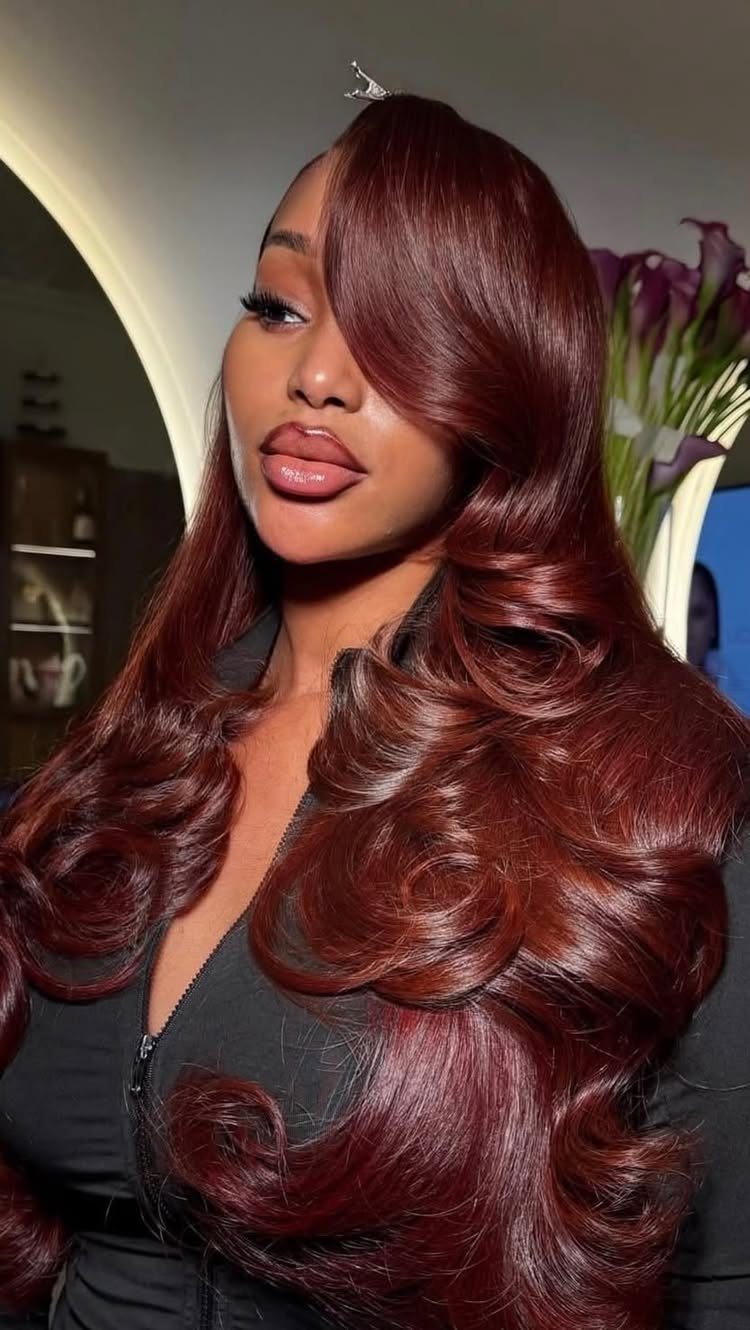
Deep auburn sits darker than standard auburn, closer to a level 3 or 4, with enough red to catch light but not so much that it reads bright.
The richness comes from the brunette base, which keeps the red from looking flat or one-dimensional.
The color fades faster than non-red shades because red molecules wash out more easily.
21. Bronzed Blonde Hair
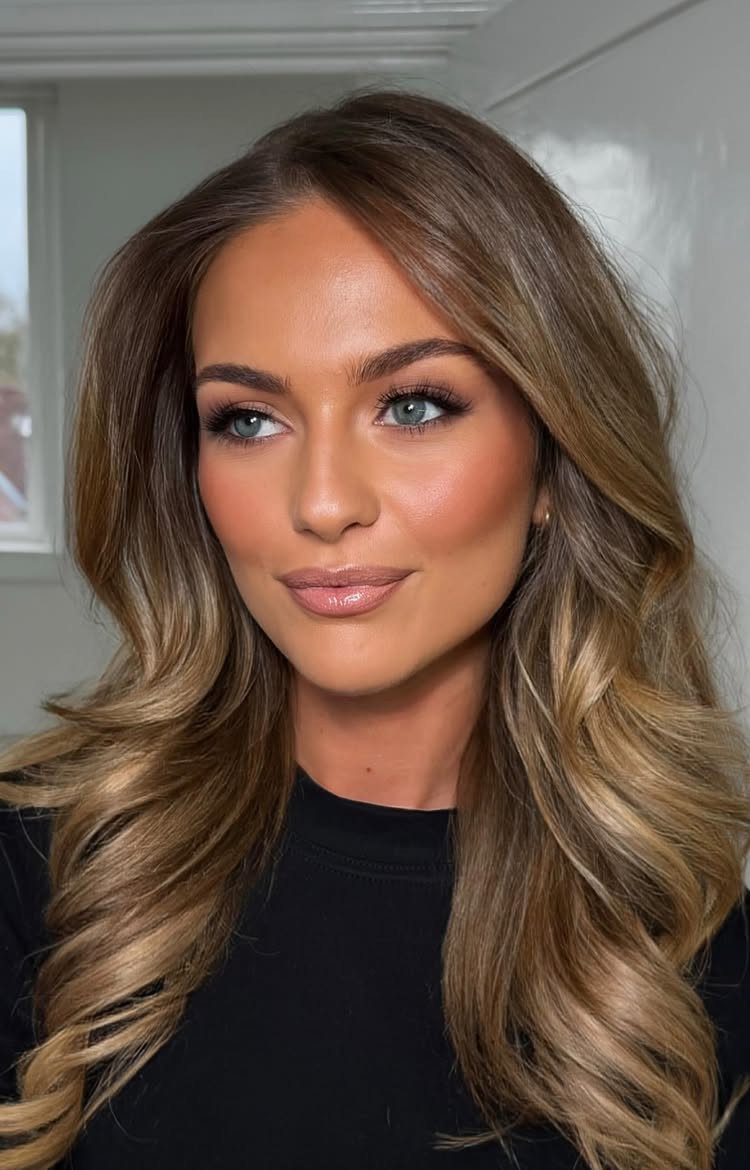
Bronzed blonde blends honey and golden tones through a blonde base, warm enough to read rich without tipping into brassy. The warmth shows strongest around the face, where lighter pieces catch light and add dimension.
Balayage or highlights build the blend, with the base staying a shade or two deeper than the lightest pieces.
22. Bright Bold Hair Color
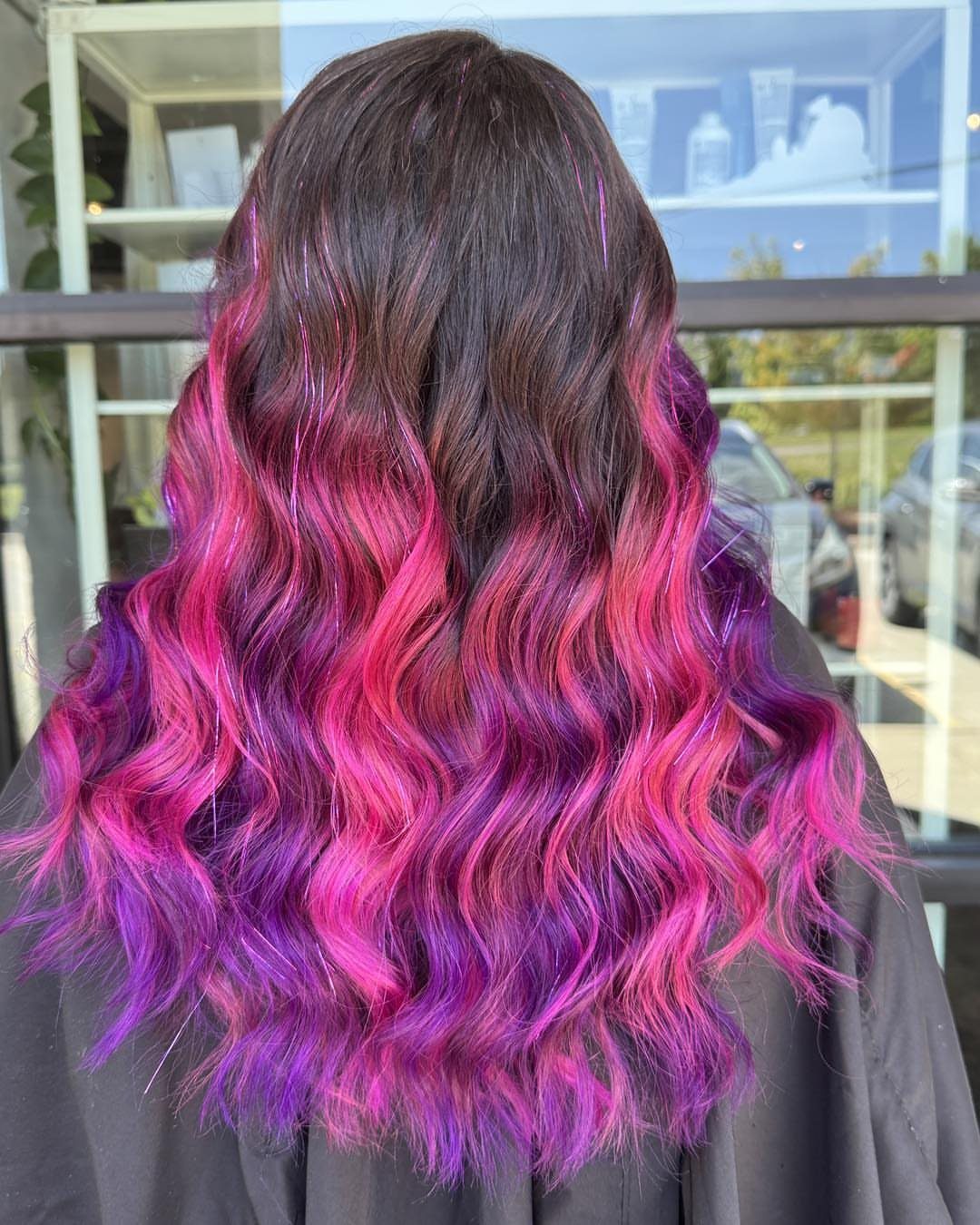
Bright bold color runs vivid pigment through the lengths, saturated enough to read as a statement rather than a subtle shift. Semi-permanent formulas give the most intense color but fade with every wash, so the vibrancy shifts as it wears.
Pre-lightening to pale blonde gives the truest color; any yellow or orange left in the base will muddy the tone. Cold water and sulfate-free shampoo slow the fade between refresh sessions.
23. Face-Framing Highlights
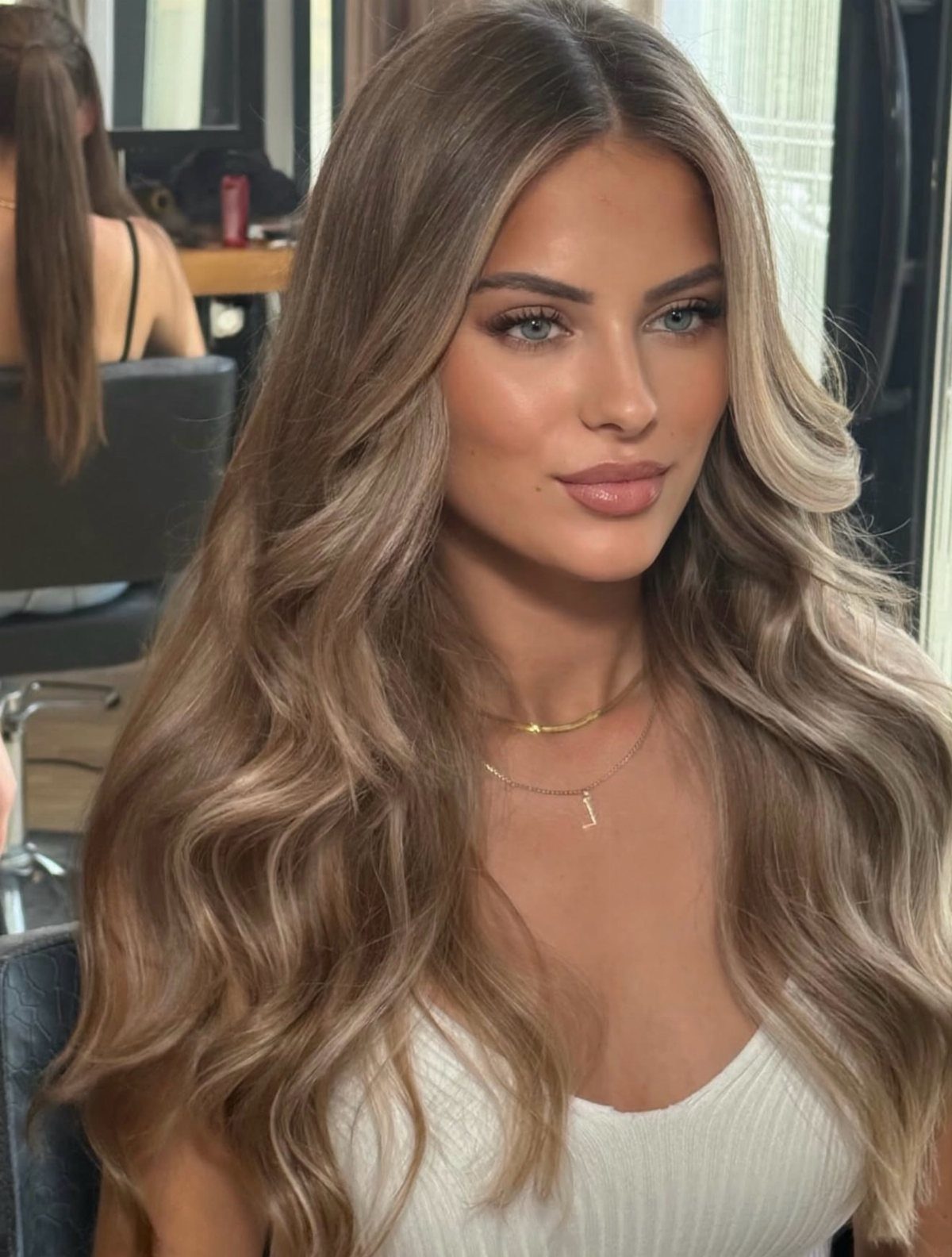
Face-framing highlights place lighter pieces around the front, heaviest through the sections that touch the face and taper toward the sides.
The rest of the hair stays closer to the base color, so the contrast draws the eye forward instead of lightening the overall shade.
Foils or balayage both work, and keeping the placement concentrated gives more lift than scattering highlights all over.
Protecting Color at Home
Sulfate-free shampoo strips less pigment with every wash, which means the color stays truer longer. I use one on repeat and the difference shows after week three, when other formulas would have faded noticeably.
Cooler water keeps the cuticle flatter and holds dye molecules in better than hot water, which swells the shaft and lets color rinse out.
Air-drying instead of heat styling does the same: less stress on already-processed hair means less breakage and better shine.
UV protection matters more than most people expect.
Direct sun oxidizes color the way it fades fabric, especially reds and bright tones that fade fastest. A leave-in treatment with SPF or a hat on long days outside keeps the tone from shifting.
Glosses and deep conditioning masks bring back shine between salon visits. Moisture keeps color-treated hair from looking dull or straw-like, and a weekly mask makes the difference.
Choosing a Flattering Shade
Skin undertone decides which shades look natural and which read off. Warm undertones suit caramel or honey brown; cool undertones handle ash brown or espresso better; neutral undertones can go either way, toward chestnut or dark cherry brown.
Eye color and your natural starting shade also shift what reads flattering. A colorist can see those details faster than you can in a mirror, and the assessment takes one conversation.
Bring reference photos. Color names vary across brands and salons, and a picture removes the guesswork.
Starting shade matters as much as the target. What takes one session on light brown might take three on black, and knowing the timeline up front keeps expectations realistic.
Plan for Color Changes
A colorist can assess your hair condition and color history before mixing anything, which matters most when the change is big.
Color correction exists for a reason: some shifts need the previous color lifted or neutralized first, and doing that safely takes time.
A consultation before you book the appointment shows you the realistic timeline and lets you decide if the upkeep fits your routine.
Big changes land differently depending on where you start. What looks effortless on one person might take several sessions on another, and a skilled colorist walks you through what your specific hair needs rather than promising one universal result.
Frequently Asked Questions
What is the trendiest hair color right now?
Cool and neutral brunettes, bronde blends with soft roots, and deep reds like cherry cola are showing up most in salons right now.
Copper tones are holding steady too. The shift leans polished and low-contrast rather than high-fashion shades, with cooler tones replacing the warm beige-gold moment that just wrapped.
What color should I dye my hair?
Skin undertone decides what looks natural: warm undertones suit caramel or honey brown, cool undertones handle ash brown or espresso, and neutral undertones work with chestnut or dark cherry.
A colorist reads eye color and your starting shade faster than you can work it out alone. Bring a reference photo so the color you’re asking for matches what the colorist hears.
How do I choose the right trend for me?
Start with how much upkeep you can handle and whether you want subtle or dramatic change. What worked before on your hair and skin gives you a place to start.
Bring a photo if you want a specific look; for a refresh, a colorist will tell you which trend your hair can take given its condition and what you’ve done to it before.