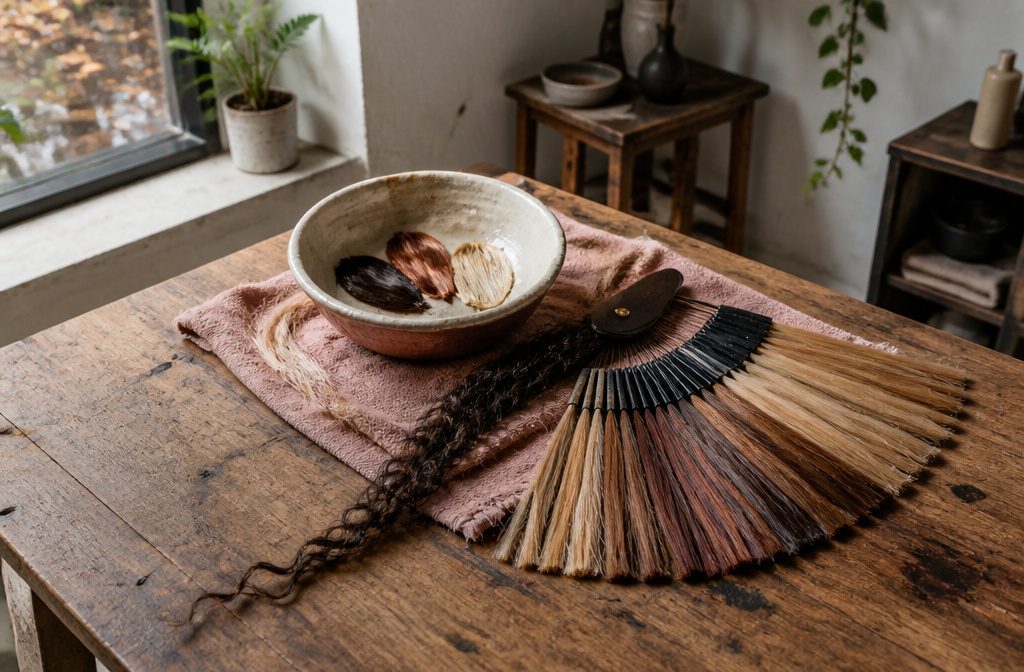
A hair color wheel is a circular diagram that shows relationships between hair shades by arranging them around hue, value and saturation coordinates.
The catch: most wheels preview color in the abstract, not on your specific starting shade or texture, so a dark base won’t lift to the pale blonde the spinner shows.
L’Oréal Paris’s augmented-reality try-on averages 88% rendering accuracy across more than 200 shades, but colorists still treat these tools as ways to rule colors out, not predict real results.
Hue, Value, and Saturation
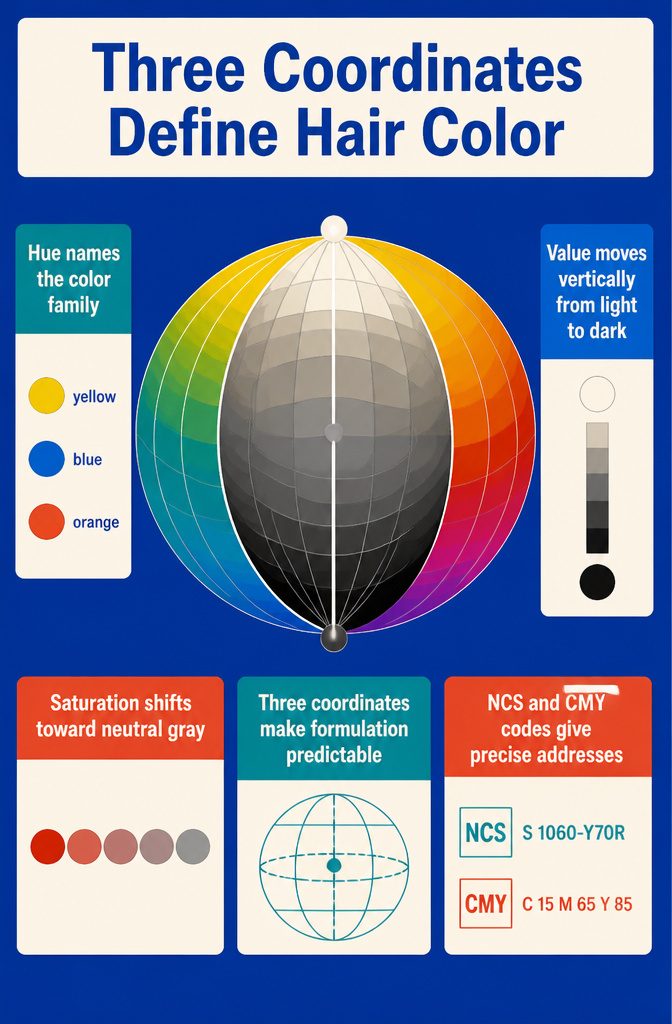
Every hair color has three coordinates.
Hue is the color family: yellow, blue, orange. Value is how light or dark the shade is, and on the Kolormondo PRO 3D globe it runs vertically, up and down.
Saturation is how intense or muted the shade is, measured as a move from the outer edge toward the neutral gray center.
Colorists think in these terms because tracking all three makes formulation intuitive and predictable, and the globe’s NCS and CMY codes give each shade a precise address instead of a vague name.
I treat the globe as the strand that teaches relationships, not a preview of your own head.
Virtual Try-On Tools
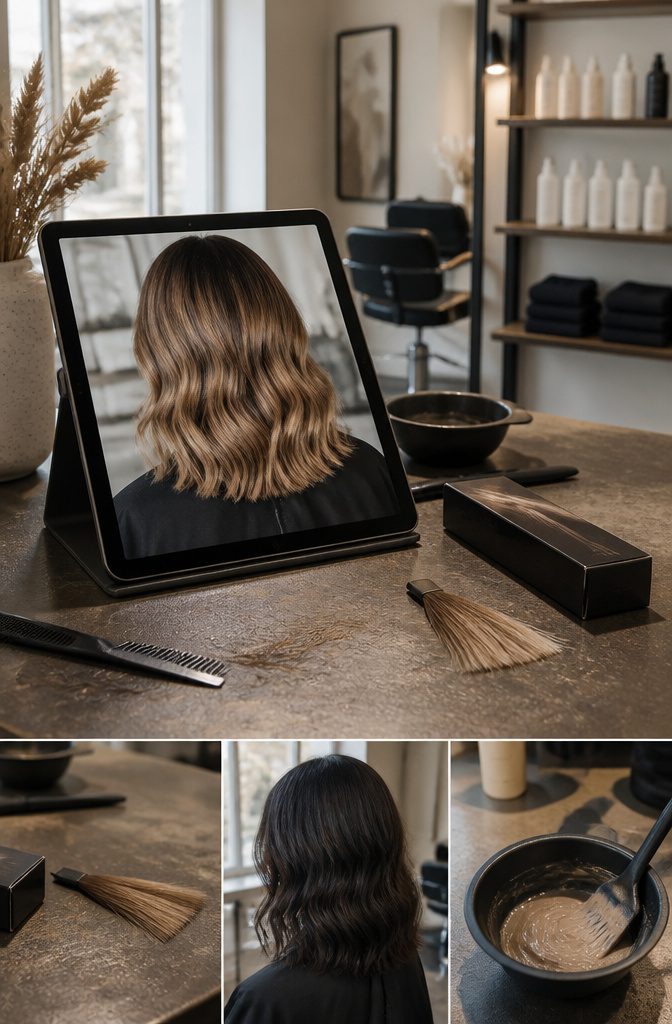
L’Oréal Paris runs its try-on on augmented reality, with more than 200 colors and an average rendering accuracy of 88%. Selfie images are never stored.
Matrix offers dozens of shades, from buttery blondes to warm reds and coppers. L’Oréal’s pairings give you a place to start: caramel blonde for blue eyes, soft red for emerald-green eyes.
Results vary with your starting color and its condition, so a light shade previewed over dark or damaged hair is the least trustworthy. I use these tools to rule shades out, not to promise an outcome.
A screen can’t show how your strands will lift or hold color. Before any box dye, do a patch test and wait 48 hours.
Six Color Harmonies
Newton’s 1666 wheel starts with red, yellow and blue, mixes them into orange, green and violet, and adds tertiaries like red violet and yellow orange. Six harmonies come from it:
- Complementary: two opposites, like blue and orange.
- Monochromatic: three values of one color.
- Analogous: three neighbors, like red, orange and yellow.
- Split complementary: one color plus the two tertiaries beside its opposite.
- Triadic: three evenly spaced colors.
- Tetradic: two complementary pairs.
- Raising or lowering value and saturation softens contrast or boosts intensity.
- The calculator caps at 3 base colors and outputs hex, RGB and CMYK.
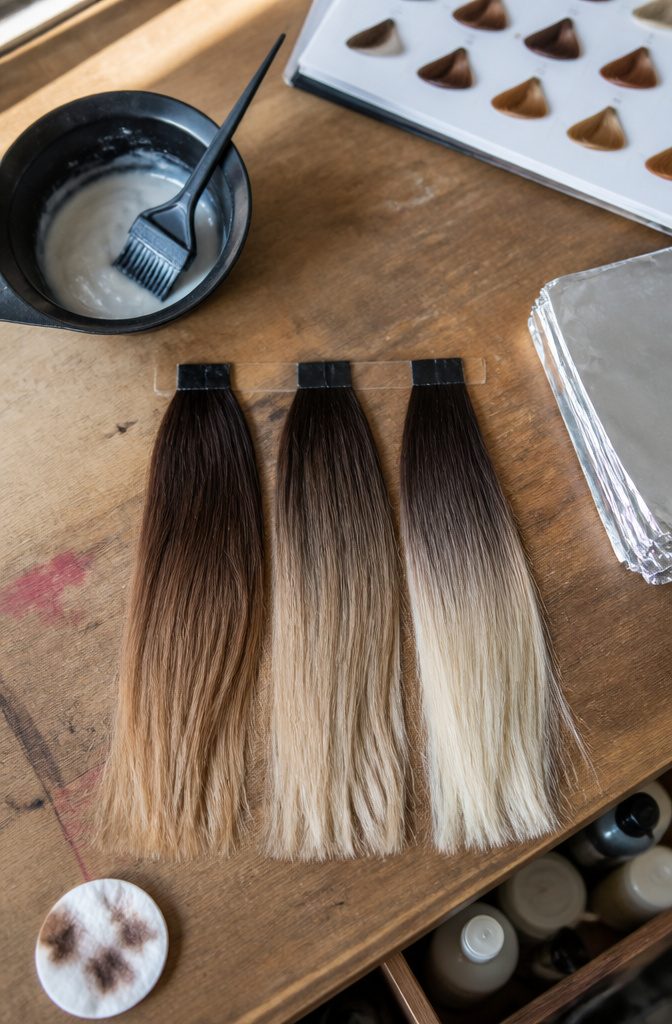
- For hair, monochromatic is the safest start: three values of one shade from root to ends.
Random Color Wheels
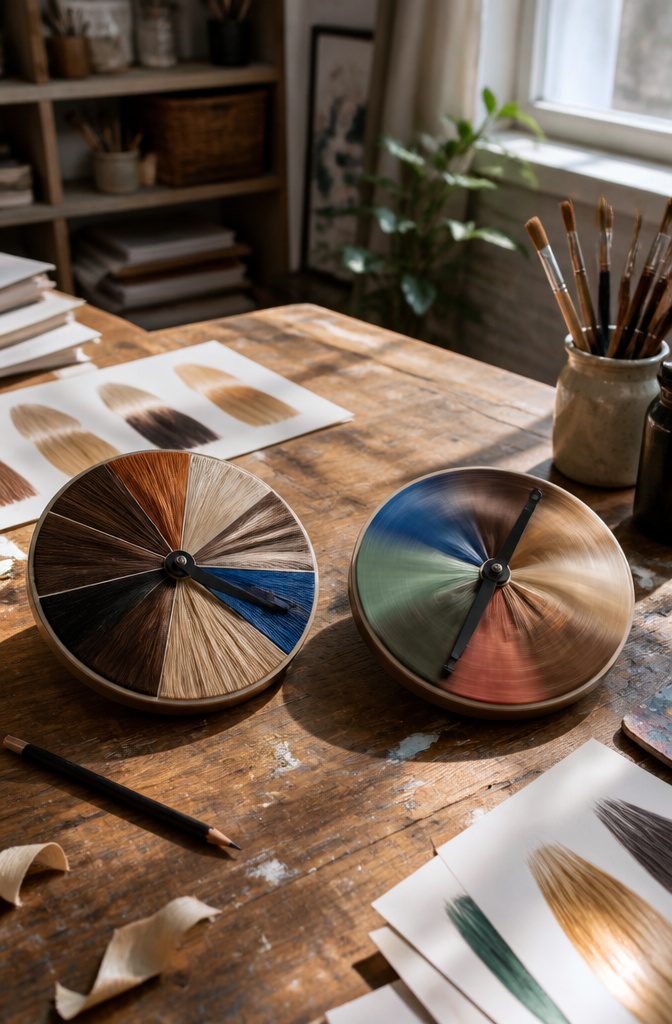
A spinner picks one hair color at random from a list, and two groups lean on it: people who can’t settle on a personal style, and artists designing original characters.
One version starts with 50 hair-color options and 50 color schemes, and lets you edit, sort and shuffle the entries. Its shared links are deleted after 365 days unused.
Another loads 16 defaults, including Brown, Blonde, Mint, Royal blue, Dip Dyed and YOUR CHOICE!. It adds weights, an elimination mode, shareable URLs and up to 6 wheels at once.
Artists get the most from that setup. For your own head, I’d treat a spin as a coin flip: it generates a result and teaches nothing about what suits you.
Frequently Asked Questions
What is the color of hair?
Hair color is defined by 3 coordinates: hue (the color family like yellow, blue, or orange), value (how light or dark the shade is), and saturation (how intense or muted it is).
Tracking all 3 makes formulation predictable, and systems like the Kolormondo PRO 3D globe assign each shade a precise NCS or CMY code instead of a vague name.
What app to use to try different hair colors?
L’Oréal Paris runs an augmented-reality try-on with more than 200 colors and 88% average rendering accuracy, and Matrix offers dozens of shades from buttery blondes to warm reds.
Use these tools to rule shades out, not to promise an outcome, since a screen can’t show how your strands will lift or hold color. Always do a patch test and wait 48 hours before any box dye.
How does the hair color wheel work?
The wheel loads a list of hair color options, which you can edit by adding or removing entries. Press the center of the wheel to spin, and it picks one color at random from your list.
What hair colors are included by default?
Most wheels start with 16 default choices, including natural shades like Brown and Blonde, bright colors like Mint and Royal blue, plus Dip Dyed and YOUR CHOICE!.
You can rename, add, or remove any of them to fit your character or style.
Can I customize the hair color list?
Yes.
You can edit entries, sort or shuffle them, adjust weights to make specific colors more or less likely, and change the color scheme, display mode, images, sound, or language. Shareable URLs let collaborators use the same wheel setup.
Can I use this for a cast of characters without repeats?
Yes.
Elimination mode removes each result after it’s picked, so the wheel cycles through the full list without repeating until every color has been used. This works well for assigning unique hair colors to multiple original characters.