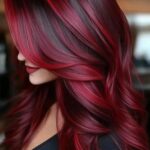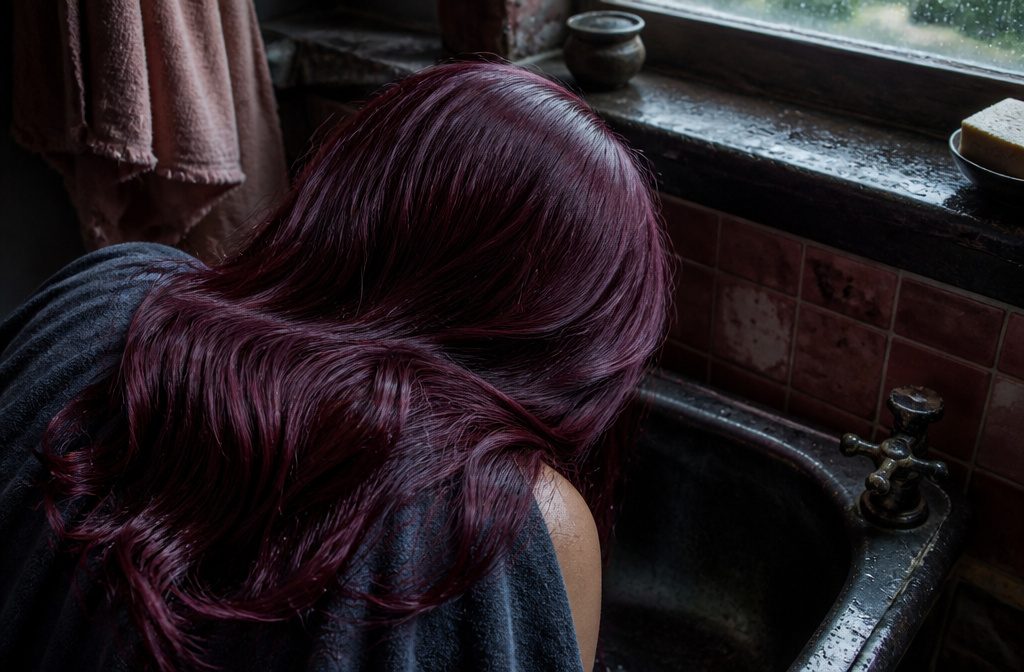
Merlot hair color is a deep red with purple and blue undertones that sits between auburn and burgundy, cooler than the first and less brown than the second.
The shade shows best on hair pre-lightened past level 7; darker bases produce a subtle burgundy tint rather than the full wine-red dimension.
Strawberry Leopard’s semi-permanent formula delivers red, wine, berry and purple tones in one $16.49 bottle that lasts up to eight weeks.
Merlot Between Auburn and Burgundy
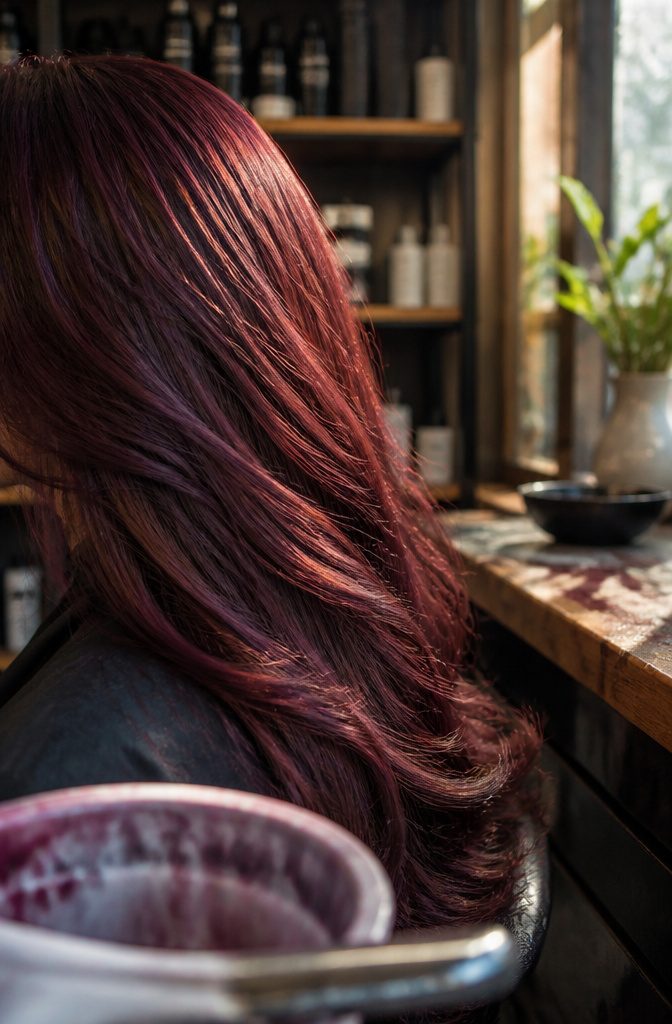
Merlot sits between auburn and burgundy, leaning into deep red with purple undertones rather than the reddish-brown and blue base that defines burgundy.
The distinction matters when you’re describing what you want to a stylist or shopping for a box formula. Auburn skews warmer and more copper.
Burgundy pulls brown. Merlot holds the middle ground with those purple and blue hints keeping it cool enough to work across more skin tones.
Strawberry Leopard calls their Merlot a dimensional burgundy-red that shifts depending on the light.
Under indoor lighting the purple comes forward. In natural sun the red dimension takes over.
That shift between red, wine, berry and purple is what makes the color feel richer than a flat single-tone red, and it’s why merlot reads as more complex than the brighter reds sitting next to it on the shelf.
Matching Merlot to Your Undertone
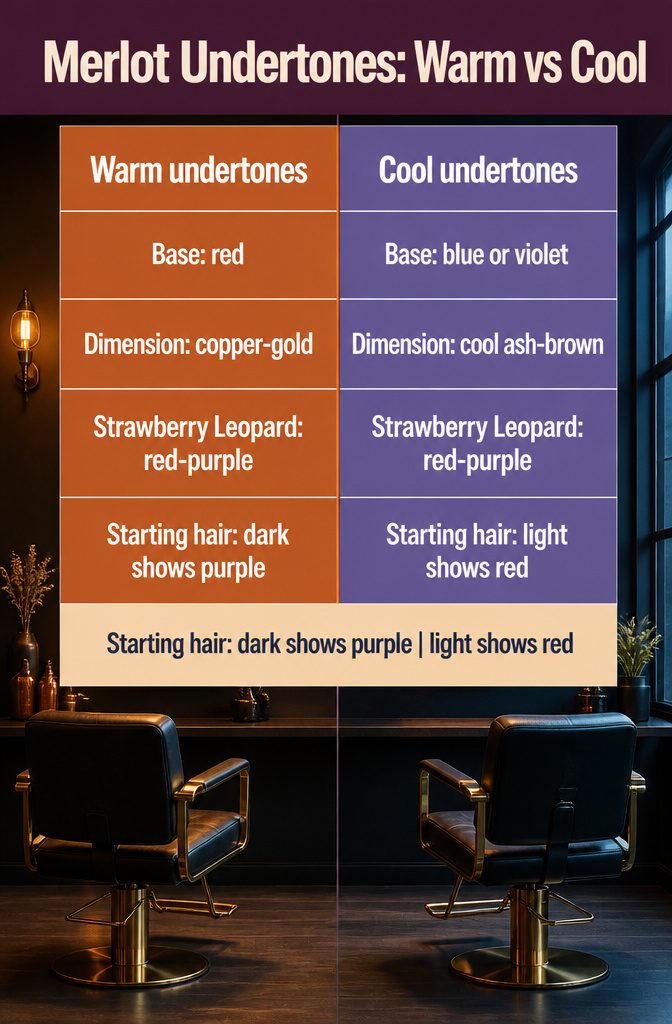
Your skin’s undertones decide which version of merlot works best. Warm undertones—think tan or olive skin and naturally golden hair—call for a red base with copper or golden-brown highlights added for dimension.
Cool undertones, like paler or pinker skin, do better with a blue or violet base paired with cool ash-brown balayage.
The Strawberry Leopard Merlot shade sits between the two camps: its mix of red and purple undertones is said to flatter both warm and cool complexions, which makes it easier if you’re not sure where you land.
Keep in mind that your starting hair color changes what you get. Darker bases pull more of the purple through, while lighter hair shows more of the red dimension.
Strawberry Leopard Merlot Formula
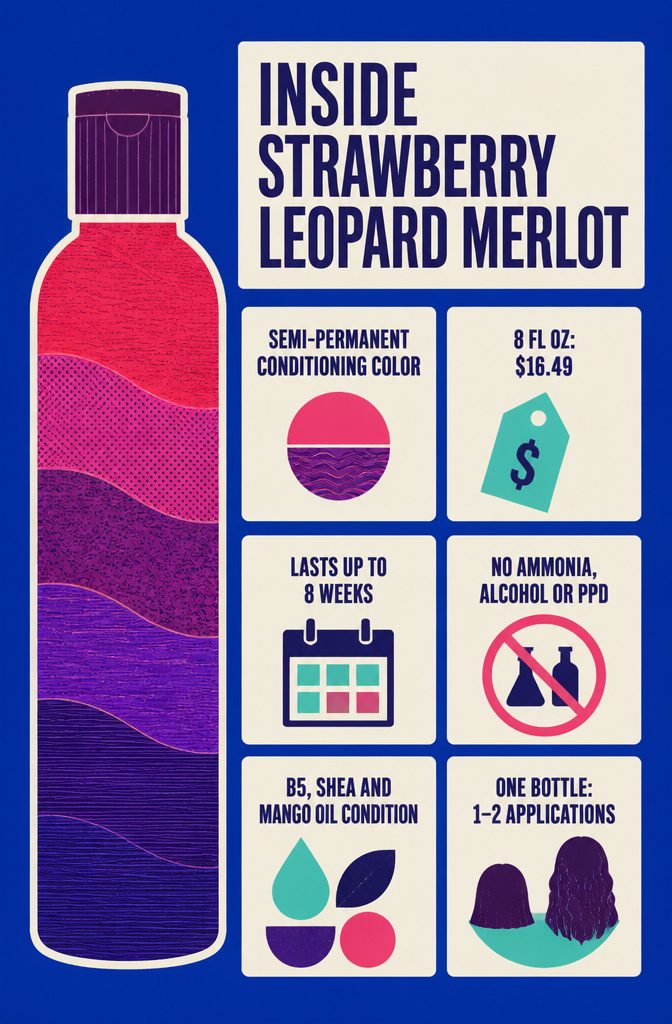
Strawberry Leopard makes a semi-permanent conditioning formula that delivers red, wine, berry and purple tones in one bottle. The 8 fl oz size runs $16.49 and lasts up to 8 weeks before fading.
The formula skips ammonia, ethyl alcohol and PPD, and the brand lists it as vegan, gluten-free and cruelty-free with Leaping Bunny certification. The colorants are HC Red No. 3, HC Red No. 7, HC Violet No. 1 and Basic Blue 99.
Conditioning ingredients worth noting:
- Vitamin B5, shea butter and mango oil add moisture while the color deposits
- Hydrolyzed vegetable protein strengthens hair structure
- Panthenol (pro-vitamin B5) adds shine
- Glycerin pulls moisture into the hair shaft
A 6.76 fl oz bottle also exists at $11.99–$14.99. One bottle covers 1–2 applications; longer or thicker hair will take two bottles.
Apply Merlot at Home
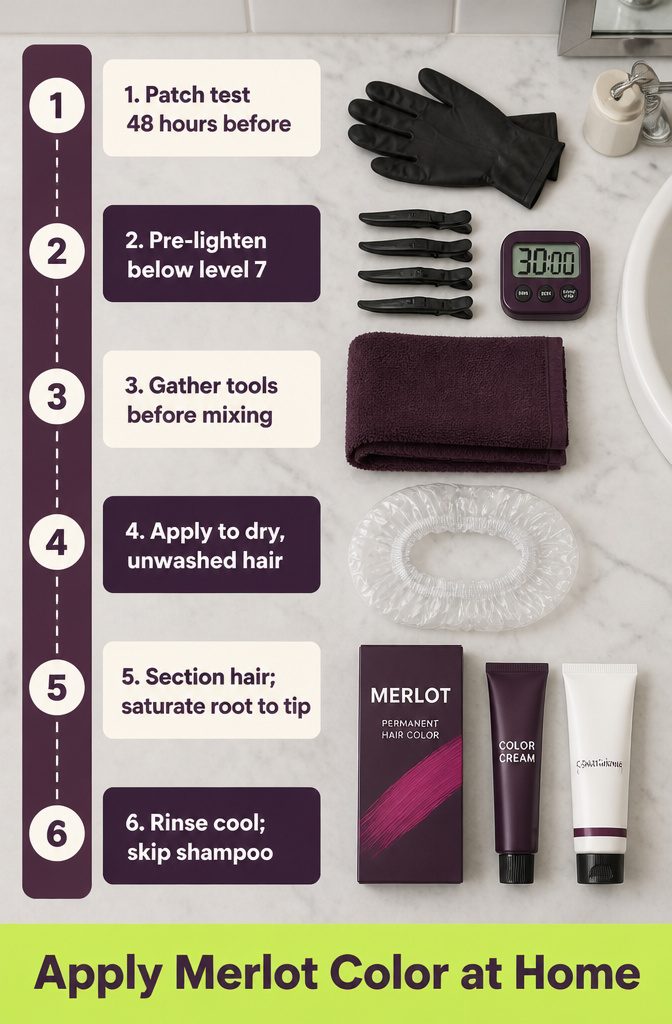
- Patch test 48 hours before you plan to color. Mix a small amount of dye and apply it behind your ear or on your inner elbow to check for any reaction.
- Pre-lighten if your hair is darker than level 7. Merlot shows best on hair that already has some lift.
- Gather your supplies: the dye kit, gloves, a timer, sectioning clips, and an old towel. Keep everything within reach before you start mixing.
- Work on dry, unwashed hair. Natural oils protect your scalp and help the color grab evenly.
- Divide your hair into 4–6 sections and clip them out of the way. Start at the back and work forward, saturating each section from root to tip.
- Cover your hair with a shower cap or plastic wrap and set a timer. The official instructions recommend 30 minutes, but I adjust based on how intense I want the color: 20–25 minutes for a subtle tint, 45 minutes for results that match the bottle, or 1–1.5 hours for maximum depth on pre-lightened hair.
- Rinse with cool water until it runs mostly clear. Do not shampoo.
- Apply the conditioner from the kit and leave it on for at least 5 minutes, then rinse with cool water.
- Skip washing for the first 48 hours. This window is when the color sets, and shampooing too soon will pull pigment out before it locks in.
Pre-Lightening Past Level 7
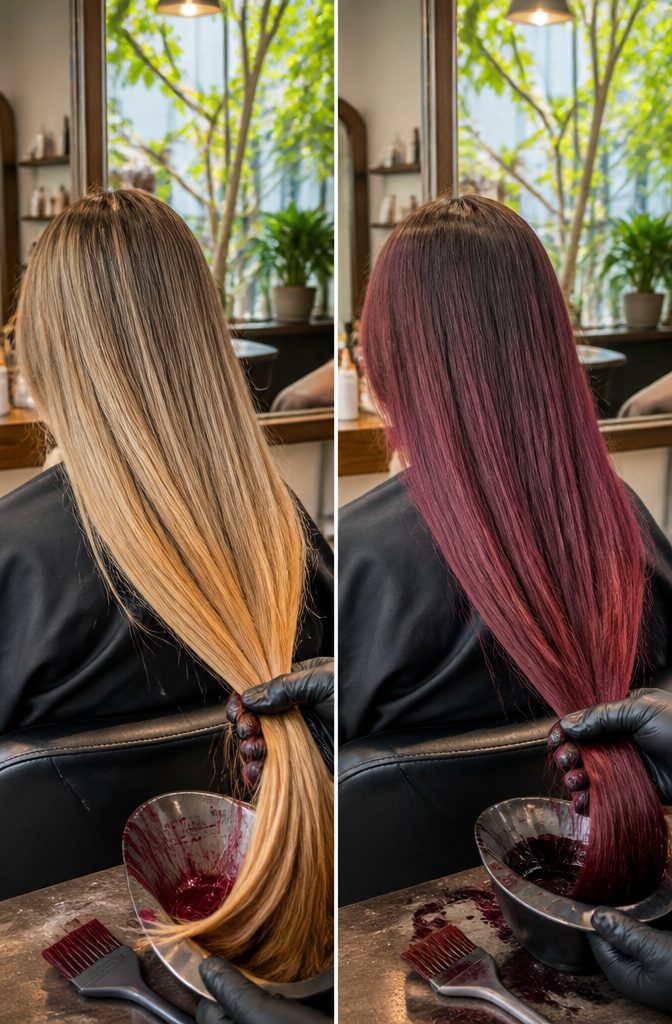
Hair darker than level 7 needs pre-lightening if you want the full wine-red color. Without it, the color still takes, but the intensity drops sharply depending on where you start.
| Starting Level | Hair Color | Result | Best For |
|---|---|---|---|
| 1–4 | Dark brown to black | Subtle burgundy tint, visible mainly in bright light | Readers wanting a hint of dimension without bleach |
| 5–6 | Medium to light brown | Noticeable burgundy-red, more red than purple | Visible color change, lighter lift than pre-lightened |
| 7–10 | Pre-lightened | Full, rich wine-red with purple undertones | The deepest, most dimensional merlot |
If you want the true merlot experience, pre-lightening wins.
Levels 7 and up deliver all the dimensional qualities and purple undertones that make the color distinctive. Darker starting points give you burgundy overlay rather than wine-red transformation, and the purple notes fade first.
Maintenance and Fading
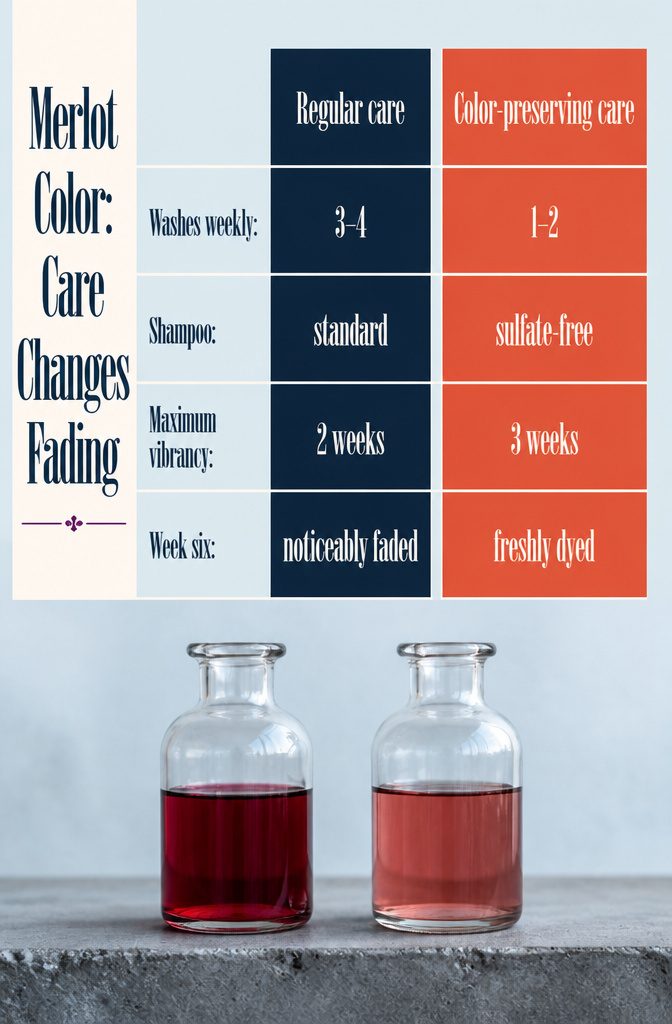
Merlot is not a set-it-and-forget-it color. With regular care (washing three to four times weekly using standard shampoo), the color holds intense vibrancy for the first two weeks, softens through weeks three and four, and fades noticeably by week six.
You’re looking at 20–25 washes before it transitions from vivid to a soft, faded red.
Switch to color-preserving care (one to two washes weekly with sulfate-free shampoo and cold-water rinses) and you can stretch maximum vibrancy through week three, with the color still looking freshly dyed at week six.
The fade itself stays flattering. Purple undertones disappear first, leaving a straighter red behind, but the color remains in the red-purple family rather than turning orange or muddy.
On pre-lightened hair, the final stage may hold a strawberry or rose-gold tint that lingers past week eight.
Mixing Your Own Merlot
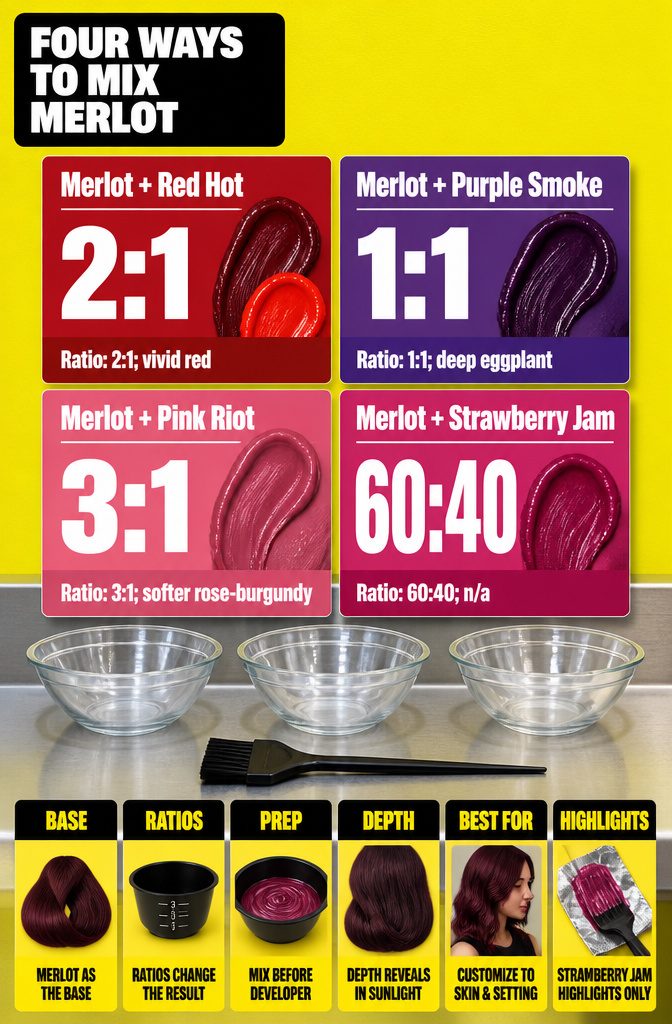
Merlot works as a base for four different directions, and the ratios shift the result enough that you can fine-tune the shade before you mix developer in. I’ve mapped the formulas that come up most often.
| Mix | Ratio | Result | Best For |
|---|---|---|---|
| Merlot + Red Hot | 2:1 | More vivid red | Warmer skin tones, high contrast |
| Merlot + Purple Smoke | 1:1 | Deep eggplant, nearly black indoors | Cool undertones, subtle dimension |
| Merlot + Pink Riot | 3:1 | Softer rose-burgundy | Conservative settings, first-timers |
| Merlot + Strawberry Jam | 60:40 | n/a | Highlights only |
Purple Smoke in equal parts gives you the deepest version, one that reads almost black until sunlight hits it and the purple-red comes through.
Red Hot pushes the shade more vivid, and Pink Riot softens it into something easier to wear in offices or schools where full burgundy feels like too much.
Salon or Home Color
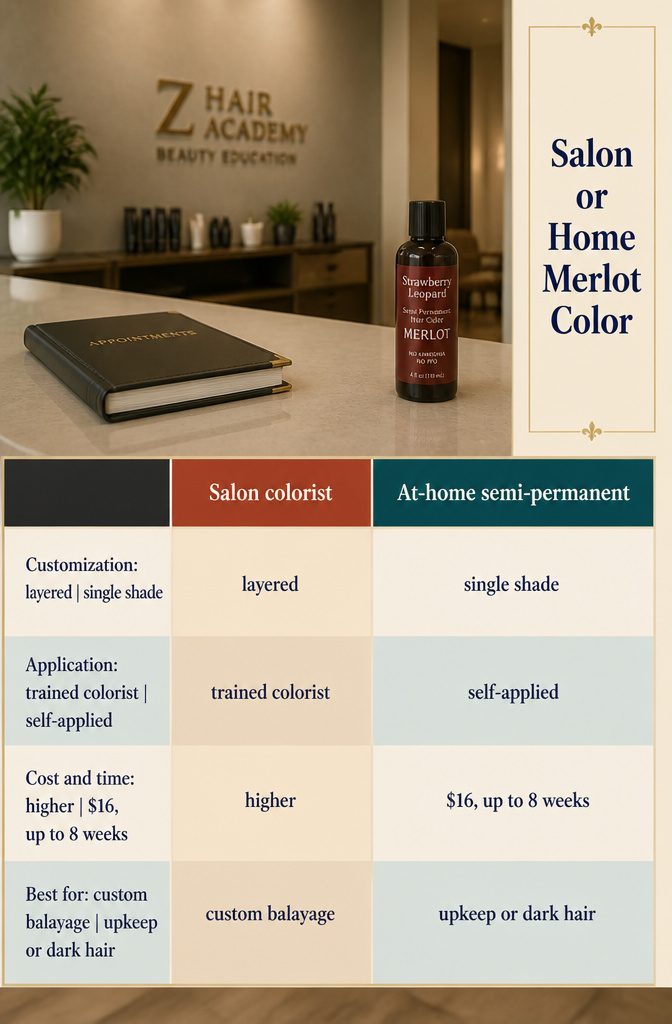
A salon colorist can layer a custom merlot with warm or cool undertones and place balayage where it lifts your face shape, but the base color, balayage placement and toning all depend on what you bring in, and I trust that work to someone trained rather than guessing at home.
Z Hair Academy runs student salons in Overland Park, Lawrence, Lee’s Summit and Kansas City, where licensed educators supervise students through color formulation. The bill is lower than a full-service salon, and the time commitment is higher.
At home, a semi-permanent merlot like Strawberry Leopard’s formula skips developer entirely and deposits color that lasts up to eight weeks.
The brand lists bonding technology, vitamin B5, shea butter and mango oil in the bottle, no ammonia or PPD, and the sixteen-dollar price makes it easy to reapply when the red fades.
I would take this route for maintenance between salon visits or for anyone working with hair dark enough to skip pre-lightening.
Where to Buy Merlot
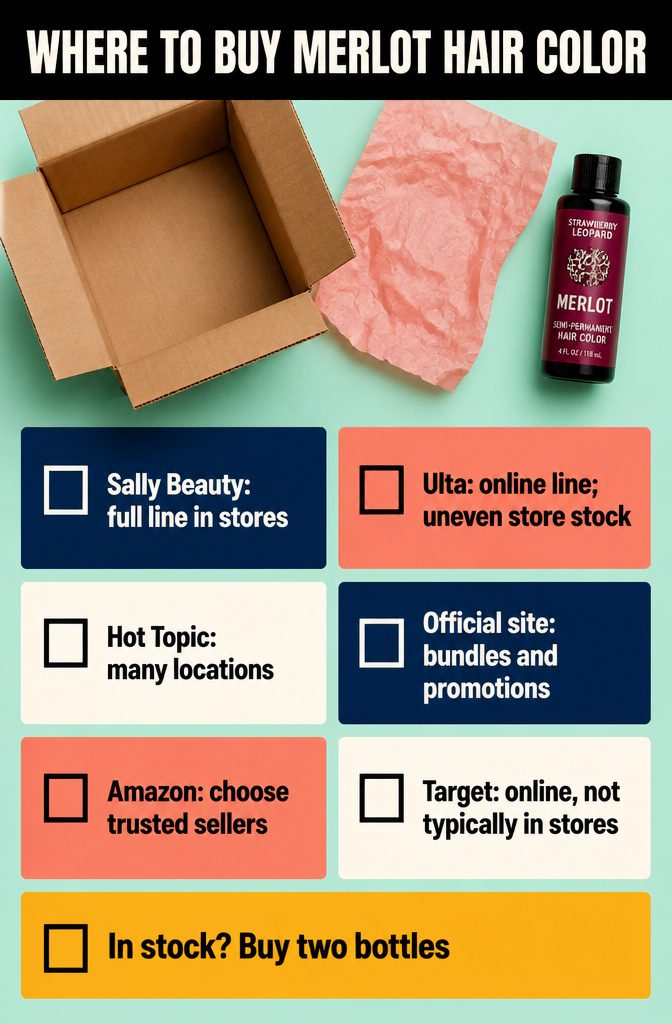
You can find Merlot at a handful of reliable retailers, though stock moves fast.
Sally Beauty Supply carries the full Strawberry Leopard line in nearly all physical locations, and their staff tends to know the product well. Their online store ships if you’d rather skip the trip.
Ulta Beauty stocks it in their expanded hair color section, though not every store location keeps it on hand. Their website reliably has the complete line.
Hot Topic now carries Strawberry Leopard in many locations as part of their expanded beauty offerings.
The official Strawberry Leopard website offers the full range and sometimes has special editions or bundles you won’t find elsewhere. They run subscriber promotions pretty regularly.
Amazon carries it, but watch out for third-party sellers shipping older formulations. Stick to products shipped and sold by Amazon or the official Strawberry Leopard store on the platform.
Target’s online store has started carrying the line, though it’s not typically in their physical locations yet.
Merlot sells out quickly. If you find it in stock, grab two bottles so you’re not scrambling at touch-up time.
Pros and Cons
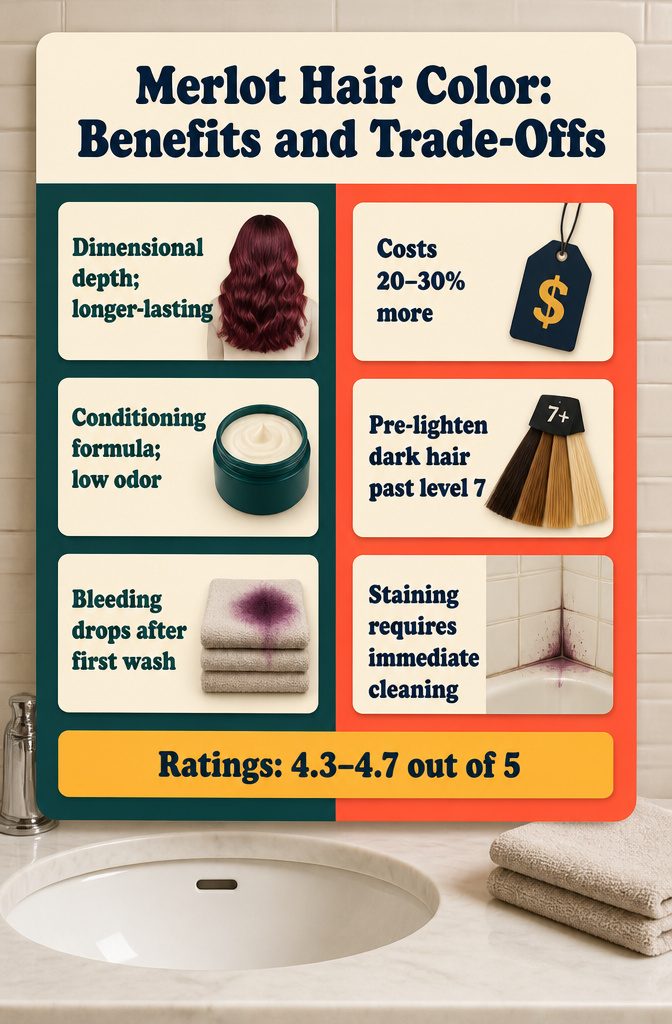
The color delivers rich, dimensional depth that lasts longer than most semi-permanents, and the formula conditions while it deposits.
After the first wash, bleeding onto pillowcases and towels drops off sharply. The application itself carries almost no chemical smell, which matters if you’re spending thirty minutes with product on your head.
Trade-offs worth knowing before you buy:
- Limited availability. You won’t find this in a drugstore; most merlot formulas ship direct or through specialty beauty retailers.
- Higher cost. Expect to pay 20–30% more than semi-permanent options at the pharmacy.
- Staining. Bathtubs and showers need immediate cleaning after rinsing, or the color sets into grout and caulk.
- Pre-lightening often required. Dark hair needs lifting past level 7 to show the true red-wine tone.
Platform ratings sit between 4.3 and 4.7 out of 5. The color results and conditioning benefits drive most of the praise; price and accessibility account for nearly all the complaints.
The verdict: merlot suits anyone chasing a complex, flattering red who’s willing to prep their hair properly and pay for a formula that actually works. If you need same-day pickup or want to stay under ten dollars, this isn’t it.
Frequently Asked Questions
What shade of color is merlot hair?
Merlot is a deep red with purple undertones that sits between auburn and burgundy.
Auburn leans warmer with more copper, burgundy pulls brown, and merlot holds the middle ground with purple and blue hints that keep it cool enough to work across more skin tones.
The color shifts depending on the light, showing more purple indoors and more red dimension in natural sun.
Is merlot color the same as burgundy?
No. Burgundy is a deep reddish-brown with blue undertones, while merlot is a deep red with purple undertones.
Merlot sits between auburn and burgundy, leaning into deep red with purple and blue hints rather than the reddish-brown and blue base that defines burgundy.
What skin tone suits merlot hair?
Warm undertones (tan or olive skin with naturally golden hair) call for a red base with copper or golden-brown highlights, while cool undertones (paler or pinker skin) work better with a blue or violet base paired with cool ash-brown balayage.
Strawberry Leopard’s Merlot shade sits between the two camps with a mix of red and purple undertones that flatters both warm and cool complexions.
What exactly is Strawberry Leopard Merlot?
It’s a semi-permanent conditioning formula that delivers red, wine, berry and purple tones in one bottle.
The color lasts up to 8 weeks, skips ammonia and PPD, and contains vitamin B5, shea butter and mango oil. The formula is vegan, gluten-free and Leaping Bunny certified.
Where can you buy Strawberry Leopard Merlot?
Sally Beauty Supply carries it in nearly all physical locations and online, Ulta Beauty stocks it in their expanded hair color section and website, and Hot Topic carries it in many locations.
The official Strawberry Leopard website offers the full range plus special editions, Amazon carries it (stick to products shipped by Amazon or the official store), and Target’s online store has started carrying the line.
Merlot sells out quickly, so grab two bottles when you find it in stock.
Is Strawberry Leopard Merlot permanent or semi-permanent?
It’s semi-permanent. The formula coats the hair shaft with color molecules that gradually wash out over time rather than permanently altering your hair structure, and it skips peroxide and ammonia.
With proper care, the color holds intense vibrancy for the first two weeks and remains in the red-purple family for 20–25 washes before fading to a soft, faded red.
Do you need to bleach hair for merlot color?
Hair darker than level 7 needs pre-lightening to get the full wine-red color.
Dark brown to black hair (levels 1–4) will show a subtle burgundy tint visible mainly in bright light, medium to light brown (levels 5–6) produces noticeable burgundy-red, but pre-lightened hair (levels 7–10) gives the full, rich wine-red with purple undertones.
Pre-lightening delivers all the dimensional qualities and purple undertones that make the color distinctive.