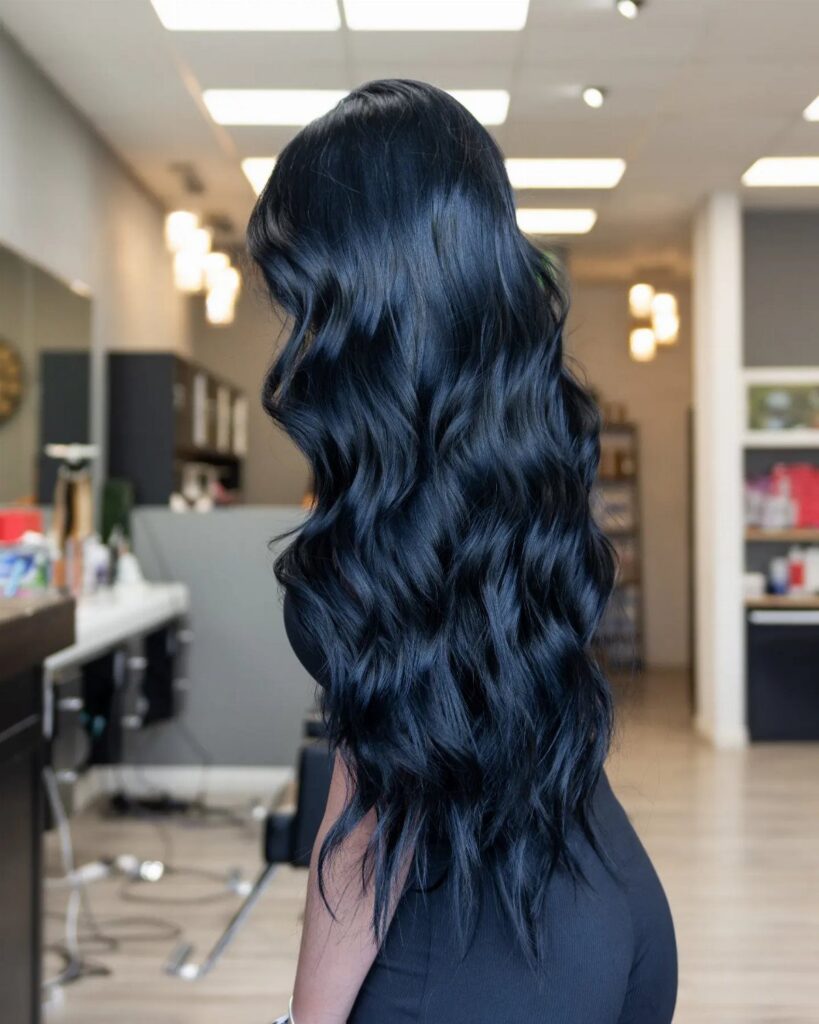
Your starting shade decides whether Midnight Blue or Silver Blue is within reach.
Dark brown or black hair can hold a deep blue after a single at-home session, but the pale, icy shades only work once the hair has been lifted to level 9 or 10.
The list runs from Blue Black, which can pass for plain black indoors, to Silver Blue, which shows every uneven spot, and I’d pick the deepest option your base allows before Lightening Dark Hair comes into play, since lightening dries hair out.
1. Blue Black Hair Dye
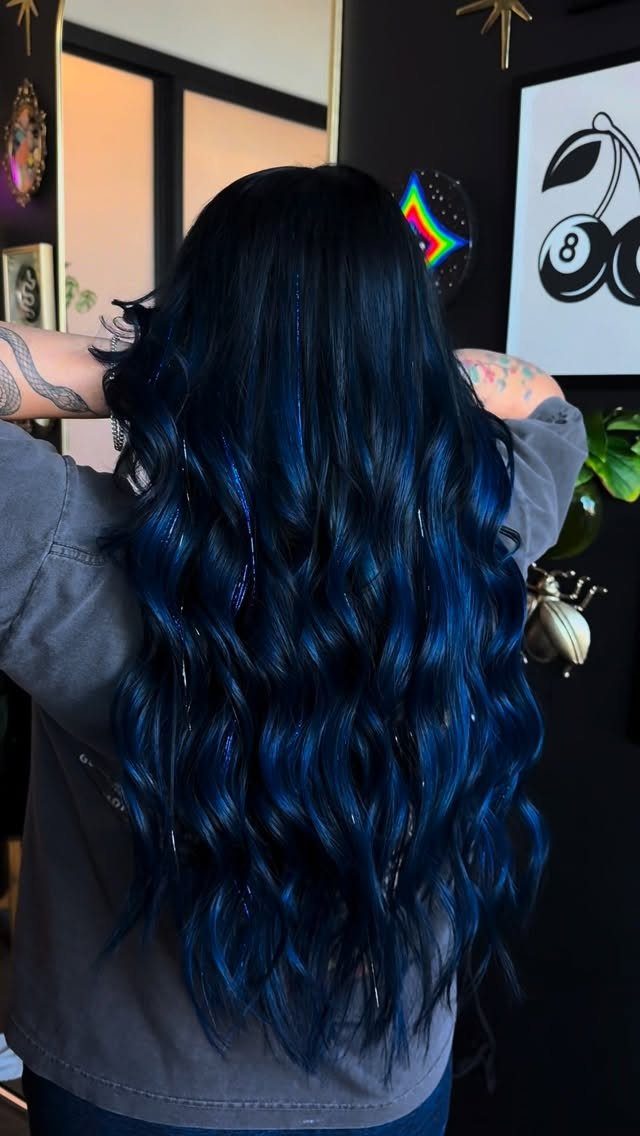
Black hair with a blue sheen is the quietest way into blue. In a dim room it reads as plain black, and the cool cast only shows when light moves across the length.
Long waves like these spread that sheen over more surface, which makes the blue look deeper. Pick the intensity before you buy: a subtle sheen suits daily wear, while a stronger blue is made for being noticed.
2. Silver Blue Hair Dye
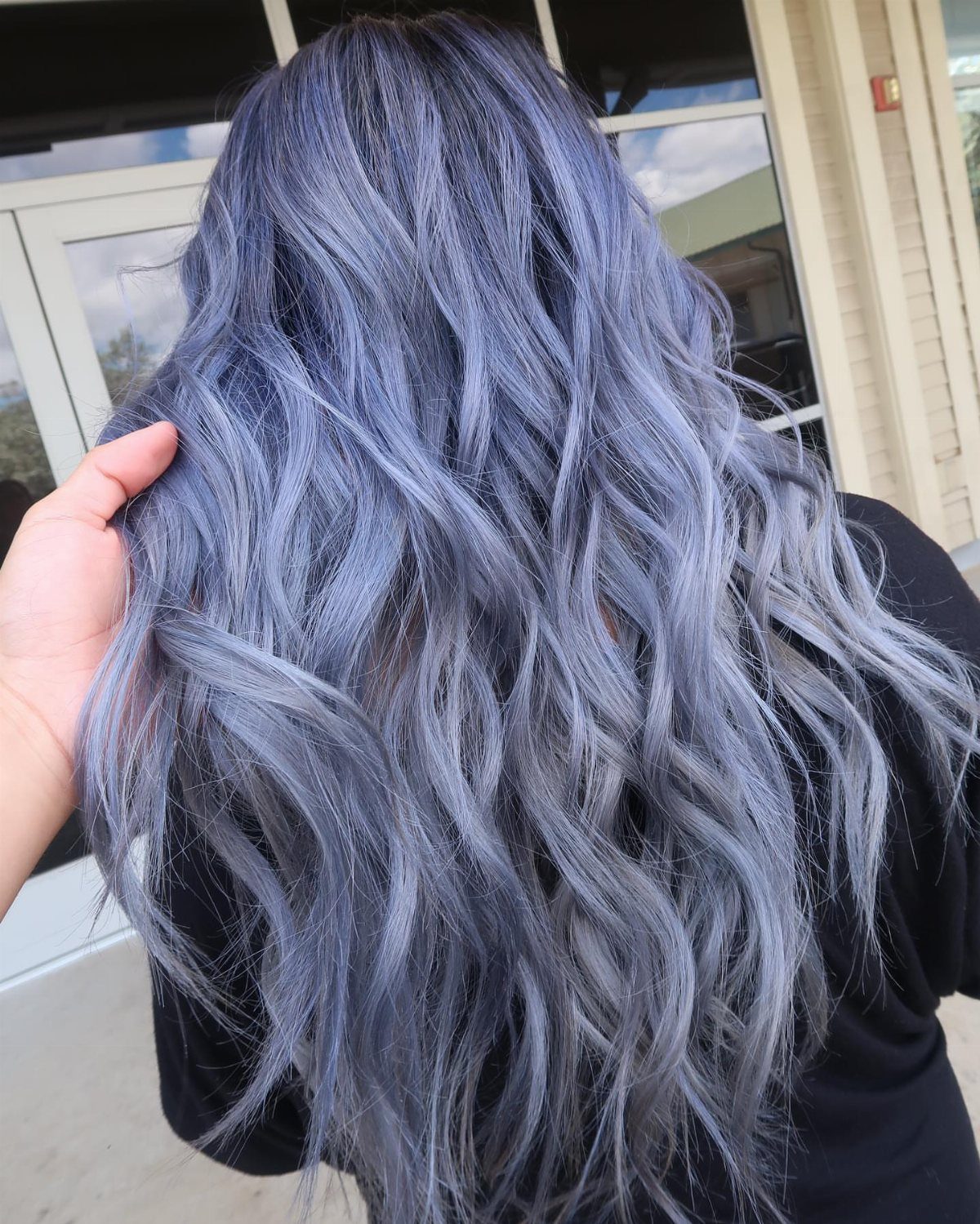
Icy silver-blue is the lightest, coolest of the blue shades, and I prefer it on waves because the ripples break the color into pale and deeper patches instead of one flat tone.
It asks more of your hair than the dark blues do.
Pale shades show every uneven spot, so expect a salon visit or a careful, slow home application. Cool-toned silver also pairs best with cool skin, and warm skin can look a little washed out beside it.
3. Midnight Blue Hair Dye
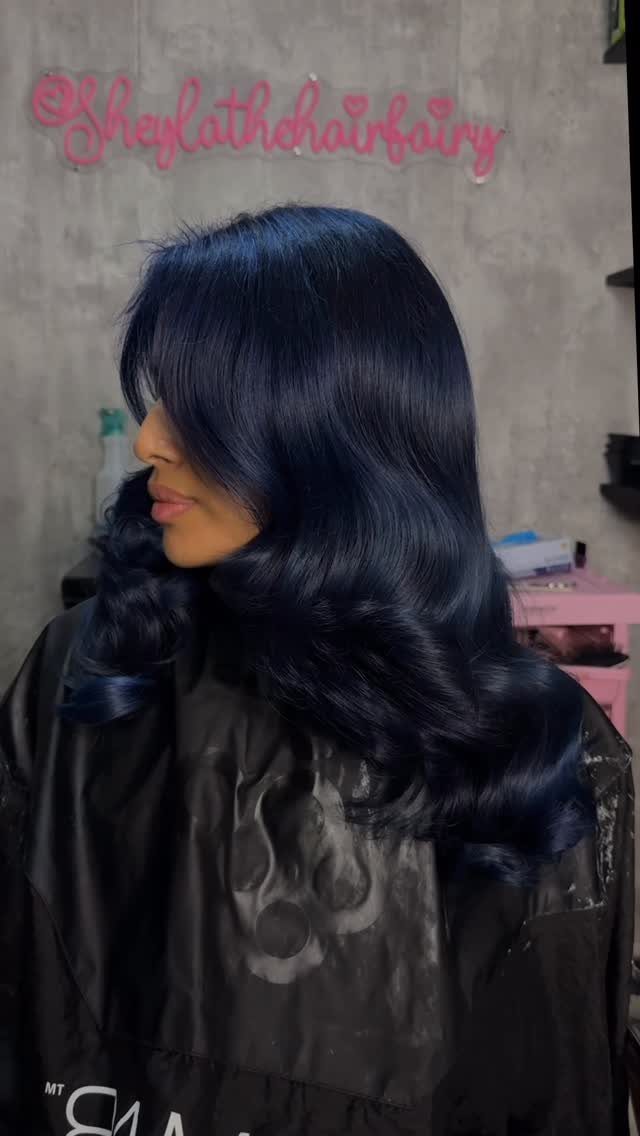
Midnight blue sits darker than royal or navy, close enough to black that it reads as black in most indoor light and shows its true blue only in sun or under bright bulbs.
The color holds longer than lighter blues because there’s less contrast between the dye and your natural pigment.
Most midnight blue dyes are semi-permanent or demi-permanent, which means they deposit color without lifting your base. If your hair is already dark brown or black, you can apply this straight over it at home in one session.
The blue tone fades gradually to a softer steel color, not an obvious orange or brassy cast, so grow-out looks intentional rather than neglected.
4. Navy Blue Hair Dye
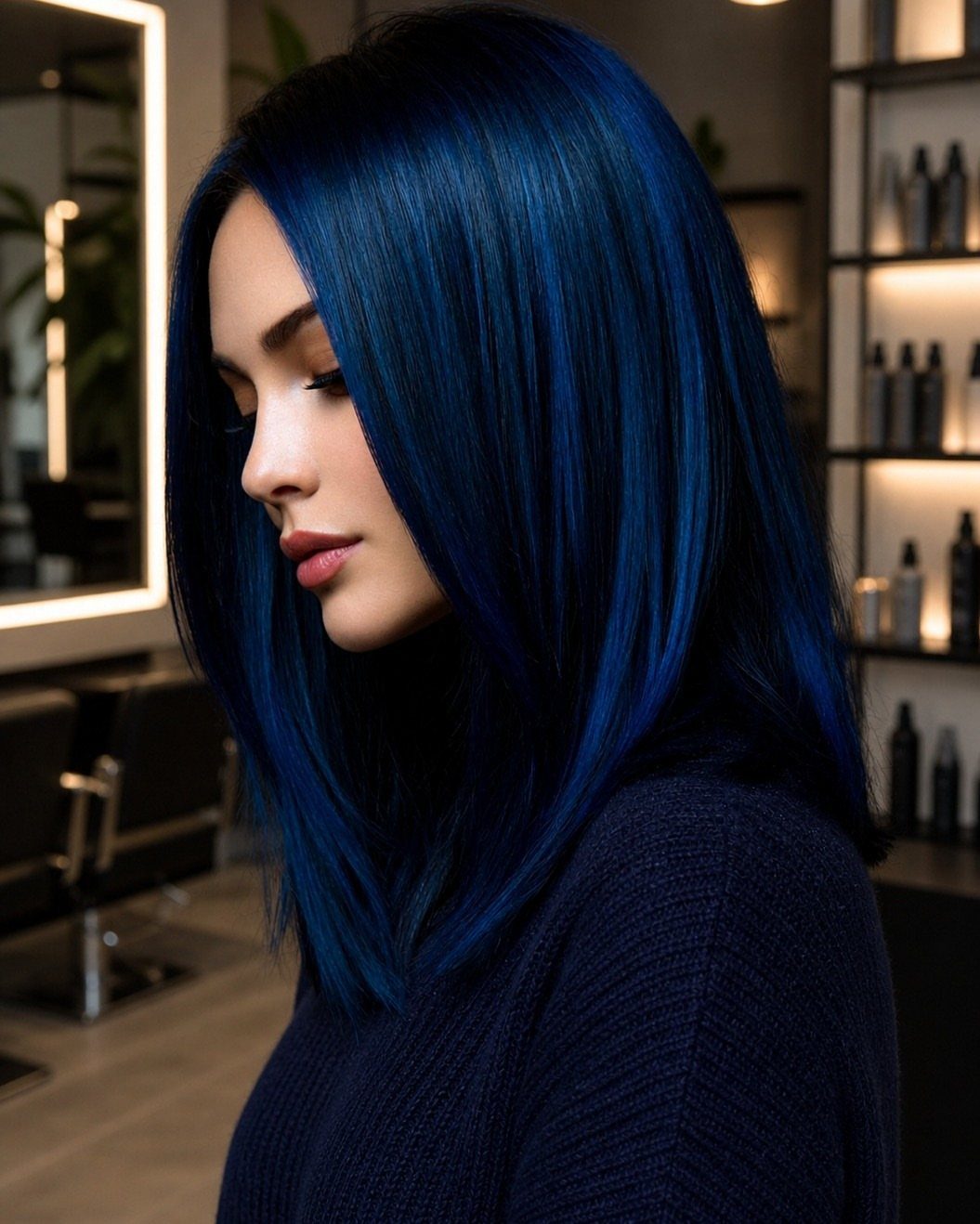
Navy sits between black and a true blue, and that is why it works for both a office day and a weekend. Straight, long hair like this keeps the shade smooth and lets the depth show.
Wear it sleek for a polished look, or tie it up loosely and it turns casual. Compared with royal blue, navy is far easier to live with, since it never feels loud.
I’d choose it over brighter blues if this is your first fashion color.
5. Royal Blue Hair Dye
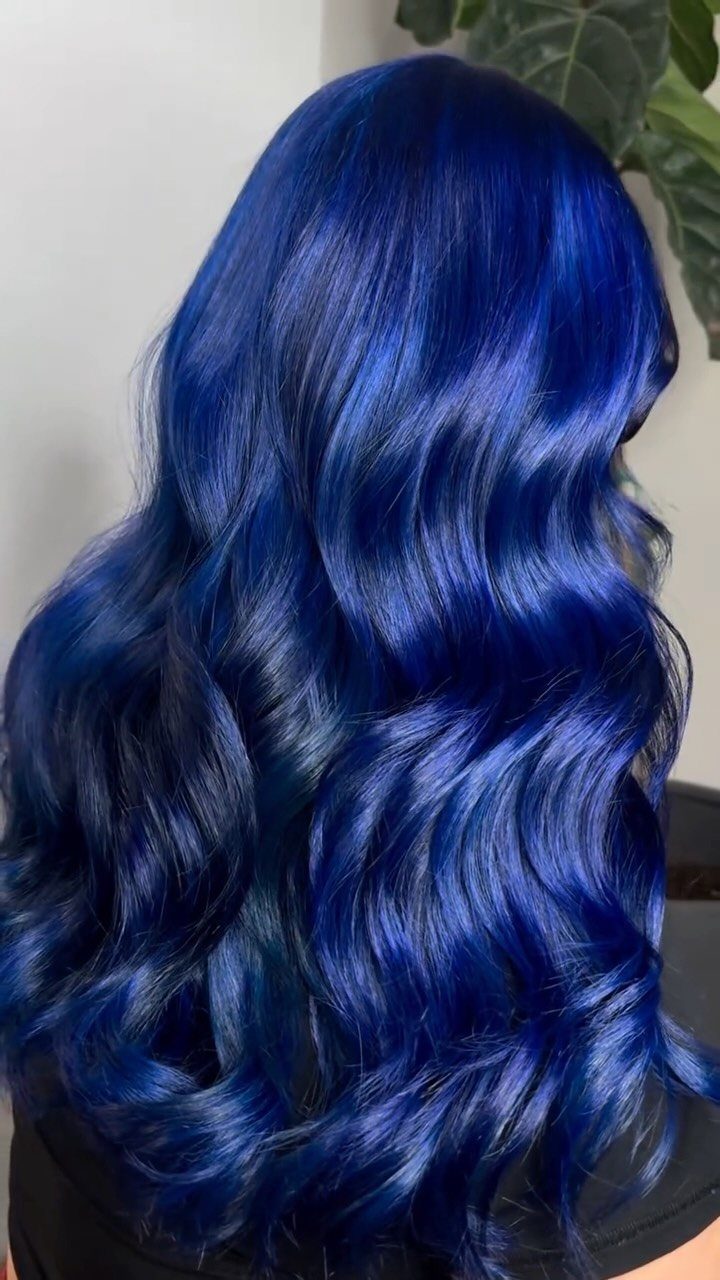
Royal blue is the loud one. On glossy curls it looks saturated and almost electric, and the curl pattern adds shine that straight hair can’t match.
On a dark natural base, the same shade turns into a subtler tint, closer to a blue shimmer than a bold statement. That makes it a useful option for anyone after the color without the attention.
Choose royal blue when the hair should be the focus of the outfit, and keep the rest of your look simple.
6. Blue Streaks
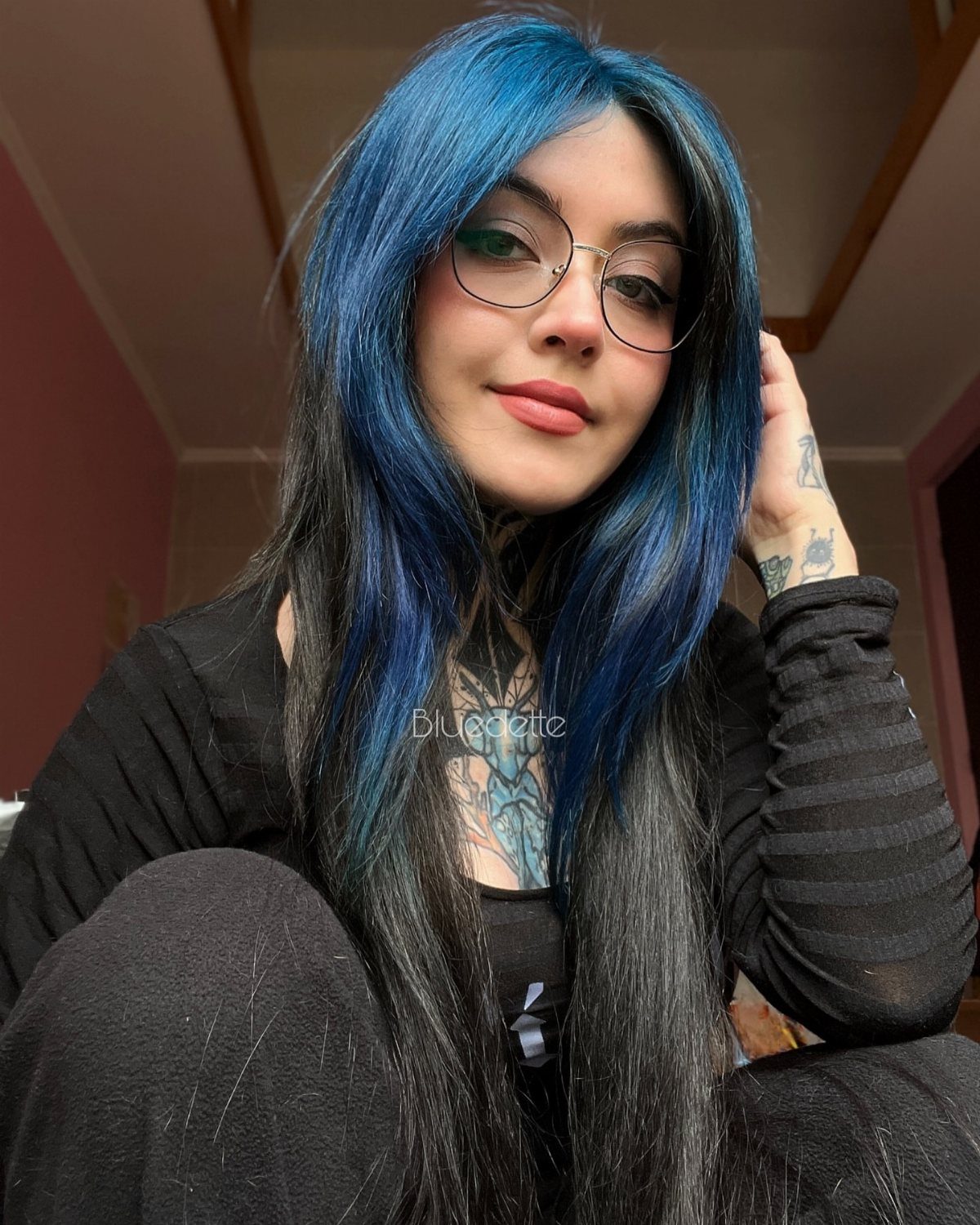
Streaks let you try blue without committing your whole head. Face-framing pieces against black hair put the color right beside your eyes, which makes them the most visible spot to place it.
Because the blue is in separate sections, you can keep the rest of your hair black and change the streaks later if you tire of them. Glasses sit well with this placement, since the streaks stay clear of the frames.
I’d start with two thin pieces, one on each side, and add more once you know you like them.
7. Layered Hair
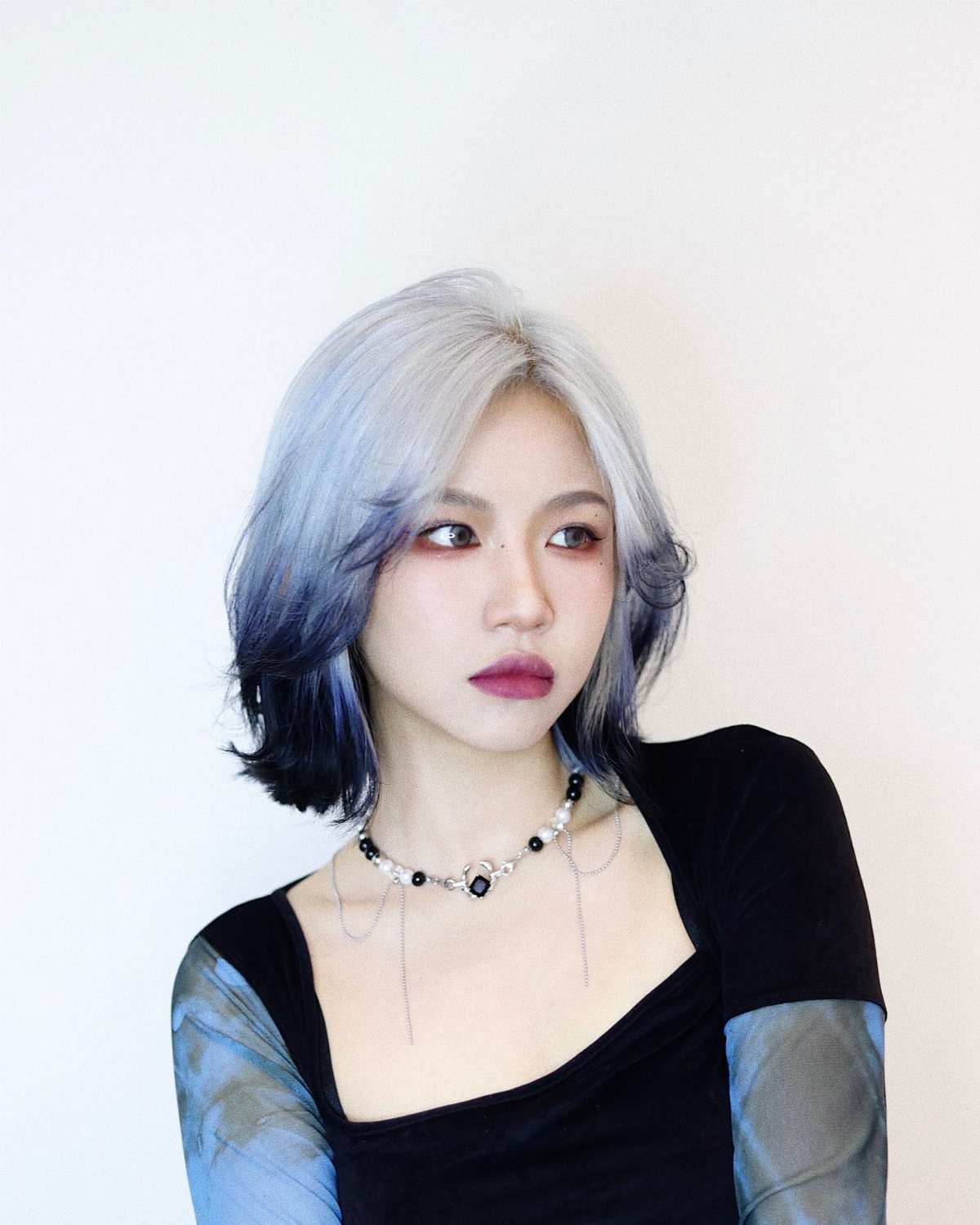
Layers add movement to blue or blue-black color, and the cut itself lifts weight so the color shows off differently at each length. The shortest pieces catch light and read brighter, while the longer layers underneath stay deeper.
If you’re dyeing at home, apply color to the shortest layers first since they may process faster with less density. Layers also mean easier root touch-ups later, because regrowth blends into the length instead of sitting in one blunt line.
This cut grows out well, and the color shift stays interesting through the whole grow-out phase.
8. Inverted Bob
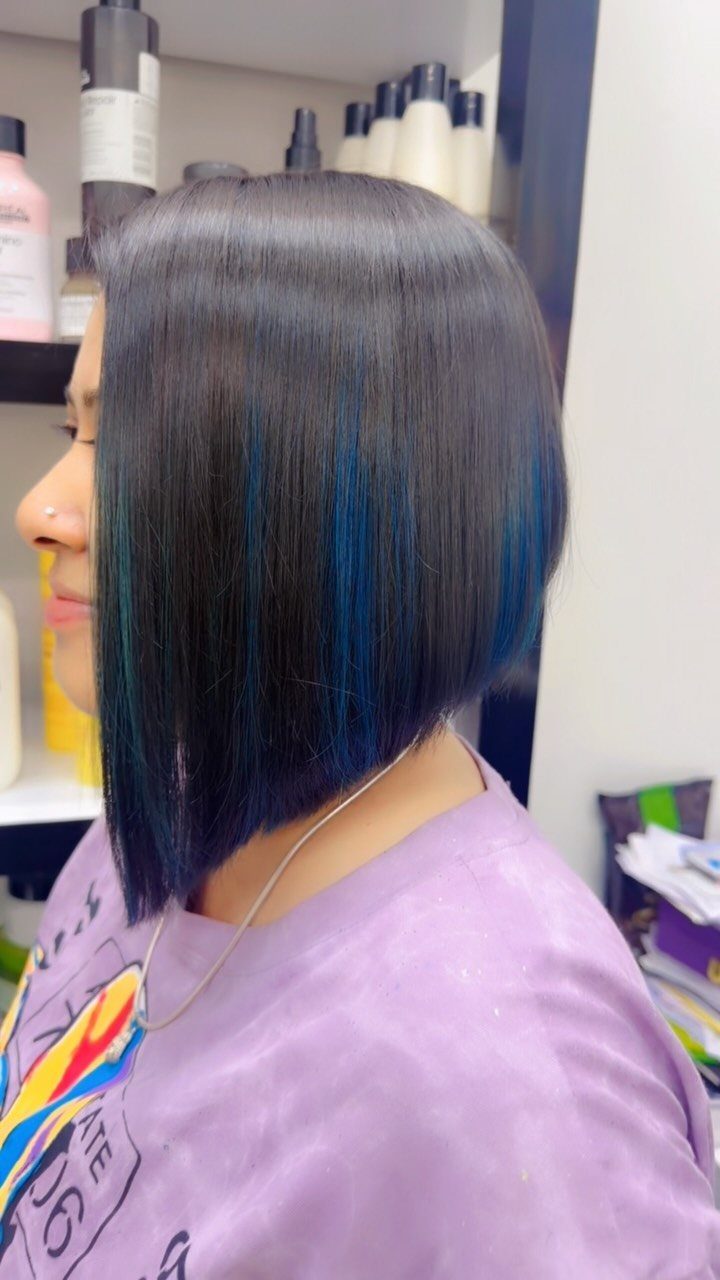
An inverted bob stacks shorter in the back and angles longer toward the front, and the geometry of the cut makes blue streaks or blue-black color read as part of the shape.
The front pieces frame your face and show the most color when you turn your head.
Because the back is shorter and stacked, you’ll see regrowth there first.
9. Straight Blue-black Hair
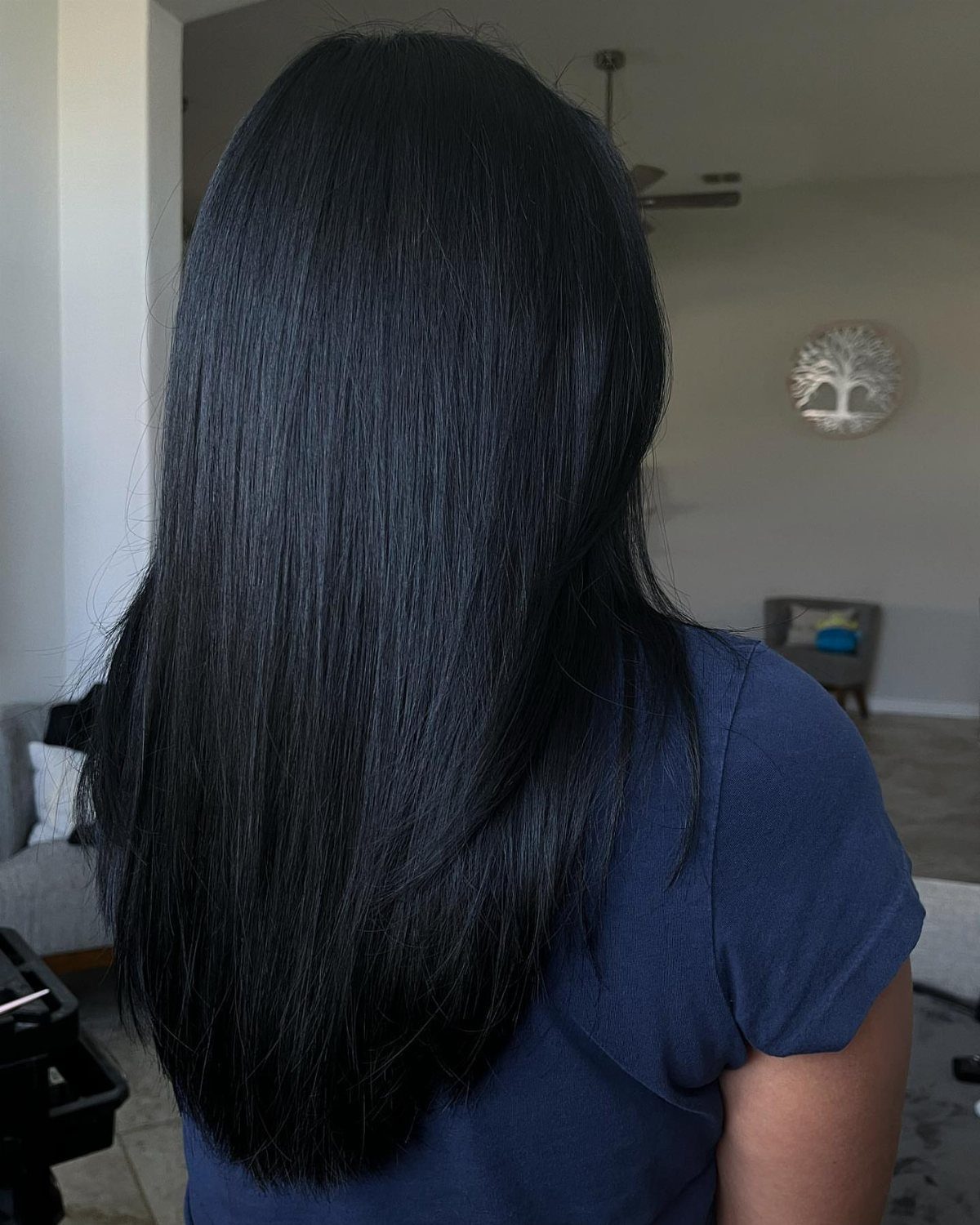
Long, straight hair in a true blue-black shade looks almost purely black indoors and shows its blue cast in direct light. The straighter the hair, the more shine it holds, and that shine is where the color reads clearly.
This is the easiest version to maintain at home. A single-process blue-black dye covers in one session, and straight hair shows fewer color variations than textured or layered cuts, so any minor unevenness is less visible.
If your hair is naturally straight, this is the lowest-effort option. If you heat-style to get it straight, plan on that time every wash day or the color will read differently curly.
10. Dark Blue Hair with Bangs
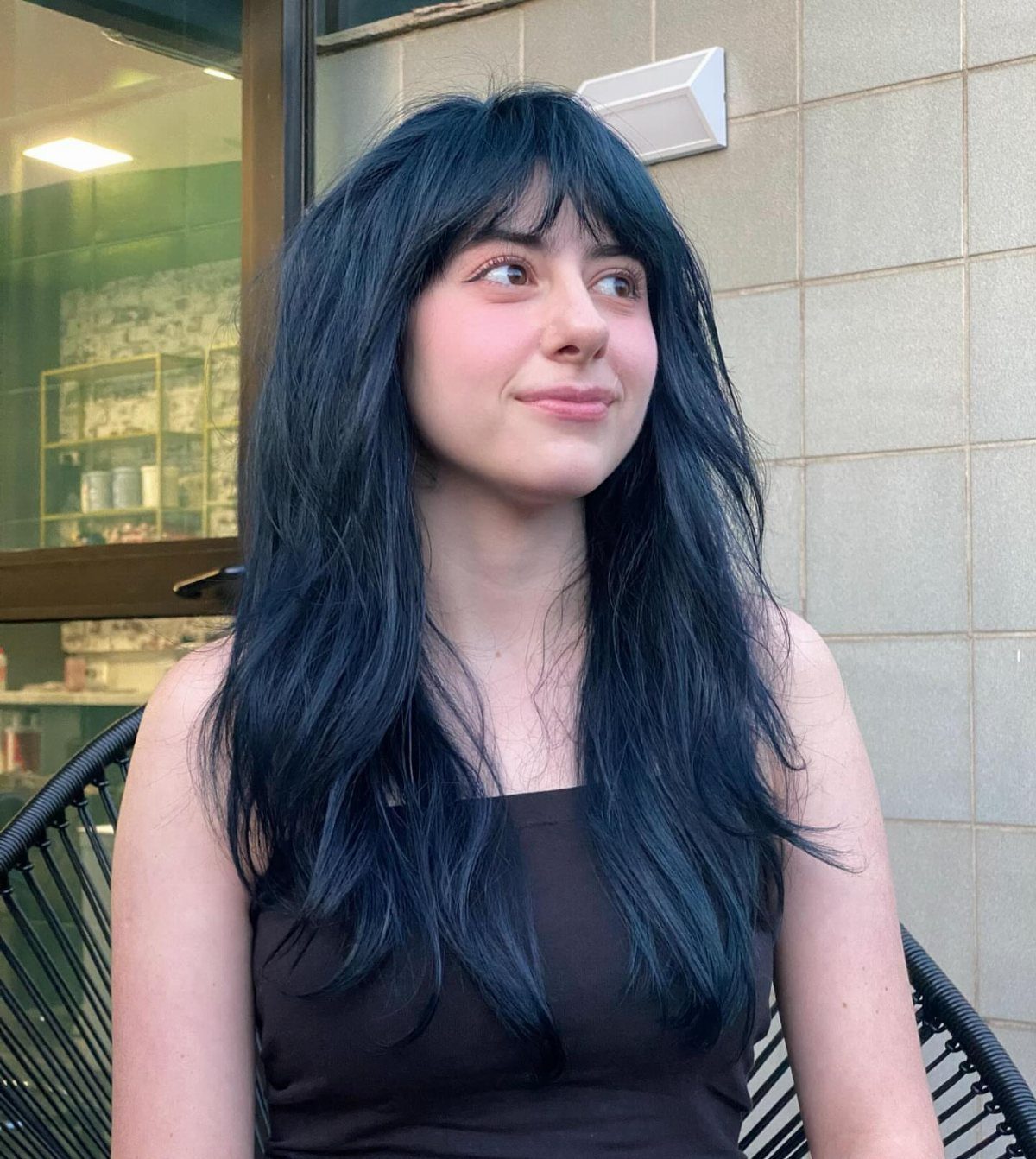
Bangs frame the face and sit where light hits first, so if you dye a very dark blue, the bangs will catch the blue tone before the rest of your hair does.
Longer, wavy lengths balance the weight of full bangs and keep the whole look from reading too heavy.
If you’re cutting them yourself, start longer than you want and work your way up; you can always take more off.
Dark blue holds longer than bright blue, so root touch-ups are the bigger commitment here, not the color itself.
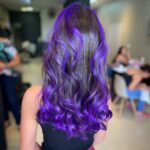
11. Blue and Purple Highlights
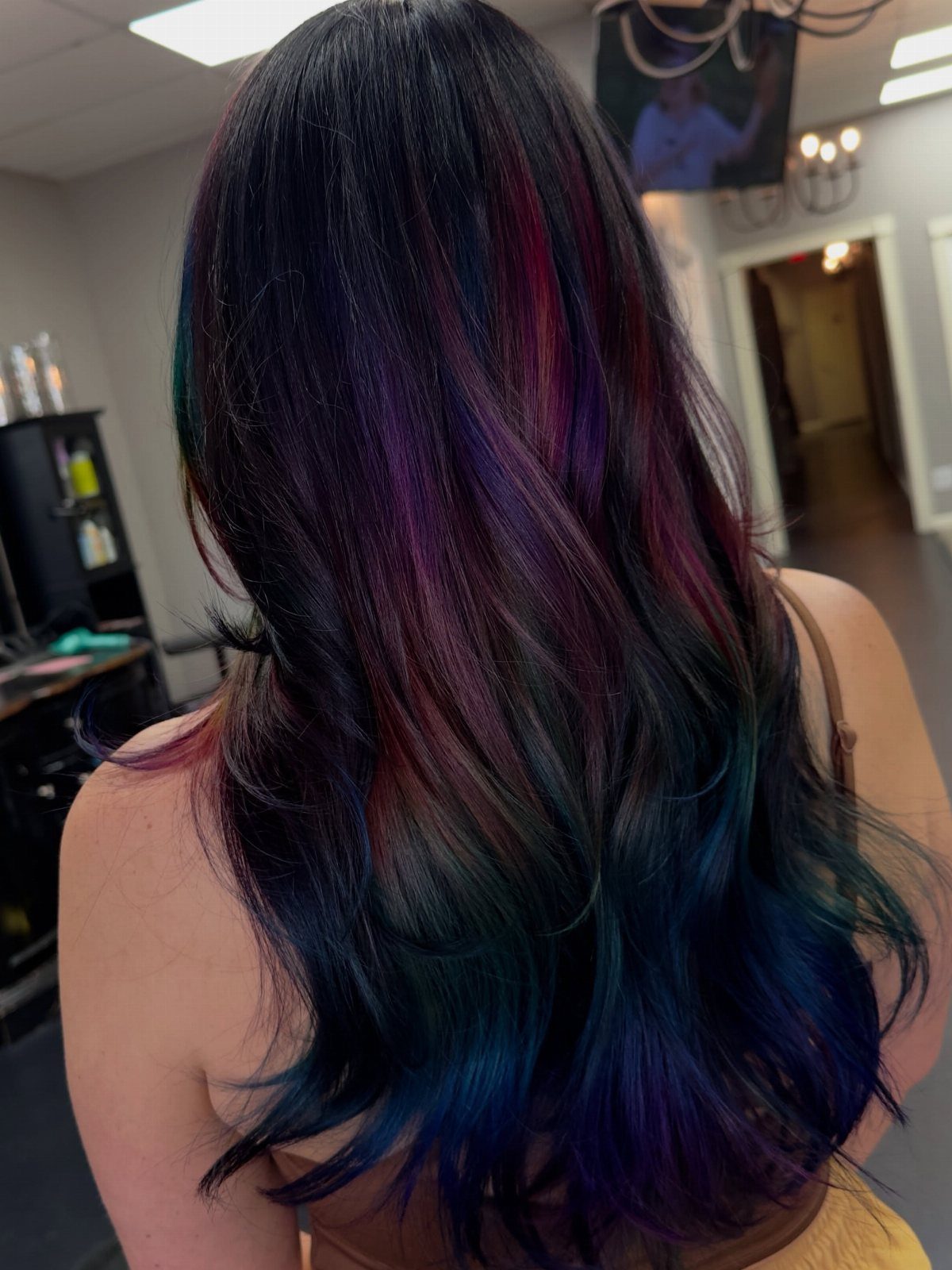
Blue and purple highlights together give you 2 cool tones that sit next to each other on the color wheel, so they blend without clashing.
On long, dark waves, the highlights show best through the mid-lengths and ends where the hair moves.
You can do this with semi-permanent color if your base is already dark, or with permanent dye if you’re lifting from natural black or brown.
The purple will fade faster than the blue, so expect the blue to outlast it by a few weeks.
If you’re doing this at home, section the hair and alternate colors rather than trying to paint them freehand. That way the placement stays intentional and the 2 tones stay distinct.
Lightening Dark Hair
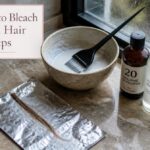
Bleach only comes into play for a blue that’s brighter or paler than a deep shade. Lifting to level 9 or 10 makes bold and pale blues look more vivid, but it can dry and damage your hair.
If your hair is medium brown or darker and a deep blue is enough, a temporary dye skips the lightening step and keeps the commitment low.
Very dark hair has another route: a formula with lifting power or a more concentrated pigment, which I’d try first when a pale result isn’t the goal.
Lighteners and permanent dyes both dry hair out, so plan extra moisture around them. Deep conditioners, hair oils and masks all help.
Preventing Blue Color Fade
Fashion blues can fade within a week or two without the right care, so your routine counts as much as the dye.
Wash less often, and use cooler water when you do. Choose a color-safe, sulfate-free shampoo and conditioner, and keep dry shampoo on hand for the days in between.
Heat and chlorine pull color out too. Cut back on hot tools and avoid pools, or at least keep your hair out of the water.
A deep conditioning treatment now and then makes the blue look richer and leaves the hair underneath healthier.
Frequently Asked Questions
What undertones can black hair dye have?
Blue-black is the main one: a deep black with a midnight-blue cast that shows mostly when light hits it.
Cool or neutral skin suits that cool blue-black, while warmer skin looks better with a richer, purple-based blue. Midnight blue is the shade nearest to black, and under most indoor lighting nobody would call it anything else.
How can I dye my black hair blue?
It depends on the blue. A deep shade like midnight blue goes straight over dark brown or black hair in one session, usually with a semi-permanent or demi-permanent dye that deposits color without lifting.
Bright or pale blues need bleach first, lifting the hair to level 9 or 10, which can dry it out. Without bleach, a dye with real lifting power or a heavier load of blue pigment is where I’d start.
Does blue black hair fade?
Yes, but it fades slower than brighter blues. Fashion blues can look worn within a week or two, while dark shades like midnight blue last longer because there’s less contrast with your natural pigment.
Midnight blue also softens to a steel tone instead of turning orange or brassy. Washing less often, using cooler water and sticking to color-safe, sulfate-free products slows the fade.
Is natural blue black hair possible?
A blue-black dye can pass for natural. Under indoor bulbs it looks like ordinary black; the blue only flashes when the hair moves through light, so what most people notice is depth and shine.
Formulas differ in how much blue they carry, from barely there to obvious, so check the intensity on the box before you buy.
What is the best shampoo for blue hair?
Use a color-safe, sulfate-free shampoo and conditioner, and wash less often so the blue isn’t stripped out.
One sulfate-free option is the Nexxus Color Assure shampoo and conditioner set, which adds argan oil for moisture. Cooler water and a bit of dry shampoo on the in-between days help the color last longer.
What color is blue black in hair?
It’s a deep, rich black with a midnight-blue hue, much like the sheen on a raven’s feathers. It’s far subtler than electric or ocean blue shades.
Will blue black hair color show up on my dark brown hair?
Yes. Most blue-black formulas are built to register on dark brown, where they give off a soft blue shine when light hits.