Density and texture decide what lasts on your head: thick strands can take big volume and detailed work, while fine hair looks best in loose waves or small braids.
The choices stretch from the Curled Low Ponytail, which you can pin together at home, to the Sculpted Twisted Updo, which belongs in a stylist’s hands, and a trial run tells you which side of that line you’re on.
1. Sleek Low Bun
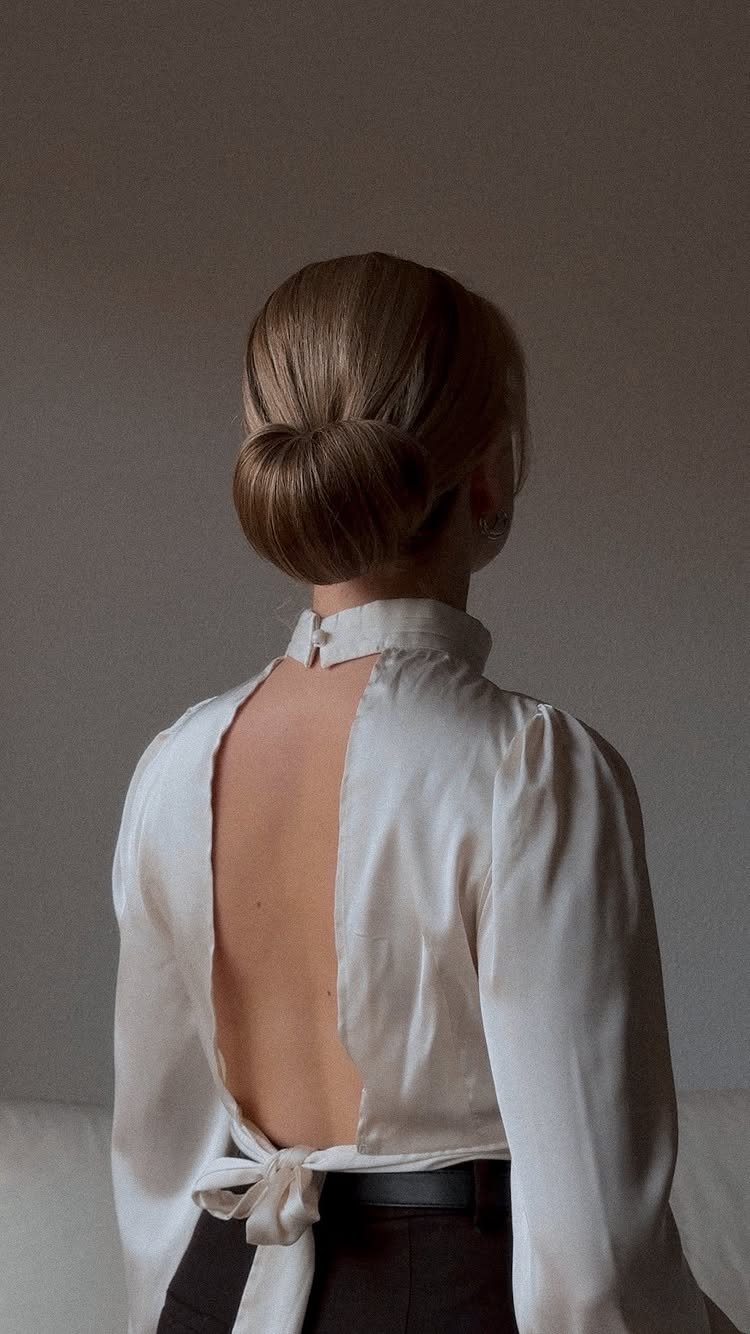
Hair is pulled straight back from the face and secured into a smooth bun sitting just above the nape of the neck. The look reads formal and polished, which makes it a strong match for structured gowns and high necklines.
Getting hair completely smooth takes either a flat iron pass before you start or a styling cream worked through damp hair, then a paddle brush while blow-drying.
Pin the bun flat against the head rather than letting it sit out, and finish with a light hold spray so nothing lifts during the ceremony.
Hair that falls past the shoulders and carries enough weight to lie flat after brushing gives this bun its clean finish.
2. Half-Up, Half-Down
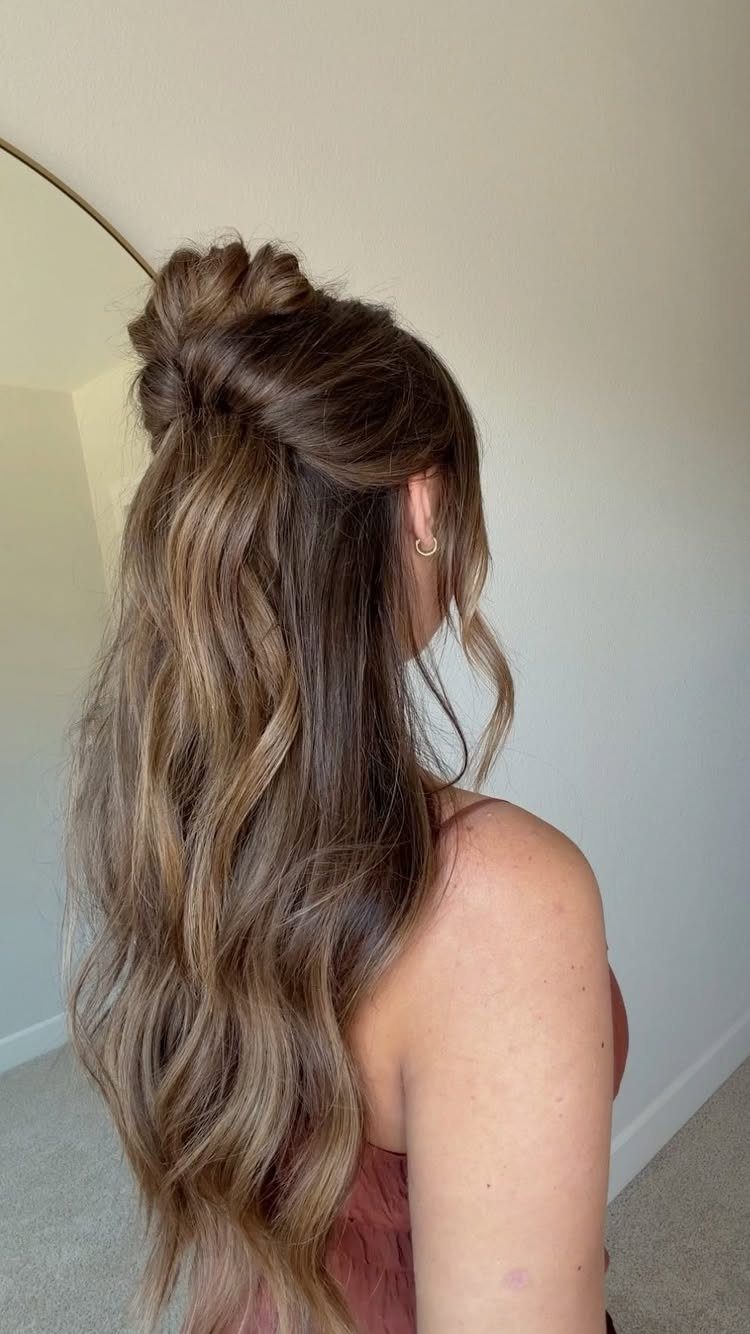
The top section is gathered and pinned back while the rest hangs loose, so you get face framing and full length at the same time.
Length stays visible, which matters when you’ve grown your hair for months specifically for this day.
Pin the top half high enough that it clears earrings and a veil comb.
If your hair is fine, tease the crown lightly before pinning so the style has some lift. Loose waves or curls in the lengths make the look feel more finished than straight hair left down.
Works across most textures and thicknesses. Holds well in photos from every angle.
3. Hollywood Waves
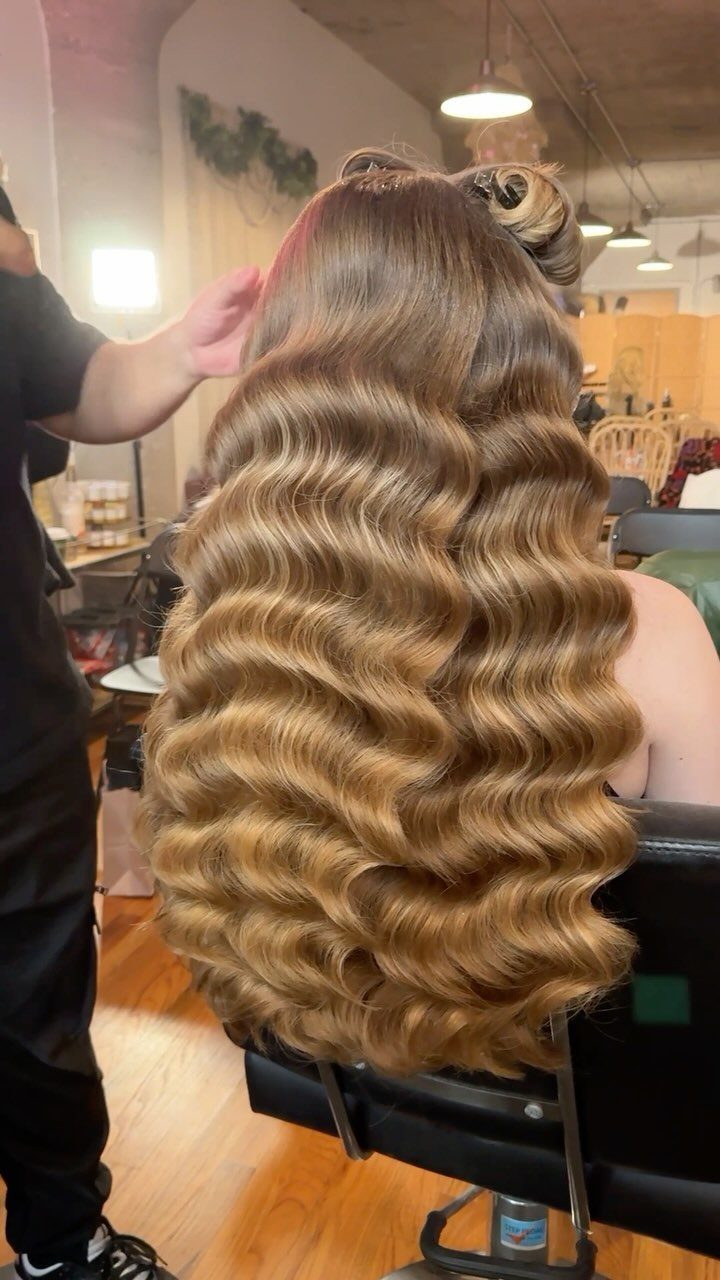
Large, polished waves are brushed out smooth to create a glossy, old-Hollywood finish. The result is formal but still soft, and length is on full display.
Curl the hair with a large-barrel iron or hot rollers, wait until every curl is fully cool, then run a paddle brush through until the separate curls blend into one long, even S-shaped wave.
Finishing spray with shine keeps the surface smooth through the reception.
Hair that already holds a curl gets the most out of this style. Straight, slippery hair may lose the wave shape by the end of the night.
4. Braided Half-Up
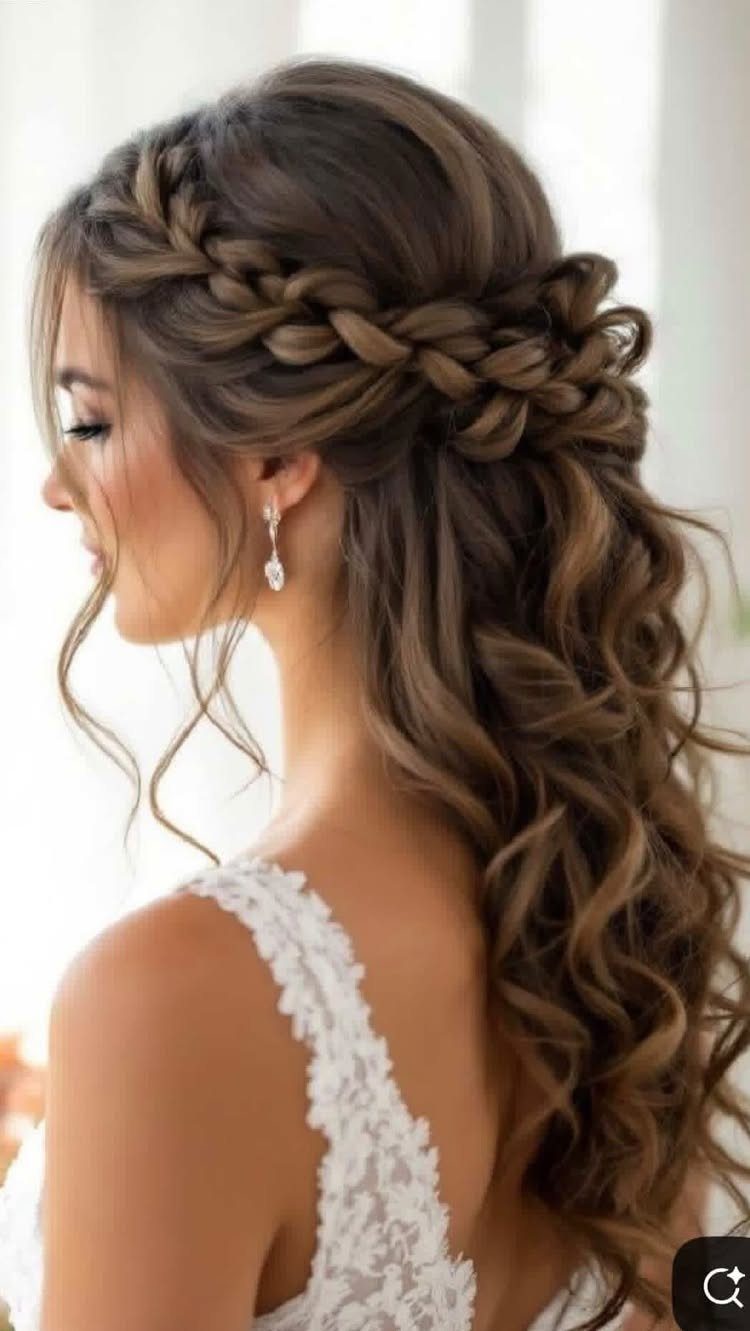
A braid runs across the crown or along the sides, then joins into a pinned section at the back, leaving the rest of the hair loose. The braid adds detail without covering up length or curl pattern.
Start the braid at one temple and work it across, picking up small sections as you go, then pin the end so it sits flat against the head.
Loose curls in the lengths keep the style from reading too simple. If your hair is layered, expect a few shorter pieces to slip out of the braid; pin them back or leave them as face-framing bits.
5. Messy Updo
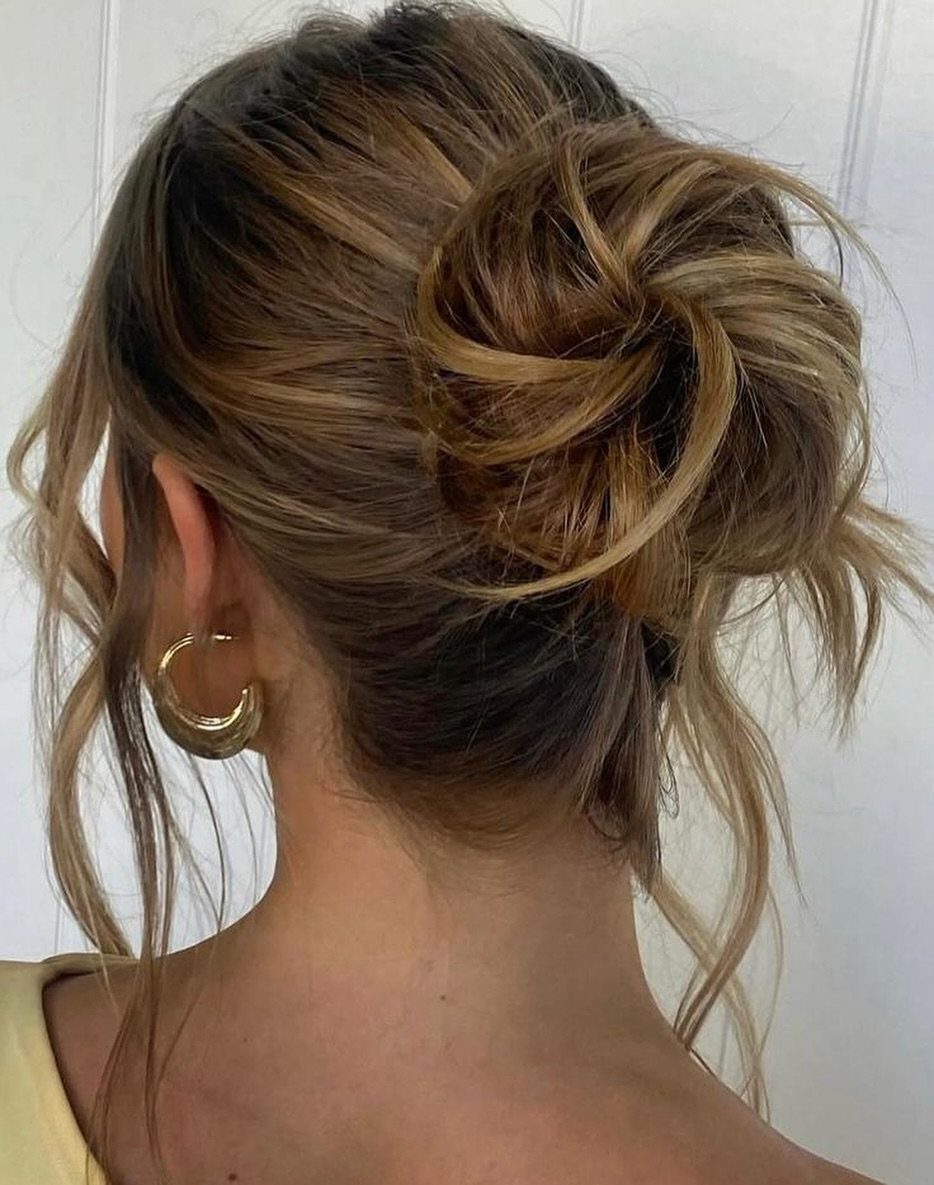
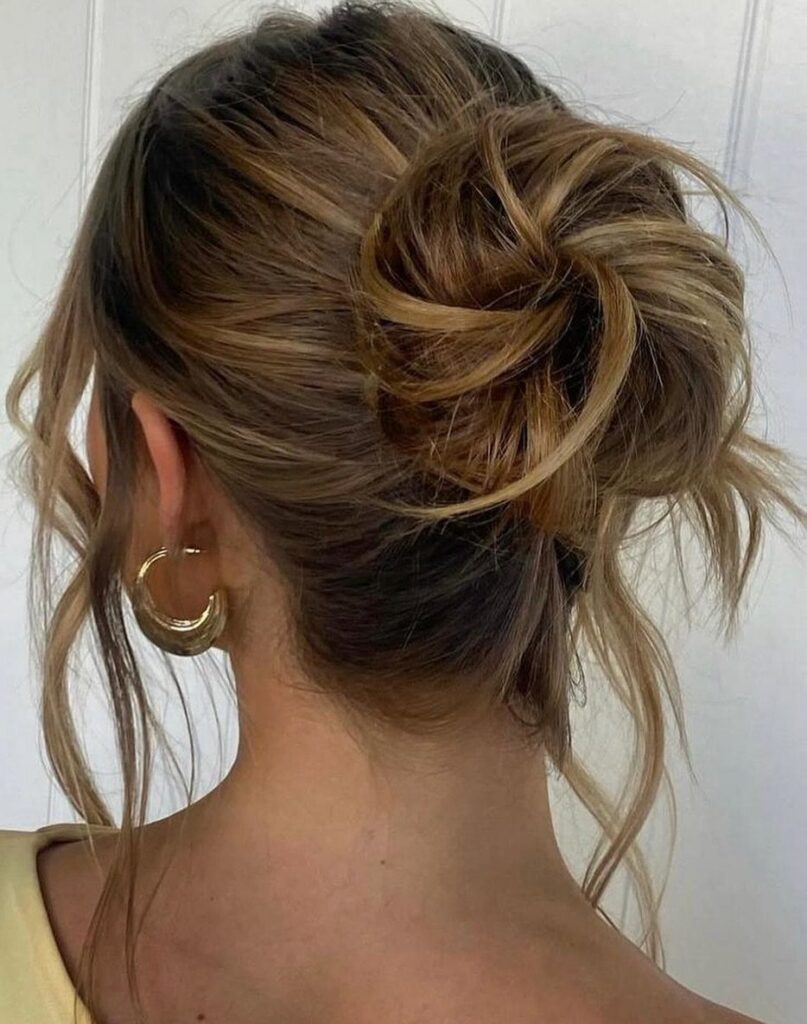
Sections are twisted, curled and pinned into a loose, textured shape at the back of the head, with a few strands left out on purpose. The finish is soft and a little undone, which suits garden ceremonies and relaxed venues.
Curl the hair first so each pinned piece has body, then twist sections loosely and pin them in without worrying about symmetry.
Pull a few face-framing strands out at the end. The style holds better if you start with second-day hair or add texture spray before curling.
Pairs well with lace, floral crowns and drop earrings. Less structure means it photographs softer than a sleek updo.
6. Low Textured Bun
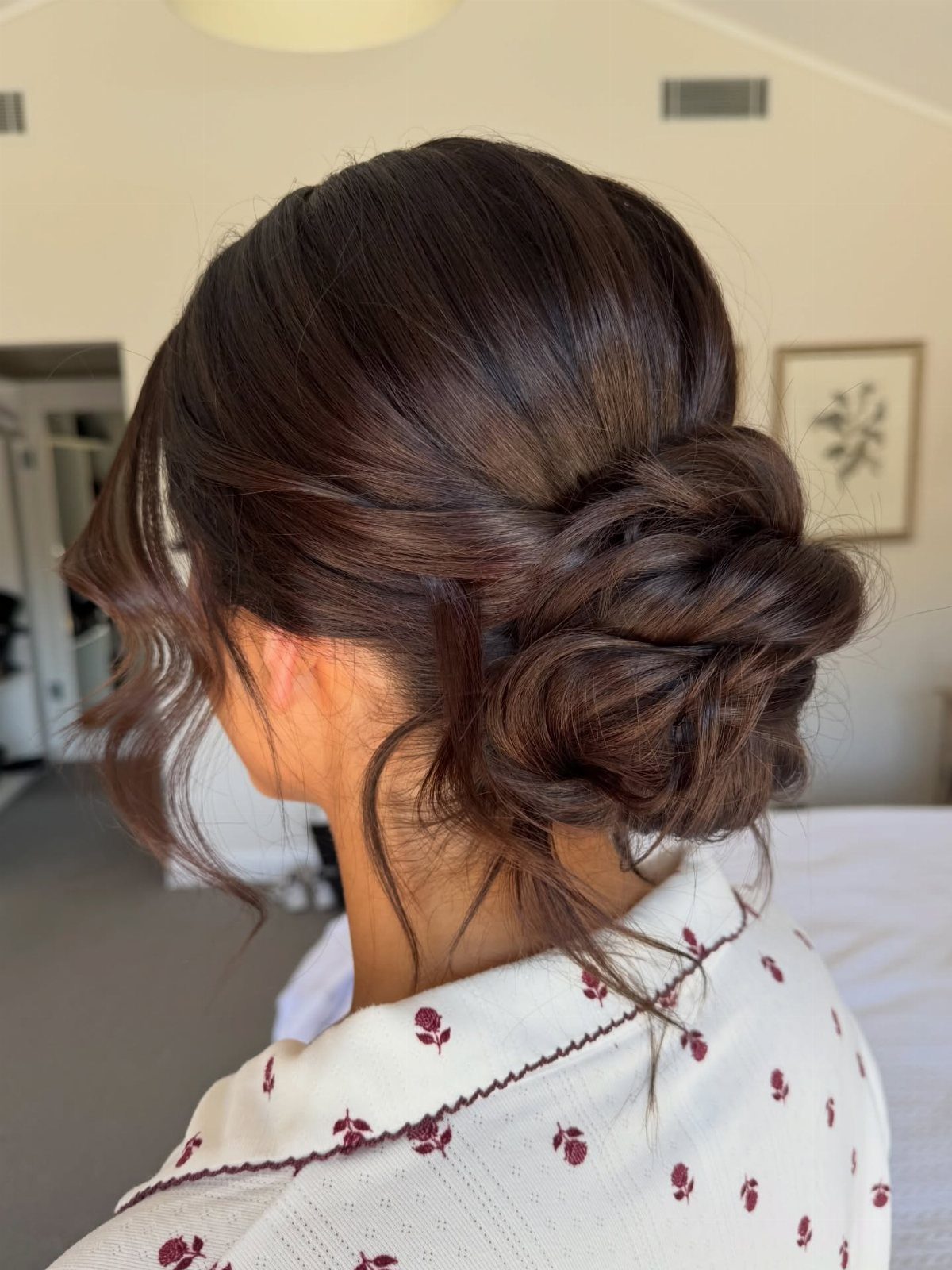
The hair is gathered low and pinned into a bun that keeps its texture and movement, not a perfectly smooth coil. A few loose tendrils near the cheeks and temples soften the edges.
Curl or wave the hair before gathering it, so the bun has visible texture once it’s pinned.
Twist sections loosely as you pin them in, and leave the surface a little messy rather than smoothing everything flat. Once the bun is pinned, tug out 2 small pieces at the front to frame the face.
Good for hair that doesn’t like to sit slick. The texture makes thin hair look fuller and thick hair easier to pin.
7. Twisted Half-Up Style
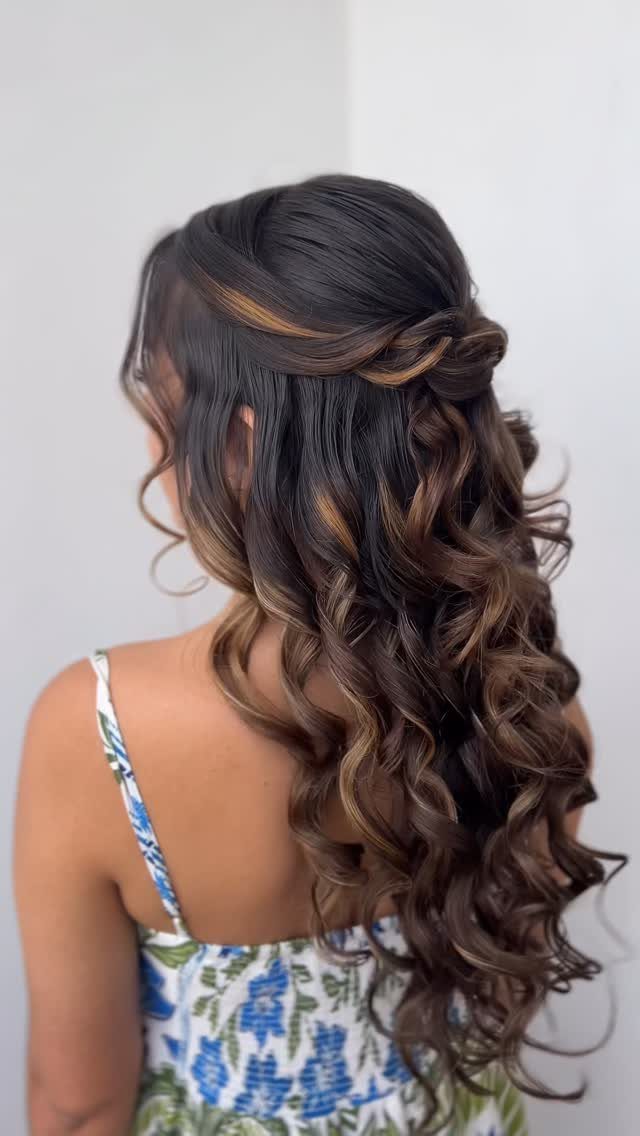
A twisted half-up pulls 2 sections back and away from the face, pins them at the crown or just below, and leaves everything under that hanging loose.
Only the top gets styled, so the curls underneath keep their natural pattern and full length.
Twist each section snugly so it holds its shape, then pin it flat. I’d leave the lengths alone rather than brushing them out, because a defined curl looks best beside a neat twist.
8. Full Bridal Braid
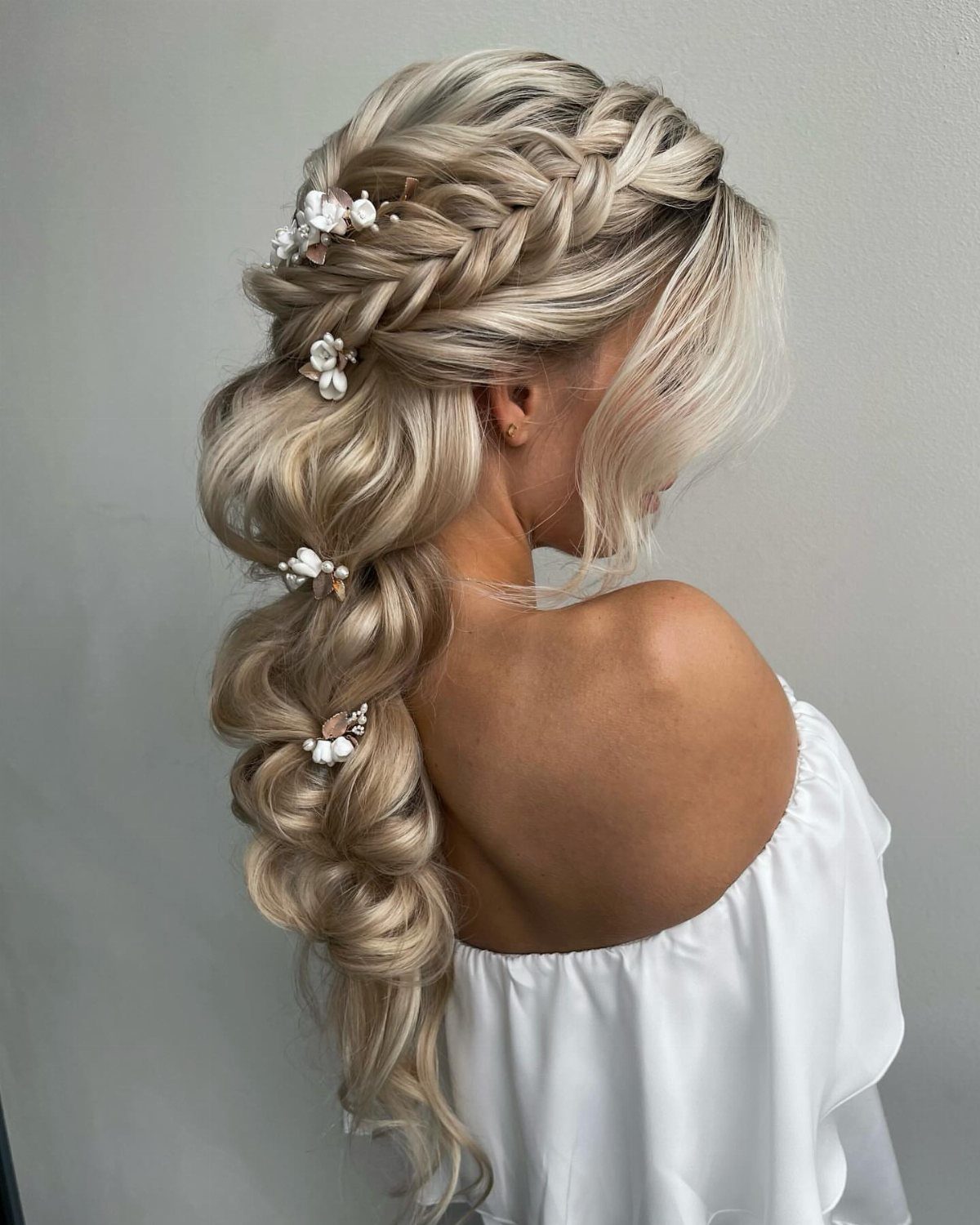
Small flower pins pushed in along a thick braid give it a dressed-up, almost storybook look. Add them after the braid is finished, spacing them so the weave still shows.
I prefer a full, slightly loosened braid to a tight one, since the width is what makes it dramatic.
Leave curls trailing from the end so the style has movement. The flowers are optional; the braid reads as bridal without them.
9. Classic Chignon
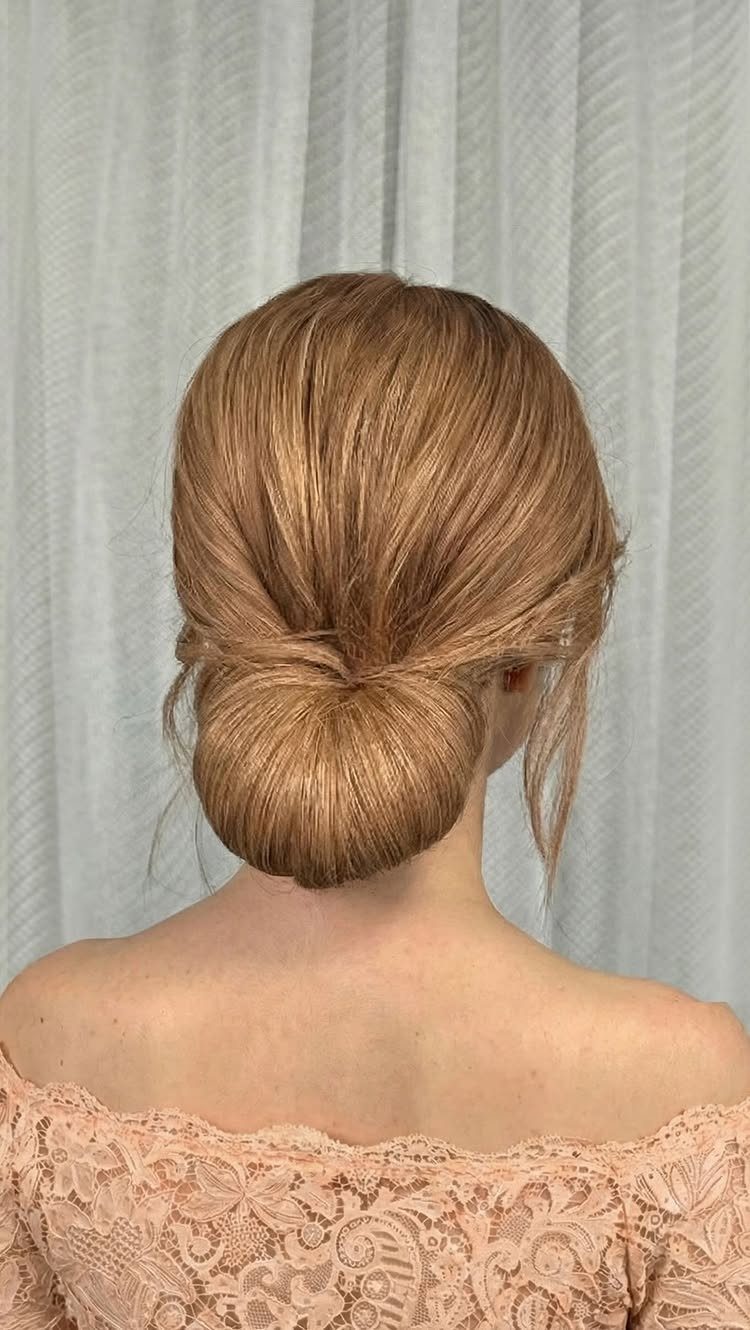
Low at the nape, a chignon is a knot made by twisting the hair and folding it under itself, then pinning it in place.
It stays quiet, which suits an off-the-shoulder neckline: nothing competes with bare shoulders and a clear neck.
Keep the knot low and the surface smooth. A softer result than a sleek bun comes from pulling the twist a little loose before the final pins go in.
10. Half-Up Voluminous Curls
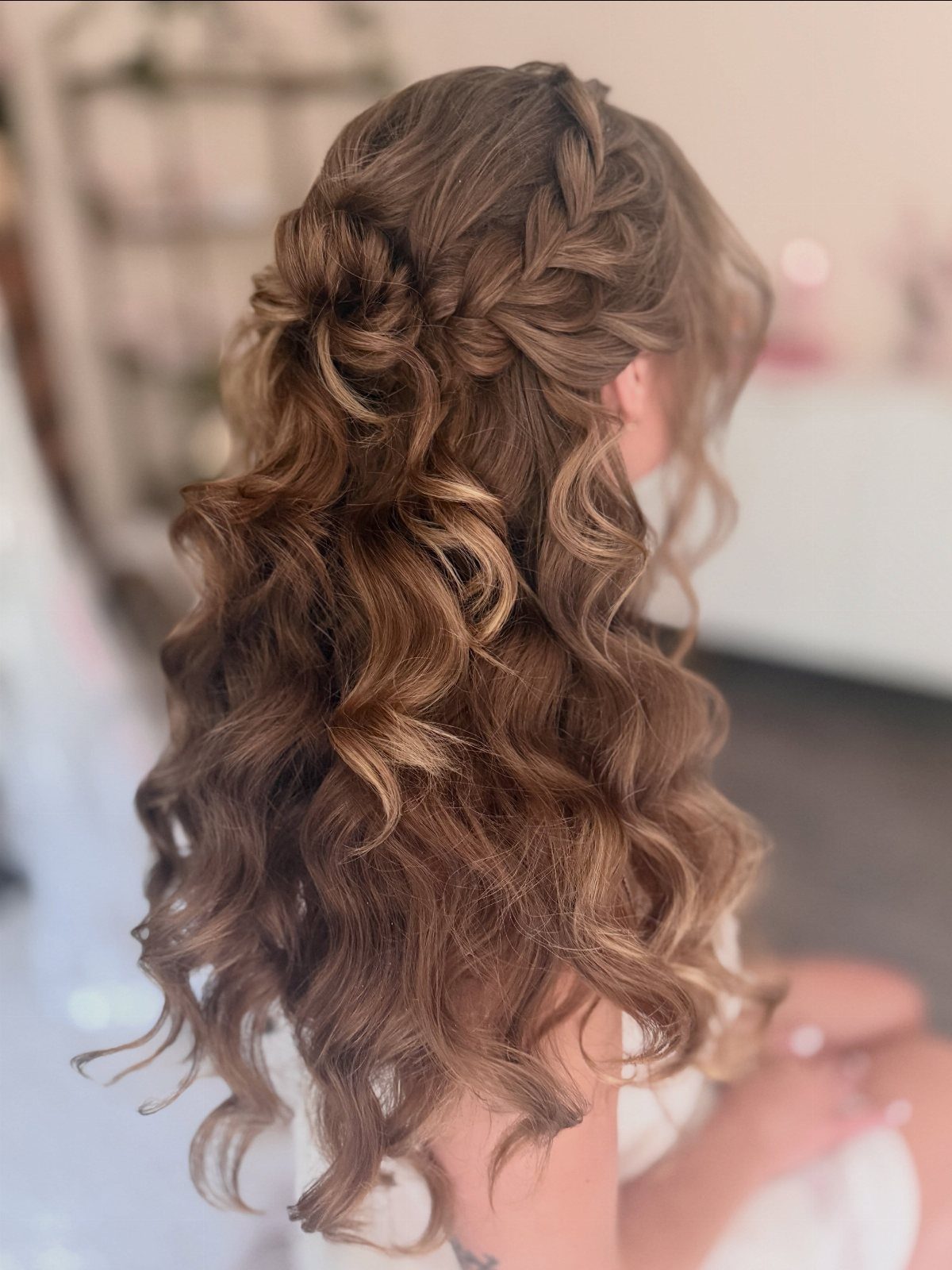
Volume decides this one. Pin the lifted top section up, work in a few small braids for detail, and let the curls below stay full instead of brushing them smooth.
Brushing flattens the curl pattern and takes away the cascade, so I’d use fingers only. If your hair is straight, curl it first and skip the brush entirely.
11. Sculpted Twisted Updo
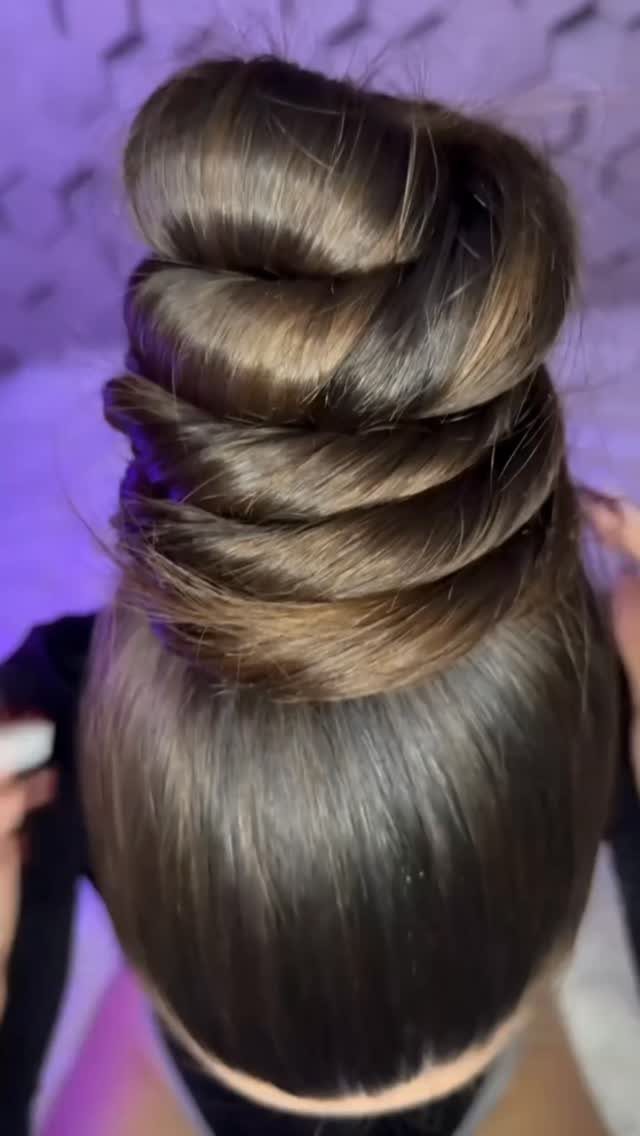
I would hand this one to a stylist. Large twists are stacked in layers and pinned high, each one overlapping the last, so the whole shape looks carved rather than gathered.
That much structure is hard to pin evenly on your own head, and the top-down view shows why: every layer is visible.
Book a trial run before the wedding and bring a photo of the back as well as the top.
If you’d rather show up to your wedding in sneakers than heels, a playful hairstyle — like Gabrielle Union’s Bantu knot mohawk — will definitely be more up your alley than traditional curls or waves.
— Allure
12. Curled Low Ponytail
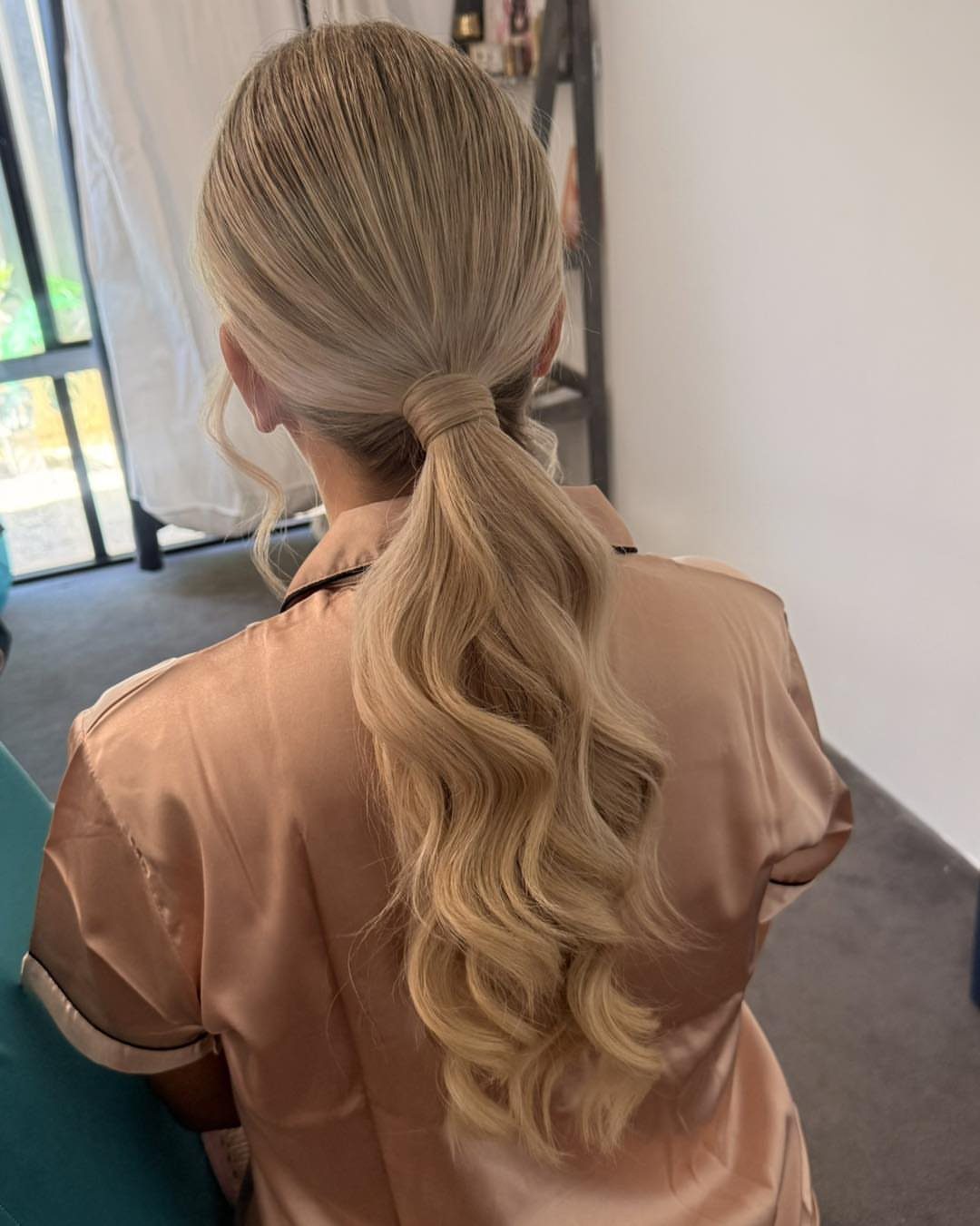
Curls do the work in this ponytail. Start with curled hair, gather it low at the nape, and fasten it with an elastic so the ends drop in loose spirals down the back.
It’s one of the quicker long-hair looks to put together, and the length stays on display.
To finish it neatly, wrap a thin section of hair around the elastic until it disappears, then tuck the end underneath and pin it in place.
Trials and Stylist Communication
Bring photos of the dress and every accessory you plan to wear, along with your saved hair pictures.
With a new stylist, say how long your hair has been at its current length.
Hair that has been long for years behaves predictably, while hair that only recently grew out from something shorter often doesn’t. Mention what it does in humidity and how heavy it feels, too.
Ask to see the back with a hand mirror or a phone photo. Guests face the back of your head during the ceremony, so that view needs your approval.
Treat the trial as a rehearsal. Change what you don’t like while there’s still time to fine-tune it.
Wedding Hair Preparation
Heat does most of the damage to long hair, so I’d start easing off the hot tools 4 to 6 months out.
Air-dry when you can, and an extra-absorbent hair towel can replace the dryer on most days. On days you do have to blow-dry, keep the heat on low and give it the extra minutes.
Hydrating your hair before the event also helps, since long hair carries a lot of weight and dry lengths tend to look rougher in photos.
A style only lasts from the vows to the final song if the products behind it are the right ones. Find out what your stylist plans to use, then try those exact products at the trial.
Choosing for Hair and Setting
Weather comes next.
Thickness and texture decide which styles will hold up.
Thick hair carries big volume and intricate styling without trouble. Fine hair tends to do better with loose waves or small braids, which add texture.
A veil needs a firm anchor, and flowers, clips and combs each need a place to be pinned, so they shape the structure underneath.
When I can’t choose, I fall back on a low chignon. It keeps hair off your face, and it works plain, with fresh flowers, or with a bit of sparkle.
Frequently Asked Questions
What are some good hairstyles for long hair?
A half-up, half-down style is my pick for most brides. It works on nearly every texture and thickness, shows off the length, and looks good in photos from every angle.
For a formal gown, a sleek low bun or Hollywood waves fit better. A braided half-up settles the up-or-down standoff: the front stays clear of your face while the length still shows.
What are the bridal hair trends for 2026?
2 looks are getting the most attention: sleek, straight hair with a center part, and brushed-out boho waves with a relaxed, romantic feel.
The straight look takes a lot of heat styling and a shine finish, and humidity can frizz it within hours at an outdoor wedding.
If that’s the look, I’d put the flat iron and curling wand away about 4–6 months out, because healthier ends hold the style better.
Should a bride wear her hair up or down?
Neither wins outright; I’d decide based on the dress neckline, the venue and how comfortable you feel in the style. Half-up gives you a bit of both, with the length hanging free and your face left clear.
For an outdoor or summer ceremony, I lean toward a braid or an updo, since loose lengths tend to frizz and tangle in heat and wind.
How do I fix a heavy veil in long hair?
Build a base of crossed bobby pins, hide it under the hair, and set the comb just above it for the strongest hold.
Plan the style around the veil: decide where the comb will sit first, then shape the hair to give it something solid to grip.
With loose curls, spray the roots with hairspray before the comb goes in so the weight doesn’t drag the curls down.
Which long hairstyle goes well with a cathedral veil?
A cathedral veil is long and weighty, so I’d pair it with a low bun or polished Hollywood waves. The sleek low bun reads formal and polished, and the waves give a glossy, old-Hollywood finish.
Hair that holds a curl naturally is the better candidate for waves; straight, slippery strands tend to drop the shape well before the night is over.