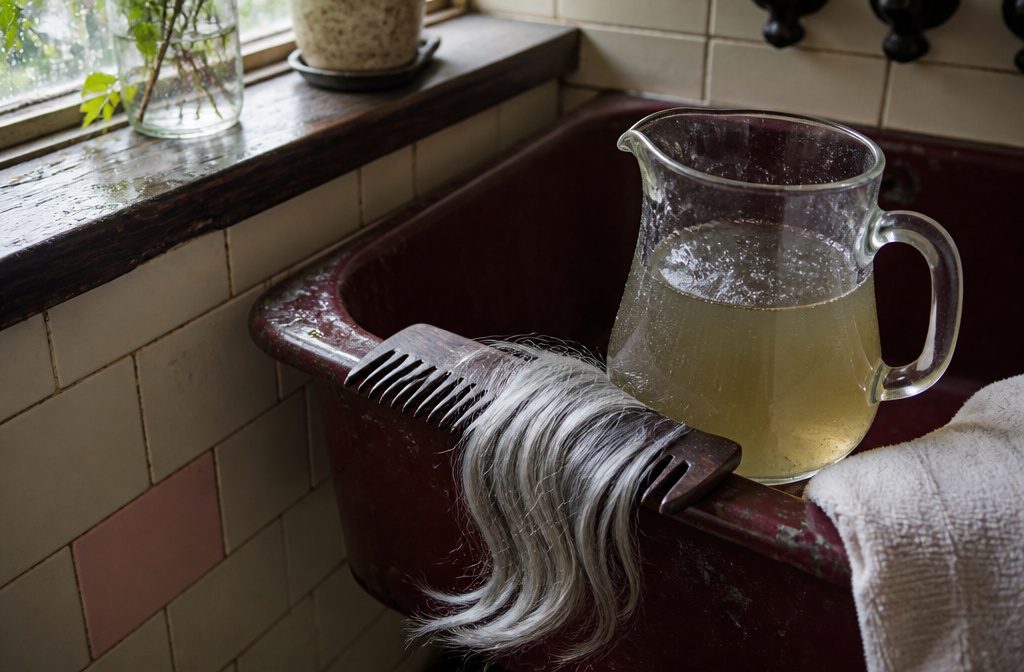
A grey hair rinse is a temporary treatment poured over washed hair to change how gray looks: vinegar clears mineral buildup, sage and black tea darken gradually, and color rinses tint.
None of them lighten or give permanent coverage. A color rinse lasts 4–6 washes, and sage needs regular use before it shows.
Vinegar Rinse for Buildup
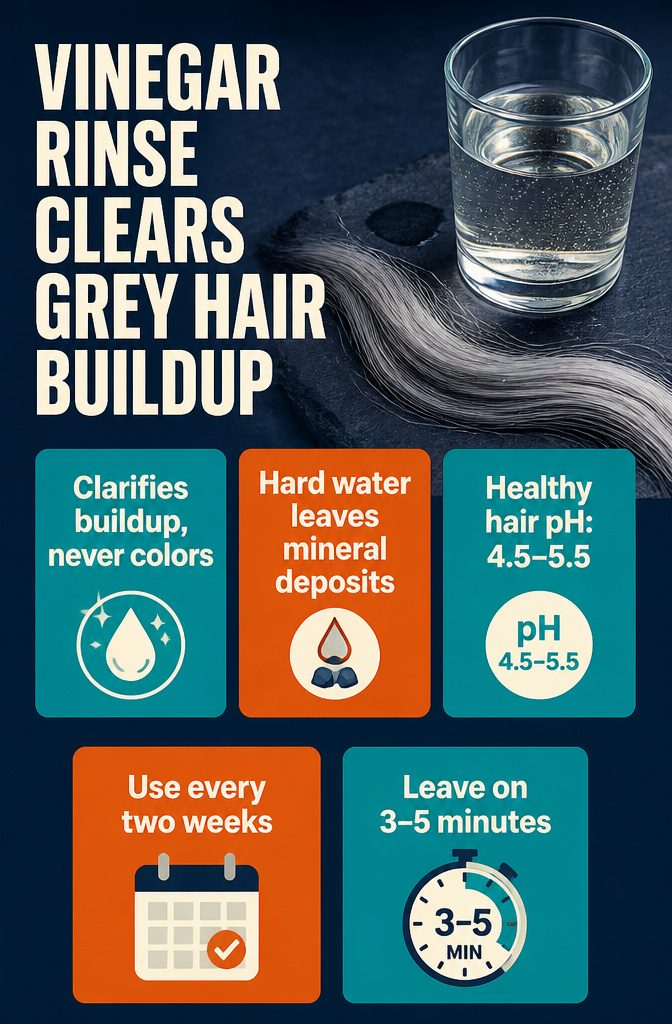
A vinegar rinse clarifies; it does not color.
Hard-water minerals, product residue, UV oxidation and pollution all dull and yellow gray hair, and vinegar’s acidity dissolves the mineral deposits and smooths the cuticle. Healthy hair sits at a pH of about 4.5 to 5.5.
Use it once every two weeks, or weekly with hard water or heavy styling products. Any more often dries hair out.
Apply it to wet hair, leave it 3–5 minutes, then rinse cool or lukewarm. I’d dilute it, since straight vinegar can be harsh.
The smell fades as hair dries. Purple shampoo deposits violet pigment, while vinegar never does.
Sage and Black Tea Rinse
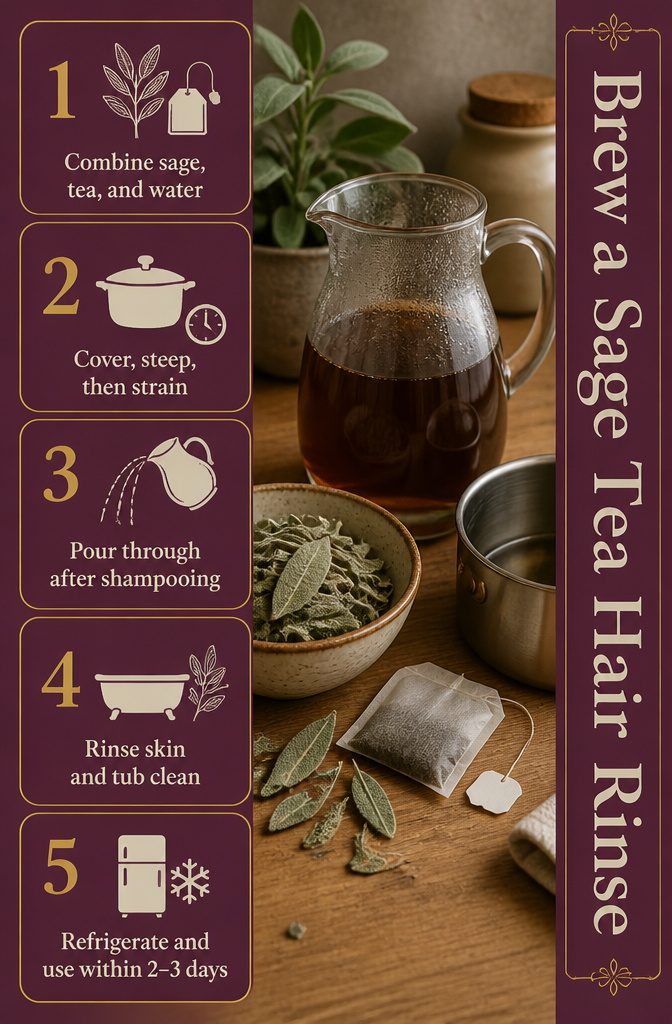
Sage has darkened hair since at least Culpeper’s 1653 Complete Herbal, which says it "causes the hair to become black."
- Put 1 tablespoon dried sage and 1 black tea bag in a heatproof container, then add 1 cup of water.
- Cover and steep 15 minutes, then strain.
- After shampooing, pour it through as a final rinse, working some into the roots.
- Rinse residue off your skin and the tub to avoid tea stains.
- Refrigerate leftovers and use within 2–3 days.
Expect gradual darkening that needs regular use; a couple of weeks shows little.
For a batch that lasts, cover sage and 2 tea bags with apple cider vinegar in a jar for 3–4 weeks, then strain. It keeps at least a year.
Temporary Color Rinse
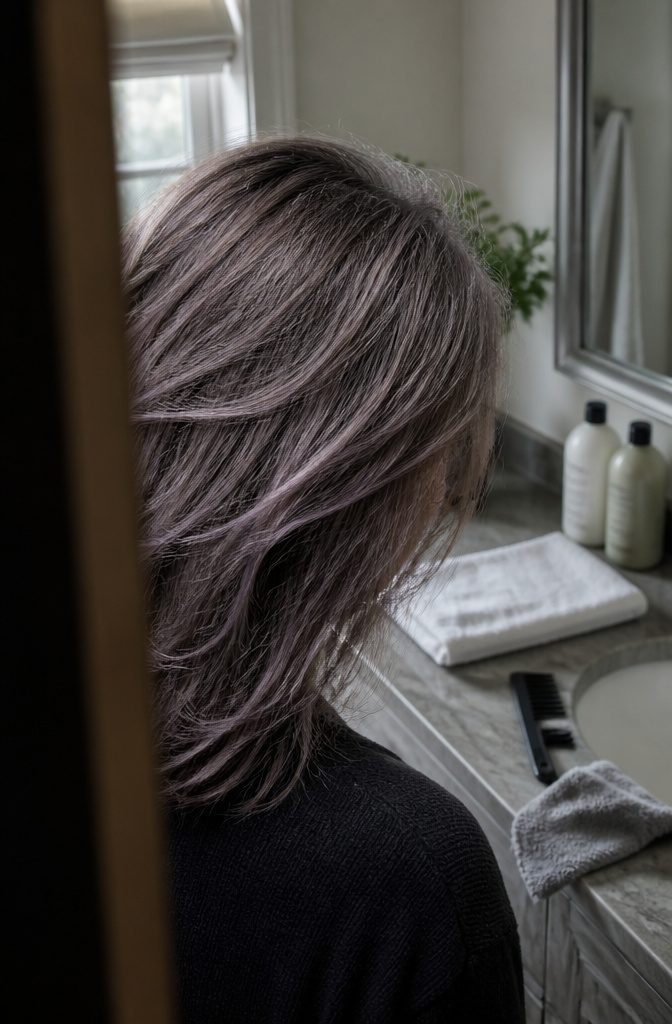
A color rinse is a demi-permanent treatment that refreshes color or adds a tint but cannot lighten.
It has no ammonia, yet it uses a developer, so overuse can damage hair. Count on 4–6 washes, longer with cool water.
Shampoo matters nearly as much as water temperature:
Your hair care regimen can directly impact how long your color rinse lasts.
A color-safe pair, like the L’Oréal Paris Elvive Color Vibrancy line, is the simple fix.
Clairol Professional Jazzing comes in Plum, Cherry Cola, Red Hot and Bluest Black, and it faded fastest along edges washed daily to remove gel.
Roux Fanci-Full White Minx tones brassy gray, but a heavy hand can leave a touch of blue.
Root-Repigmenting Treatment
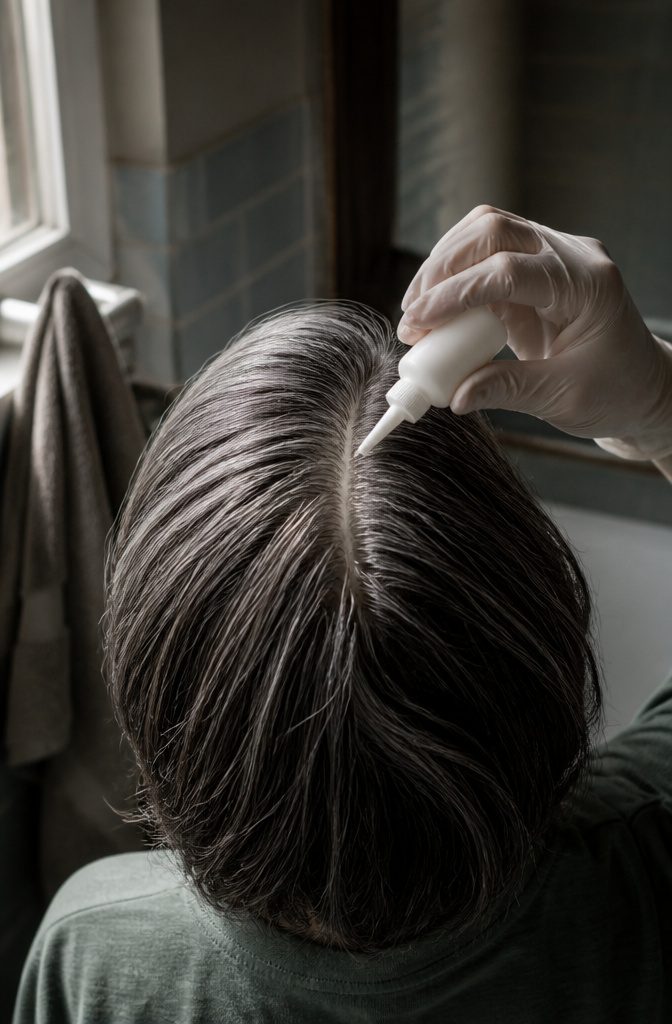
Mayraki’s anti-gray treatment runs on a different premise than a rinse. It’s a leave-in that claims to restore natural pigment as hair grows and to stimulate melanin, rather than coat the strands with color.
The directions call for daily use, with results claimed after 3–4 weeks and then 1–2 applications a week to maintain. The listed botanicals include Polygonum Multiflorum (Fo-Ti), Coffea Arabica and Ligustrum Lucidum.
Patch test before it goes anywhere near your scalp. People allergic to pollen may get a mild reaction.
Hands can stain during application, so wear gloves, and blow-dry your hair before bed to keep it off the pillowcase. It can be used on beards too, and you can still dye your hair afterward.
How Much Gray a Rinse Covers
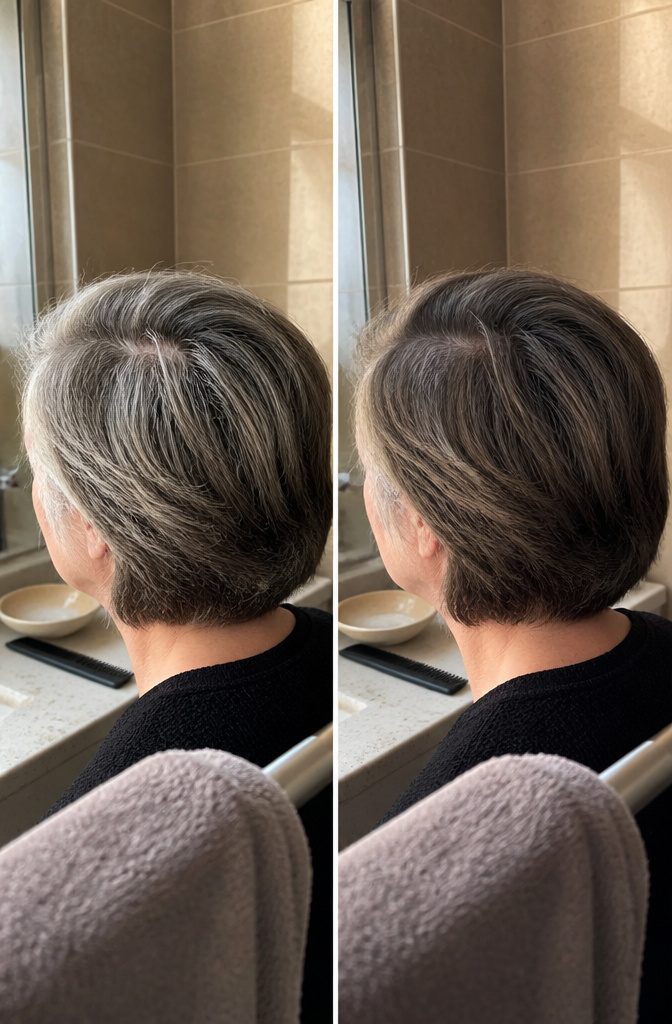
A vinegar rinse covers nothing; it removes the mineral buildup that makes gray look dull or yellow.
Sage and black tea go the other direction, but the darkening is gradual and needs regular use, so expect a soft blend rather than a new color.
Color rinses tint, and they were meant to counter dullness or yellowing, not to give pure white hair a blue look. Clairol Jazzing covered gray fairly well in one home try, yet a patch at the front stayed partly visible.
The root treatment promises repigmentation, which I’d treat as a promise until your own roots prove it. Results hinge on the product and your hair, and nothing here is guaranteed.
Purple Shampoo and Other Options
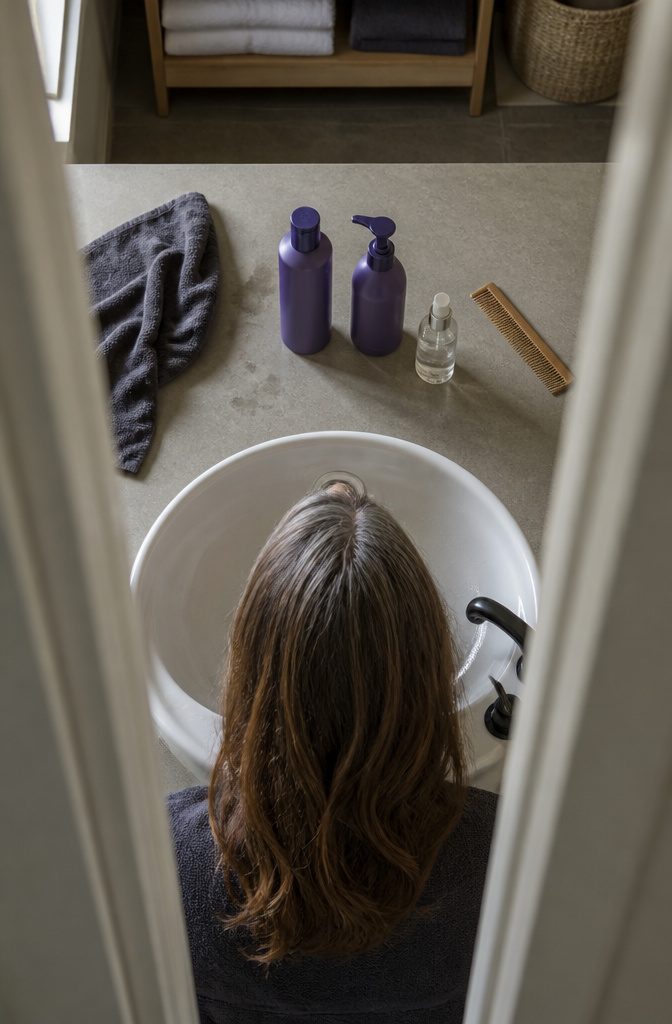
Women going gray swap a handful of drugstore routines, and these are personal reports, not controlled comparisons:
- John Frieda Brilliant Brunette and Midnight Brunette shampoo and conditioner suit brown hair that is graying in front. One user alternates the two for about 4 years. They tone the gray just enough to blend it, and the effect washes out with your next shampoo, so there is no commitment.
- L’Oréal purple shampoo and conditioner, used once a week, is another routine people report. A small amount of BioSilk therapy goes on afterward for shine.
- Roux Fanci-full "White Minx" is the old-school option. Overdo it and you can end up with a touch of blue.
If brassiness survives a vinegar rinse, I’d reach for purple shampoo next.
Frequently Asked Questions
What is the best grey hair rinse?
It depends on what you want from it. A vinegar rinse clears the buildup that dulls and yellows gray hair, a sage and black tea rinse darkens it gradually with regular use, and a color rinse adds a tint.
Roux Fanci-Full White Minx is an old-school pick for toning brassy gray. Results vary with the product and your hair, and nothing is guaranteed.
What does a vinegar rinse do for gray hair?
It dissolves the hard-water minerals and product residue that make gray hair look dull or yellow, and it smooths the cuticle.
It does not add or change color. Its acidity also brings hair back toward its natural pH of about 4.5 to 5.5.
How often should you use a vinegar rinse on gray hair?
Once every two weeks for most people.
Weekly is the limit, and only if you have hard water or use a lot of styling products, because more frequent use dries hair out. Leave it on wet hair for 3–5 minutes, then rinse with cool or lukewarm water.
Does a vinegar rinse leave your hair smelling like vinegar?
Only briefly. The smell is noticeable while you apply it and for a minute or two in the shower, then it fades as your hair dries.
Can a vinegar rinse replace purple shampoo for yellow gray hair?
Sometimes, because the two work differently.
Vinegar removes the mineral buildup and oxidation behind much of the yellowing, while purple shampoo deposits violet pigment to cancel it out. If brassiness survives a vinegar rinse, purple shampoo is the next thing to try.
What is a hair color rinse?
It is a demi-permanent color treatment that refreshes existing color or adds a tint.
It cannot lighten hair. On gray, expect a soft blend rather than a new color.
Is a color rinse bad for your hair?
Not when used sparingly. Rinses contain no ammonia, but they do use a developer, so overusing them can damage hair.
How long does a hair color rinse last?
Typically 4–6 washes, and a bit longer if you wash with cool water.
Exact staying power depends on the product and on whether you apply it at home or have it done in a salon. A color-safe shampoo and conditioner helps it last.
Are temporary color rinses still sold?
Yes.
Brands such as Roux and Fanci-Full are still available. Go easy with White Minx, since a heavy hand can leave a touch of blue.
Is a rinse better than a dye?
A rinse is the lower-commitment choice, but it covers less.
A color rinse fades in 4–6 washes and cannot lighten hair, and in one home try a patch of gray at the front stayed partly visible. If you want full coverage, a rinse may fall short.
Why did my fingernails stain after using the Mayraki anti-gray treatment?
The treatment gets its color from herbal extracts, and those can stain skin and nails even without artificial colorant. Wear gloves when you apply it and wash your hands afterward.
Is a rash normal after using the Mayraki anti-gray treatment?
A mild reaction can happen, especially for people allergic to pollen, which is why a patch test comes before it goes near your scalp. If you have already broken out, hold off on further use.
Can I use the Mayraki anti-gray treatment on my beard?
Yes, it can be used on beards. Do a patch test first.
Can I still dye my hair after using the Mayraki anti-gray treatment?
Yes, you can still dye your hair afterward.