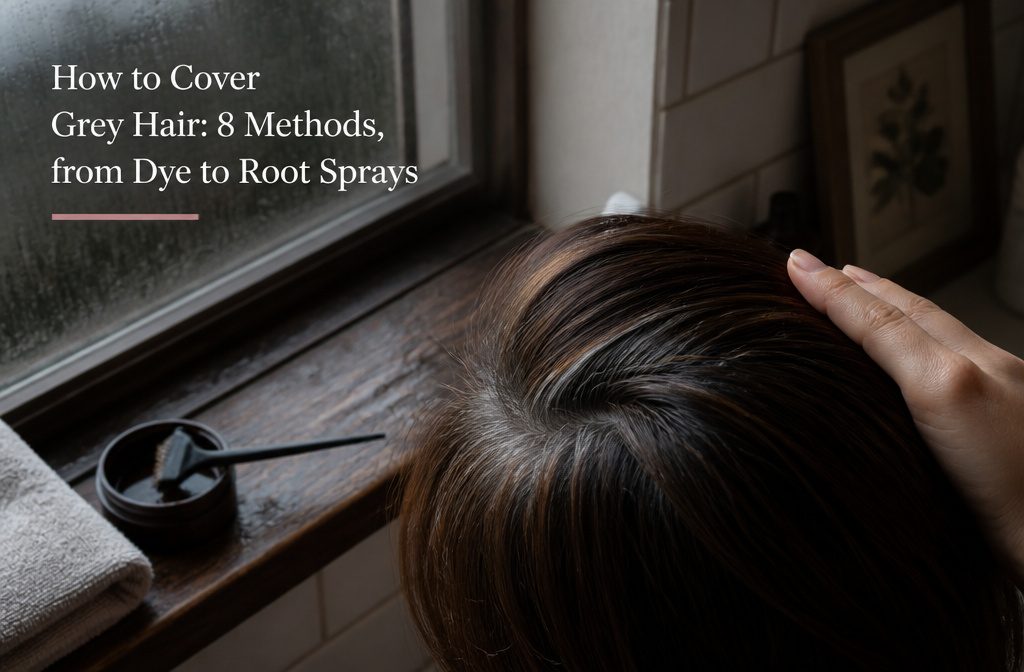
Covering gray at home takes 20–30 minutes on the roots and a fresh touch-up every 3–6 weeks, and the stage people get wrong is the shade.
Stay within one shade of your roots, because going darker leaves a flat, helmet-like look. On already highlighted hair, skip the box: at-home kits rarely lift roots.
1. Permanent Color
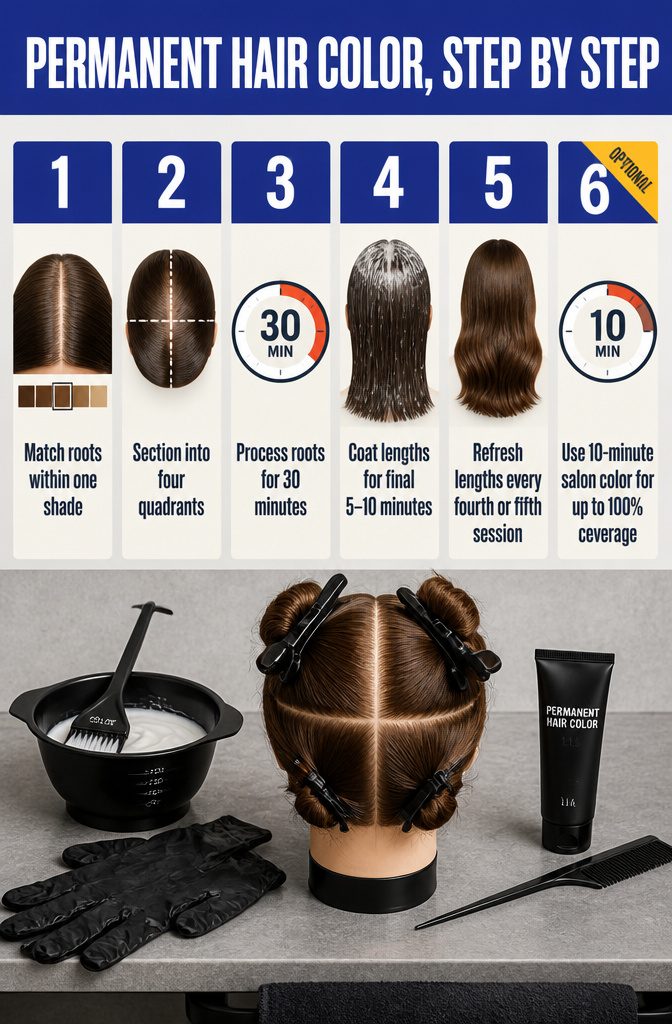
- Match the swatch to your roots, not your ends. Josh Wood allows up to two shades of difference, while Nikol Beauty says stay within one shade. I’d follow Nikol, since going darker can leave a flat, helmet-like look.
- Divide your hair into four quadrants and work in half-inch partings, roots first.
- Leave the color on your roots at least 20 minutes. The standard process is 30, plus 10 for thick, resistant hair.
- Pull the leftover color through your lengths for only the last 5–10 minutes.
- Refresh the lengths every fourth or fifth session at most.
- Short on time? A salon can use Redken’s Color Gels Lacquers 10 Minute for up to 100% gray coverage in 10 minutes.
2. Demi-Permanent Color
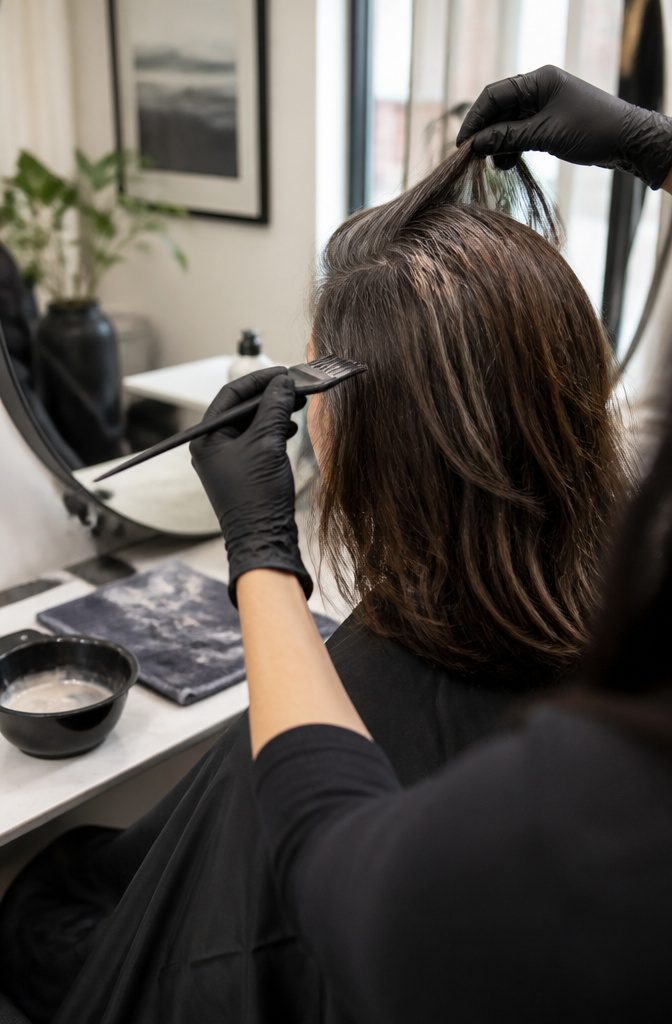
Demi-permanent color tints gray instead of burying it, so the strands pick up the shade and read like soft highlights against the rest of your hair.
Grow-out is gentler because there’s no hard line at the part, and you can stretch the time between salon visits. Redken’s Shades EQ Gloss is one example.
The cost is fade. MetaFilter commenters put semi-permanent color at three or four weeks before it washes out, and demi-permanent fades gradually too, so expect the shade to soften between appointments.
I think it works best for lower gray percentages, and for anyone who can live with a little gray showing. If you want every strand fully opaque, permanent color wins.
3. Highlights and Lowlights
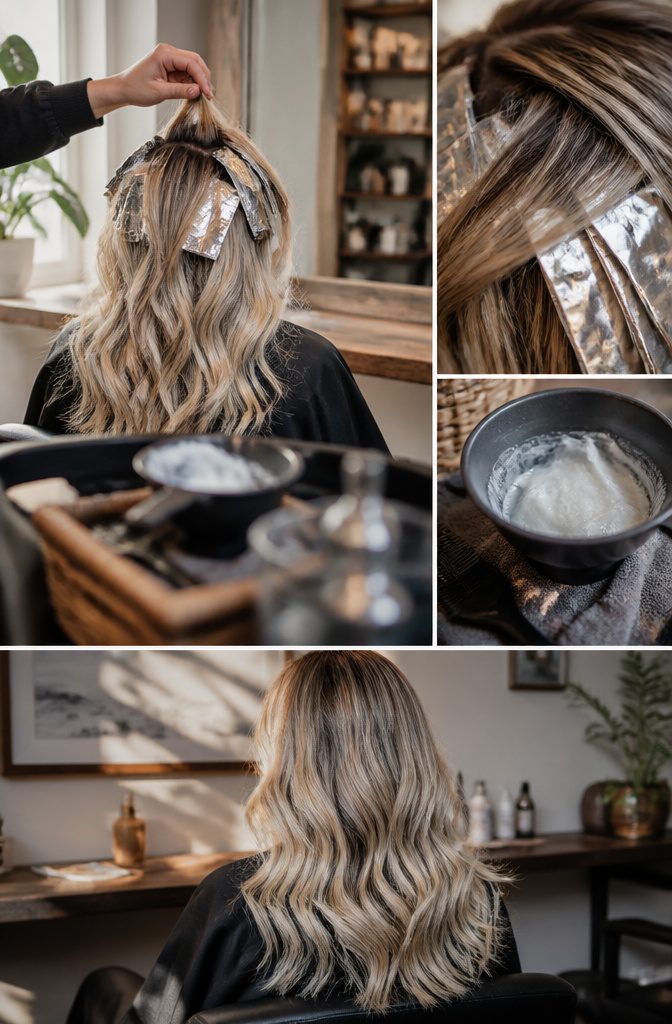
Light and dark tones scattered through the hair turn new gray into dimension instead of a hard line.
Highlights or lowlights run every 6–8 weeks, and the base color needs a touch-up every 3–6 weeks. With a base in place, highlights are needed only about every third visit.
On already highlighted hair, I’d skip the box.
Darker regrowth under blonde needs lifting power, and at-home kits rarely succeed at lifting roots, so leave that step to a stylist. Between visits, a gloss or mask refreshes tone without changing root shade.
Balayage follows the same logic: permanent color on the roots only, with the lightened ends protected by gloss or a mask.
4. Glosses and Toners
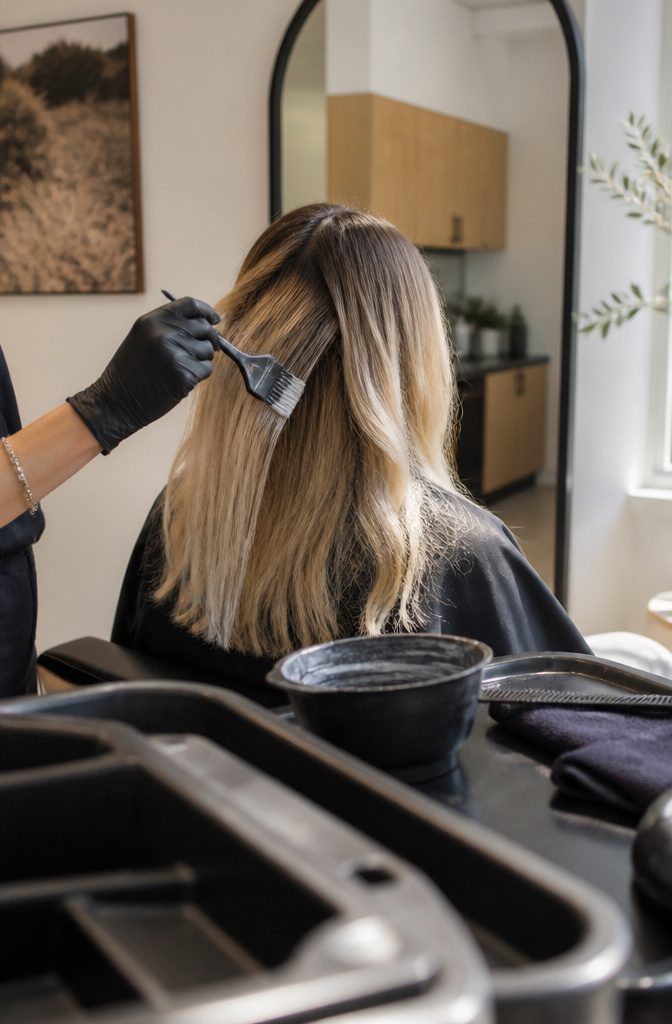
Toners wear off in up to 8 weeks and are gentler than dye, because only the outer cuticle layer picks up color. For sparse gray or tone that has gone dull, a gloss is my pick.
Allure names two glosses: John Frieda’s colour gloss and dpHUE Color Boosting GLOSS+ Deep Conditioning Treatment. A gloss boosts shine and refreshes tone without changing your root shade, so it won’t hide dark regrowth on bleached hair.
Blondes toning gray at home can follow Ugly Duckling’s rule for level 10 hair: mix 50% base and 50% toner, whatever your percentage of gray. Use 10N as the base at around 30% gray or less, and 9N above 30%.
5. Root Sprays and Touch-Up Sticks
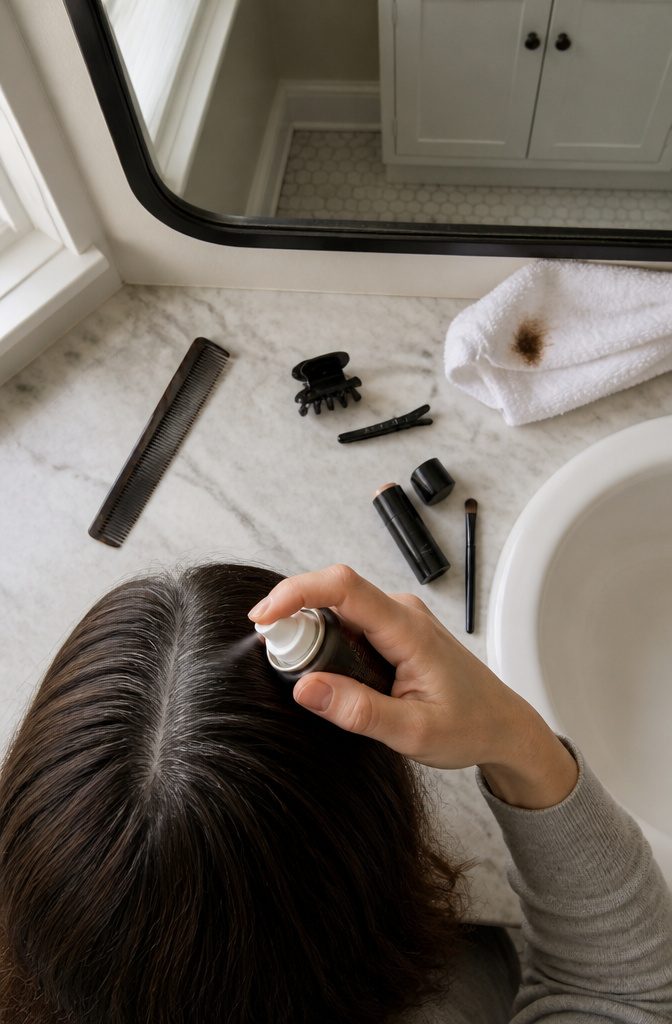
Regrowth moves quickly, and Nicole Tresch, a colorist at the Rita Hazan Salon, puts a number on it:
"You will see [your roots] stronger as you get regrowth, which can come as fast as a week to ten days."
— Allure
That gap is where these four temporary fixes belong:
- Rita Hazan Concealer Touch-Up Spray and Root Concealer Temple + Brow Touch-Up Stick are easy ways to cover gray between salon visits.
- Root sprays hide light roots until your next wash, so they are temporary by design.
- Precision Colour Wand, Blending Brush and Root Smudge diffuse dark regrowth, soften harsh lines and can mimic highlights.
- Hair mascara covers single strands or light roots like a root spray. On dark hair, regular mascara or a dark eye shadow works too.
6. Color-Effect Shampoos
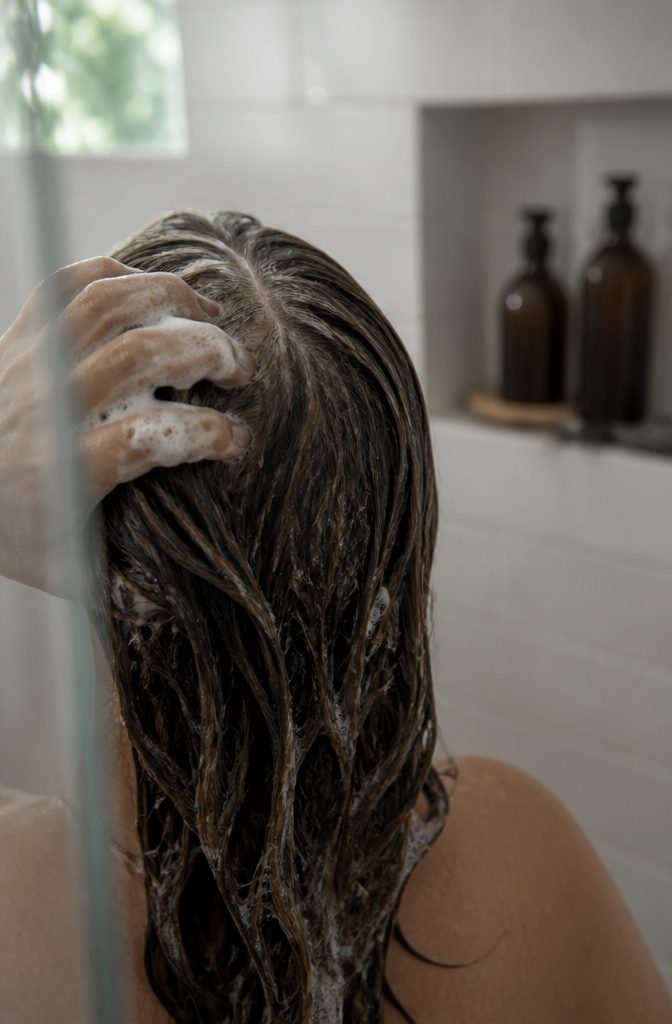
Color shampoos work like a slow toner. Plantur Colour Brown, a 250 ml shampoo paired with a 150 ml conditioner, deposits pigment on natural or dyed brown hair, and the shade builds with every wash.
Use the two together for the best result. Skip it on blonde or light blonde hair.
These only disguise early gray and light roots. Hair that is mostly gray won’t be covered, so I treat them as a bridge to your next salon visit.
Kenra Color Maintenance Shampoo and RUSK Sensories Brilliance Color Protection Leave-In Conditioner preserve color rather than cover gray. They suit highlighted hair, where a few grays already blend in.
7. Herbal and Botanical Color
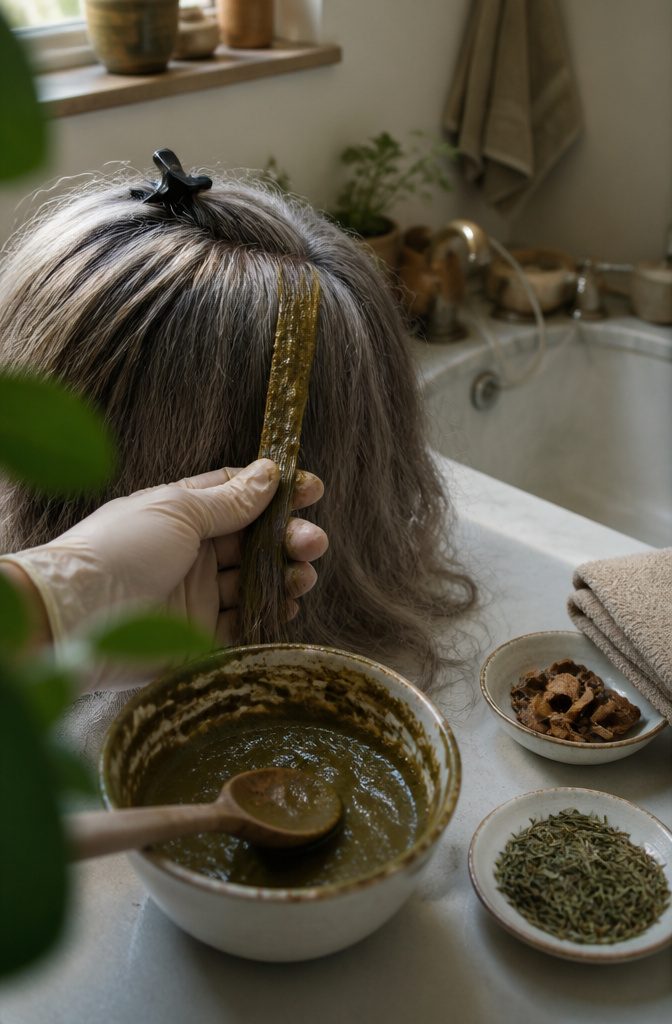
Light Mountain Color The Gray is Vitacost’s top pick for plant-based color at home. The maker says it has no ammonia, peroxide, heavy metals or chemicals of any kind, and you just add water, apply and rinse.
Herbatint uses herbs and vegetable extracts, including cinchona, rosemary and walnut husk, and is described as safe to use as often as you like.
Naturatint sits on the same shelf. Herbatint Vegetal in Mahogany Chestnut is for natural-based highlights, not gray coverage.
Those are the brands’ claims, and coverage claims differ by source.
MetaFilter commenters dispute that permanent coverage can be natural at all, and they warn that henna has limits. I’d test one hidden strand before coloring your whole head.
8. Hairstyles and Accessories
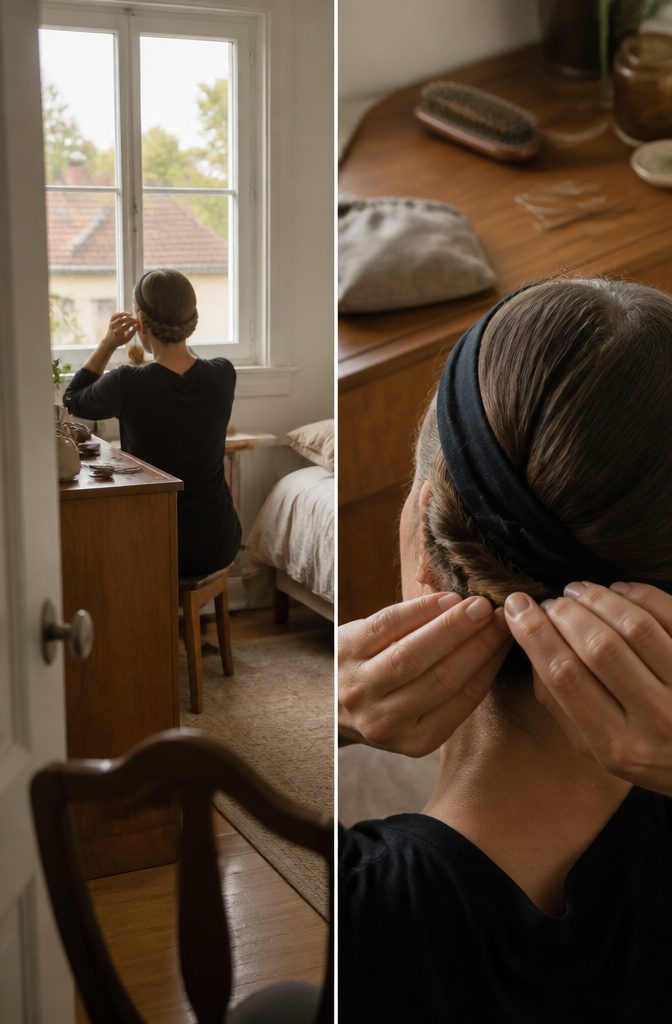
Switching to a side part or a zigzag part moves the line where roots show, and a braid, topknot or wide headband hides the rest.
I treat these as a same-day fix: none of them hides regrowth for long, because the gray is still there when the style comes down.
Nikol Beauty frames covering and embracing gray as personal choices, and both take upkeep.
The signs it may be time to stop coloring: touch-ups every 2–3 weeks have become a burden, you’re curious what your natural silver looks like, your shade feels like a costume, or your scalp reacts to permanent dye more than it used to.
Curiosity alone is reason enough, and you can always go back.
Full Coverage or Blending
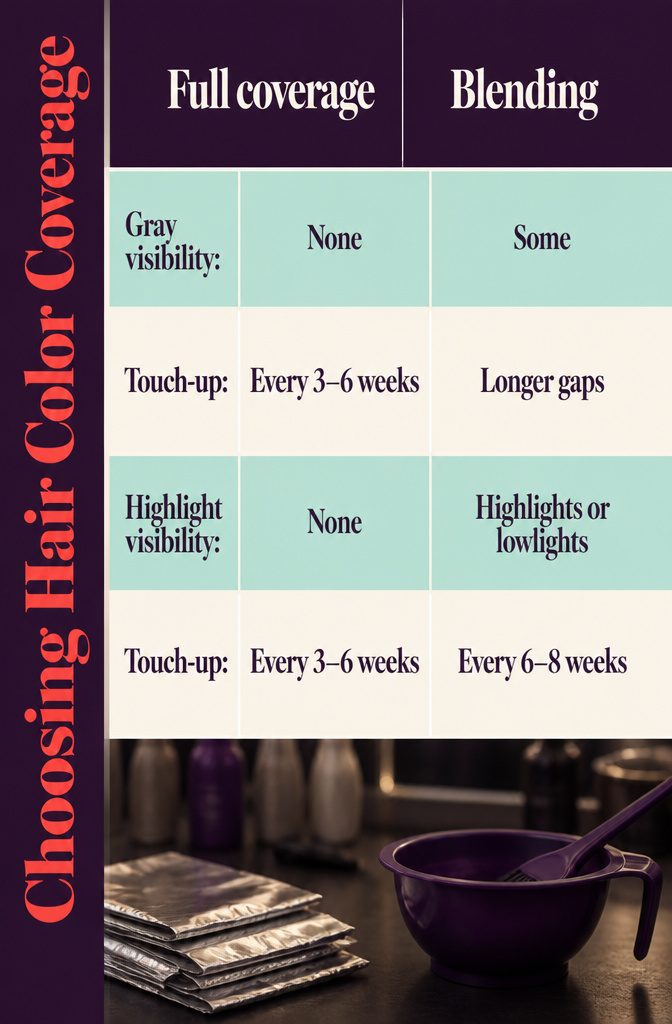
Gray hair has a thicker cuticle, so it resists dye, and the more gray you have, the harder full coverage works. Match your base color to your gray: 25% gray needs 25% base, 50% needs 50%, and 100% needs 100%.
For a natural look, go one to two shades lighter than your natural root color, never more than two shades away from it. Big shade changes and lifting dark roots belong in a salon.
I’d blend if a little gray doesn’t bother you. Choose by how much gray you can stand seeing:
| Option | Gray shows? | Touch-up |
|---|---|---|
| Permanent single process | No | Every 3–6 weeks |
| Demi or semi-permanent | Blends, like highlights | Longer gaps |
| Highlights/lowlights | Some | Every 6–8 weeks |
Regrowth and Upkeep
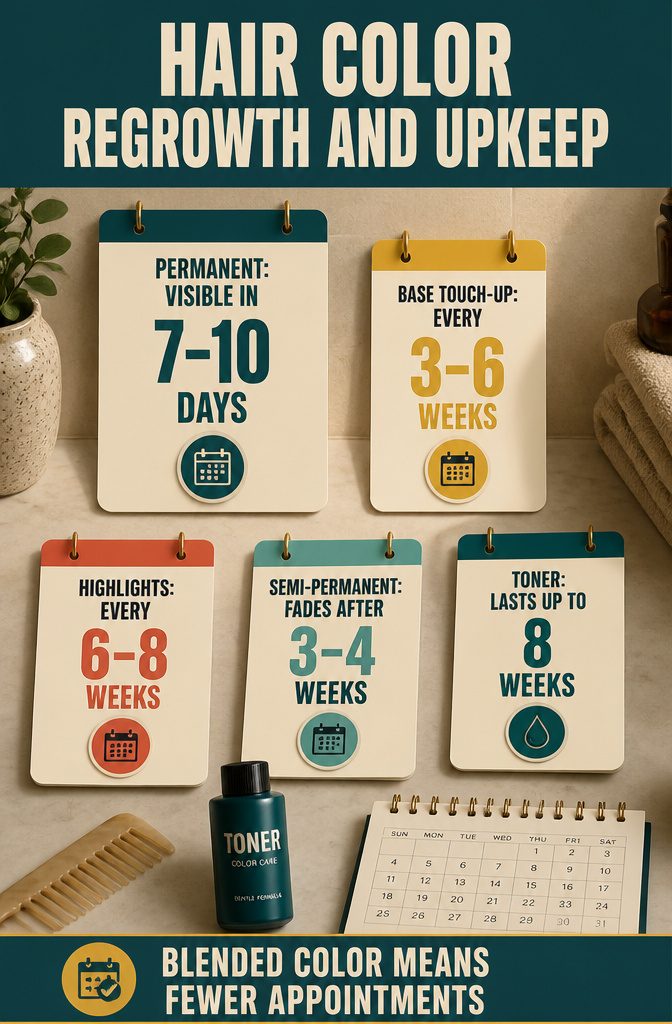
Roots can show within a week, and each approach sets its own schedule:
- Permanent color: Allure puts visible regrowth at a week to 10 days, and it leaves the most visible grow-out line of any method here.
- Base color plus highlights: the Santa Barbara Independent says base touch-ups come every 3–6 weeks, while highlights wait 6–8.
- Semi-permanent color: MetaFilter users land on about every 6 weeks, though it fades after 3 or 4.
- Toners: Plantur says they last up to 8 weeks, and they’re gentler than dye.
No single interval fits everyone, since hair growth and your tolerance for seeing grey vary. Blended approaches are lower maintenance, so I’d choose them if you want fewer appointments.
Frequently Asked Questions
What is the best way to cover grey hair?
Permanent color is the best route if you want every gray strand fully covered.
Demi-permanent or semi-permanent color blends gray so it reads like soft highlights instead, which means a gentler grow-out. Root sprays, touch-up sticks and color shampoos are temporary fixes for the days between appointments.
Should I dye my roots or ends first?
Roots first.
Apply permanent color there, then pull the leftover through your lengths for only the last 5–10 minutes. The roots need the most coverage, and the lengths usually need just a refresh, so this also avoids color buildup on the ends.
How do I cover grey roots on highlighted or balayage hair at home?
Use permanent color on the roots only, and protect the lightened ends with a gloss or mask.
Lifting darker regrowth under blonde is a job for a stylist, since at-home kits rarely succeed at it. Between visits, a gloss refreshes tone without changing your root shade.
Is it better to go lighter or darker to cover grey hair?
Stay close to your natural root color: within one shade is safest, and two shades is the limit.
For a natural look, one to two shades lighter works better than darker, which can leave a flat, helmet-like finish. Bigger shade changes belong in a salon.
How long should I leave hair dye on grey roots?
At least 20 minutes on the roots.
The standard process is 30 minutes, with 10 more for thick, resistant hair. Gray hair has a thicker cuticle that resists dye, and guessing at the time leaves under-processed patches.
Why do my grey roots show after 2 weeks?
New growth contrasts with the color on the rest of your hair, and regrowth can show within a week to 10 days.
Permanent color leaves the most visible grow-out line of any method. A shade close to your natural root color and regular touch-ups slow it down, and a root spray covers the gap until your next wash.
How often should you dye gray hair?
Base color needs a touch-up every 3–6 weeks, while highlights or lowlights run every 6–8 weeks.
With a base in place, you only need highlights about every third visit. Semi-permanent color lands around every 6 weeks, and blended approaches mean fewer appointments overall.
What supplies do I need to cover gray at home?
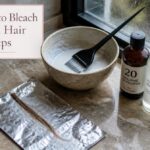
Gather a tint brush, sectioning clips, barrier balm or petroleum jelly, a timer, an old towel and gloves.
The brush saturates each parting evenly, and the balm goes along the hairline, temples and ear tops to stop skin stains. Double-gloving helps, since the gloves in kits are often thin.
What is the best color depositing shampoo for grey hair?
Skip it on blonde or light blonde hair. Color shampoos only disguise early gray and light roots, so mostly gray hair won’t be covered.