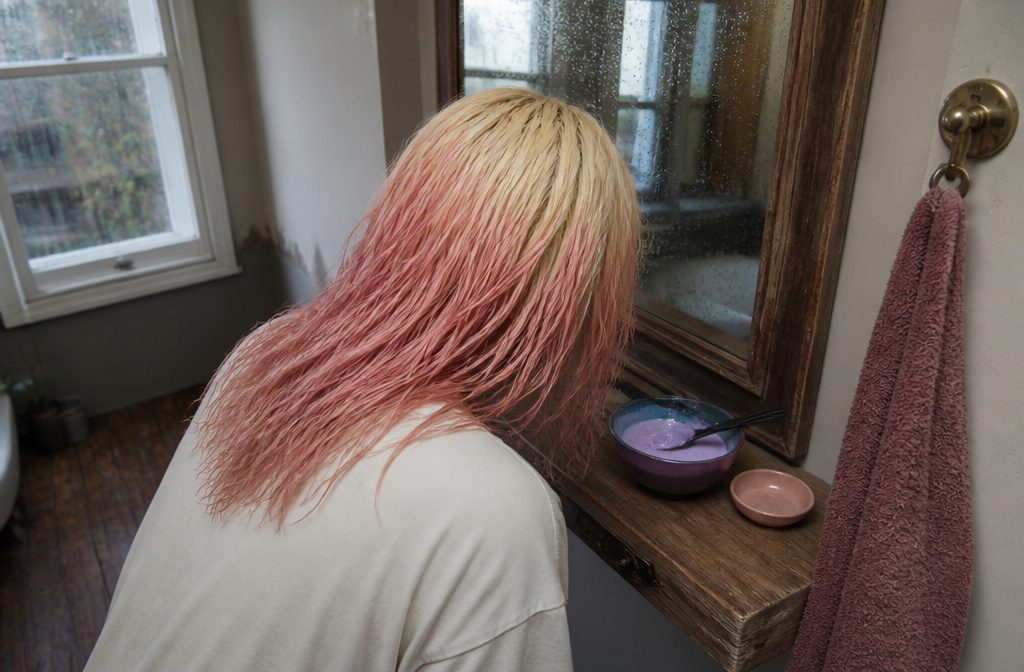
White only takes on hair with no old color left in it, and a faded pink or blue rinse counts as color.
Anything tinted has to grow out before bleach touches it. After that, 10–20 volume developer is the gentlest choice, you rinse at pale yellow, and a violet toner neutralizes the yellow.
1. Check Whether White Hair Will Work for You
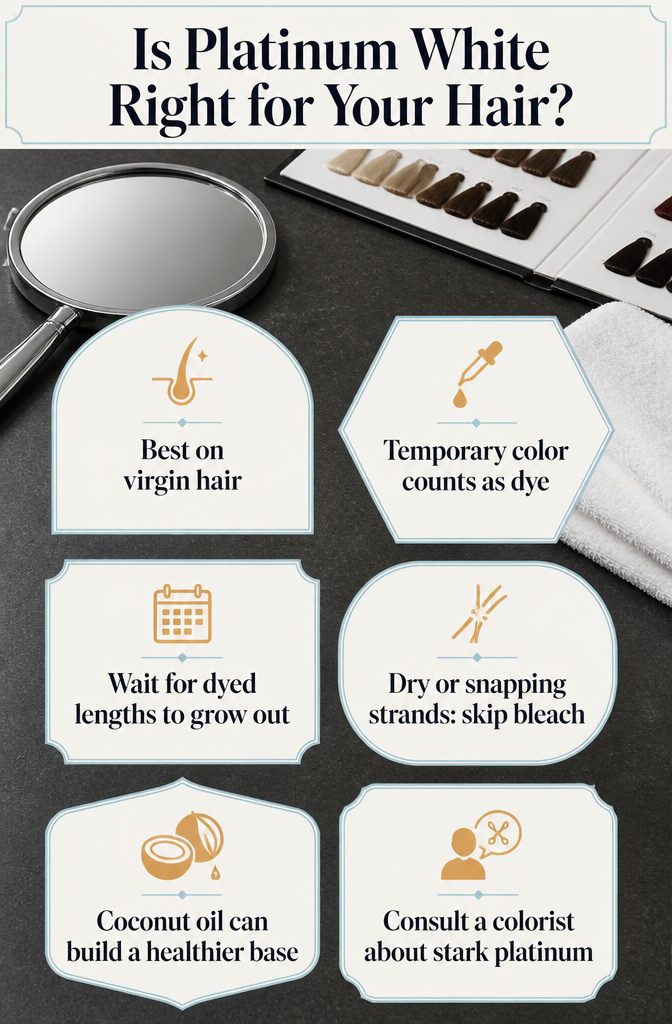
White works best on virgin hair, meaning hair that has never been dyed or hair where the old dye is completely gone. That includes temporary color.
A faded pink or blue rinse still counts, so wait until every inch of dyed hair has grown out before you reach for bleach. It’s a long wait, but it’s the rule.
Condition matters just as much.
If your strands feel dry or snap easily, skip the bleach. Moisturizing products and coconut oil can build a healthier base first.
Platinum white has no noticeable pigment or warmth, which makes it stark and tricky to get right. Before you buy anything, I’d book a consult with a colorist and ask whether the shade suits you.
2. Decide Between Salon and DIY
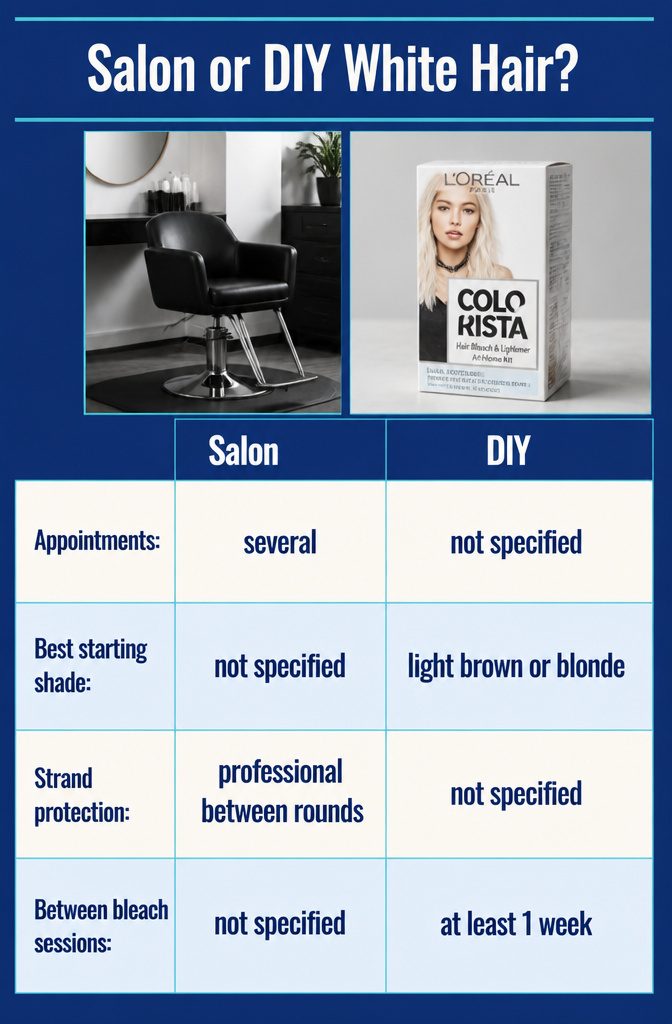
Getting to white rarely happens in one sitting, and at a salon it usually takes several appointments. L’Oréal Paris gives the reason:
Achieving an icy white blonde hair color may take more than one bleaching session. For this reason, many choose to leave their transformation in the hands of a professional stylist.
I’d hand anything complicated to a colorist, since a professional can protect your strands between rounds. DIY makes the most sense if you start at light brown or blonde, with a kit like the Colorista Hair Bleach & Lightener At-Home Kit.
Read the packaging instructions before you open the bottle, and give your hair at least a week between bleach sessions.
3. Prepare Hair and Gather Materials
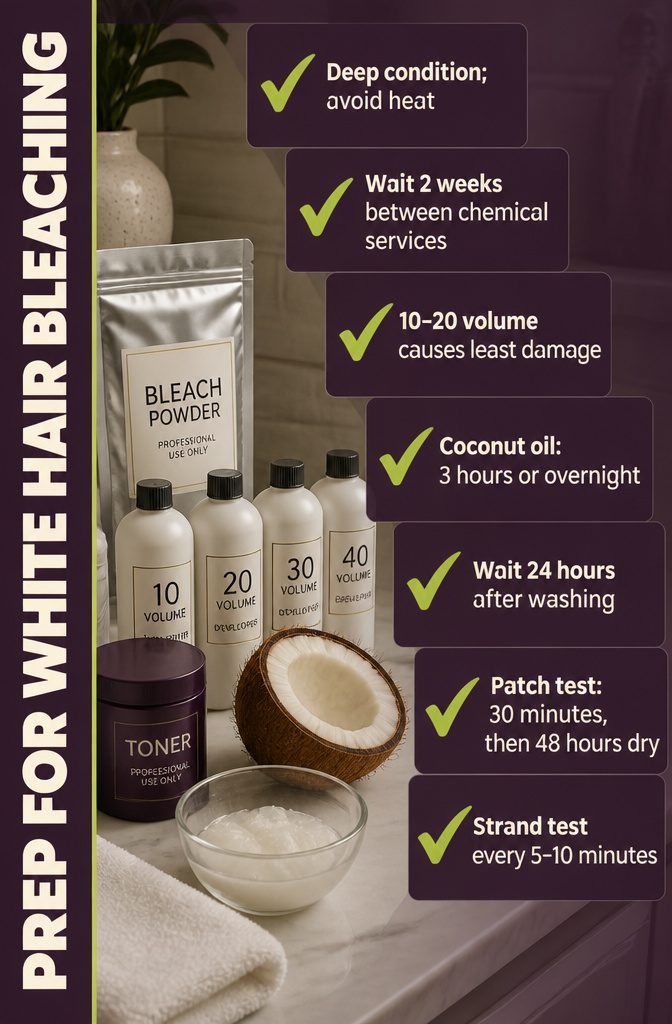
Dyed white hair starts with prep:
- Repair first: deep conditioning, air drying, no heat, and 2 weeks between chemical services.
- Buy bleach powder, developer and toner. Developer comes in 10, 20, 30 and 40 volumes, and 10–20 volume does the least damage.
- Massage extra virgin coconut oil into hair and scalp at least 3 hours ahead, overnight if possible; no rinsing.
- Wait at least 24 hours after your last wash.
- Patch test: dab mixed bleach behind your ear, wipe it off after 30 minutes, then keep it dry and untouched for 48 hours.
- Strand test: check every 5–10 minutes and note the time. If the strand feels very damaged after washing, go lower in volume.
4. Section and Apply Bleach
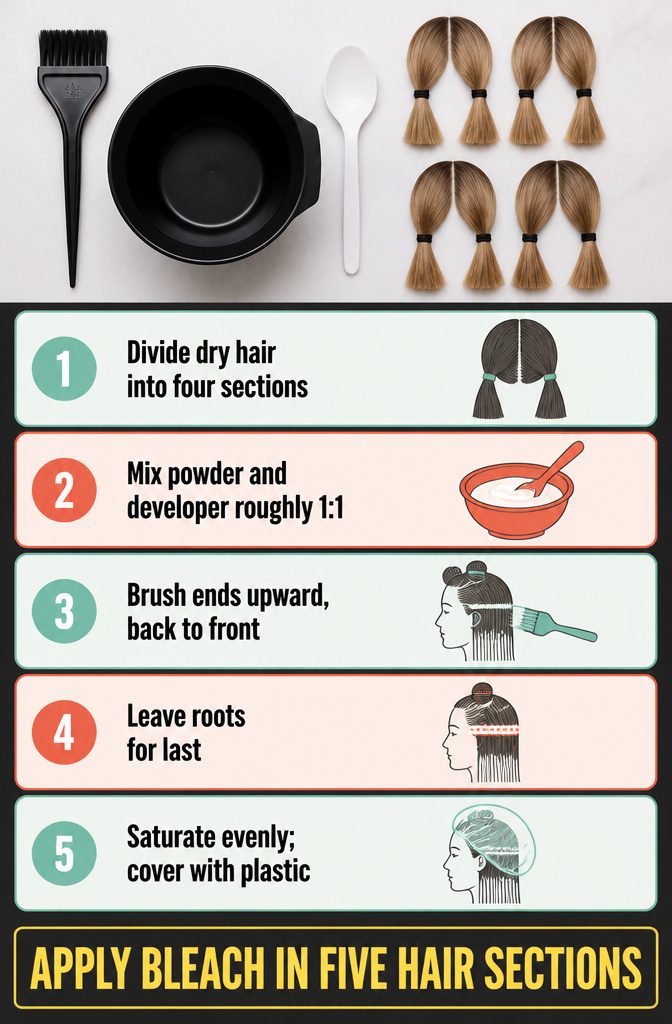
- Tie dry hair that’s gone at least 24 hours unwashed into two pigtails, then split each pigtail in two. That makes 4 sections, and the natural oils on your scalp take some of the sting out of the bleach.
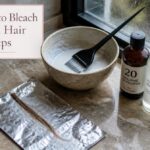
- Mix bleach powder and developer at roughly 1:1 in a mixing bowl with a plastic spoon, unless the packaging gives a different ratio. Stir to a thick, creamy consistency.
- Unclip one section and brush the mixture on from the ends upward with a tint brush. Work back to front, one thin layer at a time, pinning each finished layer out of the way.
- Skip about an inch of roots. Scalp warmth makes them lighten faster, so they go on last.
- Saturate every strand evenly, then wrap your hair in plastic wrap or a shower cap.
5. Monitor Lightening and Rinse at Pale Yellow
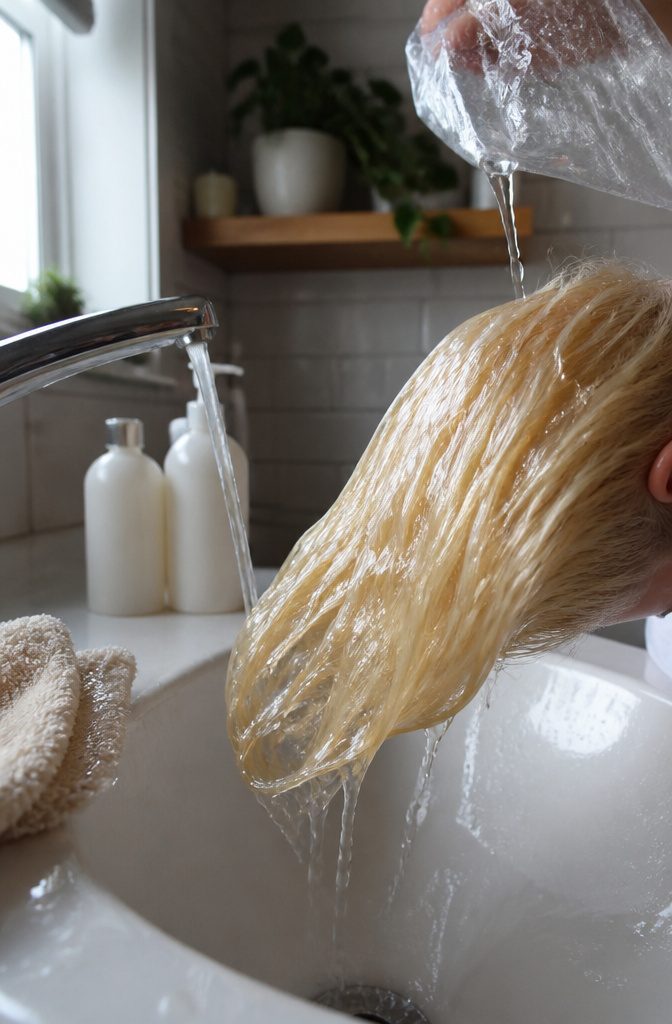
Check the bleach at 15 minutes, then every 10 minutes after that.
Stop at pale yellow, and never go past 50 minutes or the time printed on your product, whichever is shorter. Bleach can dissolve hair, so strands left too long snap off or fall out.
Once the shade is right, take off the plastic wrap and rinse under cool water until every trace is gone. Shampoo, condition, then squeeze the water out gently with a clean towel.
Hair that is still orange or dark at the time limit needs another round, not extra minutes. Rinse it out and wait.
A week is the minimum, but I’d wait 2, because the pause costs far less than breakage. Thick, coarse hair can take up to five rounds.
6. Tone to Remove Yellow and Brassiness
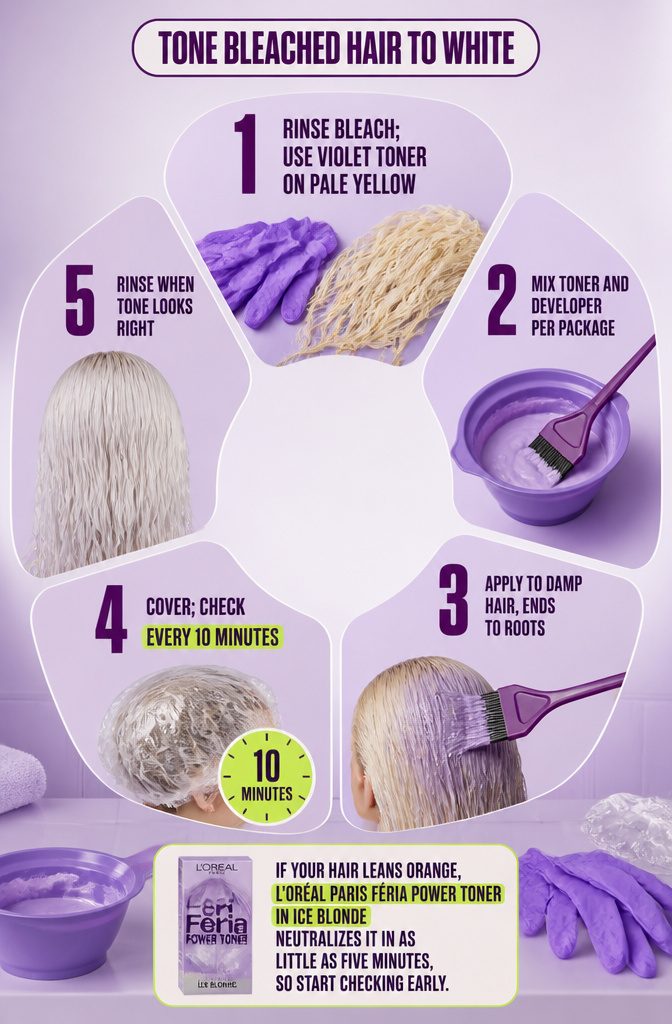
- Rinse out all the bleach, then put on gloves and old clothes. Violet cancels yellow, so use a violet pastel toner on pale-yellow hair.
- Mix toner and developer in a clean plastic bowl, following the package. The usual ratio is 1 part toner to 2 parts developer. Skip this step if your kit comes premixed.
- Paint it onto damp hair with a tinting brush, ends to roots and back to front. Check the back in a mirror.
- Cover with a shower cap and check every 10 minutes. Some toners finish in as little as 10.
- Rinse once the tone looks right.
If your hair leans orange, L’Oréal Paris Féria Power Toner in Ice Blonde neutralizes it in as little as five minutes, so start checking early.
7. Keep White Hair From Fading or Turning Brassy
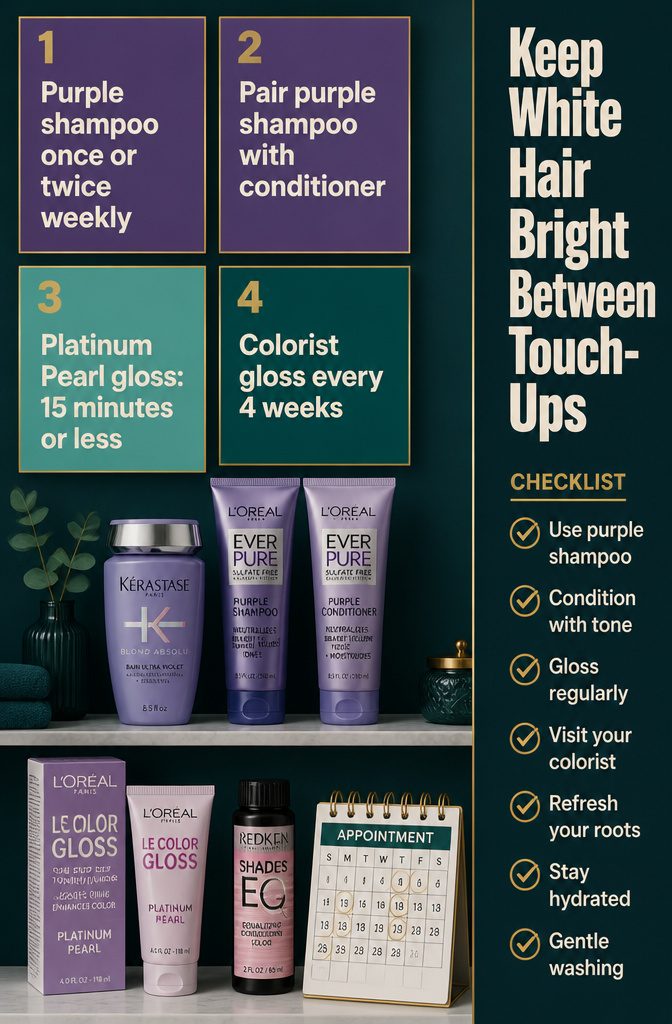
Toner fades a little with every wash, and yellow shows through once it thins.
- Swap in purple shampoo once or twice a week for your regular shampoo. Kérastase Blond Absolu Bain Ultra Violet (8.5 fl oz) is one option.
- EverPure Sulfate Free Purple Shampoo and Conditioner is the pair I’d pick for bleached hair, since the conditioner adds moisture while it tones.
- L’Oréal Paris Le Color Gloss in Platinum Pearl tones and conditions in the shower in 15 minutes or less.
- A Redken Shades EQ gloss from your colorist every 4 weeks refreshes tone and adds shine without more bleach.
- Bleach and tone your roots every 4–6 weeks. Stretching to every 2 months is the longest gap I’d allow.
Protect Condition After Bleaching
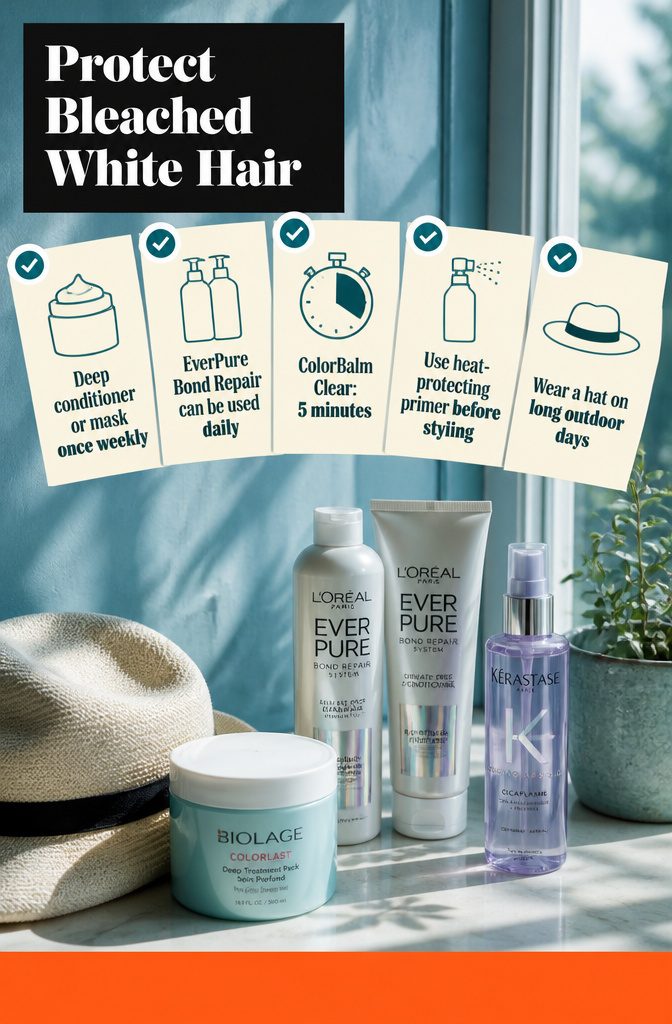
Bleaching always costs some moisture and strength, and dyed white hair shows it first as dry ends and snapping.
- Use a deep conditioner or mask once a week. Biolage Colorlast Deep Treatment Pack is a solid pick.
- Swap your shampoo and conditioner for Redken Acidic Bonding Concentrate, which is sulfate-free, or the L’Oréal Paris EverPure Bond Repair System. I’d choose EverPure if you want a pre-shampoo treatment; it can be used daily.
- For shine, Biolage ColorBalm Clear works in 5 minutes and leaves hair 10 times more conditioned.
- Cut back on heat styling. When you can’t skip it, apply a heat-protecting primer like Kérastase Blond Absolu Cicaplasme first.
- Sun, wind and pollution dry out lightened strands too, so wear a hat on long days outside.
White Hair Variations Worth Considering
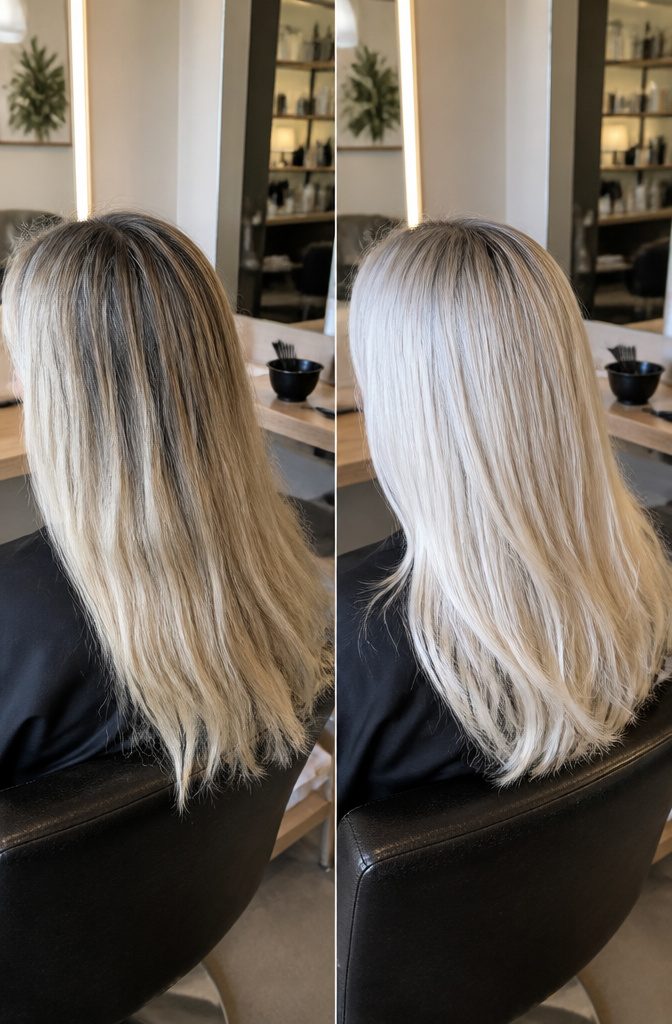
Rooted white is the lowest-maintenance version of this color.
Your natural roots stay in on purpose, so regrowth reads as part of the design and the time between touch-ups stretches out. If another salon visit every few weeks sounds like a chore, I’d start here.
Torn between icy white and something a touch warmer?
Add wheat-colored lowlights to bright white. They give the color dimension and a subtle summery feel, and the overall look stays light.
A dark base opens a different route. White highlights applied throughout black hair make a sharp black-and-white contrast, and you ask your colorist for exactly that.
Moving From Gray or Dyed Hair to White
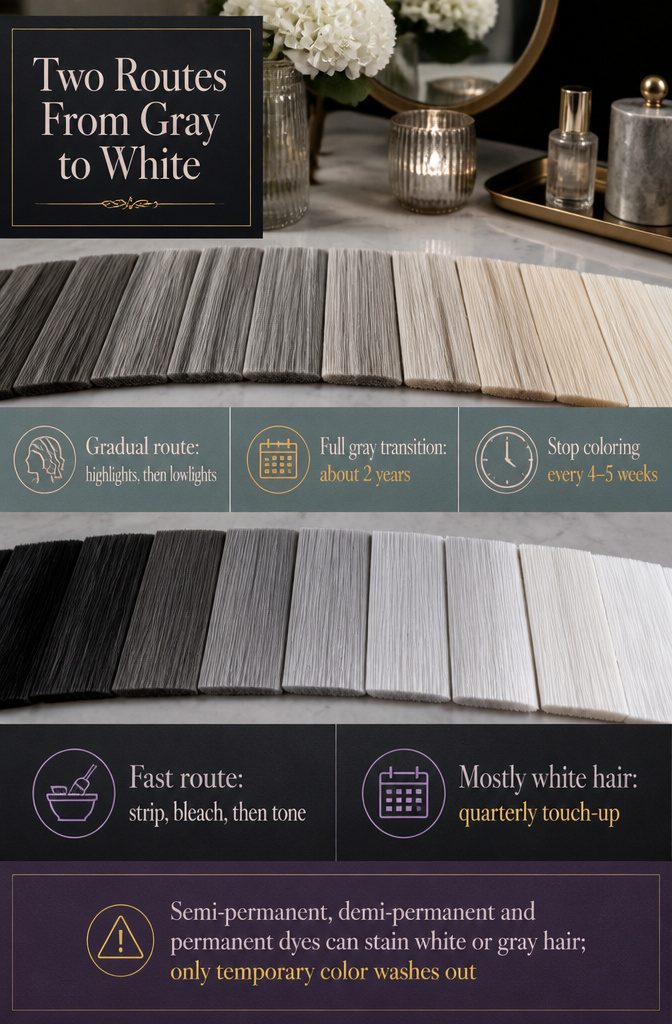
The slow route softens the demarcation line with blonde highlights, then adds lowlights that blend into the gray as it grows out, using less color at each visit.
The stretch from first highlights to a full head of gray runs about two years, and you stop coloring every 4 to 5 weeks.
The fast route happens in one session: the colorist strips artificial color, bleaches, then applies shades of gray or white.
Finishes include a silver semi-permanent glaze or a pearly-champagne permanent formula built with plenty of toner, which on mostly white hair needs only a quarterly touch-up.
Semi-permanent, demi-permanent and permanent dyes can stain white or gray hair; only temporary color washes out.
Frequently Asked Questions
Will white hair work for me?
It works best on virgin hair, meaning hair that has never been dyed or where the old dye is completely gone.
Temporary color counts as dye, so wait until every inch of it has grown out before you bleach. If your strands feel dry or snap easily, rebuild their condition first.
Can you dye your hair white?
Yes, but it rarely happens in one sitting.
A salon usually needs several appointments, and thick, coarse hair can take up to 5 bleaching rounds. DIY is realistic if you start at light brown or blonde, with at least a week between sessions (2 weeks is gentler on your hair).
Can you dye white hair, and will the color wash out?
Only temporary color washes out of white or gray hair.
Semi-permanent, demi-permanent and permanent dyes stain it, and they fade over time without ever fully washing out. No product reliably removes them and brings back your natural color, and bleach permanently changes both the dye and the natural shade underneath.
How long does dyed white hair last?
Toner fades a little with every wash, so yellow starts to show once it thins.
Purple shampoo once or twice a week slows that, and a gloss from your colorist every 4 weeks refreshes the tone. Bleach and tone your roots every 4–6 weeks, and treat 2 months as the longest gap.