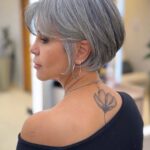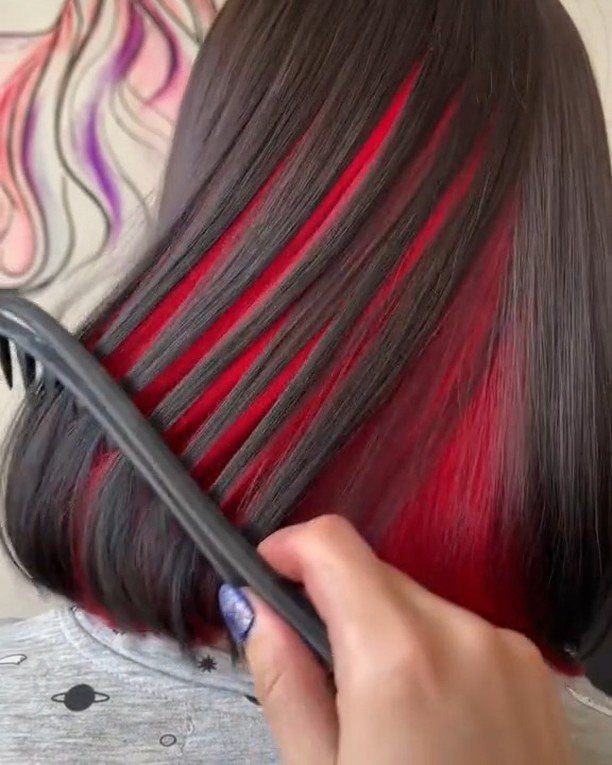
Peekaboo color sits underneath your natural top layer and stays hidden when hair falls straight, then flashes through when you pull it into a ponytail, braid or updo.
The choice between vivid shades like pink or teal and softer ones like caramel or rose-gold comes down to how much contrast you want and whether your base needs bleach first to make the color show up saturated.
Darker hair can take burgundy or darker red without pre-lightening, but cobalt on a black base needs the underlayers bleached to platinum or the blue reads greenish and dull.
1. Pink Peekaboo
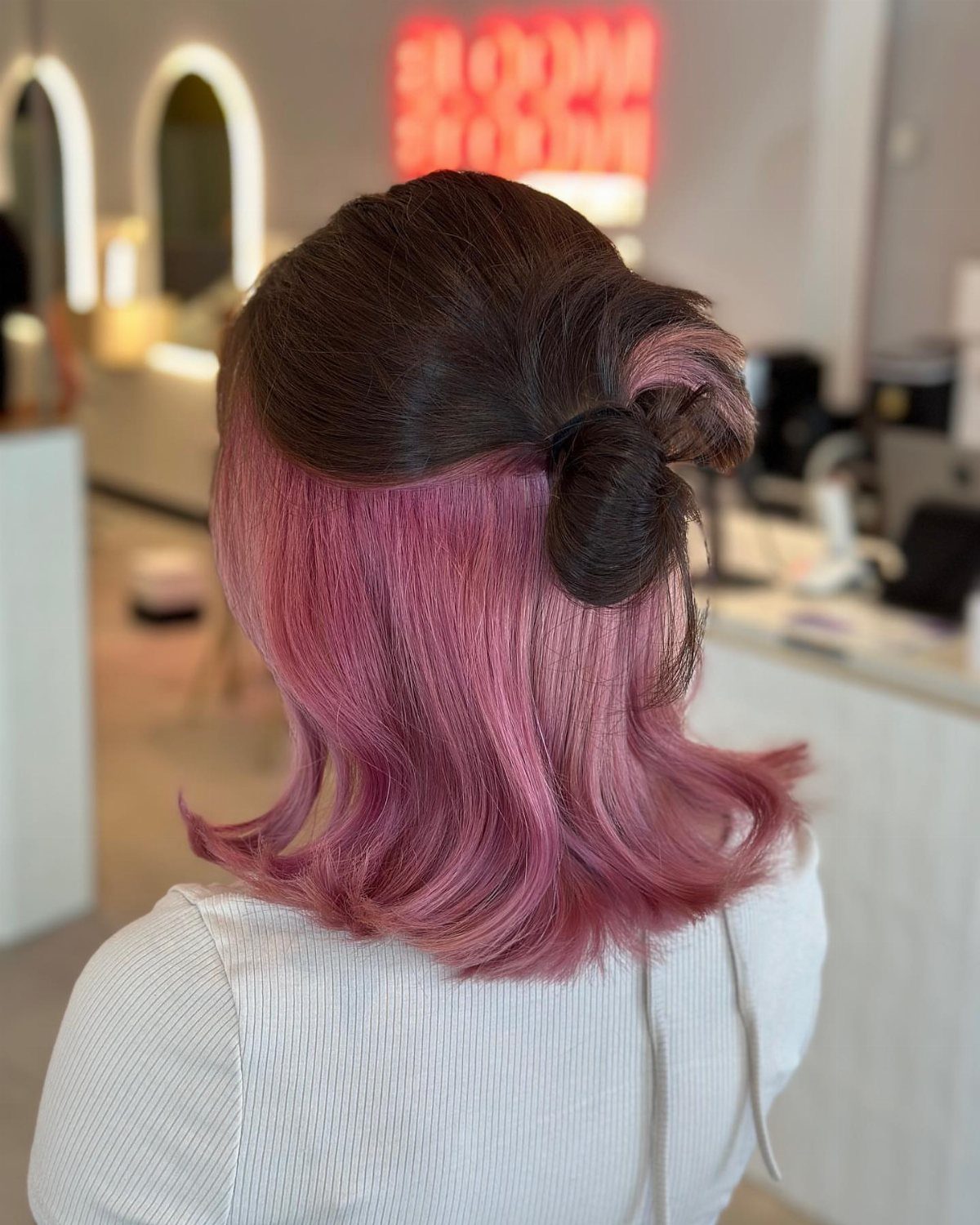
The color stays hidden when hair falls naturally and flashes when you pull it into a ponytail or updo. Pink reads soft and playful against dark bases, bolder against lighter ones.
At a salon, the colorist sections off the underlayers, lightens them if needed, and applies pink dye.
Box dye works if your base is already light enough to lift, but darker hair usually needs bleach first to get the pink to show up true.
The color sits low enough that regrowth barely shows. You can let it fade or refresh it when the color starts to look washed out.
2. Blue Peekaboo
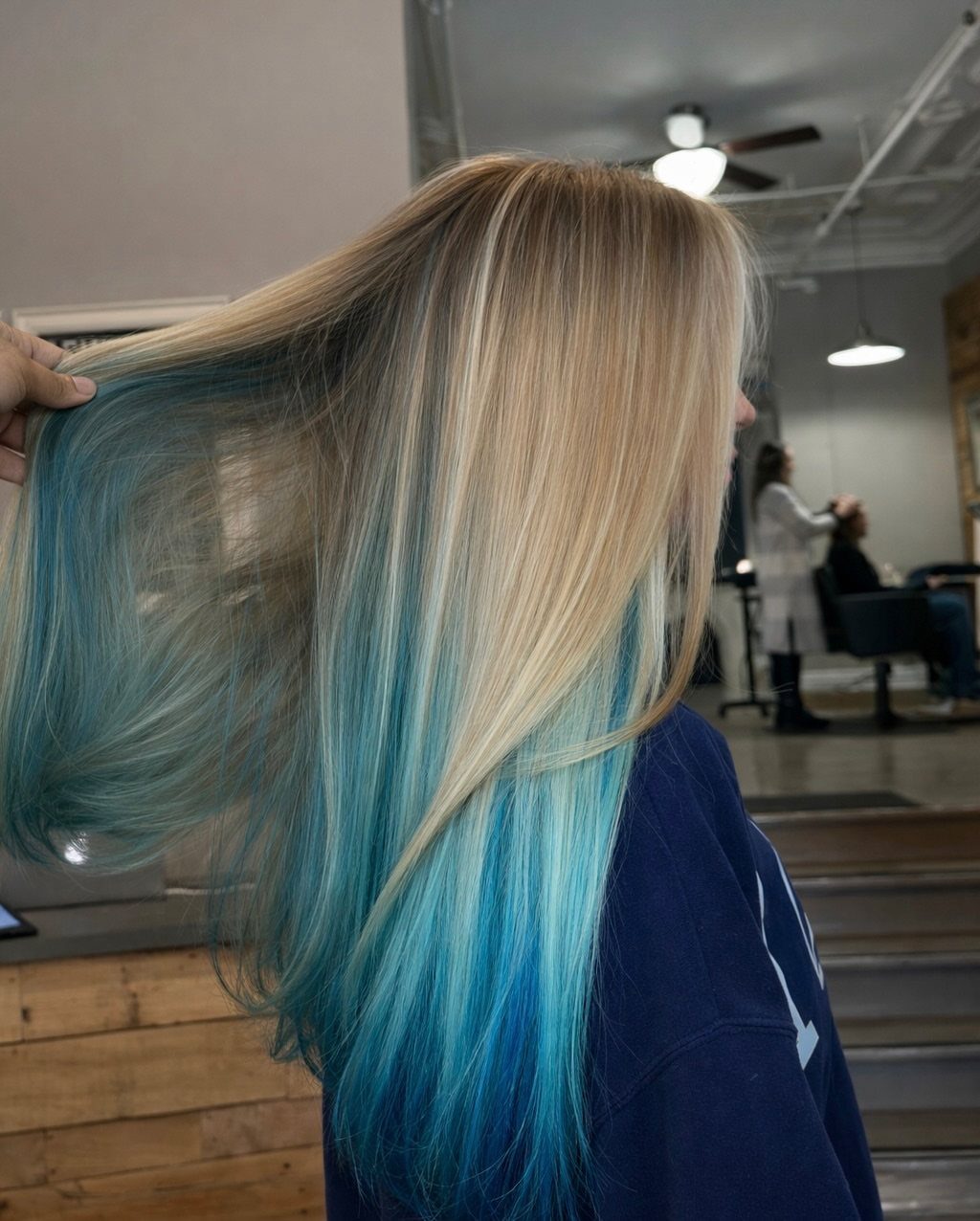
Turquoise or cobalt underneath pulls off the same trick as pink but lands cooler. The blue shows when you tie hair up, braid it, or flip sections forward.
Blonde bases take vivid blue without pre-lightening.
Darker hair needs bleach on the underlayers first, otherwise the blue stays muddy or invisible. Semi-permanent dye fades faster but lets you try the shade without full commitment.
Blue holds longer on hair that has been lightened less aggressively. Over-bleached ends grab color unevenly and fade patchy.
3. Red Peekaboo
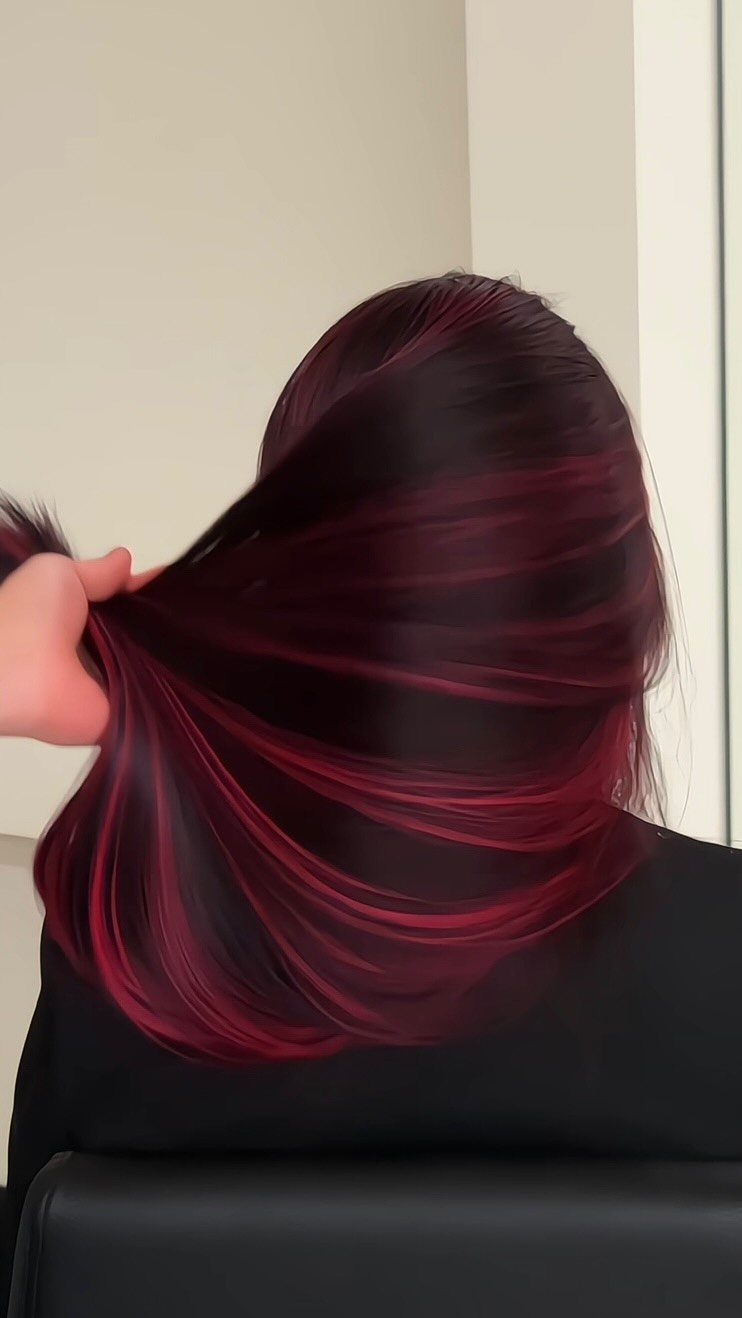
Red peekaboo sits warmer than pink or purple and reads as an extension of natural tones when it catches the light. The sections stay hidden day to day and reveal themselves in ponytails, buns, or when the wind picks up.
Brunettes can often go straight to red without bleach, especially if choosing a darker red like burgundy or copper. Lighter or brighter reds on dark hair need pre-lightening to show true.
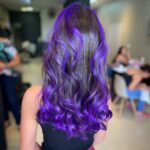
4. Purple Peekaboo
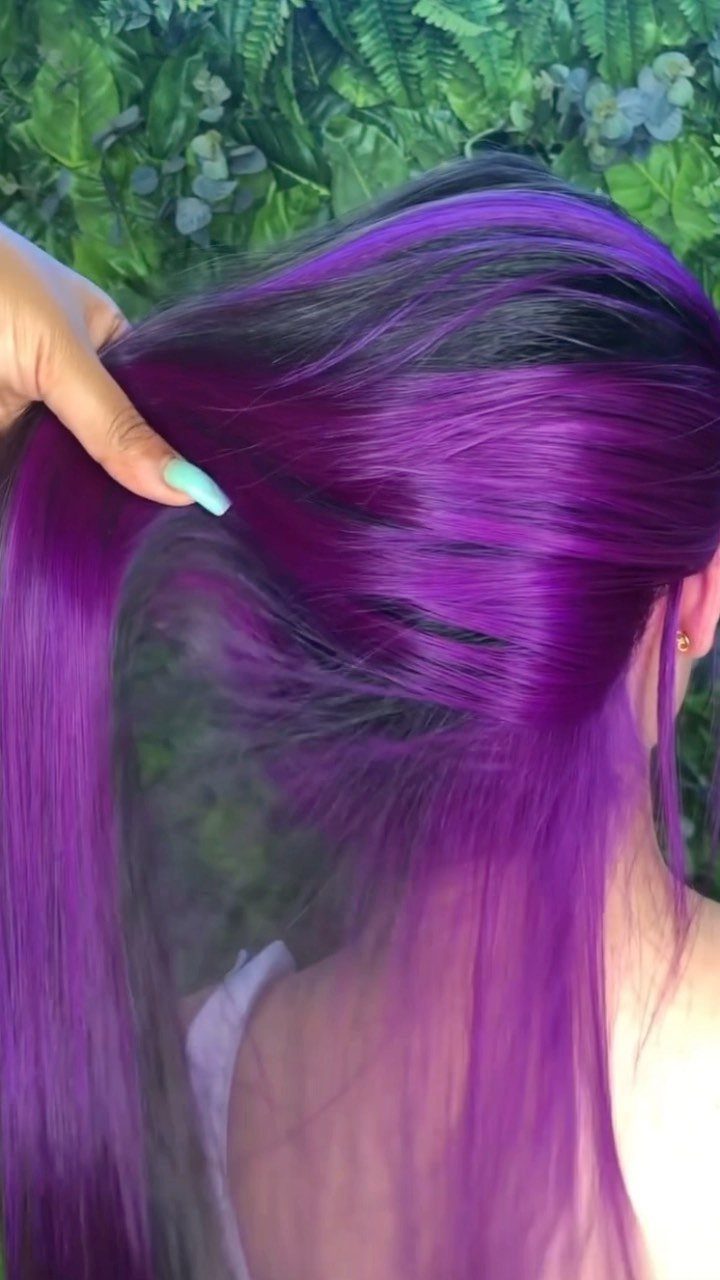
Purple or magenta underneath delivers high contrast without reading unnatural outdoors.
Dark hair takes purple well after bleaching the underlayers to pale yellow. Violet tones look richer on a platinum base but will still show on light blonde without extra lifting.
Purple fades toward lavender or silver depending on the formula. If you want it to stay saturated, a purple-depositing conditioner between salon visits keeps it from washing out too fast.
5. Teal Peekaboo
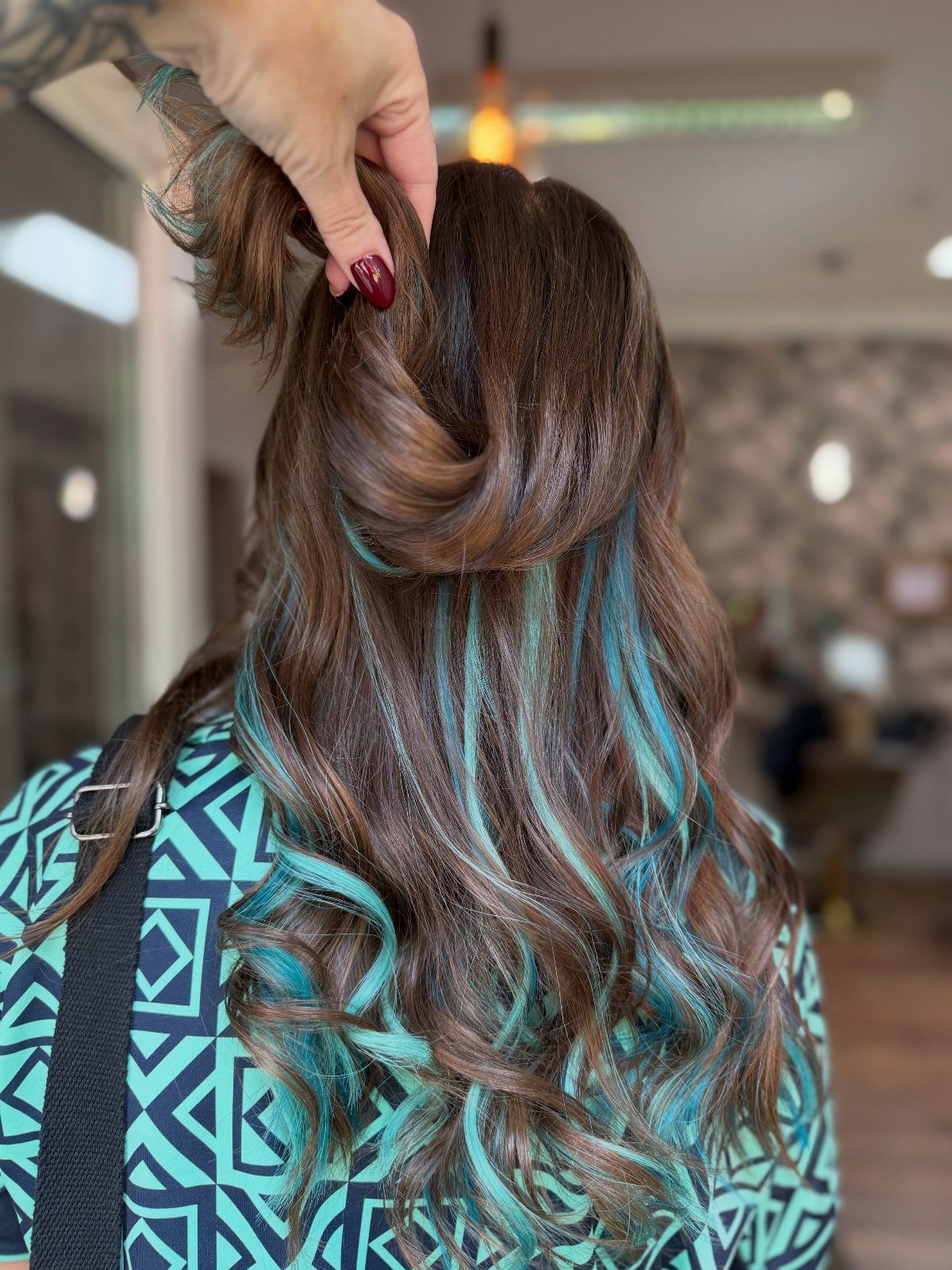
Teal splits the difference between blue and green, reading aqua in some light and jewel-toned in others. The color appears when you style hair up or sweep it to one side.
Brown or darker blonde bases need bleach on the underlayers to get teal to show clearly. Skipping that step leaves you with a muddy blue-green that barely contrasts with the top.
Teal holds better than pastel shades but still fades noticeably over time. Cold water and sulfate-free shampoo slow that down.
6. Pink and Teal
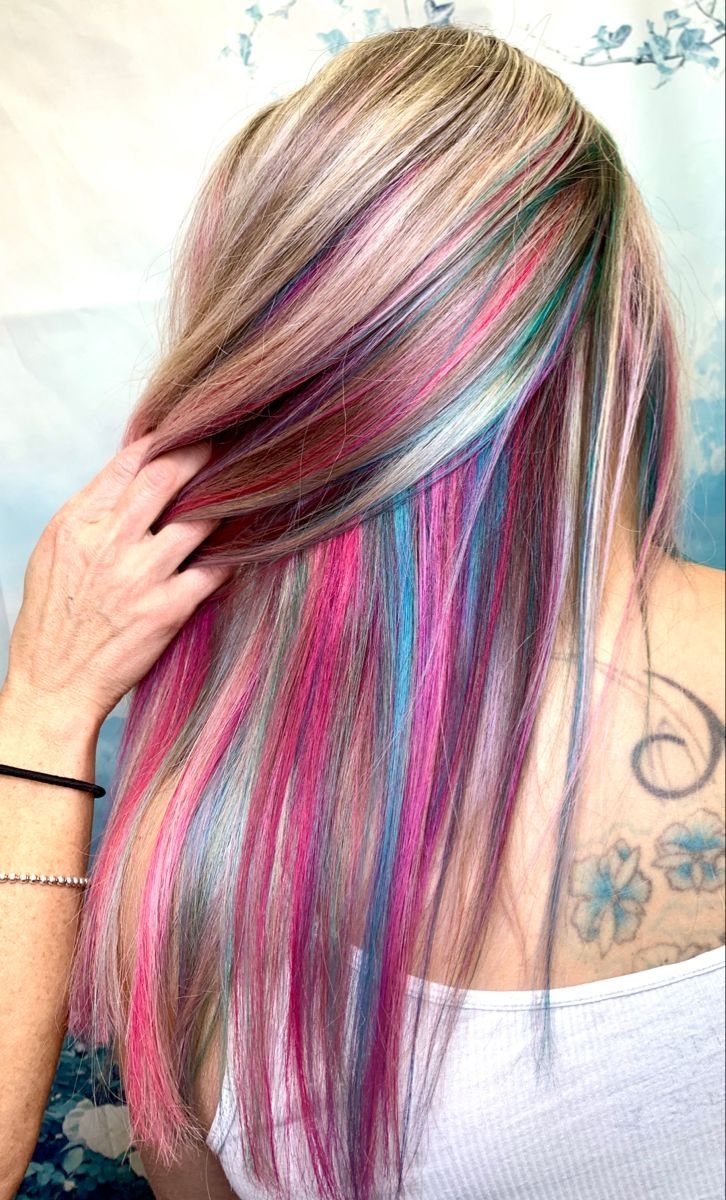
Two vivid colors underneath instead of one gives you more to see when you pull hair into an updo. Pink and teal create the strongest contrast without clashing, since one reads warm and the other cool.
Both colors need pre-lightened sections to show up bright. The colorist alternates streaks of each, either in a pattern or scattered randomly depending on what you ask for.
Maintaining 2 shades means refreshing both or letting them fade together into softer pastels. If one fades faster, you can tone just that color without redoing the whole set.
7. Dark Hair Rainbow
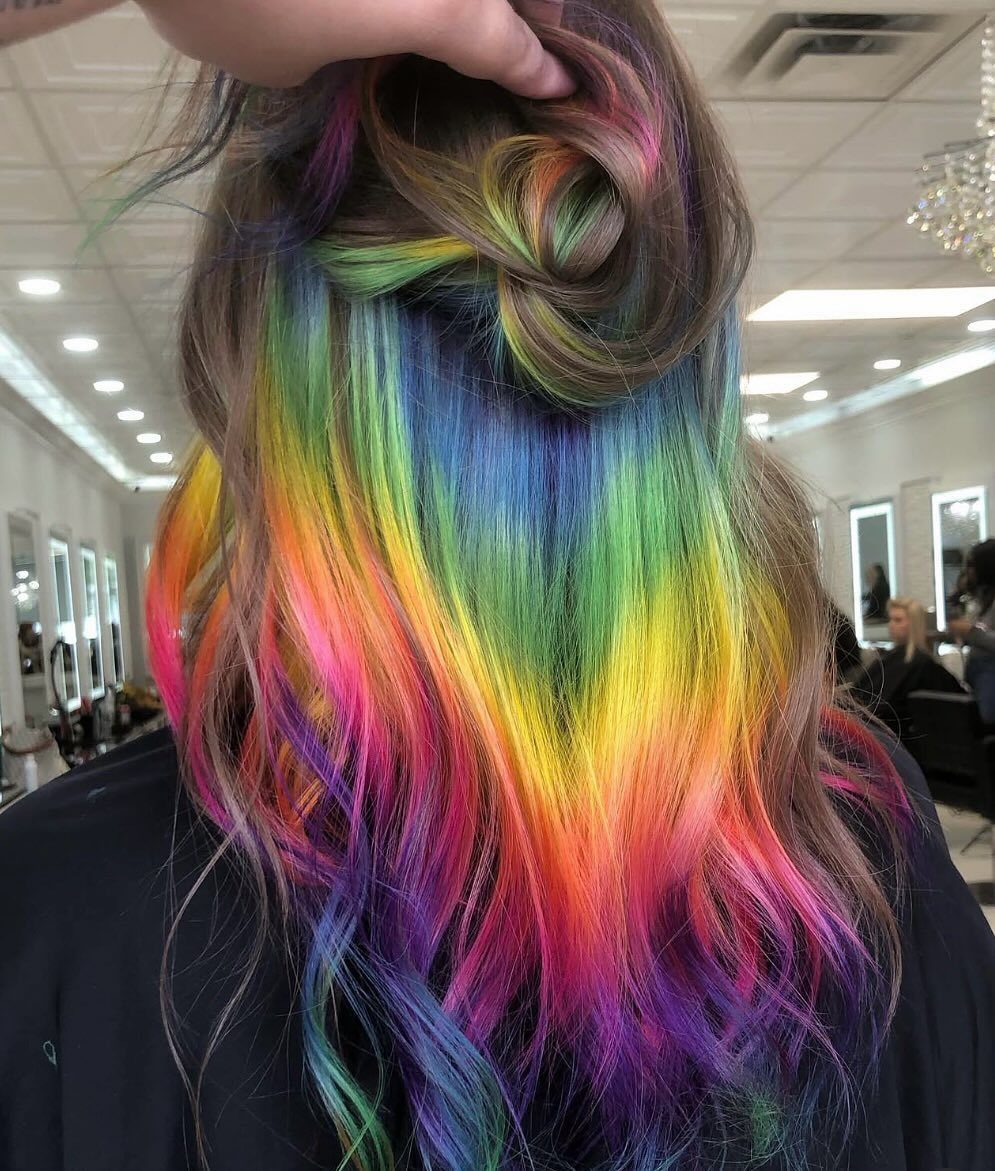
Multiple vivid shades stacked underneath keep the color completely hidden when hair falls straight, then reveal a full spectrum when pulled up or parted.
Violet, blue, green, yellow, and pink each need their own section, so the process takes longer than single-color peekaboo.
Each color needs bleached underlayers to show up bright. Darker bases require more lift, and the rainbow only reads clearly if the base color stays solid and dark enough to hide it fully when hair is down.
The colors fade at different rates. Blue and green tend to last longer than pink or yellow, so the rainbow shifts over time unless you refresh all of them at once.
8. Teal Curly Bun
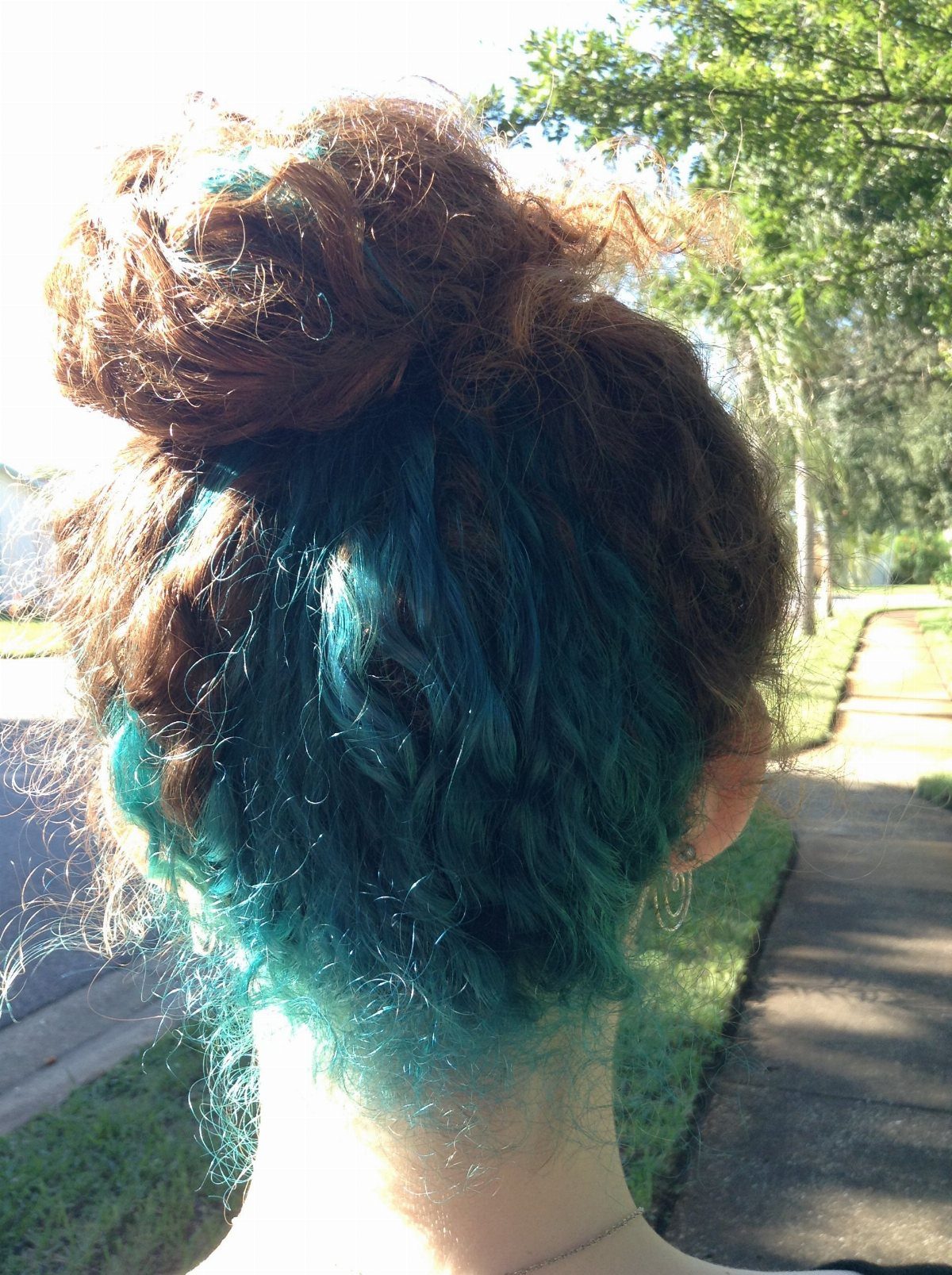
A loose bun at the crown lifts all the colored sections into view while leaving a few curls out at the nape for texture.
The style works best when the teal sits low enough that gathering everything else up pulls the color forward.
Curls hold teal longer than straight hair because the texture reflects more light.
The color still needs bleach underneath to show up bright, but once it takes, the dimension in the curls makes the teal look richer than it would on a smooth base.
9. Blonde Pink Lavender
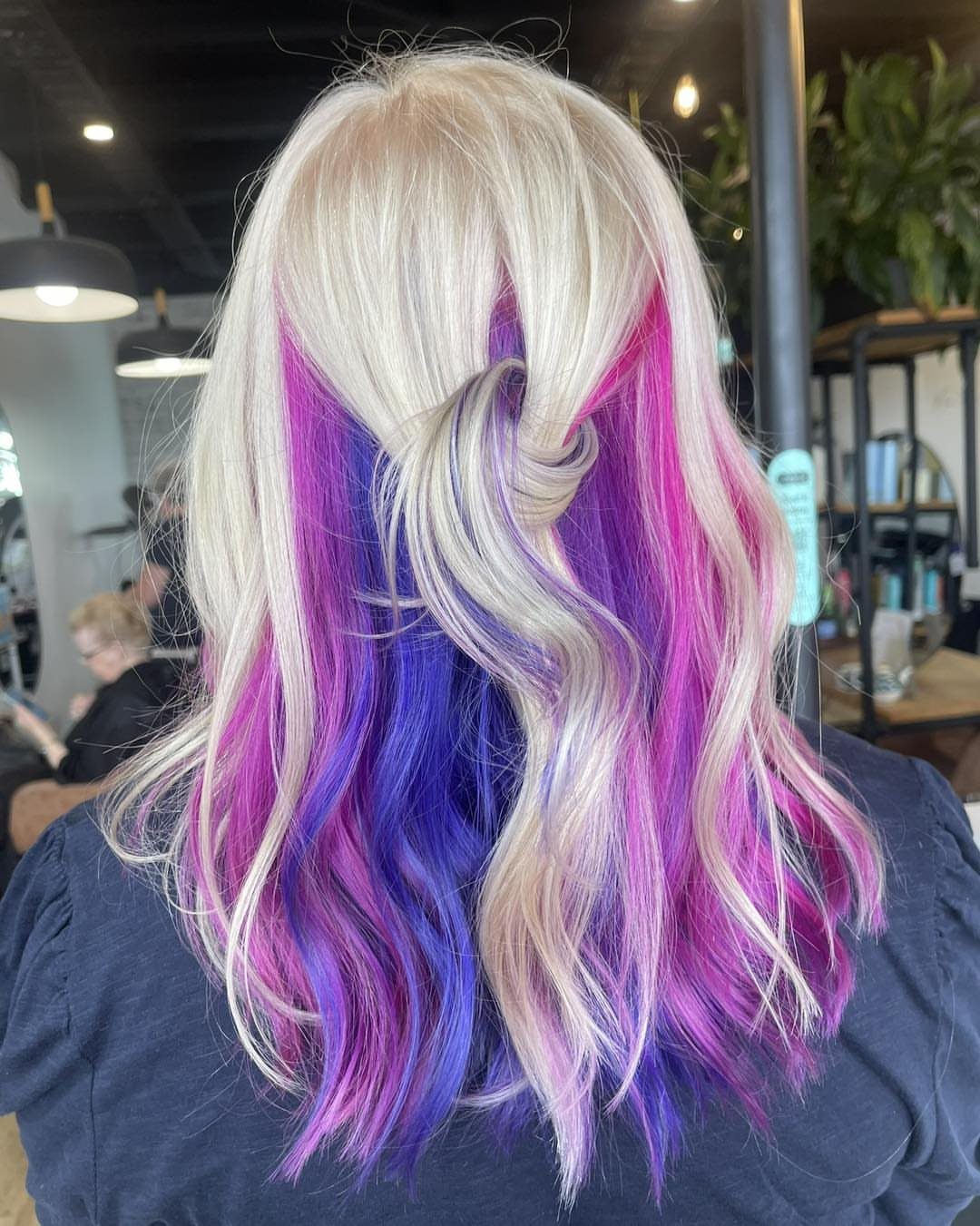
Soft pink and lavender blend into blonde without the hard contrast darker bases create.
The colors show when you part hair to the side or gather it loosely, but they stay subtle enough that they read as dimensional highlights from a distance.
Blonde takes pastel tones without extra bleaching, so the process skips the heavy lifting step. Pastels fade faster than vivids, usually washing out within a few weeks unless you use color-depositing conditioner between washes.
10. Dark Hair Pink Purple
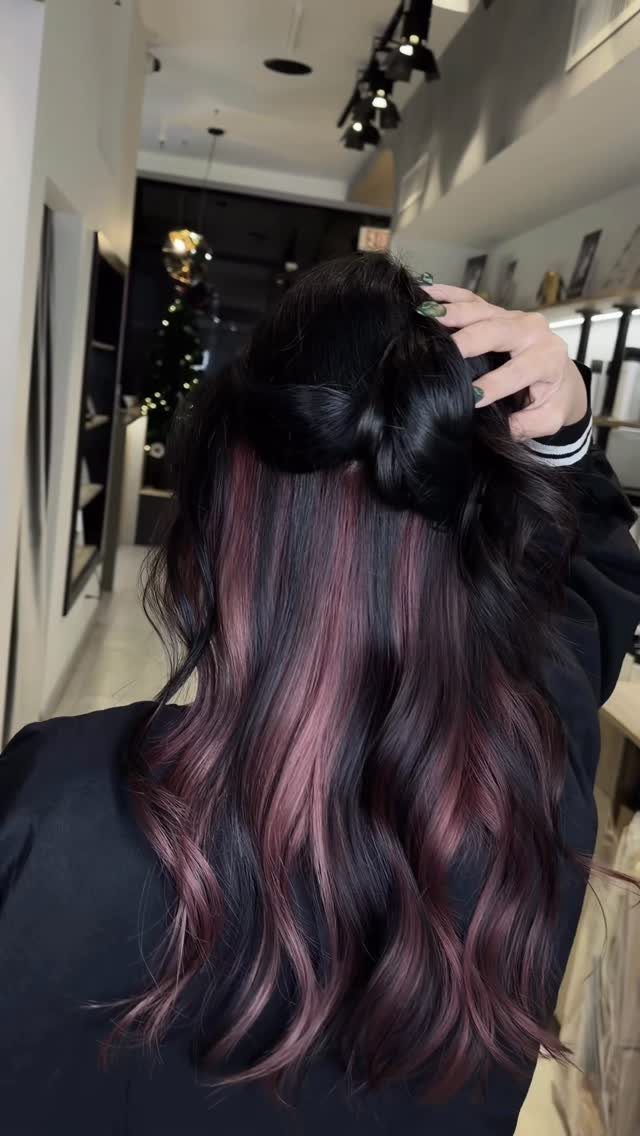
Pink and purple together add warmth without pulling too red. The two colors sit close enough in tone that they blend when hair moves, but each one stays distinct in updos or braids.
Both need bleach on dark bases to show up saturated.
If you skip that, the colors stay dim and the purple reads almost black. Once the underlayers are lightened to pale yellow, the dye takes cleanly and the colors hold longer than on over-processed hair.
11. Black Hair Blue
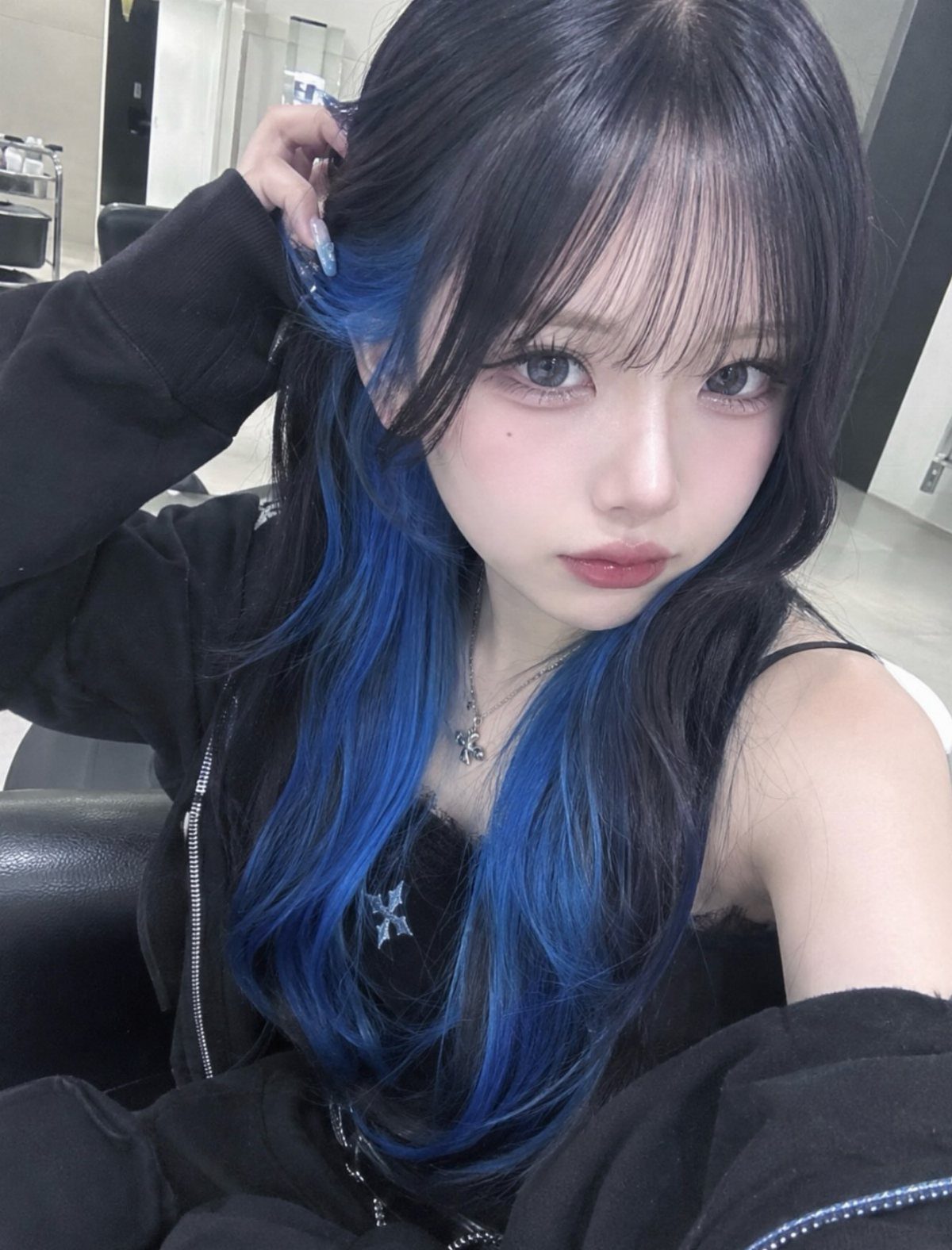
Cobalt streaks the underlayers and wraps forward around the face, so the color shows even when hair is down. The placement makes it bolder than fully hidden peekaboo but still keeps most of the color tucked underneath.
Black bases need the underlayers bleached to platinum for cobalt to read true.
Stopping at yellow leaves the blue looking greenish and dull. Once the sections are lifted enough, the blue takes vivid and holds longer than lighter shades because it has more pigment to start with.
12. Brunette Teal Blue Gray
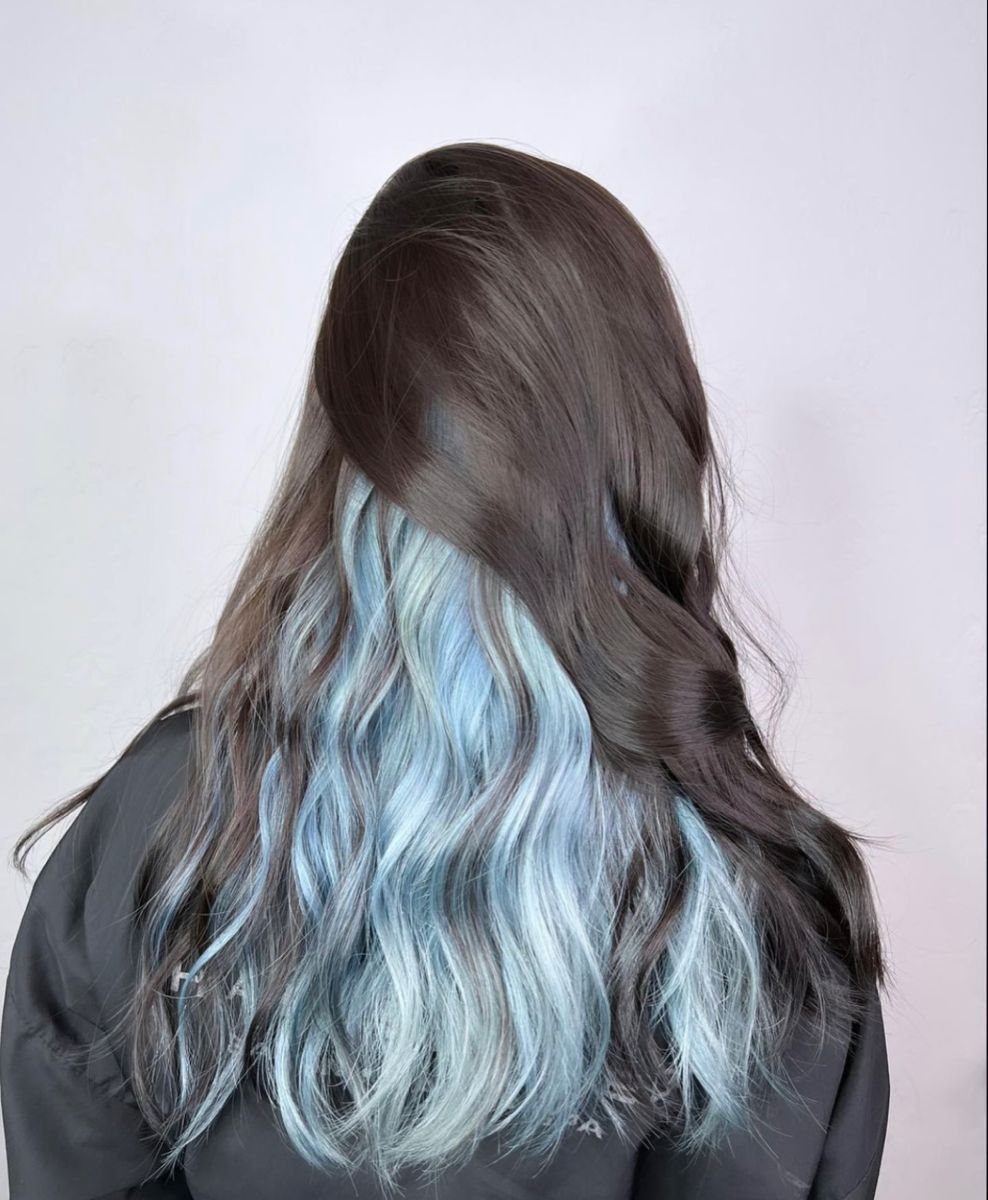
Teal and pale blue-gray together create a cooler, more muted look than single-color peekaboo. The teal reads vivid where it sits, and the gray-blue softens the contrast, so the 2 colors layer instead of competing.
Both shades need pre-lightened underlayers, but the gray-blue tolerates a slightly warmer base than pure teal does. Toning the bleached sections before applying color keeps the gray from pulling too warm as it fades.
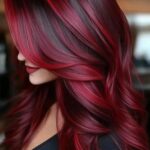
13. Burgundy Peekaboo
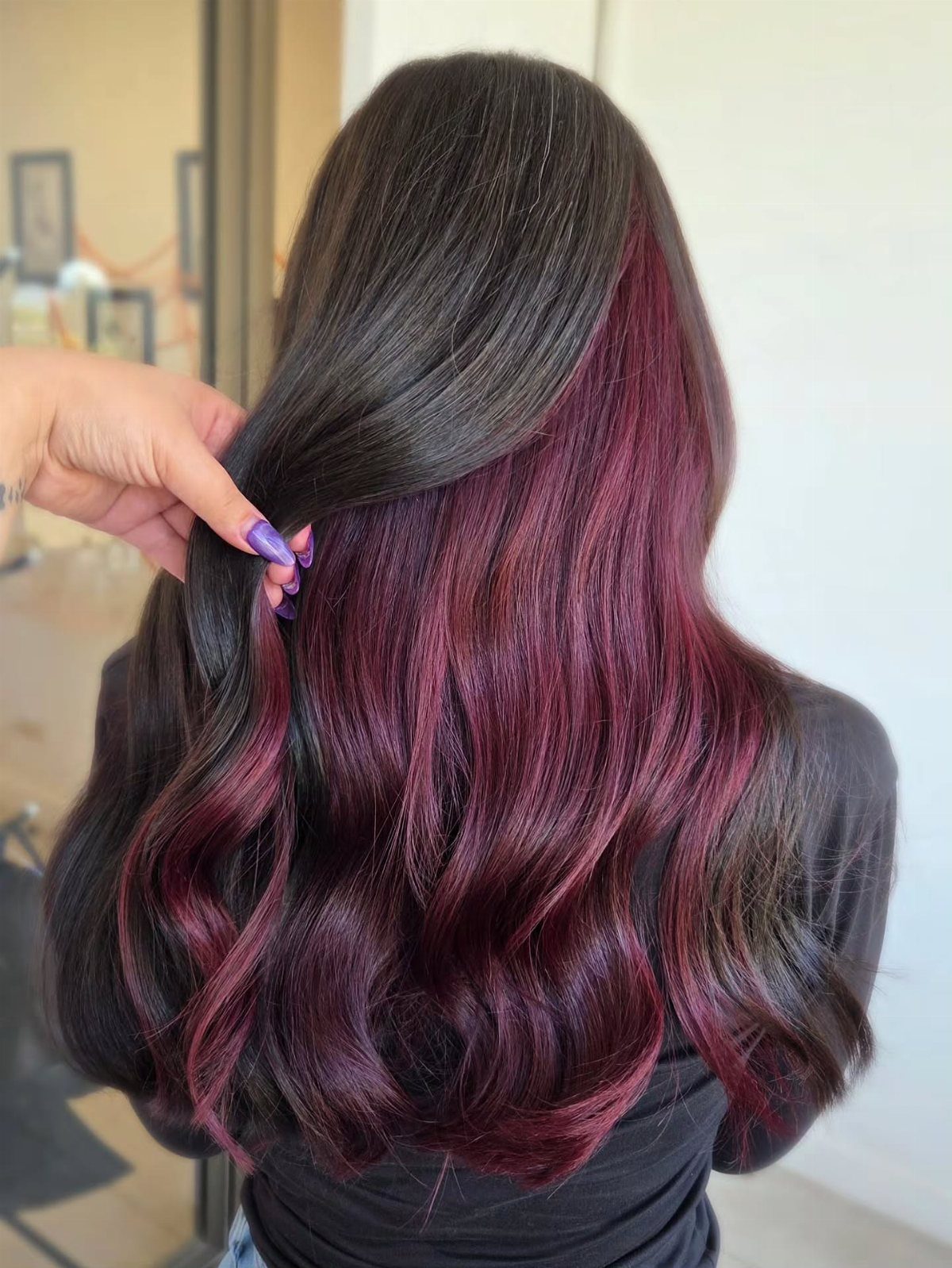
Burgundy reads richer and less candy-bright than magenta or hot pink, closer to wine than berry. The color stays hidden until you gather hair up or part it to one side.
Dark bases can take burgundy without bleaching first, since the shade sits deep enough to show over brown or black. Brighter burgundy needs pre-lightened sections to come through saturated.
The color fades slower than vivid pink because it starts with more red pigment. It shifts toward copper or auburn as it washes out rather than going pastel.
14. Face-Framing Color
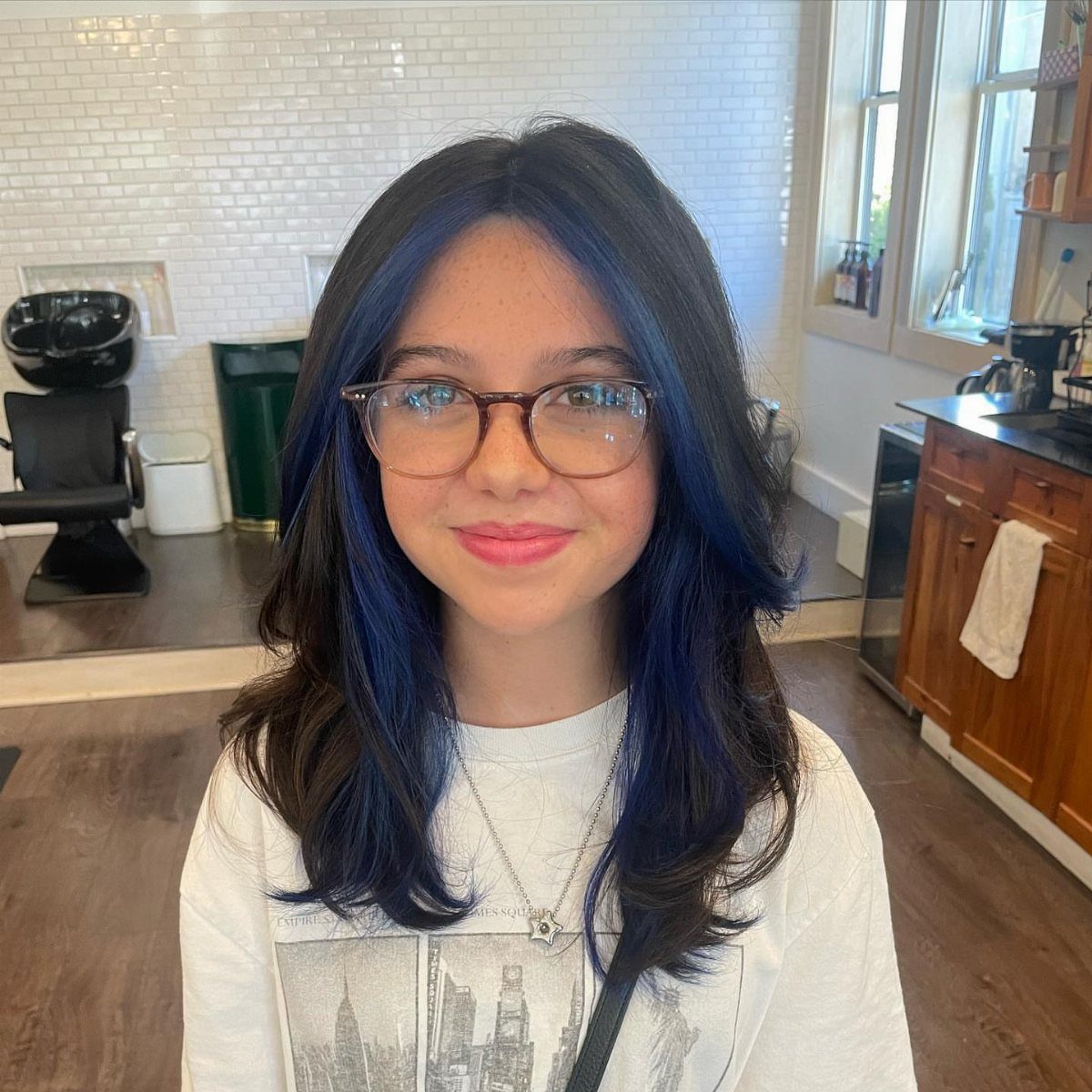
Placement at the front makes the color visible whether hair is up or down. The sections frame the face and pull focus without requiring a full head of color.
The colorist lifts only the front pieces, so the process takes less time and costs less than peekaboo that runs across the whole underlayer.
Vivid shades like blue or pink need bleach first on dark bases; lighter hair can skip that step.
Regrowth shows faster here than with fully hidden peekaboo, since the colored sections sit right at the hairline.
15. Black Hair Red
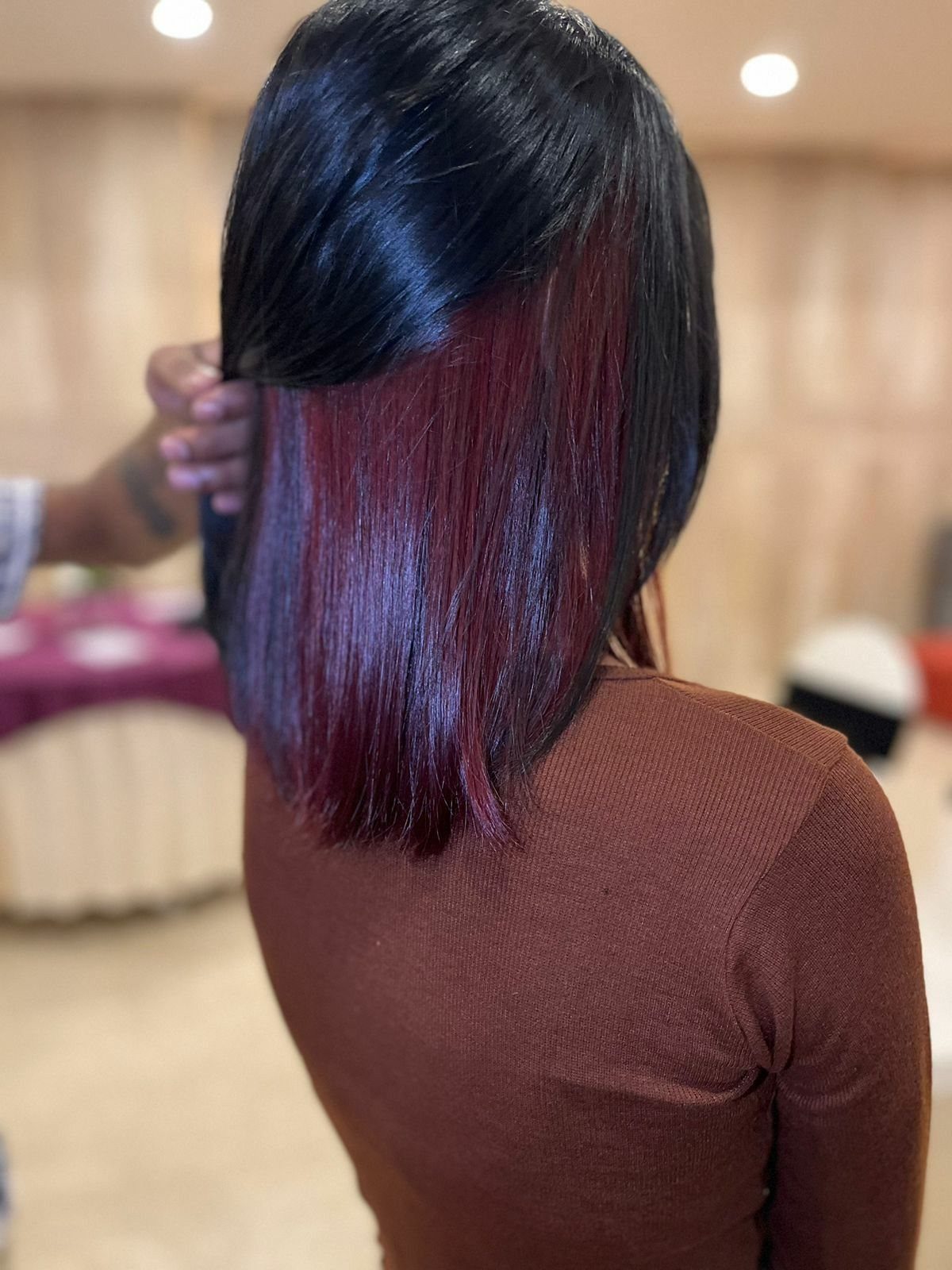
Red streaks layered through a black bob create the sharpest contrast peekaboo offers. The color flashes through every time hair moves, and the short length keeps the red from getting lost underneath.
Black hair can take darker red tones without bleach, but bright red needs the underlayers lifted to show clearly.
A bob grows out faster than long hair, so plan to refresh the red or the cut regularly to keep the shape and color balanced.
16. Blonde and Red Violet
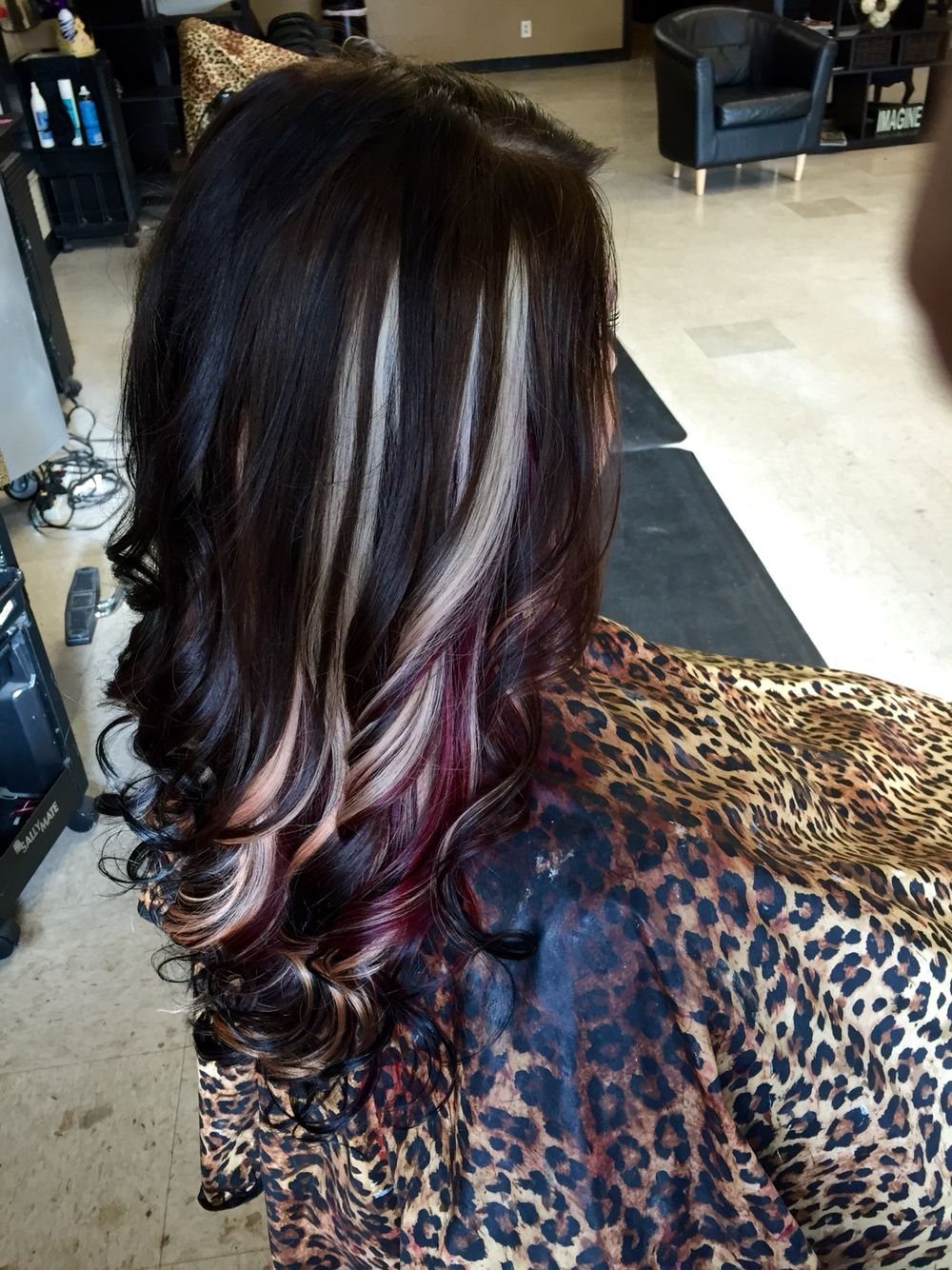
Blonde and red-violet together give you 2 levels of warmth underneath. The blonde reads as dimensional highlights when hair shifts, and the red-violet adds a bolder pop of color.
The blonde goes on first or is left from the bleaching step, and the red-violet is applied to separate streaks.
Red-violet washes out faster, leaving more blonde visible over time.
17. Purple Silver Bob
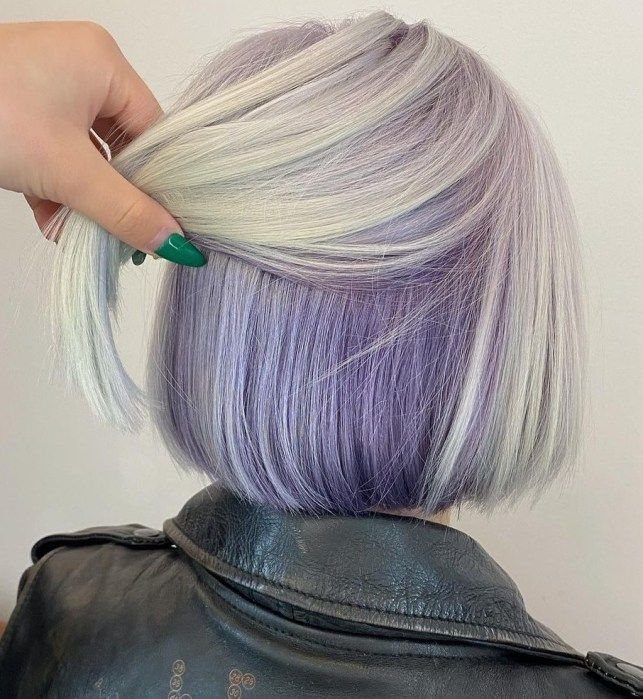
Silver on top keeps the look cool and neutral, and the purple underneath adds saturation without changing the overall tone. The bob length makes the purple easier to see when hair is styled or tucked behind the ears.
Both silver and purple need bleached bases to show up true. The silver requires toning to cancel yellow, and the purple takes best on a pale base.
Purple holds longer than silver without retouching, so the underlayers stay vivid while the top may need toning every few weeks to stay ashy.
18. Black Purple Face Frame
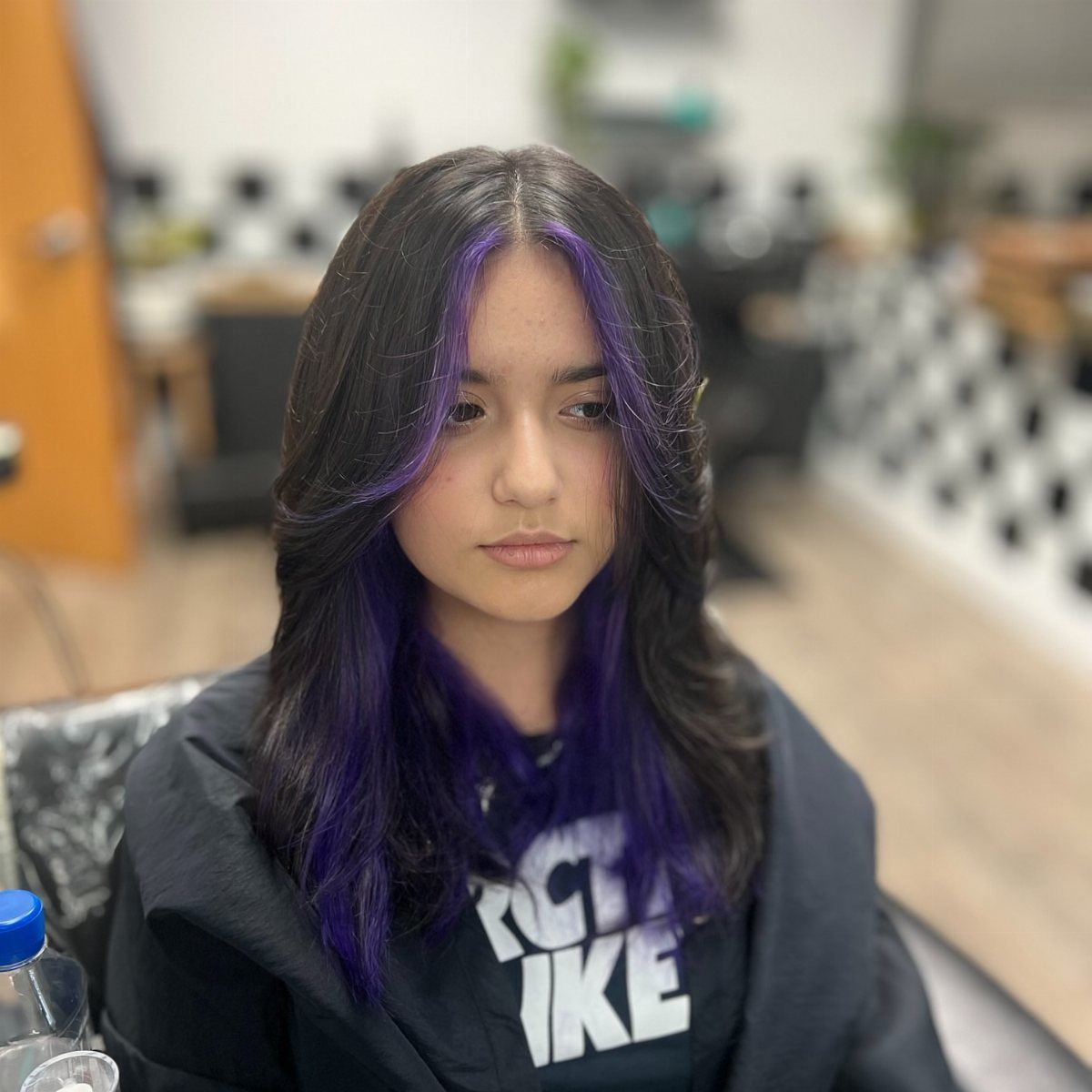
Violet-purple at the front and underneath gives you color that shows from every angle. The face-framing pieces stay visible day to day, and the underlayers reveal more when you tie hair up.
The front pieces will show regrowth sooner, so you can refresh just those sections between full color appointments.
The double placement means more maintenance than hidden peekaboo alone, but it also means the color stays part of the look even when hair is worn down.
19. Curly Peekaboo
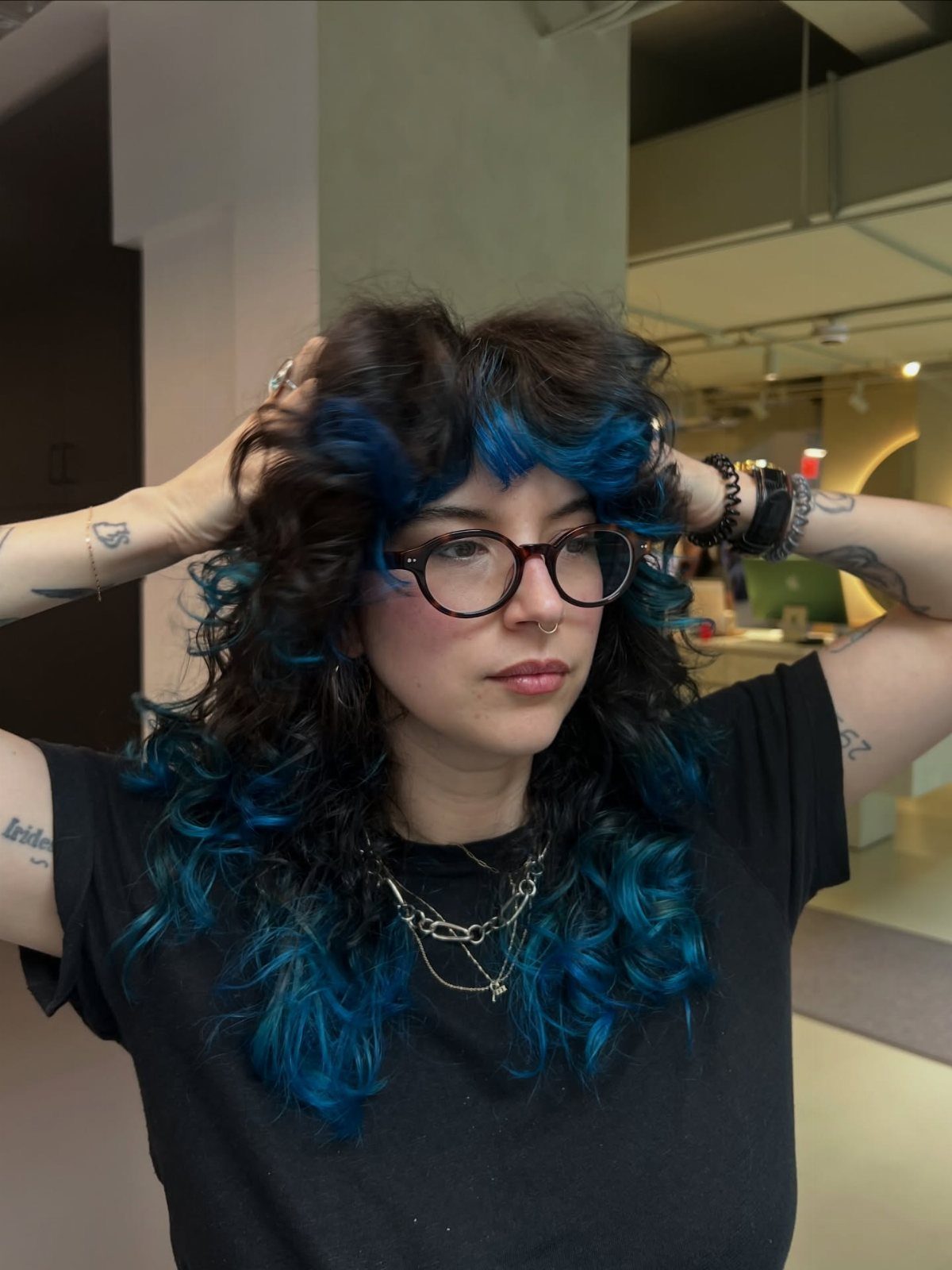
Curls add dimension that makes hidden color easier to spot, since the texture lifts sections and catches light differently than straight hair.
The blue or teal shows when curls bounce or separate, and it stays fully hidden when hair falls naturally.
Curly texture holds color longer because the bends reflect more light and mask minor fading.
The underlayers still need bleach on dark bases for vivid shades to read clearly, but once the color takes, the curls make it look richer than it would on smooth hair.
20. Blonde Peekaboo
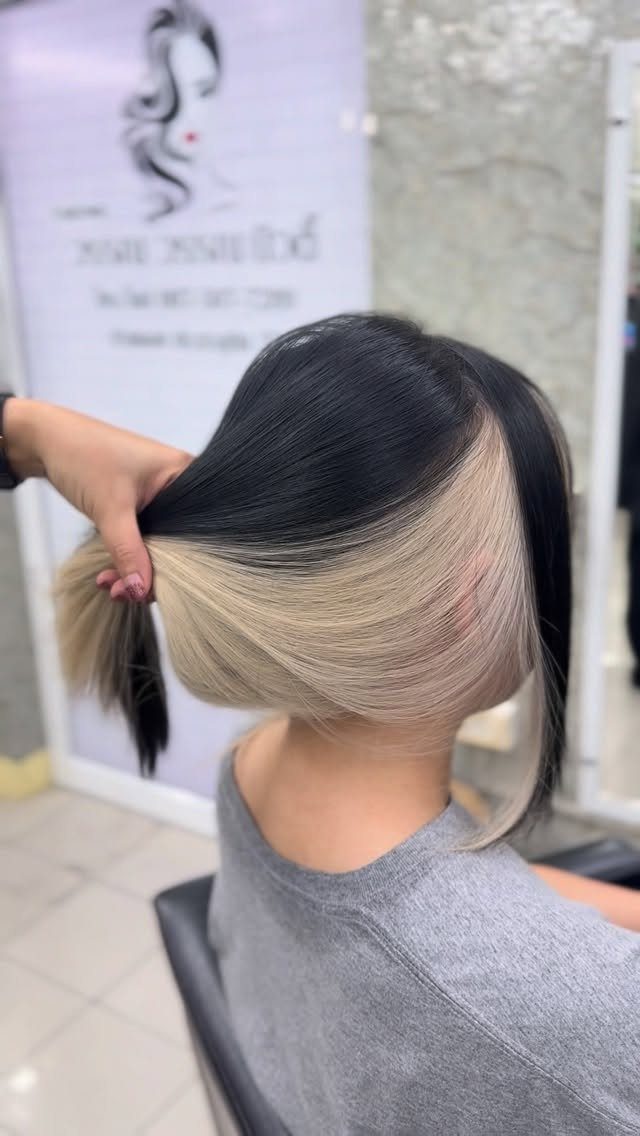
Blonde underneath creates contrast without adding vivid color. The sections show when you tie hair up or flip it to one side, and they read as dimensional rather than bold.
Stopping too early leaves the color looking brassy instead of clean.
Blonde peekaboo grows out softer than vivid shades, since regrowth blends more gradually. Toning the blonde keeps it from pulling yellow over time.
21. Caramel Peekaboo
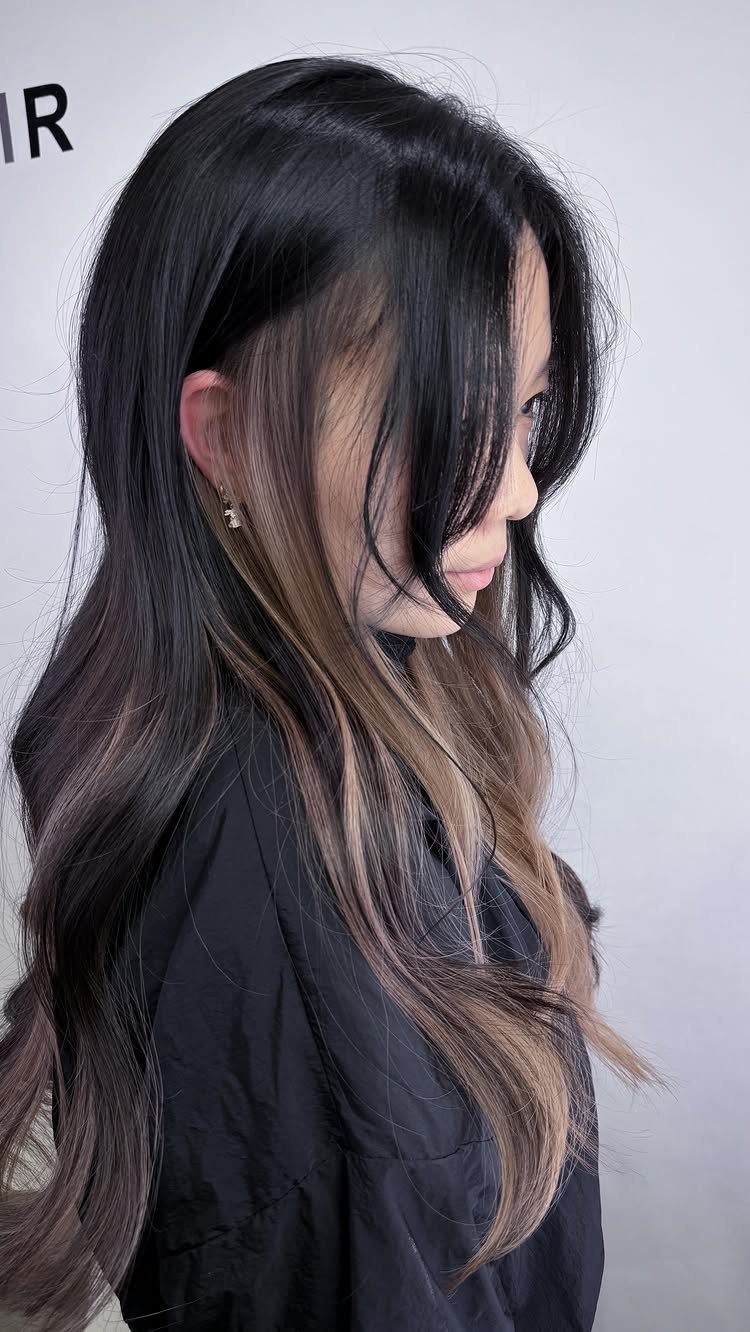
Caramel warms up dark hair without reading as a full color change. The highlights stay subtle enough that they look like natural dimension until you gather hair up and the contrast becomes clear.
Dark brown bases can take caramel without bleach if the shade is only slightly lighter. Going brighter needs pre-lightening to keep the caramel from turning muddy.
The color fades gently and blends back into the base tone over time, so regrowth stays less noticeable than with vivid peekaboo.
22. Green Peekaboo
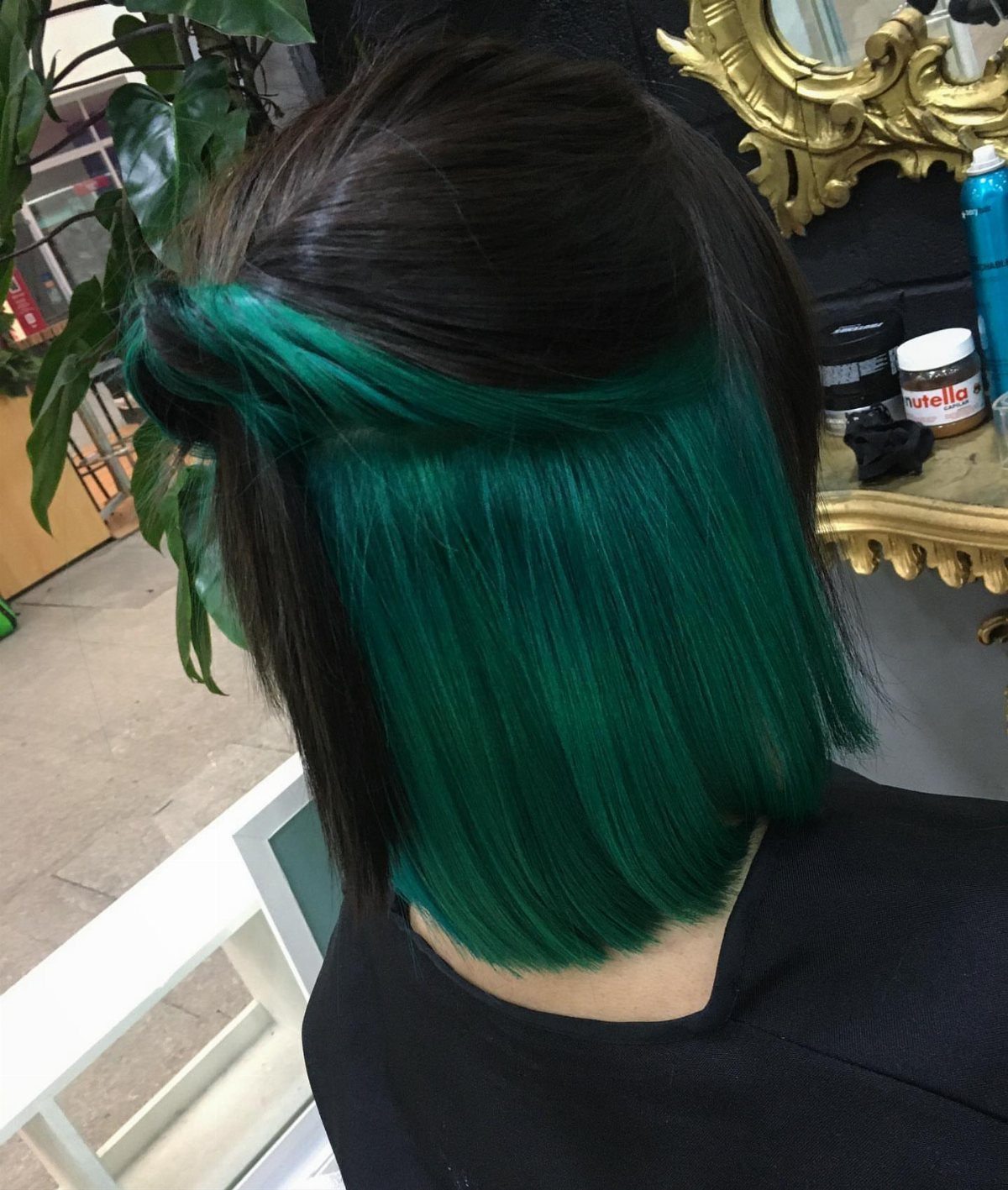
Green reads bolder than teal or blue, closer to emerald or kelly depending on the base. The color flashes through when hair moves and stays hidden when it falls straight.
Skipping that step leaves the color looking swampy instead of vivid.
Green fades faster than blue or purple because it has less staying power in most formulas.
23. Silver Peekaboo
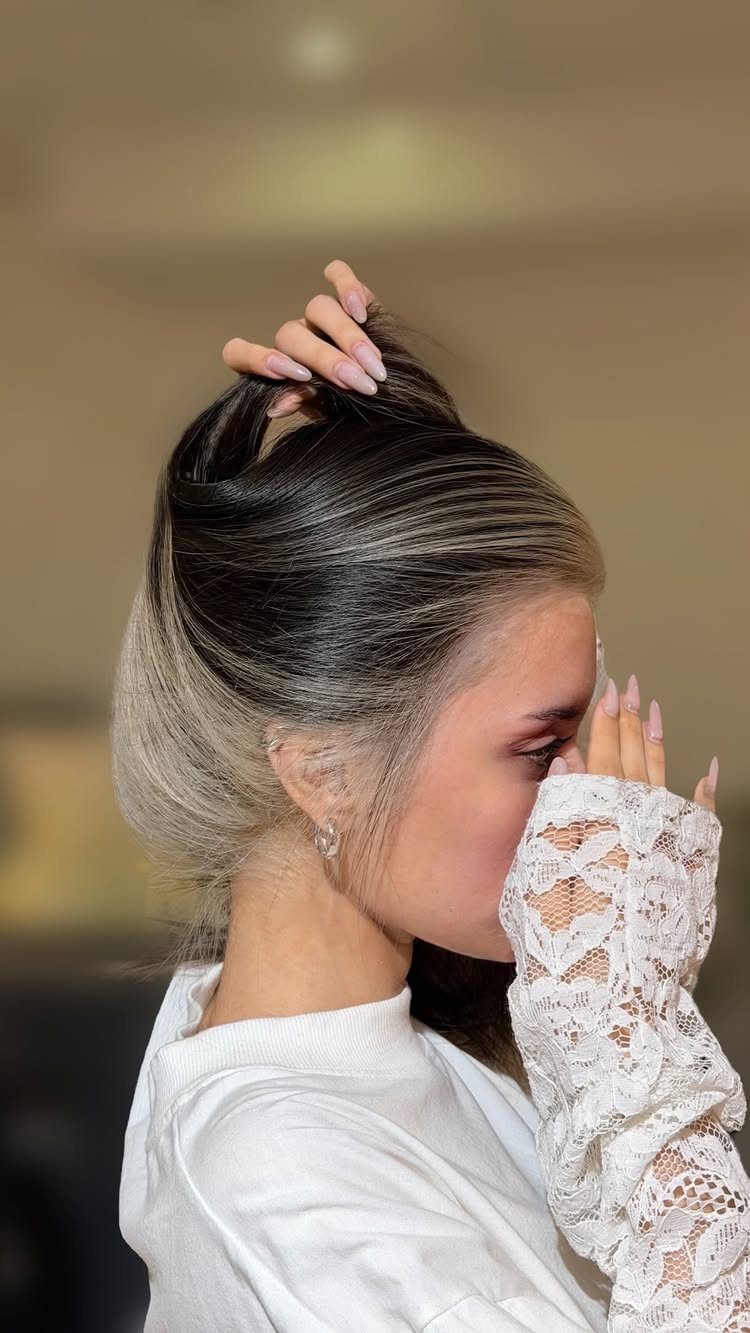
Silver-gray underneath pulls cooler than blonde and adds contrast without introducing vivid color. The sections show in updos or when hair is parted deeply to one side.
Getting silver to show on dark bases requires bleaching the underlayers to platinum, then toning to cancel yellow. The process takes longer than vivid shades because the toning step cannot be rushed.
Silver slides toward pale yellow as the toner washes out, and you’ll be back at the bowl every few weeks to keep it ashy.
24. Pastel Peekaboo
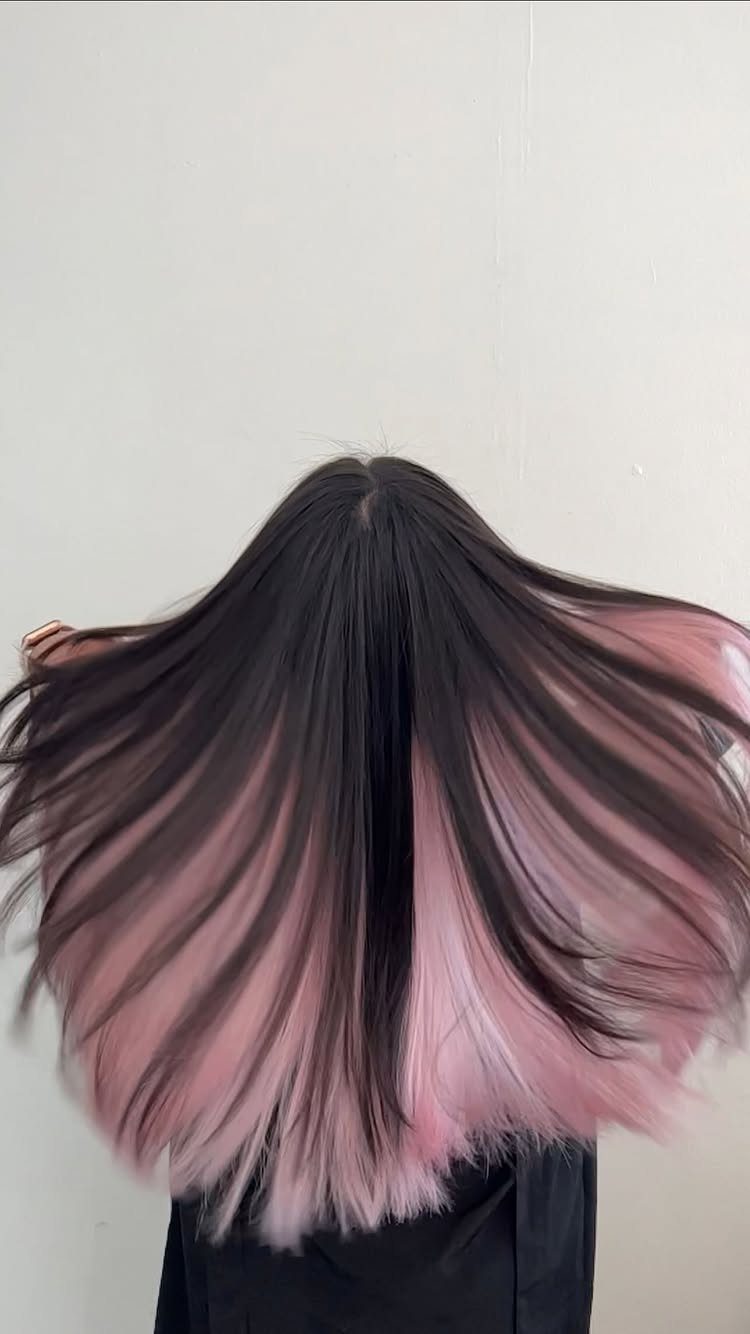
Pastel shades like pale pink, lavender, or peach sit softer than vivid peekaboo and fade into barely-there tints over time. The color shows when you tie hair up but stays subtle even then.
The short lifespan makes pastels good for trying color without committing to months of maintenance.
25. Red Underlayer Puff
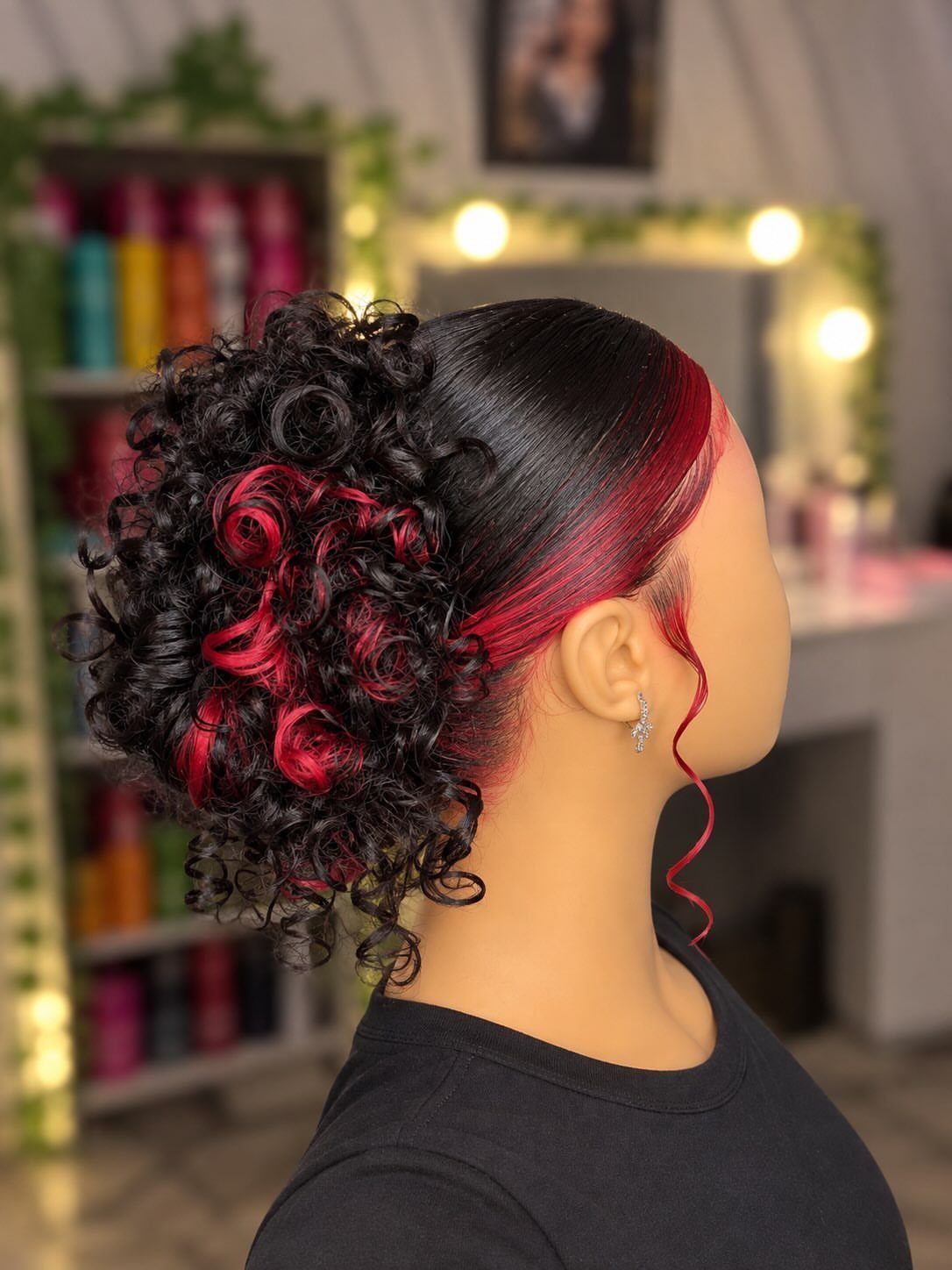
A high puff pulls the red sections up and out, so they frame the silhouette instead of staying tucked underneath. The style shows off the color while keeping the hair gathered and off the neck.
Red on a black base needs bleaching first to show this bright. Without it, the color reads almost invisible or turns a muddy dark orange.
The puff itself holds longer on textured hair that grips the elastic. Smooth hair slides out faster, so you’ll need more pins or a tighter tie.
26. Blue Purple Half-Up
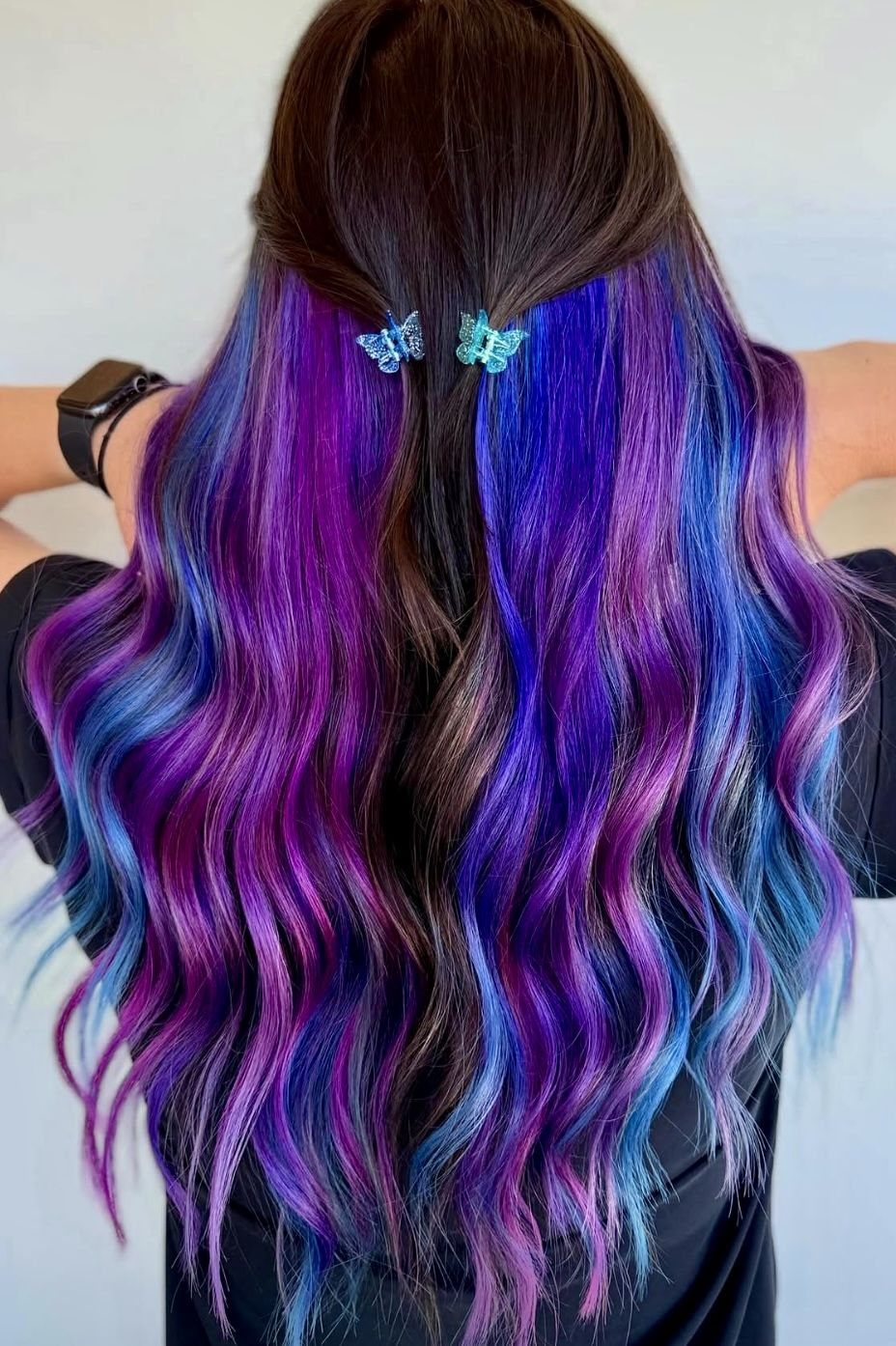
Clipping the top half up leaves the blue and violet fully visible at the back and sides. The dark curls on top stay the focus from the front, and the color shows as soon as you turn.
Both shades need bleached underlayers to read saturated. Blue holds longer than violet, so the violet may fade to lavender while the blue stays vivid.
Position the color low enough that a half-up gathers only the natural top layer and leaves every bright section visible underneath. If the peekaboo runs too high, the clips will cover some of it.
27. Brown Rose Gold
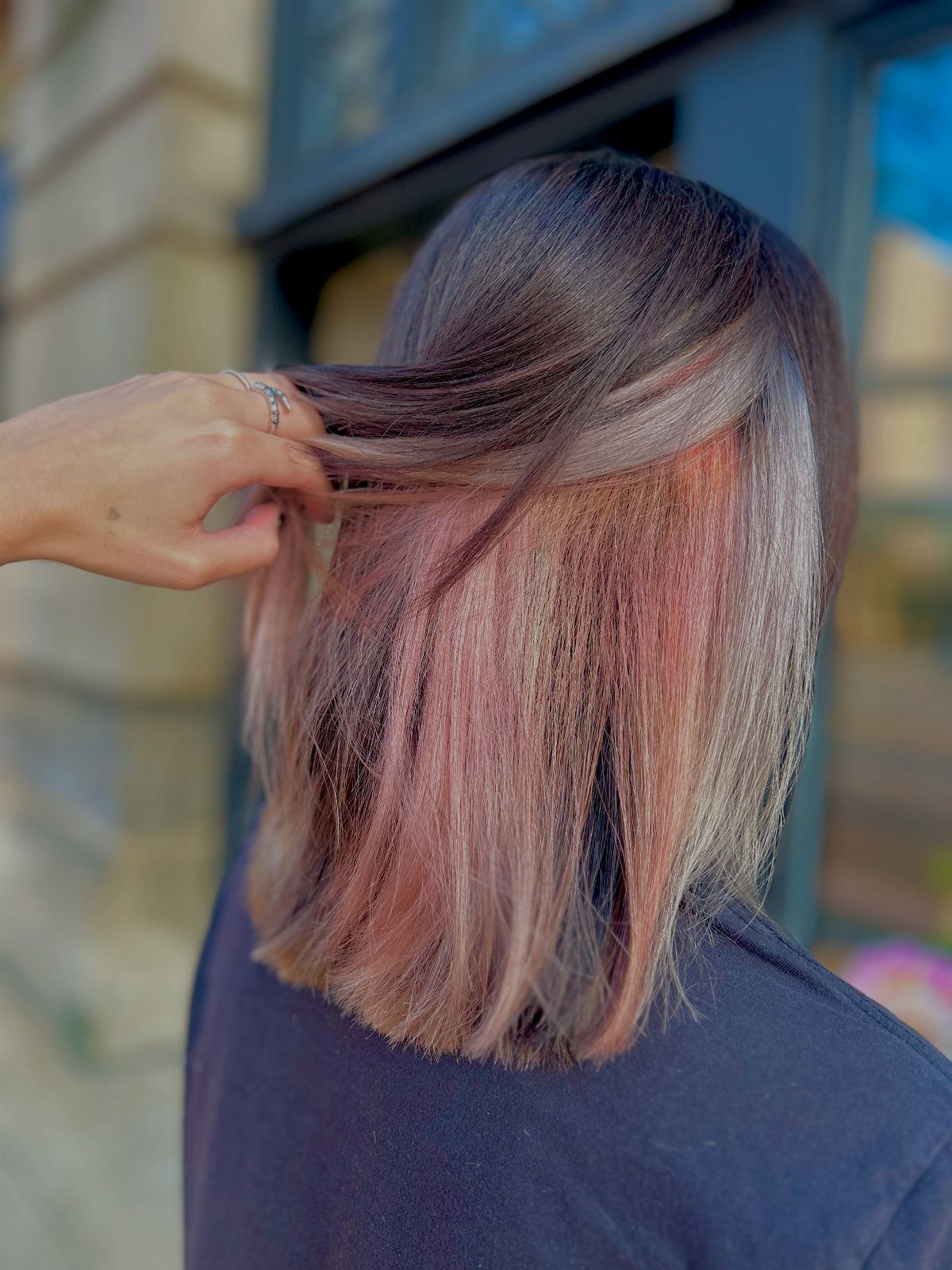
Rose-gold sits warmer than straight pink and cooler than copper, reading as a metallic blush tone against dark brown.
The color shows when hair is lifted or gathered, but it stays subtle enough that it blends into the base from a distance.
Dark brown can take rose-gold without full bleaching if the underlayers are lifted just enough to let the tone come through. Going too light first makes the color look washed out instead of rich.
The rose-gold fades toward pale pink or champagne over time, so it shifts cooler as it washes out.
28. Highlights Underneath
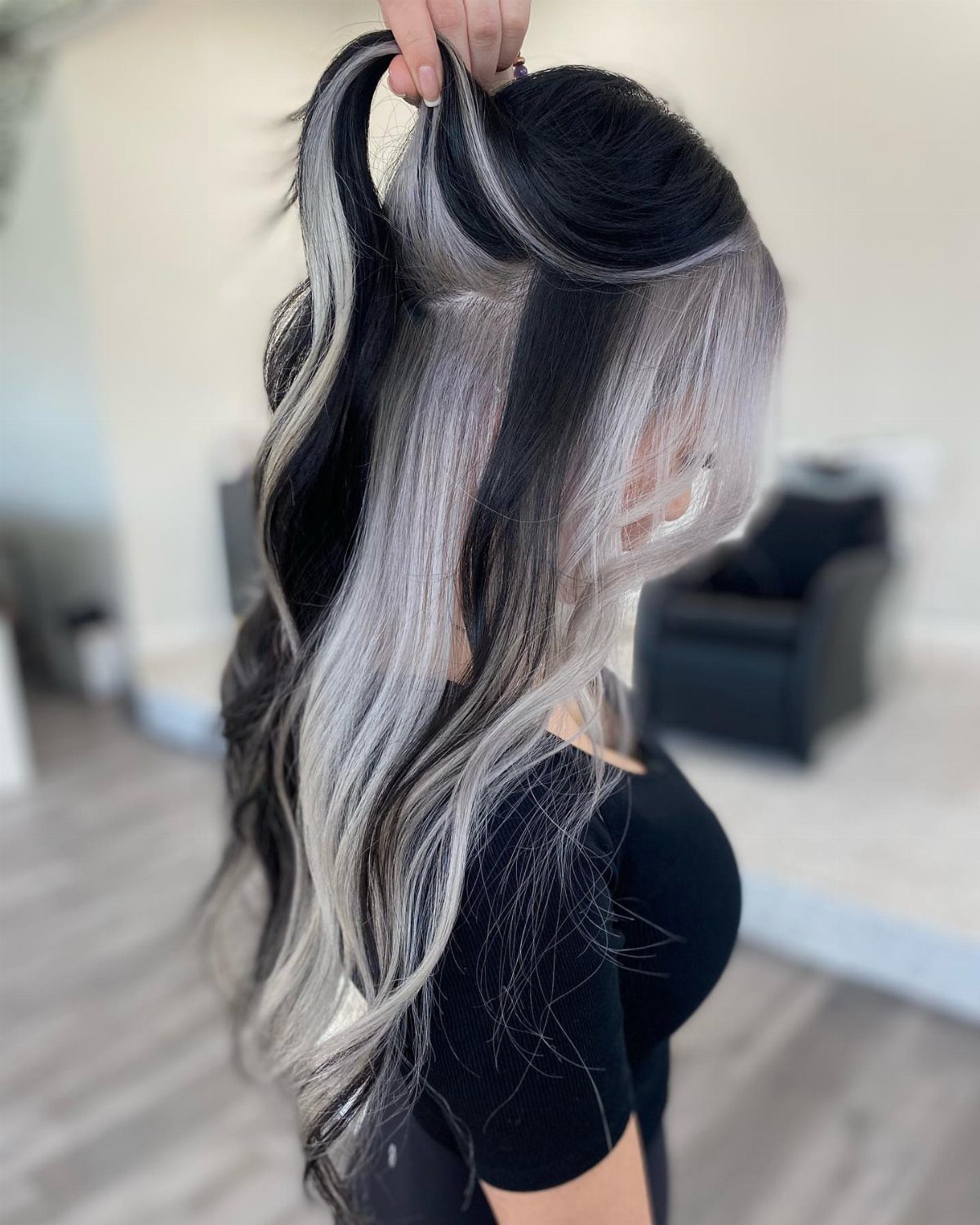
Platinum or silver highlights tucked underneath give you contrast without changing the top color. The sections stay hidden until you lift or part hair, then they flash through like a second layer.
The placement takes less time than full peekaboo because fewer sections get lifted. The underlayer still lifts to platinum before toning, or the highlights pull warm on dark hair.
Regrowth softens gradually rather than showing a clear stripe, so highlights need less frequent maintenance than vivid peekaboo.
29. Peacock Hair
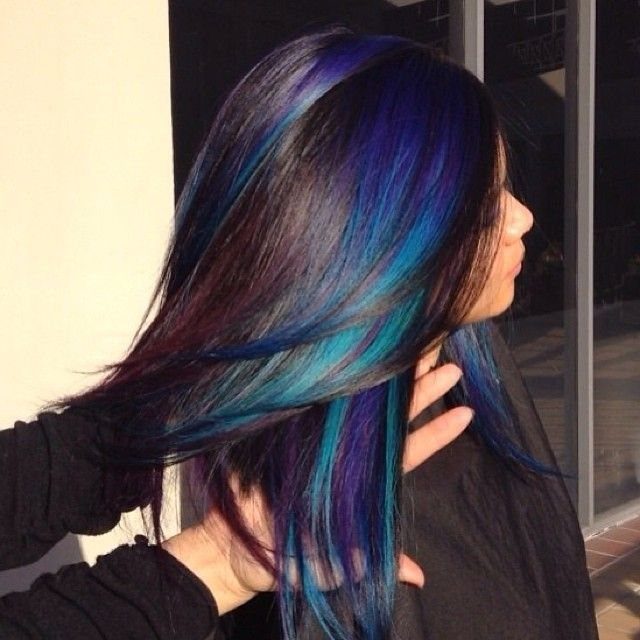
3 shades in the same cool family give you dimension a single color can’t match. The three move together when hair falls naturally, then separate into distinct shades when you lift or braid sections.
Each shade needs the underlayer bleached to platinum, or the color reads muddy instead of saturated. Teal and purple fade at different rates, so the balance shifts over time unless you refresh them together.
The combination reads richer than rainbow peekaboo because the colors stay in the same cool family instead of spanning the whole spectrum.
Color Placement and Reveal
You can tuck the color under the top layer, hide it behind a fringe, set it inside an undercut, or line it through the nape.
Each spot creates a different reveal. Color beneath the crown shows when you gather hair into a ponytail or updo, then disappears when you let it down.
Placement behind bangs flashes forward when you sweep hair to the side or tuck it behind your ear. An undercut keeps color fully hidden until you tie everything up or shave the sides shorter.
Nape placement shows when you braid or curl hair, since the texture lifts sections that would otherwise stay flat.
Straight hair hides color more completely than curls or waves, which catch light and separate enough to show glimpses even when worn down.
The reveal changes with how you style.
A high ponytail lifts underlayers forward. A deep side part exposes color that a center part would cover.
At-home Coloring and Workwear
At-home guides treat peekaboo as beginner-friendly because the placement is forgiving.
Color that sits underneath does not need perfect blending or precise sectioning the way highlights do. If a strand is slightly uneven or the dye bleeds past the line, the top layer covers it.
Hidden color reads as work-appropriate because it shows with movement and disappears when hair is tied back.
A ponytail or bun tucks the color out of sight, so you control when it is visible. Some guides describe it as suitable for school or office settings where bright color might otherwise be off-limits.
Choosing Color for Base Hair
The base tells you how much lift the color needs and which tones will actually read.
Pastels need a proper lift to pale yellow or platinum, otherwise they stay too faint to read as color.
Teal and green need more lift than blue or purple to show bright.
Frequently Asked Questions
How do you do the peekaboo hair trend?
Section off the underlayers, bleach them if your base is dark, then apply the color you want.
The dye sits low enough that it stays hidden when hair falls naturally and shows when you tie it up or part it to the side.
Darker bases need the underlayers lifted to pale yellow first, otherwise vivid shades stay muddy or invisible.
What is a peekaboo hair color considered?
It’s a placement technique that hides color underneath your natural shade so it only shows when hair is styled up, parted, or moving.
The top layer stays your base color and covers the bright sections completely when hair falls straight. The technique works with any shade from pastels to vivids, blonde to burgundy.