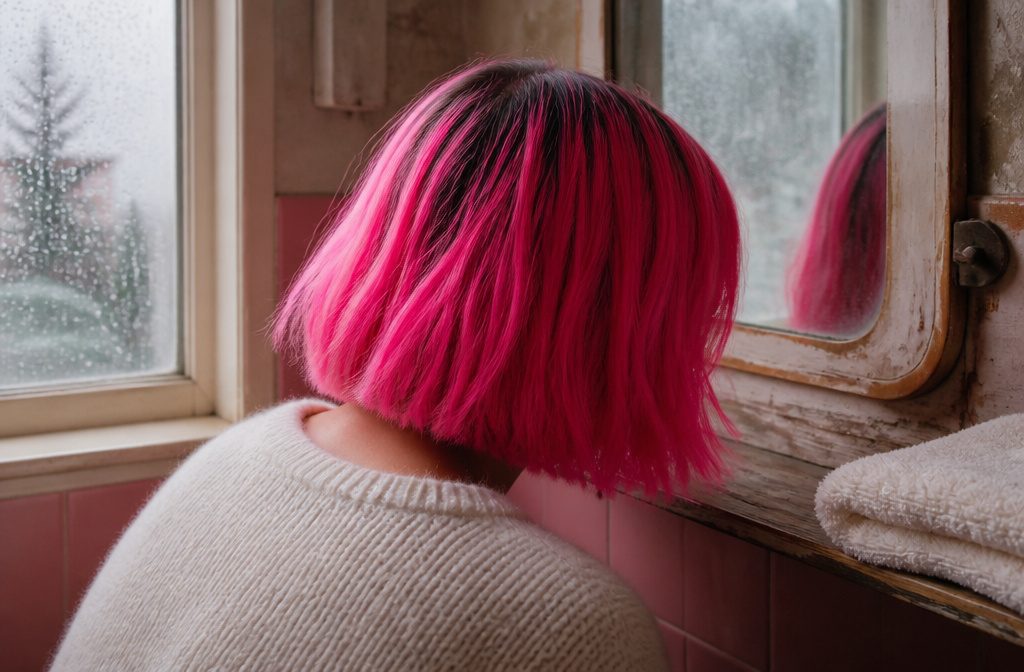
Neon pink hair is a bright, saturated pink that only shows on lightened hair: dye deposits color but doesn’t lift it, so pink over dark brown or black barely registers or turns muddy.
Pastels need the strand bleached to pale blond with no yellow or orange left, while dark roots with bright ends cut bleaching to mid-length down.
Orchid Pink
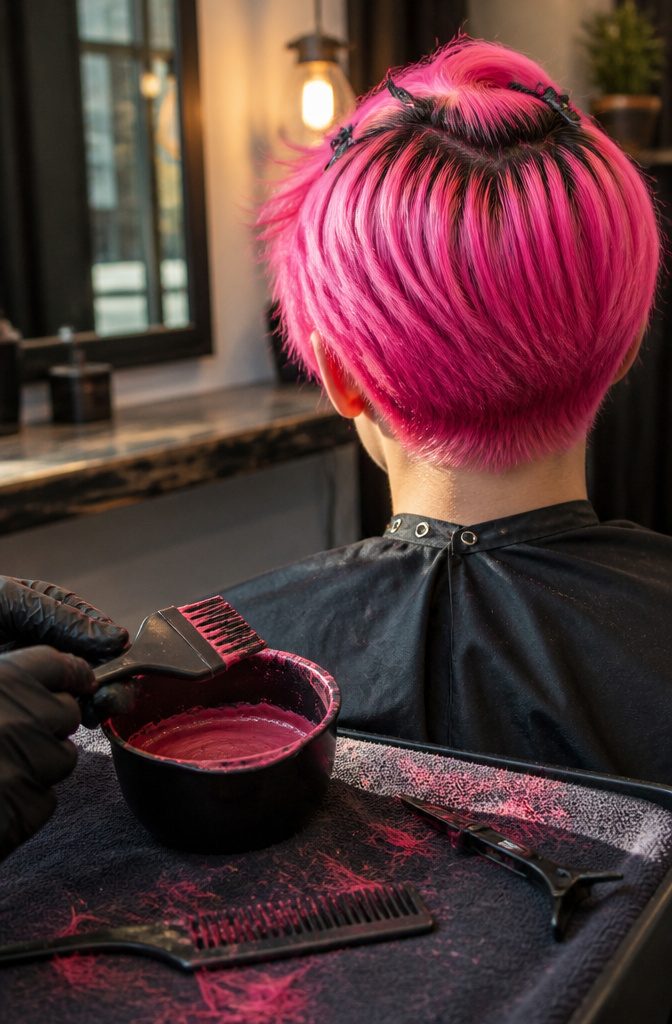
Orchid pink brings the vivid, deep color of the flower itself: bright enough to make an instant statement, named as a top trend for 2025.
The shade has real depth alongside its vibrance, and I’ve seen it paired most successfully with very short, blunt cuts where each strand is sharply defined.
The color needs that precision to show what it can do. It suits bubbly personalities that radiate happiness, and the contrast between dark roots and bright ends gives the look its structure.
The formula here is salon-oriented: Revlonissimo Colorsmetique Satinescent .821 on the roots, then color intensifier 900 mixed with Cromatics C20 and C50 for the ends.
You lighten first using the ombré technique to create the gradient, then apply the shades in sequence. For an edgier result, separate the front sections and apply the same root shade there too.
Pastel, Baby, and Light Pink
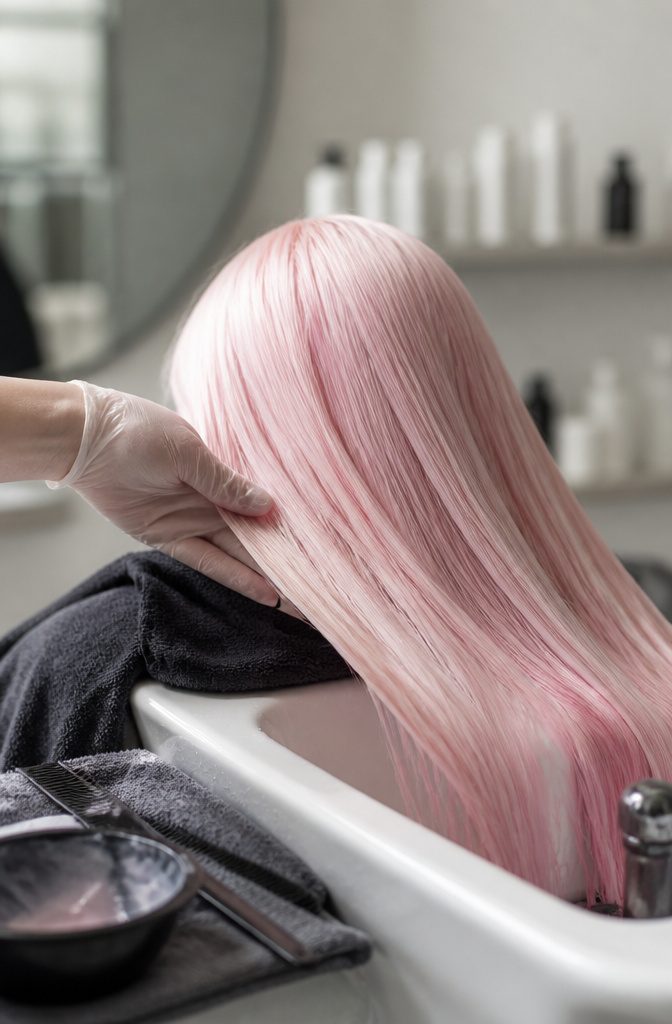
Pastel pink, baby pink and light pink belong to lighter skin tones, where the low contrast keeps the look soft instead of sharp.
The trouble is that these shades are the least forgiving of any pink you can put on hair. To get a true pastel, the base has to be lightened until no yellow or orange tones remain.
Any leftover warmth shows straight through the pink and muddies it. The lighter the pink you want, the lighter the starting canvas needs to be.
Once the hair is pale enough, you apply the pastel shade and tone as needed. It takes more upfront work than a vivid or jewel pink, and maintaining that clean lift means the colour washes out faster than deeper options.
But when the prep is done right, pastel pink adds a soft warmth without fighting the complexion.
Pink Ombré
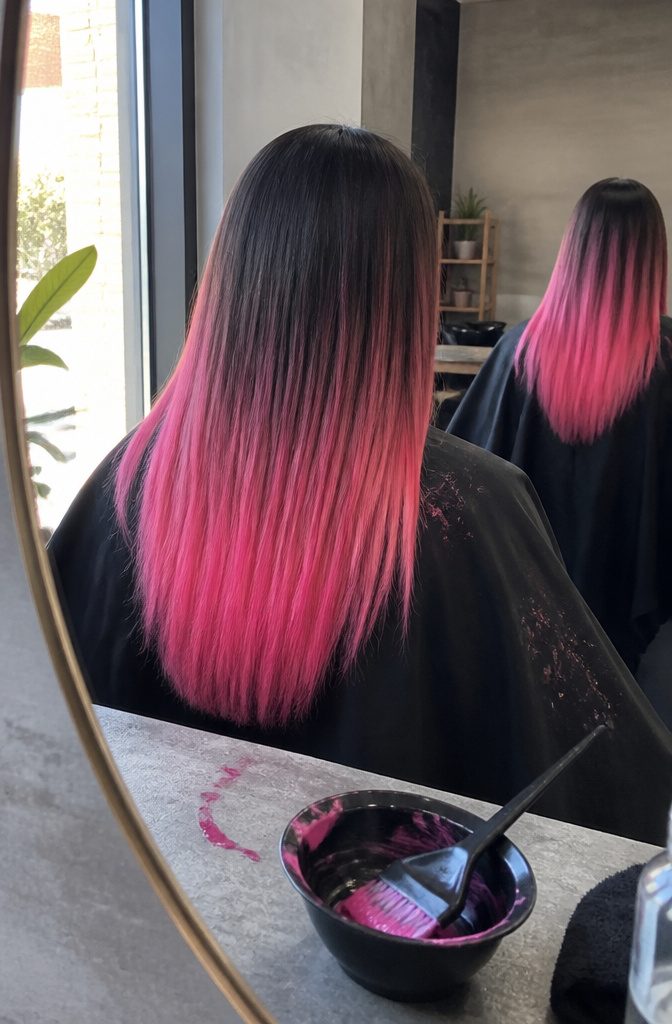
Pink ombré brings the sharp gradient from a dark root straight into vivid pink at the ends, and the dark base means the bleached section sits lower on the strand where regrowth is less obvious.
Most stylists start by bleaching mid-lengths to ends with the ombré technique, leaving roots untouched or just barely feathered, then layer the chosen pink over the lightened hair.
Revlonissimo Colorsmetique Pure Colors Mixing Techniques at 10 vol. in shades 600 and 900 is one formula that works well for this, giving the pink dimension rather than a flat finish.
This look suits anyone who wants neon pink without the every-three-weeks root appointment. The natural color at the scalp hides the transition line, and growth blends rather than announcing itself as a stripe.
I’d pick this over balayage when you want contrast instead of a soft fade, since the gradient is deliberate and still reads as intentional months later.
Pink Balayage and Feathers
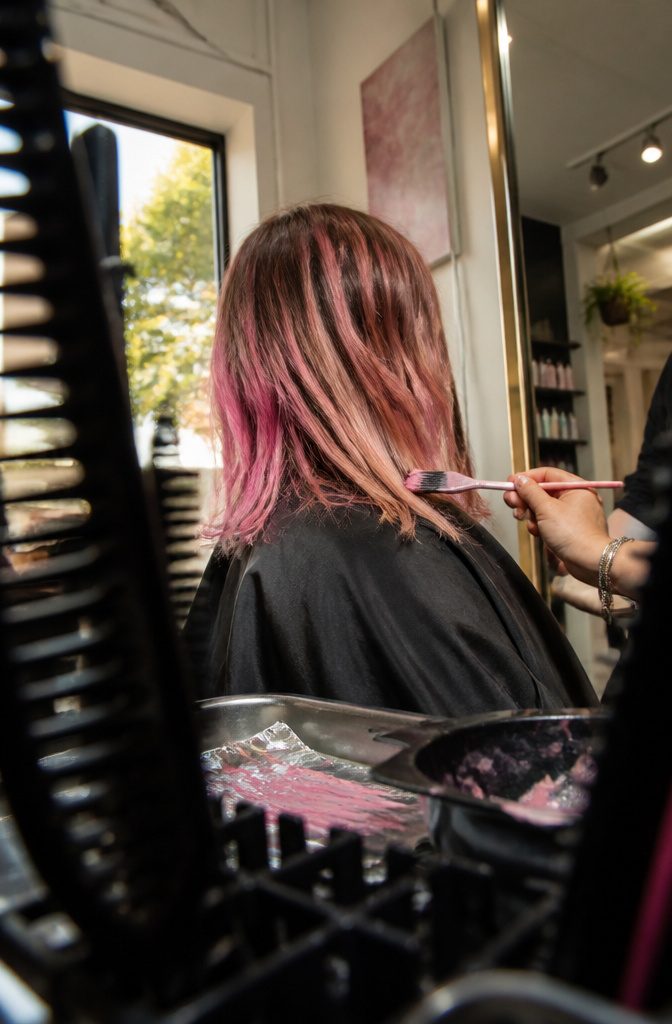
Medium skin tones have the widest pink range to play with, from rose gold through baby pink to hot pink, so hold a few shades up near your face before you settle on one.
Balayage is how I’d get pink highlights that look dimensional. The color is painted by hand in pieces through the hair, so some strands stay natural while others go bright.
Ombré is a different job: a solid gradient that runs from dark roots into pink from mid-length to the ends. Balayage gives you pink in pieces; ombré gives you pink in a block.
To make the look stand out, ask for "feathers" at the ends. That detail is what turns a nice pink hairstyle into one people remember.
Pink, Blue, and Purple
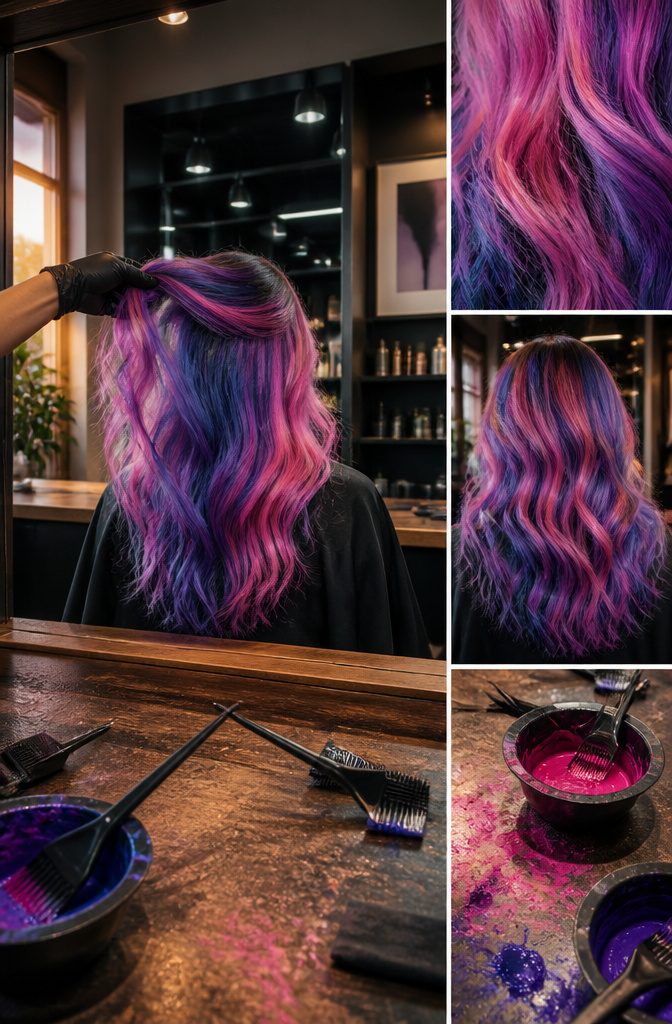
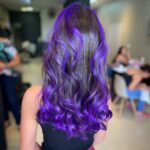
The fantasy-inspired multicolor approach layers neon pink with blue and purple for someone who wants hair as individual as they are.
The technique starts with balayage bleaching using multiple developer volumes, where the hair lightens unevenly instead of reaching one flat level.
That uneven lightening builds a gradient before any color touches the hair, so the pink reads brighter in some sections while blue or purple settles deeper in others.
After bleaching, the formula I’ve seen work well combines shade 600 from Revlonissimo Colorsmetique Pure Colors Mixing Techniques at 10 vol. with shade .919 from Revlonissimo Colorsmetique Satinescent.
Mixing those and applying them across the gradient gives you pink, blue, and purple in multiple tones rather than three separate blocks of color.
The balayage base means the colors blend where they meet, and the look stays dimensional as it fades.
This is where a colorist gets to show range, but it also means more chair time and more toning appointments down the road as each shade fades at its own speed.
Choosing Pink by Skin Tone
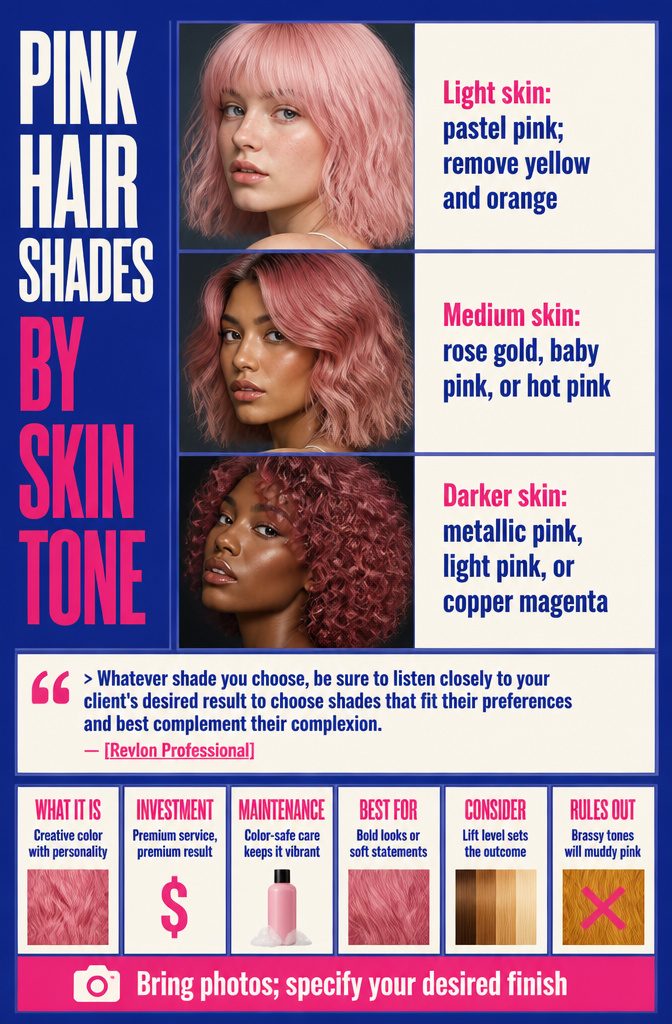
Skin tone narrows the choice fast, and each range has a clear front-runner:
- Light skin: pastel pink wins. There is no sharp contrast between hair and skin, so the color reads as soft warmth. The hair must be lightened without leaving any yellow or orange behind, or the pastel turns muddy.
- Medium skin: rose gold, baby pink, and hot pink all work. Pick by personality: hot pink is loud, baby pink is quiet.
- Darker skin: metallic pink, light pink, or rich magenta with a hint of copper.
On deeper complexions, the conversation with your colorist matters as much as the swatch.
Whatever shade you choose, be sure to listen closely to your client’s desired result to choose shades that fit their preferences and best complement their complexion.
Bring saved photos and say exactly what finish you want before anyone mixes color.
Lightening Before Pink
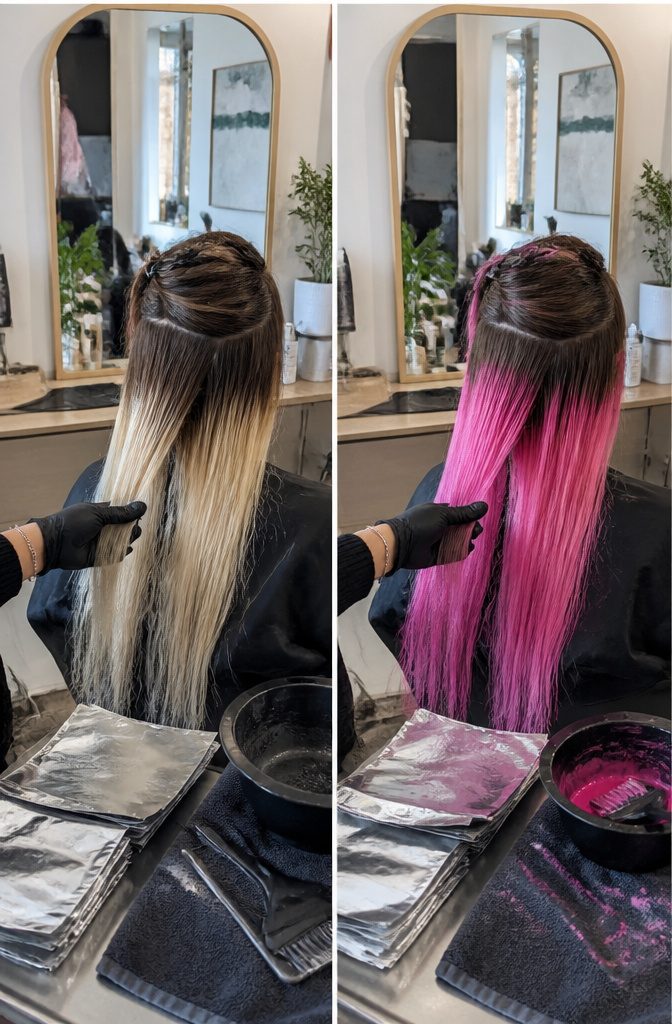
Natural hair has to be lightened before any pink goes on, from the softest rose to a deep magenta. Dye deposits color but does not lift it, so pink over dark brown or black barely shows or turns muddy.
The lighter the pink, the lighter the hair must be. A deep fuchsia can sit on a light brown or golden base, but a pastel needs the yellow and orange cleared out until the strand reads pale blond.
Do you have to bleach?
Yes, for any pink on natural hair. Skipping lightening gets you a dull tint that only shows in sunlight, and neon will not glow over a warm base.
Color Placement Techniques
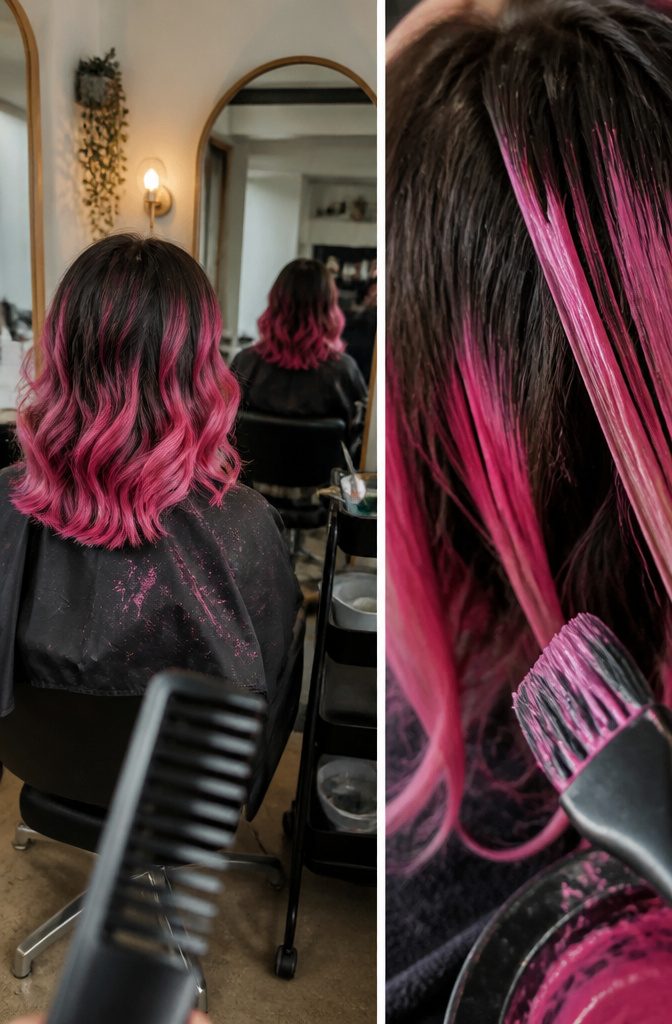
Placement decides how often you’ll be back in the chair. Dark roots with bright ends keep your natural color at the scalp and bleach only from mid-length down, so regrowth becomes part of the design instead of a flaw.
Pink ombré is the same idea with a softer finish: the dark tone moves into pink from mid-length toward the ends.
If you want the least upkeep, ask for dark roots with bright ends, since there’s no root line to touch up.
Balayage paints pink in by hand, which suits highlights or a multicolor mix rather than one solid sheet of neon.
I’d choose it over all-over pink if regrowth bothers you, because your natural hair stays in the mix. Root-to-tip pink looks best the first few weeks and shows new growth fastest.
Frequently Asked Questions
What skin tone is neon pink hair best for?
It depends on the shade. Light skin does best with pastel pink, medium skin can wear rose gold, baby pink, or hot pink, and darker skin suits metallic pink, light pink, or rich magenta with a hint of copper.
Light complexions get a soft glow from pastels because there is little contrast between hair and skin.
Do you have to bleach your hair to dye it neon pink?
Yes, natural hair has to be lightened before any pink goes on. Dye adds color but cannot lift it, so pink over dark brown or black barely shows or turns muddy.
The lighter the pink, the lighter the starting hair needs to be, and a pastel needs a pale blond base with all the yellow and orange cleared out.