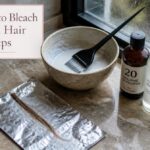
Your starting hair color decides which purple is yours: on dark brown or black hair, deep shades like midnight violet, plum and maroon deposit without bleach, while pastel lavender and dusty mauve only show up on a lifted base.
The list runs from those no-bleach darks to partial lightening, such as the hidden underlayer, where only the lower section needs bleach and the surface keeps your natural shade.
1. All-Over Violet
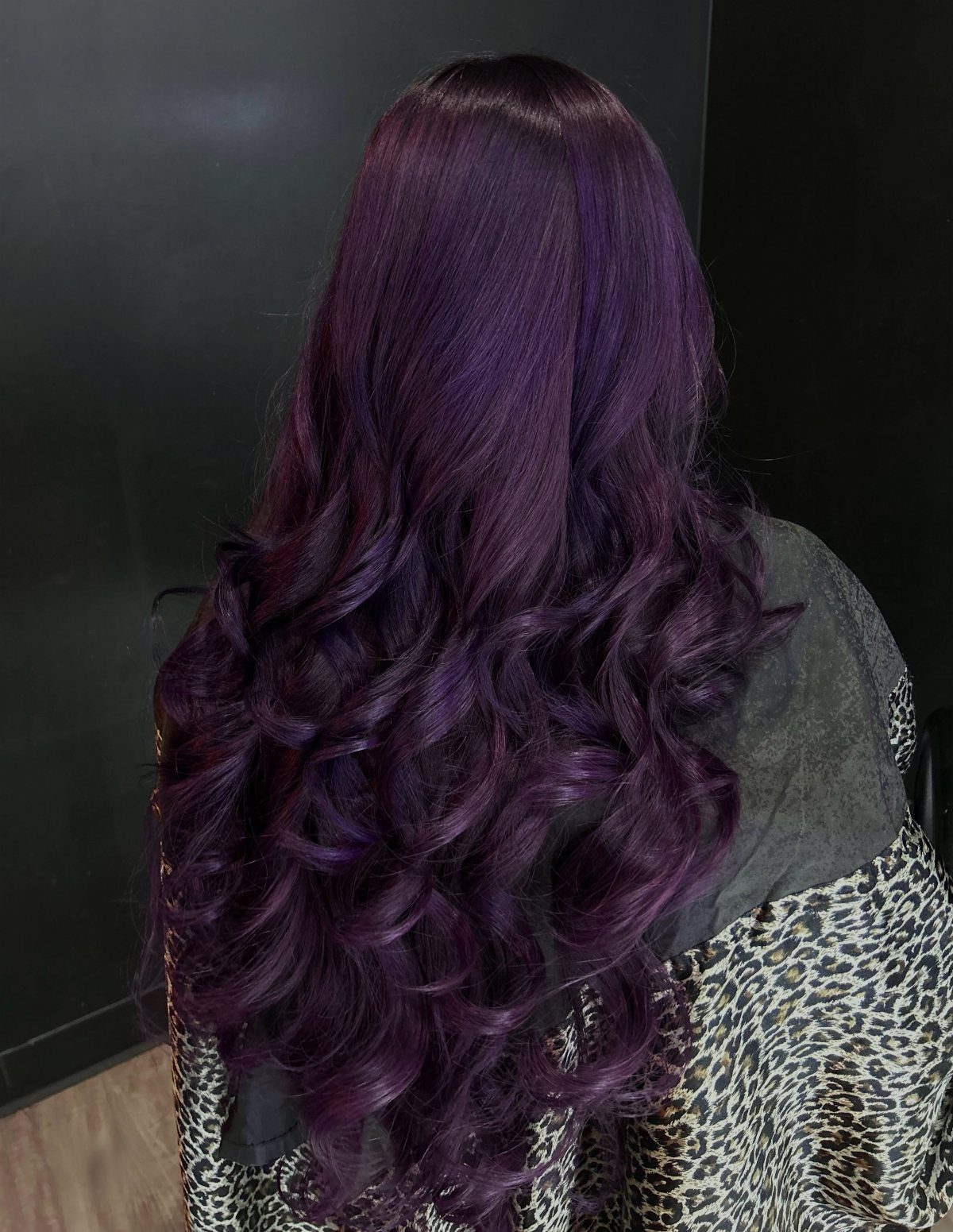
One violet shade covers the mid-lengths and ends, and the roots can stay closer to your natural color for an easier grow-out.
The color reads clearly whether the hair is pulled up or worn loose, and dark roots add depth without needing touch-ups every few weeks.
If you want full coverage and a bold result, this is the simplest approach.
One box of permanent or semi-permanent dye usually handles shoulder-length hair, though longer or thicker hair may need two. Semi-permanent violet fades faster but lets you try the shade before committing.
2. Contrast Hair Color
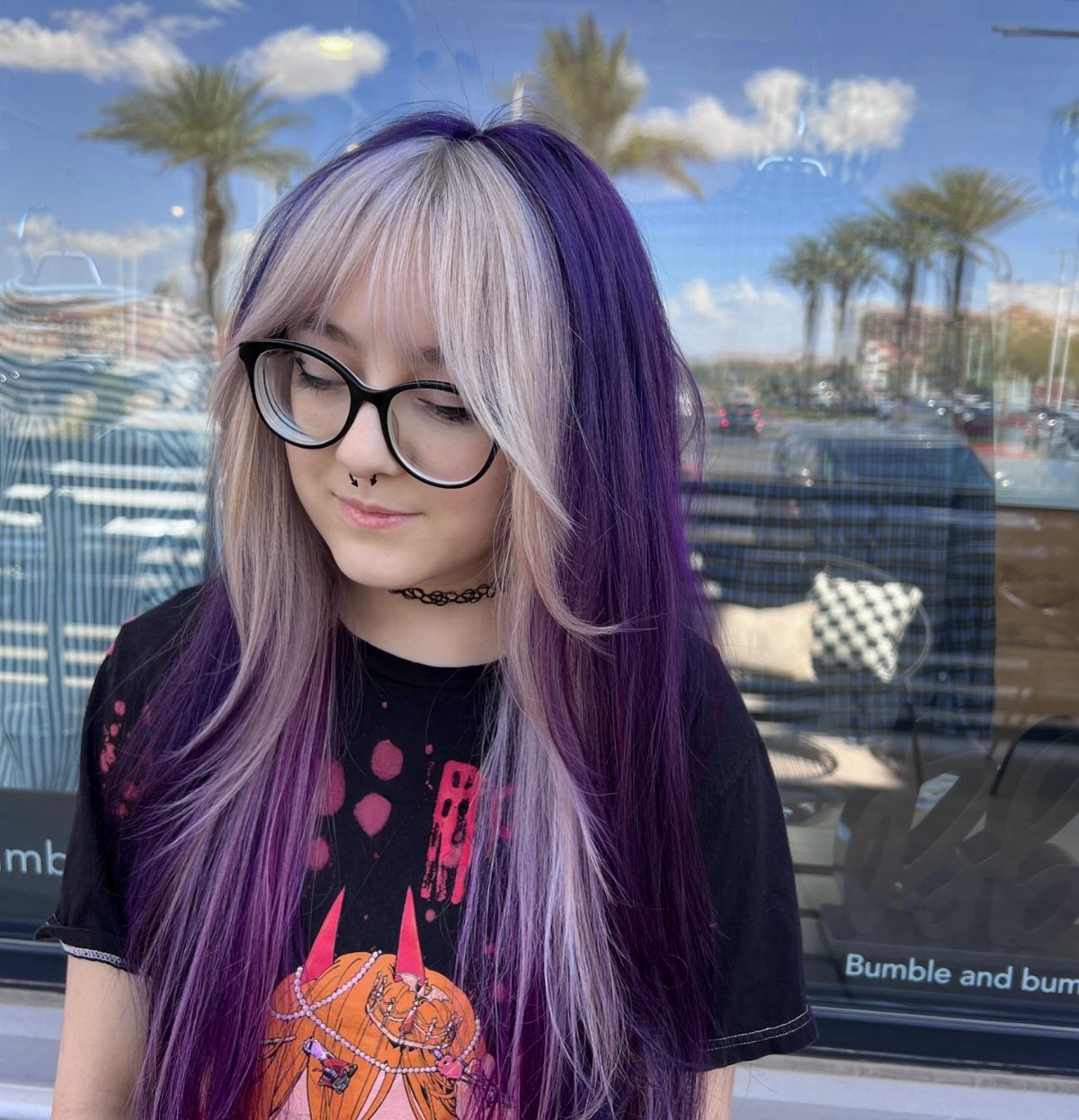
Blending pale lavender with deeper purple sections gives the color dimension and keeps it from looking flat. The lighter pieces catch more light, so the overall effect changes depending on how the hair moves.
This works best if your hair is already lightened or if you’re willing to bleach the sections where the paler lavender will go.
Dark hair holds deep purple without bleach, but pastels need a lifted base. If you’re doing this at home, tone the bleached sections before applying lavender to avoid brassy undertones.
3. Purple Highlights
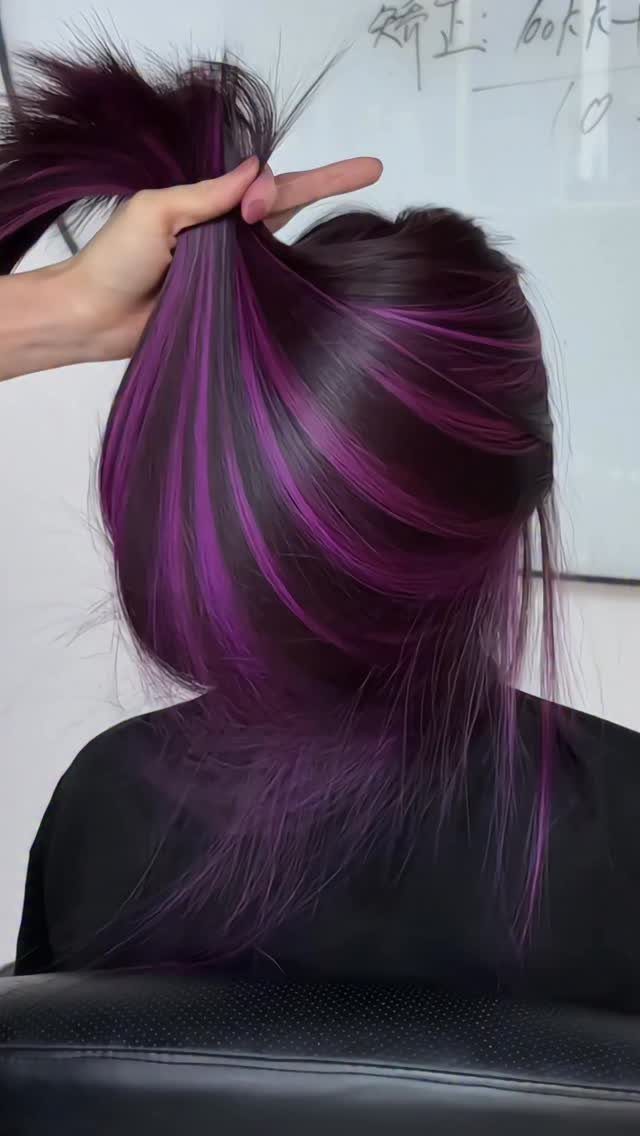
Ribbons of purple woven through a darker base add color without the commitment of an all-over dye job. The highlights can be scattered throughout or concentrated around the face, depending on how much contrast you want.
If your base is dark brown or black, the purple will show up best on bleached sections.
Foil highlights at a salon give clean, separated streaks, while a balayage application blends the purple into the base more softly. Semi-permanent purple on pre-lightened hair fades gradually, so upkeep is less rigid than with permanent dye.
4. Purple Bangs
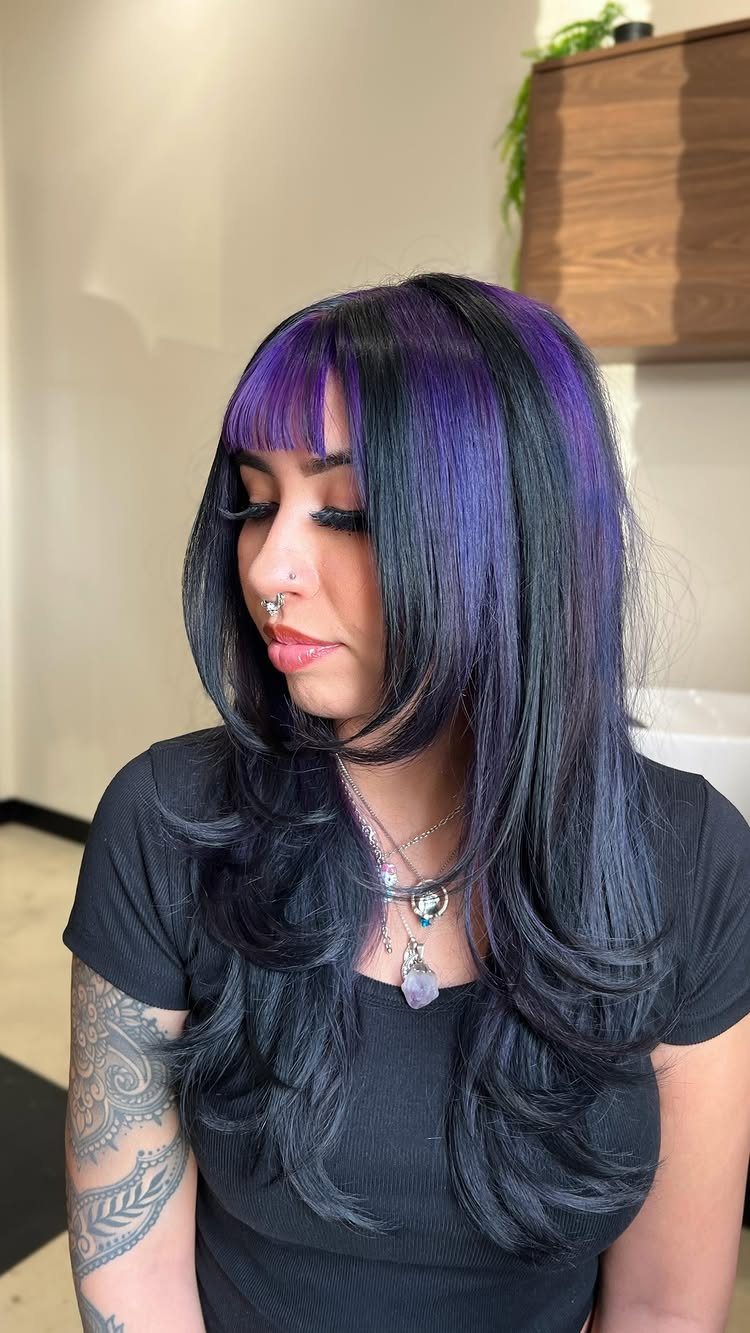
Concentrating purple at the front frames the face without changing the entire head. Bangs take dye quickly because they’re usually finer, and the color stays visible whether the rest of the hair is up or down.
If your bangs are already bleached or light, semi-permanent purple applies directly.
Darker bangs need lifting first, which a colorist can do with foils or freehand bleach. Because bangs grow out faster than the rest of your hair, plan to refresh the color or trim them back every 4 to 6 weeks.
5. Midnight Violet
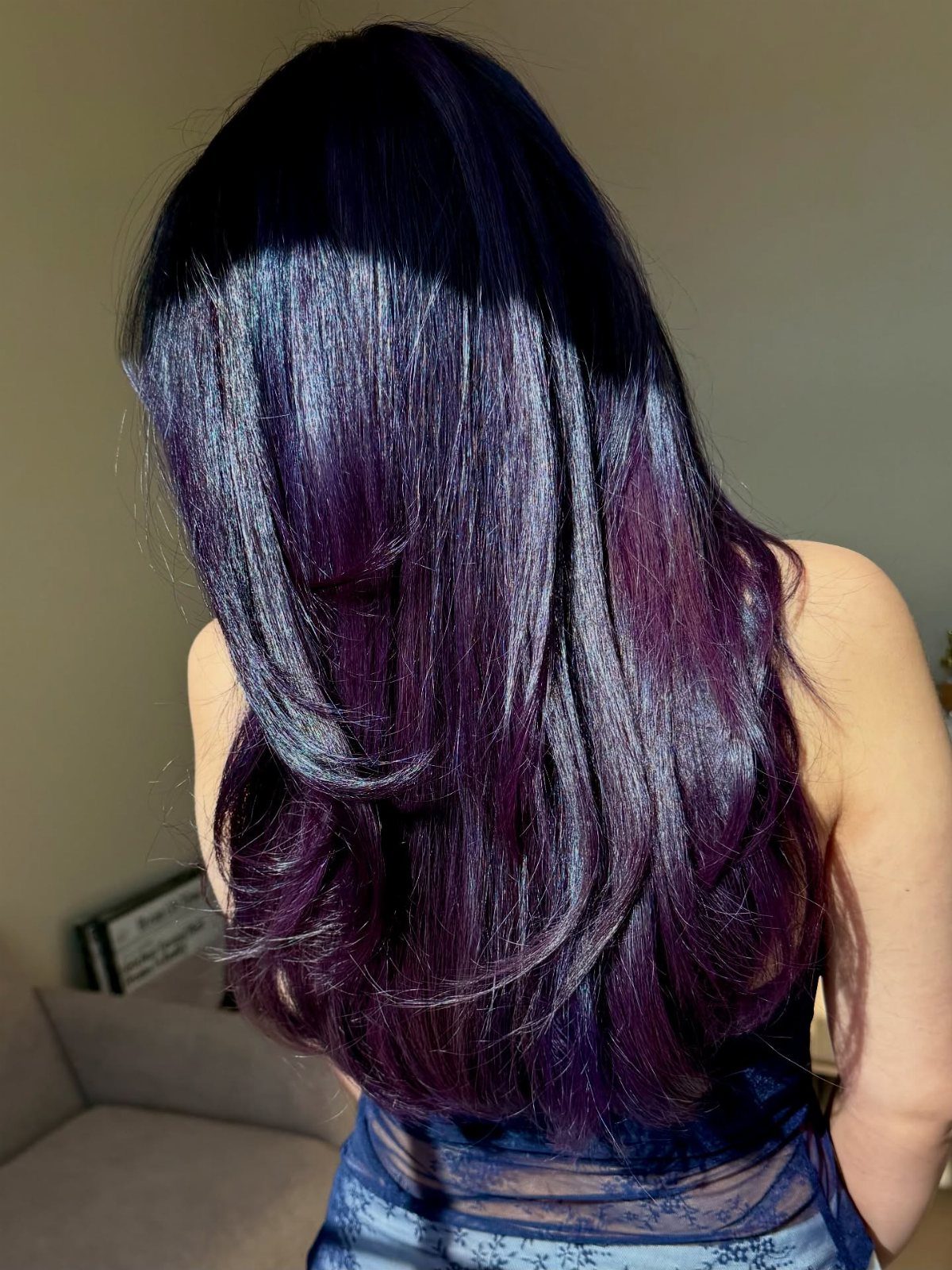
A purple so deep it reads almost black in low light, with violet tones that surface in bright sun or indoor lighting. Midnight shades suit anyone hesitant about bright color but wanting something richer than plain black.
This shade works on most hair without bleaching, since the color is dark enough to deposit over brown or black bases.
Semi-permanent formulas last longer in deeper tones and fade to a softer plum instead of going brassy. If your hair is already black, adding a violet gloss every few weeks keeps the purple visible.
6. Deep Violet
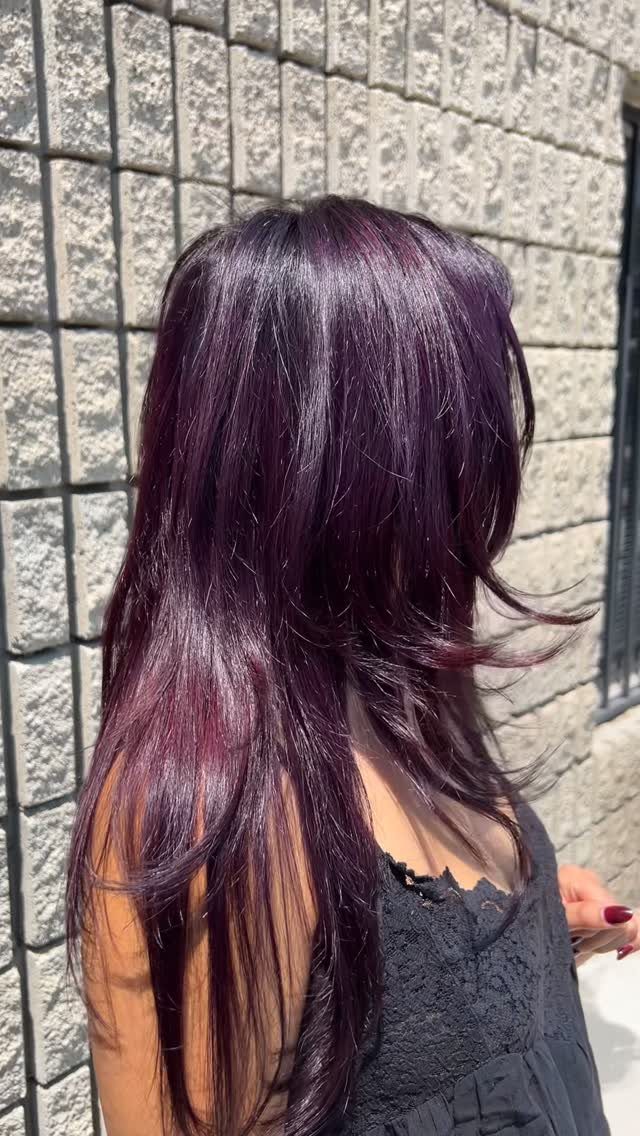
A warm, wine-leaning violet with enough depth to hold rich without reading dark. The color has a glossy finish that picks up light, and lighter purple strands mixed in keep it from looking too uniform.
If you’re starting with brown hair, a deep violet like this can be applied with minimal or no bleach, depending on how vibrant you want the result.
Darker bases will show a subtle tint in bright light, while pre-lightened hair holds the full intensity. A color-depositing purple shampoo every few washes helps keep the shade from looking faded.
7. Dusty Mauve
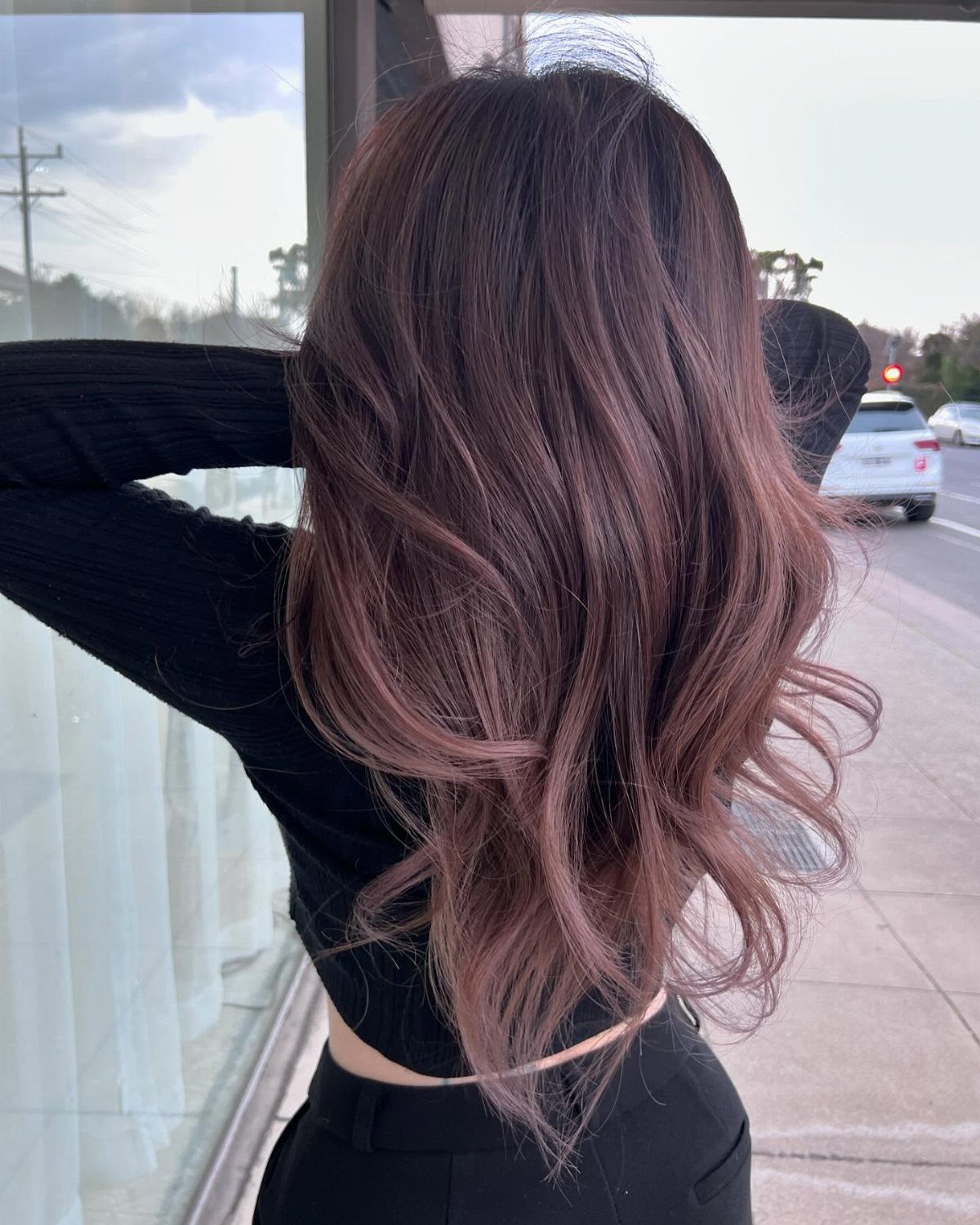
A muted purple that leans pink, softer than lavender and less saturated than plum. The color reads subtle in most light and suits anyone who wants purple without the intensity of brighter shades.
Dusty mauve needs a lifted base to show up clearly. If your hair is dark brown or black, pre-lightening is required, though you won’t need to go as pale as you would for pastel lavender.
Semi-permanent mauve fades gradually to a pinkish beige, so plan to refresh every 4 to 6 weeks if you want the tone to hold.
8. Maroon Hair
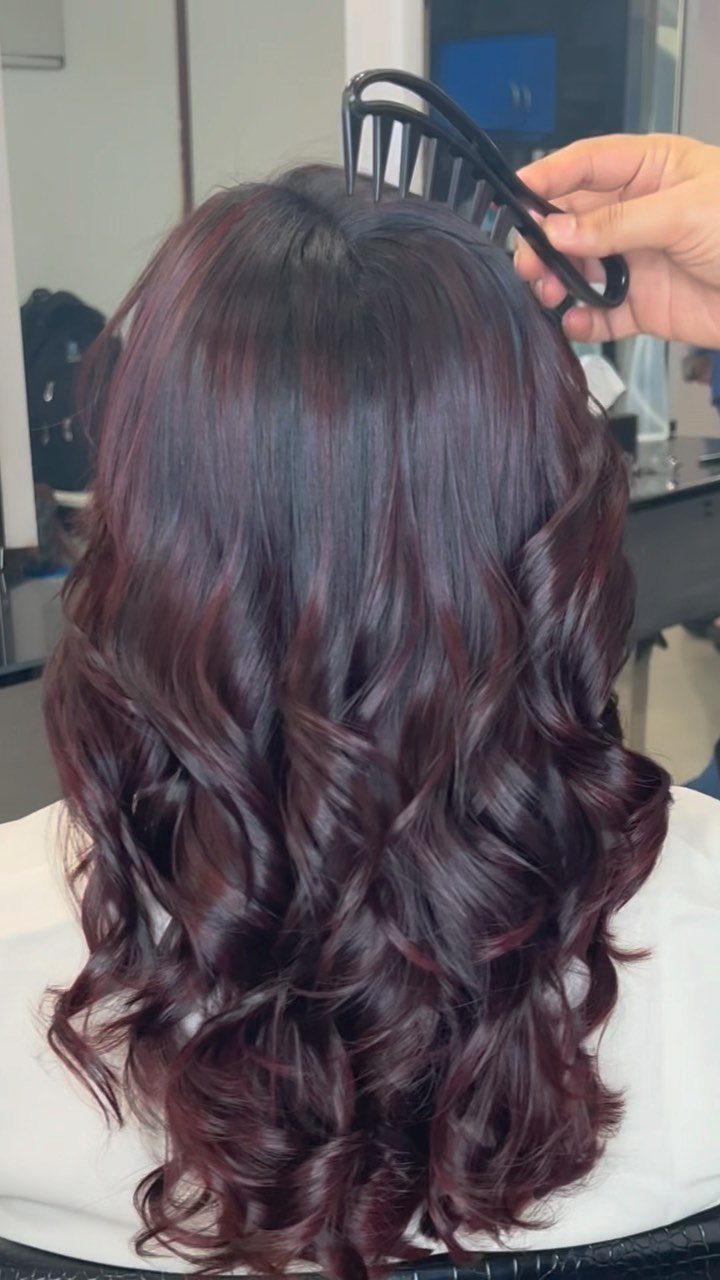
A color that sits between burgundy and deep purple, with enough red in the mix to warm it up.
Maroon reads darker than most purples but still shows its color in daylight, and the richness holds through curls and waves without looking flat.
This shade can be applied over dark brown or black hair without bleach, though the result will be more subtle than on pre-lightened hair.
Semi-permanent maroon fades to a softer plum rather than going brassy, and a color-depositing conditioner every few washes extends the life between dye jobs.
9. Violet to Magenta Fade
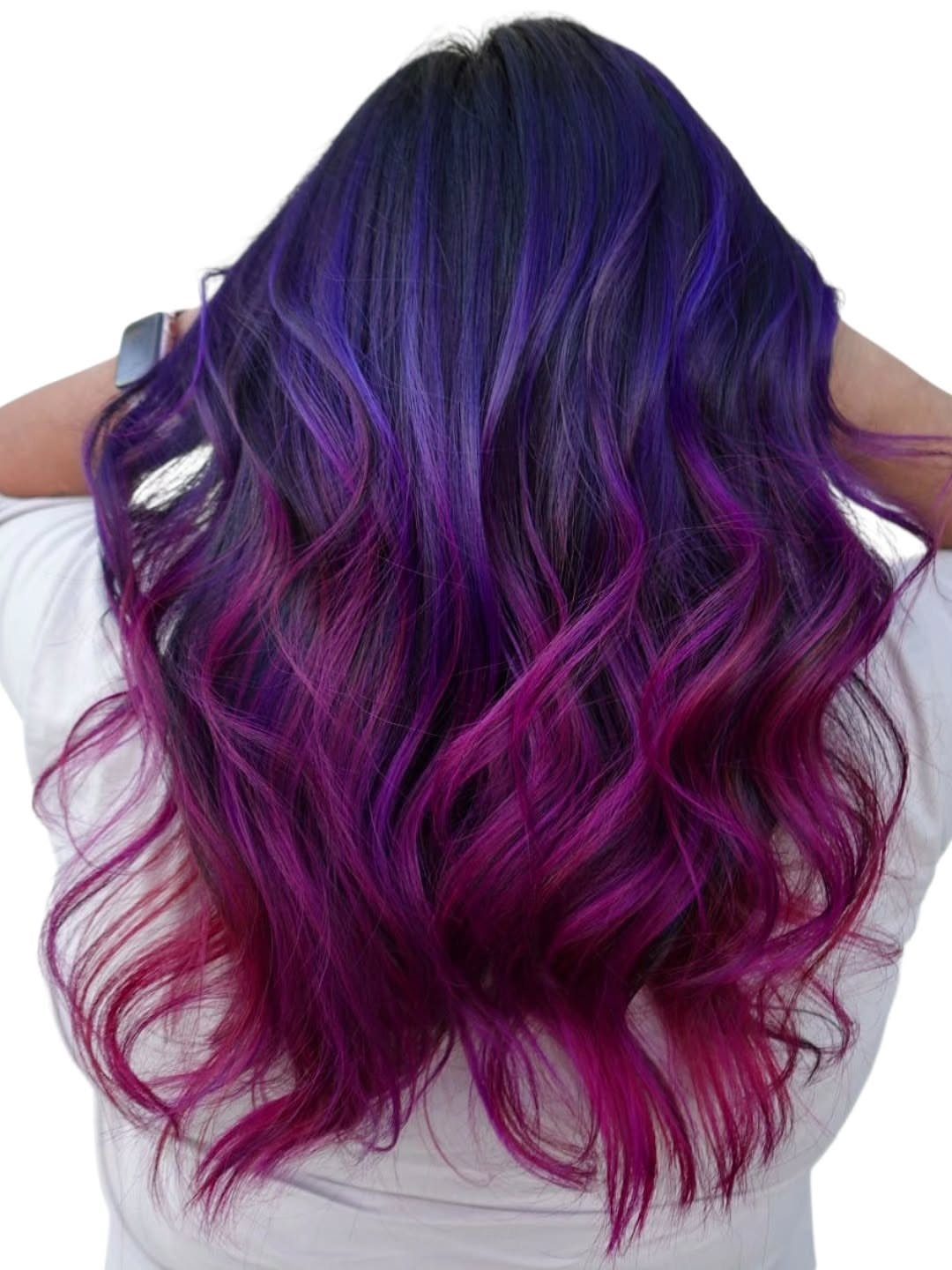
The color shifts from a deep violet at the roots down to bright magenta at the ends, so the gradient moves with the hair rather than sitting in one place.
Waves make the transition more visible because each curve catches a different section of the fade.
Getting a smooth fade takes either a colorist who can feather 2 shades together or careful sectioning at home.
If you’re working with box dye, apply the violet first at the roots, then blend magenta through the mid-lengths and ends while the violet is still wet.
The colors meet somewhere around ear level, and the line softens as they overlap.
Magenta fades faster than violet, so the contrast will flatten out after a few weeks unless you refresh the ends.
10. Purple with Pink Streaks
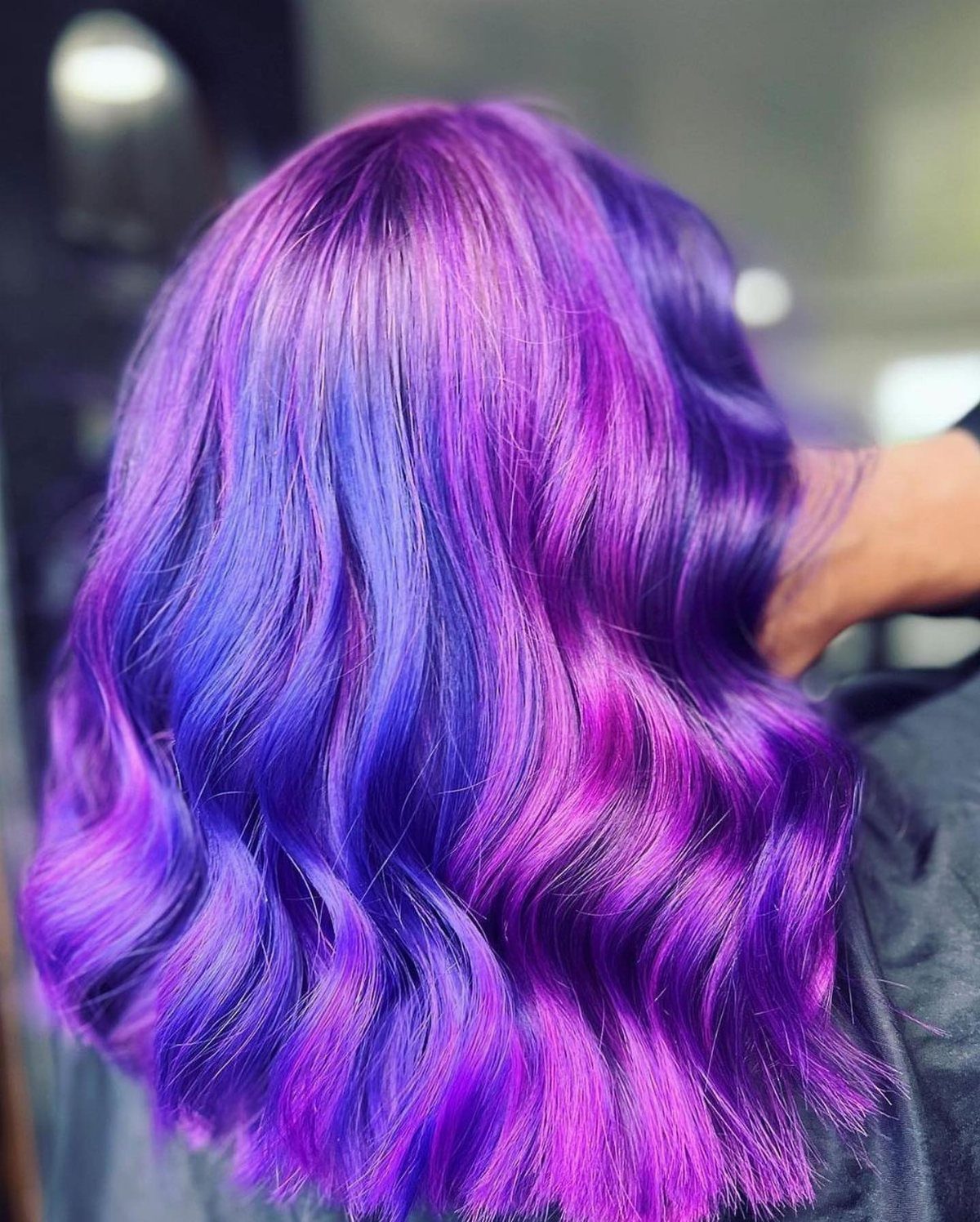
Lighter pink-purple streaks woven through vivid purple give the color variation without losing intensity.
The 2 shades sit close enough on the spectrum that they blend where they meet, but the pink catches more light and keeps the overall effect from reading flat.
Both tones need pre-lightened hair to show up this bright. If you’re working with one bleach session, apply purple to most of the hair and save pink for select pieces around the face or scattered through the length.
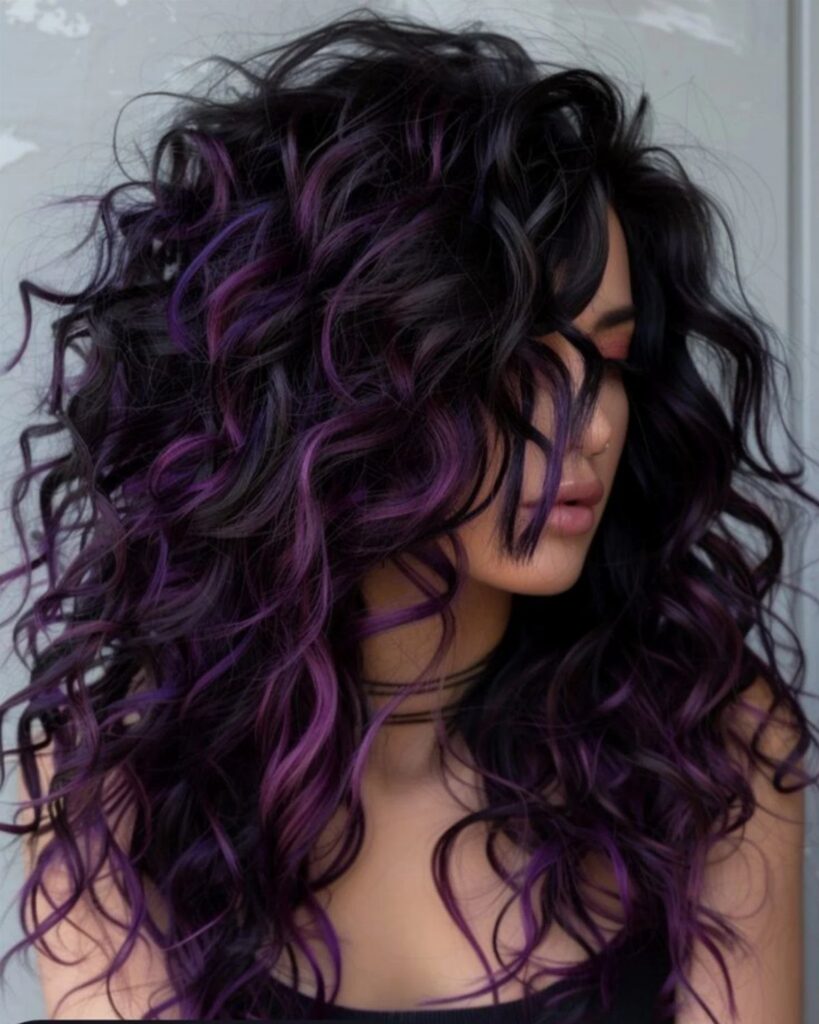
11. Hidden Purple Underlayer
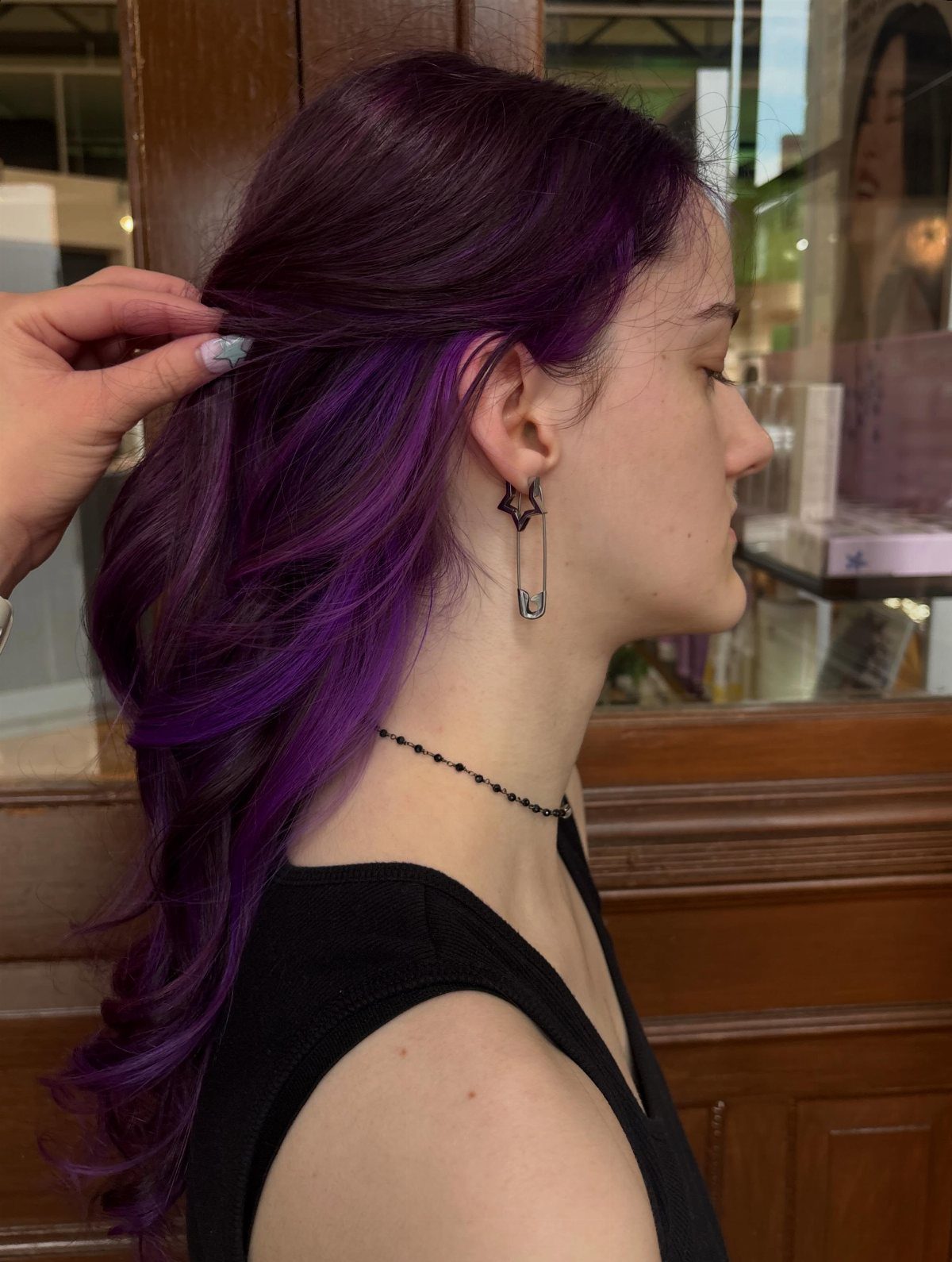
Vivid purple tucked under dark curls stays a secret until the hair moves or a section gets lifted. Wear it down for a quiet look; clip the top layer up and the color shows.
The underlayer is the only part that needs bleach, so the surface stays your natural dark shade.
Ask a colorist to section off the lower layer and lighten just that, then apply purple. At home, clip the top hair away first and keep the dye on the lower section only.
Curls hide the purple well, so a hidden underlayer is an easy choice if you might want to slip back to plain dark hair later.
12. Layered Purple Blend
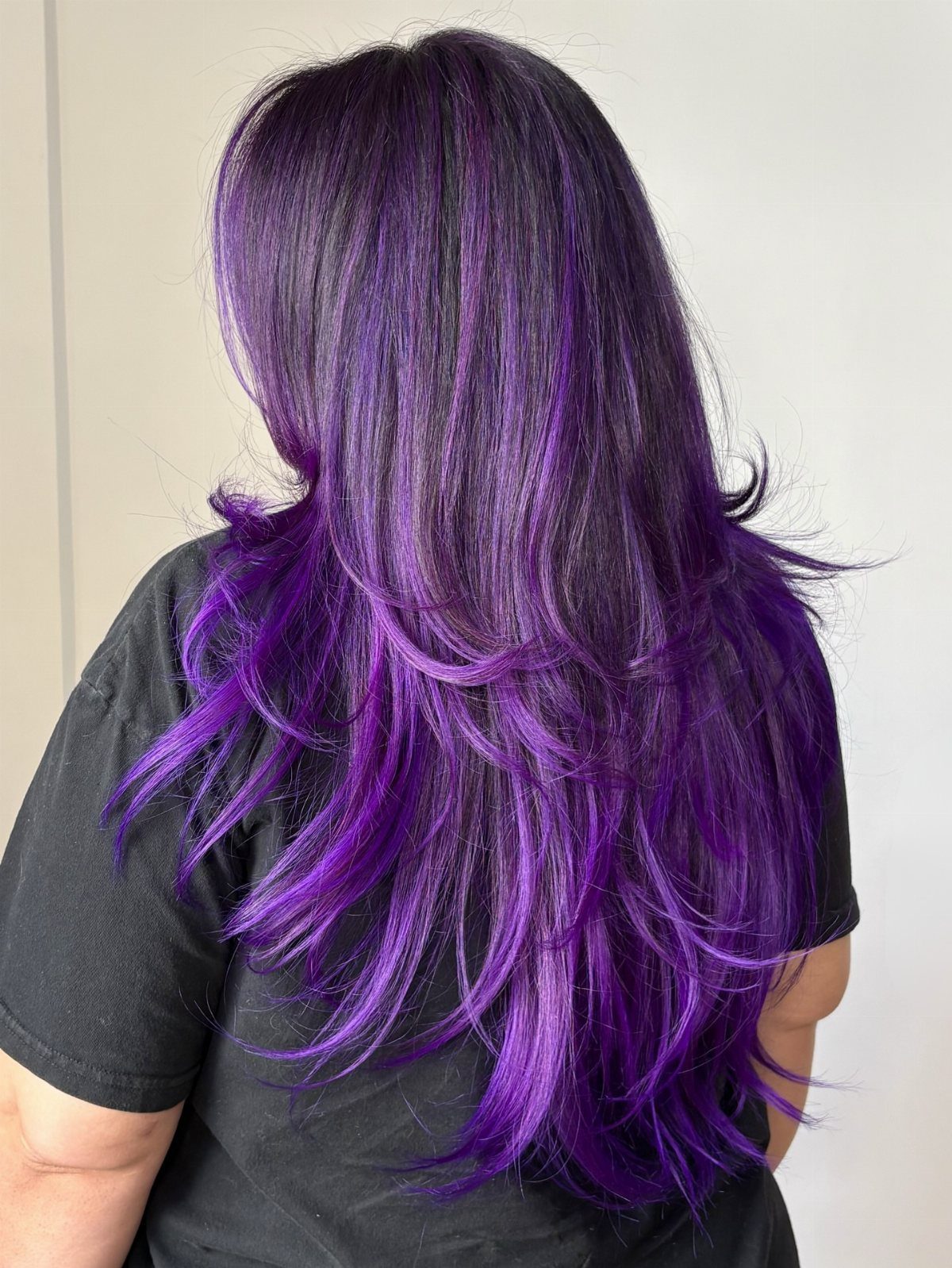
Dark roots and upper layers that melt into vivid purple and violet lengths give the layers a built-in sense of depth. The darker top keeps the look grown-in and low-effort, so there is no harsh regrowth line to chase.
Cut layers first, then color; the shorter pieces catch the violet while the longer ones carry the purple.
Only the lengths need lightening, and a colorist can feather the dark into the purple so the shift looks gradual. If you try it at home, blend the dye upward slowly and stop well below the roots.
Expect to touch up the ends more often than the top.
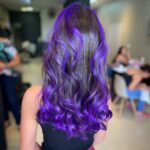
13. Lavender Purple Curls
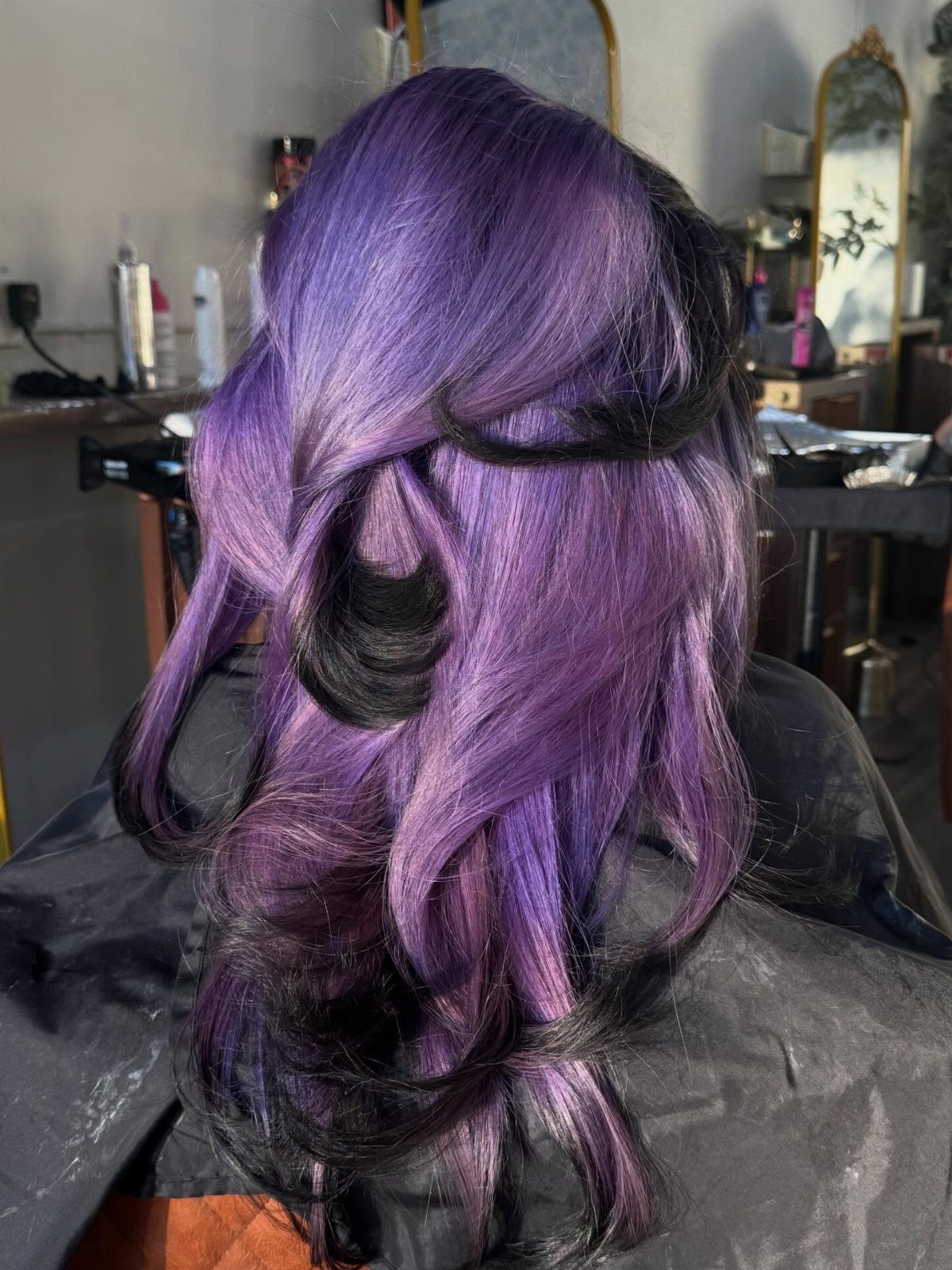
Long curls hold lavender and purple tones with darker sections woven through. The mix keeps the color from looking one-dimensional, and the curl pattern catches light differently than straight hair would, so the purples shift as the hair moves.
Lavender needs a lifted base to show up clearly. If your hair is naturally dark, the darker sections can stay unbleached while the lavender pieces are pre-lightened.
Curls need more dye than straight hair of the same length because the formula has to saturate each spiral fully. Plan on 2 boxes for long, thick curls.
14. Purple Crown Blend
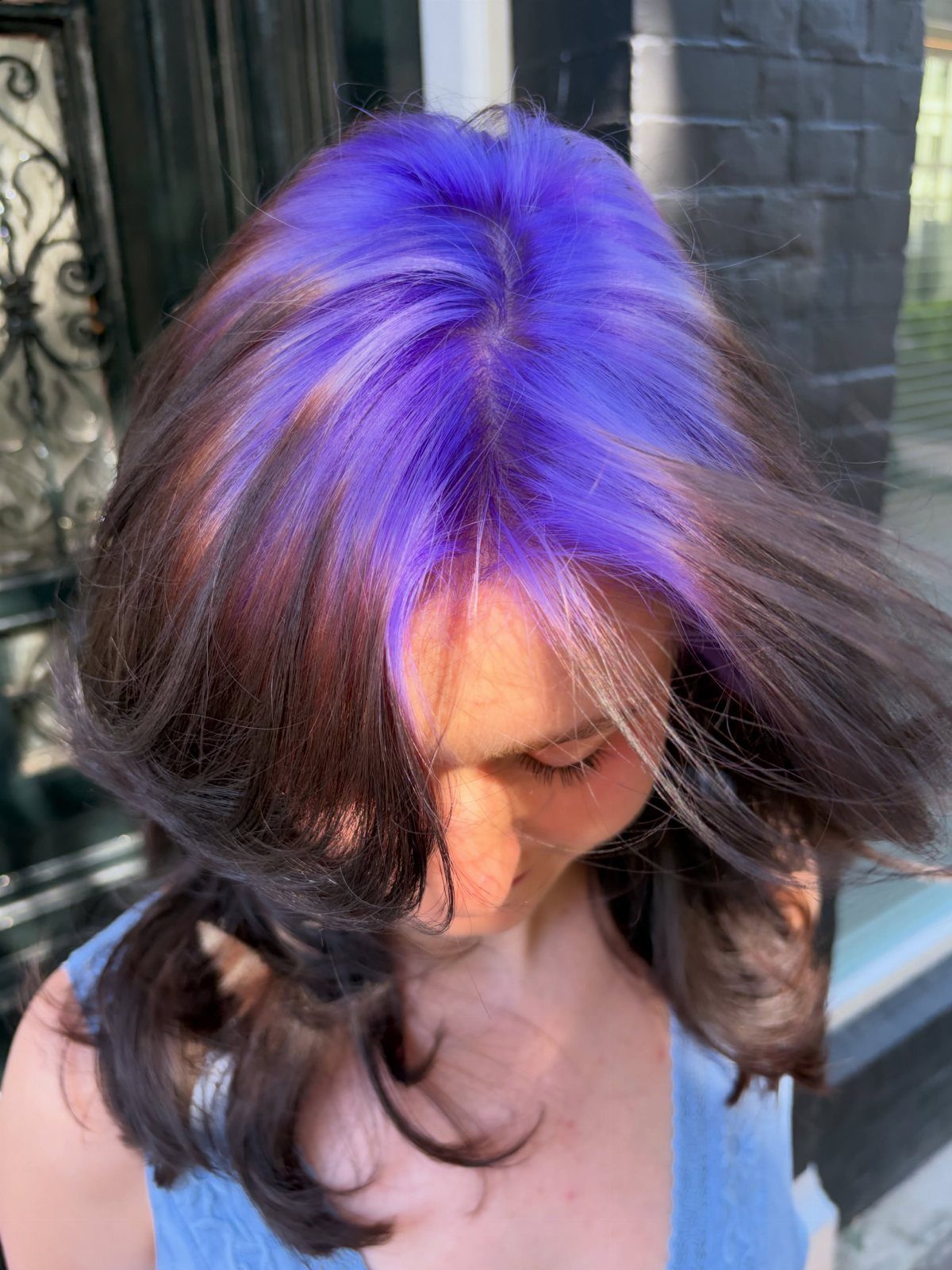
Purple concentrates at the crown and fades into dark brown through the rest of the length. The color stays visible when the hair is worn down and becomes the focal point when it’s pulled back or viewed from above.
This approach skips bleaching the full length. A colorist can lift just the top sections and apply vivid purple where it will show most, leaving the brown base intact.
If you’re doing this yourself, sectioning cleanly matters: purple that bleeds into the brown loses the sharp transition that makes the blend work.
15. Glossy Straight Purple
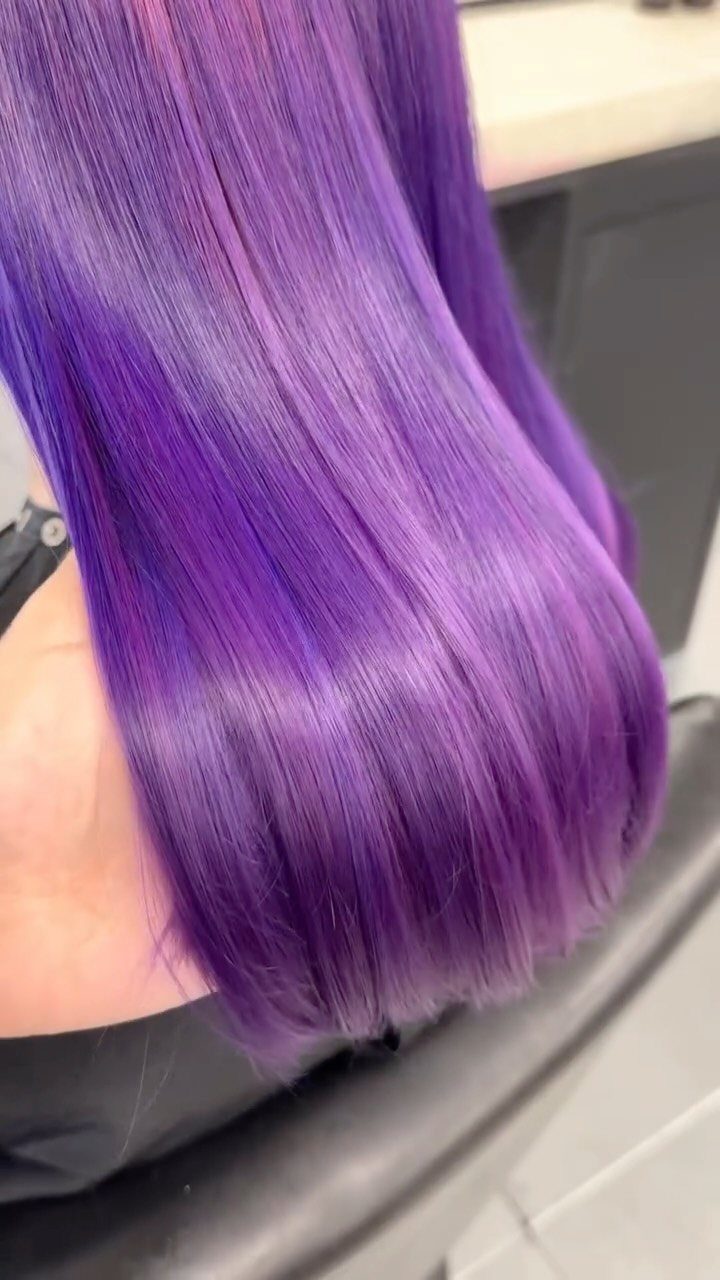
A uniform purple applied from roots to ends on straight hair. The glossy finish comes from the hair’s condition as much as the dye itself, so this look relies on hair that’s healthy enough to reflect light evenly.
Straight hair shows every line and uneven spot, so application needs to be thorough.
If you’re working with box dye at home, comb the color through in small sections to avoid streaking. A purple gloss or glossing shampoo every few washes keeps the shine from dulling as the color fades.
16. Purple Crown Bun
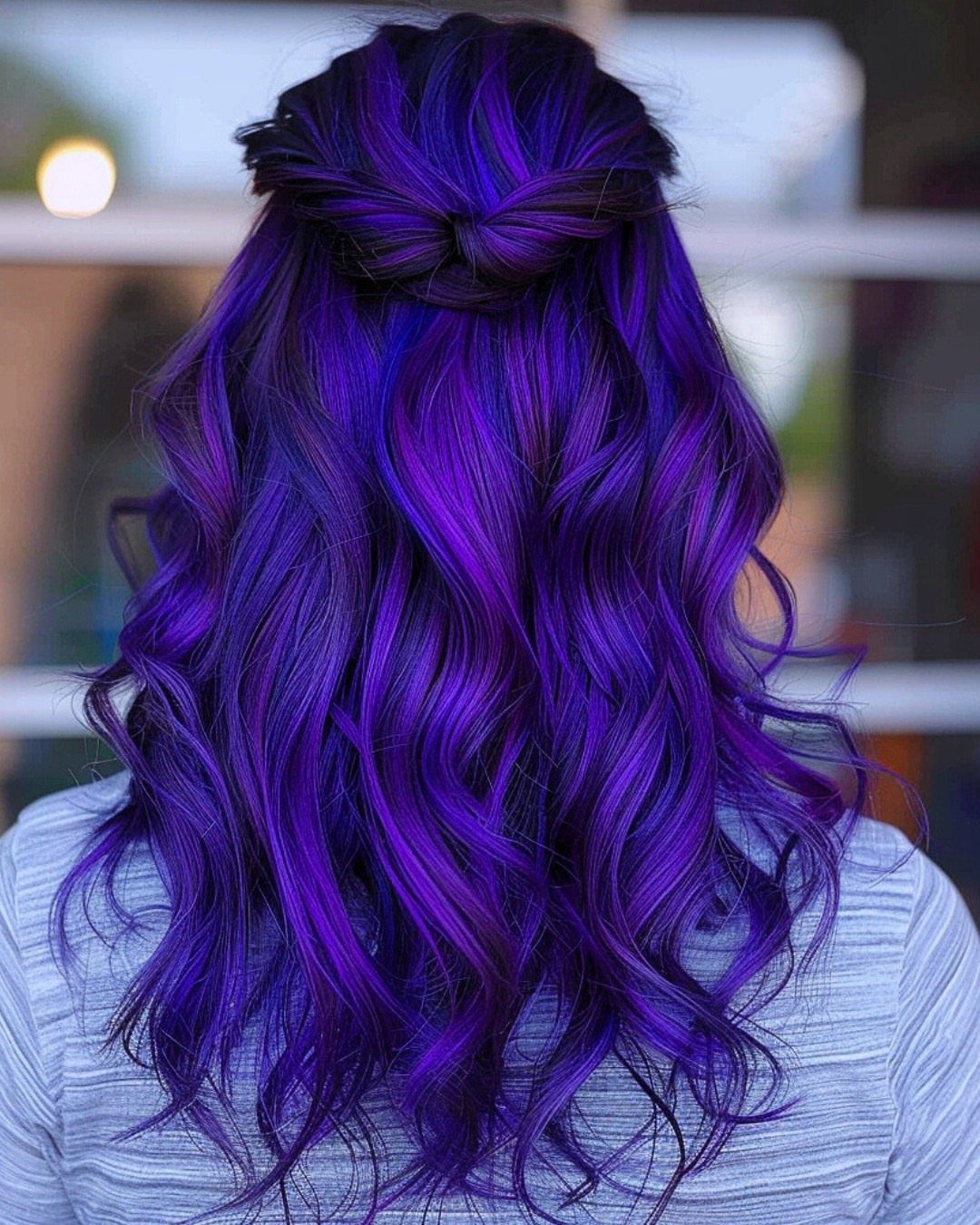
Long vivid purple hair styled with the top section twisted into a bun at the crown. The style keeps the color visible from every angle and works whether the purple is fresh or a few weeks faded.
The twist itself takes 2 minutes: gather the top section, twist it back, and pin it at the crown.
Because the purple covers the full length, the bun and the loose hair below match in intensity. If your hair is thick, a second pin at the base of the twist keeps it secure through the day.
17. Plum Purple Hair
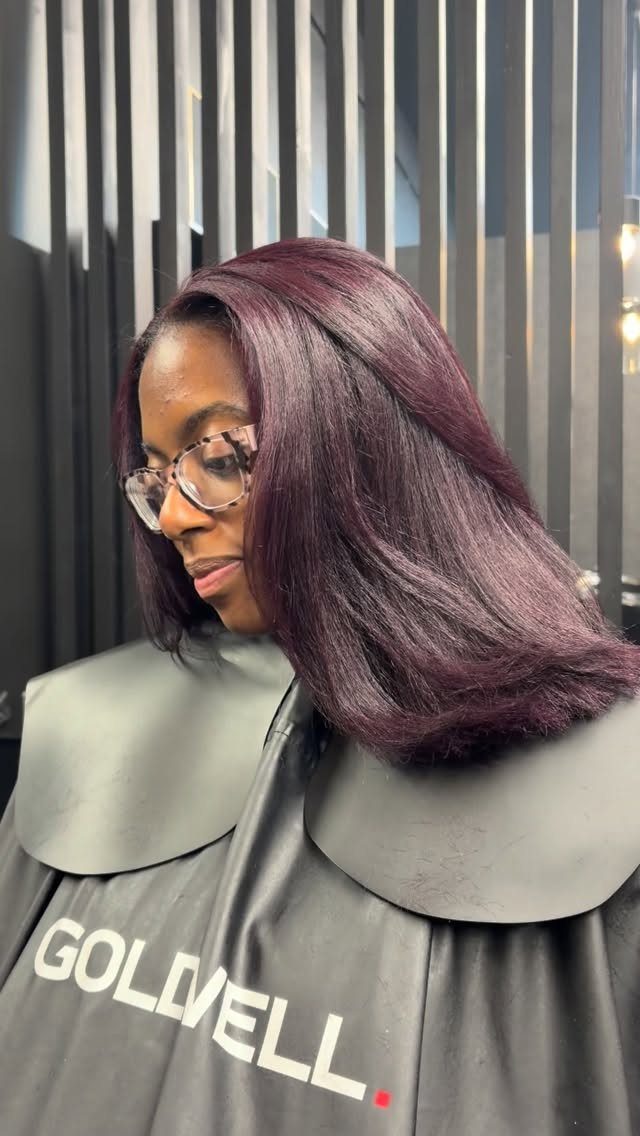
A rich plum-purple that leans more red than blue, applied evenly through long hair. The color reads deep and polished rather than bright, and the warmth in the shade suits most skin tones without looking overly cool.
Plum shades can be applied over dark hair with minimal lifting, though pre-lightening brings out more richness.
Semi-permanent plum fades slowly and tends to hold longer than lighter purples. If you’re starting with brown hair, a single-process color deposits plum without bleach, though the result will be more subtle than on lightened hair.
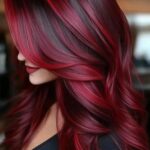
18. Burgundy Purple Layers
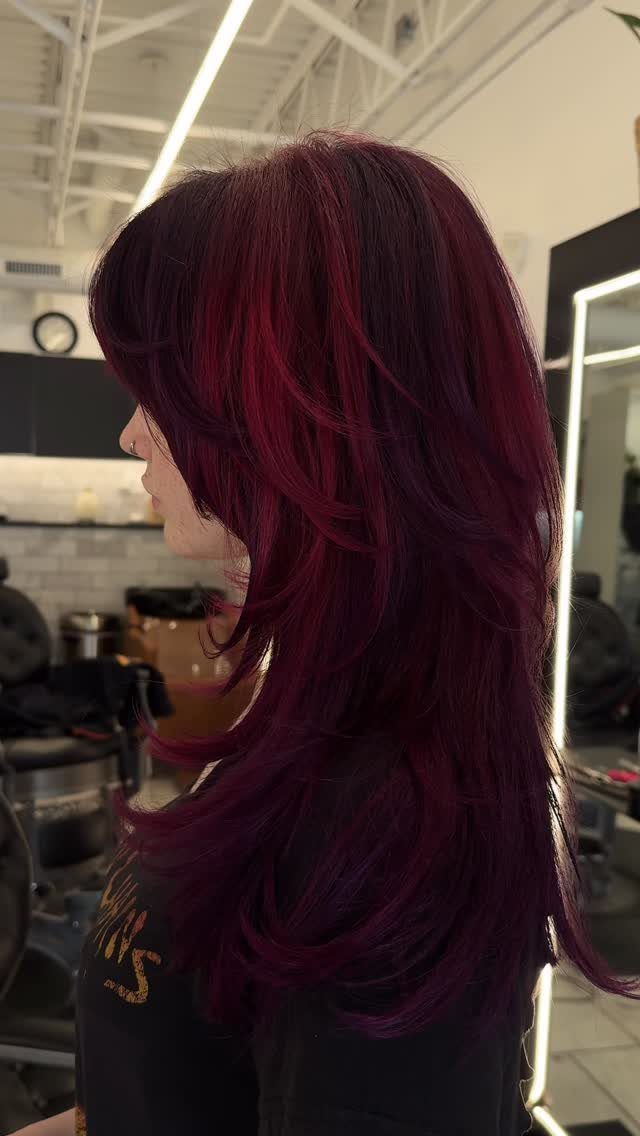
Layered hair blends deep burgundy with purple tones that shift through the length. The layers add movement, and the color change follows the cuts so the burgundy and purple read as deliberate rather than patchy.
Burgundy holds on dark hair without bleach, while the brighter purple sections may need lifting depending on your starting color.
If you’re layering 2 shades at home, apply the darker burgundy first, rinse, then go back in with purple on select pieces. The tones are close enough that they blend where they meet without a harsh line.
19. Purple and Teal Streaks
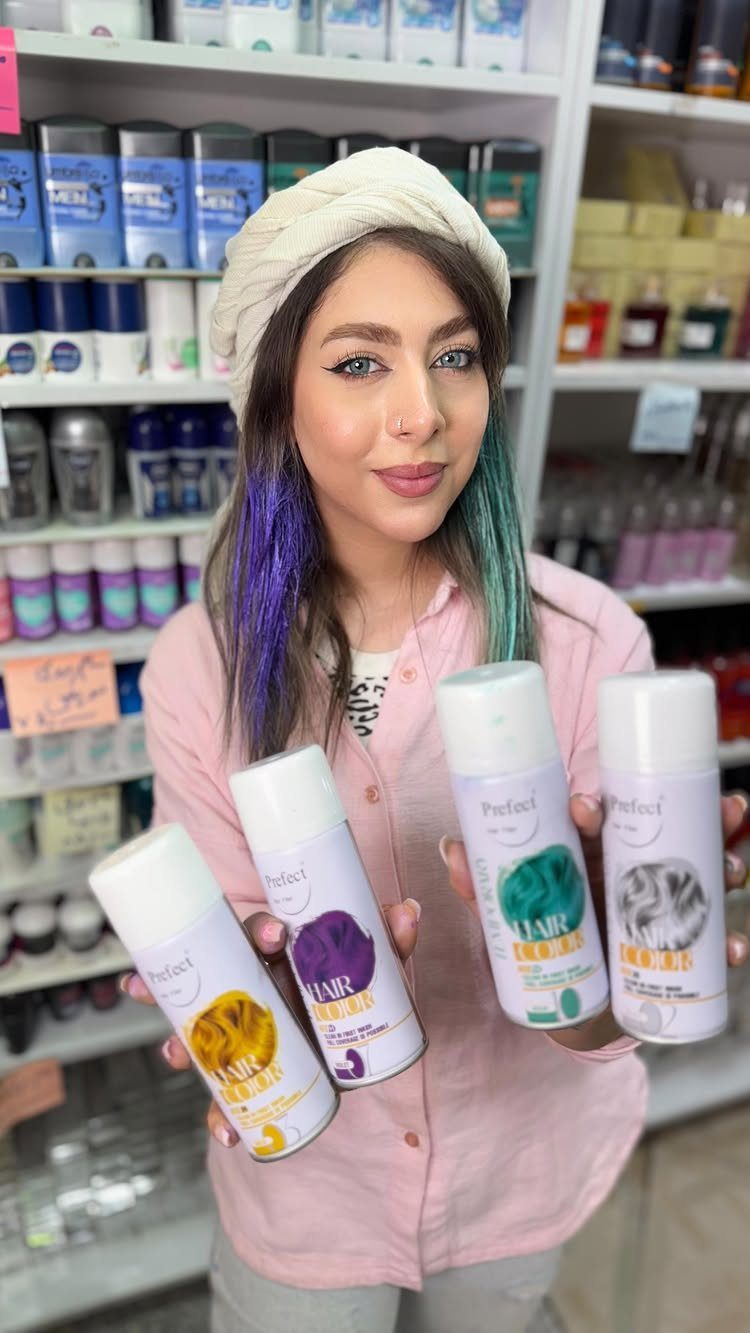
Alternating purple and teal streaks on dark hair create contrast without needing an all-over bleach job. The two colors sit next to each other rather than blending, so each one stays distinct.
Both shades need lightened sections to show up clearly against a dark base.
If you’re doing this at home, bleach the streaks first, then apply purple and teal separately using foil or plastic wrap to keep them from bleeding into each other.
Semi-permanent formulas in both colors fade at similar rates, so the contrast holds as they lighten.
Frequently Asked Questions
What are some types of purple hair dye?
Purple covers a wide stretch: soft lavender and dusty mauve at the light end, violet and plum in the middle, then maroon and midnight violet, which can pass for black indoors.
Formulas come permanent or semi-permanent, and semi-permanent lets you test a shade before committing.
What’s the best way to wear purple hair dye?
For the lowest commitment, put purple on only part of your head: highlights, bangs or a hidden underlayer. Only those sections need bleach, and the rest of your hair stays its natural shade.
All-over violet is the boldest choice, and also the simplest route to full coverage. Dark roots that melt into purple lengths are another easy way to wear it, since there’s no harsh regrowth line.
How do I dye my hair at home?
Check your starting color first: dark hair needs bleaching for pastel purples, but deep shades like plum or midnight violet can go on without it. Shoulder-length hair usually takes a single box; longer, thicker or curly hair can call for 2.
Clip your hair into sections and comb the color through in small pieces to avoid streaks. If you bleached, tone before applying lavender so brassy undertones don’t show through.