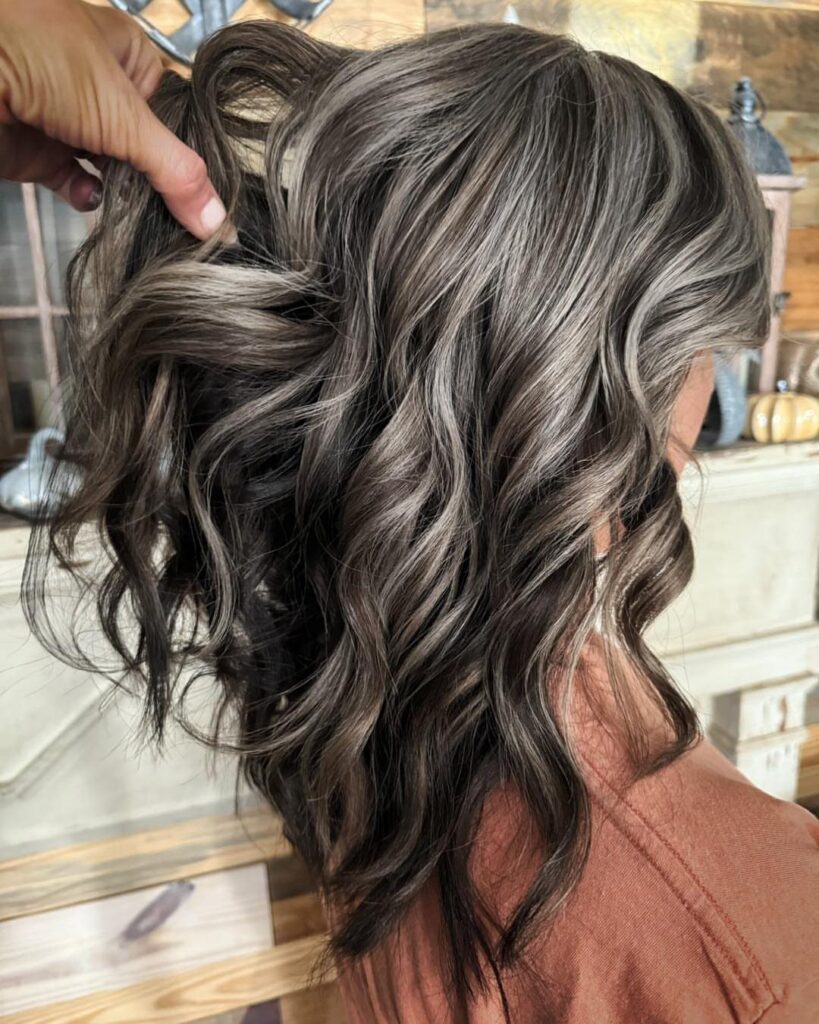
The list starts with highlights and lowlights that melt into natural gray and ends at the skunk stripe, where the contrast is the main feature.
Pick by how much gray you want showing: the subtle gray-blended brunette sits at the quiet end, and bold silver streaks sit at the loud one.
Most of these blends need a stylist touch-up every 8–10 weeks, though a few can stretch to several months between appointments.
1. Highlights and Lowlights
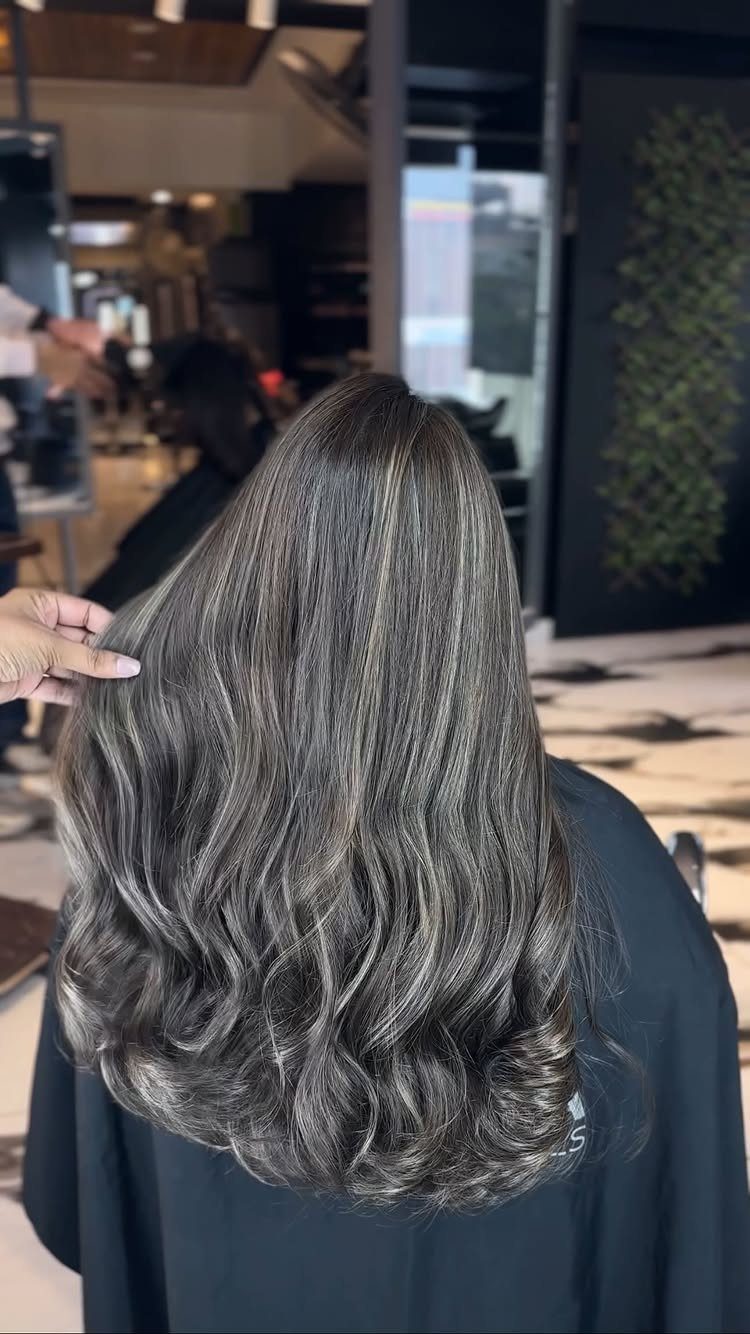
Lighter and darker pieces woven through the same head of hair give gray strands somewhere to hide, because the eye reads the mix of tones instead of a single stripe of regrowth.
For anyone growing out dyed color, this is my pick for the least stressful way to start.
Ask a colorist for both: highlights to lift some sections toward silver, lowlights to add depth between them. Gray then lands among the lighter strands and looks like part of the pattern.
Wavy texture helps the blend look soft, since the bends scatter the line between grey and colored strands, but highlights and lowlights work on straight and curly hair too.
2. Ash Light Brown Lowlights
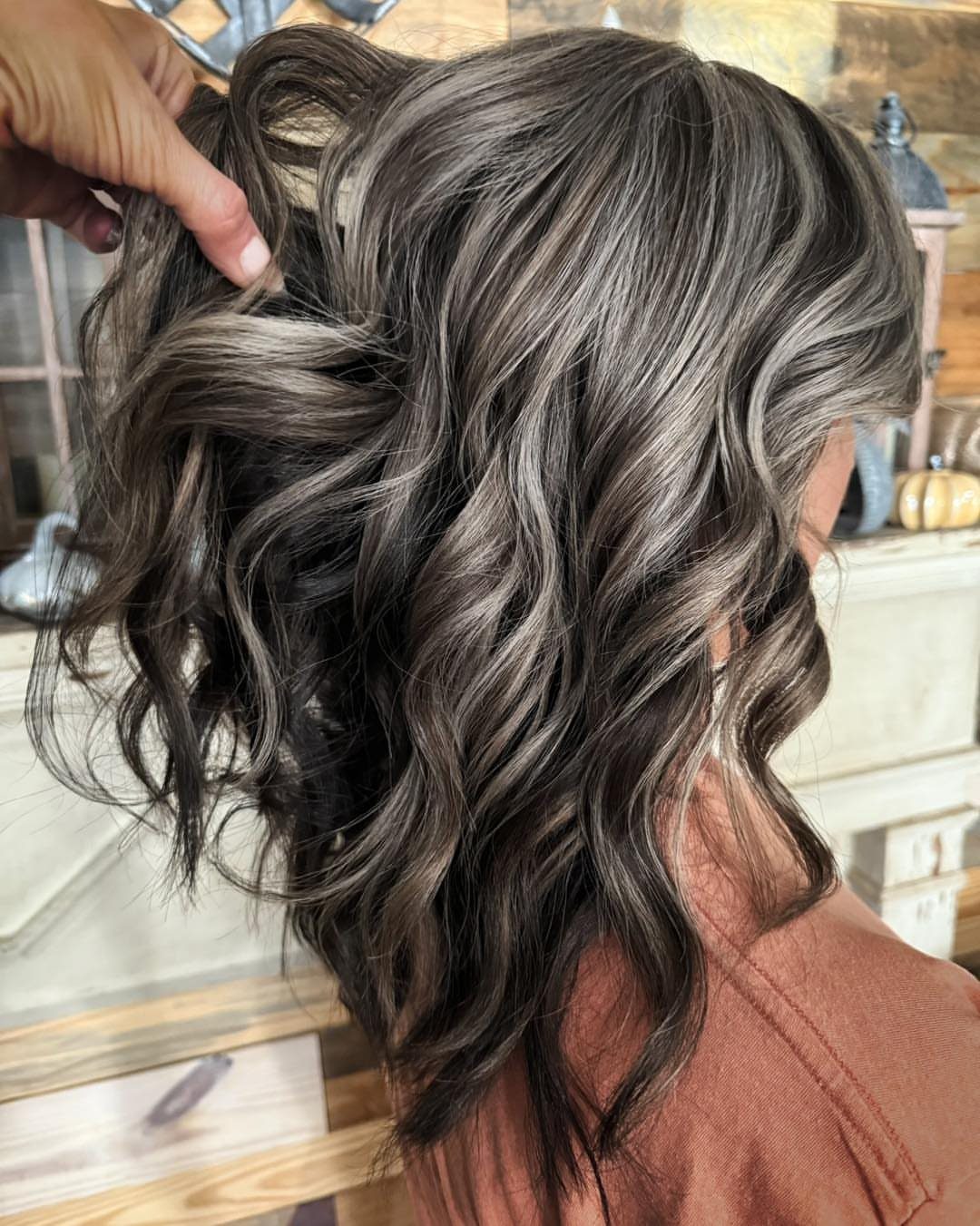
Ash light brown lowlights, set 2–3 shades deeper than your natural base, put contrast behind the silver, so those strands look like planned highlights and not roots coming in.
On wavy ash brown hair, the darker ribbons add depth in the troughs of each wave while the gray catches light on top.
Ask your colorist for ash-toned lowlights 2 shades deeper than your natural or dyed color, woven in around the gray rather than over it. Ash keeps the brown from turning warm next to the silver.
I like this best for anyone still dyed all over who wants to stop covering gray without a hard line.
3. Face-Framing Highlights
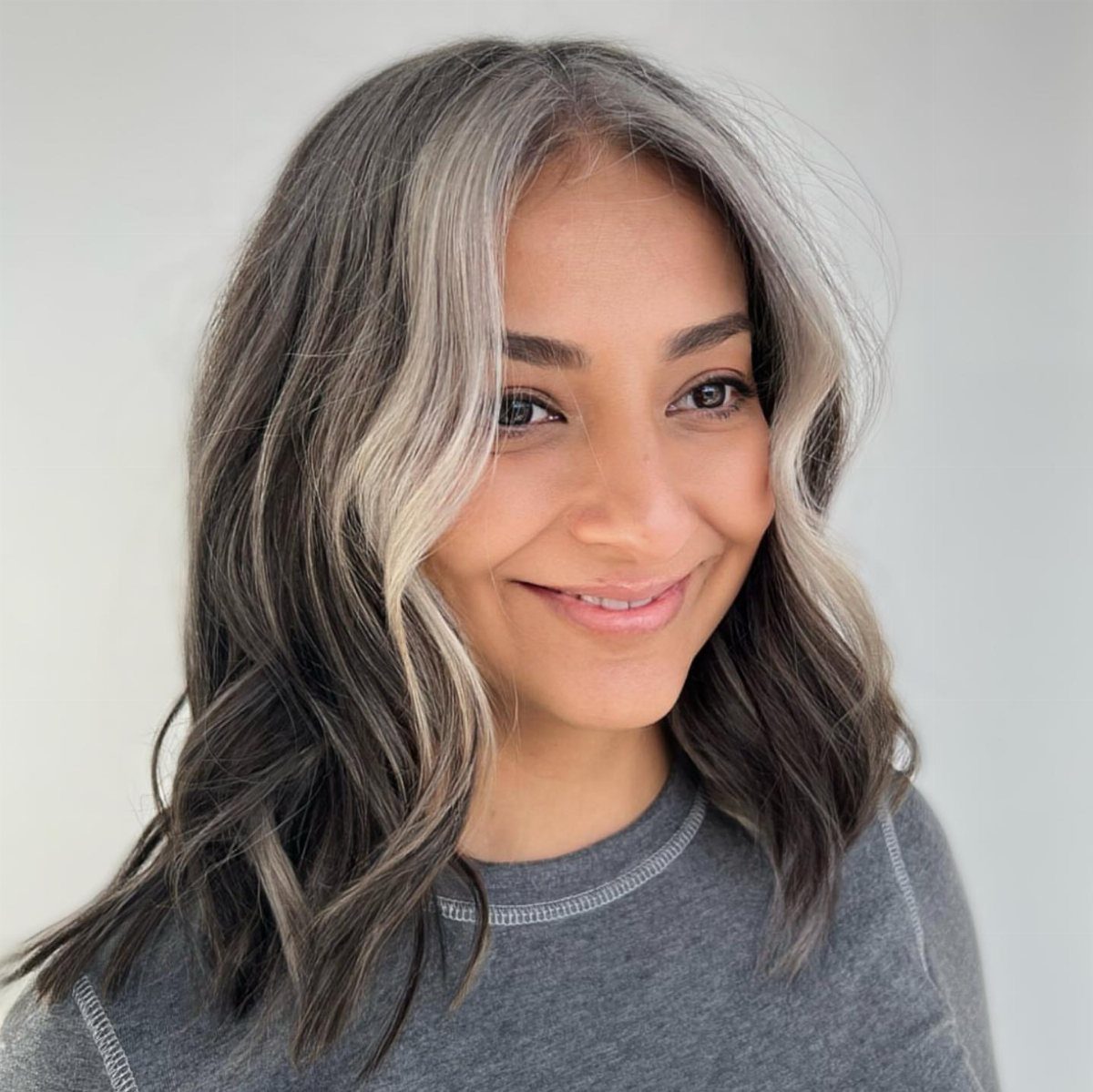
Lighter pieces placed right around the face pull the eye to the hairline and away from gray coming in at the roots.
Against dark waves, a few silver-toned sections catch light first, so any gray growing in nearby reads as part of the design.
Ask your stylist for highlights concentrated at the front, and bring this photo so the brightness level is clear. Wavy texture suits it well, since the movement scatters the lighter pieces instead of drawing a hard line.
Face-framing work only covers the front, so gray at the crown or back stays untouched. If that’s where yours shows up most, I’d pair it with a few fine highlights through the top.
4. Ash Blonde
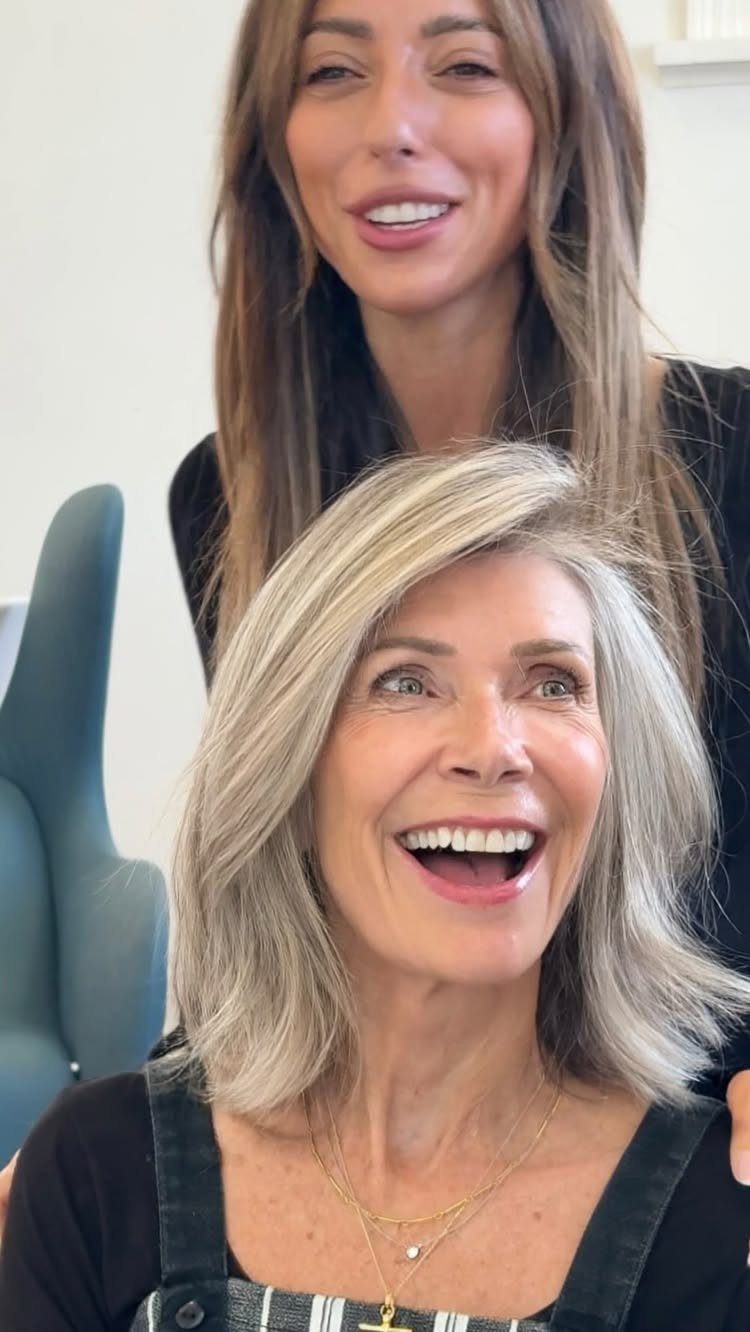
Cool ash tones blend with silver where warm blonde would fight it. Gold and honey shades pull yellow against gray, so the 2 read as separate colors; ash sits in the same cool family and the strands melt together.
Ask your colorist for ash blonde and say you want it to blend with your gray, not cover it.
Shoulder length gives the tone room to show variation from root to ends. I would pick this over a warmer blonde if you plan to let more silver come in, since the regrowth stays in the same color story.
Ash can warm up over time, so a toning gloss is worth asking about.
5. Icy Blonde Ombre
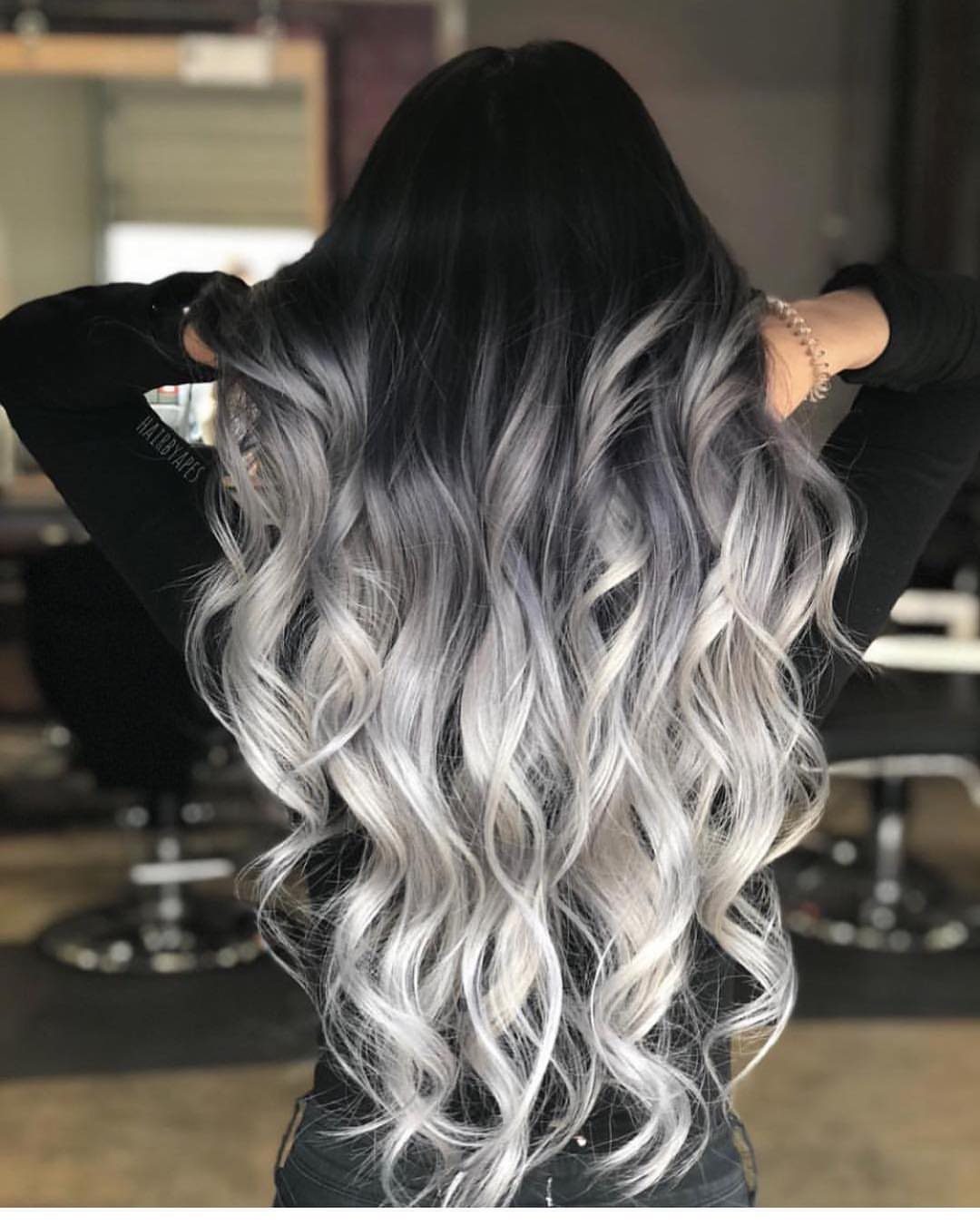
Dark roots that melt into icy silver-white ends make the cleanest bridge between a dyed base and incoming gray.
Because the roots stay deep, new gray growing in reads as part of the gradient, and the cool ends already look like gray.
Ask your stylist for a soft, long ombre transition rather than a sharp line, and for a cool toner on the lightest lengths.
Curls or loose waves help hide the shift, so I would style them that way for the first few months.
Very light ends take the most upkeep in this look. They need regular toning to stay icy instead of yellow, and they dry out faster than the roots.
6. Skunk Stripe Color Blocking
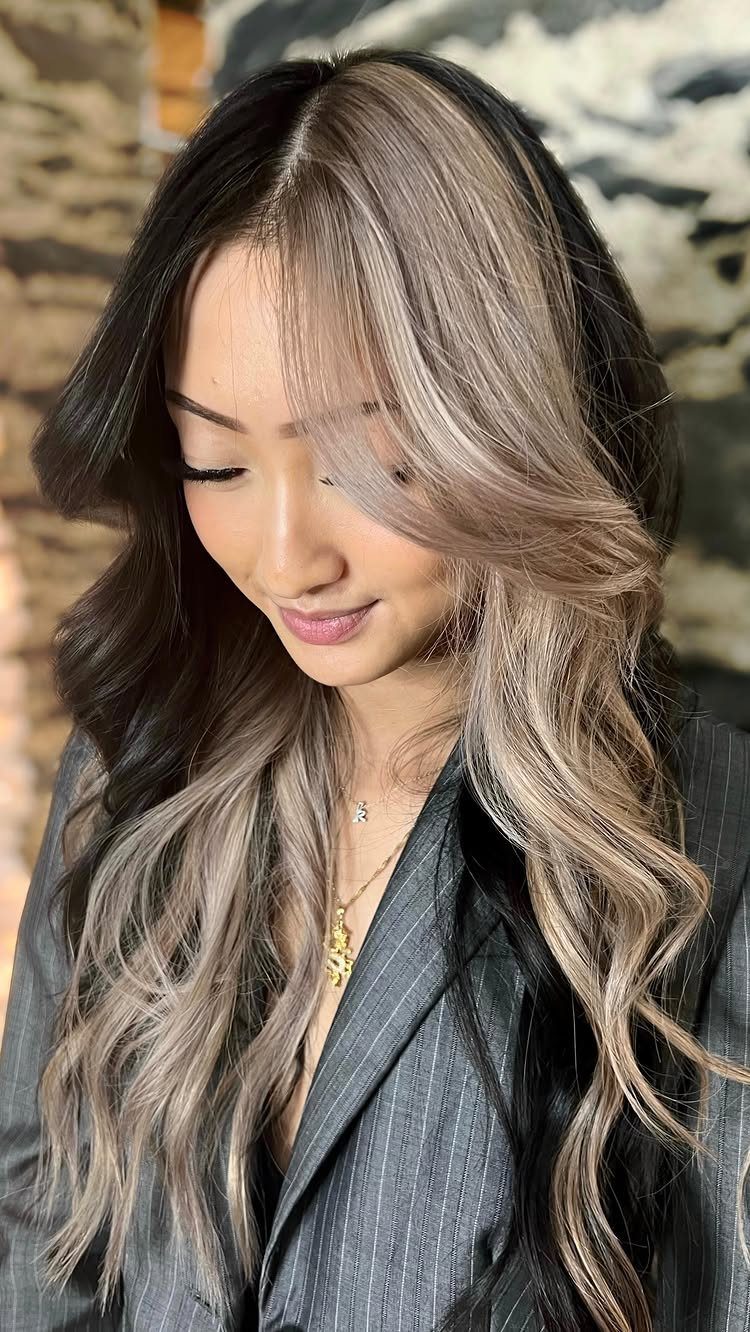
A wide block of silver-gray against dark hair gives white strands a place to belong.
Instead of hiding them strand by strand, the color gathers the lightness into one deliberate panel, so new white growth at the front reads as part of the design.
Ask your colorist for a chunky, defined section rather than fine foils, and say you want the contrast kept, not softened.
Waves are a good match for this look, because the bends in the hair blur the line where the light section meets the dark.
I’d choose this over scattered highlights if you want a clear graphic look. A sharp block shows its edges as it grows out, so plan your touch-ups around that line before you commit.
7. Salt-and-Pepper Style
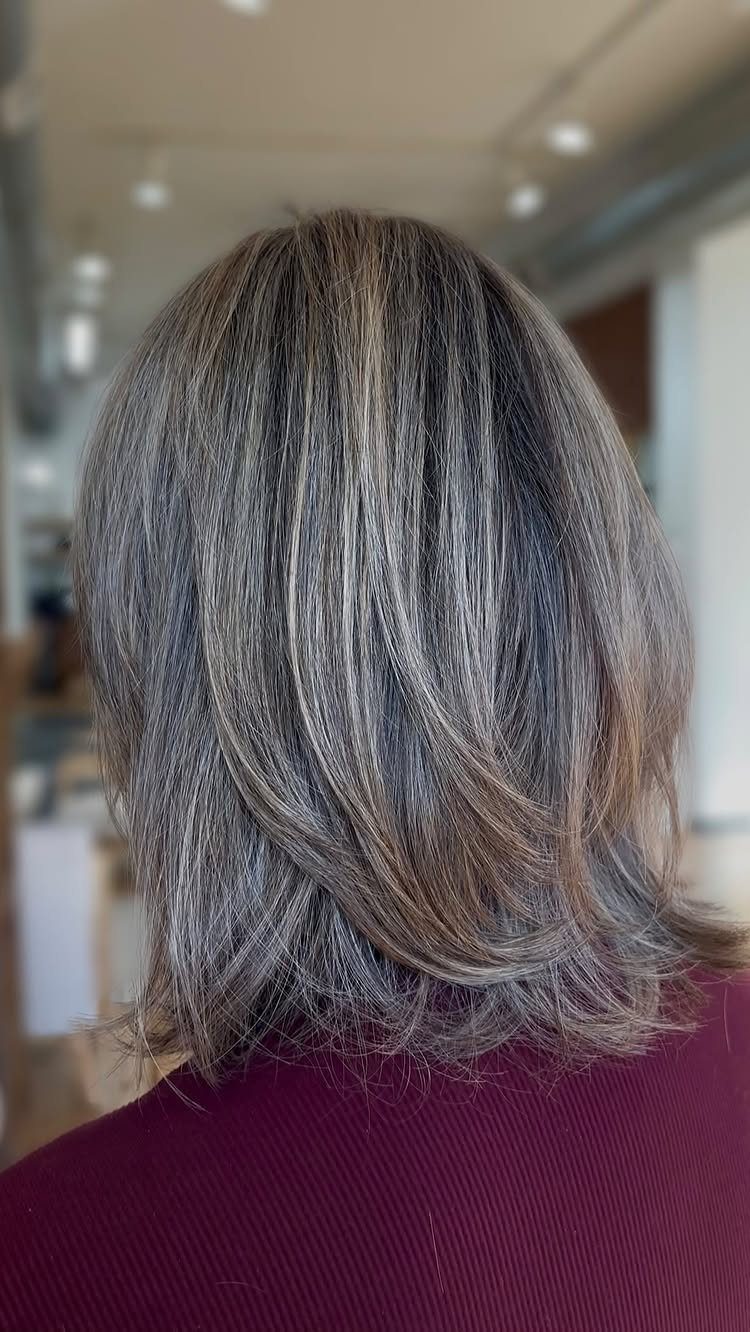
Salt-and-pepper hair with dirty-blonde babylights gives natural gray something soft to sit against. The fine blonde pieces melt into silver strands, so the layers look dimensional instead of patchy, and regrowth never draws a hard line.
Ask for babylights woven through your natural color, not a full highlight. Ask the stylist to keep the lowlights close to your natural tone, because blending means softening the line between grey and color, not covering it.
A shoulder-length cut with layers lets the mix of dark, silver and blonde show in movement.
I prefer this over solid dye for anyone who wants fewer salon visits.
8. Silver White Color Accents
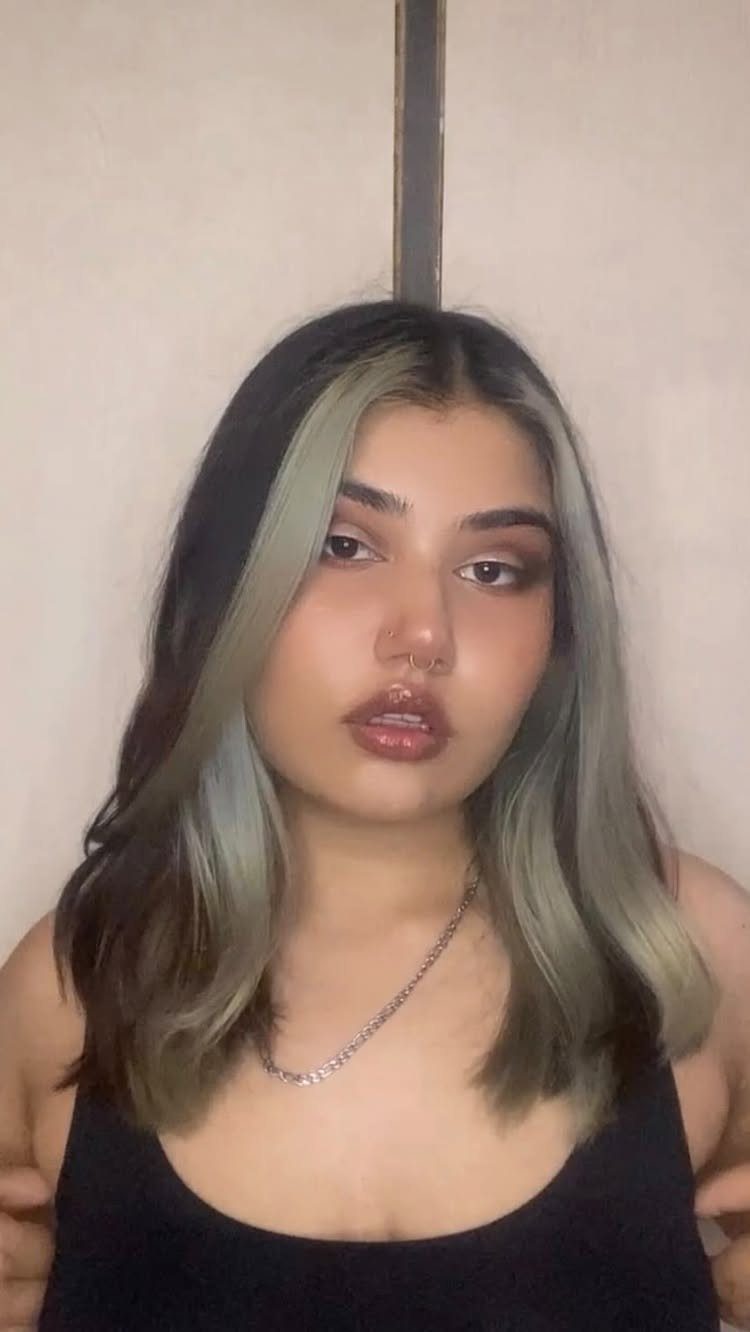
Broad silver-white pieces at the front turn the hair around your face into the brightest part of the look, set against a dark base.
For anyone growing out dyed hair, that placement does the blending: gray that shows up at the hairline reads as part of the design instead of regrowth.
Ask for silver-white money pieces cut wide, not fine, so the contrast stays bold from across a room. I prefer them on a center part, where both sides frame the face evenly.
Keep the rest of the base dark and natural. Silver-white pieces will need toning to stay cool, but the dark length keeps the whole look from needing a full recolor.
9. Slate Gray Blend
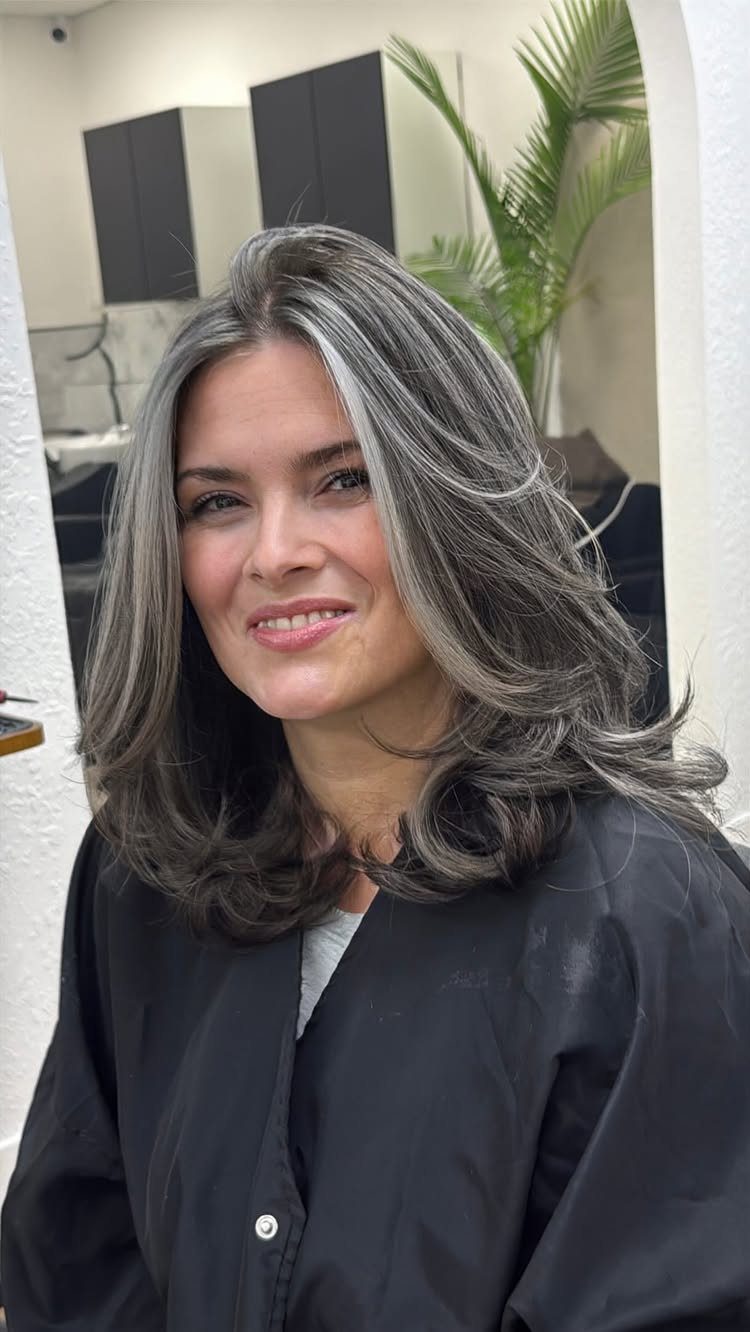
Slate gray works best when the balayage sits close to your natural tone, so the silver-gray sweeps read as part of your own hair rather than a color laid on top.
Against a dark base, that closeness is what keeps the blend soft.
Ask your colorist for balayage in a shade just a step or two off your natural gray, painted in long, loose strokes through the mid-lengths and ends.
Because the sweeps sit near your real gray, regrowth lands inside the blend instead of drawing a line at the root.
Long hair gives the strokes room to show. On shorter cuts, I would keep them thinner.
10. Silver Gray Curls
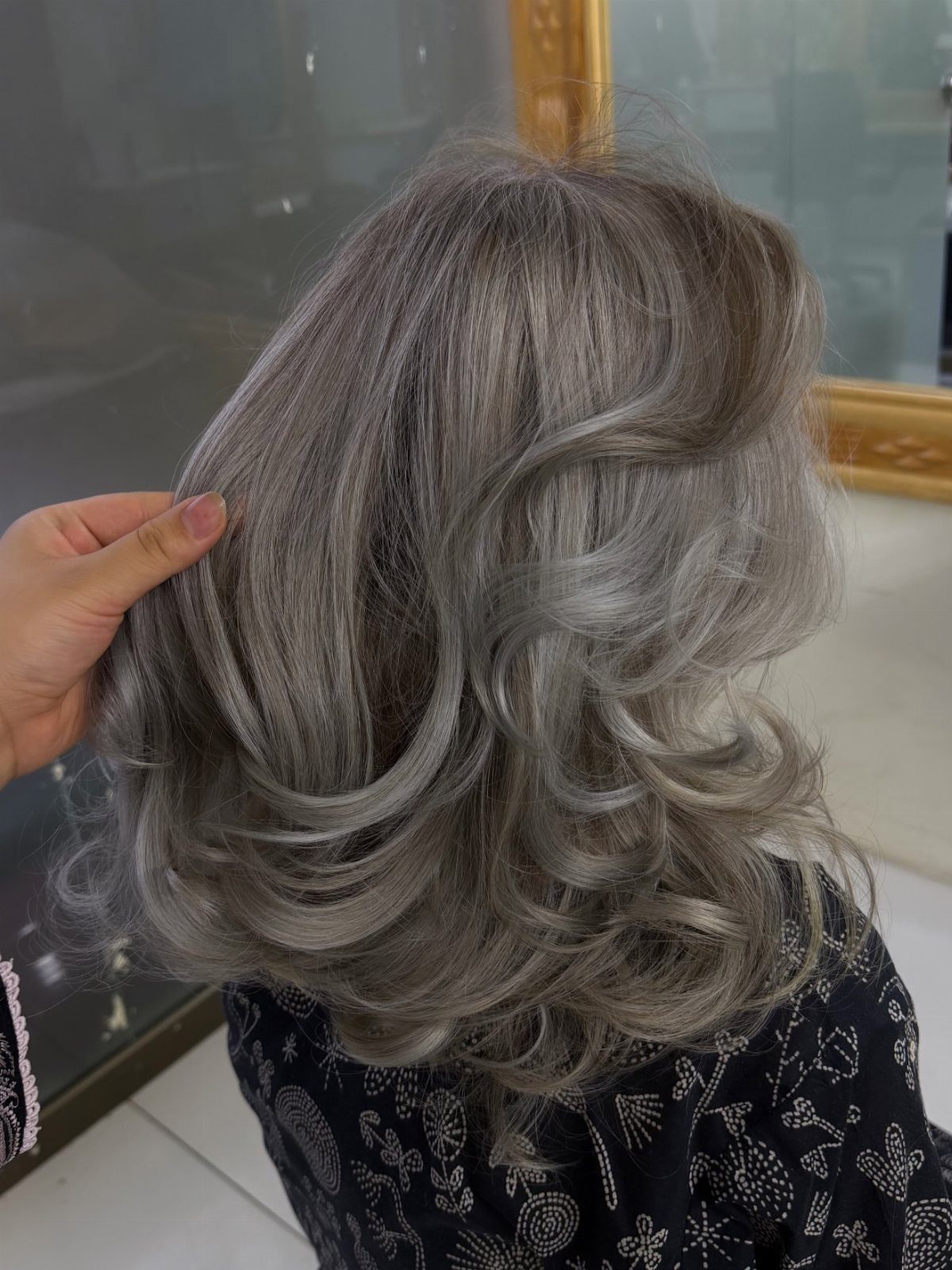
Curls are the easiest texture for blending gray, because the spiral breaks up any line where silver meets darker hair.
Long silver-gray curls with darker roots let regrowth sit softly instead of announcing itself, because the curl pattern breaks up the line where the natural color meets the dyed length.
Ask your colorist for silver-gray through the curls with the roots kept darker, and show the photo so the placement is clear.
I’d pick this over a solid all-over color if you want fewer salon visits, since the darker root is part of the design.
Curly hair runs drier, so keep the silver toned and conditioned.
11. Platinum Gray Balayage
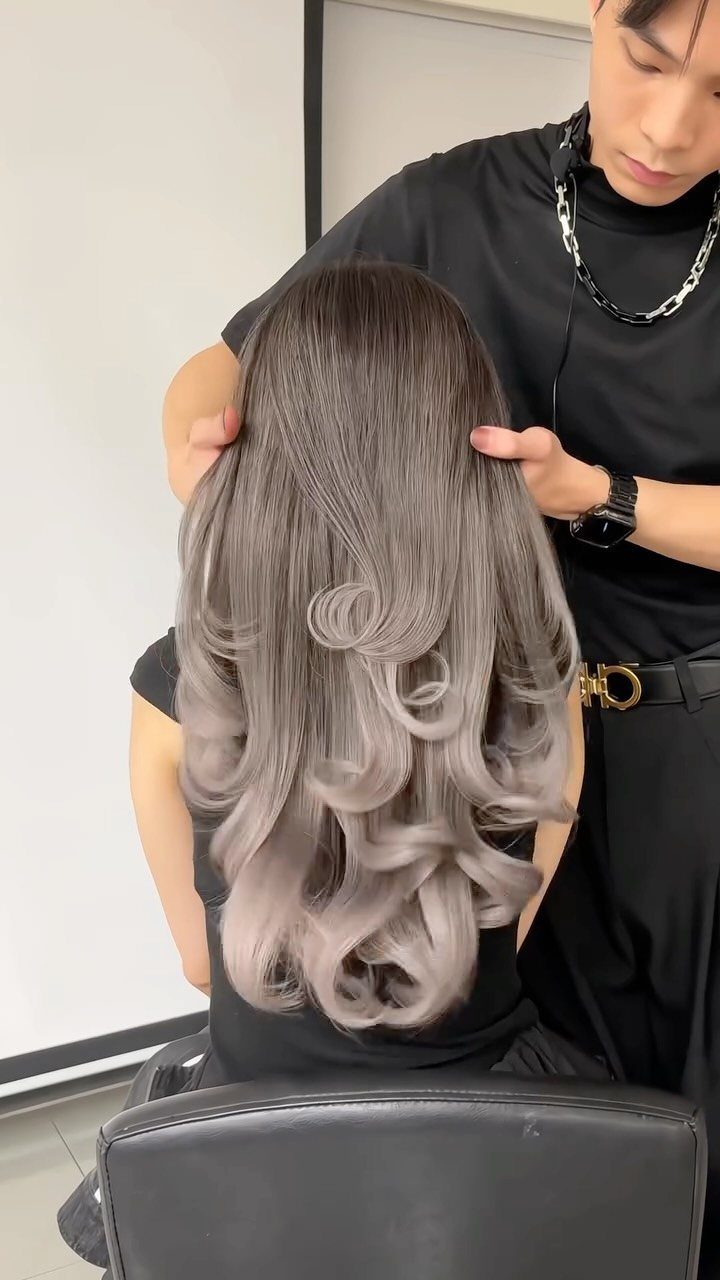
Platinum gray balayage keeps the dark root and lets the color lighten gradually down the length, so curls catch silver at the ends where the hair moves most.
Because the roots are left deep, a new gray strand at the part blends into the look instead of announcing regrowth.
Ask your stylist for hand-painted balayage in platinum and gray tones, and bring a photo showing how quickly the root shifts to light.
A soft, long gradient gives you the most room between visits. Curls and loose waves help here, since the movement hides the line where dark meets light.
Platinum needs toning to stay cool, so budget for refreshes.
12. Subtle Gray-blended Brunette
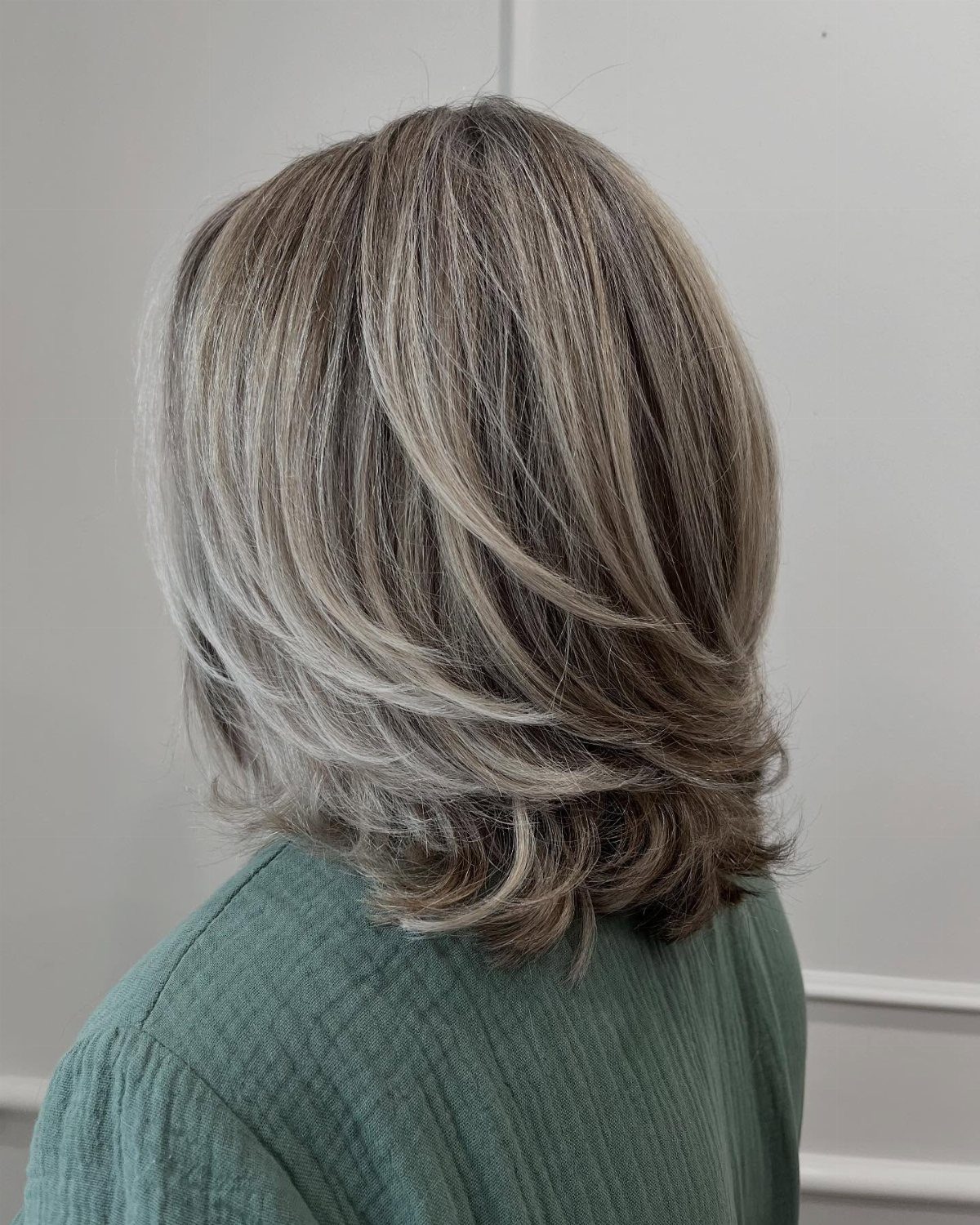
Brown hair threaded with silver highlights, cut in layers that end in a soft, feathered finish, gives gray a place to land without a hard line anywhere.
I’d pick this over a full gray-out if you aren’t ready to lose the brown. The base stays a gray-brown instead of flat, dark dye, and the silver pieces sit beside the gray you already have.
Bring the photo and ask for fine silver highlights over a gray-brown base.
Tell your colorist to place them where your own gray shows, so they read as part of your hair. Then ask for layers with feathered ends, which keep the shoulder-length shape soft.
13. Bold Silver Streaks
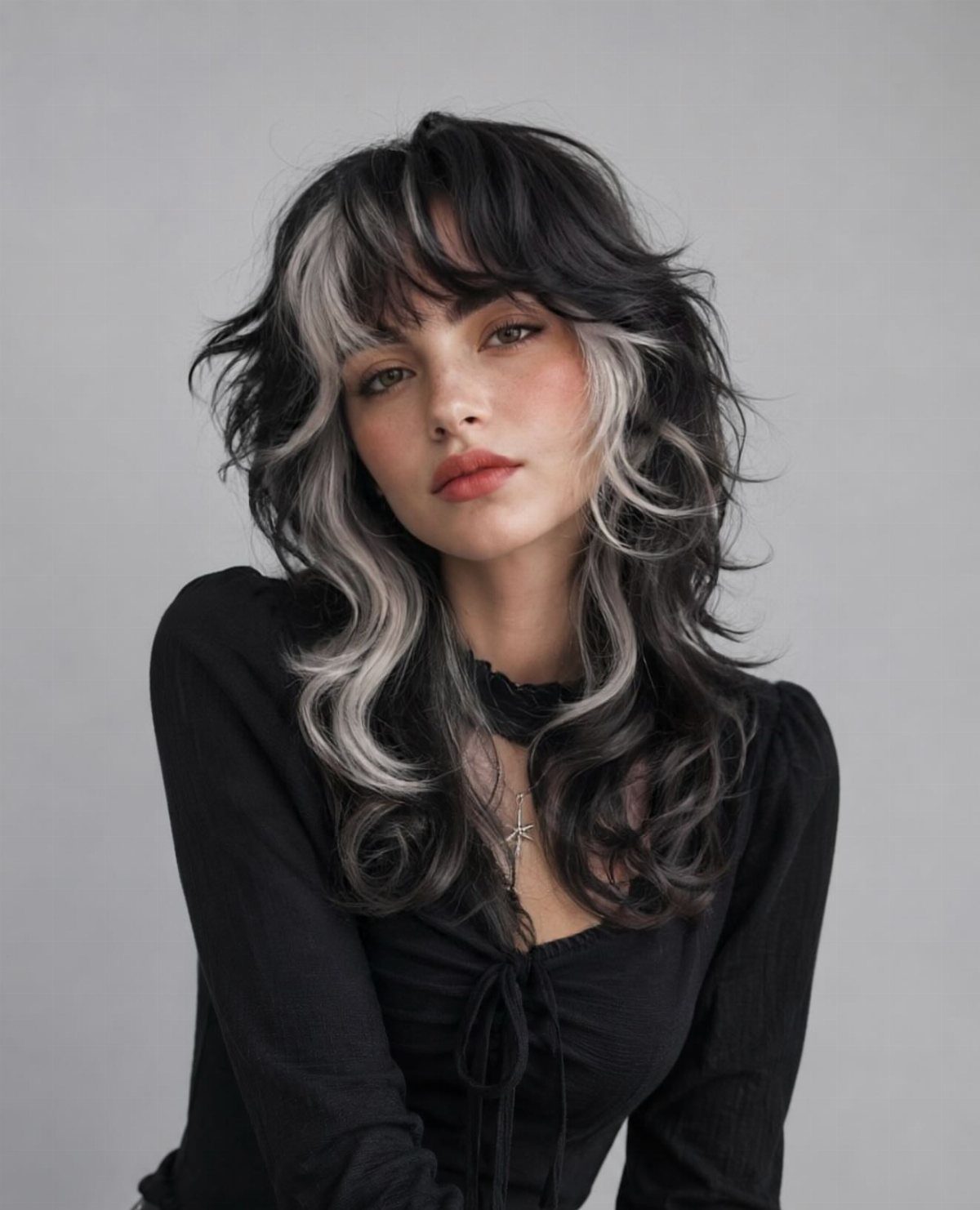
Silver-gray streaks framing the face turn incoming gray into a deliberate statement rather than something to hide.
The contrast between dark roots and cool silver reads intentional, and because the silver sits where light hits first, the blend flatters without needing full coverage.
Ask for silver toner applied to natural gray pieces near the face, leaving the rest of your base color alone.
Regrowth is forgiving here: natural gray simply joins the silver sections, and darker roots on the rest keep the dimensional look intact. Silver tone needs a touch-up once it starts warming toward brass.
14. Gray Roots with Long Waves
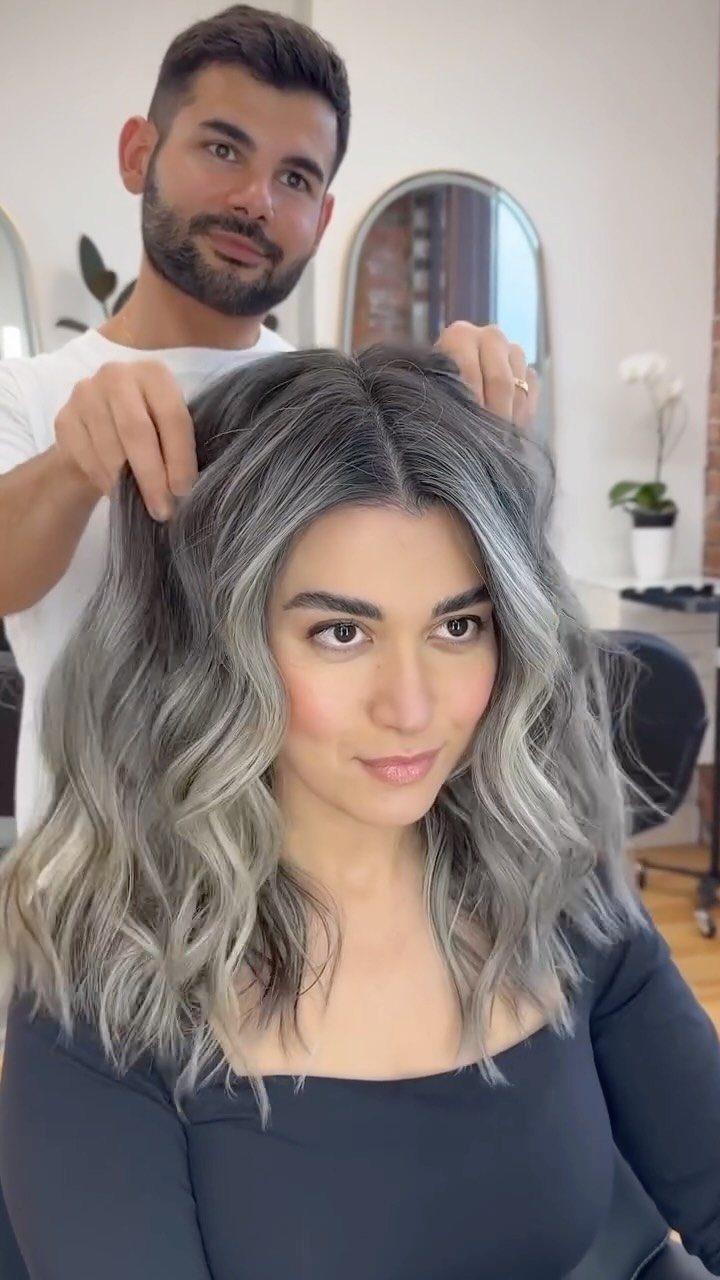
Long waves with natural gray roots left visible and the length toned silver create a soft gradient, with no stark edge at the root.
The texture makes the transition read as blended color rather than obvious regrowth, and the length means you can stretch time between salon visits.
Ask for silver or platinum toner through the middle and ends of the hair, with gray roots left natural.
Toner fades, so the silver stays crisp only with regular refreshes. Wavy texture helps: straight hair shows every demarcation more clearly, while waves diffuse the shift from gray to silver.
15. Shoulder-length Gray Blend
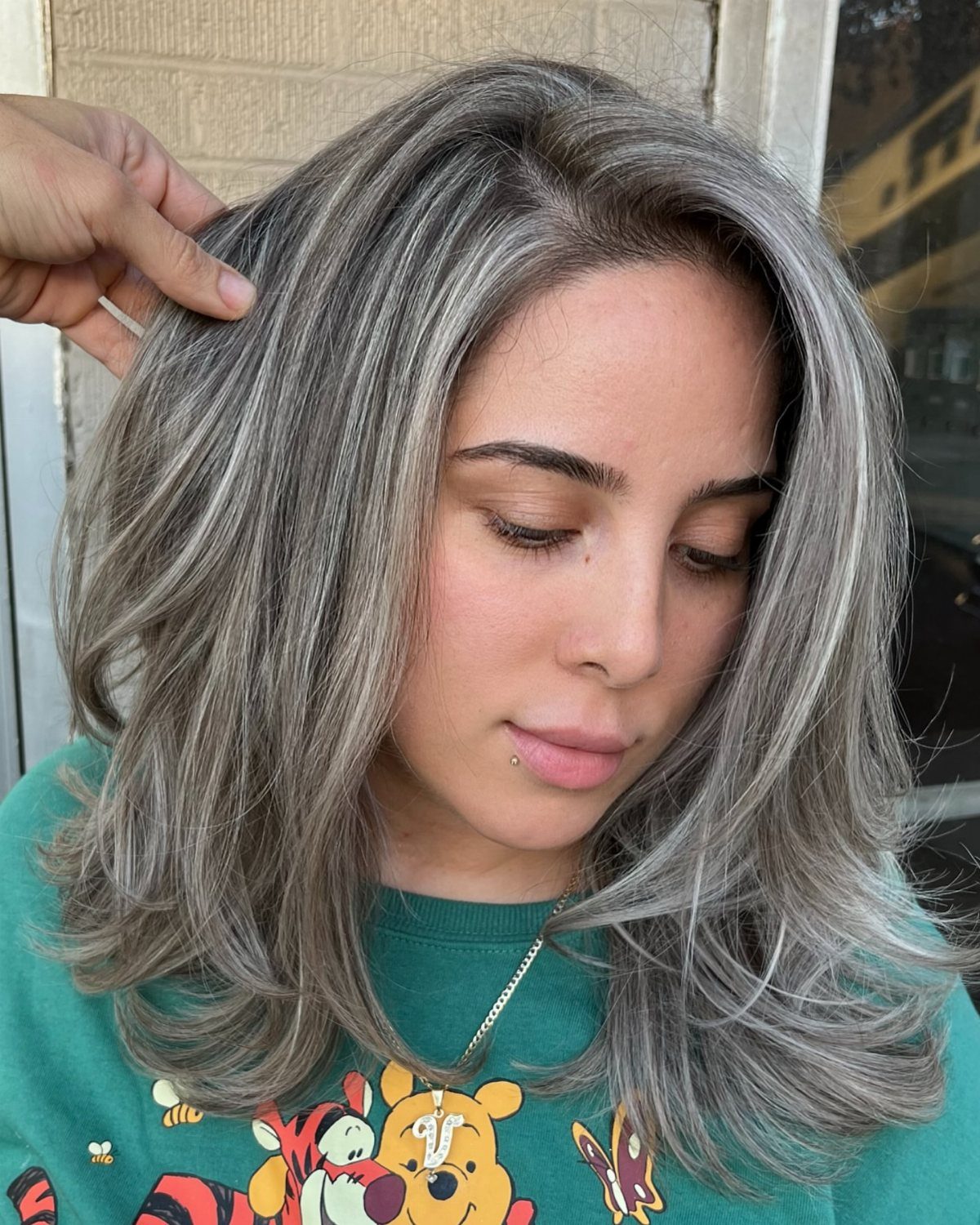
Shoulder-length hair with silver highlights and visible dark roots keeps dimension without full commitment to going gray.
The layered silver pieces reflect light and blend with natural gray as it comes in, so the look evolves rather than growing out badly.
Ask for silver or ash gray highlights concentrated at the hairline and crown, where gray usually appears first.
The dark roots anchor the blend and make regrowth less obvious. If your natural gray is coming in cooler than the silver, the two will merge cleanly; if it leans warm, a toning gloss keeps it cohesive.
16. Gray Roots Into Warm Ends

Gray roots that fade into warm brown or copper ends let natural gray grow in while keeping warmth at the lengths.
The shift from cool to warm reads as intentional color, and because the roots are left alone, you avoid constant touch-ups.
Ask for a shadow root or root melt that blends your natural gray down into warm tones.
The colorist can adjust how fast the transition happens based on how much gray you already have. Toning the ends stops the brown from pulling brassy, and the roots stay untouched.
17. Silver-gray Blended Bob
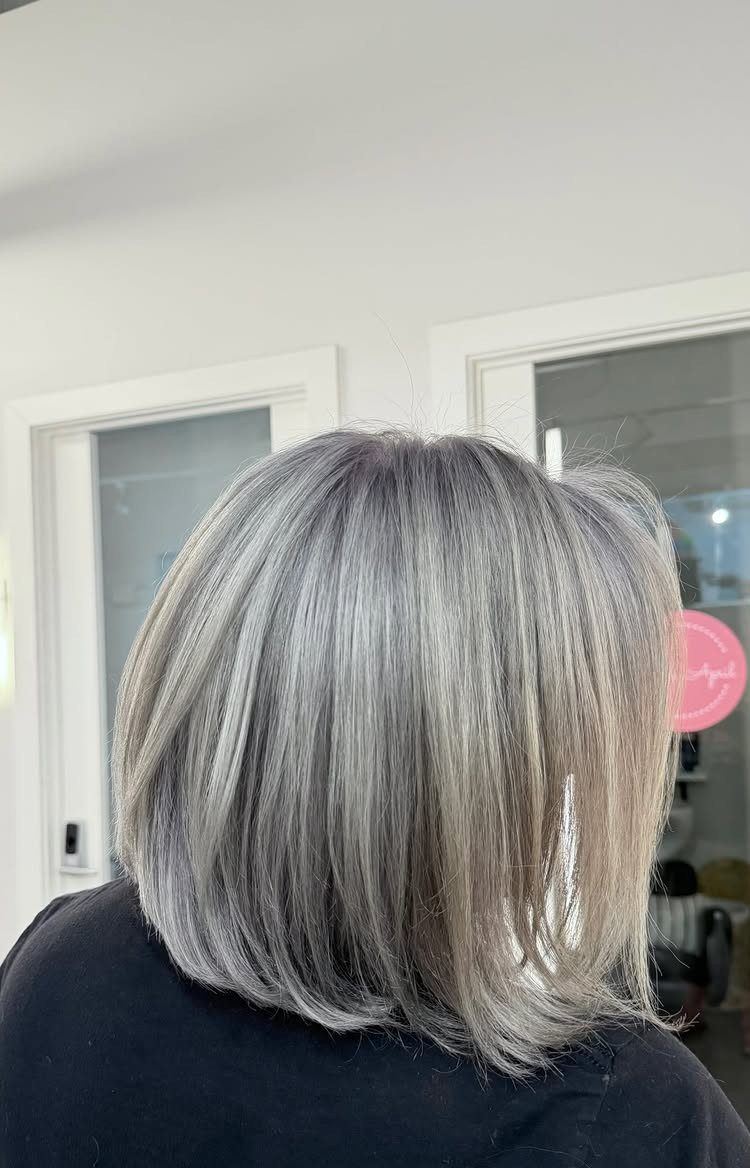
A chin-length bob blends silver-gray strands with darker hair for a short, textured look that feels modern without reading too stark.
The shorter length makes the blend easier to maintain, and because the silver sits throughout rather than just at the roots, it reads as finished color.
Ask for silver or ash gray balayage through a bob, placed where your natural gray is already coming in. The dimension keeps the cut from looking flat, and shorter hair means less time between trims to keep the shape sharp.
Maintenance and Hair Care
Book the next appointment before you leave the chair. One salon puts blends on an 8–10 week cycle, and some looks can run months apart.
Purple shampoo and conditioner keep gray bright and cut warm tones, so they earn a spot in the shower. Between appointments, a tinted conditioner that deposits color keeps the blend from fading out.
Add a moisture treatment on a regular schedule, plus a shine treatment to bring out the natural luminosity of the silver.
Consultation and Transition Planning
Go into the consultation with answers. Decide how much gray you want visible, and whether you’re aiming to end up mostly gray or just to make your color last longer.
Say whether you see yourself as a blonde or a brunette. Tell the stylist, too, if you’d rather ease in gradually and get used to the change, or make one big shift in a single sitting.
A base of dark dyed hair is the toughest place to start from. Box color or buildup may call for a preparation appointment first, and lightening several levels at once may not be easy or advisable.
A phased plan is usually the safer route. Before the first session, get a timeline and a maintenance schedule from your colorist.
Limitations and Trade-offs
Gray blending is not gentle on every head of hair. Lightening can cause damage or breakage, especially on dark hair, so ask your colorist how your strands will hold up.
It also costs. Highlights and foils add up, and silver tones are hard to hold, so expect refreshes.
Your gray won’t follow a pattern, and matching it is hard. Some people feel like they’ve landed right back where they started.
If you want full gray fast or no salon visits at all, I’d pick a different route. Blending pays off for people who want a gradual change and have a colorist skilled at it.
When grays look unnatural, it is often because there is a strong line of demarcation between old color and new growth or because the tone appears dull rather than reflective. “Gray blending requires thoughtful color placement,” says Swati Gupta of Bodycraft Salon.
— Vogue
Frequently Asked Questions
What is gray blending?
Instead of hiding every gray strand, blending adds color close to the gray so it reads as part of the style.
A colorist places highlights, lowlights or sheer gray tones so the silver sits among the rest of your hair, sometimes using extremely fine highlights that copy the way gray naturally scatters.
Because the new growth is already part of the mix, the root doesn’t turn into a hard line a few weeks later.
Can I gray blend my own hair?
I’d leave the color work to a colorist, because blending depends on where lighter and darker pieces are placed around your gray.
Hair darkened with box color, or coated in product, often needs a prep visit first, since lifting several levels in one sitting is rough on the strands.
Is balayage good for graying hair?
Yes, as long as the balayage stays within a step or two of your natural gray and the roots stay deep or natural.
With hand-painted strokes, new gray grows into the blend instead of stacking up as a line at the part.
Long hair shows the strokes best, so on shorter cuts I’d keep them thinner, and platinum versions need regular toning to stay cool.
What is the best hair color to transition to gray?
No one shade is right for everyone, but highlights mixed with lowlights are the option I’d pick for the easiest first stretch.
The lighter pieces pull some sections toward silver while the deeper ones add depth, so gray reads as part of the pattern.
For blondes, ash tones blend with silver where gold or honey fights it; for brunettes, ash lowlights 2–3 shades deeper than the base keep the brown from turning warm.