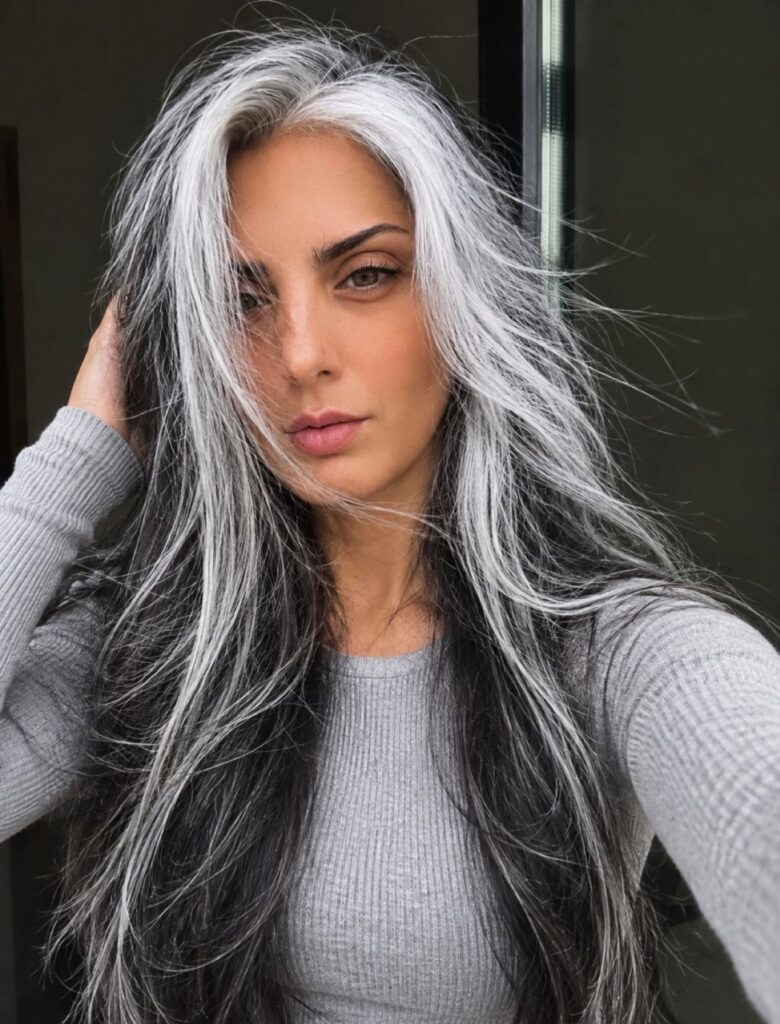
How much silver you already have decides which of these looks is yours.
If gray is coming in at the roots, a natural transition lets you stop coloring with no harsh line, and if your hair is still dark, silver-gray highlights woven in at different widths build the same mix.
The range runs from a short, textured pixie to long waves finished with an icy-silver toner, so length and curl pattern pick the cut while the gray you have picks the color plan.
1. Layered Bob
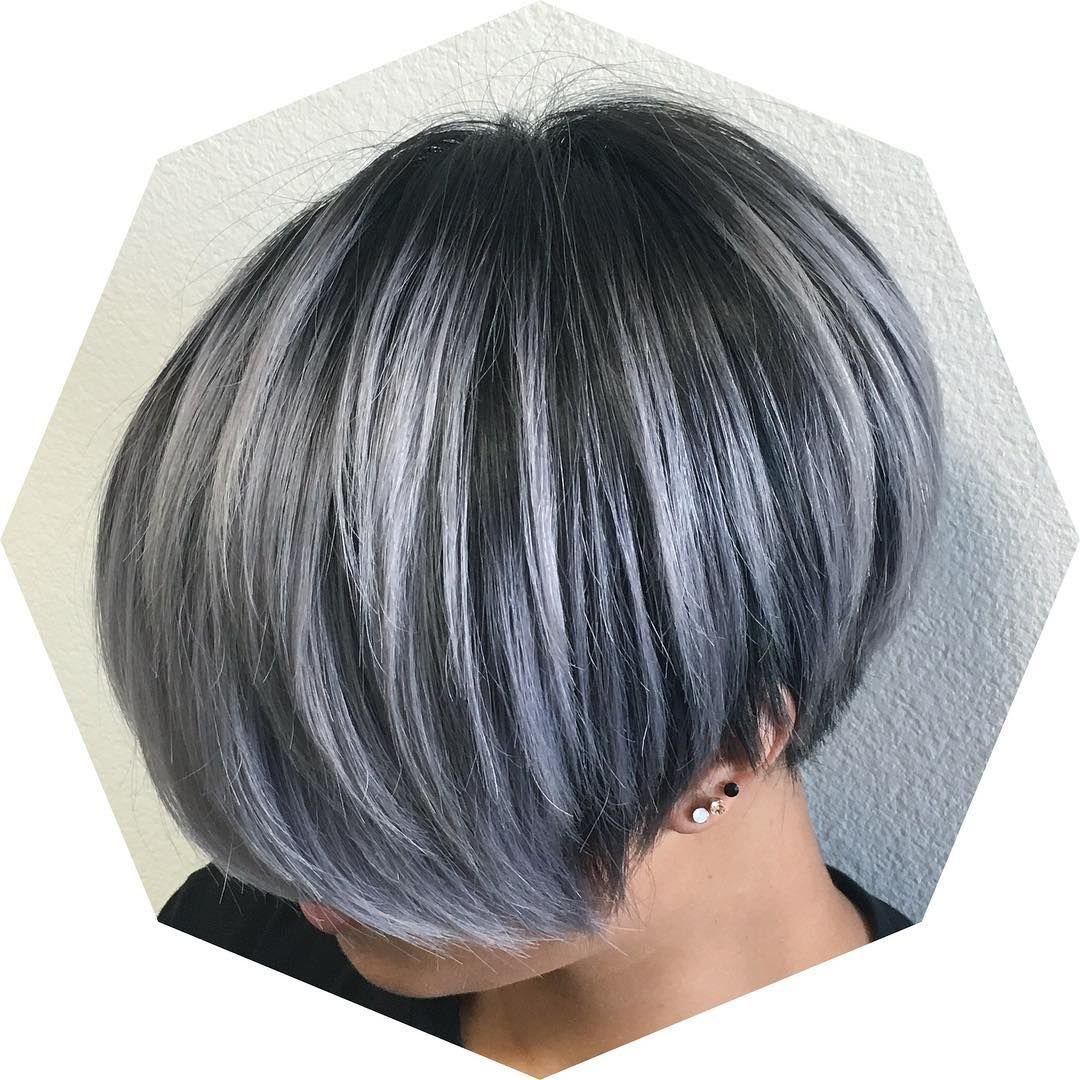
A layered bob suits salt and pepper hair because the layers give the dark and silver tones room to break up instead of sitting in one flat block.
Charcoal at the root with blended silver-gray running down the rest of the hair reads as dimension, and sweeping bangs soften the whole shape.
Ask your stylist for layers cut into the bob and a root that stays dark, blended softly instead of stopping at a sharp edge. I like this one for a polished cut that needs very little styling.
2. Rounded Bob
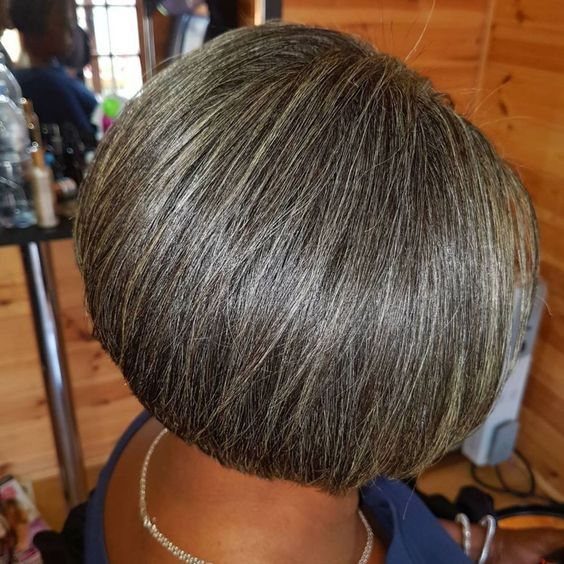
Short and rounded, this bob curves under at the nape, which makes it one of the tidier ways to wear mixed gray. Fine silver-gray highlights over dark roots keep the color soft, so regrowth never looks like a stripe.
Ask for a rounded shape with fine highlights, not chunky ones. The finer the silver, the more natural the salt-and-pepper effect, and that is the version I would pick.
3. Natural Curls with Face Streaks
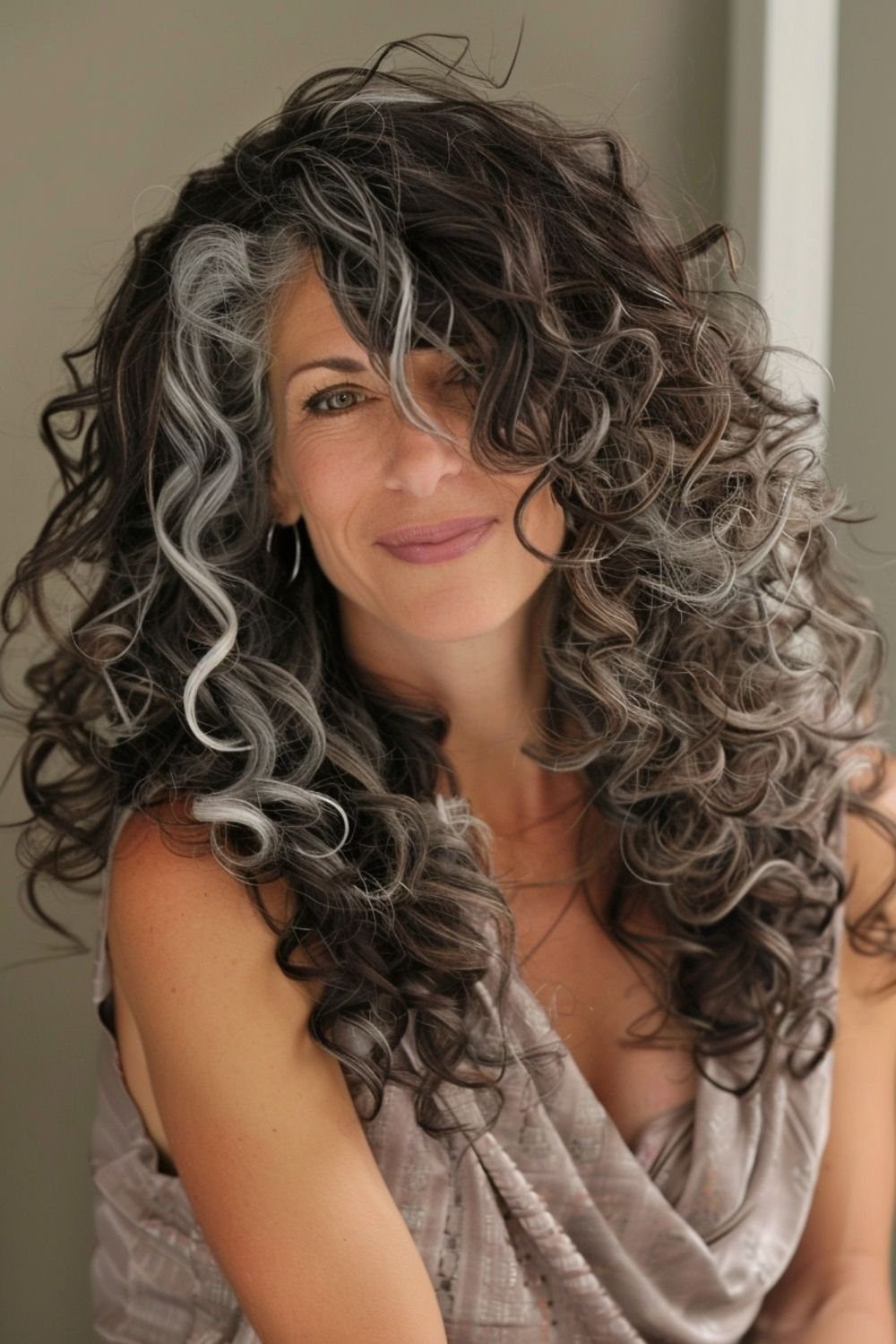
Long natural curls with silver-gray streaks framing the face put the brightest color exactly where the eye lands first. Dark curls around the streaks make the silver look deliberate, almost like jewelry.
To get this look, tell your stylist to concentrate the lightness in the front sections rather than scattering it down the length.
Curls tend to hide where color starts and stops, so the transition looks gentle without effort. I would keep the rest of the hair dark to protect that contrast.
4. Shoulder-length Waves
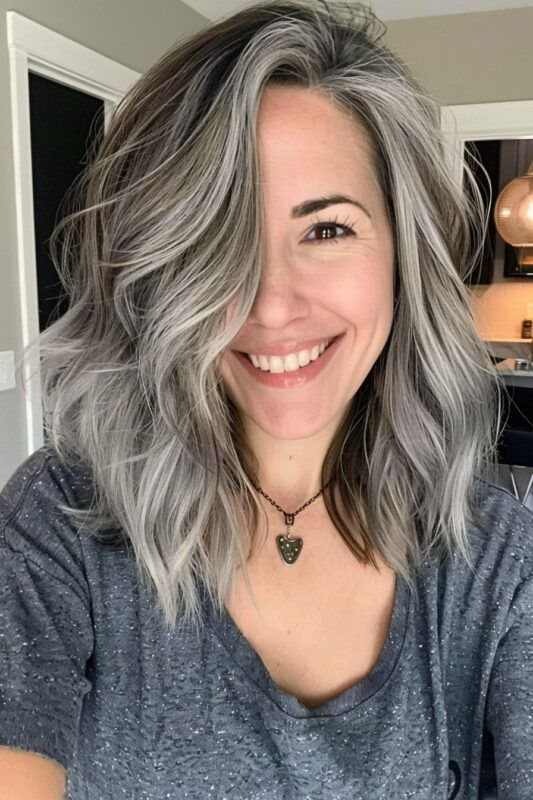
Waves at shoulder length show off the contrast between dark and silver-gray better than almost any other length. Each bend reflects light differently, so the 2 tones swap places as you move.
Ask for a length that just grazes the shoulders, and let the natural wave pattern do the work.
It is an easy cut to grow out, and I would choose it over a blunt style if you want the salt and pepper to look lived-in rather than styled.
5. Silver-gray Highlights

Dark hair with silver-gray highlights blended through is the way to get salt and pepper before the gray arrives on its own.
The highlights read as natural when they are woven in at different widths, not placed in even, matching strips.
Show your stylist photos with soft, uneven silver and ask for it to be blended into the dark base. I like this on long hair, where there is enough length for the 2 tones to mix.
6. Long Salt and Pepper

Silver-gray and dark strands mixed all the way through long hair give you the full salt-and-pepper effect, and length makes it more dramatic.
Layered waves help, since layers spread the 2 tones across the hair instead of stacking them in bands.
A few silver streaks framing the face brighten the look and are easy to request by name.
Long hair takes the longest to grow out, so I would plan on regular trims; dry ends are the first thing to dull the silver.
7. Silver-white Streaks

Bright silver-white strands against dark hair give the strongest contrast of any salt-and-pepper look, and long hair has the length to carry it. Keeping the face-framing pieces lightest draws the eye straight to the front.
Ask your stylist for streaks that vary in width, so they read as grown-in instead of striped. Dark hair around the white is what reads as a choice and not as an accident, so I’d keep everything else deep.
8. Natural Gray Transition

Darker lengths with silver-gray coming in at the roots make the most low-pressure way to go gray. Soft waves keep the grow-in looking planned, with no harsh line where the colors meet.
Ask your stylist to leave the roots alone and blend only where the 2 tones meet.
Regular trims keep the dark ends tidy while the silver gains ground. I like this one for anyone who wants to stop coloring without a dramatic change.
9. Shoulder-length Straight Hair
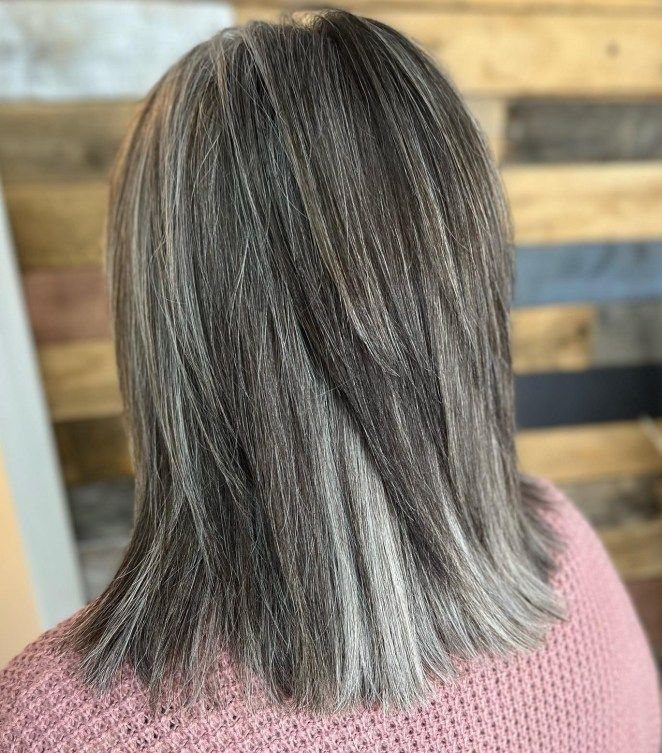
Straight hair at the shoulders lets dark and silver-gray strands lie side by side, so the mix is easy to read. Nothing competes with the color: no curl, no heavy layering, just the blend itself.
A blunt cut that lands right at the shoulder line, with no layers or tapering, is what to name at the salon.
Straight hair shows every strand, which is why I would keep the ends trimmed. It is a clean, simple choice if you want the salt and pepper to do all the talking.
10. Lavender-gray Highlights

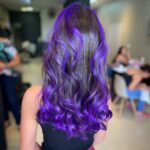
Lavender over gray is a softer way to play with color, and silver-gray hair is a ready canvas for it. White and gray tones sit between the lavender, so the purple reads as a tint instead of a bold block.
Show your stylist a photo and ask for lavender woven in as highlights, not painted all over.
Waves help here, since movement lets the 3 tones shift. I would keep the lavender near the face, where it frames the look best.
11. Pixie Cut

A textured pixie shows silver and dark tones in the same few inches of hair, which makes it a great fit for salt and pepper. Swept layers across the forehead let the darker strands peek through the silver.
Ask your stylist for choppy, textured layers on top rather than a smooth, uniform crop.
Texture breaks up the color so the mix looks natural. A short cut needs trims often to hold its shape, and I would accept that for how little styling it takes.
12. Curly Salt and Pepper
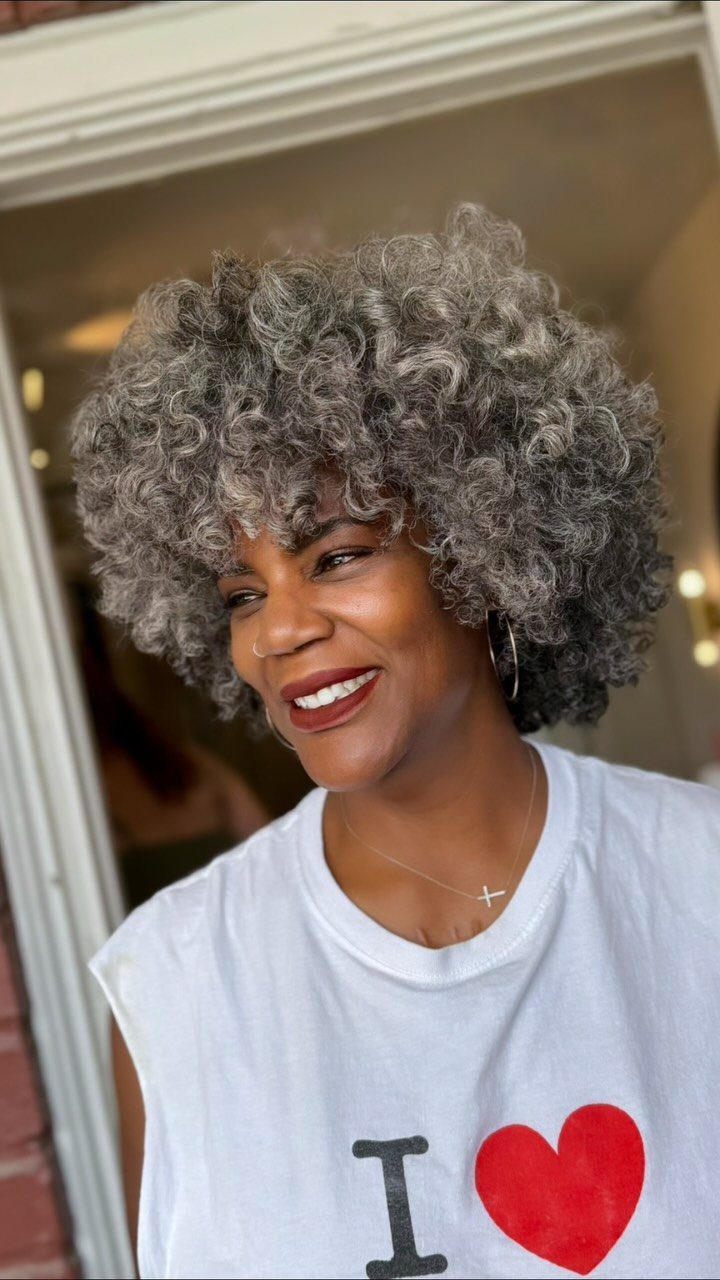
Dense natural curls or coils hold dark and silver-gray strands in tight clusters, so the salt and pepper looks full and lively. Every curl shows a slightly different mix.
Ask your stylist for a cut that shapes the curls without thinning them, since volume is what makes this look work.
Curls hide the line between dark and silver, which is why growing in gray is gentle here. I would pick this over straightening if your curl pattern is already strong.
13. Side-swept Fringe
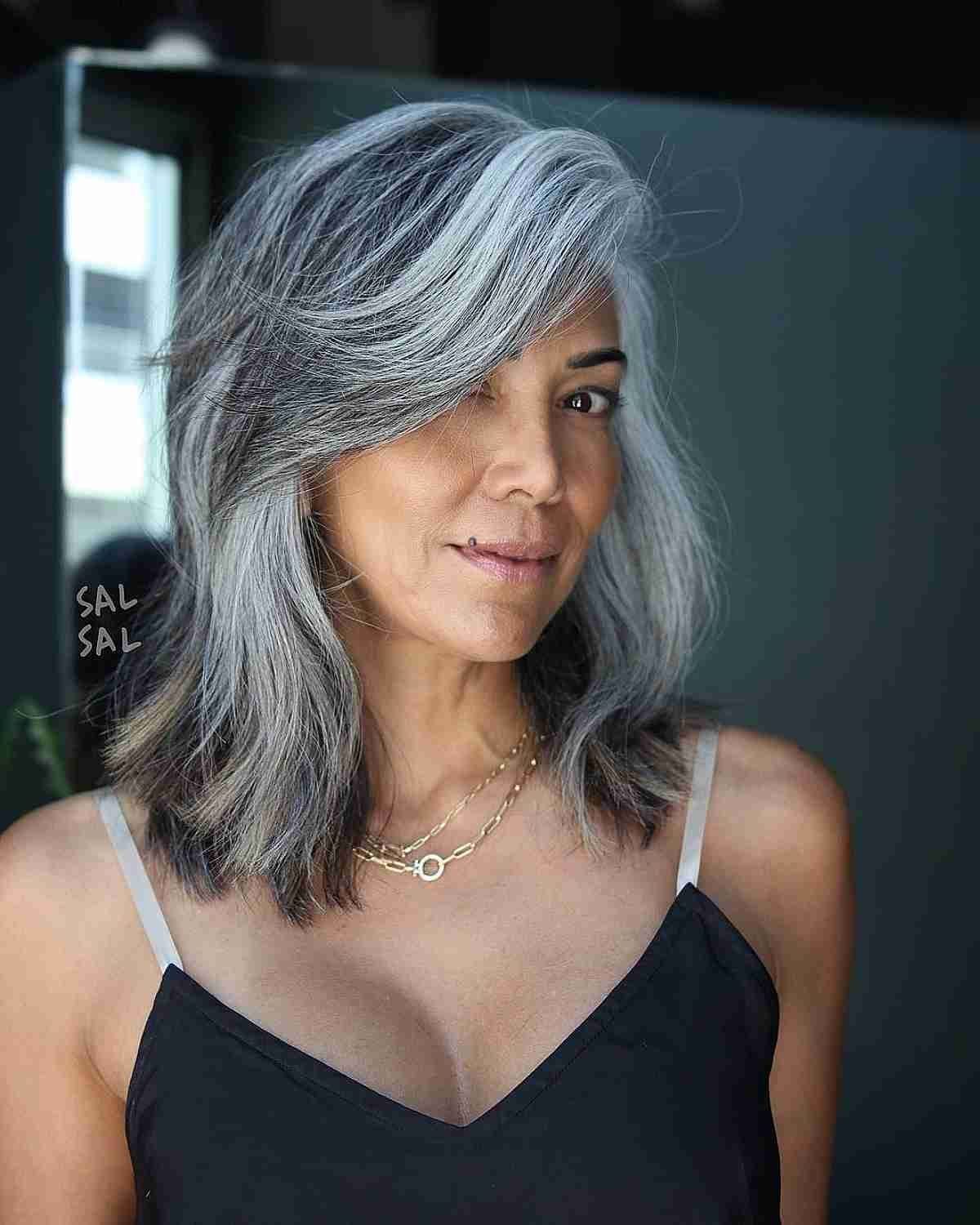
Swept to one side, long bangs sit well on a shoulder-length bob because the cut stays soft where the mixed gray meets the forehead. Salt and pepper reads best when nothing looks blunt.
Ask for bangs left long enough to sweep across, not cut straight.
Pair them with a bob that ends at the shoulder, and part the hair on the side the bangs fall toward. I would choose this over a straight-across bang for gray hair.
14. Feathered Layers
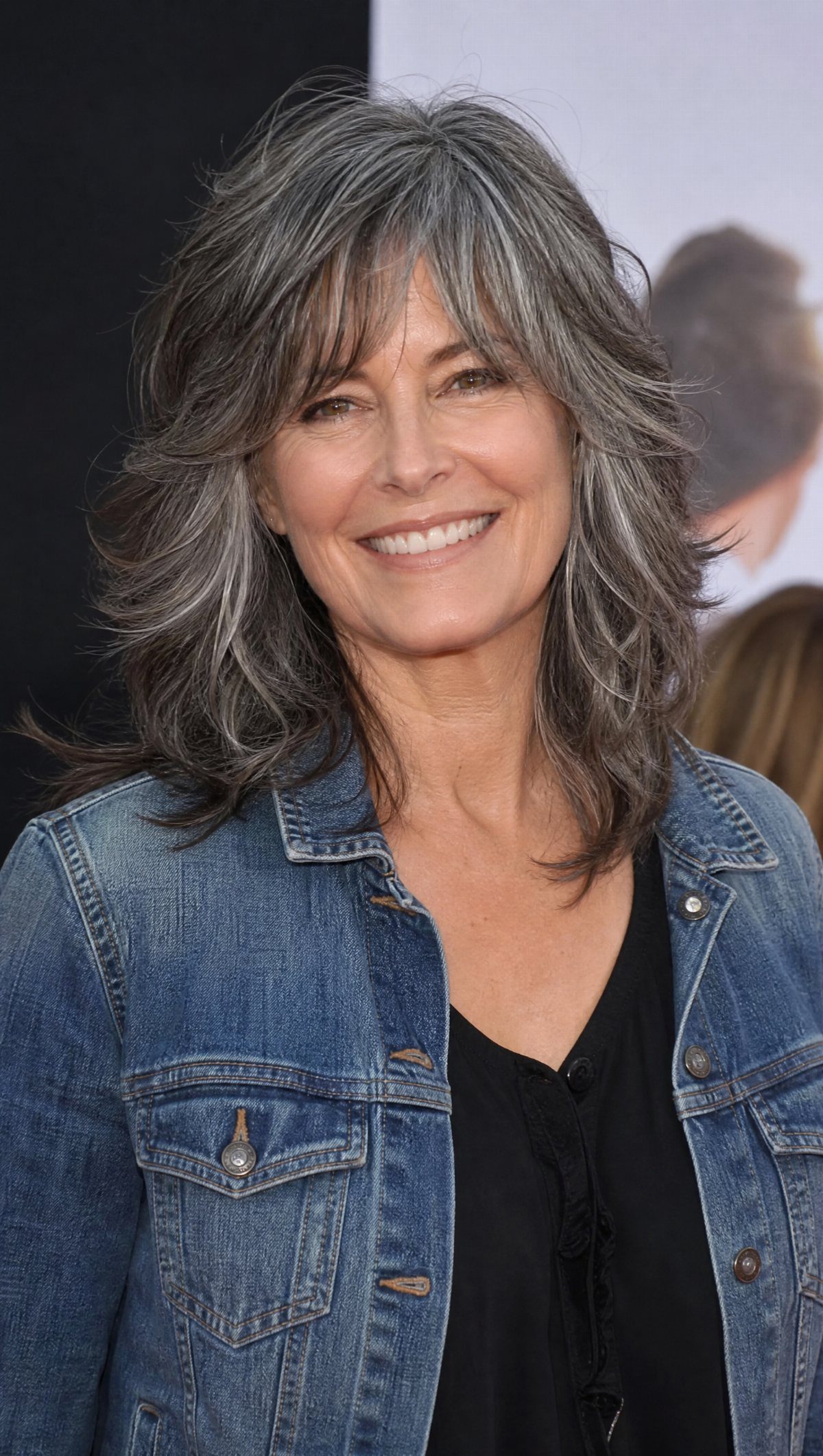
Feathering means the ends are cut to taper into wispy points, and on shoulder-length hair it makes dark and silver strands overlap softly at the bottom. That is what I like about it.
Name it at the salon as feathered layers at shoulder length, and ask for the ends to be softened, not chopped. A blow-dry with a round brush turns the ends under or out, depending on the day.
15. High Ponytail
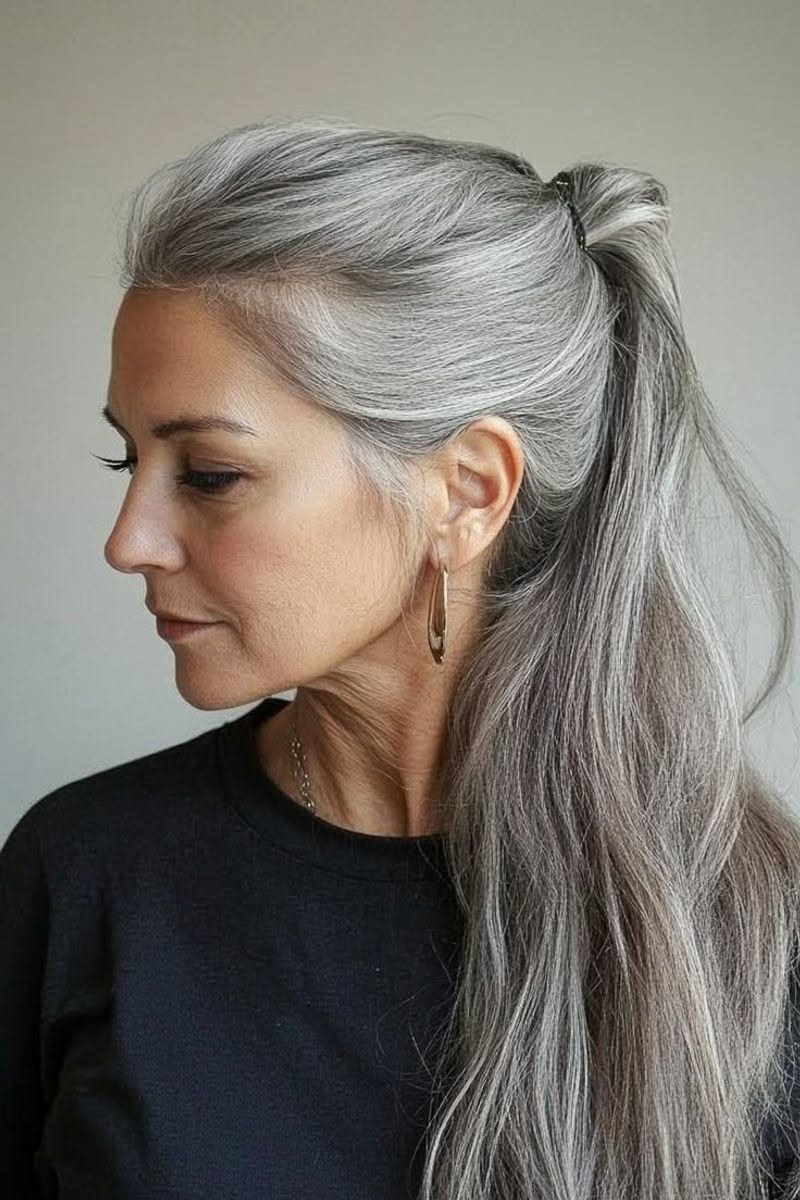
Pulled up to the crown, long straight silver-gray hair becomes a clean, fast style that needs no cut at all. Gather it high, smooth the top with a brush, and secure it with a snug elastic.
Straight hair shows the silver in one smooth sweep, so I would skip heavy product and keep the finish sleek. Pulling everything back also puts the hairline on display, which suits a full head of natural gray.
16. Long Silver Waves
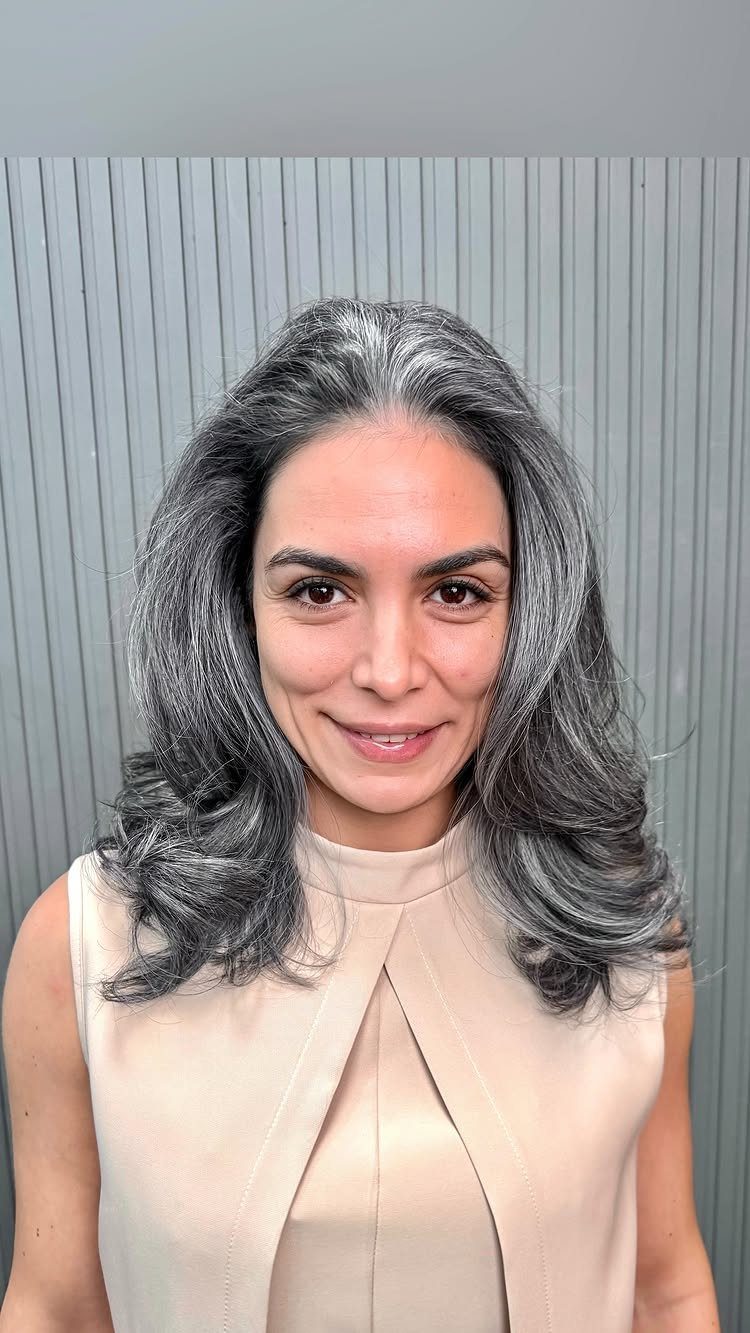
An icy-silver toner finished this look, according to the colorist who made it. A toner is the step that keeps the silver cool and bright against the dark.
Ask for long, soft waves with the lightest pieces around the face, then request that toner by name.
Waves add volume and let the 2 tones move together. I would pick this over a flat blowout if you want the silver to look intentional.
17. Salt-and-pepper Bun
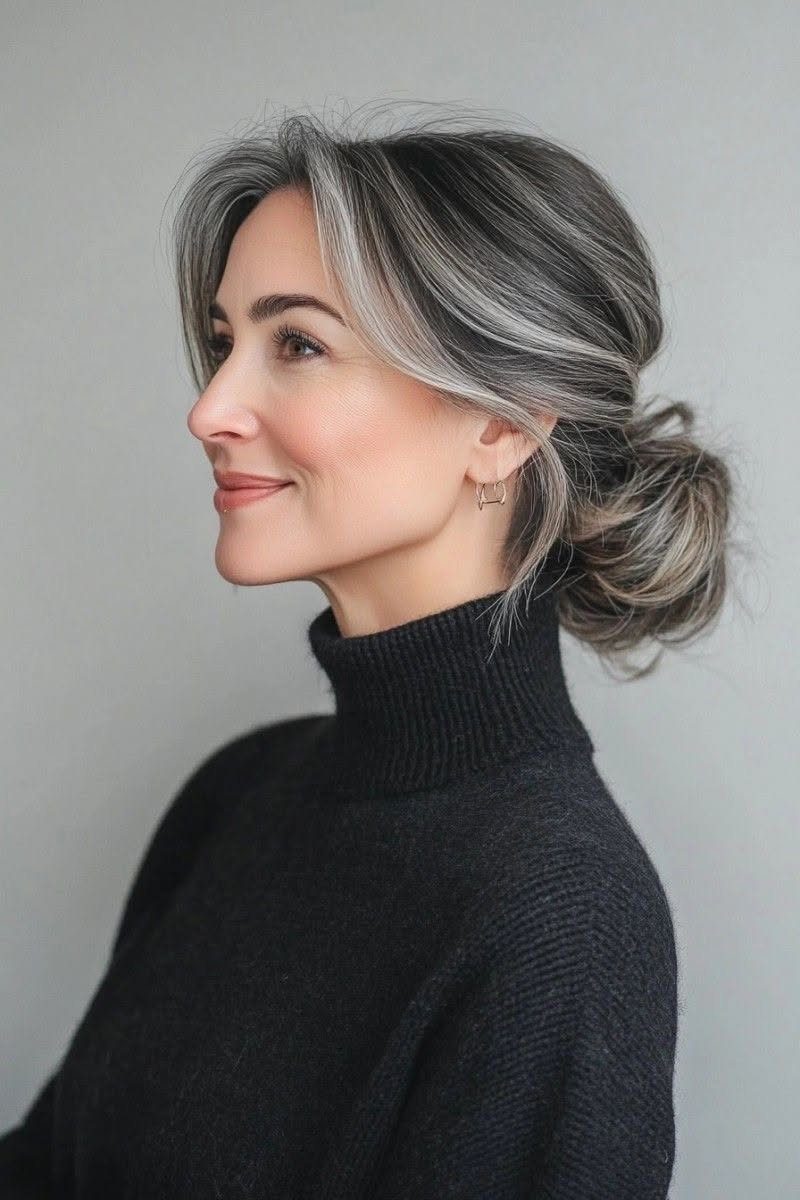
Low and loose, a bun at the nape lets the silver streaks show through the dark without any fuss. Twist the hair at the back, pin it just above the neckline, and pull a few strands free for softness.
A tight bun hides the mix; a relaxed one shows it. This is my pick for long salt and pepper on mornings when there is no time to style.
18. Salt-and-pepper Braids
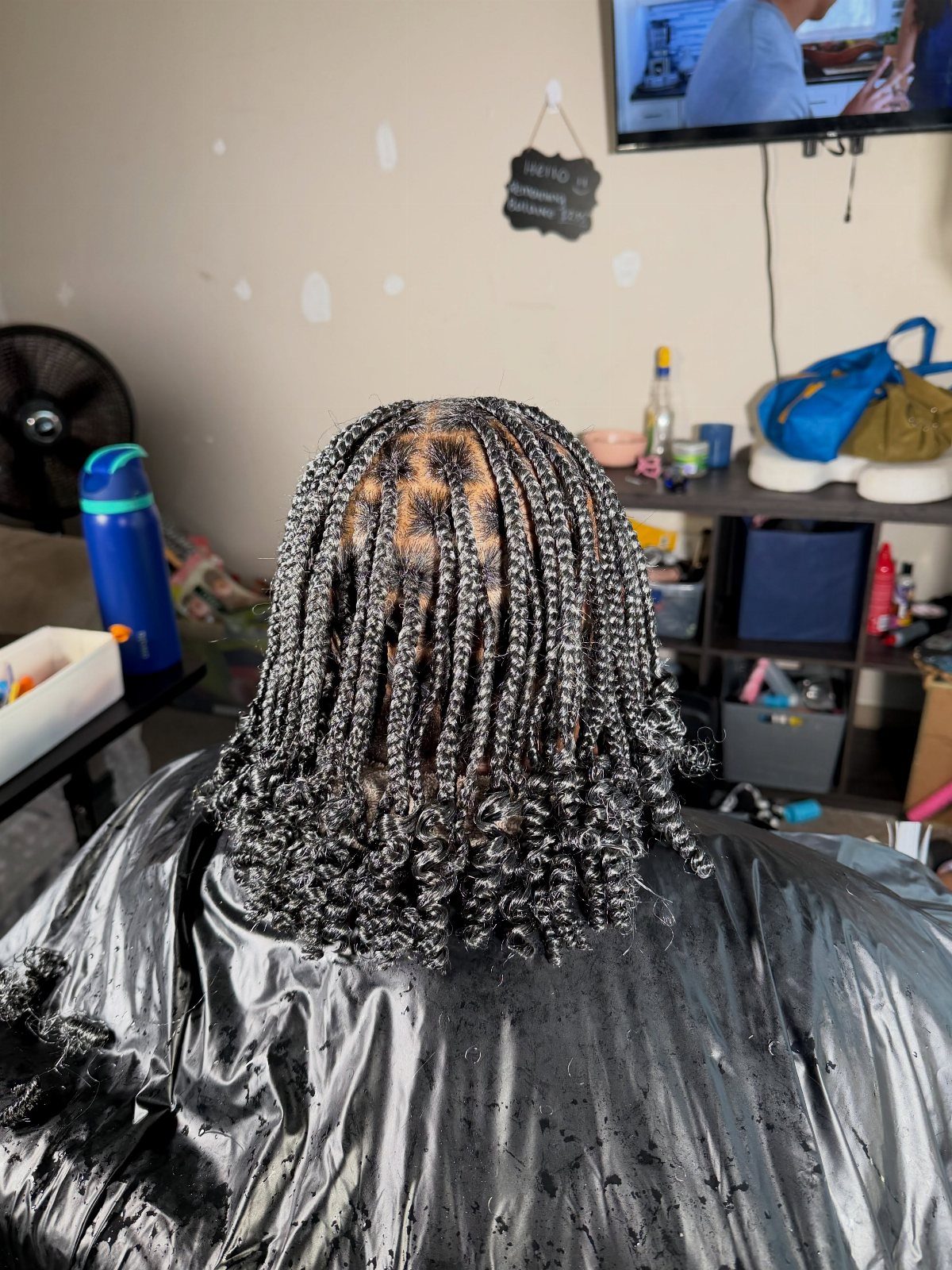
Black braids woven with silver-gray make the mix visible in every plait, and curly ends left free keep the finish soft. Tell your braider you want gray and dark blended through the braids, not split into separate sections.
Bring a photo, since the placement of the silver decides how natural it looks. I like the loose curled ends here; they add texture where a blunt tip would stop the eye short.
19. Salt-and-pepper Updo
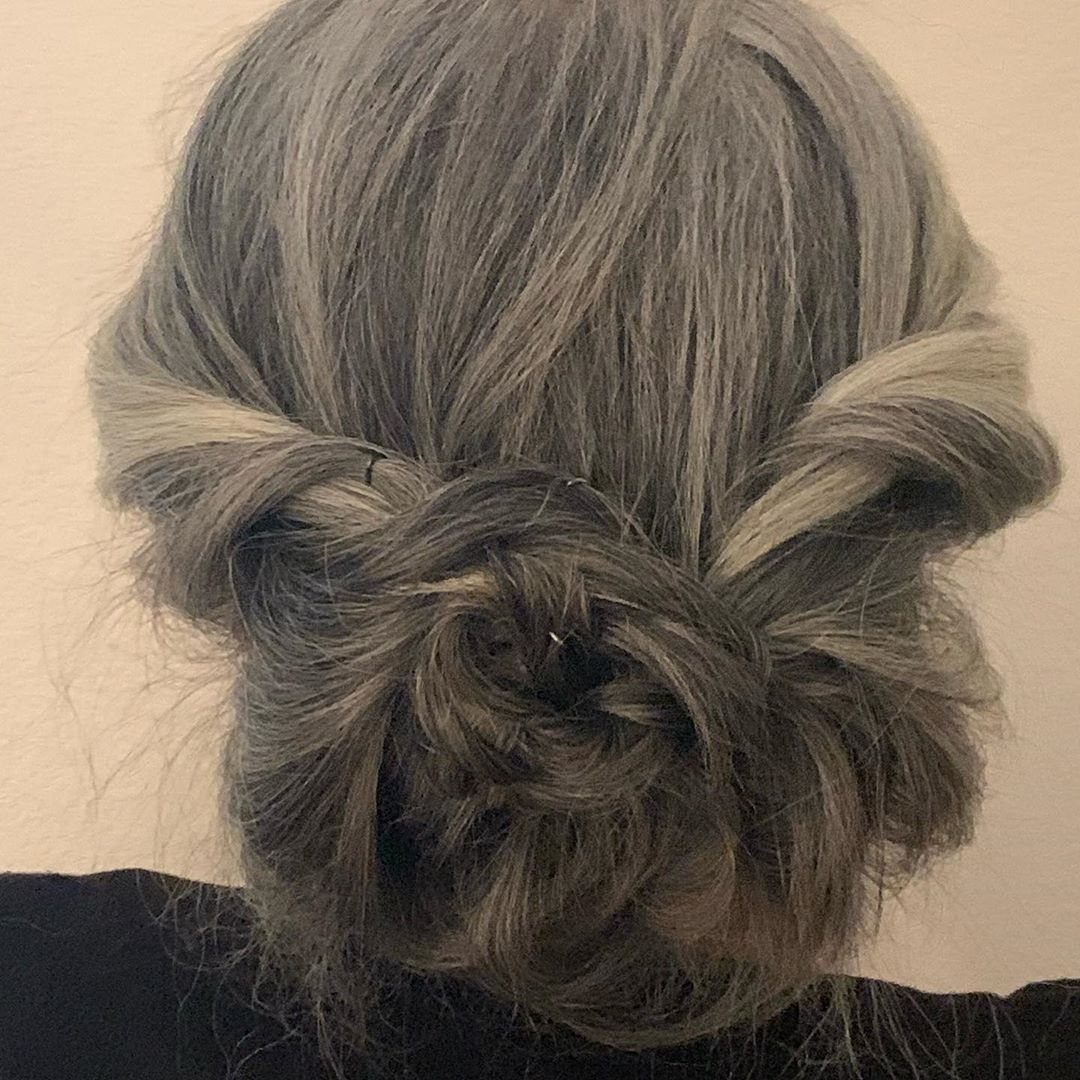
A loose braided updo, worn low and textured, keeps the gray-and-dark mix visible from the back, where the braid lines carry both tones in every twist. Soft texture matters more than polish here.
Ask your stylist for a braided updo with pieces left slightly loose, since a pulled-tight version flattens the contrast.
Pin it low so the shape sits near the nape, and let the braid do the blending. I would pick this over a sleek knot for any day you want the salt and pepper to show.
Frequently Asked Questions
How to look good with salt and pepper hair?
Keep the contrast between the dark and silver strands, and blend them softly so there is no hard line where one stops. Thin silver-gray highlights laid over dark roots blend best, and chunky ribbons look harsher to my eye.
Layers, waves or curls help because texture breaks up the color. Dry ends dull silver faster than anything else, so keep trims on a regular schedule.
Can you color salt and pepper hair?
Yes. Mixing thin and medium silver-gray ribbons into the dark base keeps the result natural, and lavender placed near the face shows up as a soft wash, since white and gray strands break up the purple.
Ask your colorist for an icy-silver toner by name; it holds the silver cool and bright next to the dark. For a color-free route, leave the roots untouched and soften only the line where dark meets silver.