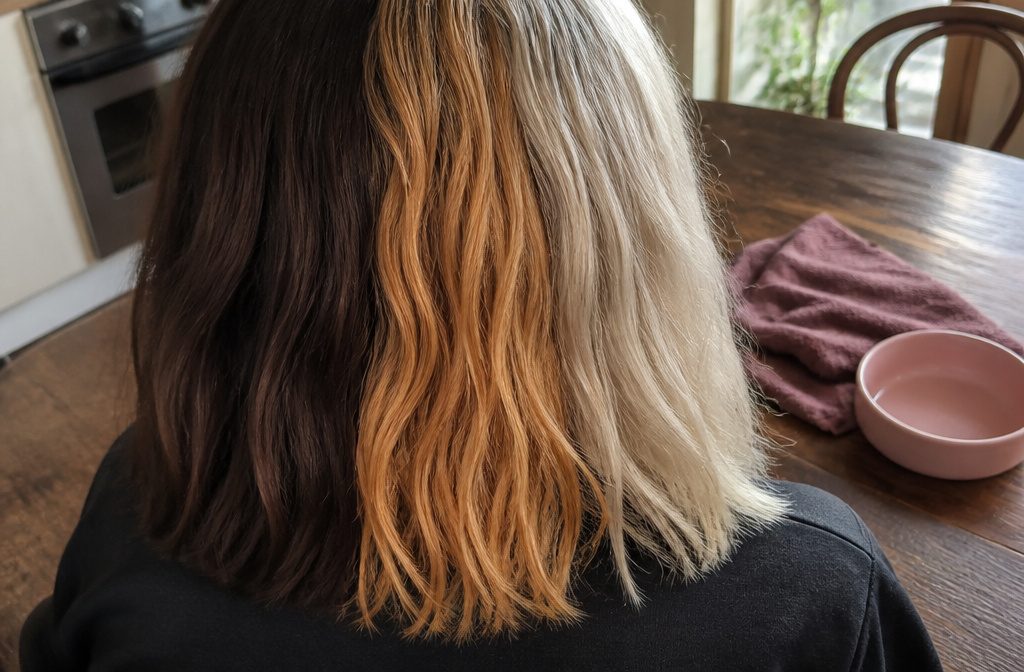
Brown hair reaches pale blonde with a 30 Vol first pass, a separate round for the roots, then toner, checking every 15–20 minutes.
Darker hair may need more than one session, and each costs strength. Toning is where it goes wrong: orange strands haven’t lifted far enough to take a cool toner.
1. What Bleach Does to Hair
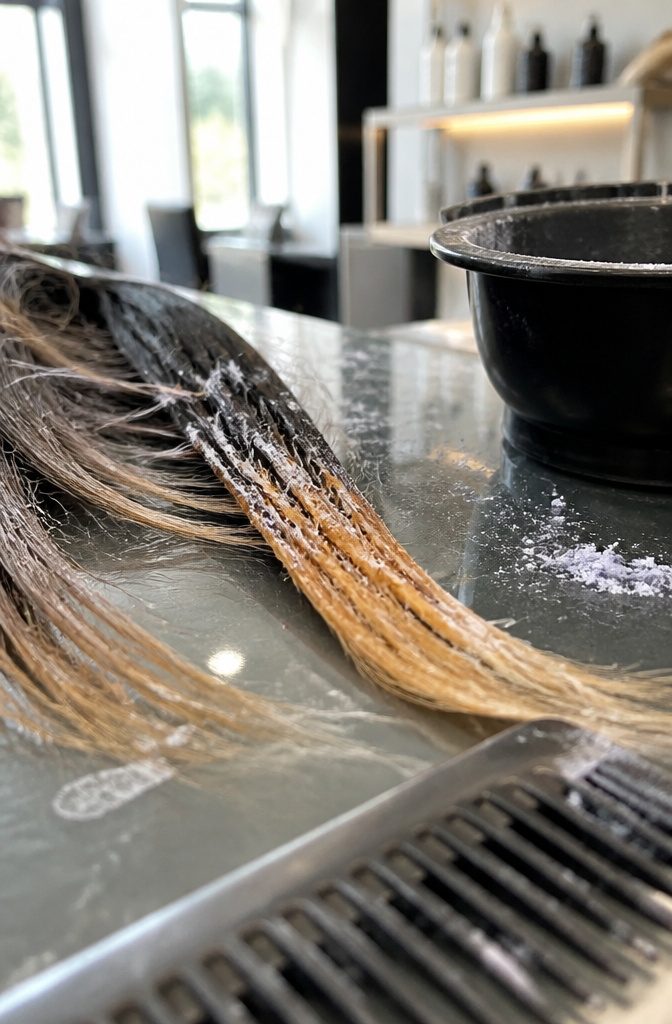
Bleach works in two stages. Alkalizing agents open the hair’s cuticle, letting oxidizers slip inside the shaft and break down melanin, the pigment molecule that gives hair its color.
Eumelanin drives black and brown shades, pheomelanin drives red, and what remains after a round of bleach determines the undercoat you see: often orange or brassy, depending on which pigments oxidize first and which hang on longest.
The chemistry does more than strip color. Bleaching breaks fifteen to twenty percent of the hair’s internal protein bands, the disulfide bonds that hold each strand together and give it strength.
When those bonds collapse, the cuticle lifts, the surface roughens, and the hair can’t hold moisture the way it used to. That shows up as dryness, brittleness and breakage.
Strength matters when choosing your formula.
Lightener can take black strands to brown. Powder bleach pushes black hair to light brown, but the added lift comes with added cost to the structure.
2. What Changes the Lift
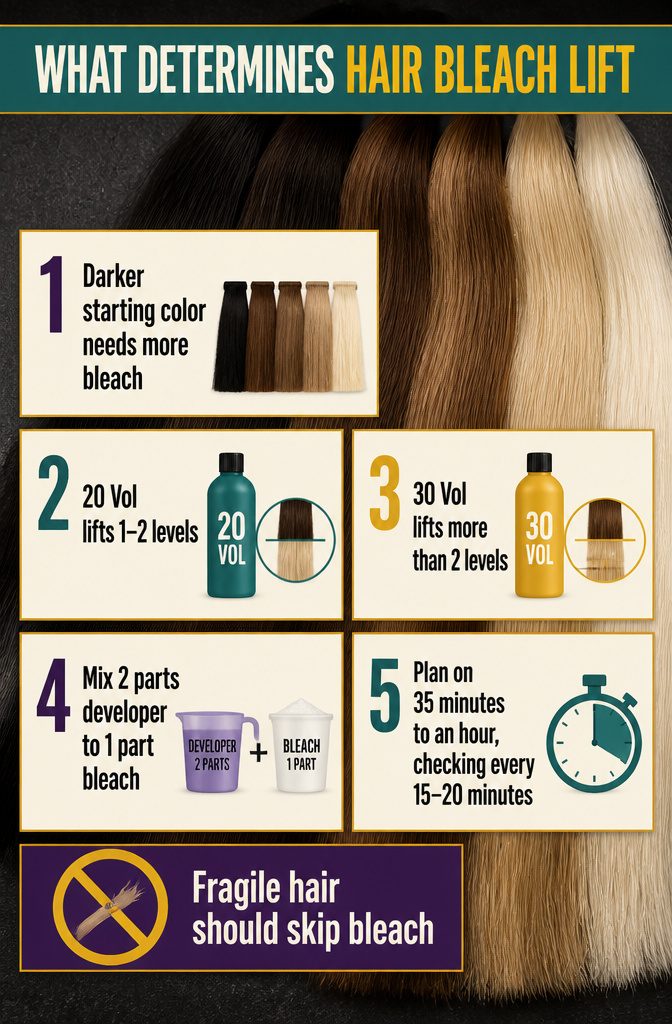
Starting color sets the workload: the darker the hair, the more bleach it takes, and each added session adds damage.
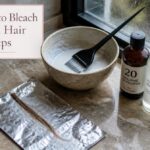
Use 20 Vol to lift 1–2 levels and 30 Vol to lift more than 2, mixed 2 parts developer to 1 part bleach. No fixed processing time exists, so I’d start where the hair is darkest and let it lift at least 10 minutes.
Plan on 35 minutes to an hour, checking every 15–20 minutes. Hair that is already fragile should skip bleach.
Dark hair may need more than one session, and the gap is your call: 14 days minimum, about six weeks, or eight to 10 weeks. Longer gaps give strands more time to recover.
3. Lift and Tone to Your Shade
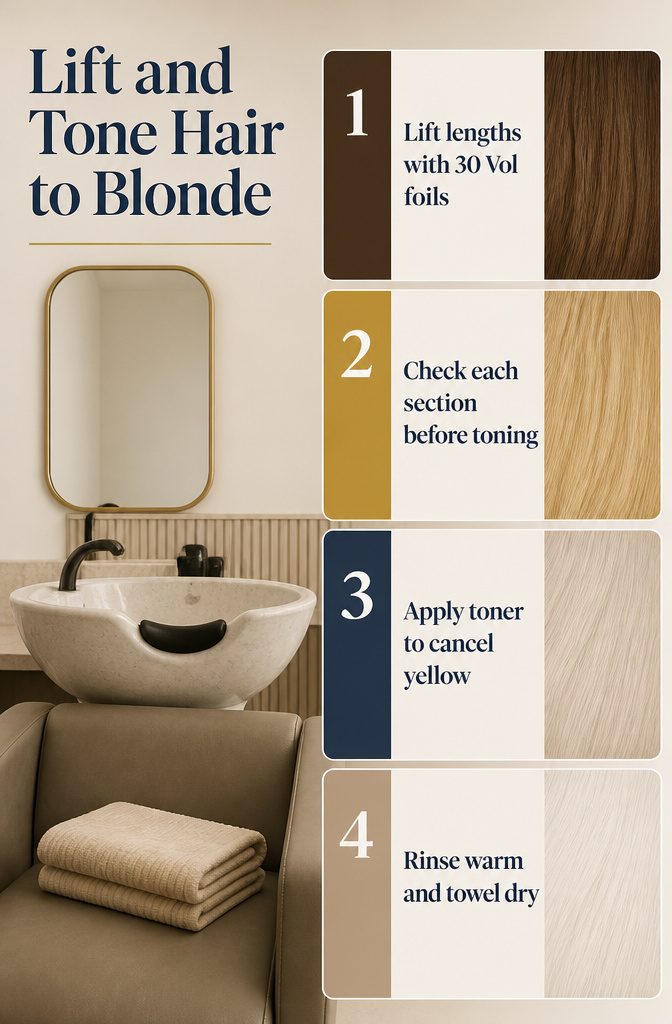
- Lift the hair to the level your target shade needs. Starting from brown (level 5), the first pass uses 30 Vol developer with foils on the mid-lengths and ends. The foils hold heat in, and 30 Vol gets serious lift. Check at 20 minutes. If yellow remains, rinse, then reapply fresh bleach with 20 Vol. Once the lengths reach a pale blonde, rinse and do the roots separately with 20 Vol. Roots process faster, so saving them for last keeps you in control.
- Assess each section before toning. White blonde needs a consistent level 10 lift across roots, mid-lengths and ends. Orange hair has not lifted enough to take a cool toner. Pale yellow is where you want to land before toning to a cooler blonde.
- Apply toner to cancel remaining yellow. Redken Shades EQ 09V, 09P or 09T work for cooler tones; Wella T-18 delivers an icy, ultra-pale finish. Violet and ash toners pull yellow out. A few minutes softens brassiness. Leaving toner on for up to 20 minutes deposits a more silvery result.
- Rinse with warm water and towel dry. Toner fades over time, so you can reapply when the yellow creeps back in.
4. Care for Bleached Hair
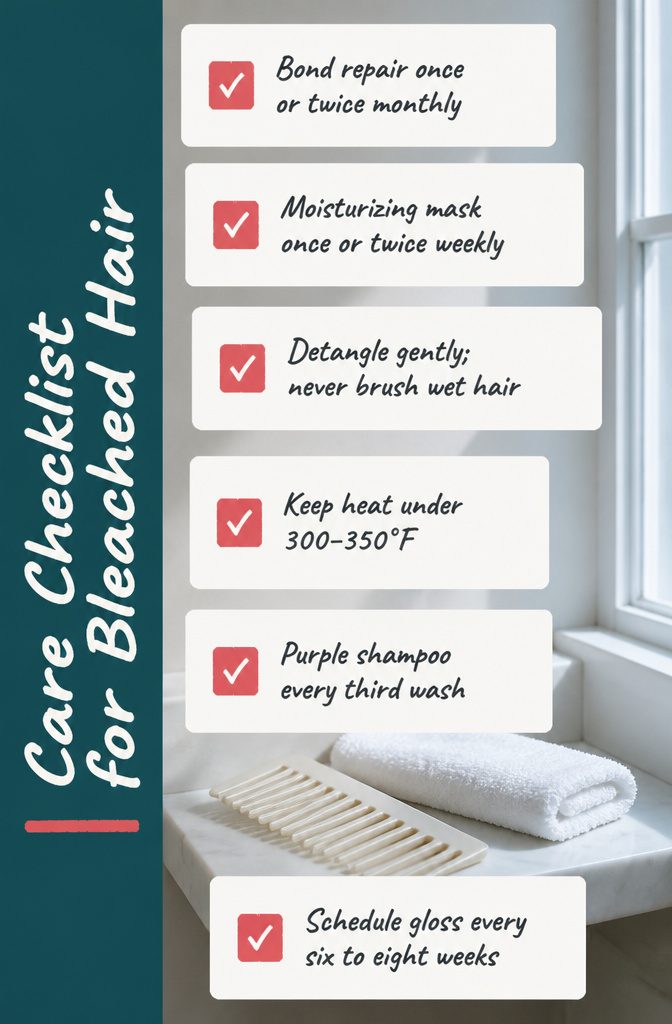
Bleached hair shows damage in a few telltale ways: roughness when you run your fingers through it, dullness where shine used to sit, tangling that wasn’t there before, reduced elasticity (strands that snap rather than stretch), breakage, frizz that won’t settle, and scalp irritation.
The damage can’t be fully reversed, but targeted products improve both look and strength.
Here’s what keeps bleached hair intact:
- Bond repair treatments once or twice a month. Olaplex No. 2 weekly if your hair feels fragile, monthly if it’s holding up well. L’Oréal EverPure pre-shampoo treatment two to three times a week also rebuilds structure. Living Proof Triple Bond Complex is another option.
- A moisturizing mask once or twice a week to counter the dryness bleach leaves behind.
- Gentle detangling with a wide-tooth comb or pick. Never brush wet hair.
- Heat settings under 300–350°F when you style, and a heat protectant before every session. Oribe Supershine and Sutra protect up to 450°F.
- Purple shampoo every third wash to cancel yellow tones without overcorrecting to silver.
Scheduling a hair gloss every six to eight weeks is a great way to maintain the tone of your blonde and add shine and reflection back into the hair.
— Allure
Gloss refreshes the color between bleach sessions and keeps the finish polished.
You’ll see smoother, stronger hair after a few weeks of consistent care. Full restoration of softness and strength can take weeks or even months depending on how compromised the hair was to begin with.
Salon or Home Bleaching
Salon or Home Bleaching
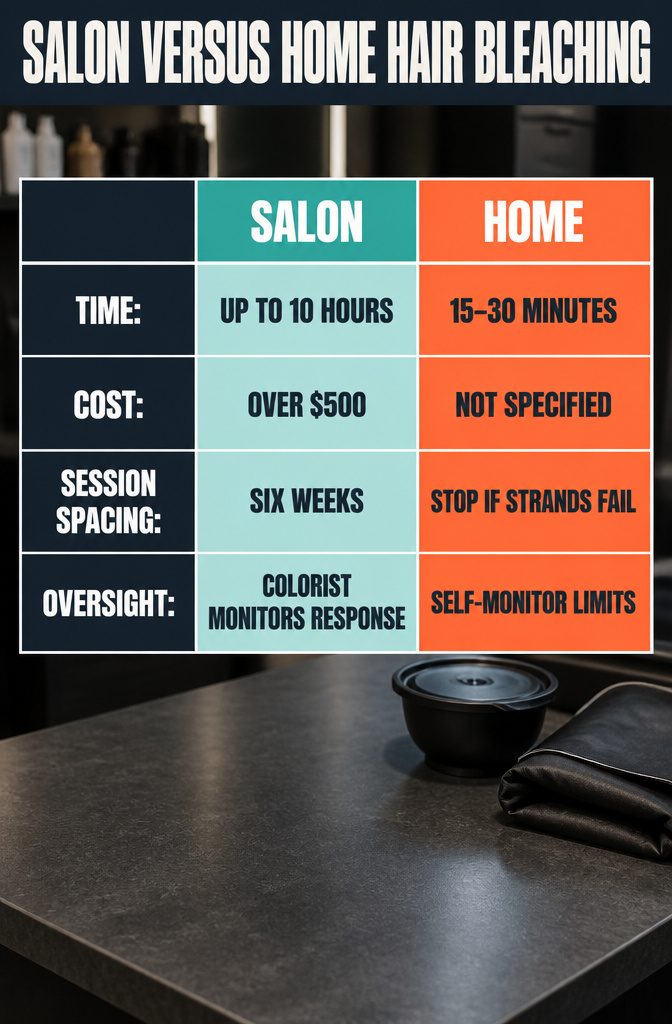
For a drastic shift or on-scalp lightening, a professional avoids the mistakes that wreck fragile hair. Brunette to blonde can mean 10 hours of processing and upwards of $500, sometimes across multiple sessions.
Recently relaxed or permed hair should not be bleached, and extremely damaged strands are a poor candidate no matter who applies it. The strand test before you commit tells you whether your hair can handle the lift.
At home, the process breaks into five stages under a shower cap for 15 to 30 minutes. If bleach hits your eyes, rinse with water for at least 15 minutes and get medical help.
I favor the salon for major changes: the cost stings, but a colorist spaces sessions six weeks apart and reads how your hair responds between them.
Home bleaching works when you know your hair’s limits and can stop mid-process if the strand starts to fail.
Root Touch-Ups
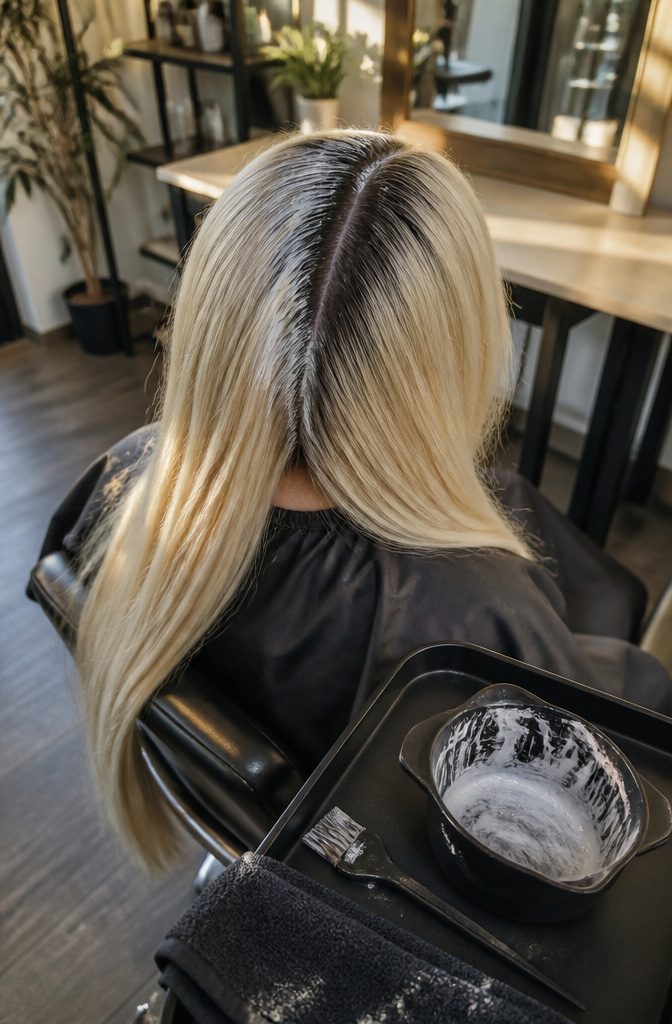
Bleached roots need a touch-up every 4–6 weeks.
Go sooner and the new bleach overlaps hair that is already lightened, which can lead to breakage. Wait longer and the lift turns uneven, with a visible band between old and new growth.
Keep fresh bleach on the new growth only. Pulling it down over lengths that are already light puts too much stress on them, and I would treat that as a hard rule.
Long hair adds a sequencing question.
Mid-lengths often sit at a different level than the roots, so they get bleach first, then the roots and ends. Ends that are already light may need only toner.
Frequently Asked Questions
How do you get hair white, and can it be done in one sitting?
Lift the hair to a consistent level 10 from roots to ends, then tone away the leftover yellow.
Pale yellow is the right place to stop before toning; orange hair needs more lift first. Dark hair often needs more than one session, spaced at least 14 days apart, so a single sitting is unlikely from a dark start.
What color does hair turn after bleaching?
Usually orange or brassy at first.
The melanin left after a round of bleach sets the undercoat you see. Violet and ash toners pull out yellow, but orange hair has not lifted enough to take a cool toner.
What does bleach do to hair?
Alkalizing agents open the cuticle so oxidizers can break down the melanin inside the strand.
The process also breaks 15–20 percent of the hair’s internal protein bands. That leaves hair rough, dry and brittle, with a higher risk of breakage, frizz and scalp irritation.
Can you bleach hair without damaging it?
Not completely.
Some bond damage comes with any lift, and it can’t be fully reversed. You can limit it by bleaching only healthy hair, leaving at least 14 days between sessions, and keeping fresh bleach on new growth only at touch-ups.
Is it safe to bleach colored hair?
It depends on the condition of the hair, not the color on it.
Bleach weakens strands, so fragile or very damaged hair should skip it. Do a strand test first to see whether your hair can handle the lift.
Can all hair types go white blonde?
Hair type is not the barrier; condition is.
Recently relaxed or permed hair should not be bleached, and extremely damaged strands are a poor candidate. A strand test shows whether your hair can take the lift.
Can I make my hair white without bleach?
Only if your hair is already level 6 or higher.
In that case, high-lift color with 30 Vol developer may lift it enough. Darker starting points, such as brown at level 5, need bleach.
How do you go from brunette to blonde, and what should you expect?
Start with a consultation with an experienced colorist about your expectations.
Expect up to 10 hours of processing and upwards of $500, sometimes spread across multiple sessions. Rushing the process risks severe damage.
How do you maintain blonde hair at home?
Use purple shampoo every third wash to cancel yellow tones, and stretch the time between washes when you can.
Keep styling heat under 300–350°F and apply a heat protectant every time. A moisturizing mask once or twice a week helps with the dryness bleach leaves behind.
What are the best hair care products for bleached hair?
Add a moisturizing mask, a purple shampoo for yellow tones, and a heat protectant such as Oribe Supershine or Sutra, which protect up to 450°F.
How long does it take to repair bleached hair?
You may see smoother, stronger hair after a few weeks of consistent care. Full restoration of softness and strength can take weeks or even months, depending on how compromised the hair was to begin with.
What ingredients rebuild hair bonds?
Citric acid, amino acids and peptides help rebuild and reinforce weakened bonds.
Ceramides and hyaluronic acid seal and hydrate the cuticle. L’Oréal EverPure Bond Strengthening Pre-Shampoo Treatment is one product that contains them.