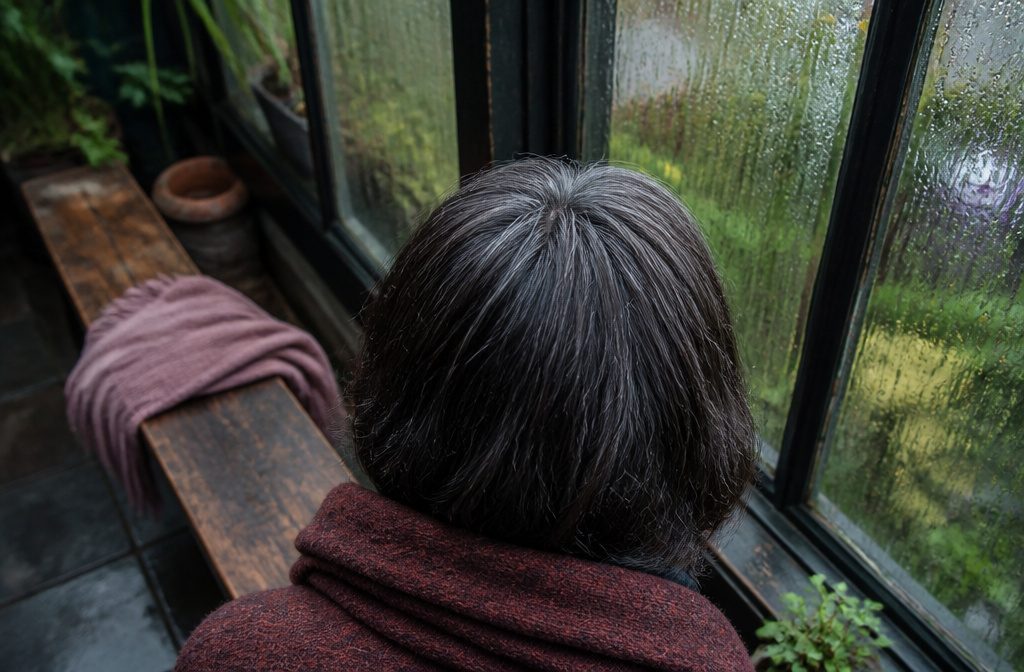
Early gray is hair that loses its color ahead of schedule for your ancestry: before 20 in people of European descent, 25 in Asians, 30 in Africans.
Genes drive most cases, so family history says more than any supplement. A B12 or thyroid problem is the exception, and fixing it can restore color in new growth.
What Counts as Premature Graying
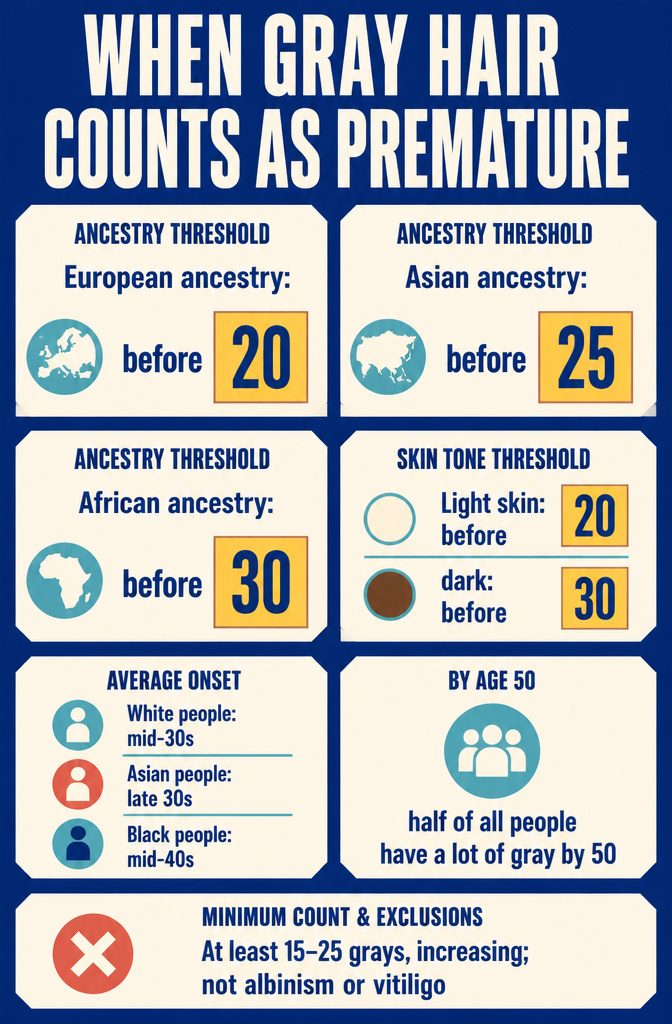
No single age defines premature gray hair, because the cutoff shifts with ancestry. Gray counts as early if it shows up before 20 in people of European descent, before 25 in Asians and before 30 in Africans.
The skin-tone version is simpler: before 20 with light skin, before 30 with dark skin. Those lines sit well ahead of the averages.
White people typically start going gray in their mid-30s, Asian people in their late 30s and Black people in their mid-40s, and half of all people have a lot of gray by 50.
One more screen separates true premature graying from a stray strand: at least 15–25 gray hairs that keep increasing. Color loss from albinism or vitiligo is a different condition and doesn’t count.
How Hair Gets Its Color
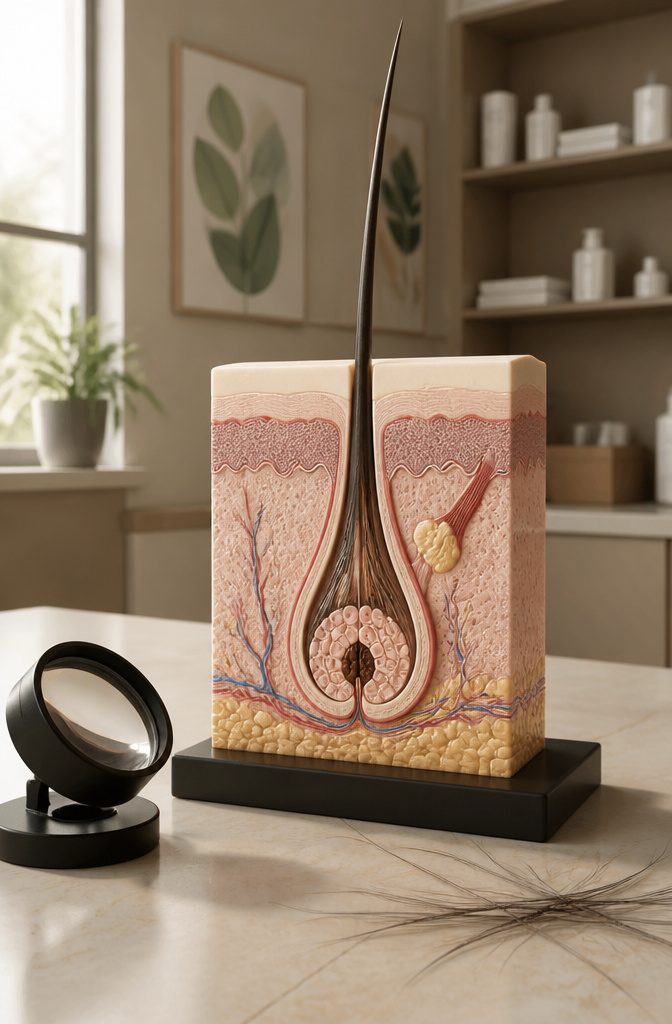
Pigment starts in the follicle, where melanocytes make melanin and hand it to the keratinocytes that build the hair. Each pigment unit in the bulb pairs 1 melanocyte with 5 keratinocytes.
Anagen, the growth phase, lasts 3–5 years, and hair lengthens about 1 cm (roughly 0.4 inch) per month. Pigment gets rebuilt with every new cycle, and that supply has a limit.
After 7-15 cycles, the melanin stops regrowing, which leads to your hair losing its color.
When the cycles run out, or the pigment cells slow down or are lost early, the next hair comes in gray or white. Hair already grown keeps its color.
What Causes Early Graying
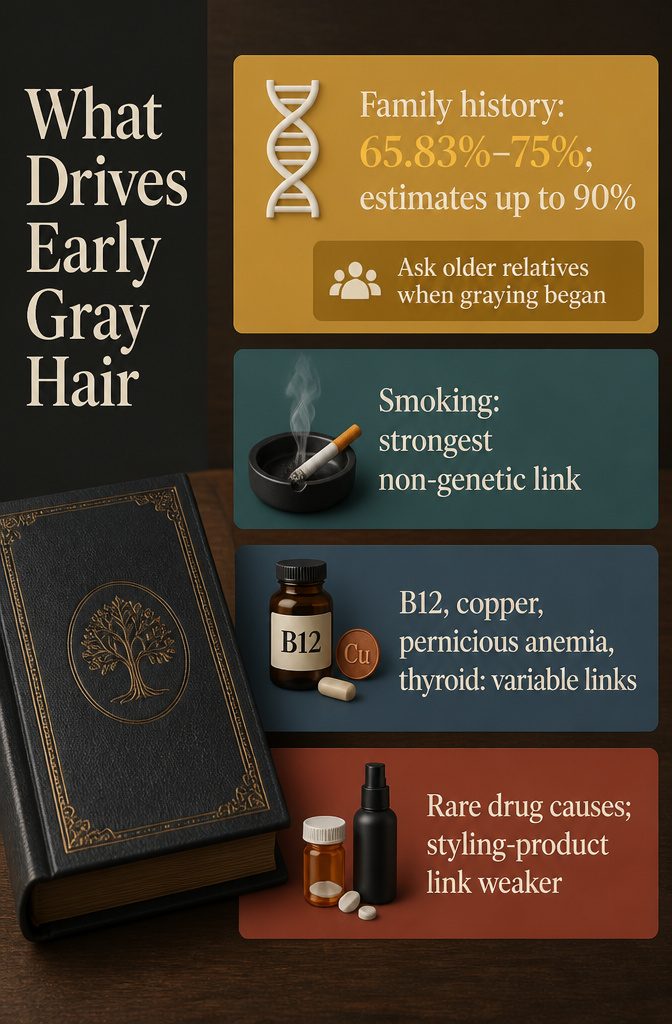
Genetics comes first. Family history turned up in 65.83% of people with early graying in one study and 75% in another, and estimates run as high as 90%.
About 18 genes are linked to hair traits, so ask older relatives when their first grays appeared. That tells you more than any supplement will.
The rest is weaker evidence.
I’d call smoking the best supported, with oxidative stress as the likely route. Low B12, low copper, pernicious anemia and thyroid problems have also been tied to early gray, though the strength of those links varies.
Chloroquine, mephenesin and phenylthiourea can cause it, but rarely. Heavy use of styling products may add to it, and that link is looser still.
When to See a Doctor
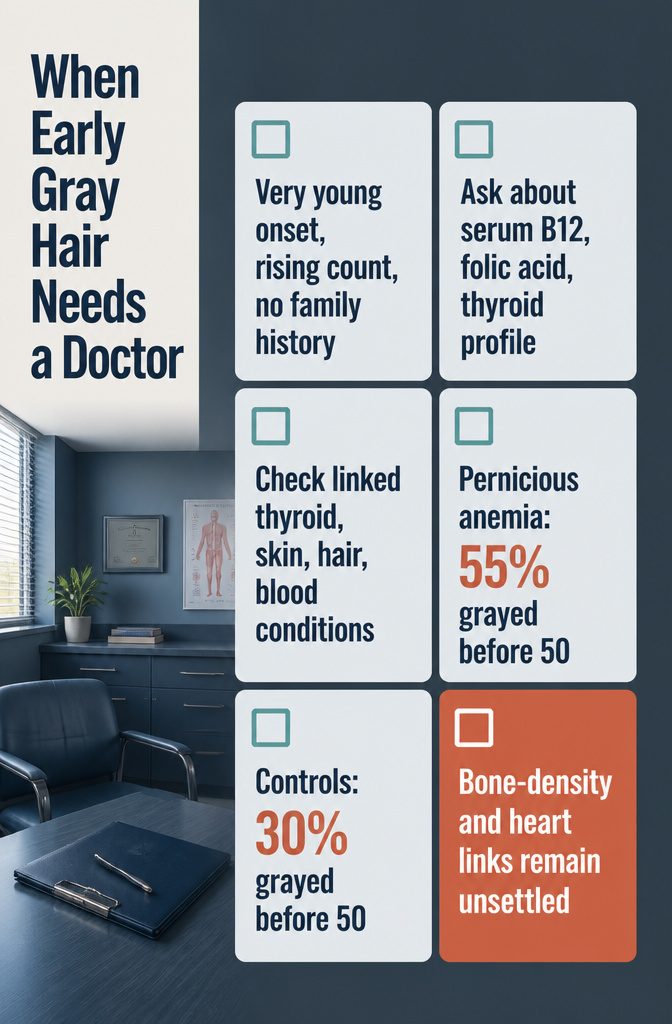
Most early graying is genetic and harmless, but a few patterns call for a doctor:
- Gray that starts very young, or a count that keeps climbing, with no gray in your family.
- A doctor may check serum B12, folic acid and a thyroid profile. B12 or thyroid problems can be reversed once corrected.
- Linked conditions include thyroid disease, vitiligo, alopecia areata and pernicious anemia. Rare inherited syndromes like neurofibromatosis and tuberous sclerosis show up here too.
- With pernicious anemia, 55% of patients grayed before 50, versus 30% of controls.
- Links to bone density and heart disease are unsettled. A 2007 study of about 1,200 people found no bone density connection.
What Can Be Reversed
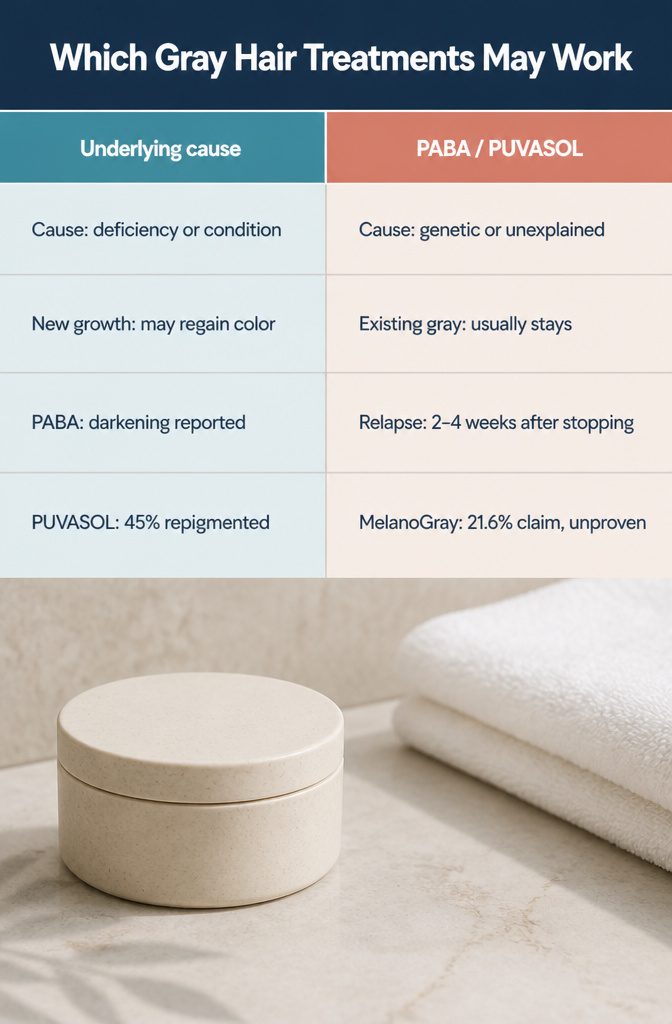
No treatment reliably restores pigment in genetic or unexplained graying.
If a vitamin deficiency or another medical condition is behind it, treating that cause may bring color back in new growth, but hair that has already turned gray usually stays gray.
PABA at 100 mg three times daily darkened hair in one study, then the color relapsed 2–4 weeks after stopping.
PUVASOL light therapy fully repigmented 45% of cases in one report. Topical Melitane has a repigmentation report and may work only in younger people with no major underlying cause.
Multivitamin and mineral tablets have no scientific evidence behind them. The 3% MelanoGray serum promises a 21.6% reduction over 90–120 days, but that is brand marketing, and I would not call it proven.
Prevention and Cover-Up Options
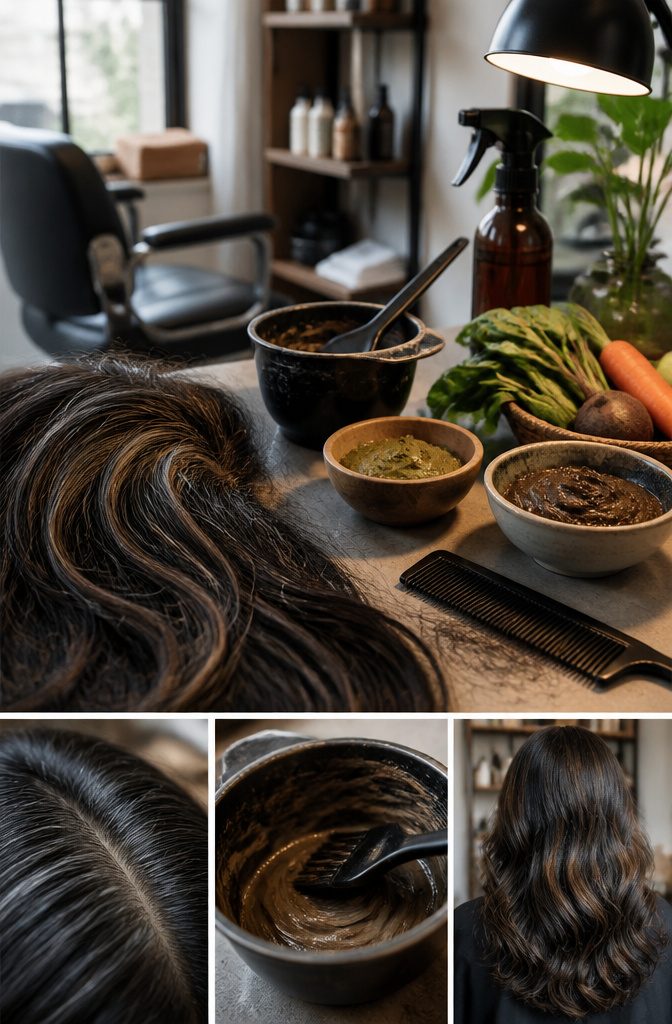
A balanced diet with antioxidants, vitamins and minerals, enough sleep, no smoking and less stress may slow graying, and starting early helps. None of it prevents graying, and the effect is temporary.
For cover-up, start light.
Spray-on airbrush makeup washes out with one shampoo. Semi-permanent or demi-permanent color lasts a few weeks and blends the first grays without wiping out your natural shade.
Highlights lighten scattered strands so the gray disappears into them. Henna is gentler on the scalp but fades fast, so expect frequent touch-ups.
I’d save permanent color for when you reach 45% to 50% gray. It’s a commitment: Anne Kreamer went gray at 25 and spent an estimated $65,000 on salon color over the next 20 years.
Does Stress Turn Hair Gray
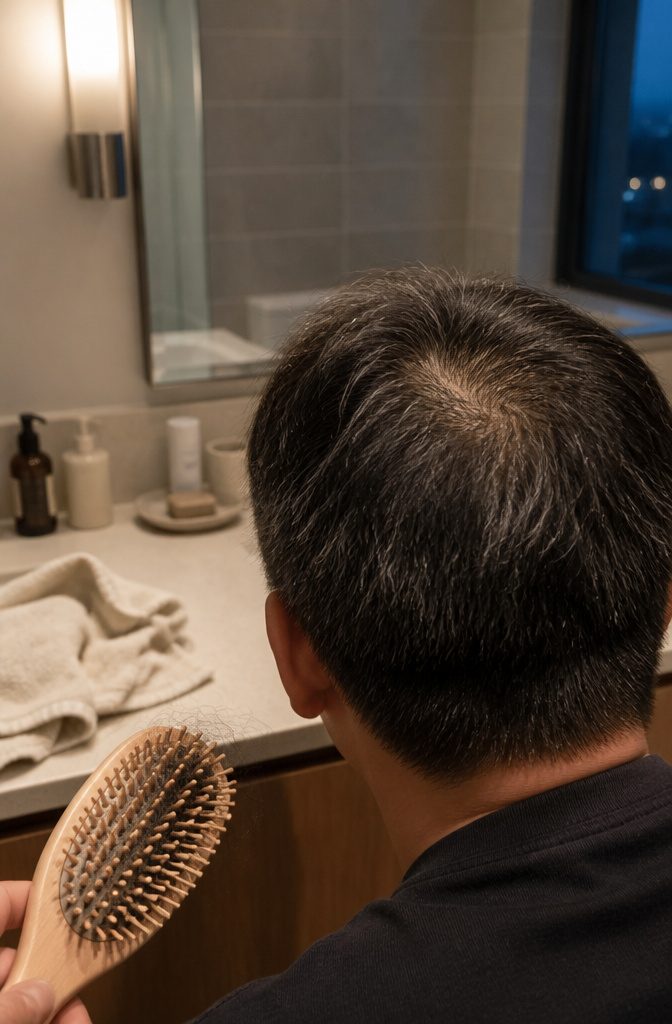
Stress is a disputed cause of premature grey hair, not a settled one.
Lab findings describe a biological pathway from stress to pigment loss, but human evidence is uncertain, and even a study that followed 13,000 people for 16 years has not closed the question. I treat stress as a possible contributor, not a diagnosis.
The "overnight" stories are a different thing from pigment changing in a single strand. Sudden apparent graying comes from the loss of pigmented hairs, which leaves the grey and white ones more visible.
Stress-related shedding runs about three times faster than normal, so a head of hair can look noticeably lighter within weeks without any one strand having changed color.
Hair Dye Risks
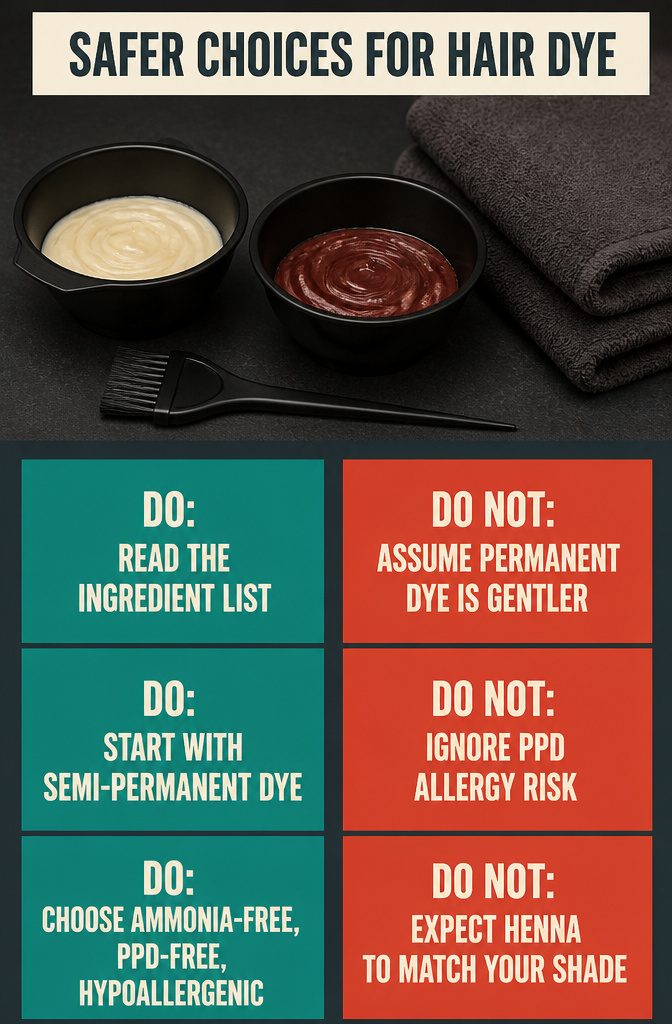
Dye type decides what hits your scalp and what happens inside the strand.
- Permanent, semipermanent and auto-oxidative dyes are oxidative. They penetrate the hair cortex, which explains the longer color retention and the extra irritation risk.
- Nonoxidative dyes only bind to keratin and never enter the cortex.
- PPD (p-phenylenediamine) is the most common allergen behind irritant and allergic contact dermatitis from dye. Read the ingredient list before you buy.
- Permanent dye appears more hazardous than semi-permanent, so I’d start with semi-permanent that is ammonia-free, PPD-free and labeled hypoallergenic.
- Henna is gentler than chemical color, but it can dry hair and turn it orangish, which may not match your natural shade.
Gray Hair and Confidence
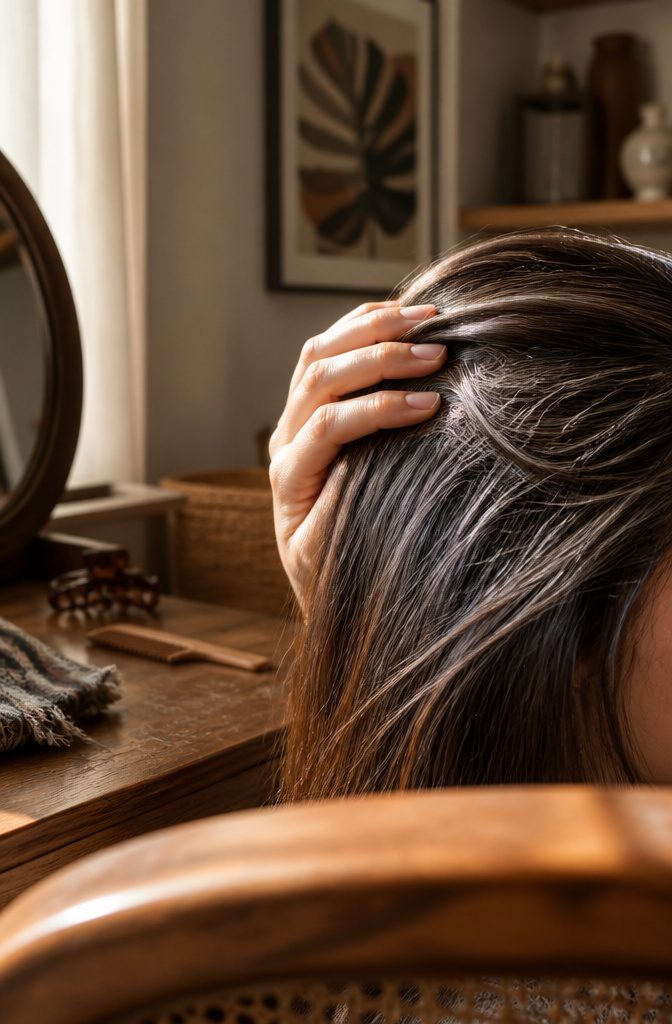
Gray reads as aging, so premature graying can chip at self-esteem and leave you feeling judged early.
Dark hair shows it fastest, since a few strands against black or deep brown stand out right away. Dermatologists call gray hair normal and harmless, and dye is a fair answer if it bothers you.
Journalist Anne Kreamer went gray at 25, spent an estimated $65,000 on salon color over 20 years, then returned to gray at 49. I’d treat it as another color choice, not a verdict.
Gray strands can turn thicker, wirier and coarser, though early graying usually leaves texture alone. It shows mostly on the scalp, but eyebrows, chin hair and peach fuzz can follow.
Frequently Asked Questions
At what age does hair normally start going gray?
White people typically start in their mid-30s, Asian people in their late 30s and Black people in their mid-40s.
By 50, half of all people have a lot of gray. Gray in your 30s sits inside the normal range for many people, and it only counts as early at younger ages.
What age counts as premature gray hair?
Gray is early if it appears before 20 in people of European descent, before 25 in Asians and before 30 in Africans.
By skin tone, the cutoffs are before 20 with light skin and before 30 with dark skin. It also takes at least 15–25 gray hairs that keep increasing, and color loss from albinism or vitiligo is a separate condition.
What causes premature gray hair?
Genetics is the main cause. Family history showed up in 65.83% of people with early graying in one study and 75% in another.
Smoking is the best-supported outside factor, and low B12, low copper, pernicious anemia and thyroid problems are also linked, though less firmly. A few drugs, including chloroquine, mephenesin and phenylthiourea, can cause it, but rarely.
Does stress cause gray hair?
Stress may contribute, but it is not proven in people.
Lab work, including a 2020 mouse study, shows a pathway from stress to pigment loss, while human evidence is uncertain. Stress can also trigger shedding about 3 times faster than normal, which can make the gray hairs you already have stand out.
Is premature gray hair a sign of something serious?
Usually not, since most early graying is genetic and harmless.
A few strands in your 20s may be nothing, but see a doctor if the count keeps climbing, the gray starts very young, or no one in your family grayed early.
The doctor may check B12, folic acid and thyroid function, and may look for linked conditions such as vitiligo, alopecia areata or pernicious anemia.
Can premature gray hair be reversed?
Only when a correctable cause is behind it.
Treating a deficiency such as low B12, or a thyroid problem, may bring color back in new growth. Nothing reliably restores pigment in genetic or unexplained graying, and hair that has already turned gray usually stays gray.
Do any treatments or products work for premature gray hair?
None reliably restores pigment when the cause is genetic or unknown. PABA darkened hair in one study but the color relapsed 2–4 weeks after stopping, and PUVASOL light therapy and topical Melitane have only limited reports.
Multivitamin tablets have no scientific evidence, and the 3% MelanoGray serum’s promised 21.6% reduction is brand marketing, not proof.
Can you prevent or slow premature gray hair?
Not completely, but habits may slow it.
A balanced diet rich in antioxidants, vitamins and minerals, enough sleep, no smoking and less stress can help, and starting early matters. The effect is temporary, and treating an underlying deficiency or condition may also slow the graying.
What are the safest ways to cover gray hair?
Start with the gentlest options: spray-on airbrush makeup (gone after one shampoo), semi-permanent or demi-permanent color (lasts a few weeks) or highlights that blend scattered strands.
Choose semi-permanent dye that is ammonia-free, PPD-free and hypoallergenic, since PPD is the most common dye allergen.
Henna is gentler on the scalp but fades fast, can dry hair and may turn it orangish. Save permanent color for when you reach 45% to 50% gray.
How does premature gray hair affect you emotionally?
It can lower self-esteem and leave you feeling judged early, because gray is read as a sign of aging.
Dark hair shows it fastest, since a few light strands against black or deep brown stand out right away. Dermatologists call gray hair normal and harmless, and many people treat it as a color choice rather than a flaw.
Does premature gray hair change hair texture?
Usually not; early graying mostly changes color and leaves texture alone. Some gray strands can turn thicker, wirier and coarser.
Does premature gray hair only appear on the scalp?
No.
It shows up mostly on the scalp, but eyebrows, chin hair and peach fuzz can gray too. Facial or body hair can also go gray well before, or after, the hair on your head.