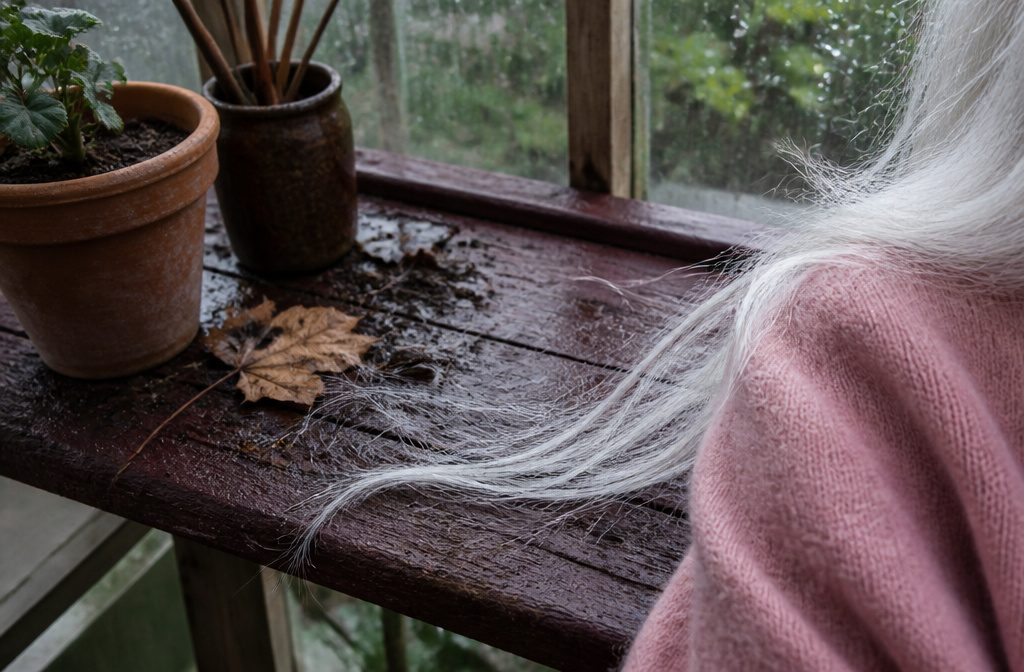
White hair has no pigment at all: the strand is clear, and it reads white only because of how light bounces off it.
Unlike gray, which mixes pigmented and unpigmented strands, white hair has no built-in sun protection, and sun or heat discoloration can’t be removed.
How Hair Loses Pigment
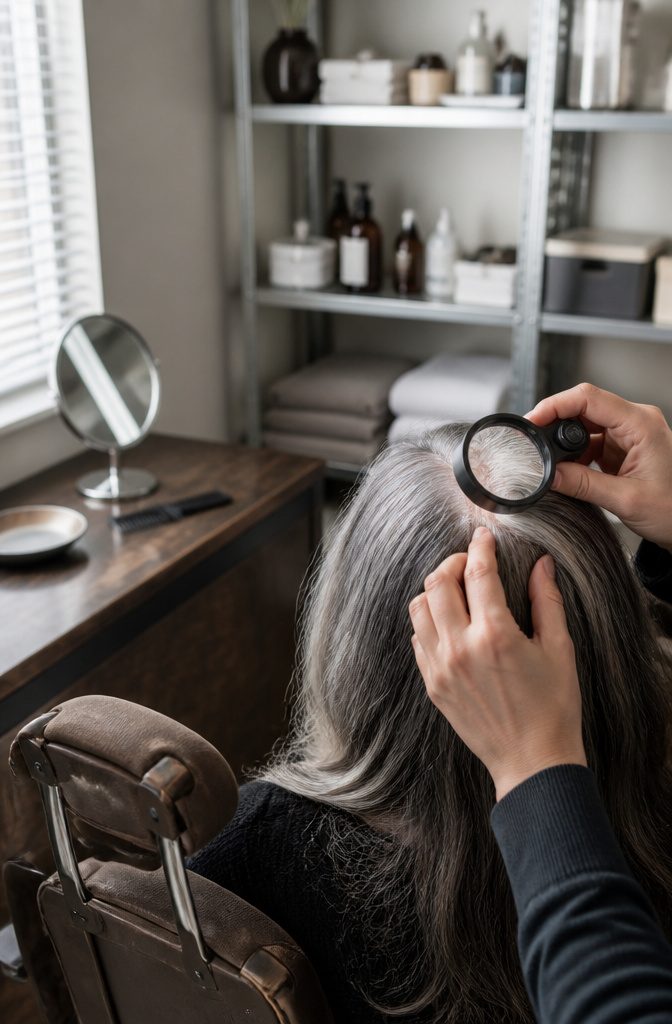
Hair color comes from melanin, made by pigment cells called melanocytes at the base of each follicle.
Eumelanin sets how dark a strand is, and pheomelanin sets how red or yellow it looks. White hair contains no pigment at all; the strand is clear, and it reads as white because of how light bounces off it.
Melanocytes release melanin only during the anagen growth phase, so every new hair is another chance for color to fail. When the cells become fewer, go inactive, or stop passing pigment into the strand, the next hair grows in unpigmented.
Around age 40, melanocytes drop by 10 to 20% every 10 years. Aging and heredity drive most of this, so I’d look at your parents’ timelines before anyone else’s.
White Versus Gray and Silver
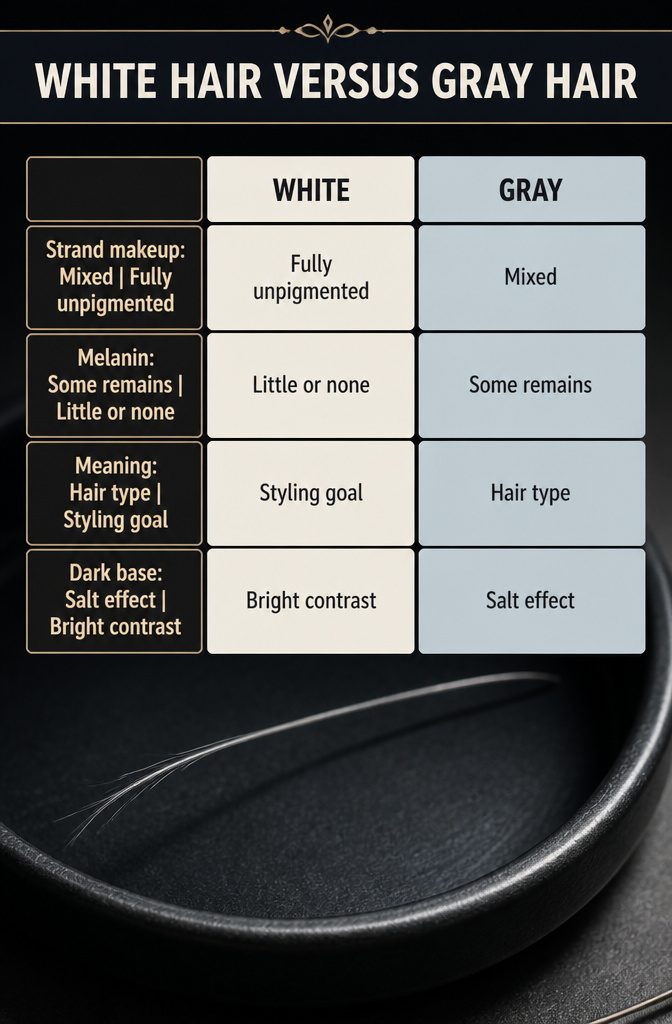
Gray usually means a mix of pigmented and unpigmented strands.
White means little or no melanin left, and a fully white head is 100% unpigmented strands. Silver is the styling word, and I treat it as a goal rather than a hair type.
No strand holds a true gray or white pigment.
Unpigmented hair is translucent, so it borrows from the strands around it and from the light. Hold one up and you can see through it.
Against dark hair it reads as bright salt; over a brown base it can look warmer, closer to cinnamon and sugar. Blondes and redheads rarely get salt-and-pepper because their strands fade gradually to white.
Why Timing and Appearance Vary
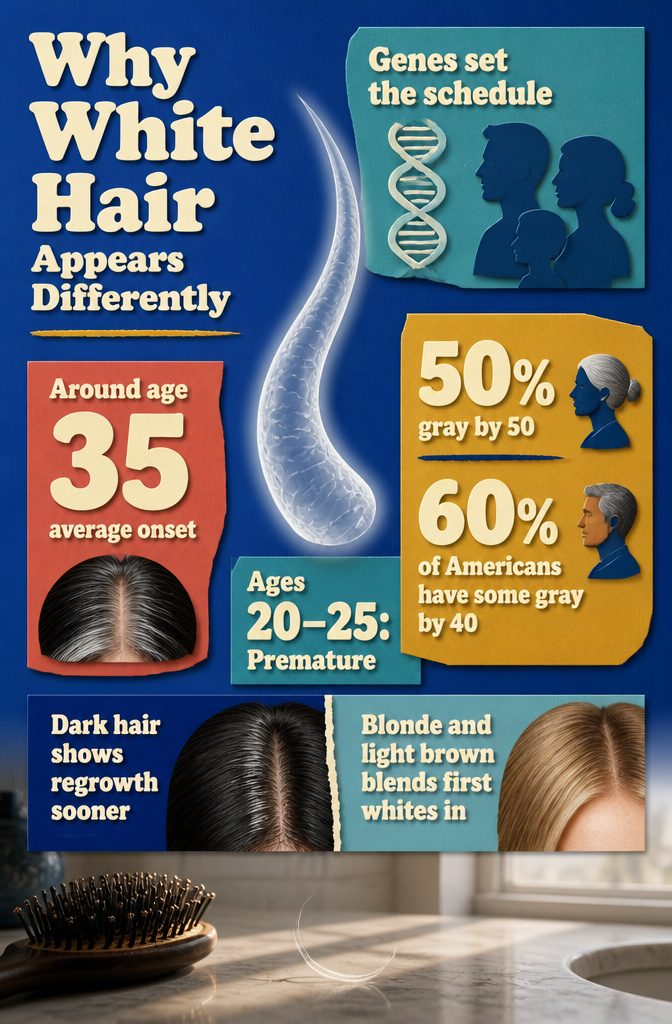
Genetics set the schedule. A study of 6,000 people across five Latin American countries tied variants in the IRF4 gene to graying, which is why your timeline often mirrors your parents’.
The first white hairs show up around age 35 on average, while onset between 20 and 25 counts as premature.
About 50 percent of people are gray by 50, and more than 60 percent of Americans have some gray by 40. One claim says environmental factors control about 70% of cases, but I’d hold that number loosely next to the gene evidence.
Starting color shapes how it looks.
On black or dark brown hair, new white strands stand out sharply and the regrowth line shows soonest. Blonde and light brown hair blends the first whites in, so the change reads softer.
Send me the source line and I’ll work it in.
Texture and Condition Changes
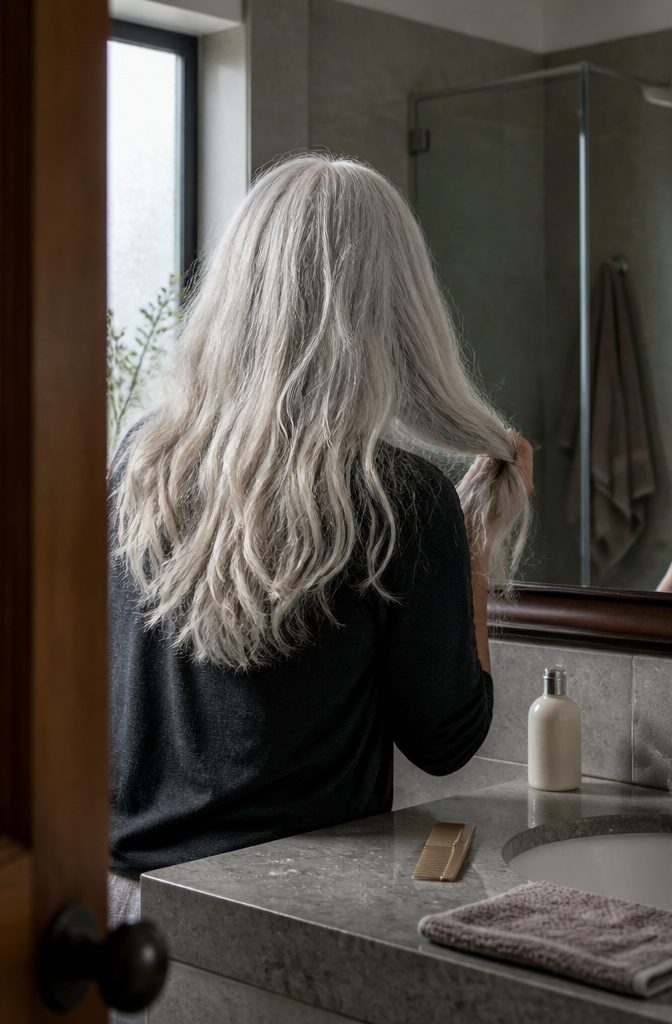
White strands have slightly thinner cuticles and are more porous, so they lose moisture faster and lean toward dryness and dullness.
A scalp that gets less oily with age adds to that, and over-shampooing pushes dry strands toward brittle. Still, white hair is not automatically coarse or fragile.
Hair in general gets finer and thinner after about 40, and white strands may not follow that pattern, so on one head I’d expect some wiry strands next to others that stay silky.
Quitting permanent dye can also bring back waves or curl that the dye had flattened, which feels like a texture change even when the strand itself is fine.
Caring for White Hair
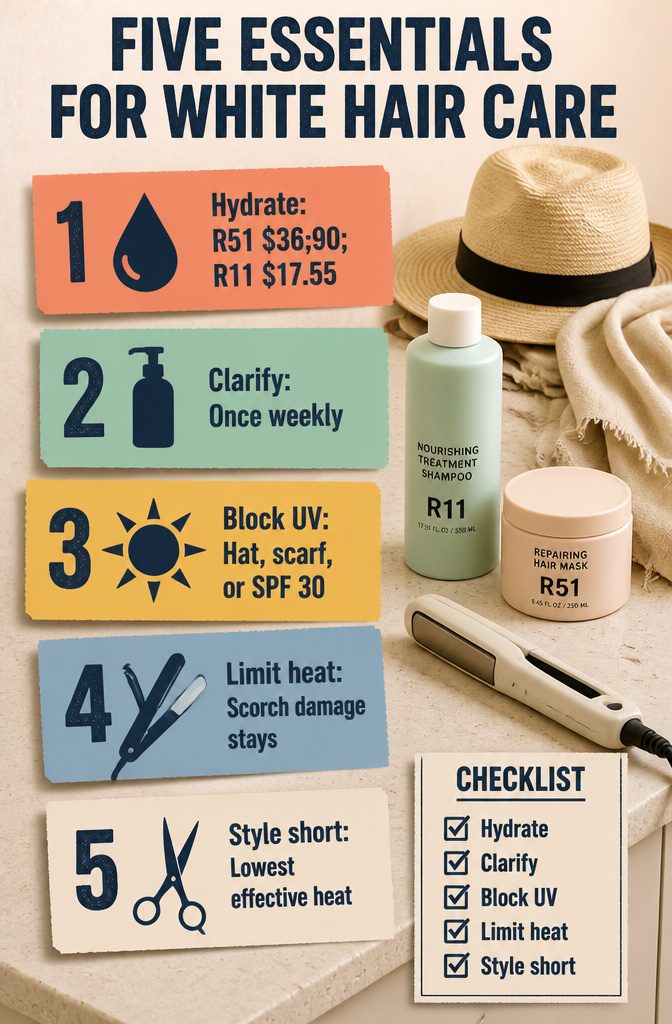
White hair shows every habit, so care comes down to a few jobs:
- Hydrate: White hair turns drier and more fragile. I’d make the Repairing Hair Mask R51 ($36.90) and Nourishing Treatment Shampoo R11 ($17.55) your base routine.
- Clarify: Swap in a clarifying shampoo once a week, then follow with a purple-based conditioner.
- Block UV: With little to no melanin, white hair has no built-in sun protection. Wear a hat or scarf, or use COOLA Organic Scalp Spray & Hair Sunscreen Mist SPF 30 or SEEN UV Protecting Cremes. Scalp melanomas are more lethal, so the hat is worth it.
- Limit heat: A hot iron held too long leaves a yellow scorch. Sun and heat discoloration can’t be removed, while product buildup can, so prevention wins.
- Style short: Keep tool time brief and use the lowest heat that works.
Choices During Transition
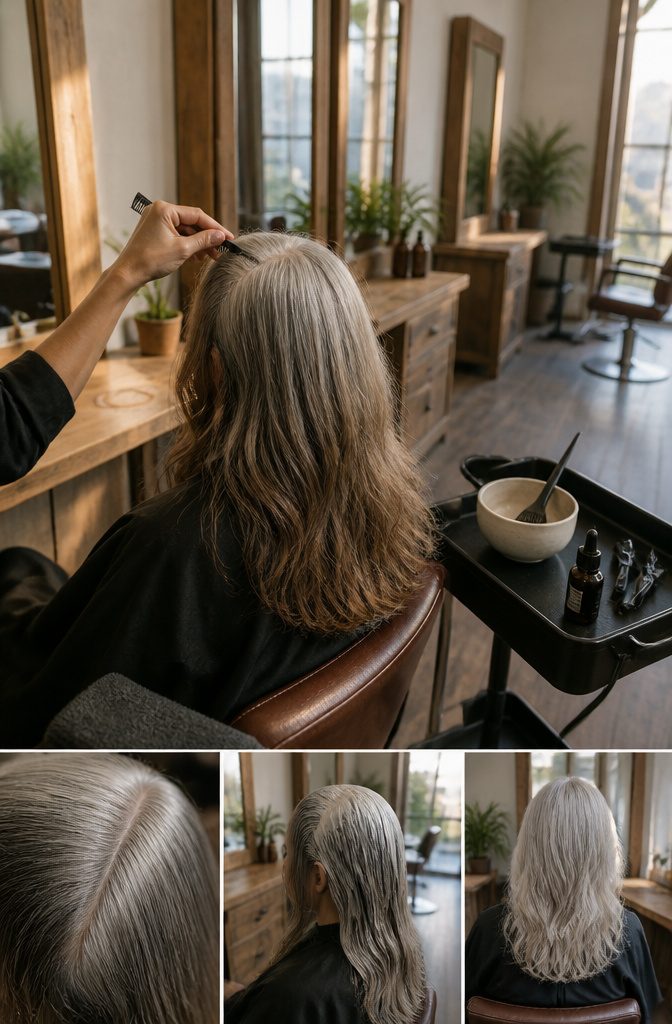
Three paths lead out of the grow-out: embrace the white, camouflage it temporarily, or color it. Permanent color covers fully, but hair grows about a half inch per month, so touch-ups come every four to six weeks.
Repigmentation claims clash.
Rodolphe&Co promotes its Dermo-Grey serum with reported reductions in white hair of nearly 9% after 2.5 months and up to 15% after 5 months, while Typology says no treatment has proven effectiveness. Allure sides with the cautious view:
Once the genes kick in and your hair turns white, the melanin that created the hair color is gone.
— Allure
For a dark result, I’d book a colorist rather than buy a serum.
Yellowing and Buildup
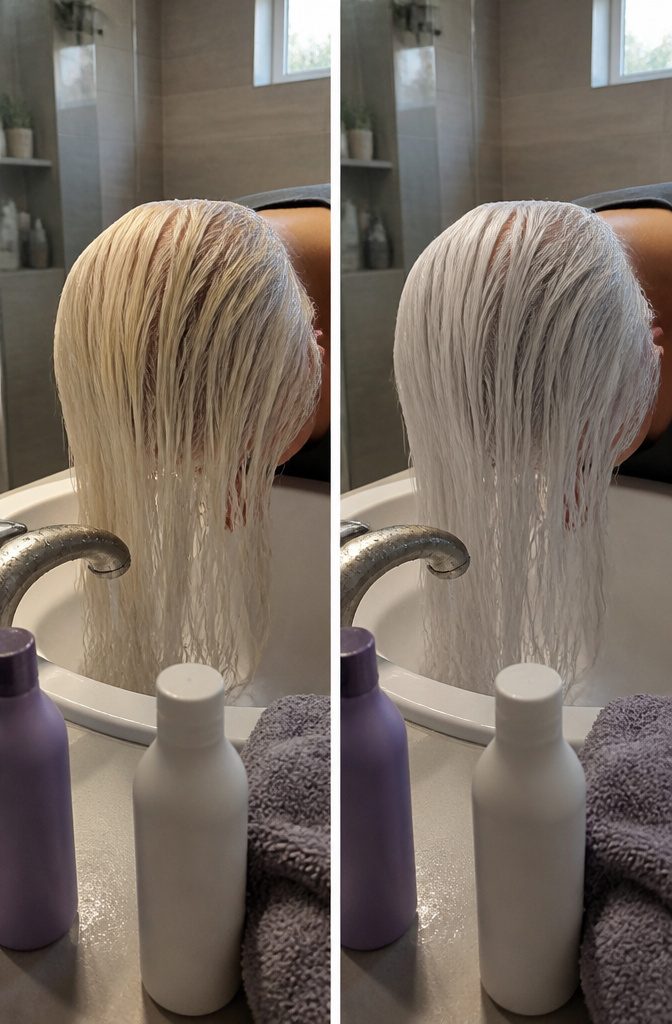
White hair turns yellow from sun, heat styling, hard water and product buildup, and those causes don’t share one fix. Purple or blue shampoo sits opposite yellow on the color wheel, so it masks the tint rather than removing it.
I’d use it weekly, or at least twice a month, as a toner and nothing more. Buildup from styling products or recent minerals can be lifted with a clarifying shampoo such as SOLU, though it may take a few rounds.
Sun damage, heat damage and minerals left in the hair for a long time are permanent, because they embed in the shaft. A gloss every 6–8 weeks adds shine on top of all that.
Stress and Medical Causes
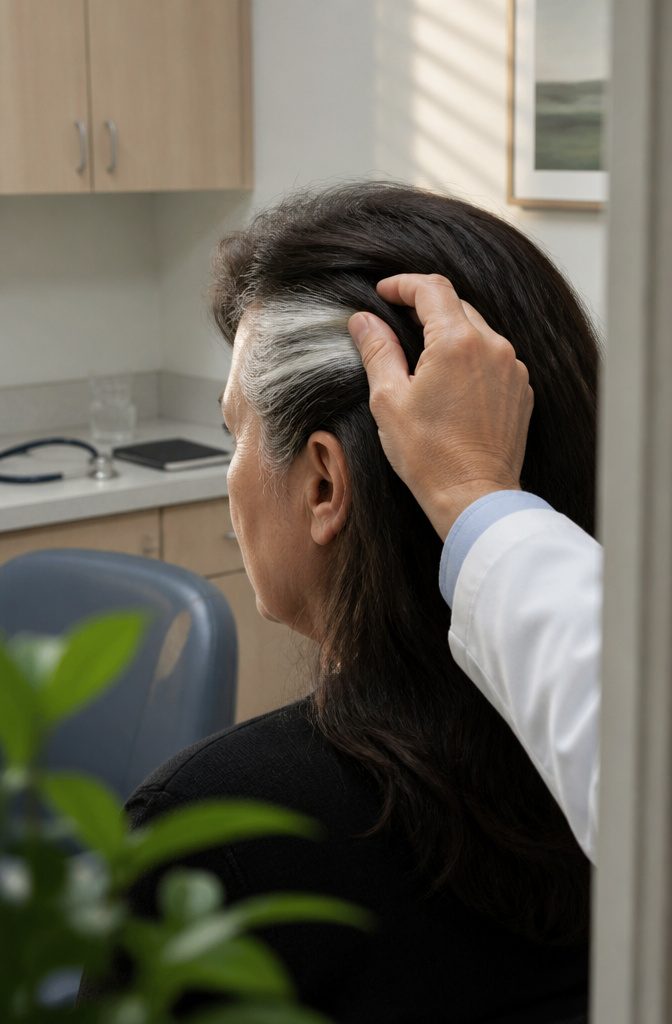
Stress may tip hair that is already close to graying; it does not recolor strands that have already grown out. A 2020 Harvard study in mice found that acute stress activated fight-or-flight nerves, which burned through pigment stem cells.
A small 2021 Columbia study in people matched individual hairs to stress diaries and saw graying track stressful periods, sometimes with color returning as stress eased.
That is an association, not proof. Overnight whitening, canities subita, is possible but very rare.
Thyroid disease, vitiligo and vitamin B12 deficiency are all linked to early graying. If white hair arrives young and doesn’t run in your family, or the change is sudden, see a doctor.
Salon Transition Techniques
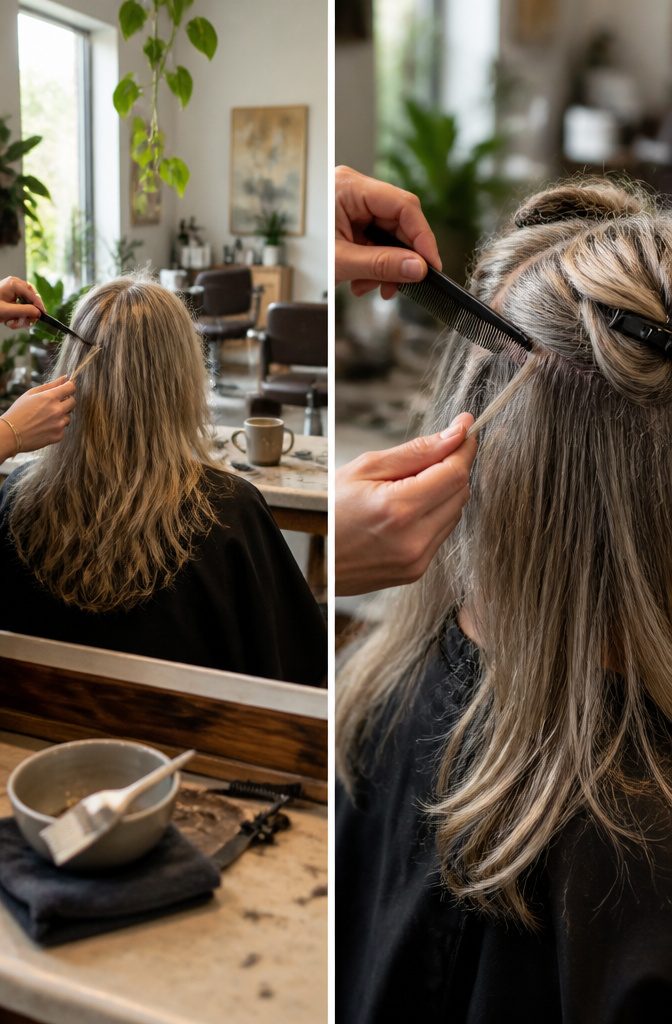
Slowly blended highlights are the gentlest route. They flatter the white as it comes in and soften the line between old color and new.
On hair that is about 80 percent white, lowlights add depth; think more pepper than salt. For darker hair, single-process color gives 100 percent coverage, but hair grows about a half inch per month, so touch-ups come every four to six weeks.
That schedule is why I’d steer a first-timer toward demi-permanent color, which lasts about 20 shampoos and leaves a blended effect with a softer grow-out. Tell your colorist whether your white reads ashy or bright, since highlights respond to that tone.
Frequently Asked Questions
What is white hair?
White hair is completely unpigmented because melanocytes at the base of each follicle have stopped producing or transferring melanin into the strand.
The hair itself is clear and translucent, appearing white because of how light reflects off it. Every strand on a fully white head contains zero pigment, which is the endpoint of the graying process.
Why does hair turn white?
Hair turns white when melanocytes die off or stop producing melanin, the pigment that colors each strand.
Around age 40, these cells drop by 10 to 20% every 10 years. Hydrogen peroxide also builds up in the follicle over time, bleaching existing pigment and blocking the enzyme needed to make new melanin, so the next hair grows out clear.
What is the average age to see gray or white hair?
Most people see their first white hairs around age 35, and about 50% of people have gray hair by 50.
More than 60% of Americans have some gray by 40. Onset between ages 20 and 25 counts as premature, though timing varies widely by genetics and ethnicity.
Why is my hair white at a young age?
Genetics are the main reason hair turns white early, so look at your parents’ timelines first.
Medical conditions such as thyroid disease, vitiligo, and vitamin B12 deficiency are also linked to premature graying. If white hair arrives young and does not run in your family, or the change is sudden, see a doctor.
Can you stop premature graying?
Genetically driven graying cannot be stopped. Reducing oxidative stress by avoiding smoking and UV exposure may slow the process, but no treatment has proven effectiveness at reversing it once melanin production stops.
The buildup of hydrogen peroxide and loss of melanocytes are age-related changes that are not yet reversible.
Can white hair turn black again?
Once the genes kick in and melanin production stops, the pigment is gone and the hair stays white.
Some thyroid-related cases may reverse when the condition is treated, and a small 2021 study linked stress relief to color returning in a few individual strands, but these are rare exceptions.
Permanent or demi-permanent color is the reliable way to darken white hair.
How do you color white hair?
Blended highlights soften the line between old color and new growth and are the gentlest route for transitioning.
Single-process color gives 100% coverage but requires touch-ups every 4 to 6 weeks because hair grows about half an inch per month. Demi-permanent color lasts about 20 shampoos and leaves a softer grow-out, which is easier for a first-timer.
Why does white hair turn yellow?
White hair turns yellow from sun exposure, heat styling, hard water minerals, product buildup, pollution, and cigarette smoke. UV rays strip blue pigment molecules and leave only yellow, while minerals and residues deposit into the shaft.
Sun and heat damage are permanent because they embed in the strand, while buildup from styling products and recent mineral exposure can be lifted with a clarifying shampoo.
Can hair turn white overnight?
Overnight whitening, called canities subita, is possible but very rare. A 2020 Harvard study found that acute stress in mice burned through pigment stem cells by activating fight-or-flight nerves, and a small 2021 Columbia study tracked graying with stressful periods in people.
Stress may speed up hair that is already close to losing pigment, but it does not bleach strands that have already grown out.
Is it possible to have natural white hair?
Yes, natural white hair is the result of melanocytes stopping pigment production entirely.
Everyone who lives long enough will see their hair turn white, though the timing depends on genetics, ethnicity, and lifestyle. Some people reach a fully white head by 40, while others are still working through gray in their 70s.
Why is my hair white instead of gray?
Gray usually means a mix of pigmented and unpigmented strands, while white means little or no melanin is left and all your strands are unpigmented.
A fully white head is 100% unpigmented hair. Blondes and redheads rarely get a salt-and-pepper stage because their lighter strands fade gradually to white instead of showing a sharp contrast.