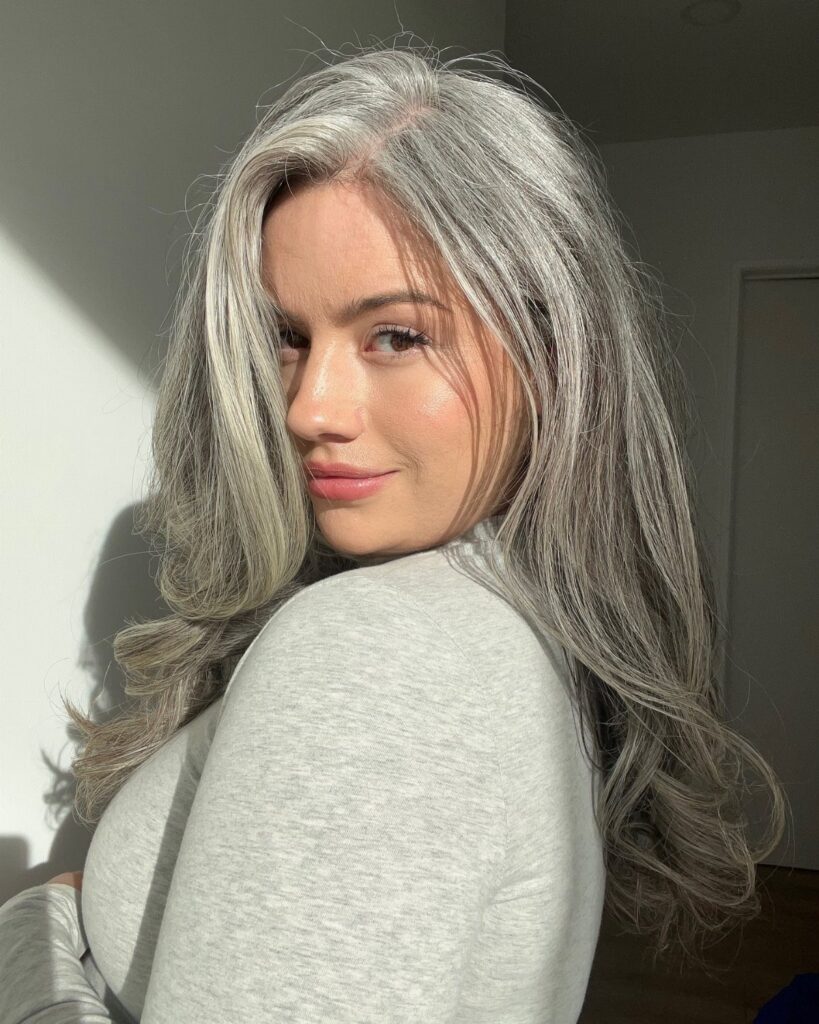
Texture and thickness steer the choice here, from Curly Grey Hair and Voluminous Silver Curls to Straight Long Grey Hair and the Pixie Cut.
Fine strands can lose body in choppy layers, whereas natural curls, coils and waves carry their own volume that a straight cut has to imitate.
The list runs from the Pixie Cut to Long Grey Waves, with a Grey Front Streak and a section on Growing Out Dyed Hair along the way.
Grey strands run drier than pigmented ones at any length, so every look here comes with a note on the moisture it needs.
1. Pixie Cut
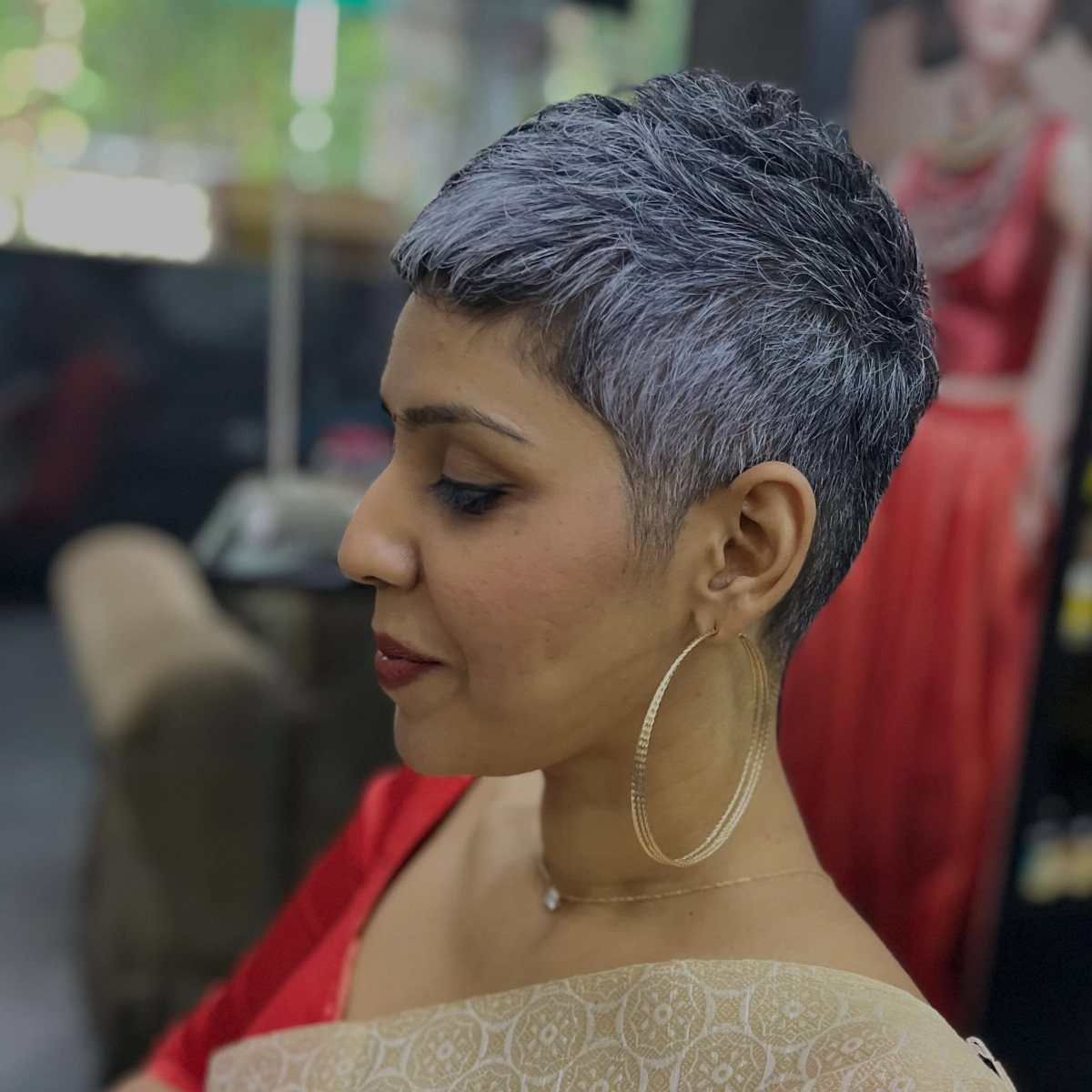
Short layers do the work in a pixie, and on grey hair they matter more than usual: the cut sits close at the nape and sides while the top keeps enough length to show texture, so the silver reads as a deliberate shape rather than something growing out.
Texture is the part I’d ask for by name.
A stylist who cuts with a razor or point-cutting scissors gives you pieces that separate on their own, which keeps morning styling to a minute or two. A small amount of paste worked through dry hair is plenty.
Expect regular trims to keep the sides and neckline tidy.
2. Curly Grey Hair
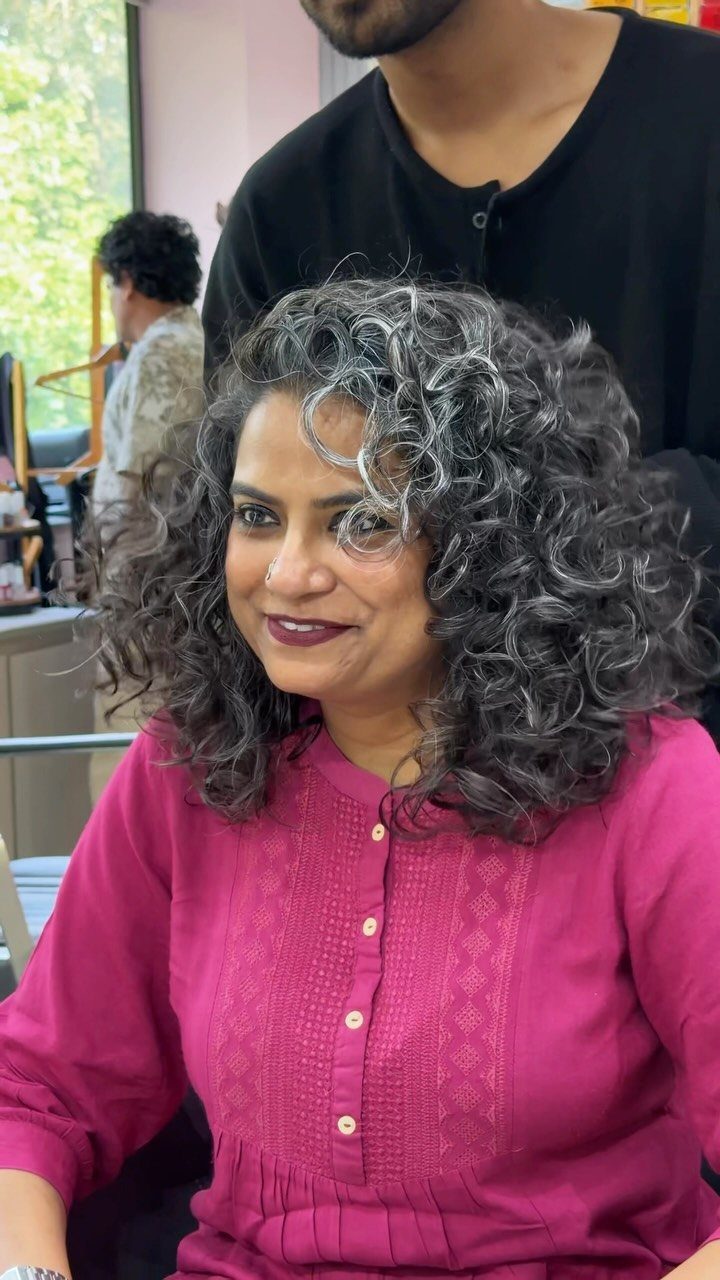
Natural curls, coils or waves give grey hair a built-in volume that straight cuts have to fake.
The silver also reads differently in a curl pattern, since the strands twist in and out of the light and the grey looks mixed and dimensional instead of flat.
Cutting is where this look is won or lost, so find a stylist who works with curls.
Ask for the shape to be cut with your pattern in mind, ideally on dry hair, so the curls land where they will actually sit.
Grey curls run dry, which means a curl cream or leave-in on damp hair and as little brushing as you can manage.
3. Layered Fringe
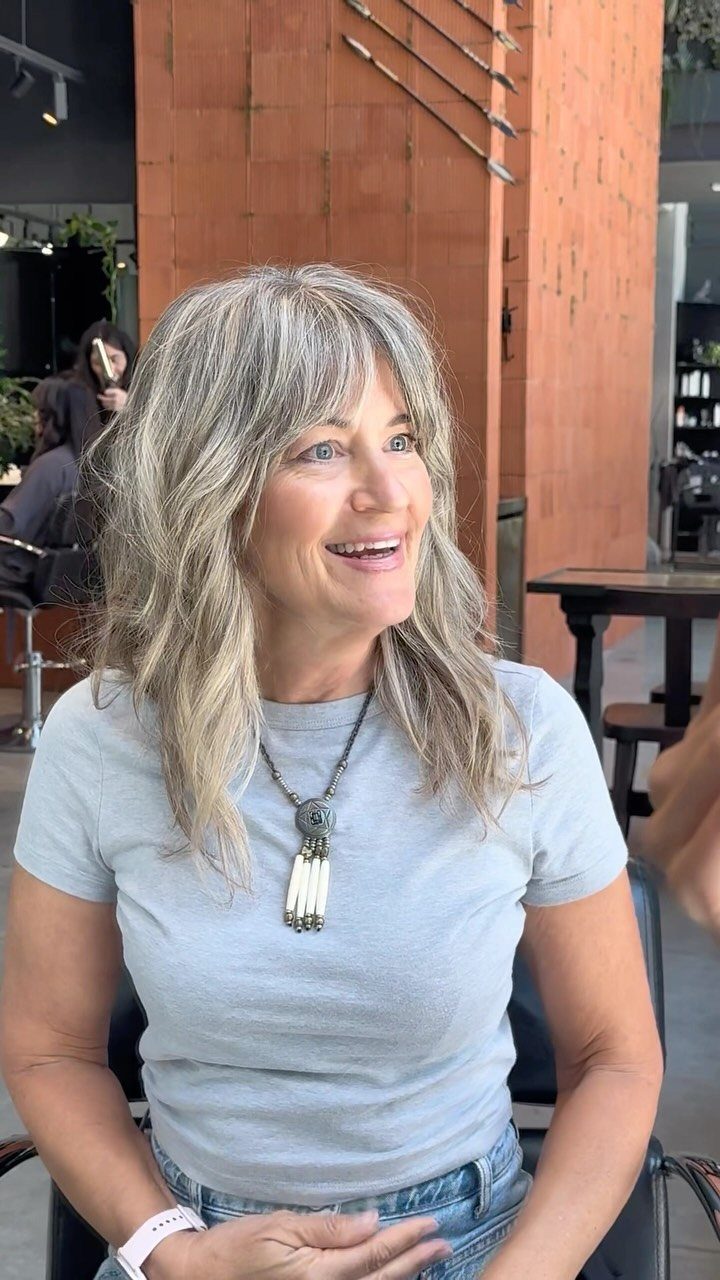
A layered fringe breaks the bangs into soft, graduated pieces instead of one solid curtain, so grey and blonde tones show through in strands rather than a single block.
A layered fringe is softer than a blunt one, so it works as a gentler first fringe, and it melts into the layers that frame the cheeks and jaw.
I would pick this over full bangs if your hair mixes silver with lighter tones, since the layering keeps the mix visible.
Ask your stylist for the fringe to connect into the face-framing layers so it grows out into them rather than stalling at an awkward length.
4. Layered Bob
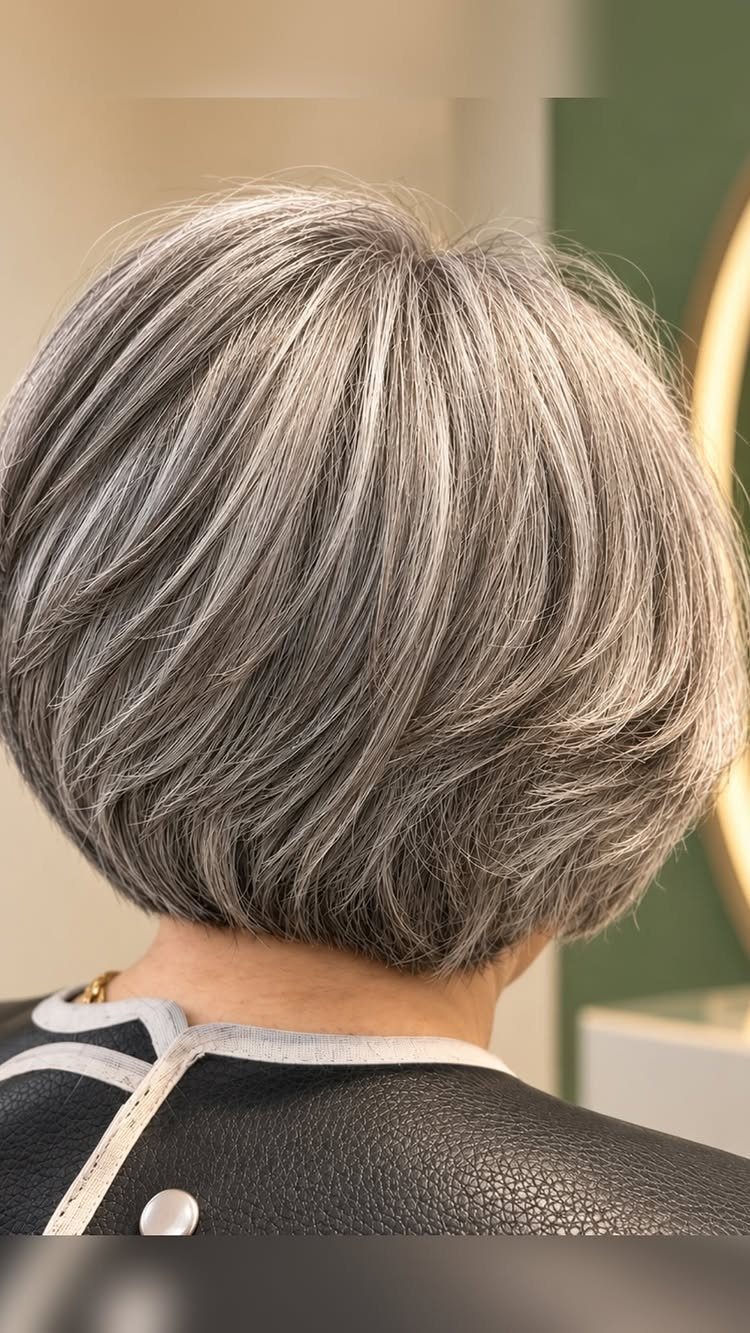
Layers turn a bob from one solid block into something with movement, and on grey hair that matters: the shorter pieces catch light differently from the longer ones, so the silver reads dimensional instead of flat.
The rounded shape here keeps the volume soft rather than boxy.
Ask your stylist for a rounded bob with layers through the crown and ends, and say you want texture, not a blunt edge.
Fine hair may look thinner if the layers get too choppy, so keep them gentle. Expect trims to keep the outline from losing its curve.
5. Side-Swept Bob
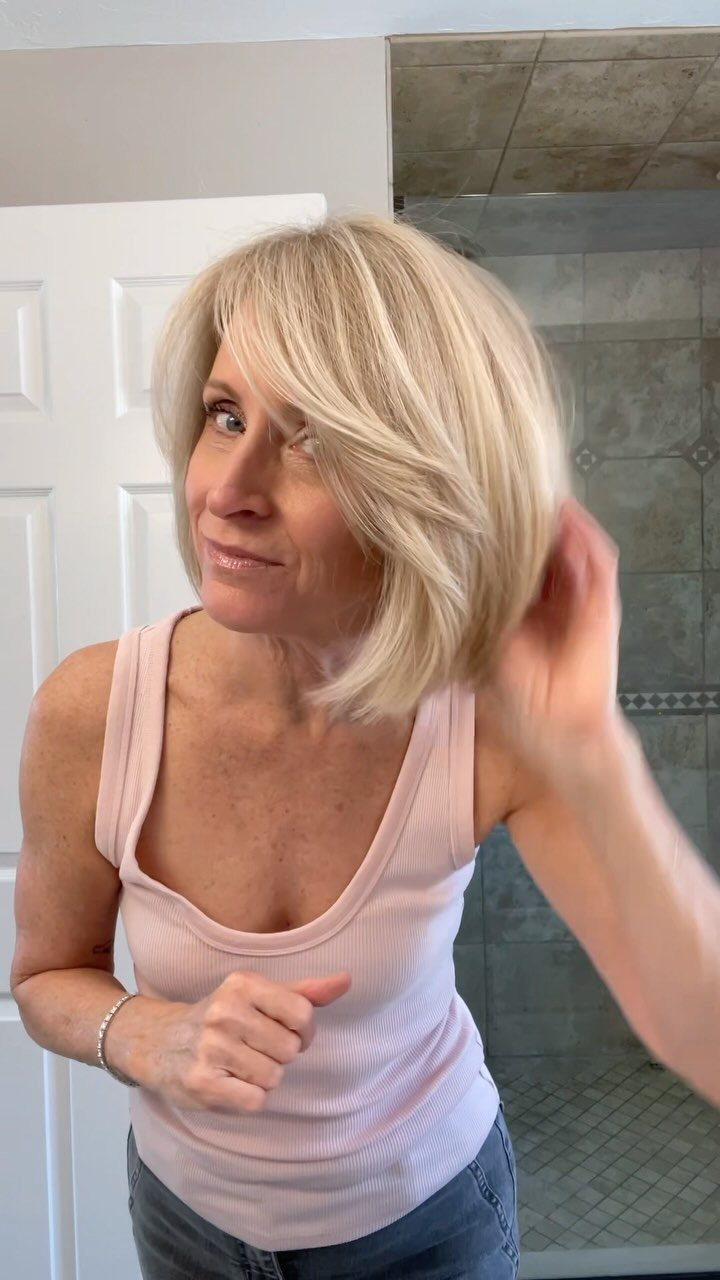
Part the hair to one side and let the front sweep across the forehead, and a bob stops looking boxy.
That soft diagonal line softens the jaw and cheekbones, which is why I like this cut for anyone who finds a center part too stark.
Ask your stylist for a deep side part and a fringe long enough to tuck behind the ear.
Keeping the sweep means a few seconds with a brush each morning, and the part can switch sides when you want a different look.
6. Short Shag
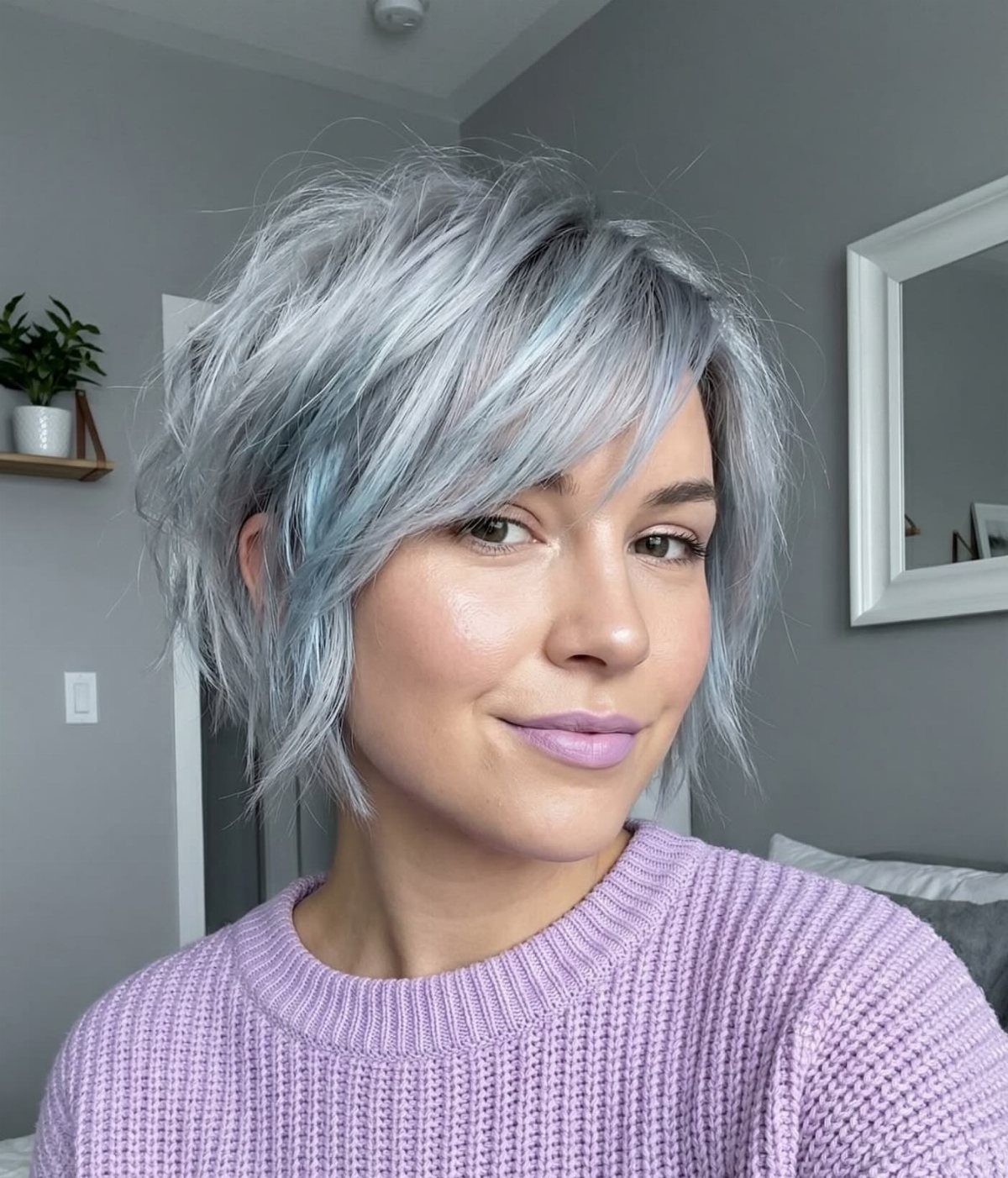
Short layers through the crown and sides give a shag its lift, and grey hair needs that, since fine silver strands tend to lie flat against the scalp.
Keeping the ends tousled instead of blunt lets the shape look finished even on a messy morning.
Side-swept bangs blend into the layers, so they grow out without an awkward stage.
Rough-dry with your fingers and work in a little texturizing paste for separation, and the whole routine takes a few minutes. Wavy or slightly coarse hair suits this cut best, because the texture does half the styling for you.
7. Long Grey Hair
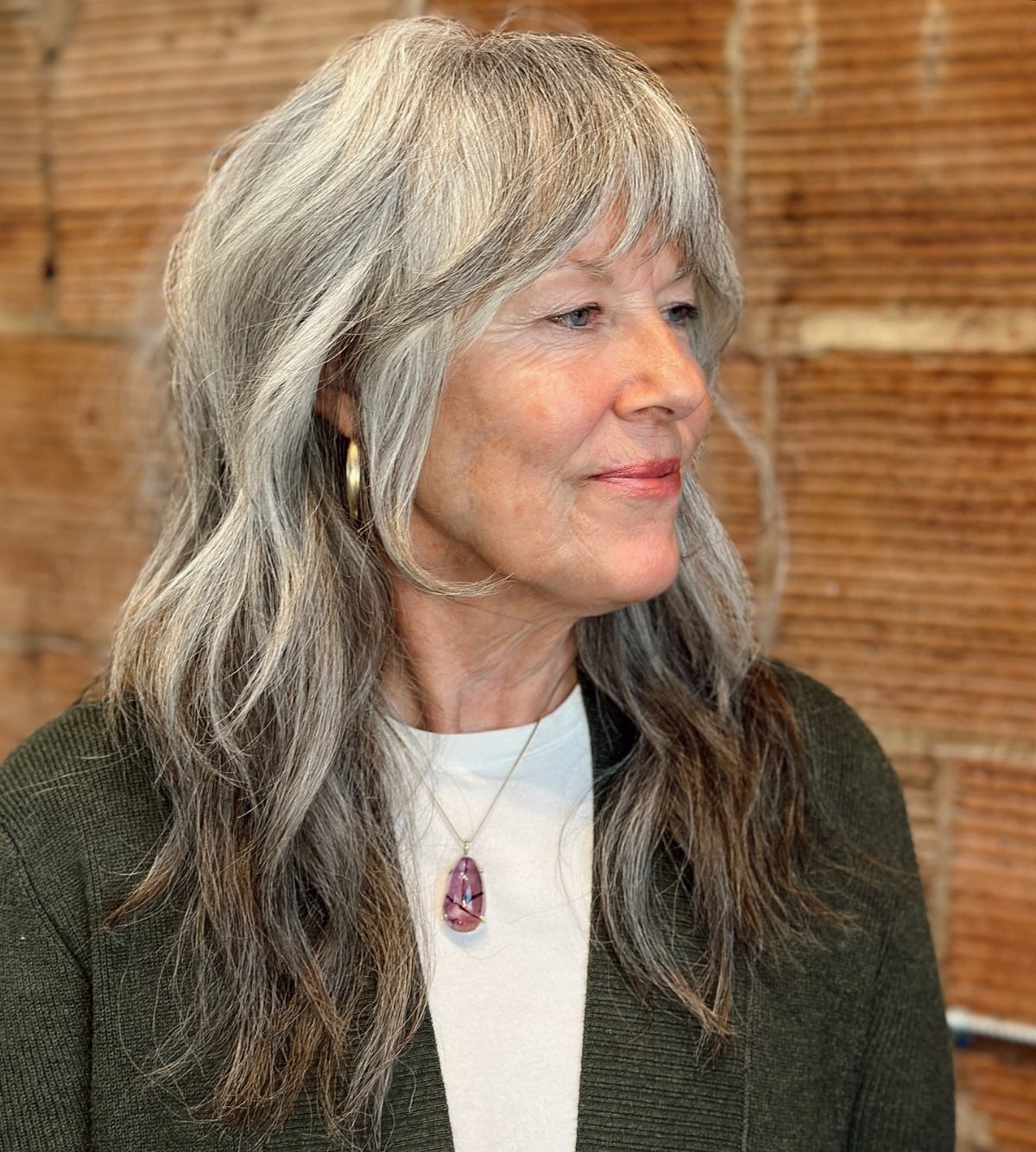
Keeping grey hair long means working with its texture as it grows in, which tends to be coarser and drier than pigmented hair.
The trade is daily moisture: a leave-in conditioner or hair oil keeps the length from looking wiry, and most people I know who do this well apply something every morning.
Length shows off the full range of silver and white tones you have, especially if there is natural variation from root to end.
If your hair is fine, long grey can look thin at the ends, so a blunt cut or subtle layers help it hold weight.
8. Feathered Layers
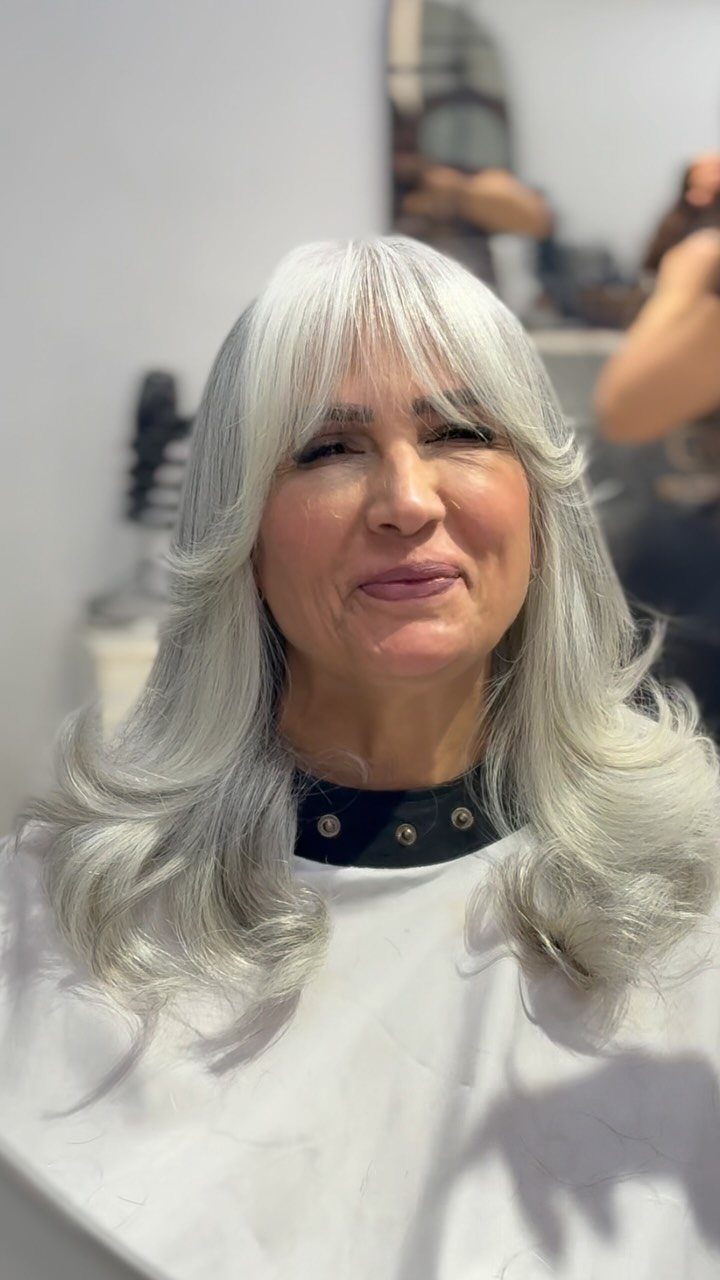
Feathered layers are cut shorter through the crown and sides, which lifts grey hair away from the scalp and gives it movement without adding styling time.
The layers are tapered at the ends rather than blunt, so they blend into each other and catch light differently as you move.
Medium to thick hair carries feathered layers better, since the layers can stack without looking sparse.
Fine hair can handle feathering too, but keep the shortest layers no shorter than chin length or the effect thins out. Air-dry or rough-dry with your fingers, and the shape holds on its own.
9. Grey Bangs

A fringe changes how grey hair frames your face, and for some people it is the single thing that makes going grey feel intentional rather than accidental.
Bangs also cover forehead lines if that matters to you, and they give you one high-contrast section to style each morning while the rest can stay simple.
Full bangs need regular trims to stay out of your eyes, so factor that into your maintenance. Curtain bangs or a side-swept fringe grow out more forgivingly for lower upkeep.
10. Textured Crop
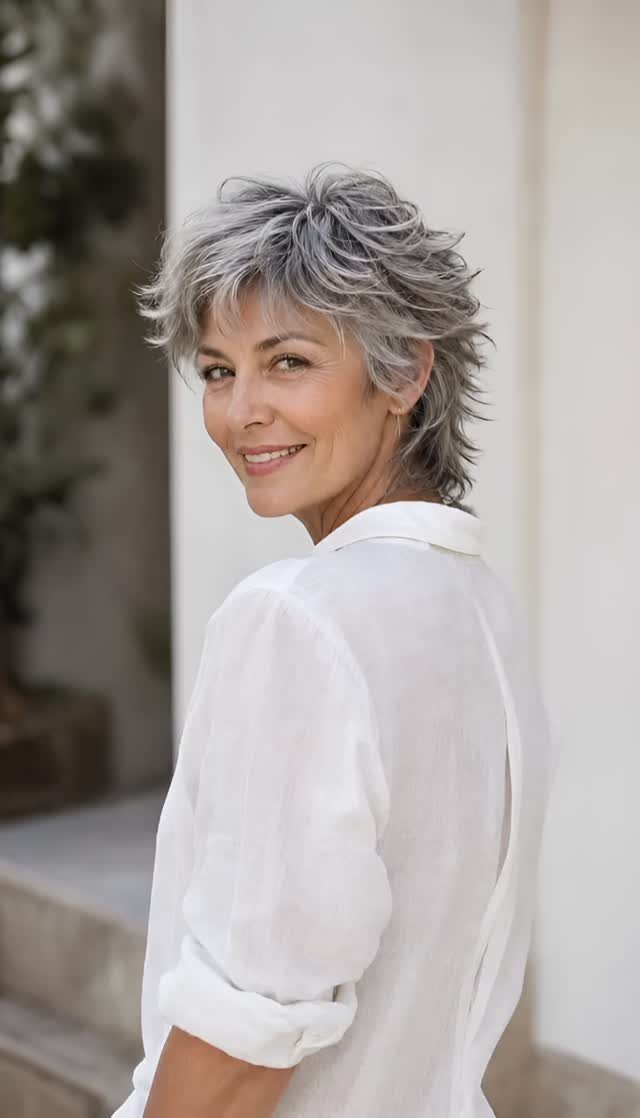
A textured crop is cut with a razor or point-cutting scissors to create uneven, piecey ends that sit at different lengths.
The choppiness adds dimension to grey hair, which can otherwise read flat, and the shorter length means less daily styling.
This cut holds its shape well between trims because the intentional mess is part of the design, so slight growth does not throw it off.
Run a small amount of texturizing paste or dry shampoo through dry hair to separate the pieces, or leave it alone if your hair has natural body.
11. Straight Long Grey Hair
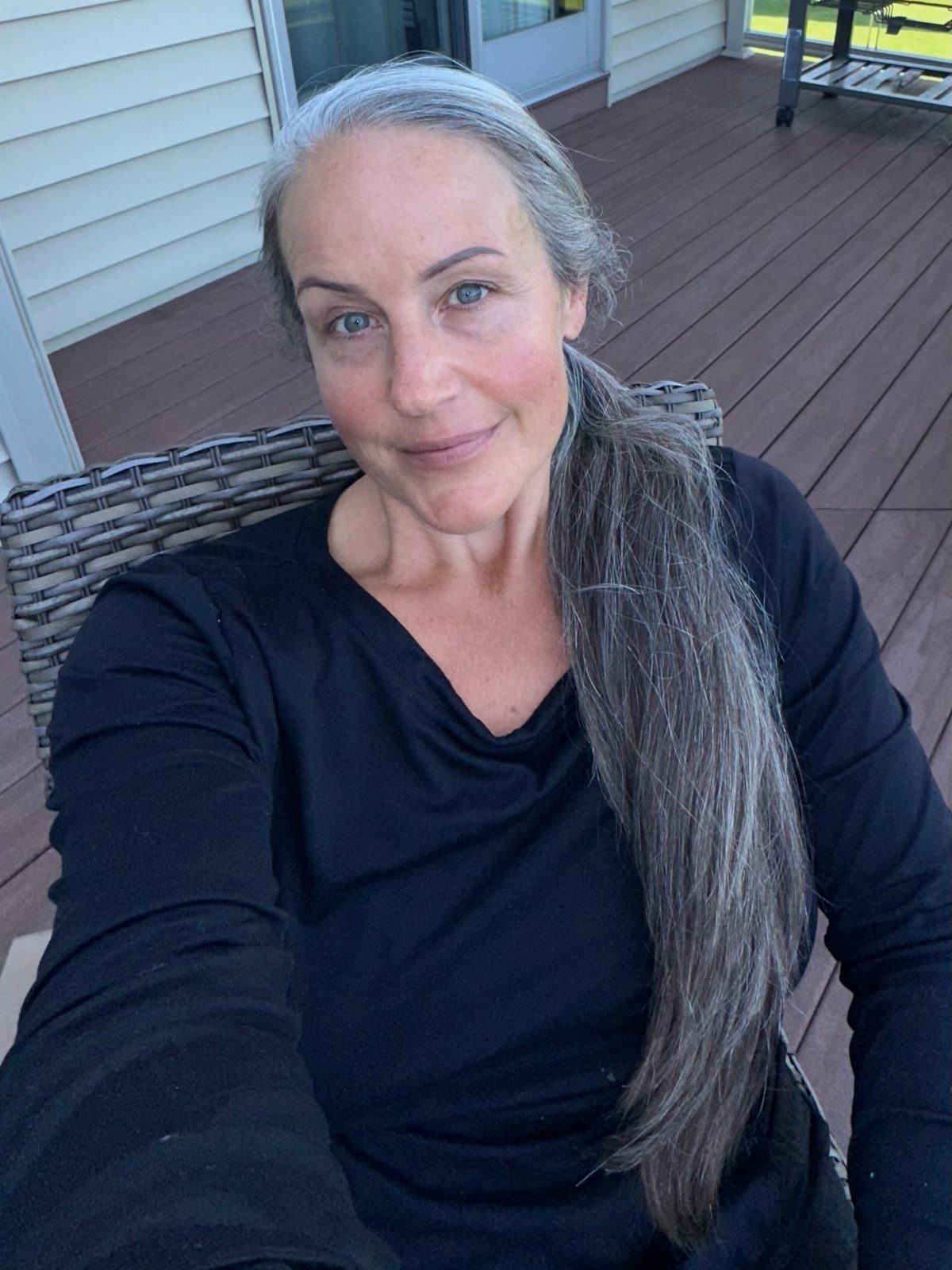
Straight grey hair shows every tonal shift from root to tip, so if your silver has natural variation, wearing it long and straight puts that front and center.
The finish is glossy when the hair is healthy, which means regular trims to remove split ends and a smoothing serum or oil to seal the cuticle.
This look takes the least styling time if your hair is naturally straight, but it also shows damage quickly.
Grey hair is drier than pigmented hair, so a weekly mask or deep conditioner keeps the length soft enough to reflect light instead of scattering it.
12. Classic Bob
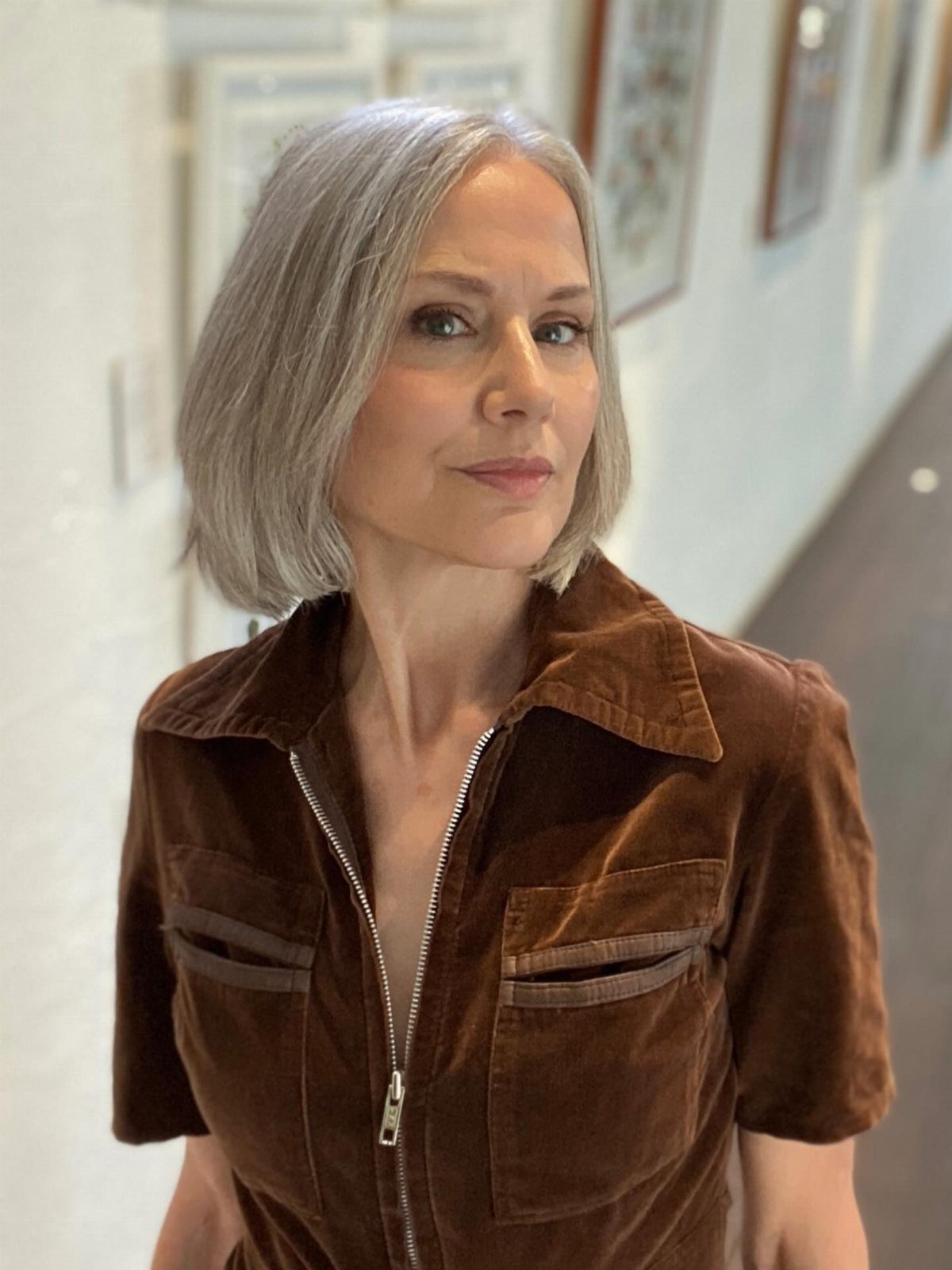
A bob gives grey hair a clean, finished shape that shows off tonal variation more clearly than long, loose hair.
The blunt or slightly angled line at the ends makes thinner hair look denser, and the shorter length means grey hair’s coarser texture is easier to manage day to day.
Ask for a chin-length or just-below-chin bob with a slight angle longer in front, which avoids looking too severe.
The cut needs regular trims to hold the line, but daily styling is minimal: blow-dry smooth or let it air-dry and apply a smoothing cream to tame flyaways.
13. Long Grey Waves
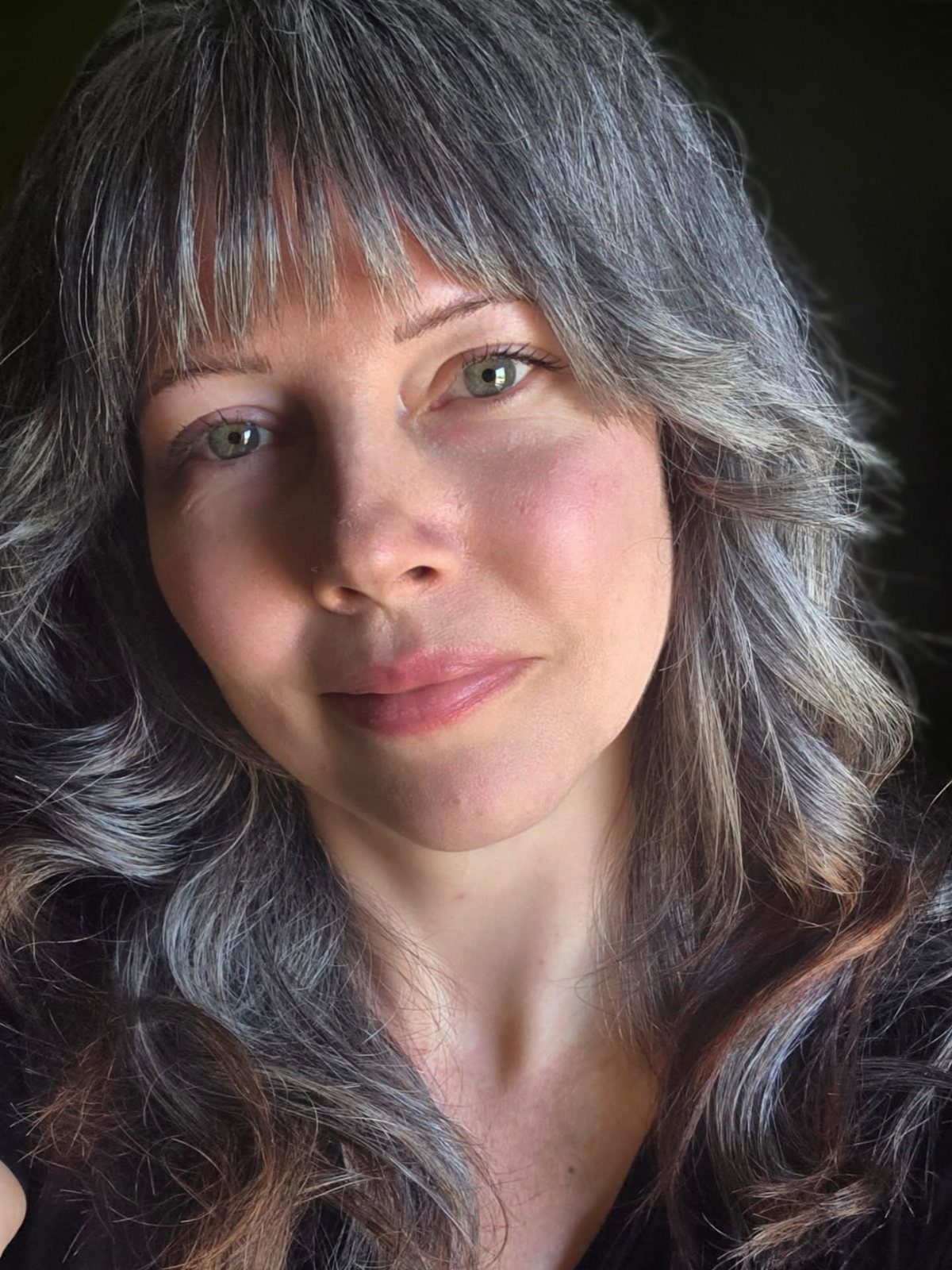
Waves let long silver show every shift in tone, from the lighter strands near the face to the darker salt-and-pepper through the length. A wave breaks the hair into bands that catch light differently, which straight hair cannot do.
Layers and bangs keep long waves from looking heavy, and I would choose them over a one-length cut every time. Grey hair runs drier, so a leave-in conditioner on damp hair helps the waves look soft instead of frizzy.
Skip the brush: scrunch a little product through damp lengths, let the waves dry on their own or rough-dry with your fingers, and resist touching them once they set.
14. Classic Grey Crop
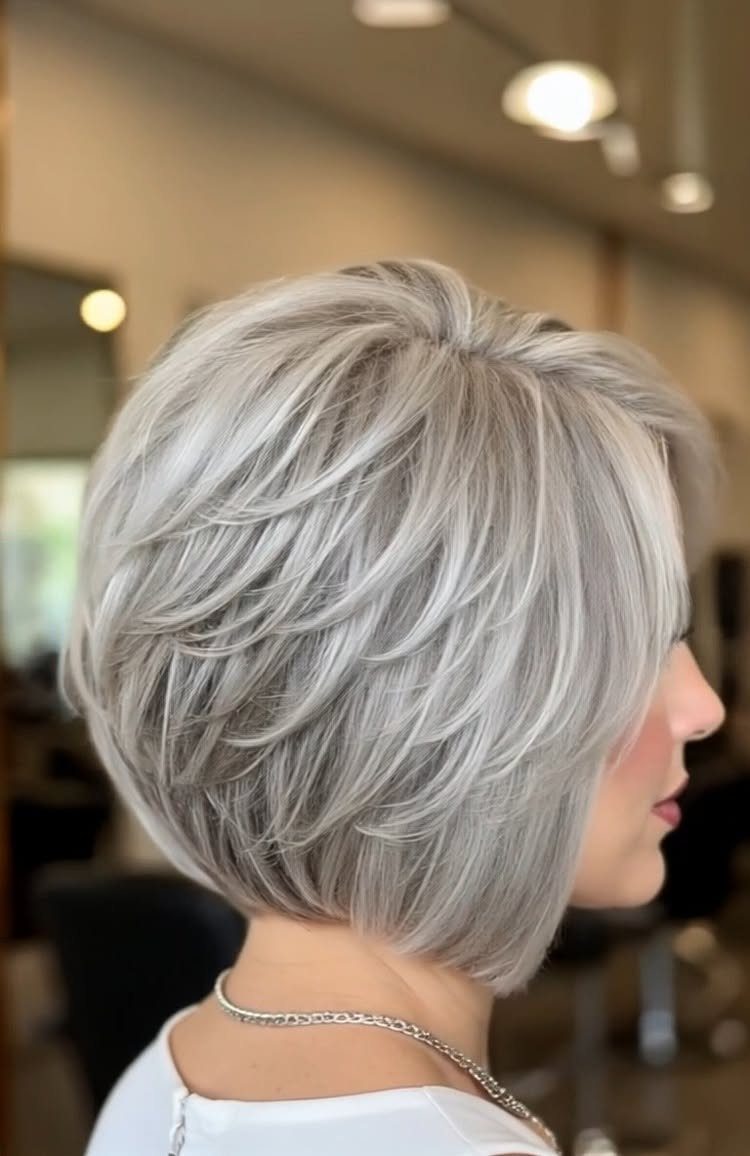
Long strands left at the sides are what separate this crop from a standard short cut: they sweep forward along the cheekbones and frame the face, while the back and crown stay close.
For grey hair, that frame does the work of softening, so the cut reads polished rather than severe.
Ask your stylist to keep the side pieces noticeably longer than the nape and to taper the ends so they blend. Layering through the top gives silver hair lift where it would otherwise lie flat.
Daily styling is short: rough-dry, then tuck or sweep the side strands where you want them. Plan on regular trims, since the shape depends on that contrast in length.
15. Loose Grey Waves
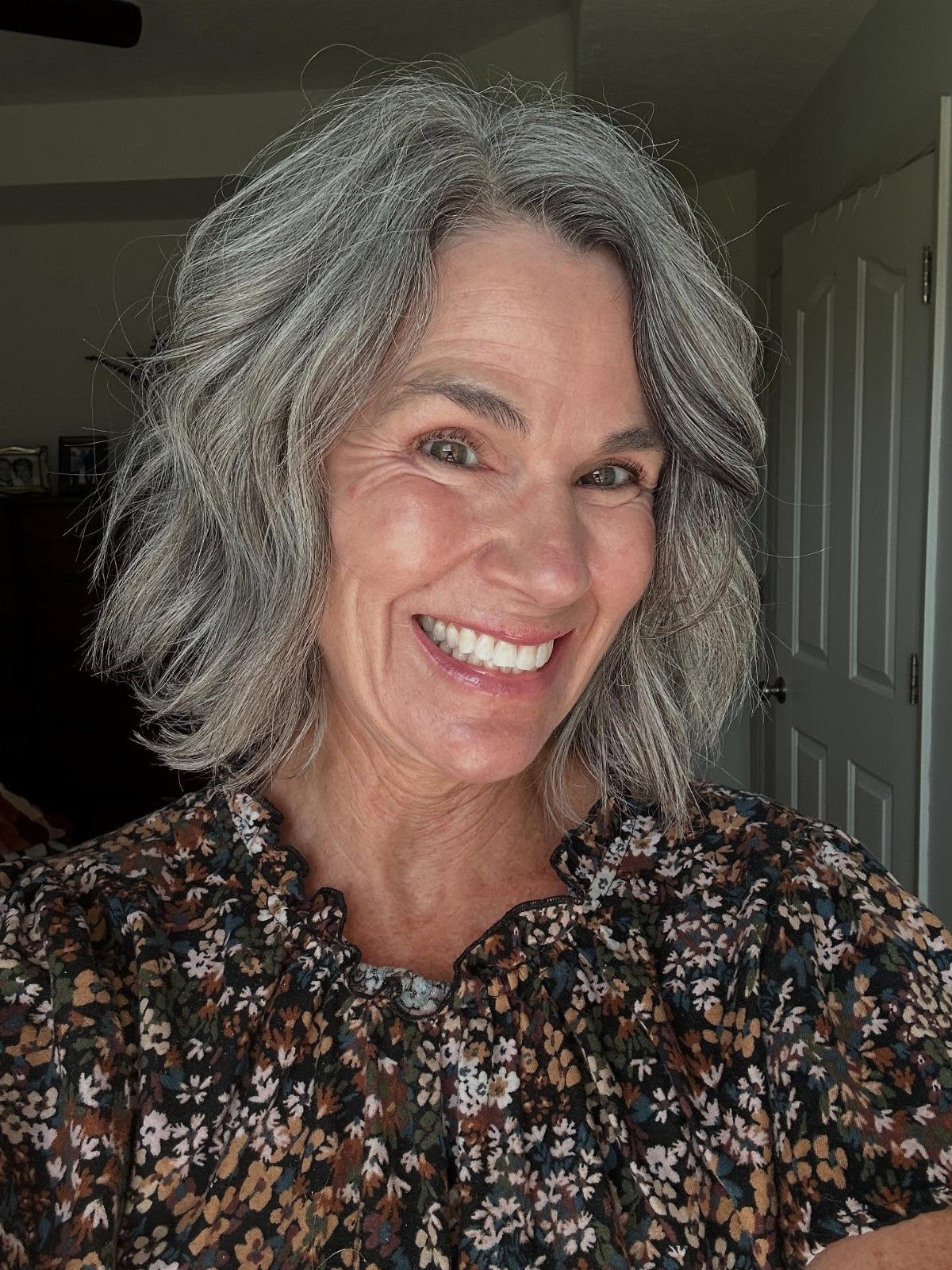
Loose waves give a grey bob or medium cut body without a sharp, set-curl look, and the soft bend suits silver especially well because it breaks up the flat, even sheen that straight grey can have.
Grey strands have less natural oil and a rougher surface than pigmented hair, so a dime-sized amount of light cream or leave-in worked through damp hair keeps waves soft and cuts down on frizz.
After that, let air or a diffuser on low heat do the work, and keep your hands out of it until the hair is fully dry. Touching waves while they dry breaks them up.
Fine hair can lose the wave by midday, so I would pick a cut with some weight at the ends.
16. Grey Front Streak
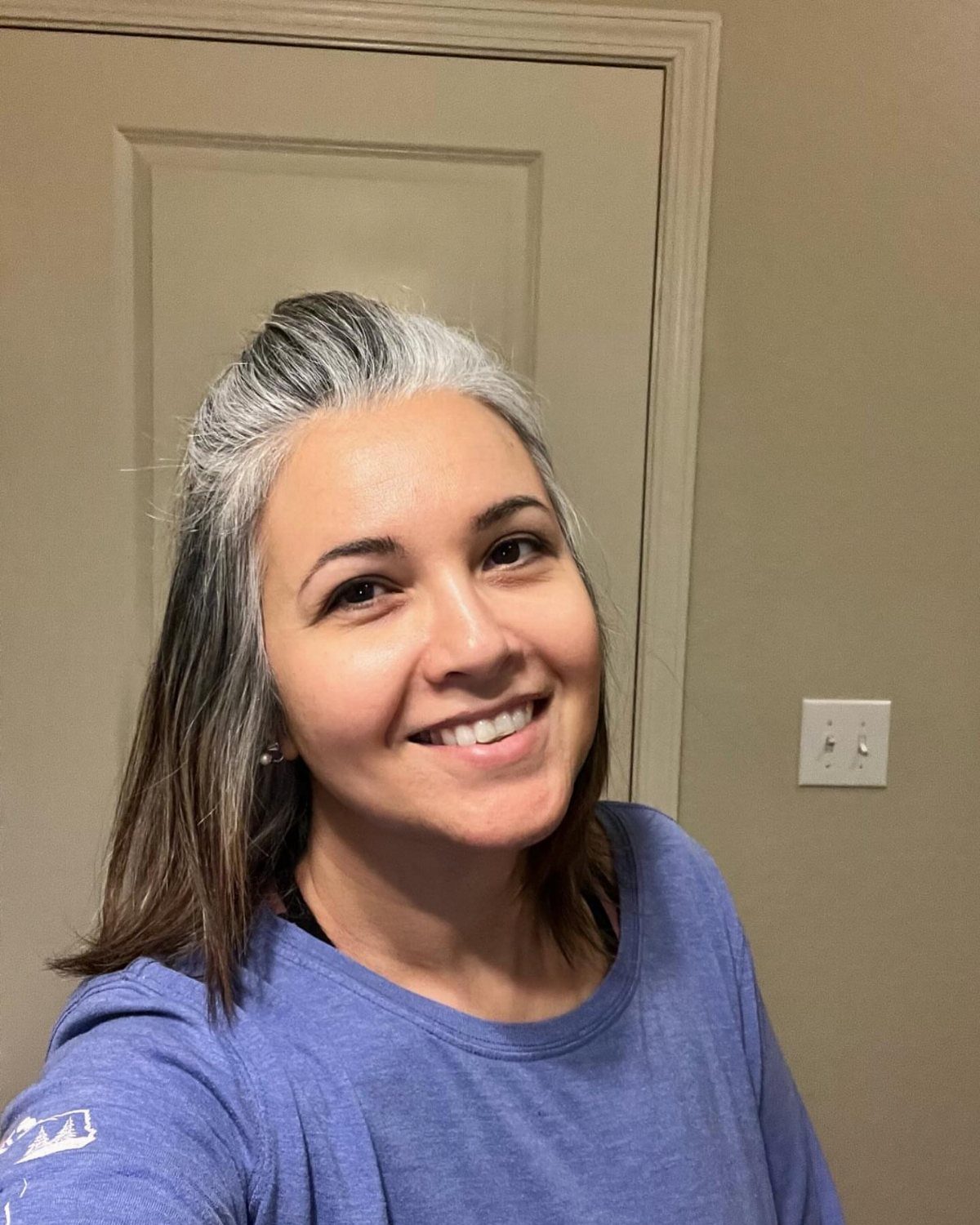
A single silver-grey section left at the front is the lowest-commitment way I know to wear grey on dark hair. The contrast does the work, so the rest of the length can stay exactly as it is.
It frames the face right where the eye lands, which makes it a good fit if you want grey to look chosen rather than leftover.
Long hair gives the streak room to be styled: tucked behind an ear, swept to one side, or left loose.
Let the front section grow in from the roots, since trimming it back would cut the whole effect short. Ask your stylist to keep the parting where you normally wear it, so the streak always sits at the front.
17. Shoulder-Length Silver Layers
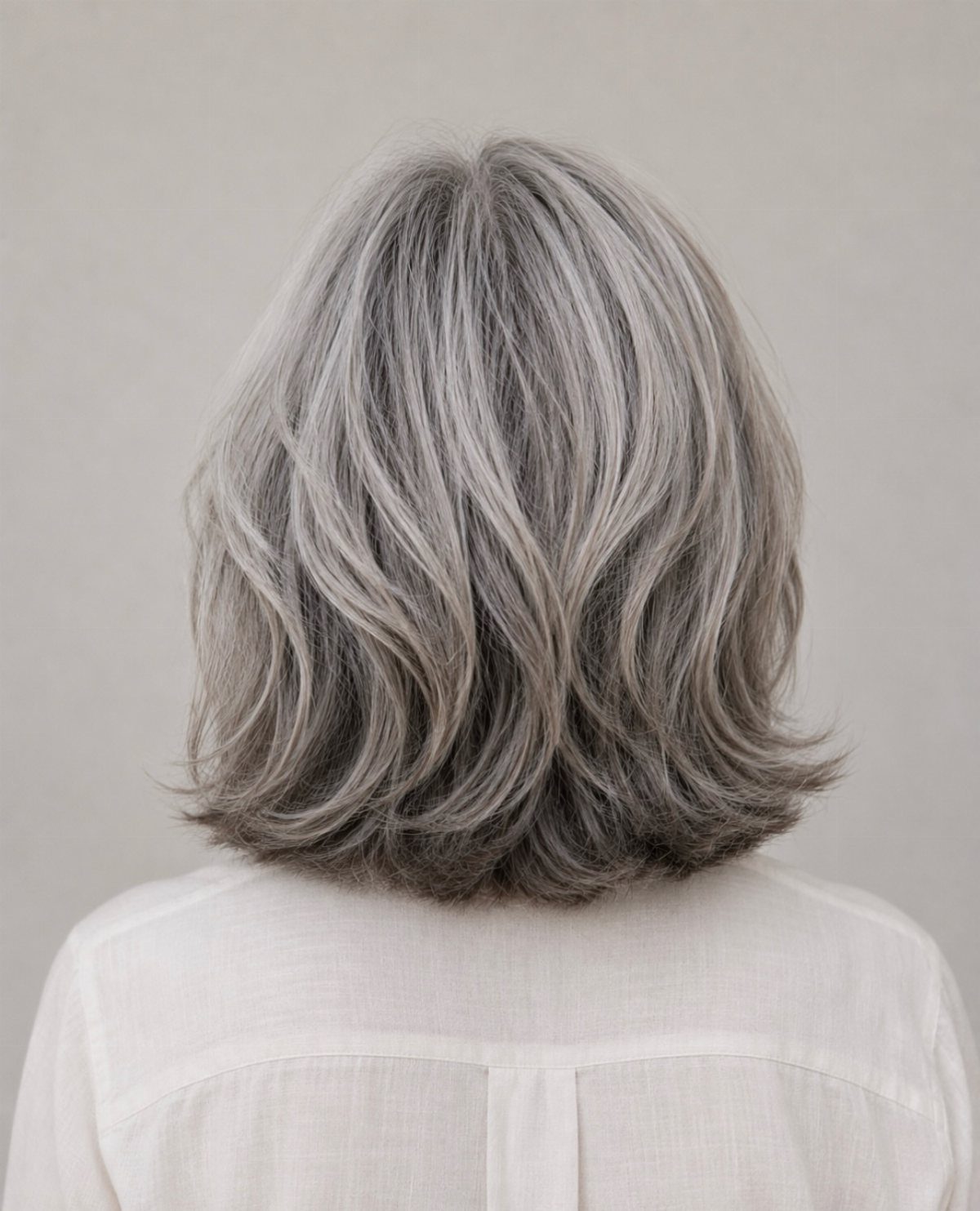
Cut to land at the shoulders, with feathered ends that soften the line, silver layers give grey hair movement without the upkeep of true length.
The layers stop the hair from falling in one heavy sheet, and the tapered ends keep it from looking blunt or severe.
Ask your stylist for long layers that start around the cheekbones or chin, with the ends point-cut for that wispy finish. Fine hair does best with fewer, longer layers so the ends keep their weight.
Layers at this length need very little: blow-dry the ends under around a round brush, or let them air-dry with a pea-sized dab of light cream, and the shape falls back into place.
18. Silver Hair with Dark Roots
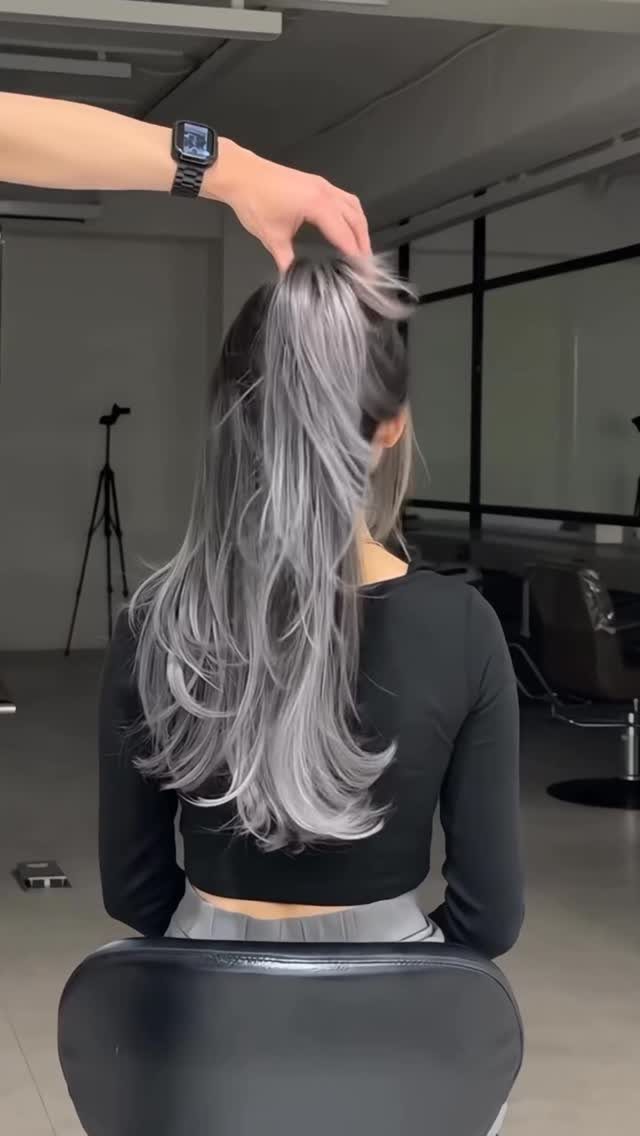
Dark roots on long silver layers read as a deliberate two-tone, and I like that they remove the pressure to hide regrowth. The darker band at the crown frames the face, while the layers keep the length from looking heavy.
Ask your stylist for long layers cut to move with the silver, and mention that you want the roots left alone rather than blended out.
A clear gloss or a purple shampoo can keep the silver from yellowing, but purple shampoo belongs in the shower once a week at most.
The trade-off: the root line gets more noticeable as it grows, so expect to decide at some point whether to keep it or blend it.
19. Voluminous Silver Curls
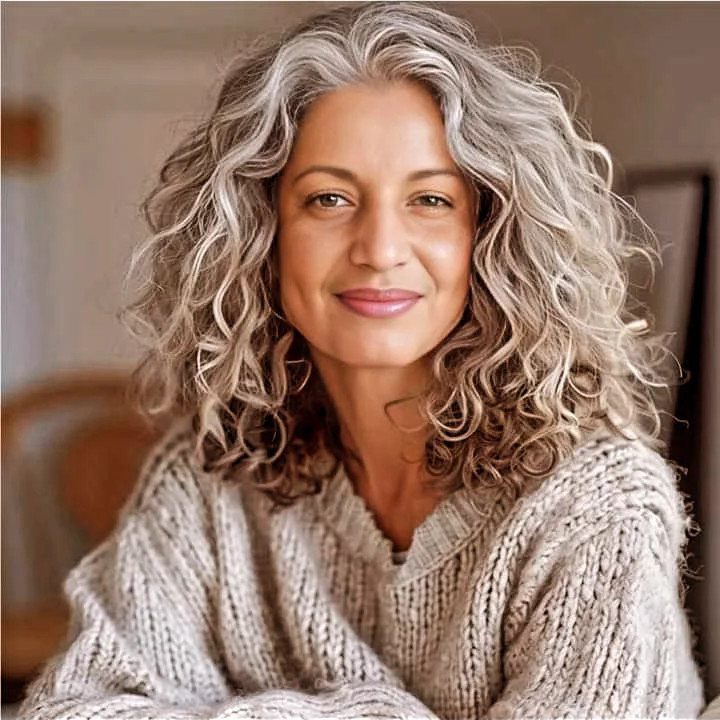
Silver curls styled with volume around the face add dimension that straight grey hair cannot match, since each curl catches light at a different angle.
The texture naturally lifts away from the scalp, which solves the flatness problem many people face when grey hair comes in.
Curly grey hair is drier than pigmented curls, so this look depends on regular moisture: a curl cream on wet hair, then air-dry or diffuse.
Refresh second-day curls with a spray bottle and fingertips rather than re-washing. Length holds the curl pattern better than shorter cuts if your curls are loose.
Preventing Yellow Tones
Purple shampoo is the usual fix for yellow, and once a week is the most I’d use it, because it dries hair out. Finish with a deep conditioner after each wash, since purple products can leave strands feeling dry.
A leave-in with plenty of purple pigment keeps cancelling brassiness between washes. Look for one made for grey, blonde or bleached hair.
Heat and sun both work against a cool silver tone. A heat protectant before blow-drying and a hat outdoors help the color last longer between toning sessions.
Grey Hair Care and Condition
Sun is the part of grey care most people skip.
Without pigment, grey hair has less natural protection from UV, and that radiation damages the hair’s protein, which leaves strands brittle and weak. Hair can’t burn the way skin does, but the damage still builds.
Strong sun calls for a hat or scarf over your hair. A UV spray with UVA and UVB filters is the other option, since those filters reduce damage and slow protein loss.
Smoke and pollution can also push silver toward yellow. A shampoo made for grey or silver hair helps keep that from setting in.
Growing Out Dyed Hair
How long you’re willing to wait decides the route. A pixie grow-out can take 6–12 months, while growing dyed hair out to shoulder length can run over two years.
A pixie can make fine hair look thin, so a light volumizing hairspray gives the shape some body while the dyed ends get cut away.
If full grey feels like too big a jump, a very light blonde with grey undertones makes a good middle step. You can always go greyer later, which is easier and cheaper than starting at full grey.
Highlights and a gradual grey ombre soften the line between old color and new growth while the roots come in.
Everyone is currently all about embracing their gray hair. But for those who have committed to dyeing their hair for years, it can be a challenge (both mentally and physically) to transition from colored hair to au natural.
— Vogue
Frequently Asked Questions
How can I wear grey hair without looking old?
Pick a cut with movement and shine: soft layers around the face, loose waves, or color blended at the roots. Shorter and longer pieces bounce light at different angles, which is why layered silver looks dimensional instead of flat.
A soft, textured pixie also reads fresh and modern, and a fringe that connects into face-framing layers keeps the shape from feeling heavy.
What is the new trend for gray hair?
Blending and contrast lead right now: natural silver left alone, soft grey blending, greige lights, and darker graphite tones.
Dark roots left under long silver layers look like a planned two-tone. As the root line grows it gets harder to ignore, and sooner or later you pick between keeping it and blending it.
How do I prevent yellowing or brassiness in grey hair?
Use purple shampoo no more than once a week, and follow with a deep conditioner because it can leave strands dry. A purple-pigment leave-in used between shampoos keeps brassy tones canceled out.
Can short grey hairstyles work on curly or wavy hair?
Yes. Curl-aware layering reduces bulk and makes a short cut easier to style, and grey that runs slightly coarse often suits it well.
Grey curls run dry, so use a curl cream or leave-in on damp hair and brush as little as you can.
What are the easiest short grey hairstyles for busy mornings?
Pixies, cropped bobs, and tousled layers, since they air-dry well and need very little product. A textured crop is also forgiving, because its uneven pieces hide slight growth between trims.
How can I add volume to fine grey hair without heat styling?
After a shower, blot your hair with a towel, then scrunch upward and leave it to air-dry. Keep your hands out of it until it is fully dry, since touching breaks up the shape.
What is the best hairstyle for long grey hair?
Long layers, with or without bangs, or loose waves.
Both options take weight off the length and give every silver and white tone room to show. For fine hair, a blunt cut or soft layers give the ends enough weight to hold their shape.
How do I style short grey hair?
Smooth the roots with a hot brush while keeping natural lift at the crown, then finish with a little cream for an undone look.
Short grey looks most modern when it isn’t too set. Rake a little texturizing paste through dry hair on a pixie or shag, and the pieces pull apart.
What hairstyle looks best on me?
It depends on your hair length, density, texture, natural movement, face shape, and personal taste, so a consultation with a stylist beats copying a photo exactly.
Fine hair looks best with soft layers; medium to thick hair can handle feathered ones. Bring a few saved cuts and ask how each would sit on your hair.