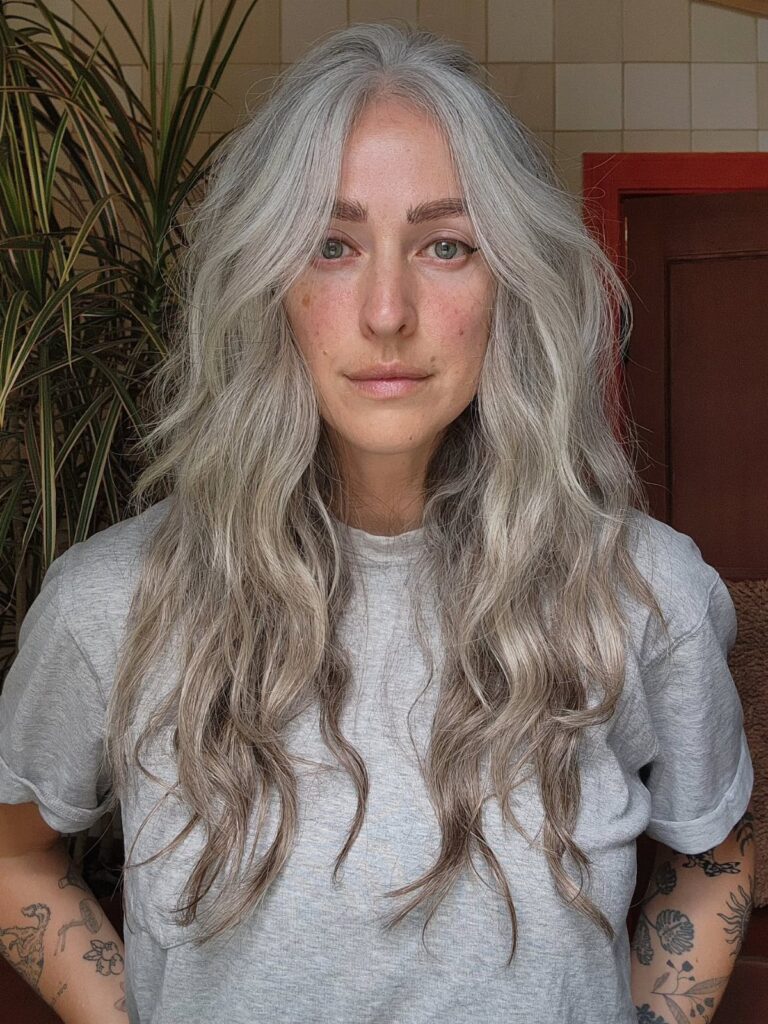
Gray tones run from charcoal silver blends and slate gray all the way to white blonde highlights and icy blonde ombre, with methods that include balayage, color blocking, full dye and partial face framing.
Face-framing highlights, silver balayage and streaks let you add gray without covering the whole head, whether you’re working with salt-and-pepper or blending gray into dark hair.
Full silver gray or white blonde needs pre-lightening on dark hair, then a toner to pull the color cool, and you’ll be back with purple shampoo and root touch-ups more often than you would with charcoal gray waves or a gray brown blend.
Cool skin tones suit silver and ash shades, while warm undertones can make gray read flat.
1. Silver White Color Accents
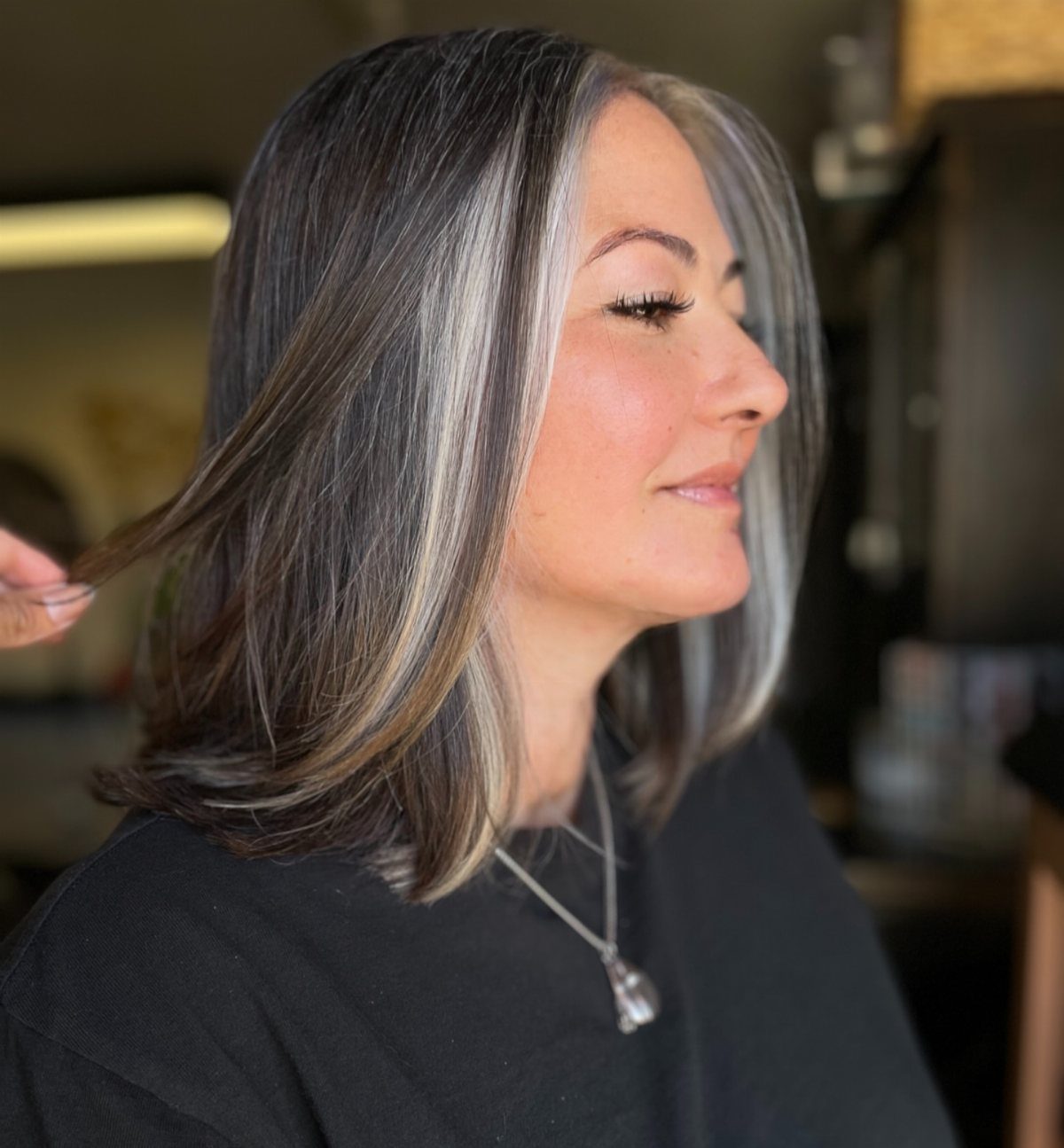
Face-framing silver-white pieces sit against natural grays and brown tones, bringing light to the front without coloring the whole head. The contrast pulls attention forward and can make grays look intentional rather than something to hide.
If you’re transitioning to gray or already have some coming through, this technique works with what’s there.
A stylist can paint on the silver pieces, or you can apply a bright ash blonde or platinum kit yourself using a brush on the sections around your face.
The back stays untouched, so roots are only visible where you part your hair.
Maintenance is lighter than all-over color. Touch up the front pieces between salon visits, and use a purple shampoo to keep the silver tone from going warm.
2. Stone Silver Style
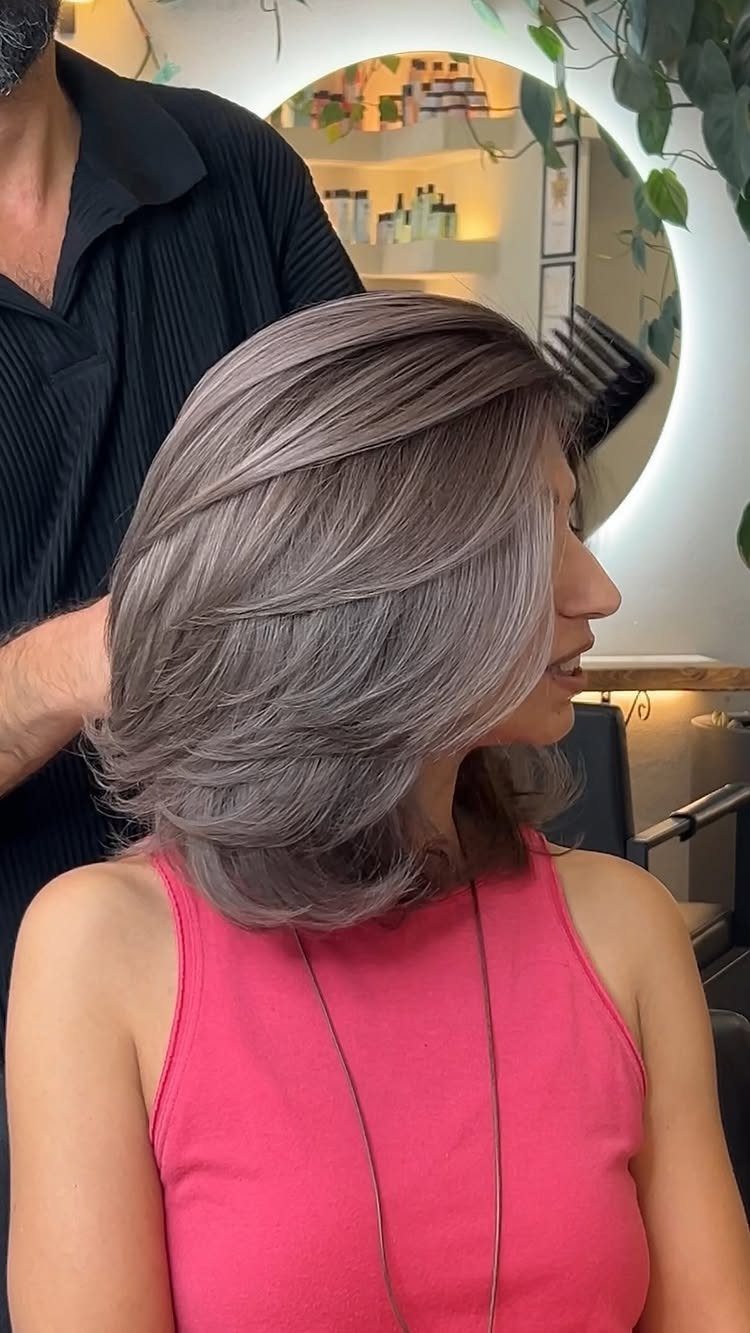
Babylights in ashy tones thread through silver-gray hair, adding dimension without a hard contrast. The fine highlights break up a solid base and catch light when you turn your head.
This works best on hair that’s already gray or heavily salt-and-pepper. A colorist paints the babylights close to the roots so they blend as they grow out.
If you’re doing it yourself, pick a dye 2 shades lighter than your base and apply it with a fine-tooth comb, taking thin sections. Foil each one and process according to the product instructions.
The result is subtle. If you want a bigger shift, go for chunkier highlights instead.
3. Smoky Hair with Money Piece
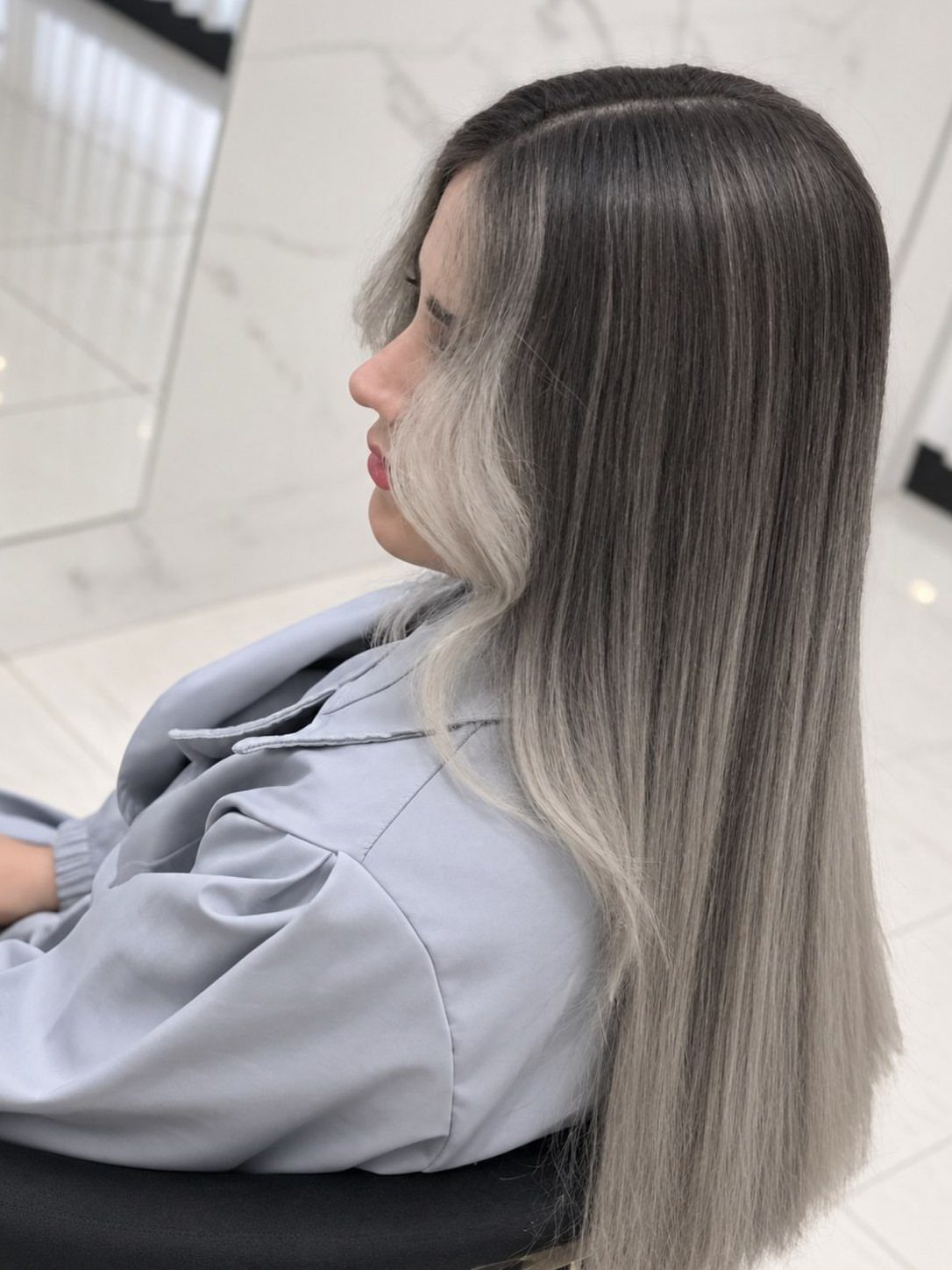
A smoky gray base with pale ash money pieces gives you a cool-toned look that’s still rooted in natural color. The money pieces frame your face, and the rest of the hair stays blended and low-contrast.
To get this, a stylist will tone the base into a cool brown-gray, then lighten the front sections to pale ash.
If you’re working at home, start with a semi-permanent gray dye on the bulk of your hair, then use a separate bleach and toner on the money pieces.
The front will need more upkeep than the rest, so plan to refresh the tone regularly.
This suits cool skin tones. Warm undertones can make the gray read dull, so test with a semi-permanent version first.
4. Icy Blonde Ombre
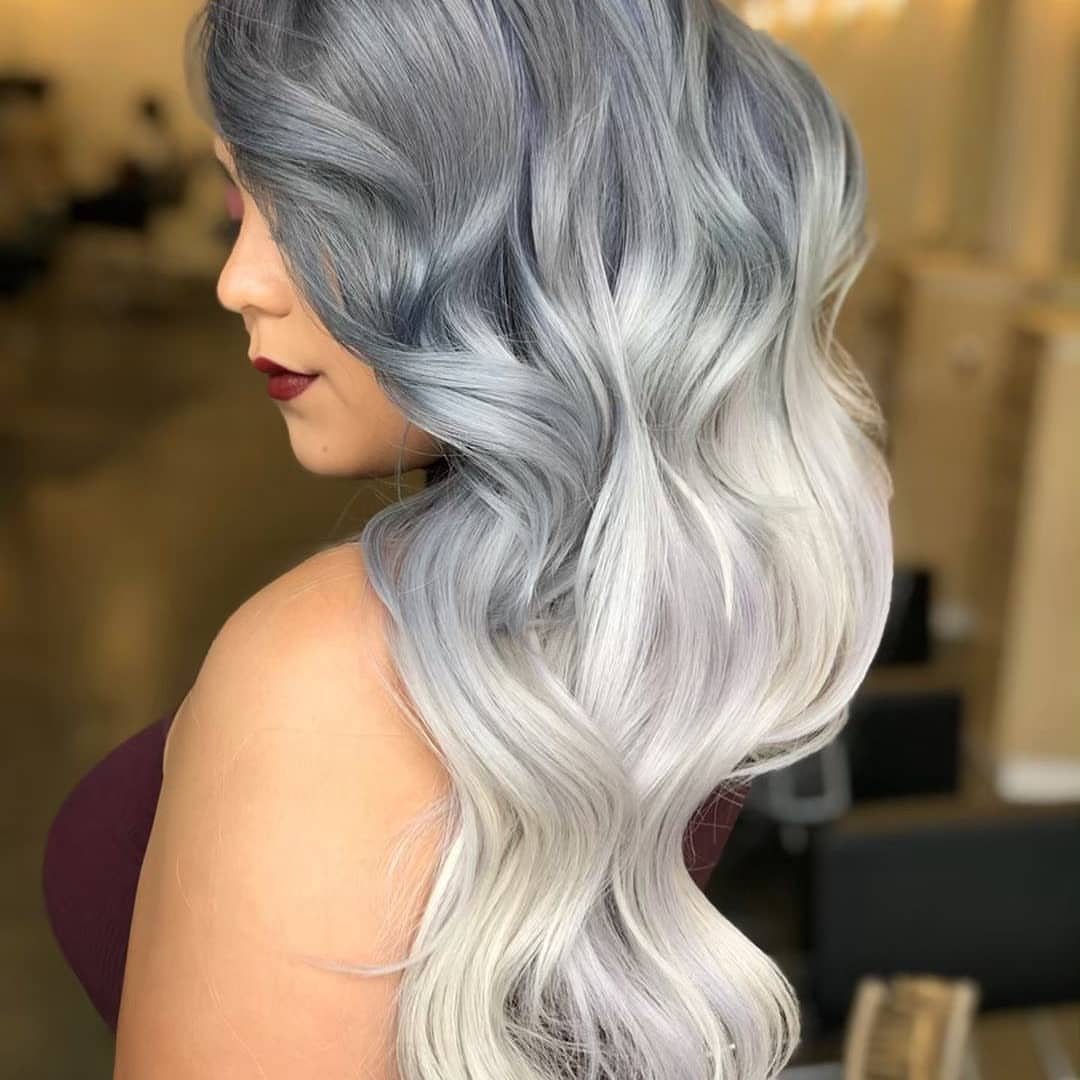
Dark gray roots fade into icy silvery blonde through the mid-lengths and ends, creating a high-contrast ombre that grows out cleanly. The roots stay untouched, so you can go months between appointments without a visible grow-out line.
This look needs pre-lightening on the ends to get that pale, almost white tone, then a silver or ash blonde toner over the top.
A stylist will blend the transition zone so it doesn’t sit as a hard line. If you’re doing it yourself, you’ll need a bleach kit and a separate toner, plus gloves and a tint brush.
Apply the bleach from mid-lengths down, feathering it upward, and process until the hair lifts to pale yellow. Rinse, then apply the toner.
The ends will need toning regularly to keep the silver from turning brassy.
5. Charcoal Silver Balayage
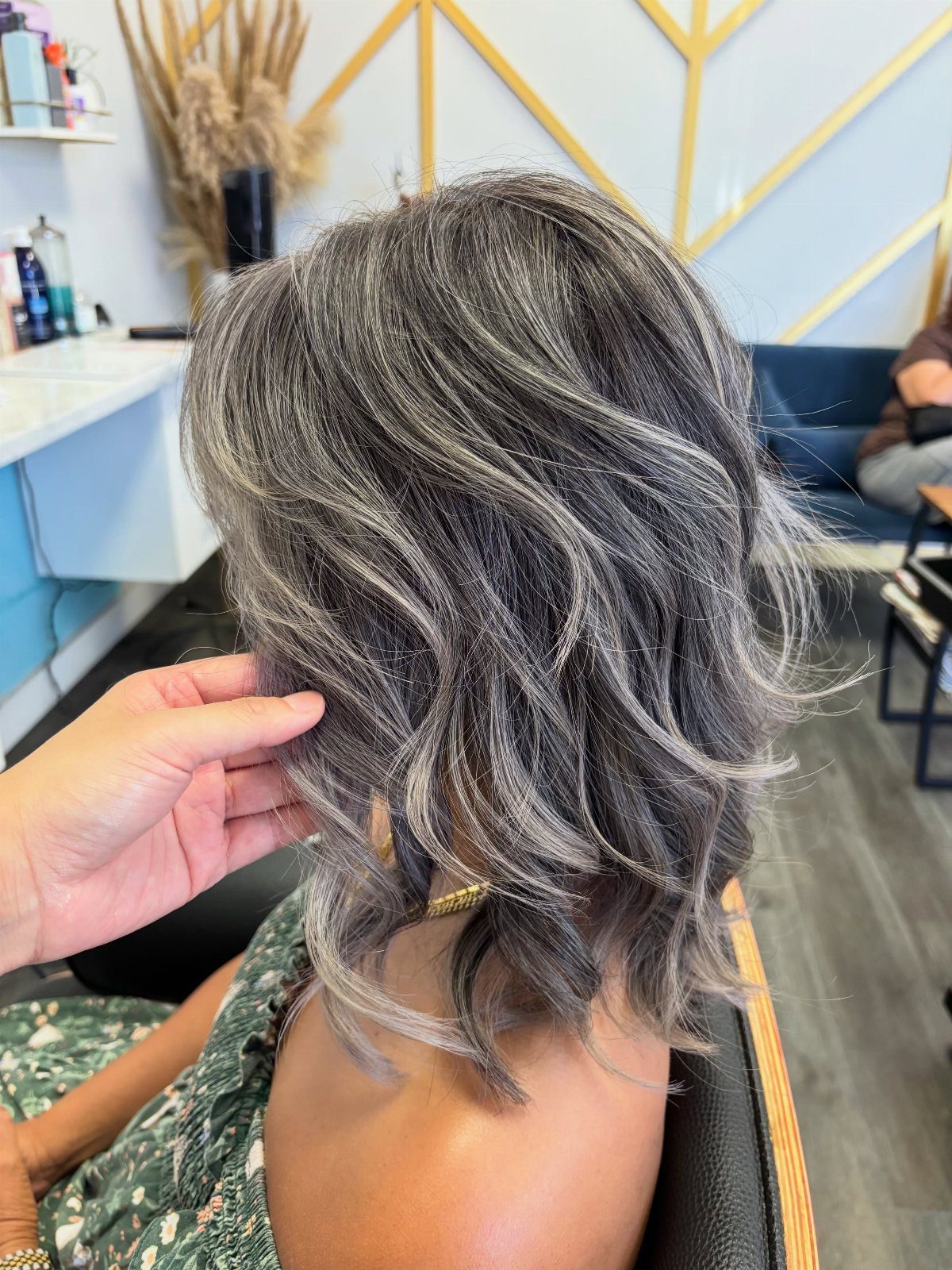
Charcoal roots blend into silver through balayage, with the darkest color sitting underneath and the lighter pieces painted on top. The technique keeps the base dimensional and lets the roots grow out without a harsh line.
A colorist will paint the silver onto the surface and leave the underlayers darker, so when you part your hair or pull it back, the depth stays.
At home, you can get close by sectioning the top layers and applying a silver or ash blonde dye with a brush, keeping the bottom half untouched. Process for the time the box recommends, then rinse and tone.
This works on naturally dark hair or hair that’s already been colored dark. The silver will need a purple shampoo to stay cool, and you’ll want to refresh the tone periodically.
6. Charred Iron Style
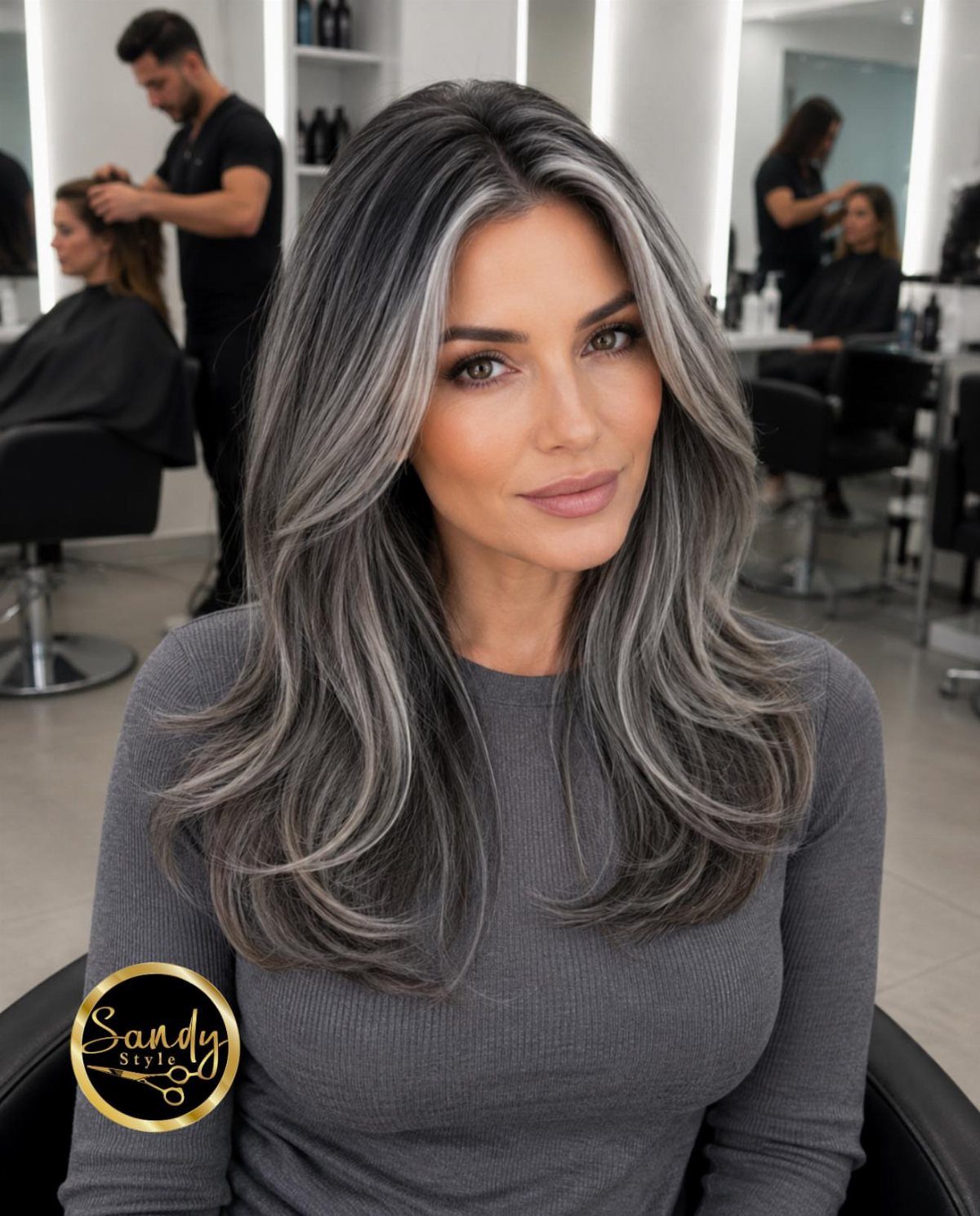
Charcoal-gray balayage offers a painted gradient that doesn’t require all-over color or frequent root touch-ups. The darkest tone sits at the roots and blends into lighter gray through the lengths, so grow-out is built into the design.
A stylist paints the color freehand, concentrating the lighter tones around the face and through the ends.
If you’re doing it yourself, section your hair and apply a gray dye starting a few inches down from the roots, blending upward with your fingers or a brush.
Leave the first inch or two untouched. Process, rinse, and finish with a toner if the result skews warm.
This suits anyone who wants gray tones but doesn’t want to commit to frequent salon visits. Expect to refresh the color periodically, depending on how fast your hair grows.
7. Skunk Stripe Color Blocking
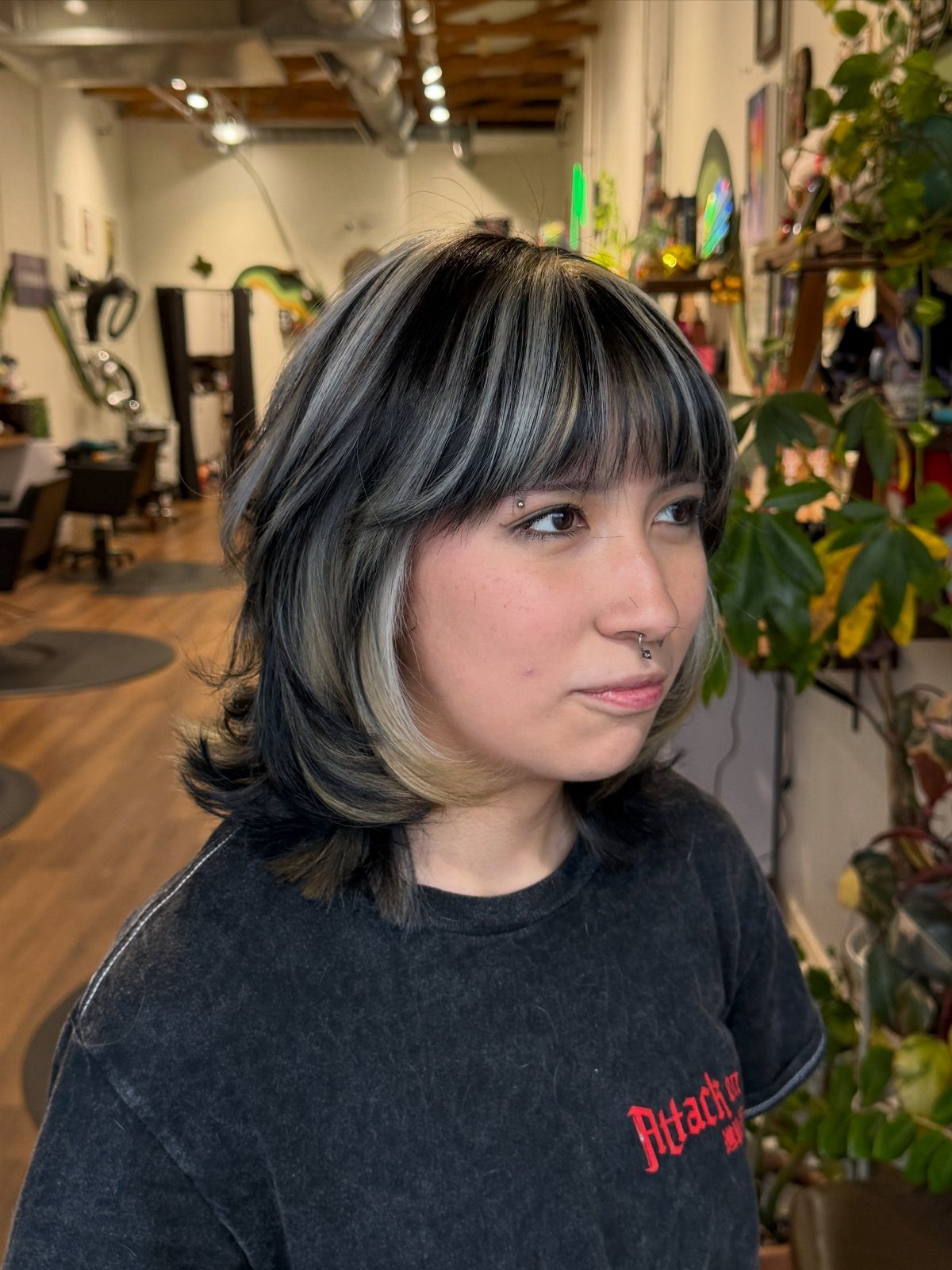
The technique places the widest, brightest sections where they catch the most light: through the bangs and along the face. The contrast is high, and the placement makes the gray tones look deliberate.
You can ask a stylist to paint on the white sections, or do it yourself with a platinum or high-lift blonde kit.
Section out the pieces you want lightened, apply the product, and process according to the timing on the box. If your natural hair is dark, you may need to bleach first, then tone.
The white will need regular toning to stay bright. Purple shampoo between color appointments keeps the tone from shifting yellow.
8. White Blonde Framing Highlights
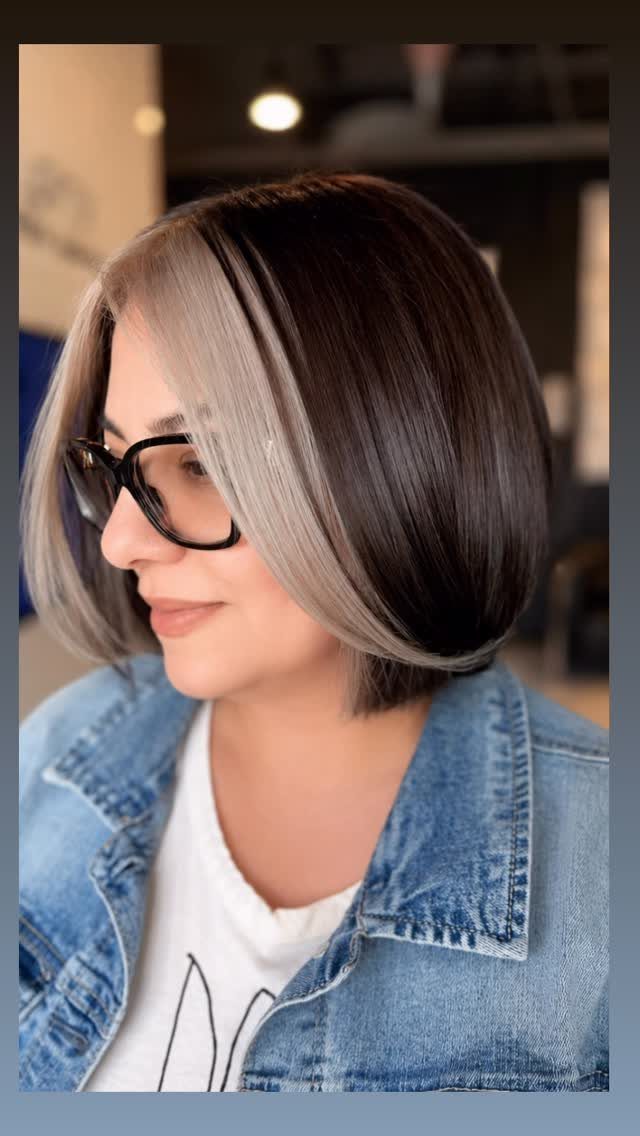
The contrast reads clean, and the blonde tone stays cool enough to sit next to natural grays.
A colorist can paint the highlights in, or you can section the front pieces yourself and apply a cool blonde dye with a brush.
If you’re starting from dark hair, you’ll need to lift the color first, then tone it ash or platinum. The back stays untouched, so upkeep is limited to the front sections.
This suits anyone who wants a low-maintenance way to add brightness without a full color appointment.
9. Graphite Hairstyle
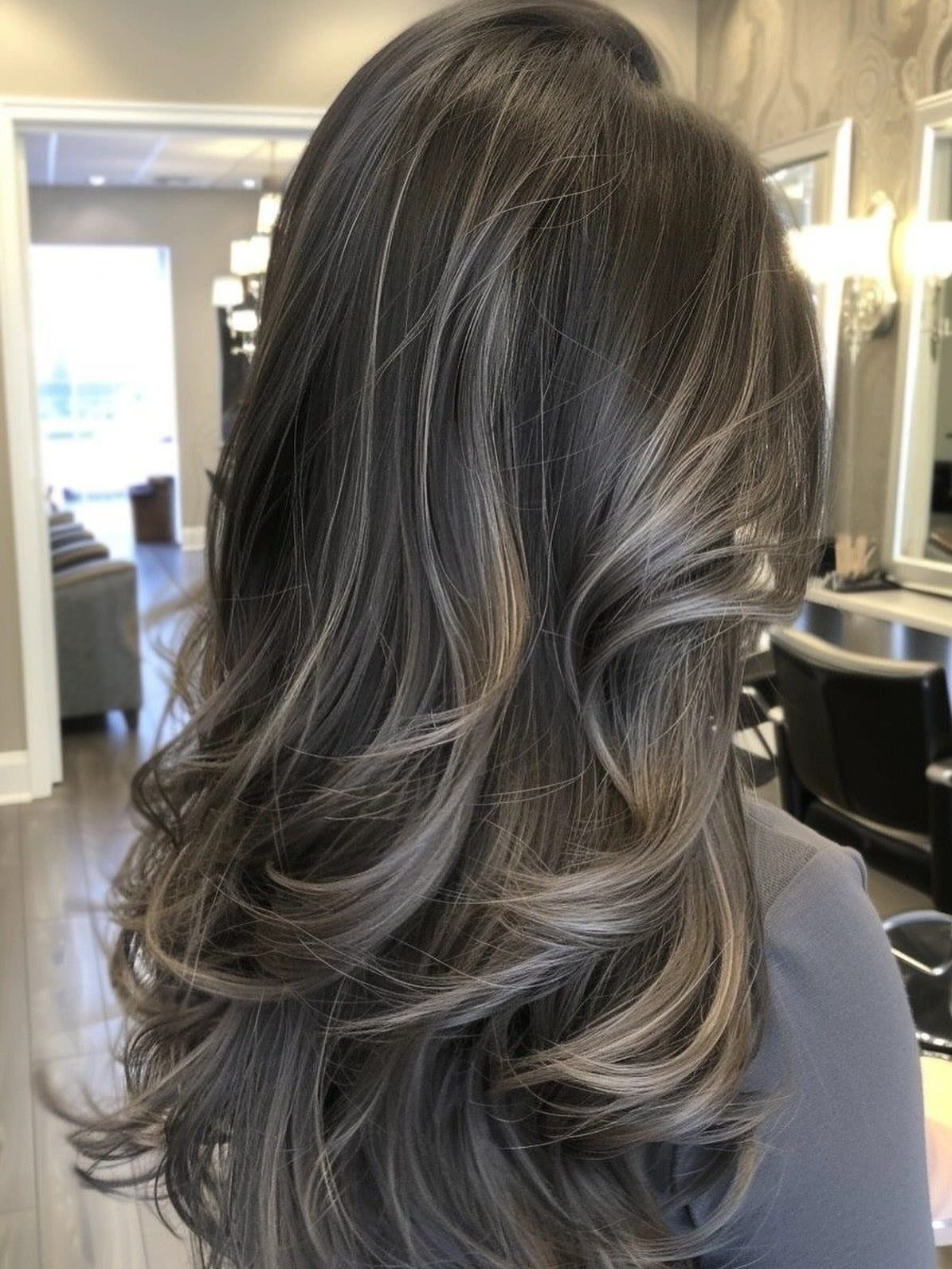
Lowlights and bright silver pieces thread through graphite-gray hair, adding depth and shine without one flat tone. The dark strips sit underneath, and the silver catches light on top.
A stylist can paint on the silver and weave in the darker tones, or you can apply a graphite dye to the base and add silver with a separate product on the top layers.
Curl the ends to show off the dimension.
A purple-toning shampoo between salon visits keeps the silver from turning brassy.
10. Pearl Gray Style
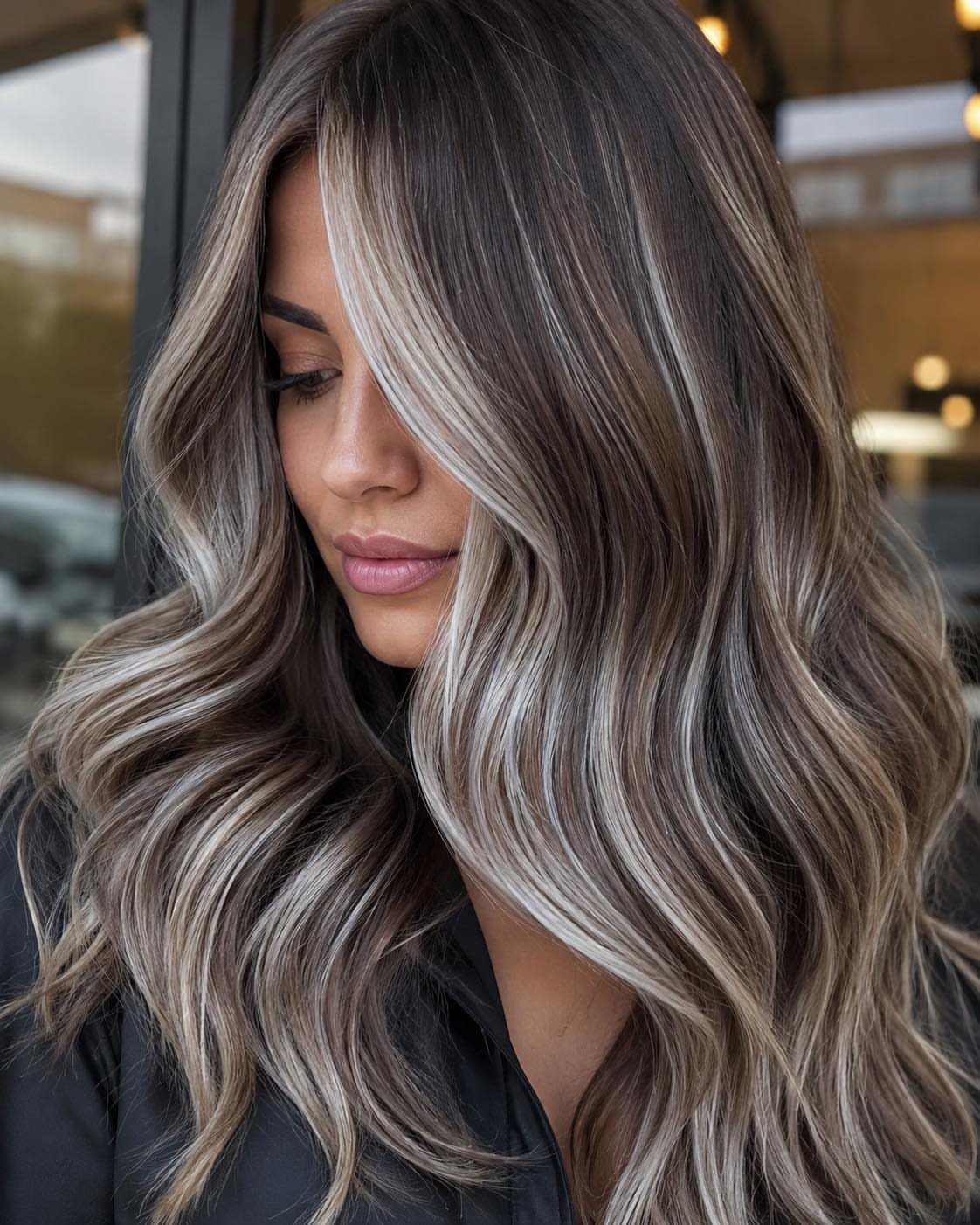
The highlights are painted close together, so the result reads soft and dimensional rather than stripey.
A colorist will paint the babylights freehand, placing them close to the roots and feathering them through the lengths.
If you’re working at home, use a fine-tooth comb to lift thin sections and apply a cool blonde dye, then foil each one.
11. Slate Gray Blend
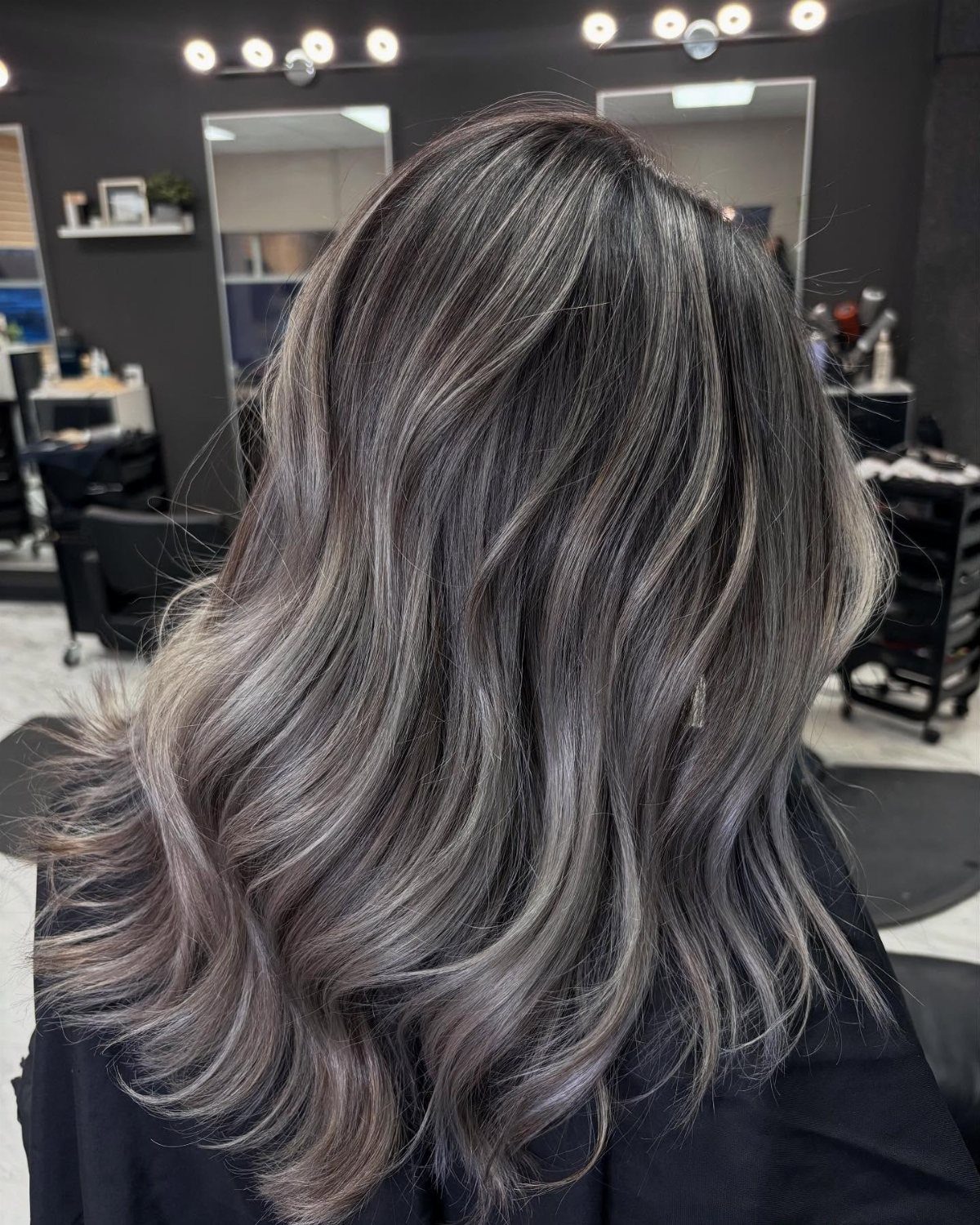
Soft silver balayage blends through slate gray, with the transition so gradual that the color reads natural rather than obviously painted.
The base stays close to the original tone, and the lighter pieces sit where the sun would naturally lighten hair.
Pick a silver or ash dye one or two shades lighter than your base, then paint it onto the surface layers and through the ends.
A stylist will feather the color so there’s no visible line, and you can do the same at home by applying the dye with a brush and blending it upward with your fingers.
This grows out cleanly and needs less upkeep than all-over color.
12. Mousy Brown Pewter Style
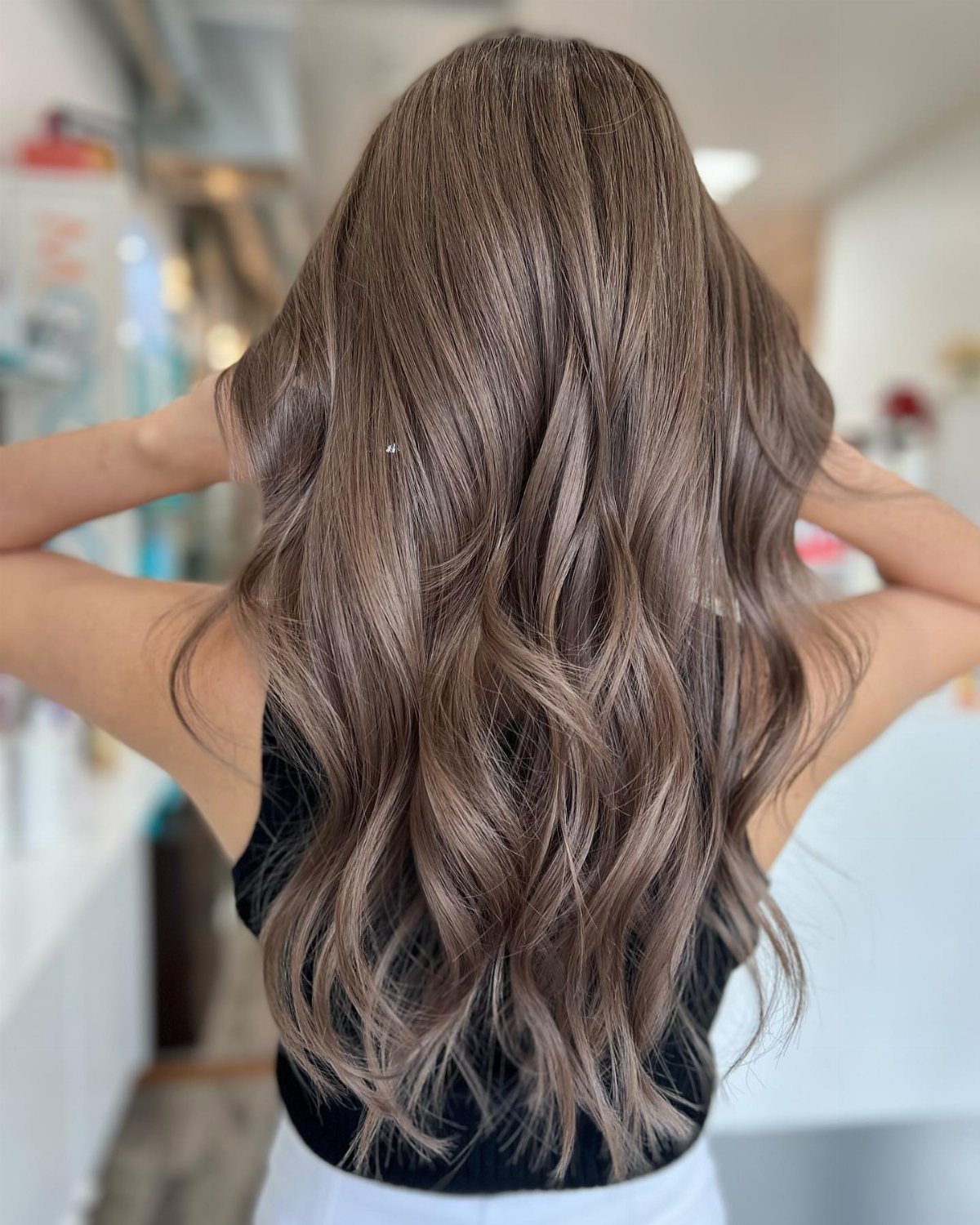
Cool pewter-gray tones sit over mousy brown hair, shifting the base into something that reads silver without going platinum. The color stays muted and blends with natural grays rather than covering them.
You can apply a semi-permanent gray dye over brown hair to get this tone, or ask a stylist to mix a custom pewter shade.
The result is subtle, and if your hair is already on the cooler side, the shift will be even softer. Warmer brown tones may need a pre-tone to pull out brass before the gray goes on.
This suits anyone who wants gray hair without a high-contrast look.
13. Gray Hair Dye
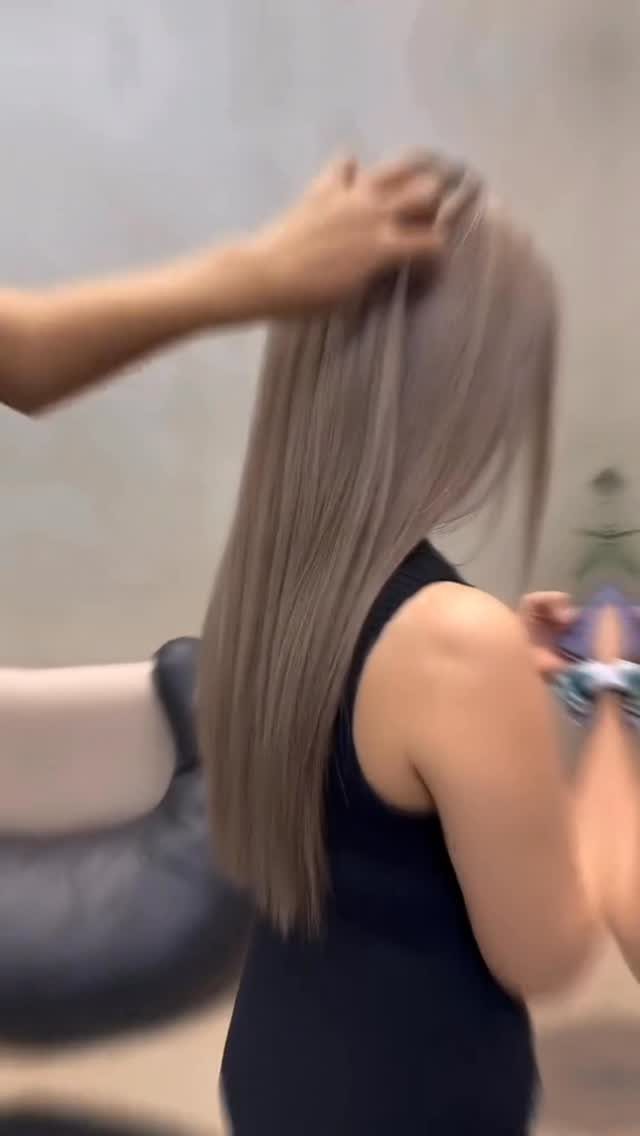
All-over gray dye turns natural hair a flat, even tone without highlights or dimension. The result is one solid color, and it covers what’s there completely.
A stylist mixes the gray shade and applies it root to tip, or you can use a permanent gray dye at home.
Lift dark hair first with bleach, then apply the gray dye over pale yellow hair. The color will fade over time, so plan to refresh it regularly.
If you want solid gray from root to tip with no variation, this delivers that.
“The good news is, although some gray hair is more difficult and more resistant to hair color, the technology around the products used to color hair now is amazing,” says Adam Reed, hairstylist and founder of Arkive Headcare.
— Vogue
14. Charcoal Gray Waves
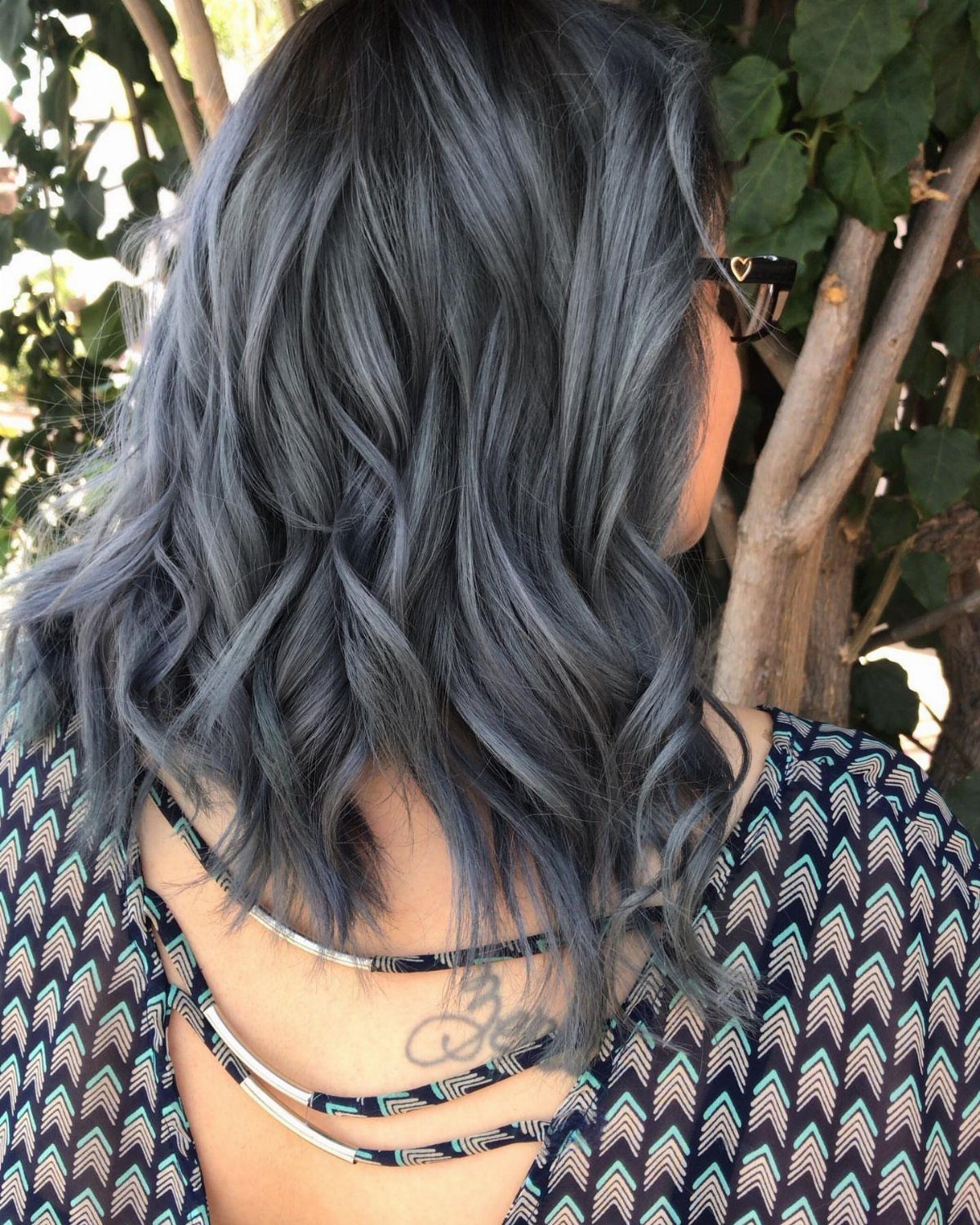
An even charcoal base with fine silver strands threaded through keeps the color dimensional without high contrast. The waves show off the lighter pieces, and the overall tone stays dark.
Apply a charcoal dye to the full head, then paint on silver highlights with a separate product, taking thin sections.
A stylist can weave the silver through freehand, or you can lift small pieces yourself with a tint brush and foil.
The silver will need toning to stay cool, but the dark base grows out without a visible line.
15. Charcoal Silver Melt
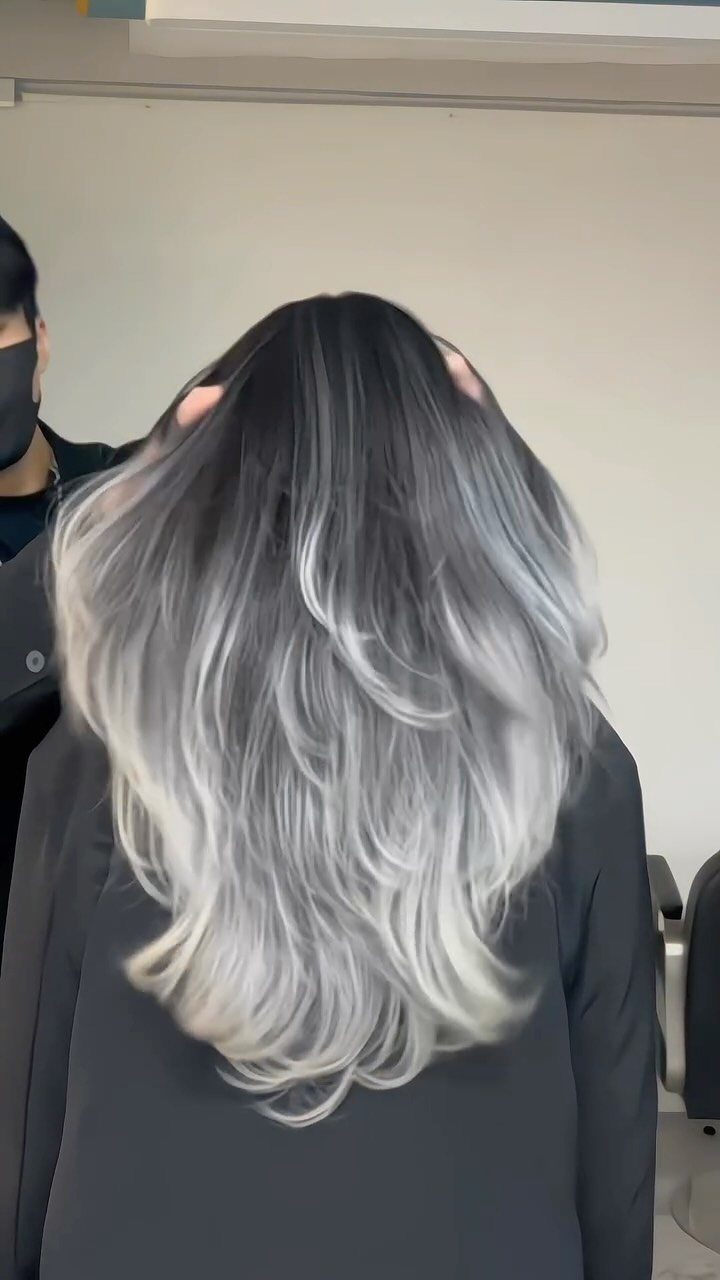
The color sits darkest at the scalp, so roots blend into the melt rather than showing as a line.
A stylist will paint the transition freehand, lifting the mid-lengths and ends first, then toning the whole thing gray. The ends will lift palest, and the roots stay untouched.
Refresh the tone periodically to keep the silver from turning warm.
16. Silver Gray Bob
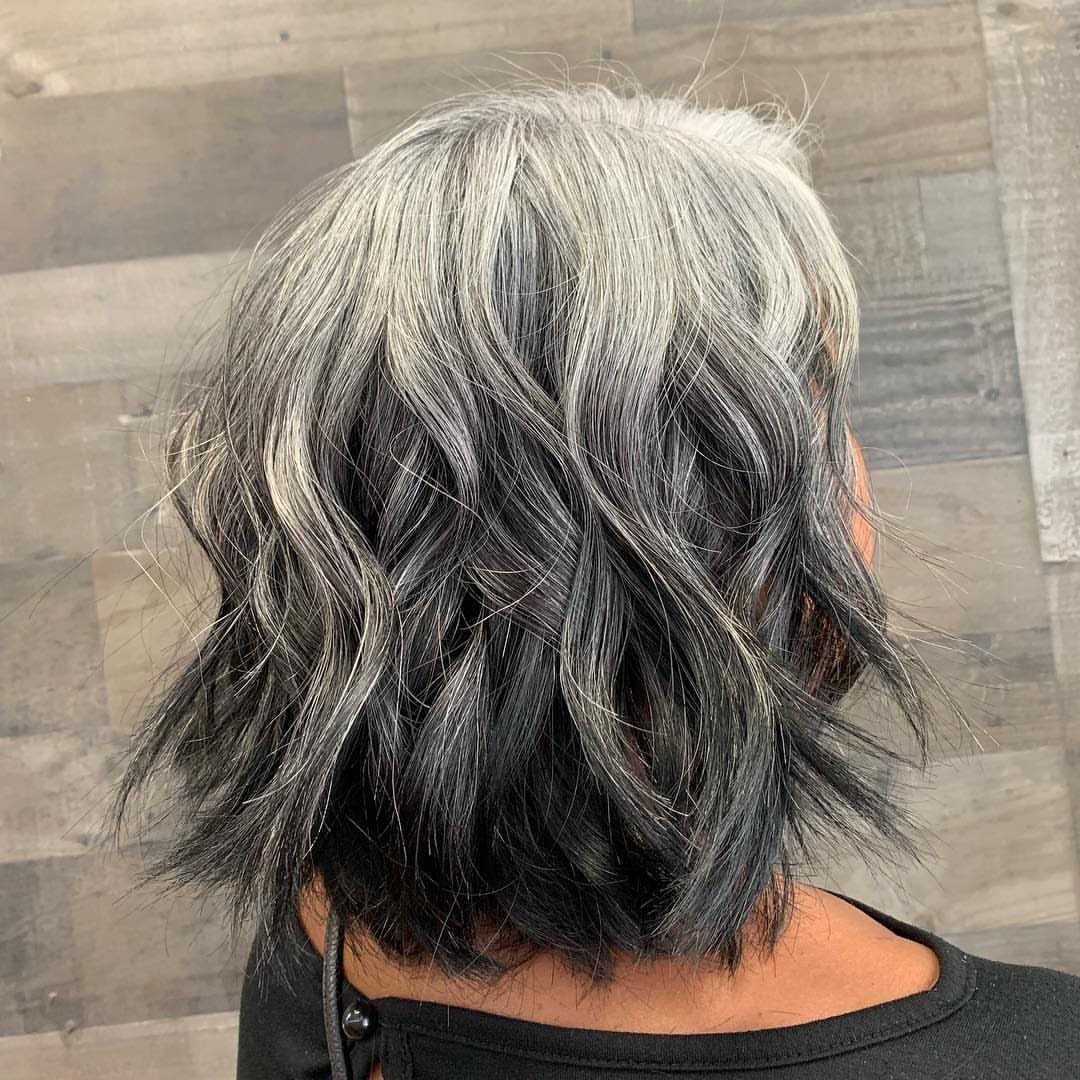
Silver-gray on top blends into charcoal at the ends, creating a reverse ombre that keeps the lengths dark and the roots light. The color reads cool-toned, and the darker ends give the bob weight.
You need a pale blonde base for the silver to show through properly.
Apply a charcoal dye to the bottom half, then feather it upward to blend into the silver. A stylist can paint the transition, or you can section the hair horizontally and apply the darker color starting at the ends.
The reverse gradient means roots stay light, so grow-out is less visible.
17. Gray Lavender Bob
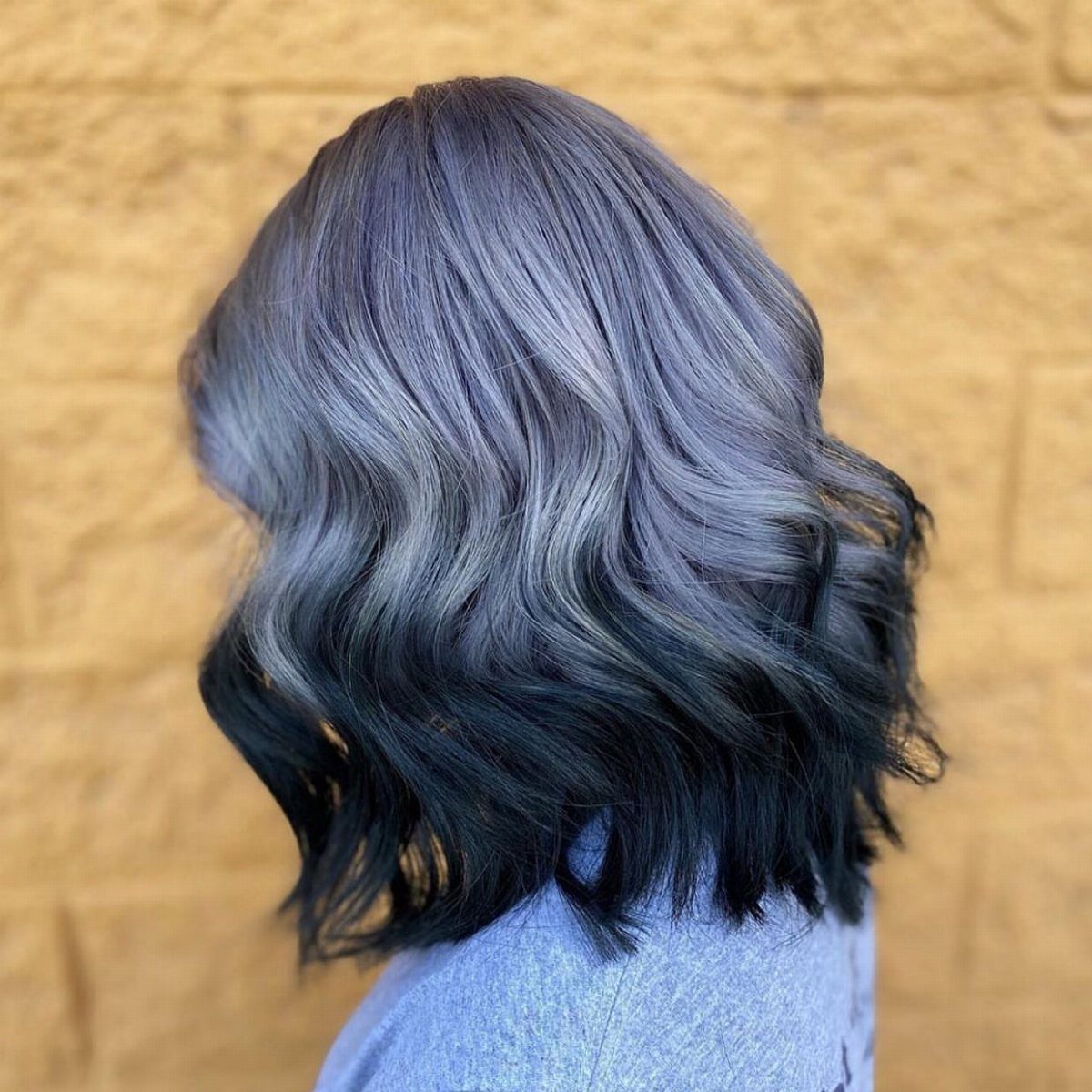
A cool lavender-gray shifts into dark charcoal at the ends, giving a bob a purple cast without going full pastel.
Lift the hair to pale yellow first, then tone it with a lavender-gray dye.
Lavender tones fade fast, so expect to refresh the color more often than straight gray.
18. Smoky Silver Short Hair
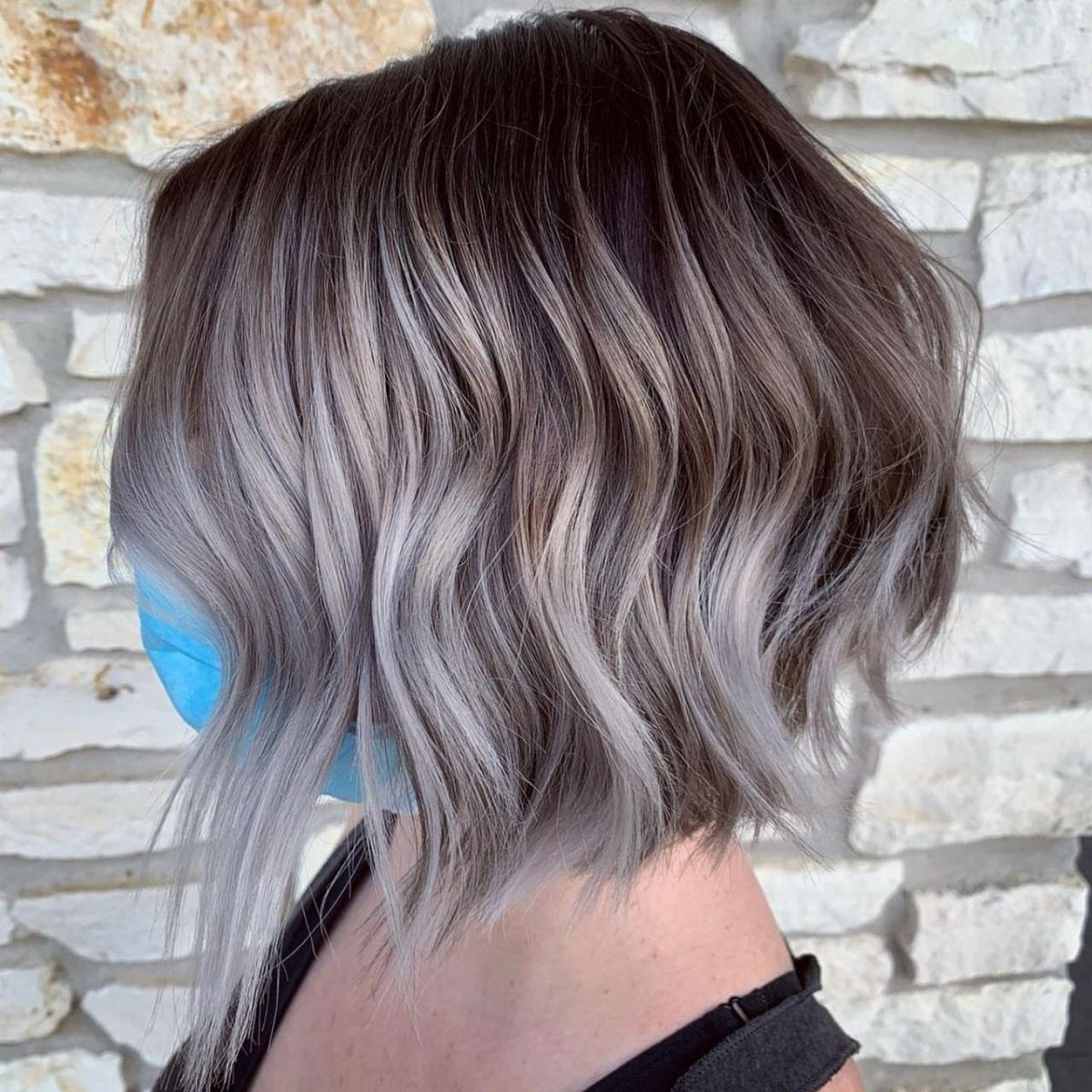
Dark roots fade into smoky silver through the lengths, keeping the color dimensional and the grow-out soft. The short length means less upkeep, and the waves show off the gradient.
The root shadow builds grow-out into the design, so touch-ups are less frequent.
Pick this if you like gray but don’t want it sitting at the scalp.
19. Silver Gray Curls
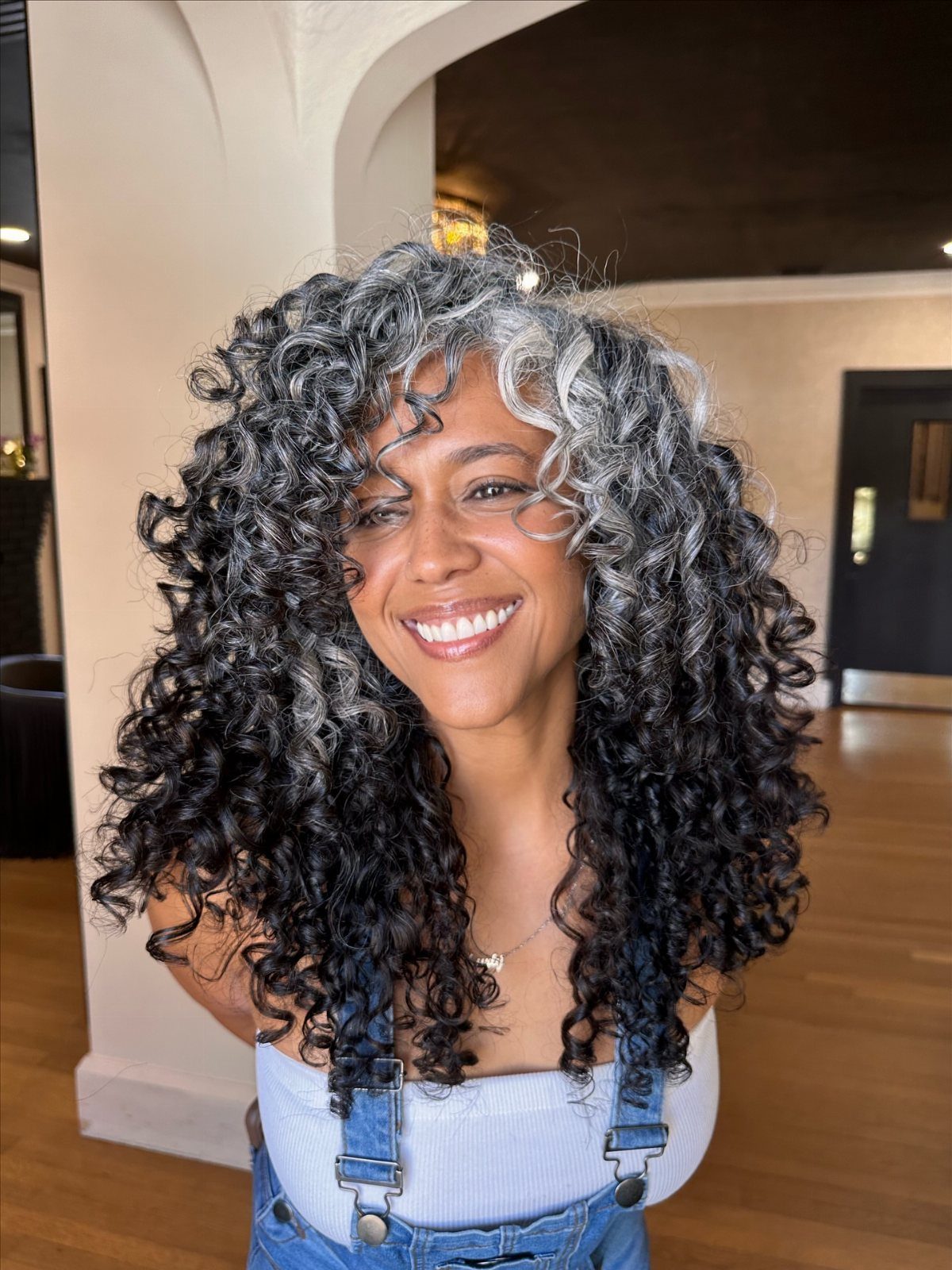
Silver-gray pieces sit through dark curls, concentrated at the crown and around the face. The rest of the hair stays its natural dark tone, so the contrast reads high and the placement looks intentional.
20. Silver Gray Face Framing
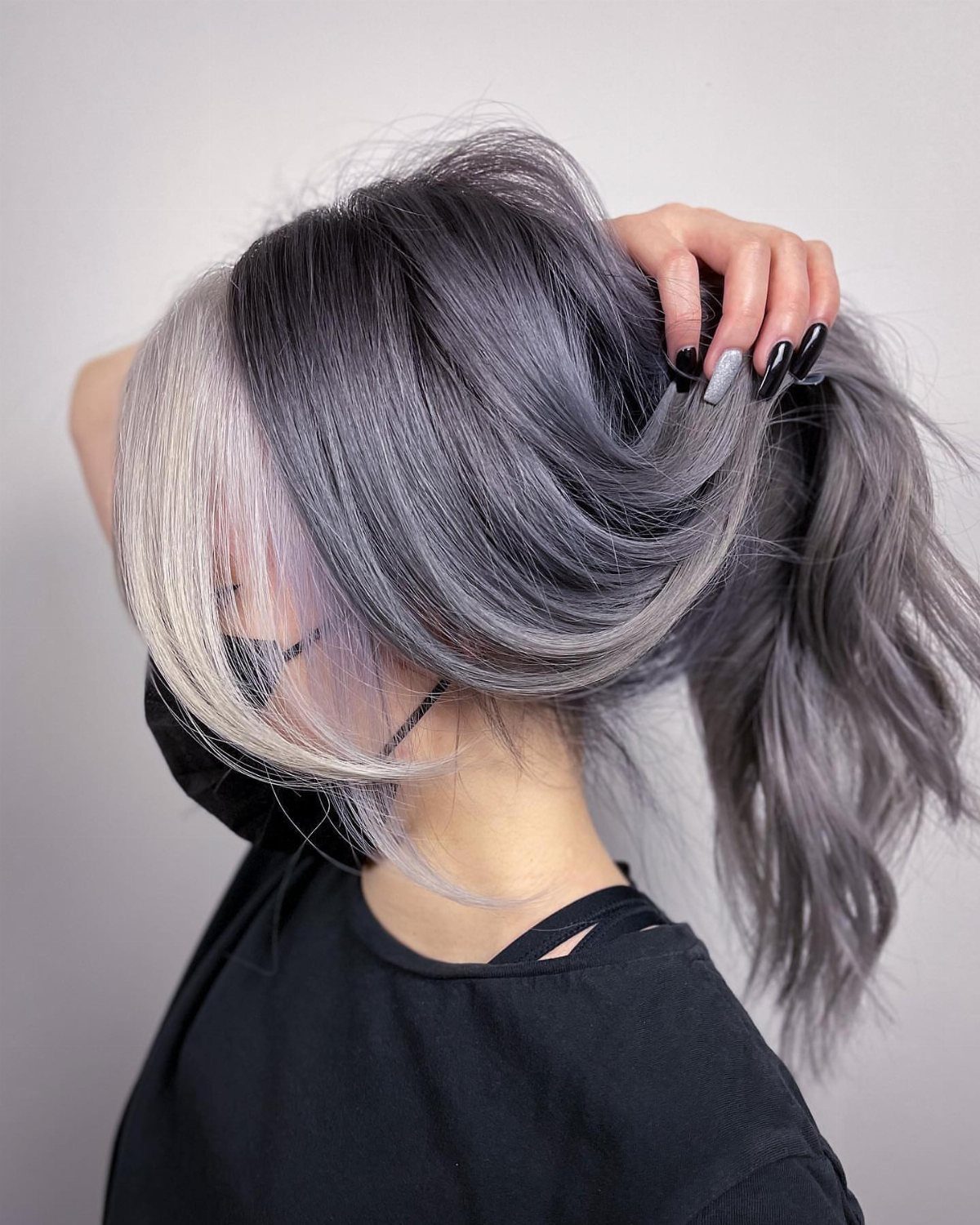
Pale silver streaks frame the face while the rest of the hair stays silver-gray with dark roots showing through. The face-framing pieces are lighter than the base, so they catch light and draw attention forward.
Lift the front sections to pale blonde, then tone them silver or platinum. The back can stay darker, or you can apply an all-over gray dye first and lighten only the front pieces afterward.
The roots grow out without a hard line, and the pale streaks will need toning regularly.
21. Dark Hair Gray Streaks

Gray streaks sit through long dark hair, blending natural grays with the base color rather than covering them. The result is low-maintenance and lets the hair grow out without visible roots.
If you’re growing out gray naturally, this is what it looks like partway through. The dark base stays untouched.
22. Gray Silver Balayage
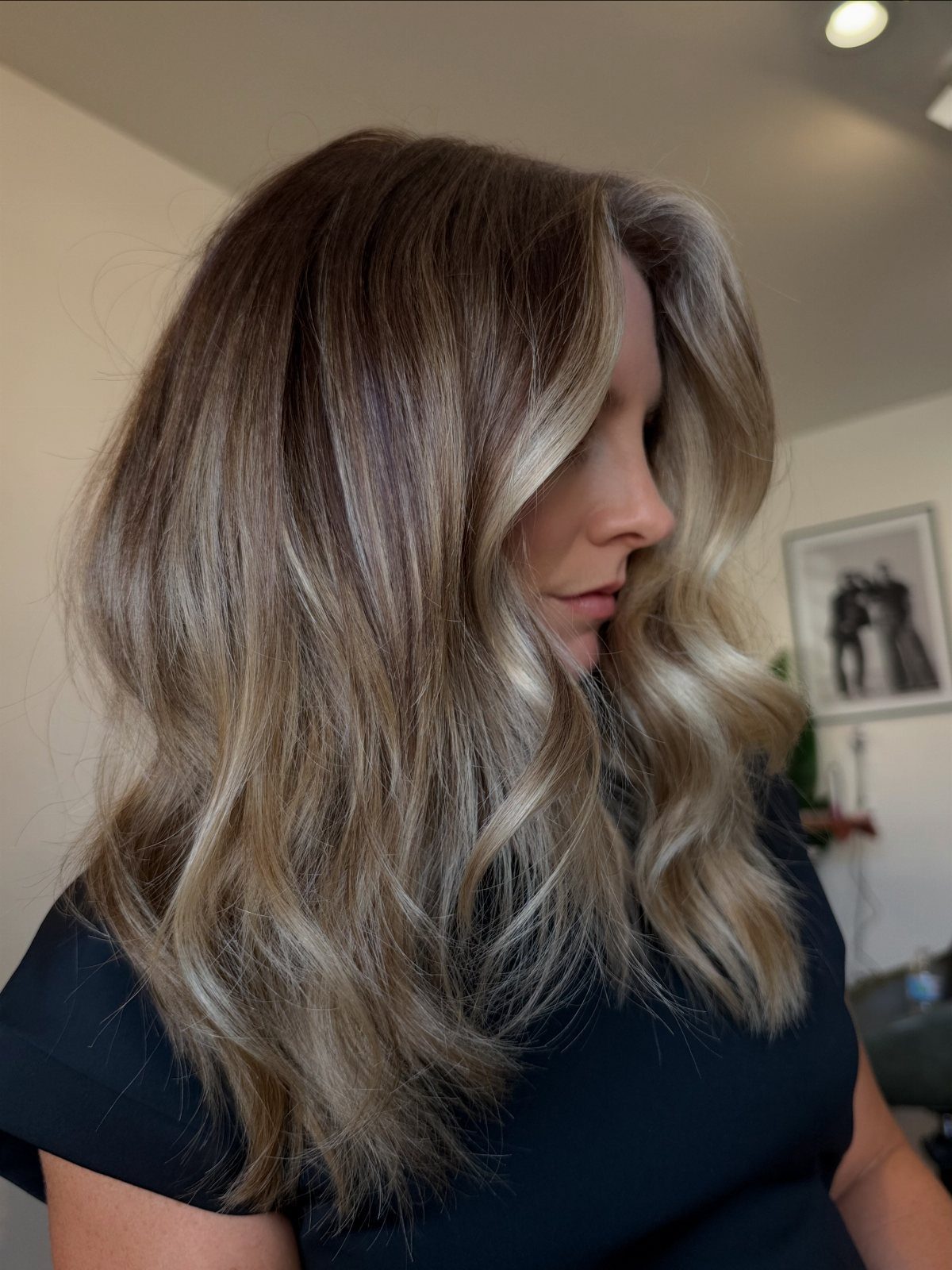
Silver and silver-beige highlights blend through dark brown hair, with the lighter tones painted onto the surface.
At home, you can apply a cool blonde or silver dye to the top layers with a brush, leaving the underlayers dark.
The highlights need toning to stay silver, and you can refresh them as they fade.
23. Gray Brown Blend
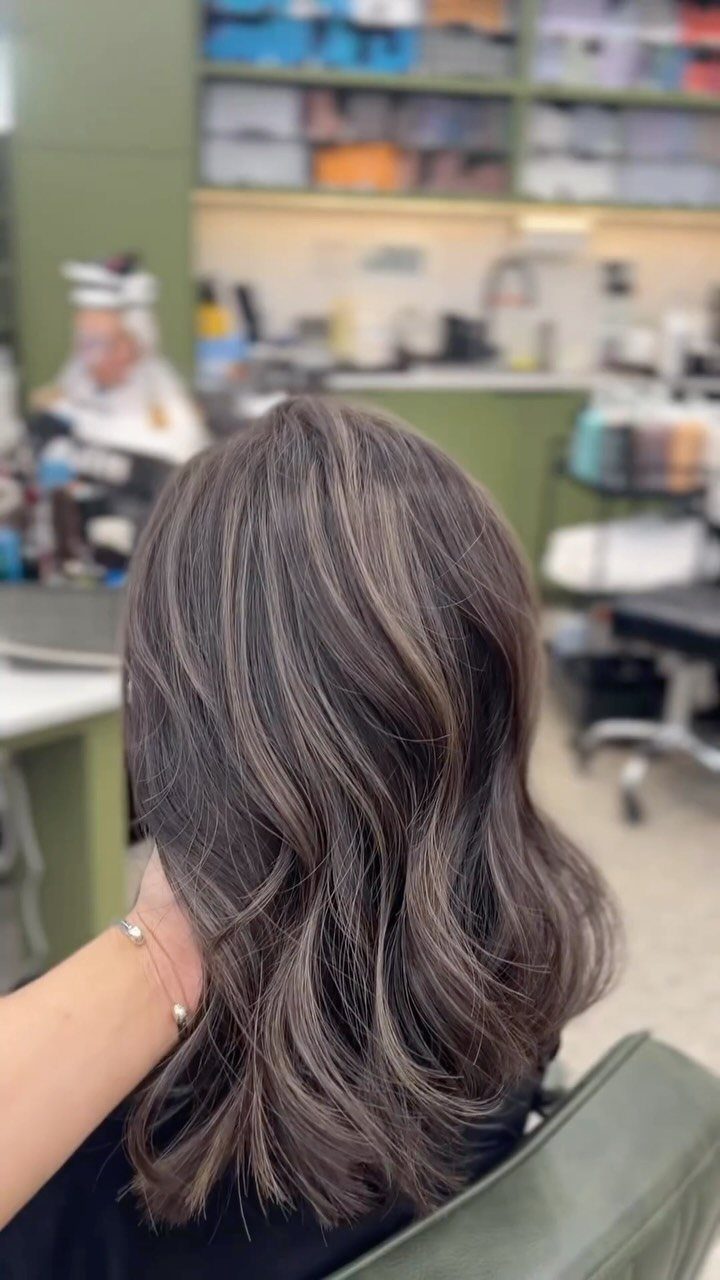
Gray-brown or ash-brown hair is threaded with silver strands, keeping the base muted and the highlights understated. The silver sits where it would naturally lighten, so the overall effect reads soft.
24. Long Silver Gray Hair
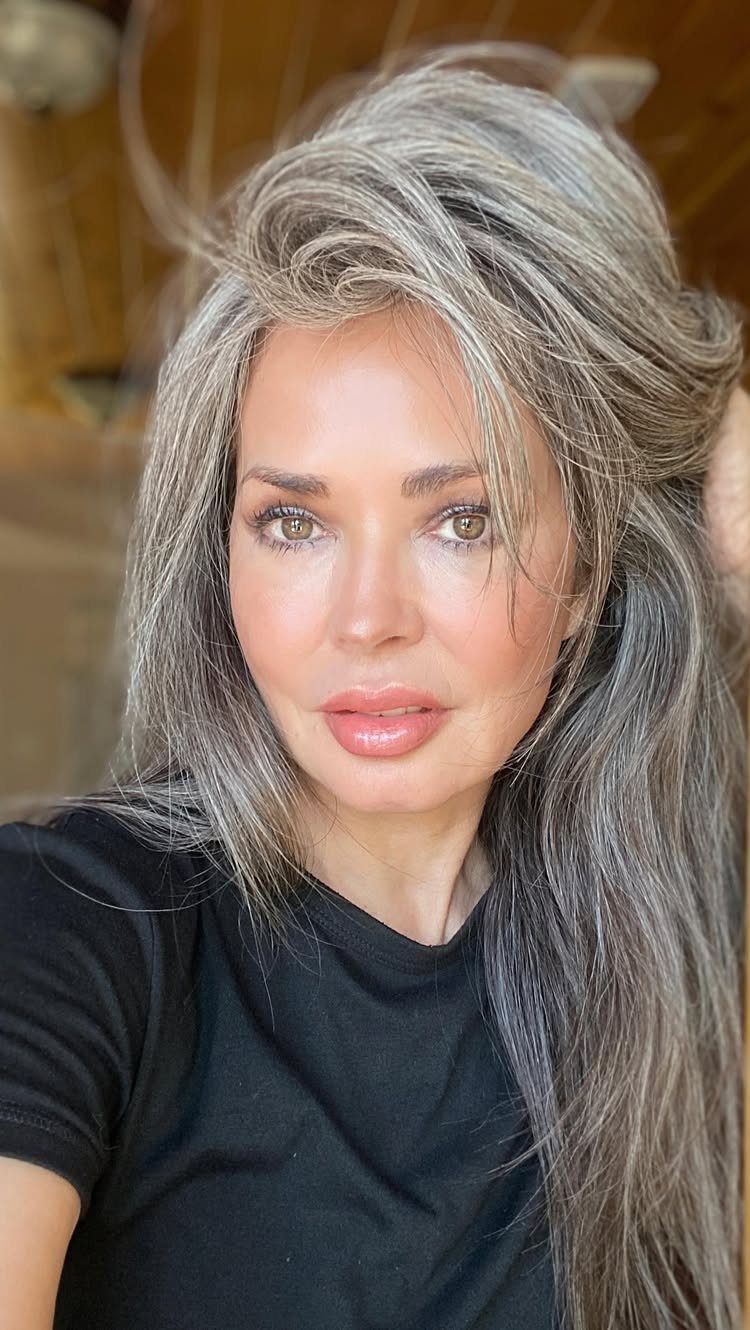
Long hair is dyed silver-gray with darker roots left showing and a few deeper strands woven through. The color is even but not flat, and the darker pieces keep it from reading one-dimensional.
25. Short Silver Crop
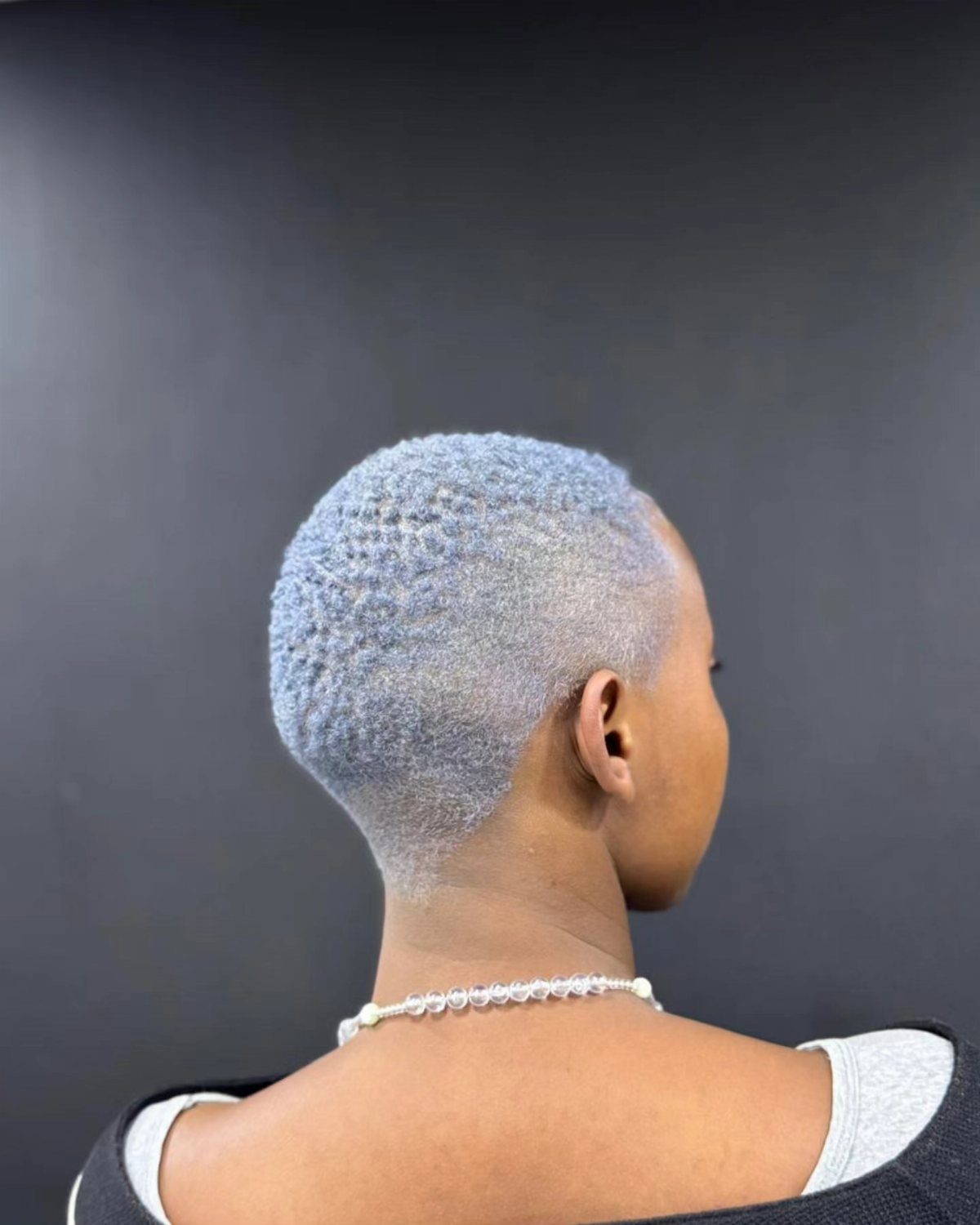
A cropped silver-gray style tapers tight at the nape, keeping the back clean and the color front and center. The length makes the color easier to maintain, since there’s less hair to tone and refresh.
The tapered neckline needs regular trims to keep its shape.
26. Gray Hair Profile
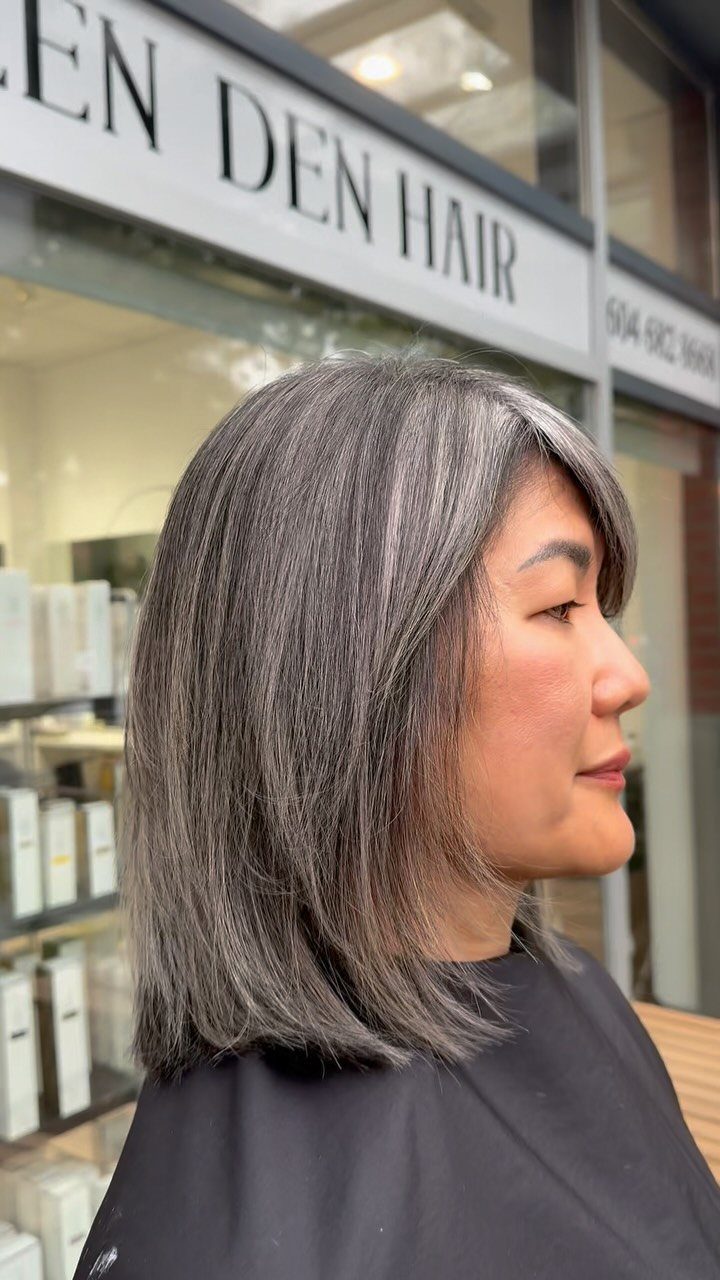
Straight shoulder-length gray hair is one even tone from root to tip, no highlights or dimension added. The color sits flat, and the result is a simple all-over salon gray.
A stylist lifts the hair first, then tones it gray in one session.
If you’re starting from dark hair, expect the appointment to run several hours. At home, you can use a high-lift blonde kit followed by a gray dye, but the timing is longer than single-process color.
27. Gray Silver Contrast
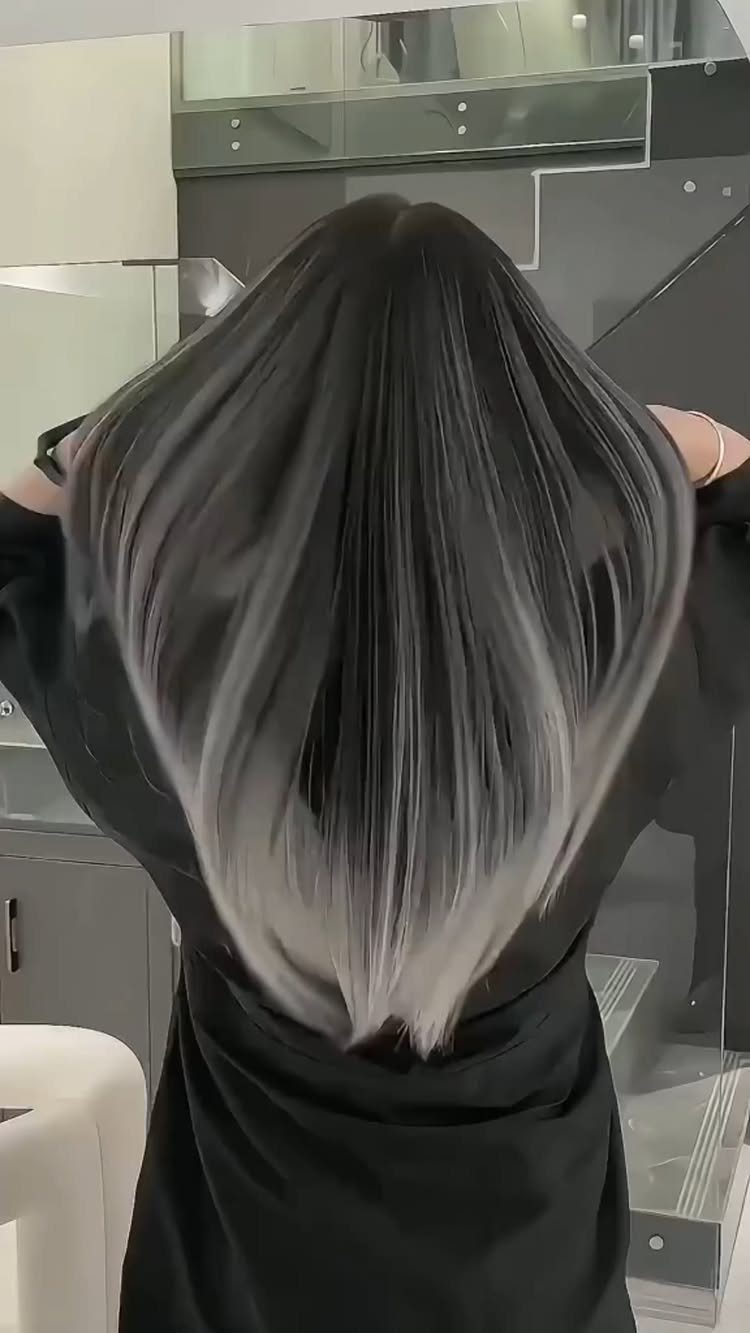
Long charcoal-gray hair carries silver-gray strands and pale tips through it, so the color shifts from dark to light as it moves.
Apply a charcoal base, then lift sections through the lengths and tone them silver. The tips can be left pale or toned separately.
Choosing a Gray Shade
Gray sits in the cool color range, and it shows through most clearly on cool-toned skin: pale or pink undertones, eyes in blue, green, gray or black.
If your natural coloring runs warm, with red or brown hair and golden or sandy skin, gray can read flat or ashy in a way that doesn’t lift your face.
One test: think about which metal suits you.
Silver jewelry tends to flatter cool skin, gold suits warm tones. If you’re not sure, try a semi-permanent version first so the color washes out if it doesn’t work.
When you’re adding highlights rather than going all-over gray, match the tone to your skin. Golden or beige babylights suit warm complexions, platinum and ash tones sit better on cool skin.
If you have dark circles or puffiness under your eyes, gray can pull focus there and read older than you are. Makeup matters more with gray hair than with warmer colors, so plan to adjust your routine.
Frequently Asked Questions
Can grey hair be dyed grey?
You can dye hair gray, but getting the right tone takes professional products, especially on dark hair.
Very blonde hair can be toned gray with a purple shampoo or tinting balm a couple times a week. Darker hair needs to be lifted with bleach first, then toned gray, which is harder to do evenly at home.
Is it difficult to color gray hair?
Gray hair can be more resistant to dye, but current color products handle it well.
Oil-based formulas are gentler than older versions and give better shine and a more natural result. The technology has improved enough that coverage is less of a problem than it used to be.
What to ask for at the salon?
Figure out how much upkeep you can manage before you go in, then talk through the maintenance with your stylist.
Balayage or root shadows need fewer appointments than all-over color, and highlights can be spaced further apart than root touch-ups. Bring a photo if you have one, since color means different things to different people.
What to expect from your first salon appointment?
Ask for a consultation first so they can look at your condition, talk timing, and run a patch test if it’s your first visit.
You’ll talk through whether you need color on the roots only or through to the ends, and whether you want a gloss to refresh the tone.
Bring photos if you have them, since it helps the stylist see what you mean by a particular shade.
If you’re coloring grays at home?
The most common mistake is making the hairline too dark and heavy, since you can reach the front and top easily but not the back.
Use a color-saving shampoo and conditioner between dye jobs to keep the tone from fading too fast. Look for sulfate-free and paraben-free versions.
How to choose a shade?
Match the gray tone to your skin the same way you’d pick any color. If you wear gold jewelry better than silver, gray may not be the right choice.