How much gray you already have, and where it sits, decides which of these looks is yours: scattered strands suit micro-weaves and fine silver streaks, while hair that is 50% gray or more points toward a full lift or growing out to natural silver.
The range runs from a few thin pieces in long brown hair to a staged transition that takes 1–3 years.
Cost is mostly a scheduling question: a blending visit runs $150–$600, so how far apart you book appointments changes the total as much as the shade does.
1. Face-Framing Pieces
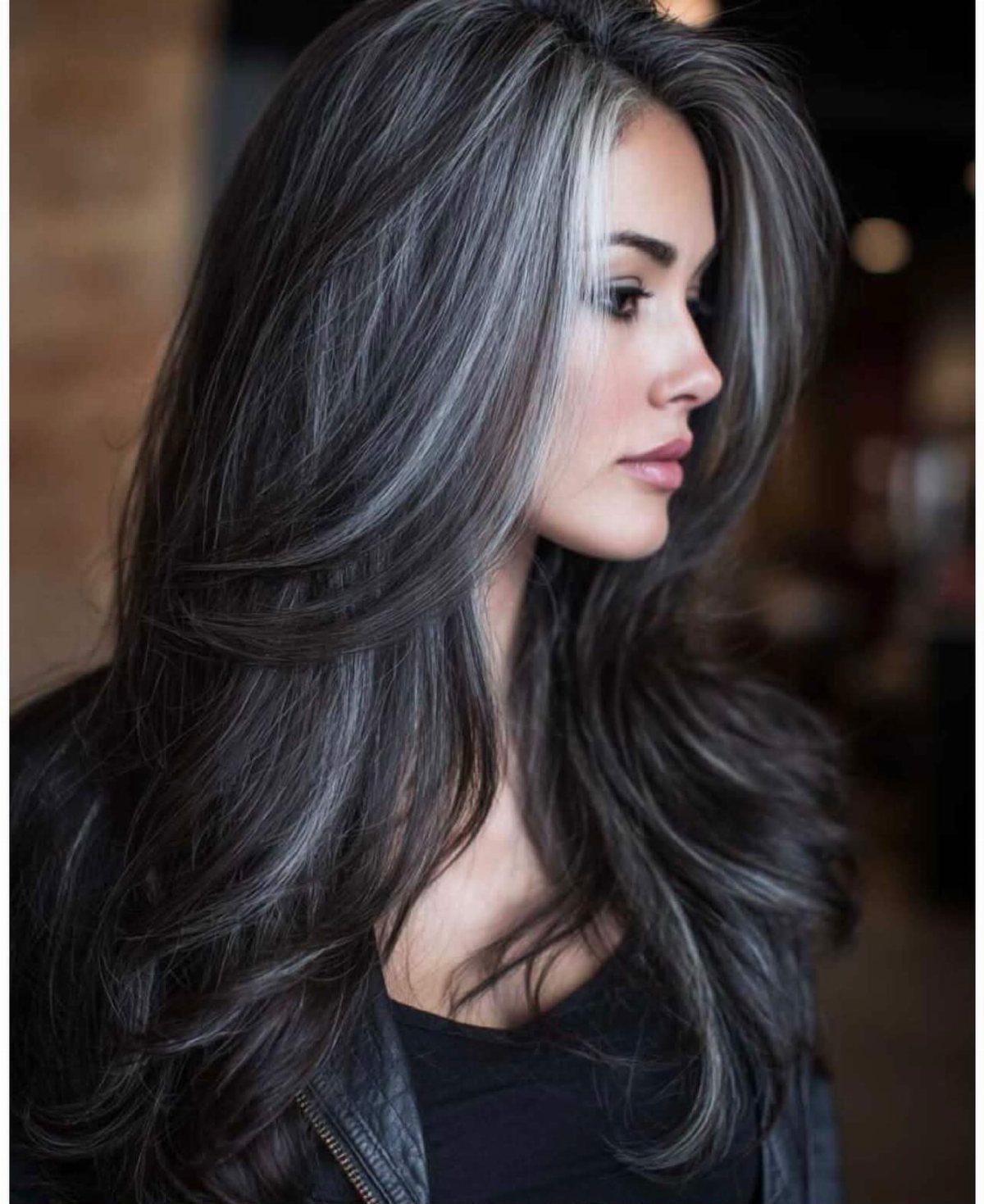
Silver pieces right at the face draw attention forward while leaving the rest dark.
If you have natural grays starting to come in at your temples or around your hairline, a colorist can lift just those sections to bright silver so they read intentional, not patchy.
The contrast here is high: dark chocolate brown against true silver.
That works when the gray you already have is white or cool-toned. If your natural grays run warmer, ask for a slightly softer lift to avoid the line looking too stark.
2. Highlights and Lowlights
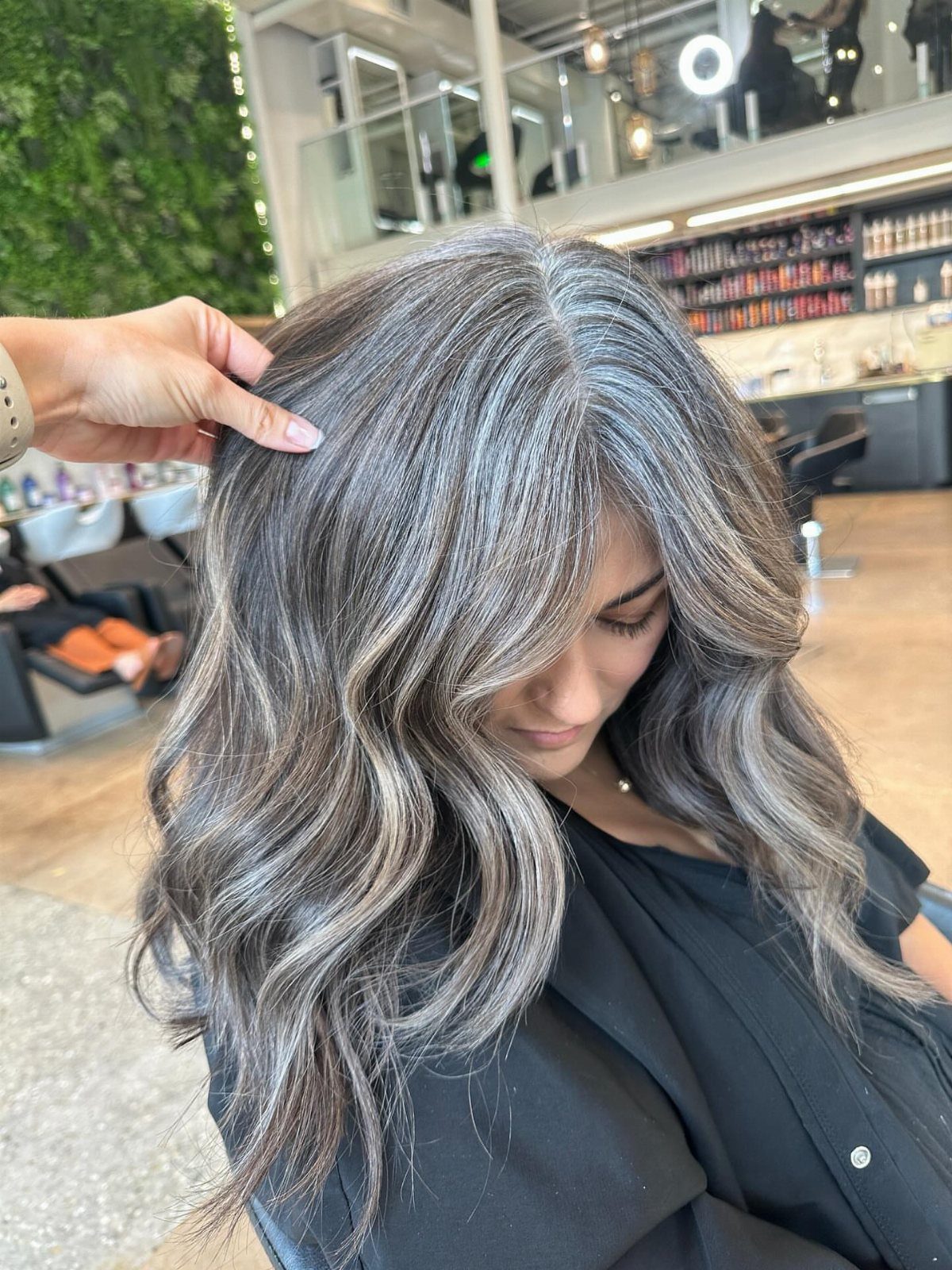
Alternating light and dark strands breaks up the solid line between colored hair and incoming gray.
A colorist weaves both highlights and lowlights through the mid-lengths and ends, so new gray growth at the root blends into a mix of tones rather than standing alone.
This works best when you have scattered grays, not full coverage. The lighter pieces mimic your natural silver, and the darker ones keep depth.
3. Micro-Weaves
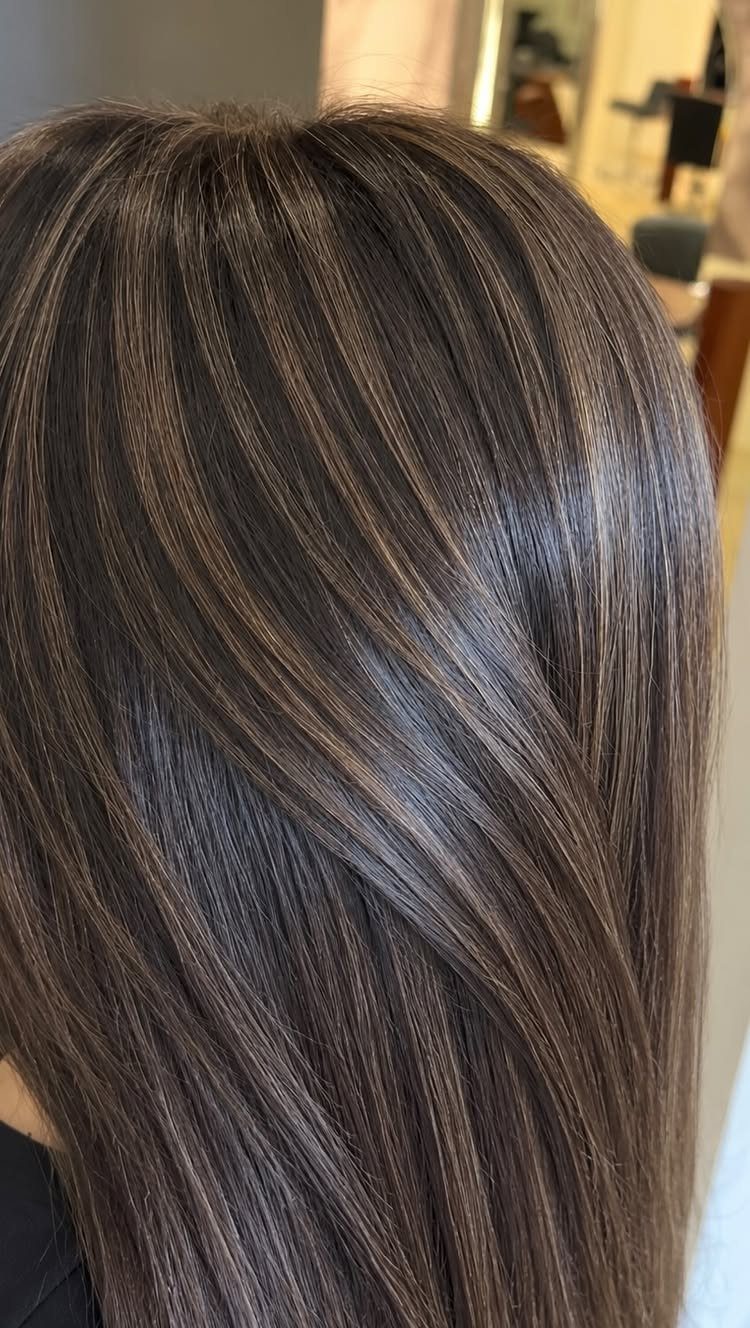
Fine, scattered highlights placed close together replicate the random pattern of natural gray hairs. A colorist takes very thin sections, much narrower than standard foil highlights, and places them throughout so the grow-in looks gradual.
This is a slow build. Once it’s there, new gray just reads as more of the same.
4. Total Blending
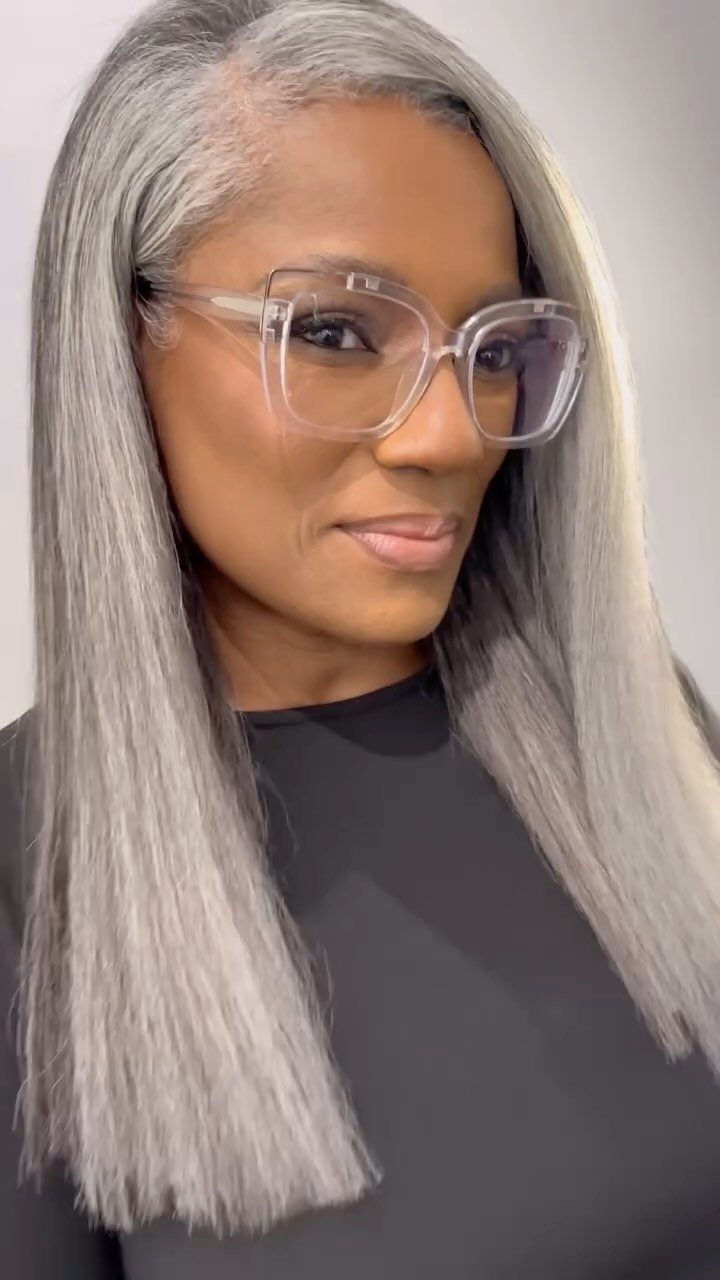
Some people decide to stop blending and just go gray. That means growing out the color entirely or having a colorist lift your natural shade up to match the silver coming in at the roots.
If you choose the lift, it’s usually done in stages to avoid damage. Hair that’s been colored darker for years may need a few sessions to reach a consistent silver without breaking.
5. Faux Gray
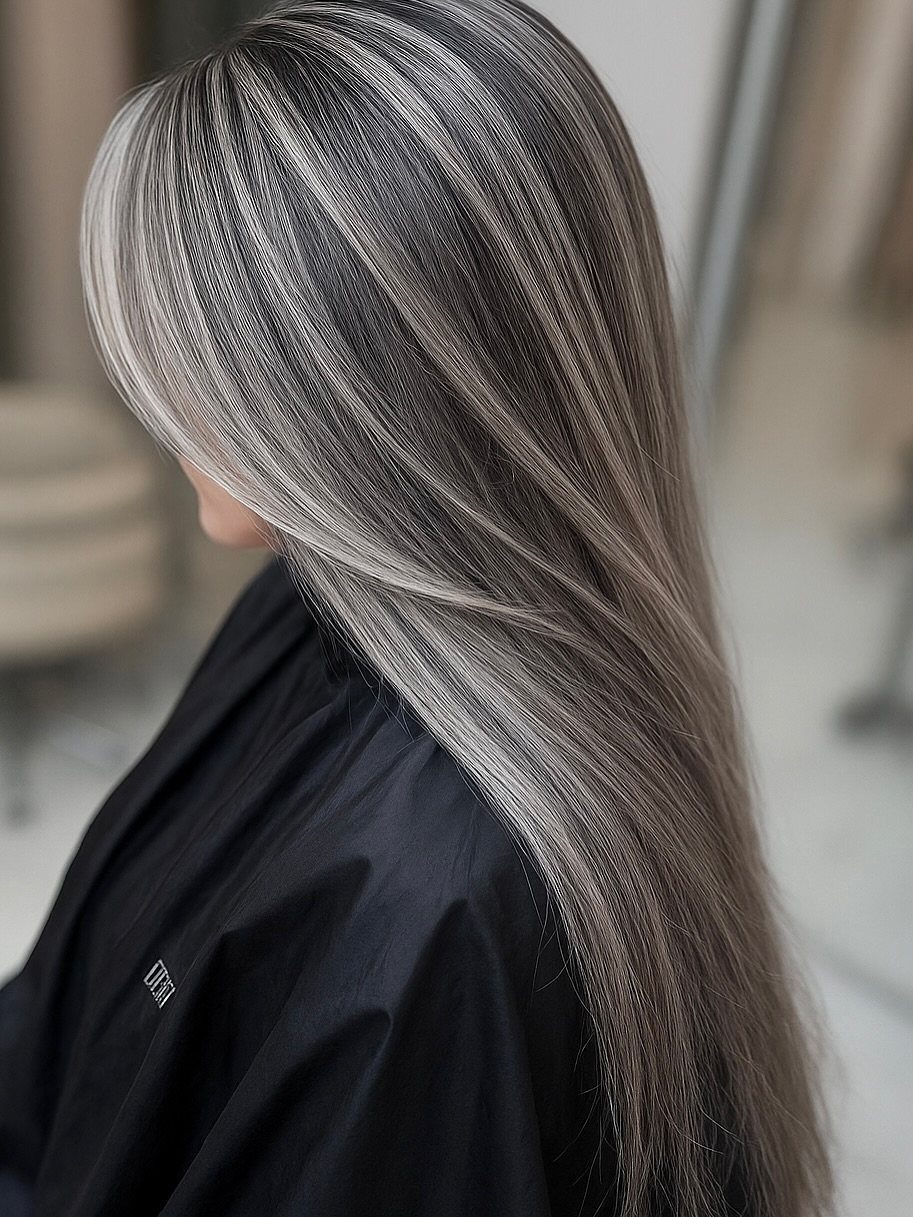
Adding silver highlights to hair that still has color can make your natural grays look like part of the plan.
A colorist lifts select pieces to match the tone of your incoming gray, so when roots grow in, they merge with the foiled silver rather than sitting against solid color.
This works if your natural gray is limited but visible. If you’re already 50% gray or more, the artificial silver may not change much.
“You could use a demi-permanent color that wouldn’t cover 100 percent of your grays,” she tells Allure. “This would just add a bit of a tint to the hair without the opaque gray coverage of your typical single process.”
— Allure
6. Natural Silver

Natural silver, left alone, is its own finished look. If you have full or near-full gray coverage and decide to stop coloring, the result can be even, bright silver without a colorist’s help.
Getting there from colored hair means growing out the dye, which takes time.
Some people cut progressively shorter during the grow-out to remove colored ends faster. Others use a purple shampoo once they’re fully silver to keep the tone cool and bright, since natural gray can yellow over time.
7. Salt-and-Pepper Curls
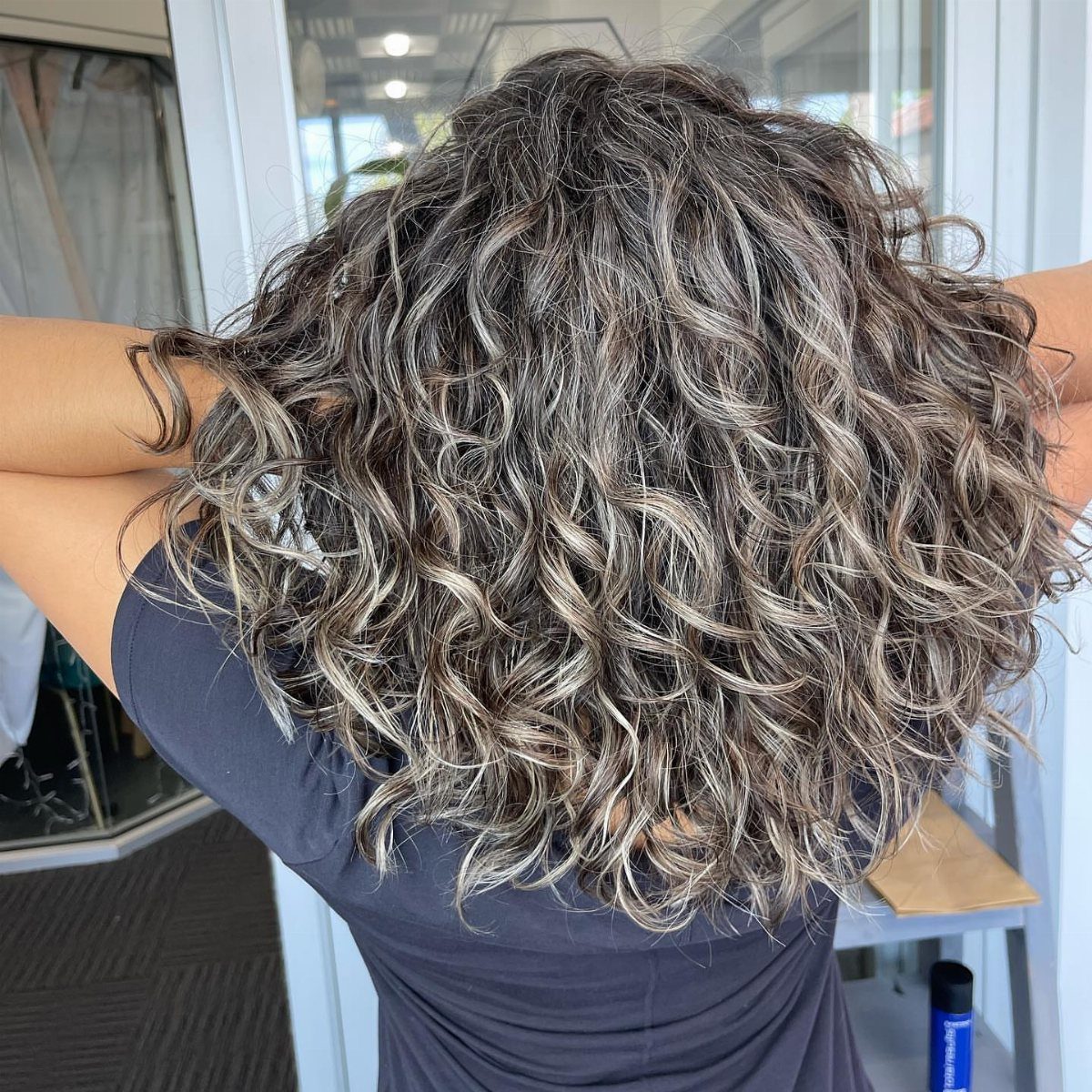
Curls hold a mix of dark and gray strands better than straight hair does, because the texture itself breaks up any line between the two.
Each ringlet can carry both tones in one spiral, so the overall effect reads varied rather than striped.
If your natural gray is patchy, curls diffuse it.
The coil pattern scatters light differently along each strand, which softens contrast. Straight hair shows the same pattern more cleanly, and sometimes that’s not what you want.
8. Gray Layers
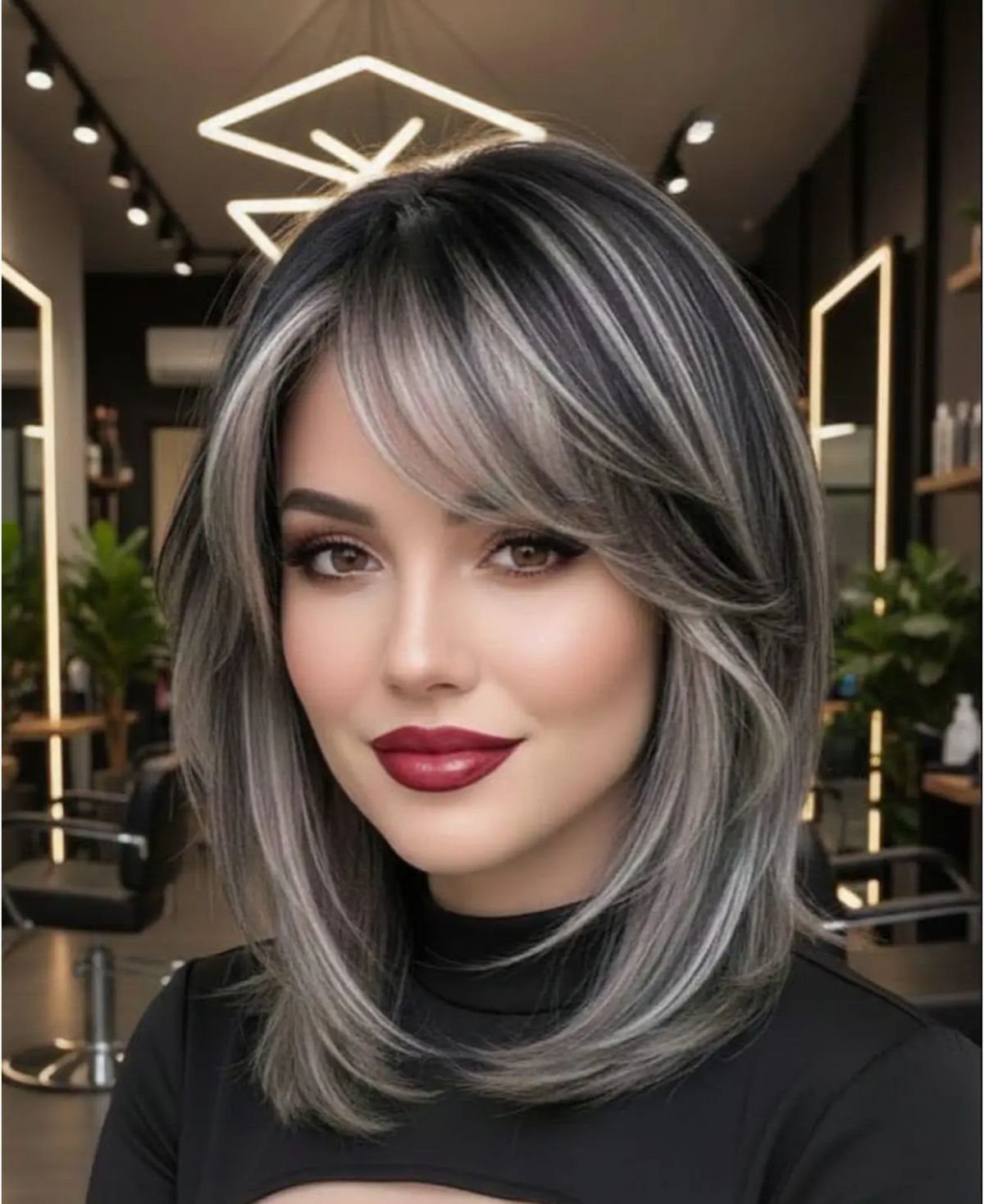
Layers cut through blended gray and dark hair give movement that keeps the mix from sitting flat. Shorter pieces at the crown lift away from longer ends, so light catches different tones at different angles.
This works when you already have gray distributed through your length, not just at the roots.
The layers don’t create the blend, they show it off. If your gray is still concentrated at the scalp, ask for layers once you have a few inches of mixed-tone growth to work with.
9. Gray Power Pixie
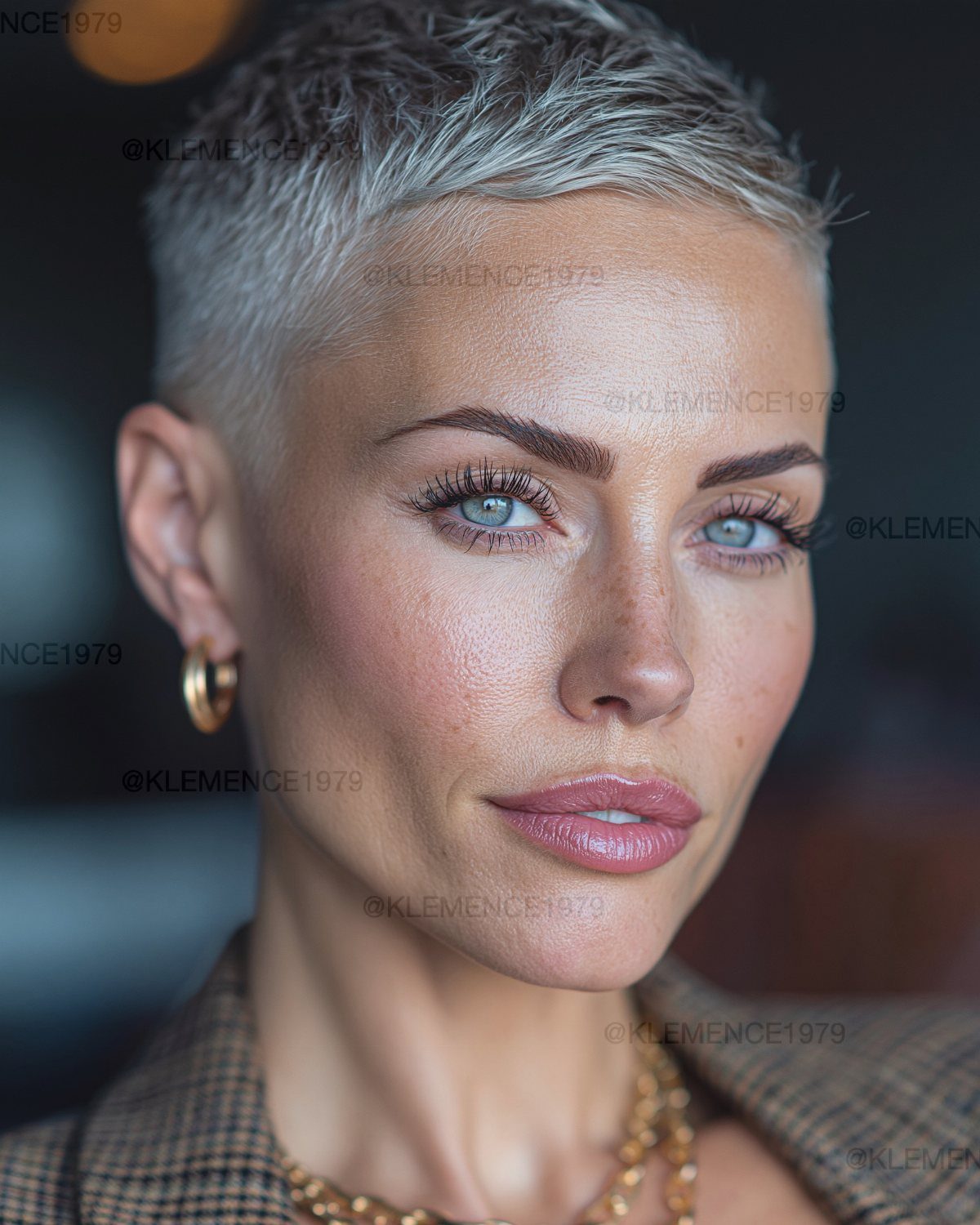
A pixie cut in gray or silver removes most of the length that still holds old color, so you’re left with newer growth that’s closer to your natural tone.
The short shape also puts all the gray right at eye level, which makes it read deliberate.
Going this short is the fastest way to get rid of colored ends if you’re transitioning.
It also means frequent trims to keep the shape, every 4 to 6 weeks. If you’re used to longer hair, cut it in stages so you can adjust to the length before you commit.
10. Silver Streaked Waves
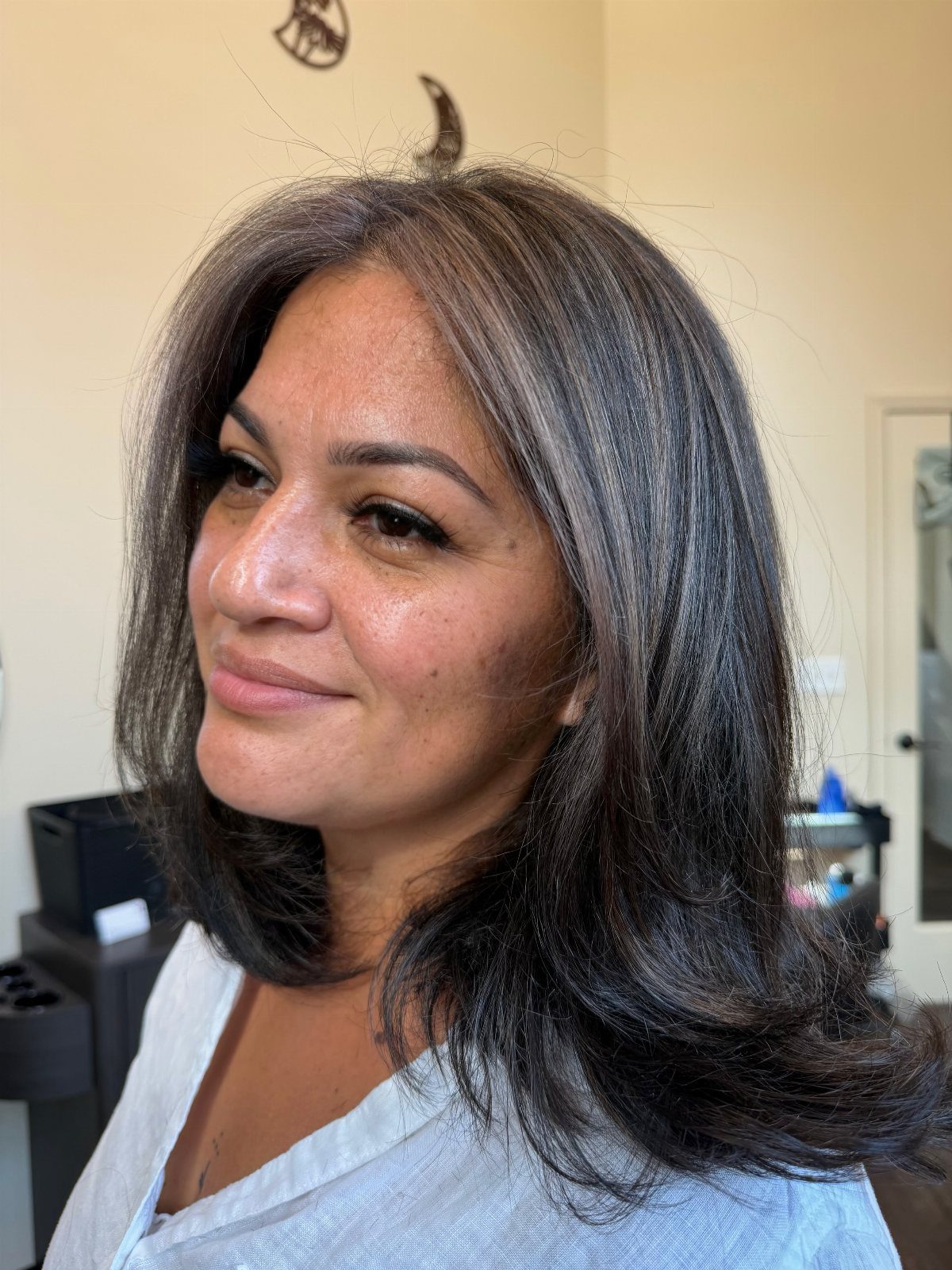
Fine silver streaks mixed into dark waves give the appearance of natural gray without full coverage. The streaks follow the wave pattern, so they catch light as the hair moves.
This look depends on having some real gray already, or adding it through foils.
If your natural gray is sparse, a colorist can lift a few narrow sections to match it, so the blend looks like it grew in on its own rather than being placed.
11. Blonde Gray Waves
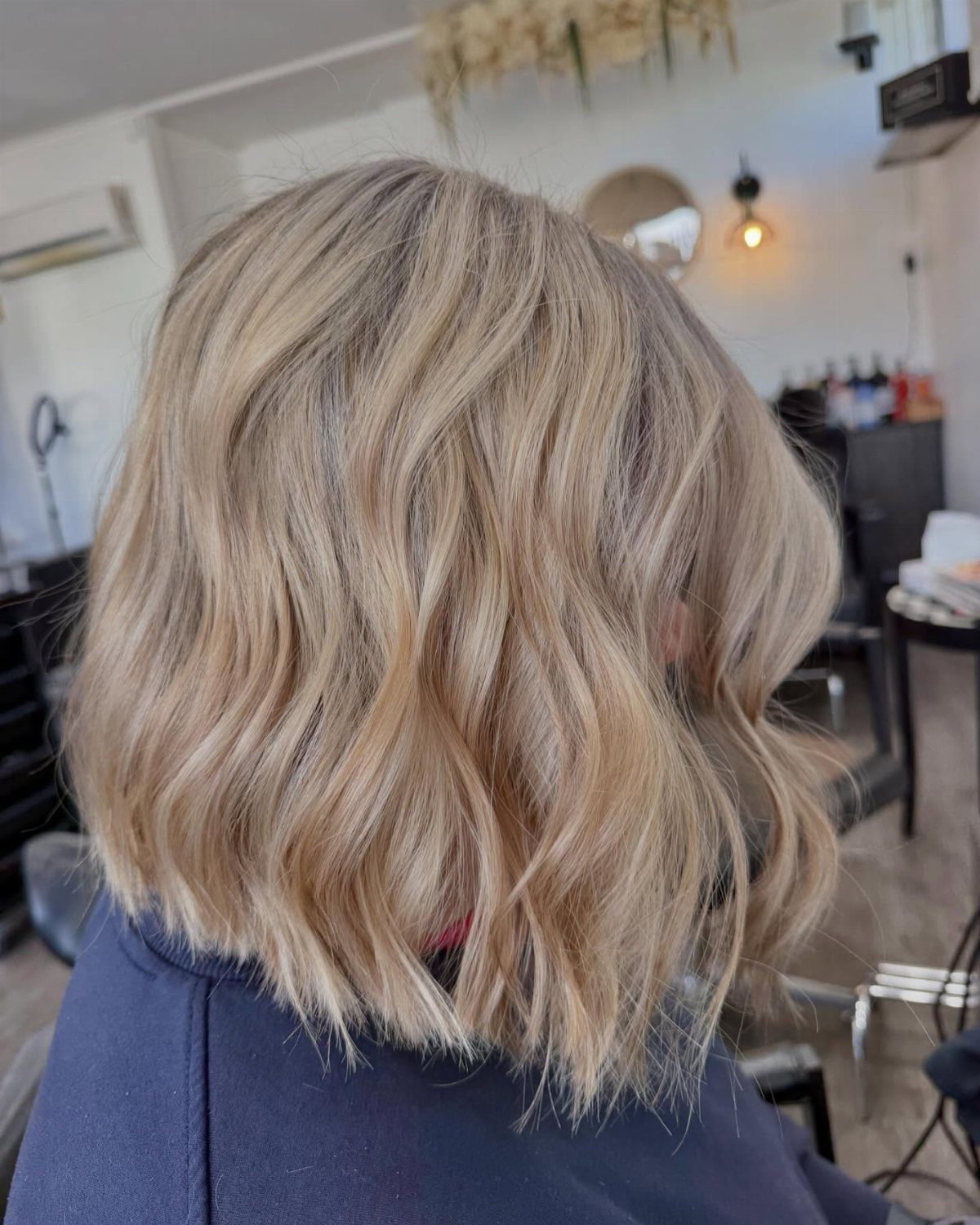
Blonde and gray lengths with darker roots create a soft gradient that grows out without a hard line. The roots stay close to your natural color, and the blonde through the mid-lengths bridges the gap between dark and silver.
This suits someone whose natural gray is light or white-toned.
If your gray runs warm or yellowish, the blonde may need a toner to keep it cool enough to match. The darker root means less frequent touch-ups, but the blonde will still need toning every few weeks to stay bright.
12. Blended Grey Bob
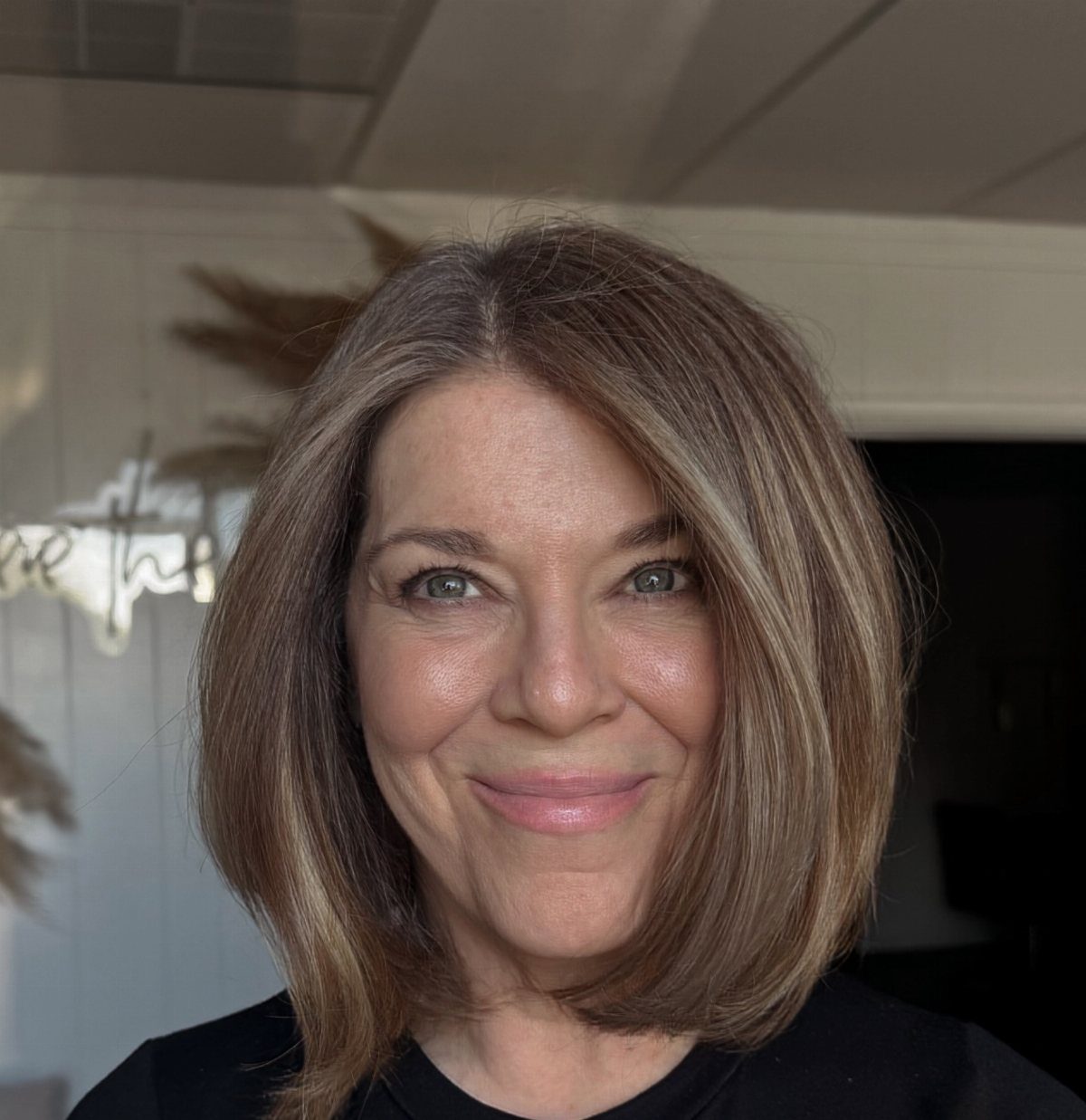
A bob that mixes gray and brown keeps the structure sharp while the color stays soft. The blunt or slightly angled cut gives the hair a clean edge, and the mixed tones keep it from reading too severe.
This works if you have partial gray coverage and want to keep some depth.
A colorist can add lowlights to break up solid gray or lift a few pieces to blend incoming roots. The bob itself grows out well, because the shape holds even as the color shifts.
13. Long Dark Hair with Silver Streaks

Long, dark, wavy hair with silver streaks keeps most of its depth and lets the gray read as a feature. The waves help: silver sits in the bends and catches light, so the streaks look scattered instead of banded.
This suits anyone whose gray is showing up in pieces, not all over.
A colorist can add a few fine silver strands to match what is growing in, so the blend looks even. I would keep the streaks thin; wide ones turn the look into stripes.
14. Long Silver Waves with Dark Roots
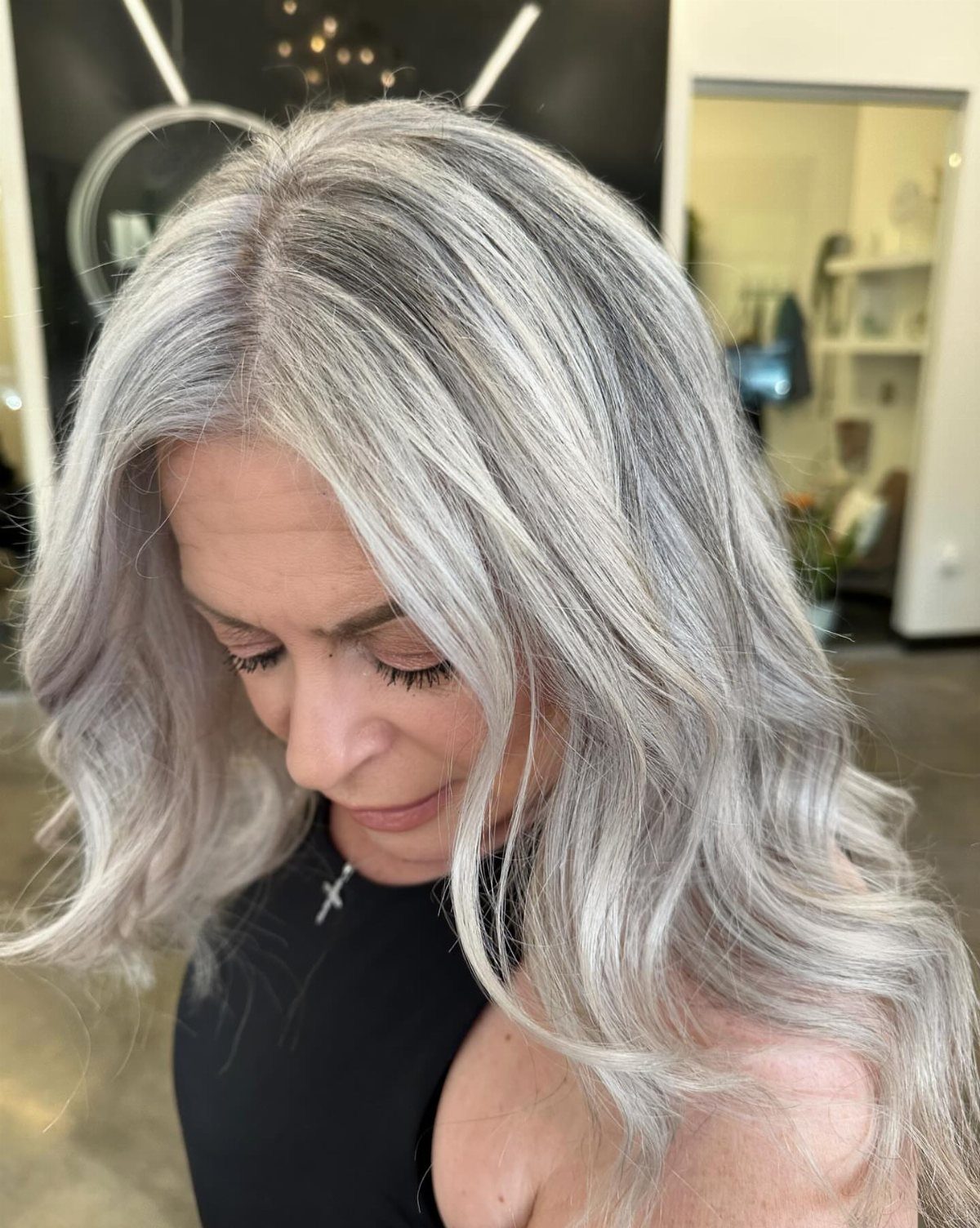
A darker root under silver-gray waves reads as natural depth, so there’s no hard line to chase when new growth comes in. Because the root stays dark, there’s no sharp edge to hide as it grows.
On hair that already has a lot of gray, I like this most, because the silver running down the long waves looks believable.
Ask your colorist to melt the root into the silver rather than stopping at a line. Waves help here too, as the movement blurs where one tone hands off to the next.
15. Long Brown Hair with Fine Gray
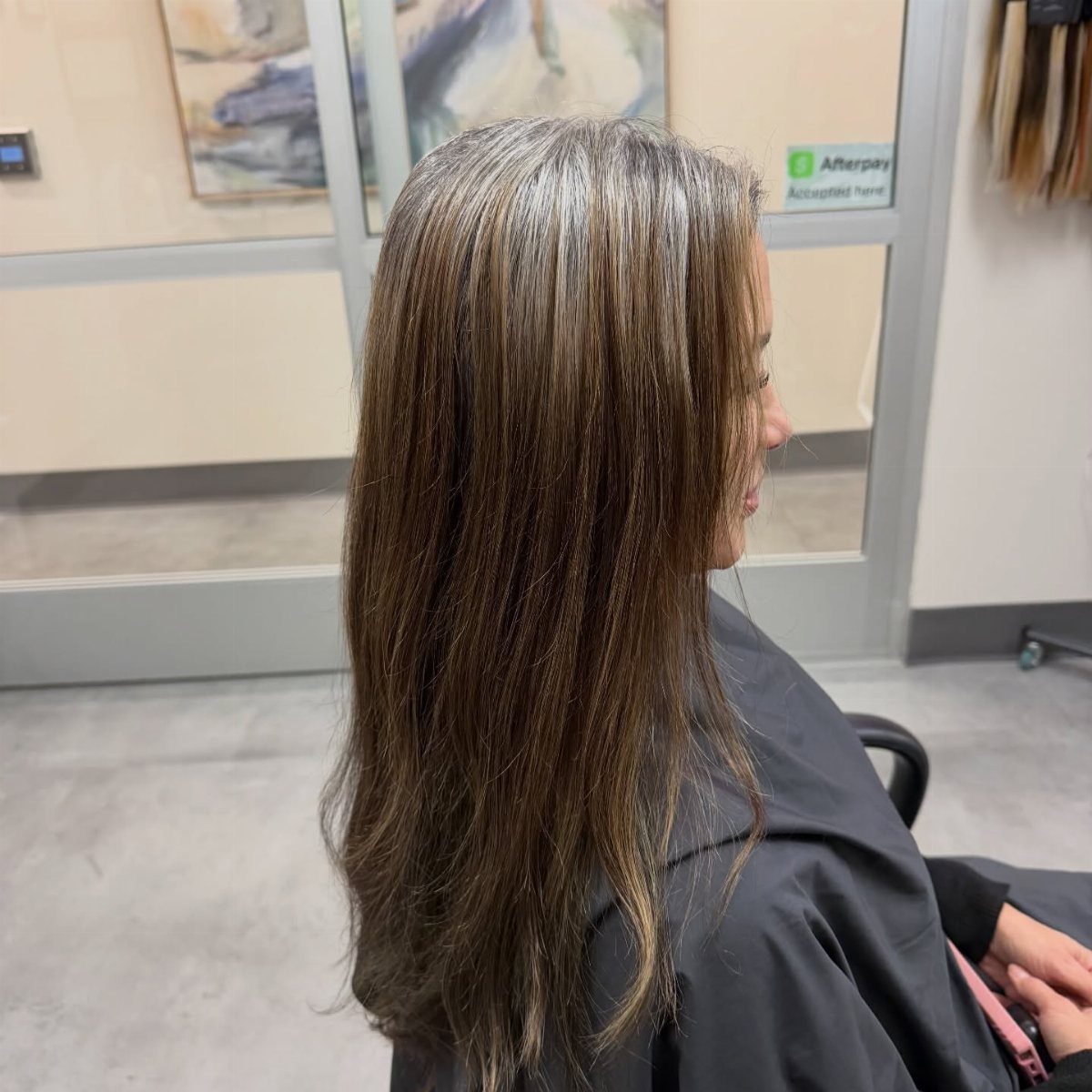
Fine gray and silver strands woven into long brown hair make for the quietest blend of all. The gray is thin and scattered evenly down the hair, so no strand stands apart from the brown.
It suits anyone who wants the gray acknowledged without a big change.
Ask a colorist for very fine pieces that match the gray you already have; thick ones would pull attention. If your brown leans toward gray-brown, the blend gets even softer.
Upkeep Between Appointments
As color fades it drifts toward gold, and against natural gray that gold can make highlights read brassier than they really are.
Book a toner around the 6-week mark after highlights to cancel the brass and keep the blend soft; expect it to hold for up to 6 weeks, no longer.
That short visit is what lets full appointments stretch out, from roughly every 3 months to several months apart. I’d book the toner when you book the highlights so the gap never sneaks up on you.
Between visits, use purple shampoo only if yellow or brassy tones show up. On darker shades, a shampoo made for dyed hair is the better pick, since it slows fading.
Consultation and Transition Planning
That last one matters most. Going slowly gives your eye time to adjust, whereas a dramatic shift lands all at once during a single appointment.
Your starting color sets the timeline, which runs 1–3 years.
Dark brown dye takes several sessions to break down, and it tends to pass through warm caramel tones before it lightens toward blonde. Starting lighter means a quicker route, so tell your colorist exactly what’s on your head right now.
Color-process Costs and Hair Health
Gray blending typically runs $150–$600 per visit, depending on your location, your colorist, and what the service includes. It looks steep until you count how far apart the appointments land.
A fully bespoke transformation sits at the far end: upwards of $7,000, with sessions of 6 to 8 hours and aftercare included. Ask for a written quote before you book anything.
Because the method weaves small sections and leaves others untouched, less of your hair takes color, and regrowth comes in softer.
Lightening still stresses hair, though. Ask about bond or protein care, and add hydrating treatments between visits.
Frequently Asked Questions
Is gray hair still in style?
Yes.
Gray blended with pastels is trending, and a gray and lilac ombré was walked in a 2024 Paris Fashion Week show. Softer versions work too: fine silver streaks in dark hair read as intentional, not accidental.
Can I gray blend my own hair?
Colorists mostly advise against it and call it a job best left to a pro.
If you’re set on trying, one colorist recommends demi-permanent color, which won’t cover grays fully, so it leaves a soft tint rather than an opaque, solid finish.
What is gray blending?
Gray blending is a coloring approach that works with your natural gray instead of covering it with solid color.
A colorist uses highlights, lowlights, or sheer color, often very fine micro-weaves that copy the random scatter of natural gray hairs. New roots then grow in with no stark line.
Is there anything I can do between appointments?
Around the 6-week mark after highlights, schedule a toning visit. It cancels the brassy gold that creeps in as color fades, and it holds for up to 6 weeks.
Reach for purple shampoo only once yellow starts to show; darker shades hold their color longer with a shampoo formulated for dyed hair.
Can I dye my hair gray without bleaching?
It depends on your starting color and your color history. Hair with no previous color may get there with a high-lift color, while a darker base may need bleach.
Years of dark dye mean silver can take several sessions to even out without breakage, so give your colorist the full color history.
What is the difference between silver hair and gray hair?
Pigment is the dividing line: gray strands still hold a trace of melanin, while white ones hold none.
True bright silver tends to come from white or cool-toned gray, while warmer grays read softer and may need a gentler lift to look right.
What is the easiest way to transition to gray hair?
Go slowly, with highlights and lowlights that match the gray coming in, using cooler tones matched to your natural shades.
Going slowly lets your eye, and everyone else’s, get used to the look. Expect 1–3 years depending on your starting color; lighter starting hair is quicker, and cutting off colored ends speeds things up.
How do I know if gray hair will suit me?
Gray covers a broad range of shades, so pick a tone that flatters your coloring, and you can always color it back if you don’t love it.
Cool white or silver grays suit a bright silver, while warmer grays look better with a softer lift. Blending works best if you have scattered grays and want a gradual change with less upkeep.
How do I maintain gray hair color at home?
Save purple or toning shampoo and conditioner for when yellow creeps in, since natural gray tends to warm up with time.
Deep-condition regularly because gray hair can run dry. Deeper shades fare better with a shampoo labeled for color-treated hair.