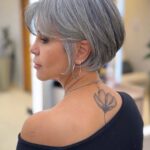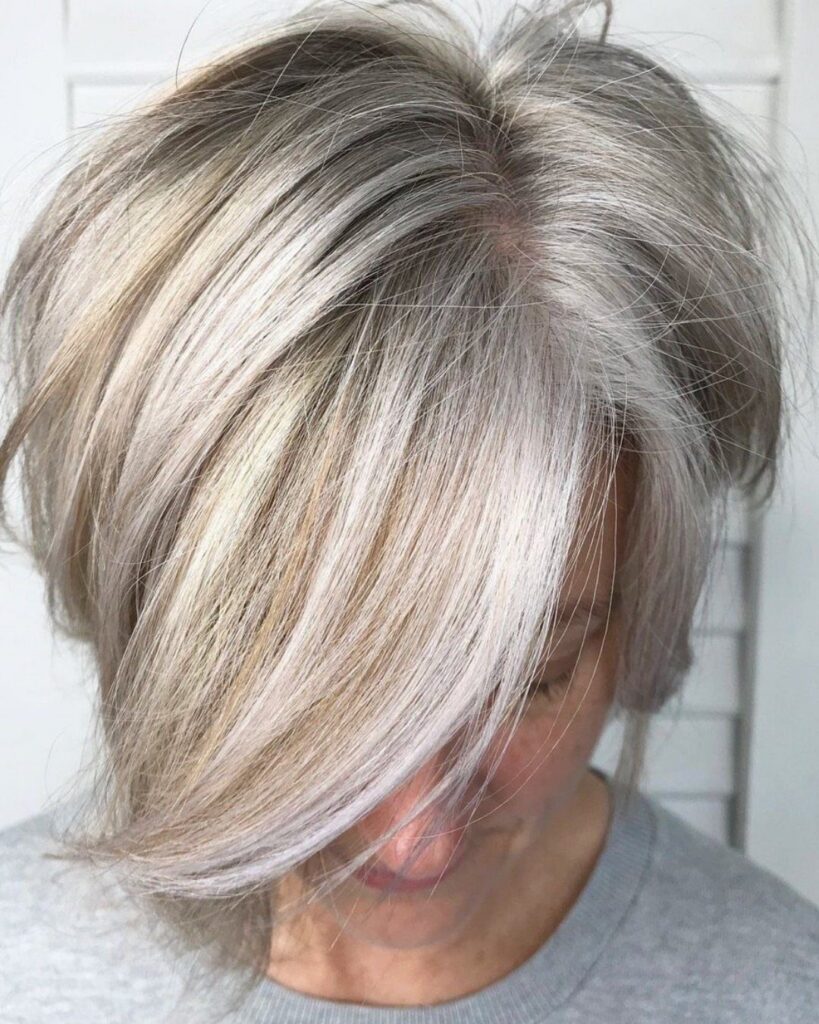
The cuts here run from close-clipped shaved sides to long platinum past the shoulders, and the color ranges from one gray streak to a full head of silver. How much gray you already have decides where to start.
A streak or a silver hairline points to face-framing grays or gray roots with dark curls, while hair that’s mostly gray fits salt and pepper, where you’re not fighting regrowth and an occasional gloss adjusts the tone.
1. Pixie
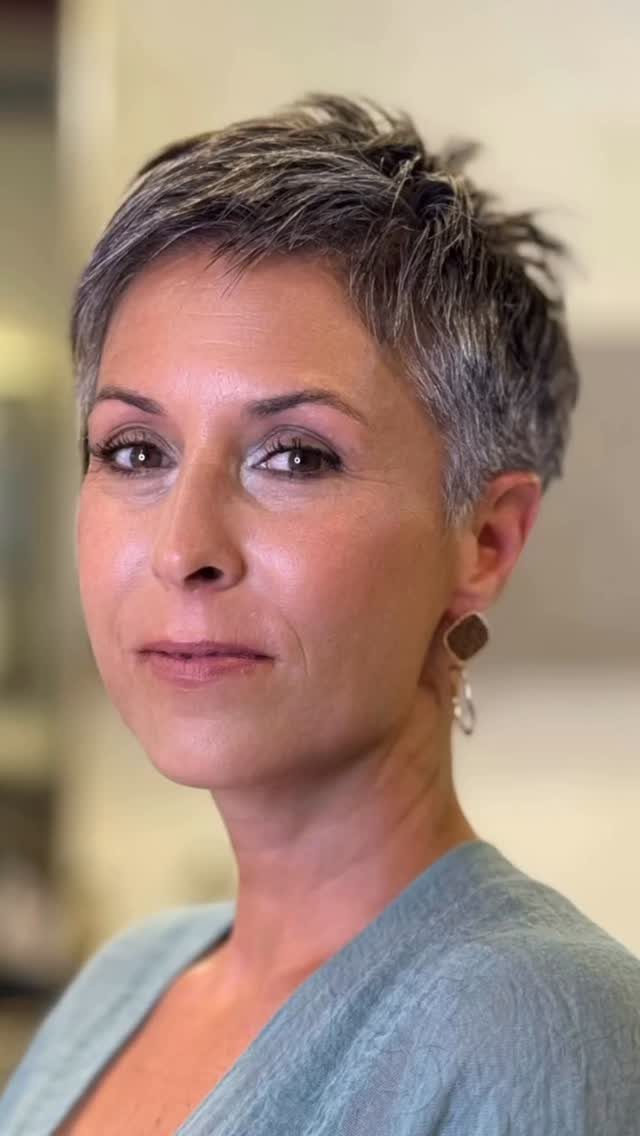
A pixie that keeps texture and length on top instead of cropping everything down to the same height.
The longer top section can be styled forward, swept to one side, or left tousled, while the sides and back stay short enough to hold the shape without much work each morning.
Gray hair often comes with a coarser texture that holds this kind of movement well.
If your hair is fine, ask for choppy layers through the crown rather than a blunt scissor cut so it sits with some lift instead of lying flat.
2. Salt and Pepper
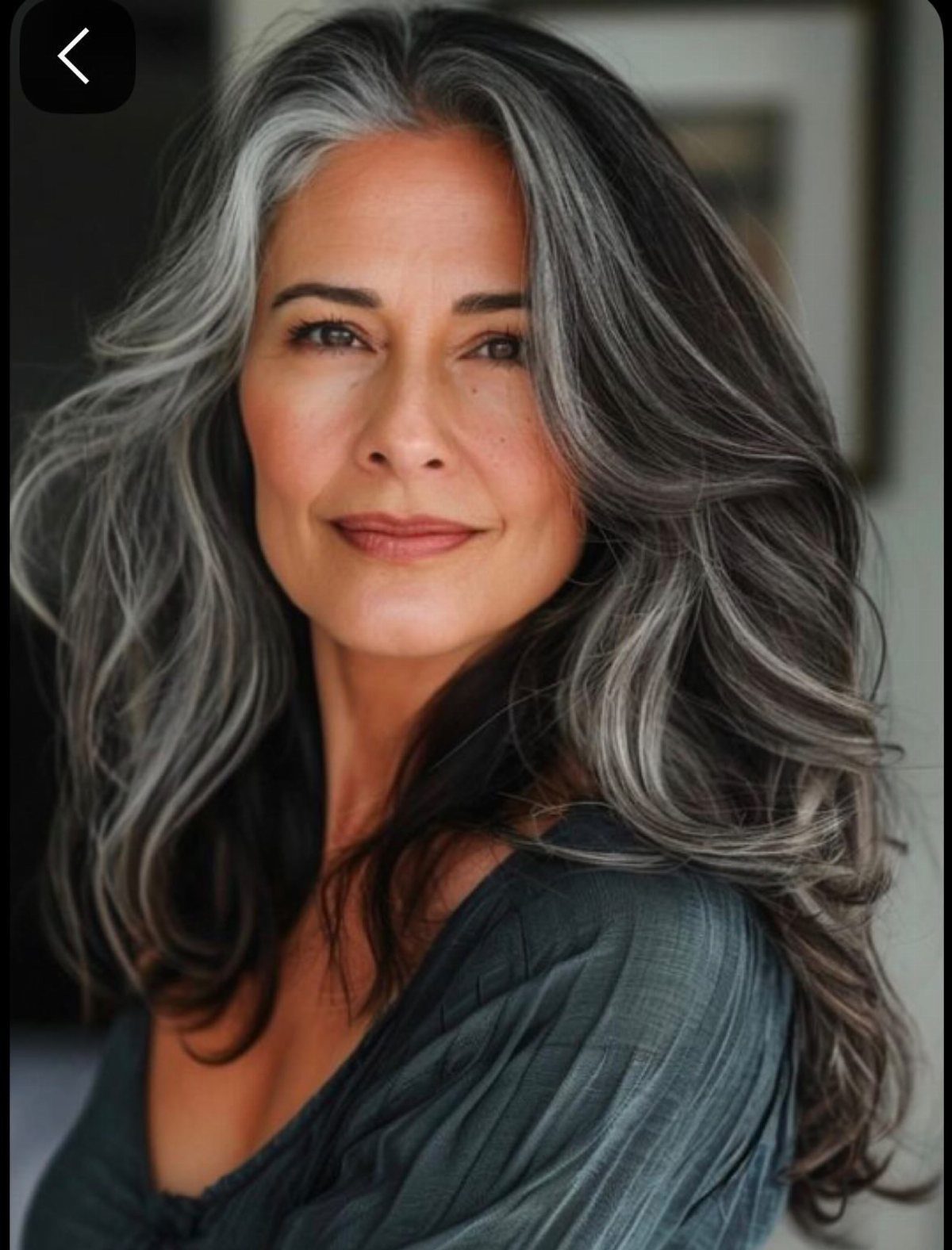
A natural mix of gray, silver and darker strands left to grow out together rather than dyed to one uniform shade.
The contrast reads as dimension, and because you’re not fighting regrowth, maintenance is mostly haircuts and the occasional gloss to adjust tone.
The blend works across any length or texture. If your grays are coming in patchy rather than evenly distributed, a balayage or a few strategically placed highlights can fill in the gaps while you wait for more silver to arrive.
3. Wavy Bob
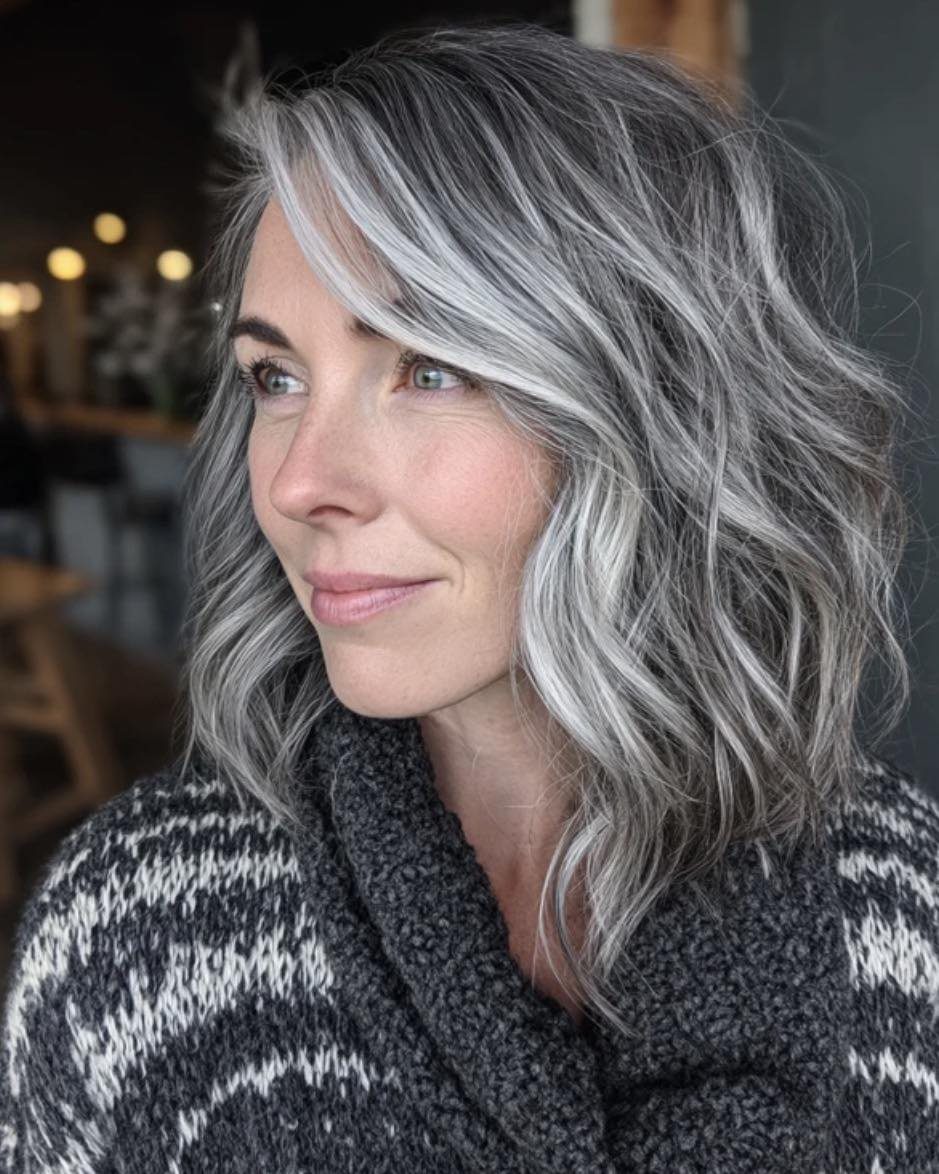
A bob cut to chin or jaw length and styled with waves, either from your natural texture or added with a curling iron or flat iron wrapped loosely.
The wave softens the blunt edge of the bob and gives the cut more movement, which suits graying hair that can sometimes look heavy when worn straight.
If your hair is naturally wavy, a texturizing spray or mousse worked through damp hair and air-dried will give you most of the shape without heat.
Straight hair holds a loose curl well if you wrap sections around a flat iron and let them cool before shaking them out.
4. Silver Highlights
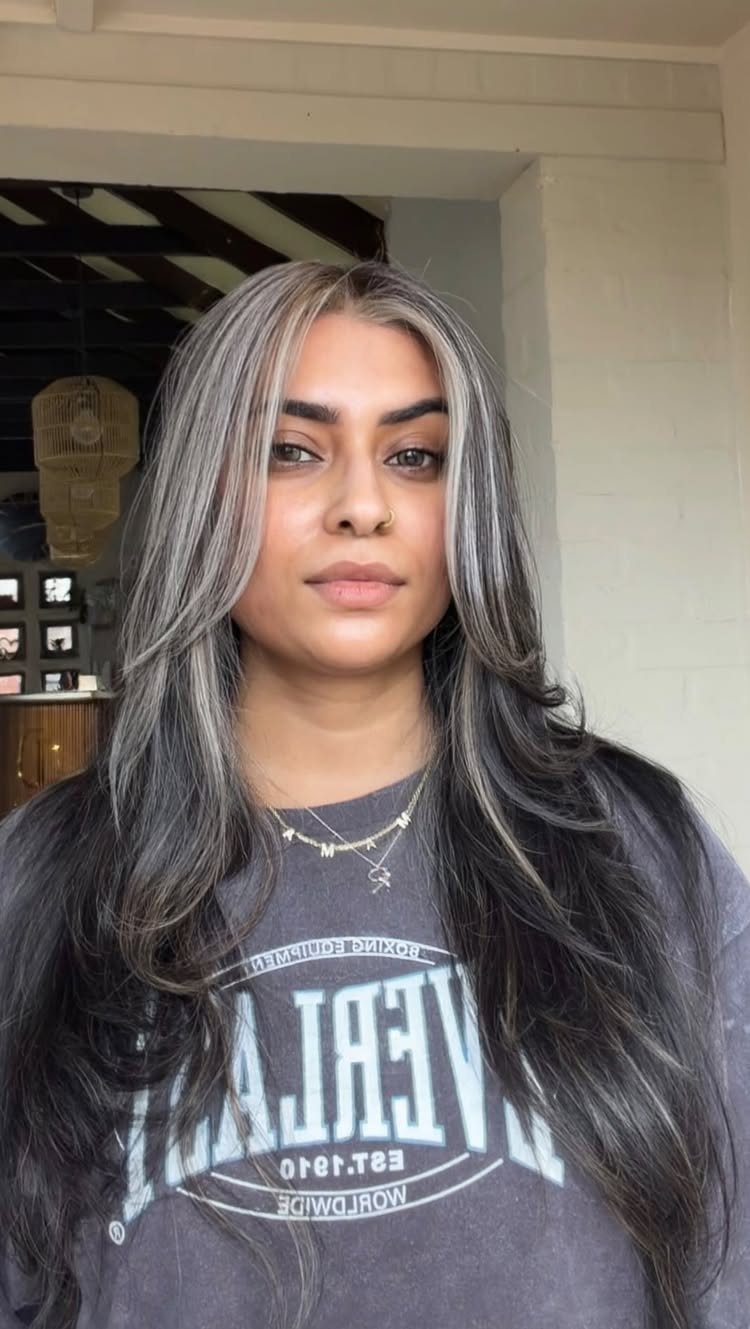
Bright silver or white highlights placed through darker hair, whether that darker base is natural brunette, dyed, or a mix of gray and brown.
The lighter pieces lift the overall color without committing to a full head of silver, and they can be concentrated around the face or scattered throughout depending on how much contrast you want.
If you’re adding them at a salon, ask for a balayage or foil placement that starts an inch or two from the roots so regrowth is less obvious.
At home, a highlighting kit with a cap gives you more control over placement than trying to paint freehand.
5. Updo
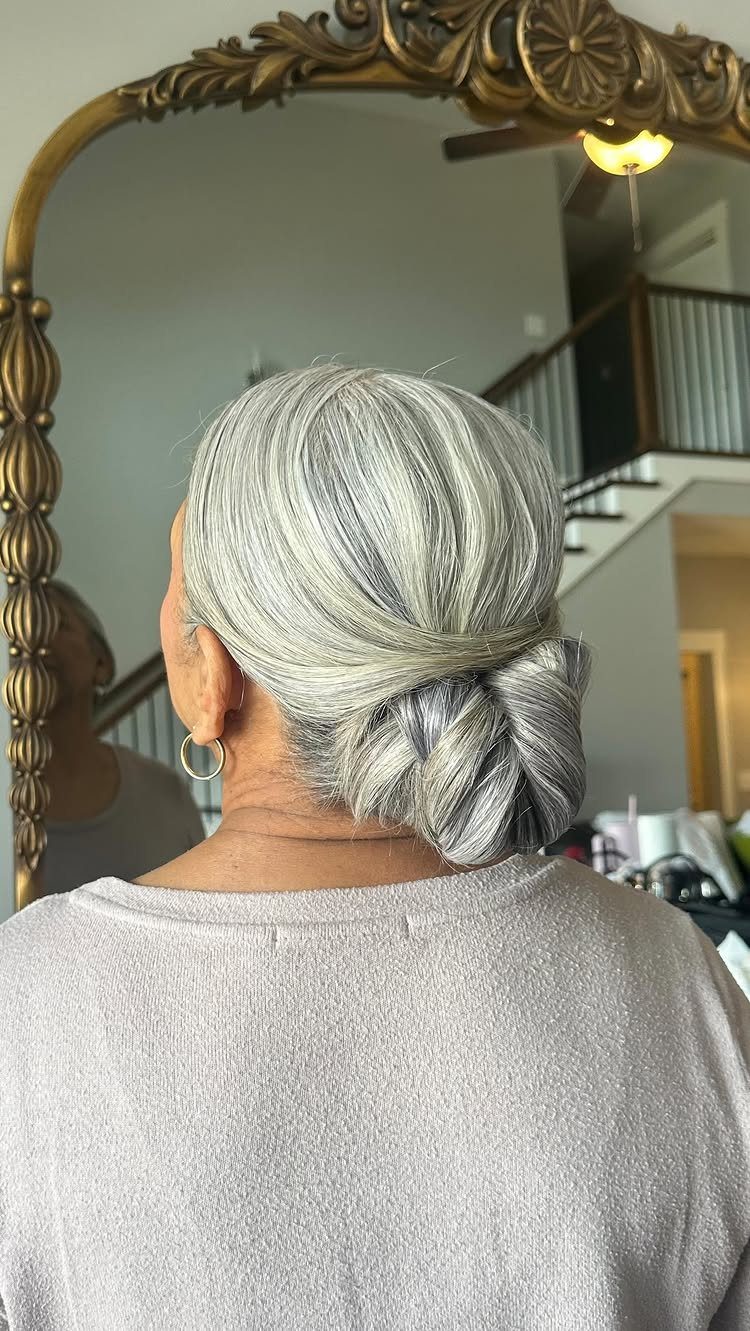
Gray hair pulled back into a bun, chignon, or twisted updo.
The style keeps hair off your face and neck, and because gray often has a coarser texture, it holds pins and elastic better than fine hair does without needing much product.
A low bun at the nape works for most face shapes, and you build it by gathering hair into a ponytail first, twisting it, and wrapping it around the base.
For a looser version, skip the ponytail and gather sections as you twist them, securing with bobby pins as you go.
A timeless bun like Elizabeth McGovern’s is always in style. However, avoid pulling it back too tight unless you have really thick hair—otherwise, the look could emphasize thinning.
6. Side Part
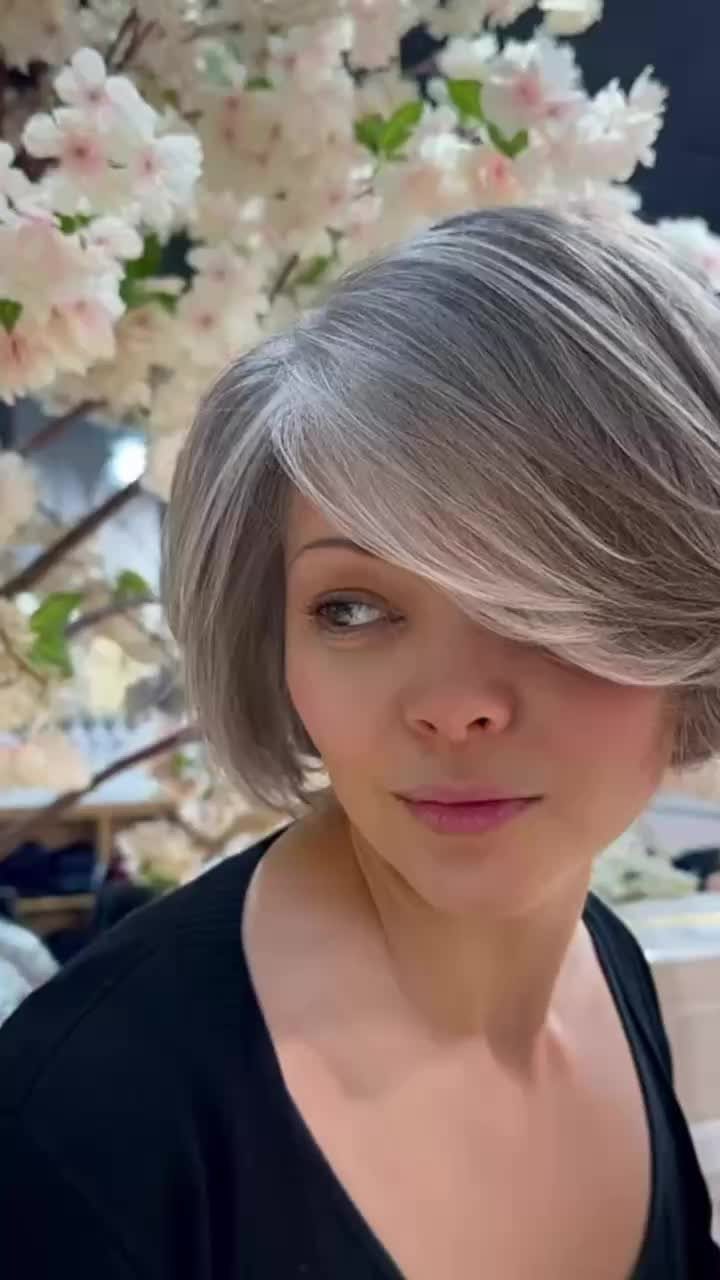
A deep side part that shifts the weight of your hair to one side, adding asymmetry and a bit of height at the root on the heavier side.
Gray hair benefits from the extra dimension a side part creates, especially if your natural part has thinned or widened over time.
The deeper the part, the more lift you get.
Use a rattail comb to draw the part from your hairline back to the crown, then blow-dry the roots on the heavier side up and away from your face to lock in volume.
7. Shaved Sides
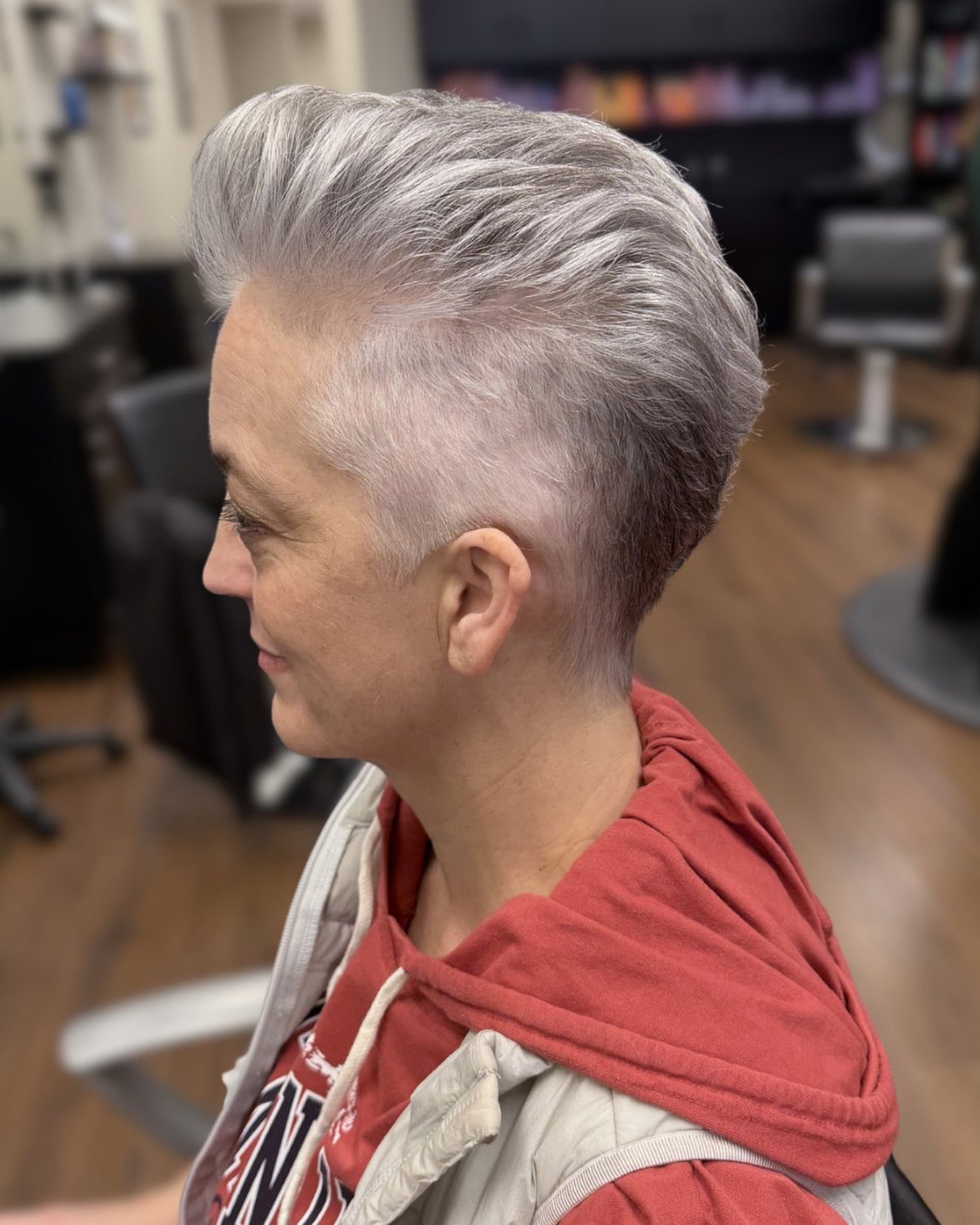
Silver looks deliberate when the sides are clipped close and the top stays long enough to sweep back. The contrast between the 2 lengths is the whole style, and gray shows it off well.
Tell your stylist how close to go on the sides, and bring a photo of the top length that appeals to you. I’d keep the top long enough to push back with your fingers, since that makes mornings quick.
8. Side-Swept Curly Bob
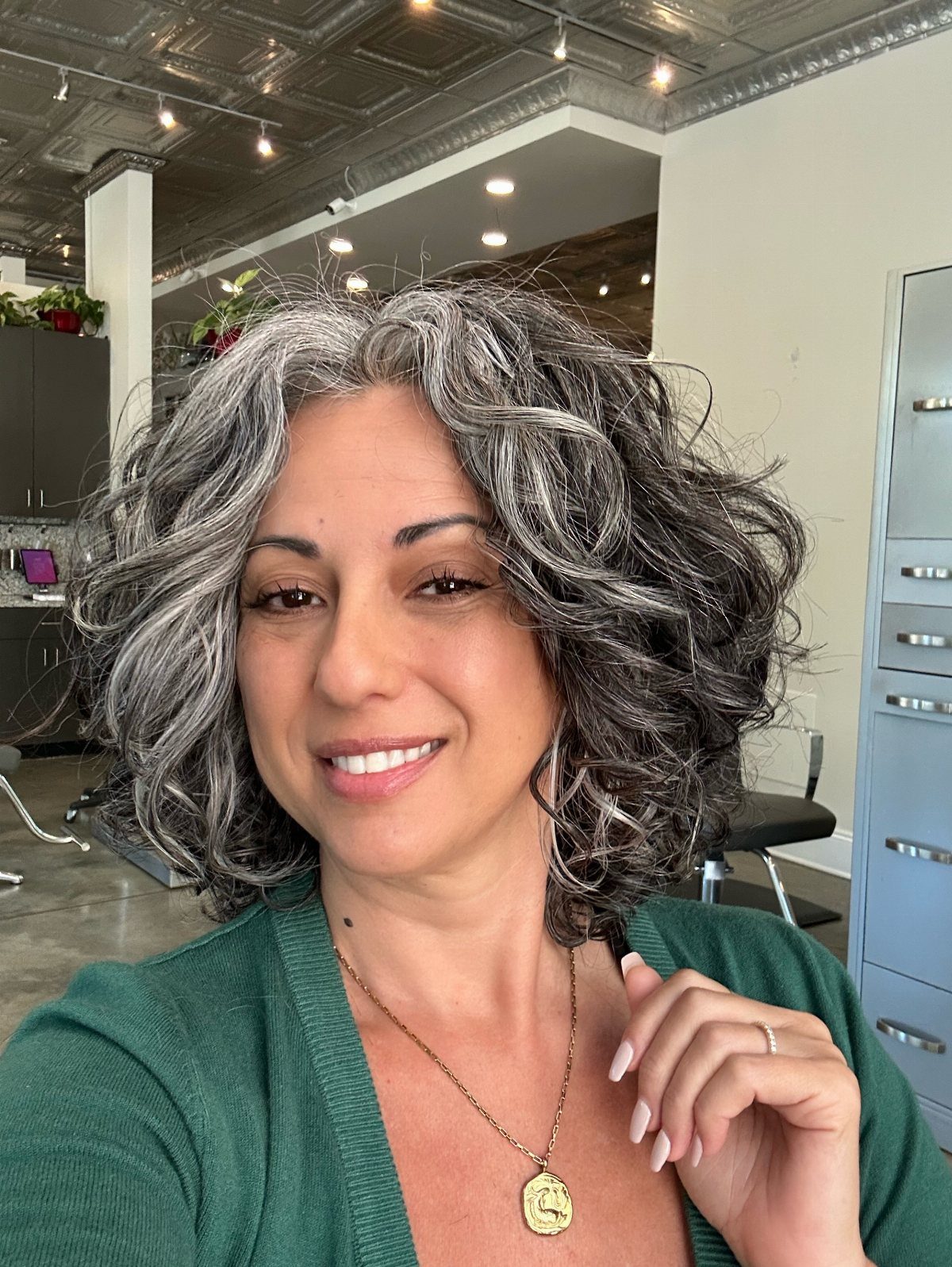
A deep side part does most of the work in this curly bob. It pushes the curls to one side and gives the cut a lopsided lift that I like far more than a center part on curly hair.
Part your hair when it’s wet and let it dry in that position, because curls set where you leave them. Skip brushing once it’s dry.
9. Shag

A silver shag gets its shape from choppy layers and bangs, and a little mess belongs in the cut. Ask for layers that start high so the volume sits at the crown and the ends stay light.
A texturizing spray worked through with your fingers is usually enough styling. I’d skip a brush, which flattens the layers and takes the piecey texture out.
10. Natural Curls
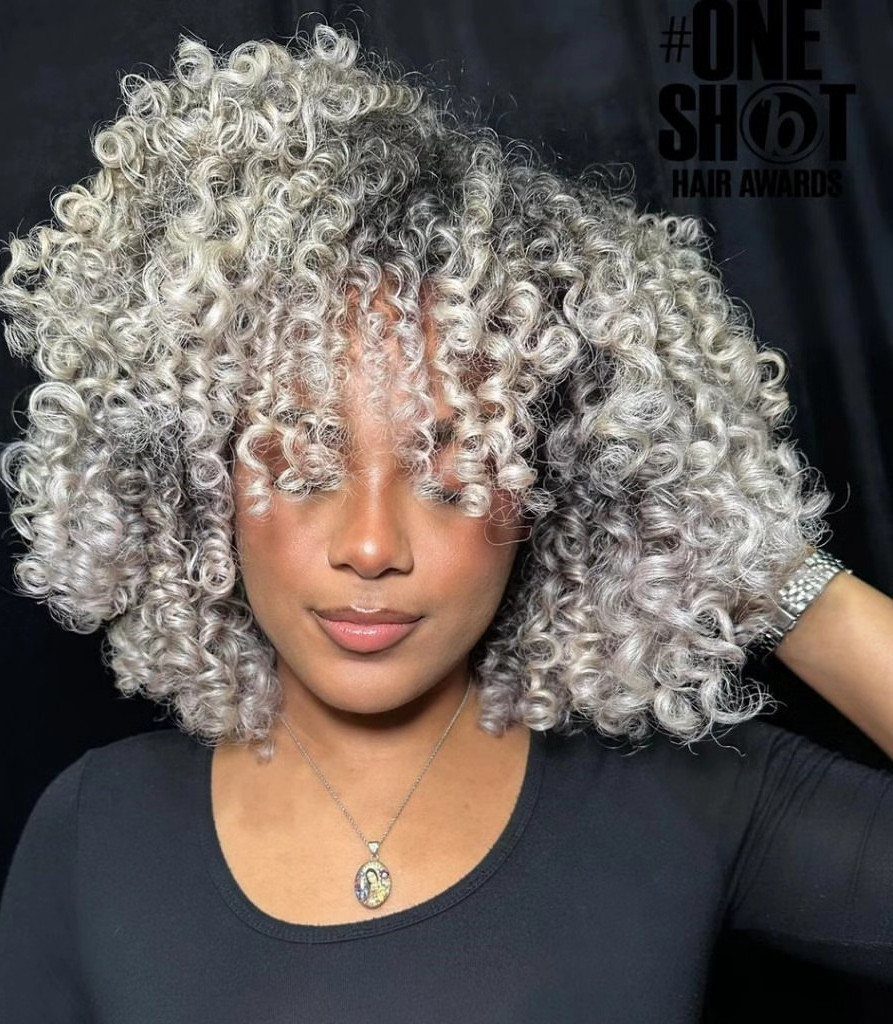
Put the flat iron away. Natural silver curls have their own volume, and the best thing you can do is protect it.
Detangle with a wide-tooth comb while your hair is wet and conditioned, then let it air-dry or use a diffuser on low.
Touching it while it dries breaks up the curl pattern, so hands off until it’s fully dry. Salt-and-pepper curls look especially good when the cut is trimmed to surround the face.
11. Face-Framing Grays
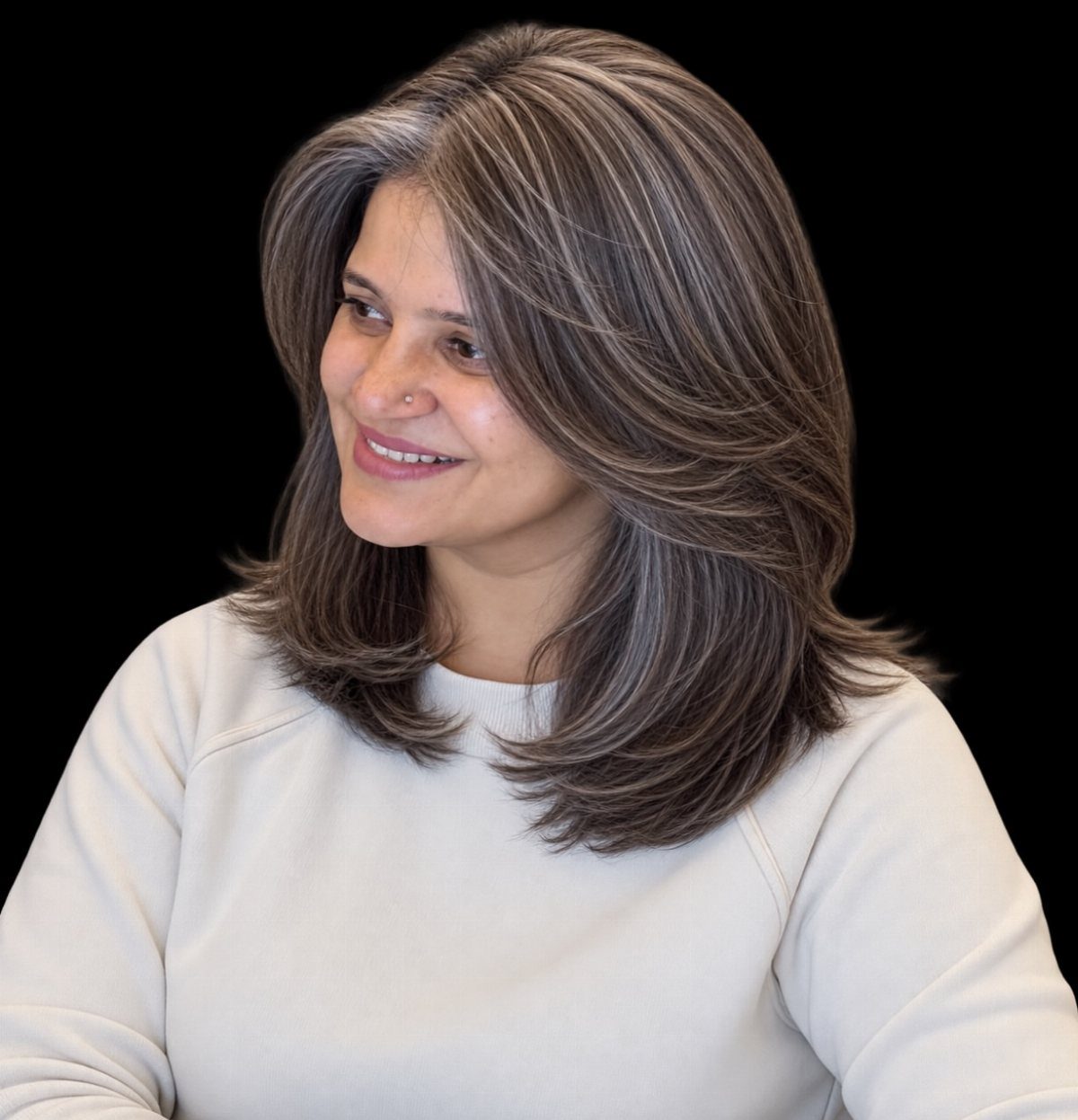
Brown hair with silver strands right at the face is an easy way to try gray while the rest of your color stays put.
Lighter pieces land where people look first, so they brighten your face and blend in gray as it grows.
Ask your colorist to place the silver in the front sections only. Layers cut around the face help the pieces fall forward instead of disappearing into the rest of your hair.
12. Textured Crop
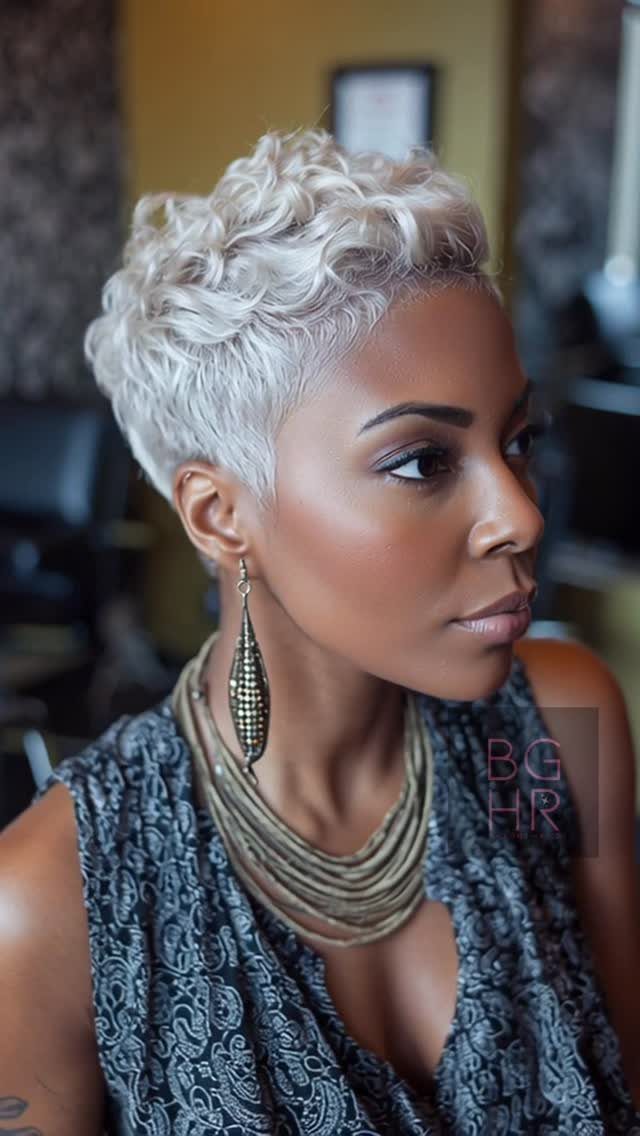
Short, choppy and tapered at the nape: that’s the shape. The sides and neckline are cut close and clean, while the top keeps enough length to show texture and curl.
I’d ask for point-cutting on top so the pieces separate. A small amount of styling cream scrunched in at the crown is enough, and the tapered neckline keeps the cut neat between appointments.
13. Curly Cut
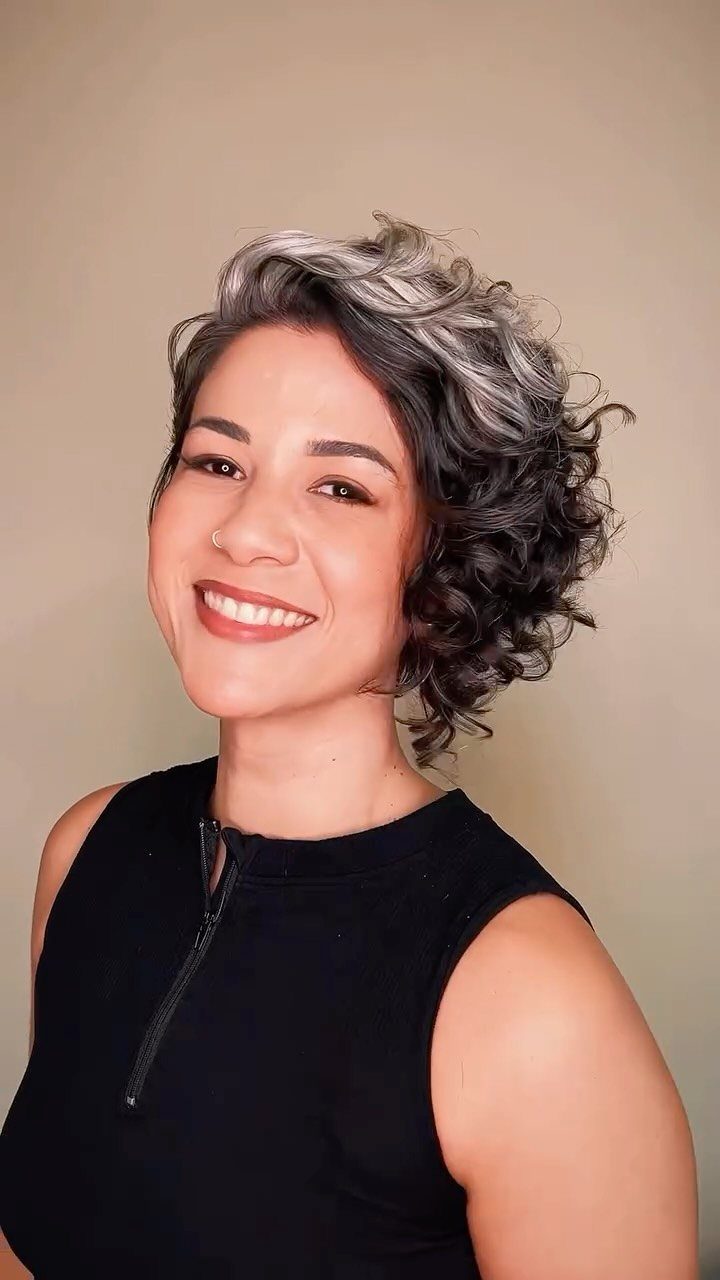
Layers cut to follow the curl, not fight it, leave short silver hair with bounce and separation instead of a heavy puff.
Ask for the shaping to be done on dry or damp hair so your stylist can see where each curl wants to sit.
I’d go easy on thinning shears, since too much removal breaks the curl pattern and leaves frizz. A light curl cream scrunched in while the hair is damp does the rest.
14. Wispy Bob
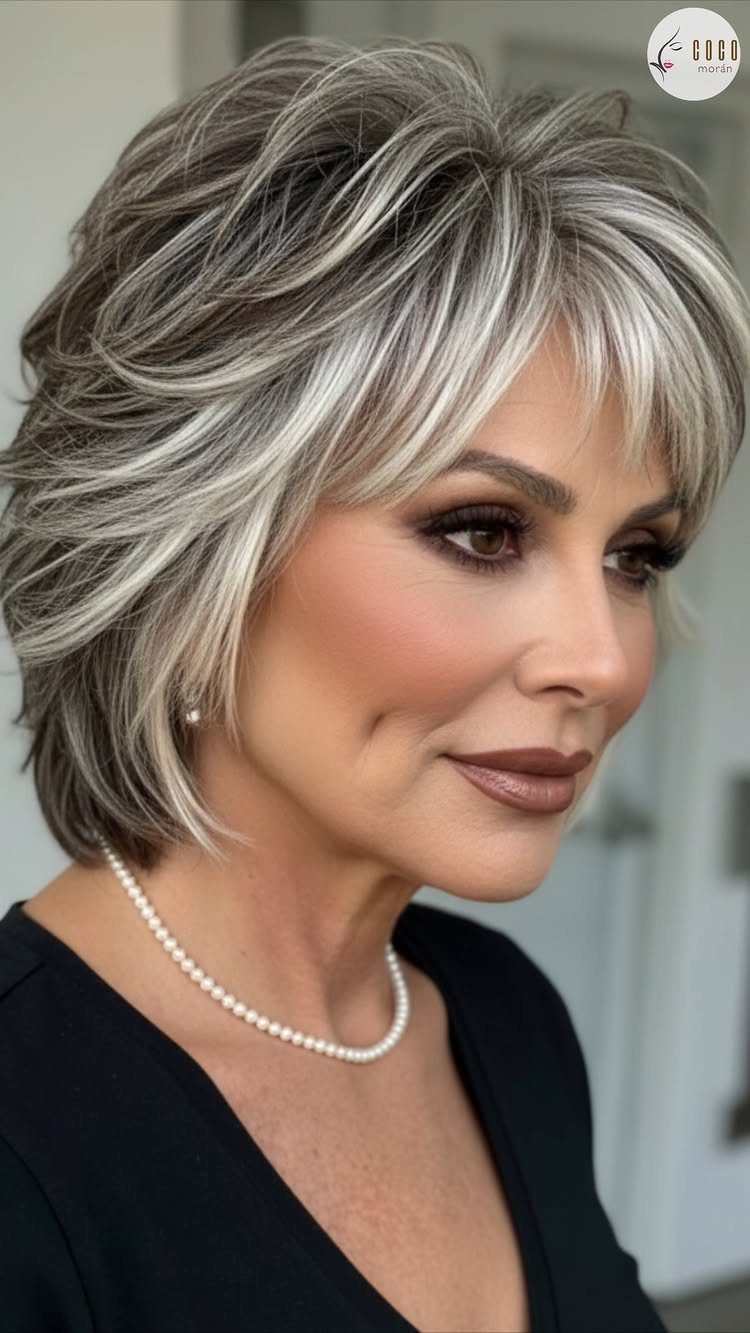
Light, feathery ends and soft bangs keep a chin-length bob from looking stiff. Gray with a few highlights shows off that wispy texture, because the lighter strands catch the edges of each layer.
Ask for the layers to be point-cut and the bangs swept to the side, not cut straight across.
A bit of texturizing spray at the ends keeps the pieces separate. Fine hair suits this best; thick hair may need more weight removed.
15. Inspiring Short Gray Hair
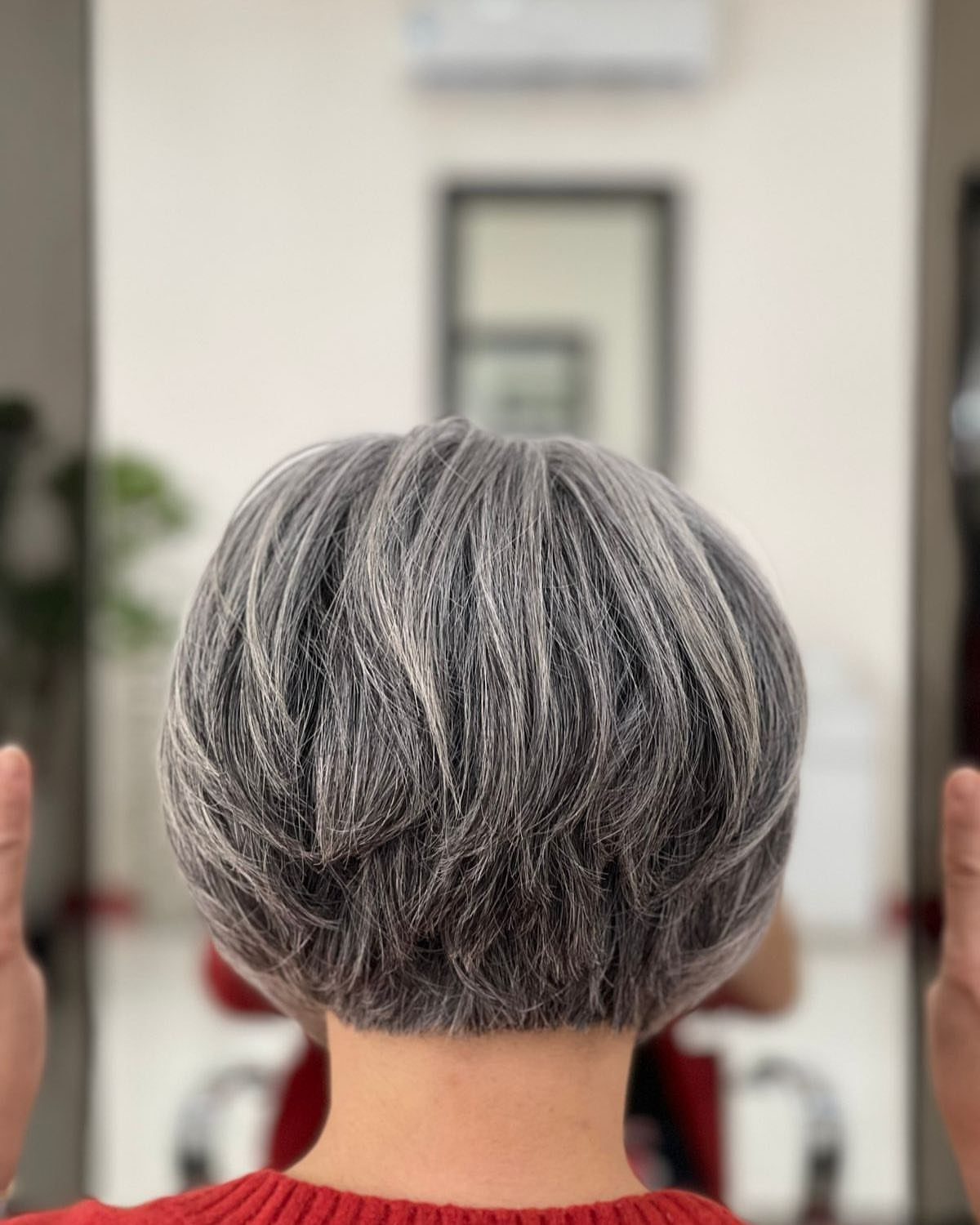
You really can’t go wrong with a bob, and this one proves it from behind: short, layered, and rounded off with a feathered finish. Gray hair gets a soft outline this way, with no hard edge to show growth.
Bring a photo of the back view to your appointment, since that is where this cut succeeds or fails. I’d ask for the layers to blend smoothly at the nape.
16. Layered Lob

Layers are what make a lob worth choosing over a plain one. Cut to shoulder length, the shape gets volume and movement that straight, one-length gray can lack.
Ask for the layers to start around the cheekbones or lower, so the ends stay full and don’t look stringy. Glasses sit well with this length, since the hair frames the face without crowding the frames.
A round brush and a quick blow-dry are enough for most mornings.
17. Long Layers
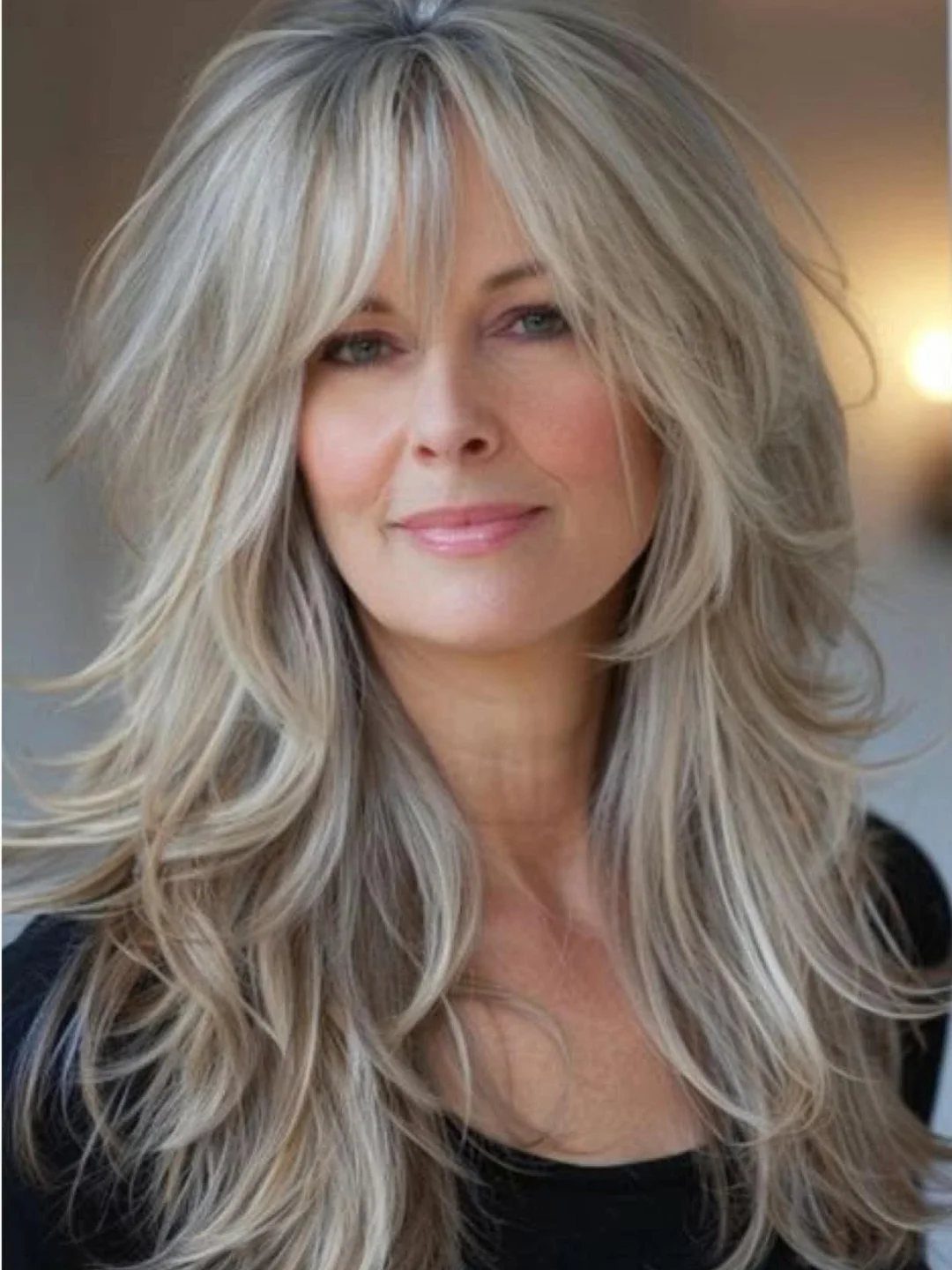
Long silver hair cut in layers moves in a way a one-length cut can’t, and soft curtain bangs add a frame that opens at the center.
The layers take weight off the ends, which gives gray hair more lift and softness.
I’d ask for the shortest layer to land at the chin so the shape stays full. Curtain bangs grow out gracefully, though they do need a trim every few weeks to stay off your eyes.
18. Blunt Bob
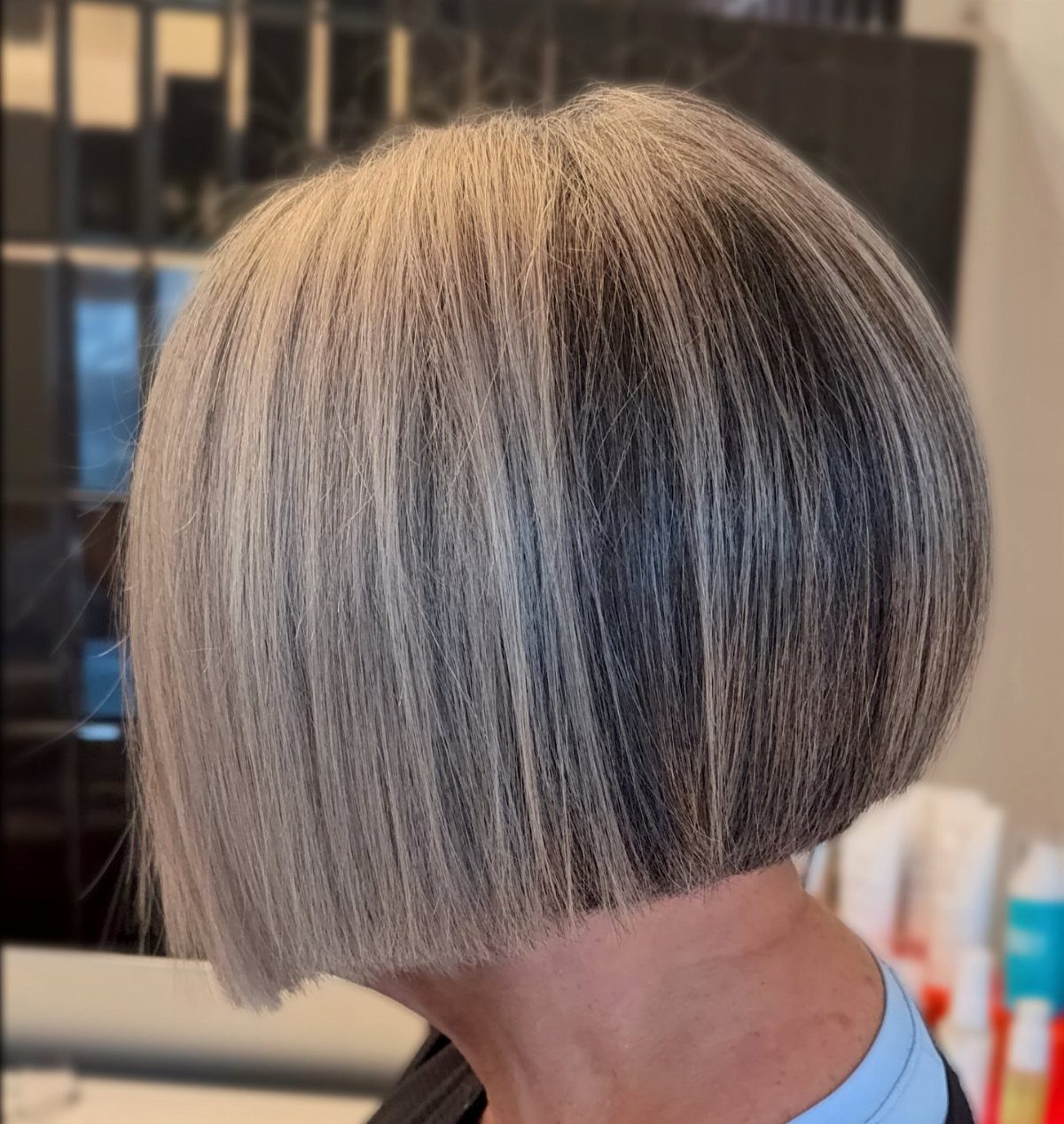
A blunt bob has one clean line and almost no layering, so the edge does all the work. Silver and gray tones show up sharply against that straight hem, which is why I like it on hair with natural shine.
Ask for the ends cut straight across with minimal texturizing. Blunt lines show every uneven inch, so plan on regular trims to keep the edge crisp.
For that glassy, blunt edge, a flat iron run over serum-coated sections does most of the work, since gray strands tend to be coarser and need the extra smoothing.
19. Silver Waves
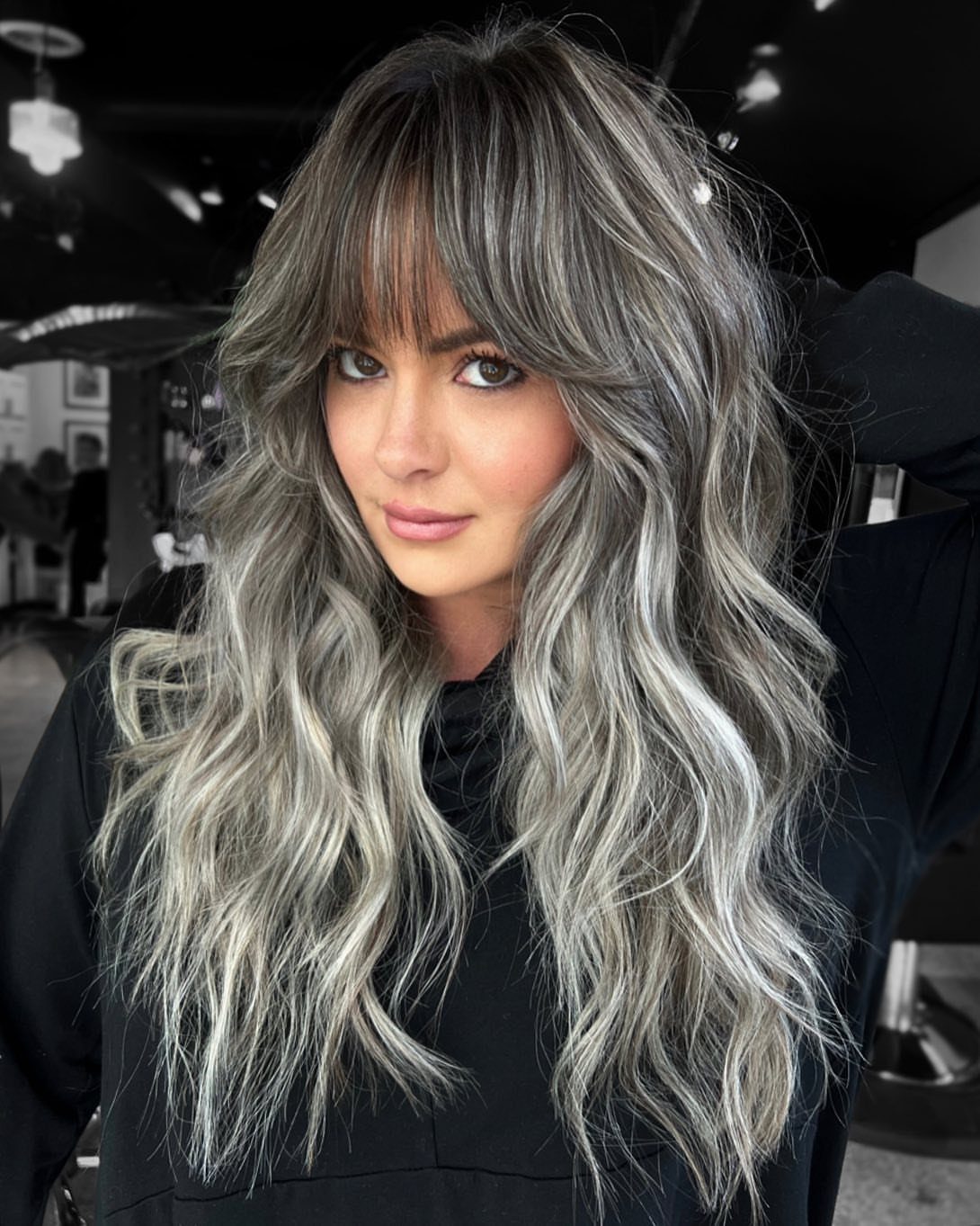
Soft waves keep long silver hair from lying flat and let the blended strands show their different tones. Bangs worked into the wave pattern frame the face without a hard line.
I’d keep the bend loose, since a looser wave suits the length and takes less time each morning. Ask your stylist to cut the bangs with your waves in mind so they sit the way your texture falls.
20. Graduated Bob
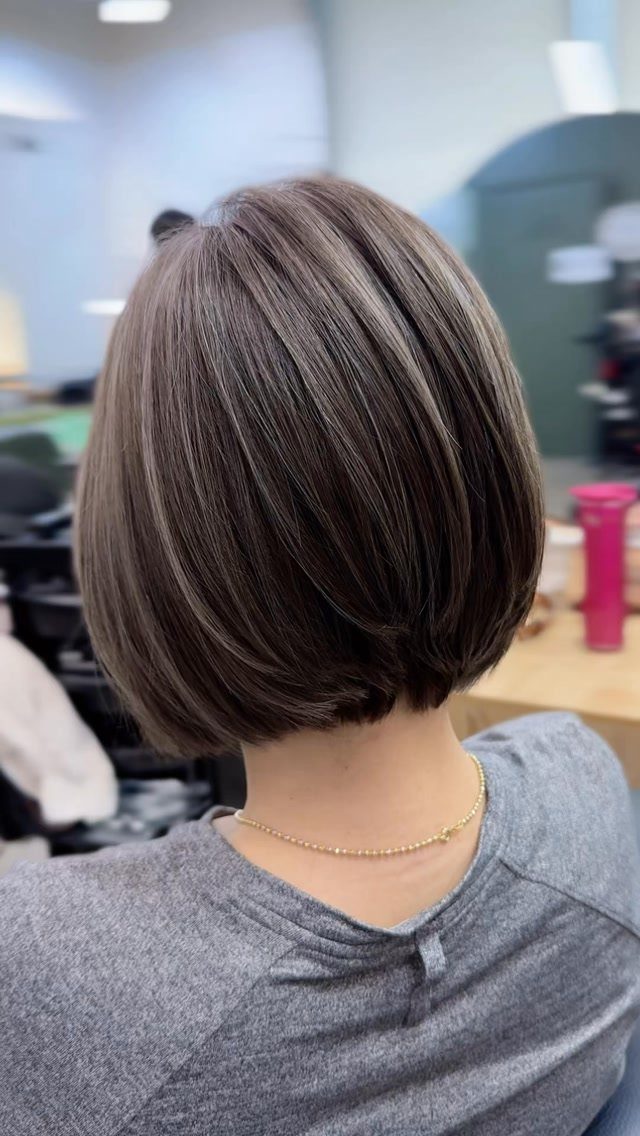
Shorter layers angled toward the nape give a graduated bob its rounded back, and the gray and brown tones show up in each curved layer.
Ask how short the nape will go before the scissors come out. Shorter means a rounder shape and more frequent trims, while a softer graduation grows out more gently.
21. Full Bangs
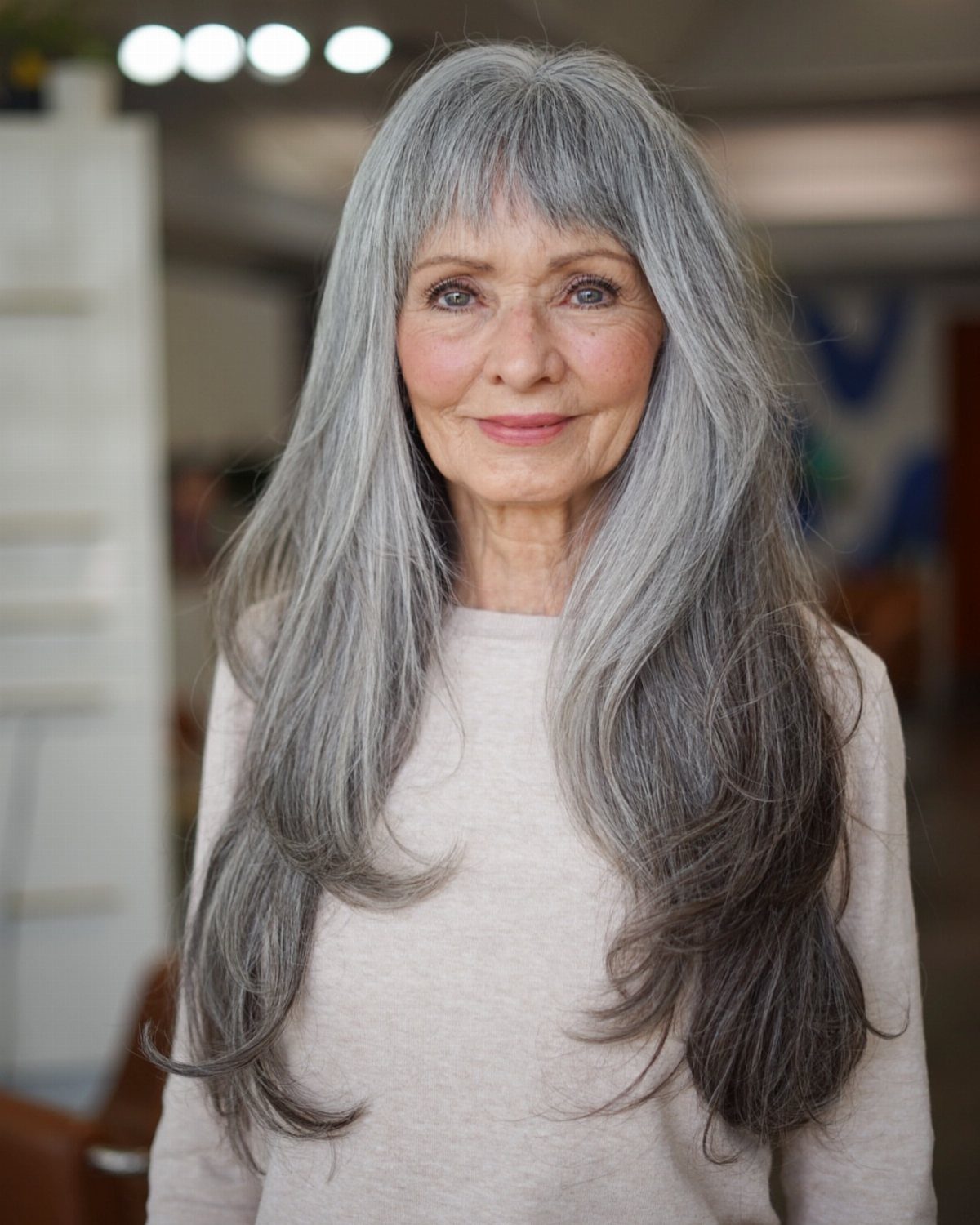
Full bangs on long gray hair are a commitment, and a good one if you like a strong frame around the eyes.
Soft silver layers through the lengths take the weight off a full fringe, so the whole cut moves instead of sitting like a curtain.
Check your hairline for a cowlick before you commit.
Plan on regular trims too, because bangs that reach the eyelashes get annoying fast. Grown out, they pin back or sweep to the side.
22. Long Platinum Gray Hair
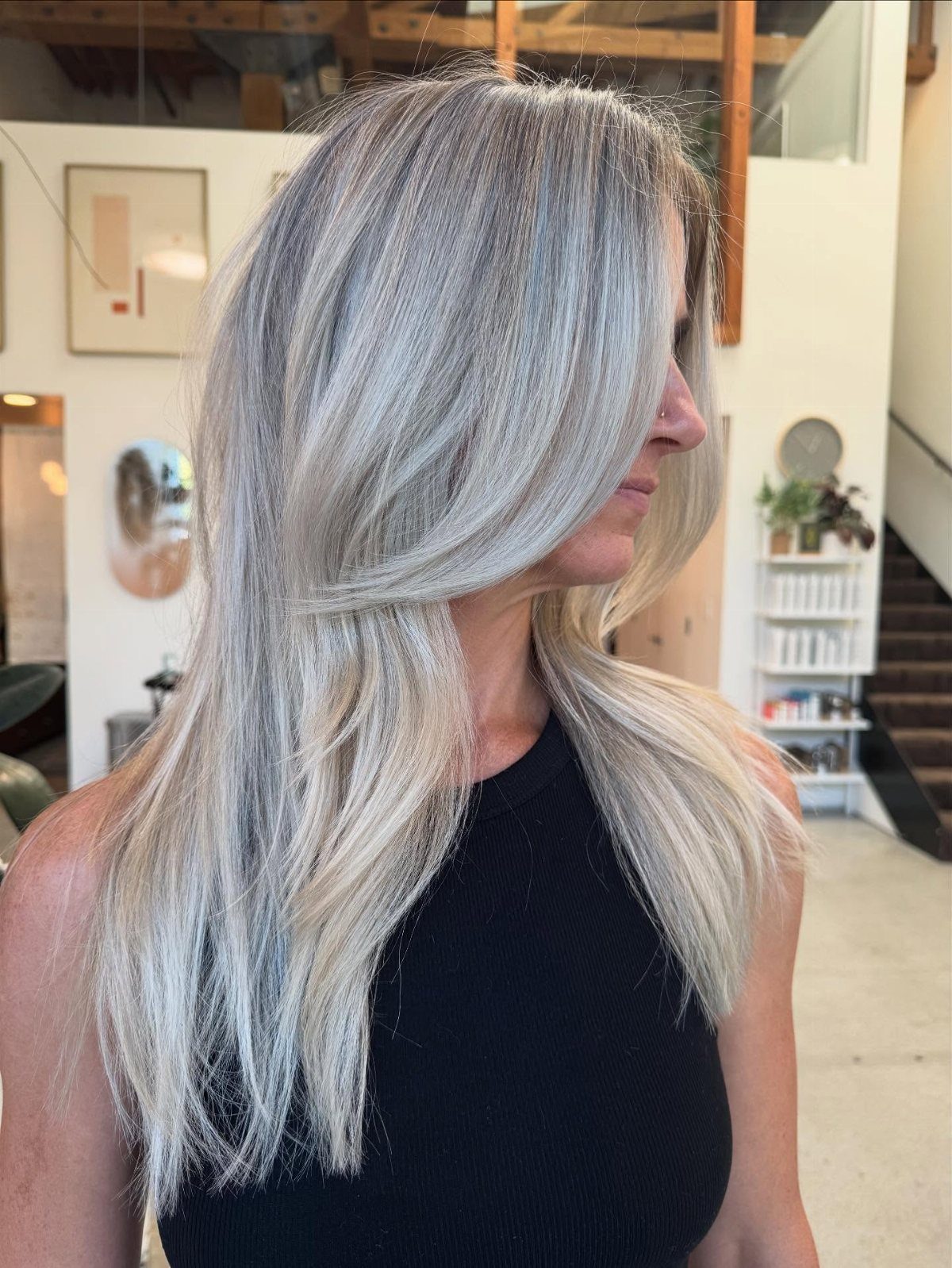
Gray no longer signals age by default; plenty of younger women choose platinum on purpose, and long hair past the shoulders suits it well.
I’d ask for layers so the length moves instead of hanging in one flat sheet. A gloss now and then keeps the tone clean, much like it does for salt and pepper.
23. Gray-Brown Bob
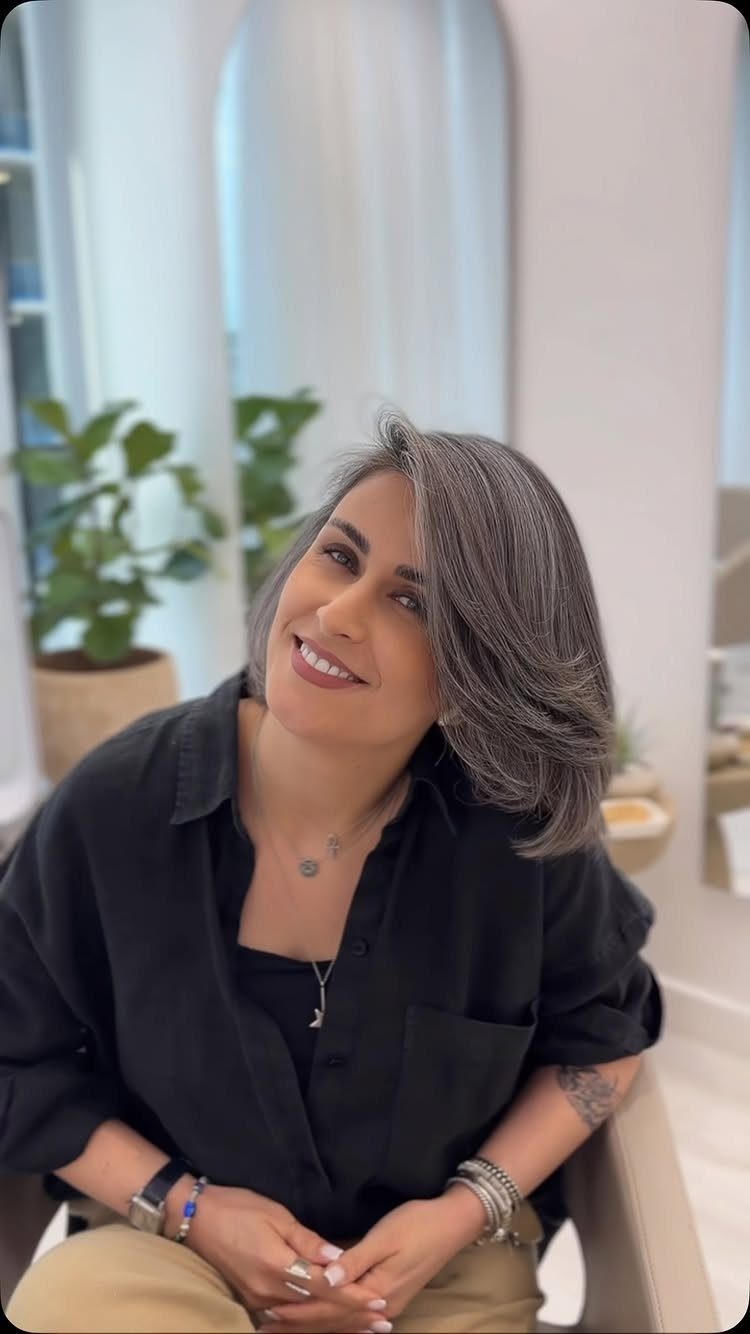
Gray and brown blend into one soft color here, and a side part keeps the shoulder-length bob from looking too neat.
Because the two tones are mixed, regrowth barely shows, which makes this one of the easier cuts to maintain. I’d part it on the side where the gray sits most, so the blend is the first thing people see.
24. Long Gray-Streaked Hair

One bold gray section against long brown hair reads as a choice, not a gap in your color. The base stays natural, and the streak does all the talking.
Part your hair so the gray section lies at the front, where it frames your face. If the streak is already growing in, ask your colorist to leave it alone and color around it.
25. Gray-Streaked Braids
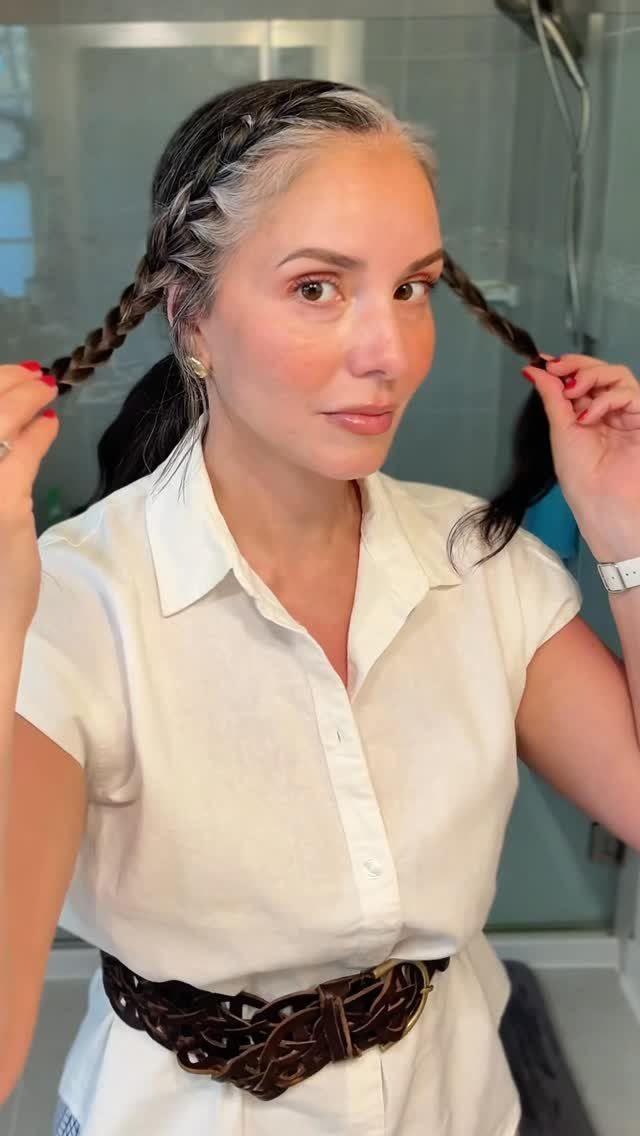
2 small braids at the face put a gray streak right where people look first.
Braid only the sections that frame your face, one on each side, and the rest of your hair is free to hang loose or get pulled back.
Keep the streak inside the braid so it shows as a stripe of silver. A snug braid reads as neater than a loose one, and a small clear elastic at the end disappears into dark hair.
26. Side-Swept Gray Fringe
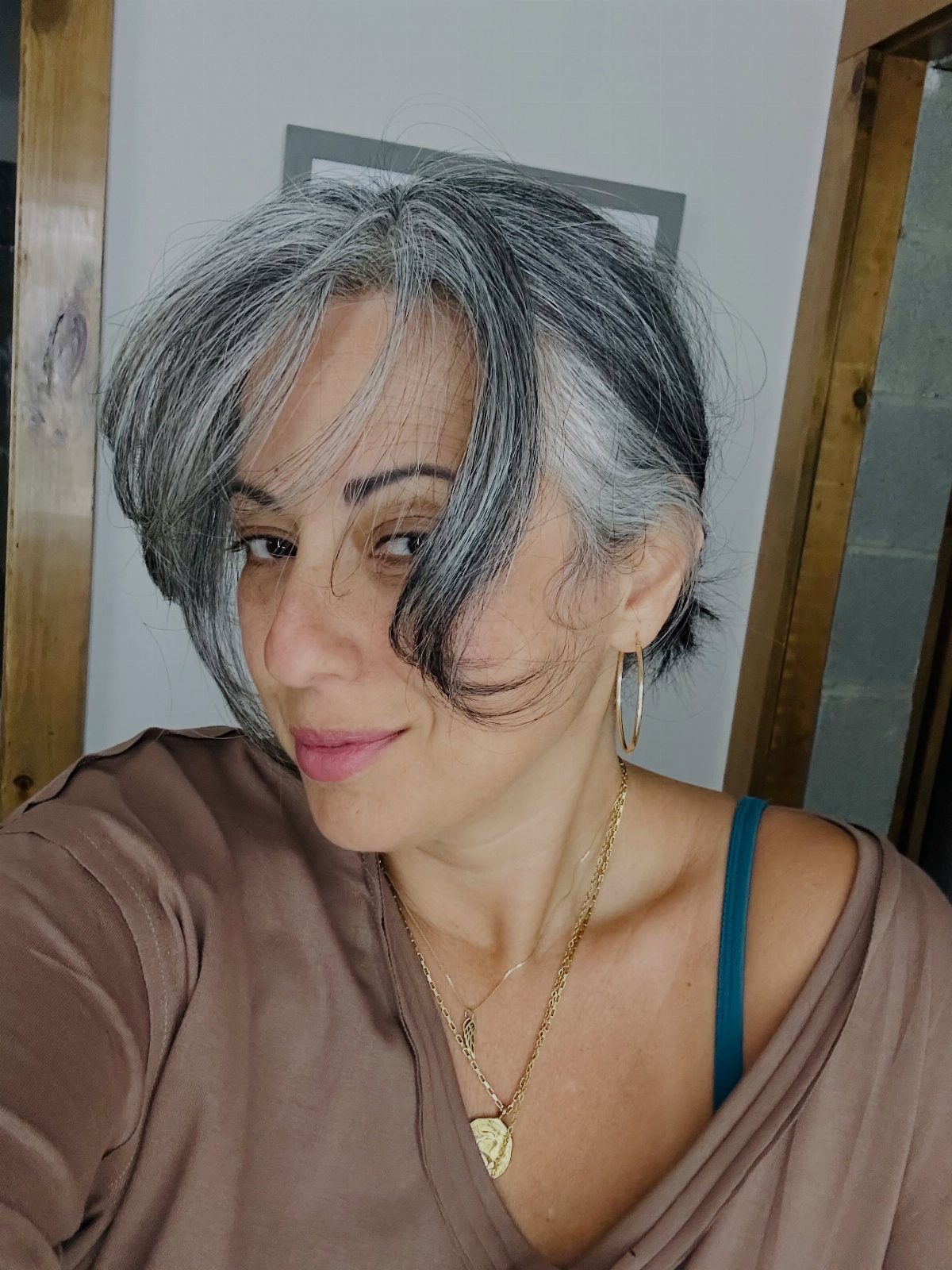
Face-framing layers plus a long, sweeping fringe make a soft frame for gray hair, with no hard line across the forehead.
Ask for the fringe to be cut long enough to reach the outer corner of your brow, since that length is what lets it sweep instead of sit.
Blow-dry it sideways while it’s still damp, then go over it once more with cool air. I’d choose this over a short fringe if your forehead hairline is uneven.
27. Straight Silver Shoulder-Length Hair
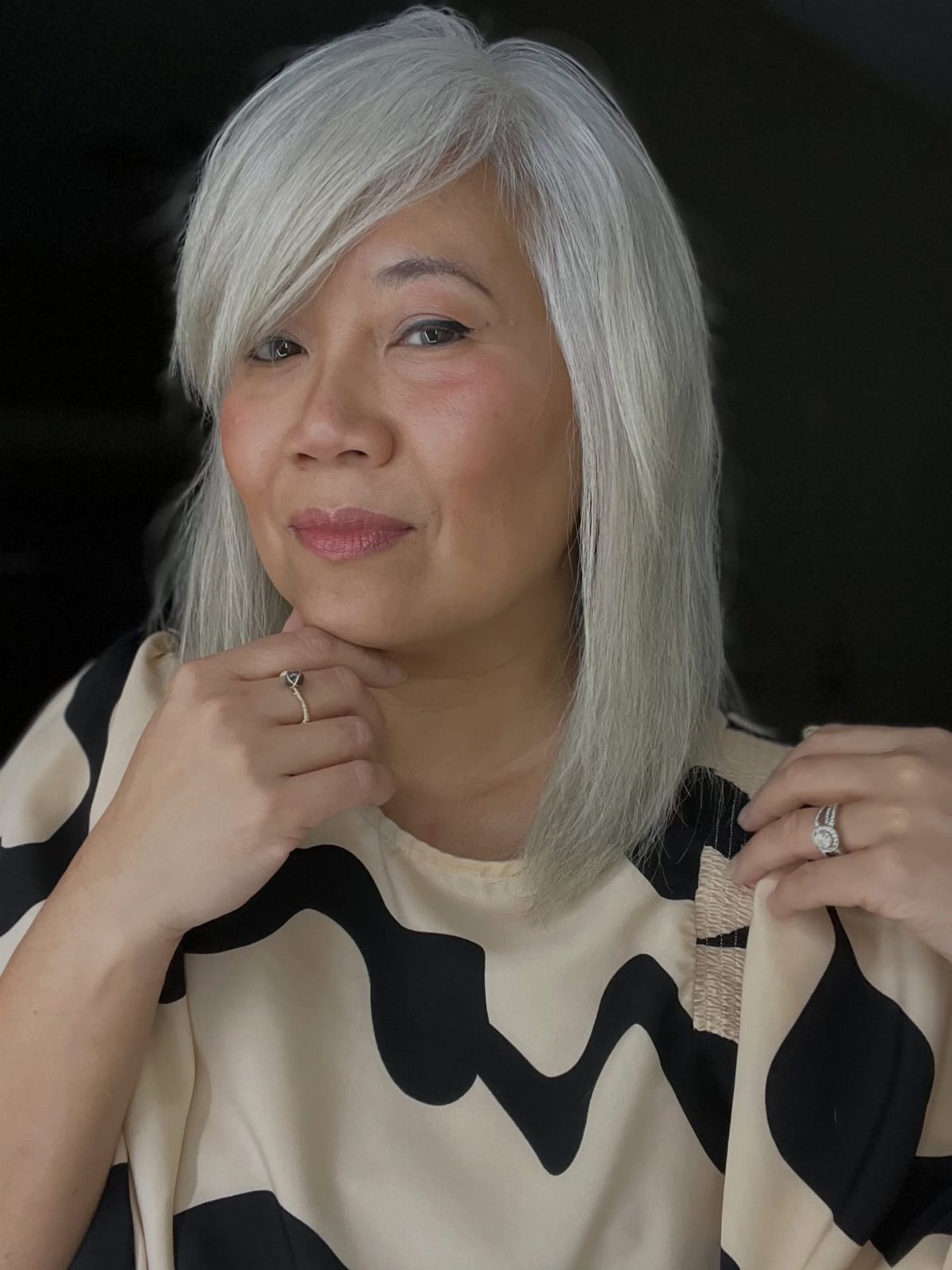
Smooth, straight and shoulder length: this style depends on shine more than shape. Silver reflects light well, so a little smoothing serum on damp hair and a blow-dry with a paddle brush give you most of the polish.
The side-swept bangs soften the cut and keep it from looking severe. Mornings stay short, which is why I’d pick it for anyone who wants gray hair with almost no styling.
28. Shoulder-Length Gray Curls
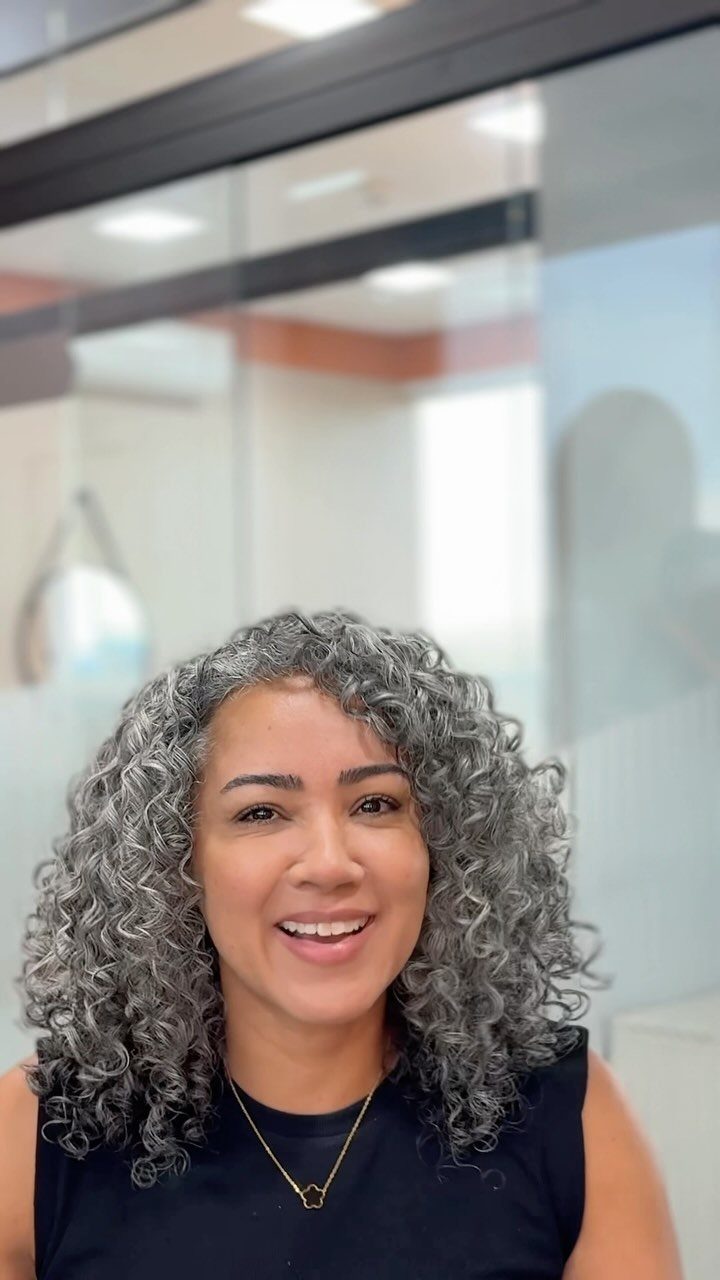
Curls spring up as they dry, so a shoulder-length cut looks shorter on the day than it did in the salon chair.
Ask your stylist to leave a little extra length, and you’ll land at the shoulders instead of above them.
Full, defined gray curls at this length have room to bounce without turning into a puff. Pick your parting while the hair is wet and leave it alone as it dries.
29. Gray Roots with Dark Curls
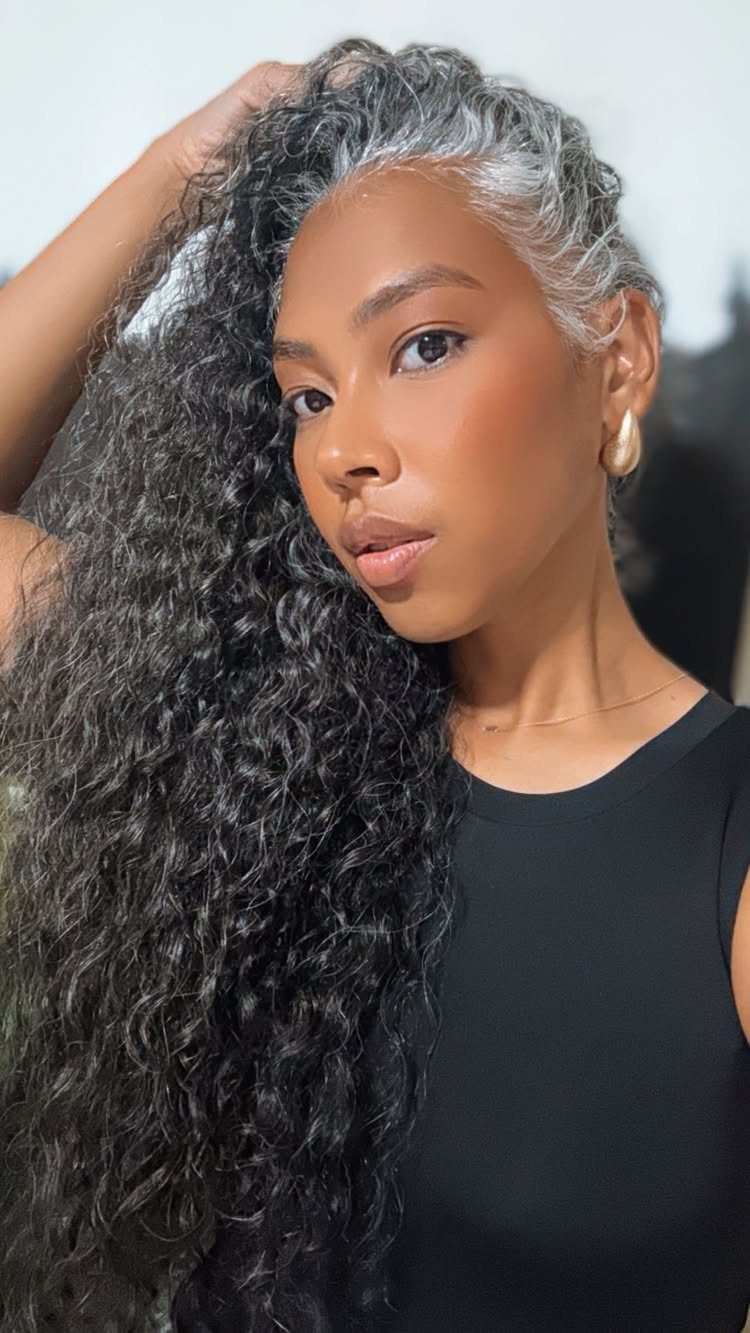
Skipping the root touch-up is the entire method here. Long dark curls stay as they are, and the gray at the hairline grows in on its own schedule.
Tell your colorist you want the roots left alone.
The contrast widens with every month of growth, so decide ahead of time how far you’ll let it go. I like it best on curls this long, since the dark length gives the silver something to stand against.
Keeping Gray Hair Bright
Purple shampoo once a week is the easiest fix for yellow or brassy tones. A purple conditioner with a heavy dose of pigment can stand in for the extra toning wash, and it detangles the way a leave-in would.
Sun and heat are what push gray toward yellow in the first place, so shield your hair outdoors and keep hot tools to a minimum. Heat also breaks coarse strands, which is a second reason to turn the dial down.
The more gray you have, the more noticeable this gets.
Condition regularly, and consider a cleansing conditioner in place of shampoo on some wash days. Add a moisturizing product to plump up the strands.
Matching Cuts to Face Shape
Your face shape decides which cut flatters you most, and the guidance is simple.
Oval faces can wear almost any short style, so pixies, bobs and crops are all open to you.
On a round face, an angled cut or some lift at the crown stretches the shape so it reads longer. Heart-shaped faces do well with side-swept or layered styles, which balance the forehead against the jawline.
Square faces need strong lines softened. Curved bangs and feathered ends pull the eye in that same lengthening direction.
Hair texture matters as much as face shape. If your strands are fine, choose a cut with lift, movement or blunt ends, because those give the hair body.
Growing Out Gray
You can chop your hair short and be done with it, or let the roots come in over 6–12 months. Cutting short wins if you can’t stand the in-between stage, since the dyed length is gone in one appointment.
Waiting is gentler if you want to keep your length, and you can soften the line along the way.
Gray highlights and lowlights across your whole head blur the line between roots and the rest, so that’s what I’d ask a stylist for.
Choose cooler tones so they match your natural gray strands.
Frequently Asked Questions
Is grey hair fashionable in 2026?
Gray reads as a deliberate choice now, and plenty of younger women pick platinum on purpose.
Salt and pepper grown out together, silver highlights through brunette hair and silver strands around the face all show how many ways there are to wear it.
I’d put the shape ahead of the shade, so ask for a cut with movement.
Can grey hair make you look younger?
It can, if the cut and tone are right. Layers give gray hair lift and softness that a one-length cut lacks, and silver pieces placed at the front brighten the face.
Gray on its own no longer makes anyone look older; a sharp shape and a clean, cool-leaning tone are what read as polished.
What is the best cut for gray hair?
A layered bob or lob is my pick. Gray is often coarser, and layers keep weight where you want it while adding volume and movement.
Layers that begin at cheekbone level or lower keep the ends full, while higher ones can leave them thin and wispy. For something shorter, a pixie with length left on top gives the same movement.
What are the easiest short grey hairstyles for busy mornings?
Mornings go fastest with a pixie, a textured crop or choppy layers that look better a little messy.
Short sides on a pixie hold the outline without help, and a crop only needs a dab of styling cream worked in at the crown. Both air-dry well, and a tapered neckline keeps them neat between appointments.
Can short grey hairstyles work on curly or wavy hair?
Yes. Cutting layers along the path of the curl removes weight and adds spring, so the shape doesn’t balloon into a heavy puff.
Thinning shears are a tool I’d use sparingly on curls, because over-thinning breaks the pattern and invites frizz. Damp hair, a light curl cream, a good scrunch and then hands off: that covers most of the styling.
How do I prevent yellowing or brassiness in grey hair?
Use purple shampoo once a week and keep your hair out of strong sun and heat, which are what push gray toward yellow.
Save flat irons and curling wands for special days, since high heat snaps coarse strands too. Condition regularly and add a moisturizing product, since gray tends to run drier.
What is the easiest way to transition to gray hair?
Blending is the gentlest route: let your roots grow while a colorist adds cooler highlights and lowlights that sit with the incoming gray.
Letting the roots come in untouched takes about 6–12 months. A big chop wins for anyone who hates the awkward in-between phase, because one appointment removes every inch of dyed hair.