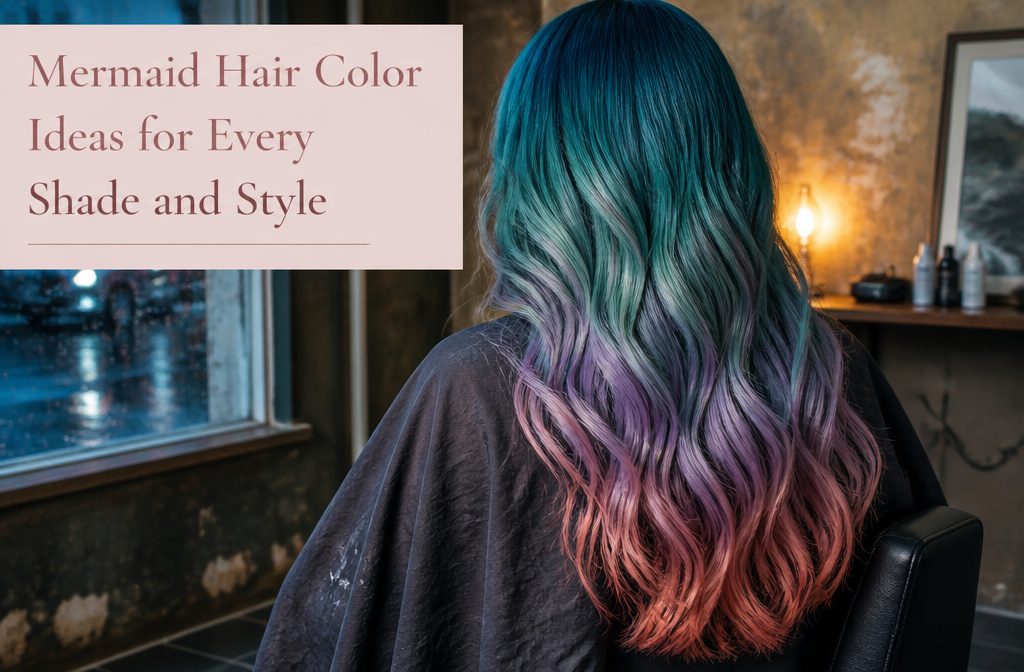
Mermaid hair color spans cool aqua and teal, soft pastel blends, warm coral and sunset tones, plus moody gray builds that skip the candy-bright palette entirely.
Which one works comes down to your starting shade and how much bleaching you’re willing to sit through, since darker hair needs lifting to at least level-9 blonde before pastels show up true.
A salon appointment can run anywhere from $100 to $1,000 depending on how many colors get layered in and how long the process takes.
1. Blue, Teal, and Aqua Blends
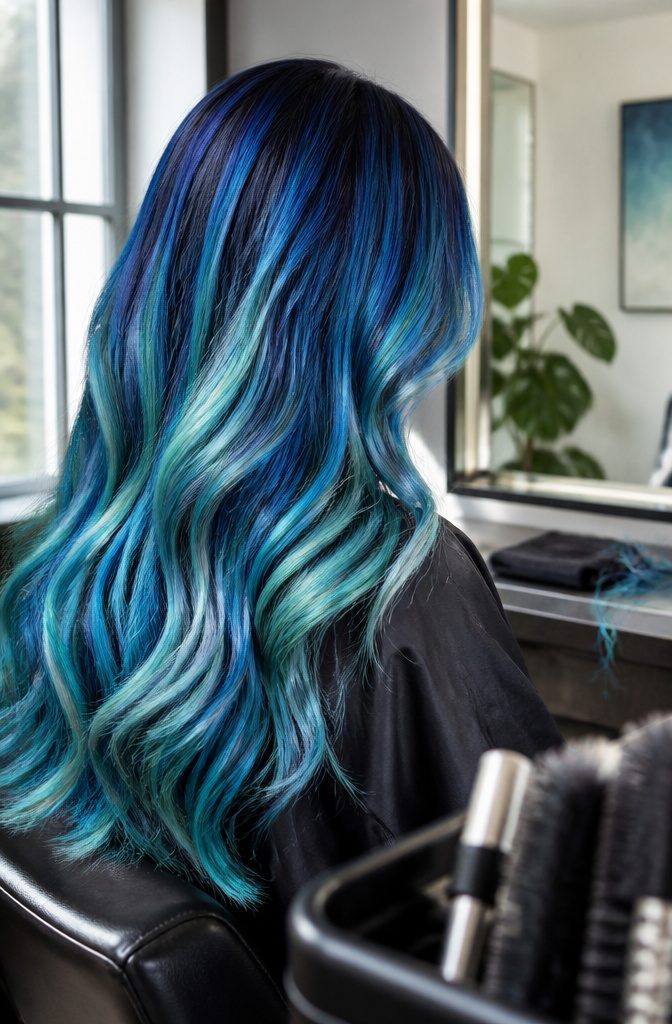
Mermaid blue runs deeper than a single shade. The look builds on a mix of aqua, teal, retro blue, royal, and navy, often picking up silver, gray, and green reflections depending on the light.
The idea is to blend several shades from the same color family so the hair seems to shift and move the way the surface of the ocean does.
Aquamarine Waves, Sapphire Blue, Cyan, Peacock, Sterling Blue, and Ocean Blue all live here. Sapphire mermaid hair, for instance, layers blue with notes of purple and aqua for an opalescent finish that reads especially well on medium skin tones.
Sterling Blue takes a storm-like approach, fading dark roots to denim blue with silver tones at the tips. A typical balance might be 70% blue, 20% green, and 10% purple, though you can tilt those ratios to suit your own taste.
2. Pastel Blends
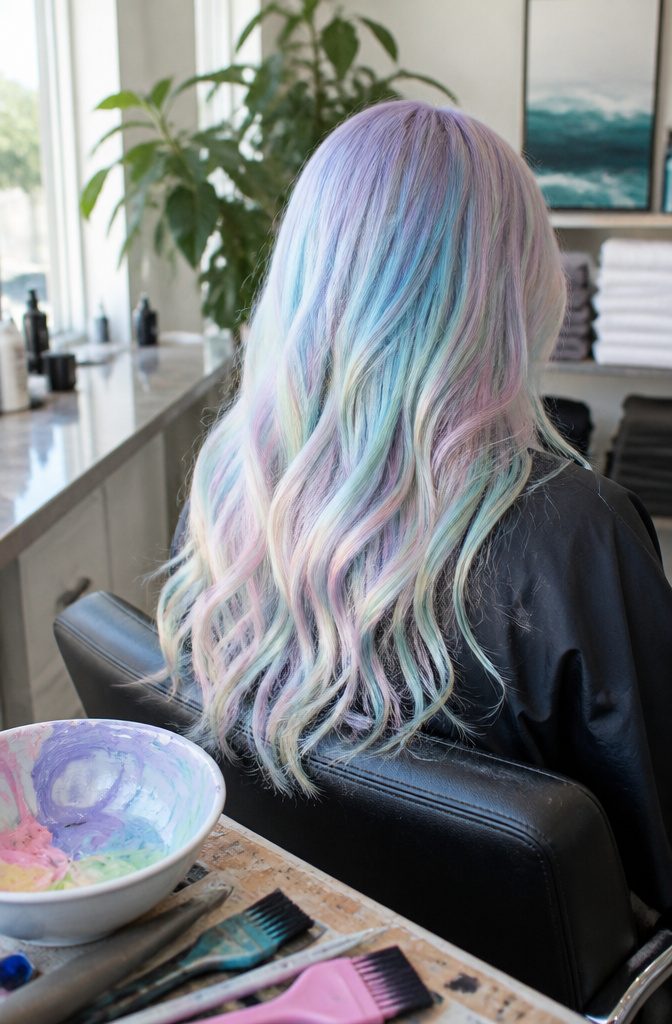
Softer takes on mermaid hair trade the bright, saturated jewel tones for pastel pink, blue, lavender, and green, and the result feels more watercolor than tropical reef.
Pastel mermaid hair color is only achievable once hair is bleached to at least a pale yellow canvas, and looks like Mermaid Pastels All-Over or Watercolor Mermaid Hair ask for a level-9 global blonde base before any color goes on.
That’s very light blonde, nearly white, and anything warmer than pale yellow will muddy the pastel.
Pastel Periwinkle and Platinum Locks leans lavender-blue and reads as the most universally flattering of the pastel options, flipping the expected aqua on its head.
The Pastel Mermaid Undercut layers pastel green, blue, pink, and purple through the length with a fish-scale shaved pattern at the nape, tying the whole look together without adding more color.
I’d start with a darker pastel blue at the roots, melt it into baby blue mid-length, then ribbon in pastel green and violet toward the ends.
3. Purple and Pink Combinations
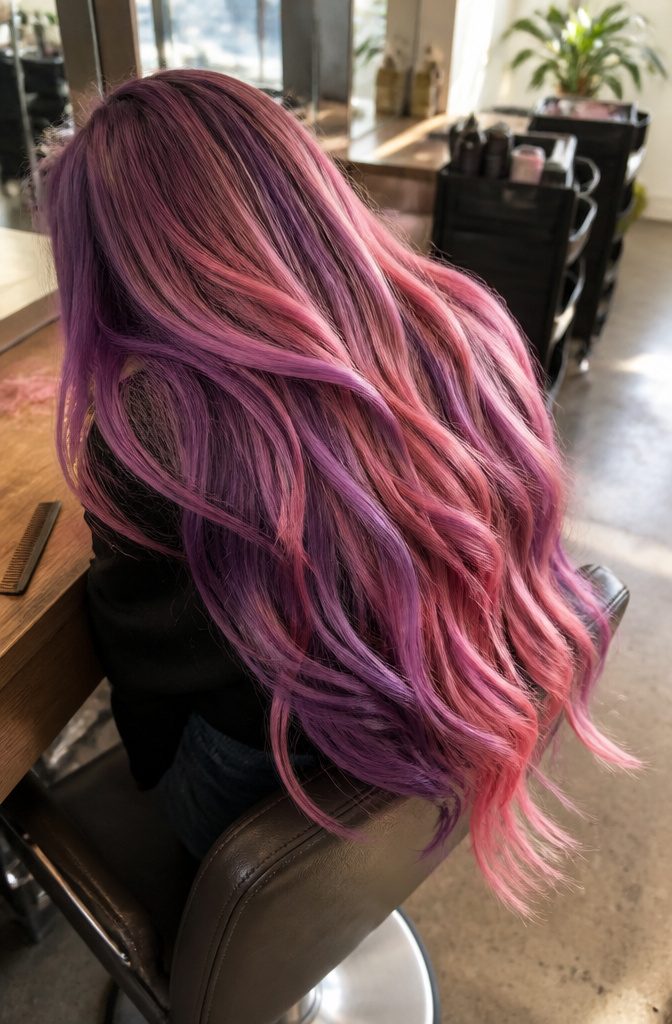
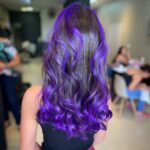
Purple and pink mermaid hair color stretches from soft mauve and pastel rose to saturated violet and neon pink, and the range gives you room to pitch the look as subtle or statement depending on how saturated you go.
I find the pastel end easier to wear in professional settings, where mauve blended with purple reads more like an unconventional brunette than full fantasy color.
The vivid end pairs blue, pink, and purple all at once for maximum mermaid effect, and getting there means bleaching to a level-9 blonde first so the colors stay true.
Cotton candy combinations lean pastel and often pull in multiple shades at once, reminiscent of toys from childhood but styled sharply enough to avoid looking costume.
Violet sits on the warm side of purple and flatters every skin tone, particularly when you pair it with plum and neon pink for contrast.
The color can be worn on any length or texture, straight through to beach waves, and because mauve and purple sit close on the spectrum you can skip foil and let them bleed slightly where they meet.
4. Rainbow Mermaid Hair
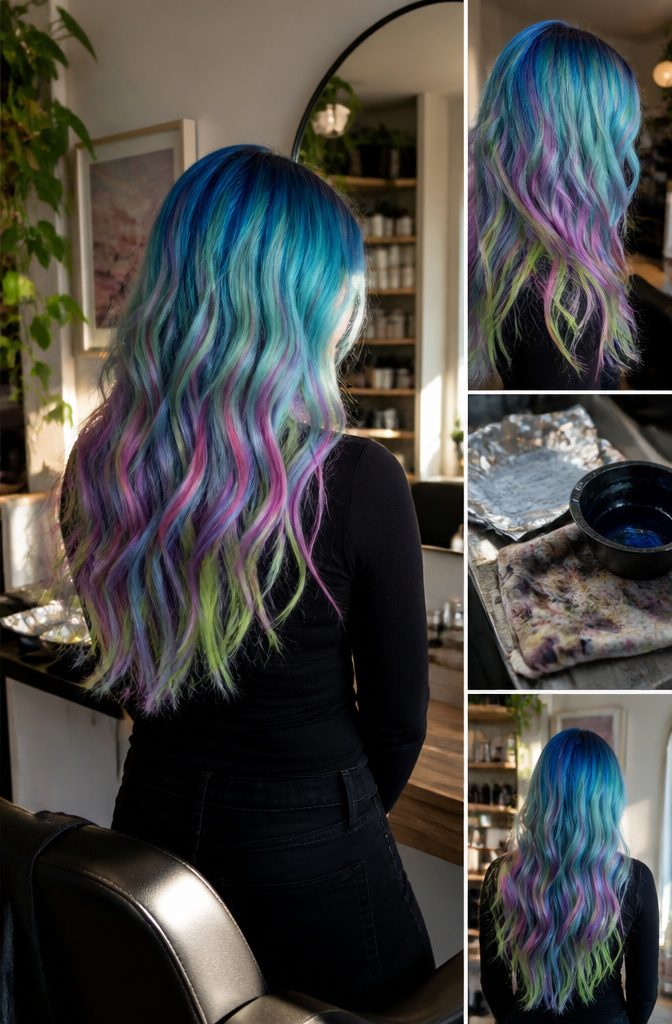
When you want four to six colors blended in layers that start and stop at different lengths, you have a rainbow mermaid build.
Hair colorist Tori Briggs worked a beta fish palette into one client’s hair: dark blue at the root, light blue and mint green through the mid-lengths, then sections of pink, purple and neon green woven underneath and around the face.
The dark blue shadow root eases the grow-out and fade stage considerably. Another route uses teasy lights, highlights and foilyage to blend unicorn tones into mermaid waves, giving you rainbow movement without hard lines between colors.
It takes time. More colors means a longer appointment, sometimes stretching past four hours depending on your starting shade and the number of sections your colorist needs to isolate.
Briggs suggests matching the intensity to your personality: pastels for a quieter vibe, saturated shades if you lean bold.
5. Ombre and Color Melts
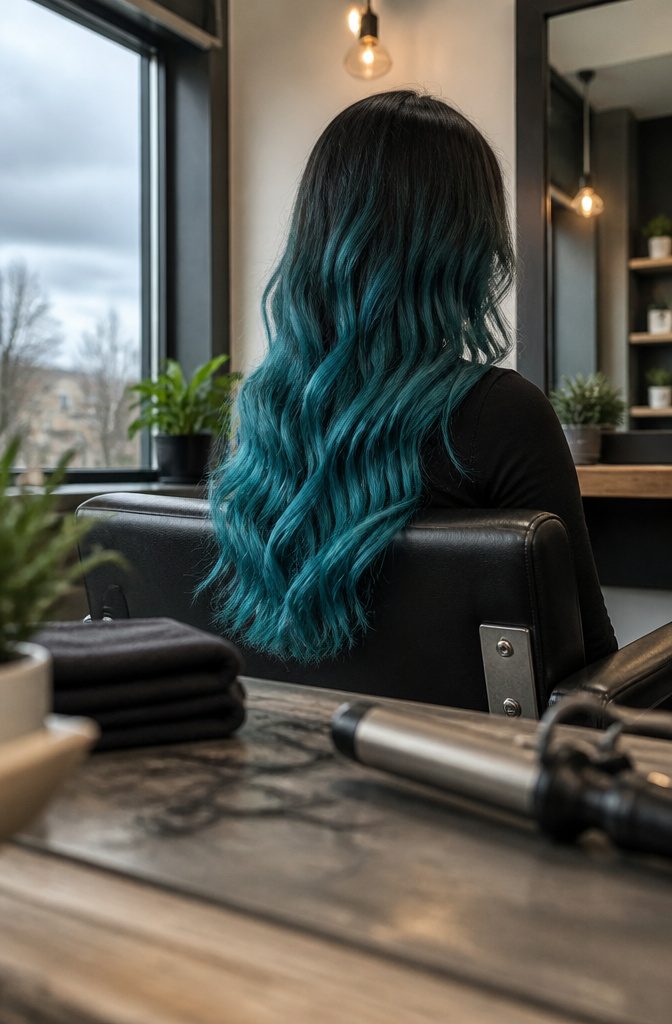
A melt keeps your natural color, or something close, at the roots and builds to the brightest shade at the ends. That is how a Teal to Acid Colormelt on dark hair looks like hair instead of a wig.
It also hides regrowth, since there is no hard line where the old color stops. A flat all-over teal gives you one note, while a melt adds depth and a gradient that moves with the hair.
Gray to Teal Blue is the one I’d book with a colorist, then protect with Matrix Color Me Vivid and cooler wash water.
Teal ombre waves suit medium to thick hair and oval or heart-shaped faces, and a curling wand sets them. Steel to Pastel Blue and Aquamarine with Chic Roots follow the same dark-to-bright logic.
6. Gray and Silver Blends
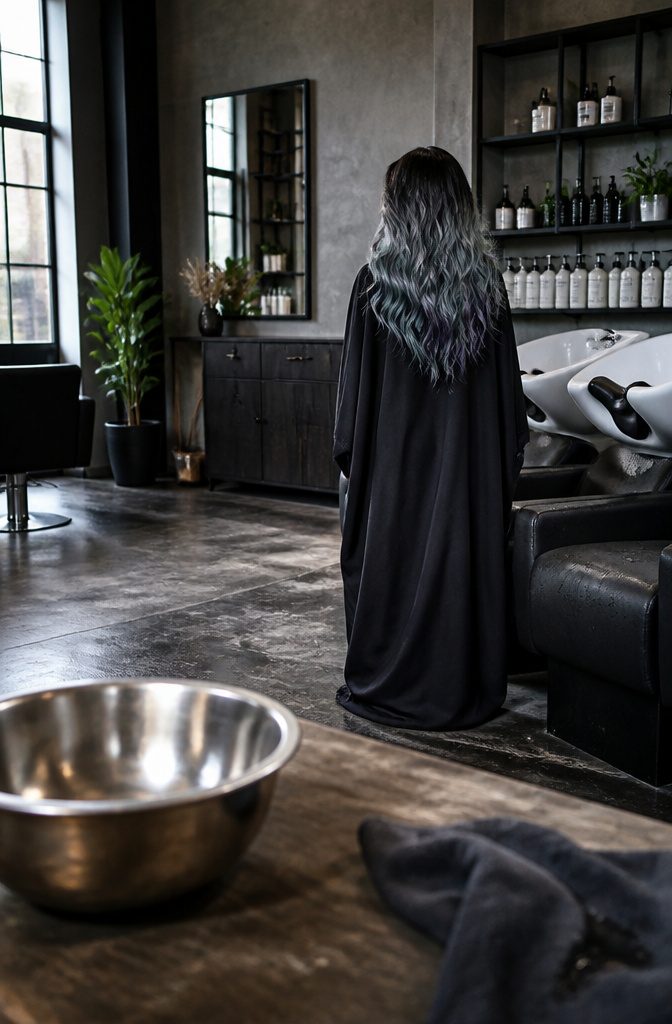
Gray or silver gives mermaid hair color a smoky, moody edge rather than the candy-bright pastels that dominate the look.
Gray Mermaid starts with dark black roots that blend into aqua and then fade to a cool gray, keeping the whole palette subdued.
Silver Kelp runs black to silver-gray at the roots, picking up a phantom green through the balayage that reads dimensional without shouting.
Wave-Crashing Silver sits silver highlights between darker purple and blue, pulling attention to the middle of the hair and letting the roots and ends anchor the whole thing in something grittier.
Gritty Gray Twisted Locks leans punky: darker roots, then pink and purple strands starting at different points and finishing with gray.
Smoky Curls with Neon Highlights goes futuristic, highlighting only the middle and undersections in gray with bold neon accents that show when you curl.
Platinum Peekaboo Mermaid hides the color under the top layer, parted in half with color applied in a single line so it stays a secret until you want it seen.
All of these read as grunge or dystopic before they read as beach, and that matters if going gray is already part of your plan.
7. Dip Dye and Peekaboo
Dip Dye and Peekaboo
If the idea of mermaid color all over feels like too much, placement options like dip dye and peekaboo keep the commitment low.
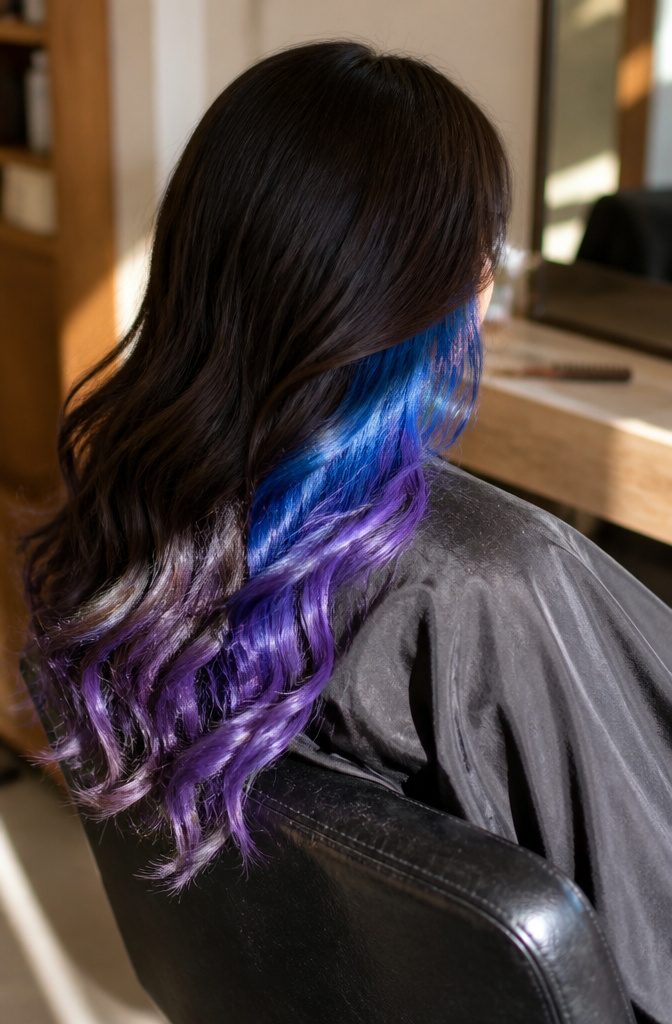
Dip dye mermaid hair holds your natural color from the scalp to mid-lengths, then applies the color in one sharp line for a graphic finish rather than a soft fade.
Peekaboo mermaid hair tucks the color into the lower layers, visible only when you move or pull sections forward. The platinum peekaboo look uses shades of blue and purple underneath to add depth while keeping the surface neutral.
You can also flip the placement. Seashell roots paint lilac, pastel blue, or pink at the scalp for a colorful rooted look, while coral reef ends dip just the tips in a sea-worthy coral.
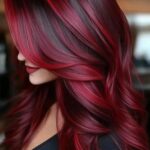
Maroon dip dye and peekaboos bring warmth to the palette without the full saturation of an all-over application. All of these let you test the trend without facing a full-head bleach session or months of grow-out.
8. Green-Focused Looks
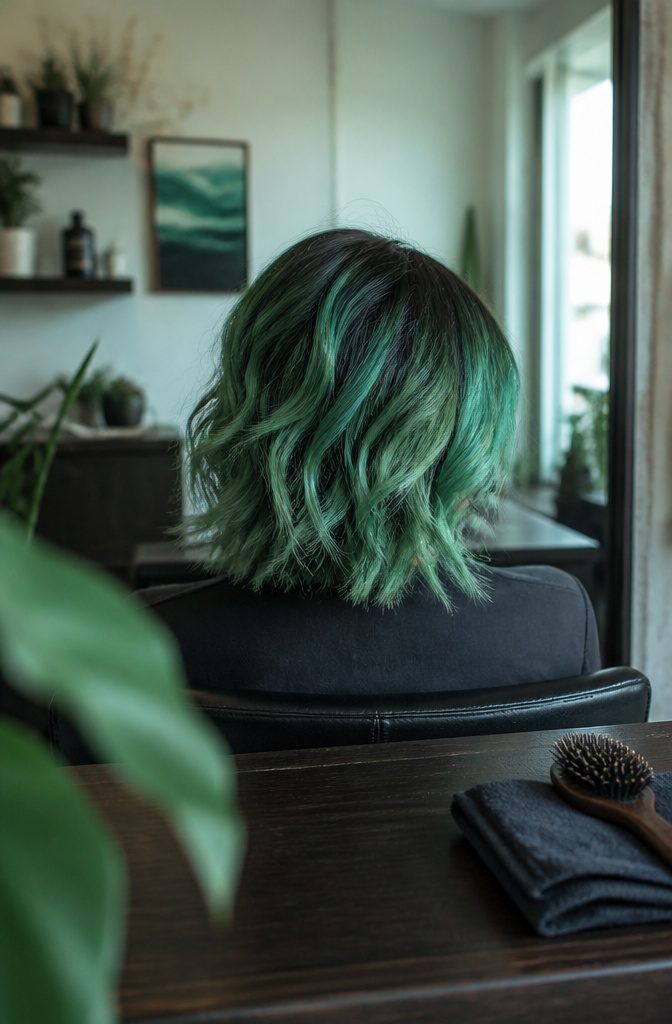
Green takes the spotlight when you want something darker and more unexpected than the usual aqua.
Sea green as the main color reads vampy and mysterious rather than sweet, closer to algae-covered cave walls than open water. It toughens up the whole look without losing the fantasy element.
Pastel versions soften the effect considerably.
Mint swaps out teal for something lighter and works best on very pale skin. Pastel green seaweed shades lean kelp-colored and mesmerizing, especially when you let natural yellow undertones weave through instead of fighting them.
The Sea Green Sombre keeps deep green at the roots and fades out toward the tips, which means you skip the heavy bleaching step and let dimension build naturally.
For placement variety, seaweed balayage adds green in painted sections rather than all over. The Long Blue Pixie with Green Fringe flips the balance, using blue as the base and reserving green for edges and fringe.
A half-and-half green-blue color melt splits the difference entirely, one shade on each side. Sea Foam Green Mermaid Short Hair brings the look to shorter cuts without losing the reference.
9. Coral and Sunset Shades
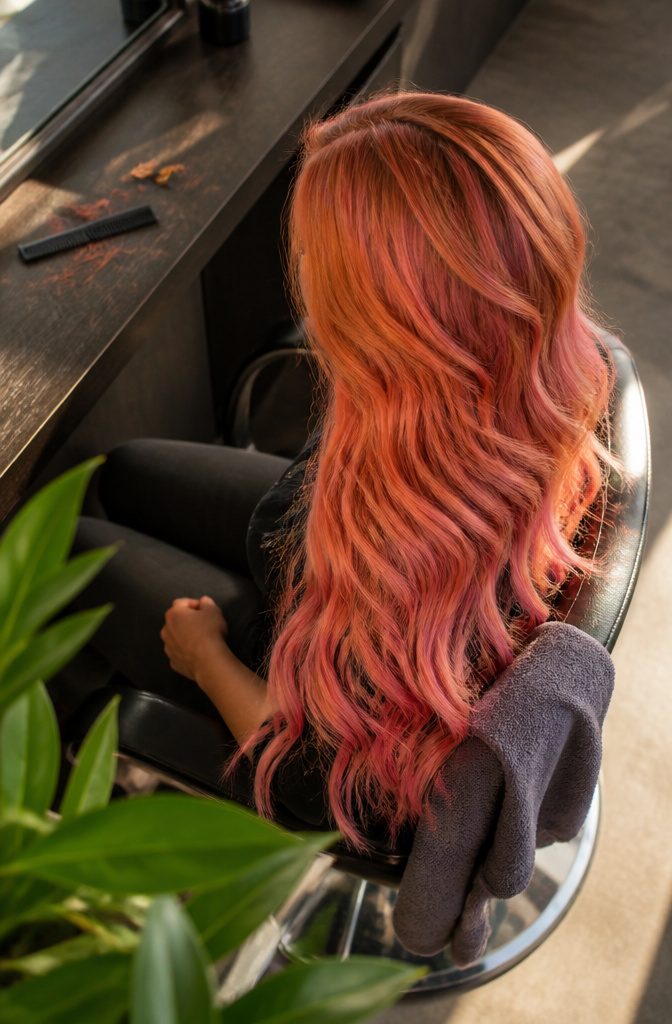
Not every mermaid has to swim in cool water. Coral Pink Mermaid Hues bring soft waves and long length together with a warm pink that stays fluid without borrowing any blue or teal.
Ruby Locks lean Victorian, blending lavender, pink and ruby tones that melt from one to the next down the layers for added dimension.
Peachy and Romantic Sherbet Tones pull from tropical reefs rather than open ocean, giving you pink-dominated color that works best in warm weather and full sun.
Sleek Sunset Perfection and Autumn-Inspired Voluminous Hair push further into orange and understated red, styled to flowy perfection with the brightest orange placed higher around the face to bring out eye color.
All of these keep the blended, flowing feel mermaid hair is known for, just aimed at a warmer palette that skips the aqua entirely.
Salon or Box Dye
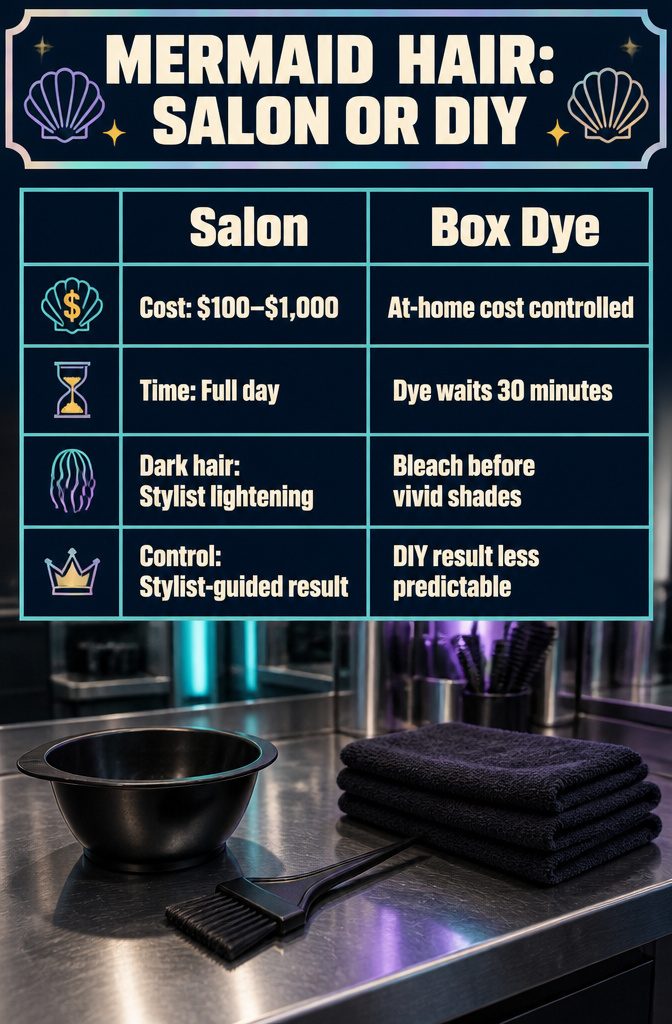
Salon or Box Dye
The question comes down to time and budget.
A salon run for mermaid hair color can land anywhere from $100 to $1,000 depending on how much lightening the process demands and how many shades get layered in. These colors take hours, so block out a full day with the stylist.
At home, you control the cost but not always the result, and darker hair makes the gap bigger since it needs bleaching before any of the fantasy shades show up.
If you’re going the DIY route, skip washing for two to three days beforehand so your natural oils cushion the lightening process.
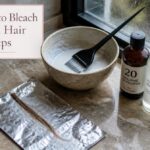
Brush out tangles, apply petroleum jelly along your forehead, neck, and ears to keep dye off skin, then follow the kit instructions exactly.
L’Oréal Paris Colorista Bleach lifts the base, then the Semi-Permanent line in Purple, Blue, and Aqua builds the mermaid palette.
Arctic Fox, Manic Panic, Pravana, Pulp Riot, and Crazy Color all deliver vivid options once the canvas is light enough.
Plan on a 30-minute wait after applying dye. Temporary sprays last one shampoo if you want to test the look before committing to the full process.
Keeping the Color Bright
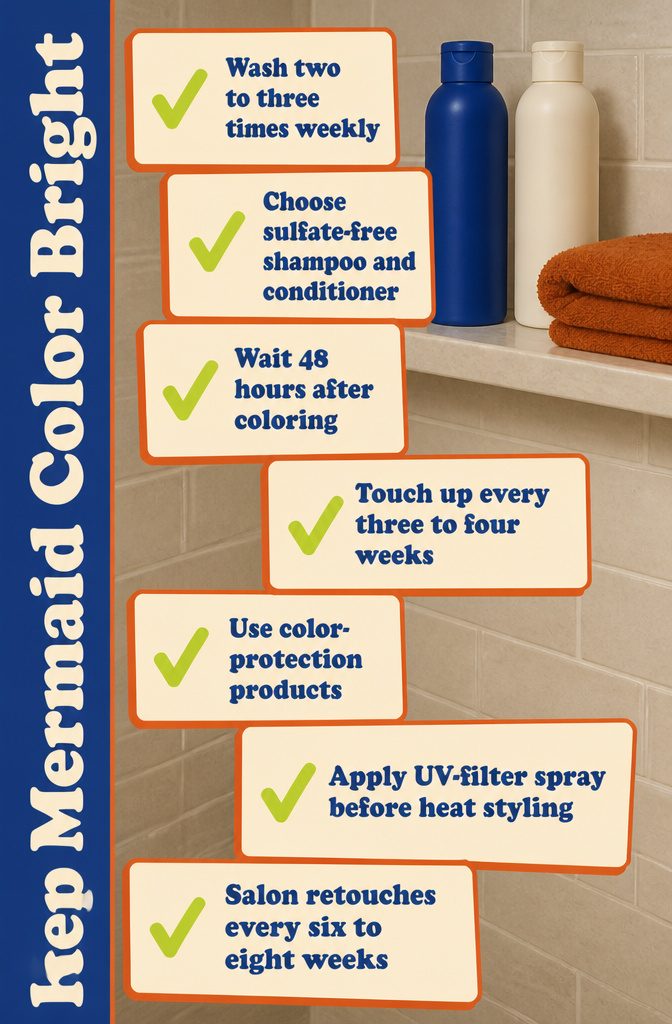
Fashion shades fade faster than permanent color, so the routine is tighter than you might be used to.
Wash two to three times a week with sulfate-free shampoo and conditioner to keep the pigment from washing out too quickly, and plan on touching up color every three to four weeks if you want the look to stay vivid.
After coloring, skip washing for at least 48 hours so the dye can set.
A few more rules that help:
- Water temperature is debated. Some recommend lukewarm water, others say cold is better for holding color. Cold probably edges ahead for fashion shades, but lukewarm is easier to live with if you can’t stand freezing rinses.
- Use products designed for color protection. The L’Oréal Paris EverPure line (shampoo, conditioner, and balm) is built for this.
- Before heat styling, spray on L’Oréal Elnett Satin Hairspray with UV filter. It adds heat and sun protection, which matters when your color cost this much effort.
Salon retouches land somewhere between six and eight weeks depending on the look, though some require them every six weeks to stay bright.
Skin Tone and Starting Color
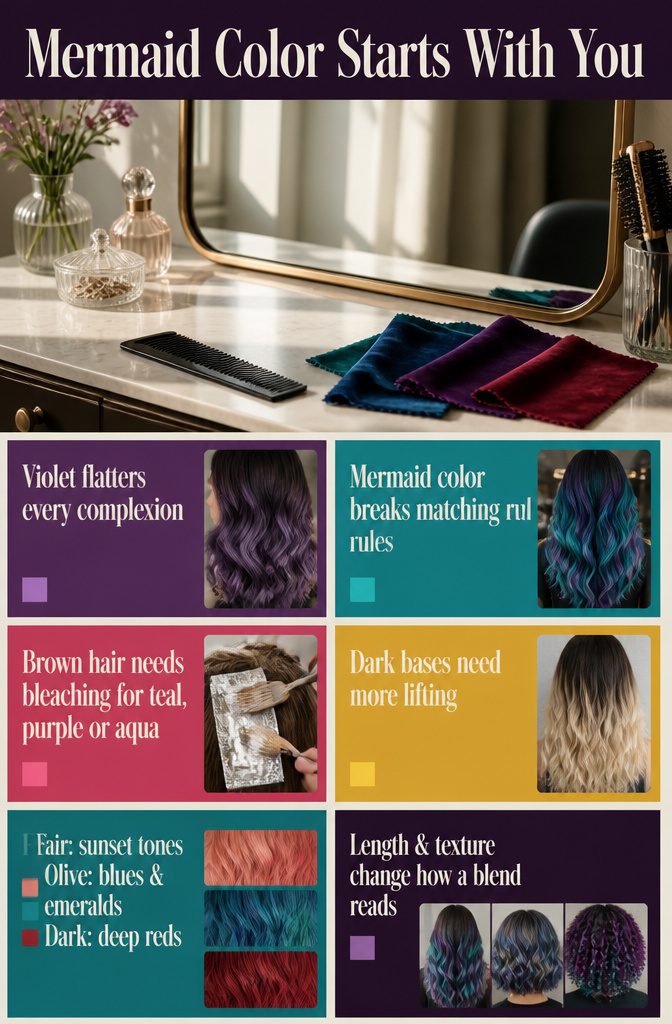
Fair skin is said to pair well with sunset tones, olive skin with bright blues and emerald greens, and dark skin with deep reds.
Violet flatters every complexion. But the strongest point from the material is that mermaid hair throws the usual matching rules out, and anyone who wants to be noticed can design the palette however they like.
Starting color decides more than skin tone does. Brown hair needs bleaching before you apply teal, purple or aqua, and that step limits how light the finished shade can get and how many sessions the process takes.
Darker bases mean more lifting, which affects whether pastel blends or saturated jewel tones are realistic without damage.
Texture and length change how a blend reads too: long hair shows more gradation, short cuts compress the transition, and curls break up placement in ways straight hair does not.
Frequently Asked Questions
How do you make your hair look like a mermaid?
Bleach first if your hair is brown or darker, then apply blue, aqua, and purple shades. Skip shampooing for 2–3 days beforehand, brush out tangles, and rub petroleum jelly along your forehead, neck, and ears to keep dye off your skin.
The classic mane is mostly teal or blue with smaller pops of purple and green, but you choose the placement.
What color is mermaid blue?
Mermaid blue is a mix of aqua, teal, retro blue, royal, and navy. It picks up silver, gray, and green reflections depending on the light, which is why the hair seems to shift like water.
How much does mermaid hair color cost?
A salon visit runs from $100 to $1,000, depending on how much lightening your hair needs and how many shades go in.
Dark hair costs more because it has to be pre-lightened before fantasy tones show up. A natural blonde can often skip that step.
What are the best products for keeping mermaid hair color bright?
Use a color-safe, sulfate-free shampoo and conditioner, and wash only 2–3 times a week.
Hydrating masks and leave-in treatments keep the hair soft and shiny. Before heat styling, a hairspray with UV filter adds heat and sun protection.
How do you do mermaid hair on short hair?
Pick a color placement that suits the length, since short cuts squeeze the transition between shades into less space. Use a flat iron to set beach waves, then finish with a glossy hairspray.