Graying curly hair is usually drier than pigmented hair, because the scalp makes less oil and a curl’s bends already slow that oil on its way down the strand.
Coarseness isn’t guaranteed, though: Katie Emery’s natural silver came in softer than her damaged, dyed hair. Judge the gray by how it feels, not by how the roots look against dye.
Why Gray Curls Change
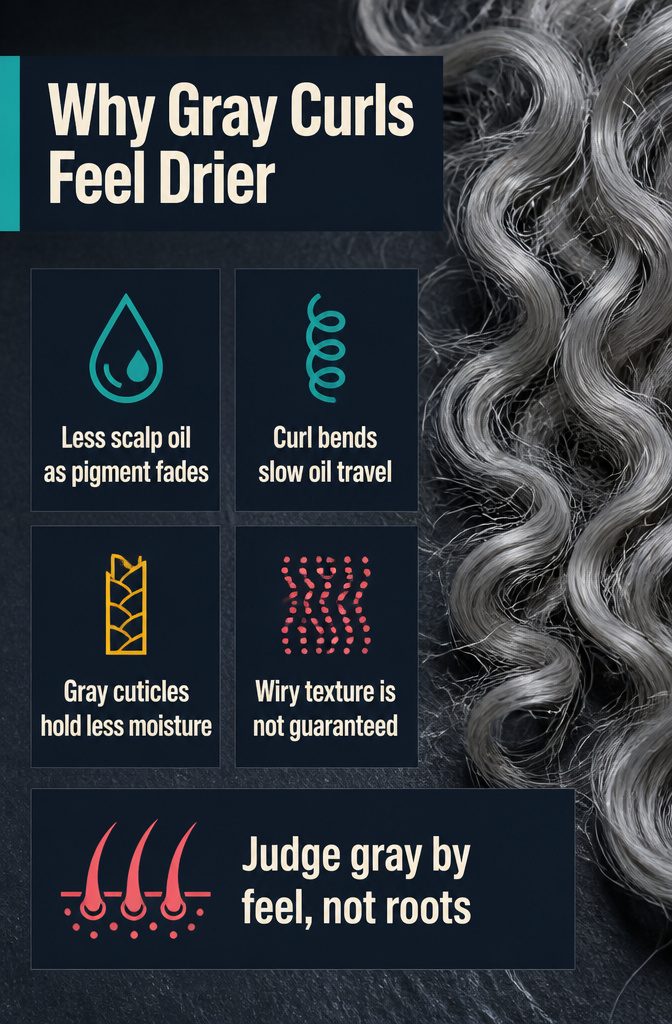
Gray curls often run drier for two reasons that stack. The scalp makes less oil as hair loses pigment, and a curl’s bends and loops already make it hard for that oil to travel down the shaft.
The cuticle on gray strands can also differ, so they absorb and hold moisture less easily. That explains why many women describe stiffer, wirier or more fragile curls.
Coarseness is not guaranteed, though. Katie Emery found her natural silver came in smoother and softer than her damaged, dyed hair.
Some of the wiry reputation may come from regrowth, which stands straight up beside dyed color. Judge the gray by how it feels on its own, not by how the roots look against the dye.
Moisture and Cleansing
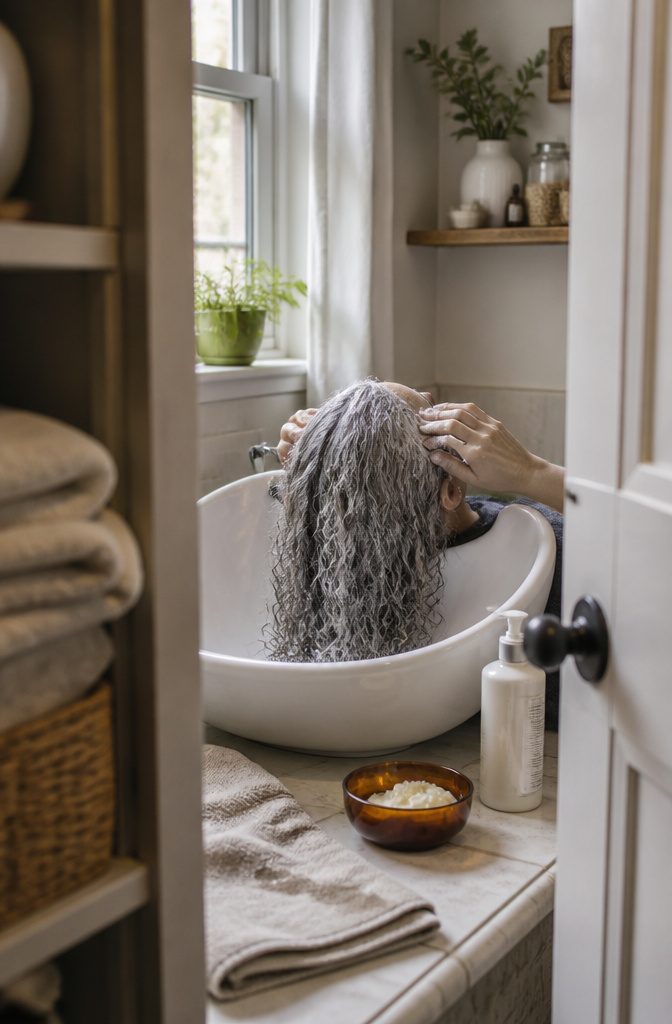
Curly gray hair with no dryness problems can use regular shampoo and conditioner.
A moisture-first routine goes further: co-wash a few times a week and choose products with glycerin, aloe vera, shea butter or coconut oil. I lean toward the stricter version for tight curls, because shampoo pulls out the moisture they lack.
The BTW Co. Daily Moisturizing line is a sulfate-free daily pick.
Leave conditioner on at least 5 minutes, or 15–20 if your hair is very dry.
Deep condition weekly with Joico K-Pak Intense Hydrator, or use a mask for 20–30 minutes, or overnight, on parched curls. A coconut or argan oil treatment for 15 minutes before shampooing is the budget route; go light on coconut.
Yellowing and Buildup
Yellow in gray curls traces to hard-water metals, buildup, heat styling and sun.
L’Oréal Metal Detox removes hard-water metals like copper, calcium, and iron that give gray hair a yellow tint over time.
— Vogue
Use it once a month in hard water or when curls look dull.
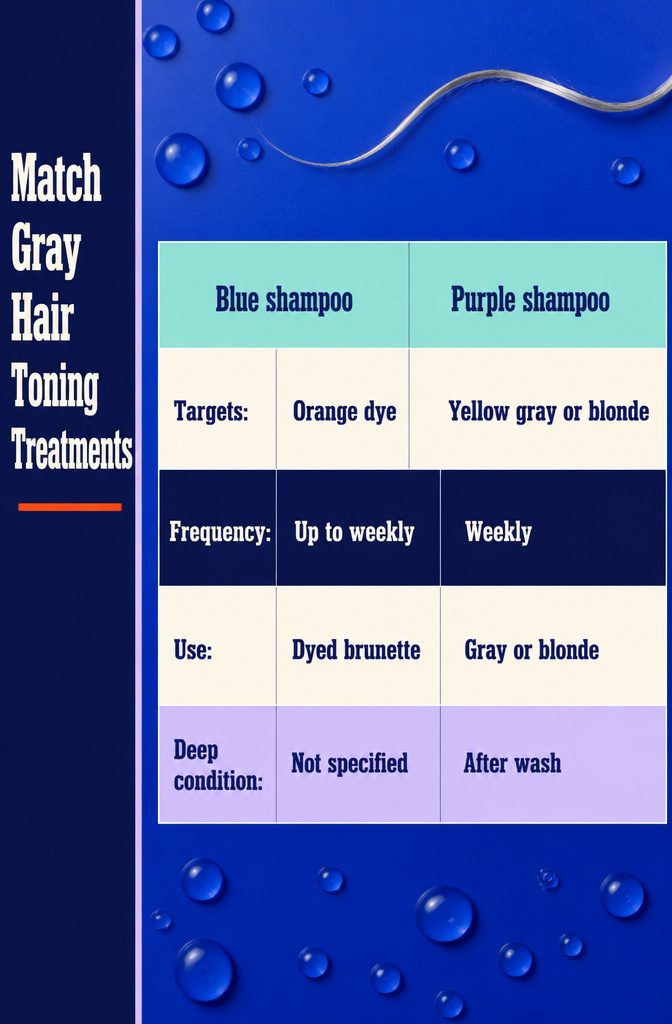
Toners fix color, not metals, so match the shampoo to the tone:
| Option | Targets | Frequency |
|---|---|---|
| Blue shampoo | Orange on dyed brunette | Once a week at most |
| Purple: Oribe Silverati, Amika Bust Your Brass, Davines Alchemic Silver, Pantene Pro-V Silver Expressions | Yellow on gray or blonde | Once a week |
| Ouai Detox | Buildup | Every 2–3 weeks |
Deep condition after any blue or purple wash. Overuse tints gray curls purple.
Detangling, Styling, and Drying
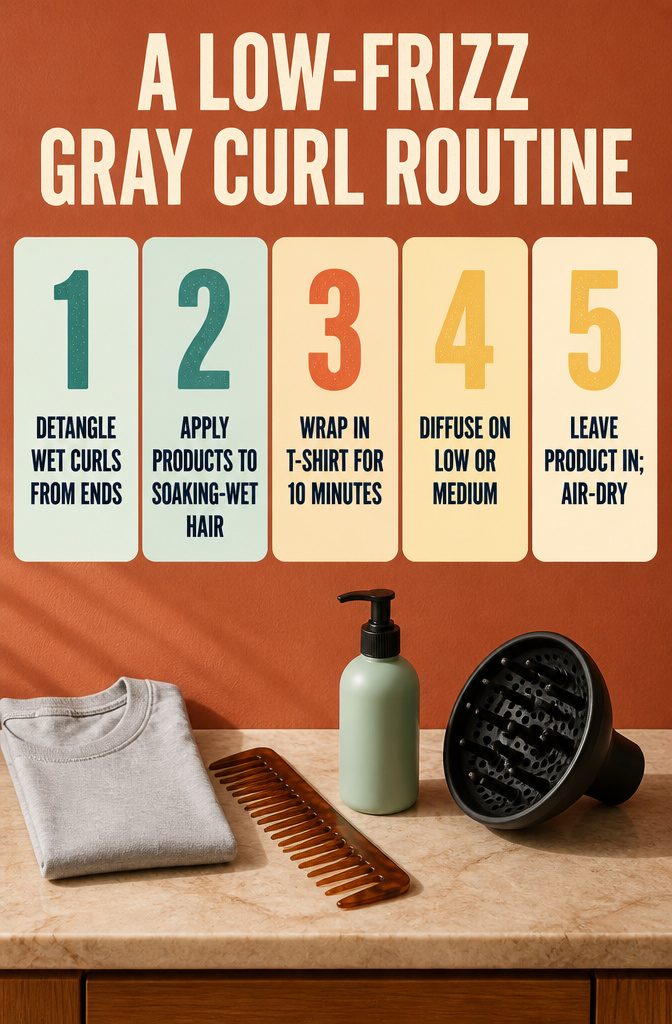
- Detangle in the shower while conditioner or detangler is still on. Use a wide-tooth comb, starting at the ends and working up toward the roots. Never brush or comb curls when they’re dry, because dry strands are fragile and frizz instantly.
- Apply leave-in and styling products while your hair is soaking wet.
- Wrap your hair in a T-shirt for about 10 minutes, the way Katie Emery does.
- To use heat, set a diffuser to low or medium. Cup the curls in it, hold a few seconds, then move to the next section.
- To skip heat, air-dry with the product left in. I’d choose this whenever the morning allows, since it gives the least frizz and the most definition. Emery air-dries her waves, and QuickSilverHair Clay is her favorite product.
Protecting Hair and Scalp
Heat turns gray hair dull and yellowish, so a protectant goes on before any flat iron or curling iron. Kenra and Bumble and Bumble both protect up to 450 degrees, and Oribe Hair Alchemy Fortifying Treatment Serum is a third choice.
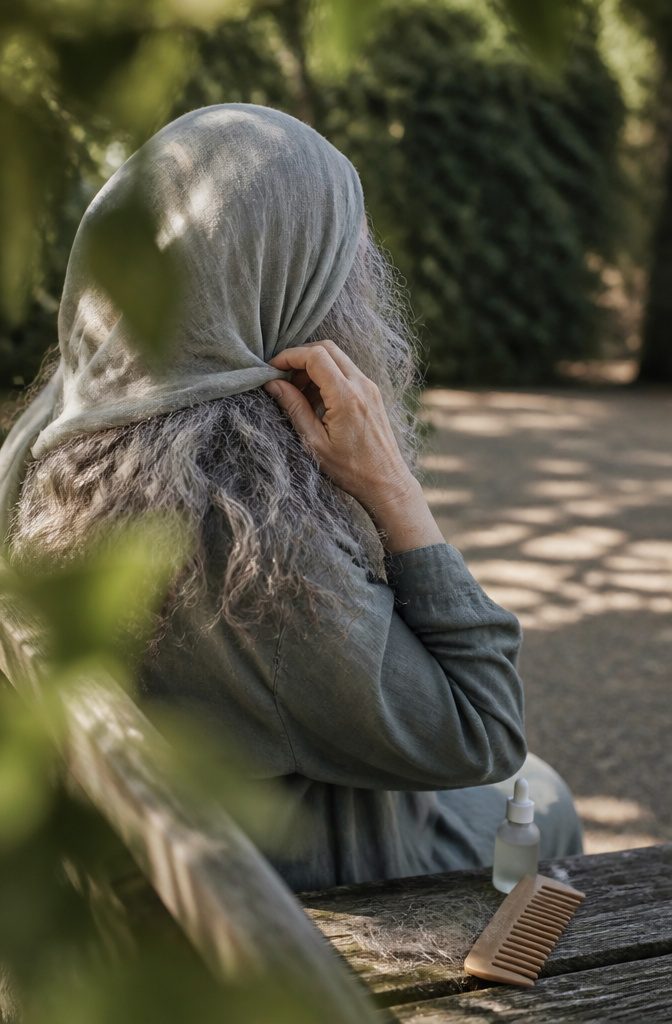
Skip unprotected heat where you can. Sun damages dry or fragile strands too, so wear a hat or scarf outdoors.
Gray scalps make less oil, which leaves strands drier and more fragile. Act+Acre Cold Processed Scalp Detox and Aveda Scalp Solutions Overnight Scalp Renewal Serum are where I’d start.
Trim every 6–8 weeks, then finish with 1–2 pumps of Hair Biology Silver & Glowing serum on damp or dry hair. Don’t rinse it out.
Choosing How to Go Gray
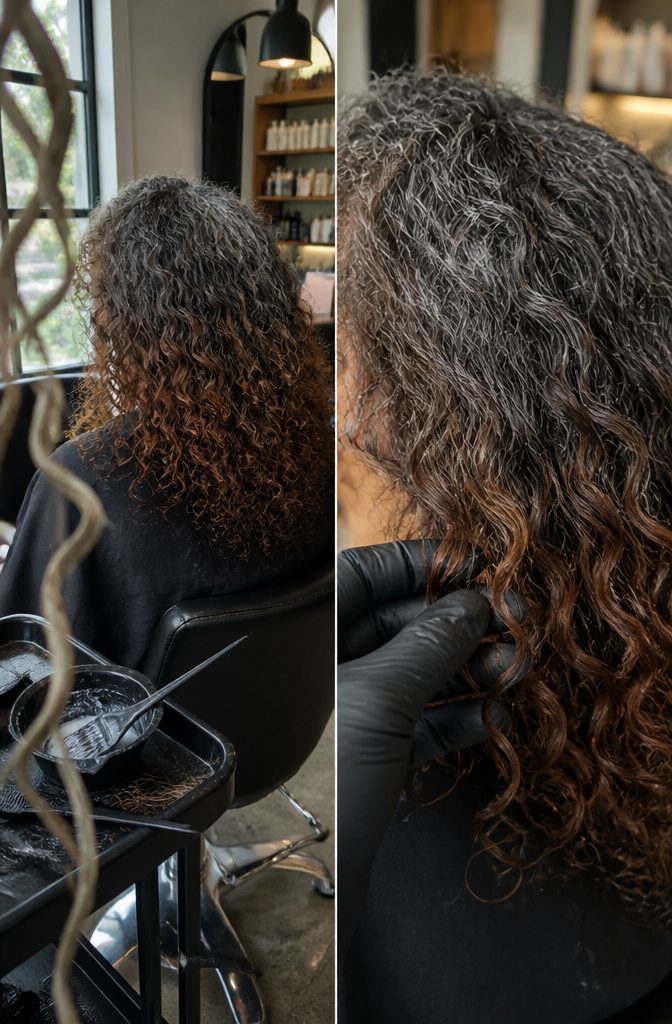
Growing your roots out untouched is the cheapest and healthiest route, but it leaves a visible line against dyed curls. A Color Transition softens that line.
A curl specialist paints your current color onto strands without foil, once after about 6 months of regrowth or repeatedly for a "just a bit gray" look. For most curls I’d choose this over a big chop.
Semi- or demi-permanent color covers a few gray strands at the temples, while permanent color suits heavier coverage. Find a stylist who understands your goal.
Patience matters too: first grays usually show in the 30s or 40s, and a full head can take about a decade. Katie Emery’s blog tracks two years of growing out her last dye.
Wash Day and Refresh Days
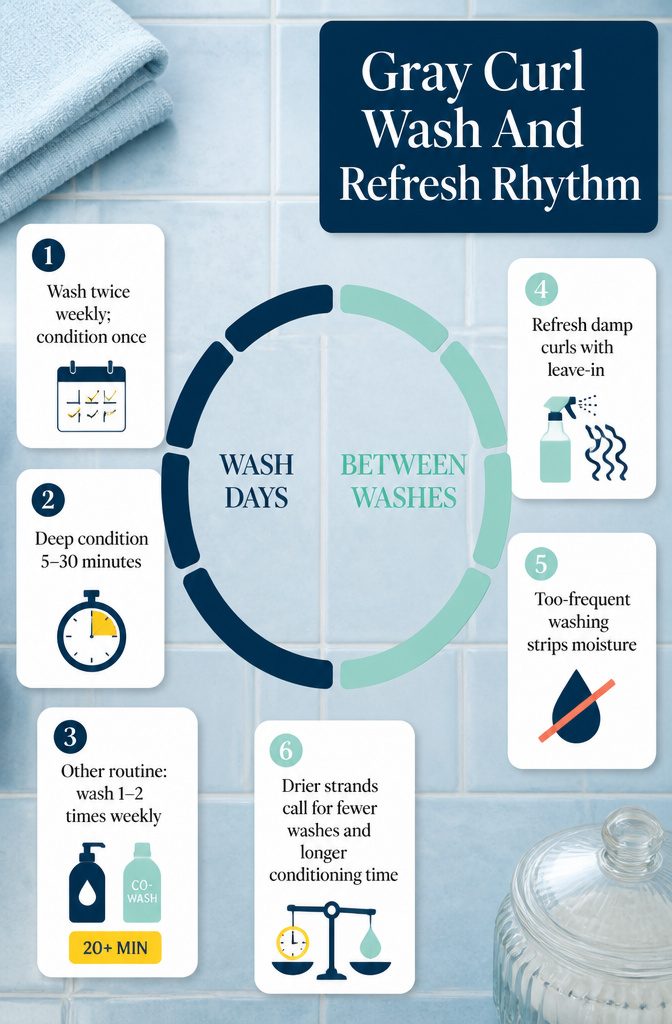
Two schedules are in play, and they don’t match.
- Katie Emery washes twice a week and deep conditions after one of those washes. She leaves it on for 5 minutes, or up to 30 when her hair feels dry, and adds a conditioning mask once a month.
- The other routine washes 1–2 times a week with a gentle, hydrating shampoo or co-wash, plus a deep conditioning treatment of 20+ minutes.
- Between washes, spritz your curls until damp, not soaking. Work in a little leave-in conditioner, scrunch, then air dry or diffuse.
- I’d start at the low end, since washing too often strips moisture from gray curls.
- Drier strands call for fewer washes and longer conditioning time. Adjust to how your own hair feels.
Protein Every 4–6 Weeks
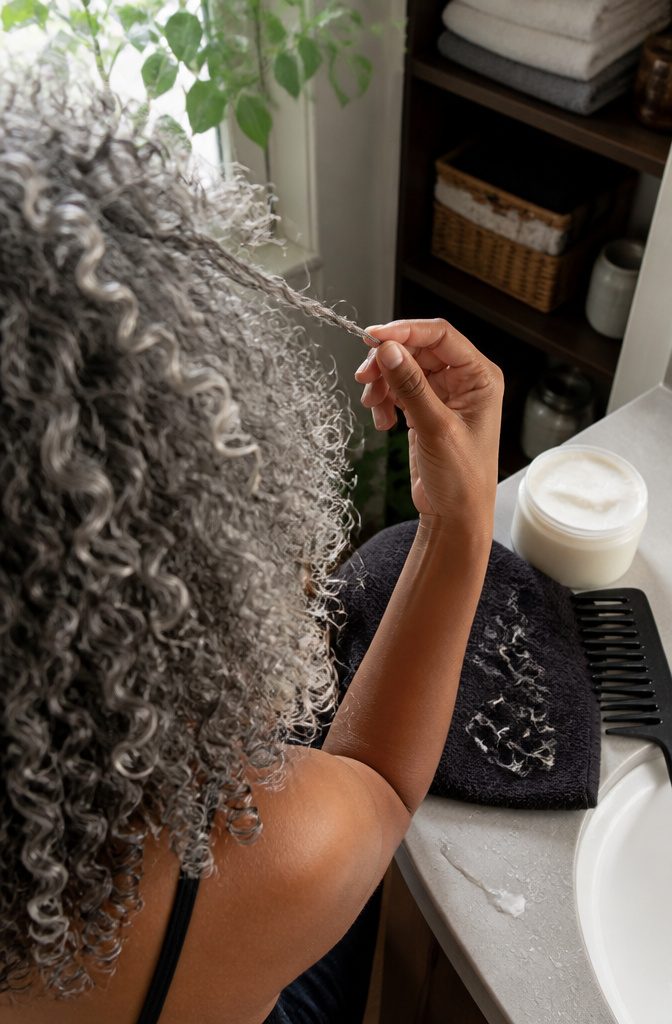
Weak or snapping strands are the signal for protein, and once every 4–6 weeks is the ceiling.
Past that, curls turn stiff and brittle. If your curls hang limp or you find broken pieces in the sink after detangling, a protein-based deep conditioner about once a month fits.
If the strands feel strong and the complaint is dryness and frizz, skip protein and stay with moisture.
For strengthening, I’d start with Briogeo Don’t Despair Repair mask or K18 Leave-In Molecular Hair Mask. Protein works as the occasional partner to your moisture routine, never a replacement for it.
Frequently Asked Questions
How do you keep graying curly hair moisturized?
Co-wash a few times a week, use products with glycerin, aloe vera, shea butter or coconut oil, and leave conditioner on for at least 5 minutes.
Add a deep conditioning treatment weekly. Gray strands hold moisture less easily, and a scalp that makes less oil leaves curls drier than they used to be.
What is the best shampoo for graying curly hair?
If your hair has no problems, your regular shampoo works. Tight curls usually do better with a sulfate-free, moisturizing formula or a co-wash, because regular shampoo pulls out moisture they already lack.
For yellow tones, use a purple shampoo such as Oribe Silverati once a week at most, then deep condition afterward.
What is the best conditioner for frizzy gray hair?
Choose a rich, moisturizing conditioner with ingredients like glycerin, aloe vera or shea butter, and leave it on for 5 minutes or longer (15–20 minutes if your hair is very dry).
For a weekly deep treatment, Joico K-Pak Intense Hydrator is one option. Detangle with a wide-tooth comb while the conditioner is still in, never on dry curls.
Is gray curly hair coarser and harder to manage?
Not always. Gray curls often run drier because the scalp makes less oil and the strands absorb moisture less easily, but texture varies.
Katie Emery found her natural silver smoother and softer than her damaged, dyed hair, and the wiry reputation may come from regrowth sticking straight up beside dyed color.
How should I style and dry graying curly hair?
Apply leave-in and styling products while your hair is soaking wet, then air-dry with the product left in for the least frizz and the most definition.
If you use heat, set a diffuser to low or medium and move section by section. Use a heat protectant before any flat iron or curling iron.
What are the best tips for growing out gray curly hair?
Be patient and find a stylist who understands what you want. Growing your roots out untouched is the cheapest and healthiest route, but it leaves a visible line against dyed curls.
A Color Transition from a curl specialist softens that line, and first grays usually appear in the 30s or 40s, with a full head of gray taking about a decade.